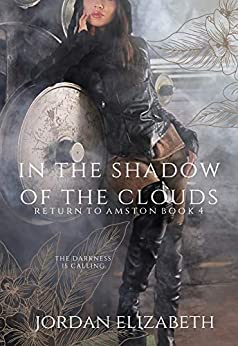
In the Shadow of the Clouds, by Jordan Elizabeth is book 4 in her Return to Amston series, but it works equally well as a stand alone novel. It’s a top rate steampunk adventure with a dash of romance. I’m familiar with the steampunk worlds of this author, and always find her steampunk tales engaging and entertaintaining. (See my review of Runners & Riders, the first book in the series.) This story is no exception.
For Bianca, life hasn’t been easy. After being ignored by her indifferent mother, being turned out into the streets by the madame of the brothel where her mother makes her living, and being sold off by her grandparents to be the bride of an oppressive man, it is no wonder she trusts no one and feels as if there is nowhere where she really belongs. But when her husband dies unexpectedly, she inherits his airship company and sees a way to provide a living for herself, if she can straighten out the mess he left it in. And she’s just headstrong enough to do it with the help of her handsome young pilot.
Charlie hired on as pilot in hopes of one day regaining the air ship company, which once belonged to his family, who were killed by cloud pirates when he was just a boy. He flies every trip with an eye out for an opportunity to exact revenge on those who attacked his family’s air ship so many years ago. He denies the feelings developing for his boss, but when cloud pirates capture Bianca and Charlie rescues her, he learns what truly happened to his family and why, he gets an unexpected surprise that could change his entire life.
In the Shadow of the Clouds is an exceptional YA tale of young romance and adventure. Thoroughly entertaining. This is one of those stories that leaves you smiling. I give it five quills.
In the Shadow of the Clouds is available on Amazon.
Kaye Lynne Booth does honest book reviews on Writing to be Read in exchange for ARCs. Have a book you’d like reviewed? Contact Kaye at kayebooth(at)yahoo(dot)com.
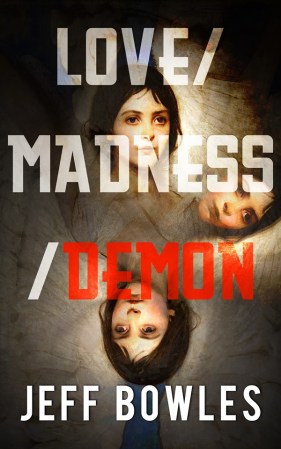
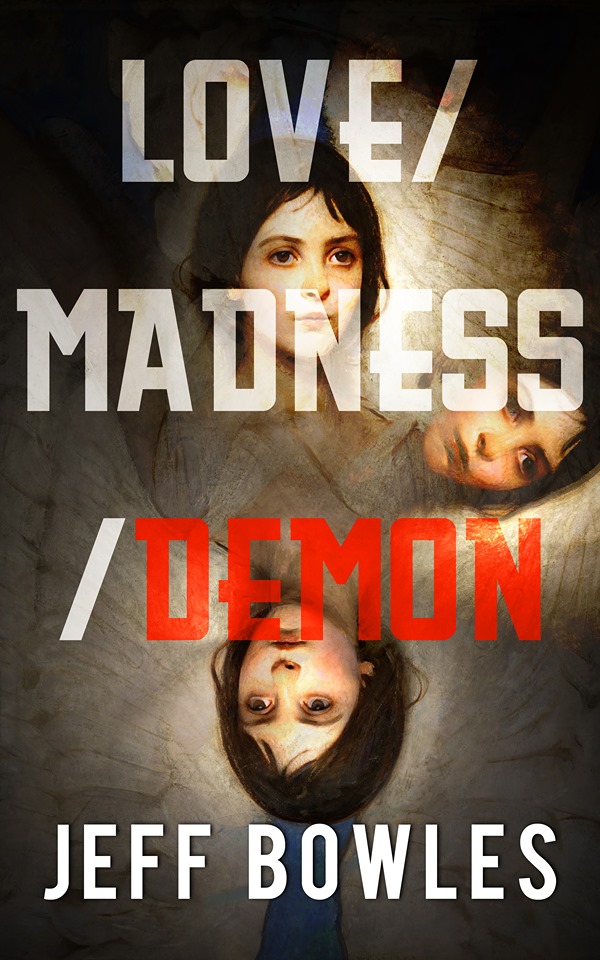
Love/Madness/Demons, by Jeff Bowles might make you question everything you ever thought you believed or disbelieved. This fictional tale was inspired by true life experiences. Are there forces at work that steer our destiny? Is life just a matter of predetermined fate? Does freewill even play a part in our lives? These are questions I’m sure we’ve all pondered at one time or another, and this tale of eternal love and betrayals will bring them once again to the forefront of the reader’s mind.
Arthur and Madeline are twin flames, soul mates, who have encountered each other again and again through many different lifetimes, and are destined to be together once more in this life. Arthur believes he’s in love with Madeline, and it makes no difference that he is married to Allissa, whom he once thought that he loved, and maybe still does. But, stalking his soul mate has not been effective in convincing her to leave her husband, Stuart, and his bizarre behavior lands him in a mental hospital. Is he losing his mind or are the voices that he hears really there? Why does the voice of Madeline tell him to do things that can only succeed in away everyone he cares for?
Madeline is happily married to Stuart, and although she has a fondness in her heart for Arthur, whom she met in college, she doesn’t understand his behavior any more than Arthur’s wife does. She turns her strange experiences with Arthur into a story, with fictiona; characters, whom it seems, have all crossed over into reality and want her dead.
The reader is given some insight, with glimpses into the dimensions of the divine, so we know that Arthur and Madeline are indeed being influenced by higher powers who aren’t necessarily out for their best interests. Destructive forces threaten to destroy their lives and all that they care about, and they are helpless to stop the events which have been put into motion. Or perhaps, they are the only ones who can stop it.
An intricately woven story of heaven and hell and the earthly realm in between, Love/Madness/Demon will keep the pages turning as the story of Madeline and Arthur and their connections to one another unfolds, and the forces of evil turn up the heat. I give it five quills.
Kaye Lynne Booth does honest book reviews on Writing to be Read in exchange for ARCs. Have a book you’d like reviewed? Contact Kaye at kayebooth(at)yahoo(dot)com.
I dropped the ball. I did. It’s true. Many of you may have noticed that posts by me have been virtually non-existant the past couple of months, including regularly scheduled book reviews, theme posts and author interviews, as well as my “Chatting with the Pros” monthly series. I’m sure you’ve all been in a spot at one time or another, when you’ve been completely overwhelmed by responsibilities and obligations. That has been me for the past few months. Me, I’m a go-getter. I set a goal and bulldog my way to it, when need be. I have a habit of taking on many projects simultaneously, but I also follow through on what I start.
But, circumstances often change and unforeseen burdens may be laid upon our shoulders when we least expect it, and we find ourselves juggling more than we can handle. Or at least, I have. Between work, school, my writing and promotions, and personal responsibilities, it seemed more than I could accomplish and something had to give. Actually, I pushed it to the limit until just about everything gave and I was spinning my wheels and getting a lot of nothing done.
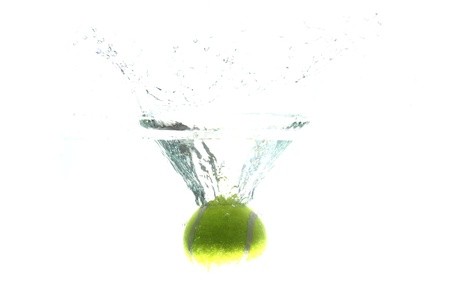
I may have dropped the ball, but I’m anticipating the results when it splashes. Sometimes a big splash just makes a mess that needs cleaning up, but a placed splash can water and nourish the surrounding vegetation. Certainly, the regular schedule for Writing to be Read has been disrupted, and the monthly genre themes have gone out the window. I know I have authors I was scheduled to interview who are probably wondering what happened, whom I need to contact. There is some mess to clean up here. But you see, a big splash can be a good thing. That’s why I’m developing a plan, postponing graduation, and re-inventing, or at least making alterations to the WordCrafter brand, including Writing to be Read.
That’s where you come in. I need your help. As I consider various changes, I need to know how my readers would likely respond to them. Please take them time to respond to any or all of the following questions in the comments.
What types of posts do you enjoy most on Writing to be Read? Author interviews, commentaries, book reviews?
If I made Writing to be Read a paid blog plan, would readers be willing to help pay for the site on a donation basis? Would you be willing to subscribe for a small fee?
Would there be interest if I made the “Chatting with the Pros” series into a podcast? Or do you prefer written interviews such as those currently featured here?
Would you like to see more author and poet interviews? More book or screen reviews? A blog series on screenwriting?
Which monthly blog series is your favorite: “Chattting with the Pros”, “Words to Live By”, “Growing Bookworms”, “Jeff’s Movie Reviews”, “Craft and Practice”, “Treasuing Poetry”, “Mind Fields”, or “Arthur’s Visual Media Reviews”?
As you might guess from the above, there are changes coming for Writing to be Read and for WordCrafter. I’ve got a great team of bloggers, whom I can always count on, and their posts are all that has kept WtbR going these past few months. My thanks go out to Robbie Cheadle, Jeff Bowles and Art Rosch for providing great content and keeping things rolling during the absence of content from me. As always, you’ll be seeing the scheduled segments from the Writing to be Read team members, even if my posts may still be a little sketchy for a while. Stay tuned for updates and please, be patient. If I can make it all work together, I think it will be worth the wait.
Like this post? Let me know in the comments. You can be sure not to miss any of Writing to be Read’s great content by subscribe to e-mail or following on WordPress. If you found this content helpful or entertaining, please share.
The first Wednesday of every month, writer Jeff Bowles muses on life, creativity, and our collective destinies as makers of cool stuff. You’re a writer, but have you ever thought about how or why? Here are some words to live by.
BE HERE NOW (Sanity for the Modern Writer)
What does a successful writing career look like to you? Have you ever thought about it? Do you believe you need one in order to call yourself a real writer? It may seem like a foreign notion to you, but many burgeoning authors won’t even acknowledge their favorite creative pastime in a serious way until they’ve sold a few short stories, picked up that dream book contract, or collected enough poems to turn into a collection.
I was like that when I was just starting out. I never gave myself credit for doing the work. In general I have this problem, as I understand it. People are always mystified by my apparent inability to cut myself slack. I refused to call myself a real writer until I’d made my first professional-level short story sale. That took seven years, and the funny thing is, it didn’t make me as happy as I thought it would. Oh sure, I was ecstatic for about an afternoon. But then things went back to normal, and a feeling of unease crept over me, the subtle realization that although I’d finally arrived at my destination, I hadn’t moved an inch.
In the last few years, I’ve experienced something of a paradigm shift when it comes to these things. You see, I finally had to admit to myself that no matter how many accolades I could garner, no matter how many times I saw my name in print, the writing itself often made me feel miserable, worn-out, and sometimes, just plain fed-up.
Do you have this same issue? Never give yourself credit for a job well done? Do you feel like a bit of a failure because you haven’t managed to reach your major writing goals yet? Trust me, you aren’t alone. You know the grass is always greener, don’t you? Imagine wandering into that other pasture, that creative promised land you cherish so dearly, only to find weeds and impassable thicket. Yes, you should make and maintain goals, because of course, you might not accomplish anything at all otherwise. And yes, each of us should dare to dream. I can’t stress that enough. Dreaming isn’t the problem. It takes a great beaten child of an adult to believe dreams are for fools.
But why dream if you’re only going to use it as a benchmark for your future happiness? Let’s say you’ve been writing off and on for twenty-five years, and you’ve yet to publish anything important. From the outside looking in, it may appear as though you wasted all that time. Your friends and family may not take your dreams seriously, or even worse, they may openly mock or criticize you for them. First off, if this is the case, you really owe it to yourself to find some new friends. Secondly, how do they know you didn’t enjoy every last second of those “wasted” twenty-five years? How do they know you didn’t have the time of your life, and in fact, wouldn’t trade a second of it for all the gold in Fort Knox?
The truth of the matter is if you can’t be happy with your work now, odds are you won’t be happy later. I mean that. Seeing your name in print will give you fleeting pleasure, but the more you see it, the less it’ll impress. You’ll have to trust me on this, and I’d like you to read this next part very closely, nothing you do in this life will make you happy if happiness eludes you here and now. Signing copies of your latest book or being able to share a cool story with the world via a very impressive and illustrious magazine or anthology, all of that is super cool. But after the proverbial new car smell wears off, you may feel a startling sense of anxiety and emptiness. Especially once you realize, aw hell, now I have to do it all over again.
Like I said, dreaming isn’t the problem. Expectations, however, will kill you every time. Because human beings often believe they cannot be happy until and unless something specific comes their way. I can’t be happy until I’ve found the love of my life. I can’t be happy until I buy my family a new house. I can’t be happy until I’m a bestseller. It’s always the destination that drives us. We so very rarely seem interested in the journey to get there.
Do me a favor the next time you sit down to write. Take your seat, open up your laptop (or grab your pen and paper, if you’re old school) and just sit there. Close your eyes if you’re so inclined. Be present in the moment, don’t think about the work ahead as a chore or a means to an end. Think of the work as the end itself. You are alive right now. Miracle enough for anyone with their priorities straight and their sanity intact. From the infinitesimal outer regions of statistically impossible microspace, you have arrived in all your glory. You’re breathing right now. Your butt is firmly planted in that chair, and you, my friend, are about to lay down some of the best writing of your life.
You can approach this moment as the incredible phenomenon it is. You can set your fingers to the keyboard and put one word after another, and you can experience an act of personal, almost spiritual fulfillment. Not because you expect this piece of writing to set the world on fire, but because for you, this passion, this instant, it’s all there is.
Be here now, as they say. The future will take care of itself, and as for the past, let’s just say ruminating on it too much is a recipe for disaster. No, now is all you have, and now is all you need. Dance like no one’s watching. Remember that many successful authors suffer from what we call impostor syndrome, which is a real shame if you ask me. What is a writing impostor? I mean really, what is one? A writer, set in terms even a chimpanzee could understand, is someone who writes. It’s as simple as that, isn’t it?
You’re not an impostor. You’re not anything more or less than the writer doing the thing, writing, and writing, and writing some more. And that truly is enough, no matter where you find yourself in terms of success or recognition or even money. Great pleasure and joy can be found in the simplest things, and though I’d never call writing a simple activity, profession, pastime, hobby, loving and fond nuisance, or obsession, the truth is—and you know this deep down in your heart of hearts—no outside thing, no future goal, no perfect outcome will give you the satisfaction you’re looking for.
If not now, when? If not now, when? If not now, when?
Slow down for a moment. Consider how lucky you are, how fortunate, how present and aware and full of life, and then go ahead and rock it out, lay down those beautiful words. I won’t keep you. You’ve got important and timely truths to express, new worlds to birth and share with us, and if you don’t do it, who will?
Until next month, everyone. I hope you can see the value of letting the present be, just be. You may never accomplish your goals, live your dreams, be anything more subjectively impressive than you are right now. But should it matter? Or should you simply learn to love yourself, your work, your creativity, now, now, now?
Peace! Joy! And don’t forget to proofread!
Jeff Bowles is a science fiction and horror writer from the mountains of Colorado. The best of his outrageous and imaginative work can be found in God’s Body: Book One – The Fall, Godling and Other Paint Stories, Fear and Loathing in Las Cruces, and Brave New Multiverse. He has published work in magazines and anthologies like PodCastle, Tales from the Canyons of the Damned, the Threepenny Review, and Dark Moon Digest. Jeff earned his Master of Fine Arts degree in creative writing at Western State Colorado University. He currently lives in the high-altitude Pikes Peak region, where he dreams strange dreams and spends far too much time under the stars. Jeff’s new novel, Love/Madness/Demon, is available on Amazon now!
Check out Jeff Bowles Central on YouTube – Movies – Video Games – Music – So Much More!
Want to be sure not to miss any of Jeff’s “Words to Live By” segments? Subscribe to Writing to be Read for e-mail notifications whenever new content is posted or follow WtbR on WordPress. If you found this useful or just entertaining, please share.
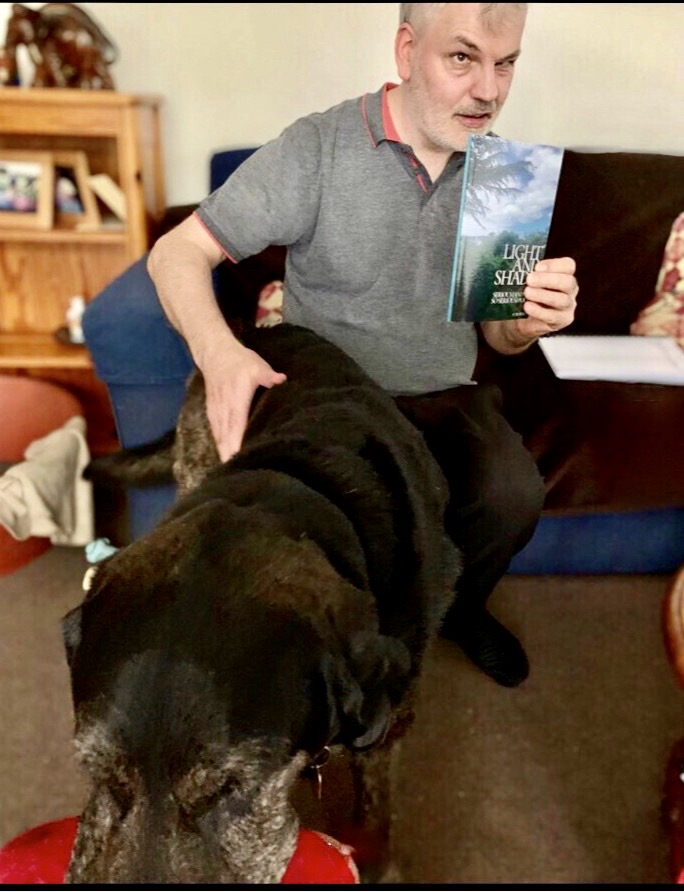
Today, I am very excited to share poet, Kevin Morris’, thoughts about poetry and his favourite poem. I met Kevin a few years ago soon after I started my blog and I was immediately captivated by his interesting poetry which frequently presents new angles on current events and even some historical events. I have read and enjoyed a number of his lovely poetry books, including his latest book, Light and Shade; serious (and not so serious) poems which I have reviewed later in this post.
Over to Kevin
Choosing a favourite poem is a difficult task, as my head is full of poems, many of which are favourites of mine. However, as I have to make a choice, my favourite poem is Vitae Summa Brevis Spem Nos Vetat Incohare Longam, by Ernest Dowson, which runs thus:
“They are not long, the weeping and the laughter,
Love and desire and hate:
I think they have no portion in us after
We pass the gate.
They are not long, the days of wine and roses:
Out of a misty dream
Our path emerges for a while, then closes
Within a dream.”
Dowson’s poem deals poignantly with the brevity of life. We are here for a short time. Our lives are full of “weeping”, “laughter”, “love”, “desire” and “hate”. But all of these are but a passing show for, when we “pass the gate” (the gate signifying the entrance to the land of the dead), all are loves, joys and sorrows are at an end, and we are no more.
Whilst the poem invokes in me a feeling of sadness (it is, after all about the shortness of existence), my primary response to Dowson’s lines is one of admiration. I say admiration for he sums up admirably, in 2 short verses the brevity of life. Other writers expend pots of ink on the subject of our mortality, but Dowson gets to the heart of the matter in a mere 8 lines of poetry.
I never deliberately copy any of the well-known poets. Although, doubtless their work impacts on my writing.
Whilst Dowson’s poem has a Latin title (a language unfamiliar to many people, including me), the message and style of his poem is simple, and it’s the poem’s very simplicity which I so admire.
Thank you, Kevin, for sharing your favourite poem and your reasons for loving it. Your choice greatly interested me as the brevity of life and the inevitability of death is common topic in your own poetry.
My review of Light and Shade; serious (and not so serious) poems
What Amazon says
Life is full of light and shade. For to be human is to experience joy, beauty, love, pain and laughter. This collection reflects all facets of human experience. hence the title Light and Shade; serious (and not so serious) poems.
My review
Light and Shade; serious (and not so serious) poems is another delightful collection of poems by talented poet, Kevin Morris.
Section 1 – Love, nature and time includes poems written mainly in freestyle, that tell of these aspects of human life. Each poem has a streak of melancholy running through it which is extremely effective – a bit like biting on tinfoil – in the way it highlights the underlying certainty of death even in the midst of life. There are a few poems that hint at the trauma of the coronavirus and the related lockdown.
One particular extract that demonstrates this is from a poem called “Oh Creature of Night”: ‘Twas a strange thing To hear. Yet I Felt no fear But pondered on your incongruous cry, And a virus, invisible to the eye.”
Section 2 – Humour The second part of the book comprises of amusing takes on life. I personally prefer the poems with the underlying dark undertones, but these are a lovely and light relief. A large number of these poems comprise of limericks, a form of poetry that the author excels at. One of the verses that entertained me from this section of the book, also relates to Covid-19, and goes as follows:
“Sunscreen on skin Is no sin. The birds sing For it is spring. One may go outside But woe betide The man who offers resistance To the concept of social distance.”
From At a Time of Social Distancing.
I highly recommend this book of poetry to all poetry lovers who enjoy unpacking meaning and delighting in subtle messages of humour and darkness.
Purchase Light and Shade; serious (and not so serious) poems
Kevin’s recently released poetry collection, Light and Shade: Serious (and Not so Serious) Poems is available from Amazon as follows:
Kevin Morris was born in the city of Liverpool, United Kingdom, on 6 January 1969.
Having graduated from University College Swansea with a BA in history and politics and a MA in political theory, Kevin moved to London where he has lived and worked since 1994.
Being visually impaired, Kevin uses software called Job Access with Speech (JAWS), which converts text into speech and braille enabling him to use a Windows computer or laptop.
Hello, my name is Robbie, short for Roberta. I am an author with six published children’s picture books in the Sir Chocolate books series for children aged 2 to 9 years old (co-authored with my son, Michael Cheadle), one published middle grade book in the Silly Willy series and one published preteen/young adult fictionalised biography about my mother’s life as a young girl growing up in an English town in Suffolk during World War II called While the Bombs Fell (co-authored with my mother, Elsie Hancy Eaton). All of my children’s book are written under Robbie Cheadle and are published by TSL Publications.
I have recently branched into adult and young adult horror and supernatural writing and, in order to clearly differential my children’s books from my adult writing, I plan to publish these books under Roberta Eaton Cheadle. My first supernatural book published in that name, Through the Nethergate, is now available.
I have participated in a number of anthologies:
Two short stories in #1 Amazon bestselling anthology, Dark Visions, a collection of horror stories edited by Dan Alatorre;
Three short stories in Death Among Us, an anthology of murder mystery stories, edited by Stephen Bentley;
Three short stories in #1 Amazon bestselling anthology, Nightmareland, a collection of horror stories edited by Dan Alatorre; and
Two short stories in Whispers of the Past, an anthology of paranormal stories, edited by Kaye Lynne Booth.
I also have a book of poetry called Open a new door, with fellow South African poet, Kim Blades.
Want to be sure not to miss any of Robbie’s “Treasuring Poetry” segments? Subscribe to Writing to be Read for e-mail notifications whenever new content is posted or follow WtbR on WordPress. If you found it interesting or entertaining, please share.
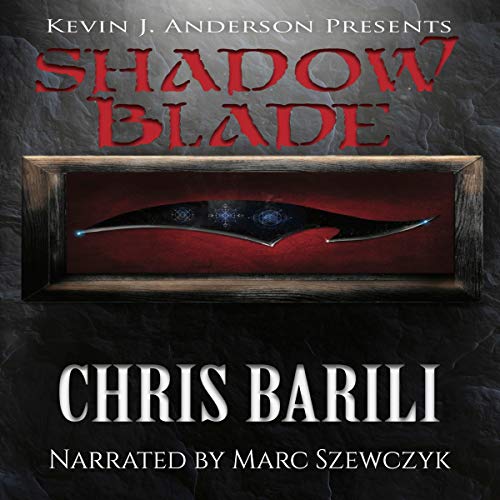
Audiobooks. They are the latest digital form of literature, quickly rising in popularity with readers on the go. And why not? What a great way to multitask. Instead of having to find a quiet time to sit and read the printed word, you can listen to the story while getting multiple things accomplished. I listened to Shadowblade, by Chris Barili, narrated by Marc Swezczyk while ironing, while cleaning the bathroom, while driving, and while sitting at the campfire. It was kind of cool to do chores when I’d rather be reading, and actually be able to do both.
As my first experience with audio books, I found it to be a convenient form of literature. I received my copy via my Kindle Fire, through Amazon. Like digital books through Amazon, it downloaded to my Fire automatically. It was time saving, in that I could listen to it at times that normally would be uproductive to my writing. It reminded me of the old radio serials, but you can start and stop whenever it is convenient, and don’t have to wait a week to find out what happens next. I think I could have gotten through the book a lot quicker in overall time spent reading, had I read it myself, just because I read faster than the pace of narration, but by allowing me to listen at times when I normally wouldn’t be able to read, it was helpful with my very busy schedule.
Marc Swezczyk was a good choice for a narrator on this story, in that his dialects and difficult name pronunciations sounded quite natural. His voice changed slightly for each character switch, making dialog easy to follow, as well. However, outside of the dialog, his narration falters with an unvaried pace and lack of inflection. This causes the some of the pain stakingly crafted action scenes to fall flat and the narrative seems to drone on in places. Having previously reviewed Shadowblade, I honestly didn’t feel as though Swezcyyk made this story shine as brightly as it could have.
Shadowblade is a great fantasy story, and Marc Swezczyk’s narration brings the interesting and diverse characters to life in the audio version, however he was unable to draw me into the scenes, which does not do this superbly written story justice. I give Shadowblade audio four quills.
I see the audio book being the future of literature, so I wonder how it is from the author’s side of things. If you are an author who has tested the waters in the audio realm, please comment to share your experiences with audio books. Is it easy to publish audio? Was it difficult to find a narrator? Is it expensive? We here at Writing to be Read want to know.
Kaye Lynne Booth does honest book reviews on Writing to be Read in exchange for ARCs. Have a book you’d like reviewed? Contact Kaye at kayebooth(at)yahoo(dot)com.
The third Wednesday of each month, writer Jeff Bowles offers practical tips for improving, sharpening, and selling your writing. Welcome to your monthly discussion on Craft and Practice.
Writing for Catharsis
Writing is a hard enough gig without the existence of one persistent, unceasing fact: things change, nothing lasts, and all things pass away. You could make a decent mantra out of that, couldn’t you? I mean it’s true enough I don’t even really have to repeat it. I will though. Several times, in fact, because I’d like to impress upon you the urgency of a world in desperate need of good, personal, dare I say it, emotional storytellers.
This month’s Craft and Practice will be a little different. We’re going to talk about our feelings. Wait! Don’t click off! You can’t run from them any more than I can. Things change, nothing lasts, all things pass away. And if you and your incredible writing superpowers are needed anywhere in the world, it’s quite possible they’re needed at home most of all.
You see, people can recognize the transience of life without too much effort, but they’re either too locked into their own experiential tangents to do anything about it, or they simply keep their stories to themselves. Writers don’t have that luxury, and nor should we be afforded it. It’s our job to comment, profile, report, extol, condemn, codify, decode. If not for everyone living today and for a hundred generations beyond, then at least for ourselves, right here and now. What does this all boil down to? We can write about all the crazy stuff that happens to us and call it catharsis. Neat, huh?
I recently released a novel called Love/Madness/Demon. It deals, in part, with a psychotic episode I experienced four or five years ago. Now at that time I didn’t know or understand what was happening to me. If you or someone you know is struggling with mental health issues, I urge you seek qualified help, because once I was able to do so, once a true diagnosis came my way, things slowly began to turn around for me. But I knew as I started recovering that what I’d gone through—what I’d put my loved ones through—it constituted serious traumatic territory, and I also knew that it might make me feel better to write about it someday.
It did. That’s the long and short of it. Moreover, spending sufficient time with my story as a finished manuscript tended to help even more. I had to tread, retread, and re-retread the same ground again and again. The worst moments of the ordeal tended to lose their hold on me. Now writing as catharsis implies you’ve repressed or buried something. Some people haven’t done anything of the sort, though I’d wager that to one degree or another, the vast majority of us have. This is life, after all, the greatest bare-knuckled, knock-down cage match of them all. If you’ve taken a few lumps in recent years, you aren’t alone.
I think it’s best to approach cathartic writing from a place of complete honesty. What are you doing it for otherwise? And realistically, you’ve got endless literary modes available to you. I chose fiction because it’s what I’m most comfortable with, but maybe you prefer poetry or nonfiction.
Nonfiction may be the best way to approach the craft for the sake of healing because you can just write the truth as it seemed to you. Now, you may have to wrestle with legalities, ditto with fiction, but I tend to believe most of the advice given to writers about these things are of the overblown, cover-one’s-own-ass variety. Can you write about things that really happened to you? Of course you can. Who says you can’t? What you can’t do is drag someone’s name through the mud in the process, but I’ve got a good feeling about you. You’re not interested in hurting others with your writing. You’re a paragon of humility and moral excellence. I mean, I can just tell by looking at you. What a punim.
I hurt after my psychotic break. A lot of people around me did. Because I was delusional, because I didn’t understand what was happening to me, I lashed out frequently and did things it’s taken me a lot of time to try and get over.
But your experience with cathartic writing will be wholly different. I hope and pray you haven’t got any major traumas in your direct experience. But if you have, and if you’re lucky enough to have been given an aptitude for the written word, I highly suggest putting your emotional self on the line and trying to do a little self-evaluation and self-nurturing. Even if you intend on never letting another soul read it, the initial intimacy and privacy of the act are paramount. I’d never suggest a person try to write their pain away rather than seek the help of a licensed professional, but I’ve found that a good therapy program lines up very well with cathartic writing. In fact, there were times in my recovery I didn’t have the ability to engage in counseling, so the writing of Love/Madness/Demon was even more crucial to me.
I feel better now. I don’t feel perfect. In fact, I still have a lot of bad days. But it was worth it to me to at least try to alleviate some of the pressures of everything I’d gone through. Maybe you can do the same for yourself. I hope you can. Things change, nothing lasts, all things pass away. It’s sort of a very painful time for many people out there. Writing about what ails us? There are worse ways to cope.
Jeff Bowles is a science fiction and horror writer from the mountains of Colorado. The best of his outrageous and imaginative work can be found in God’s Body: Book One – The Fall, Godling and Other Paint Stories, Fear and Loathing in Las Cruces, and Brave New Multiverse. He has published work in magazines and anthologies like PodCastle, Tales from the Canyons of the Damned, the Threepenny Review, and Dark Moon Digest. Jeff earned his Master of Fine Arts degree in creative writing at Western State Colorado University. He currently lives in the high-altitude Pikes Peak region, where he dreams strange dreams and spends far too much time under the stars. Jeff’s new novel, Love/Madness/Demon, is available on Amazon now!
Check out Jeff Bowles Central on YouTube – Movies – Video Games – Music – So Much More!
Want to be sure not to miss any of Jeff’s Pep Talk segments? Subscribe to Writing to be Read for e-mail notifications whenever new content is posted or follow WtbR on WordPress
In our modern world, sources of information assail us from every direction. An internet search turns up dozens, and sometimes even hundreds, of links to information on every conceivable topic. Television provides documentaries on historical events, scientific topics and numerous programmes that cover every aspect of nature. A visit to a grocery store exposes children to newspapers and magazines which share articles on a wide variety of political, social and other topics, not to mention the headlines of newspapers that glare at us from street light and other poles as we travel from home to school and other places during our day.
High school learners are provided with numerous texts and sources of additional information on each and every topic they cover in nearly all of their subjects.
The quantities of information available are huge and not all of it is factually accurate. There is a lot of inaccurate and even total fake information out there.
It is, therefore, vital for children to learn to filter text and identify the important facts and information, in other words, to summarise it. It is also important for children to know they should check information to more than one source in order to ensure it is factually accurate.
Providing children with non-fiction books is an excellent way of ensuring they get accurate and reliable information and, if you select good non-fiction books, they are also appealing and exciting for children.
Here are four tips for choosing non-fiction books:
Books with large clear photographs are attractive to children and help them contextualize the content of the book;
Look for books that present the facts succinctly and without becoming bogged down in to much unnecessary detail. After reading the content to or with your child, summarise the main message/s about that topic or on a particular page;
For very young children, ensure that the content is simple and fairly repetitive with only a few new vocabulary items so as not to overwhelm them; and
Look for books that provide additional information for adults at the back. This is helpful for expanding on a given topic with your child and answering any questions.
A few great ways of encouraging an interest in non-fiction reading by children are as follows:
When you are doing something that provokes questions like why is the sky blue or why do bees sting, take the time to look up the answer to this question with your child and show them how to use internet sources and books to find the answers to their questions;
Integrate non-fiction with play. I did this with my children by showing them how to read recipes when we were baking, using ideas from books when building and constructing with lego or blocks and even with marshmallows and reading to them about mountains, hills, lakes and rivers when we were playing in a sandpit or on the beach. We used sand for lots of fun activities like building forts and a pirate island. I used these opportunities to follow up with a non-fiction story about pirates and soldiers. I did the same thing when we visited any places that lent themselves to learning more about a specific topic like mining or farming; and
Make your own non-fiction materials and demonstrate various learning points. I build a mountain out of paper mache and showed my children how water carries seeds down into the valleys, Michael and I made a sword and a roman helmet out of paper mache and learned about the Roman Empire and we made a sheep out of cardboard and cotton wool and learned how animals help to distribute seeds.
An airplane Greg and I built in the sand at the beachGregory learning about prehistoric mining at Grime’s Graves in Norfolk, England
About Robbie Cheadle
Hello, my name is Robbie, short for Roberta. I am an author with seven published children’s picture books in the Sir Chocolate books series for children aged 2 to 9 years old (co-authored with my son, Michael Cheadle), one published middle grade book in the Silly Willy series and one published preteen/young adult fictionalised biography about my mother’s life as a young girl growing up in an English town in Suffolk during World War II called While the Bombs Fell (co-authored with my mother, Elsie Hancy Eaton). All of my children’s book are written under Robbie Cheadle and are published by TSL Publications.
I have recently branched into adult and young adult horror and supernatural writing and, in order to clearly differential my children’s books from my adult writing, I plan to publish these books under Roberta Eaton Cheadle. My first supernatural book published in that name, Through the Nethergate, is now available.
I have participated in a number of anthologies:
Two short stories in #1 Amazon bestselling anthology, Dark Visions, a collection of horror stories edited by Dan Alatorre;
Three short stories in Death Among Us, an anthology of murder mystery stories, edited by Stephen Bentley;
Three short stories in #1 Amazon bestselling anthology, Nightmareland, a collection of horror stories edited by Dan Alatorre; and
Two short stories in Whispers of the Past, an anthology of paranormal stories, edited by Kaye Lynne Booth.
I also have a book of poetry called Open a new door, with fellow South African poet, Kim Blades.
Want to be sure not to miss any of Robbie’s “Growing Bookworms” segments? Subscribe to Writing to be Read for e-mail notifications whenever new content is posted or follow WtbR on WordPress.
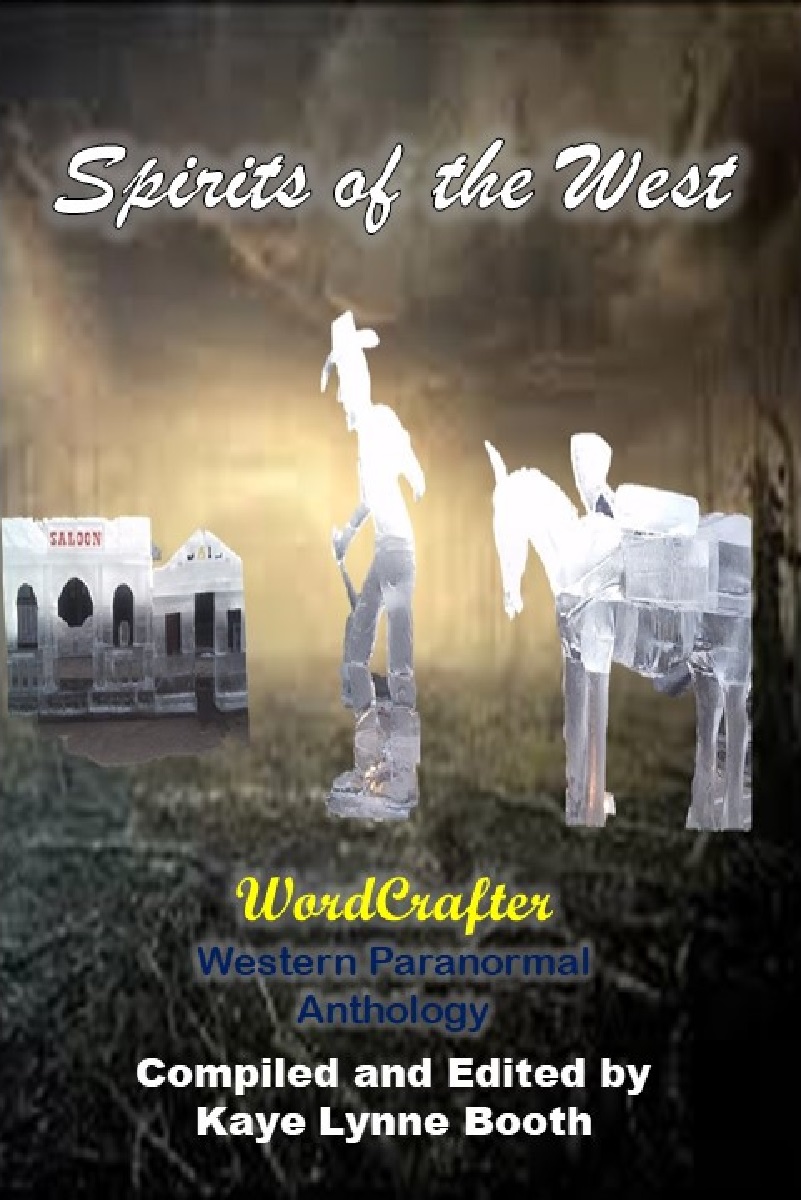
It’s taken twice as long as it should have, but I am now proud to announce the winner of the 2020 WordCrafter Short Fiction Contest. This year’s theme genre was western paranormal, requiring story submissions to contain both western and paranormal elements. WordCrafter left the guidelines open to loose interpretation, resulting a wide variety of story submissions, in which the required elements were used in some very creative ways. It was a difficult choice, but I’m happy to congradulate Enid Holden on her wonderful story, “High Desert Rose”.
As the winning submission author, Enid will receive a $25 Amazon gift card and her story will be published in the WordCrafter western paranomal anthology, Spirits of the West. We’re aiming for a release date sometime in October, so be sure and watch for it. The anthology will also include “Gunsmoke”, as a tribute to the author, the late Tom Johnson, as well as stories by several of authors from last years antholgy, Whispers of the Past.
Like this post? Let me know in the comments. You can be sure not to miss any of Writing to be Read’s great content by subscribe to e-mail or following on WordPress. If you found this content helpful or entertaining, please share.
I originally wrote a version of this entirely too plucky Pep Talk just over eight years ago. I was twenty-seven then, and life until that point had treated me pretty good. That’s right, before I was writing monthly inspiration blog posts I was still keenly interested in, well, inspiring writers to do our thing. I offer this as a gift today. Eight years is a long time, long enough for the planet Venus to enter, exit, and then reenter retrograde.
And as Venus is the planet of love, I thought I’d share a proto-Pep-Talk that is very near and dear to my heart. Just goes to show you that no matter how far you think you’ve come, there’s always room to grow and many, many miles to go.
Let this serve as inspiration for you, especially if you’ve been feeling down about the world and your place in it. Keep working, keep your head down, but for gosh sakes, be a humanitarian to yourself while you’re at it. That’s the main message Jeff’s Pep Talk was always meant to impart. If you can’t be kind and compassionate to yourself when it comes to your work, how the hell are you ever going to be kind and compassionate when it comes to the rest of life?
Hope you enjoy this blast from my past. Twenty-seven years old. Yeesh. We were never that young. 🙂
2/13/2012
What? Me? Positive?
Firstly, an admission: I’m a terrible writer. Honestly, I am. I happen to have it on very good authority. Right now, right here in my office, even as I write this very essay, there’s a little man sitting in the corner, sucking down a Coca-Cola Classic, fiddling with his long, stringy hair, shouting de-motivators, anti-enthusiastics, and the highest-quality bizarro pep talks I have ever heard in my life. He tells me things like, “Boring!” and, “It’s been done to death!” and my personal favorite, “Nobody in this world will ever care!” He’s so good at his job that he’s even earned his own nameplate and the privilege of not having to sit on either of my shoulders.
I’m 27 years old. When I was 17, he didn’t even exist.
There’s a very simple reason for that, you know. When I was 17 it hadn’t even occurred to me to give writing a shot. Oh, sure, I’d begun and bailed on a novel or two. Once, I even made it a whole 90 pages, a feat that had each of my friends nodding and intoning, “cool,” before laying back into one another on my PlayStation. You know what I was when I was 17? First of all, I was a high school dropout. Didn’t even make it through freshman year. I hold two degrees of higher learning at the moment, but hell, even Scarecrow got one of those, and he didn’t even have a brain. Second of all, and infinitely more important, when I was 17 years old I was a future rockstar. Frontman? Check. Guitarist? Double-check. Writer of every song in my band’s repertoire? Oh yeah, and you just knew the Benjamins would start rolling in at any moment.
I was good at it, too. Honestly, I was. That’s really kind of the point here. Music came naturally to me. Okay, so maybe I didn’t come into this world kicking and screaming and nailing my do-re-mis, but put a Beatles songbook in my hand and a brand-new nylon-string guitar and just watch me put “Let it Be” through its paces. A band, a breakup, another band, another breakup; four albums recorded in my Mom’s basement; high school gigs and coffee house gigs and bar after bar after bar after bar after bar after…where was I? Oh, yes.
“Carrie?” I said to my then-girlfriend and now-wife. “I don’t think I want to be a musician anymore.”
Oh really? How come?
Does it really matter? I was going to be a writer, damn it. That’s it, and that’s all. Makes sense, right? If you can’t be a rockstar, what, then, might you be? Easy. A millionaire bestselling novelist, at the feet of which the Stephen Kings and Anne Rices and J. K. Rowlings of this world but kneel and tremble.
Step 1: Decide to become a writer.
Step 2: Write first short story.
Step 3: Am I a millionaire bestseller yet?
No? Not yet? Okay, I’ll just go wait over there. I and the little man in the corner have pushed story after story into this world via the agonizing and miraculously miraculous miracle of brain-birth. And guess what, the brain-birth for each of them? More agonizingly agonizing than miraculously miraculous. I tell you what, man, it’s downright painful. Writing? Man, writing is for the dogs. Remember when you learned your first guitar chord? Remember how accomplished you felt? Now do you remember your first story and that first critique you ever got?
“I had three problems with this story. The beginning, the middle, and the end.”
Remember how your voice used to have all the girls quivering out there in audience land? Quivering? Really? Okay, maybe more like mildly interested. Still, when was the last time your readers were even slightly or infinitesimally interested? Readers? What readers? You’ve got readers now? Where the hell did you get readers? Mom! The little man in the corner got readers and I didn’t!
Before I even joined the party, those in the know told me that rejection is the name of the game. Man, they weren’t kidding. That first rejection hurts like hell. So does the second, and the third, and the fourth, and the fifth, and the…when exactly does it stop hurting?
Just keep your head down. Just keep working, keep honing, keep sharpening, keep getting better and better, keep…keep…aw, hell, just keep forgetting what rejection feels like, keep forgetting there are a million others better than you’ll ever be, keep forgetting you’re not even as good as you want to be.
Yet…
So what keeps you writing? Why not just give up already? Oh, believe me, I’ve tried. Several times, seriously, studiously, not-joking-this-time. But you know what? Something always kept me going. Kind words? Ha! I wish. Publication? Okay, now you’re just making me sad. No, if I had to boil it down to one word, one, single, all-encompassing, all-revealing, all-enlightening, end-all-be-all explanation of why it is I keep doing what I’m doing, it would be this, my friends…
…………………
“What,” says the little man between swigs of his Coke, “that’s it? Ellipses? You’re going to end with ellipses? Oh, real original, Hemmingway. How about a nice ‘happily ever after,’ or a ‘the end…or is it?’ or you know what, how about a big fat–”
To be continued…
Jeff Bowles is a science fiction and horror writer from the mountains of Colorado. The best of his outrageous and imaginative work can be found in God’s Body: Book One – The Fall, Godling and Other Paint Stories, Fear and Loathing in Las Cruces, and Brave New Multiverse. He has published work in magazines and anthologies like PodCastle, Tales from the Canyons of the Damned, the Threepenny Review, and Dark Moon Digest. Jeff earned his Master of Fine Arts degree in creative writing at Western State Colorado University. He currently lives in the high-altitude Pikes Peak region, where he dreams strange dreams and spends far too much time under the stars. Jeff’s new novel, Love/Madness/Demon, is available on Amazon now!
Check out Jeff Bowles Central on YouTube – Movies – Video Games – Music – So Much More!
Want to be sure not to miss any of Jeff’s Pep Talk segments? Subscribe to Writing to be Read for e-mail notifications whenever new content is posted or follow WtbR on WordPress.























Words to Live By – BE HERE NOW (Sanity for the Modern Writer)
Posted: August 5, 2020 | Author: Jeff Bowles | Filed under: Commentary, Editorial, Opinion, Words to Live By, Writing, Writing Inspiration, Writing Life, Writing Process | 7 CommentsThe first Wednesday of every month, writer Jeff Bowles muses on life, creativity, and our collective destinies as makers of cool stuff. You’re a writer, but have you ever thought about how or why? Here are some words to live by.
BE HERE NOW (Sanity for the Modern Writer)
What does a successful writing career look like to you? Have you ever thought about it? Do you believe you need one in order to call yourself a real writer? It may seem like a foreign notion to you, but many burgeoning authors won’t even acknowledge their favorite creative pastime in a serious way until they’ve sold a few short stories, picked up that dream book contract, or collected enough poems to turn into a collection.
I was like that when I was just starting out. I never gave myself credit for doing the work. In general I have this problem, as I understand it. People are always mystified by my apparent inability to cut myself slack. I refused to call myself a real writer until I’d made my first professional-level short story sale. That took seven years, and the funny thing is, it didn’t make me as happy as I thought it would. Oh sure, I was ecstatic for about an afternoon. But then things went back to normal, and a feeling of unease crept over me, the subtle realization that although I’d finally arrived at my destination, I hadn’t moved an inch.
In the last few years, I’ve experienced something of a paradigm shift when it comes to these things. You see, I finally had to admit to myself that no matter how many accolades I could garner, no matter how many times I saw my name in print, the writing itself often made me feel miserable, worn-out, and sometimes, just plain fed-up.
Do you have this same issue? Never give yourself credit for a job well done? Do you feel like a bit of a failure because you haven’t managed to reach your major writing goals yet? Trust me, you aren’t alone. You know the grass is always greener, don’t you? Imagine wandering into that other pasture, that creative promised land you cherish so dearly, only to find weeds and impassable thicket. Yes, you should make and maintain goals, because of course, you might not accomplish anything at all otherwise. And yes, each of us should dare to dream. I can’t stress that enough. Dreaming isn’t the problem. It takes a great beaten child of an adult to believe dreams are for fools.
But why dream if you’re only going to use it as a benchmark for your future happiness? Let’s say you’ve been writing off and on for twenty-five years, and you’ve yet to publish anything important. From the outside looking in, it may appear as though you wasted all that time. Your friends and family may not take your dreams seriously, or even worse, they may openly mock or criticize you for them. First off, if this is the case, you really owe it to yourself to find some new friends. Secondly, how do they know you didn’t enjoy every last second of those “wasted” twenty-five years? How do they know you didn’t have the time of your life, and in fact, wouldn’t trade a second of it for all the gold in Fort Knox?
The truth of the matter is if you can’t be happy with your work now, odds are you won’t be happy later. I mean that. Seeing your name in print will give you fleeting pleasure, but the more you see it, the less it’ll impress. You’ll have to trust me on this, and I’d like you to read this next part very closely, nothing you do in this life will make you happy if happiness eludes you here and now. Signing copies of your latest book or being able to share a cool story with the world via a very impressive and illustrious magazine or anthology, all of that is super cool. But after the proverbial new car smell wears off, you may feel a startling sense of anxiety and emptiness. Especially once you realize, aw hell, now I have to do it all over again.
Like I said, dreaming isn’t the problem. Expectations, however, will kill you every time. Because human beings often believe they cannot be happy until and unless something specific comes their way. I can’t be happy until I’ve found the love of my life. I can’t be happy until I buy my family a new house. I can’t be happy until I’m a bestseller. It’s always the destination that drives us. We so very rarely seem interested in the journey to get there.
Do me a favor the next time you sit down to write. Take your seat, open up your laptop (or grab your pen and paper, if you’re old school) and just sit there. Close your eyes if you’re so inclined. Be present in the moment, don’t think about the work ahead as a chore or a means to an end. Think of the work as the end itself. You are alive right now. Miracle enough for anyone with their priorities straight and their sanity intact. From the infinitesimal outer regions of statistically impossible microspace, you have arrived in all your glory. You’re breathing right now. Your butt is firmly planted in that chair, and you, my friend, are about to lay down some of the best writing of your life.
You can approach this moment as the incredible phenomenon it is. You can set your fingers to the keyboard and put one word after another, and you can experience an act of personal, almost spiritual fulfillment. Not because you expect this piece of writing to set the world on fire, but because for you, this passion, this instant, it’s all there is.
Be here now, as they say. The future will take care of itself, and as for the past, let’s just say ruminating on it too much is a recipe for disaster. No, now is all you have, and now is all you need. Dance like no one’s watching. Remember that many successful authors suffer from what we call impostor syndrome, which is a real shame if you ask me. What is a writing impostor? I mean really, what is one? A writer, set in terms even a chimpanzee could understand, is someone who writes. It’s as simple as that, isn’t it?
You’re not an impostor. You’re not anything more or less than the writer doing the thing, writing, and writing, and writing some more. And that truly is enough, no matter where you find yourself in terms of success or recognition or even money. Great pleasure and joy can be found in the simplest things, and though I’d never call writing a simple activity, profession, pastime, hobby, loving and fond nuisance, or obsession, the truth is—and you know this deep down in your heart of hearts—no outside thing, no future goal, no perfect outcome will give you the satisfaction you’re looking for.
If not now, when? If not now, when? If not now, when?
Slow down for a moment. Consider how lucky you are, how fortunate, how present and aware and full of life, and then go ahead and rock it out, lay down those beautiful words. I won’t keep you. You’ve got important and timely truths to express, new worlds to birth and share with us, and if you don’t do it, who will?
Until next month, everyone. I hope you can see the value of letting the present be, just be. You may never accomplish your goals, live your dreams, be anything more subjectively impressive than you are right now. But should it matter? Or should you simply learn to love yourself, your work, your creativity, now, now, now?
Peace! Joy! And don’t forget to proofread!
Jeff Bowles is a science fiction and horror writer from the mountains of Colorado. The best of his outrageous and imaginative work can be found in God’s Body: Book One – The Fall, Godling and Other Paint Stories, Fear and Loathing in Las Cruces, and Brave New Multiverse. He has published work in magazines and anthologies like PodCastle, Tales from the Canyons of the Damned, the Threepenny Review, and Dark Moon Digest. Jeff earned his Master of Fine Arts degree in creative writing at Western State Colorado University. He currently lives in the high-altitude Pikes Peak region, where he dreams strange dreams and spends far too much time under the stars. Jeff’s new novel, Love/Madness/Demon, is available on Amazon now!
Check out Jeff Bowles Central on YouTube – Movies – Video Games – Music – So Much More!
Want to be sure not to miss any of Jeff’s “Words to Live By” segments? Subscribe to Writing to be Read for e-mail notifications whenever new content is posted or follow WtbR on WordPress. If you found this useful or just entertaining, please share.
Share this: