The Well-Fed Writer: How to make your writing pay
Posted: September 14, 2018 Filed under: Books, Copywriting, Nonfiction, Writing | Tags: Advertising, Book Review, Brochures, Commercial Copywriting, Emails, Flyers, Newletters, Peter Bowerman, The Well-Fed Writer, White Papers 4 Comments
As some of my friends and followers know, I’m determined to turn my writing into my full time job. With that in mind, I’ve been delving into the arena of commercial copywriters, because it’s something I can do from my home office, it involves my favorite activity of writing and allows me to make money from it, and it is something I can start out at part-time and move into full time as the money starts rolling in.
The Well-Fed Writer, by Peter Bowerman should be required reading for all freelance copywriters. Bowerman is himself a successful freelance commercial copywriter, sharing his knowledge and experience, as well as a collection of advice from other freelancers.
This book is a basic guide to building a lucrative freelance commercial copywriting service, covering everything from gaining and dealing with clients to the different types of copywriting skills there are to add to your repetoir. It offers advice from successful copywriters who are making their freelance businesses work for them and makiing their writing pay. Although it does not feature many examples of the different types of copywriting projects you might want to offer, it does give links where you can find samples and explore those avenues; from white papers, to emails, to newsletters, to brochures and flyers. And Bowerman offers suggestions for other useful books you may want as well.
The way I see it, this book is like a bare basics copywriter’s handbook, and no copywriter that is serious about his or her craft should be without it. I found The Well-Fed Writer to be very helpful in knowing which direction I need to go to get my own commercial copywriting service off the ground. I give it five quills.

Kaye Lynne Booth does honest book reviews on Writing to be Read in exchange for ARCs. Have a book you’d like reviewed? Contact Kaye at kayebooth(at)yahoo(dot)com.
Share this:

Wake Me Up When September Ends
Posted: September 10, 2018 Filed under: Books, Memoir, Nonfiction, Poetry, Writing, Writing Inspiration | Tags: Memoir, Michael Daniel Lee Booth, Mother's Grief, Nonfiction, Teen Suicide 9 Comments
September is a month that I’d prefer to skip over if I could. It is not an easy month for me and hasn’t been for the last ten years. My son Michael was born on September ninth, he died on September 21 at the age of nineteen, and he was buried on September twenty-eighth. Had he lived, he would have been 30 years old yesterday. Since his death the Green Day song, Wake Me Up When September Ends, has held a special personal meaning for me, because it would be preferrable to go to sleep and not wake up until September was over each year. But of course, that isn’t possible and so, I plod through the month, struggling with my emotions, and life goes on. I haven’t forgotten, and I don’t miss him any less as time goes on, but I am now able to prevent my loss from consuming my life, as it did at first.
After he died, I felt his story needed to be told, but I couldn’t bring myself to do it, even though most of what I wrote during the first two years concerned him in one way or another. The wounds were still too fresh and I couldn’t distance myself from the situation enough to write it. I always knew that it was a tale that needed to be told, and I knew I was the only person who could write it, so I saved all the files and the photos, as well as physical momentos and hand written stories and poems written by my son.
As I mentioned in a recent post, It’s All a Matter of Time, I’ve begun compiling the plethora of journals, stories, poetry and visual images I have accumulated in releation to my son, so tuning out the world and hoping September will go away is not going to work this year. I’ve gathered these materials over the past ten years since his death and they are my works, as well as his, and eventually, it will all be included in my memoir about his life and death, His Name Was Michael: How I Lost My Son to Teen Suicide. After a decade, it is time for his story to be told. The pre-writing preparations have begun and I hope to have it ready for publication by this time next year.
This September will be filled with many tears, as I read through all the materials I’ve gathered and/or written for this book. To put it all together I must read through every piece of writing and go through all the photos of him. I’m not saying that it will be easy for me, because it won’t. In fact, it will probably be one of the most difficult things I’ve ever written, but there is no one else who can do it. It’s all up to me and I feel it’s got to be written.
Michael’s story is many stories wrapped up into his tale. His story will tell the tale of an amazingly unique young man in love, who made some poor choices. It will tell who Michael Daniel Lee was and who he might have been one day, had he lived. It will tell of a mother’s grief and attempts at denial. It will tell of the coping mechanisms employed just to make it through each day after the loss of a child. It will tell of a son, who was also my best friend, and a sense of loss that is undescribable, unknowable, unfathomable. It will tell of an epidemic that sweeps through our world taking young people who have their whole lives ahead of them.
Below is the eulogy that I wrote, which I read standing before a mortuary filled with mourners for my son one week after his death. It’s one piece in the tapestry of writing that will be used to illustrate Michael’s brief time on this Earth. I hope it will pique your interest and encourage you to read the book when it comes out, hopefully by this time next year. If you’d be interested in pre-ordering the book, leave a comment letting me know and I’ll put you on the list, making sure you get your copy when the time comes. It would be great to know that someone is interested, and that I will be writing this for someone other than myself.

Michael Daniel Lee Booth
When Mike said, “I love you”, it was forever, and when he called you his friend, you knew you could depend on him to stand by you, no matter what. He loved to try new things, to explore and to learn. He had a love for life and for all that he held sacred. Mike strove for excellence in all that he did, and lived by a code of honor that was extremely tough to uphold. His Christian upbringing was intermixed with Hindu and Buddhist beliefs to make up the tapestry of his own personal belief system that was disciplined and unyielding. When he made mistakes, Mike was harder on himself than anyone else ever could have been.
When he got mixed up with the wrong people and things, he made some poor choices. He did not deny what he had done, but instead stood up and accepted the punishment that was given to him. He tried to make amends for his wrongs and was on his way to accomplishing that goal. He expressed great sorrow for his errors, and inflicted emotional punishment on himself over and above what the law could ever require of him.
He had a strong will and could accomplish anything that he set his mind to, including learning to speak Japanese and perform martial arts skillfully, all on his own. Mike had a love for Japanese culture and he could have lived off of green tea and sushi. His knowledge and skills were gladly shared with those who wished to learn. Mike had a love for nature and enjoyed all kinds of outdoor activities, including skiing, hunting, fishing and hiking. His imagination was endless and he created stories and drawings that reveal a talent far beyond his tender youth.
Mike was so much to so many people; a loving son, a dependable big brother, a doting little brother, a respectful grandson, a loyal friend and a devoted husband. He loved his dog, Zaar, who was a companion and loyal friend to him. Mike was sensitive, and hurt so easily and so deeply, yet he was too strong willed to ever let it show outwardly. Only through his writing, can we glimpse the love that he embraced or the pain that he felt. When he loved, he loved with all of his being. Mike was fun loving and enjoyed spending time with those that were important in his life. He had beautiful curls and the most wonderful smile, which could light up my heart whenever I saw it. Mike turned 19 three weeks ago. He had a whole life ahead of him. He was much too young to be called home to God.
Like this post? Subscribe to Writing to be Read for e-mail notifications whenever new content is posted or follow WtbR on WordPress.
Share this:

It’s All a Matter of Time
Posted: August 27, 2018 Filed under: Books, Memoir, Nonfiction, Revision, Writing | Tags: Future, Last Call, Memoir, Michael: How my son became a teen suicide statistic, Non-fiction, Past, Time, Time travel, Writing 1 Comment
Time. It fascinates us, captures our imaginations with the possibilities of time and time travel, so much so that our literature and the entertainment industry are filled with stories and songs which follow that theme. There have been countless movies on the subject: the Back to the Future series; Time Cop; The Terminator; Groundhog Day; Planet of the Apes; Bill and Ted’s Bogus Journey; The Butterfly Effect; Land Before Time; and Timestalkers, to name a few. And of course, television series: Dr. Who; Quantum Leap; Sliders; Time After Time; Outlanders – not to mention series with one or more episodes that involve time travel. Books and stories about time travel include: A Connecticut Yankee in King Arthur’s Court, by Mark Twain; The Time Machine, by H.G. Wells; Rip Van Winkle, by Washington Irving; A Christmas Carol, by Charles Dickens; “The Langoliers”, by Stephen King (Four Past Midnight); Timeline, by Michael Crichton; Harry Potter and the Prisoner of Azkaban, by J.K. Rowlings; The Time Traveler’s Wife, by Audrey Niffenegger; and more recently, All Our Wrong Todays, by Elan Mastai. Even the music industry has gotten in on the theme: Fleetwood Mac can’t stop thinking about tomorrow; Tim McGraw deals with it in segments, so he only worries about the next thirty years; Bad Company is ready for love and figures better things are bound to happen looking forward; Jim Croche wants to save it in a bottle; Cindy Lauper comments on the repetitiveness of it, as things tend to happen time after time; and Stevie Nicks would do it all again, even though it’s not always a breeze. These lists don’t even scratch the surface. So, why is it that time so fascinates us?
I had a little Australian Shepherd named Dorchester. I got her when she was a pup. When she was young, she was agile and fast. Man, was she fast. She could smoke both the male Blue Heelers she grew up with to get a Frisbee. Then, she’d run off with it and wouldn’t give it back. She never was much for playing by the rules. But, as she got older, of course, she slowed. Age affects dogs in many of the same ways that it affects people: it gets harder to get up and down; movement is slower, more careful; the senses are not as accute as they once were, etc… Dorchester began to lose her eyesight first, even before her she lost her speed and her agility, so I had to become her seeing eye person. I began carrying a walking stick on our walks, thunking it down firmly on the ground with each step I took, so that she could hear where I was and follow. We walked this way for several years until eventually she was no longer able to go on walks with me anymore due to poor eyesight and other effects of aging.
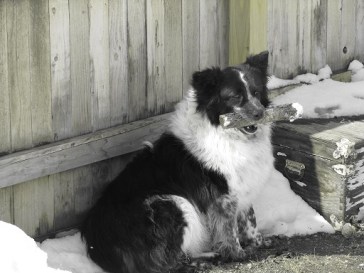
Dorchester isn’t with me anymore, but I still go on walks with both of the Heelers. We all walk a little slower these days. Our walks are shorter and there’s not a lot of rabbit chasing anymore, but they are are enjoyed, never the less. My son’s dog, Zaar, was Dorchester’s mate. They were the same age, each joining our family at about the same time. As Zaar ages, he is not only losing his sight, but his hearing, as well. He is very frightened of thunder and storms always gave him major anxiety attacks, so his not being able to hear so good hasn’t been a totally bad thing, but it does pose new problems on our walks. Zaar grew up walking on our property, so he thinks he knows where he’s going and doesn’t always pay attention to where his walking companions are headed. He gets into ‘the zone’, nose up, sniffing th air, and no matter how loud I yell, he doesn’t hear me, causing me to have to chase after him, touching him to get his attention and get him back on track. Zaar was also raised around a Heeler who was deaf, so he learned hand signs and once I have his attention, he will follow, but it’s getting his attention that’s the trick.

The exercise he gets from his walks is what keeps him healthy and mobile. As I watch him getting older, I feel a sense of urgency, knowing that time may be running short for our walks and I want to enjoy my time with him while I can. I guess I just don’t know how to be a seeing eye person for a dog that can’t hear. He doesn’t hear my stick. I must figure out how to adapt and rise to the challenge, because left to his own devices, Zaar would soon be lost, especially after dusk, when his eyesight is at its poorest. It seems none of us are as young as we used to be.
It’s easy to look back and see what we’ve lost. ‘Hindsight is better than foresight’, and all that. Looking to the past, all our regrets become vividly obvious, but we tend to embellish the good times, as well. I think happy moments may be remembered as euphoric, more so than what they actually were, because those are the times we wish to hold onto. When I look back, there’s a dividing line to my timeline, seperating my life before my teenaged son died, and post-death, signifying the time when he was no longer in my life. That’s my loss. The time when Mike was alive seems brighter, more vivid in my memories. He was my biggest fan, with aspirations and the ability to be a writer himself. He was a unique soul and a source of inspiration for me.
These days, I feel a sense of urgency to make this writing for a living thing work while I still have time to do so. I have certainly taken enough time making it happen. I was 52 when I finally earned my M.F.A. and 53 before I became a published author. I’m sure I have some good years left, but I have to wonder if there will be enough for me to realize my dream. I wish I could go back in time and do things differently, but of course that’s only possible in my fiction.
 Now, with time travel, there’s the possiblity of doing things over, making things turn out different. Granted, it doesn’t usually turn out well when you go messing around with time, but things can, on occasion turn out better. If you don’t believe me, just take a look at MY time travel short, Last Call. Things aren’t going good for Derek, but he finds a way to make his life better. Maybe I could go back and get started on this career path a lot earlier in life. That’s not Derek’s solution, but it could work.
I don’t live in Derek’s world and there is no Last Call bar for me. I know I can’t just sit back and wait for things to happen, so if I want to reach my dreams while I’m still alive to see it, I have to take action. I must market what I already have published, but even more importantly, I must keep writing. So, my plan is to just keep at it. Eventually, my efforts will pay off. I have to believe that.
So what if I didn’t earn my M.F.A. until I was 52 and wasn’t published until I was 53? I’m not the only one to get a late start on their dream. After all, according to an inspirational Facebook post by Karen Caron, Stan Lee’s first big comic came out at age 40, Morgan Freeman had his first major movie role at age 52, and Julia Child didn’t make her cooking show debut until age 51. That puts me in some pretty good company.
Young or old, all we can do is look to the future. (There’s that time thing again.)

With that in mind, I’ve begun the writing and compilation of my memoir about my son’s life and death, finally, after nine years. I’ve decided that it’s time to reunite the two time periods that divide my life and my thinking. After his death, I wrote poems and stories about him, pouring my grief out onto the page. I compiled all the photos of him into a slideshow for his memorial dinner. In addition to that, I plan to contact some of Mike’s friends and request them to contribute writings of their own about who Mike was for them. It’s going to be a massive amount of work, but his story deserves to be told and there is no one else who can tell it. It will be my first non-fiction work of book length.
I’ve always said that I never have less than three works in progress. Michael: How my son became a teen suicide statistic, will make the third one, as I’m also writing the first draft of the sequel to my western novel, Delilah: The Homecoming and I’m revising the first book in my science fantasy Playground for the Gods series, The Great Primordial Battle. Writing is an integral part of my life, past, present and future. I may be an old woman, but there is no other direction in which my life can go. Mike would be proud of my accomplishments so far and I think he would be glad that his story will finally be out. After nine years, it’s about time.
Like this post? Subscribe to Writing to be Read for e-mail notifications whenever new content is posted or follow WtbR on WordPress.
Share this:

So, How Do You Build a Reader Platform?
Posted: August 20, 2018 Filed under: Advertising, Books, Fiction, marketing, Nonfiction, Paranormal, Promotion, Reader Platform, Science Fiction, Western, Writing, Writing to be Read | Tags: book marketing, marketing, Reader Platform, Social Media Marketing Leave a comment
I’ve heard it asked if a reader platform is even necessary. So, let me ask you, as writers and authors, without readers what are we? Of course, we need to have a reader platform. All it is is a fan base equivilent, but it can make the difference between the success and the failure of our books. Without my readers, there would be no one to buy my books, read my books, recommend my books or review my books. So, how does one build a reader platform?
It’s a good question. And I’ve heard of many different methods of doing just that, and none of them require construction tools. Not even a screwdriver. All it takes is what we writers and authors do best: words, communication, contact.
 I started out with this blog, Writing to be Read, and the number of subscribers is climbing as I work to improve the content. The thing is, there was no way for me to capture those subscriber emails or reach out to them. So, I created a monthly newsletter, and added a sign-up pop-up, offering a free e-book as a thank you for subscribing. If you sign up for the newsletter, you get a free e-copy of my paranormal mystery novelette, Hidden Secrets, which isn’t available anywhere else.
The trick is to get people to read your work in the first place. You can’t have a fan or a reader unless they have read something you’ve written and liked it. Nobody will follow you, or write a review, or join your reader group, if they haven’t first, read your book. One way to do that is to identify your target audience and promote to them, offering them all the reasons why they will like your work.

Another, and probably the most important, is to be sure your writing is fun and entertaining, if you’re writing fiction. With non-fiction, you need to make the subject matter interesting and present it well. And humor never hurts, no matter what you write. Even dark works can have dark humor. In short, whatever you are writing, make sure that it is quality writing. This should go without saying, but they won’t become your loyal readers if they can’t make it through the book due to the poor quality writing.
After all, a reader platform is really just a fan base of those who are interested in your work, and by finding them and adding them to your mailing list, you are effectively building a reader platform. With this method, I had a big initial burst of subscribers following the launch of a marketing campaign, then it tapered off to a slower rate of growth. My list is growing slowly, but I’m gaining a few new subscribers every month.
Other authors I know start Facebook reader groups or ask fans to join their street teams. I don’t know how well they work, but it seems there’s always activity happening in these groups and they seem to have lots of members. I would think you would have to have a solid fan base to pull ‘groupies’ from, so perhaps this is just an additional step, rather than an alternative method. Most of the authors I know who have street teams or Facebook reader groups, swear they don’t know what they’d do without them, relying on them to spread the word on new releases, post reviews on release day, find reviewers for their books, and/or show up for support at book events. These authors are harnessing the power of their readers and directing it to where it is needed most. And I’m thinking they might be on to something.
Part of the problem may be that I’m a multi-genre author. To date, I’ve published a western novel, Delilah; a paranormal mystery novelette, Hidden Secrets; and a science fiction time travel short story, Last Call. I’ve also had a dystopian short story and a crime romance short story published in anthologies, as well as shorts and poetry online. Western readers, science fiction readers and paranormal readers are not all included in the same crowd. I’m also eclectic in my reading habits, but most folks want to read only their preferred genres. Now how do I find readers that are so hard core they want to read everything I’ve published?
My answer is, I don’t. I’m finding that I must seek out readers for each one seperately and build a seperate reader platform for each one. The western readers who liked Delilah will be interested in the sequel, The Homecoming, when it’s finished, but they may not be interested in the books for my science fantasy Playground for the Gods series, when the first book is released. And many of my readers are authors themselves and they may be interested in the content on Writing to be Read, rather than any of my fiction works. When I look at it in this way, the task at hand seems to be enormous, the goal so far away. I’m not sure where to start, but I’m determined to find out.
I think a good start would be to find out which of my works the readers I already have are interested in, so I’ve added a genre question to the pop-up for the newsletter sign-up, so that I can place readers on different lists and then new subscribers can receive notifications concerning those works that they are interested in.
All of this marketing stuff is new to me and I’m learning as I go, so if you do sign-up for my monthly newsletter, I’d love it if you’d drop me an email and let me know how the whole sign-up process went, and what worked for you and what didn’t. After all, I’m smart enough to know that without you, my readers, I wouldn’t sell any books. I appreciate the fact that you stand by me. Let me hear form you at: kayebooth(at)yahoo(dot)com.
Like this post? Subscribe to Writing to be Read for e-mail notifications whenever new content is posted or follow WtbR on WordPress.
Share this:

Interview with author Tom Johnson
Posted: July 2, 2018 Filed under: Author Profile, Books, Children's Books, Fiction, Interview, Mystery, Nonfiction, Publishing, Self-Publishing, Super Hero, Writing | Tags: Author Interview, Children's Stories, Nofiction, Publishing, Pulp Fiction, Writing 5 Comments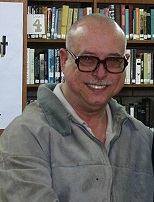
Today I have the pleasure of interviewing an old hand in the writing and publishing business, author Tom Johnson. Tom has written stories from a young age. He has been publishing his writing for more than twenty-two years and has over eighty books in publication. He grew up reading comic books and pulp fiction, becoming a collector in adulthood and his stories reflect the fascination that those books held for him. He has also written numerous nonfiction books and is currently involved in writing children’s stories. Please help me welcome Tom Johnson.
Kaye: Hi Tom. Although in the past, you’ve written and published many different genres, you are currently writing only children’s stories. So, let’s talk about that. Tell me a little about your stories.
Tom: My children stories are about 1k and meant as bedtime tales, and to be read in classroom or library settings. They are short stories with little morals to teach children something about life.
Kaye: Are they a series or stand alone?
Tom: They are a series, and published in anthologies about once a year. There have been four anthologies so far. I was invited to participate beginning in volume #3. The anthology is called Wire Dog Storybook. Here is the background. True story. A young girl, Ellen Walters, asked her father, David Walters, if she could have a dog, and he said, “No.” So she found an old wire hanger and shaped it to resemble a dog, and called it wire dog. David Walters was fascinated by her ingenuity and created the Wire Dog Storybooks. So the stories usually feature Ellen and Wire Dog, but always Wire Dog. Five of my stories have been published so far, and I’ve written three more for the 2018 yearbook when it comes out at the end of the year.
Kaye: What age group are they aimed at?
Tom: I feel that we should begin reading to our children by age one. With that in mind, my stories are aimed at the age group of 1 to 5. However, older children will enjoy the stories, as do adults.
To get a better idea of what Tom’s children’s stories are like, you can get a free copy of one here. They are short and can be read in only a few minutes.: Wire Dog Has An Ugly Mood Day – Or The House of 1000 Mirrors https://wiredogstories.com/2016/01/19/story-40-wire-dog-has-an-ugly-mood-day/
Kaye: What differences do you see between writing for children and writing adult fiction?
Tom: Adult fiction usually means, “no holds barred”, while writing children stories you want to stay away from violence, horror, and adult themes. Keep in mind, young children absorb what they hear quickly, and some themes could have an adverse effect on young minds. When writing for children we must keep this in mind.
Kaye: What appeals to you about writing for children?
Tom: Do you remember the old radio show for kids, Let’s Pretend ? It produced shows for children that acted out fairy tales and light adventures – nothing as harsh as today’s cartoons that are aimed at our youth. Well, I have the chance to import my love for adventure in tales easily understood by young people; children who some day may also experience that same love to pass on to their children. Stories that give our children a moral to live by, not “It’s clobbering time!” Or Pow! Bang! Boom! It’s something my mother did for me when I was little, and now I have the same opportunity, and I’m not going to pass it up.


You can get the Wire Dog books here:
Wire Dog Storybook #3 http://www.lulu.com/shop/david-clyde-walters/wire-dog-storybook-3-in-full-color/paperback/product-22554849.html
Wire Dog Storybook #4 http://www.lulu.com/shop/david-clyde-walters/wire-dog-storybook-4-in-color/paperback/product-23424745.html
Kaye: You have wanted to write for children since you were little and your mother used to read to you.
Tom: Oh, yes. I hope that mothers are still reading to their children. They learn at such a young age, and we’re missing an opportunity if we fail them when they’re young. They will never forget what they learn as children, it’s when their minds are growing and grasping at everything. I think one of the first words they learn is, “Why?”
Kaye: What were your favorite children’s stories?
Tom: Really, I would have to look them up in the book of fairy tales on my shelf. There were so many she read to me. Knights saving young damsels come to mind. I remember one particular fairy tale where the princess was on a glass mountain, and the young knight had to save her. She watched each day as a knight riding brown horse attempts to scale the glass mountain, then a knight on a white horse, and so on, until the final day when a knight riding a great steed scales the mountain, and we find out that he was the knight on the brown horse, the white horse, etc. It wasn’t the color of the horse, but the persistence of the knight that finally achieved the goal.
Kaye: In what ways do the stories you write emulate those favorites from your childhood?
Tom: Like the fairy tale I mentioned above, my stories will also have a similar moral – it’s not the color of the horse, or the knight’s armor, but his persistence that wins the hand of the princess. Do the right thing, for the right reason. Persevere. If you don’t succeed today, try and try again.
Kaye: You have written since you were a young man, for fifty some years, and you had your own small press for many years. Always, your life seems to have writing at the center of it. Looking back on your life, what does writing mean to you?
Tom: I think writing was always an escape to other worlds, other realms, and other dimensions. We could be anyone we wanted, go anywhere we wished, and experience great adventures. We create those worlds and people we want in them, and our heroes and heroines are who we want to be, or the friends we want beside us. We choose those things that mean the most to us. Whether we’re a cowboy or cowgirl, Conan or Xena, we bring the characters to life. That’s what writing means to me, to give life to my characters.
Kaye: How do you see the rise of digital publishing affecting authors of today?
Tom: Publishing has never been easier. When we were publishing the small press magazines, it was hands on. We did every aspect of the business, from reading, approving or rejecting, editing, set up and printing, then mailing to subscribers and bookstores that carried our magazines. Today we have Lulu and Amazon for all that. We just write, they publish. Anyone can be a writer or publisher now.
 Kaye: What is the strangest inspiration for a story you’ve ever had?
Tom: I had a dream one night. A young boy was in the woods dying when a strange being found him and comforted him as he passed. The strange being was an alien and I saw the saucer-shaped craft behind him. When I woke the dream stayed with me. Did the alien kill the boy? Why was the alien there? What was the boy doing in the woods? It wouldn’t let go of me. I wrote What Goes There from that dream. The boy was dying from snakebite and the alien took his pain from him so he could pass more easily. Then I made a mystery with the plot. The story is part of my book, These Alien Skies.
Kaye: Is there anything unique or unusual about your writing process?
Tom: When I write, I don’t want to be disturbed. No music, no background noise at all. My work computer is in my bedroom. I close my door from all outside communication, telephone, wife, neighbors, etc. I have to be alone when I write.
Kaye: You’ve written over eighty books in many different genres over the course of your career. Which of your books would you say are your favorites? Why?
 Tom: If we’re speaking of my fiction stories I would probably say my favorite is Guns of The Black Ghost, as it is my homage to Walter Gibson and his character The Shadow (remember him). The Shadow was one of my favorite radio dramas as a kid, and I met the creator of the character, Walter Gibson, in the mid-1970s and we were friends until his passing. I always wanted to write a Shadow novel, but copyright protection kept me from it, thus my own character, The Black Ghost came into being.
However, my non-fiction research books are probably my best sellers. I’ve written over half a dozen of them. A lot of work went into them. A lot of reading and studying, and I think it paid off, as fans have all bought the huge books for the data. These are books that don’t get thrown away, but have a special place on their bookshelves.
Kaye: So, tell us a little about your nofiction books. What is the subject matter and how did you come to write them?
Tom: As a pulp collector it was natural for me to become a historian. I had completed runs in many of the lead characters, thus had the opportunity to study the novels for research, identifying authors, plots, etc. At the time I was writing fiction and Introductions for ALTUS PRESS books, and the publisher wanted my research put into books. Some of those series were Secret Agent X Companion, Operator #5 Companion (History of The Purple Wars), The Phantom Detective Companion, The Black Bat Companion, Dan Fowler’s G-Men Companion, and Echoes 30. Several ran for twenty years, and 171 issues. Some not so long, but just as popular to the fan and collectors today. There may be others, my mind is slipping, but these were the big volumes. They covered the complete pulp series of each title. Echoes 30 covered conventions, pulp books, authors, artists, and publishers. All are in demand and have been good sellers.


Kaye: Are you a plotter or a pantser? Why?
Tom: I’m a pantser. I never could understand why you needed to write a fifty-page plot outline, just write the darn book. Once the words start flowing you don’t want them to stop. And they will, if you’re outlining.
Kaye: What do you think is the single most important element in a story?
Tom: Characterization. Make your characters come alive. You want readers to connect to them, feel for them, and be drawn to them. The plot will work itself out, but if your characters aren’t real I don’t care how much of a plot you have, it will bomb.
Kaye: If writing suddenly made you rich and famous, what would you do?
Tom: I don’t know that I would want to be rich and famous. What would be next? I want to always be reaching, always trying to entertain. If I set my goal for rich and famous I might forget about the entertainment and pleasure we get from writing. If I entertain one person, then I am already rich. Besides, we already have money, and fame is fleeting at best.
Kaye: What’s the best piece of advice you were ever given?
Tom: Write what you know. I’ve read a lot of books where the author is writing about something s/he knows nothing about, and it shows. I know information is at the tip of one’s fingers today, but if you haven’t truly experienced something you will come off as unbelievable if you try to write about the subject.
I want to thank Tom for joining us today on Writing to be Read and offering up some really great answers to my questions. I have really enjoyed having him. If you’d like to learn more about Tom Johnson or his books you can check out his website or his Amazon Author Page.
Like this post? Subscribe to Writing to be Read for e-mail notifications whenever new content is posted or follow WtbR on WordPress.
Share this:

Interview with author B. Lynn Goodwin
Posted: June 11, 2018 Filed under: Author Profile, Books, Interview, Memoir, Nonfiction, Self-Help, Writing, Young Adult | Tags: B. Lynn Goodwin, Book Review, Love, Memoir, Never Too Late, Writing 3 Comments
My guest today is an author with a unique story. She’s published three books, two of which are nonfiction, inspired by her own experiences. The third is a work of fiction, so she traverses both realms. In addition she does editing and acts as a writing coach for her fellow authors on her site, Writer Advice. Her book, Never Too Late: From Wannabe to Wife at 62, which she’s going to tell us about, has recently become a 2018 National Indie Excellence Award finalist. I am pleased to welcome B. Lynn Goodwin to Writing to be Read.
Kaye: Would you share briefly the story of your own publishing journey?
Lynn: I began writing seriously while I was also caring for my mother in the last years of her life. It was a great outlet. I also began Writer Advice, www.writeradvice.com, which started as an e-mail newsletter with a mailing list of 35. Sorry this isn’t linear—but life events often overlap.
Since my mother was a private person, I decided not to tell her story. A better option was writing a book to help caregivers journal relieve stress, and You Want Me to Do WHAT?: Journaling for Caregivers was born.
Afterwards, I returned to a book I’d started years earlier, a YA that I renamed Talent. It was incomplete until I gave the protagonist, Sandee Mason, a brother. The pitch became “Sandee Mason wants to find her talent, get her license, and stop living in the shadow of her big brother, who disappeared while serving in Afghanistan.” The publisher, Eternal Press, has changed three times since I signed the contract. While I was doing both of these books I also started running writing contests on Writer Advice and had the pleasure of reading some amazing books from Random House for review.
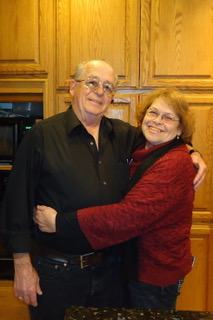 Kaye: Your most recent book is Never Too Late: From Wannabe to Wife at 62. This book is your story in memoir. Would you tell us a little about how this book came into being?
Lynn: I knew Richard was special by our second date. Maybe earlier. To find out how I knew, read the book. 😉
I began taking notes early on, because he told me he was looking for a wife before we met, and I thought that if this worked out, or even if it didn’t, the story of a 62-year-old woman who had never been married and a two-time widower she met on Craigslist had to be unique. To find out why, read the book.
Kaye: You recently became a 2018 National Indie Excellence Award finalist for Never Too Late. Did you do anything special to get to that point?
Lynn: Only if you consider entering special. I’ve been looking for indie contests where I thought I might stand a chance. This one looked a bit too big, but I entered it anyway.
Kaye: Writing memoir requires an author to open up and reveal parts of themselves. For many that’s hard to do. What motivates you to share your story with others?
Lynn: I figured if a woman who looked like me and had my level of inexperience could get married at 62 there was hope for everyone. Women needed to know that. Richard read the book before I sent it out, and I put the rest of the world on a back burner.
Kaye: What is it you hope your readers will come away with from Never Too Late?
Lynn: It is never too late to find happiness, especially when you accept what is and is not within your control.
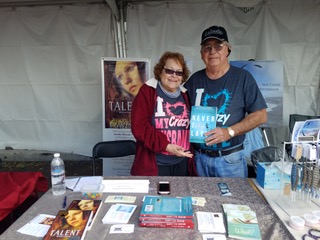
Kaye: Your previous works include You Want Me To Do What?: Journaling for Caregivers, and Talent, the story of a young girl who lost her older brother in Afghanistan and is struggling to get out from under the stigma of his death to become her own value. How is Never Too Late different from the other books you’ve written?
Lynn: Every book is different. Never Too Late is a memoir that reads like a novel. The only other novel I’d written was for young adults. The only other book for adults I’d written was about empowering oneself by journaling. Self-help meets how-to, as one reviewer put it.
Kaye: What is the strangest inspiration for a story you’ve ever had?
Lynn: Tough question. I’ve played around with telling a story from the pov of a mentally ill woman, and that was both unsettling and intriguing. I’m not mentally ill, but I’ve read about mental illness, and I’m fascinated by all the different ways we see the world.
Kaye: On your site, Writer’s Advice, you give out a lot of advice to fellow writers. What’s the best piece of advice you were ever given?
Lynn: Although I’m not sure what was best, here are the statements I remember well:
1. When free writing, go wherever the writing takes you.
2. Edit later.
3. Go deeper (whatever that means to you).
4. Put your writing in a different font and color and read it out loud or have someone read it to you. It will help you catch the errors you never see.
5. You don’t lose until you quit trying.
Kaye: If writing suddenly made you rich and famous, what would you do?
Lynn: Seriously? I don’t think there’s much I’d change, though if I were famous, I’d make more time for interviews, and if I were rich, I hope I’d give to causes that make the world better.
Kaye: For you, what is the biggest challenge of being a writer?
Lynn: I couldn’t say whether it’s being more open to suggestions or rising above the doubts that plague all of us (except the top 3% and even they may have doubts).
Kaye: What kind of Chinese food do you order all the time?
Lynn: Zucchini chicken or beef broccoli with steamed rice, but we don’t eat Chinese food all the time.
I want to thank Lynn for joining us and sharing with us today. It’s been a pleasure chatting with her. And thank all my readers for joining us, too. If you want to learn more about B. Lynn Goodwin, check her out on Writer Advice or visit her Amazon Author page.
Like this post? Subscribe to Writing to be Read for e-mail notifications whenever new content is posted or follow WtbR on WordPress.
Share this:

“Courage in the Face of Evil”: the true life story of a concentration camp survivor
Posted: June 1, 2018 Filed under: Biography, Book Review, Books, Nonfiction | Tags: Biography, Book Review, Concentration camps, Courage, Courage in the Face of Evil, Mark Shaw, Nazi Germany, Nonfiction, Survivor, True Story Leave a comment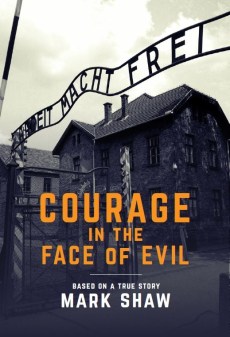
Courage in the Face of Evil, by Mark Shaw is the compelling story of a concentration camp survivor, drawn from her own journals from the time. Shaw skillfully captures Vera’s voice and brings readers into the camp, placing us there to stand witness to the horrors that its captives faced from day to day.
When German Christian Vera Konig is caught aiding the Jews in Nazi Germany, she never dreamed she would spend the next eight years in the concentration camp. What followed was a daily struggle for life and death, for herself and for those all around her. Others drew on her strength and courage, as well as her kindness. A true story of heroism in the face of the worst imaginable circumstances. Vera Konig demonstrates true Courage in the Face of Evil.
Courage in the Face of Evil will touch you in the depths of your soul. So skillfully crafted is this book, that your heart will break each time another friend is lost and cringe at every pain and injustice Vera is forced to suffer. You will cheer for each small battle Vera wins. You will rejoice when the allied troops arrive and Vera and her friends are saved. I give Courage in the Face of Evil five quills.

Kaye Lynne Booth does honest book reviews on Writing to be Read in exchange for ARCs at no charge. Have a book you’d like reviewed? Contact Kaye at kayebooth(at)yahoo(dot)com.
Share this:

2018 Writing the Rockies Conference promises something for everyone
Posted: May 21, 2018 Filed under: Fiction, Nonfiction, Poetry, Publishing, Screenwriting, Screenwriting, Self-Publishing, Writing | Tags: Creative Nonfiction, Genre Fiction, Poetry, Publishiing, Screenwriting, Writing, Writing the Rockies Conference Leave a comment
As I mentioned in last week’s post, An Adventure in Book Marketing, I will be sitting as a panelist at Western’s Alumni Roundtable at the Writing the Rockies Conference in July. There I said that was my next experiment in marketing, but to be honest, although copies of Delilah will be available at the book fair, run by Crested Butte’s Townie Books, I’m not expecting my sales to suddenly shoot up off the charts. Writing conferences, as a general rule, are not places where you sell a lot of books, but I’m exciting to be going and representing Westerns M.F.A. in Creative Writing program, (I’m actually representing both of my concentrations, screenwriting and genre fiction), for other reasons. What writing conferences are generally good for is making connections within the writing community, and Writing the Rockies is no exception. It seems Western, or maybe even the Gunnison Valley is especially prolific in this area, because you begin to feel yourself being pulled in to fantastic world of writing and publishing as soon as you step onto the Western campus. And the connections I’ve made at Western and at the conference have been very useful to me in some unexpected and surprising ways. Never have I attended this conference without coming away with some valuable new connections, some of which have turned into long lasting friendships, as well.
This year, it looks like they’ve got a great line-up, including fantastic opera workshop performance of Lottie Silks, with music by Jay Parrotta and libretto by Western Poetry and Genre Fiction student Enid Holden, directed by Ben Makino and Andrew Sellon, to go along with their infamous and very intense poetry symposium. They also have some not to miss Keynote speakers lined –up: Mark Todd, author and founder of Western State’s M.F.A. in Creative Writing Program, for the conference Keynote; award winning poets Ned Balbo and Jane Satterfield for the poetry Keynote; Kevin J. Anderson, author of over 140 novels, publisher at WordFire Press and a member of Western’s M.F.A. program staff for the publishing Keynote; Patrick Pexton, former ombudsman for the Washington Post for the creative nonfiction Keynote; and Emmy Award winning screenwriter, John Bowman for the screenwriting Keynote; and Michaella Roessner, published author and M.F.A. program faculty for the genre fiction Keynote. Other presenters in the publishing track include Darrin Pratt, Editor of the University of Colorado Press and immediate past president of the Association of American University Presses, D.H. Tracy, Editor of Antilever Press, and others.
In addition to their always informative workshops, sessions and panels, pitch sessions and manuscript critiques are available, their annual hike above Crested Butte will take place, three day intensive workshops, and full day seminars. Special presentations of Comedy is Hard, by Mike Reiss, directed by William Spicer; and Multitudes: An Evening with Walt Whitman by Kim Nuzzo and Valerie Haugen Nuzzo. Film screenings including How Murray Saved Christmas, by Mike Reiss and the highlights from the Crested Butte Film Festival with festival co-director, Michael Brody will also be available.
As you can see, Writing the Rockies is a conference promises something for everyone. I’m excited to be a part of it and I hope you will join us. This is the 19th year running for this wonderful conference and it grows with each passing year. This year the conference will run from Wednesday, July 18th through Sunday, July 22nd. The cost is $300 for the entire five day event if you register before July 1, and $350 after that date. The good news is, although the conference is fully open to the public, every student of Western’s M.F.A. Program in Creative Writing goes as a part of the curriculum, and there are scholarships available for alumni, K12 educators, and Gunnison Valley residents, as well as anyone else who wishes to apply. You can sign up for the 2018 Writing the Rockies Conference or apply for scholarship here:
https://www.western.edu/writing-rockies-annual-conference
For more information contact:
David J. Rothman, Conference Director / 970-943-2058 / drothman@western.edu
Mark Todd, Conference Coordinator / 970-943-2016 / mtodd@western.edu
Michelle Wilk, Office Support Coordinator / 970-943-2163 / mwilk@western.edu
On a similar note, Western State Colorado University still has a few spots open for their low-residency M.F.A. in Creative Writing Program, which begins in July. If you have an undergraduate degree and you’re interested in persuing a career in writing genre fiction, poetry or screenplays or a career in publishing, their program may be just what you’re looking for. Low-residency means you must attend physical class on campus for two weeks each summer and the rest of the courses are online. (Remember, if you’re in the program, you get to attend the Writing the Rockies Conference as a part of the curriculum.) Their faculty consists of successful published authors, successful screenwriters, and distinguished poets. Looking at the successes of myself and my fellow alumni, I have to say they offer useful skills and knowledge that can be applied in the writing industry.
For more information: https://www.western.edu/academics/graduate/graduate-programs-western/graduate-program-creative-writing-low-residency-16
Like this post? Subscribe to Writing to be Read for e-mail notifications whenever new content is posted or follow WtbR on WordPress.
Share this:

Interview with Author Mark Shaw
Posted: April 30, 2018 Filed under: Author Profile, Biography, Book Review, Books, Inspirational, Interview, Nonfiction, Writing | Tags: Author Interview, Biographies, Courage in the Face of Evil, Mark Shaw, Nonfiction, The Repoorter Who Knew Too Much Leave a comment

Like this post? Subscribe to Writing to be Read for e-mail notifications whenever new content is posted or follow WtbR on WordPress.
Share this:

“Stress: How Stress Affects Your Life and How to Manage It”: Basics for Stress Management
Posted: June 2, 2017 Filed under: Books, Nonfiction, Self-Help | Tags: Dr.Christine Rose, Nonfiction, Self-Help, Stress, Stress Management, Writing to be Read Leave a comment
Stress: How Stress Affects Your Life and How to Manage It, by Dr. Christine Rose, provides useful information which could be life changing if utilized. The book provides a basic overview of stress and its effects on the human body, and several methods of dealing with stress.It covers the different aspects of stress well. It tells readers what stress is, how our bodies respond to stress and why they respond that way, and what the effects of stress on the body are, as well as how it might be controls to make us happier and healthier readers.
Dr. Rose neither talks over, nor talks down to, her readers, but uses layman’s terms that are easy to both read and understand. The suggested methods of managing stress are not new, but they are practical and effective. I give Stress: How Stress Affects Your Life and How to Manage It four quills.

Kaye Lynne Booth does honest book reviews on Writing to be Read in exchange for ARCs at no charge. Have a book you’d like reviewed? Contact Kaye at kayebooth(at)yahoo(dot)com.