“Disappeared”: A novel that hits home on multiple levels
Posted: October 2, 2020 Filed under: Book Review, Books, Fiction, Mystery, Thriller, Young Adult | Tags: Book Review, Disappeared, Lucienne Divers, mystery, Thriller, Writing to be Read, Young Adult Fiction Leave a comment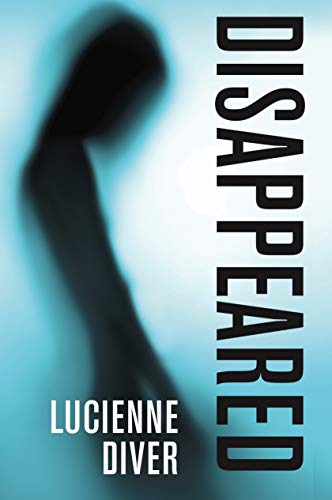
Disappeared, by Lucienne Diver is a Y.A. novel that deals with real life issues. This story was well written, easily attaining the suspension of disbelief in the reader. This book appealed to me because the characters and the situations are relateble for young people on so many levels.
This is the story about what two teenage siblings, Jared and Emily, do when their mother disappears without a trace. People disappear every day, and many of them are never heard from again. This happened with a woman in a community near to me, who disappeared last May. As I’ve watched the story unfold in the local and national media, I’ve often wondered often how the family could deal with the not knowing and all the questions left unanswered.
Disappeared gives a realistic portrayal through the eyes of the two teens of what it would be like, to have that missing person be your mother, to feel the need to uncover the truth, no matter what the cost, and to internalize feelings too painful to deal with on a concious level. This book deals with real life issues which young adults today may find themselves dealing with. Divers jumps into the sensitive issues of families on rocky ground and teen depression with both eyes open, handling them in a kind and caring manner. These are issues that can be only too real for today’s teens, making the subject matter easily relatable within a Y.A. audience.
Filled with surprises, complications and plot twists, this story is crafted to keep the reader guessing. I give Disappeared five quills.

You can purchase your copy of Disappeared here: https://www.amazon.com/Disappeared-Lucienne-Diver-ebook/dp/B0875K2V3J/ref=sr_1_1?crid=2Q75CDGNWKDJD&dchild=1&keywords=disappeared+lucienne+diver&qid=1601589693&s=books&sprefix=Disappeared+Divers%2Cdigital-music%2C279&sr=1-1
Kaye Lynne Booth does honest book reviews on Writing to be Read in exchange for ARCs. Have a book you’d like reviewed? Contact Kaye at kayebooth(at)yahoo(dot)com.
Share this:

Meet poet and author D. Avery plus review
Posted: September 26, 2020 Filed under: Book Review, Books, Interview, Poetry, Review, Treasuring Poetry | Tags: Author Interview, Book Review, D. Avery, Poetry, Robbie Cheadle, Treasuring Poetry, Writing to be Read 60 Comments
Today, I am delighted to welcome poet and author D. Avery. Ms Avery is the creator of the fun and well-known characters Kid and Pal who frequent Carrot Ranch Literary Community She also has her own blog where she shares her flash fiction, poetry and other literary endeavours. You can find her blog here: https://shiftnshake.wordpress.com/.
At first I was thrilled to be asked to participate in Treasuring Poetry with Writing to be Read and Robbie Cheadle. Then I read the questions! Too hard! Actually, I misread the questions and was flustered enough to consider who my favorite poet might be, let alone poem.
Robbie’s questions led me down many a rabbit hole, but perhaps not so many as I might have if I were under the same roof as my collection of poetry books. I’m not, so I let my mind travel and recall those shelves and what I have read lately. Often times my favorite poet or poem is simply the one in front of me, so recently I have enjoyed Conrad Aiken and Mary Oliver. But a favorite poet?
Still mistakenly contemplating a poet as opposed to a poem, and still unable to name just one, I at least realize I tend to most admire traditional Japanese poetry as well as the work of Rumi and of Hafiz. I like a short poem that makes me say, “Ah!” or even “Awe…” then “Ha!” If I could peruse my shelves I’d give my favorite examples, probably from a book called Japanese Death Poems; either that or I’d be lost in re-reading that treasure. As it is, this assignment got me re-reading Hafiz’s The Gift, translated by Daniel Ladinsky, and from that I came to see that many of Mary Oliver’s poems are in that Sufi vein, poems that, like Hafiz, are conversational yet intimate, not just with the reader, but with the subject, God. Now there’s a rabbit hole. But closer to home and in some ways more comfortable for their hominess are the poems of Robert Frost. He too writes with the wit and wisdom, often with a quiet humor, that I admire in the Sufis. Here are two lines from the New England bard:
We dance round in a ring and suppose,
But the secret sits in the middle and knows.
Robert Frost poems are accessible yet have subtleties and layers that can provide that ‘Ah ha’ that gives a poem staying power. As well as displaying an understanding of the spiritual aspects of his world Frost’s poems also reveal a keen observer’s eye for nature. There are many examples, and I never tire of reading Frost, but a favorite poem? I will not choose a favorite. But here are forty-eight syllables in eight lines, Nothing Gold Can Stay:
Nature’s first green is gold,
Her hardest hue to hold.
Her early leaf’s a flower;
But only so an hour.
Then leaf subsides to leaf.
So Eden sank to grief,
So dawn goes down to day.
Nothing gold can stay.
Some will say this poem is about impermanence and the fleeting nature of time. Leaves certainly change their hues in Frost’s New England, and he shows that he has observed this deeply, daily, for the emerging and unfolding leaves of spring and early summer cannot simply be called green, they are in fact shades of yellow and gold, and those might be preceded by cream and yellow flowers. Ah, he’s so observant. And dawn begins golden; “dawn goes down” makes one think of sunset, but it is just day, a day less sparkly than the golden dawn that begat it perhaps. Yes, time flies, but there is much implication in this poem of falling. So Eden sank to grief/ So dawn goes down to day/ Nothing gold can stay. There is nothing extraneous in this short poem; Eden sinking to grief is intentional, making this poem about humanity’s separation from nature, our fall from our golden potential when we were green and new in the world. This poem, without explicitly using seasonal words, has spring and fall entwined, so while that does show the fleeting nature of time, it is also a reminder of the seasons of our lives, and the hues we hold, the hues we live and die by. Just now in Frost’s old stomping grounds the leaves are turning back from summer greens to fall golds, and those colorful autumn leaves will fall, (for nothing gold can stay), but I wonder if that last line offers a bit of hope, the potential of knowing bright hues once more before the onset of winter.
I hope that addresses well enough the first three questions. As far as writing like any well-known poet, I choose— me! But I am not a well-known poet…
I admire many poets and many styles. I think any poet whom we admire is worth examining and, to an extent, imitating. That is what many of the poetry writing prompts do, they encourage us to try out different forms and styles of poetry, to pay attention to syllables and rhyme schemes and such. I sometimes see a form or style that is new to me and try it as a challenge and to learn something new. It’s all good, as long as you are building your own poeming muscles and not trying to write someone else’s poem. We tend to follow the recipe the first time we make a new dish. But then we get flexible and make the dish our own. In poeming too, we are aware that ours isn’t the only way to express the ingredients we find to hand, and we should want to find our own voice. In many ways free verse is the most challenging and difficult poetic form for me. How do you know when it’s done, if it’s done right, if there are no “rules”? That having been said, I am not against bending or even breaking the rules, but they have to be there in the first place for that to work.
Since I was nine years old I have occasionally been blessed by the magical balm of someone saying, “I liked your poem”. It’s a huge thing. I am not a singer or dancer or a visual artist. But sometimes I make pictures with words, and sometimes those words have a rhythm and a cadence or a tone that works, that strikes a chord. It is good to feel like a poem has performed well. And I have come to truly appreciate all the other lesser-known (not yet household names) poets that put their work out on their blogs. From you all I have learned so much and have been shown the great potential and creativity of poeming, and the assurance that poetry is alive and well.
D. Avery
My review of For the Girls by D Avery
This is the first book of poetry by D. Avery I have read and it was a wonderful experience. For the Girls really spoke to me as it is about the path of breast cancer many women walk. By reading these poems, I was able to follow this traumatic journey from diagnosis, through treatment and to remission for many, and death for a few.
The poems in For the Girls capture the concerns aroused by potential discover, the shock of a malignant diagnosis, the support offered by some of the staff at the treatment clinics and the comfort of firm friendships. The also disclose the pain of emotional upheaval being ignored and staff treating a patient with kind impatience.
Some of the verses/poems that struck me the most in this books are as follows:
“Unless.
Some of us have to get them off our chests.
And learn living without them.
Except.
Some, dear friends, couldn’t live.
With or without them.”
from The Girls
“There’s another intruder who lacks
Even the decency of mice or rats
that at least show themselves at night
To show they’ve been in the house all along,
only sometimes out of sight.
Why would you suspect your own house?
Relax, there’s nothing, or maybe only a mouse.
Why would you suspect there’s something there
Quiet as anxiety, maybe under the stairs
or up in the attic, just biding its time
A squatter in the house you blithely call “mine”?
from Intrusion
This collection of poems is freestyle and very bitter sweet. The insightfulness of the poet brought tears to my eyes and brought back memories of ladies I’ve known who’ve walked this same frightening path.
Purchase For the Girls by D Avery
About D Avery
D. Avery (196?-20??) has long been a compulsive poet. Despite a very important day job educating public school children, she is often distracted by this compulsion, as well as by life’s great questions, such as “Kayak, or bike?”. Though she has come to realize that nothing difficult is ever easy, she believes that it’s all good.
About Robbie Cheadle

Hello, my name is Robbie, short for Roberta. I am an author with six published children’s picture books in the Sir Chocolate books series for children aged 2 to 9 years old (co-authored with my son, Michael Cheadle), one published middle grade book in the Silly Willy series and one published preteen/young adult fictionalised biography about my mother’s life as a young girl growing up in an English town in Suffolk during World War II called While the Bombs Fell (co-authored with my mother, Elsie Hancy Eaton). All of my children’s book are written under Robbie Cheadle and are published by TSL Publications.
I have recently branched into adult and young adult horror and supernatural writing and, in order to clearly differential my children’s books from my adult writing, I plan to publish these books under Roberta Eaton Cheadle. My first supernatural book published in that name, Through the Nethergate, is now available.
I have participated in a number of anthologies:
- Two short stories in #1 Amazon bestselling anthology, Dark Visions, a collection of horror stories edited by Dan Alatorre;
- Three short stories in Death Among Us, an anthology of murder mystery stories, edited by Stephen Bentley;
- Three short stories in #1 Amazon bestselling anthology, Nightmareland, a collection of horror stories edited by Dan Alatorre; and
- Two short stories in Whispers of the Past, an anthology of paranormal stories, edited by Kaye Lynne Booth.
I also have a book of poetry called Open a new door, with fellow South African poet, Kim Blades.
Find Robbie Cheadle
Blog: https://www.robbiecheadle.co.za/
Blog: robbiesinspiration.wordpress.com
Twitter: BakeandWrite
Instagram: Robbie Cheadle – Instagram
Facebook: Sir Chocolate Books
Want to be sure not to miss any of Robbie’s “Treasuring Poetry” segments? Subscribe to Writing to be Read for e-mail notifications whenever new content is posted or follow WtbR on WordPress. If you found it interesting or entertaining, please share.
Share this:

The great Roald Dahl
Posted: September 9, 2020 Filed under: Books, Children's Books, Fantasy, Fiction, Growing Bookworms, Reading | Tags: #Reading, Charlie and the Chocolate Factory, George's Marvelous Medicine, Growing Bookworms, James and the Giant Peach, Roald Dahl, Writing to be Read 43 Comments
September 13 is the birthday of Roald Dahl, children’s writer extraordinaire. Of course, Roald Dahl also wrote for adults and I have read and enjoyed a number of his adult stories, including my favourite, Lamb to the Slaughter.
I believe he is best known, however, for his children’s books which are filled with his unusual imagery, imagination and his wacky sense of humour. Roald Dahl is guaranteed to appeal to the most reluctant child reader and his books are a terrific way to get them engaged in a good story which will entertain you as the parent too.
My favourite Roald Dahl book is The Witches, but today, I am going to focus on Michael’s and Gregory’s favourite Roald Dahl books.
Michael’s favourite – James and the Giant Peach
James and the Giant Peach is all about a young English lad who is orphaned at an early age due to an escaped rhinoceros from the zoo eating both his parents. James is sent to live with his Aunt Spiker and Aunt Sponge, who are the most horrible pair imaginable and treat him very badly.
One afternoon when James has been banished from the house by his selfish and mean aunts, he meets an old man in the garden who gives him a packet of magic green wriggly things which he says will change James’ life. Unfortunately, James drops the bag and all the wriggly magical things escape into the ground under an old peach tree.
The next morning, when James wakes up, there is a peach growing on the tree. It grows and it grows and James soon becomes embroiled in an amazing adventure.
I enjoyed this book because it features a number of human sized insects: Miss Spider, Miss Ladybird, the Old-Green-Grasshopper, the Earthworm, the Glowworm, and my personal favourite, the Centipede. This book teaches youngsters all about these amazing creatures and goes a long way towards demystifying them and making them seem really interesting and appealing. This is a refreshing change from the usual disdain that insects are treated with and they use their special talents, like the ability to spin thread, to save the day.
You can purchase James and the Giant Peach here: https://www.amazon.com/James-Giant-Peach-Colour-Roald-ebook/dp/B01LOHTSAU

Gregory’s favourite – George’s Marvellous Medicine
I say this is Gregory’s favourite Roald Dahl book, but it is more accurate to say its my mother’s favourite. My mother loves this story and has listened to it many times with both Gregory and Michael.
George’s Grandma lives with his family and a more tyrannical and awful old lady you will never find in the whole of England. Grandma is set in her ways, takes nasty medication and spends her time complaining, grousing, grouching, grumbling and griping.
One day, George’s parents go out leaving him in charge of looking after Grandma, including administering her medication. George decides to make her his own medicine as the old one isn’t doing the trick. Anything he makes could only be an improvement. All sorts of amazing things go into George’s medicine and when he gives it to the old woman, it has the most marvelous and amazing impact on her.
This is a story filled with vivid imagination and fun.
You can purchase George’s Marvellous Medicine here:
https://www.amazon.com/Georges-Marvellous-Medicine-Roald-Dahl-ebook/dp/B002VISNF8

Charlie and the Chocolate Factory
Charlie and the Chocolate Factory is one of Roald Dahl’s most famous books for children and has been made into a movie twice. My personal favourite of the two movies is the older musical with Gene Wilder.
Here is my favourite song from this movie:
The oompa loompa violet beauregarde song
If you would like to find out more about Roald Dahl, you can do so on the official Roald Dahl website here: https://www.roalddahl.com/home/teachers
And on his fan site here: https://www.roalddahlfans.com/
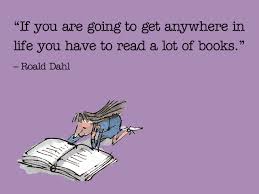
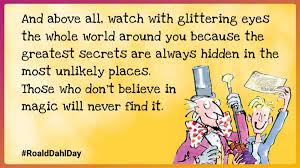
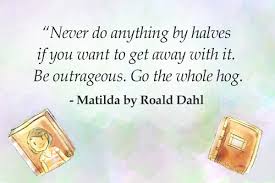
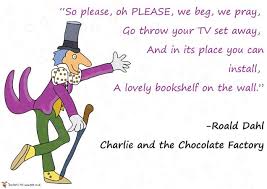
Official quotes from Roald Dahl Books
About Robbie Cheadle
Hello, my name is Robbie, short for Roberta. I am an author with seven published children’s picture books in the Sir Chocolate books series for children aged 2 to 9 years old (co-authored with my son, Michael Cheadle), one published middle grade book in the Silly Willy series and one published preteen/young adult fictionalised biography about my mother’s life as a young girl growing up in an English town in Suffolk during World War II called While the Bombs Fell (co-authored with my mother, Elsie Hancy Eaton). All of my children’s book are written under Robbie Cheadle and are published by TSL Publications.
I have recently branched into adult and young adult horror and supernatural writing and, in order to clearly differential my children’s books from my adult writing, I plan to publish these books under Roberta Eaton Cheadle. My first supernatural book published in that name, Through the Nethergate, is now available.
I have participated in a number of anthologies:
- Two short stories in Spellbound, a forthcoming collection of horror stories edited by Dan Alatorre;
- Two short stories in the forthcoming Spirits of the West, A Wordcrafter Western Paranormal Anthology edited by Kaye Lynne Booth;
- Two short stories in #1 Amazon bestselling anthology, Dark Visions, a collection of horror stories edited by Dan Alatorre;
- Three short stories in Death Among Us, an anthology of murder mystery stories, edited by Stephen Bentley;
- Three short stories in #1 Amazon bestselling anthology, Nightmareland, a collection of horror stories edited by Dan Alatorre; and
- Two short stories in Whispers of the Past, an anthology of paranormal stories, edited by Kaye Lynne Booth.
I also have a book of poetry called Open a new door, with fellow South African poet, Kim Blades.
Find Robbie Cheadle
Blog: https://bakeandwrite.co.za/
Blog: robbiesinspiration.wordpress.com
Twitter: BakeandWrite
Instagram: Robbie Cheadle – Instagram
Facebook: Sir Chocolate Books
Want to be sure not to miss any of Robbie’s “Growing Bookworms” segments? Subscribe to Writing to be Read for e-mail notifications whenever new content is posted or follow WtbR on WordPress.
Share this:

“In the Shadow of the Clouds”: A Steampunk Romance
Posted: August 21, 2020 Filed under: Book Review, Books, Fiction, Steampunk, Young Adult | Tags: Book Review, In the Shadow of the Clouds, Jordan Elizabeth, Steampunk, Writing to be Read, YA, Young Adult, Young Adult Fiction Leave a comment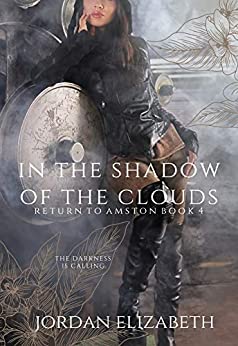
In the Shadow of the Clouds, by Jordan Elizabeth is book 4 in her Return to Amston series, but it works equally well as a stand alone novel. It’s a top rate steampunk adventure with a dash of romance. I’m familiar with the steampunk worlds of this author, and always find her steampunk tales engaging and entertaintaining. (See my review of Runners & Riders, the first book in the series.) This story is no exception.
For Bianca, life hasn’t been easy. After being ignored by her indifferent mother, being turned out into the streets by the madame of the brothel where her mother makes her living, and being sold off by her grandparents to be the bride of an oppressive man, it is no wonder she trusts no one and feels as if there is nowhere where she really belongs. But when her husband dies unexpectedly, she inherits his airship company and sees a way to provide a living for herself, if she can straighten out the mess he left it in. And she’s just headstrong enough to do it with the help of her handsome young pilot.
Charlie hired on as pilot in hopes of one day regaining the air ship company, which once belonged to his family, who were killed by cloud pirates when he was just a boy. He flies every trip with an eye out for an opportunity to exact revenge on those who attacked his family’s air ship so many years ago. He denies the feelings developing for his boss, but when cloud pirates capture Bianca and Charlie rescues her, he learns what truly happened to his family and why, he gets an unexpected surprise that could change his entire life.
In the Shadow of the Clouds is an exceptional YA tale of young romance and adventure. Thoroughly entertaining. This is one of those stories that leaves you smiling. I give it five quills.

In the Shadow of the Clouds is available on Amazon.
Kaye Lynne Booth does honest book reviews on Writing to be Read in exchange for ARCs. Have a book you’d like reviewed? Contact Kaye at kayebooth(at)yahoo(dot)com.
Share this:

“Love/Madness/Demon”: A theological tale of fates
Posted: August 19, 2020 Filed under: Book Review, Books, Fantasy, Fiction | Tags: Angels and Demons, Book Review, Jeff Bowles, Love/Madness/Demon, Writing to be Read Leave a comment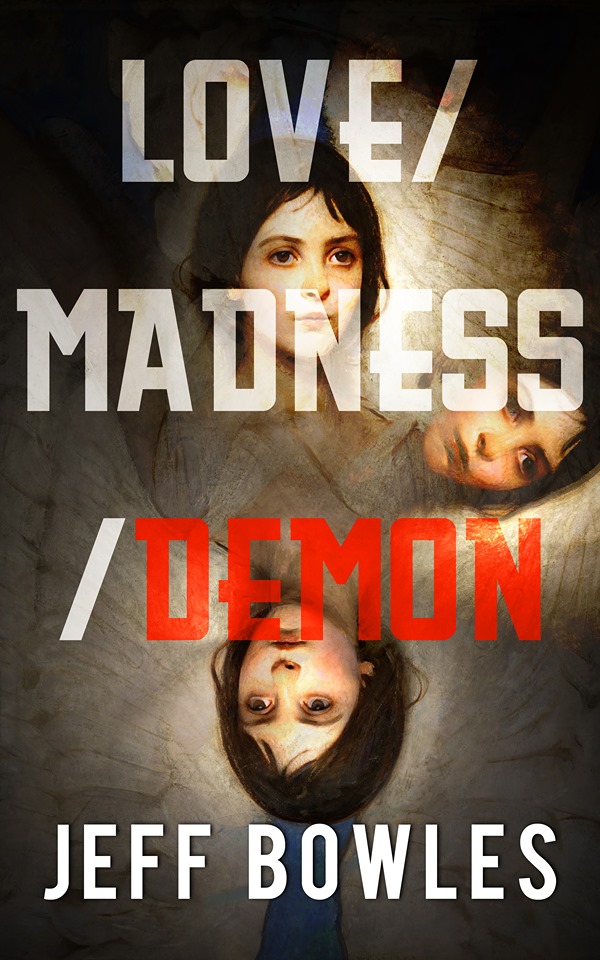
Love/Madness/Demons, by Jeff Bowles might make you question everything you ever thought you believed or disbelieved. This fictional tale was inspired by true life experiences. Are there forces at work that steer our destiny? Is life just a matter of predetermined fate? Does freewill even play a part in our lives? These are questions I’m sure we’ve all pondered at one time or another, and this tale of eternal love and betrayals will bring them once again to the forefront of the reader’s mind.
Arthur and Madeline are twin flames, soul mates, who have encountered each other again and again through many different lifetimes, and are destined to be together once more in this life. Arthur believes he’s in love with Madeline, and it makes no difference that he is married to Allissa, whom he once thought that he loved, and maybe still does. But, stalking his soul mate has not been effective in convincing her to leave her husband, Stuart, and his bizarre behavior lands him in a mental hospital. Is he losing his mind or are the voices that he hears really there? Why does the voice of Madeline tell him to do things that can only succeed in away everyone he cares for?
Madeline is happily married to Stuart, and although she has a fondness in her heart for Arthur, whom she met in college, she doesn’t understand his behavior any more than Arthur’s wife does. She turns her strange experiences with Arthur into a story, with fictiona; characters, whom it seems, have all crossed over into reality and want her dead.
The reader is given some insight, with glimpses into the dimensions of the divine, so we know that Arthur and Madeline are indeed being influenced by higher powers who aren’t necessarily out for their best interests. Destructive forces threaten to destroy their lives and all that they care about, and they are helpless to stop the events which have been put into motion. Or perhaps, they are the only ones who can stop it.
An intricately woven story of heaven and hell and the earthly realm in between, Love/Madness/Demon will keep the pages turning as the story of Madeline and Arthur and their connections to one another unfolds, and the forces of evil turn up the heat. I give it five quills.
Love/Madness/Demon is available on Amazon.
Kaye Lynne Booth does honest book reviews on Writing to be Read in exchange for ARCs. Have a book you’d like reviewed? Contact Kaye at kayebooth(at)yahoo(dot)com.
Share this:

Jeff’s Movie Reviews – The Secret: Dare to Dream
Posted: August 14, 2020 Filed under: Books, Jeff's Movie Reviews, Movie Review, Movies, New Age Spiritual, Uncategorized | Tags: Jeff's Movie Reviews, Movie Review, New Age Spirituality, The Secret: Dare to Dream, Writing to be Read 5 Comments
The Law of Attraction in Action
by Jeff Bowles
The phrase “summer movie season” has a totally different meaning this year, doesn’t it? Point of fact, there really isn’t one. For the most part, cinemas have shut down all over the world, but that doesn’t mean people aren’t still watching movies at home. Maybe it’s old favorites with your Netflix subscription. Just chilling on the couch with your family, windows open to cool the house after a hot summer day … doing whatever it is people are doing to stay the heck away from Coronavirus.
Don’t worry. I’m not judging. I’ve literally forced myself to watch the entire Skywalker Saga on Disney+ four times. That’s a lot of lightsaber fights. A lot of them.
So here’s the deal. Writing to be Read is primarily a book blog. We talk about writing, literacy, try to keep you up to date on stuff you might want to read, and there’s room for some offhand conversations here and there as well. Normally, this time of year brings us a deluge of film releases, many of which are based on bestselling books (assuming you don’t get pelted by Marvel and DC before you make it to the popcorn stand). Now that the only real new releases are coming via the timely advent of at-home video streaming, pickings are slim, but I’ve come to you today to discuss a new movie based on a bestseller that is … well, let’s just say it’s more pop culture spiritual life coach than YA dystopia or gritty crime thriller.
The Secret, a book that teaches readers about the Law of Attraction, released in 2006 and summarily took the world by storm. It was later turned into an equally popular documentary, and eventually, a full-range self-help empire of near Tony-Robins-like proportions.
For those unfamiliar, the core teaching of The Secret is that we can have anything we want, as long as we keep a positive mental attitude, focus on desired outcomes rather than undesired ones, and basically have faith that the universe will provide exactly what we want, if perhaps not in the way we expect it. Plenty of people say it’s silly, ludicrous, wishful thinking, but there are many, especially in the New Age spiritual community, who hold The Secret as gospel.
Back in 2006, a bright and shining period in time compared to how 2020 has felt so far, the notion seemed plausible and exciting. After all, isn’t it determination and perhaps something outside ourselves, call it luck or grace or even the divine, that brings things into our lives right when we need them most? But then don’t bad things happen to us, too? And isn’t it cruel to blame people for their misfortunes by insinuating a negative mindset brought it to them?
Well, maybe. But that doesn’t stop the machine from churning. Now, with our movie theaters shuttered and barren like ghost towns, the international self-help brand The Secret has produced a feature film: The Secret: Dare to Dream. It’s a real Hollywood flick. It’s got movie stars, a genuine movie script, pretty yet bland domesticized locations. What it lacks, however, is the basic knowledge that pop spirituality, proselytization, and popcorn entertainment kinda don’t mix.
In recent years, there’s been a resurgence, a kind of renaissance, in Christian filmmaking. God’s Not Dead, The Case For Christ, I Can Only Imagine, these are movies of moderate budget, moderate expectations, that hit their audience and generally seem to work for them. The Secret: Dare to Dream is interested in riding in on a similar horse, although with a little veiled new agey-ness to go along with it.
Regardless of what you believe, surely you must admit that when entertainment becomes preachy it’s just not as, well, entertaining. And Dare to Dream does become preachy. Pretty darn quickly. That’s the whole point, right?
Miranda Wells (Katie Holmes) is a single mom and local restaurant manager who could seriously use a new house and a more positive outlook on life. When she literally runs into a guy called Bray (Josh Lucas) and damages the front fender of her van, Bray turns into mister fix-it, and as far as the filmmakers are concerned, enters the action specifically to transform Miranda’s life using the Law of Attraction. There’s more plot happening here than that, of course. There’s a superstorm, a hell of a lot of home damage (which Bray also volunteers to fix), and something of a love triangle.

Katie Holmes and Josh Lucas in The Secret: Dare to Dream
I’m assuming people who are interested in this movie already believe in the Law of Attraction. Here’s a little “secret” for you. I sort of do, too, though the miraculous and unbelievable circumstances that tie Dare to Dream’s plot together have certainly never happened in my conscious daily experience. Still, I do believe in miracles, and I certainly believe our focus determines our reality. But some readers of The Secret have complained over the years that the book is way too dreamy. And you know what? This stuff is supposed to be ancient esoteric wisdom anyway, so what the hell is it doing in my Josh Lucas romance?!
That’s right, I forgot to mention Dare to Dream has love on the brain, and it takes a halfway decent stab at it, too. Not a total fail as a romance. Only problem is that educational tone, that preachiness, it pervades the entire proceedings. It’s clear that the negative people in the movie are on the wrong end of things, and it’s also clear this Bray fella is the proverbial music man of their lives, barging in and singing his song, improving everything with the utmost maximum charm at his disposal. Which is a lot of charm, as you can imagine.
Simple, right? Which is exactly what The Secret says about changing your life. In some ways, this is barely a movie, and it really ought to be pondered if books of a pseudo-spiritual nature, self-help-oriented and considered pure pablum by many, has any serious business being turned into a film Amazon wants me to Roku for $20.
I say it does not. But that doesn’t mean faith, positivity, and focus and determination are bad for us or don’t belong at the center of our popular storytelling. It’s just that transparent allegory—and trust me, this is the most transparent allegory you’ll ever find—turns people off. At least The Secret: Dare to Dream makes no bones about what it is.
I’m just waiting for the Deepak Chopra/Eckhart Tolle mashup superhero movie coming next year. It’ll be explosive. Or completely at peace. Depends on your point of view.
Jeff’s Movie Reviews gives The Secret: Dare to Dream a 6/10
Check out Jeff Bowles Central on YouTube – Movies – Video Games – Music – So Much More!
Want to be sure not to miss any of Jeff’s Pep Talk segments? Subscribe to Writing to be Read for e-mail notifications whenever new content is posted or follow WtbR on WordPress
Share this:

Shadow Blade: Audio book brings characters to life
Posted: July 17, 2020 Filed under: Audio Books, Book Review, Books, Fantasy, Fiction | Tags: Audio Books, Book Review, Chris Barili, Fantasy, Marc Swezczyk, Shadowblade, Writing to be Read Leave a comment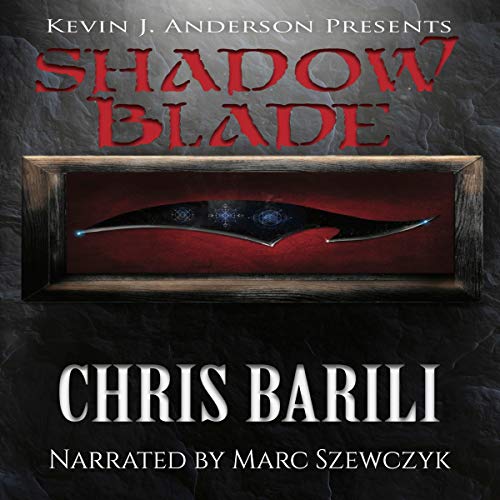
Audiobooks. They are the latest digital form of literature, quickly rising in popularity with readers on the go. And why not? What a great way to multitask. Instead of having to find a quiet time to sit and read the printed word, you can listen to the story while getting multiple things accomplished. I listened to Shadowblade, by Chris Barili, narrated by Marc Swezczyk while ironing, while cleaning the bathroom, while driving, and while sitting at the campfire. It was kind of cool to do chores when I’d rather be reading, and actually be able to do both.
As my first experience with audio books, I found it to be a convenient form of literature. I received my copy via my Kindle Fire, through Amazon. Like digital books through Amazon, it downloaded to my Fire automatically. It was time saving, in that I could listen to it at times that normally would be uproductive to my writing. It reminded me of the old radio serials, but you can start and stop whenever it is convenient, and don’t have to wait a week to find out what happens next. I think I could have gotten through the book a lot quicker in overall time spent reading, had I read it myself, just because I read faster than the pace of narration, but by allowing me to listen at times when I normally wouldn’t be able to read, it was helpful with my very busy schedule.
Marc Swezczyk was a good choice for a narrator on this story, in that his dialects and difficult name pronunciations sounded quite natural. His voice changed slightly for each character switch, making dialog easy to follow, as well. However, outside of the dialog, his narration falters with an unvaried pace and lack of inflection. This causes the some of the pain stakingly crafted action scenes to fall flat and the narrative seems to drone on in places. Having previously reviewed Shadowblade, I honestly didn’t feel as though Swezcyyk made this story shine as brightly as it could have.
Shadowblade is a great fantasy story, and Marc Swezczyk’s narration brings the interesting and diverse characters to life in the audio version, however he was unable to draw me into the scenes, which does not do this superbly written story justice. I give Shadowblade audio four quills.

I see the audio book being the future of literature, so I wonder how it is from the author’s side of things. If you are an author who has tested the waters in the audio realm, please comment to share your experiences with audio books. Is it easy to publish audio? Was it difficult to find a narrator? Is it expensive? We here at Writing to be Read want to know.
Kaye Lynne Booth does honest book reviews on Writing to be Read in exchange for ARCs. Have a book you’d like reviewed? Contact Kaye at kayebooth(at)yahoo(dot)com.
Share this:

Introducing non-fiction to children
Posted: July 8, 2020 Filed under: Books, Children's Books, Growing Bookworms, Literacy, Nonfiction | Tags: Children's Books, Growing Bookworms, Literacy, Nonfiction, Writing to be Read 65 CommentsIn our modern world, sources of information assail us from every direction. An internet search turns up dozens, and sometimes even hundreds, of links to information on every conceivable topic. Television provides documentaries on historical events, scientific topics and numerous programmes that cover every aspect of nature. A visit to a grocery store exposes children to newspapers and magazines which share articles on a wide variety of political, social and other topics, not to mention the headlines of newspapers that glare at us from street light and other poles as we travel from home to school and other places during our day.
High school learners are provided with numerous texts and sources of additional information on each and every topic they cover in nearly all of their subjects.
The quantities of information available are huge and not all of it is factually accurate. There is a lot of inaccurate and even total fake information out there.
It is, therefore, vital for children to learn to filter text and identify the important facts and information, in other words, to summarise it. It is also important for children to know they should check information to more than one source in order to ensure it is factually accurate.
Providing children with non-fiction books is an excellent way of ensuring they get accurate and reliable information and, if you select good non-fiction books, they are also appealing and exciting for children.
Here are four tips for choosing non-fiction books:
- Books with large clear photographs are attractive to children and help them contextualize the content of the book;
- Look for books that present the facts succinctly and without becoming bogged down in to much unnecessary detail. After reading the content to or with your child, summarise the main message/s about that topic or on a particular page;
- For very young children, ensure that the content is simple and fairly repetitive with only a few new vocabulary items so as not to overwhelm them; and
- Look for books that provide additional information for adults at the back. This is helpful for expanding on a given topic with your child and answering any questions.
A few great ways of encouraging an interest in non-fiction reading by children are as follows:
- When you are doing something that provokes questions like why is the sky blue or why do bees sting, take the time to look up the answer to this question with your child and show them how to use internet sources and books to find the answers to their questions;
- Integrate non-fiction with play. I did this with my children by showing them how to read recipes when we were baking, using ideas from books when building and constructing with lego or blocks and even with marshmallows and reading to them about mountains, hills, lakes and rivers when we were playing in a sandpit or on the beach. We used sand for lots of fun activities like building forts and a pirate island. I used these opportunities to follow up with a non-fiction story about pirates and soldiers. I did the same thing when we visited any places that lent themselves to learning more about a specific topic like mining or farming; and
- Make your own non-fiction materials and demonstrate various learning points. I build a mountain out of paper mache and showed my children how water carries seeds down into the valleys, Michael and I made a sword and a roman helmet out of paper mache and learned about the Roman Empire and we made a sheep out of cardboard and cotton wool and learned how animals help to distribute seeds.


About Robbie Cheadle
Hello, my name is Robbie, short for Roberta. I am an author with seven published children’s picture books in the Sir Chocolate books series for children aged 2 to 9 years old (co-authored with my son, Michael Cheadle), one published middle grade book in the Silly Willy series and one published preteen/young adult fictionalised biography about my mother’s life as a young girl growing up in an English town in Suffolk during World War II called While the Bombs Fell (co-authored with my mother, Elsie Hancy Eaton). All of my children’s book are written under Robbie Cheadle and are published by TSL Publications.
I have recently branched into adult and young adult horror and supernatural writing and, in order to clearly differential my children’s books from my adult writing, I plan to publish these books under Roberta Eaton Cheadle. My first supernatural book published in that name, Through the Nethergate, is now available.
I have participated in a number of anthologies:
- Two short stories in #1 Amazon bestselling anthology, Dark Visions, a collection of horror stories edited by Dan Alatorre;
- Three short stories in Death Among Us, an anthology of murder mystery stories, edited by Stephen Bentley;
- Three short stories in #1 Amazon bestselling anthology, Nightmareland, a collection of horror stories edited by Dan Alatorre; and
- Two short stories in Whispers of the Past, an anthology of paranormal stories, edited by Kaye Lynne Booth.
I also have a book of poetry called Open a new door, with fellow South African poet, Kim Blades.
Find Robbie Cheadle
Blog: https://bakeandwrite.co.za/
Blog: robbiesinspiration.wordpress.com
Goodreads: Robbie Cheadle – Goodreads
Twitter: BakeandWrite
Instagram: Robbie Cheadle – Instagram
Facebook: Sir Chocolate Books
Want to be sure not to miss any of Robbie’s “Growing Bookworms” segments? Subscribe to Writing to be Read for e-mail notifications whenever new content is posted or follow WtbR on WordPress.
Share this:

Announcing the Winner of the WordCrafter 2020 Short Fiction Contest
Posted: July 6, 2020 Filed under: Books, Fiction, Paranormal, Stories, Western, Western Paranormal, WordCrafter Press | Tags: 2020 WordCrafter Short Fiction Contest, Short Fiction, Short Stories, Spirits of the West, Western Paranormal, WordCrafter Press, Writing to be Read 2 Comments
It’s taken twice as long as it should have, but I am now proud to announce the winner of the 2020 WordCrafter Short Fiction Contest. This year’s theme genre was western paranormal, requiring story submissions to contain both western and paranormal elements. WordCrafter left the guidelines open to loose interpretation, resulting a wide variety of story submissions, in which the required elements were used in some very creative ways. It was a difficult choice, but I’m happy to congradulate Enid Holden on her wonderful story, “High Desert Rose”.
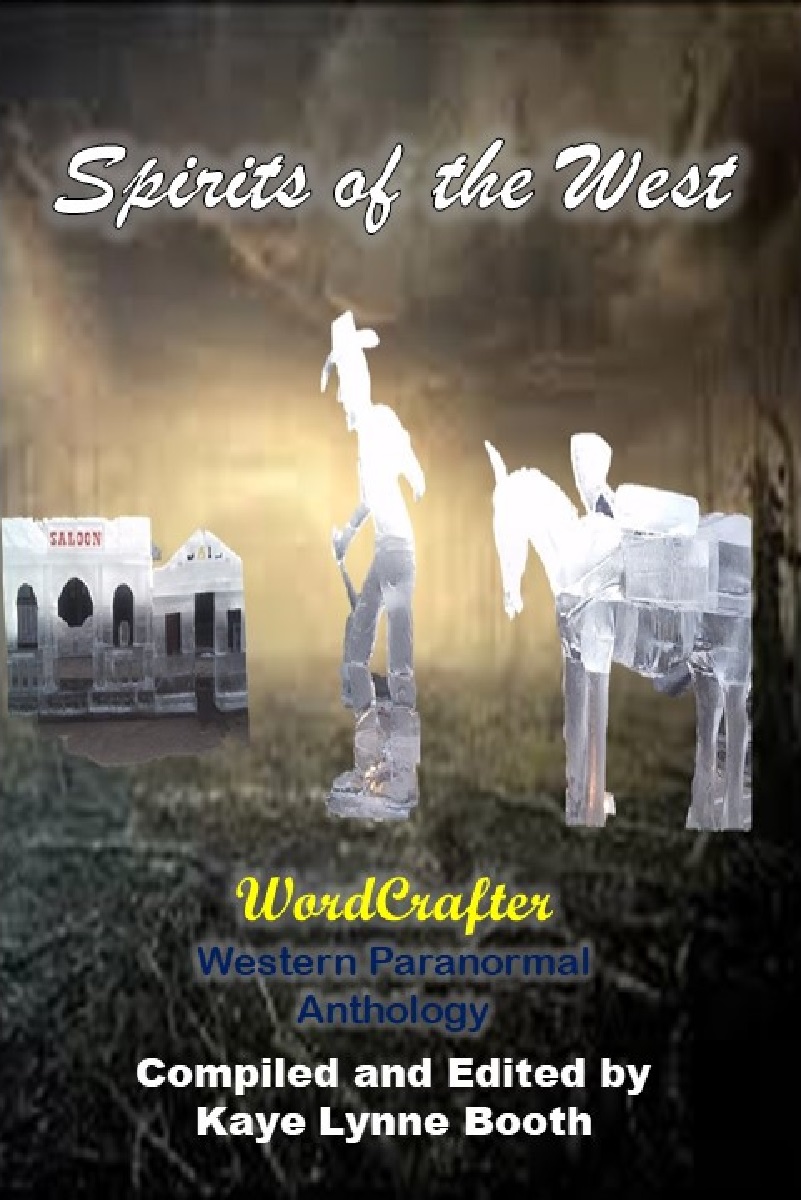
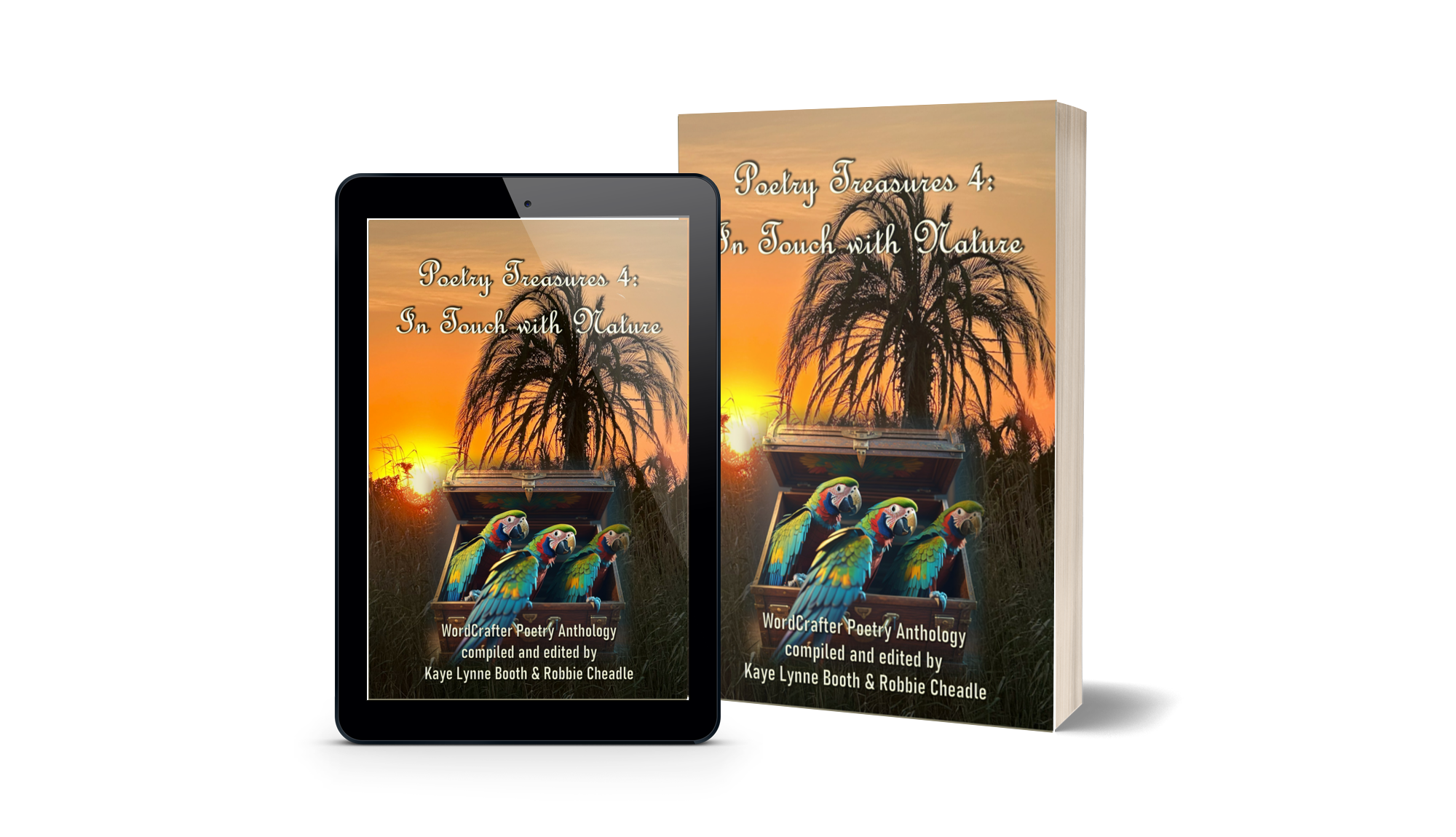
As the winning submission author, Enid will receive a $25 Amazon gift card and her story will be published in the WordCrafter western paranomal anthology, Spirits of the West. We’re aiming for a release date sometime in October, so be sure and watch for it. The anthology will also include “Gunsmoke”, as a tribute to the author, the late Tom Johnson, as well as stories by several of authors from last years antholgy, Whispers of the Past.
Like this post? Let me know in the comments. You can be sure not to miss any of Writing to be Read’s great content by subscribe to e-mail or following on WordPress. If you found this content helpful or entertaining, please share.









Craft and Practice with Jeff Bowles – Writing for Catharsis
Posted: July 15, 2020 | Author: Jeff Bowles | Filed under: Books, Commentary, Craft and Practice, Fiction, Inspirational, Writing, Writing Inspiration, Writing Life, Writing Tips | Tags: Catharthis, Craft and Practice, Healing, Jeff Bowles, Writing, writing advice, Writing to be Read | 6 CommentsThe third Wednesday of each month, writer Jeff Bowles offers practical tips for improving, sharpening, and selling your writing. Welcome to your monthly discussion on Craft and Practice.
Writing for Catharsis
Writing is a hard enough gig without the existence of one persistent, unceasing fact: things change, nothing lasts, and all things pass away. You could make a decent mantra out of that, couldn’t you? I mean it’s true enough I don’t even really have to repeat it. I will though. Several times, in fact, because I’d like to impress upon you the urgency of a world in desperate need of good, personal, dare I say it, emotional storytellers.
This month’s Craft and Practice will be a little different. We’re going to talk about our feelings. Wait! Don’t click off! You can’t run from them any more than I can. Things change, nothing lasts, all things pass away. And if you and your incredible writing superpowers are needed anywhere in the world, it’s quite possible they’re needed at home most of all.
You see, people can recognize the transience of life without too much effort, but they’re either too locked into their own experiential tangents to do anything about it, or they simply keep their stories to themselves. Writers don’t have that luxury, and nor should we be afforded it. It’s our job to comment, profile, report, extol, condemn, codify, decode. If not for everyone living today and for a hundred generations beyond, then at least for ourselves, right here and now. What does this all boil down to? We can write about all the crazy stuff that happens to us and call it catharsis. Neat, huh?
I recently released a novel called Love/Madness/Demon. It deals, in part, with a psychotic episode I experienced four or five years ago. Now at that time I didn’t know or understand what was happening to me. If you or someone you know is struggling with mental health issues, I urge you seek qualified help, because once I was able to do so, once a true diagnosis came my way, things slowly began to turn around for me. But I knew as I started recovering that what I’d gone through—what I’d put my loved ones through—it constituted serious traumatic territory, and I also knew that it might make me feel better to write about it someday.
It did. That’s the long and short of it. Moreover, spending sufficient time with my story as a finished manuscript tended to help even more. I had to tread, retread, and re-retread the same ground again and again. The worst moments of the ordeal tended to lose their hold on me. Now writing as catharsis implies you’ve repressed or buried something. Some people haven’t done anything of the sort, though I’d wager that to one degree or another, the vast majority of us have. This is life, after all, the greatest bare-knuckled, knock-down cage match of them all. If you’ve taken a few lumps in recent years, you aren’t alone.
I think it’s best to approach cathartic writing from a place of complete honesty. What are you doing it for otherwise? And realistically, you’ve got endless literary modes available to you. I chose fiction because it’s what I’m most comfortable with, but maybe you prefer poetry or nonfiction.
Nonfiction may be the best way to approach the craft for the sake of healing because you can just write the truth as it seemed to you. Now, you may have to wrestle with legalities, ditto with fiction, but I tend to believe most of the advice given to writers about these things are of the overblown, cover-one’s-own-ass variety. Can you write about things that really happened to you? Of course you can. Who says you can’t? What you can’t do is drag someone’s name through the mud in the process, but I’ve got a good feeling about you. You’re not interested in hurting others with your writing. You’re a paragon of humility and moral excellence. I mean, I can just tell by looking at you. What a punim.
I hurt after my psychotic break. A lot of people around me did. Because I was delusional, because I didn’t understand what was happening to me, I lashed out frequently and did things it’s taken me a lot of time to try and get over.
But your experience with cathartic writing will be wholly different. I hope and pray you haven’t got any major traumas in your direct experience. But if you have, and if you’re lucky enough to have been given an aptitude for the written word, I highly suggest putting your emotional self on the line and trying to do a little self-evaluation and self-nurturing. Even if you intend on never letting another soul read it, the initial intimacy and privacy of the act are paramount. I’d never suggest a person try to write their pain away rather than seek the help of a licensed professional, but I’ve found that a good therapy program lines up very well with cathartic writing. In fact, there were times in my recovery I didn’t have the ability to engage in counseling, so the writing of Love/Madness/Demon was even more crucial to me.
I feel better now. I don’t feel perfect. In fact, I still have a lot of bad days. But it was worth it to me to at least try to alleviate some of the pressures of everything I’d gone through. Maybe you can do the same for yourself. I hope you can. Things change, nothing lasts, all things pass away. It’s sort of a very painful time for many people out there. Writing about what ails us? There are worse ways to cope.
Jeff Bowles is a science fiction and horror writer from the mountains of Colorado. The best of his outrageous and imaginative work can be found in God’s Body: Book One – The Fall, Godling and Other Paint Stories, Fear and Loathing in Las Cruces, and Brave New Multiverse. He has published work in magazines and anthologies like PodCastle, Tales from the Canyons of the Damned, the Threepenny Review, and Dark Moon Digest. Jeff earned his Master of Fine Arts degree in creative writing at Western State Colorado University. He currently lives in the high-altitude Pikes Peak region, where he dreams strange dreams and spends far too much time under the stars. Jeff’s new novel, Love/Madness/Demon, is available on Amazon now!
Check out Jeff Bowles Central on YouTube – Movies – Video Games – Music – So Much More!
Want to be sure not to miss any of Jeff’s Pep Talk segments? Subscribe to Writing to be Read for e-mail notifications whenever new content is posted or follow WtbR on WordPress
Share this: