Nobody expects to lose a child but when it happens what can we do? In the sea of grief that seizes the soul how can we swim against the tide? But when that loss is compounded in each minute of every day, what do we do then?
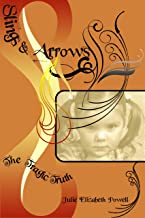
Slings and Arrows is a story about the consequences of a moment, a moment, which separates a mother and daughter in ways impossible to imagine.
It charts their parallel lives, each suffering, one knowing, one not.
It is brutally honest; an account filled with bewilderment, guilt, anger and pain yet it also holds the key to hope. That whatever happens, the bonds of love can never be broken.
My Review: Slings & Arrows
Having lost a child of my own, it is not surprising that Slings & Arrows, by Julie Elizabeth Powell drew my interest. I have to say that I was not disappointed. The details of the loss of my son are very different from Ms. Powell’s loss of her daughter, but she offers up her story in a straight forward manner, with a brutal honesty which couldn’t help but touch my heart. Tears filled my eyes as I read Powell’s words time and again, as she is torn by conflicting emotions as she awaited her daughter’s body following a spirit which it appeared had departed.
Slings & Arrows is a brutally honest depiction of the stress, confusion, loss and grief which comes with watching a loved one slowly waste away long after their ‘life’ has ended. Kudos to Powell for baring her soul so openly in this tale of a loss that lingered on for years, consuming everything she has to give, and taking all that she has left. A tragic tale which hits close to home for me. I give Slings & Arrows five quills.
About Gone
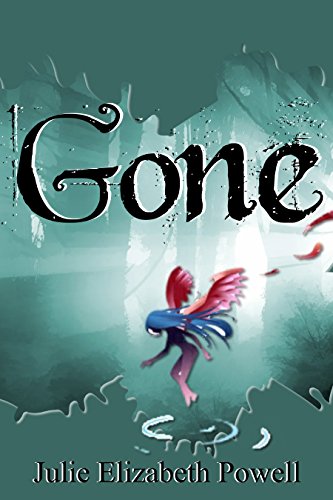
Is Charley crazy, delusional or dead?
Follow her amazing, emotional journey and emerge into the battle with her nemesis – herself.
This inspirational fantasy will take you into realms otherwise unknown, turning your world upside down while you’ll be wondering what is real and what is not. It’s an adventure, a mystery and an imaginative fairytale for adults.
Gone, by Julie Elizabeth Powell, is a journey searching for answers to the unanswerable question of where we go when we are gone from here. Powell offers one possible scenario in a crazy world where her character, Charley, meets Jenny, the daughter that she lost and hopes she has the answers Charley has been looking for. To learn whether or not Jenny has those answers, you’ll have to tag along and visit this sometimes confusing, often surprising place and find out for yourself.
Having read Powell’s first book, Slings & Arrows, which is a heart-wrenching memoir where she bares her sole over the loss of her daughter and the time leading up to her death, when she was alive and suffering, it is difficult not to relate to the experiences in this fictional tale, as a way to find answers for Powell herself. Where we go when we’re gone from here is an age-old question, one we will all have to face, but Powell goes beyind that, in trying to answer “Why?” I hope Powell found at least some of the answers she was looking for in the writing. I think the answers are different for everyone, but it was fun to take the journey. I give Gone four quills.
Alice in Wonderland is one of my favourite childhood books. I love it so much, I have seven different copies, one of which is vintage.
The book, Alice in Wonderland, starts with a young girl, Alice, sitting on a bank and watching her sister read a boring book with no pictures or conversations. Seeing a white rabbit passing by, she follows it down a rabbit hole. The rabbit walks and talks and has a pocket watch. Alice falls down and down the rabbit hole, all the while having an interesting conversation with herself, and ends up in a large entrance hall. There is a small door beyond which is a beautiful world, but Alice is to big to pass through it. She experiments with eating and drinking various items until she is finally small enough to gain entry to Wonderland.
Wonderland is a strange and mysterious world filled with unusual creatures and people. It is summed up by this quote: “If I had a world of my own, everything would be nonsense. Nothing would be what it is, because everything would be what it isn’t. And contrary wise, what is, it wouldn’t be. And what it wouldn’t be, it would.”
Picture credit: A smartly dressed and standing White Rabbit checking his pocket watch from the Project Gutenberg e-book, The Tenniel Illustrations for Carroll’s Alice in Wonderland, available here: https://www.gutenberg.org/files/114/114-h/114-h.htm
About the author
Lewis Carroll was a pseudonym for Charles Lutwidge Dodgson, who was born in England in 1832. At the age of 18, Dodgson left home to attend Oxford University, where he studied and worked for the next 20 years. He was a student and then a professor and a mathematician.
Dodgson created the Lewis Carroll pseudonym while he was at Oxford, in order to write children’s books that would not be connected to his academic career. He was well known for developing close friendships with children but very few relationships with adults. He befriended the children of his colleagues and acquaintances and spent a lot of time with them, even writing them letters.
“Extra thanks and kisses for the lock of hair,” he wrote to a 10-year-old girl. “I have kissed it several times — for want of having you to kiss, you know, even hair is better than nothing.”
When Henry George Liddell became the Dean of Christ Church at Oxford, Dodgson became friends with his three young daughters: Lorina, Edith and Alice.
The story, Alice in Wonderland, came into existence in 1862 when Dodgson and a colleague took the three girls out on a picnic and rowing trip along the Thames. In order to keep the trio entertained, Dodgson started telling the story that would become Alice in Wonderland which was published in 1865.
Dodgson was also a keen photographer and it is known that he took photos of nude and semi-nude children – including a full-frontal nude shot of Alice’s sister Lorina.
Dodgson wrote:
“I confess I do not admire naked boys in pictures. They always seem to me to need clothes: whereas one hardly sees why the lovely forms of girls should ever be coverd [sic] up!”
In 1863, Dodgson’s friendship with the Liddell family came to a sudden end and he never again spent time alone with their daughters.
There’s no record of why Dodgson’s relationship with the family ended, but there is a theory that he proposed marriage to Alice. This wasn’t that unusual in the mid 1800s as the age of consent was 12 years old and some men did marry young girls.
Before even examining the deeper meaning and themes of Alice in Wonderland, its author and the creation of this story are cast in rather a creepy light.
Deeper meaning and themes of Alice in Wonderland
The Tragic and Inevitable Loss of Childhood Innocence
The theme of growing up is central to Alice in Wonderland. The author is credited with enjoying the innocence with which children approach the world. The multitude of physically changes Alice goes through in Wonderland are believed to be symbolic of puberty and the many changes that take place during that period of a person’s life.
Alice finds these changes disturbing and traumatic and she struggles to find a comfortable size, reverting eventually to her original size.
Relevant quotes:
“I wonder if I’ve been changed in the night. Let me think. Was I the same when I got up this morning? I almost think I can remember feeling a little different. But if I’m not the same, the next question is ‘Who in the world am I?’ Ah, that’s the great puzzle!”
“It was much pleasanter at home,” thought poor Alice, “when one wasn’t always growing larger and smaller, and being ordered about by mice and rabbits. I almost wish I hadn’t gone down the rabbit-hole–and yet–and yet–…”
“I knew who I was this morning, but I’ve changed a few times since then.”
Alice is also confused about who she is and her role in the world around her, namely, Wonderland.
“It’ll be no use their putting their heads down and saying “Come up again, dear!” I shall only look up and say “Who am I then? Tell me that first, and then, if I like being that person, I’ll come up: if not, I’ll stay down here till I’m somebody else”–but, oh dear!’ cried Alice, with a sudden burst of tears, ‘I do wish they WOULD put their heads down! I am so VERY tired of being all alone here!”
Life as a Meaningless Puzzle
As Alice travels through Wonderland, she encounters a series of situations and circumstances which she cannot make sense of and which have no clear solutions. This is symbolism for how life throws frustrating curveballs and problems that cannot be solved or unraveled in the expected way. Often, lateral thinking is required to circumvent issues and, sometimes, problems have no solution in life.
Relevant quotes:
“One day Alice came to a fork in the road and saw a Cheshire cat in a tree. ‘Which road do I take?’ she asked. ‘Where do you want to go?’ was his response. ‘I don’t know,’ Alice answered. ‘Then,’ said the cat, ‘it doesn’t matter.”
“Mad Hatter: Would you like a little more tea? Alice: Well, I haven’t had any yet, so I can’t very well take more. March Hare: Ah, you mean you can’t very well take less. Mad Hatter: Yes. You can always take more than nothing.”
“The March Hare took the watch and looked at it gloomily: then he dipped it into his cup of tea, and looked at it again: but he could think of nothing better to say than his first remark, ‘It was the best butter, you know.’ Alice had been looking over his shoulder with some curiosity. ‘What a funny watch!’ she remarked. ‘It tells the day of the month, and doesn’t tell what o’clock it is!’ ‘Why should it?’ muttered the Hatter. ‘Does your watch tell you what year it is?’ ‘Of course not,’ Alice replied very readily: ‘but that’s because it stays the same year for such a long time together.’ ‘Which is just the case with mine,’ said the Hatter. Alice felt dreadfully puzzled. The Hatter’s remark seemed to have no sort of meaning in it, and yet it was certainly English. ‘I don’t quite understand you,’ she said, as politely as she could. ‘The Dormouse is asleep again,’ said the Hatter, and he poured a little hot tea upon its nose. The Dormouse shook its head impatiently, and said, without opening its eyes, ‘Of course, of course; just what I was going to remark myself.’ ‘Have you guessed the riddle yet?’ the Hatter said, turning to Alice again. ‘No, I give it up,’ Alice replied: ‘what’s the answer?’ ‘I haven’t the slightest idea,’ said the Hatter. ‘Nor I,’ said the March Hare. Alice sighed wearily. ‘I think you might do something better with the time,’ she said, ‘than waste it in asking riddles that have no answers.’ ‘If you knew Time as well as I do,’ said the Hatter, ‘you wouldn’t talk about wasting it.”
Over and over again, Alice finds herself in dangerous situations that suggest that death is lurking just around the corner. Although death never manifests in the book, the reader senses it and so does Alice. At the end of the book she comes to realise that despite the ridiculous circumstances in Wonderland, death could be a very real outcome and that is when she wakes up and the reader comes to understand the entire book is a dream.
Relevant quotes:
“Well!” thought Alice to herself. “After such a fall as this, I shall think nothing of tumbling down-stairs! How brave they’ll all think me at home! Why, I wouldn’t say anything about it, even if I fell off the top of the house!” (Which was very likely true.)”
“The executioner’s argument was that you couldn’t cut of something’s head unless there was a trunk to sever it from. He’d never done anything like that in his time of life, and wasn’t going to start now.
The King’s argument was that anything that had a head, could be beheaded, and you weren’t to talk nonsense.
The Queen’s argument was that if something wasn’t done about it in less than no time, she’d have everyone beheaded all round.
It was this last argument that had everyone looking so nervous and uncomfortable.”
Characterisation
Alice meets a plethora of characters that have become well known. It is believed that many of these characters, including Alice herself, suffer from mental health disorders. This is a list of some of the most famous characters with a description from Spark Notes (https://www.sparknotes.com/lit/alice/characters/)
The White Rabbit – “The frantic, harried Wonderland creature that originally leads Alice to Wonderland. The White Rabbit is figure of some importance, but he is manic, timid, and occasionally aggressive.” The White Rabbit suffers from an anxiety disorder and is in a constant state of panic.
The Queen of Hearts – “The ruler of Wonderland. The Queen is severe and domineering, continually screaming for her subjects to be beheaded.” The Queen of Hearts is completely self absorbed and has a narcissistic personality disorder.
The Cheshire Cat – “A perpetually grinning cat who appears and disappears at will. The Cheshire Cat displays a detached, clearheaded logic and explains Wonderland’s madness to Alice.” The Cheshire Cat is schizophrenic.
The Caterpillar – “A Wonderland creature. The Caterpillar sits on a mushroom, smokes a hookah, and treats Alice with contempt. He directs Alice to the magic mushroom that allows her to shrink and grow.” The Caterpillar is a drug addict who smokes a hookah and gives Alice a mushroom with mind and body-altering capabilities.
Picture credit: Illustration of the caterpillar sitting on a mushroom smoking a hookah with Alice looking up at him with wide eyes from the original editions in 1865 (left) illustrated by John Tenniel
The Mad Hatter – “A small, impolite hatter who lives in perpetual tea-time. The Mad Hatter enjoys frustrating Alice.” The hatter is simply mad.
Have you read Alice in Wonderland? Did you spot these underlying themes and meanings?
We’ve just had a great book blog tour to send off Poetry Treasures 3: Passions and this is where we announce the winners for the Giveaway for that tour. I always love doing this post and then notifying the winners individually, because I get to make somone’s day with this announcement. Hopefully three someones.
I want to thank everyone who followed the tour or just dropped in to a stop or two, and of course my wonderful hosts. The hosts for this tour were Patty Fletcher and Patty’s Worlds, Miriam Hurdle and The Showers of Blessings, Carla Johnson-Hicks and Carla Loves to Read, Robbie Cheadle and Robbie’s Inspiration, and of course, Writing to be Read. And before I tell you who will be the recipients of the three digital copies of Poetry Treasures 3: Passions, I also want to give a big shout out to all of the contributing authors for this anthology, who all were great about doing their parts and helping to make the tour as fabulous as it was, with their audio/video poetry readings and guest posts. Every author participated and we couldn’t have had such a great tour without them.
And now, without further ado…
(Drumroll please)
The winners are…
Gwen M. Plano, John W. Howell, and Jacqui Murray!
Congratulations to all of you and thanks so much for following the tour. Please contact me at KLBWordCrafter@gmail.com, so I can send you a link for your digital copies of Poetry Treasures 3: Passions. I look forward to hearing from each of you.
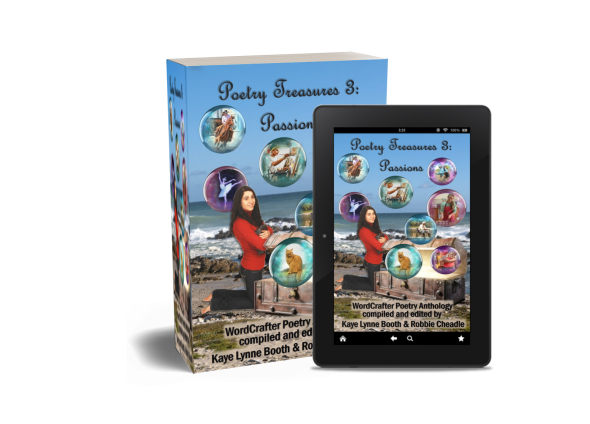
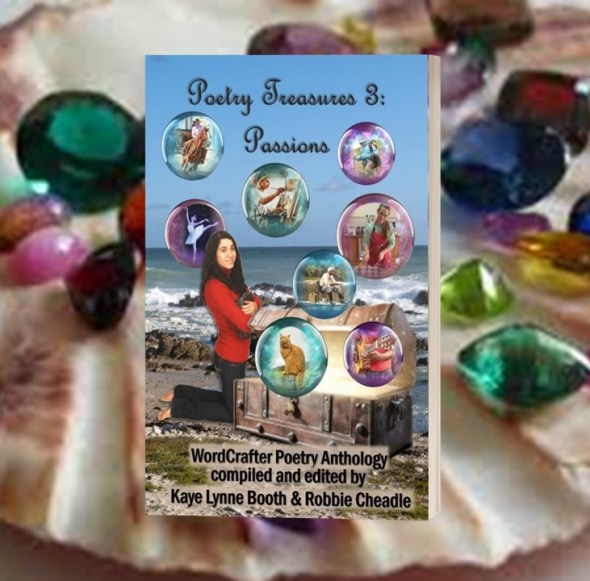
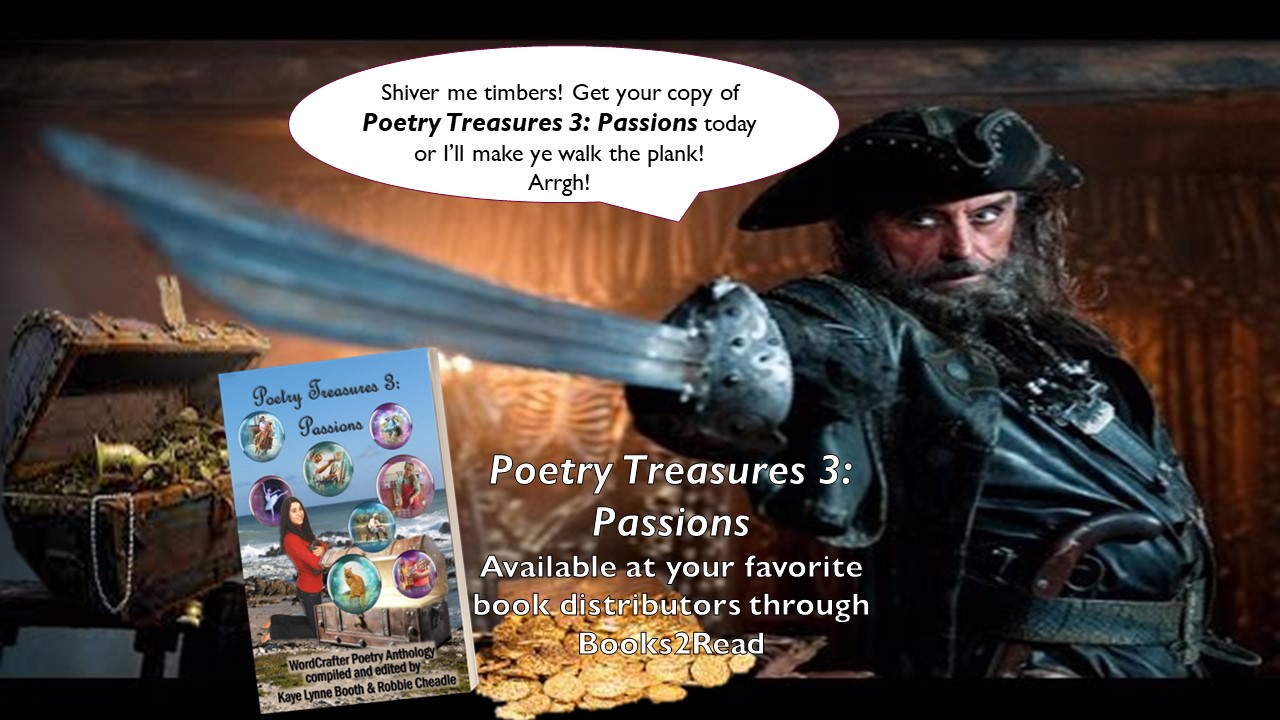
Poetry Treasures 3: Passions
Passions treasures within.
Open the cover
and you will discover
the Poetry Treasures
of guests on
Roberta Eaton Cheadle’s
2022 “Treasuring Poetry” blog series
on Writing to be Read.
Included are treasures from:
Patty Fletcher, D. Wallace Peach, Yvette Prior,
Penny Wilson, Colleen M. Chesebro, Abbie Taylor,
Yvette Calliero, , Smitha Vishwaneth,
Chris Hall, Willow Willers, Rosemerry Wahtola Trommer,
and Roberta Eaton Cheadle
You can get your copy of Poetry Treasures 3: Passions from your favorite book distributor through Books2Read:
Just a quick reminder. The submission deadline for the 2023 WordCrafter Short Fiction Contest is April 30. So, if you haven’t turned in your scary story submission yet, you need to do it soon. Come on. Scare me. I dare you.
You can find full submission giudelines and submission instructions here: https://wp.me/pVw40-6VU
Assembling a Poetry Collection
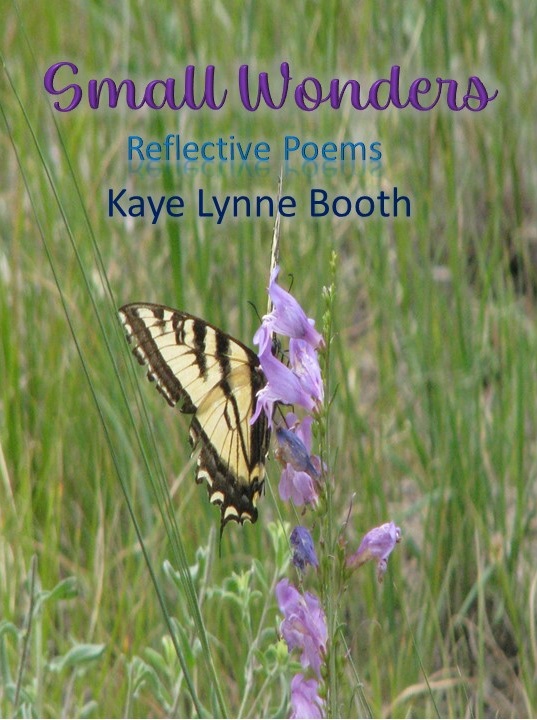
I have been busy compiling my poetry collection, Small Wonders for a June release. I have a lifetime of poetry to go through, so this has been no small task. Never-the-less, I look on it as a bit of a breather from all the heavy promoting I’ve done so far this year for Delilah, and then for Poetry Treasures 3. May is the first month this year that I haven’t been actively promoting a book, so it gives me a chance to shift gears as I make the final preparations for the release of this collection, and move in to the final stretch on the writing of The Rock Star & The Outlaw. But let’s finish up the poetry first before I move back onto fiction.
For Kaye Lynne Booth, writing is a passion. Kaye Lynne is an author with published short fiction and poetry, both online and in print, including her short story collection, Last Call and Other Short Fiction; and her paranormal mystery novella, Hidden Secrets. Kaye holds a dual M.F.A. degree in Creative Writing with emphasis in genre fiction and screenwriting, and an M.A. in publishing. Kaye Lynne is the founder of WordCrafter Quality Writing & Author Services and WordCrafter Press. She also maintains an authors’ blog and website, Writing to be Read, where she publishes content of interest in the literary world.
Want exclusive content? Join Kaye Lynne Booth & WordCrafter Press Readers’ Group for WordCrafter Press book & event news, including the awesome releases of author Kaye Lynne Booth. She won’t flood your inbox, she NEVER sells her list, and you might get a freebie occasionally. Get a free digital copy of her short story collection, Last Call and Other Short Fiction, just for joining.
This is the final stop in the WordCrafter Poetry Treasures 3: Passions Book Blog Tour. We’ve had a fantastic tour, with opportunities to hear from almost every contributor to the anthology. Every stop featured at two poets, sharing their works, which offers a nice taste of what you can expect in the anthology.
We’re also running a great giveaway for three digital copies of Poetry Treasures 3: Passions. You can find a schedule with links to each stop at the end of this post, if you missed a stop, so be sure to visit each one and leave a comment for additional entries in the giveaway.
Giveaway
Comment and let us know you were there, and get a chance to win a copy of Poetry Treasures 3: Passions in the digital format of your choice.Follow the tour and leave your comments along the way. One entry per stop.
Today’s Stop
On this tour stop we’ll hear poetry readings by two of the contributing authors to the anthology, Poetry Treasures 3: Passions, Judy Mastrangelo and Yvette Prior.
Meet Judy Mastrangelo
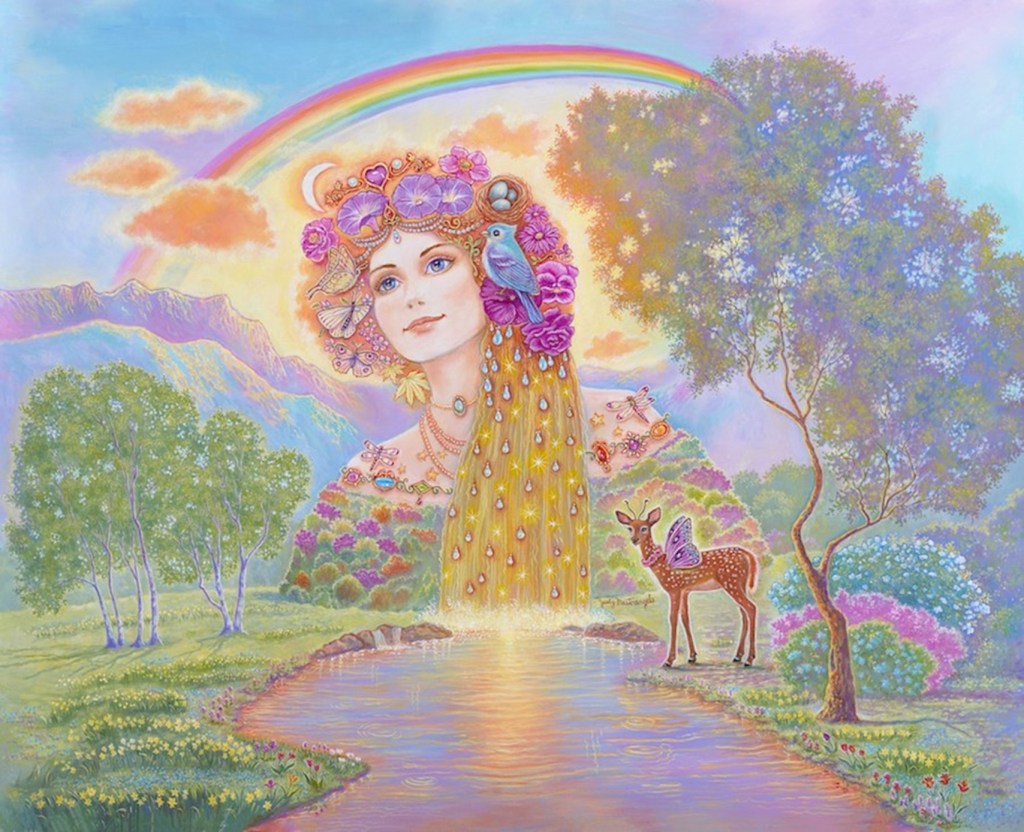
Judy Mastrangelo is a talented artist and poet, who has published several illustrated children’s books and two decks of Oracle cards. I first met her when I reviewed both her book, , and her Oracle cards, and I recently reviewed her Oracle cards, as well. Her illustrations are always bright and colorful. She does absolutely amazing nature and fantasy paintings. And in Poetry Treasures 3: Passions, she demonstrates her poetic talents, which are equally amazing.
Judy Mastrangelo has written and illustrated several books, which include themes of Poetry, Fairytales, and Fairies. She follows in the tradition of “The Art of the Golden Age of Illustration”. Some of her titles include: a series of four Fairy books: “Portal to the Land of Fae” which include Flower Fairies, Fairy Tale Fairies, Secrets of the Fairies, and Mystical Fairies. Additional books include “What Do Bunnies Do All Day?”, “Enchanted Fairy Tales”, which she illustrated and adapted, “The Star”, illustrating the poem Twinkle, Twinkle Little Star, and her new fairy tale “The Magic Blanket”. Besides creating books, her artwork has been used in several Inspirational Oracle Card Decks, as well as some that she has also written herself. She licenses her artwork for many products, including Art Prints and Wall Murals. Judy has taught Creative Drama and Dance as well as Painting, to Children and Adults, and has directed her own Community Theater for all ages. As part of her work, she enjoys encouraging people to develop their own Imagination and Artistic Talents.
Her deep passion for every water droplet, leaf, flower,
butterfly, frog, and snail, can be seen and felt.
Breath deeply of the Air surrounding her.
She appears out of Purple Sunset, Sunrise Clouds.
She can be seen reflected in ripping waters,
rising from her earthly hills and mountains,
as graceful leaves, rainbows,
and flowers bedeck her.
Meet Yvette Prior
Yvette Prior is another poet whose work was new to me before being introduced on “Treasuring Poetry”, but I quickly saw what a talented poet she is. She took a different approach to the poetry reading than the others and got creative with it. Instead of reading a single poem, she’s reading samples of each of her poems featured in Poetry Treasures 3: Passions, and made a beautiful video to go with it.
Yvette Prior lives on the East Coast of the United States with her spouse, Chris, and together they have three adult children, two grandchildren, and no pets (after having many dogs over the years).
Yvette enjoys working with people and her varied work background includes education, social work, hospitality management, and lots of outreach. Her passion area is studying about health and wellness and after earning a Ph.D. in I-O Psychology, she poured into waiting book projects and she has not stopped writing since.
Her goal as a writer is to educate, edify, and encourage readers. Her personal blog can be found at priorhouse.wordpress.com
About Yvette & Her Poetry
My name is Yvette Prior and I am excited to be a part of the 2023 Treasuring Poetry series, which features the theme of passions for this third volume.
The four poems I submitted for this anthology were created during a very special time in my life – a time of setback in one area and then a time of joyous celebration with a marriage anniversary milestone. I think the energy – from persevering and celebrating – can be felt in each poem.
The first poem, “Dancing with Angst”, explores how setback (and life’s angst) can be embraced (danced with) to cultivate growth and humility. When we yield, it can lead to stability. “Angst is more than only woe. Even though – we are glad to see it go – it can magnify joy, changement to stir up appreciation; you cannot fully know, how dancing with angst helps growth, until you have been cut down, pounded out, unwound.”
The “Quiet Fuel of Passion” poem reminds us that humans are guided by values, which “are always screaming, beneath the scenes, often quiet, and unheard.” This poem is a call for self awareness about what you might be striving for and to make sure it is meaning laden.
The third poem, “We are a Bird, said He” unfolded after a February date night and then led to a fun part of an anniversary celebration; my husband and I celebrated our decades-long union by using metaphor and real-life examples from birds.
Lastly, the “Poetic Sleep” poem unfolded after a night of restlessness, where rhymes were churning in my mind. In the morning, all ideas were gone and this poem is meant to connect with other writers who have sometimes had the flood of ideas come – to then wake and see it all go.
I highly encourage you to get a copy of the Treasuring Poetry 3: Passions anthology, because the diverse and eloquently written poems offer enrichment and delight.
Poetry Excerpts by Yvette Prior
Tour Schedule
Mon. 4/17 – Opening Day – Readings by Rosemerry Wahtola Trommer & Smitha Vishwanath – Writing to be Read
Tues. 4/18 – Guest Post from Colleen Chesebro & Reading by Robbie Cheadle of poem by Chris Hall – Patty’s World
Sat. 4/22 – Closing Post – Readings by Yvette Prior & Judy Mastrangelo – Writing to be Read
Wrap Up
That wrap things up for both this post and for the WordCrafter Poetry Treasures 3: Passions Book Blog Tour. I hope you’ve enjoyed this stop, and if you’ve missed any stops, you can drop in via the links in the schedule above. Remember, commenting at each stop earns you more entries in the giveaway. Thanks for following along and joining in on the fun. And don’t forget to pick up your copy of Poetry Treasures 3 Passions today!
About PoetryTreasures 3: Passions
Passions treasures within.
Open the cover
and you will discover
the Poetry Treasures
of guests on
Roberta Eaton Cheadle’s
2022 “Treasuring Poetry” blog series
on Writing to be Read.
Included are treasures from:
Patty Fletcher, D. Wallace Peach, Yvette Prior,
Penny Wilson, Colleen M. Chesebro, Abbie Taylor,
Yvette Calliero, , Smitha Vishwaneth,
Chris Hall, Willow Willers, Rosemerry Wahtola Trommer,
and Roberta Eaton Cheadle
Purchase your copy of Poetry Treasures 3: Passions from your favorite book distributor through Books2Read: https://books2read.com/u/b5qnBR
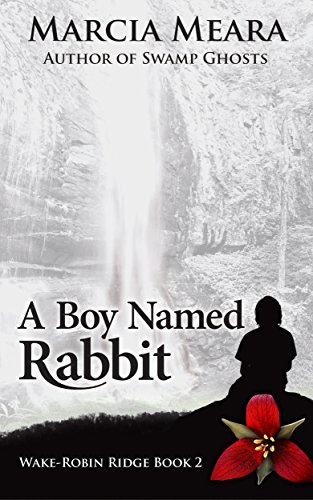
Today, I am delighted to welcome poet and author, Marcia Meara, as my April Treasuring Poetry guest. Marcia is sharing some of her thoughts about poetry and poems and I am sharing my reviews of A Boy Named Rabbit: Wake-Robin Ridge Book 2 and
Why do you write poetry?
I’ve written poetry since I was 5-years old, when I filled legal tablets with page after page of verses about cowboys and horses. (As imagined by a little girl who’d seen a few movies.) I really can’t remember when I didn’t love writing, and poems were what got me started. The rhythm and musicality of poetry is what I love most, and the main reason I still write poems today.
Do you think poetry is still a relevant form of expressing ideas in our modern world? If yes, why?
I think poems are very relevant, indeed. Poetry speaks of beauty and love and hate and danger and betrayal and every other human emotion, need, or failing. Do I think it’s as popular as it once was? No. Nor does it sell as well as novels and other works of fiction. But neither of those has any bearing on the actual relevance of poetry, and the more readers we poets manage to attract, the more likely folks are to understand exactly that.
Which poem by any other poet that you’ve read do you relate to the most and why?
That’s difficult to say, since I’ve been reading poetry for 75 years or so, including most of the greatest ones from poets like Edgar Allan Poe, Emily Dickinson, William Wordsworth, Amy Lowell, Elizabeth Barrett Browning, Robert Browning, Edna St. Vincent Millay, John Keats, Alfred Lord Tennyson, Henry Wadsworth Longfellow, Percy Bysshe Shelley, Walt Whitman, Dylan Thomas, Carl Sandberg, T. S. Eliot, Sara Teasdale, Ogden Nash, and on and on. You get my drift, I’m sure. It’s very hard for me to choose a favorite, but one poem I have always loved and never tire of is Poe’s The Raven. It’s long, I know, but the rhythm is so perfect, and the painful sadness of the subject, so very, very POE.
Once upon a midnight dreary, while I pondered, weak and weary, Over many a quaint and curious volume of forgotten lore— While I nodded, nearly napping, suddenly there came a tapping, As of someone gently rapping, rapping at my chamber door— “Tis some visitor,” I muttered, “tapping at my chamber door— Only this and nothing more.”
Ah, distinctly I remember it was in the bleak December; And each separate dying ember wrought its ghost upon the floor. Eagerly I wished the morrow;—vainly I had sought to borrow From my books surcease of sorrow—sorrow for the lost Lenore— For the rare and radiant maiden whom the angels name Lenore— Nameless here for evermore.
And the silken, sad, uncertain rustling of each purple curtain Thrilled me—filled me with fantastic terrors never felt before; So that now, to still the beating of my heart, I stood repeating, “‘Tis some visitor entreating entrance at my chamber door— Some late visitor entreating entrance at my chamber door;— This it is and nothing more.”
Presently my soul grew stronger; hesitating then no longer, “Sir,” said I, “or Madam, truly your forgiveness I implore; But the fact is I was napping, and so gently you came rapping, And so faintly you came tapping, tapping at my chamber door, That I scarce was sure I heard you”—here I opened wide the door;— Darkness there and nothing more.
Deep into that darkness peering, long I stood there wondering, fearing, Doubting, dreaming dreams no mortal ever dared to dream before; But the silence was unbroken, and the stillness gave no token, And the only word there spoken was the whispered word, “Lenore?” This I whispered, and an echo murmured back the word, “Lenore!”— Merely this and nothing more.
Back into the chamber turning, all my soul within me burning, Soon again I heard a tapping somewhat louder than before. “Surely,” said I, “surely that is something at my window lattice; Let me see, then, what thereat is, and this mystery explore— Let my heart be still a moment and this mystery explore;— ‘Tis the wind and nothing more!”
Open here I flung the shutter, when, with many a flirt and flutter, In there stepped a stately Raven of the saintly days of yore; Not the least obeisance made he; not a minute stopped or stayed he; But, with mien of lord or lady, perched above my chamber door— Perched upon a bust of Pallas just above my chamber door— Perched, and sat, and nothing more.
Then this ebony bird beguiling my sad fancy into smiling, By the grave and stern decorum of the countenance it wore, “Though thy crest be shorn and shaven, thou,” I said, “art sure no craven, Ghastly grim and ancient Raven wandering from the Nightly shore— Tell me what thy lordly name is on the Night’s Plutonian shore!” Quoth the Raven “Nevermore.”
Much I marvelled this ungainly fowl to hear discourse so plainly, Though its answer little meaning—little relevancy bore; For we cannot help agreeing that no living human being Ever yet was blest with seeing bird above his chamber door— Bird or beast upon the sculptured bust above his chamber door, With such name as “Nevermore.”
But the Raven, sitting lonely on the placid bust, spoke only That one word, as if his soul in that one word he did outpour. Nothing further then he uttered—not a feather then he fluttered— Till I scarcely more than muttered “Other friends have flown before— On the morrow he will leave me, as my hopes have flown before.” Then the bird said “Nevermore.”
Startled at the stillness broken by reply so aptly spoken, “Doubtless,” said I, “what it utters is its only stock and store Caught from some unhappy master whom unmerciful Disaster Followed fast and followed faster till his songs one burden bore— Till the dirges of his Hope that melancholy burden bore Of ‘Never—nevermore.'”
But the Raven still beguiling my sad fancy into smiling, Straight I wheeled a cushioned seat in front of bird, and bust and door; Then, upon the velvet sinking, I betook myself to linking Fancy unto fancy, thinking what this ominous bird of yore— What this grim, ungainly, ghastly, gaunt and ominous bird of yore Meant in croaking “Nevermore.”
This I sat engaged in guessing, but no syllable expressing To the fowl whose fiery eyes now burned into my bosom’s core; This and more I sat divining, with my head at ease reclining On the cushion’s velvet lining that the lamp-light gloated o’er, But whose velvet violet lining with the lamp-light gloating o’er, She shall press, ah, nevermore!
Then, methought, the air grew denser, perfumed from an unseen censer Swung by Seraphim whose foot-falls tinkled on the tufted floor. “Wretch,” I cried, “thy God hath lent thee—by these angels he hath sent thee Respite—respite and nepenthe, from thy memories of Lenore; Quaff, oh quaff this kind nepenthe and forget this lost Lenore!” Quoth the Raven “Nevermore.”
“Prophet!” said I, “thing of evil!—prophet still, if bird or devil!— Whether Tempter sent, or whether tempest tossed thee here ashore, Desolate yet all undaunted, on this desert land enchanted— On this home by Horror haunted—tell me truly, I implore— Is there—is there balm in Gilead?—tell me—tell me, I implore!” Quoth the Raven “Nevermore.”
“Prophet!” said I, “thing of evil—prophet still, if bird or devil! By that Heaven that bends above us—by that God we both adore— Tell this soul with sorrow laden if, within the distant Aidenn, It shall clasp a sainted maiden whom the angels name Lenore— Clasp a rare and radiant maiden whom the angels name Lenore.” Quoth the Raven “Nevermore.”
“Be that word our sign in parting, bird or fiend!” I shrieked, upstarting— “Get thee back into the tempest and the Night’s Plutonian shore! Leave no black plume as a token of that lie thy soul hath spoken! Leave my loneliness unbroken!—quit the bust above my door! Take thy beak from out my heart, and take thy form from off my door!” Quoth the Raven “Nevermore.”
And the Raven, never flitting, still is sitting, still is sitting On the pallid bust of Pallas just above my chamber door; And his eyes have all the seeming of a demon’s that is dreaming, And the lamp-light o’er him streaming throws his shadow on the floor; And my soul from out that shadow that lies floating on the floor Shall be lifted—nevermore!
Which of your own poems is your favourite and why?
I could say whichever one I’m writing at the time, but that wouldn’t be fair. Nor likely true, either, though I do think each one is a favorite at least during the moments of creation. However, instead of going that route, I’m going to choose the poem which most depicts large portions of my own life, spent canoeing on the wild and scenic rivers and creeks of Central Florida. Fittingly, it’s called On the River, and is included in my book, Summer Magic: Poems of Life & Love.
An extract from On The River by Marcia Meara
“Crystal green flows beneath me,
Leafy arches rise above,
Dip, glide.
Dip, glide.
Slide.
Duckweed parts as I float by.
I wonder where they went,
Those ducks?
Gone overnight, it seems.
Another parting, another loss,
And I slide by,
Under all that green.
Dip, glide.
Dip, glide.
Just there, in deepest shade,
Sleeping emeralds cling.
Tree frogs rest in their
Smooth, damp skins,
Waiting for the sliver moon.
They’ll open their eyes for the silver moon.
Sleeping now,
I pass him, too.
And on I go.
Dip, glide.
Dip, glide.”
Is writing poetry easy for you compared to prose or do you do a lot of editing and revision of your poems?
Oddly enough, I seldom do much, if any, editing on my poetry. When I’m “in the zone” the words I want seem to come to me, sometimes surprising me by fitting together exactly the way I like. This is definitely not true when I’m writing prose. Then, I spend a lot of time cleaning up, tweaking, and cutting before sending it off to an editor for more of the same. With poetry, if I’m in the mood, the words seem to flow much more smoothly and easily.
What mode (blog, books, YouTube, podcasts) do you find the most effective for sharing your poems with poetry lovers and readers?
I’ve actually never done any real marketing with my work, be it poetry or prose, and that’s something I do hope to change soon. But all I did with my book of poetry was publish it on Amazon and share poems now and then on my blog, The Write Stuff. NOTE: This is NOT how I would recommend new writers get the word out, no matter what their genre or style might be!
My review of Summer Magic: Poems of Life and Love by Marcia Meara
This book comprises the most beautiful freestyle poetry by Marcia Meara. The poetry is divided into two sections, the first is about the magic of life as experienced by a ten year old boy and the second is about love.
I loved both sections of the book but the poems about the joys and experiences of a ten year old boy were particularly poignant and meaningful for me as I have two sons who were ten years old in the not that distant past.
The two poems in this section that I enjoyed the most are, firstly, The Rope Swing which depicts the freedom and joy of swinging on a hot summer day. The depiction of a young boy of ten is very accurate and brings back lovely memories for me.
My second favourite poem is entitled Moccasins and describes the lovely and understanding relationship moms have with their sons.
The Rope Swing The first stanza goes as follows:
“Sailing up, up into
Blue summer sky,
Hot rope rough against his hands,
He shouts with joy, and lets go.
For a crystal moment,
He hangs suspended,
Frozen in time
Like a fly in amber.”
Moccasins “His dad smiles.
Moms are like that, Mac.
Moms always know what
Their children want most.
And Moms always want
Their children to have their
Heart’s desires.”
The poem I enjoyed the most in part two of the book describes the beauty of young love and the joy of watching small children play and develop.
The Sound of Dreams Coming True “Listen, she says,
My review of A Boy Named Rabbit: Wake-Robin Ridge Book 2 by Marcia Meara
Sarah Gray and MacKenzie Cole from book 1, Wake-Robin Ridge, are now married and living in Mac’s lovely home built near the top of the mountain. Sarah is pregnant with their first child and Mac is happy and managing to keep his deep anxiety following the deaths of his ex-wife and son, Ben, under control. Mac’s emotional state is still delicate and he is desperately determined to keep his wife and their baby safe.
Ten-year old Rabbit has grown up in the mountains under the guidance and care of his grandparents who have taught him survival skills. The trios lifestyle is rough and ready with Gran living in a makeshift tent and the young boy and his grandpa generally sleeping outdoors in all weathers. At Grandpa’s insistence, the family has nothing to do with any people who are all designated as ‘bad people’ by Grandpa.
Gran has a progressive lung illness and Grandpa leaves his wife and Rabbit on their own one morning to travel into town and purchase medicine for her. He never returns. Gran continues to decline and, knowing she is dying, tells Rabbit that all people are not bad. She explains that contrary to Grandpa’s comments, there are also good people and Rabbit needs to find the good people, in particular, a man with winter blue eyes and hair like a crow’s wing. Gran dies and Rabbit is left on his own in the wilderness. With no other option, Rabbit packs up his belongings and sets off to find the man with the winter blue eyes.
Rabbit is well depicted as an old soul with a high intelligence despite his lack of book learning. His upbringing has provided him with survival tools and also the ability to assess situations and react in a clear headed and calm way. He is very endearing to the reader with his interesting way of looking at situations while still retaining the need for love and emotional immaturity of a young boy. He is very loving and giving and the reader can’t help routing for a good outcome for Rabbit.
Mac’s character continues to grow in this second book as he is faced with having to face up to his fears and deal with unexpected and unplanned events and circumstances despite his fears and anxieties. It is an intriguing journey to watch Mac struggling internally to move forward despite his anxiety and it is impossible not to be delighted by his progress and small victories.
Sarah is even more generous and loving than I remembered from book 1, and is the perfect wife to Mac. It is obvious she has a huge heart which is big enough for Mac, her unborn child, and Rabbit.
As with all lives, especially in fiction, the trio are faced with adversity and obstacles which they need to try to overcome. The storyline is engaging and entertaining and brings out the best in the various characters.
Marcia Meara lives in central Florida, just north of Orlando, with her husband of over thirty years and four big cats.
When not writing or blogging, she spends her time gardening, and enjoying the surprising amount of wildlife that manages to make a home in her suburban yard. She enjoys nature. Really, really enjoys it. All of it! Well, almost all of it, anyway. From birds, to furry critters, to her very favorites, snakes. The exception would be spiders, which she truly loathes, convinced that anything with eight hairy legs is surely up to no good. She does not, however, kill spiders anymore, since she knows they have their place in the world. Besides, her husband now handles her Arachnid Catch and Release Program, and she’s good with that.
Spiders aside, the one thing Marcia would like to tell each of her readers is that it’s never too late to make your dreams come true. If, at the age of 69, she could write and publish a book (and thus fulfill 64 years of longing to do that very thing), you can make your own dreams a reality, too. Go for it! What have you got to lose?
Award-winning, bestselling author, Robbie Cheadle, has published thirteen children’s book and two poetry books. Her work has also appeared in poetry and short story anthologies.
Robbie also has two novels published under the name of Roberta Eaton Cheadle and has horror, paranormal, and fantasy short stories featured in several anthologies under this name.
The ten Sir Chocolate children’s picture books, co-authored by Robbie and Michael Cheadle, are written in sweet, short rhymes which are easy for young children to follow and are illustrated with pictures of delicious cakes and cake decorations. Each book also includes simple recipes or biscuit art directions which children can make under adult supervision.
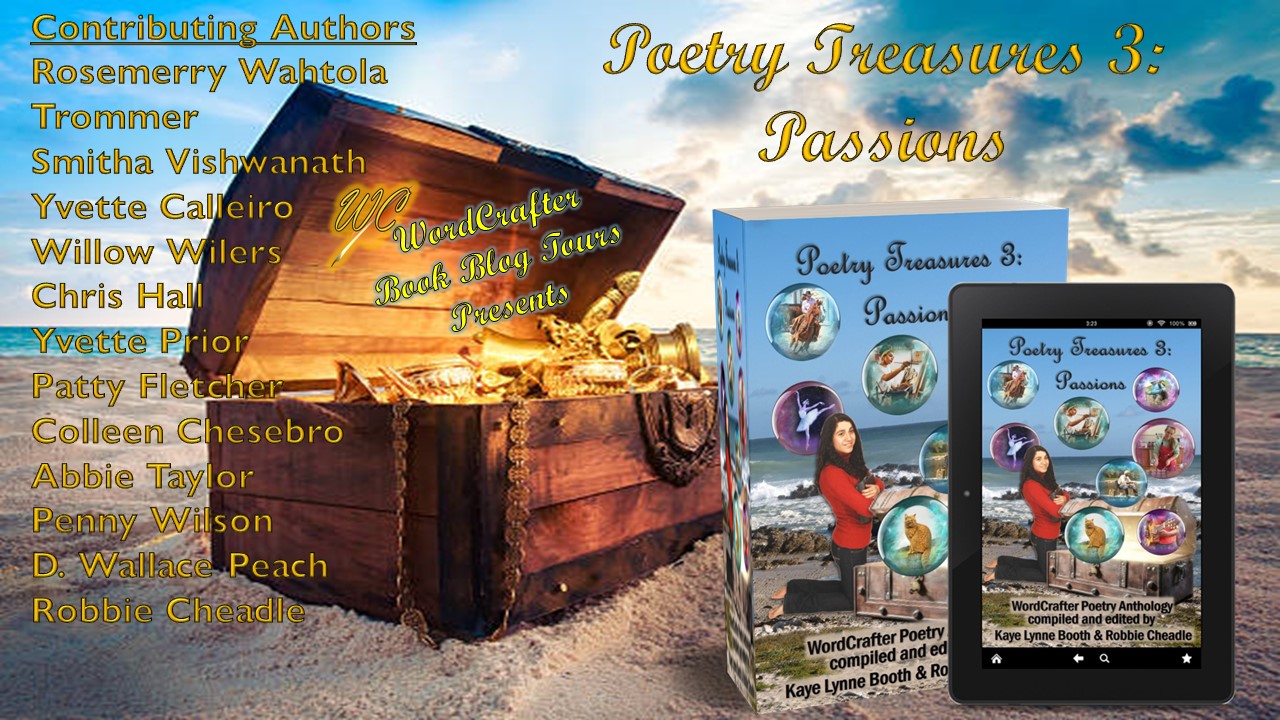
Day 2 of the WordCrafter Poetry Treasures 3: Passions Book Blog Tour finds us over at Patty’s Worlds, where we’ll meet contributing poets Colleen Chesebro and Chris Hall, and Robbie Cheadle reads a poem for each of them. It’s the release day for this very special anthology. Come join in the fun, and be sure to leave a comment for a chance to win a free digital copy of Poetry Treasures 3: Passions.
Welcome to the WordCrafter Poetry Treasures 3: Passions Book Blog Tour! This is a very special tour, because at each stop, you will meet not one, but two of the contributing poets of the anthology. We’ve got a great tour planned with readings and inspiration posts from the authors, and book reviews. (Scroll down for the tour schedule with links, but be aware that the links won’t function until each post goes live.)Plus we have a great giveaway, so follow the tour to meet the contributing authors and additional chances to win a digital copy of Poetry Treasures 3: Passions!
Giveaway
Comment and let us know you were there, and get a chance to win a copy of Poetry Treasures 3: Passions in the digital format of your choice.Follow the tour and leave your comments along the way. One entry per stop.
About Poetry Treasures 3: Passions
Passions treasures within.
Open the cover
and you will discover
the Poetry Treasures
of guests on
Roberta Eaton Cheadle’s
2022 “Treasuring Poetry” blog series
on Writing to be Read.
Included are treasures from:
Patty Fletcher, D. Wallace Peach, Yvette Prior,
Penny Wilson, Colleen M. Chesebro, Abbie Taylor,
Yvette Calliero, Smitha Vishwaneth,
Chris Hall, Willow Willers, Rosemerry Wahtola Trommer,
and Roberta Eaton Cheadle
Purchase Poetry Treasures 3: Passions from your favorite distributor through Books2Read
Today’s Stop
On today’s stop, we have video readings from Rosemerry Wahtola Trommer and Smitha Vishwanath. Rosemerry is sharing a reading of her poem, “Twenty Years Ago, Ten Years Ago, Last Week”, and Smitha is sharing a reading of her poem, ” “. Both of these lovely poems are featured in Poetry Treasures 3: Passions.
Meet Rosemerry Wahtola Trommer
Today’s stop features a peotry reading by contributing Rosemerry Wahtola Trommer, which is a real treat. Rosemerry is a performance poet, and I was privileged to attend one of her live performances back in 2010. She was spectacular. The way she draws you into the poem and makes you feel her words is amazing. Rosemerry is a wonderful, vibrant lady, who embraces the written word as if it were a lover, caressing and shaping it into what she needs it to be. I had the pleasure of featuring an interview with her, right here on Writing to be Read. That’s why I asked Robbie to invite her to be a guest on “Treasuring Poetry”, and why I am so pleased to have her work featured in this WordCrafter anthology. It is a privilege and an honor to work with her. I hope you will enjoy this reading as much as I have.
Rosemerry Wahtola Trommer co-hosts Emerging Form (a podcast on creative process), Secret Agents of Change (a surreptitious kindness cabal) and Soul Writer’s Circle. Her poetry has appeared on A Prairie Home Companion, PBS News Hour,O Magazine, American Life in Poetry, onCarnegie Hall stage, and on river rocks she leaves around town. Her collection Hush won the Halcyon Prize. Naked for Tea was a finalist for the Able Muse Book Award. Her most recent collection is All the Honey. Her daily audio series, The Poetic Path, can be found on the Ritual app, her daily poetry practice can be read on her blog, A Hundred Falling Veils, and her book of mindfulness poetry prompts is Exploring Poetry of Presence II. One-word mantra: Adjust.
If I could go back in time and offer advice to my younger self, I wouldn’t. I would let her fail all over again. I’d let her falter. I’d let her lose. I’d let her stumble and struggle and bomb. But I would lean in close and let her know I am deeply in love with her. It’s so easy now to give her this, this self-compassion in full bloom, this thing she believed was impossible.
Reading of “Twenty Years Ago, Ten Years Ago, Last Week”
“Twenty Years Ago, Ten Years Ago, Last Week”, by Rosemerry Wahtola Trommer
Meet Smitha Vishwanath
I first met Smitha Viswaneth through her interview with Robbie Cheadle on the “Treasuring Poetry” blog series, right here, on Writing to be Read, so I can’t say that I know her well, but I’ve been learning a lot about her. Smitha is an award winning poet of a National Poetry Month Challenge two years in a row, and she’s been nominated poet of the month several times on Spillword. She has poetry published in several online publications, and her debut novel, Coming Home, just came out last month.
Smitha Vishwanath is your quintessential ‘bored banker’ turned writer. After a rewarding career in Banking in the Middle East where she worked for leading banks in senior positions, she quit and moved to India in July 2018 with her husband who had been transferred to the country on an international assignment. Thereon she began her writing journey.
‘Roads’ is the first book she has co-authored. Having lived and studied in different countries and different states within India and worked with different cultures, Smitha understands that ‘change’ and ‘ups and downs’ are very much a part of life. It is this experience that reflects in her poems and her writing which are filled with positivity, acceptance and willingness to change for the better.
A child called, Passion, I met him on my walk, one day and asked him to come home. He replied, ‘On one condition- only if you give me your undivided attention.’
‘How difficult could that be? aloud, I wondered, I raised a family with children- two!’ Smiling impishly, he said ‘Not much, if you surrendered.” I laughed at his presumptuousness Little knowing how true to his words he’d be.
The moment, Passion, walked in through my door He obscured the rest of the world from sight and kept me waking into the night He pranced around all day-tireless, and unbound. It made me loathe the day, him, I found.
Passion was a stubborn child demanding complete allegiance. His appetite was unappeased, his thirst unquenched; he made no allowance!
A ruthless master, a sorcerer He turned me into a willing slave. I fulfilled his every bidding; the years went by, I couldn’t tell and the children flew before I knew.
But, Passion, he stayed behind. I grew old, and he grew kind. Passion, that stubborn child remained wilful until the end and refused to leave,
even though my body was hard to mend. He nourished my body and fed my soul And made me feel as good as whole. Passion, that stubborn child, simply would not let go; no doctor could understand that child’s miraculous cure.
So, if you ever cross paths with a child called, ‘Passion.’ Hold onto him with a firm hand Even if you must endure. Lug around for a while if you must- but don’t ever let go.
For when all the others leave- He will be standing by your side For, Passion, is a stubborn child and loyal as can be Let nobody tell you otherwise.
Reading of “A Child Called ‘Passion'”
Wrap Up
That’s it for the first stop on the WordCrafter Poetry Treasures 3: Passions Book Blog Tour. I hope you’ve enjoyed meeting Rosemerry and Smitha and the samples of their works. As an extra added treat, you can catch an interview with Robbie Cheadle and I on the Word Craft Poetry site with Colleen Chesebro, which happens to coincide with our opening day. So, after you’ve met our two poets, Rosemerry and Smitha, you might click on the link above to pop in and check that interview about the anthology, too.
A raving five-star review of Poetry Treasures 3: Passions on Goodreads.
Raving Revue
“…It’s an eclectic collection and a fabulous way to discover new poets to read. Expect varying interpretations of poetic passions. Not all are amorous! Some are thoughtful, personal to the author, (the author’s interests, experiences and loves,) and many have deep insight into human trials and tribulations…”
Follow the tour to meet other contributing authors and for more chances to enter the giveaway. The links in the schedule below won’t work until each post goes live. Tomorrow we will be over at Patty’s World with Patty Fletcher with a guest post from Contributing author, Colleen Chesebro and a reading by Robbie Cheadle of contributing author, Chris Hall’s poem, ” What Will Become of Us?”, so don’t miss it. I hope to see you there.
Tour schedule 4/17 – 4/21
Monday – Opening Day – Readings by Rosemerry Wahtola Trommer & Smitha Vishwanath – Writing to be Read
Tuesday – Guest Post from Colleen Chesebro & Reading by Robbie Cheadle of poem by Chris Hall – Patty’s Worlds
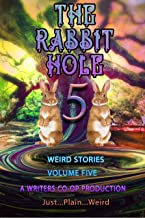
It’s no exageration when The Rabbit Hole – Weird Stories #5, compiled and edited by Tom Wolosz, Curtis Bausse and GD Deckard is described as “Just plain weird”. The stories contained in this volume, produced by the Writer’s Co Op, are all reprints that are just a bit quirky and different.
Welcome to the Rabbit Hole. On our fifth excursion into the warren of the odd, 37 authors lead us down their own little burrows of strangeness: an army of penguins, music that cures, aliens that communicate through old cartoons, images of the future that save, unwanted visions of the now, and, oh yes, it is raining lawyers. All have one thing in common, they are just…plain…weird.
Weird can be funny, weird can be sad, weird can be thoughtful, weird can be mad, but the one thing in common is that weird shares experiences you have, thankfully, never had.
Just be careful, all little bunnies are not nice, but they are memorable.
Stories by: Pete Barnstrom, Lori M. Myers, Richard Zaric, James Rumpel, Rhonda Eikamp, Joseph Carrabis, Leslie Muzingo, H. Donovan Lyón, GD Deckard, Lesley Bungay, S.E. Reed, Alexis Cunningham, Taija Morgan, Matt Nagin, Carl E. Reed, Stefan Markos, Anna Ross, Jon Zelazny, Marie Anderson and Tom Chmura, Richard Hough, Joseph Farley, D. A. Becher, David M. Donachie, Sally Basmajian, Bobby Rollins, Anthony Regolino, Robin Pond, Christina Hoag, John Haas, Joshua Williams, Jodi Rizzotto, Louis Evans, David Castlewitz, Tom Howard, Ira Nayman, and Tom Wolosz. Cover image adapted from an original design by Ian Bristow
My Review
I requested a copy of this anthology because the colorful cover caught my eye, and I’m a big Alice in Wonderland fan who never turns down a chance to explore a rabbit hole.Some of my favorites include:
“The Touch Stand”, by Lori M. Myers, which hits close to home as it reminds us all about things once taken for granted, which are no longer acceptable in a post-pandemic world.
“Don Quitamo”, by Joseph Carabis, which is a delightful tale of high adventure between father and son.
“James Thurber Saves the Day”, by Leslie Muzingo, which makes strong statements about censorship and classic stories in a very brief space.
“Future Shadows” by Lesley Bungay, which explores the ‘gift’ ot the ‘curse’ of premonitions, when there’s more to the choice of saving your sight than you would think.
“Definitely Dead”, by S.E.Reed, which proves that some recipes should not be improvised after trying to make a bad smelling tonic more pallateable.
“Sweet Summer Swimming”, by Alexis Cunningham, which puts a new twist on a relaxing day at the beach.
“The Blue Ghost”, by Taija Morgan, which is a delightfully frieghtening urban legend, very cool and very well executed.
This is a odd and different anthology, reminiscent of Weird Tales, and some of these stories are definitely weird. But the variety featured guarantees something for everyone, and you are sure to find stories here that will both entertain and amuse. I give The Rabbit Hole #5 five quills.
Content for Everyone is a must-read for creative entrepreneurs looking to improve the usability and accessibility of their website, email and social media content.
With over a billion people living with some form of disability worldwide, it’s more important than ever to make sure your content is accessible. In this easy-to-follow practical guide, you’ll learn techniques to make your content more accessible, without needing any in-depth technical knowledge. From adding meaningful alternative text to images, to choosing colors with enough contrast for easy readability, to adding captions to your videos and more, Content for Everyone has everything you need to reach a wider audience and improve the user experience for everyone.
Don’t miss out on the opportunity to improve your content and reach more people.
We all want to be inclusive, right? Of course, we do.
But how do we, as authors and creatives do that? Many authors don’t have the first clue as to how to do that. I know I didn’t.
Content for Everyone, by Jeff Adams and Michele Luchini is a book which tells you how to make your website content more accessible to a huge audience who many authors overlook or bypass. Adams and Luchini talk about how we can create more accessible content for visual or hearing impaired readers on our websites, in emails and newsletters, in blogposts and in social media posts. They talk about ways in which we can reach a much wider audience by making our content inclusive for readers regardless of whatever adaptive technoloy they’re using, or whatever device is their preference for consuming content.
With the right amount of time and effort, websites and digital communications can be made accessible to those with disabilities or use adaptive technology in accessing digital content. But it requires work and/or money to make that happen, and many authors probably wonder why they should go to the trouble.
I’m here to tell you why. When you make your website or your books accessible to those with disabilities and impairments, you are reaching out to a whole new audience with your writing. It is a large community, “with millions of impaired or disabled readers, who would read if they could access the content” (Patty Fletcher, email March 24, 2023), and it makes good sense to make your content inclusive to these potential readers. Awareness of the large audience of potential readers who are visually impaired was the main reason that I sat up and paid attention when I heard about this book.
Content for Everyone deals with how to make digital content accessible. There are many things we can do to make our content more accessible including providing the right contrast for visually impaired individuals, or even the proper use of headers. It’s no secret that I’m a bit old fashioned and I’m not always aware of the incricate details of the tech I use, although I am always learning. Content for Everyone discusses many ways in which you can make your content accessible to those with disabilities, who must use adaptive technology in order to access online and digital content. Some of these areas wouldn’t seem to be problematic to those of us without disabilities, but they are for individuals who are impaired.
Although all of this is a lot of work, Adams and Lucchini offer up individual steps which can be performed singularly, instead of trying to undertake the enormous task of accessiblility as a whole, which could be daunting. Picking one area of accessibility at a time seems to make the goal more attainable. I found that I hadn’t been using my headings correctly, and this is something that I never dreamed made any difference to anyone. But it does make a difference to those using adaptive technology, such as screen readers. after finishing the book, the first thing I did, was to go and change all the headers on my upcoming blog posts. Then, I went through and fixed them all through my blog site. It’s not anything a sighted person would probably notice, but for someone who uses a screen reader, it can make a difference as they try to navigate my site. Knowing that it makes a difference to some people, and knowing that by making it accessible, I will be widening my potential reader audience considerably, makes my decision to use headings correctly from now on seem a small step to take.
Something else which I’ve been working on since reading this book is adding the alt text for the screen reader crowd. Doing this is not hard, and should be done when you set the image in the post, but it does take extra time. I work with several visually impaired authors who use screen readers, so I know this audience is quite large. This is a simple thing to do, which really doesn’t take much time if you do it as you go. My site is image heavy, with lots of book covers, so it may take some time to add alternate text to the visuals which are already there. Even though it does take time and effort, the increase in portential readers from taking a few simple steps is so great that I have to ask, why would you not want to take this step to ensure that your content is accessible to more potential readers?
I am so pleased to be able to work with the wonderful authors within the visually impaired and print disabled community. It would be a shame to not be able to include their content within the WordCrafter tribe because of inaccessibility. And it would be a shame to have them miss out on WordCrafter content because they can’t access it. As Poetry Treasures 3 comes out this month, I’m pleased to be able to say it is the first book I have ever published with alternate text for each image. It’s just a small step in making Wordcrafter Press books more accessible to all.
You can learn more about these authors and their book, as well as learning a few things you may not know about accessibility in their interviews on the Stark Reflections podcast (episode 294), and on The Creative Penn podcast (March 13, 2023).
National Library Services
My grandmother was blind, and as a little girl, I often listened to her “talking books” with her and didn’t think much about it. I’m not sure, but I am thinking that those little cassette tapes that used to come to her in the mail, were sent by the National Library Services for the Blind and Print Disabled Library of Congress was behind them, even then. Yep. The visually impaired were doing “audio books” before they were even a thing. Today’s audio has caome a long way from those talking books on cassette, and there are now many adaptive technologies available to make books accessible to visually impaired and print disabled readers. And it makes sense for authors to tap into this audience by enrolling their their books in the NLS programs that are available. You can find out more about the National Library Services here.
Author Patty Fletcher encourages authors to enroll their books in the National Library Services to make them accessible to those who are visually impaired or print disabled to widen your audience and make many overlooked readers happy. She recomends that you read “That All May Read: Technological Innovations Extend Reach of National Library” by Wendy Maloney and then, if you are interested in making your books accessible, email nlscollections@loc.gov to find out how.
What is Accessibility and Assistive Devices?
“To know what accessibility is, one must first know what assistive technology is.”
Author Patty Fletcher
You can find out more about accessibility, what it is, and why we need it in our content. Patty Fletcher shares the following articles, which talk about assistive technology, how it works, and why it is important:
The subject is vast, and this book and the above articles are a good place to start.
Patty Fletcher is a visually impaired author and member of the American Council for the Blind, which is a large community of visual and print disabled readers. Patty’s goal is to bridge “the great chasm which separates the disAbled from the non-disAbled.” Toward that end, Patty is organizing a virtual event to help authors understand what adaptive technologies there are and steps we can take to adapt our websites, digital correspondence and books to be inclusive of these potential readers. Please reach out to myself or Patty if you would like to participate in this event.
For Kaye Lynne Booth, writing is a passion. Kaye Lynne is an author with published short fiction and poetry, both online and in print, including her short story collection, Last Call and Other Short Fiction; and her paranormal mystery novella, Hidden Secrets. Kaye holds a dual M.F.A. degree in Creative Writing with emphasis in genre fiction and screenwriting, and an M.A. in publishing. Kaye Lynne is the founder of WordCrafter Quality Writing & Author Services and WordCrafter Press. She also maintains an authors’ blog and website, Writing to be Read, where she publishes content of interest in the literary world.
Want exclusive content? Join Kaye Lynne Booth & WordCrafter Press Readers’ Group for WordCrafter Press book & event news, including the awesome releases of author Kaye Lynne Booth. She won’t flood your inbox, she NEVER sells her list, and you might get a freebie occasionally. Get a free digital copy of her short story collection, Last Call and Other Short Fiction, just for joining.
THERE’S NO ESCAPING THE EVIL THAT RISES WITHIN OUR OWN HEARTS.
On a work trip to Los Angeles, Michael Andrews stumbles upon the rising underground movement of the Proud Fighters for America, a white-supremacist group hell-bent not only on vanquishing any outside their predefined definitions of the one pure race, but also on leveraging long-buried paranormal experiments conducted by Nazi Germany to create an army of super soldiers.
But this group isn’t confined to the west coast. Their numbers have also spread to New York, Michael’s home stomping grounds.
Michael has to determine if a mysterious woman he is falling in love with who has ties to the PFA and a unique paranormal ability of her own can be trusted, and if the two of them, along with another supernatural creature and an occult scholar, are enough to take down the growing legion of evil.
FEARS AND FRIGHTS combines the complete texts of the two-book story arc that unrolls in the novels FEAR AND LONGING IN LOS ANGELES and FRIGHT NIGHTS, BIG CITY into a single digital bundle.
I listened to the audio book, Bundle of Fears and Frights, by Mark Leslie, and narrated by Scott Overton. As he has through the whole series, Scott Overton does a smashing job of bringing Leslie’s characters to life.
This is a two book bundle which includes Fear and Longing in Los Angeles and Fright Nights, Big City, which are, I believe, books 2 & 3 in Lefebvre’s Canadian Werewolf series. Together, they make nine hours of audio book entertainment, and characters which you can’t help but invest into.
My first thoughts when learning about book 1, Canadian Werewolf in New York, was that it might be similar to the movie, American Werewolf in London, which I enjoyed enough to watch two or three times. My second thought was that the werewolf thing has been soooo overdone, as have vampires, and zombies. As it turned out, Lefebvre’s werewolf different from that movie in several ways. And his character, Michael Andrews is not like any other werewolf that I’ve heard of. I mean, how can you not like a werewolf superhero? Not a role you’d expect to see a werewolf in, right? No, I find Lefebvre’s werewolf to be fresh and original, and I’ve never regretted picking up that first audio book, which was also narrated by Scott Overton. You can read my review of that book here.
Bundle of Fear and Frights takes Lefebvre’s werewolf to Las Angeles and back to New York, in his human form as Michael Andrews, of course, to battle a white supremacists domestic terrorist group. As a human, Michael is vulnerable like the rest of us, and he’s trying to come to terms with the loss of his true love, Gail, and move on to a new chapter in his life.
In Fear and Longing in Las Angeles, Michael finds a new love interest, Lex, but his supernaturally enhanced wolf senses and strengths offer advantages, and he can never walk away from someone in need. He just can’t seem to help himself. Before he knows it, he also finds himself battling the PFA, a domestic terrorist group involved in the occult, which has supernatural powers to rival his own wolf senses and strength. All, while trying to navigate his love life and his writing career. To make matters worse, strange things are happening with his wolf senses, which he doesn’t fully understand, but he grasps at the chance to once again have a normal life with Lex.
In Fright Nights, Big City, he’s back in New York with Lex, but trouble follows them, or at least, the PFA does. In L.A., Michael had decided to walk away and let the professionals deal with them, but now, in New York, it looks like they have no choice but to try and stop them from carrying out their evil plot to take over the city. Together with Lex, his new girl, and Gail, the girl he can’t seem to get over, they battle occult forces of evil to save the city, and themselves.
Mark Leslie’s Michael Andrews is one of the most likeable werewolves I’ve ever met. I love that he weilds his enhanced powers like a superhero, because of his compassion for others, which is a very human trait. I give a Bundle of Fears and Frights five quills.