Treasuring Poetry – Meet poet Leon Stevens and book review
Posted: August 21, 2021 Filed under: Book Review, Books, Humor, Poetry, Treasuring Poetry | Tags: Book Review, Leon Stevens, Lines by Leon, Poetry, Poetry Collection, Treasuring Poetry, Writing to be Read 27 Comments
Today, I am delighted to host artist, poet and author, Leon Stevens.
Which of your own poems is your favourite?
Wow. Starting off with the hardest question…I have written about many aspects of my existence, but I think some of the poems about ego and human nature are my attempt at understanding why people act the way they do. I still don’t get why some people are jerks.
Ego (Part II)
An ego is a big cat
That needs to be stroked
By you or someone else
Smaller cats are easy to please
And the bigger the cat
The more dangerous it is
To rub the wrong way
What inspired you to write this particular poem?
I wrote a series of poems about ego after spending some time observing how people interact with each other as individuals jockey for position within a group. While they do that, they seek affirmation to justify their perception of themselves. There are positives to egos, but if an ego is too aggressive, it can leave you rolling your eyes and shaking your head.
Which genre of poetry do you enjoy writing the most and why?
I don’t set out to write any particular form of poetry. Usually, as the words come to me, they will dictate how the poem will manifest itself. This leads to some erratic rhyming and rhythmic patterns, but often I find that a well-placed, unexpected rhyme can have a powerful effect.
My poems tend to be short—no more than a page—often 4-6 lines. They are like a snapshot of a moment or experience rather than a slideshow or movie.
Which genre of poetry do you enjoy reading the most?
I honestly do not read a lot of poetry. Maybe it is a way not to be influenced, which I hope makes my own poetry unique. I do follow many blogs that feature poetry, so most of what I do read comes from those sites.
I grew up with my father reading the poems of Robert Service. The Cremation of Sam McGee Is one that has always stuck with me (Dad had it memorized along with many others). It is a tale set during the Klondike gold rush which has a humorous, macabre twist.
The Cremation of Sam McGee by Robert Service
There are strange things done in the midnight sun
By the men who moil for gold;
The Arctic trails have their secret tales
That would make your blood run cold;
The Northern Lights have seen queer sights,
But the queerest they ever did see
Was that night on the marge of Lake Lebarge
I cremated Sam McGee.
Now Sam McGee was from Tennessee, where the cotton blooms and blows.
Why he left his home in the South to roam ’round the Pole, God only knows.
He was always cold, but the land of gold seemed to hold him like a spell;
Though he’d often say in his homely way that “he’d sooner live in hell.”
On a Christmas Day we were mushing our way over the Dawson trail.
Talk of your cold! through the parka’s fold it stabbed like a driven nail.
If our eyes we’d close, then the lashes froze till sometimes we couldn’t see;
It wasn’t much fun, but the only one to whimper was Sam McGee.
And that very night, as we lay packed tight in our robes beneath the snow,
And the dogs were fed, and the stars o’erhead were dancing heel and toe,
He turned to me, and “Cap,” says he, “I’ll cash in this trip, I guess;
And if I do, I’m asking that you won’t refuse my last request.”
Well, he seemed so low that I couldn’t say no; then he says with a sort of moan:
“It’s the cursèd cold, and it’s got right hold till I’m chilled clean through to the bone.
Yet ’tain’t being dead—it’s my awful dread of the icy grave that pains;
So I want you to swear that, foul or fair, you’ll cremate my last remains.”
A pal’s last need is a thing to heed, so I swore I would not fail;
And we started on at the streak of dawn; but God! he looked ghastly pale.
He crouched on the sleigh, and he raved all day of his home in Tennessee;
And before nightfall a corpse was all that was left of Sam McGee.
There wasn’t a breath in that land of death, and I hurried, horror-driven,
With a corpse half hid that I couldn’t get rid, because of a promise given;
It was lashed to the sleigh, and it seemed to say: “You may tax your brawn and brains,
But you promised true, and it’s up to you to cremate those last remains.”
Now a promise made is a debt unpaid, and the trail has its own stern code.
In the days to come, though my lips were dumb, in my heart how I cursed that load.
In the long, long night, by the lone firelight, while the huskies, round in a ring,
Howled out their woes to the homeless snows— O God! how I loathed the thing.
And every day that quiet clay seemed to heavy and heavier grow;
And on I went, though the dogs were spent and the grub was getting low;
The trail was bad, and I felt half mad, but I swore I would not give in;
And I’d often sing to the hateful thing, and it hearkened with a grin.
Till I came to the marge of Lake Lebarge, and a derelict there lay;
It was jammed in the ice, but I saw in a trice it was called the “Alice May.”
And I looked at it, and I thought a bit, and I looked at my frozen chum;
Then “Here,” said I, with a sudden cry, “is my cre-ma-tor-eum.”
Some planks I tore from the cabin floor, and I lit the boiler fire;
Some coal I found that was lying around, and I heaped the fuel higher;
The flames just soared, and the furnace roared—such a blaze you seldom see;
And I burrowed a hole in the glowing coal, and I stuffed in Sam McGee.
Then I made a hike, for I didn’t like to hear him sizzle so;
And the heavens scowled, and the huskies howled, and the wind began to blow.
It was icy cold, but the hot sweat rolled down my cheeks, and I don’t know why;
And the greasy smoke in an inky cloak went streaking down the sky.
I do not know how long in the snow I wrestled with grisly fear;
But the stars came out and they danced about ere again I ventured near;
I was sick with dread, but I bravely said: “I’ll just take a peep inside.
I guess he’s cooked, and it’s time I looked”; … then the door I opened wide.
And there sat Sam, looking cool and calm, in the heart of the furnace roar;
And he wore a smile you could see a mile, and he said: “Please close that door.
It’s fine in here, but I greatly fear you’ll let in the cold and storm—
Since I left Plumtree, down in Tennessee, it’s the first time I’ve been warm.”
There are strange things done in the midnight sun
By the men who moil for gold;
The Arctic trails have their secret tales
That would make your blood run cold;
The Northern Lights have seen queer sights,
But the queerest they ever did see
Was that night on the marge of Lake Lebarge
I cremated Sam McGee.
Poem credit: https://www.poetryfoundation.org/poems/45081/the-cremation-of-sam-mcgee
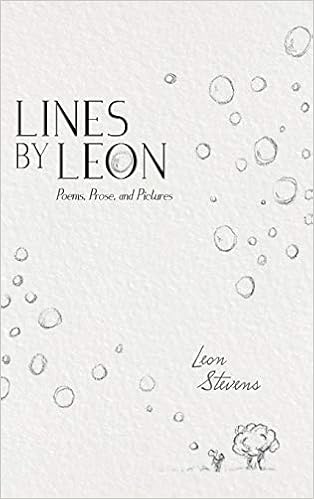
Book review: Lines by Leon: Poems, Prose, and Pictures
My review
Every now and then you discover a book of poetry which has you nodding your head in agreement and identifying with the views of the poet. For me, this was one of those books. Leon Stevens has an unerring way of aiming a poetic arrow straight at the heart of a difficult issue and exposing it for exactly what it is. This exposure is done with great dry wit, but it is nevertheless, brutally honest and truthful.
The poems in this book cover an array of topics including, inter alia, the poets personal viewpoints on specific matters, environmental experiences, the human conditions and how we relate with others, people and places, and ponderance and muse. There is a sprinkling of the poet’s own sketches throughout the book, and these, complement the humour and the simple, straightforward messages woven into these compelling poems.
This poem, called The Tendency to Cluster, was my personal favourite in this collection and demonstrates the points I’ve mentioned above:
People like orbs
Drawn by gravity
Unable to exist alone
Each dependent on the orbits of others
The only thing that keeps them
From being flung away
Needing others to define them
Needing to know
The quantum state of others
There are people
Content with singularity
In the colder outer regions
Emptiness brings strength, warmth, life
Occasional objects pass
Piquing curiosity
Worthy to share space (for a while)
Mostly continuing alone
Comfortable that orbits won’t decay
If you enjoy poems that speak clearly and simply about important matters, then you will enjoy this collection. Even if you don’t share the poet’s viewpoint, these poems will still make you think deeply.
Purchase Lines by Leon: Poems, Prose, and Pictures
About Leon Stevens
Leon Stevens is a writer, composer, guitarist, songwriter, and an artist, with a Bachelor of Music and Education. He became a writer out of necessity. Along with song writing, poetry has allowed him to make sense and accept events and situations in his life. He published his first book of poetry: Lines by Leon – Poems, Prose, and Pictures in January 2020, a book of original classical guitar compositions, and a collection of science fiction short stories called The Knot at the End of the Rope and other Short Stories. Visit www.linesbyleon.com for free sample eBooks.
Share this:

Poetry Set to Music – Just call it a song
Posted: August 16, 2021 Filed under: Poetry, Song Writing, Writing | Tags: music, Poetry, Song Writing, Writing to be Read 2 Comments
Poetry comes in many forms. There is free verse, rhymed poetry, blank verse or metered poetry, syllabic poetry, (such as hiaku on tankas), epic poems, narrative poetry, pastoral poetry, and sonnets, just to name a few. I’m partial to rhymed poetry, although I was warned away from it in school. I love rhymes of Dr. Suess and Shell Silverstein, and I love playing with rhyme and alliteration in my own poetry. Wordplay makes writing, (and reading), poetry fun. Poetry forms with structured rules, such as villinettes or syllabic poetry don’t come as easily for me.
I think it must be even more difficult to write poetry put to music, but if you think about it, many songs do use alliteration and rhyming, and this is perfectly acceptable in the song writing world. But what is a song, if not a poem set to music? Even many of the nursery rhymes that were handed down to you as a child have been put with a popular tune, making them more memorable: Old King Cole, Ring-Around-the-Rosy, London Bridge, Jack and Jill, etc… Below are some lyrics to some popular songs that use rhyming, but if you had never heard them, and didn’t know the tune, all you would see is poetry.
Winter nights we sang in tune
Played inside the months of moon
Never think of never
Let this spell last forever
Heart – Magic Man
_____________________________________________________________________________________________________________________________
Drowning nightly in deep blue seas
Waves of sadness swallow me
No soul can hear me beneath the waves
No gods, no saviors, no hands of fate
The Pretty Reckless – Only Love Can Save Me Now
________________________________________________________________________________________________________________________
Poetry uses language to paint vivid mental pictures and tell stories, as can be seen in the lyrics below. Fleetwood Mac uses similes and metaphores to paint a mental picture for the listener in some very poetic ways in Rhiannon, and Jethro Tull’s lyrics in Locomotive Breath conjurs some unusual images, as well.
Rhiannon rings like a bell through the night
And wouldn’t you love to love her?
Takes to the skies like a bird in flight
And who will be her lover?
Fleetwood Mac – Rhiannon
____________________________________________________________________________________________________________________________
In the suffering madness
Of the locomotive breath
Comes the all time loser
Headlong to his death
He sees the piston pumping
Steam breaking on his brow
But Charlie stole the handle
And the train, it won’t stop going
No way to slow down.
Jethro Tull – Locomotive Breath
___________________________________________________________________________________________________________________________
Narrative poetry tells a story in verse, as do many songs. Narrative songs that come readily to mind include The Wreck of the Edmund Fitzgerald, by Gordon Lightfoot, Running Bear by Sony James, and One Tin Soldier, by The Original Caste. Here, McGraw tells a story of the growth of first love in his song, Don’t Take the Girl. (And it rhymes.)
Johnny’s daddy was taking him fishing
when he was eight years old
A little girl came through the front gate
holding a fishing pole
His dad looked down and smiled,
said we can’t leave her behind
Son, I know you don’t want her to go,
but someday you’ll change your mind.
Tim McGraw – Don’t Take the Girl
_____________________________________________________________________________________________________________
I’ve listed the handful of songs above with the names of the artists who sing them, but that’s another way songwriters and poets are alike. Both get very little recognition for their writing. Often the singer is not the songwriter. Songs may be peddled among singers, as was the case with That’s the Night that the Lights Went Out in Georgia, (written by someone named Bobby Russell), which Cher turned down before Vicky Lawrence ended up cutting the record. Magic Man was actually written by the singers, Ann and Nancy Anderson, and Rhiannon was written and sung by Stevie Nicks. Taylor Momsen and Ben Phillips of The Pretty Wreckless wrote Only Love Can Save Me Now. But, Don’t Take the Girl was written by songwriters Craig Martin and Larry W. Johnson, Locomotive Breath may be sung by Jethro Tull, but it was written by Ian Anderson.
It’s customary for songs to be identified with the singer, rather than the song writer, and poets don’t become famous until after they are dead. Song writers are the unknown poets of the music world.
___________________________________________________________________________________________________________________________
Like this post? Let me know in the comments. You can be sure not to miss any of Writing to be Read’s great content by subscribing to e-mail or following on WordPress. If you found this content helpful or entertaining, please share.
Share this:

Adversity makes the story
Posted: August 13, 2021 Filed under: Character Development, Conflict, Fiction, Writing, Writing Tips | Tags: Adversity, Character Development, Conflict, Emotion, Writing, Writing to be Read 9 Comments
When Donald Trump ran for election the first time, in 2016, he was heard saying that he got his start when he borrowed a half million dollars from his father to start a business. He went on to say that he created a successful business and paid back that loan in something like six months. He was very proud of this feat and used it as an example of what good business sense he has, which he claimed qualified him to run the country. My response to his claim was to think to myself, ‘Yeah, if someone loaned me a half million dollars, I bet I could create a successful business, too.’
Everything I have ever done in my life, I have done on my own. There has never been anyone who would extend me a loan, or support me in my efforts. I’ve had a lot of failures, like the landscaping business I tried to start and got taken to the cleaners by my very first customer, leaving me in debt on the endeavor, but I picked myself up and tried again. Now, I have created a small independent press and I offer author services through WordCrafter. It’s small and I do it all online, out of my home. To me, that is more of an achivement than former President Trump’s multi-million dollar corporation, because I didn’t have any help in getting where I am today. I struggled to overcome all obstacle that stood in my way, and I built my business a little at a time, without loans or other help from anyone. To me there is no real story in what Trump did, but the road to success for me has been paved with obstacles and setbacks to overcome. He may be a lot richer than I am, but my story is ever so much more interesting.
Several years ago, one of the nurses that I worked with came up to me and told me how happy she was to learn that I had continued writing after my son died. She said that it meant that I was healing. The truth was, after Mike died, I had to write. I had so much grief boiling inside me that my only recourse was to write and let it all flow out. After Mike died, writing was what helped me keep my sanity. I wrote poetry. I wrote stories about Mike. I wrote and delivered his eulogy. More than likely none of it will ever be published, but the stuff I wrote during that time was powerful. If I read it now, it still brings tears to my eyes.
The negative emotions- grief, sadness, hate, anger – are all powerful emotions and to write a story that stirs those emotions is to draw your reader into the story and make them care. The positive emotions like love or triumph are powerful, as well, but they are made more powerful if the character has to struggle to achieve them. If the character is happy when the story begins, and remains happy throughout, then it’s really no big deal when he is happy at the end. But, if the character has longed for happiness, struggled to overcome the obstacles that prevent him from being happy, and the reader has been right there feeling his frustration and sorrow along the way, then the reader will be elated when, at the end, the character accomplishes his goal and achieves the ever sought after happiness. The negative emotions are what makes the positive ones that much stronger. In life, happiness is fleeting, easily forgotten as we move on to the next goal, but the negative emotions are always there, just below the surface, waiting to be called forth. They don’t go away. I miss my son now just as much as I did the day he died, and all I have to do is think about him for the tears to start to flow, even eleven years later. The negative emotions don’t fade away, like the positive seem to.
Adversity creates conflict, and conflict is why we keep reading. We have to see how the character is going to overcome whatever obstacles are placed in his way. We must read on to find out who wins the battle, to learn if our character will be triumphant, or if he will be ruined for life. Adversity, or conflict, is the key to writing a good story. Going through the characters struggles with them makes their revenge sweeter, their triumphs more elating, and their love so much stronger. Adversity is what makes us care about the characters.

So, make things hard for your characters no matter what genre you write. Beat them up, make them walk over hot coals, climb mountains, jump out of airplanes, or dive to the ocean’s depths to get the girl, find the treasure, win the race, or achieve self-discoveries. And just when they are at the lowest point they have ever been at, and it seems that there is no way to come out ahead, throw a burning building in their path, raise the stakes, throw in a ticking time bomb. Don’t make it easy for them. If a good looking guy walks into the bar and sweeps the girl off her feet without even blinking and there is no one to object, no one will care if they live happily ever after or not. When the reader is aware of the price that has been paid to achieve the goal, then your readers will care so much more. Give your characters conflict and adversity. They’ll thank you for it later, and so will your readers.
___________________________________________________________________________________________________________________________
Like this post? Let me know in the comments. You can be sure not to miss any of Writing to be Read’s great content by subscribing to e-mail or following on WordPress. If you found this content helpful or entertaining, please share.
Share this:

Growing Bookworms – Are there benefits to repetitive reading?
Posted: August 11, 2021 Filed under: Books, Growing Bookworms, Literacy, Reading | Tags: Growing Bookworms, Reading, Robbie Cheadle, teaching reading, Writing to be Read 48 Comments
“As adults, we know that you might read a complex book and, if you read it again, it allows you to absorb all the different elements over time. It’s true for children too. Not only do children love having the familiarity of their favourite books but the repetition is so valuable.”
DR ELIZABETH WESTRUPP
When my boys were young, they liked to have the same book read to them over and over again. With Greg it was the Farmyard Tales about Poppy and Sam and their dog called Rusty.
Greg was about two and a half years old when he went through this repetitive reading stage. Every afternoon when I got home from work, he would ask me to read Farmyard Tales to him. It was fortunate for me as I was pregnant at the time and busy working on a big transaction; Greg’s love of these books enabled me to rest a lot more than I would have been able to if he’d wanted to play outside.
You can find out more about Poppy and Sam here:
Michael went into this book reading stage later. He was about five years old when he decided he loved The Enchanted Wood series by Enid Blyton. I read this book to him so many times I learned sections of it off by heart. Michael also loved the Famous Five series also by Enid Blyton. Thankfully, I was smart enough to get the audio books of the whole series and so I didn’t have to read these to him repetitively. He liked Five go off in a caravan the best and his listening to this story nearly drove me mad eventually.

Back to today’s question: Is repetitive reading good for children?
According to a number of child psychologists repetitive reading does have some important benefits, in particular, children take longer to encode information that older children and adults and they forget faster. Repetitive reading helps young children to remember patterns, new and unusual words, and connect key concepts in the story. In other words, repetition helps develop better comprehension.
Repetitive reading also helps children learn to see things from a different perspective and undergo a different learning experience if you add some new nuances into your reading of the same story. It also helps make reading a story for the 20th time more fun.
Two other benefits of repetitive reading are as follows:
1. Children develop language fluency through repetition. It also helps them to learn sequencing and understanding the two concepts of timing and placing in a story;
2. Repetitive reading also helps develop confidence when a child knows the story and is able to remember what happens next. It also enables the child to re-tell the story to peers or a younger sibling.
Some books that are fun to read over and over again to children are the Dr Seuss books. I always find those books a lot of fun to read, even though I have read them many times, including to my own younger siblings.
I’m going to end off with a great quote from Dr Seuss:
“The more that you read, the more things you will know. The more that you learn, the more places you’ll go.” ― Dr. Seuss, I Can Read With My Eyes Shut!
About Robbie Cheadle

Robbie Cheadle is a South African children’s author and poet with 9 children’s books and 2 poetry books.
The 7 Sir Chocolate children’s picture books, co-authored by Robbie and Michael Cheadle, are written in sweet, short rhymes which are easy for young children to follow and are illustrated with pictures of delicious cakes and cake decorations. Each book also includes simple recipes or biscuit art directions which children can make under adult supervision.
Robbie has also published 2 books for older children which incorporate recipes that are relevant to the storylines.
Robbie has 2 adult novels in the paranormal historical and supernatural fantasy genres published under the name Roberta Eaton Cheadle. She also has short stories in the horror and paranormal genre and poems included in several anthologies.
Robbie writes a monthly series for https://writingtoberead.com called Growing Bookworms. This series discusses different topics relating to the benefits of reading to children.
Robbie has a blog, https://robbiesinspiration.wordpress.com/ where she shares book reviews, recipes, author interviews, and poetry.
Find Robbie Cheadle
Blog: https://www.robbiecheadle.co.za/
Blog: robbiesinspiration.wordpress.com
Twitter: BakeandWrite
Instagram: Robbie Cheadle – Instagram
Facebook: Sir Chocolate Books
_____________________________________________________________________________________________________________________
Want to be sure not to miss any of Robbie’s “Growing Bookworms” segments? Subscribe to Writing to be Read for e-mail notifications whenever new content is posted or follow WtbR on WordPress.
Share this:

Book Review: Mudflap – A character concept many of us can identify with
Posted: August 9, 2021 Filed under: Book Review, Books, Fiction, satire | Tags: Book Review, Jay Alden Bailey, Mudflap, satire, Social Commentary, Writing to be Read 4 Comments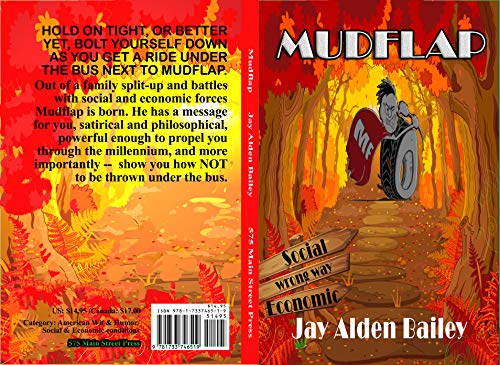
In Mudflap, by Jay Alden Bailey the character’s name isn’t really Mudflap, but that is the name he identifies with because life always seems to be throwing him under the bus. We’ve all been there, so the character concept is easy to identify with. Every time Mudflap gets up, life knocks him back down again. But he just keeps getting back up again, even starting over from step one when necessary. This story makes a suttle social commentary as Mudflap’s tale unravels that readers with a keen eye will be sure to pick up on.
Sharing in the life and experiences of Mudflap makes one appreciate the circumstances in one’s own life more. If you need cheering up or are just looking for a chuckle, this story is for you. I give Mudflap four quills.

__________________________________________________________________________________________________________________________
Kaye Lynne Booth does honest book reviews on Writing to be Read in exchange for ARCs. Have a book you’d like reviewed? Contact Kaye at kayebooth(at)yahoo(dot)com.
Share this:

Mind Fields – Marketing to Obsessive Compulsives: Is It Fair?
Posted: August 6, 2021 Filed under: Commentary, marketing, Mind Fields, Opinion | Tags: Arthur Rosch, marketing, Mind Fields, OCD, Writing to be Read 2 Comments
Marketing To Obsessive Compulsives: Is It Fair?
May 16, 2021
That’s not supposed to be a funny title, but it is certainly ironic. Aren’t we all slightly OCD? Isn’t the condition of compulsiveness generic to our culture? Isn’t it nurtured, encouraged, normal, to be obsessive when we’re bombarded with messages to buy stuff that we don’t really need? I’m compulsive. Is there a difference between being compulsive and being an addict? There is, but it’s a question of degree. An addict is compulsive beyond reason, dominated by compulsions that create a self-harming syndrome. A “normal” obsessive compulsive is just another citizen of modern times.
This subject began to entice me when I went hunting for a new camera. I don’t really need a new camera, but my current camera is from 2013. That is ancient in terms of digital cameras and their markets. It’s like having a thirty year old dog. The compulsion to upgrade is generated by massive commercial influences. It’s Canon and Nikon, Pentax and Fujinon. Asian conglomerates pour a lot of money into creating an itch, for the latest gear. The two big companies, Canon and Nikon, continue to manufacture upgrades and new iterations of the same basic camera features. Mostly what the newest cameras do is focus faster and weigh less. A lot faster. A lot less. And they cycle frame rates at 20 shots each second. This enlivens the “lucky shot” school of photography, meaning everyone who shoots with a camera. I bought my first digital camera eighteen years ago. It was an Olympus that featured a 2.1 megapixel sensor. The resolution of camera sensors has taken wings and there are now consumer cameras with 50 megapixels. I own a 20 megapixel camera and it takes beautifully sharp and accurate images. As did my 12 megapixel camera, and my 3.3 megapixel camera.

Do I yearn for the new 32 megapixel camera from Canon? Yes. I can’t help myself. I can’t help wondering what would 32 megapixels look like? One problem is that this kind of gear is really good. The makers of cameras have conquered an array of technical problems that go with acquiring digital images. They are brilliant! How good can these cameras get before CanIkonAx (choose yr company) lunges into our brains and starts taking out the visual cortex to implant image sensors in our heads?
BUT: people like gear. People enjoy gear, so the in-the-brain-controlled- by -your -thoughts paradigm may have trouble acquiring lift. It may never get off the ground because what’s the fun of doing cool jobs when there’s no gear to play with but a chip of silicon within our bodies?? That may take a few hundred years, when we’ve learned that our very hardware bodies are also gear and there comes with this gear some interesting software.
I’ve digressed from my original question. Is it fair to market to obsessive compulsives? Who else is there to market to? If you find a person free of neuroses it won’t be a person easily conned by ads and glitz.
To answer the question: NO! It’s not fair. It’s a way of rigging the society to feed the voracious maws of Business. I’ve written elsewhere on the idea that “contempt sells”. We’re treated with contempt every day. It is assumed by highly placed marketers that we’re stupid. We ARE kinda stupid. A lot of our behaviors are stupid and against our own interests. Electing charlatans to high office is stupid, but it happens all the time. Buying TV sets the size of walls is a bit stupid. It’s kind of cool but still, how big does your TV need to be? Do you need a hoist and crane to install it in your house?

Being OCD is the modern equivalent of being religious. In the middle ages one HAD to be religious or the authorities would hunt you down and kill you. Heretic! In our own times it’s consumerism that drives our religion. There are so many ways to drain our bank accounts, so many temptations that leap from our social media and TV to entice us as if with a sexual appetite.
UHOH! This is the new SEX! No wonder it’s so powerful! People will climb over one another to experience five minutes of pleasure. People do the same thing at a store sale. Climb over each other to save a dollar. Now I get it.
It’s not fair to market to obsessive compulsives, but there is no one else to whom the companies can market. This OCD, which I will now dub Exogenous OCD, or EOCD, has been created by the forces of modern civilization.
It is said by some Buddhists that Emptiness is the true nature of reality. Deep inside ourselves we are aware, and terrified, of this condition. We will do a lot to escape from Emptiness. There is a giant misunderstanding about this term, Emptiness. It isn’t Nothingness. It’s Everythingness pouring into Nothingness. Always and now.
The market will be aimed at obsessive compulsives no matter what else happens. There is nothing we can do about it. We are the obsessive compulsives we hope to protect.
Share this:

Where do you find inspiration?
Posted: August 2, 2021 Filed under: Inspirational | Tags: Birds, FFlowers, Gardening, Inspiration, Writing to be Read 10 Comments
Many of you may know that I started my writing career as the Southern Colorado Literature Examiner for Examiner.com, but what you might not know, is that I was also a content writer for Demand Studios. And I wrote D.I.Y. gardening articles, because I have always been an avid gardener, so it was an area I was knowledgable in. It’s been many years since I wrote gardening articles, but I still enjoy gardening and landscaping. I find it to be relaxing, soothing – a time when I can contemplate in my mind and find inspiration while engaged in the physical labors of hauling, digging, pulling and planting. So, when I get bogged down or stressed out, I go out and work in the garden to mellow out and regain my center.
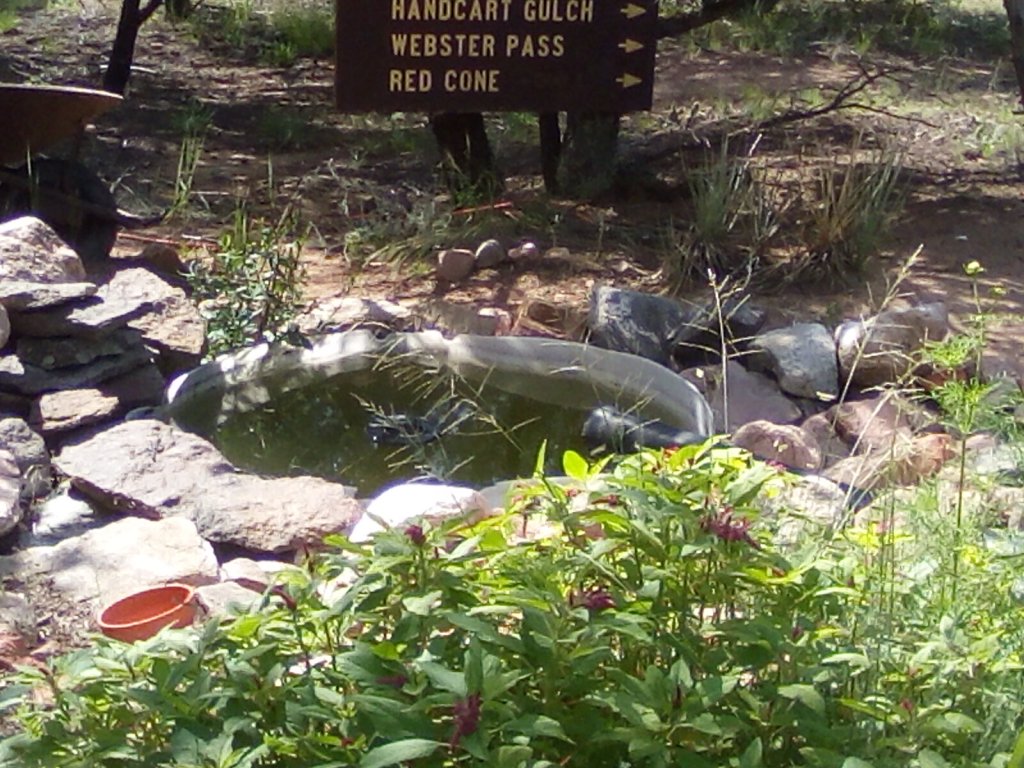
Looking out over my yard today, I am taken aback with what I have accomplished over the years. For the first years that I had this beautiful mountain property, there wasn’t much except the natural forest, as far as landscaping goes. I started out by creating a quartz rock garden with a few Irises, which I had transplanted from my old home in Canon City and a few old metal wash pans with rocks placed in them for the birds to bathe in. I added to quartz to that garden for many years, but didn’t do much else as the focus was on getting a cabin built.


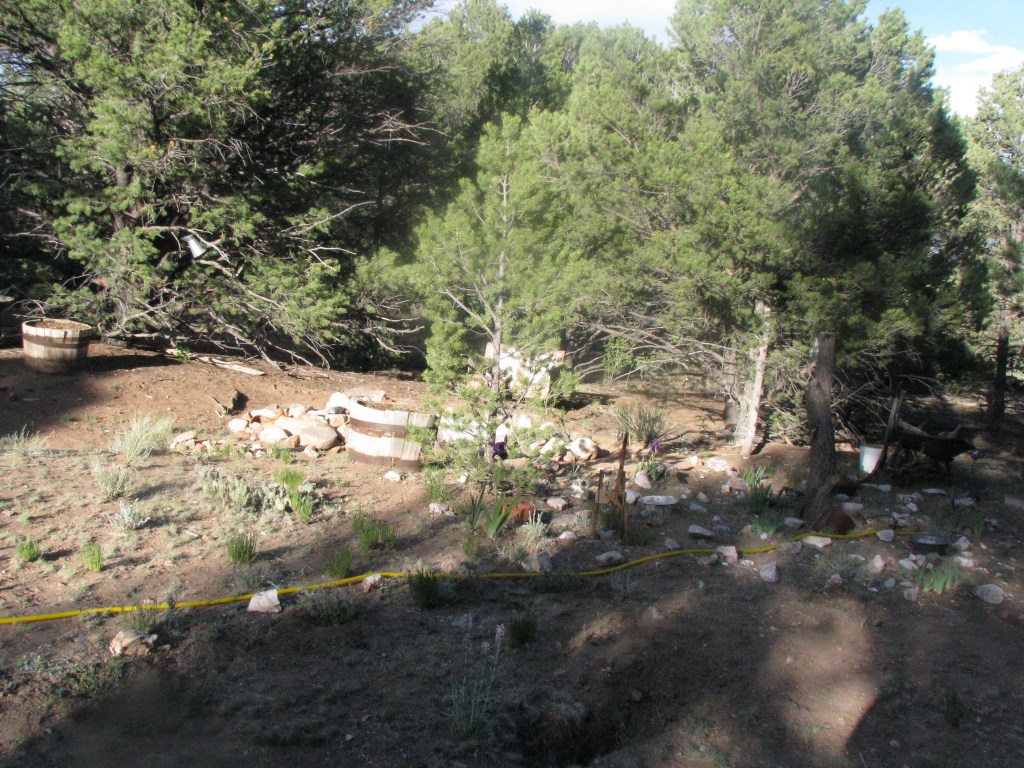


I still add quartz to that rock garden; it’s an ongoing process. But I have also collected and added rocks to create paths and what has turned out to be a huge landscaping project. You see, gardening doesn’t just provide inspiration in my writing endeavors, it inspires me in the design of my garden.
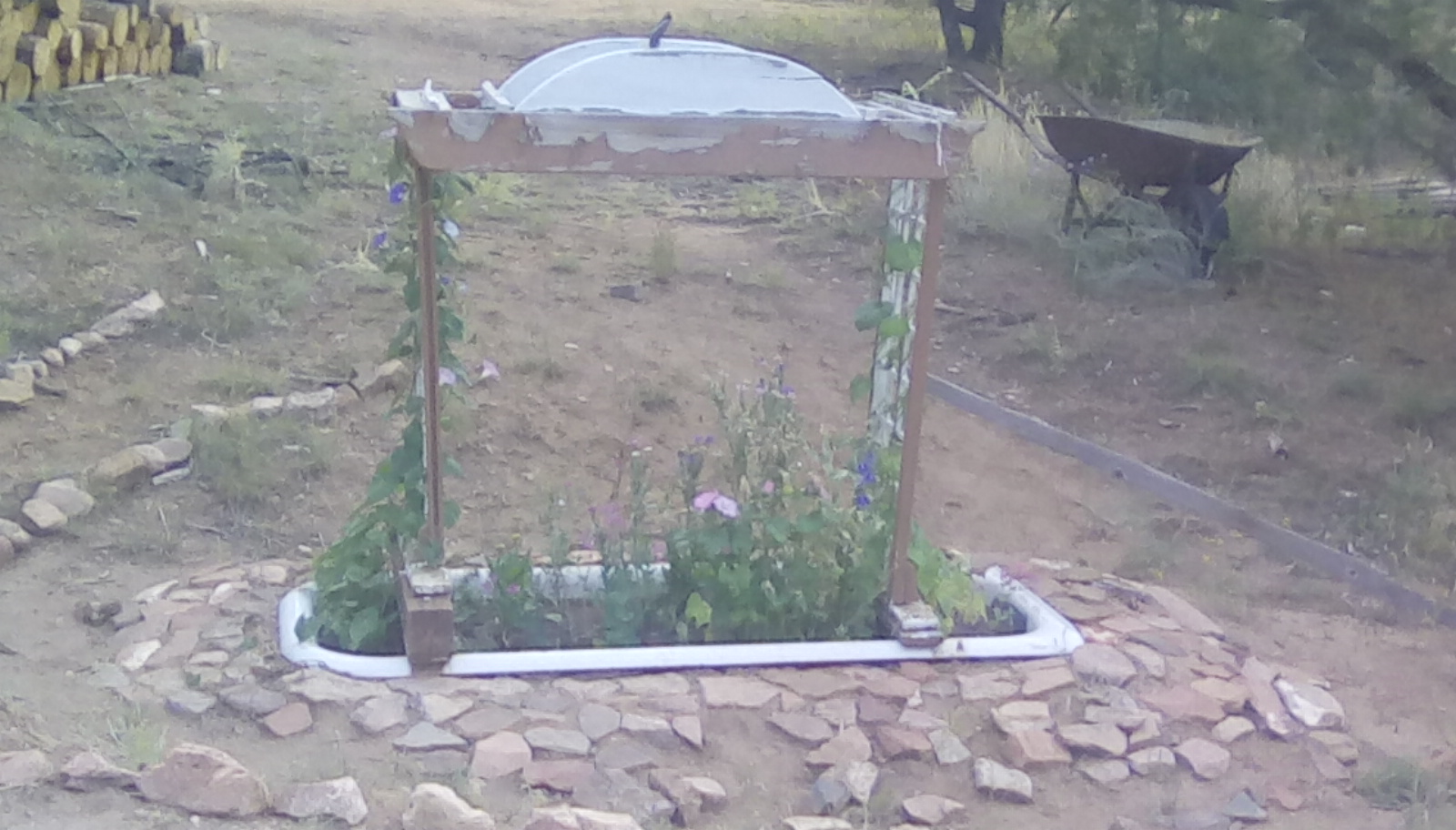
It began when I buried a cut-off water tank with the idea of creating a water garden. Then, I buried an old bathtub in the gully running down to the ‘water garden’ and bolted a trellis over it. That first year, I planted mixed flower seeds and Morning Glories to grow up the trellis. I began placing flat rocks around the edges of the bathtub to create an area where I could sit and maintainence the flowers planted in the bathtub easily.
While staying in place due to the pandemic, I had a lot of time on my hands, but not a lot of money, so I set about making my yard into a bird sanctuary – a place where all types of birds, especially Hummingbirds, would be attracted. I have always put out feeders and provided birdbaths in the quartz rock garden, and I’ve always had a good amount of avian visitors to my garden, but last summer was absolutely crazy. In addition to the multitude of Rufus and Allen’s Hummingbirds, I counted over thirty different bird breeds visiting, with more than twenty different bird families nesting for extended stays – Robins, Woodpeckers, Nuthatches, Chick-a-dees, Flickers, Blue Jays, Grosbeaks, to name a few. I went on rock collecting excursions around my property and I began to expand my rock work extensively, and I planted sixty-five Gladiola bulbs and a Butterfly Bush. When the Glads came into bloom, my yard was aburst with color. They were gorgeous. The Hummingbirds thought so, too.

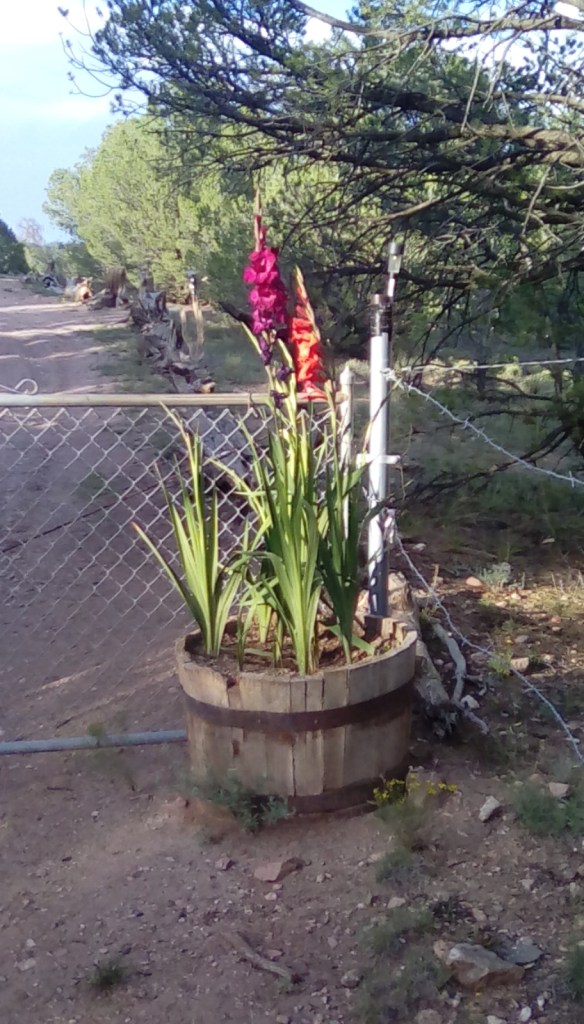


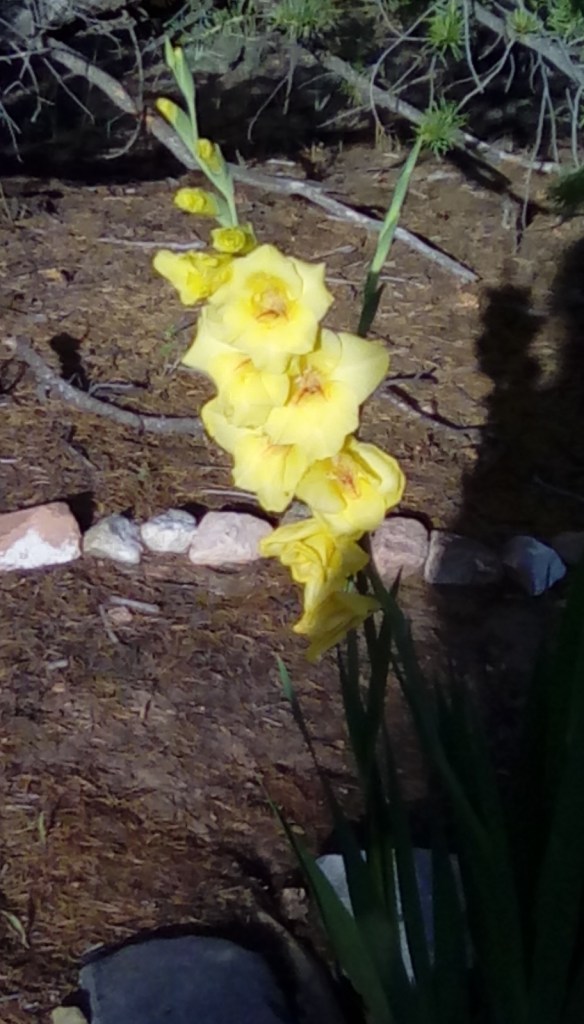


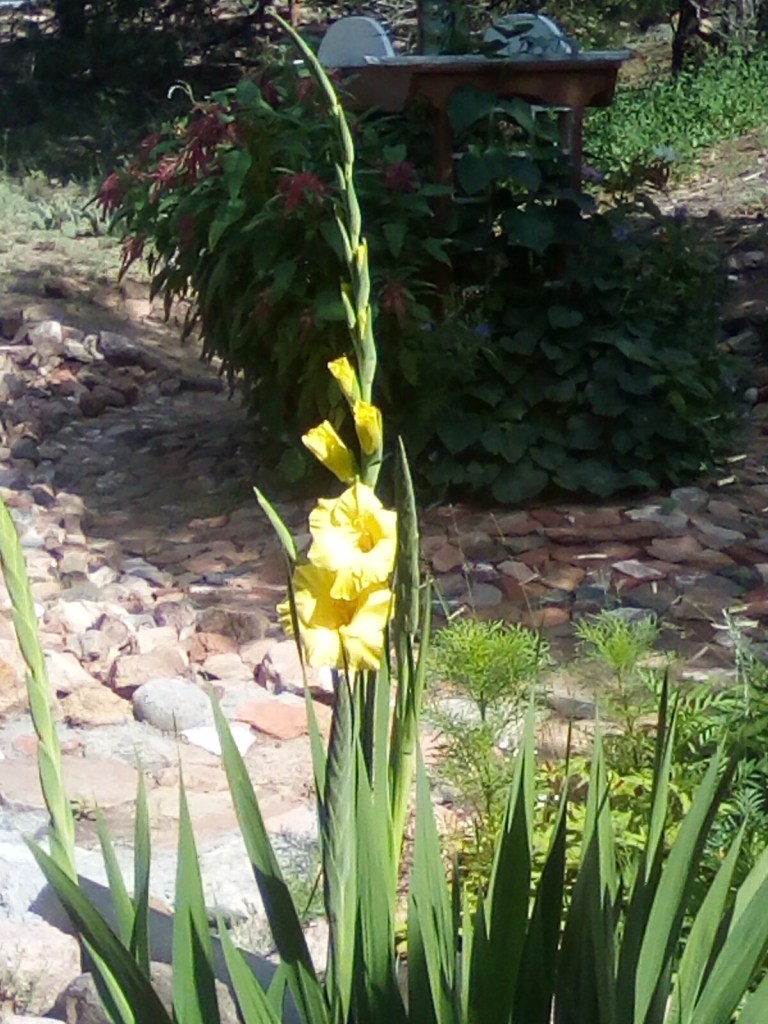
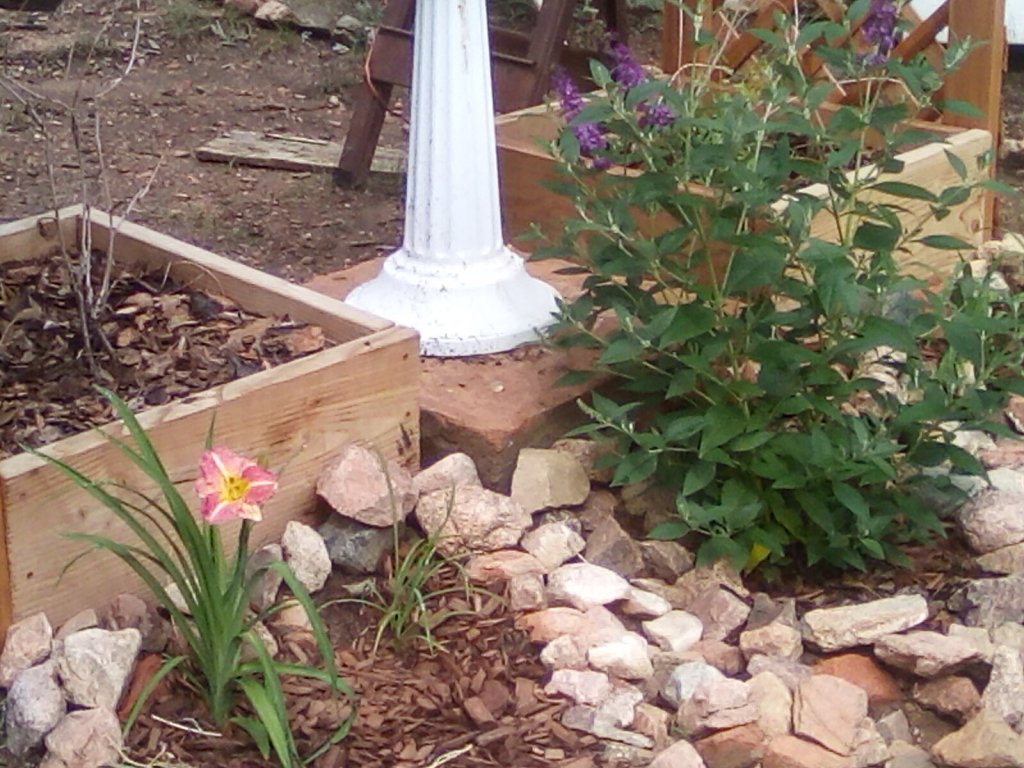
I made a lot of progress last summer and into the fall, and the work continues. It seems to be an ongoing process. I don’t know if it will ever be completely finished, because I seem to always be inspired in new and different ways. This year, the rock work has all come together well, and I added a couple more Butterfly Bushes, Westeria, Daylillies, and a Rose. The quartz rock garden had Iris blooms in both yellow and purple. I planted a wild flower patch near the ‘water garden’ opposite the Pussy Willow, and added a larger trellis and three tier grecian urn planter. I threw some mixed flower seeds and Love Lies Bleeding in with the Glads in the bathtub garden, which has now turned into a small forest in which I can no longer find the Gladiolas. I didn’t know that Love Lies Bleeding could grow so tall and I planted it everywhere, but it certainly makes my yard look spectacular.







Like this post? Let me know in the comments. You can be sure not to miss any of Writing to be Read’s great content by subscribing to e-mail or following on WordPress. If you found this content helpful or entertaining, please share.
Share this:

Paid Writing Opportunity – Call for Short Fiction Submissions
Posted: July 30, 2021 Filed under: Anthology, Books, Dark Fantasy, Fairy Tales, Fantasy, Fiction, Humor, Science Fantasy, Science Fiction, Speculative Fiction, Stories, Writing | Tags: Anthology, Call for submissions, Fairytales, Mirror Mirror, Myths, Short Fiction, Short Stories, Writing to be Read 8 Comments
I recently embarked on the journey toward yet another degree – an M.A. in Publishing at Western State Colorado University – and I am studying under the prolific bestselling author and founder of WordFire Press, (and inductee into the Colorado Authors Hall of Fame), Kevin J. Anderson. For one of the publishing projects that must be completed for graduation is a cohort produced anthology. This will be the third year that the publishing cohort at Western has been headed by Kevin, and the third anthology that they have published.
Each of the previous year’s cohorts have produced an outstanding anthologies featuring stories by reputable author names, as well as new discoveries. You can see my review of Unmasked, last year’s anthology, here. The first year, Monsters, Movies & Mayhem received the Colorado Book Award. Both of these exceptional anthologies are available from amazon, your favorite bookstore, or buy direct at wordfirepress.com/gpcw.


This year’s cohort worked hard to develop the theme and guidelines over the past two weeks, and I’m really excited about this anthology. One of the cool things about this opportunity for writers is that it pays per word, if your story is chosen. Since I am a part of the publishing team, I’m not eligible to submit, but all of my readers are. I strongly encourage you to check out the guidelines below, get the gears turning and crank out an original story to submit for this year’s anthology. Feel free to share with anyone who might be interested.
Tips for getting your story accepted: Read the submission guidelines and follow them.
___________________________________________________________________________________________________________________________
MIRROR, MIRROR:
Modern Myths
Executive Editor: Kevin J. Anderson
When you’re alone with your reflection, are you prepared for what you see?
A prince in disguise? A monster revealed? An alien race?
Mirrors can be truth-tellers, wish-granters, face-concealers, illusion-makers, even monster-summoners. Maybe the mirror shows an evil twin, or an echo of the life that should have been. Or a portal to another world.
What happens when it shatters?
Once upon a time, no one knew the phrase “Once upon a time.” You’ve read the classic stories. Now write the lore you’ve always wanted to read. Explore this creative challenge from your own unique perspective informed by your roots, culture, and background. We want original fables, folklore, and fairy tales for an eclectic anthology showcasing a new dawn of an old artform.
Imagine a canon of diverse characters for today’s readers to love and loathe. Gaze into the mirror, whether literally or figuratively—classic or genre-bending, grim or whimsical, as long as it is new and fresh.
We are looking for original short stories (prose poems will also be considered) to include a mix of fantasy, science fiction, horror, magical, and romance elements. Must be appropriate for a “PG-13” audience. Please, no copyrighted characters. Previously unpublished stories only. Women, BIPOCs, LGBTQIA+, neurodiverse individuals, and other minorities are strongly encouraged to submit.
Length: up to 5000 words (firm limit)
Rate: 6¢/word on acceptance.
Rights: First Anthology Rights and audio rights as part of the anthology; rights revert to author one month after publication; publisher retains non-exclusive right to include in the anthology as a whole.
Due: We are open to submissions from August 30 through October 15, 2021.
Submit: A Microsoft Word or RTF file in standard manuscript format to
https://wordfirewestern.moksha.io/publication/2/3/submit
If you don’t know what standard manuscript format is, review, for example, https://www.shunn.net/format/classic/
One submission per person, please. NO SIMULTANEOUS SUBMISSIONS.
Edited by Kevin J. Anderson with an editorial team provided by Western Colorado University Graduate Program in Creative Writing, Publishing MA students. Anthology made possible by a generous contribution from Draft2Digital.
_____________________________________________________________________________________________________
Like this post? Let me know in the comments. You can be sure not to miss any of Writing to be Read’s great content by subscribing to e-mail or following on WordPress. If you found this content helpful or entertaining, please share.
Share this:

Dark Origins – Bluebeard
Posted: July 28, 2021 Filed under: Dark Origins, Fairy Tales | Tags: Bluebeard, Dark Origins, Roberta Eaton Cheadle, Writing to be Read 48 Comments
The fairytale of Bluebeard was the most scary one I can recall hearing or reading as a child. This story is featured in Grimm’s Fairy Tale Classics.
It this version of the story, Bluebeard’s bride is a teenage peasant girl named Josephine. She has been raised by her brothers who are woodworkers. In this version, Bluebeard, a wealthy widower with a blue beard, choses Josephine as his wife because she is beautiful, naïve and desires to marry a prince. The character design for Bluebeard strongly resembles that of the English King, Henry VIII, who had six wives, two of whom he beheaded. After the wedding, Bluebeard gives Josephine a key ring with all the keys to all the doors of his castle. He tells her that she must never use the golden key to open one of the doors.
Of course, Josephine’s curiosity gets the better of her and one day when Bluebeard leaves the castle on business, she opens the forbidden door. Behind the door she discovers the blood splattered remains of the former wives of Bluebeard, all of whom he’s murdered. Josephine is saved by her brothers before she can suffer the same fate as Bluebeards previous wives.

There are two possible sources for the story of Bluebeard.
The first theory is that the story of Bluebeard was based on the life of 15th-century convicted Breton serial killer, Gilles de Rais.
Gilles de Rais was a knight and lord from Brittany, Anjou and Poitou. From 1427 to 1435, he was a commander of the French army and fought alongside Joan of Arc against the English and their Burgundian allies during the Hundred Years’ War.
In 1434 or 1435, Gilles retired from military life and became a spendthrift, staging extravagant theatrical productions of his own composition. In June 1435 his family persuaded King Charles VII to proclaim a royal edit preventing him from selling his property and from entering into contracts with any French subject.
In 1438, Gilles became involved in alchemy and demon summoning.
According to his confession at his trial in October 1440, de Rais said he committed his first child assaults in 1432 and 1433. The first murders occurred at de Rais’ castle in Champtocé-sur-Loire. Murders of an unknown number of children took place after de Rais moved to Machecoul. de Rais was believed to have sexually assaulted the children before killing them. The bodies were burned in the fireplace in de Rais’ room. The number of de Rais’ victims is believed to be between 100 and 200 children aged between 6 to 18 years old and predominately male.
He was executed by hanging and burning on Wednesday, 26 October 1440 along with his two accomplices, Poitou and Henriet.

Another possible source for the story of Bluebeard is early Breton king, Conomor the Accursed, who was notorious for his cruelty. According to the biography of St Gildas, a 6th century British monk, Tréphine married Conomor after he threatened to invade her father’s lands and kill his people.
While Conomor was away, Tréphine found a secret room containing relics of his deceased wives. She prayed for their souls and their ghosts appeared and warned her that Conomor will kill her if she becomes pregnant due to a prophecy that states he will be killed by his own son.
According to legend, Tréphine fled when she discovered she was pregnant and gave birth to her son, Trémeur, in the forest. She hides her son but Conomor finds her and beheads her. St Gildas restores her to life and she and her son live lives of saintly retirement until Tréphine dies. After her death, Conomor finds Trémeur and kills him.
Both Tréphine and Trémeur are deemed saints in Brittany and there are many churches dedicated to them.

Based on these two stories, I was quite right to be scared of Bluebeard when I was a child.
About Roberta Eaton Cheadle

Roberta Eaton Cheadle is a South African writer and poet specialising in historical, paranormal, and horror novels and short stories. She is an avid reader in these genres and her writing has been influenced by famous authors including Bram Stoker, Edgar Allan Poe, Amor Towles, Stephen Crane, Enrich Maria Remarque, George Orwell, Stephen King, and Colleen McCullough.
Roberta has short stories and poems in several anthologies and has 2 published novels, Through the Nethergate, a historical supernatural fantasy, and A Ghost and His Gold, a historical paranormal novel set in South Africa.
Roberta has 9 children’s books published under the name Robbie Cheadle.
Roberta was educated at the University of South Africa where she achieved a Bachelor of Accounting Science in 1996 and a Honours Bachelor of Accounting Science in 1997. She was admitted as a member of The South African Institute of Chartered Accountants in 2000.
Roberta has worked in corporate finance from 2001 until the present date and has written 7 publications relating to investing in Africa. She has won several awards over her 20-year career in the category of Transactional Support Services.
Find Roberta Eaton Cheadle
Blog: https://wordpress.com/view/robertawrites235681907.wordpress.com
Twitter: https://twitter.com/RobertaEaton17
Facebook: https://www.facebook.com/robertawrites
Amazon: https://www.amazon.com/Roberta-Eaton-Cheadle/e/B08RSNJQZ5
_____________________________________________________________________________________________
Want to be sure not to miss any of Robbie’s “Dark Origins” segments? Subscribe to Writing to be Read for e-mail notifications whenever new content is posted or follow WtbR on WordPress. If you found it interesting or entertaining, please share.










Mind Fields – Current Phrases and Memes
Posted: August 20, 2021 | Author: artrosch | Filed under: Commentary, Humor, Mind Fields | Tags: Arthur Rosch, language, Mind Fields, Slang, Writing to be Read | 2 CommentsCurrent Expressions and Memes of The Day
July 5, 2021
1. “It is what it is”.
This expressions carries a load of disappointment. It means that a situation or relationship can’t be changed into a desirable outcome. “It is what it is” means that one must accept the reality as it exists. No effort will alter the trajectory of this drama.
2. “Double Down”
Nothing we’ve done has succeeded, so it’s time to increase the effort applied. Doubling down is just what it sounds like. Time to double the work and hope that it doesn’t turn into an “It Is what it is” situation.
3. “My Bad”
This has been around a while, and it has a child-like cuteness that conceals its real impact. Saying “My Bad” is a way of apologizing without saying “I’m sorry.” In essence it trivializes someone’s mistake or bad judgment. “My Bad” is an admission of guilt shorn of its moral force.
4. “You know what I’m saying?”
If you listen to the speech of young people, you will hear this interjection so frequently that it becomes nearly inaudible. I hope that I’m not being explicitly racist. This is an expression spoken by millions of black men. It’s a very sad locution. Its repetition reaches to the core of powerlessness felt by poor black youth. The feeling is so deep and pervasive that it has become a verbal tic. The speaker does not feel heard or seen. He is invisible, un-witnessed, not validated. “You know what I’m saying?” testifies to the sense that we may know exactly what he’s saying, but still he does not believe it. The speaker is perennially crushed by self doubt.
5.“You didn’t hear this from me, but…. “
It means you heard it from her but no responsibility will be taken should it loop around as an accusation of bad faith and banal betrayal.
6. “Gaslighting”
Isn’t that cute? Gaslighting is listed as an abusive tactic. I want my readers to know that up to this point I haven’t looked up any of these words or phrases. I looked up “gaslighting”. I find it interesting that this term is listed in all modern dictionaries as a description of throwing doubt or obscuring the truth. Why “gaslighting”? It seems to refer to a past time when gas light was the primary means of lighting, in public and private. Things weren’t brightly lit in the era of gaslight. It was easier to get away with street crimes. Things were brighter near the light and they faded away between the lights. All the crappy stuff happens in the space between the lights. On the other hand, “gaslighting” may simply refer to farting as an adequate response to cultural stimulation.
7. “Woke”
This term means “enlightened” or “in a higher and more responsible consciousness” but it’s so loose in its specificity that I foresee that “woke” will split into sub-categories, i.e. un-woke, woke-ish, wokeless, , wokefucked woke-tastic, woklastic and wocastic.
8. “Word”
This means truth. “Word up” means “pay attention to me right now because I’m telling the truth.”
9. “Aight?”
It comes as a question. “Are you all right?” Acts as both greeting and farewell, like “shalom” does.
10: “Going South”
Poor “south”. It gets no respect. Going south means things are getting fucked up. Since losing the civil war, the South has struggled to regain its credibility. Speaking of credibility: there is the term “cred” but I don’t need to go into it. Nothing confers cred like suffering. The American South is doing just fine.
_____________________________________________________________________________________________
Arthur Rosch is a novelist, musician, photographer and poet. His works are funny, memorable and often compelling. One reviewer said “He’s wicked and feisty, but when he gets you by the guts, he never lets go.” Listeners to his music have compared him to Frank Zappa, Tom Waits, Randy Newman or Mose Allison. These comparisons are flattering but deceptive. Rosch is a stylist, a complete original. His material ranges from sly wit to gripping political commentary.
Arthur was born in the heart of Illinois and grew up in the western suburbs of St. Louis. In his teens he discovered his creative potential while hoping to please a girl. Though she left the scene, Arthur’s creativity stayed behind. In his early twenties he moved to San Francisco and took part in the thriving arts scene. His first literary sale was to Playboy Magazine. The piece went on to receive Playboy’s “Best Story of the Year” award. Arthur also has writing credits in Exquisite Corpse, Shutterbug, eDigital, and Cat Fancy Magazine. He has written five novels, a memoir and a large collection of poetry. His autobiographical novel, Confessions Of An Honest Man won the Honorable Mention award from Writer’s Digest in 2016.
More of his work can be found at www.artrosch.com
Photos at https://500px.com/p/artsdigiphoto?view=photos
______________________________________________________________________________________________
Want to be sure not to miss any of Arthur’s “Mind Fields” segments? Subscribe to Writing to be Read for e-mail notifications whenever new content is posted or follow WtbR on WordPress. If you find it interesting or just entertaining, please share.
Share this: