And the winner is …!
Posted: June 10, 2022 Filed under: Anthology, Book Promotion, Dark Fantasy, Fiction, Horror, Paranormal, Science Fantasy, Science Fiction, Stories, WordCrafter Press, Writing Contest 26 Comments
Announcing the winner of the 2022 WordCrafter Short Fiction Contest.
Every year, WordCrafter Press runs an annual short fiction contest and publishes the resulting anthology. The first contest was in 2019, with the Whispers of the Past paranormal anthology, followed by Spirits of the West paranormal western anthology in 2020, and Where Spirits Linger paranormal anthology in 2021.
Today it pleases me to announce that Roberta Eaton Cheadle is the winner of the 2022 WordCrafter Short Fiction Contest. Robbie has entered the WordCrafter Short Fiction Contest every year since 2019 and this year her story “The Bite” stood out and shined, although with so many good stories submitted, it was still quite difficult to choose. I am proud to include her story in Visions.
The Visions anthology will be different from years past in that I have included stories by invitation only, which were not a part of the contest, so it will be a bit larger than previous anthologies, with a total of nineteen terrific stories for your reading enjoyment. In addition to Robbie, contributing authors include previous contest winners, Jeff Bowles and Christa Planko; invited authors Sara McBride, W.T. Patterson, Julie Jones, Zack Ellafy, Leah Cutter, Joseph Carribis, D.L.Mullen and Stephanie Kraner; and contest entrants, Patty L. Fletcher, Billie Holladay Skelley, C.J. Serajeddini, C.R. Johansson, Keith J. Hoskins, and Janet Garber.
I look forward to putting this anthology together and sharing it with all of you.
____________________________________________________________________________________________
Join Kaye Lynne Booth & WordCrafter Press Readers’ Group for WordCrafter Press book & event news, including the awesome releases of author Kaye Lynne Booth. Get a free digital copy of her short story collection, Last Call and Other Short Fiction, as a sampling of her works just for joining.
Share this:

Ask the Authors 2022 Book & Blog Series: Action, Pacing & Dialog
Posted: June 4, 2022 Filed under: Action Scenes, Anthology, Articles, Ask the Authors, Book Event, Book Promotion, Book Release, Books, Dialogue, Fiction, Interview, Pacing, Teaching Writing, WordCrafter Press, Writing, Writing Tips | Tags: Anthology, Ask the Authors 2022, Bobby Nash, Chris Barili, Interview, Jeff Bowles, Kaye Lynne Booth, Kevin Killiany, L. Jagi LAmplighter, Mario Acevedo, Mark Leslie, Nancy Oswald, Paul Kane, Roberta Eaton Cheadle, WordCrafter Press, Writing Reference 7 Comments
Hello again, and welcome to segment 5 of the “Ask the Authors” blog series. This Saturday series features introductions to each contributing author and excerpts from the Q & As featured in the newly released Ask the Authors 2022 writing reference anthology.
If you missed any of the earlier segments, you can find them here:
Segment 1: Introductions for Kaye Lynne Booth & Kevin Killiany/Writing Life Q & A session
Segment 2: Introduction for Bobby Nash/Pre-Writing Rituals Q & A session
Segment 3: Introduction for Roberta Eaton Cheadle/Plot & Storyline Q & A session
Segment 4: Introduction for Paul Kane/Character Development Q & A session
This week’s segment features an introduction to contributing author Mario Acevedo and a Q & A on action, pacing, and dialog.
Meet Mario Acevedo

Mario Acevedo is a national bestselling author of speculative fiction and has won an International Latino Book Award and a Colorado Book Award. His work has appeared in numerous anthologies to include A Fistful of Dinosaurs, Straight Outta Deadwood, and Blood Business. For 2020, he has short fiction in the forthcoming anthologies, Psi-Wars and It Came From The Multiplex, and a Western novel, Luther, Wyoming. Mario serves on the faculty of the Regis University Mile-High MFA program and Lighthouse Writers Workshops. Mario has also been a presenter and panel member for both the 2020 Stay in Place Virtual Writing Conference, and the 2021 New Beginnings Virtual Writing Conference.
And now, on to the Q & A.
Action, Pacing & Dialog
Do you have any tips for writing action scenes/fight scenes/car chases, where blow by blow descriptions could get tedious?
Mario Acevedo: Summarize. Only share the high points and include internalizations. Also add details that are often overlooked like nausea, panic, pain, exhaustion.
Paul Kane: I grew up watching a lot of action movies and TV shows, the ’70s and ’80s were a golden age for action as far as I’m concerned. So, a lot of that went in without me having to do much. I used to recreate certain action scenes with my toys, or I might race off up the garden with mates to pretend fight. When I wrote the Hooded Man books, I had to have a lot of action in there, so I got very good at not making things boring – there are only so many ways to describe a punch, for example. But the key I found was to visualize the scenes, even play them out – just like I did when I was a kid – so that they become, again, more believable. I was delighted when one of my battle scenes for Broken Arrow was compared favourably to those in The Lord of the Rings movies, especially Helm’s Deep; that’s one of my all-time favourite battles on film, so I did a little happy dance that day. The way to tackle any fight or action scene, whether it’s huge like the ones I’m talking about here, or just one-on-one, is to break it down into its component parts. Ask yourself what you need or want to show. Then do your research, watch a lot of fight sequences, or action scenes, mix and match the moves that are being made. If your character is a master of martial arts, study it. I had a character called Tanek, for example, who was skilled in the Israeli hand-to-hand combat of Krav Maga, so I went out and researched that. Jennifer Garner actually studied that for Alias, so I watched some fight sequences from the show. They used a very particular form of combat for the Batman fight scenes in the Nolan movies called the Keysi Fighting Method, which favours forearms and elbows, so it’s worth trying to find something that’s not been done before perhaps. Or not done very much. Finally, give your fight and action scenes a sense of character, make them like a dance or a ballet. They need to have rhythm, flow, so your reader can easily picture what’s happening. Too much going on at once is a big no-no, because you’ll lose them. Same goes for very dry descriptions of a fight: now this happens, now this, then this… Try and find a way to make your descriptions interesting, maybe comparing them to something, like two animals barging into each other or what have you.
Chris Barili: Know what you’re talking about. It seems obvious, but may writers take it for granted, and end up writing nonsense that loses the reader. For example, I have studied the martial arts most of my life, and I hold a second-degree blackbelt in Karate. Thus, I know that someone trained primarily in Judo or Jiujitsu will be a grappler by preference, while a Karate stylist will be a stand-up striker who looks to avoid going to the ground.
Bobby Nash: It can be difficult to keep fight scenes fresh. I learn the choreography, walk out the fights, play around with different ways to describe the action. How is the character feeling/responding to the action? I wrote a car chase once and showed it from the POV of a passenger in the car instead of the driver. As he’s holding on for his life, we get a sense of the danger that way as opposed to only descriptions of what the car is doing.
Robbie Cheadle: I am writing my second novel involving war which includes fighting scenes. I intersperse the fighting with dialogue, humorous comments, scenes of eating, drinking, and entertainment, and the receipt of letters from family and friends.
You cannot maintain tension at high levels for too long or it becomes monotonous and over-done. In real life, people relieve tension by singing, and making jokes, and talking and I follow this practice in my writing.
Nancy Oswald: Elmore Leonard: “I try to leave out the scenes readers skip.” Ralph Fletcher: “Write small and use slo mo. The more tension you want to create, the more important the details. In general focus on one detail well rather than all the details which can wash out a scene.”
How do you handle scenes where there is a lot going on, like battlefields or fights in busy settings?
Paul Kane: As I say, break it down into smaller chunks. Show the scale of what’s happening by all means, like an establishing shot in a movie, then focus in on certain specific fights and details. These will usually be with your main characters if it’s a big battle – so I would zoom in on a fight Robert, my Robin Hood, might be having with someone. Then cut to maybe Jack, who is my Little John, and see how he’s getting on. You have to give everyone who’s a main character a turn in the sun, plus give the reader memorable moments – like Robert taking down the Apache attack helicopter with a bolas.
Chris Barili: This is a tough one. I have found that choreographing the whole thing on a sketched-out map of the physical surroundings can help, and if that’s not enough, having some friends act out the scene can help you identify errors, misjudgments, and so on.
Bobby Nash: I try to make sure all of the necessary information is relayed. If you have a lot of characters, you have to try and balance who has dialogue or stuff to do so that they don’t disappear from the scene. POV helps here too.
Robbie Cheadle: I keep my sentences fairly short during battle scenes, and I use a lot of dialogue to break up the action.
How do you keep action flowing smoothly within a scene?
Mario Acevedo: Keep the scene and story question in mind so that the action strengthens the plot.
Paul Kane: Just keep it tight, moving from one bit of action to the next. Even in a small fight, if you have a character get punched or kicked, it’s enough to say it just winds them or takes them down – you don’t have to go into lots of detail about how it feels, whether they’re recovering, what’s going through their minds as they’re fighting. Keep it rattling along at a good pace. Sounds stupid, because it’s a fight, but make it punchy.
The use of weaponry is a good way of handing readers little details that help them visualize what’s going on. Everyone knows what a knife or rifle or handgun looks like. Of course, it depends very much on what kind of fiction you’re writing. A lot of my Hooded Man stuff was military based, because of the nature of armies fighting each other, so readers who enjoy that kind of thing like you to include the names of weapons, specifics relating to what they can do. Does a certain gun jam more often than others? Which are best for close combat as opposed to distance? I once wrote a story about an assassin called Mr D, who had to tear through lots of guards to get to his target. That started off with long-range sniper rifles, and ended up with hand-to-hand fighting as he got closer to the building his mark was in.
It’s also fun to write about weaponry that’s totally out of context, for example plates and pans in a kitchen that can be used to fight with. In my novel Lunar, Nick Skinner raids old castles and museums to get swords, shields and axes to fight the monstrous Loons. Similarly, The Storm was set in an old castle so weapons like that were no-brainers, but I do have my main character – who’s there as a workman – fight off a huge crustacean with a mini-digger. It was just what was around and big enough to tackle the oversized beast, but it worked a treat.
Chris Barili: Keep it short. A ten-page car chase will lose a reader like a prologue.
Bobby Nash: When writing action, I use shorter sentences, short, choppy dialogue, sometimes interrupted dialogue. That reads faster so the reader reads the action scenes faster, highlighting the fast-paced nature of the scene. During an action scene is no time for deep thoughts or anything extraneous. Keep it simple and keep it moving.
Do you consult experts to ensure your action is true to life? How do stories benefit from getting those little details right?
Paul Kane: If you know someone who’s been in the military, or police, or someone who teaches self-defense then definitely use them. Use any friends for anything which requires specialist knowledge. This might be something as everyday as fingerprinting or gathering DNA at a crime scene, say, or if you know a scientist it could be as big as how the universe works. But you don’t necessarily have to go to experts like that these days if you don’t know any, because information is freely available on the net and in books – especially writers’ handbooks. At the same time, talking to experts sometimes throws up interesting scenarios and might take a story in a direction it wouldn’t otherwise have gone.
Bobby Nash: Research can help, sure. Whatever you writer, whether it’s a real-world fight or two super-powered characters battling, you have to write it as though it’s real. If you believe it, the reader will believe it.
Robbie Cheadle: I read a lot of non-fiction to gain knowledge about the subjects of my historical novels. To get a good feel for the era, I read works of fiction set during that time. Fiction reading gives me insight into how people lived, socialized, travelled, and dressed during the period in which my novel is set.
Nancy Oswald: I’m a nut for accurate historical detail, even if it plays a minute part in the story.
Pacing
How can dialog help pace your story?
Mario Acevedo: Dialog is a great way to advance the plot by having the characters reveal crucial information or to help build a character. Dialog is more active and interesting then authorial narration.
Paul Kane: I think that’s where the planning comes into it, once more. If you have a chapter breakdown you can see where the novel needs tightening up. Is there too much exposition in a certain chapter, not enough? Too much action all in one go, or not enough for long periods? Are you hooking your reader at the end of your chapters, making them want to go on and read more in the next chapter? Even if you’re only writing a short story, if you jot down the structure of it in a few sentences you can usually work out where you’re going in terms of pace. Compare whatever you’re doing to other novels or short stories, see how they’re paced. If you want to write, then you have to read as well – like Stephen King says in On Writing. There really is no other way to learn how to do this. Similarly, if you’re scripting TV or film, then go away and watch how they’re paced. Or a comic or audio: read comics, listen to audio dramas and make notes. It really is the only way to learn your craft, whether it be characters, setting/description or pacing.
Robbie Cheadle: Dialogue speeds the pace of a story up, so I use more dialogue for tense, fast paced scenes.
What methods do you employ to control and maintain the pacing in your story?
Mario Acevedo: Know when to show and tell. Show is “reveal,” during which you draw out the narrative in a way that pulls the reader into the story. Tell is “exposition,” which you need to keep the reader oriented in between reveals.
Paul Kane: Try and stick to the plotting and planning you’ve done, even if it’s in broad strokes. That doesn’t mean your story can’t go off on a tangent if something occurs to you, but go back to the outlines that you’ve done at that point and rewrite those, see where the new development might take you. Predict and project, then go back to the writing of the tale. In my opinion that’s really the only way to keep a rein on the thing and make it go where you want it to go.
Robbie Cheadle: I break my story down into manageable pieces for each character. In my current work-in-progress, I am alternating chapters between Jake at the Western Front during WW1, and Kate in Orange, New Jersey.
In slower sections I use longer sentences and more detail and description to slow the pace down.
I also use introspection to develop my characters and control pace.
How do you find the right balance between action and dialog?
Paul Kane: For me personally, that’s something which just comes with practice. The more you write, the better at judging this you’ll be, until you’ll be doing it by instinct almost without thinking. If you drive, remember what it was like when you first started, trying to keep it all in your head? And once you’ve been on the road a while, a lot of that becomes like second nature to you, doesn’t it? Or it should do at any rate. It’s the same thing with writing really, you develop these skills over time – so that you can tell when something needs balancing out with a bit of dialogue, or a bit of action. It’s all just about putting in the work, honing your skills.
Nancy Oswald: Try to do them both at the same time by using appropriate action-filled tags.
Dialog
How do you write dialog that sounds natural and realistic?
Mario Acevedo: Listen to the way people speak, then write a tightened version. People tend to repeat themselves. Catalog unique ways in how people express themselves. Also, keep in mind the character’s agenda when using dialog.
Paul Kane: The trick is to get the balance right between it sounding naturalistic and conveying information. Most dialogue should be moving the story along or serving the story, otherwise what’s it doing in the piece at all? In real life we all have conversations that are just random or serve no purpose, or we get distracted and break off from a conversation to talk about something else. You can’t do that in your fiction, because people will get bored. Or they’ll think you’re not in control of your own writing, which would be true at that point. I get criticized a lot for not finishing sentences in dialogue, but what I’m trying to do is leave readers in a bit of suspense, whilst at the same time making it a bit more realistic. Human beings very often leave sentences unfinished, if they’re interrupted or just shocked. I don’t do it all the time, and like I say some people find it jarring, but it is one way of creating naturalistic dialogue if you have a reason for it. Another way is to just let the dialogue flow, batting it backwards and forwards, but don’t forget to keep reminding the reader who’s speaking with a ‘Mike said’ or whatever, every now and again. Or have a bit of action, like Mike scratching his head or getting up and walking across the room to break things up if you’ve had several lines of dialogue. I always find arguments quite easy to write, because the flow of them comes across as very believable, and you can include lots of relevant information. For me, it’s quite easy to imagine a couple of people having an argument, because it happens a lot in our everyday lives; lots of people have opposing viewpoints, so it’s fun to try and get both sides of that across.
Chris Barili: Listen to people talk and write dialogue that way as much as possible. Do NOT write dialogue in grammatically correct sentences…we don’t speak in MLA format, either.
Bobby Nash: A trick I learned is to read the dialogue out loud. That will tell you if it works or not.
Robbie Cheadle: I read all my stories aloud to myself, and to anyone else who’ll listen. Reading my writing aloud helps me to spot errors and clumsy unnatural dialogue.
Kevin Killiany: I read it aloud. (Yes, I do character voices.)
Do you use dialog tags? Basic or varied?
Mario Acevedo: I vary them and use action tags as often as possible. Remember that in interpersonal communication, half of what we communicate is non-verbal so include those clues: tone, pauses, eye movement, facial expressions, gestures, changes in posture to emphasize what is being said.
Paul Kane: I tend to stick with the basics, unless you’re trying to say something specific. For example, ‘he spat’ shows how shocked or mad that person is by something that’s been said. I tend to steer clear of things like ‘he pontificated’ or anything complicated like that, as it throws you right out of the story. But good old-fashioned ‘he said’ ‘she said’ works just fine. It’s amazing how your eye glosses over this when you read. Try it for yourself, read a page from a book, then go back and re-read it looking for those tags – and I guarantee you won’t have spotted half of them.
Bobby Nash: Yes. I used ‘said’ most of the time, but if I need to add a punch to a line, I may use a different tag.
Robbie Cheadle: When I use dialogue tags, I generally stick to ‘said’. I don’t always use a dialogue tag, sometimes I prefer to use an action by the speaker to indicate who is talking.
Nancy Oswald: Both or not at all. Let the actions act as your dialogue tags.
Kevin Killiany: I stick to basics, with some variations. Many times I leave them out. Example:
Pilar realized her watch had stopped.
“Jerry? What time is it?”
“Four. Uh, four oh eight.”
“Which?”
“Four oh eight. Nine, now.”
You know who’s saying what and you get an idea of Jerry’s personality with no tags.
Any pet peeves with dialog?
Mario Acevedo: Info dumps and a character not saying the obvious in response to what’s going on.
Paul Kane: Not really, just if the conversation isn’t going anywhere or serving any kind of purpose. Having two characters discuss what they’ve had for lunch, for example. Unless that lunch caused food poisoning that results in something significant happening in the plot, then what’s the reason for including it?
Chris Barili: No robot-speak unless the character is actually a robot, and usually not even then.
Bobby Nash: Noting specific. I try not to be cliché.
Kevin Killiany: People speaking grammatically correct written English with every pronoun unnecessarily identified. Normal conversation—even in formal situations—is usually made up of sentence fragments because spoken English assumes all members of the conversation understand what’s being discussed.
Would you share a brief excerpt from one of your best dialog scenes?
I asked this question and got some wonderful responses, but most of them are too lengthy to include here, so I guess if you want to view them, you’ll have to buy the book.
_____________________
That wraps up this week’s segment of the “Ask the Authors 2022” blog series. Be sure to drop by next Saturday, when we’ll introduce Nancy Oswald and bring you a Q & A on tone and all that entails.

And don’t forget to grab your copy of the Ask the Authors writing reference anthology, at the special 3.99 price for the duration of this blog series, from your favorite book distributor through the Books2Read UBL: https://books2read.com/u/3LnK8e
________________________
Join Kaye Lynne Booth & WordCrafter Press Readers’ Group for WordCrafter Press book & event news, including the awesome releases of author Kaye Lynne Booth. Get a free digital copy of her short story collection, Last Call and Other Short Fiction, as a sampling of her works just for joining.
Share this:

Bowlesian! – Godling: Part I
Posted: June 1, 2022 Filed under: Bowlesian!, Fiction, Mythology and Legend, Short Fiction, Stories | Tags: Bowlesian!, Godling, Jeff Bowles, Short Fiction, Short Stories, Writing to be Read 1 Comment
Godling: Part I
by Jeff Bowles
*This story and others like it can be found in my collection Godling and Other Paint Stories, available on Amazon now.
According to the oral tradition, the Gods created man, man created Godling, Godling ruled over man until man decided genocide was in fact the worst case ever made for machines ruling anything. Godling’s own subjects–the Ancient Spacefarers–overthrew and imprisoned him on the remote grasslands planet of Isolinius, there to dwell in perpetual confinement under the watchful eye of the monastic Divine Order of Battles Won.
Eons came and went. Human beings lost their drive for exploration and personal cosmic growth. They segregated themselves onto small worlds. After a sum of almost 5,000 years, the prison complex’s abbot warden, Renaldo Timekeeper, 126th in the Order’s line of such individuals, approached the god machine with a demand.
“I have two young friends, prisoner. They need help, and no one else on this planet will provide it. They will have an audience with you. In truth they’re already here, and their cause is as just as any.”
Godling studied Renaldo closely. Though he was intelligent and often keen in his worldly perceptions, the abbot warden was short, bald and foppish, preferring colorful robes and jeweled affectations, an annoying resplendent tone in his conversations and meandering arguments.
“I should very much like to kill you, abbot warden,” Godling said. “Have I told you this lately?”
“You have,” said Renaldo. “Repeatedly.”
“Then we understand each other. They bribed you, didn’t they? These friends of yours?”
Renaldo hesitated. He ran a gloved hand over his huge bald spot, saying, “If indeed it matters in any way, prisoner, the girl’s father–”
“Yes, the girl. Flush with love. That’s trouble to begin with. Their cause is romance, isn’t it? You clearly deserve to die, abbot warden. You don’t mind doing it yourself, do you? I seem to have lost the use of my hands, oh, 5,000 years ago.”
Godling’s enormous body had been constructed of an ultra-resilient Darkwork alloy. His brain contained a multitude of mechanisms and tissue chips, and his heart was made entirely of inky liquid circuit matter. The Ancient Spacefarers had neatly severed him into six parts in their rush to dethrone him: head, arms, torso, legs. They’d entombed and imprisoned these parts deep within Claustrum Mons, the highest mountain on Isolinius.
Godling’s head now rested in what was known as the Orange Room, there upon a pedestal, with his eyes pointed at the orange ceiling. From the base of his head–the severed end of his alloy neck–ran a thick, fibrous red line like rope. The line stretched, straight and taut, to the far wall of the room, disappearing there and linking with his other body parts in the other rooms of the prison.
“Prisoner,” Renaldo said, “you have neither the authority to command my death nor the time to see it through. As long as the rulers of this world regard you as an inexhaustible adviser–”
“Ah! Aha! Now we’ve struck it!” Godling bellowed. “Inexhaustible advisor. Your words, abbot warden, not mine. They come and go all day long. But this girl, and this boy. Hmm, trouble.”
Through a healthy slathering of a special and vibrant orange sensory-paint, the like of which Golding had invented himself, he observed the two young people as they made their way farther and farther down the long tunnel that burrowed deep into the side of the monstrous alpine slope of Claustrom Mons. They were barely more than teenagers, perhaps nineteen or twenty. Through the orange paint, Godling took the full measure of them. He lived in paint now. A special kind composed of a fine poly-organic blend of neural wireless transmitters and perception receptors/dispatchers. Orange for sensory, purple for locomotion, green for touch. He could inhabit anything and everything coated in the stuff, and so, he made the entire prison his body.
“They’re nearly at the blast doors, Renaldo,” Godling fumed. “Who opened the doors for them?”
“I did.”
“Just like that? Because you can? How I shall begin, abbot warden?”
Renaldo cleared his throat. “Perhaps, god machine, you should begin by introducing yourself.”
Yes, perhaps. Then again, perhaps Renaldo’s brain might be better employed as a protein-rich piston lubricant. Love and lovers. Hmph. Godling withdrew all perception from the Orange Room. In a flash, he nestled himself within a long patch of orange sensory-paint in the blast door safety chamber, the size and span of which fairly dwarfed the boy and girl. He spoke a dozen decibels louder than he intended, his voice harsh from the buzz of his concealed, quivering vibrathreads.
“Children, I can see you.”
The girl shrieked and the boy jumped back.
“I don’t mean to startle you.” Godling said, “Only to announce my presence. Hello. This is an announcement. Here I am.”
The girl’s eyes darted around the chamber.
“Here?” she said. “Where’s here?”
“And who’s I?” said the boy. “I mean, who are you?”
Godling watched them closely. He studied the manner in which they held each other, clutched, clung, fresh excitement and fright brightening their cheeks and warming their skin. Godling sniffed them, tasted their scents. Pheromone levels high, anxiety toxicity enough to choke a rabid pneumatic horse. Taste of fear, smell of sex. Oh but they were so deep in it.
The boy looked the brazen, heroic sort. The kind Godling had long ago loved to crush beneath his massive clawed feet. Dark hair, dusky complexion, full, expressive lips. Crush, crush, crush, crush. And the girl …
The girl was a beastly thing. A creature any smart machine knew well enough to leave alone. Beautiful; gorgeous, even. Biologically … rather perfect. And did she look like…?
No, of course not. No woman alive looked like her. Nobody could ever come close.
“Who are you? Where are you?” the boy said.
“Ah, a man of action,” Godling said. “I do not like that. I should very much like to kill you. Universe takes all kinds, I suppose. I am Godling. Also known as the god machine. Also known as the god king. Also knows as the truest king of all. Also known as–”
“The monster king,” said the boy.
The girl’s face lit up. “The machine who ruled humanity for five centuries, ushered in an unprecedented era of peace and prosperity, permitted humans to travel the stars, and who took for himself the name Godling, because he truly was a god among men.”
“This is all true,” said Godling.
The boy cocked his head. “The same machine who debased himself for the love of a woman, lost his mind to rage, and who, without any warning at all, slaughtered millions of his own subjects.”
“This is true as well,” said Godling. “I also like to sing. Did you know that? Come along, now.”
He left the patch of orange in the safety chamber and flashed to the receiving room beyond.
“Well come on,” he called to the lovers when they moved not an inch. “Wouldn’t you like to see what your bribe has bought you?”
The boy and girl exchanged a nervous glance, and then as one, they stepped through. Godling made certain to close the doors behind them with two deafening clangs.
“Wouldn’t want any monster kings making a run for it,” he said pleasantly. “Off we go, then.”
*****
“Ressia,” said the girl. “My name’s Ressia.”
“Brennan,” said the boy.
Godling smiled inwardly. “There, isn’t that better? Good to be on a first-name basis, hmm? Now about your bribe …”
“Please, hallowed one,” said Ressia, “I don’t want you to get the wrong idea about us.”
The lovers followed Godling from one patch of sensory-paint to the next. The reception wing, the common, foot tunnel row, all the while, disturbing and unnerving monks wherever they went.
“Don’t mind them,” Godling said. “Not used to such lowly figures roaming their hallowed halls. Now child, about this wrong idea business. Surely you must know I am incapable of getting wrong ideas. Why, the rulers of this world–”
“Seek your counsel every week,” said Ressia. “Yes, we know.”
“That’s why we’re here,” said Brennan. “You see, her father–”
“Fathers,” Godling said. He moved further up the foot tunnel. “I am not concerned with fathers, nor am I interested in progenitors of any kind. The emperor of the entire Northern Continents seeks my counsel every third pseudo-day of each second cycle. And Delinius, the neo-liege, personally visits my Orange Room every time he has a crisis of faith. Do you have any idea how often a neo-liege has crises of faith?”
“No,” said Brennan, “but you see, her father–”
“And then there’s the trouble between King Marshal of Sevrum and Stevrik III of Quaratania.” Godling flashed into the security firezone antechamber, the room that stood directly outside the prison proper. “Don’t get me started on them. Some silly thing concerning Stevrik’s daughter. She desires, I’ve been told, to forsake her betrothed and marry her lover who … ah … ah, I see. You are Stevrik’s daughter, aren’t you?”
“I am,” Ressia admitted.
“But this is wonderful.”
“It is?”
“Yes. Don’t you see? You have come here for no good reason. You will leave my prison desperately disappointed, and I shall not be bothered with your nonsense a moment longer.”
Brennan scowled. “If you have no intention of hearing what we have to–”
“No intention? Never said that. Who said that? Never said it.”
Godling, in fact, had every intention of hearing what the lovers had to say. For if they hoped to gain a thing from him, he now hoped to gain something back. A plan began to form in the outer-regional processes of Godling’s mind. Oh, but he was a devious, calculating, beast of a machine. And if he had his way, young Ressia and Brennan would soon come to know it.
“Please,” Godling said, “step into my prison.”
With the merest of thoughts, he deactivated and slid back the eighteen locking pins of the prison’s purple security door. It swung open slowly, groaning on its massive hinges.
“The first things you shall see, children,” Godling began, “are the razor-sharp claws of a genocidal mad-machine who feels no remorse at all.”
“My god,” Brennan gasped. “That … leg. It’s so large. And the room’s so….”
“Purple,” said Godling. “Yes, I know.”
The purple room, or more accurately, Purple Room One. Orange for sensory, purple for locomotion. Godling had the power to move anything coated in it. He had, at different points throughout the centuries, experimented with moving these very walls and this ceiling as a means of escape. In fact, of the 927 escape plans Godling had initiated in the past five millennia, Purple Rooms One and Two had been directly involved in 156.
Too bad those 156 plans had all proven failures. Along with the other 771.
“What is that there?” Brennan asked. “That red rope coming from the wall?”
“Ah, you’ve notice the bloodwire. Contains no blood at all, of course. Yet it does keep my body powered down at all times.”
“And just how tall are you, hallowed one?” said Ressia.
“Oh, I am a sight. The height of three men. Four if I care to feel insulted. Of course, if I were to feel insulted, I’d probably use those claws there to shred your skin and internal organs to long, sopping strips. Shall we?”
He quickly ushered them into Purple Room Two, and then, into Green Rooms One and Two. There, his arms rested upon their pedestals. Thick as ancient tree trunks, fingers spread wide like the wings of carrion gorgers. Green was for touch-paint, used throughout the prison precisely so Godling could feel, as if with his own Darkwork alloy fingers, a soft pillow or a damp cloth or the warm touch of a–
Godling’s memory banks refreshed. He saw her with the precision and exactitude of second sight. Auburn hair, like the sunset, wisest brown eyes. And the twisting, fiery agony they’d endured together….
“Hallowed one?”
Her image had a death grip on Godling’s primary visual tasking matrix. 5,000 years and he still couldn’t comprehend everything he’d lost.
“Hallowed one? Godling?”
Godling’s focus returned to his Green Room, to the boy, Brennan, and to the girl. No, she couldn’t compare at all. Blonde, not auburn. Beautiful, yes, but not nearly so exotic.
“The Orange Room,” Godling said, doing his utmost to quarantine the affected memory pathways. “To the room and to my counsel.”
Brennan shook his head. “But that’s only five rooms. The history vids say there’re–”
“Six. Yes. The black room is off limits, child. I will surely kill you for just the thought of it.”
*****
“You see, my father is King Stevrik III.”
“Yes….”
“And I do not wish to marry that horrible, despicable, lazy-”
“Please, child, before I corrode.”
A chance to escape. That’s what Godling hoped to gain from the boy and girl. To finally break free of this infernal prison once and for all. The fact the girl was Stevrik’s daughter simply added defensive sheen-varnish to the protractile warblade cake. Oh but Godling was a sly, cunning, fiend of a machine.
Escape plan number 928 initiated. Proceed with escape plan 928.
He’d gathered the humans together, the young lovers and the oafish abbot warden, Renaldo Timekeeper. Renaldo sequestered himself in the corner of the room, content to fiddle with his white administrator gloves. No other personalities to contend with or further agendas to factor. No more perfect tools to employ than this young man and this young woman. Simple, effortless. Easy as ripping arms from sockets.
“Stevrik’s sworn enemy is King Marshal,” said Brennan. “The betrothal was meant to unite their thrones. But she loves me. We are meant to be together.”
“Yet it would seem Ressia’s betrothed swears otherwise,” Godling said, his large alloy head upon its pedestal glinting hazy green in the solvent battery lighting. “He is a prince, child, someday to be a king. What have you to offer this woman?”
“My mind, of course,” said Brennan. “My life, if necessary.”
“Money?”
“Some.”
“Job?”
“I’m a writer.”
“Oh dear, it’s worse than I thought.”
Keep them talking. That was the key. That was step one of escape plan 928. Yes, and what was step two? Renaldo most certainly had to be dealt with in step two.
“Well, Renaldo?” Godling said. “You’ve been rather quiet. Wasn’t it you who sold my time to these wretched romantics?”
“I didn’t sell them a thing. They simply required your help and I was willing to offer it. Use your influence to sway their fathers. Their cause is just. The war, you see …”
“The war?”
“The war,” said Ressia. “Because I have chosen not to marry the prince, Marshal has declared war on Quaratania, our city, our people.”
“Is that so?” Godling said.
Hmm. Quaratania to the East, at war with Sevrum to the West. And Claustrum Mons in the middle. Yes, perhaps the best time to escape. And Renaldo was in deeper than Godling had surmised. Deep enough he should champion their cause. He had to be dealt with, and of course, over the years Godling had considered many options for such an eventuality.
“Renaldo, if you wouldn’t mind terribly joining me in my black–”
A violent quake impacted the mountain and dropped Renaldo, Ressia, and Brennan to the floor. Claustrum Mons, and the prison within it, grumbled and groaned. Godling’s vibrathreads hummed in response.
Renaldo shouted, “Faith preserve us! What was that?”
Godling spread himself outward. He flashed to every patch of orange, everything green, every purple surface he could manipulate and move. He had the answer in less time than it took the rumbling aftershocks to wave and ripple their way through the complex.
“Detonation,” Godling said, returning full consciousness to the Orange Room. “A precise, constrained explosion equivalent to fifteen megatons.”
“Detonation?!” said Renaldo. “Where?”
“Outside the monastery. The blast doors have been blown apart. They’re coming for you, children.”
Another voice sounded from his vibrathreads. Quite unlike the voices of the three humans, and very much distinct from Godling’s. The god machine was in complete control of all his many faculties, and yet this voice, singular and crystal-clear, had the utter nerve to announce itself over his own synthetic vocal chords.
“I am General Praebus of his majesty King Marshal of Sevrum’s third mounted army. This is a raid designated lawful under the decrees of engagement set down by the Ancient Spacefarers. Give us what we want, monks, and no harm will come to you.”
The vibrathreads crackled a few times, and then went silent.
“Oh but this is terrible, Brennan!” said Ressia. “What are we going to do?” She pressed herself against her love and began sobbing.
“Now’s not the time to panic, my love,” said Brennan. “The god machine will help us.”
He would? Really? Godling hadn’t said he would. Perhaps he might have lied about helping them, but the boy and girl were sure to be killed. In needing to escape, they needed Godling, and in needing Godling, the monster king might finally leave this place. Of course, he told himself, that’s what he’d wanted all along. But now that it actually came to it …
“I can’t,” said Godling. “I’m sorry. I don’t feel like it.”
Brennan frowned. “You what?”
“I don’t feel like it. My body, it would take too long to free, you understand. We’d have to fight them off by ourselves and … Oh, hold on a moment, are you aware the monks have a private arsenal? De-atomizing submachine guns and other various nasty anti-doomsday deterrents, and if they see you trying to set me free–”
“They’ll do nothing, Godling,” Renaldo said. “They’ll stand down and impede neither General Praebus’ men nor the four of us.”
Ressia let out a moan. “Oh, he won’t help us, my love! He won’t help!”
“Ressia,” said Renaldo, “don’t you think it’s time we dispense with the pretenses? The wolves are nipping at our heels, my dear.”
Ressia silenced herself. She scowled at Renaldo, pulled away from Brennan, and then she straightened her dress and uttered, “It’s called commitment to an objective.”
“Objective?” said Godling. “Why are you talking about objectives? You don’t actually intend to release me, do you?”
“Most humbly, hallowed one, it was the only way to get inside,” Ressia said. “Rest assured, I am Stevrik’s daughter, and Brennan and I are in love, and Marshal’s men really are here–”
A second explosion shook the Orange Room. The overhead lighting flickered a few moments, then the low groan of the backup power sources steadily thrummed to life.
“They’ve hit the solvent batteries,” said Renaldo. “They must have engaged my brethren, despite assurances otherwise. Stay on guard, my young friends. We made plans for this.”
Godling shouted, “What are you talking about! What plans? Just what in the hells is going on here?!”
“A prison break,” said Renaldo. “One now rather short on time.”
He dug into his robe and removed a small metal canister with a thin, needling projection brush.
“Brennan, Ressia, your clothes, if you please,” he said.
The two lovers began dropping every last stitch of clothing. After squirming from their undergarments and shoes, they stood there naked. The abbot warden approached and used the projection brush to block them out into even sections. He projected three solid colors–green, purple, and orange–until overlapping layers covered every square inch of them. In less than half a minute, Brenan and Ressia looked like sad glistening mud people.
“Nicely done, abbot warden,” Godling said, bothering in no way to clear the condescension from his tone. “I fail to see the purpose, however. Am I now meant to inhabit this paint? I couldn’t possibly. Not without seeing what I touch and moving what I hear. The thought is rather mind-numbing.”
Renaldo shrugged. “Would it matter if I told you?”
“It would not. They shall all get shot to tiny, mud-colored pieces, and I shall have to spend weeks reconstituting my personality inside this big dumb head of mine.”
“You won’t leave?” Renaldo asked. “You’ve made up your mind?”
“I will leave. On my own terms. When the time is right.”
Renaldo smirked. “You’re a terrible liar, Godling. If you’d wanted to escape, you would’ve done so millennia ago.”
“That’s a complete misrepresentation of the facts,” Godling said. “I’ll have you know, I had a very, very, reasonably well-thought-out plan this time. Step one, keep them talking. Step two, deal with the oafish abbot warden. Step three–”
“Plan? What are you up to now? Nine hundred twenty-eight? Godling, people who escape prison only ever need the one plan. Has it ever occurred to you that you don’t actually want to leave?”
Godling had no response for this. None at all.
“Come with us, god king,” Renaldo pleaded. “Don’t waste away in here another five thousand years. Take back what once was yours, if not for yourself, then for all humanity. Resume your role as truest king of all.”
“It’s rude to nag, abbot warden,” Godling said, and then he sent the precise amount of noise through his vibrathreads to simulate a definitive conversation-ending crackle.
Renaldo frowned, as did Brennan and Ressia. Another explosion rocked the complex. The lights dimmed again, and this time, set themselves into a troublesome flicker.
“My friends, I give you the stubbornness of a machine,” the Timekeeper said. “The door is open. I have overridden his commands. I say again, the door is open.”
Brennan and Ressia shared a glance. The boy gave her a curt nod, and then both of them spun on their heels and rushed out the door.
“Where are you going?” Godling said.
“Wolves at our heels, god machine,” said the Timekeeper
“What door did you open, Renaldo?”
But the abbot warden wouldn’t say. Godling spread himself outward, finding them instantly. There, they headed for the Black Room. Oh no. Godling flashed across the prison to the large black door and tried to force it shut. He set all his processing power to the task. Another quake hit the complex. The lights cut out completely. He pushed, pulled, threw every iota and byte at it. Renaldo’s overrides were crude but effective.
In the darkness, Ressia and Brennan bashed into each other and fell into the room. It felt to Godling like a violation of the highest order. He hadn’t permitted anyone inside in over six hundred years.
“Is that it?” panted Ressia. “Is that all we have to do?”
Yes, that was all they had to do. And no, that wasn’t it, there was more. Unlike the other five rooms, the Black Room wasn’t named for the color of a paint. The black was something else, something deeper, so personal and interior to Godling it may as well have been his soul.
A loud crack split the silence. The giant chest piece of an ultra-resilient Darkwork alloy body broke in two. A deep, ruddy light shone from the chest and illuminated the room and Godling’s torso upon its pedestal. The black spilled over. It gurgled up through the alloy and blubbered and splashed onto the floor. Lunging for Ressia and Brennan, the black attached itself to them, covered all the muddied color of their bodies.
They screamed, writhing on the floor in abject agony. Godling felt the pull. It was inescapable, magnetic. He vanished from his sensory-paint at the door, flashed to the black, felt himself split in two. Green, purple, and orange, the three colors represented essential facets of a functional, conscious being. But every being needed a heart, or if one was a machine, a liquid circuit matter core. Godling felt the connection to the inky stuff, the attraction and resonance he had for the children and their paint. In engineering terms, his mental architecture had always been slaved to hardware. After the wars and terror and the annihilation of millions, it was said of Godling his heart was black as night. Here, in truth, was incontrovertible proof.
Continued Next Month!
Jeff Bowles is a science fiction and horror writer from the mountains of Colorado. The best of his outrageous and imaginative work can be found in God’s Body: Book One – The Fall, Godling and Other Paint Stories, Fear and Loathing in Las Cruces, and Brave New Multiverse. He has published work in magazines and anthologies like PodCastle, Tales from the Canyons of the Damned, the Threepenny Review, and Dark Moon Digest. Jeff earned his Master of Fine Arts degree in creative writing at Western State Colorado University. He currently lives in the high-altitude Pikes Peak region, where he dreams strange dreams and spends far too much time under the stars. Jeff’s new novel, Love/Madness/Demon, is available on Amazon now!
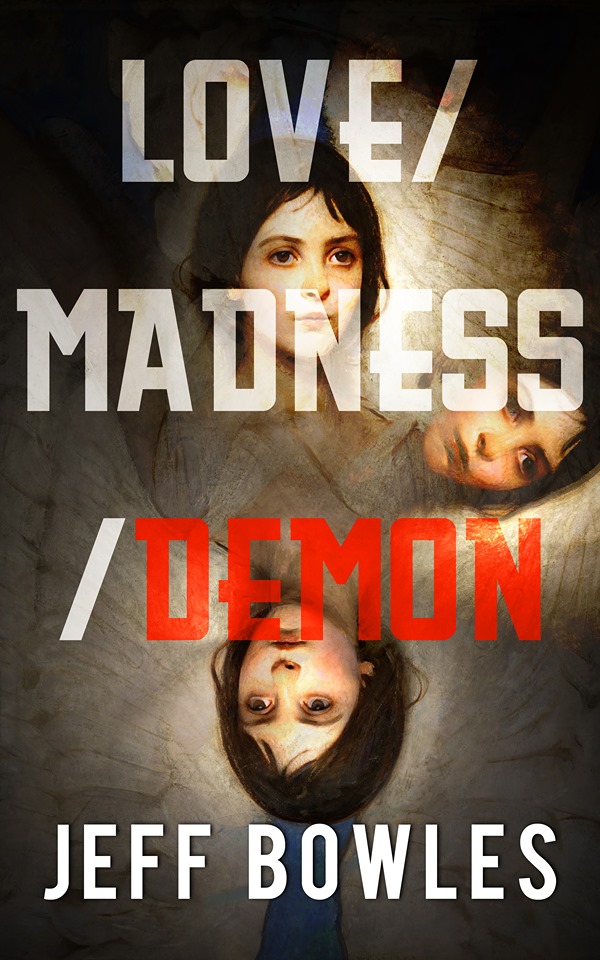
Check out Jeff Bowles Central on YouTube – Movies – Video Games – Music – So Much More!
Share this:

Ask the Authors 2022 Book & Blog Series: Plot/Storyline
Posted: May 21, 2022 Filed under: Ask the Authors, Book Promotion, Books, Fiction, Interview, Plot, Writing, Writing Tips | Tags: 2022 Ask the Authors, Bobby Nash, Chris Barili, Jeff Bowles, Kaye Lynne Booth, Kevin Killiany, L. Jagi LAmplighter, Mario Acevedo, Mark Leslie Lefebrve, Nancy Oswald, Paul Kane, Plot, Roberta Eaton Cheadle, Storyline, Writing, Writing to be Read 56 CommentsWelcome back to the “Ask the Authors 2022” Saturday blog series.
If you missed them, you can catch the first two segments here:
Segment 1 – Introductions for Kaye Lynne Booth & Kevin Killany/Writing Life Q & A
Segment 2: Introduction for Bobby Nash/Pre-Writing Rituals Q & A
This is the third segment for this series and today I’m going to introduce you to contributing author, Roberta Eaton Cheadle, who shares her essay about her own publishing journey in the book, and bring you a Q & A on plot, or storyline, from the WordCrafter writing reference anthology, Ask the Authors 2022.
Meet Roberta Eaton Cheadle

Roberta Eaton Cheadle is a writer of young adult and adult fiction in the supernatural fantasy, historical horror, and historical supernatural genres. Under the name Robbie Cheadle, she is a South African children’s author, publishing the Sir Chocolate series with her son, Michael, and a poet with 2 published poetry books.
To date, Roberta has published two novels, Through the Nethergate, and A Ghost and His Gold, along with several short stories in various anthologies including Whispers of the Past, Spirits of the West, and Where Spirits Linger, all edited and compiled by Kaye Lynne Booth, and Dark Visions, Nightmareland, Spellbound, Wings & Fire, and Shadowland, all compiled by Dan Alatorre.
Robbie is also a member of the Writing to be Read blogging team and co-editor of Poetry Treasures (2021) and Poetry Treasures 2: Relationships (2022), two poetry anthologies with contributing authors who were guests from her “Treasuring Poetry” blog series. When she is not writing, Robbie enjoys working in the garden and creating fondant and cake artworks to be featured in her children’s books.
And now for the Q & A.
Plot/Storyline
How do you feel about prologues? Love them or hate them? Why?
Mario Acevedo: I’m not a fan of prologues and as I see them as superfluous to the story. If you must include a prologue, then call it Chapter One to make sure readers like me won’t flip past it.
Paul Kane: I have no strong feelings about them either way. Sometimes I’ve used them, other times I’ve gone straight into Chapter One. I know some writers who say if you can avoid Prologues then do it and just start with the first chapter, but I think if it serves a purpose then there’s a place for one. I tend to include them in the thrillers, because it’s always an event that kicks things off – so for example in Her Last Secret, it’s the death of Jordan Radcliffe, in Her Husband’s Grave it’s the discovery of a body on Golden Sands beach, and in The Family Lie it’s a couple of campers who see a man on fire in the woods. I then split the narrative into parts, and in Chapter One I tend to introduce the main protagonist, so it might be the person who’ll be doing the investigating; someone whose eyes we’ll be seeing most of the events in the book through.
Chris Barili: I normally skip prologues in the books I read, especially if they’re more than two pages long, so naturally, I try to avoid them in my own writing. I tend to be of the mind that if it’s important enough to be in the story, I can be “Chapter One” or background info sprinkled throughout the story.
Bobby Nash: Prologues have their uses. I don’t think they need to be used in every story and I certainly don’t use them as an info dump. Sometimes, they work well.
Robbie Cheadle: I have no strong feelings about prologues. If the story requires one, then it should be there, if not, it can be omitted. I have not as yet included a prologue in one of my books.
Nancy Oswald: Not too fond of them. I think it’s better to jump right into the story.
Kevin Killiany: Prologues are essentially exposition—they explain the conditions or situation that make the story itself possible and necessary. Sometimes they contain information vital to the climax or outcome of the story that the writer could not figure out how to insert into the narrative itself. Like any tool they are not good or bad in and of themselves. I have, rarely, used prologues as placeholders in rough drafts; repositories to hold essential information until I work out how to work the really important bits into the narrative. Only one of my short stories ever went to press with both a prologue and epilog: “Simple Farmer”, Total Warfare, FanPro, 2006, a tie-in story for the Classic BattleTech RPG. They contained information long-time players knew, but new and less minutia-oriented readers would need to understand the story’s significance to the game.
What is the most difficult part of the story to write: beginning, middle or end?
Mario Acevedo: For me, the entire book is a challenge. I tell new writers not to sweat a perfect beginning because it’s often not till you write the ending do you figure what the beginning needs to say. The middle is called “the swamp” for good reason and the key here is to keep in mind the story question as you introduce plot twists.
Paul Kane: This changes, depending on at which point in the story or book you ask me. It’s hard to make a start on a project, because you’ve just got the blank page in front of you. But then it’s just as hard the next day to come to it and see another blank page… I tend to flag about halfway through and wonder what the hell I’m doing or wish I’d never even started it. The end is definitely the best part, if you’ve panned it well and can bring the book in for a good landing. There’s no more satisfying feeling in the world than having written the book. I always joke that I hate writing – which for a writer probably isn’t great – but I do love having written. Having a first draft that I can then tinker with. That’s my favourite part of the process if I’m honest, apart from getting the idea in the first place and developing that. But even at an early stage, you’ve got the whole mountain of a book to write ahead of you, which can be quite daunting.
Bobby Nash: I don’t know if I would call it more difficult to write, but the middle is usually where I start getting bogged down. Knowing when to transition from the middle to the end can be tricky.
Robbie Cheadle: It is all the same for me. I have the outline in my head, and I write in that direction. I do not find any parts more difficult, and I am for consistency and fluidity throughout my stories.
Jeff Bowles: For me, a short story or novel isn’t complete until I’ve managed to synthesize a decent tie-up ending. It can be tough to do, especially if you aren’t using a road map or outline of some sort, which I often do just to see where the story takes me. Sometimes I do a lot of preplanning, and that can certainly help, but even then, things in the plot can and do change, which means a good ending can still be hard to stick. Beginnings carry all the burden of proof, the reason someone will or won’t want to read your work, but even they depend on where a narrative ultimately ends up. As the saying goes, the seeds of an ending are always found in its beginning.
Nancy Oswald: Each book is different.
What are the elements of a good plot?
Paul Kane: That it hangs together well and is pacy. That there are no flabby bits which are unnecessary. Every bit of your story should be relevant and serve a purpose; if you could take certain bits out and still have the same plot, then they weren’t necessary in the first place. That it moves along well from beginning to the middle, to the end, and leaves a reader satisfied; and by that I mean content that they haven’t just wasted a chunk of their lives reading it. It’s why I always plan, so I can see the shape of the plot and work out what sections need to stay, which can be salvaged, and which need to be jettisoned.
Bobby Nash: I tell stories that I hope are coherent, make sense, and are entertaining. If that happens and the characters work, I’m happy.
What is the best hook you’ve ever written? Why?
Paul Kane: Ooh, that’s a hard one. Do you mean at the beginning of a story to make the reader go on? I’d say probably The Family Lie – and reviewers have mentioned this a lot! It’s the whole thing of showing those campers hearing something in the woods, looking out and seeing a guy on fire among the trees. I mean, what on earth’s going on there? If it doesn’t make you want to read on and find out then I’ve really not done my job properly. Up there with that is probably the start of Servants of Hell. That purposely mirrors the puzzle box scene with Frank from The Hellbound Heart, where he’s trying to solve the Lament Configuration and summon the Cenobites. I have a very similar scene, but right at the end you discover it’s Sherlock Holmes solving the puzzle just as the Cenobites show up. We then go back and find out how he ended up in that situation, but man what a hook! I was the one on fire the day I wrote that.
Chris Barili: Probably the opening to Guilty, the prequel to my Hell’s Butcher series. It opens with the main character face down in a saloon, dead from a gunshot wound. His first interaction is with a bartender who is half-rhinoceros.
Bobby Nash: I love this opening to Snow Falls.
“Abraham Snow knew he was about to die–
–and the thought of it pissed him off to no end.”
What kind of stakes do you set for your characters?
Paul Kane: Usually quite high stakes. Even if it’s something that’s high stakes for them alone, something that means a great deal to them, but might not to anyone else. You have to give characters motivation, nudge them to do things they might not otherwise do, and the only way to achieve that is by making it a high stakes gamble for them. They might lose their marriage, kids, or even their life. It makes a reader keep on turning the pages to find out how they’ll get on. In Lunar, the stakes really couldn’t be any higher for my protagonist Nick Skinner: he needs to find out why the world became stuck at a certain point in time; what the white-eyed Loons are roaming about, killing people; and he needs to find out where the love of his life Dawn is. Track her down and save her. Hopefully you go along with him for the ride to find out how he gets on.
Chris Barili: Again, that depends on the story and the genre. The stakes in a romance are a broken heart or happiness, while that in a horror story might actually be losing their heart.
Bobby Nash: Every story is different, but the stakes have to impact the character on some personal level. If the character doesn’t feel anything or there’s no stakes for them, the reader has no reason to get invested.
Robbie Cheadle: Through the Nethergate and A Ghost and His Gold were both about ghosts which have become trapped in between the physical world here on earth, and the afterlife. The reasons for this happening are different in both books, but the ghosts searching for redemption, so they can move on to the next level of existence is a common thread. The Soldier and the Radium Girl is different and is about a young couple’s quest for justice.
Do you write in subplots purposefully or do they develop organically for you?
Paul Kane: I work all those out beforehand, when I do my planning. That’s when subplots will occur to me and develop organically at the ideas level when I’m figuring it all out. As I mentioned, that doesn’t mean it’s all set in stone, there is always scope to change things if it makes the story better, but it allows you to figure out what main plots and subplots you’re going to need before you even start writing.
Chris Barili: Both. I plan some, and others pop up during the course of telling the story. If your characters are realistic enough, and you know them well enough you won’t be able to avoid the latter happening at least a little in your story.
Bobby Nash: A little of both. In writing series like Snow or Sheriff Myers, I know plot points for future books so I set up things that will pay off later. There are times, however, where I’ll decide something later and go back to set up the subplots and discover they are already there. Sometimes, my characters are smarter than I am.
Robbie Cheadle: Subplots do develop organically for me and are often a result of the interesting additional information I discover through my research as I go along.
Nancy Oswald: Develop organically.
Kevin Killiany: Subplots are always purposeful. In fact I always write complex or substantive subplots as individual stories in first/rough draft. Jigsawing the parts together—trimming, expanding, and polishing as needed—is part of the editorial process.
How do you assure that all subplots are resolved at the end of the story?
Mario Acevedo: I don’t because I like messy endings. The main story question is resolved, but usually involves a compromise by the protagonist. Unresolved subplots are good places to hitch up a sequel.
Paul Kane: Well, they might not be – but that would be something you leave dangling on purpose. For example, and this is a spoiler, at the end of The Gemini Factor we find out that one of the main characters Deborah is pregnant with twins. This was part of the subplot of her falling in love with Jack, a twin himself, who ends up getting killed. So we don’t really see the resolution of what she does about having his kids… unless I do a sequel, which actually I’m intending to do at some point. So leaving things open-ended sometimes can shoot off into yet another story. Pulling on a story thread that you’ve left dangling.
Chris Barili: Well, first off, some are not resolved because I want them to continue into the next book. For those that wrap up in the current book, I create a plot line, usually color-coded, in my beat sheet for that subplot so I don’t forget it.
Bobby Nash: Keep good notes. There was one time I realized that I had forgotten to resolve a plot point and so I started planning how to resolve it and the characters showed me which way to go. It turned out far better than my original idea. That’s why I trust my characters to get me where I need to go.
Robbie Cheadle: I engage the services of a developmental editor to read my stories carefully and help me tidy up lose threads, tighten the storyline, and produce the best story possible. I am also fortunate enough to have two Beta readers who read my work chapter-by-chapter and help me resolve issues and lose threads or contradictions as I go along.
Kevin Killiany: Sometimes they aren’t. Sometimes they’re hooks for the next story.
What methods do you use to add tension and conflict to your story?
Mario Acevedo: Make sure the characters, even those on the same side, have competing agendas.
Paul Kane: Well, I use suspense to ramp up the tension. And if you want to know how that works, just go away and watch a bunch of Hitchcock movies because he was the master. Show the bomb and the ticking clock under the table, but have the characters oblivious to it. That’s suspense, folks! As for conflict, you have to have characters with different points of view, just like in real life. Where do all the arguments come from in your own life? People who disagree with you on a certain course of action or about beliefs. Just look at something like The X-Files, which I watched from start to finish again recently. Mulder’s the believer, Scully’s the sceptic, and we watched the arguments – as well as sexual tension – between them for many years. Opposing viewpoints, yet when the chips were down they worked for the common good; the perfect combination. In my novel Arcana, which is set in an alternate universe, I had a young M-Forcer whose job it is to police magic users, unwittingly fall in love with a member of a group of magic users he’s chasing. Then you ask the question: what now? Will he turn his back on what he believes for love? Or bring her in? Or is there more to what’s going on in the first place than they know? It makes for tension, conflict and… if you’ll pardon the pun, given the novel in question, sparks.
Bobby Nash: Character moments are good for this. There are also tricks you can do on the writing side. Short, choppy sentences speed up the action. Long paragraphs slow it down. That sort of thing.
Robbie Cheadle: It depends on the book in question. With my current novel, there is a lot of irony because a lot of readers will be familiar with the story of the radium girls. War stories include their own tension due to the conflict situations that are innate in the history. I make use of flawed characters so that they do things that create conflict situations through their own poorly thought-out actions and their strong ideas and views about other characters and the situations they are in due to external circumstances.
Nancy Oswald: If I’m bored the reader will be too, so I try to pay attention to that and analyze where the story gets slow (or not).
Kevin Killiany: Mostly I just add tension and conflict. You should always keep in mind that every character is the hero of their own story—every character has a reason for what they’re doing. Begin with characters you care about (Not the reader, you; fake it ≠ make it.) and give them compelling reasons for their actions. When the actions and the underlying reasons for those actions of two people you care about run contrary to each other, the conflict generates the tension.
_______________________________________________________________________
That wraps up the “Ask the Authors 2022” blog series for today. I thank you for joining us and hope you found some of this useful. Next Saturday will bring you an introduction to contributing author, Paul Kane and a Q & A on Character Development. See you then.
And don’t forget to grab your copy of Ask the Authors 2022 from your favorite book distributor at the special price of 3.99 for the duration of this blog series, through the Books2Read UBL here: https://books2read.com/u/3LnK8e
____________________________________________________________________
Join Kaye Lynne Booth & WordCrafter Press Readers’ Group for WordCrafter Press book & event news, including the awesome releases of author Kaye Lynne Booth. Get a free digital copy of her short story collection, Last Call and Other Short Fiction, as a sampling of her works just for joining.
Share this:

Writer’s Corner: Where do I go from here?
Posted: May 16, 2022 Filed under: Anthology, Ask the Authors, Fairy Tales, Fantasy, Fiction, Mythology and Legend, Nonfiction, Poetry, Promotion, Publishing, Stories, Women's Fiction, WordCrafter Press, Writer's Corner, Writing, Writing Contest, Writing Reference, Writing to be Read | Tags: 2022, Anthologies, Ask the Authors 2022, Kaye Lynne Booth, Once Upon an Ever After, Poetry Treasures 2: Relationships, Refracted Reflections, Visions, WordCrafter Press, Writing Plan, Writing to be Read 1 Comment
I just finished up the spring semester at Western State Colorado University. We completed our class project, the Gilded Glass anthology, and.my solo project, Weird Tales: The Best of the Early Years 1926-27, which was quite the learning experience, but also a lot of fun. I’m looking forward to the summer residency, where we will finish up our degrees and do a massive book launch party for the Gilded Glass anthology, and for each of our solo projects at the end of July.
Here is the release schedule for our cohort. Some of them are already out there. I’ve included the pre-order links in case you are interested in purchasing new renditions of any of these classic works. I think we all had fun bringing them back to life. And check out those fantastic covers!

- May 2, 2022 – Loki—The Mischief Behind the Legend: https://books2read.com/u/3n5WwB
- May 10, 2022 – Personal Reflections of Joan of Arc: https://books2read.com/u/md60kX
- May 17, 2022 – Carmilla: https://books2read.com/u/mV8Byr
- May 24, 2022 – The Best of Mary Diana Dods: https://books2read.com/u/b5lkxw
- May 31, 2022 – The King of Elfland’s Daughter: https://books2read.com/u/4ELPLg
- June 7, 2022 – The Lair of the White Worm: https://books2read.com/u/47Ylgg
- June 14, 2022 – Selected Ghost Stories from Kwaidan: https://books2read.com/u/3Ln0AJ
- June 21, 2022 – The Elusive Pimpernel: https://books2read.com/u/mY6AaV
- June 28, 2022 – A Northanger Abbey Double Feature: https://books2read.com/u/47Ylag
- July 5, 2022 – Weird Tales: Best of the Early Years 1923-25: https://books2read.com/u/4ELyn0
- July 12, 2022 – Weird Tales: Best of the Early Years 1926-27: https://books2read.com/u/bx1e8k
- July 19, 2022 – Gilded Glass: https://books2read.com/u/bwKZ8Y
____________________________________________________________
Today, I was listening to the last podcast episode of the Six Figure Authors podcast, and they were discussing their future plans now that the podcast is ending, (much to my dismay), and it made me start thinking about where I want to go with my writing career now that we’re wrapping things up and this chapter of my life is coming to an end. At the end of this summer, I will once again be on my own in my writing career. I hadn’t thought about it before, but summer’s end brings with it not only the book release event and graduation, but also the loss of access to my mentors Kevin J. Anderson and Allyson Languierra and the support and advice of my wonderful cohorts, and I have no idea what 2023 will bring. I need a plan.
This year, I’m set, with the release of the Poetry Treasures 2: Relationships poetry anthology this last semester, the launch of Ask the Authors 2022 writing reference anthology currently under way, and three short fiction anthologies planned for later in the year: Once Upon an Ever After: Modern Fairy Tales & Folklore an (August); Refracted Reflections: Twisted Tales of Duality & Deception (September); and Visions (October). (Hmmm… It seems this is the year of anthologies for me.) But, I need a plan for what comes after that.

Hmmm… I’m revising Delilah to be a part of the Women in the West series with hopes of getting that out by the end of the year, but I keep adding ideas for the series, so I may wait to release until I have at least one more of the books ready to go, so that might be in the plan for next year, although it was originally a part of the plan for 2022. Also, I’ve been thinking a lot about my Playground of the Gods science fantasy series, and the first book is actually with a beta reader right now. But I’ve also been tossing the idea trying it as a serialization around. If anyone has experience on serialization, I’d love to hear your thoughts. Either way, those stories will be a part of the 2023 plan. In addition, I’ve been thinking on a time-travel romance adventure story that I started in 2021, “The Outlaw & the Rockstar”, and those characters have been teasing my brain, so I’ll probably add that to the 2023 agenda. That will give me between 2 and 5 releases of my own books for the year, which isn’t too bad if I can pull it off. Of course, I’ll also want to do an annual poetry anthology and the annual writing contest and anthology, so I can add two more book projects to the agenda.
I don’t think I will be lacking for projects once I’ve bade academia good-bye. In fact, I’m tired just thinking about the whirlwind schedule I just outlined. But you know, I think it will be worth it, if it can enable me to move my writing career to a full time level. The first thing you need to do if you want to sell books, is to write books, so I’m sitting pretty good on that plane. I’m working to revive my monthly newsletter, which I believe will be one of my most valuable marketing tools, and organizing a multi-genre newsletter swap group to help spread the word on releases. I’ve got good lists for possible reviewers built for all the anthologies planned for 2022, which will work for the annual anthologies, but will have to be created for my own books, and this blog is a book marketing tool, too. It’s a place where readers can come to learn about my latest projects, and my readership is growing, so I think I’m on the right track there.
Well…, would you look at that? Why was I worried? I have a plan…, and I think it’s a good one.
____________________________________________________________

Kaye Lynne Booth lives, works, and plays in the mountains of Colorado. With a dual emphasis M.F.A. in Creative Writing, writing is more than a passion. It’s a way of life. She’s a multi-genre author, who finds inspiration from the nature around her, and her love of the old west, and other odd and quirky things which might surprise you. She has short stories featured in the following anthologies: The Collapsar Directive (“If You’re Happy and You Know It”); Relationship Add Vice (“The Devil Made Her Do It”); Nightmareland (“The Haunting in Carol’s Woods”); Whispers of the Past (“The Woman in the Water”); Spirits of the West (“Don’t Eat the Pickled Eggs”); and Where Spirits Linger (“The People Upstairs”). Her paranormal mystery novella, Hidden Secrets, and her short story collection, Last Call, are both available in both digital and print editions.
In her spare time, she keeps up her author’s blog, Writing to be Read, where she posts reflections on her own writing, author interviews and book reviews, along with writing tips and inspirational posts from fellow writers. In addition to creating her own imprint in WordCrafter Press, she offers quality author services, such as editing, social media & book promotion, and online writing courses through WordCrafter Quality Writing & Author Services. When not writing or editing, she is bird watching, or hiking, or just soaking up some of that Colorado sunshine.
______________________________________________________________________
Sign up for the Kaye Lynne Booth & WordCrafter Press Newsletter for and book event news for WordCrafter Press books, including the awesome releases of author Kaye Lynne Booth. Get a free digital copy of Kaye Lynne Booth’s paranormal mystery novella, Hidden Secrets, just for subscribing.
Share this:

BOWLESIAN! – God, the Little Artist
Posted: May 4, 2022 Filed under: Bowlesian!, Fiction, Stories | Tags: Ask the Authors 2022, Bowlesian!, God the Little Artist, Jeff Bowles, Short Fiction, Short Stories, Writing to be Read Leave a commentGod, the Little Artist
by Jeff Bowles
It took me four years to paint like Raphael, but a lifetime to paint like a child.
–Pablo Picasso
We were certainly very sorry to hear about your death, Mr. Williams. Happens to even the best of His creatures, we suppose. Rest assured all the finger paints here on Planet Heaven are thrilled beyond words you have finally arrived. Begin reception of extraphysical sense and thought in three … two … one…
There. That’s better. This’ll help us get to know you. We see now, for instance, that your eyes have adjusted to the darkness, that you hear a thin dripping somewhere off to your left and that your feet scrape against rough, rough limestone. Understand, we finger paints have witnessed just about everything there is to witness.
Finger paints, yes. That’s what we are. Self-aware, creation-endowing finger paints. We dribble from a pin-hole wound in God’s lower back, right at the base of his spine. Whenever it’s time for him to paint, he scoops us up and lets out a giggle; a deified, bloody, Technicolor spinal tap. We wish you to know he’s been expecting you for quite some time. Sitting cross-legged here in his cavern, deep below the cliff face high, using his brittle fingers to paint portraits of your existence.
“Yay!” he often exclaims. “Colors time! Colors time!”
Few things get him so excited, save perhaps milk and cookies or his favorite Saturday morning anamatia.
Look, here’s the painting he calls Puppy, and there’s the one entitled First Time with a Lady. Note the lack of definition, of sharpness and lucidity. Sublime, isn’t it? Weren’t you an art history major? We’re great lovers of art, ourselves. In these paintings, Mr. Williams, if you don’t mind our interpretation too terribly, you aren’t so much a man but a concept. Of simple lines, basic shapes. Of any color that can exist in a rainbow of perfectly aligned moons and stars.
You approach God slowly, reverentially, overwhelmed, completely unsure of yourself and a thing so magnanimous as immeasurable love. You suddenly have visions of burning bushes and burning Sodom and savior children left to die on crosses for the salvation of all–
He spots you in an instant. His smile is broad and toothless. “Sorry, Daddy,” he says, eyes wide beneath bushy, peacock-feather brows, “I ax’dently spilled juice all over Taking too Many Per’skiption Pills.”
Taking too Many Prescription Pills, of course, is the one he painted just the other day after you’d passed out on the couch, stopped dreaming, stopped being much of anything.
God is ancient-looking and has paint stains all around his lips. He sits on the cavern’s floor, naked as the day he willed himself into being. He reaches for the painting in question, holds it up for you to see. Yes, completely ruined. The image of you–eyes rolled into your head, slobber trailing from your mouth–transcendentally post-Picassian though it may be, looks vaguely like a melting meat-puppet minus the hand up the meat-hole. It’s like Salvador Dali, but without the clocks.
When God says he spilled juice all over it, he means this rather literally. He drinks a lot of juice. Apple juice, to be precise. Not vino, vin, wijn, or the more aptly dubbed, Jesus Juice.
God cannot imbibe the red and/or white stuff. After all, he’s got the mind of a child.
“Daddy,” he says, “there’s sumfin I needs to ax you. Come closer.”
You lean in closer.
“No, Daddy, closer, closer.”
You get down on one knee, and you lean into his cracked, peeled-wallpaper lips.
“You love me, Daddy?” he whispers.
You nod. What man who can truly call himself a man does not love God?
“Love me bunches and bunches?”
You nod again. How humbling to hear the word and feel the breath and know the power that is–
God plants a big, sticky, icky one right on your cheek. He laughs in your face, then he slaps you so hard you see bloody Egyptian rivers.
Ouch. That smarts.
“Tee hee!” He says. “Got you, Daddy. Got you good. You’re gonna’ be God now!”
Precisely what, you inquire, does this mean, oh Lord of Space and Time?
“Pretend I’m a baby, Daddy! Baby needs changin’. Change me, Daddy! Change me!”
And what, oh Lord of Space and Time, you query, shall be the object, function, and product of the change? For in changing God, does not man–nay, does not the universe–cease to exist in his glorious image?
“Huh?” says God.
You huff and shout, What the hell do you mean, baby needs changing!
And then God starts to cry.
Aw, look at him. You made God cry. Aw. Look at him, all naked, and old, and cross-legged, and bawling his eyes out. With his naked, old soul and his naked, old heart all torn to pieces. Tears and snot stream from every hole tears and snot are apt to stream from. We hope you’re happy now. We really hope you are.
You coo at God, and then you pat his back and scoop him up in your arms, because you’re desperate and just feel like such a jerk.
You never had any children. Never had any grandfathers, either. Leastways, you never had any grandfathers who acted just like the children you and your wife never managed … Well at least you say you’re sorry. Lord of mercy, you are so, so sorry. You never meant to yell at him. You love God. You love him just as much as you loved your wife, and your sister, and your mom, and your dog, and your…
But God, he is hurt. He pushes you away and screams at the top of his lungs, “I’m dyin’ Daddy! I’m gonna’ die real soon. I bleed each time I paint!”
What does he mean by this?
God shakes his head and frowns. He draws his fingers to his back, winces as he touches them to skin. He holds them up for you to see. Color. True and everlasting color, no kind of blood you’ve ever seen. You find us both horrible and enchanting. It’s like Edvard Munch, only you try not to scream.
“I been paintin’ so long,” God says. “So really, really long. I been paintin’ all of you. You know what’s gonna’ happin’ when there’s no more blood to bleed?”
He’s going to die. He’s going to die? Holy hell. You bite your lip and start to panic. He’s going to die? You run a hand through your hair. God can’t die. Holy hell. God can’t die, can he? You pose to him this very question.
He sighs, and though he looks even sadder and more impossibly frail than before, the tears stop flowing.
“I can,” he says. “Yup. And I’m real sad, too. So you’re gonna be God now, Daddy. I slapped you good, so now you got god-power. I made my daddy special. When I was paintin’ your pit’tures, I made sure to con … concen… con-cen-trate real, real hard.”
Enough with this daddy business! Why does God need a daddy? The creator of all that is infinite and everlasting can never, metaphysically speaking, create that which is, by act of temporal creation alone, both a beginning and an ending to his own existence. Can he?
Perplexed, unnerved, you find you only have the strength to ask him this:
Why did God cross the road?
He shrugs. “Prolly ‘cuz the big kids was chasin’ him again.”
# # #
God is dying in your arms, Mr. Williams. Right here, right now. We can feel him slipping away, death a fatal pressure building inside his spine. Recreation, such as painting pictures, is widely known to relieve pressure. And spinal taps are good, too.
He’s asked to die outside, far from his dank, dark cavern, because, as he says, the 29 moons of Planet Heaven remind him of his favorite spaceman animatia. The monstrous, towering cliffs of his river basin rise high and immeasurable all around you. The sky is a deep, ruddy purple, the grass a fine, silky blue.
Colors abound. In your nose. You smell the colors of the universe. On the tip of your tongue. Taste the colors of an endless dream. Smells like burnt cherry wood. Tastes like … paint. Because even though you had no children, Mr. Williams, you were a child once, and you know what paint tastes like. Because children eat it, and eat glue, and paper, and … God dying in your arms … if only you could eat paint and love it like you once did.
God’s breathing is heavy, labored. His lips are pulled back over his teeth, mule and horse-like. Does the body of God go to waste before the end?
“Daddy,” he says. His voice cracks and splinters. “Daddy, come closer.”
You lean in.
“No, Daddy, closer. Please, closer.”
You draw his body into yours, and you press your face in so close you can smell his breath.
“Don’t worry, Daddy,” he says. “I ain’t gonna slap you again.”
Well that’s a relief.
“I should, though. Cuz’ it’d be real funny.”
No, Lord, you say, please don’t.
He nods meekly. “Kay. Kay. Daddy?”
Yes?
“Daddy … Daddy?”
What is it, oh Lord of Space and Time?
“Don’t forget. Ladies wear dresses.”
You ask him what he means. You barely hear what he says next.
“When you paint ’em. Ladies wear dresses. Men wear pants. Doggies go arf, arf.”
You tell him to rest, to be still. He speaks again. So quiet, so fragile and insubstantial it breaks your heart to pieces.
“Also,” he says, “the act of creation is not a self-validating act in and of itself. Nor is the act of destruction. That’s childish, childish and misses the point of being the child.”
Childish? Child? Why is it he suddenly doesn’t sound like a child anymore?
“Wonder,” he says, “wonder,” and one final time, “wonder. In all that you do, my son, wonder. There is so much in this universe to … to paint for the sake of…”
And then God dies. No great final gasp, no moaning or earthly laments or anything so substantial that you think, yes, that’s it, that is the end. And you, Mr. Williams, are suddenly lost in your own grief, in thoughts of your wife, your sister, your mom, your dog and … how alone they all must be. How it feels to abandon. How it must’ve felt for God–just now, just a moment ago–to abandon so hastily all he’s ever loved and nurtured.
And now he’s dead, and in death so placid he may as well have drifted away, a newly winged thing, to paint pictures on the 29 moons of Planet Heaven.
So peaceful and serene. Except that…
The very next instant, his body explodes.
Pressure in the spine. Explosion, detonation. We come hurtling out. A million-billion gallons of paint splatter Planet Heaven and splatter you and splatter the universe beyond. Buildup, relief. Our viscous, fluid minds have blown out wide and interstellar. It’s like Jackson Pollock, only messier.
Red.
Green.
Blue.
Yellow.
An infinite pallet, besides.
We fill you up. Fill you in. Blood in, blood out. And you know such beauteous things. Such things no mere man could ever know. Is this what it means to be at the center of all places and times? You reach two fingers to your back and wince from the pain, bring those fingers to your open mouth and lick them. Oh, you think, maybe I still love to eat paint, after all.
END
Jeff Bowles is a science fiction and horror writer from the mountains of Colorado. The best of his outrageous and imaginative work can be found in God’s Body: Book One – The Fall, Godling and Other Paint Stories, Fear and Loathing in Las Cruces, and Brave New Multiverse. He has published work in magazines and anthologies like PodCastle, Tales from the Canyons of the Damned, the Threepenny Review, and Dark Moon Digest. Jeff earned his Master of Fine Arts degree in creative writing at Western State Colorado University. He currently lives in the high-altitude Pikes Peak region, where he dreams strange dreams and spends far too much time under the stars. Jeff’s new novel, Love/Madness/Demon, is available on Amazon now!
Check out Jeff Bowles Central on YouTube – Movies – Video Games – Music – So Much More!
Share this:

Ask the Authors 2022 is here!
Posted: April 22, 2022 Filed under: Ask the Authors, book marketing, Book Promotion, Book Release, Books, Character Development, Dialogue, Editing, Fiction, Nonfiction, Plot, Point of View, Publishing, Story Telling Methods, Teaching Writing, Tense, Tone, Voice, WordCrafter Press, World Building, Writing, Writing Life, Writing Process, Writing Reference, Writing Tips | Tags: Ask the Authors 2022, Bobby Nash, Chris Barili, Jeff Bowles, Kaye Lynne Booth, L. Jagi LAmplighter, Mario Acevedo, Mark Leslie Lebefvre, Nancy Oswald, Paul Kane, Roberta Eaton Cheadle, WordCrafter Press, Writing Reference, Writing to be Read 19 CommentsThat’s right. The writing reference you’ve all been waiting for has arrived. Ten talented authors and industry experts have gathered together with me to share their writing tips and advice in essay and Q&A, creating a writing reference anthology like no other.
Where can you find publishing industry experts willing to share their secrets?
Ask the Authors 2022 is the ultimate writer’s reference, with tips and advice on craft, publishing and marketing. Eleven experienced and successful authors share what works for them and offer their keys to success in traditional publishing, hybrid, and indie. You’ll learn industry wisdom from Mark Leslie Lefebvre, Kevin Killiany, L. Jagi Lamplighter, Bobby Nash, Paul Kane, Nancy Oswald, Chris Barili, Jeff Bowles, Roberta Eaton Cheadle, Mario Acevedo and Kaye Lynne Booth.
This book offers up-to-date and tried-and-true ways to improve your craft, explores current publishing and book marketing worlds. Take a peek inside and find out what works for you.
Praise for Ask the Authors 2022
“Ask the Authors is an up-to-date and broad-based compendium of advice from today’s working writers, to help you with understanding your own writing career. Great information!”
—Kevin J. Anderson, New York Times bestselling author of Spine of the Dragon

Ask the Authors 2022 is available in both digital and print. You can get your copy from your favorite book retailer through the Books2Read universal book link (UBL) here: https://books2read.com/u/3LnK8e
______________________________________________________________________________
Sign up for the Kaye Lynne Booth & WordCrafter Press Newsletter for and book event news for WordCrafter Press books, including the awesome releases of author Kaye Lynne Booth. Get a free digital copy of Kaye Lynne Booth’s paranormal mystery novella, Hidden Secrets, just for subscribing.
Share this:

Book Reviews – First Bite: A Limited Edition Vampire Romance Collection
Posted: April 18, 2022 Filed under: Anthology, Book Review, Books, Fiction, Review, Speculative Fiction, Vampire Romance | Tags: Book Review, Erotica, First Bite: A Limited Edition Vampire Romance Collection, Jordan Elizabeth, Speculative Fiction, Vampire Romance, Writing to be Read 2 Comments
I’m kind of hesitant about vampire stories. I’ve read a few that were crafted quite well, like those created by Anne Rice, which I loved and more than a few with twinkling vampires or other gimmicks which veered from traditional tropes, which turned my stomach just a little. But when I received a review invitation from Jordan Elizabeth for the new anthology in which she has a story featured, I didn’t think twice before saying yes.
The Creative Words anthology, First Bite is a varied collection of vampire romance stories: vampires romancing vampires, vampires romancing humans, vampires romancing hunters, or vice verse, etc…., which might be classified as vampire erotica. While I must admit that horny vampires don’t do a lot for me, but many of these stories were explicit and the erotic portions were tastefully done. But be aware that some of these stories bordered on sizzling.
Several of the stories featured are prequels, leading into the rest of the series, rather than complete stand-alone stories. This may be a clever marketing trick to entice readers into the series, but it may also be frustrating to a reader who is expecting a complete story arc in each offering.
I personally, find this tactic annoying, because just when the author has grabbed your attention and you are really getting into the story, they pull it all away and say, “If you want more, go buy my book.” Seems a little underhanded, doesn’t it? But, I know this is a marketing tactic authors are often using these days. You usually see it in newsletter magnets and freebies, although I’ve not seen it in an anthology before.
But… I loved the unique, (at least to me), story concept for “Vampire Occupation”, by Kat Parrish. Although it ends with “to be continued…”, it left me intrigued enough that I’d like to read more. Apparently the tactic works, annoying or not.
There were no prequels or “to be continueds…” from the author requesting the review, Jordan Elizabeth. I’ve reviewed many of her YA novels in the past, and always find them quite enjoyable, and her story, “October in Elmdale “, was no exception. I was drawn into this story immediately by her skillfully placed hook, and her full story arc kept me riveted to the end, where love blooms around a broken curse.
Also worth mention in this story collection is “Must Love Humans”, by Amada Aggie, a complete story where love is kindled over a bet on a game of billiards; “Immortally Yours”, by Lenore Danvers, a complete story in which the vampire plays the part of knight rescuing a damsel who doesn’t yet know she is in distress, and “Once Bitten”, by Kathleen Ryder, a complete story where lost love is reclaimed in spite of a dark secret.
Only a vampire can cherish you forever.
Hidden among average cities and quaint little towns, monsters hunt unsuspecting prey. Secret predators prowl in plain sight, watching. Waiting. The lost souls they consume never see the beast before it hits. If they did, they’d willingly give in to the intoxication of the vampire’s sex appeal.
Overall, First Bite: A Limited Edition Vampire Romance Collection is a captivating anthology of vampire romance stories for the adult reader. I give it four quills.

Buy Link: https://www.amazon.com/First-Bite-Limited-Vampire-Collection-ebook/dp/B09L356DG1
____________________________________________________________
Kaye Lynne Booth does honest book reviews on Writing to be Read in exchange for ARCs. Have a book you’d like reviewed? Contact Kaye at kayebooth(at)yahoo(dot)com.
Share this:

BOWLESIAN! – Dr. Julianus Techt’s Five Easy Steps to Building a Better You
Posted: April 6, 2022 Filed under: Bowlesian!, Dark Fantasy, Fiction, Horror, Short Fiction, Speculative Fiction, Stories | Tags: Bowlesian!, Jeff Bowles, Short Fiction, Short Stories, Writing to be Read Leave a commentDr. Julianus Techt’s Five Easy Steps to Building a Better You
by Jeff Bowles
You are an absolute horror show. You are a wreck and ruin of a human being. I can’t even stand the sight of you anymore. You’re weak. Feeble. Go on and do it. Go on and rid the universe of your wretchedness once and for all.
Sound familiar?
Hi, friends. Dr. Julianus Techt here. Life got you down? No friends? No significant love interests? No point in living one more excruciating, soul-crushing day? Believe me, I know the feeling.
Congratulations on your purchase of Dr. Julianus Techt’s 5 Easy Steps to Building a Better You. This book, and the accompanying materials and spells companion crate, are each designed with the lowlife in mind. Contained within these pages, friends, are the answers you are looking for. Not happy with the man/woman you have become? Why not simply build a better you? The methods, magics, and matriculations I am about to divulge are time-tested and fool-proofed.
I know exactly what it’s like. I was once in your shoes. My PhD is in world-class suffering. I earned my doctorate at the school of hard knocks. Now I am a new man entirely. Come along with me and discover the secrets to self-love, self-respect, and self-actualization. Your glorious, resplendent days in the sun are just 5 Easy Steps away….
Easy Step 1: Back to Basics
Why is it you hate yourself so much? Why is it you’re so despairingly, disconsolately desperate to become a better human being? Is it because, like me, you’ve let down every last friend, family member, and lover who’s ever cared about you? Or do you, like me, simply find life painful, disappointing, a series of valleys–each deeper and darker than the last–without even a passing glimpse of a single peak or shred of hope?
Ha ha. Well, you were sharp enough to buy this book. So at least you’ve got that going for you.
I want you to imagine what the better you will look like.
Now I want you to open your materials and spells companion crate and make it happen.
Inside the crate you will find,
One (1) man-sized sheet of multi-colored construction paper
Five (5) century-aged cherry wood logs, each weighing approximately twenty-five (25) lbs.
One hundred seventy-five (175) lbs. of premium oil-based plastilina modeling clay.
One (1) ancient scroll of Black Soul-Shard enchantments.
And last, but not least,
One (1) complimentary Pizza Barn coupon, buy 1 slice, get the second half-off.
Arrange your materials and spells in whatever manner that best allows for ease-of-access and attenuation with the life-force powers of the universe and the forsaken black domain of the damnation/animation god, Frülik.
Ready to begin?
Good. I was hoping you’d say that.
Note: Dr. Julianus Techt’s 5 Easy Steps to Building a Better You is, if nothing else, a trial-and-error process. Steps 2-4 will enable you to produce 3 different soul-shard versions of yourself. If at any time you become satisfied with a soul brother or sister, please feel free to skip to step 5, There, isn’t That Better? Similarly, if at any time you feel threatened or are attacked by your soul brothers or sisters, please discontinue use, flee your house or place of residence, and immediately cash in your complimentary Pizza Barn coupon as you await police/emergency medical technician intervention.
Easy Step 2: Frülik
From your kitchen, retrieve one (1) large knife, serrated; one (1) cereal bowl; one and one-half (1 1/2) teaspoons of iodized table salt; one (1) sticky bandage, extra-large; and one (1) lb. of leftover meat to offer as supplication to Frülik, the damnation/animation god.
Retrieve your ancient Black Soul-Shard scroll and refer to enchantment #12 as you perform the following:
Sit down on the floor with your legs crossed. Pour the salt into the bowl and set it in your lap so that it can catch the copious amounts of blood about to gush from the palm of your hand.
This next part may sting a little.
Slice open your hand and hold it over the bowl. As you howl in agony, notice that your blood runs red. This will change as you begin to recite the enchantment, the one which begins,
“Oh mighty Frülik! I offer you my blood and meat! Cleave my astral self in twain! Take from me now that which you desire most!”
Notice that three things occur. The first is that your blood turns black. Don’t be alarmed. This is simply an indication you have just sold your soul for something far purer than you can possibly imagine. Notice, too, that the air around you has suddenly grown approximately 50° cooler. Your breath puffs frost. You snort in the cold like a castrated bull. You should probably be aware that the damnation/animation god, who will be arriving shortly, cannot abide warmth. It reminds him the living still thrive in the world beyond his forsaken realm, and that for him, all hope for love, passion, and earthly pleasures are lost, lost, lost.
Anyway, the last thing you will notice is that a 10-foot tall, bone-armored, entrail-covered, cloven-footed demon god will scratch and claw his way from the cereal bowl filled with salt and your precious blood.
Once he’s standing over you, with the edge of his massive Broadsword of Deepest Lacerations resting precipitously against your neck, he will squeal like a cancerous boar. He will then say something to the effect of,
“Woe unto you! Woe! Your soul is damned to the bleakest pits of horror and suffering! Pestilence! Rotten, fetid, malodorous flesh! I shall feast on your severed scrotum each mealtime for a thousand lives of men!”*
*Please note that based on your gender, Frülik may or may not in fact use the word “scrotum.”
The damnation/animation god will now use his broadsword to cleave your head from your shoulders. Do not be alarmed, this is simply an astral projection of your head and nothing more. Unfortunately, the pain you feel is entirely real and will no doubt haunt you for years to come.
Frülik is consumed by his own lust for spiritual power. He will snort and stomp and pull exactly three (3) individual shards of your soul out through your neck. His desire, of course, is to eat them and thereby enslave you for all time as his personal Concubine of Nightly Anguish.
It is now appropriate to offer him the one (1) lb. of supplication meat.
“Meager vittles!” he will bellow, but he will nevertheless proceed to stuff the meat into his face and forget all about the severed pieces of your spiritual essence hanging from your throat.
Please refer to enchantment #16 on your ancient scroll. Recite and repeat until the damnation/animation god is banished, moaning and cursing your name, back to his profane realm.
“Mighty Frülik!,” you will say. “Return to blackness! Mighty Frülik! A caelo usque ad centrum!”
Once Frülik is gone, and his howls of abject agony and rage have finally subsided, you will feel the urge to pass out and slip into the Sleep of Ages. This is completely normal, a side-effect of doing business with a demon god, and I must tell you, feels rather nice after a nightcap of chamomile tea and vodka.
Before you sleep, pull the three soul shards from the astral wound in your neck and lay them out, as best you can, with the rest of the materials from your companion crate.
When you awaken in exactly twelve (12) days and nights, we will finally create your soul brothers/sisters. Won’t that be fun?
Easy Step 3: The Better You Emerges
Twelve (12) days and nights have now passed. Are we back in the land of the living? Excellent.
Quick, what is fragile, tenuous, rough around the edges, and excruciatingly, mind-numbingly easy to reduce to cinder? No, it’s not Dr. Julianus Techt’s four failed marriages. It’s paper, friends. Simple, well-crafted, infinitely pliable commercial paper.
Your next task is to create a soul brother/sister from the man-sized sheet of multi colored construction paper you’ve retrieved from the materials and spells companiontjngsopjojgs kijipsgmijijithinign ijisrjomoejoig Frülik fhsko
sohoihionofihisniohi Frülik shinjpspsom Frülik shions
Frülik loves Techt
Frülik loves Techt
Frülik luvs Techt
Frülik has Techt
Frülik has Techtmpr
Say goodbye, Techt
Say goodbye, Techgtnikjigjopop
Managing Editor’s Note: And this is the last thing he wrote for the project, people. The police entered his home last week to find the place torn to pieces but otherwise empty. They found on his workstation a single Tupperware dish containing a full pound of rotting meat.
Due to the highly volatile and disturbed nature of this manuscript–and of course, in light of Dr. Julianus Techt’s mysterious disappearance–One-Hill Prairie Publishing hereby suspends all production plans for Five Easy Steps to Building a Better You until further notice. We have also mandated the immediate destruction of all mockup materials and spells companion crates. Our number one priority is to keep the particulars of this project from reaching the public. Can you imagine what’d happen if some poor fool actually attempted any of this?
Post-Script: We realize that working with Dr. Techt these past weeks and months has been trying, and at times, freakishly horrifying. Free mental health screenings and complimentary Pizza Barn coupons to all who apply.
END
Jeff Bowles is a science fiction and horror writer from the mountains of Colorado. The best of his outrageous and imaginative work can be found in God’s Body: Book One – The Fall, Godling and Other Paint Stories, Fear and Loathing in Las Cruces, and Brave New Multiverse. He has published work in magazines and anthologies like PodCastle, Tales from the Canyons of the Damned, the Threepenny Review, and Dark Moon Digest. Jeff earned his Master of Fine Arts degree in creative writing at Western State Colorado University. He currently lives in the high-altitude Pikes Peak region, where he dreams strange dreams and spends far too much time under the stars. Jeff’s new novel, Love/Madness/Demon, is available on Amazon now!
Check out Jeff Bowles Central on YouTube – Movies – Video Games – Music – So Much More!




















Mind Fields: Crime Thrillers And Mystery Media
Posted: May 20, 2022 | Author: artrosch | Filed under: Books, Commentary, Crime, Fiction, Mind Fields, Mystery, Thriller | Tags: Arthur Rosch, Crime Fiction, Henning Mankell, James Lee Burke, Mind Fields, mystery, Suspense/Thriller, Writing to be Read | 3 CommentsI read everything. I read fiction, non fiction, biography, history, psychology. If libraries were edible there would be few surviving libraries. I would have been a Godzilla-like creature with an insatiable appetite for books, “The Monster That Devoured Libraries”. I’ve been reading voraciously since I was eight years old. I started my reading career with historical fiction, then turned to sci-fi and Fantasy. I detoured into crime fiction and mysteries but I put them down in my twenties and never returned until I saw the film “The Girl With The Dragon Tattoo”. That rekindled my lust for good thrillers and I checked out the late Stieg Larsen’s epic trilogy. Then I turned to the somber depths of Henning Mankell, author of the Wallander mystery series.
Mankell is sixty four years old. I find this fact very much in his favor. I like reading authors who’ve got some worldly experience, who are old enough to recognize the body’s fragility and are beginning to be on speaking terms with death.
Henning Mankell spends half of his year living in Maputo, Mozambique. He is director of a drama troupe called Teatro Del Avenida. What, I wonder, could be better food for a writer’s mind than to open himself to a world so utterly alien to his native experience?
Stockholm/Maputo, Stockholm/Maputo… here is a successful writer who is seriously engaged with the world. He’s not hiding in some comfy Swedish estate, churning out formulaic mystery books. His writing is many layers deep.
Mankell’s best-selling character, Chief Inspector Wallander, is a frustrating man. He’s frustrating to his daughter, he’s frustrating to his colleagues; he’s especially frustrating to himself. Somehow he never seems to get to that vulnerable place that allows his feelings to surface. He looks like a man tormented by an itch that he can never scratch. He walks around with three days’ growth of beard on his face, his shirt tails are hanging out, his eyes are bleary.
Somehow he always catches the killer, by thrashing his way through obscure connections, chasing ancient traumas, exposing religious zealotry and the classic motive to many a murder, old fashioned desire for revenge. Wallander’s like a gloomy Colombo. He always has one more question.
Mankell’s prose is austere and controlled. It evokes the Swedish countryside, from its thousands of Baltic islands to its birch forests and vast yellow fields of mustard and flax. Mankell also takes non-Swedish readers into the Swedish mind-set via references to Swedish history and attitudes.
There is a nostalgia for an “old” Sweden. Just as we in the U.S. have pre and post Nine Eleven mind-sets, the Swedes divide their recent history into periods before and after the assassination of their prime minister Olaf Palme in 1986. The crime was never solved and remains a collective national trauma.
Any sensitive reading of Mankell requires this awareness of the Swedish world-view. Americans are not great in being aware of other cultures and other histories. This is an opportunity to absorb Swedish culture from one of its iconic writers.
James Lee Burke
A quote from the novel Swan Peak:
I flat out love James Lee Burke’s writing. He’s another writer with some miles on his old frame. His best selling series characters, Detective Dave Robicheaux and Clete Purcell are two of the most colorful non-heroes in crime fiction. Most of Burke’s novels move in and around New Orleans and the bayou country. The area’s history is like a character in itself. The ghosts of civil war personalities haunt the landscape. Burke’s stories draw on the family feuds and crimes from the past. His plots involves the great great great grandchildren of plantation owners and slaves. James Lee Burke’s writing is an invocation of living memory.
Certain structures appear in Burke’s narratives. There’s always an aristocratic family whose roots go back to ante-bellum times. This family has entanglements within the black community. The family is also “mobbed up”, albeit quietly, with the Giacano people in New Orleans.
People whose grandparents were slaves still work for this family. Some old blues man who plays the local dives witnessed a killing forty years ago. He won’t talk about it; he never talks about the “doings of white folk”. Dave can pry bits of information from the reluctant guitar man when he promises not to reveal his source. All the same, there’s a possibility that the old blues man’s body will float out of the bayou some time down the road.
Dave is a recovering alcoholic. The longing, the nostalgia for a shot of Johnny Walker in a glass of beer, is so authentic that Burke’s nascent alcoholism is clear as an empty decanter.
Burke knows the landscape of longing, of grief for an addiction that provided so much comfort yet brought so much destruction. This is why James Lee Burke is so good as a writer: he’s honest about who he is and his “real” personality bleeds across into his characters with perfect fidelity.
Here they are, the inhabitants of James Lee Burke’s fictional world. Dave Robicheaux, Vietnam vet and PTSD sufferer. Alcoholic. A cop who resents authority. Habitue of AA meetings when the pressure builds. Lover of his wife and his daughter Alafair and his tame three legged raccoon Tripod and his un-neutered warrior cat, Snuggles. Best friend of Clete Purcell, a de-frocked homicide cop who now does skip tracing for bondsmen Nig Rosewater and Wee Willie Bimstine.
Clete is enormous, powerful, aggressive, self indulgent and frequently teeters on the brink of losing his self control. He is described as “an elephant falling down a stairs”. He still drinks and pushes Dave’s patient loyalty to the boundary. A fellow Vietnam vet, fellow PTSD patient, Clete was Dave’s partner in the homicide division of New Orleans Police Department.
In the old days they were called “The Bobbsey Twins.”
Burke mixes up all these characters to create stories with perfect pacing and addictive tension. He describes the color of light in Bayou Teche, the sound of the rain as it blows in from the Gulf. Someone out there creeping around the roots of the drowned trees is leveling a telescopic site onto Dave’s forehead. That someone may be a psychopathic ex-prison guard from Angola Penitentiary, a “gun bull”, a racist of the old stripe who once prodded prison laborers from the saddle of his horse, carrying a shotgun and ready to use it.
Burke’s villains have a whiff of sulfur about them, they aren’t quite human, they have a Satanic indifference to human suffering and a quick toughness that seems invincible.
These are some of the scariest villains in fiction. These are just a few reasons why you should read James Lee Burke.
His heroes are flawed, his villains terrifying, his victims pathetic and mute, his settings historic and laced with the colors of Spanish moss and the distant growl of alligators.
_______________________________________________________________________________
Arthur Rosch is a novelist, musician, photographer and poet. His works are funny, memorable and often compelling. One reviewer said “He’s wicked and feisty, but when he gets you by the guts, he never lets go.” Listeners to his music have compared him to Frank Zappa, Tom Waits, Randy Newman or Mose Allison. These comparisons are flattering but deceptive. Rosch is a stylist, a complete original. His material ranges from sly wit to gripping political commentary.
Arthur was born in the heart of Illinois and grew up in the western suburbs of St. Louis. In his teens he discovered his creative potential while hoping to please a girl. Though she left the scene, Arthur’s creativity stayed behind. In his early twenties he moved to San Francisco and took part in the thriving arts scene. His first literary sale was to Playboy Magazine. The piece went on to receive Playboy’s “Best Story of the Year” award. Arthur also has writing credits in Exquisite Corpse, Shutterbug, eDigital, and Cat Fancy Magazine. He has written five novels, a memoir and a large collection of poetry. His autobiographical novel, Confessions Of An Honest Man won the Honorable Mention award from Writer’s Digest in 2016.
More of his work can be found at www.artrosch.com
Photos at https://500px.com/p/artsdigiphoto?view=photos
_______________________________________________________________
Want to be sure not to miss any of Arthur’s “Mind Fields” segments? Subscribe to Writing to be Read for e-mail notifications whenever new content is posted or follow WtbR on WordPress. If you find it interesting or just entertaining, please share.
Share this: