Book Review: Themis’s Revenge
Posted: February 10, 2023 Filed under: Book Review, Books, Dark Fantasy, Fantasy, Fiction, Mythology and Legend, Review | Tags: Book Review, Dark Fantasy, Fantasy, Mythology, RA Winter, Themis's Revenge, Writing to be Read 2 Comments
About the Book

Zeus rewrote her laws. Now, Themis, Goddess of Justice will extract her revenge.
She is Themis goddess of Justice, only she can write the rules that govern men. Zeus, king of the gods, has other ideas. Not only did he cheat on her, but he changed her laws. Horrified that Zeus has doomed an innocent man to be fed to a Titan god, Themis must descend into the depths of hades to save the damned soul- without Zeus’s knowledge.
But an omnipotent being guards the prison of Typhoeus. One with blood pulsing through his veins. He’s neither god nor demon and he refuses her entry into Tartarus. With no way around him, she must go through him- and step directly into his arms.
In a race against time, Zeus and the Titan god’s hunger, Themis is willing to sacrifice everything to save an innocent soul. But is she willing to destroy her own soul by opening her heart again?
Purchase Link: https://www.amazon.com/Themiss-Revenge-Queens-Underworld-Book-ebook/dp/B0BB396CCW
My Review
Themis may not be one of the goddesses you remember from mythology in school, but she won’t be forgotten once you read Themis’s Revenge: Book 4 of the Queens of the Underworld series, by RA Winter. As the frosty, but fiesty Goddess of Justice, Themis rebels against the all-controlling powers of Zues and his pig-headed male ego, and finds herself heating up in the underworld with boiling rage and fiery sexual energy, as she first realizes that she doesn’t have a clue when it comes to Zues’ activities or intentions, and things get even hotter, as she begins to figure it out and learns that there is no one she can trust.
Her path in the underworld leads her to the one whose name must not be spoken, and in trying to unravel the mystery of who he is, Themis finds that even unspoken prophecies are no less true, as she becomes a part of a prophecy uttered from her own lips. Zues is not one to tolerate disobedience, but the tell-tale runes she acquires are a dead giveaway, pun intended, that she has visit the forbidden realm and lived to tell about it, and he’ll be even less forgiving if he learns that the prophecy of his destruction now rests on Themis’s hands.
Themis’s Revenge brings mythology to life, or death, as the case may be. A well-crafted and skillfully told story. I give it five quills.

_______________________
Kaye Lynne Booth does honest book reviews on Writing to be Read in exchange for ARCs. Have a book you’d like reviewed? You can request a review here.
Share this:

Growing Bookworms – Meet children’s book author, Darlene Foster, and learn about her Amanda travel series and a review #childrensfiction #bookreview #growingbookworms
Posted: February 8, 2023 Filed under: Adventure, Book Review, Books, Children's Books, Fiction, Growing Bookworms, Interview, Review, Teaching children | Tags: Amanda in France, Author Interview, Book Review, Darlene Foster, Growing Bookworms, Robbie Cheadle, Writing to be Read 112 Comments
Today, I am delighted to introduce Darlene Foster, author of the Amanda travel series of books for children aged 9 to 12 years old. I have read several of the Amanda books and enjoyed them all.
Your Amanda stories appeal to me as they take me back to my own childhood readings days of The Famous Five and Adventure series. Was there any particular children’s author who influenced the style of your Amanda series?
That makes me very happy to hear this since the Enid Blyton books were very popular. I didn’t read the Famous Five series growing up in Canada, but I enjoyed The Bobbsey Twins by Laura Lee Hope as they travelled to interesting places, encountered danger and solved mysteries. I also enjoyed Trixie Belden, Donna Parker, and Nancy Drew because the main character in each series is a young girl who overcomes obstacles and solves mysteries. The author who influenced me the most was Lucy Maude Montgomery. She created a character I totally admired. Anne Shirley is spunky, caring, positive and resourceful. Her relationship with her best friend, Diana Barry, is described incredibly well, as is the setting in the charming province of Prince Edward Island.
Are the characters of Amanda and Leah based on any particular person or people?
Amanda is the twelve-year-old me I would have liked to have been. I felt my life was boring living on a farm and dreamt of travelling the world. So there is a bit of little me in Amanda. The great thing about being a writer is that you can recreate your childhood and be whoever you want to be! Leah is a combination of some of my closest friends as well as a dear aunt who is my age. Leah is Amanda’s, Diana Barry.
When you visit schools and chat to the children, how do they react to the travel element of the Amanda books? Do they find it exciting and exotic or do some find it scary and overwhelming?
I am always amazed at how many of the students have done a lot of travelling already. One of my first questions at a school presentation is, “How many of you have travelled to other countries?” There is always a sea of hands. Then I ask if they have been to the country in my most recent book. There are usually some who have travelled there. The classrooms are very diverse these days and many of the students were born in a country other than Canada or the US. The international schools I visit in Spain contain students from all over the world. Children are much more well travelled these days for various reasons. They always suggest I write a book that takes place in their or their parents’ original country. I would say that most children today relate to the travel element of my books. If they haven’t been to the countries I’ve written about, they plan to visit them someday.
What comes first, the setting, characters, or the plot idea?
For me, the setting always comes first. I choose a place that I find intriguing and go from there. The two main characters, Amanda and Leah are always the same, but I have fun coming up with a few new ones for each story. The plot is the last thing I work on and the part I find the most difficult at times. It usually evolves as I write the story.
What are your goals for the Amanda series? Are you planning to make it a long-term series like The Famous Five?
As long as people continue to want to read these books, I plan to continue writing them. There are so many more places Amanda could visit. I’m currently working on book number ten, Amanda in Scotland: The Standing Stones. There are twenty-one Famous Five books; I’m not sure I’ll write that many but you never know!
Books for children are harder to market than books for adults. How do you go about marketing your books and what works best for you?
This is true. Word of mouth is always the best; getting the books in the hands of children is vital so they can spread the word. Visiting schools, libraries, and book stores is effective but not always possible. Over the past couple of years, I’ve been doing virtual visits to schools all over the world. This has been great for getting the students, teachers and school librarians to know about my books. I have learned that I need to market the books to adults as well since they are the ones who actually purchase the books and write the reviews. Being part of a blogging community has worked well for me as everyone is so supportive and helpful in getting the word out about my books. I have also learned a lot from other bloggers/writers. Marketing is ongoing, and there is a huge learning curve.
Thank you, Robbie, for the opportunity to talk about my books and writing in general.
You are a delightful guest, Darlene, and I am thrilled to host you here and discuss your books.
My review of Amanda in France

Amanda in France is the latest in the adventure series of books by Darlene Foster. I have read several of the books in this series, and enjoyed them all. The author has a marvelous way of integrating historical and environmental landmarks into her works in a natural and interesting way that is appealing to young readers.
Amanda and Leah are fortunate enough to accompany Aunt Jenny to Paris, France. Paris is a fascinating location and Amanda is completely bowled over by the sights, sounds, and foods on offer. The threesome are staying in a dormitory attached to the Shakespeare and Company book store, where they will work a couple of hours each day. Amanda, a great lover of books, is delighted and can’t wait to share her book knowledge and enthusiasm with others and promote reading.
Naturally, the girls meet a wide spectrum of new people, including the fascinating but mysterious, Phillipe Lawrence, an older man who is doing research for a book; Jerome, a young man who has become involved with some dodgy friends; and Pierre, who works at the Paris Opera House.
The new characters and fabulous sites set the stage for another exciting and interesting Amanda adventure that includes their visiting famous gardens, graveyards, and helping to save works of art during the fire at Notre-Dame Cathedral.
Congratulations to the author on another exciting and well written adventure story.
Purchase Darlene Foster’s books
Darlene Foster’s Amazon Author page
About Darlene Foster

Growing up on a ranch near Medicine Hat, Alberta, Canada, Darlene Foster dreamt of writing, traveling the world, and meeting interesting people. She also believed in making her dreams come true. It’s no surprise she’s now the award-winning author of Amanda Travels, a children’s adventure series featuring a spunky twelve-year-old who loves to travel to unique places. Readers of all ages enjoy following Amanda as she unravels one mystery after another. When not traveling herself, Darlene divides her time between the west coast of Canada and the Costa Blanca, Spain with her husband and entertaining rescue dogs, Dot and Lia. www.darlenefoster.ca
Darlene has a blog where she shares here stories and adventures here: https://darlenefoster.wordpress.com/
About Robbie Cheadle
Award-winning, bestselling author, Robbie Cheadle, has published thirteen children’s book and two poetry books. Her work has also appeared in poetry and short story anthologies.
Robbie also has two novels published under the name of Roberta Eaton Cheadle and has horror, paranormal, and fantasy short stories featured in several anthologies under this name.
The ten Sir Chocolate children’s picture books, co-authored by Robbie and Michael Cheadle, are written in sweet, short rhymes which are easy for young children to follow and are illustrated with pictures of delicious cakes and cake decorations. Each book also includes simple recipes or biscuit art directions which children can make under adult supervision.
Robbie’s blog includes recipes, fondant and cake artwork, poetry, and book reviews. https://robbiesinspiration.wordpress.com/
Share this:

Book Review: Wreckleaf
Posted: February 3, 2023 Filed under: Book Review, Books, Fantasy, Fiction, Review, Writing to be Read | Tags: Book Review, Fantasy, JD Stiener, Wreckleaf, Writing to be Read 2 CommentsThe Book
Book One of the Wreckleaf Series.The very thing that keeps me alive… could easily kill you. Seventeen-year-old Nerissa John isn’t supposed to exist. Designed as a disposable novelty, her kind were eliminated years ago. But after a fatal act of self-defense exposes her, Nerissa and her outlawed family are captured. Under false identities, they are enslaved in the most exclusive place on Earth—the island of Panacea, the lap of luxury for the world’s elite traveler. In exchange for their unique, but perilous service to the island’s governing authorities, Nerissa and her family are allowed to live.

With the opening of the tourist Season and the launch of another island-made product promising health and vitality, Nerissa makes a disturbing discovery. She and her family have become unwitting accomplices in a deadly experiment of unimaginable magnitude. She vows to redeem her past by exposing the corrupt, power-hungry officials who control both her family and the pure-humans she has somehow grown to love. It is their only hope for true freedom. But what will her blind determination cost? Will she once again do more harm than good? “A real page-turner, Wreckleaf is a fast-paced, emotional rollercoaster that celebrates both our differences and our equality—a hauntingly relatable, beautifully moody YA debut that will leave you calling for FREEDOM!”
Purchase Link: https://www.amazon.com/Wreckleaf-1-JD-Steiner/dp/0692104526
My Review
As is often the case, the cover is what first drew me to this book. But little did I know about the fantasy journey JD Steiner with Wreckleaf.
Nerissa and her kind are hybrids, who require a special leaf, found only under the ocean on ship wrecks, to survive. When Nerissa unwittingly uncovers a well hidden secret about experiments being done on her own kind, as well as those being performed on unsuspecting tourist, who visit the lavish vacation spot of Panacea, she becomes a target for those who don’t wish their secrets revealed. But the more she learns, the more determined she becomes to expose the truth, before she loses any more of those she loves.
An exciting and fast-paced YA fantasy that keeps readers guessing until the very last page. I give Wreckleaf five quills.
_______________________________________________________
Kaye Lynne Booth does honest book reviews on Writing to be Read in exchange for ARCs. Have a book you’d like reviewed? You can request a review here.
Share this:

Treasuring Poetry 2023 – Meet poet and author Andrew McDowell and a review #poetry #bookreview #Treasuring Poetry
Posted: January 18, 2023 Filed under: Book Review, Books, Interview, Poetry, Review, Treasuring Poetry | Tags: Andrew McDowell, As the World Burns, Author Interview, Book Review, Mystical Greenwood, Poetry, Robbie Cheadle, Treasuring Poetry, Writing to be Read 40 Comments
Which famous poet has influenced your poetry the most?
When I was young, I admired William Shakespeare. I was impressed with how he used words to convey emotions and ideas, and I wanted to follow his example. In my junior year of high school, I participated in a Poetry Out Loud contest where we had to recite a poem. I chose Sonnet XVIII (“Shall I compare thee to a summer’s day?”) and won third place. The Shakespearean sonnet was the first poetic form I tried to consistently write in beyond regular rhyming lines. It would not be until college that I began branching out to other forms and eventually free verse.
Which poem that you’ve read has impacted the way you see things in life?
This was a tough one, but one poem that has impacted me is Robert Frost’s famous “The Road Not Taken.”
Two roads diverged in a yellow wood,
And sorry I could not travel both
And be one traveler, long I stood
And looked down one as far as I could
To where it bent in the undergrowth;
Then took the other, as just as fair,
And having perhaps the better claim,
Because it was grassy and wanted wear;
Though as for that the passing there
Had worn them really about the same,
And both that morning equally lay
In leaves no step had trodden black.
Oh, I kept the first for another day!
Yet knowing how way leads on to way,
I doubted if I should ever come back.
I shall be telling this with a sigh
Somewhere ages and ages hence:
Two roads diverged in a wood, and I—
I took the one less traveled by,
And that has made all the difference.
In what way has this poem influenced your viewpoint?
Most people interpret it as about making new trails, which is how I interpreted it as a child. Many times, when I’ve been walking, when I took a turn different from the norm, the last three lines presented themselves in my mind.
However, I’d heard that interpretation is accurate, so I looked it up, and to my surprise, it’s true. Frost wrote it as a joke regarding his friend and colleague Edward Thomas, who often hiked with him and had trouble deciding which way to go. The poem is not only about how choices we make determine where we go in life, but also that we often look back and wonder whether we’ve made the right choice. Though I did not grow up with that interpretation, I have found it to be true and profound.
Perhaps Frost’s way of telling poetry influenced me, too; I remember a professor in college, who taught a poetry class I was in, observed that I liked to end poems with a meaning or lesson, drawing a parallel to Frost.
What is your favorite of your own poems?
This was another tough one, because several have special meaning to me. But of those I have published so far, one that deeply resonates is “Lonely Wolf,” which appeared in the 2019 Spring Edition of And I Thought Literary Magazine. It was written in college as a failed attempt at a pantoum, but after a few rejections, I rewrote it as a villanelle. It speaks to the loneliness I have felt—socially and romantically.
I am a lonely wolf who walks at night.
Amongst the tall pine trees and heavy snow,
Hear my cry to the half-moon shining bright.
***
Young once within a den huddled tight.
The years passed and sadly I had to go.
I am a lonely wolf who walks at night.
***
Embarking for the greatest peak tonight,
There shall I convey my long-held sorrow.
Hear my cry to the half-moon shining bright.
***
Though many have come within my sight,
Why they stand distant I can never know.
I am a lonely wolf who walks at night.
***
Winter’s bitter cold reigns in silent might.
Dark silence only brings light to my woe.
Hear my cry to the half-moon shining bright.
***
Here I stand alone on this rocky height.
Here I do bay up where countless stars glow.
I am a lonely wolf who walks at night.
Hear my cry to the half-moon shining bright.
What’s next for you in your writing career?
My focus right now is fiction. My fantasy novel Mystical Greenwood came out in a new edition, so my primary goal is to complete the sequel. I do have many unpublished poems, so I want to keep an eye out for publishing opportunities. A volume of poetry isn’t out of the question—if I can find a unifying theme (my poems touch on many unique ones).
About Andrew McDowell

Andrew McDowell became interested in writing at age 11, inspired by childhood passions for stories and make-believe. By the time he was 13, he knew he wanted to be a writer. He studied at St. Mary’s College and the University of Maryland, College Park. He is a member of the Maryland Writers’ Association.
In addition to his fantasy novel Mystical Greenwood, Andrew has written poetry, short stories, and creative nonfiction, and he is interested in writing drama and lyrics. He was diagnosed with Asperger syndrome, an autism spectrum disorder, when he was 14.
Find Andrew McDowell
Website | Facebook | Twitter | YouTube | LinkedIn | Tumblr | Goodreads | Amazon
Review of Mystical Greenwood
What Amazon says
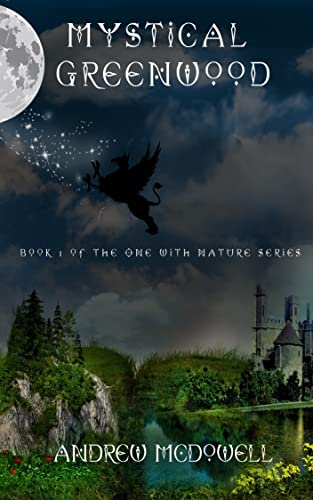
Dermot is a fifteen-year-old boy living in a remote village in the land of Denú. He has always longed for something more in his life. Now, everything changes after he sees a renowned creature–a gryphon–in the sky, and then crosses paths with a reclusive healer who harbors a secret.
Soon, he and his brother have no choice but to leave the only home they’ve ever known. They travel with new friends across the land through several great forests, along the way meeting an old man, a family of unicorns, and witnessing an important birth. They must evade fire-breathing dragons and dark-armored soldiers hunting them down, all serving an evil sorcerer determined to subjugate the kingdom, and who will stop at nothing to destroy them.
Denú’s only hope is if a renowned coven returns to face the enemy after years in hiding. Dermot, however, suspects their own role may be more significant than he thought, as he slowly discovers a power which exists amongst the trees and creatures of every greenwood. Can they save those they hold dear? Will Dermot find what he has sought? Or will all that’s free and good be consumed by darkness?
My review
Andrew McDowell has written an extraordinary fantasy tale which centres around the guardians of nature and the Greenwood, called driadors. The plot follows a typical good versus evil path, but the overlay of the protection versus the destruction of the natural environment was unusual, topical, and really fantastic.
Dermot and his brother, Brian, do not get on. Brian is the son who always does as he is asked by his parents and fits the mould of a pleaser, while Dermot is a dreamer and has always felt he was intended for more than his life as an apprentice blacksmith to his father. The rivalry between the two boys comes to a head when Dermot is carried away by a hunting gryphon. Dermot persuades the gryphon to drop him but he is injured during his fall. He wakes up in the care of a healer called Saershe, and her grandson, Ruairi. Dermot realises that they are not ordinary forest dwellers and, following his return home, he becomes obsessed with finding them again.
Brian becomes aware that Dermot has had some sort of unusual experience during his absence and uses this knowledge to stir up trouble for Dermot with their parents. Meanwhile, an evil force in the shape of a fallen driador called Taranis, is lurking just beyond the village, waiting for an opportunity to wreak havoc and destruction and restart an old battle against the driadors. Dermot and Brian will have to learn to trust and rely on each other, and harness the power of nature if they want to save the Greenwood, their friends, family, and themselves.
This is an unusual and well paced story with interesting characters, and these elements more than makes up for the odd moments in the book when Dermot and Brian’s emotional reactions to situations seem slightly lacking in depth or incongruent to the circumstances.
The author has great potential as a writer and I would love to read the next book in this series and find out what happens next in the battle for control between Taranis and the driadors.
Purchase Mystical Greenwood
Andrew McDowell Amazon Author Page
My review of As the World Burns: Writers and Artists Reflect on a World Gone Mad

What amazon says
As the World Burns: Writers and Artists Reflect on a World Gone Mad is an anthology of poetry, prose, essay, and art inspired by the unprecedented events of the year 2020. It embraces fierce and raw creative works relating to life during the Covid-19 pandemic, Black Lives Matter, Donald Trump, and the economic uncertainty and horror of the last eight months. One hundred and fourteen writers and artists spanning ten countries and 30 states are represented in this powerful volume. It is both a story of survival and an act of resistance.
“We speak with many voices, to the damage wrought in these violent, fevered months. Let us never forget or turn away, from what is just, what is necessary, to keep light alive in this world.”
My review
This is an interesting recording by numerous contributors, of the status of the world and society in the run up to the Covid lockdowns, and during the subsequent on-going pandemic. The writings, which comprise of mainly poetry, but also some essays and visual art pieces, also cover events that ran parallel to the lockdowns and pandemic that had an impact on society and politics.
Reading this anthology is an adventure as the messages are intense and vivid and the styles of writing hugely varied due to the significant number of contributors. Although not all the styles of poetry appealed to me, they were all memorable due to the strong emotional messaging, and well worth reading.
My favourite poems are as follows: Falls the Shadow by John W. Leys, I Think the Birds don’t Care by Kelsey Hontz (the words “Somebody has mixed up the two themes of apocalypse and paradise, which would be a fireable offense if anybody were still in the director’s chair for this year of hindsight.” really resonated with me.), Lately by L. Stevens, Quarantine by Andrew McDowell, Upon Waking in a Pandemic by Christine E. Ray, Choice Perhaps by Jane Dougherty, Thirteen Ways of Looking at Life before the Virus by Leslea Newman, Am I Angry? by John W. Leys, Virus by Erik Klingenberg (nightpoet), and Tumbling by Merril D. Smith.
Two of the essays, were particularly interesting to me. I-Soul-Ation by Dr. Sneha Rooh. The closing words of this essay have sadly not come to fruition, in my opinion:
“I would like to think that we will hug people longer, be grateful to be able to work, that we will smile brighter when the masks come off and we’ll let the smiles fully enter our hearts, that we will be careful abut the lies sold to us and remember that we are precious mortals with precious lives and an immense ability to connect and care.”
I am of the view, that the world has returned to its previous status quo with alarming speed and that as a species, we have learned nothing from the lockdowns and the pandemic.
The other essay I particularly enjoyed was Serendipity by Kim D. Bailey.
This book is an important documenting of life during this difficult and stressful time of life when the entire world united to face a common enemy. Sadly, we have still not learned our lesson, as I mentioned above, but perhaps some of us have found more courage to fight for a better eventual outcome for our planet and for humanity.
Purchase As the World Burns
About Robbie Cheadle

Award-winning, bestselling author, Robbie Cheadle, has published thirteen children’s book and two poetry books. Her work has also appeared in poetry and short story anthologies.
Robbie also has two novels published under the name of Roberta Eaton Cheadle and has horror, paranormal, and fantasy short stories featured in several anthologies under this name.
The ten Sir Chocolate children’s picture books, co-authored by Robbie and Michael Cheadle, are written in sweet, short rhymes which are easy for young children to follow and are illustrated with pictures of delicious cakes and cake decorations. Each book also includes simple recipes or biscuit art directions which children can make under adult supervision.
Robbie’s blog includes recipes, fondant and cake artwork, poetry, and book reviews. https://robbiesinspiration.wordpress.com/
Share this:

Book Review: Vanished on Vacation
Posted: January 13, 2023 Filed under: Book Review, Books, Crime, Review, Suspense, Thriller | Tags: Book Review, Jennifer Ruff, Suspense/Thriller, Vanished on Vacation, Writing to be Read 3 CommentsWhat they’re saying on Amazon
- “Fantastic book with many twists and turns!” – Alese M. Brockman
- “Jennifer outdid herself. Vanished on Vacation needs to be3 made into a movie.” – Kindle Customer
- “Suspense at its best” – Reita Pendry
The Book

As a frantic search for missing student Avery Jennings begins, everyone is hiding something—Avery’s family and friends, the resort’s staff, and its wealthy guests. It’s up to FBI Special Agent Victoria Heslin to dig deeper. Motivated by her own mother’s abduction years ago, she’s determined not to let Avery become another missing person statistic.
The Mexican authorities aren’t cooperating, and Victoria realizes she’s up against something more powerful than she imagined. Taking matters into her own hands, she plunges into a hellish ordeal that will test her strength and courage like never before.
“How much will you risk to find this girl?” the officer asked.
“Whatever it takes,” Victoria answered without hesitation.
Or is it already too late?
Purchase Link: https://www.amazon.com/Vanished-Vacation-Agent-Victoria-Heslin-ebook/dp/B09YJ79K6X/
My Review
Vanished on Vacation, by Jennifer Ruff, is a contemporary thriller that will keep readers on the edges of their seats. I didn’t want to put this book down. I was compelled to keep reading to the very last page.
Women disappear in Mexico all the time, but when a young American girl vanishes without a trace, folks tend to sit up and pay attention. Especially when she is the niece of one of the FBI’s top agents. That’s when agents Hiesling and Rivera are put on the case, and they will leave no stone in Mexico unturned to find young Avery, who disappeared on the last day of her vacation. But when the Mexican authorities suddenly turn cold and uncooperative, they get the feeling they’ve stumbled onto something bigger than just the kidnapping of one girl.
A thoroughly entertaining and suspenseful read. I give Vanished on Vacation five quills.
______________________________________________
Kaye Lynne Booth does honest book reviews on Writing to be Read in exchange for ARCs. Have a book you’d like reviewed? You can request a review here.
Share this:

2023 WordCrafter Short Fiction Contest is open for submissions
Posted: January 9, 2023 Filed under: Anthology, Dark Fantasy, Ghost Stories, Horror, Paranormal, Short Fiction, Speculative Fiction, Stories, WordCrafter, WordCrafter Press, Writing Contest | Tags: 2023 Short Fiction Contest, Dark Fantasy, horror, Paranormal, Short Fiction, Short Stories, WordCrafter Press, Writing Contest 8 Comments
I want your scariest paranormal, dark fiction and horror stories for the 2023 WordCrafter Short Fiction Contest. Make my skin crawl, my spine tingle, and my heart race. Keep me up at night. Make me leave the light on, just in case. Show mw your deepest, darkest fears. See submissions guidelines below.

Submission Entry Fee
Please submit entry fee here for your 2023 WordCrafter Short Fiction Contest submission here.
$5.00
Submission Guidelines
Genres: Paranormal, Dark Fantasy, Horror or any combination there of.
Length: up to 5000 words
Submission Deadline: April 30, 2023
Pay: Royalty share
Rights: First Anthology Rights and audio rights as part of the anthology; rights revert to author one month after publication; publisher retains non-exclusive right to include in the anthology as a whole.
Open to submissions from January 1 through April 30, 2023.
Submit: A Microsoft Word or RTF file in standard manuscript format to KLBWordCrafter@gmail.com.
If you don’t know what standard manuscript format is, review, for example, https://www.shunn.net/format/classic/
Multiple and simultaneous submissions accepted.
Find some helpful tips for submitting short fiction here, but mainly just follow the guidelines.
____________________________________________________
Join Kaye Lynne Booth & WordCrafter Press Readers’ Group for WordCrafter Press book & event news, including the awesome releases of author Kaye Lynne Booth. Get a free digital copy of her short story collection, Last Call and Other Short Fiction, as a sampling of her works just for joining
Share this:

Bowlesian! – Detective Robot and the Murderous Spacetime Schism
Posted: January 4, 2023 Filed under: Books, Bowlesian!, Excerpt, Fiction, Humor, Science Fiction, Short Fiction, Speculative Fiction, Stories | Tags: Bowlesian!, Humor, Jeff Bowles, Science Fiction, Short Fiction, Short Stories, Writing to be Read 2 Comments
Detective Robot and the Murderous Spacetime Schism
by Jeff Bowles
We found victim one face down in a giant vat of beer. Red beer, frothy, churning and roiling in blood. Not precisely the best brew of the batch, I knew, but I couldn’t help wonder what it might taste like on a mechanical tongue.
“Detective Robot,” said Officer Allen, a short, stocky, often uncharitable young fellow who always seemed to smell of cooked sausage. “I can’t believe they called you out for this.”
I formed my golden jointed lips into a pleasant smile. “Why wouldn’t they have called? Rain or shine, we always get our man.”
My partner and fellow investigation consultant, Gorilla Todd, beat his big furry chest and pulled his lips back over his teeth.
“Step back, beat cop,” he said in his deep, gruff voice. “Let the man work.”
Gorilla Todd was five hundred pounds of hyper-intelligent simian. He was a post-nuclear, neuro-enhanced military lab experiment, lots of those wandering Grim Land. Bit of a bruiser, to be sure, but an honest and a loyal one.
“Thank you, Gorilla,” I said. “Officer Allen, must we really?”
Allen snorted. “Boy oh boy, you fellas need to learn your place. Are we still short-staffed on actual detectives? What’d you do to get the call on this? Grease a few palms? Robots run on grease, don’t they?”
Point of fact, we run on million-core supra-processors the size of toenail trimmings. But I wouldn’t expect a technologic druid like Allen to know the difference. We got the call because the Chief appreciated our work and professionalism. She requested us by name; the place was ours for the next few hours.
“Why a fusion brewery?” I said, taking in our surroundings.
“People don’t die in fusion breweries?” asked Allen.
“Usually not fashion models, no,” said Gorilla. “Not in the middle of the night.”
“And certainly not old women dressed up like them,” I said.
Allen blanched at this.
“Old women,” he said, scratching his head as he turned to face the vat. “Holy cow! She’s gone all pruney in the lager.”
“Ale,” I said. “Shall you fetch the net or shall I?”
* * * * *
Fusion brewing, popularized at the dawn of the last nuclear holocaust, involves the high-speed collision of plutonium-rich barley nuclei with the nuclei of hops machine grown in the atomic soils found in the ancient ruins of Hackensack, New Jersey. The resulting photonic explosion produces a bubbly, effervescent ale, light on the tongue, but with just enough zing to potentially threaten male fertility (as all nuclear beverages should).
Zippy Beer, or rather, Zippy Beer’s northeast production plant, did seem a rather strange place for homicide. Zippy was known throughout Grim Land as the safest, most environmentally conscious nuclear beer on the market. Fifty years without a tainted batch, their ocu-tisements often declared. Fusion belchers spat florid ale, sluicing through sloshers, roaring down pipeways, collecting and aging in anti-grav refrigeration closets.
I studied Allen carefully. He looked tired and overworked.
“I swear to God, she was young when I found her,” he said.
“Sure she was,” Gorilla Todd chuckled. “Makes all the sense in the world. Hey, mac, you been smokin’ them funny cigarettes?”
I tapped my chin with platinum fingers and examined the poor old dead dear. We’d pulled her from the vat and sprawled her out on the tiled factory floor. I searched and picked at her with the robo-pincers I used for toes.
“You’re having us on, aren’t you Officer Allen?” I said. “You see that high, high ceiling all those many meters up above? See how there’s no skywalk, no roof access?”
“Yeah?” said Allen.
“Now do you see this is the last vat in the line? Eleven vats down that way, but here, just the one. No ladder, either. Do you see?”
Gorilla Todd jumped to his feet and waved an arm over his head. “I know this one, robot! I know it!”
I nodded at him agreeably and opened up my chest slot with a bleep, bleep, bleep, CLACK. A high-protean banana cube flopped out and jiggled on the factory floor like jelly. All five-hundred pounds of Todd landed on it and gobbled.
“She materialized in the beer,” he said, smacking his lips. “And she aged on the spot. Some kind of schismatic time disruption, I think.”
“Very good, Gorilla,” I said. “You see, Officer Allen, once you have eliminated the impossible, whatever remains, however improbable, must be the—”
A hole tore open in the air above us. It went Riiiip, and then it stretched itself wide in a kaleidoscopic clash of colors and voices. Abraham Lincoln, the sixteenth President of the United States, fell through and landed on Officer Allen with a heavy thud.
Gorilla Todd shouted, “Holy cannoli! Who is that?”
“It’s Abraham Lincoln,” I said. “And he’s been shot!”
I checked my tertiary memory banks to be sure. The beard, the hat, it was Lincoln, all right. Bullet wound in the back of the head. He wasn’t dead yet. Eyes fluttering, gasping, but not dead yet. He’d arrived only moments after his famous assassination. Remarkable. His body aged on the spot, grew older by the second. Wrinkles, thinning skin, hair gone long, gray, brittle.
Allen wheezed like strangled bagpipes. He gave a final stifled groan, then he lay his head back, twitched, and went limp. I rushed over and checked him for a pulse.
“He’s dead, Gorilla,” I said. “The Great Emancipator snapped his neck.”
“Hmph. Don’t look too great to me.”
“Granted, though I’m certain he’s not at his best. Struck down by a cowardly actor. That’s democracy for you. What precisely are we dealing with, Gorilla?”
“Black magic?” said Todd.
“Doubtful.”
“Sinister Martian technology?”
“Highly unlikely, though you earn top marks for making me chuckle. No, Todd, our suspect resembles nothing so much as thin air.”
“What do you mean?”
I walked over to another vat and kicked at the release valve until golden nuclear beer gushed out and sprayed my feet. Bending low under the faucet, I proceeding to fill my robot super stomach with hoppy ale.
My jointed fingers tapped a supple syncopated rhythm on my forehead. Performed a million mental processes. A million plus fifty. The span of a single human heartbeat.
“Eureka!” I exclaimed. “The cause of the murderous spacetime schism is—”
Rather out of the blue, a naked caveman came screaming at us from the shadows. He shouted, “Gooba! Blabba!” and then proceeded to club me over the head with a tree branch.
“Ouch!” I shouted. “Help me, Todd, you great galoot!”
Gorilla Todd ripped the branch away and roared a mighty challenge. The caveman roared back. His skin rippled with flash wrinkles, hair going brittle and gray, just like Lincoln’s. Hearty fellow, he attacked Todd, ripped out a chunk of gorilla hair and fish-hooked my simian companion.
“You rotten mook!” Gorilla shouted, caveman fingers sliding in and out of his mouth. He wrapped his meaty hands round the caveman’s throat and began to throttle the poor fellow.
“Gorilla, no!” I said.
Five new holes ripped open in the air above us. One long, continuous Riiiip, and that same kaleidoscopic clash. Out of the holes fell a cute orange kitten, a young renaissance painter, a popular ancient professional football quarterback, a potted cactus, and lastly, Richard Milhous Nixon.
Nixon crumpled to the ground, got one look at Lincoln and shrieked, “Jesus Christ! What happened to that poor bastard?”
All of them aged. The kitten grew, got fat, got skinny, and died. The renaissance painter, fingers covered in vibrant red and green oils, said something in Italian about unfinished masterworks, choked on his tongue, and summarily expired.
“We gotta do something, Robot!” said Todd, still choking the dwindling, gasping caveman.
“Do what?” I said. “And stop choking that caveman!”
Nixon died screaming, gurgling, clawing at the air.
“Todd,” I said, “we have to dump the beer!”
“The beer?” said Todd.
“It’s a bad batch! It must be. There’s no murderer here. Tainted Zippy Beer has caused a schism in space and time!”
Seven more air holes ripped open. From them dropped a sea bass, the Marquis de Sade, two members of a light contemporary jazz quartet, an earth worm, Eddie Murphy, and a two hundred twenty-five foot tall California redwood tree.
The redwood thudded to the factory floor, split the concrete, rose and sprawled, broke through the high white ceiling. The factory lights flickered. Ceiling chunks rained down on us.
“The beer, Todd! Dump it!”
Todd let go the shriveled caveman. He leapt for the redwood, scaled its trunk hand-over-hand. He braced himself against the vat, pushed at it with all his might.
“It won’t budge!” he said.
Three more air holes ripped open. A snail, a circus elephant, a street vendor holding tacos.
Think. Think.
I tapped a rhythm on my forehead.
“Eureka!” I exclaimed.
I leapt for the tree, climbed for a branch, squared my shoulders, and then I dove into the beer.
In haste, I began to drink it, slurp it all up. My robot super stomach swelled. Five hundred gallons. Seven hundred, a thousand. The roiling, bloody fashion model beer, it washed down my throat at a hundred-thousand PSI. Rushing, roaring through my alloy sternum. My body rocked and strained. I groaned like industrial machinery.
“It’s working, Robot!” said Todd. “The holes are slowing down!”
A riip here, small rip there. And then it stopped.
Bodies grew old and died; the redwood rotted, split. Half fell and crushed the factory wall. In rushed the night air, our arid post-nuclear wind. Our city out there—Grim City One—twinkled like starlight. Bricks and heavy steel beams and girders fell all around us. Clouds of dust lifted and lingered until well after relative stillness had filled the factory.
Gorilla Todd gasped from exertion. He stumbled down from the remnants of the redwood and sat against its trunk, eyeing the bodies, all the destruction.
“You did it, Robot,” he said. “You’re a friggin’ genius, you know that?”
Of course I knew. I also knew I was big as a house. Big like a beer vat and just as full. Body engorged, I looked like a head swimming in sea of scrap metal, jammed into the vat like some kind of sardine.
“Tainted spacetime-schismatic beer,” I wheezed. “I might have known! Perhaps a super-accelerated atomic contaminant—a mutation in the solitary photosynthetic apparatus, for instance—exceeded localized time dilation barriers and generated contiguous Einstein-Rosen pathways. And to think, Albert Einstein believed time was non-real!”
“Erm, Ein-who?” said Todd.
“Call in a containment unit, Gorilla. Call in the best they’ve got. And get the Chief down here, too. I fear, Todd, our troubles are just beginning.”
Gorilla Todd huffed. He pondered a moment, and then his thick brow lifted as realization dawned.
“Oh no,” he said. “You don’t mean….”
“Precisely,” I replied. “In approximately thirty-nine minutes, I will have to void my robo-bladder like a racehorse. The game, as they say, my dear Gorilla Todd, is afoot.”
END

Jeff Bowles is a science fiction and horror writer from the mountains of Colorado. The best of his outrageous and imaginative work can be found in God’s Body: Book One – The Fall, Love/Madness/Demon, Godling and Other Paint Stories, Fear and Loathing in Las Cruces, and Brave New Multiverse. He has published work in magazines and anthologies like PodCastle, Tales from the Canyons of the Damned, the Threepenny Review, and Dark Moon Digest. Jeff earned his Master of Fine Arts degree in creative writing at Western State Colorado University. He currently lives in the high-altitude Pikes Peak region, where he dreams strange dreams and spends far too much time under the stars. His latest novel, Resurrection Mixtape, is available on Amazon now.
Share this:

WordCrafter News
Posted: December 26, 2022 Filed under: Anthology, Book Event, Book Promotion, Book Release, Books, Dark Fantasy, Fiction, Ghost Stories, Historical Fiction, Horror, Kickstarter, Paranormal, Short Fiction, Stories, Western, Women's Fiction, WordCrafter News, WordCrafter Press, Writing Contest 8 Comments
Delilah‘s Kickstarter campaign

I’m gearing up for the Kickstarter for Delilah and the Women in the West adventure series which starts on January 2, and runs through the whole month. This is a special project for me, because Delilah was my first completed novel, and she helped me to discover my love of writing in historic western settings. Originally published with Dusty Saddles Publishing, this WordCrafter Press edition has been revised and reverted back to the original story as a part of this wonderful western historical women’s fiction, with each book featuring appearances of historical female characters and strong female protagonists.
You can learn what all the excitement is about by visiting my pre-launch page, which will be the campaign headquarters once we launch. It runs through the whole month, from the 2nd to the 31st, and we have some great rewards and add ons available for you for your support, including copies of the ebook, signed copies of the print book, some of my short fiction in PDF and audio forms, an interview with Delilah’s character facilitated by Sara W. McBride, and a chance to name a character in Sarah, book 2 in the series, which will be scheduled to release in 2024. Please take a look at the pre-launch page and sign up for notificaation upon launch.
https://www.kickstarter.com/projects/kayelynnebooth-wcp/delilah-women-in-the-west-adventure-series
And of course, I hope you will also support the campaign once it goes live. This is my first Kickstarter campaign, and I really want it to go well. My goal is $500 and I think I have a good chance of funding it. Any support you are willing to give will be greatly appreciated.
Blurb
Her homecoming from prison quickly turns into a quest for vengeance when she is brutally raped and left for dead, and her fourteen-year-old ward is abducted. Sheer will and determination take this tough and gritty heroine up against wild beasts of the forest, Indians and outlaws to Leadville, Colorado.
Can the colorful inhabitants of the Colorado mining town work their way into Delilah’s heart, offering a chance for a future she thought she’d lost along with her innocence?
If you like strong and capable female protagonists, you’ll love Delilah.
2023 Contest Theme Revealed
On January 1st, the 2023 WordCrafter Short Fiction Contest will be open for submissions. I grew up on Stephen King, Dean Koontz, Peter Straub, Jonathan Kellerman, and John Saul, so for the 2023 contest, I want you to send me your scariest tales in the horror, dark fantasy and paranormal genres, with a 500 word limit. The winning story recceives a $25 Amazon gift card and and inclusion in the 2023 anthology.
Submission Guidelines
Genres: Paranormal, Dark Fantasy, Horror or any combination there of.
Length: up to 5000 words
Submission Deadline: April 30, 2023
Pay: Royalty share
Rights: First Anthology Rights and audio rights as part of the anthology; rights revert to author one month after publication; publisher retains non-exclusive right to include in the anthology as a whole.
Open to submissions from January 1 through April 30, 2023.
Submit: A Microsoft Word or RTF file in standard manuscript format to KLBWordCrafter@gmail.com
If you don’t know what standard manuscript format is, review, for example, https://www.shunn.net/format/classic/
Multiple and simultaneous submissions accepted.
Find some helpful tips for submitting short fiction here, but mainly just follow the guidelines.
__________________________________________________________________
Join Kaye Lynne Booth & WordCrafter Press Readers’ Group for WordCrafter Press book & event news, including the awesome releases of author Kaye Lynne Booth. Get a free digital copy of her short story collection, Last Call and Other Short Fiction, as a sampling of her works just for joining.
Share this:

Book Review: The Necromancer’s Daughter
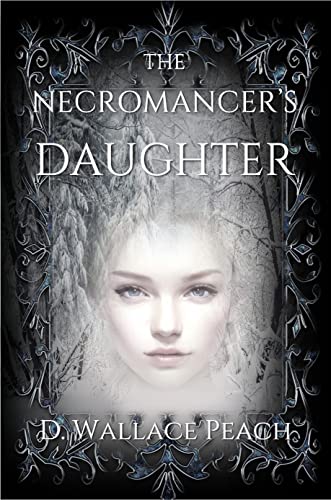
Posted: December 23, 2022 Filed under: Book Review, Books, Dark Fantasy, Fantasy, Fiction, Review | Tags: Book Review, D.Wallace Peach, Dark Fantasy, The Necromancer's Daughter, Writing to be Read 6 CommentsThe cover for The Necromancer’s Daughter, by D. Wallace Peach is what first caught my eye. It promised an intriguing world, perhaps a winter wonderland, and at least one interesting character and of course, I just had to read the book. And I was glad that I did. This story is a skillfully chrafter hero’s journey, the protagonist thrown into an unfamiliar role which she hadn’t asked for with an objective that seems impossible to achieve.
Denied a living heir, the widowed king spies from a distance. But he heeds the claims of the fiery Vicar of the Red Order—in the eyes of the Blessed One, Aster is an abomination, and to embrace the evil of resurrection will doom his rule.
As the king’s life nears its end, he defies the vicar’s warning and summons the necromancer’s daughter. For his boldness, he falls to an assassin’s blade. Armed with righteousness and iron-clad conviction, the Order’s brothers ride into the leas to cleanse the land of evil.
To save her father’s life, Aster leads them beyond Verdane’s wall into the Forest of Silvern Cats, a wilderness of dragons and barbarian tribes. Unprepared for a world rife with danger and unchecked power, a world divided by those who practice magic and those who hunt them, she must choose whether to trust the one man offering her aid, the one man most likely to betray her—her enemy’s son.
Purchase Link: https://www.amazon.com/Necromancers-Daughter-D-Wallace-Peach-ebook/dp/B0B92G7QZX/
My Review
The Necromancer’s Daughter, by D. Wallace Peach, is an exceptionally well crafted dark fantasy story, with well developed characters and a wonderfully crafted world of haves and have nots, with most fearing what they don’t understand. Peach has constructed a segregated world, where those of like kind are seperated and sadly, misunderstood. Into this world, she injects Aster, a reborn princess, raised as the necromancer’s daughter, since those who have been healed of death are not widely accepted in the mountains of Blackrock.
But when the King Aldring is murdered, leaving no other heir, the Vicar of the Red Order will do anything he can to prevent Aster from claiming the throne, including blaming the necromancer for the King’s murder, and sending she and her father into hiding. Her father is all she has in the world, and she flees to her mother’s people in the neighboring kingdom, in order to save him. In the strange land of Catticut’s forrest, with foes on all sides, Aster makes new friends in unlikely places, as she makes her way to her uncle, the King of Blackrock to make her plea, and hopes beyoond hope that he will aide her in rescuing her father.
I was totally engaged with Peach’s characters and completely emmersed in her world. I give The Necromancer’s Daughter five quills.
__________________________________________________________
Kaye Lynne Booth does honest book reviews on Writing to be Read in exchange for ARCs. Have a book you’d like reviewed? You can request a review here.
Share this:

Writer’s Corner: Great Beginnings
Posted: December 19, 2022 Filed under: Anthology, Beginnings, Books, Excerpt, Fiction, Short Fiction, Stories, WordCrafter Press, Writer's Corner, Writing | Tags: Excerpts, Julie Jones, Kaye Lynne Booth, Leah Cutter, Roberta Eaton Cheadle, Story beginnings, Visions, Writer's Corner, Writing to be Read 2 Comments
Some opening lines are so well known as that the story can be identified just by them and nothing more.
- “Call me Ishmeal.” – Herman Melville, Moby Dick, 1851
- “It was the best of times, it was the worst of times, it was the age of wisdom, it was the age of foolishness, it was the epoch of belief, it was the epoch of incredulity, it was the season of Light, it was the season of Darkness, it was the spring of hope, it was the winter of despair.” – Charles Dickens, A Tale of Two Cities, 1859
- “It was a bright cold day in April, and the clocks were striking thirteen.” – George Orwell, 1984, 1949
Memorable opening lines like these are strokes of brilliance on the part of the authors, perhaps with a little luck and a bit of literary magic mixed in. But for the common author, the trick is to find the best opening possible, especially with the growing numbers of books and authors that are out there competing for readers. We need to find words that will make our work shine above the rest, words that will catch readers attention and draw them into the story, words that will be unique and memorable.
The beginning of a story can serve many purposes, only one of which is giving us a place to start. The opening sentences of paragraphs also need to draw readers’ interest, stirring questions that will make them want to read further, but they can also introduce the characters or offer a senseof place and time with vivid descriptions of setting. All my life I’ve heard about how important the opening lines of a story are, but it never really took root until I compiled five short fiction anthologies over the past two years.
My regular readers will remember that I sat on the editorial team for the Gilded Glass anthology and compiled a volume of Weird Tales to earn my M.A. in publishing. For new readers, who don’t know the story, we had over 600 submissions to comb through for Gilded Glass, and toward the end of the initial readings, if the beginning didn’t grab me right away, it was gone. There were just too many submissions to waste time on ones that I couldn’t engage with from the very beginning. This was rather painful for me, believe it or not, because I knew there were probably some good stories in there that just needed to be reworked a bit to become gems, and I didn’t have the time, or energy to find them.
On the other side of things, there were so many really good stories submitted that there was no way we could include them all, so many of the stories I truly loved didn’t make it into the anthology, and I felt it was a shame to have to turn them all away, so I kept a list of stories that I had fallen in love with, and after the final selection for Gilded Glass were made, I invited each author to have their stories included in a WordCrafter Press anthology. Not all of the authors accepted my offer, but enough did that I had material for three anthologies, and Once Upon an Ever After, Refracted Reflections, and the Visions anthologies were born.
Although I’ve strayed a bit in telling you all this, my point was that many of the stories included in those three anthologies got there because they had beginnings that were good enough to make me continue reading. Let me share with you three of my favorite story beginnings from the Visions anthology.
“I followed the two men down the beach for over an hour before I realized they were kidnapping me. I noticed howm far we’d strayed when the sun touched its reflection on the Carribean horizon, forming a perfect figure eight that shot rays of gold in all directions. The failing light and my primitive camera meant an end to the day’s photo shoot, so I decided to let them take me.
Julie Jones – “Tourist Trap”
“Tourist Trap” is one of my favorites because it not only does a great job of giving me a sense of place with its setting description, but also leaves me with several questions, which now must be answered because my curiosity has been picqued. The nonchallant delivery of the words gives the impression that our character is not concerned by what most people would consider to be unusual, and maybe even alarming, circumstances. Why? Come on. Be honest. Now that you’ve read the above paragraph, don’t you just need to read more?
“He came toward her. His body moved lithely and confidentely, muscles rippling under tight-fitting jeans and white T-shirt. Thick, black hair covered his well-shaped head with its tawny skin and lightly stubbled jaw.
She peeped at his eyes. Those mysterious eyes she’d heard about. Her stomach dropped, lips numbed, and a strange ringing started in her ears.His eyes shone amber in the late afternon sun, like a predator before the kill. Even if she hadn’t known who and what he was, those awful eyes with their many sides like a diamond, would have filled her with terror.”
Roberta Eaton Cheadle – “The Bite”
This visceral opening comes from the winning story from the 2022 WordCrafter Short Fiction Contest, “The Bite”, which is feaatured in the anthology. It sets the tone for the story, while offering hints about the characters, and stirring up just enough questions to make readers want to know more. Cheadle describes some very unusual eyes, and hints that this character is more than what he appears to be here. Who is this guy?
“I was staring out across the darkness of space, ignoring my hunger and isolation, when an alarm blared, startling me out of my meditations. I pulled my thoughts from where they’d wandered, sinking once again into my real-time brain, just as I pulled in my two-dozen tentacles in toward my body. Instead of presenting a sprawling mass, I was now a streamlined bullet.”
Leah Cutter – “The Survivor”
The opening for “The Survivor” offers up a lot of information about the setting and situation, and enough about the character to make readers curious, and make them want to read more. Who is this lone character in space? Obviously not a human. Why is the alarm blaring? Has Cutter picqued your curiosity as much as she did mine?
It wouldn’t be fair to use the openings of others without taking a look at one of my own, so let’s take a look at my contribution to the Visions anthology, as well. My story was “If You’re Happy and You Know It”, which was originally published in The Collapsar Directive anthology, by Zombie Pirates Publishing in 2017. Give it a look and see if you think I did my job well with this opening.
“The way everyone was acting, you’d think it was a crime to be happy. And looking back, maybe it was, or at least, it might as well have been.
I think it started on a Saturday, or maybe a Sunday, so no one really noticed at first, including me. Everyone had recieved their regular allotment of S-Dopa for the weekend, so if they noticed anything, they would have assumed I’d just recieved a double dose, which didn’t happen often, but it did happen. On Monday however, when I sang along with the radio which ws always playing in the background at the computer factory as we slaved away everyday, the others gave me sidelong glances, as if, perhaps, I’d lost my mind.”
Kaye Lynne Booth – “If You’re Happy and You Know It”
You can hear an audio excerpt from this story here: https://youtu.be/2X-7XiL3uHg or you can purchase a copy of Visions here: https://books2read.com/u/49Lk28
Which beginnings make YOU want to keep reading? I invite you to share your favorite beginning in the comments below. It will make it more of a conversation, (as Joanna Penn says).
________________________________________________

For Kaye Lynne Booth, writing is a passion. Kaye Lynne is an author with published short fiction and poetry, both online and in print, including her short story collection, Last Call and Other Short Fiction; and her paranormal mystery novella, Hidden Secrets. Kaye holds a dual M.F.A. degree in Creative Writing with emphasis in genre fiction and screenwriting, and an M.A. in publishing. Kaye Lynne is the founder of WordCrafter Quality Writing & Author Services and WordCrafter Press. She also maintains an authors’ blog and website, Writing to be Read, where she publishes content of interest in the literary world.
_________________________________________________
Join Kaye Lynne Booth & WordCrafter Press Readers’ Group for WordCrafter Press book & event news, including the awesome releases of author Kaye Lynne Booth. Get a free digital copy of her short story collection, Last Call and Other Short Fiction, as a sampling of her works just for joining.




















