Dark Visions: A Horror Anthology You Won’t Want to Miss
Posted: October 12, 2018 Filed under: Book Review, Books, Dark Fantasy, Fiction, Horror, Paranormal, Speculative Fiction, Stories | Tags: Book Review, Dan Alatorre, Dark Visions, horror, Short Fiction 27 Comments
October is the month for scary things, and a horror anthology filled with spine chilling short stories from over thirty authors is the perfect read for the season. The release of Dan Alatorre’s compilation of Dark Visions anthology is October 15th, and you won’t want to miss it. In addition to a wonderfully original and entertaining prologue, and his own story, “The Corner Shop”, Dan has lined up a slew of writing talent to include in this tomb of short horror tales.
Not only does this anthology have a very cool cover, (Check it out above), but it also has some very well crafted short fiction, some that will stay with you in times to come. These shorts cover a wide spectrum of horrors; nightmares, voodoo, vampires, apparitions and spirits, and even demons. The stories found here prey upon your inner fears, making brief little ditties from the stuff of nightmares.
None of the stories I read from this collection would rate less than three quills, meaning even the mediocre stories are pretty good. Among my favorites are “The Devil’s Hollow”, by Adele Marie Park; “Road Kill”, by Ernesto San Giacomo; “Behind the Leather Apron”, by Alana Turner; “The Bloody Dagwood Tree”, by Dabry Farmer; and “Ice Cream”, by Geoff LePard.
Not to say that other stories in this volume are not noteworthy. Many of these stories will keep you awake at night, including: “The Haunting of William”, by Robbie Cheadle; “Nightmare”, by Lori Micken; “Swimming”, by Frank Parker; “Lucifer’s Revenge”, by Christine Valentor; “What If”, by Geoff LePard; “Ghosts of Tupelo” by Sharon Cathcart; “Where the Black Tree Grows”, by M.D. Walker; “The Right Time to Move”, by Jennifer Ruff; “The Stranger”, by Allison Maruska; “The Storm”, by J.A. Allen; and “Spirit Lake”, by Sharron Connell.
I may be difficult to please when it comes to short fiction, because I like my stories to feel complete and often short fiction fails on those lines, but most of the tales in this collection did not fail to satisfy. Most of them were also a little creepy, which is essential when it comes to horror. And, did I mention it has a really cool cover? Put all of that together, and I give Dark Visions five quills.

Kaye Lynne Booth does honest book reviews on Writing to be Read in exchange for ARCs. Have a book you’d like reviewed? Contact Kaye at kayebooth(at)yahoo(dot)com.
Share this:

“The Affected”: A Tale of Horror
Posted: August 17, 2018 Filed under: Book Review, Books, Dark Fantasy, Fiction, Horror, Speculative Fiction, Suspense | Tags: Book Review, Demons, horror, James McNally, The Affected Leave a comment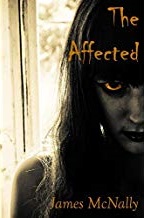
There’s nothing like a good horror story. The Affected, by James McNally is a tale of horror straight from the pits of hell. This story is not for the feint of heart due to the heineous acts contained within.
Random town’s people are vanishing, or being murdered, but whatever is going on, there won’t be any town left if someone doesn’t figure it out and put a stop to it, and soon. And then there is the strange man in white who has been appearing to some residents and seems to be stalking them, there one moment and gone the next. The mystery unravel, but can this demonical surge be stopped before there is no one left?
Although I found a few logic flaws throughout, the story is so well plotted, overlooking them came easy. A plot worthy of the classic horror tales. I give The Affected four quills.

Kaye Lynne Booth does honest book reviews on Writing to be Read in exchange for ARCs. Have a book you’d like reviewed? Contact Kaye at kayebooth(at)yahoo(dot)com.
Share this:

“Kind Nepenthe”: You gotta love a good horror story
Posted: April 13, 2018 Filed under: Book Review, Books, Fiction, Horror | Tags: Book Review, horror, Kind Nepenthe, Matthew V. Brockmeyer 1 Comment
Anyone who knows me, knows that there’s nothing I love to read more than a really good, low-down scary horror story. For me, a good horror story is one that you can’t set down, even though it scares the bejesus out of you. I remember one night when when I was fifteen and I was baby sitting a couple of kids for a mother who worked nights, and I happened across a book called The Shining. After the kids were in bed, the dishes done, and the apartment picked up, I sat down to read the book I had found on the coffee table, and read it, I did. I called and woke my mother up at two a.m. and asked her to talk to me for a little while, because I was scared and hearing noises. My mom was the best, and she talked to me for almost twenty minutes, until I felt like I could once more keep it together. When we hung up, I went back to the couch, picked up The Shining again, and read the rest of the night away. I finished the book in one night, almost in one sitting. It scared the holy crap out of me, but I had to find out what happened. That, to me, is what a good horror story is all about.
Kind Nepenthe, by Matthew V. Brockmeyer turns the hills of Northern California into a place to be feared. This skillfully crafted story takes readers inside California’s drug culture, and behind the scenes of a marajuana grow to find more lurking there than sex, drugs, and rock and roll. A kind of darkeness falls deep in the forests of Humboldt County, a darkness that grabs ahold and doesn’t let go, a darkness that ends in murder, over and over again.
Looking for peace and sustainability for herself and her daughter, Rebecca goes along with her boyfriend, Calendula, in playing plant caretaker for the grow of her friend Coyote in order to get the needed money to buy them a place and live off the land. But, she gets so much more than she bargained for and in time, she doesn’t even recognize herself or Calendula as the evil of Homicide Hill grips them in clenched fists and won’t let go.
Brockmeyer does a good job of building suspense and allowing readers to feel the fear – one sign of a well-crafted horror story. He did an excellent job of keeping me focused and on track, except in one instance where he tried a method of re-direction that just didn’t work for me, but I found instead, a bit confusing. In spite of that, Kind Nepenthe is a kind of scary that is so believable, it might be the scariest of all. And I have to give him kudos for coming up with an original title that will stand out for search engines and may carry him to the top of the rankings. I give it four quills.

Kaye Lynne Booth does honest book reviews on Writing to be Read in exchange for ARCs at no charge. Have a book you’d like reviewed? Contact Kaye at kayebooth(at)yahoo(dot)com.
Share this:

“Undercurrents”: More Than Just a Collection of Tales From the Deep
Posted: February 2, 2018 Filed under: Book Review, Books, Horror, Stories | Tags: Book Review, Monsters, Sea Monsters, Short Fiction, Short Stories, The Deep, Undercurrents Leave a comment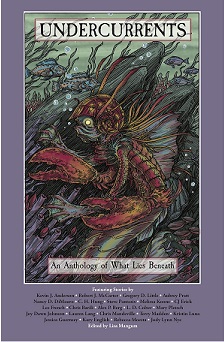
The twenty-three stories in Undercurrents are all about the mysteries of the deep, but beyond that they are as varied as it gets. Master story telling weves tales about monsters who dwell in the ocean depths and send chills down your spine. The monsters featured range from those of legendary status to those of the fantasy realm: krackens; sea dragons in Guardian of the Sea, by Kristin Luna; sirens in The Old Man and the Sea Siren, by Steve Pantazis; fairy horses in In the Water, by Jessica Guernsey; mermonsters in All Yours, by Melissa Koons; and the underwater cat in Underwater Cats, by Mary Pletsch – to those that are unidentified, as in Cold, Silent, and Dark, by Kary English; or spring from the recesses of the human mind, to inanimate objects as innocent as a pair of bookends in Bookend, by Chris Mandeville.
The points of view presented are varied, as well. As a reader, I was allowed to glimpse through the eyes of both hunted and hunter, getting the unusual P.O.V.s of things like a kracken in The Kraken’s Story, by Robert J. McCarter, a siren in The Siren’s Song, by Aubrey Pratt, a dragon in The Sea Dragon’s Tale, by Nancy D. DiMauro and a puffer fish in Mandala, by Jody Lynn Nye.
The stories in this collection explore more than just the waters of the deep. Sea Wind, by Kevin J. Anderson explores the idea of losing a brother to the sea. Four Billion Years of Solitude, by Alex P. Berg explores the oceans of distant planets. Eat Me, by Lauren Lang explores a revelutionary weight loss system involving antipods harvested from the sea. Songs to Sing and Stories to Tell, by L.D. Colter explores saying good-bye, and Lure, by Joy Dawn Johnson explores the connection between twins, and Sea Dreams, by Rebecca Moesta and Kevin J. Anderson explores the ties between friends. To Become, by C.J. Erick explores facing the unknown, while In the Garden of the Coral King, by C.H. Hung explores facing one’s own fears, and A Marsh Called Solitude, by Gregory D. Little explores self-sacrifice and altruism.
My personal favorites include Teens Teach Tech, by Terry Madden, where a teen tries to help an old woman face her fears of the past; Heroes of the Russian Federation, by Chris Barili, where an experimental bio-weapon escapes and goes out of control; and High Seas Burning, by Lee French, where the real monsters are of the human variety.
Best of all, all proceeds from this anthology go to the Don Hodge Memorial Scholarship to help students without the financial means to attend the Superstar Writing Seminar, a seminaar that addresses the business end of writing. The Superstars have been putting together anthologies, along with seminar attendees since 2015. Undercurrents is the fourth anthology to result from the Superstar Writing Seminar. In more ways than one, the Superstar Writing Seminar is quite special and the recipient of a scholarship is fortunate indeed.
News of this seminar was exciting to me because so many writing courses or workshops focus on the craft of writing and ignore the fact that there are some business skills required in order to be a successful writer. I’ve heard many authors gripe about not realizing they had to have marketing skills as well as writing skills, or complaining about the time they must put into marketing that could be used to write instead. The line-up of Superstars who offer their expertise include Kevin J. Anderson, David Farland, Eric Flint, Rebecca Moesta, James A. Owen and Brandon Sanderson. Each year they have additional guest instructors, chosen from the creme de la creme of the publishing industry. They all share their knowledge and expertise during the annual seminar, which is held in Colorado Springs, Colorado.
Well-crafted stories fill this anthology exploring the ocean depths and the depths of the human mind in Undercurrents, an anthology created by master story tellers. I give it four quills.

Kaye Lynne Booth does honest book reviews on Writing to be Read in exchange for ARCs at no charge. Have a book you’d like reviewed? Contact Kaye at kayebooth(at)yahoo(dot)com.
Share this:

“Something Borrowed, Something Blue” Will Chill Your Bones Through and Through
Posted: July 14, 2017 Filed under: Book Review, Books, Fiction, Horror | Tags: Book Review, DeAnna Knippling, horror, Something Borrowed Something Blue Leave a comment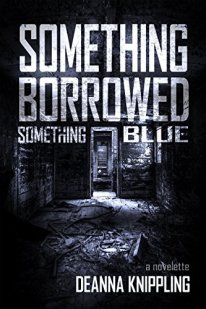
As rare as it is these days to find a truly well written horror story which draws the reader in and gets a grip, Something Borrowed, Something Blue, by DeAnna Knippling was a pleasant surprise. This novelette gives off a feeling that something ugly lies just below the surface, something that we can’t quite see, but the feeling says that the situation will not end well, and in that we are not disappointed. In the fashion of classic horror, this story makes readers want to say, “No! Stop!” even when it’s clear that events have already been set in motion and there is no turning back.
Sometimes being prepared isn’t the best policy, especially when you’re faced with something no one could be prepared for; something unimaginable that makes the skin crawl, yet demands action. Something Borrowed, Something Blue makes a connection with readers because it’s a situation they can place themselves in, if only in the dark recesses of their minds. Sometimes, that’s where the monster’s dwell which we fear the most. The story’s resolution may leave readers with more questions than answers. This is the kind of story that makes you think, maybe for a long time, after you read it.
Something Borrowed, Something Blue is a well-crafted tale that honors great story telling tradition by capturing readers and not letting them go until long after they’re finished with the story. I give it five quills.

Kaye Lynne Booth does honest book reviews on Writing to be Read in exchange for ARCs at no charge. Have a book you’d like reviewed? Contact Kaye at kayebooth(at)yahoo(dot)com.
Share this:

Interview with author DeAnna Knippling
Posted: April 17, 2017 Filed under: Author Profile, Books, Fantasy, Fiction, Horror, Publishing, Science Fiction, Self-Publishing, Speculative Fiction, Writing | Tags: Author, DeAnna Knippling, Interview, Profile, Publishing, Self-Publishing, Writing 1 Comment
This week, I’m interviewing Colorado freelance writer, editor, author and book designer, DeAnna Knippling. I first met DeAnna through the Pike’s Peak Writers when I was still serving as the Southern Colorado Literature Examiner. What struck me about her was her enthusiasm and willingness to help where ever she can. She treats her writing as a business and goes at it with a high degree of professionalism, yet she is personable and willing to share what she’s learned from her own writing experiences.
DeAnna Knippling writes science fiction, fantasy, horror, crime, and mystery for adults under her own name; adventurous and weird fiction for middle-grade (8-12 year old) kids under the pseudonym De Kenyon; and various thriller and suspense fiction for her ghostwriting clients under various and non-disclosable names. Her latest book, Alice’s Adventures in Underland: The Queen of Stilled Hearts, combines two of her favorite topics–zombies and Lewis Carroll. It’s the story of a tame zombie who told a little girl named Alice a story that got them both in more trouble than they could handle. Her short fiction has appeared in Black Static, Penumbra, Crossed Genres, Three-Lobed Burning Eye, and more.
Kaye: You created Wonderland Press to get your books out there. What all is involved in creating a press for your work and what are the advantages of doing so? I mean, why would an author do this rather than just throwing their book out on Amazon or Smashwords?
DeAnna: This isn’t one of the fun answers. It’s stupid easy to make a “press.” It involves no special equipment. You look online, make sure nobody else has one of that name in your state, register a business name with your state or county (look up, “How to register a business name in [name of state]”), and Bob’s your uncle. You might want to get more complex with an LLC or something–but I recommend leaving that for later, unless you already have experience doing that. I am, of course not a lawyer and can’t give legal advice. When you want to start looking at an LLC or corporation, I believe, is when you start having to worry about taxes and tax brackets.
DeAnna: Just keep working. Everybody’s in a hurry to succeed. Success! Millions! Riches! Fame! But, in the end, it comes back to the basics. Did you read? Did you write? Did you learn something? Did you talk to other people in the writing community?
Like this post? Subscribe to Writing to be Read for e-mail notifications whenever new content is posted.
Share this:

“Fear and Loathing in Las Cruces”: A short fiction collection that’s full of surprises
Posted: April 14, 2017 Filed under: Book Review, Books, Fiction, Horror, romance, Speculative Fiction, Stories, Western | Tags: Book Review, Fear and Loathing in Las Cruces, Jeff Bowles, Short Fiction, Short Story Collection Leave a comment
This week I’m pleased to review Fear and Loathing in Las Cruces – the latest collection of short fiction by my friend and colleague, Jeff Bowles. Since I know Jeff personally, I do admit to a certain amount of bias, but only because I truly admire the way this man crafts a story, so I went at this reading with a certain amount of anticipation. With Jeff, I never really know what to expect, but I always expect to be pleasantly surprised.
And, I was not disappointed. The stories found in this collection are original and unique, and the artwork is awesome.
The first story, Will of the West, has a good western flavor with a surprise ending. I truly enjoyed the vivid imagery of the lightning dance is Blue Dancing With Yellow, and Jeff’s story telling voice in Tumbleweeds and Little Girls nails the young girl’s POV. Four Heads, Two Hearts is a unique romance with its own unusual set of obstacles and a very interesting solution. The Fall and Rise of Max Ziggy is a reincarnation story of the feline kind.
Two of the stories deal with the topic of mid-life crisis, a topic that the author seems too young to know a lot about, but when you read these stories, us old foggies may find, or at least I did, that his interpretations are pretty spot on. Mid-Life Crisis: The Video Game defines the age of technology in a way the older generations can relate to, right down to the frustrations of dealing with voice activated responders which never seem to get our answers right. And, Jack Hammer’s Online Identity Crisis provides an online view of the mid-life crisis of a hit man that is sure to make you chuckle.
The collection also offers two ghost stories: Falcon Highway is a good, old fashioned ghost story running along the lines of an urban legend. And, Deadman’s Hand is a ghostly tale of being ‘spirited’ away.
All of the stories contained in Fear and Loathing in Las Cruces are well crafted and quite entertaining, and they all contain unexpected elements that Jeff Bowles makes to work in short story form. Each and every one carries the uniqueness that is Jeff Bowles style, making for an overall enjoyable read. I give it five quills.

Kaye Lynne Booth does honest book reviews on Writing to be Read in exchange for ARCs at no charge. Have a book you’d like reviewed? Contact Kaye at kayebooth(at)yahoo(dot)com.
Share this:

“Horror 101: The Way Forward” Offers Good Advice for Authors and Screenwriters
Posted: February 3, 2017 Filed under: Book Review, Books, Children's Books, Comic Hero, Dialogue, Fantasy, Fiction, Horror, marketing, Paranormal, Promotion, Publishing, Revision, Science Fiction, Screenwriting, Self-Publishing, Speculative Fiction, Stories, Writing, Writing Tips | Tags: Books, Fiction, horror, marketing, Poetry, promotion, Reviews, Stories, Story, Writing 1 Comment
This is the longest book review I have ever written. This book was so packed full of useful information for rising authors and screenwriters that I felt I needed to cover it all. If you are an upcoming horror author or screenwriter, trying to figure out how to get a foot in the door or where to start in the matter of launching your career, Horror 101: The Way Forward offers “career advice by seasoned professionals”. Different writers will find different essays useful, so I’m giving you a rundown on all the informative essays included.
Compiled by Crystal Lake Publishing, this collection of essays has something for every writer. The anthology features quotes from the masters such as Stephen King, Ray Bradbury, Isaac Asimov, J.R.R. Tolkien, Jack London, Clive Barker, H.P.Lovecraft, Edgar Allen Poe and many others. Advice from professional writers and editors covers all aspects of the horror writing business, and the business of writing, in general. From submitting your work, to marketing and promotion, to self-publishing and building your writing business, to crafting your work and the writing process.
The answers to many questions on the topic of submissions and all other aspects of writing as a business are found within its pages. Not getting positive response from your queries? First read Rejection Letters – How to Write and Respond to Them by award winning author Jason Bark, which offers an attempt to write a rejection letter that doesn’t sting, (at least, not so much). Then, flip to Seven Signs that Make Agents and Editors say “Yes!” to learn what agents and editors look for. Buttoning Up Before Dinner by horror author Gary Fry also offers advice to put you in the good graces of publishers and editors and create well-written stories.
Unsure how to submit your work? Submitting Your Work: Read the F*****g Guidelines by freelance writer and editor John Kenny offers tips for making a professional submission from an editor’s perspective. And What a Short Story Editor Does by horror, fantasy and science fiction editor Ellen Dallow explains the responsibilities of short story editor.
Looking for sound career advice? Be the Writer You Want to Be by television writer and novelist, Steven Savile recycles the best writing advice the author was ever given. The Five Laws of Arzen by award winning dark fiction author Michael A. Arzen offers hints to help you survive a writing career. How to Fail as an Artist in Ten Easy Steps: A Rough List Off the Top of My Head, by Confirmed Failure… by horror author John Palisano provides a reverse list of things you should do to be a successful writer.
Wondering if you need an agent to get your work in front of editors and publishers? Do You Need an Agent? by author Eric S. Brown is a discussion about the need, (or not), for an agent and relates the personal experience of how the author became successful without one. Also included are essays on building your writing business in Balancing Art and Commerce by author and screenwriter Taylor Grant , offering a look at various mediums one can write in and earn a living & advice in the business of writing. There are even essays offered on the lucrative business of ghostwriting, with a personal experience as a ghostwriter shared by dark fiction author Blaze McRob, and Ghostwriting: You Can’t Write it if You Can’t See It by award winning author Thomas Smith instructs on how to step into the author’s shoes and write like them.
If you are hoping to find some help muddling through the vast world of marketing and promotion, The Year After Publication by horror & thriller novelist Rena Mason offers an account of what to expect once you publish your first book and a walk through the exhaustive process of book marketing. How to be Your Own Agent, Whether You Have One or Not by horror writer, editor and publisher Joe Mynhardt offers tips for marketing your stories and yourself. Reviewing by founder of Ginger Nuts of Horror, (one of the most viewed resources in horror fiction), Jim McLeod discusses getting your book in the review pile & what the writer should do while awaiting publication of the review.
If you’ve not attended a conference or convention before, Pitch to Impress: How to Stand Out From the Convention Crowd by editor R.J. Cavender provides a guide to making a pitch that will snag agents’ and publishers’ attention. Tips for networking at conferences are offered by dark fiction author Tim Waggoner in You Better (Net)Work, and Networking at Conventions by Bram Stoker Award winning author Lucy A. Synder offers a look at the benefits conventions have to offer and a breakdown on some of the major ones for horror writers.
There is a plethora of advice offered on publishing, including a comparison of traditional publishing vs. digital publishing in Weighing Up Traditional Publishing and Ebook Publishing by award winning author Robert W. Walker; Publishing by editor and publisher Simon Marshall-Jones compares publishing in the digital arena with the way it was done in the past & how to become an independent publisher; and Glenn Rolle Toes the Line with Samhain Horror Head Hancho, Don D. Auria by Glenn Rolle with Interview that maps Auria’s rise to the top.
The arena of self-publishing is also explored in Make Your Own Dreams by horror and suspense novelist Iain Rob Wright. Besides being a plug for self-publishing’s evening of the playing table. It relates personal experience and advice for self-publishing, walking us through the self-publishing process. Self-Publishing: Thumb on the Button by author Kenneth W. Cain gives a list of things to think about before you choose to self-publish.
Also included are essays on the different mediums for horror: Poetry and Horror by Blaze McRob, and Horror for Kids: Not Child’s Play by novelist Francois Bloemhof offers guidelines for writing horror for youth. Several essays on comics and screenwriting, (one of the biggest outlets of horror today), are also included.
Horror Comics – How to Write Gory Scripts for Gruesome Artists by novelist Jasper Bark discusses the craft of writing horror comics and the relationship between writer and artist. Some Thoughts on My Meandering Within the World of Dark and Horror Art by artist Niall Parkinson offers thoughts on creating dark and horror art. So You Want to Write Comic Books… by novelist C.E.L. Welsh discusses what goes into the making of a comic book.
From Pros to Scripts by author and screenwriter Shane McKenzie talks about the many challenges of screenwriting. Writing about Films and For Film by award winning writer, editor and screenwriter Paul Kane gives the story of the author’s rise to success and tips for learning the lingo of the business. Screamplays! Writing the Horror Film by award winning author and screenwriter Lisa Morton offers the basics of screenwriting, description and dialog, and tips for getting your screenplay made into a movie. Screenplay Writing: The First Cut is the Deepest by author, director and editor Dean M. Dinkel recaps of the author’s experience at the Cannes Film Festival.
Essays on writing a digital world include Running a Webserial, or How to Lose Your Mind, One Week at a Time by Southern author Tonia Brown, providing a brief history of serials and a rundown of what goes into running one on the web; Friendship, Writing, and the Internet by Bram Stoker Award winning novelist Weston Ochse with reflections on online connections with like-minded writers, and Audiobooks: Your Words to Their Ears by horror novelist Chet Williamson discusses what it takes to create and audiobook and what to expect from the effort.
Of course, there is also plenty of advice on crafting a quality story. What is Horror? by author and novelist Graham Masterson offers general writing advice which could be applied to any genre and instructs on how to push your writing to the edge. The Journey of “Rudy Jenkins Buries His Fears” by author Richard Thomas takes us on a walk through of the writing, editing and submissions process of a story. Writing Short Fiction by horror and thriller novelist Joan De La Haye offers tips to tighten your writing and move the story forward, and discusses where to look to sell your story and how to choose where to submit. Ten Short Story Endings to Avoid by Scottish horror novelist William Meikle supplies a valuable list, if you want to avoid having readers feel cheated. From Reader to Writer: Finding Inspiration by publishing and editing consultant Emma Audsley offers advise for attacking the blank page. Writing Exercises by horror writer Ben Eads provides exercises in description and dialogue. Writer’s Block by short fiction writer and novelist Mark West discusses how to keep the creative juices flowing. Editing and revision are covered with Editing and Proofreading by author and editor Diane Parking presents good reasons not to send out a first draft, and How to Dismember Your Darlings – Editing Your Own Work by Jasper Bark gives a brief guide on how to self-edit.
A few essays outline the needs of a writer and suggestions on how to meet them. Filthy Habits – Writing and Routine by Jasper Bark offers a look at the benefits of creating a daily writing routine. A Room of One’s Own – the Lonely Path of a Writer by horror and fantasy writer V. H. Leslie discusses the need for solitude and space to write in. Writing Aloud by screenwriter and author Lawrence Santoro outlines the benefits of reading aloud as a part of the writing process.
Also included are Partners in the Fantastic: The Pros and Cons of Collaborations by novelist Michael McCarty, which looks at the views of various authors on collaborations, and Writing the Series by series author Armand Rosamilia, which explains why Rosamilia writes series.
Several essays offer advice specific to writing in the horror genre. Making Contact by award winning novelist Jack Ketchum discusses how to turn what you know into a horror show. Bitten by the Horror Bug by horror author and screenwriter Edward Lee looks at what motivates us to write horror. Reader Beware by author Siobhan McKinney explores the role fear plays in horror. Bringing the Zombie to Life by author Harry Shannon maps out four components of a good zombie story. The Horror Writers’ Association – The Genres Essential Ingredient by author and President of the Horror Writers’ Association (HWA), Rocky Wood gives a rundown on the HWA.
What’s the Matter With Splatter? by horror writer and Vice-President of the AHWA, Daniel I. Russell discusses the use of blood, gore and splatter in horror fiction or screenwriting, gives tips on how to use it to gain the desired effect, and discusses why some gore doesn’t get a second thought. Avoiding What’s Been Done to Death by British horror writer Ramsay Campbell defines good horror fiction & emphasizes originality. The (Extremely) Short Guide to Writing Horror by dark fiction author Tim Waggoner offers an introduction to writing horror, including techniques and brief definitions, and a list of good resources for horror writers. Growing Ideas by horror writer Gary McMahon offers a look into the author’s writing process. Writing Horror: 12 Tips on Making a Career of It by horror novelist Steve Rasnic Tem instructs on building your own writer’s toolbox and advice for entering the profession of writing horror. The Cheesy Trunk of Horror by international best selling author Scott Nicholson provides a look at both writer and reader perspectives on horror and dark fiction. Class: Vaginas in Horror by science fiction, urban fantasy and horror novelist Theresa Derwin offers an overview of women in the horror industry. And the afterward by Crystal Lake Publishing’s editor, Joe Mynhardt, includes his own advice for writing horror.
Horror 101: The Way Forward is based on the sound advice of seasoned professionals that is useful to horror writers in any stage of their careers. I recommend it with four quills for anyone who wants to write horror in either fiction or screenwriting.

Kaye Lynne Booth does honest book reviews on Writing to be Read in exchange for ARCs at no charge. Have a book you’d like reviewed? Contact Kaye at kayebooth(at)yahoo(dot)com.
Share this:

Chronology is full of surprises
Posted: June 24, 2016 Filed under: Book Review, Books, Fantasy, Fiction, Horror, Science Fiction, Speculative Fiction, Steampunk, Stories | Tags: Anthology, Book Review, Books, Creative Fiction, Fantasy, Fiction, horror, Review, Speculative Fiction, Steampunk, Writing 3 Comments
I’ve just had the pleasure of reviewing a new anthology of short fiction put out by Curiosity Quills Press. When asked if I’d like to review Chronology, I had the impression that it was a steampunk anthology, which is a genre I’m newly discovering. Some of the stories in this collection do have steampunk elements, such as Wind Up Hearts, the steampunk-ish romance that is sure to break readers’ hearts, by Bram Stoker Award finalist, Stan Swanson, or Flight of the Pegasus by Dr. Darin Kennedy. There’s also That Which is Hidden, a haunted steampunk-ish werewolf romance, by Julie Frost. But, I was pleasantly surprised to find the stories in Chronology to be a diverse mixture of speculative fiction.
Some are futuristic, leaning more toward science fiction, such as the apocalyptic Afterparty by Mark Woodring, Limited Liability, a futuristic outer space story by Matthew Graybosch or Gookie Visits Her Moma by G. Miki Hayden, an alternate universe science fiction story about a space bounty hunter whose current bounty takes her back to her home planet. Many others are more in the fantasy realm, such as Draconic King, by award winning author, James Wymore, or Yours Until the Ink Dries, a true faerie tale, as a young outcast girl discovers her true identity in her drawings, by Y.A. author Jordan Elizabeth. And then there are those stories that fall into the mythical realm, such as Strange Flesh, a well-crafted story of mythical creatures by Katie Young, or Wampus Cat, a tale of Appalachian legends come true by international bestselling author Scott Nicholson.
Still, others have a horror element or two, such as The Lair, a story of a cursed treasure hunt in jungle swamps, by best-selling independent author, Tony Healey, or Lava, a spectral love story by New York Times bestselling author, Piers Anthony, or In the Clutches of the Mummy Prince, by B.C. Johnson, which was not very scary. Also I had trouble relating with the main character in Johnson’s story, who wasn’t very likeable. There is also The Comeback, the weirdest zombie romance I’ve ever heard of, told from the zombie’s POV, by techno-thriller and MG fantasy author, Tara Tyler, and Inmate #85298, a chilling death row tale, by author and screenwriter, Andy Rausch.
Of course, there are also those stories that weren’t so easy to classify, including White Chapel, which sheds new light on the story of Jack the Ripper, by author, editor and podcast co-host, Andrew Buckley, or Signs Unseen, the story of a small town race war, by J.P. Moyahan, or Bait and Witch, a troublesome witch story by speculative fiction author, J.P. Sloan. There is also The Bull, by novelist and short story writer, J.R. Rain, which turns a Minotaur into a superhero, and The Unattended Life, a reminder to stop and smell the roses by J.E. Anckorn, and an intriguing airship romance, Above the Clouds, by Richard Roberts.
Yes, it is a big book, about 530 pages, but it is definitely a good read. In addition to the stories mentioned above there are the three I enjoyed the most, which I saved to tell you about in more detail. The following stories stuck out in my mind the most, but not in any particular order.
The Room Below, by novelist Wilbert Stanton is a horror story worthy of Lovecraft, or King. This story about a stay in a mental institution that puts One Flew Over the Cuckoo’s Nest to shame. It held my attention and kept me on the edge of my seat, and had a surprising, yet satisfying ending.
The Colorado King, by Nathan Yocum is a story in which survival is the name of the game as a father and daughter travel over post-apocalyptic badlands in search of kin and refuge, bringing with it some very hard lessons. This well-crafted tale grabs readers’ attention and doesn’t let go, yet it leaves readers feeling like there should be more, probably due to the fact that it is an excerpt. I’m guessing that it is from Yocum’s novel, The Zona.
And finally, Innocent Deception, by Matthew Cox is a well-crafted story which has a surprising reveal in its final pages. The daughter of a pharmaceutical company’s CEO is kidnapped and held for ransom, but the plan falls apart when the mother doesn’t want the kid back.
Overall, I give Chronology 3 Quills. 
Kaye Lynne Booth does honest book reviews on Writing to be Read, and she never charges for them. Have a book you’d like reviewed? Contact Kaye at kayebooth(at)yahoo(dot)com.










Looking Back Over 2016
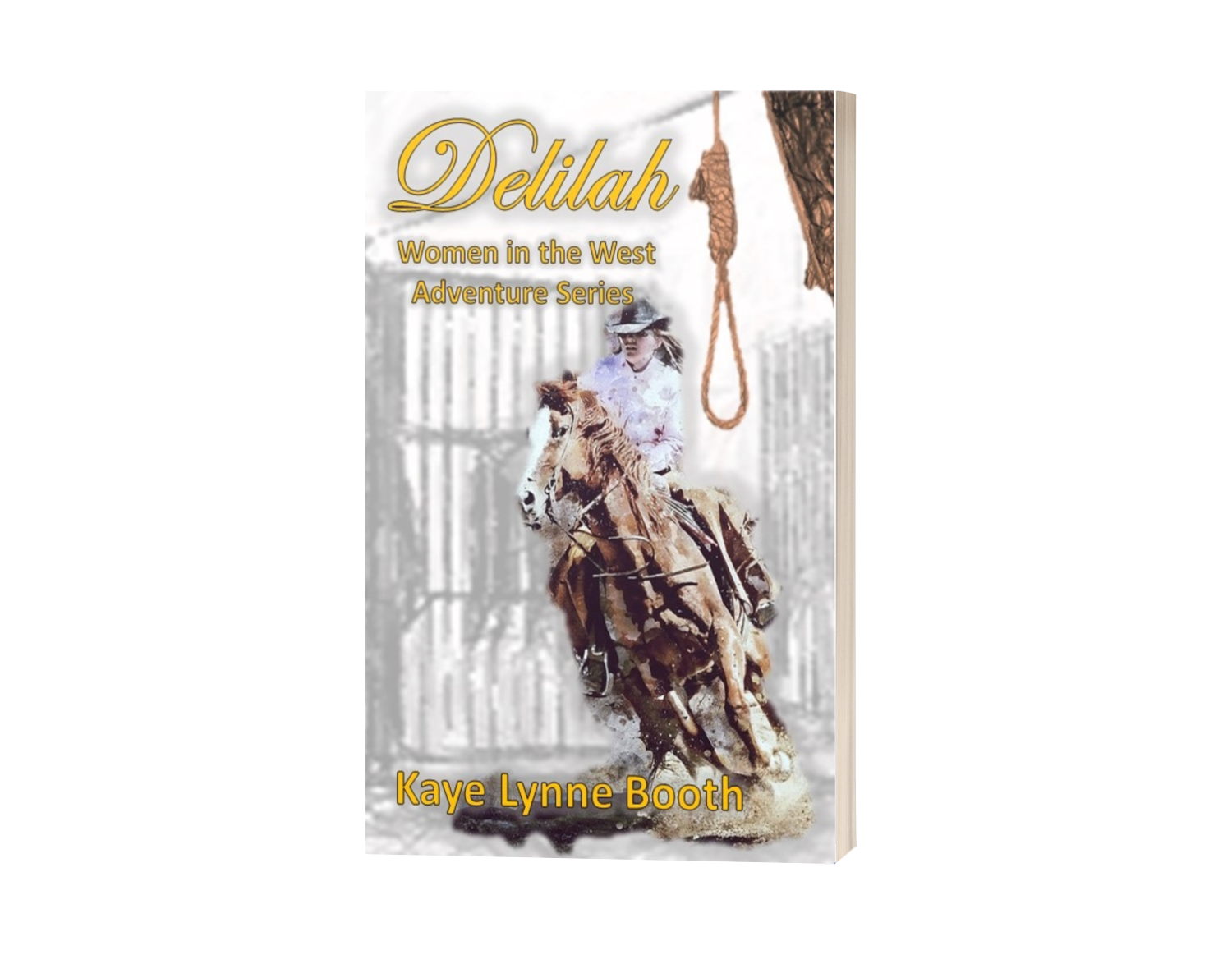
Posted: December 26, 2016 | Author: kayelynnebooth | Filed under: Articles, Book Review, Books, Children's Books, Commentary, Fiction, Film Review, Horror, Movies, Nonfiction, Poetry, Promotion, Publishing, Screenwriting, Self-Publishing, Steampunk, Stories, Weekly Writing Memo, Western, Writing, Writing Event, Writing Tips, Young Adult | Tags: 2016, Book Reviews, Books, Fiction, marketing, Movies, Novel, Novels, Poetry, Review, Reviews, Writing, Writing to be Read | 4 CommentsThis will be the last reflective post of the year. Next Monday’s post will find us in 2017. For my writing career it has been a slow take off, but I’ve seen progress. In July, I completed my Master of Fine Arts degree in creative writing. With emphasis in both genre fiction and screenwriting, and two completed novels, Delilah and Playground for the Gods Book 1: In the Beginning, two full feature film scripts and one comedy series pilot script in hand, I eagerly jumped right in to get my feet wet in either the publishing and/or screenwriting industry. I began submitting my work to agents, publishers, and competitions like crazy. I received mostly rejections, as expected, and although I still haven’t found a home for either novels or scripts, I did manage to find a home for two poems and two short stories. Not too bad. While the poems, Aspen Tree and Yucca! Yucca! Yucca!, appeared in print, (in Colorado Life (Sept.-Oct. 2016) and Manifest West Anthology #5 – Serenity and Severity, respectively), my short story, I Had to Do It was published on Zetetic: A Record of Unusual Inquiry, and my not so short, short story, Hidden Secrets was published on Across the Margin.
2016 has been a pretty good year for Writing to be Read. The revamping of the blog site was completed in March, I’ve managed post things on a fairly regular basis, we were honored with guest posts by my friend Robin Conley, and my visits and page views have risen, with almost 2000 visitors and over 2,500 page views. Looking at this, makes me feel pretty good about the blog, as a whole. Another good change is the addition of screenwriting content, which I believe has drawn a larger audience by widening the scope of the content.
Many of my posts were reflections of my own writing experience. These included: Why Writing is a Labor of Love; Fear is a Writer’s Best Friend; I’ve Come A Long Way, Baby; Writing the Way That Works For You; Creating Story Equals Problem Solving; What’s A Nice Girl Like Me Doing Writing in a Genre Like This?; Acceptance or Rejection – Which Do You Prefer?; A Writer’s Life is No Bowel of Cherries; Write What You Know; Discouragement or Motivation?; What Ever Happened to Heather Hummingbird?; How You Can Help Build a Writer’s Platform; and Why Fiction is Better Than Fact.
Screenwriting content included this past year seemed to be popular. In addition to my Making of a Screenplay series and Writing Horror is Scary Business, Writing to be Read also featured Writing Comedy for Screen is a Risky Proposition, and a book review for Hollywood Game Plan, by Carole Kirshner, which I can’t recommend highly enough for anyone desiring to break into the screenwriting trade. Robin’s Weekly Writing Memo also included several writing tips that could be applied equally to literature or screenwriting.
Another project I’m particularly proud of is my ten part series on publishing, Pros and Cons of Traditional vs. Independent vs. Self-Publishing, which I just finished up last week. In this series I interviewed nine professionals from within the industry to get the low down on the three different publishing models. My interviews included self-published authors Jeff Bowels, Tim Baker and Art Rosch, traditionally published authors Stacia Deutsch (children’s books) and Mark Shaw (nonfiction), and independently published YA author Jordan Elizabeth. To balance things out a bit, I also interviewed children’s author Nancy Oswald, who has published with all three models, Clare Dugmore of Curiosity Quills Press and Caleb Seeling, owner and publisher at Conundrum Press.
I feel very fortunate to have had Robin Conley join us with her Weekly Writing Memo and her guest movie reviews. The useful writing tips in her Weekly Writing Memos covered a wide range of topics including critiquing, using feedback, ways to increase tension, Relatability or Likeability?, 3 Types of Plot, story research, what to write, making your audience care, world building, handling feedback, writing relationships, establishing tone, editing, word choice, How to Start Writing, endings, queries, Parts of a Scene, making emotional connections, the influence of setting, Building a Story, Inciting Your Story, movement and dialog, Writing Truth, time, Overcoming the Blank Page, Networking, character names, theme, set up, cliches, parentheticals in screenwriting, horror inspiration, and Learning to Write. Robin’s guest post movie reviews included Pride and Prejudice and Zombies, Batman vs. Superman, Miss Perigrin’s Home for Peculiar Children, and The Neon Demon.
I am thankful for Robin’s valuable content and am glad that she will still be contributing Memos on a monthly, rather than a weekly basis. Although I was sad to lose her weekly content, I am happy for her as she moves forward in her own writing career and I wish her well in her writing endeavors. For those of you who looked forward to her weekly posts, you can catch more of her content on her own blog, Author the World.
2016 was a great year for Writing to be Read, even if it was kind of rough for the author behind the blog. You readers helped to make it a good year and I thank you. Now it’s time to look ahead and see what’s in store for 2017 Writing to be Read. I mentioned some of the things I hope to achieve above: more posts pertaining to the screenwriting industry, and coverage of more events throughout the year are two of the goals I have set for my blog. I also plan to add some author, and hopefully, screenwriter profiles into the mix. I had good luck with author profiles during my Examiner days, and I think they will be well received here, as well.
I also hope to bring in some guests posts by various authors or bloggers, or maybe screenwriters, just to give you all a break from listening to me all the time. I believe Robin plans to continue with Monthly Writing Memos, which will be great, too.
I look forward to all the great books that I know are coming my way in 2017, too. The first reviews you have to look forward to are a short memoir, Banker Without Portfolio by Phillip Gbormittah, a YA paranormal romance, Don’t Wake Me Up by M.E.Rhines, a Rock Star romance, Bullet by Jade C. Jamison and a short story, How Smoke Got out of the Chimneys by DeAnna Knippling.
I hope all of you will join me here in the coming year. Follow me on WordPress, or subscribe to e-mail for notifications of new posts delivered to your inbox. Have a great 2017 and HAPPY WRITING!
Share this: