Posted: March 25, 2019 | Author: kayelynnebooth | Filed under: Books, Fantasy, Science Fantasy, Science Fiction, Writing | Tags: Feedback, Kaye Lynne Booth, Playground for the Gods, Science Fantasy, The Great Primordial Battle, Writing tp be Read |

If you know me, or have been following me for a while, you might know that my Playground for the Gods series originated as my thesis project. When I presented my proposal, the feedback I got repeatedly was that I was trying to cram too much into the book and it wasn’t going to work. I had instructors tell me that what I proposed would be a tomb, if I ever finished it, which was doubtful, and my advisor said he there wasn’t even a genre for my tale, which combines the technology and space travel of science fiction with the mythology and folklore, and seemingly magical events therein. There were echos of my instructors’ doubts from the members of the cohort I found myself in that semester, some even saying there was no way I could pull it off.
In Playground for the Gods, the palnet of Atlan is destoyed and the Atlan people make pre-historic Earth their new home, posing as gods and goddesses, and using their advanced technology to perform miraculous feats that awe humans. In Book 1: The Great Primordial Battle, the Atlans fight amongst themselves in a struggle to prevent their new home from being destroyed as Atlan was. A strong female protagonist, Inanna, heads up the battle against serpents, dragons, and other forms of mythological creatures, mined from the annals of all parts of the globe, in an effort to save Earth. In this story, readers learn all the background information needed to build a basis for the subsequent texts, and there is enough of it to form a stand alone book. (Book 2: In the Begnning is outlined and partially drafted, and Book 3: Inanna’s Song is outlined and has portions already written, although not pieced together in any organized fashion yet.)
In one of the first classes, we had been cautioned to remember that any criticism of our work was not personal, it was about the work, not about me as a person, but when faced with so many telling me I couldn’t do what I wanted to do, what I believed I could do, it wasn’t as easy as it sounds, and I was hurt by their doubt. But, once I licked my wounds and dried my tears, and distanced myself from the work, I realized that much of what they had said was true. They were right, at least on some points and the story will be better for it.
My solution was to turn my thesis novel into a science fantasy series, and write the only the first book as my actual thesis project. The size of the first book, The Great Primordial Battle, let me know that this was a smart decision. (My professors and cohorts were correct in that trying to put it all into one book would have created a massive tomb.) The draft should be back from the beta reader today to begin the final revisions, and after hitting a snag that must be worked out before work can proceed on my memoir, I excited to get started in the final stretch with this one. Upon publication, this book will truly be the beginning of a science fantasy series that almost never existed.
Like this post? Subscribe to Writing to be Read for e-mail notifications whenever new content is posted or follow WtbR on WordPress.
Posted: March 18, 2019 | Author: kayelynnebooth | Filed under: Books, Chatting with the Pros, Collaboration, Dark Fantasy, Fantasy, Fiction, Interview, Science Fiction, Speculative Fiction, Teaching Writing, World Building, Writing, Writing to be Read | Tags: Chatting with the Pros, Fantasy, Kevin J. Anderson, Writing to be Read |

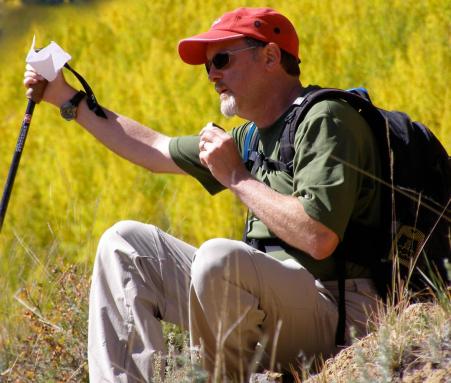
My guest today on “Chatting with the Pros” is an award winning and best selling author who has written countless novels and over 56 national and international best sellers. A majority of his works fall into the science fiction or fantasy genres, but he writes across many genres. In a recent introduction for “The Big Idea: Kevin J. Anderson“, an article about the latest release in his short fiction collection, Selected Stories, John Scalzi calls him, “one of the most prolific authors working today”, and one look at his immense book list on Amazon would leave no doubt that this is an accurate assessment. (You can find my review of selected stories here). He’s written a lot of books, 56 of which have hit the national and international best seller lists, and he’s been writing for many years, and I’m sure we will find his knowledge and experiences enlightening. Please help me welcome Kevin J. Anderson.
Kaye: You have written at least 56 national or international best sellers. What makes a good story in your mind?
Kevin: People want to read a good story with an exciting/interesting plot, a well-developed setting, and engaging characters. Make it a story you WANT to read, with clear prose and action. I don’t like muddled, glacial-paced stories where the prose is just too precious.
Kaye: Why science fiction and fantasy? Why not western or romance or mystery? What’s the attraction?
Kevin: Well, I’ve also written plenty of mysteries, and some of my work has been set in the old west, and most good stories have a strong romance component (though I don’t write category Romance or Westerns). I like to tell an interesting story, and I move around a lot among genres, even though I am primarily known for science fiction or fantasy. I grew up in a very mundane small town in rural Wisconsin, and I was captivated by SF/F from an early age, because it showed my imagination what was possible. I wanted to go to exotic places, whether they were filled with aliens or dragons. Science fiction took me to a much wider universe. (And as a skinny, nerdy kid with glasses and a bad haircut, “romance” wasn’t much of a possibility, so I stuck with spaceships and swords.)
Kaye: You wrote several Star Wars and X-Files novels. Is it difficult to immerse yourself in someone else’s settings and characters enough to pick up a thread and run with it in the same tone and writing style? How do you go about getting yourself into that mindset?
Kevin: It’s no more difficult than trying to immerse yourself in the old west or ancient Japan for a historical. A writer’s job is to absorb the story, characters, voice, and setting. I was already a big fan of Star Wars, Star Trek, X-Files, and Dune, and I enjoyed going to work in those universes. In each instance, I would completely surround myself with the property — whether that meant watching the Star Wars films over and over again, or the episodes of the X-Files, or repeatedly rereading DUNE and its sequels. You pick up the manner of speaking, the “look and feel” of the world, and you make it into your own story.
Kaye: You’ve done several collaborations, including books of the Dune series, with Brian Herbert and the Clockwork books which you collaborated with Neil Peart, drummer for the band Rush. What is the biggest challenge when collaborating on a book?
Kevin: You both need to have the same vision for the book—which means a LOT of talking and brainstorming ahead of time—and you both need the same work ethic (so each partner puts in the same amount of time and effort…a tortoise and hare collaboration will just cause a lot of friction), and you need to be flexible. There’s never only ONE way to write a sentence or describe a scene. I would never want to collaborate with a diva!
Kaye: Do you belong to any writing organizations? If so, which ones? Do you feel your membership in these writing organizations have been helpful in your writing successes? How so?
Kevin: I belong to the Horror Writers Association (and edited three anthologies for them, the BLOOD LITE series), IAMTW (International Association of Media Tie-In Writers), and SFWA, the Science Fiction and Fantasy Writers of America, although some of their recent decisions have made me so upset that I would not renew my membership if I wasn’t already a lifetime member. The problem with such organizations is that you can become to engrossed in the politics and bickering that you forget your real purpose, which is to WRITE.
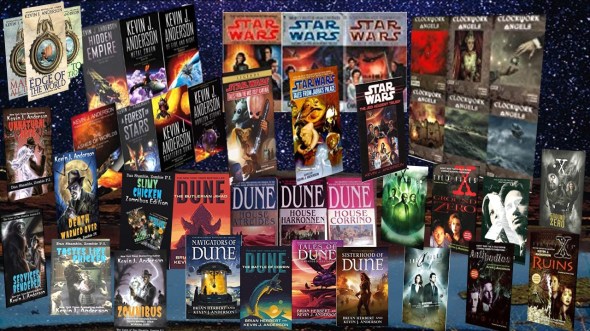
Kaye: You’ve written several series, including Saga of the Seven Suns, Dan Shamble P.I. and the Clockwork books? Are any of your books stand alone? Why do you lean toward series?
Kevin: I’ve written many standalone books. The one I just finished last week, a vampire/serial-killer thriller STAKE, that’s not part of a series. But I like to tell big stories, and once you’ve done all the effort of world building and character building an entire universe, you want to spend some time. To me, a trilogy is perfect — a beginning, middle, and end, with enough room to tell the story and describe the world in all its glory. Pragmatically speaking, it’s a much better decision commercially to build a series, because readers will want more and more, and each new book will help sell copies of previous volumes. Can you imagine if A.C. Doyle had stopped after writing only one Sherlock Holmes story?

Kaye: Science fiction authors create whole worlds from their imaginations, often with new languages created in their own minds, and you have created many. How do you go about creating a new language?
Kevin: Hmm, creating languages? I’m not really a linguist and I don’t know that I’ve developed full languages (though I do use weird words). I just make up the words by making what seem to be the appropriate sounds, linguistic flavors, scary sounds for monsters or villains, softer or ethereal sounds for pleasant things. I can’t really explain it more rigorously than that.
Kaye: Your work has won many prestigious awards. Which award are you most proud of? Why?
Kevin: Awards are awards, and it’s nice to have them, but I really prefer READERS. That’s what makes your writing worthwhile. It’s not terribly prestigious, but the award I value most is one I received very early in my career, when I received a trophy with an engraved brass plate and everything, naming me “The Writer with No Future” because I could produce more rejection slips than any other writer at an entire conference. To me, that didn’t mean I was a failure as a writer or that my work was awful—it proved that I was more persistent, that I kept trying, kept getting better, and never gave up. I still have that trophy.
Kaye: In addition to being an author, you and your wife, Rebecca Moesta, are publishers at Wordfire Press, but originally you were traditionally published. Why the switch to being your own publisher after being traditionally published for so many years?
Kevin: Survival. No choice. The publishing industry has undergone a tremendous upheaval equivalent to the Industrial Revolution, and I could either be a mammal and evolve or stay a dinosaur and go extinct. I am still traditionally published (four books released in 2018, in fact, and a new 3-book contract from Tor Books for an epic fantasy series), but I also have a lot of backlist titles that were out of print and my fans wanted to read them. So I started releasing them myself with all the innovations of new technology. It’s just another alternative.
Kaye: What does Wordfire press offer as a publisher for other authors?
Kevin: We are nimble and flexible, and we can produce books and get them to market far quicker than a traditional publisher can manage. But when you work with an indie publisher, or if you do it yourself, then you have to do all the work, all aspects of it. It’s another income stream and another way to get your book in front of your audience.
Kaye: Is Wordfire taking submissions? What type of fiction is Wordfire looking for?
Kevin: Not really, I’m afraid. When we are open, we’re looking for established writers who don’t need their hands held, writers who already have their own platforms, fanbases, and marketing efforts because we have to rely on them to do the work that a whole department at a traditional publisher would do.
Kaye: You recently signed on as an adjunct professor at Western State Colorado University and you are a finalist candidate for the director of their Certificate in Publishing program. What prompted you to venture into the world of academia?
Kevin: Actually, I’m now a full professor and I run their Masters program in Publishing. I will start the first group of MA students this coming summer. There’s a LOT of paperwork and bureaucracy in academia! I have taught writing and publishing quite often at countless writers’ conferences and conventions, most notably our own Superstars Writing Seminars, which is just hitting its tenth year. Becoming a professor and teaching at a beautiful university in the Colorado mountains is great, offers a little more stability than freelance writing, and (the bane of all freelancers) it gives me health insurance and benefits I wouldn’t otherwise get.
Kaye: Any writing pet peeves?
Kevin: I don’t like artsy-fartsy stuff, dense prose and opaque plots. Tell me a great story with a cool setting and interesting characters!
Kaye: Creating characters, developing plot, world building – what is the most challenging part of writing for you?
Kevin: Those are all fun, but if I had to choose I would say I have most difficulty with building rich, fleshed-out characters. Plotting and worldbuilding—that’s what I excel in.
Thanks to Kevin for sharing with us today. He’s given us food for thought with some really great answers. You can find more about Wordfire Press here: https://wordfirepress.com/. Kevin and his wife, Rebecca Moesta, head up the Superstars Writing Seminars each year in February, in Colorado Springs, Colorado, for those interested in learning the business of writing. If you’d like to become a member of the Superstars Tribe, or would just like more information about Superstars, visit the folowing link: superstarswriting.com. Visit the links below to learn more about Kevin J. Anderson and his works.
Amazon Author page: https://www.amazon.com/Kevin-J-Anderson/e/B000AQ0072/ref=sr_ntt_srch_lnk_1?qid=1545798018&sr=1-1-fkmr1
Wordfire Press: http://www.wordfire.com/
Blog: http://kjablog.com/
Join us next month on “Chatting with the Pros”, when I’ll be chatting with romance author Maya Rodale. You can catch the monthly segment “Chatting with the Pros” on the third Monday of every month in 2019, or you can be sure not to any of the great content on Writing to be Read by signing up by email or following on WordPress.
Posted: March 11, 2019 | Author: kayelynnebooth | Filed under: Blog Content, Dark Fantasy, Fantasy, Fiction, Science Fantasy, Science Fiction, World Building, Writing | Tags: Fantasy, sci-fi, Science Fantasy, Science Fiction, Writing to be Read |
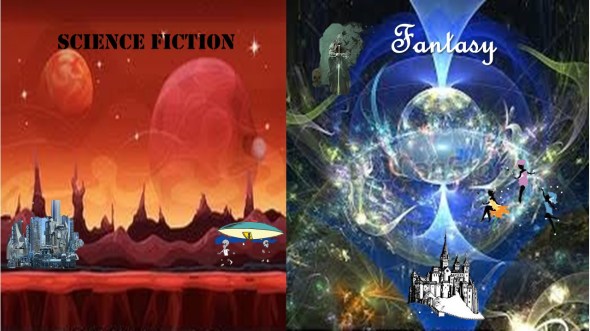
In March, Writing to be Read celebrates science fiction and fantasy, and everything in between. Science fiction springs from imaginings of what ifs, regarding technological advancements and futuristc worlds and universes, while fantasy fiction involves impossible or improbable events usually involving magic, or magical creatures or objects grounded in myths, legends and folklore of old. Both of these genres takes us to fantasical places and awe readers with amazing feats of courage, and good usually overpowers evil. Both entertain us, and are often addicting. In the current book market, there are many books which fall into a genre that is somewhere in between.
There are more subgenres for both of these genres than a person is able to count, including stories which feature elements of both. When I wrote my thesis proposal for what will one day be my science fantasy series, Playground for the Gods, I was told there was no genre for a story with both science fiction and fantasy elements. But in fact, there is such a genre as science fantasy, and there are many books out there today that fall into it. I recently reviewed one featuring alien life forms and a powerful magic object, Rogue Crystal, by Jordan Elizabeth in last Friday’s post.
As mentioned above, Playground for the Gods was originally proposed as my thesis story. It is a tale of aliens, Atlans, who come to pre-historic Earth when their planet is destroyed, and act as gods and godesses, forming human beliefs about devine matters, and creating the fondation for myths and legends of ancient history. The character names were all chosen from ancient summerian names, and many of the subplots parrellel those same myths and legends, adding new twists. In order to maintain the appearance of gods, they use their advanced technologies to appear magical and all powerful, each one wielding the ability to fall into different personas throughout time, providing basis for all world myths and religions around the globe.
It’s a lot of story, and many said it was too big and couldn’t be done, so I broke it down into four novels, which follow the Atlan through earth’s history to present day, and perhaps even beyond Book 1: The Great Primordial Battle tells the tale of the Atlans arrival on Earth. and tells how the heroine, Innana tries to stop the same Atlans who caused the destruction of their home planet from detroying their new home, as well. All whhile working to find a cure for her sister, Ereshkigal’s wasting desiese which is eating her up from the inside out. This story is curently with my beta reader, although I was hoping she’d have it back to me by now, so I could share my excitement, because it is very close to being publication ready.
Among the great science fiction authors we find familiar names: Isaac Asimov, Ray Bradbury, and Edgar Rice Burroughs. More recently, we have Robin Wayne Bailey, Richard Bachman, who we all now know is Stephen King, Dean Koontz, John Scalzi and Kevin J. Anderson. (Don’t forget to catch my interview with Kevin J. Anderson next Monday on “Chatting with the Pros”. You won’t want to miss it.) Fantasy authrs who may come to mind are J.R.R. Tolkien, George R. Martin, J.K. Rowling, R.A. Salvator, Ray Bradbury, Stephen King, and Kevin J. Anderson. As you can see, there is some crossover of authors from one genre to the other; there are authors who write in both.
This month, in additon to my interview with K.J.A. and my review of Rogue Crystal, I also have my review of Kevin J. Anderson’s Selected Stories: Science Fiction Volume 2, and an interview with fantasy author Laurel McHargue. I do hope you’ll drop by.
P.S. Be sure to check out my science fiction time travel short, Last Call, and my dystopian short, “If You’re Happy and You Know It” in the Collapsar Directive science fiction anthology (Zombie Prirates Publishing).
Like this post? Subscribe to Writing to be Read for e-mail notifications whenever new content is posted or follow WtbR on WordPress.
Posted: March 8, 2019 | Author: kayelynnebooth | Filed under: Book Review, Books, Dark Fantasy, Fiction, Science Fantasy, Science Fiction | Tags: Book Review, Jordan Elizabeth, Rogue Crystal, Science Fantasy, Writing to be Read |

Rogue Crystal, by Jordan Elizabeth is a futuristic science fantasy adventure novel featuring magic weilding aliens and an unsuspecting heroine, who may be the key to saving the world, with several surprise twists along the way. Both science fiction and fantasy fans will enjoy this story, as it has elements from both genres.
Avery thought a trip to Scarya, a secret rendevous with her boyfriend diguised as a journey to the country of her ancestral origins for her parents benefit, would be a great time. But when her cousin’s archeology team uncovers a sword which draws her to it and then disappears, things begin to get a little freaky. Suddenly, it seems that everyone is after her and she doesn’t know who to trust. Except for DeClan, her boyfriend and long time sweetheart, whom she trusts explicitely. But something isn’t right. His uncnny ability to show up just when needed and his unconditional acceptance of what Avery tells him, no matter how strange or unusual makes the reader wonder if he might not be what he appears to be, as they uncover a centuries old family history of alien origins and a struggle to save the world. While all this is a little unsettling, it’s nothing compared to Avery’s surprise when she learns that she holds the crystal which holds the power to destroy the world.
This story combines elements of science fiction and fantasy into a well crafted adventure which fans of both genres can enjoy. I give Rogue Crystal four quills.

Kaye Lynne Booth does honest book reviews on Writing to be Read in exchange for ARCs. Have a book you’d like reviewed? Contact Kaye at kayebooth(at)yahoo(dot)com.
Posted: March 1, 2019 | Author: kayelynnebooth | Filed under: Book Review, Books, Fiction, Science Fiction, Stories | Tags: Book Review, Kevin J. Anderson, Science Fiction, Selected Stories: Science Fiction Volume 2, Short Fiction, Short Stories, Short Story Collection, Writing to be Read |
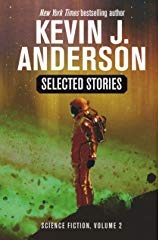
Selected Stories: Science Fiction Volume 2, by Kevin J. Anderson a collection short science fiction stories from a master story teller. This collection is comprised of short fiction created throughout his long and profitable career as an author, and the nice thing about this collection is that Anderson has included a brief introduction to each one, giving a brief glimpse into each story’s inspiration.
Experiments gone awry, time travelers, inescapable planetary prisons, hot, but frightening alien sex tales, giant robots, the ultimate population control; they are all here, in this collection. The stories in this collection are skillfully crafted Anderson twists on the science fiction themes we know and love. Also included is an excerpt from one of Anderson’s early novels, Hopscotch. “Club Masquerade” explores the concept of body switching and takes it in some extreme directions.
Kevin J. Anderson is a master storyteller, and every story in this collection is imaginative and entertaining. I give Selected Stories: Science Fiction Volume 2 five quills.
Kaye Lynne Booth does honest book reviews on Writing to be Read in exchange for ARCs. Have a book you’d like reviewed? Contact Kaye at kayebooth(at)yahoo(dot)com.
t
Posted: January 21, 2019 | Author: kayelynnebooth | Filed under: Chatting with the Pros, Interview, Science Fiction, Women's Fiction, Writing | Tags: Author Interview, Barbara Chepaitis, Chatting with the Pros, Science Fiction, Women's Fiction, Writing to be Read |
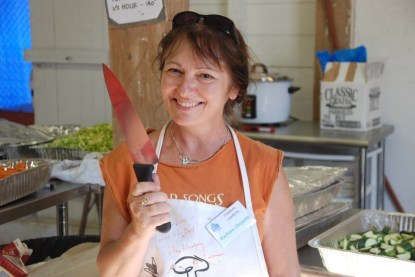
In January, Writing to be Read is celebrating women’s fiction and female authors. You may have caught my Interview with Loretta Miles Tollefson two weeks ago, or my post about the history of female authorship last week. In continuation of this monthly theme, I’m pleased to welcome a woman who authors science fiction and women’s fiction as my first guest for this new monthly series, Chatting with the Pros. Barabara Chepaitis is a traditionally published author of both science fiction and women’s fiction, and she’s very familiar with the issues that surround being a woman author in today’s publishing industry. Let’s see what she has to say.
Kaye: What defines women’s fiction? Is it the subject matter, female protagonists, or the manner in which women are portrayed?
Barbara: In my experience, women’s fiction is defined by the publisher, who wants to have a specific place to put a book in a bookstore. For me, the difference between my science fiction and my ‘women’s fiction’ was what name they used. When I write science fiction, they want me to use my initials to hide that I’m a girl. When I write women’s fiction, they want to use my name, to prove I’m a girl.
Since I’ve never written a novel that doesn’t have a female protagonist, it’s clear to me that this isn’t the defining aspect. Other than that, I think the definition is kind of the way Dr. Who describes time – wibbly wobbly.
Kaye: What draws you to women’s fiction?
Barbara: I don’t know that I am drawn to women’s fiction. I’m a feminist, for sure, but I never set out to write any particular genre. I just get an idea for a character and story, then tell it. If they happen to be female, that’s because I’ve known some fascinating women, with very complex lives.
Kaye: Do you think it is tougher female authors today, or has digital and self-publishing evened the playing field for women in the publishing industry?
Barbara: It’s always been more difficult for women, in every field of endeavor we have in our culture. There’s so many many ways to block women. First, you can just not hire (or publish, or pay) them. Second, you can let them do the work, but not acknowledge the work they’ve done, attributing it to others. Only time will tell if digital and independent publishing will change that kind of move. Being cynical, I guess that women will have to continue to fight for their place. But that’s just me, being cynical.
Kaye: Romance usually has female protags. Why is it not considered as women’s fiction?
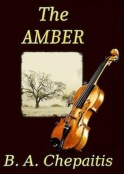 Barbara: The quick answer – because the narrative arc primarily follows a trajectory of romance. I know that when I’ve written material that has a strong romance (as in The Amber) but has something else as it’s narrative arc (coming of age, self-discovery, overcoming demons, etc.) then it isn’t seen as romance. For instance, there’s some pretty strong romantic properties to the whole Jaguar series, but she’s primarily dealing with criminals and crime.
Kaye: What makes a good story?
Barbara: The answer to that varies pretty wildly, depending on who you ask. For my husband, a good story is often one of a hero who makes the ultimate sacrifice for a cause. He loves Spartacus, Saving Private Ryan, and so on. For me, a story of a hero who overcomes incredible obstacles to reach a goal that serves others, or creates a new understanding of life, is always entrancing. I’m guessing that for romance readers, the tale of finding true love is what winds their clocks. So the question to ask, really, is what makes a good story for you?
Kaye: Your Fear series has a futuristic setting, an action adventure storyline and a strong female protagonist, Jaguar Addams. It’s really women’s genre fiction. What genre or genres do you put it in?
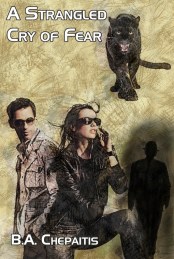 Barbara: I wrote the Fear series as a detective/mystery series. It just happened to be set in the future. When I was seeking a publisher, there was no such thing as ‘cross-genre’, and the mystery/detective market wanted nothing to do with it. Thus it landed in science fiction, which was more open, and they called it cyberpunk suspense – which made me wonder if I had to do something different with my hair, you know?
You can say Jaguar is ‘women’s fiction’ in that it has a powerful female protagonist and is written by a woman, but there’s plenty of men hanging around as well, and they all have their own obstacles to overcome, sacrifices to make, stuff to learn. Most of my work crosses literary lines in some way. I’m bitextual, and trangenre, I guess. And proud of it.
Kaye: Would you like to tell us a little about the series?
Barbara: Jaguar Addams and Alex Dzarny work on Prison Planetoid 3, which was established after a time of massive domestic violence known as The Killing Times. Now the worst criminals are sent to the Planetoid Prisons, where they’re run through programs that make them face the fears which drove their horrid crimes, based on the theory that all crime grows out of fear. Jaguar and Alex are both practitioners of the Empathic arts, and have some maxxed out psi capacities, which they use in their work.
Jaguar and Alex are alike in their dedication to the job, but they approach it differently. Jaguar runs with scissors, and colors way outside the lines. If Alex runs with scissors, he points them down. Both characters have close and complicated friendships with others who work on the Planetoids, and Jaguar has a ‘family’ in a Native American community in the Southwest. She’s an offshoot of a Mayan nation by heritage.
Each book is its own case, as in a detective series, but there is a larger arc along the way, which deals with Jaguar’s need to develop trust in intimacy, and Alex’s need to get a little more wild.
Kaye: Would you talk a little about the books that are published under Barbara Chepaitis, the ones that annnounce that you’re a girl and would probably most be classified as ‘women’s fiction’?
Barbara: I’ve got 3 under the ‘Barbara’ name:
Feeding Christine: “It was the season of Miracles in Teresa’s kitchen, and while none of the women particularly believed in miracles, neither did they think they’d be needing one. They were wrong.”
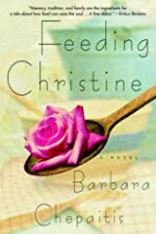 TERESA DI ROSA, owner of the thriving catering business Bread and Roses, makes the feeding of bodies and souls her life work. Now, with her niece CHRISTINE and her friends DELIA and AMBERLIN, she’s gearing up for the big event of the year – the annual Christmas open house. But as the party gets organized, her life is spinning out of control.
Her divorce is barely final, her son is spending Christmas with his father, and Christine seems to be losing her grip on sanity as she grieves the death of her mother, Teresa’s sister. The radical steps Teresa takes to rescue Christine shock everyone, but with her friends, Teresa feeds Christine a healthy dose of courage, wisdom and love.
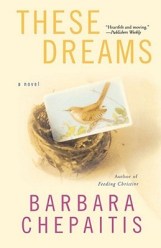
These Dreams: Cricket Thompson’s routine life of husband, home, and family becomes a land of nightmare when an act of random violence leaves her daughter critically wounded. The crisis destroys her family, exposes her illusions and defies her belief in dreams. She seeks solace at the bird sanctuary where she volunteers, and learns that healing is a miracle of choice rather than chance.
Something Unpredictable: Just FYI – SOMETHING UNPREDICTABLE is based on a house that me and my husband actually tried to buy. There really is a circus house.
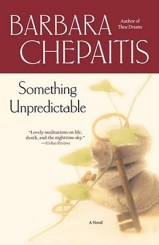 Delilah is 31, has no career to speak of, and is living at home with her hippie parents, and hanging on to a boyfriend who likes to photograph her naked in tubs of blue jello. Clearly, Delilah needs a plan.
Her sister is living the perfect life with the perfect husband, her father continues to make money off the stock market, and her mother continues to spend it on the latest social cause. Delilah would love to save the world as well if only it weren’t such an overwhelming task. She longs for inspiration. But she’s about to encounter some things she never predicted – a long-lost grandmother, Carla, who used to tame tigers with the circus; a 260 year old house with septic problems; an ex-fiancee; and a man named Jack – all of which will change her life forever.
Kaye: Food plays a central role in much of your women’s fiction. In fact, you might consider it a core theme for your books. Can you explain why this is, and why it’s important?
Barbara: Mmm. Foood. I’m a real foodie, and love to cook and play with my food. Perhaps because my mother’s family is Italian, I also understood from an early age that food is a language all its own, something we consume to learn about the land and its people and our relationship to all that. To me, cooking is similar to writing, and eating and reading are the way we enrich ourselves, body and soul.
Kaye: Why does symbolism play such a big role in your work?
Barbara: Symbolism? Actually, none of it is symbolism. It’s all experience and reflection on experience. If I write about a family violin that’s been lost and must be found, it’s because I know that music connects us across time with our ancestry. If I write about food, it’s because food speaks to us all the time.
Kaye: Children of the Land (Songs of the Mothers Book 1): This title screams women’s fantasy. I imagine a fantasy world laden with legends of yore. Would you like to tell me a little about this book?
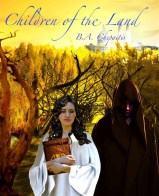 Barbara: Children of the Land is actually the last novel in a series that I wrote which attempted to move across genres through each novel. It started with Children of the Gods, historical fiction with a contemporary twist, retelling the ancient history of the Haudonosaunee. Next was a near future novel titled Children of the World, which featured the descendants of the first novel as they approached the historical moment when biological immortality became possible. After that was Children of the Land, where the next round of descendants dealt with the political and world ramifications of that possibility in a fantasy novel.
When I talked to publishers about the series, they looked at me with something akin to terror. I swear their hair stood on end. It’s really the ultimate in transgenre, and couldn’t be handled by this market. Ultimately, I decided to go ahead with Children of the Land, which is indeed a fantasy novel, and worry about the others later. I have to say it was one of my favorite writing experiences ever. It really appealed to my love of language, and my love of the Heroine’s journey. It also allowed me to play with a lot of gods and goddesses from a variety of cultures, because part of the idea is that it’s time for them to return, and establish a closer relationship with humans, who are indeed the children of the land.
Here’s the synopsis:
Lord Aroc rules all, giving the gift of immortality only to his citizens. The balance between City and village has been preserved for a long age, but a change is at hand, signaled by the dancing of the Northern Lights. Now, a young woman’s choice to plant a small seed will determine world dominion, and the return of the gods.
That woman is Vareka, a Citizen working for Lord Aroc as Watcher for the villagers of Eryahsa. Such villagers live apart from the City, and are ultimately absorbed to feed the City’s energy. As heavy solar flares disrupt the City’s technology, the northern lights cause villagers to recall ancient stories of the Dreamers – spirit beings who would someday return. Then, an old man in Eryahsa tells Vareka she is inheritor of a task only she, daughter of a Dreamer and a Human, can complete.
She bears a locket handed down from mother to daughter for ages uncounted, and the seed it holds must be planted if the Dream is to continue.
She must choose her path, with no guarantee of success. Either she will take her friends on a perilous journey to find the place and time of planting, or she will accept Aroc’s rule, allowing him to remake the world, in his own image.
Kaye: Your fiction features strong female characters, and their strengths give them power. Where do you draw your characters from?
Barbara: For me, characters make themselves known in a very visceral way, speaking up inside me to tell me it’s time to tell their stories. Jaguar popped up when I was on the highway, and I had to pull over and make notes. I can still see her, sitting on the arm of her couch, in her apartment with its skulls and hanging herbs. She was smoking a cigarette, swinging her leg back and forth, and she said, “What you’ll do next is write me.”
Characters and their world, how they arise, where they come from, is a bit of a mystery to me, but I have noted that the best thing I can do is maintain an attitude of openness to their arrival. In fact, an attitude of openness in general. A kind of “Okay. I’m ready. Whaddya got?”
I’m sure that this attitude is assisted by the fact that I grew up with a horde of powerful and complicated women, but I can’t say that any one of them has become a particular character. Perhaps it’s just the flavor of their lives that gets put in the mix.
Kaye: So, would you say your stories are character driven?
Barbara: Yes, my stories are character driven. Characters, with all their complexities and eccentricities, create plot. They have something to say, and are blocked from saying it. Or they have something to hide and it’s revealed. Or they have something to BE, and are meeting obstacles in being that. Characters – human and animal – are at the heart of all plots, the heart of all interest, the heart of our hearts.
Kaye: They say the pen is mightier than the sword. What causes have you used your status as a writer to champion?
Barbara: I once helped a Navy SEAL and Army Ranger rescue a war-wounded eagle from Afghanistan, and that came about only because I’m a writer. I’ve also used my writing in any way I can to promote environmental causes. In fact, I’d love to do more of that.
You can get the full story on the war-wounded eagle in her book, Saving Eagle Mitch: One Good Deed in a Wicked World. Thank you for sharing with us today Barbara. You can learn more about Barbara Chepaitis and her works at the following links:
Goodreads Author Page (Barbara Chepaitis): https://www.goodreads.com/author/show/202062.Barbara_Chepaitis
Goodreads Author Page (B.A. Chepaitis): https://www.goodreads.com/author/show/841157.B_A_Chepaitis?from_search=true
Feeding Christine https://www.amazon.com/s/ref=nb_sb_noss?url=search-alias%3Daps&field-keywords=Feeding+Christine+chepaitis
THESE DREAMS https://www.amazon.com/These-Dreams-Barbara-Chepaitis-ebook/dp/B000FC0VI4/ref=sr_1_1?ie=UTF8&qid=1547053073&sr=8-1&keywords=These+Dreams+chepaitis
SOMETHING UNPREDICTABLE https://www.amazon.com/s/ref=nb_sb_noss?url=search-alias%3Daps&field-keywords=Something+Unpredictable+chepaitis
Like this post? Subscribe to Writing to be Read for e-mail notifications whenever new content is posted or follow WtbR on WordPress.
Posted: January 18, 2019 | Author: kayelynnebooth | Filed under: Book Review, Books, Fiction, LBGT, romance, Science Fiction | Tags: Book Review, Dystopian, LBGT, O.E. Tearmann, romance, Science Fiction, The Hands We're Given, Writing to be Read |
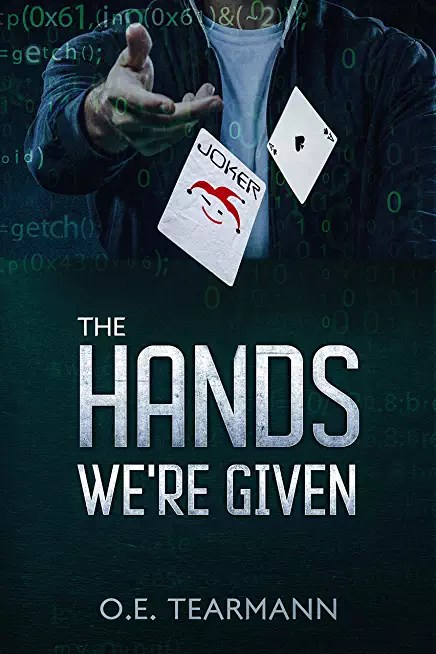
I’m not generally a reader of LBGT literature and I must admit that recognizing that this story had a romantic story thread had me a little apprehensive, but I have to say that The Hands We’re Given by O.E. Tearmann handles this very delicate and sensitive subject matter quite tastefully. In a futuristic world where the corporations have taken control and divided the U.S. into sectors, Aiden and Kevin’s romance is a refreshing change from the day to day stresses of fighting for the resistance forces, but they each have secrets that could stand in the way of their happiness and their very existance.
The Wildcards are resistance team made up of members who refuse to conform to the norm and all of them come with their own emotional baggage, but they are the best there is, or at least they were. Lately their successful operaations have faltered and their disciplinary issues have been on the rise. When Aiden is assigned to take the Wildcards for his first command, but will he be able to pull the group together and get them back up to their potential?
I haven’t read a lot of LBGT stories, so this was a new world for me. Be warned that there are explicit sexual content in this book. But once I got past that, I discovered a dystopian story with well-developed characters who I could invest in and all the elements of a good romance, with the LBGT elements handled with sensitive and good taste. I give The Hands We’re Given four quills.

Kaye Lynne Booth does honest book reviews on Writing to be Read in exchange for ARCs. Have a book you’d like reviewed? Contact Kaye at kayebooth(at)yahoo(dot)com.
Posted: December 28, 2018 | Author: kayelynnebooth | Filed under: Book Review, Books, Fiction, Science Fiction, Speculative Fiction, Stories | Tags: Book Review, Fissures Between Worlds, Nick Vossen, Science Fiction, Short Fiction, Speculative Fiction, Writing to be Read |
Have you ever felt like things were just a little off? That’s just how the characters in Nick Vossen’s The Fissures Between Worlds: Tales Beyond Time and Space feel on a regular basis. Fissures Between Worlds takes the reader to worlds beyond the veil of time and space where the unlikely, the improbable, even the impossible can and does occur. When the veil is breached, people get stuck in endless time loops, and creatures which can’t possibly exist wreak havoc within our own realities. Nick Vossen’s unique styles of storytelling take readers on a journey which will make you ponder the possibilities. A short fiction collection which is anything but typical. I give Fissures Between Worlds five quills.
Kaye Lynne Booth does honest book reviews on Writing to be Read in exchange for ARCs. Have a book you’d like reviewed? Contact Kaye at kayebooth(at)yahoo(dot)com.
Posted: October 10, 2018 | Author: kayelynnebooth | Filed under: Author Profile, Books, Fiction, Interview, Memoir, Nonfiction, Science Fiction, Travel, Writing | Tags: Author Interview, Brenda Mohammed, Memoir, Science Fiction, Travel Memoir |

I have the pleasure of interviewing independent author Brenda Mohammed today. She is not only a multi-genre author, but a multi-award winning author, who seems to dabble in a bit of everything. She comes from a background in finance, but became an author when she wrote a memoir about her battle with ovarian cancer. Since then, she’s written several other memoirs, as well as a science fiction series, a horror novel and a crime novel, as well as a wonderful self-help book for aspiring authors. She has done so much, and made so many travels, and I’m thrilled to have her share all that with us here, on Writing to be Read. Please give a warm welcome to Brenda Mohammed.
Kaye: When did you know you wanted to be an author?
Brenda: I never planned to be an author. I was a successful Bank Manager for many years. After I retired from the Bank at an early age, I became an Insurance Professional. I loved working in Finance and helping many people achieve their financial goals. In 2005 I was stricken with ovarian cancer. My doctor in Trinidad told me that she could not help me, and no other doctor in Trinidad at that time was qualified to do so. I sought treatment in Miami and gained a new lease on life. In 2013 I wrote a book about my cancer ordeal and recovery, I am Cancer Free. That was my first book and I have never stopped writing after that. To date I have written nineteen books.
Kaye: You’ve written 6 memoirs, 2 children’s books, a science fiction series, a crime novel, and a nonfiction book on writing. What’s the secret to tackling so many different genres?
Brenda: There really is no secret to writing in multiple genres. I have always loved a challenge and constantly seek out new opportunities. I write whatever I feel passionate about.
Kaye: You have written books in multiple genres: science fiction, memoir, self-help, etc… What are some of the differences you run into in writing different genres?
Brenda: When I am writing science fiction I maintain my focus on science fiction, and similarly with the other genres. The secret is to stay focused on the plot or the subject to achieve the end result. However, the problem I faced was in promoting my books.
I discovered a way around that and made Facebook Author pages for each genre. I have seven Facebook author pages. I also joined several Facebook groups that specialise in genres in which I write, to promote my books.
Kaye: Which genre is your favorite to write in? Why?
Brenda: I really enjoyed writing my science fiction series because it took me to another world for a while. When I wrote it I found myself becoming the hero or heroine and doing impossible things.
Kaye: You won a Readers’ Favorite Award in the 2018 International Book Awards for both your YA science fiction series Zeeka Chronicles,and your memoir I Am Cancer Free. What, if anything do these two books have in common besides both being Reader’s Favorite Book Award recipients? What makes them award winning books?
Brenda: Strange. I think I just answered that question above. The books have nothing in common yet there is a common thread. One is a futuristic thriller and the other is a survival story. As I said above when writing science fiction. i.e. Zeeka Chronicles, I found myself becoming the hero or heroine. In I am Cancer Free I am the heroine.
Seriously though, I quote from Readers Favorite: “Contest entries are judged all year long and are given a rating score based on key literary elements. The judges simply read the book and score it based on its merits.”
Kaye: Those are not the only award winning books you’ve written. Two other memoirs, My Life as a Banker received a second place award in memoirs in the Metamorph Publishing’s Summer Indie Book Awards in 2016 and Your Time is Now received IHIBRP 5 Star Recommended Read Award Badge. What can you tell us about those two books?
Brenda: My Life as a Banker is a memoir about my life in Banking. Banking was my first love. I always wanted to work in a bank. I love serving and helping people and seeing them prosper. Banking gave me the opportunity to do so and especially when I climbed the ranks to Commercial Area Credit Manager and was able to help business people with startups and expansion. Banking allowed me to play my part in building the economy of my native country, Trinidad.
Your Time is Now is intended to help people understand their own lives and to realize that we are all here on earth for a purpose.
The reviews for both these books speak a lot for them.
Kaye: What is it like to receive notification that your book is the recipient of a prestigious award?
Brenda: I have won many awards before in both Banking and Insurance.in my home country
However, as this was an International Award it was a most joyous feeling to tell my friends and family that I won two prestigious awards with Readers Favorite International and will be attending the Awards Ceremony in Miami. In November.
Kaye: What’s something most readers would never guess about you?
Brenda: I dabble in art, poetry, and graphics in my spare time. Some of my art work hang on the walls of my home.
Kaye: What time of day do you prefer to do your writing? Why?
Brenda: I prefer to write in the still of the night. When everyone is asleep I find peace to think and write.
Kaye: What is the biggest challenge of being a writer?
Brenda: Only a few days ago I penned this poem about writing:
Writing takes me into a fantasy world.
Sometimes I find myself in a black hole.
I edit and fight to come out of it
But not before I get into a fit.
My books have gathered great reviews
Won awards and made the news.
Is it worth it, I sometimes ask?
Writing a book is a great task.
A writer’s life is a rather lonely one.
All day behind a computer is no fun.
An author must make the time
Read others’ books and go out and lime.
Do not sit at your computer all day.
Join the family in travel and play
Love of a family is life’s greatest gift
When you need to relax they give you a lift.
Kaye: Is there anything unique or unusual about your writing process?
Brenda: Before writing a story I write an outline of the entire plot in a couple of pages. I then use that to build my story. It sounds simple, but it is not.

Kaye: Your book on writing is titled How to Write for Success: Best Writing Advice I Received. Can you briefly share what the best writing advice you ever received really was? What is the main message of this book?
Brenda: The Best Writing Advice I Received was “Keep the Reader in mind when writing. In other words write for the reader and your books will sell.”
To answer the second part of the question I will quote one of the five-star reviews. The one from Readers Favorite is too long so I will share this one from an Amazon Reviewer:
“Having read a couple of Mohammed’s books, I knew I wouldn’t be disappointed in this self-help book, and I was not. The book covers not only the gamut on the art of writing, but the formulation of an idea for a book, to proofreading, and eventual marketing of his/her book. This is an excellent book for anyone who finds him/herself contemplating becoming a writer. With Mohammed’s book in hand, there should be little, if any, room for error. I highly recommend.”
Kaye: You like to travel. Do the places you travel end up in your books?
Brenda: Yes they do and they did. I wrote Travel Memoirs with Pictures: Exploring the world. It is an illustrated picture book filled with reflections of my travels around the world.

In this pictorial travel book of my priceless memories, I describe places visited and the wonderful times I and my family had in our tourist trips. The book is great to read while on a vacation or for some travel inspiration.
I want to thank Brenda Mohammed for joining us here today and sharing a little about her lovely books. You can learn more about Brenda and her books on Amazon at: http://Author.to/BCM786. I love how she turned her own life experiences into books to be shared by all.
Like this post? Subscribe to Writing to be Read for e-mail notifications whenever new content is posted or follow WtbR on WordPress.
Posted: August 20, 2018 | Author: kayelynnebooth | Filed under: Advertising, Books, Fiction, marketing, Nonfiction, Paranormal, Promotion, Reader Platform, Science Fiction, Western, Writing, Writing to be Read | Tags: book marketing, marketing, Reader Platform, Social Media Marketing |

I’ve heard it asked if a reader platform is even necessary. So, let me ask you, as writers and authors, without readers what are we? Of course, we need to have a reader platform. All it is is a fan base equivilent, but it can make the difference between the success and the failure of our books. Without my readers, there would be no one to buy my books, read my books, recommend my books or review my books. So, how does one build a reader platform?
It’s a good question. And I’ve heard of many different methods of doing just that, and none of them require construction tools. Not even a screwdriver. All it takes is what we writers and authors do best: words, communication, contact.
 I started out with this blog, Writing to be Read, and the number of subscribers is climbing as I work to improve the content. The thing is, there was no way for me to capture those subscriber emails or reach out to them. So, I created a monthly newsletter, and added a sign-up pop-up, offering a free e-book as a thank you for subscribing. If you sign up for the newsletter, you get a free e-copy of my paranormal mystery novelette, Hidden Secrets, which isn’t available anywhere else.
The trick is to get people to read your work in the first place. You can’t have a fan or a reader unless they have read something you’ve written and liked it. Nobody will follow you, or write a review, or join your reader group, if they haven’t first, read your book. One way to do that is to identify your target audience and promote to them, offering them all the reasons why they will like your work.

Another, and probably the most important, is to be sure your writing is fun and entertaining, if you’re writing fiction. With non-fiction, you need to make the subject matter interesting and present it well. And humor never hurts, no matter what you write. Even dark works can have dark humor. In short, whatever you are writing, make sure that it is quality writing. This should go without saying, but they won’t become your loyal readers if they can’t make it through the book due to the poor quality writing.
After all, a reader platform is really just a fan base of those who are interested in your work, and by finding them and adding them to your mailing list, you are effectively building a reader platform. With this method, I had a big initial burst of subscribers following the launch of a marketing campaign, then it tapered off to a slower rate of growth. My list is growing slowly, but I’m gaining a few new subscribers every month.
Other authors I know start Facebook reader groups or ask fans to join their street teams. I don’t know how well they work, but it seems there’s always activity happening in these groups and they seem to have lots of members. I would think you would have to have a solid fan base to pull ‘groupies’ from, so perhaps this is just an additional step, rather than an alternative method. Most of the authors I know who have street teams or Facebook reader groups, swear they don’t know what they’d do without them, relying on them to spread the word on new releases, post reviews on release day, find reviewers for their books, and/or show up for support at book events. These authors are harnessing the power of their readers and directing it to where it is needed most. And I’m thinking they might be on to something.
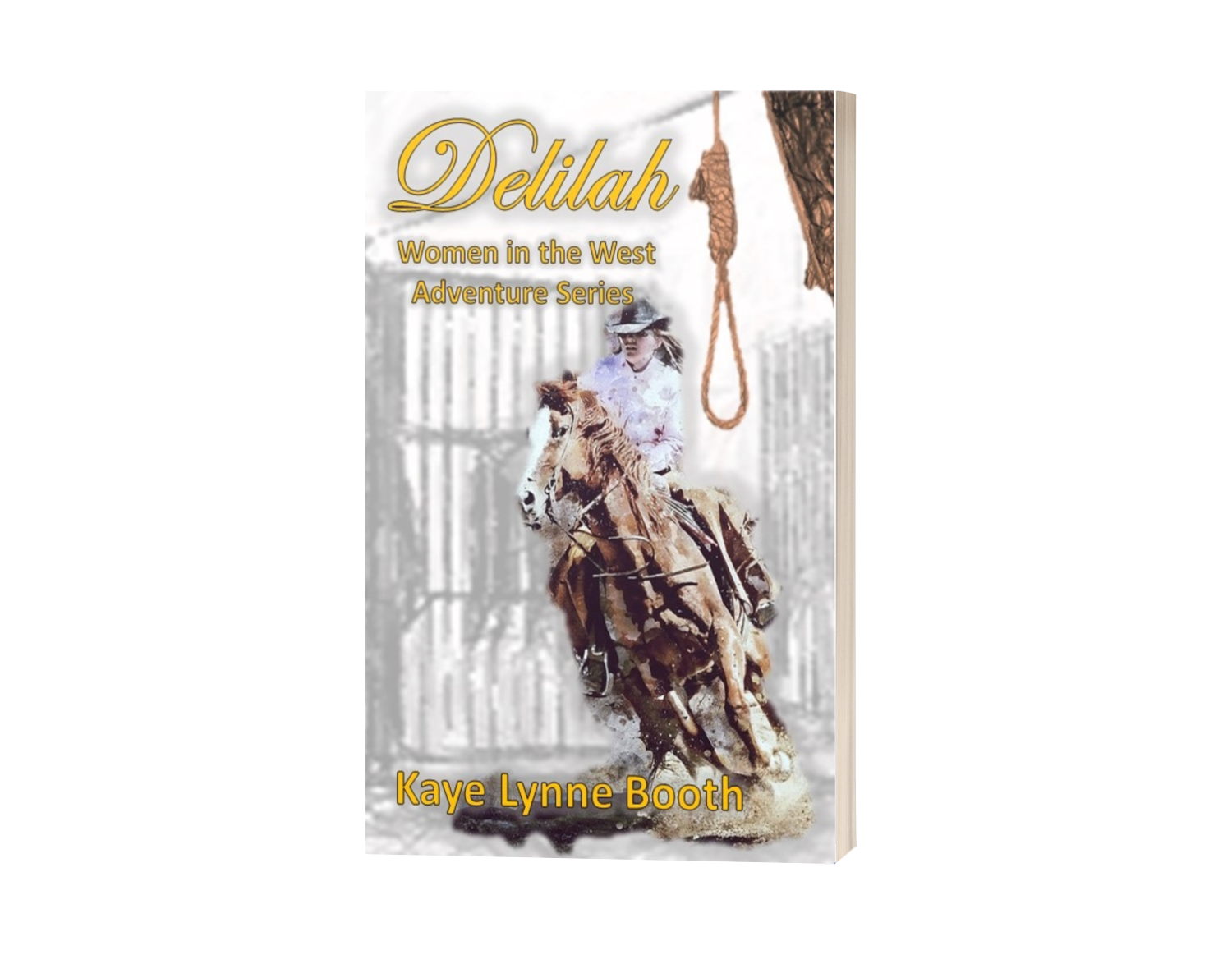
Part of the problem may be that I’m a multi-genre author. To date, I’ve published a western novel, Delilah; a paranormal mystery novelette, Hidden Secrets; and a science fiction time travel short story, Last Call. I’ve also had a dystopian short story and a crime romance short story published in anthologies, as well as shorts and poetry online. Western readers, science fiction readers and paranormal readers are not all included in the same crowd. I’m also eclectic in my reading habits, but most folks want to read only their preferred genres. Now how do I find readers that are so hard core they want to read everything I’ve published?
My answer is, I don’t. I’m finding that I must seek out readers for each one seperately and build a seperate reader platform for each one. The western readers who liked Delilah will be interested in the sequel, The Homecoming, when it’s finished, but they may not be interested in the books for my science fantasy Playground for the Gods series, when the first book is released. And many of my readers are authors themselves and they may be interested in the content on Writing to be Read, rather than any of my fiction works. When I look at it in this way, the task at hand seems to be enormous, the goal so far away. I’m not sure where to start, but I’m determined to find out.
I think a good start would be to find out which of my works the readers I already have are interested in, so I’ve added a genre question to the pop-up for the newsletter sign-up, so that I can place readers on different lists and then new subscribers can receive notifications concerning those works that they are interested in.
All of this marketing stuff is new to me and I’m learning as I go, so if you do sign-up for my monthly newsletter, I’d love it if you’d drop me an email and let me know how the whole sign-up process went, and what worked for you and what didn’t. After all, I’m smart enough to know that without you, my readers, I wouldn’t sell any books. I appreciate the fact that you stand by me. Let me hear form you at: kayebooth(at)yahoo(dot)com.

Like this post? Subscribe to Writing to be Read for e-mail notifications whenever new content is posted or follow WtbR on WordPress.