Chatting with the Pros: Interview with Women’s Fiction Author Barbara Chepaitis
Posted: January 21, 2019 Filed under: Chatting with the Pros, Interview, Science Fiction, Women's Fiction, Writing | Tags: Author Interview, Barbara Chepaitis, Chatting with the Pros, Science Fiction, Women's Fiction, Writing to be Read 1 Comment
In January, Writing to be Read is celebrating women’s fiction and female authors. You may have caught my Interview with Loretta Miles Tollefson two weeks ago, or my post about the history of female authorship last week. In continuation of this monthly theme, I’m pleased to welcome a woman who authors science fiction and women’s fiction as my first guest for this new monthly series, Chatting with the Pros. Barabara Chepaitis is a traditionally published author of both science fiction and women’s fiction, and she’s very familiar with the issues that surround being a woman author in today’s publishing industry. Let’s see what she has to say.
Kaye: What defines women’s fiction? Is it the subject matter, female protagonists, or the manner in which women are portrayed?
Barbara: In my experience, women’s fiction is defined by the publisher, who wants to have a specific place to put a book in a bookstore. For me, the difference between my science fiction and my ‘women’s fiction’ was what name they used. When I write science fiction, they want me to use my initials to hide that I’m a girl. When I write women’s fiction, they want to use my name, to prove I’m a girl.
Since I’ve never written a novel that doesn’t have a female protagonist, it’s clear to me that this isn’t the defining aspect. Other than that, I think the definition is kind of the way Dr. Who describes time – wibbly wobbly.
Kaye: What draws you to women’s fiction?
Barbara: I don’t know that I am drawn to women’s fiction. I’m a feminist, for sure, but I never set out to write any particular genre. I just get an idea for a character and story, then tell it. If they happen to be female, that’s because I’ve known some fascinating women, with very complex lives.
Kaye: Do you think it is tougher female authors today, or has digital and self-publishing evened the playing field for women in the publishing industry?
Barbara: It’s always been more difficult for women, in every field of endeavor we have in our culture. There’s so many many ways to block women. First, you can just not hire (or publish, or pay) them. Second, you can let them do the work, but not acknowledge the work they’ve done, attributing it to others. Only time will tell if digital and independent publishing will change that kind of move. Being cynical, I guess that women will have to continue to fight for their place. But that’s just me, being cynical.
Kaye: Romance usually has female protags. Why is it not considered as women’s fiction?
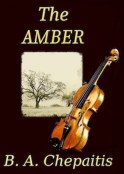 Barbara: The quick answer – because the narrative arc primarily follows a trajectory of romance. I know that when I’ve written material that has a strong romance (as in The Amber) but has something else as it’s narrative arc (coming of age, self-discovery, overcoming demons, etc.) then it isn’t seen as romance. For instance, there’s some pretty strong romantic properties to the whole Jaguar series, but she’s primarily dealing with criminals and crime.
Kaye: What makes a good story?
Barbara: The answer to that varies pretty wildly, depending on who you ask. For my husband, a good story is often one of a hero who makes the ultimate sacrifice for a cause. He loves Spartacus, Saving Private Ryan, and so on. For me, a story of a hero who overcomes incredible obstacles to reach a goal that serves others, or creates a new understanding of life, is always entrancing. I’m guessing that for romance readers, the tale of finding true love is what winds their clocks. So the question to ask, really, is what makes a good story for you?
Kaye: Your Fear series has a futuristic setting, an action adventure storyline and a strong female protagonist, Jaguar Addams. It’s really women’s genre fiction. What genre or genres do you put it in?
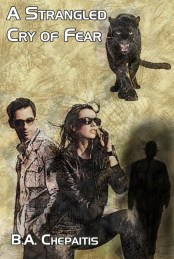 Barbara: I wrote the Fear series as a detective/mystery series. It just happened to be set in the future. When I was seeking a publisher, there was no such thing as ‘cross-genre’, and the mystery/detective market wanted nothing to do with it. Thus it landed in science fiction, which was more open, and they called it cyberpunk suspense – which made me wonder if I had to do something different with my hair, you know?
You can say Jaguar is ‘women’s fiction’ in that it has a powerful female protagonist and is written by a woman, but there’s plenty of men hanging around as well, and they all have their own obstacles to overcome, sacrifices to make, stuff to learn. Most of my work crosses literary lines in some way. I’m bitextual, and trangenre, I guess. And proud of it.
Kaye: Would you like to tell us a little about the series?
Barbara: Jaguar Addams and Alex Dzarny work on Prison Planetoid 3, which was established after a time of massive domestic violence known as The Killing Times. Now the worst criminals are sent to the Planetoid Prisons, where they’re run through programs that make them face the fears which drove their horrid crimes, based on the theory that all crime grows out of fear. Jaguar and Alex are both practitioners of the Empathic arts, and have some maxxed out psi capacities, which they use in their work.
Jaguar and Alex are alike in their dedication to the job, but they approach it differently. Jaguar runs with scissors, and colors way outside the lines. If Alex runs with scissors, he points them down. Both characters have close and complicated friendships with others who work on the Planetoids, and Jaguar has a ‘family’ in a Native American community in the Southwest. She’s an offshoot of a Mayan nation by heritage.
Each book is its own case, as in a detective series, but there is a larger arc along the way, which deals with Jaguar’s need to develop trust in intimacy, and Alex’s need to get a little more wild.
Kaye: Would you talk a little about the books that are published under Barbara Chepaitis, the ones that annnounce that you’re a girl and would probably most be classified as ‘women’s fiction’?
Barbara: I’ve got 3 under the ‘Barbara’ name:
Feeding Christine: “It was the season of Miracles in Teresa’s kitchen, and while none of the women particularly believed in miracles, neither did they think they’d be needing one. They were wrong.”
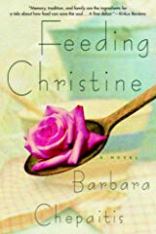 TERESA DI ROSA, owner of the thriving catering business Bread and Roses, makes the feeding of bodies and souls her life work. Now, with her niece CHRISTINE and her friends DELIA and AMBERLIN, she’s gearing up for the big event of the year – the annual Christmas open house. But as the party gets organized, her life is spinning out of control.
Her divorce is barely final, her son is spending Christmas with his father, and Christine seems to be losing her grip on sanity as she grieves the death of her mother, Teresa’s sister. The radical steps Teresa takes to rescue Christine shock everyone, but with her friends, Teresa feeds Christine a healthy dose of courage, wisdom and love.
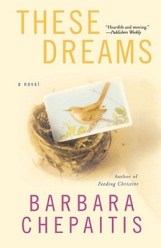
These Dreams: Cricket Thompson’s routine life of husband, home, and family becomes a land of nightmare when an act of random violence leaves her daughter critically wounded. The crisis destroys her family, exposes her illusions and defies her belief in dreams. She seeks solace at the bird sanctuary where she volunteers, and learns that healing is a miracle of choice rather than chance.
Something Unpredictable: Just FYI – SOMETHING UNPREDICTABLE is based on a house that me and my husband actually tried to buy. There really is a circus house.
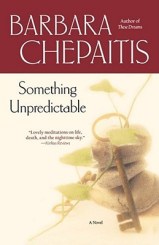 Delilah is 31, has no career to speak of, and is living at home with her hippie parents, and hanging on to a boyfriend who likes to photograph her naked in tubs of blue jello. Clearly, Delilah needs a plan.
Her sister is living the perfect life with the perfect husband, her father continues to make money off the stock market, and her mother continues to spend it on the latest social cause. Delilah would love to save the world as well if only it weren’t such an overwhelming task. She longs for inspiration. But she’s about to encounter some things she never predicted – a long-lost grandmother, Carla, who used to tame tigers with the circus; a 260 year old house with septic problems; an ex-fiancee; and a man named Jack – all of which will change her life forever.
Kaye: Food plays a central role in much of your women’s fiction. In fact, you might consider it a core theme for your books. Can you explain why this is, and why it’s important?
Barbara: Mmm. Foood. I’m a real foodie, and love to cook and play with my food. Perhaps because my mother’s family is Italian, I also understood from an early age that food is a language all its own, something we consume to learn about the land and its people and our relationship to all that. To me, cooking is similar to writing, and eating and reading are the way we enrich ourselves, body and soul.
Kaye: Why does symbolism play such a big role in your work?
Barbara: Symbolism? Actually, none of it is symbolism. It’s all experience and reflection on experience. If I write about a family violin that’s been lost and must be found, it’s because I know that music connects us across time with our ancestry. If I write about food, it’s because food speaks to us all the time.
Kaye: Children of the Land (Songs of the Mothers Book 1): This title screams women’s fantasy. I imagine a fantasy world laden with legends of yore. Would you like to tell me a little about this book?
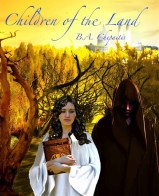 Barbara: Children of the Land is actually the last novel in a series that I wrote which attempted to move across genres through each novel. It started with Children of the Gods, historical fiction with a contemporary twist, retelling the ancient history of the Haudonosaunee. Next was a near future novel titled Children of the World, which featured the descendants of the first novel as they approached the historical moment when biological immortality became possible. After that was Children of the Land, where the next round of descendants dealt with the political and world ramifications of that possibility in a fantasy novel.
When I talked to publishers about the series, they looked at me with something akin to terror. I swear their hair stood on end. It’s really the ultimate in transgenre, and couldn’t be handled by this market. Ultimately, I decided to go ahead with Children of the Land, which is indeed a fantasy novel, and worry about the others later. I have to say it was one of my favorite writing experiences ever. It really appealed to my love of language, and my love of the Heroine’s journey. It also allowed me to play with a lot of gods and goddesses from a variety of cultures, because part of the idea is that it’s time for them to return, and establish a closer relationship with humans, who are indeed the children of the land.
Here’s the synopsis:
Lord Aroc rules all, giving the gift of immortality only to his citizens. The balance between City and village has been preserved for a long age, but a change is at hand, signaled by the dancing of the Northern Lights. Now, a young woman’s choice to plant a small seed will determine world dominion, and the return of the gods.
That woman is Vareka, a Citizen working for Lord Aroc as Watcher for the villagers of Eryahsa. Such villagers live apart from the City, and are ultimately absorbed to feed the City’s energy. As heavy solar flares disrupt the City’s technology, the northern lights cause villagers to recall ancient stories of the Dreamers – spirit beings who would someday return. Then, an old man in Eryahsa tells Vareka she is inheritor of a task only she, daughter of a Dreamer and a Human, can complete.
She bears a locket handed down from mother to daughter for ages uncounted, and the seed it holds must be planted if the Dream is to continue.
She must choose her path, with no guarantee of success. Either she will take her friends on a perilous journey to find the place and time of planting, or she will accept Aroc’s rule, allowing him to remake the world, in his own image.
Kaye: Your fiction features strong female characters, and their strengths give them power. Where do you draw your characters from?
Barbara: For me, characters make themselves known in a very visceral way, speaking up inside me to tell me it’s time to tell their stories. Jaguar popped up when I was on the highway, and I had to pull over and make notes. I can still see her, sitting on the arm of her couch, in her apartment with its skulls and hanging herbs. She was smoking a cigarette, swinging her leg back and forth, and she said, “What you’ll do next is write me.”
Characters and their world, how they arise, where they come from, is a bit of a mystery to me, but I have noted that the best thing I can do is maintain an attitude of openness to their arrival. In fact, an attitude of openness in general. A kind of “Okay. I’m ready. Whaddya got?”
I’m sure that this attitude is assisted by the fact that I grew up with a horde of powerful and complicated women, but I can’t say that any one of them has become a particular character. Perhaps it’s just the flavor of their lives that gets put in the mix.
Kaye: So, would you say your stories are character driven?
Barbara: Yes, my stories are character driven. Characters, with all their complexities and eccentricities, create plot. They have something to say, and are blocked from saying it. Or they have something to hide and it’s revealed. Or they have something to BE, and are meeting obstacles in being that. Characters – human and animal – are at the heart of all plots, the heart of all interest, the heart of our hearts.
Kaye: They say the pen is mightier than the sword. What causes have you used your status as a writer to champion?
Barbara: I once helped a Navy SEAL and Army Ranger rescue a war-wounded eagle from Afghanistan, and that came about only because I’m a writer. I’ve also used my writing in any way I can to promote environmental causes. In fact, I’d love to do more of that.
You can get the full story on the war-wounded eagle in her book, Saving Eagle Mitch: One Good Deed in a Wicked World. Thank you for sharing with us today Barbara. You can learn more about Barbara Chepaitis and her works at the following links:
Goodreads Author Page (Barbara Chepaitis): https://www.goodreads.com/author/show/202062.Barbara_Chepaitis
Goodreads Author Page (B.A. Chepaitis): https://www.goodreads.com/author/show/841157.B_A_Chepaitis?from_search=true
Feeding Christine https://www.amazon.com/s/ref=nb_sb_noss?url=search-alias%3Daps&field-keywords=Feeding+Christine+chepaitis
SOMETHING UNPREDICTABLE https://www.amazon.com/s/ref=nb_sb_noss?url=search-alias%3Daps&field-keywords=Something+Unpredictable+chepaitis
Like this post? Subscribe to Writing to be Read for e-mail notifications whenever new content is posted or follow WtbR on WordPress.
Share this:

“The Hands We’re Given”: A Tasteful LBGT Science Fiction Romance Novel
Posted: January 18, 2019 Filed under: Book Review, Books, Fiction, LBGT, romance, Science Fiction | Tags: Book Review, Dystopian, LBGT, O.E. Tearmann, romance, Science Fiction, The Hands We're Given, Writing to be Read 3 Comments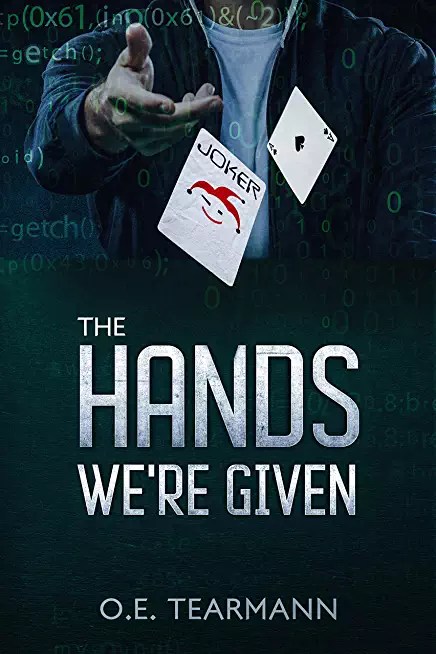
I’m not generally a reader of LBGT literature and I must admit that recognizing that this story had a romantic story thread had me a little apprehensive, but I have to say that The Hands We’re Given by O.E. Tearmann handles this very delicate and sensitive subject matter quite tastefully. In a futuristic world where the corporations have taken control and divided the U.S. into sectors, Aiden and Kevin’s romance is a refreshing change from the day to day stresses of fighting for the resistance forces, but they each have secrets that could stand in the way of their happiness and their very existance.
The Wildcards are resistance team made up of members who refuse to conform to the norm and all of them come with their own emotional baggage, but they are the best there is, or at least they were. Lately their successful operaations have faltered and their disciplinary issues have been on the rise. When Aiden is assigned to take the Wildcards for his first command, but will he be able to pull the group together and get them back up to their potential?
I haven’t read a lot of LBGT stories, so this was a new world for me. Be warned that there are explicit sexual content in this book. But once I got past that, I discovered a dystopian story with well-developed characters who I could invest in and all the elements of a good romance, with the LBGT elements handled with sensitive and good taste. I give The Hands We’re Given four quills.

Kaye Lynne Booth does honest book reviews on Writing to be Read in exchange for ARCs. Have a book you’d like reviewed? Contact Kaye at kayebooth(at)yahoo(dot)com.
Share this:

The Fissures Between Worlds: A short fiction collection to make you think
Posted: December 28, 2018 Filed under: Book Review, Books, Fiction, Science Fiction, Speculative Fiction, Stories | Tags: Book Review, Fissures Between Worlds, Nick Vossen, Science Fiction, Short Fiction, Speculative Fiction, Writing to be Read 2 Comments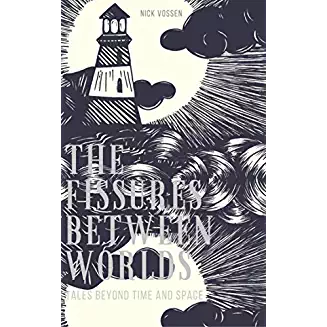
Have you ever felt like things were just a little off? That’s just how the characters in Nick Vossen’s The Fissures Between Worlds: Tales Beyond Time and Space feel on a regular basis. Fissures Between Worlds takes the reader to worlds beyond the veil of time and space where the unlikely, the improbable, even the impossible can and does occur. When the veil is breached, people get stuck in endless time loops, and creatures which can’t possibly exist wreak havoc within our own realities. Nick Vossen’s unique styles of storytelling take readers on a journey which will make you ponder the possibilities. A short fiction collection which is anything but typical. I give Fissures Between Worlds five quills.
Kaye Lynne Booth does honest book reviews on Writing to be Read in exchange for ARCs. Have a book you’d like reviewed? Contact Kaye at kayebooth(at)yahoo(dot)com.
Share this:

Interview with multi-genre author Brenda Mohammed
Posted: October 10, 2018 Filed under: Author Profile, Books, Fiction, Interview, Memoir, Nonfiction, Science Fiction, Travel, Writing | Tags: Author Interview, Brenda Mohammed, Memoir, Science Fiction, Travel Memoir 2 Comments
I have the pleasure of interviewing independent author Brenda Mohammed today. She is not only a multi-genre author, but a multi-award winning author, who seems to dabble in a bit of everything. She comes from a background in finance, but became an author when she wrote a memoir about her battle with ovarian cancer. Since then, she’s written several other memoirs, as well as a science fiction series, a horror novel and a crime novel, as well as a wonderful self-help book for aspiring authors. She has done so much, and made so many travels, and I’m thrilled to have her share all that with us here, on Writing to be Read. Please give a warm welcome to Brenda Mohammed.
Kaye: When did you know you wanted to be an author?
Brenda: I never planned to be an author. I was a successful Bank Manager for many years. After I retired from the Bank at an early age, I became an Insurance Professional. I loved working in Finance and helping many people achieve their financial goals. In 2005 I was stricken with ovarian cancer. My doctor in Trinidad told me that she could not help me, and no other doctor in Trinidad at that time was qualified to do so. I sought treatment in Miami and gained a new lease on life. In 2013 I wrote a book about my cancer ordeal and recovery, I am Cancer Free. That was my first book and I have never stopped writing after that. To date I have written nineteen books.
Kaye: You’ve written 6 memoirs, 2 children’s books, a science fiction series, a crime novel, and a nonfiction book on writing. What’s the secret to tackling so many different genres?
Brenda: There really is no secret to writing in multiple genres. I have always loved a challenge and constantly seek out new opportunities. I write whatever I feel passionate about.
Kaye: You have written books in multiple genres: science fiction, memoir, self-help, etc… What are some of the differences you run into in writing different genres?
Brenda: When I am writing science fiction I maintain my focus on science fiction, and similarly with the other genres. The secret is to stay focused on the plot or the subject to achieve the end result. However, the problem I faced was in promoting my books.
I discovered a way around that and made Facebook Author pages for each genre. I have seven Facebook author pages. I also joined several Facebook groups that specialise in genres in which I write, to promote my books.
Kaye: Which genre is your favorite to write in? Why?
Brenda: I really enjoyed writing my science fiction series because it took me to another world for a while. When I wrote it I found myself becoming the hero or heroine and doing impossible things.
Kaye: You won a Readers’ Favorite Award in the 2018 International Book Awards for both your YA science fiction series Zeeka Chronicles,and your memoir I Am Cancer Free. What, if anything do these two books have in common besides both being Reader’s Favorite Book Award recipients? What makes them award winning books?


Brenda: Strange. I think I just answered that question above. The books have nothing in common yet there is a common thread. One is a futuristic thriller and the other is a survival story. As I said above when writing science fiction. i.e. Zeeka Chronicles, I found myself becoming the hero or heroine. In I am Cancer Free I am the heroine.
Seriously though, I quote from Readers Favorite: “Contest entries are judged all year long and are given a rating score based on key literary elements. The judges simply read the book and score it based on its merits.”
Kaye: Those are not the only award winning books you’ve written. Two other memoirs, My Life as a Banker received a second place award in memoirs in the Metamorph Publishing’s Summer Indie Book Awards in 2016 and Your Time is Now received IHIBRP 5 Star Recommended Read Award Badge. What can you tell us about those two books?


Brenda: My Life as a Banker is a memoir about my life in Banking. Banking was my first love. I always wanted to work in a bank. I love serving and helping people and seeing them prosper. Banking gave me the opportunity to do so and especially when I climbed the ranks to Commercial Area Credit Manager and was able to help business people with startups and expansion. Banking allowed me to play my part in building the economy of my native country, Trinidad.
Your Time is Now is intended to help people understand their own lives and to realize that we are all here on earth for a purpose.
The reviews for both these books speak a lot for them.
Kaye: What is it like to receive notification that your book is the recipient of a prestigious award?
Brenda: I have won many awards before in both Banking and Insurance.in my home country
However, as this was an International Award it was a most joyous feeling to tell my friends and family that I won two prestigious awards with Readers Favorite International and will be attending the Awards Ceremony in Miami. In November.
Kaye: What’s something most readers would never guess about you?
Brenda: I dabble in art, poetry, and graphics in my spare time. Some of my art work hang on the walls of my home.
Kaye: What time of day do you prefer to do your writing? Why?
Brenda: I prefer to write in the still of the night. When everyone is asleep I find peace to think and write.
Kaye: What is the biggest challenge of being a writer?
Brenda: Only a few days ago I penned this poem about writing:
Writing takes me into a fantasy world.
Sometimes I find myself in a black hole.
I edit and fight to come out of it
But not before I get into a fit.
My books have gathered great reviews
Won awards and made the news.
Is it worth it, I sometimes ask?
Writing a book is a great task.
A writer’s life is a rather lonely one.
All day behind a computer is no fun.
An author must make the time
Read others’ books and go out and lime.
Do not sit at your computer all day.
Join the family in travel and play
Love of a family is life’s greatest gift
When you need to relax they give you a lift.
Kaye: Is there anything unique or unusual about your writing process?
Brenda: Before writing a story I write an outline of the entire plot in a couple of pages. I then use that to build my story. It sounds simple, but it is not.

Kaye: Your book on writing is titled How to Write for Success: Best Writing Advice I Received. Can you briefly share what the best writing advice you ever received really was? What is the main message of this book?
Brenda: The Best Writing Advice I Received was “Keep the Reader in mind when writing. In other words write for the reader and your books will sell.”
To answer the second part of the question I will quote one of the five-star reviews. The one from Readers Favorite is too long so I will share this one from an Amazon Reviewer:
“Having read a couple of Mohammed’s books, I knew I wouldn’t be disappointed in this self-help book, and I was not. The book covers not only the gamut on the art of writing, but the formulation of an idea for a book, to proofreading, and eventual marketing of his/her book. This is an excellent book for anyone who finds him/herself contemplating becoming a writer. With Mohammed’s book in hand, there should be little, if any, room for error. I highly recommend.”
Kaye: You like to travel. Do the places you travel end up in your books?
Brenda: Yes they do and they did. I wrote Travel Memoirs with Pictures: Exploring the world. It is an illustrated picture book filled with reflections of my travels around the world.

In this pictorial travel book of my priceless memories, I describe places visited and the wonderful times I and my family had in our tourist trips. The book is great to read while on a vacation or for some travel inspiration.
I want to thank Brenda Mohammed for joining us here today and sharing a little about her lovely books. You can learn more about Brenda and her books on Amazon at: http://Author.to/BCM786. I love how she turned her own life experiences into books to be shared by all.
Like this post? Subscribe to Writing to be Read for e-mail notifications whenever new content is posted or follow WtbR on WordPress.
Share this:

So, How Do You Build a Reader Platform?
Posted: August 20, 2018 Filed under: Advertising, Books, Fiction, marketing, Nonfiction, Paranormal, Promotion, Reader Platform, Science Fiction, Western, Writing, Writing to be Read | Tags: book marketing, marketing, Reader Platform, Social Media Marketing Leave a comment
I’ve heard it asked if a reader platform is even necessary. So, let me ask you, as writers and authors, without readers what are we? Of course, we need to have a reader platform. All it is is a fan base equivilent, but it can make the difference between the success and the failure of our books. Without my readers, there would be no one to buy my books, read my books, recommend my books or review my books. So, how does one build a reader platform?
It’s a good question. And I’ve heard of many different methods of doing just that, and none of them require construction tools. Not even a screwdriver. All it takes is what we writers and authors do best: words, communication, contact.
 I started out with this blog, Writing to be Read, and the number of subscribers is climbing as I work to improve the content. The thing is, there was no way for me to capture those subscriber emails or reach out to them. So, I created a monthly newsletter, and added a sign-up pop-up, offering a free e-book as a thank you for subscribing. If you sign up for the newsletter, you get a free e-copy of my paranormal mystery novelette, Hidden Secrets, which isn’t available anywhere else.
The trick is to get people to read your work in the first place. You can’t have a fan or a reader unless they have read something you’ve written and liked it. Nobody will follow you, or write a review, or join your reader group, if they haven’t first, read your book. One way to do that is to identify your target audience and promote to them, offering them all the reasons why they will like your work.

Another, and probably the most important, is to be sure your writing is fun and entertaining, if you’re writing fiction. With non-fiction, you need to make the subject matter interesting and present it well. And humor never hurts, no matter what you write. Even dark works can have dark humor. In short, whatever you are writing, make sure that it is quality writing. This should go without saying, but they won’t become your loyal readers if they can’t make it through the book due to the poor quality writing.
After all, a reader platform is really just a fan base of those who are interested in your work, and by finding them and adding them to your mailing list, you are effectively building a reader platform. With this method, I had a big initial burst of subscribers following the launch of a marketing campaign, then it tapered off to a slower rate of growth. My list is growing slowly, but I’m gaining a few new subscribers every month.
Other authors I know start Facebook reader groups or ask fans to join their street teams. I don’t know how well they work, but it seems there’s always activity happening in these groups and they seem to have lots of members. I would think you would have to have a solid fan base to pull ‘groupies’ from, so perhaps this is just an additional step, rather than an alternative method. Most of the authors I know who have street teams or Facebook reader groups, swear they don’t know what they’d do without them, relying on them to spread the word on new releases, post reviews on release day, find reviewers for their books, and/or show up for support at book events. These authors are harnessing the power of their readers and directing it to where it is needed most. And I’m thinking they might be on to something.
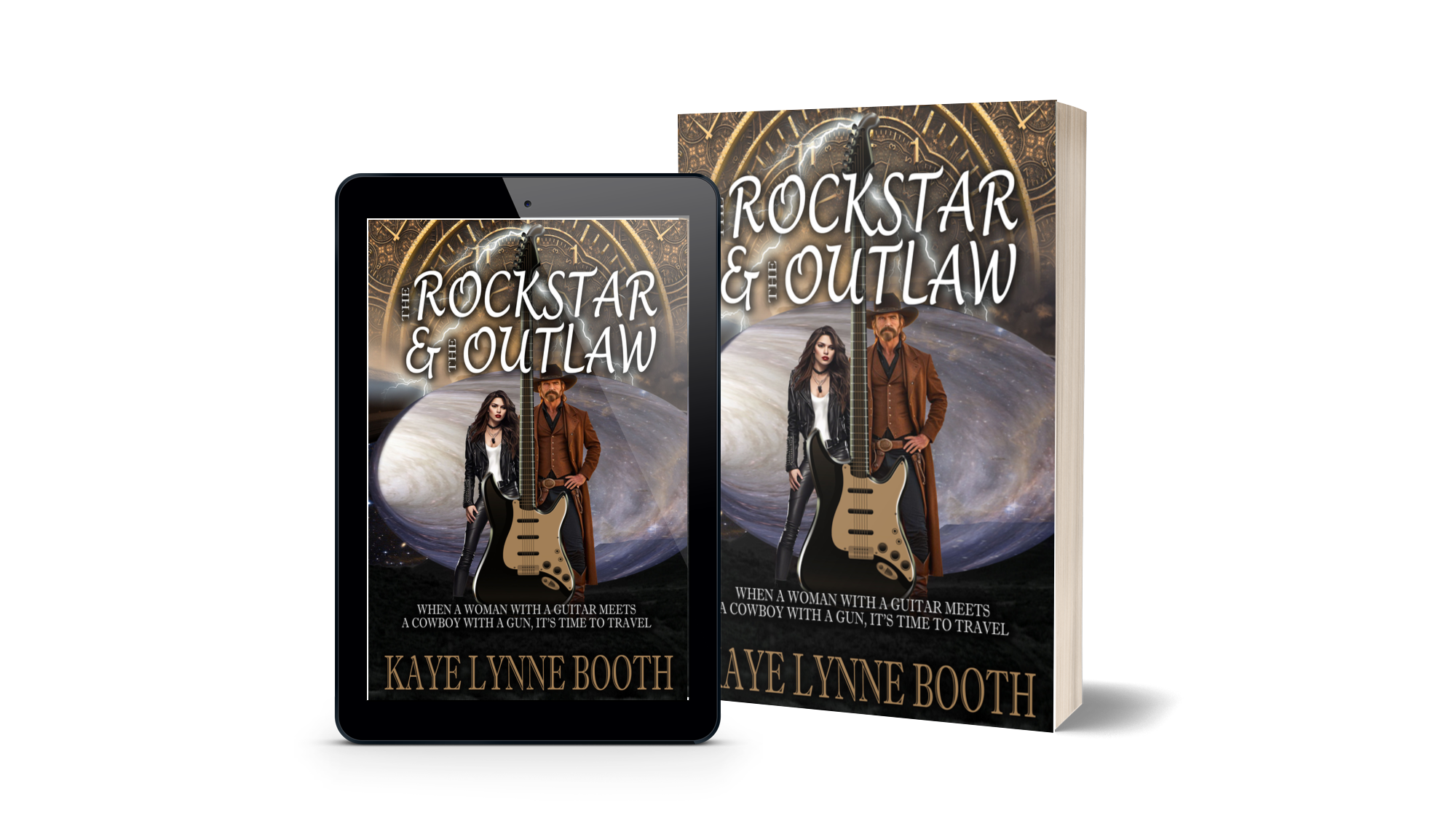
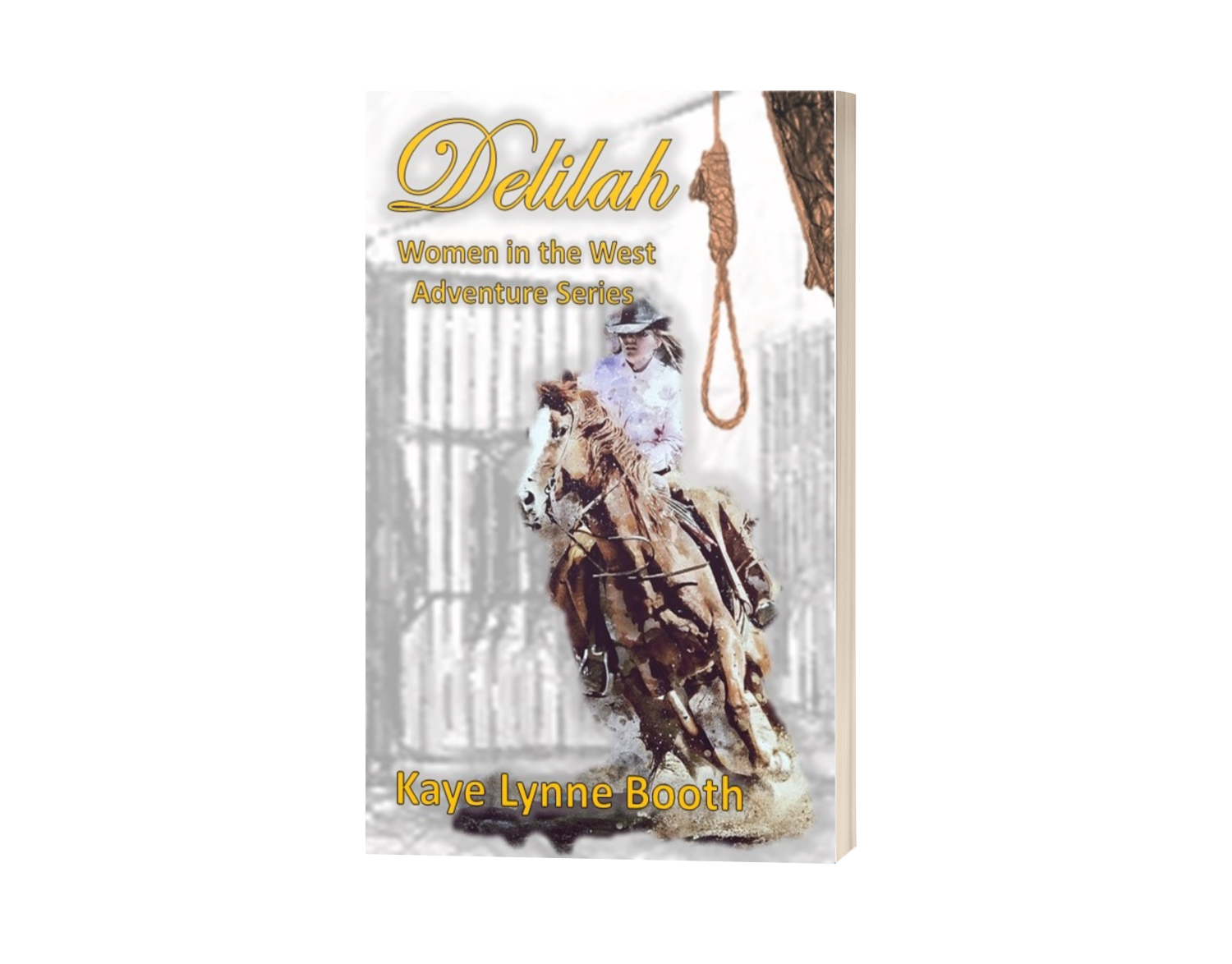
Part of the problem may be that I’m a multi-genre author. To date, I’ve published a western novel, Delilah; a paranormal mystery novelette, Hidden Secrets; and a science fiction time travel short story, Last Call. I’ve also had a dystopian short story and a crime romance short story published in anthologies, as well as shorts and poetry online. Western readers, science fiction readers and paranormal readers are not all included in the same crowd. I’m also eclectic in my reading habits, but most folks want to read only their preferred genres. Now how do I find readers that are so hard core they want to read everything I’ve published?
My answer is, I don’t. I’m finding that I must seek out readers for each one seperately and build a seperate reader platform for each one. The western readers who liked Delilah will be interested in the sequel, The Homecoming, when it’s finished, but they may not be interested in the books for my science fantasy Playground for the Gods series, when the first book is released. And many of my readers are authors themselves and they may be interested in the content on Writing to be Read, rather than any of my fiction works. When I look at it in this way, the task at hand seems to be enormous, the goal so far away. I’m not sure where to start, but I’m determined to find out.
I think a good start would be to find out which of my works the readers I already have are interested in, so I’ve added a genre question to the pop-up for the newsletter sign-up, so that I can place readers on different lists and then new subscribers can receive notifications concerning those works that they are interested in.
All of this marketing stuff is new to me and I’m learning as I go, so if you do sign-up for my monthly newsletter, I’d love it if you’d drop me an email and let me know how the whole sign-up process went, and what worked for you and what didn’t. After all, I’m smart enough to know that without you, my readers, I wouldn’t sell any books. I appreciate the fact that you stand by me. Let me hear form you at: kayebooth(at)yahoo(dot)com.

Like this post? Subscribe to Writing to be Read for e-mail notifications whenever new content is posted or follow WtbR on WordPress.
Share this:

Songs of Earth: A Teller’s Tale
Posted: August 10, 2018 Filed under: Book Review, Books, Fiction, Post-Apocalyptic, Science Fiction, World Building | Tags: Book Review, Eugene W. Cundiff, Post-Apocalyptic, Science Fiction, Songs of the Earth Leave a comment
The title is Songs of Earth: A Teller’s Tale, and the author, Eugene W. Cundiff is a story teller in following with the best of the tradition. A well-crafted science fiction post-apocalyptic story, with excellent world building, this book keeps the pages turning. Cundiff captures the imagination and doesn’t let go. I didn’t want to put it down.
Songs of Earth is a tale of an abandoned civilization, left by the Mongers, those who came before them, to fend for themselves in a harsh environment as best they could. On Luna, Elisheva is a Teller’s apprentice until the terraforming technology that enables their existence quits and she is sent with a group of Miners, a Marshall and an Engineer, on a journey into the wastelands, from which no one ever returns, to attempt repairs. In thier quest to save thier people, they uncover the secrets the Mongers never intended them to discover and travel much farther than any of them ever imagined they would have to repair the damaged machinery. And they solve the mystery of what happened to those who went into the wasteland before them, including Elisheva’s brother, but they aren’t the answers Elisheva had hoped to find.
Songs of Earth follows story telling traditions in exquisite form. I give it five quills.
Kaye Lynne Booth does honest book reviews on Writing to be Read in exchange for ARCs. Have a book you’d like reviewed? Contact Kaye at kayebooth(at)yahoo(dot)com.
Share this:

“Brave New Multiverse”: A Short Story Collection
Posted: July 20, 2018 Filed under: Book Review, Books, Science Fiction, Screenwriting, Stories | Tags: Book Review, Brave New Multiverse, Jeff Bowles, Science Fiction, Short Fiction, Short Stories, Short Story Collection Leave a comment
Brave New Multiverse is a collection of unusual and unique short stories by Jeff Bowles, in which there is never a dull moment. You may be amazed, amused, confused, or even a little disgusted, but you will not be bored with any of the stories in this collection.
Bowles combines the craft of short story with screenwriting to create an experimental writing style that somehow works. His descriptive power is phenomenal, if a bit graphic. The worlds he has created may be strange and difficult to define, but they are also different from worlds encountered by any other author. In Itsies, ids are called itsies and you don’t got to love them, even if they wear a teddy bear suit. In The Many Deaths of Lazarus Lad, comic book heroes never ever die. In Detective Robot and the Murderous Spacetime Schism, robots and gorillas are detectives solving the case of the deceased dropping from the sky. In Donald Carmichael’s Brave New Multiverse: A trip to five very odd ‘verses’, where nothing is as it appears, or is it? And in Snip, Snip: where they take bigotry to new levels and have hang ups about testicles.
His characters are as diverse and unique as the worlds he’s created, and he pairs them into unanticipated couplings: Gorilla Todd and Detective Robot, an investigative team that can solve the crime, even in the face of the dead falling randomly from the sky; Donald Carmichael and Max, who don’t know love until it reaches out and bites them in the ass; Lazarus Lad and his egocentric dad, who know no other life; Nelson and Jay, who just wanted to help their injured pooch; Tug and Petunia, rude and obnoxious itsies, who may even be dangerous, belonging to Tom and Pamela, who don’t know the meaning of tough love.
Want to explore strange new worlds which you’ve never encountered before? Take a trip into any one of Jeff Bowles’ stories from this collection. I give Brave New Multiverse five quills.
Kaye Lynne Booth does honest book reviews on Writing to be Read in exchange for ARCs. Have a book you’d like reviewed? Contact Kaye at kayebooth(at)yahoo(dot)com.
Share this:

“Rotham Race”: A Story of Orphan Love
Posted: July 13, 2018 Filed under: Book Review, Books, Dystopian, Fiction, Post-Apocalyptic, romance, Science Fiction, Young Adult 1 Comment
Rotham Race, by Jordan Elizabeth, is a post-apocalyptic, dystopian YA romance; a crossing of genres that works well for the most part. The story has a good plot with a smooth flow, although the pacing felt rushed at times. The world which Jordan Elizabeth has created, where a nuclear blast annihilated half of country, and the government can’t be trusted, is both believable and thought provoking, and her characters are both relatable and likeable.
The Rotham Race is a tradition where young men and women go out into the wastelands left by a nuclear blast to find a microchip which can return things to the way they were, or so they are told. Each year dozens of racers set off into the wastelands never to be seen again. Troy Vonpackal is an idealistic orphan, determined to find the chip and save the world, and Barbie Chambers is the orphan who can help him achieve his goal. When fate throws them together, they find themselves falling in love, but there are many obstacles which stand in their way. When Troy returns with the chip, they both learn that the government may not have been entirely truthful about the race or the chip, and the truth may change their lives forever.
My only criticism is that there wasn’t enough foreshadowing to suspend my disbelief in certain places. Many of the conflicts are resolved with little difficulty, or in some cases, the solution is just handed to them, making some events seem too convenient for me to buy in. Yet, I can’t say this detracted from my enjoyment of the story, which was quite entertaining overall.
A quick and easy read, with an ending that comes too sudden. I felt like the characters had more to give, so maybe there will be a sequel. I give Rotham Race four quills.

Kaye Lynne Booth does honest book reviews on Writing to be Read in exchange for ARCs. Have a book you’d like reviewed? Contact Kaye at kayebooth(at)yahoo(dot)com.
Share this:

Interview with multi-genre author Ashley Fontainne
Posted: May 28, 2018 Filed under: Author Profile, Fiction, Interview, Mystery, romance, Science Fiction, Speculative Fiction, Suspense, Thriller, Writing | Tags: Ashley Fontaine, Author Interview, Fatal Agreements, Writing Leave a comment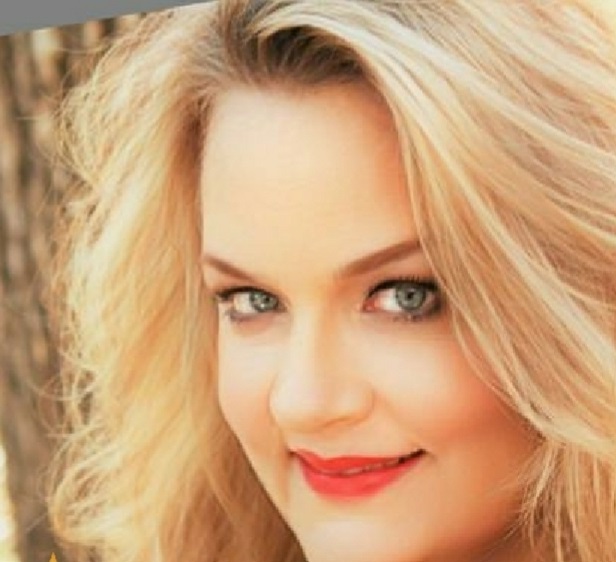
I recently had the pleasure of virtually meeting this charming author when I did a review of her thriller, Zero Balance, earlier this month. This woman is an award winning, muti-genre, best selling author with over twenty books on the bestseller lists. Her genres include: Mystery, Thriller, Suspense, Science Fiction, Post-Apocalyptic, Coming of Age, Addiction, Romantic Suspense, and Short Stories. She’s an independent author, who founded her own independent press, BSMW, and one of her books has been turned into an independent film. Please help me welcome Ashley Fontainne to Writing to be Read.
Kaye: You brand yourself “The Dark Southern Belle” on your website. Where does this title come from?
Ashley: A fan coined the phrase in a review of one of my books. It made me smile. I knew as soon as I read it that it was the perfect catch phrase.
Kaye: Would you share a little about your own author’s journey with us?
Ashley: It has been a crazy ride! Seven years ago, I had no clue how my life would change when I hit “publish” on Amazon Kindle with my first title. I had no idea what I was doing or getting myself in to, and though the road has been rough at times, wouldn’t change a thing!
Kaye: What’s something most readers would never guess about you?
Ashley: I am a huge crybaby. In fact, I refuse to watch certain movies or read particular genres of books because, despite the subject matter of most of my books, I have a very sensitive side. I still tear up at the end scene of Homeward Bound when Shadow appears on the hill.
Kaye: What is the strangest inspiration for a story you’ve ever had?
Ashley: There have been a lot, but the one that stands out the most is for my zombie series. I am a huge fan of the genre and of course, The Walking Dead. I wanted to add a different take on how the zombie apocalypse starts. The rampant abuse of drugs in our society was the perfect fit and the second the two ideas connected, I started writing.
Kaye: You have some really interesting titles. One of my favorites is Fine as Frog Hair. The title makes me want to read it and I haven’t even read the description for the book. How do you decide the titles for your books? Where does the title come in the process for you?
Ashley: Fine as Frog Hair is a saying my grandfather was fond of using when asked, “How are you?” He liked to say, “Why honey, I’m fine as frog hair.” It’s a cute southern expression and since the short story is loosely based off his life, I thought the title fit perfectly. Like the stories, the titles appear out of thin air.
Kaye: You write in multiple genres. What are the differences for you as you write each one?
Ashley: Nothing really. I refuse to pigeonhole my creativity into just one genre. A story is a story no matter the backdrop. A character and/or idea pops into my head and I just let the words flow.
Kaye: You’re an award winning author. Which awards have you been the recipient of?
Ashley: Number Seventy-Five won the Bronze in Fiction/Suspense from Readers’ Favorite. The Lie won Gold from the Illumination Book Awards.
Kaye: Would you tell us about One of a Kind Covers?
Ashley: As I mentioned earlier, I didn’t know a thing about epub, mobi, formatting or cover design when I first jumped into this crazy world. Over the years, I taught myself how to do all of those things out of financial necessity, and in the course of doing so, other authors came to me, asking if I would design a cover for them, which is how One of a Kind Covers came about.
Kaye: You’re the founder of your own independent press, RSMW. Tell us about RSMW. ; What does RSMW stand for? What’s the story behind it?
Ashley: RMSW Press stands for Rambling Mad Southern Woman, which is also the name of my blog. While learning how to design a website and blog, I was so frustrated I almost gave up. I was complaining about it to my husband and said, “I feel like a rambling mad southern woman,” and poof! There was the title.
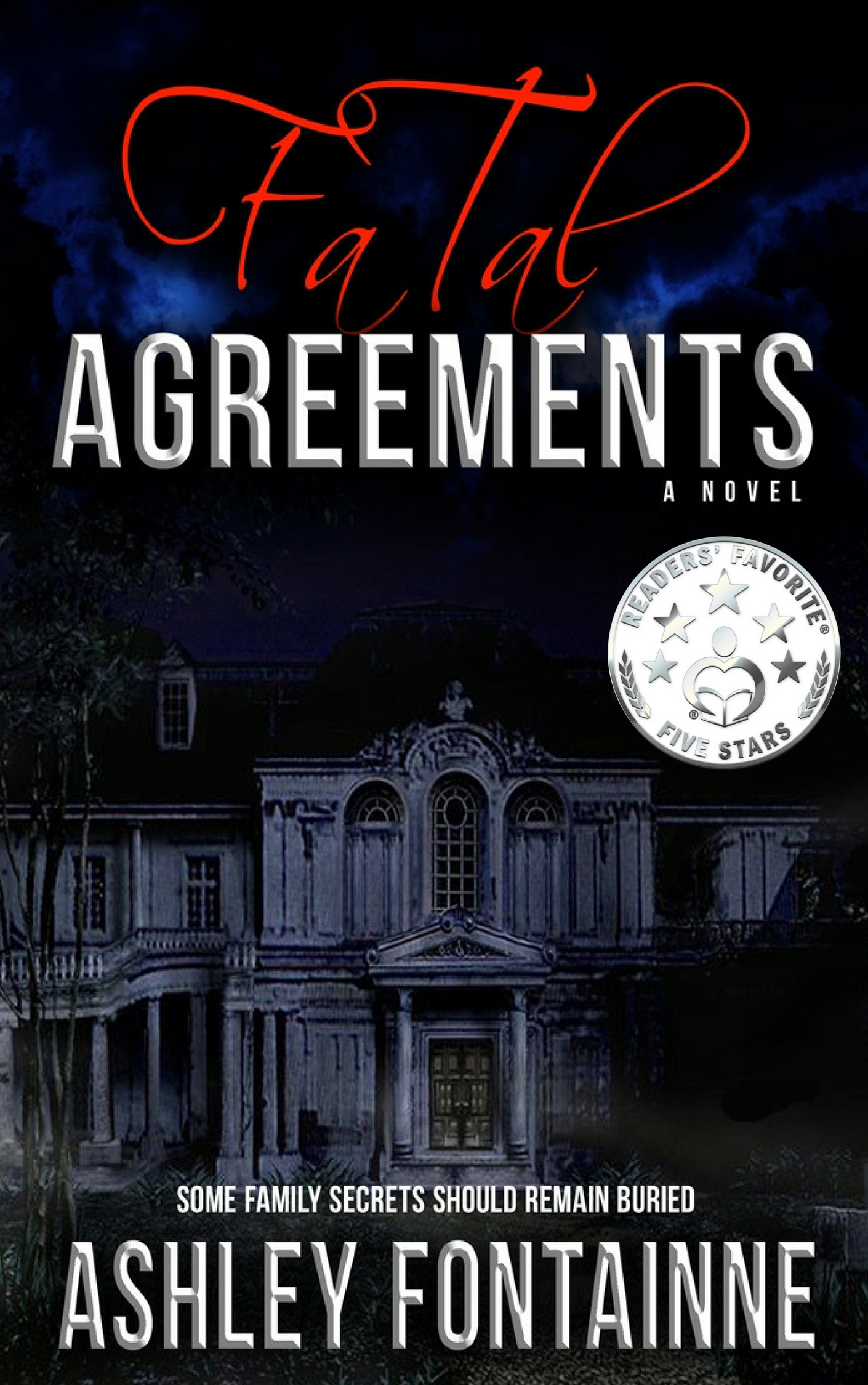 Kaye: Your latest release is Fatal Agreements, which came out April 23rd. Would you tell us a little about that book?
Ashley: Whispered rumors tickled the ears of the residents of an entire town for decades about the disturbing secrets of the old Halstead House, dating all the way back to the early 1920s. Most people didn’t believe them. Several people will soon discover they should have listened.
Three years after struggling to cope with the death of her beloved father and escaping an abusive relationship, Samantha Chapman decides it’s time to return to her hometown of Hot Springs. She buys the ramshackle Halstead House, eager to transform the dilapidated, abandoned piece of history into her new law office and residence, hoping it will be the start of a brighter chapter and a safe haven to escape her personal demons.
Instead of newfound freedom, things take a dark turn when the resurrection of the old home reveals the disturbing secrets hidden within its walls. When youthful transgressions of numerous people come to light, including ones some members of the Chapman family are desperate to contain, it reveals the sins of the past. They collide with the grave mistakes of the present, creating a perfect storm of chaos and death for not only the Chapman family but others as well.
Some will survive.
Others will get burned.
Sam and her loved ones realize some family secrets should have remained buried.
Kaye: Your book Ruined Wings was turned into an independent film. Can you tell us how that came about? Who wrote the screenplay?
Ashley: I wrote the screenplay along with the Executive Producer, Sabrina Stewart. We have been a tight duo since the first day we connected years ago when she auditioned to narrate Number Seventy-Five. I sent her the book and she loved it. Opioid addiction is a major crisis in our world and we hope through this movie to help stop the plague.
Kaye: What was it like to see your characters come alive on the screen?
Ashley: Life-changing. Humbling. Terrifying!
Kaye: You also have a GoFundMe campaign going to fund the film. Would you like to tell us about it and how readers can contribute?
Ashley: The film will be shared at no cost to educators and organizations to be played at schools, churches, civic meetings and youth organizations where it can target those most vulnerable to fall into the pit of abuse and addiction. Donate here: https://www.gofundme.com/independent-film-ruined-wings
Kaye: What is the working title of your next book?
Ashley: Blood Stain
Kaye: Which author, dead or alive, would you love to have lunch with?
Ashley: Edgar Allan Poe.
Kaye: What advice do you have for aspiring authors?
Ashley: Grow a thick skin. Never give up. Hone your craft. Write from the heart.
I want to thank Ashley Fontainne for joining us here on Writing to be Read. You can learn more about Ashley at the following places:
Website: http://www.ashleyfontainne.com/
Facebook Author Page: https://www.facebook.com/ashley.fontainne/
Blog: http://ramblingsofamadsouthernwoman.blogspot.com
Like this post? Subscribe to Writing to be Read for e-mail notifications whenever new content is posted or follow WtbR on WordPress.
Share this:

“Gyre”: A Science Fantasy Romance novel worth reading
Posted: April 20, 2018 Filed under: Book Review, Books, Fantasy, Fiction, romance, Science Fiction | Tags: Atlantis, Fantasy, Fiction, Gyre, Jessica Gunn, Lemuria, romance, Science Fiction Leave a comment
Gyre, by Jessica Gunn is the first book in her Atlas Link series. It is the story of Chelsea, a descendent of Atlantis, who is just discovering her amazing powers and Trevor, a Lemurian descendent, who should be her mortal enemy, but instead falls for her in a big way. See? Boy meets girl, but there is no way they can be together, yet they will fight against all the odds, and even against family to prove them all wrong. Now if that isn’t the recipe for a perfect romance, I don’t know what is. As they are traveling aboard a top secret naval submarine complete with cloak, I think Gunn has the science fiction elements and Lemurians and Atlanteans with super powers pretty much covers the fantasy realm. If it sounds confusing, read the book. It’s actually a pretty good genre combination.
Chelsea is discovering her powers. First super strength, which she was able to ignore, or deny, but now she keeps teleporting to a location near Trevor any time she gets stressed. The problem is, Trevor is on a top secret U.S. Naval Sub cruising the ocean depths, but on that vessel also may lie the answers to Chelsea’s unasked questions about who she is really and she might learn to control her newfound powers. Unlike Chelsea, Trevor is aware of his heritage as a Lemurian, but he refuses to get involved in the war his people are wageing with the Atlanteans. He just can’t believe the girl he’s falling for is his innate enemy, and he’s able to keep it all under control until they find an Atlantean outpost filled with valuable artifacts on the ocean floor. It seems everybody wants those artifacts for their own reasons, and we can only guess who will get them, and where Chelsea will end up.
This story is well-written, with minimal telling of the tale. The characters are likeable, except for Trevor’s friend and fellow Lemurian, Valerie, who is a bit difficult to figure out, but I think that’s done on purpose to throw readers off the trail. I give Gyre four quills.
Kaye Lynne Booth does honest book reviews on Writing to be Read in exchange for ARCs at no charge. Have a book you’d like reviewed? Contact Kaye at kayebooth(at)yahoo(dot)com.