Pros and Cons of Traditional vs. Independent vs.Self-Publishing (Part 10): Conclusions
Posted: December 19, 2016 Filed under: Books, Commentary, Promotion, Publishing, Self-Publishing, Writing | Tags: Books, independent publishing, marketing, Opinion, promotion, Publishing, Self-Publishing, Traditional Publishing, Writing 7 Comments
This series on publishing has been a lot of fun to create, and I hope maybe there are some of you who have read all of parts 1-9. I started it because I found that while those in my academic career seemed to be in favor of traditional publishing, with many instructors providing information about self-publishing as an option only reluctantly, while authors all around me were getting their work out there by self-publishing their books.
As I looked into the topic more, I found that some folks used the terms independently published and self-published as if they were interchangeable, while independent publishers are really smaller independent publishing houses that are not among the “big five” traditional publishers. As stated in Part 2, for the purposes of this series that is how I will refer to and view independent publishers.
One of the reasons I enjoyed writing this publishing series was that I am fortunate to know many authors, from all three publishing models, and I was able to gather many different viewpoints, examining it from all sides. Overall, I was able to obtain a pretty healthy balance between the three models. I interviewed self-published authors Jeff Bowles, Tim Baker and Arthur Rosch. In the traditional publishing arena, I talked with children’s author, Stacia Deutsch and historical and biographical author, Mark Shaw. I was only able to interview one independently published author, YA author Jordan Elizabeth, but to even it out, I also interviewed two independent publishers, Curiosity Quills Press and Caleb Seeling, owner of Conundrum Press. And for a nice rounded point of view, I spoke with my friend and children’s author, Nancy Oswald, who has published under all three models.
Now is the time to look at the series as a whole and see what conclusions can be drawn. While I think all authors secretly long for a traditional publishing deal, because being picked up by a major publishing house is ingrained in us as a symbol of success, I see independent publishing houses as a feasible alternative to holding out for the big boys, which can take a long time and for some of us, may never pay off. In some instances, debut authors have a better chance of being picked up by a smaller independent press. With both these options identifying markets which would be a good fit for your work, preparing submissions, writing cover letters and queries, synopsis and outlines will take up a lot of time which might be better spent on writing stories. Once accepted by either a major or a smaller publishing house, the author may be expected to do a good portion of the marketing and promotion, as well, although services such as editing and illustration may be provided.
The upside to signing with a traditional publisher is that the major publishing houses pay out an advance on projected royalties, so major money can be seen in your near future. Independent houses may also pay out advances, but they won’t be nearly as big, and some do pay out a higher percentage of royalties. Of course, as Tim Baker pointed out in Part 2, the flip side to collecting a sizeable royalty is if your book flops. It would be a drag to have to pay it all back. Independent houses may also pay out advances, but they won’t be nearly as big, and some do pay out a higher percentage of royalties.
For self-published authors, there are no advances, but they keep a higher portion of their royalties than with traditional or independent publishing houses. Still, there is no big money now, and no guarantee that there ever will be. Authors may be waiting a long time for their writing to pay off.
As Stacia Deutsch mentioned in Part 4 of the series, traditional publishers provide professional editing and illustrators, to be sure your final product is of good quality. I believe this is true of independent publishing houses, as well, but you won’t find it available through the self-publishing process; one reason self-publishing carries with it such stigma. Gatekeepers insure the book you put out will be the absolute best it can be.
Despite the stigma surrounding self-published authors, due in part to a few self-publishers who like to take short cuts in lieu of putting out a quality product, there are some very good self-published authors out there. As Jordan Elizabeth pointed out in Part 6, self-publishing has a lot to offer. Self-published authors have a lot more control over their work than traditionally published authors, who do not chose their own cover art, and may not even get to keep their own title.
As Jeff Bowles pointed out in Part 1, another possible advantage to self-publishing is the ease and relative inexpense for today’s authors. You can publish a book with Amazon almost for free, and collect either 35% or 70% of your royalties, depending on the price you place on your book. I can attest to this as it is what I did with my short story, Last Call, and it didn’t cost me one cent. At least that way, if my story doesn’t rise to the top of the best sellers lists, (which it hasn’t), I really haven’t lost anything. The important thing to remember when self-publishing is that you need to put out a quality product. It is worth it to find a good editor, and for all of us starving writers out there, an editor can be employed for a minimal expense. I also suggest utilizing a good critique partner when funds are low, but be sure to have some type of editing done, by someone other than yourself, before publishing your book.
Although Amazon has made publishing extremely easy and inexpensive for authors, they have also monopolized the industry and are making it more difficult for independent publishers, as Caleb Seeling explained in Part 8. Learn more about the negative effects Amazon has had on the publishing industry in the Institute for Local Self Reliance’s report, which emphasizes, from a consumer standpoint, the need to buy local and battle monopolization. If readers heed this warning and buy their books from local independent, or chain, bookstores right down the block, the publishing industry may change yet again.
Amazon’s monopolization affects authors and reviewers as well, as is discussed in What Amazon’s New Review Policies Mean for “Writing to be Read”. As much as Amazon’s review policies effect the reviewer, they also effect the authors who are depending on those reviews to get their books sold.
Author Mark Shaw gave us a heads up about vanity, or subsidy publishers, charging unsuspecting authors exorbitant fees to publish their work as Mark Shaw warns in Part 5. They prey on authors who desire to get their work published so bad that they are willing to empty their coffers to do so. These publishers can get outrageously expensive for authors, so don’t be drawn in. The kicker is that even if you publish on Amazon or Create Space in order to fit your budget, you still may need to spend quite a bit of time and/or money on marketing as Art Rosch tells us in Part 3.
Independent publishing houses, also referred to as small or medium-sized presses, work along the same lines as traditional publishers, but they don’t publish as many books each year as the big five do. In addition, they tend to be more specific in what they are looking for, with most having very specialized niches that your book must fit into to be published. Although all independent publishers may not follow this practice, publisher Caleb Seeling says he actually seeks out authors whose work fits into his niche. In any case, authors should be familiar with submission guidelines of the publishing house they are submitting to, whether large or small. In her article, How to Smartly Evaluate a Small Publisher, Jane Friedman, of The Hot Sheet, (the publishing industry’s news letter for authors), offers some great tips on what to look for.
In Part 7, Nancy Oswald points out one of the big advantages to publishing with a small press is the more personal relationship between author and publisher. Whereas a traditional publishing house may not be able to put a name with a face, independent publishers work closely with their authors because they only have a few at any one time. Independent publishers may also have a shorter wait time for publication than traditional houses, which can be quite lengthy.
And then there are the new kids on the block, like Curiosity Quills Press, which are hybrid publishers, offering various combinations of traditional percs with self-publishing author responsibilities. These small independent presses may charge authors for some services, like subsidy publishing, but they also provide a certain amount of author copies at no cost, provide author support, and the services they do charge for are optional. You can find out more about this new model of publishing in my post, Hybrid Publishers: What are they all about?
After hearing from the experts, it seems no matter which model you choose to publish under, there is still a lot of non-writing activities required of authors, including marketing and promotion, resulting in the need for Today’s Authors to Wear Many Different Hats. Of course, you can also do as author Jeff Lyons suggests in his interview with Arwen Chandler, and hire a third party to handle such tasks, so we, as authors can get down to the business of writing. The only problem I see with this is that you must make money before you can spend money, paying someone else to do the tasks that don’t come as naturally as writing does.
Like this post? Subscribe to email to receive notifications to your inbox each time a new post is published. Or follow Writing to be Read on WordPress.
Share this:

Movie Review: The Neon Demon
Posted: November 19, 2016 Filed under: Commentary, Film Review, Movies, Opinion, Screenwriting, Screenwriting, Uncategorized Leave a commentI’m not someone who is particularly a fan of movies that are more about being artistically beautiful than having a solid plot, but after seeing The Neon Demon claimed to be horror, and several friends recommending it to me, I knew I had to see it. A great movie to me is one you can get lost in, either because of the plot, or the characters, or the setting/world, or even because it’s so visually stunning that you just want to stare and don’t care what’s happening. I wasn’t sure about The Neon Demon from the few trailers I saw beforehand, but it looked like it had potential so I decided to check it out despite it not being my typical choice of movie.
***SPOILERS BELOW***
The Neon Demon is a movie that has so much about it that is so brilliantly, beautifully, and boldly done that it’s impressive. I could go on for a long while about some of the amazing craftsmanship that went into this movie (and I will below), but I felt like the movie also had one amazingly large fault—its plot. As I said above, a great movie for me is one I can get lost in, and while I can appreciate a lot of the talent, craftsmanship, and just pure artistic awesomeness of this movie, I couldn’t get lost in it for several reasons. I know I am not the target audience for this style of movie so I don’t fault it in the least, but I do want to discuss the things that I loved individually, as well as the things that kept me from loving the movie as a whole.
Cinematography and Sound
I am pretty sure that at least 90% of the shots in this film could be captured into a still frame picture and hung on a wall somewhere as art without question. It’s beautiful, and scene by scene. It’s captivating in that you want to look at it. The balance of colors and costumes, makeup and posing, works so well throughout that it really is enticing to look at even amidst the gore and violence. The opening shot of Elle Fanning as Jessie laying “dead” on the couch immediately has you intrigued because of the surprising prettiness of it all. You don’t know whether it’s real or a photo shoot and you can’t look away. The trend of that alluring beauty carries throughout the film, and it fits well given The Neon Demon’s themes of narcissism and vanity.
Right along with the cinematography was the sound throughout the film. The music used worked incredibly well to create these intense moments during scenes, but what I loved just as much was the use of silence. There are these intense moments where the silence is distinct, and it makes you focus even more on what you’re seeing. Many films or shows don’t use silence in a noticeable way and there’s always some kind of sound going on, but The Neon Demon embraced it at times to heighten moments such as the scene where Elle Fanning is at her first “real” photo shoot. I also appreciated the silences between characters in dialogue because, while they were long at times, I felt like they were used at appropriate moments for emphasis on specific elements or events.
Acting
The other major thing I have to say I enjoyed in this film is that I felt like every actor was captivating in their own way. The characters themselves may have had some flaws in their development (or lack of), but the actors who played them were amazing. Elle Fanning managed to walk that mysterious line of whether her character was predator or prey perfectly, and Jena Malone as Ruby was simultaneously disturbing yet sympathetic. Surprisingly, though, was the fact that Keanu Reeves almost stole the show. It’s not surprising because of who he is—he’s had plenty of great performances—but it’s surprising because of his minimal amount of screen time. Maybe it was just me, but every time he was on screen I felt like he stole the show. Some of it could be that his character was the most physically expressive of them all, and the most distinct personality-wise of all the characters, but I think a huge portion of it just has to be Keanu Reeves as an actor and his abilities.
The Flow
As shown above, so much about this movie was great and worked incredibly well. I think the first area things really faltered for me was the flow. As I said before, if I’m going to get lost in a movie I have to have something to get lost in. For The Neon Demon, the most likely element for that would have been the pure beauty of it all, but the flow kept that from happening for me. While almost every shot was stunning and perfectly crafted, the flow between shots wasn’t always coherent of consistent. Just as I was being lured in by the imagery and about to stop caring about the plot, the tone or the story thread would abruptly shift and throw me out, leaving me wondering what the heck was going on. A great example of this is when Keanu Reeves’ character breaks into Elle’s room during the dream/vision sequence. At that point, the film’s tone and pacing shifted abruptly changing everything. We are in this vain and edgy world of modeling for 2/3rds of the movie and then suddenly we have potential rapes, necrophilia, murder, and cannibalism.
The Plot
This is the real area that is the main flaw of the film. There isn’t much of a plot built up other than the idea of a young, new girl in town getting into the modeling industry and being preyed upon by others in LA who want something from her. I could handle that as a plot if that’s all it was, but there are so many elements in it that seem to lead somewhere only to be dropped away and forgotten, never explained, or not fully utilized. Because there are all these little threads and elements that are thrown in for either artistic pizzazz or random impulse, and because the main plot is so sparse, things get muddled.
An example of the random plot elements are things like the mountain lion appearing in Elle Fanning’s room. It is really used as an excuse to give Keanu Reeves’ character more screen time and to give her “boyfriend” and excuse to go pay off her debt and be her lapdog. In general, though, the whole set-up of the mountain lion randomly getting into her bedroom just seems weird, and like it’s going to be some kind of plot line later that is explained but never is. I did get the sense that it was supposed to sort of be symbolic that there are predators everywhere she looks lurking in the shadows for her, but that was obvious from the moment Jena Malone’s character laid eyes on Elle Fanning in the first scene and the film didn’t need an actual mountain lion to nail the point home. If the film just had the straight simple plot without the random side unexplained elements, like the mountain lion scene or the scene where Jena Malone’s character seemingly gives birth after eating Elle (which was also never really explained or returned to), then I think it would have been much better off.
Final Notes
Overall, while there was so much brilliance to The Neon Demon and some truly amazing craftsmanship that made me want to love it, it was hard to do so when I was kept from being immersed in it. I could go on for a long while about different aspects of this film, but instead, I’ll end with a final thought I had when thinking about what to write here. The Neon Demon is primarily about beauty, vanity, and narcissism, and the film itself manages to be narcissistic. The film is so focused on being beautiful in every moment that it forgot to add real depth. Some could argue that the metaphor and symbolism of the film could be considered depth in place of a plot, but I’m not so sure because so much of that symbolism was not subtle.
Ultimately, whatever I think about the plot or flow, the film is definitely worth watching for anyone who appreciates cinematography, unusual art, or the just plain odd. I can almost guarantee you’ll be asking yourself “What the **** is going on?” at least once during the film, but I can also almost guarantee you’ll find yourself entranced by the beauty of some of the camera shots and scenes. Just keep in mind it does get pretty dark, and as mentioned above there are scenes of murder, necrophilia, and cannibalism, so it’s definitely not for everyone.
Robin Conley offers great writing advice most Wednesdays and shares an occasional guest review on Writing to be Read. If you just can’t wait until next week to find out more, you can pop into her blog, Author the World, for more tips, or a weekly writing prompt.
Share this:

A Peculiar Experience: Miss Peregrine’s Home for Peculiar Children
Posted: November 5, 2016 Filed under: Commentary, Film Review, Screenwriting, Screenwriting, Uncategorized, Writing | Tags: Movies, Opinion, Review, Reviews 1 Comment
The first word that came to mind after seeing Miss Peregrine’s Home for Peculiar Children was peculiar. The movie is peculiar. I went into the film knowing next to nothing about it. I haven’t read the book, I think I may have seen a trailer at some point but don’t really remember it, and I hadn’t looked into the story at all. All I knew about the film was that it was directed by Tim Burton, it was based on a book, and it was about some kind of school for gifted kids.
I am a huge fan of fantasy films, and I love Tim Burton’s work, so I was super excited to see what this movie had in store for me. That being said, by the end of the film I couldn’t quite put my finger on how I felt about it, other than that one word I mentioned above—peculiar. The film is just peculiar. It’s beautifully shot, and the actors, especially Eva Green, do a wonderful job, but the film didn’t leave me feeling satisfied. It left me with a lot of questions, and a few complaints.
——————————SPOILERS BELOW—————————
Visuals and World
I like starting by talking about something I liked, and this film was visually beautiful. It had some great shots, and everything from the camera angles to the clothing was spot on for me. The style and artistic elements of Tim Burton’s films are always one of my favorite parts, and this film was no exception. The one thing that truly kept me hooked throughout was the visual element, and just the fact that I was enjoying looking at the film.
The other element I really liked was just the concept of the world. I loved the idea of Jake traveling through the time loops at the end, working his way back to the peculiars. I’m not sure I have a clear idea of how it would work, but I do think I got enough of a sense that it was believable. The details they gave at the end as well were just enough to create this sort of romanticized image of his journey back to the group without extending the final act unnecessarily, which was perfect.
The Conflict
I think the biggest downfall for me in the film was the fact that the real goal and conflict of the story took more than an hour to get to. I know because I looked at my watch when they finally started discussing Samuel L Jackson’s character and why they had to stop him. I don’t mind a long movie, and I don’t mind giving the plot time to build and unfold, but this film felt like it just took too long. Yes, the visual elements of the movie were stunning and wonderful, and it was a fascinating world to get lost in, but I wish we could have got lost in it while the plot was moving forward.
From the moment Jake first sees Samuel L Jackson’s character outside his grandfather’s house to the moment we finally learn he’s the antagonist almost an hour had passed. I usually have a good memory for details in a story, but by this point in the film I had almost forgotten that Jackson was in it and I was mostly just trying to figure out where the story was going. I feel like part of the problem that made the story seem like it was standing still was that Jake’s goal in the story initially was not to find out what happened to his grandfather, it was to see if his grandfather told the truth. The moment Jake arrives at Miss Peregrine’s we know that he was and then Jake has no real goal, no conflict. Yes, there’s still some information he can find, but he doesn’t actively seek it.
If there had been slight more focus on the thing that killed his grandfather, and more determination behind Jake’s search for answers, I think the time it took to get to the plot wouldn’t have been as bad, but it still went on too long. Getting lost in the world was great, but it felt like the plot paused for a short period of time while we got immersed in the world. Instead, entering the new world should have boosted the plot into action.
Plot Holes
The one thing that really surprised me about this film was that there were three big plot elements that I felt were too big to have been missed. The first is a simple one—Jake’s parents. I love Chris O’Dowd, but the parents disappear from the story when they’re there at all. I guess I could buy the whole impulsive trip across the world for the story, but once they get there the dad becomes almost a burden to the plot. Instead of being a smooth element in the story, a problem Jake has to work around to get where he wants to go, it feels like the dad is forced into the story in a clunky way that makes it completely obvious that he’s supposed to be in the way of Jake’s goal. It’s never more obvious that the dad doesn’t fit in the story then at the end—he doesn’t even get a proper wrap up of his plotline! While I think Chris O’Dowd played the role beautifully, and he always makes me laugh, his character never comes back into the story at all, making it feel like the whole plotline shouldn’t have been in the movie.
The second thing that surprised me is the reveal of the twin’s powers at the end. Throughout the film I wondered about the two of them as they were the only ones to not have their powers clearly shown or mentioned (unless I missed the first mention). At the end when their masks are lifted and the woman turns to stone, it immediately made me think two things. 1. Oh, that’s cool. 2. Wait, why didn’t they just do that to Samuel L Jackson in the house when he first came into the time loop? Their powers defeat the whole movie.
If we had learned about their powers earlier and there was some kind of explanation about why they couldn’t use them all the time—such as on Jackson’s character—it would have ruined the reveal, but it would have kept the sequence of events justifiable. By not having this, we got the cool reveal of their powers at the end, but it makes all the other characters look stupid. The twins could have dropped into the pit with all the evil people and turned them all to stone. They could have done it the first time they saw Jackson. They could have followed Jake downstairs when he goes to rescue the birds and done it then. Not justifying the lack of use of their powers creates a huge plot hole.
Final Notes
Overall, I did enjoy Miss Peregrine’s Home for Peculiar Children despite the flaws. As I said above, visually it’s just a fun movie to watch, and seeing Eva Green embody Miss Peregrine was fabulous. She really is wonderful in the role. The plot holes and issues mentioned above are just things that made the movie go from great to just okay for me. I’ll have to watch it again at some point to see if there’s something I missed regarding the twins or the father, but overall I think the first word that came to mind when watching the movie is the right one. It really is peculiar. It’s fascinating, and alluring, and I wanted to love it, but I just couldn’t get lost in it the way I wanted to no matter how hard I tried.
Share this:

Today’s Authors Wear Many Hats
Posted: October 3, 2016 Filed under: Books, Commentary, Opinion, Promotion, Publishing, Writing | Tags: Books, Opinion, promotion, Writing 5 Comments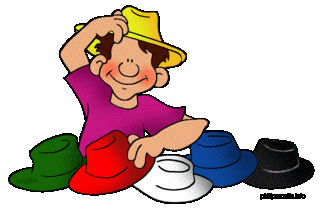
In days gone by, authors needed only to wear a “Writer’s Hat”, their agent taking care of finding a publisher for their work, the publisher taking care of the actual publication and all of the marketing and promotion. But, today’s author has seen the rise of Amazon and digital publishing, and a surge in the self-publishing industry as a whole. The surge in the self-publishing industry brought about many changes, including what an author’s role is in the publication process. The rise of Amazon and digital publishing changed the way readers consumed the written word and the ways in which a writer’s works reach the general public, and boosted their book’s potential readership to a global scale.
With traditional publishing, an author writes a novel or has an idea for a book, in the case of non-fiction, so they query publishers to if they can find one who is interested in their work. When they finally receive a letter expressing a publisher’s interest in their work, amid all the letters of rejection, they send their complete manuscript o the publisher, or in the case of non-fiction, they finish writing their book and then send it. Then they wait some more while other read and ponder their work, and then pass judgement on it. If they are accepted they may receive an advance, but some publishers only offer royalties. My M.F.A. professor, Russel Davis advised, “Get as big an advance as you possibly can because chances are you’ll never see any royalties.” He advised this because he knows the advance is just that, and it must be paid back before any royalties can be owed you, so that advance may be all you ever get for your book, unless of course it goes viral and hits all the best seller lists. (Hey, stranger things have happened.)
The rise of digital publishing offered more publishing choices than ever before. Now an author can publish their book digitally or in print, or both. The rise of Amazon, with their 70% royalty for authors made it possible for authors to publish their work with very little out of packet expense, and Amazon’s market spans the globe, offering a much broader potential readership than would have been possible before. Amazon does offer any advance, in exchange for a higher percentage of royalties, so you still have to sell a lot of books to make any real money, although small amounts will trickle in from time to time.
Other changes Amazon and digital publishing brought about may not have been quite so positive. Amazon doesn’t charge the author up front to publish a book, so anyone can afford to publish with Amazon, and anyone did. There was a rise in the number of authors who chose to self-publish, but many of them weren’t any good, or were just too lazy to have their book edited and revise it before publication. The result was a lot of poor quality books out there, giving self-published authors a bad reputation in “reader world”. And that’s where it counts. Although many good authors self-publish high quality books, you know the old cliché, all it takes is one bad author the reputation of the whole bunch.
 I’m told that even if you manage to land a traditional publisher, especially if it’s one of the smaller, independent houses, publishers are expecting more out of authors. The author may still end up doing a lot of promoting and marketing, because even the big publishing don’t want to invest the time and energy anymore. Maybe independent publishing has proven to them that authors are capable of functioning quite well under so many hats.
So, which way is better, independent or traditional publishing? I still don’t know, but be on the lookout for a series of articles that look at the pros and cons of each, “Traditional vs. Independent Publishing”, which will delve into this question further. I suspect it will depend on what your individual needs are, and what you’re expectations from publication are. I plan to interview authors and publishers to find out the answers. To be sure you don’t miss them, subscribe by email in the upper right hand corner, and you’ll receive notification every time there is a new post.
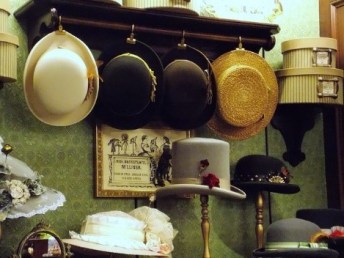
For now, it looks like either way an author chooses to go, he or she had better purchase a hat rack, because it doesn’t like we’ll be hanging any of them up for good any time soon. On top of writing, authors today must also know how to market and promote our work, build an author platform, create book trailers, and those of us who are gifted with artistic talent even illustrate their own books and design their own book covers. For now, it looks like that’s what we have to do to publish our books successfully.

Like this post? Subscribe to Writing to be Read for e-mail notifications whenever new content is posted.
Share this:

Creating Story Equals Problem Solving
Posted: August 8, 2016 Filed under: Commentary, Opinion, Writing | Tags: Creative Fiction, Fiction, Writing, writing advice 1 Comment
Writers are problem solvers. That’s what we do. Solve problems. It doesn’t matter whether you’re fleshing out a plotline for your latest novel or working up a beat sheet for a screenplay, our job is to figure out how to avoid or circumvent any obstacles that prevent your characters from reaching their goals. Of course, we also create some of the obstacles on purpose, because that is another thing that we do. We put our main characters through hell.
But, that’s not all. I’m also talking about things like faulty logic, which makes it impossible for your characters to do something you need them to do in the story, or things that don’t make sense or pull the reader out of the story, or when there’s too big of a stretch, too much disbelief to be suspended. These are the hurdles we, as writers, must overcome to not just tell the story, but to tell the story well.
Problem solving. That’s what creating story comes down to, and it’s our job, as story creators, to shape the story to make sense, have plausibility and flow smoothly. It’s our job to think through plot lines and make the story work by our clever crafting of words. It’s our job to make sure each character completes their personal story arc, and ensure that the main story arc flows through to the desired conclusion. It’s our job to help the main characters face their fears, overcome their fatal flaws and conquer any obstacles we throw at them along the way. And, it’s our job to be sure the story is believable and makes sense.
Does a story have to have eloquent language? No, although some do. Does it have to have a happy ending? Only if it is a romance. Does it have to make us laugh? If it’s a comedy, but humor is allowed in almost every genre.
There are things a story does have to have. Every story does have to have a beginning, middle and end. At least the main story arc and those of your main characters must be completed, moving the story along and showing character growth and transformation.
A story does have to have a certain logic to it, and it has to have characters who are relatable enough to make your audience care. There are ways to do both, and so much more, if you know how to write a well-crafted story. Robin Conley has made some great suggestions on how to make your audience care in her Weekly Writing Memo, each Wednesday, (or Thursday), here on Writing to be Read.
So, the next time you’re applying for a writing gig, be sure to put down problem solver as one of your many impressive skills. You won’t be lying. Creating Story = Problem Solving.
Share this:

The new “Point Break” fails to raise adrenaline levels
Posted: July 2, 2016 Filed under: Commentary, Film Review, Writing | Tags: Film Review, Point Break, Review, Writing Leave a comment
I just watched the new Point Break, the one that came out last year, and I am sad to say, I was very disappointed. Maybe on the big screen, the special effects were impressive, but on video, they are obvious computer imaging. In the original, 1991 movie, when they jumped out of the plane and were free falling through the sky, viewers could feel the adrenaline rush, and when they were riding the waves, we almost felt wet. The graphics on the 2015 movie aren’t even convincing, and viewers don’t feel that same excitement when they swooped through a mountain canyon in wing-suits. A lot of it just didn’t look real, so there was no reason for the adrenaline to flow.
Perhaps if the title were changed, and the characters in the 2015 movie didn’t have the same names as the characters in the original 1991 Point Break, it could be judged upon its own merit. But as it stands, they’ve set the new movie up to be compared to the original, which I feel is a big mistake. The original movie was an action movie, in which an FBI agent infiltrates a group of surfers who are bank robbers, and it was fun to watch. The 2015 version has a completely different tone than the original movie, being more of an international crime suspense thriller with a lot of extreme sports thrown in.
The transition to the international plot did not work well. The Johnny Utah character, played by Luke Bracey, I conveniently involved in extreme sports, before becoming an FBI agent, so he doesn’t waste time learning to walk the walk in order to infiltrate the culture. He’s already a member of the club. They all know him. Then, just as conveniently, maybe even more so, he figures out where to look for the bad guys, goes straight there and the first group he encounters are the guys he’s looking for, and the Brohdi character, played by Edgar Ramirez, more convenient still, saves him from drowning after a surfing incident. Too many coincidences for me to buy in. Sorry.
And let me add here, though I’m reviewing this film based on the merit of the screenplay and story, that Bracey is no Keanu Reeves and Ramirez is no Patrick Swayze. In the original movie, it was clear early on that our bad guys were thrill seekers, adrenaline junkies, and viewers understood where they were coming from, what their motivation to take so many risks and live so dangerously was. I did not get that sense about these guys. And I didn’t really get a sense of how bad they were. The creators failed to create a villain I could love to hate.
(SPOILER ALERT – There may be spoilers from this point on.)
Patrick Swayze’s Bohdi character was such a villain. You knew he was a bad guy and he had to go down, but you could understand why Utah agrees to let him go out his own way, at the end, after winning their struggle in the water. Ramirez’s Bohdi is not. I didn’t get what made him tick, or what his motivations were. At the end of the 2015 movie, when Utah lets Bohdi go, I didn’t get it. There’s no struggle, no fight. Utah doesn’t even try and talk Bohdi out of it. Bohdi says, “You’ve got to let me go”, and Utah says, “Okay.” Maybe I don’t get it, because empathy with these characters is something I never felt through the whole movie. There was just no connection.
Also, the villains in the original Point Break were bank robbers, financing their surfing tour with their spoils. The villains it the 2015 movie appeared as modern day Robin Hoods, robbing from the rich and giving away all the spoils. It’s difficult to see them as bad guys because they have a cause.
The one interesting twist I felt the 2015 movie had was the girl, Samsara, who we at first believe is a love interest, but later we are surprised to learn she’s a part of the crew, after Utah shoots and kills her in the kiss of death moment. Of course, in the original, the girl is a love interest and the bad guys use her as leverage to get Johnny Utah’s cooperation, so I was expecting something similar here. I liked that twist, where there was not much else to be liked about this movie. As I mentioned above, I think this movie might have done alright as a standalone, but it doesn’t measure up to the original movie. I was not impressed with the recent Point Break movie, and I can only give it two quills.
Kaye Lynne Booth does honest book reviews on Writing to be Read, and she never charges for them. Have a book you’d like reviewed? Contact Kaye at kayebooth(at)yahoo(dot)com.
Share this:

Acceptance or Rejection – Which do You Prefer?
Posted: June 27, 2016 Filed under: Commentary, Fiction, Opinion, Promotion, Publishing, Western, Writing | Tags: Acceptance, Creative Fiction, Fiction, Flash Fiction, I Had to Do It, Kaye Lynne Booth, Rejection, Western, Writing 1 Comment
 Back in May, I wrote a post about dealing with the rejection by a publisher of Delilah. My response to the rejection was to submit my novel elsewhere and keep hoping it will get picked up. More recently, I did a post on hybrid publishers, as I explored the concept after I had a hybrid publisher request my full manuscript. Unfortunately, they passed on Delilah, too. It is out to yet another publisher now.
I could go into another post about rejections. Lord knows, I’ve gotten plenty. But I’ve always been one to see the glass half-full side, rather than half-empty, focusing on the positive side to everything, so I think I’d rather talk today about acceptances. I don’t think anyone will disagree when I say acceptances are much better than rejections. You don’t have to be a writer to figure that one out.
You don’t get them as often as rejections, but they’re a lot more satisfying. But there’s a reason I want to write a post on acceptances. If you follow me on Facebook, or Twitter, or Google+, you may have seen my very recent post announcing that my flash fiction western story, I Had to Do It, has been picked up by Zetetic: A Record of Unusual Inquiry.
It’s true this isn’t a big paying publication. I’m certainly not going to get rich from this one little 850 word story. Flash fiction never pays a lot. There’s simply not enough words to make the pennies add up to much, even with higher paying publications. But, I was still elated when I received the acceptance, because my story found a home and people will now read it, and because it is still one more publishing credit for me. I can’t explain the rushing feeling of excitement and pride that small note from the editors brought me. I think most of all, it was thrilling to know that someone else really liked my writing. It was a affirmation of my own belief that my writing really is pretty good.
That probably sounds silly to those who have not yet received an acceptance. (Never fear. It will come.) But we writers are an odd lot, and we are filled with fears and self-doubt. Filled with it. Most of the time we can keep these elements of our inner beings at bay by simply pecking away at the keyboard or filling up sheets of notebook paper, but every once in a while we let our guards down and that’s when they strike. The fear and self-doubt simmer in us, just down below the surface, until they see an opportunity, a weakness, and then they reach up and grab a handful of us and don’t let go.
I think just about every writer worries that the only person in the whole world that really thinks their writing is good is themselves. Friends and family don’t count because they may be saying they like it so as not to hurt your feelings. When you receive an acceptance, any acceptance, it tells you other people do like your writing, and motivates you to get busy writing more.
It’s a good feeling. One I think every writer needs to experience. It can’t happen unless you submit relentlessly and write, write, write. That’s my advice. Write your heart out and then submit like crazy, and never, ever give up. The notes that say, “yes”, make it worth surviving all the ones that said, “no”. So what are you waiting for? Get writing!
Like this post? Subscribe to Writing to be Read for e-mail notifications whenever new content is posted.
Share this:

Write What You Know
Posted: May 23, 2016 Filed under: Commentary, Fiction, Nonfiction, Writing | Tags: Creative Fiction, Fiction, Nonfiction, Writing, writing advice, Writing Process 1 Comment
As an emerging writer, I hear that advice a lot. I think we all do. But what does it really mean? Before a writer can write about a subject or topic, she must experience it. Which is not to say that it isn’t possible to research a subject and then write about it as if you’re an expert, or at least know what you’re talking about, but it is saying that when you experience something, you must own the emotional aspects associated with it, and that will come through in your writing.
Now you know why I am not a travel writer. I wish I were, but I don’t travel often. Travel writers get paid big bucks. No, I’m a prime example of a starving artist. I work menial labor jobs to scratch out a living, and seek out cheap entertainment. But I do write what I know.
When I started out freelancing, I knew one thing. I loved to write, and I wanted to find a way to make a living at it. When I filled out the application for Examiner.com, I had to pick a category to write on. I chose writing, and as the Southern Colorado Literature Examiner, I covered writing events in southern Colorado and wrote author profiles and book reviews for Colorado authors. I served in this capacity for six years, not because I was getting rich off it, but because I loved what I was doing. I met many Colorado authors, most of whom I’m still in contact with, I got free ARC copies of books for review and I occasionally was able to attend some great writing events, such as the 2013 Pike’s Peak Writers’ Conference, 2012 Writing the Rockies Conference and Performance Poetry Readings, with wonderful poets such as word woman, Rosemerry Wahtola Trommer. The money was never an issue for me, (I maybe made a whole $20 during the whole six years I wrote for Examiner), but the perks were great. It may have actually played a role in my acceptance to Western State Colorado University as a graduate student in their low-residency Creative Writing program, since I had interviewed and written a three part profile on the then director of their poetry concentration, David J. Rothman. But I digress.
When I applied to write for Demand Media writing How-to articles, they didn’t have a lot of call for articles to do with writing, so I had to think. What else did I know? I started out with simple things like How to Put a Chain Back on a Huffy 10-speed Bicycle. I’ve always been an avid gardener, since I helped my grandfather plant petunias when I was a little girl, so I ended up writing a lot of gardening How-tos, like How to Grow Vegetables in a Bathtub. The topics I wasn’t as familiar with required a minimal amount of research, like The Best Potting Soils for a Vegetable Garden and I had references at hand to look up anything I needed. At $8 per article, the research had to be minimal. If I spent too much time researching, the time spent wouldn’t prove to be profitable.
As I mentioned, I don’t do a lot of traveling, and my entertainment is limited by my pocketbook, but I’ve learned to write about the things I do know. You won’t catch me writing about the Emmies, or the Oscars, or $100 a ticket charity fundraisers, because I’ll never be at one of those events and I know very little about them. What you will see me writing about are weird, off the wall things like, How Writing is Like Building a Storage Shed, or Getting in Shape for Writing, which combines my own experience, with building or exercise, with my knowledge of writing.
Of course, that doesn’t work with everything. My experiences on this day involved digging a ditch. Somehow, that just doesn’t seem as creative building a shed. But I could always write a fictional story in which the characters dig a ditch. You see, “write what you know” applies to fiction, too. My whole children’s series, My Backyard Friends, feature characters based on the birds and wildlife that frequently visit my mountain home. I wrote a short story one time that developed from a visit to Lake DeWeese, not far from my home. It was about a woman who walks naked into a waterfall and disappears. The funny thing about that story, titled, The Woman in the Water, was that my narrator turned out to be male, giving it a very interesting twist. But it was still based on the experience I had, hiking up to the top of the dam, and then sitting, gazing down into the waterfall.
It really is important to write what you know, for although some can “fake it” convincingly with just research, in most cases, the readers know. When the words on the page don’t feel genuine, like they’ve come from deep within the author, readers can’t quite buy in to what they’re being told, whether it is something being explained to them in an article, or a fictional story they’re being asked to believe. And if readers can’t buy in to the story, or feel the authority in the author’s voice, they are often left feeling unsatisfied, with the promise of the premise unfulfilled.
In short, what is really meant when someone says “write what you know”, is that you should draw from your own experiences, whether they be many or few, and inject a little bit of yourself with words that come from deep within into your writing. Let the readers feel the same emotions you feel when you write about your topic, or create your story. Write honestly, and the readers will feel that, too.
Like this post? Subscribe to Writing to be Read for e-mail notifications whenever new content is posted.
Share this:

How You Can Help to Build a Writer’s Platform
Posted: March 3, 2016 Filed under: Commentary, Promotion | Tags: Book Review, Children's Books, Creative Fiction, F, Fiction, promotion, Southern Colorado Literature Examiner, Western State College, Writing, Writing Process 1 Comment
Painting by Mitch Barrett, Poetry by Kaye Lynne Booth
Everything I’ve ever done in life, I’ve done my own way, usually depending on myself and no one else. One thing anyone who knows me can tell you is I’m persistent. When I set out to achieve something, I don’t stop until I do. It has been no different with writing. But I’m discovering that I need a little help with this endeavor.
I had an unpleasant experience with a student teacher in the English department as an undergrad, so just when I was beginning to learn that I liked writing and maybe English should be my major, I was soured on the whole idea by the feeling that the field was too subjective for me, and I chose to major in psychology instead.
But after I’d been out of college for a few years, I discovered not only that I had a love for the written word, but also that I had some talent for it. I started out writing poetry, which I’ve since learned, is not my strong suit, but even there, I don’t do too bad. I sold my first poem to Dusk & Dawn Magazine in 1996 for $5. Problem was, that didn’t even cover all the postage I had spent submitting, and I couldn’t afford to play the starving artist. I had a family to help support. There were others to consider. So, writing went onto a back burner, just simmering for about twelve years.
Then, I discovered the Internet and rediscovered my abilities for writing as new opportunities presented themselves. The rise of the Web actually changed the entire publishing industry over time, opening up all kinds of new opportunities for writers, including, but not limited to, self-publishing, marketing via social media, vanity presses, and content mills. As blogs and websites grew in number, more content was needed than ever before. Problem was, I’m technologically challenged. Slowly, over time, I have learned to use social media to my advantage a little, and I’ve learned to use many of the writing sites and content mills to make minimal amounts of money.
One of the coolest things happened in my writing endeavors didn’t involve any money at all. I had one of my poems featured in a painting by artist Mitch Barrett and displayed and sold at the Kaleidoscope Gallery in Battlesea Park, London. (There’s a lengthy story behind how this came about, which I may relate in a future blog post. Anyone who knows me is surely tired of hearing it.
As a freelancer, I became the Southern Colorado Literature Examiner for Examiner.com, which didn’t really pay, but offered opportunity to meet other writers, get free books for review and obtain credits for my portfolio. I also cranked out articles for other content mills which did pay, at least a little, which added to my skill set, diversifying my writing talents, and I was published in Freeman, which was a bit more profitable.
I thought I was quite fortunate when I was able to obtain a publisher for one of my children’s stories. After seven wasted years, it turned out I was not so fortunate, since my book still wasn’t published. But we learn from experience.
Still struggling to launch my writing career, I discovered the low residency MFA program for Creative Writing offered by Western State and I applied. Maybe I couldn’t do it on my own, but I would learn what I needed to know, one way or another. And I have learned a lot. I’ve learned about my own writing process. When I started at Western, I’d never even thought about it. I’m not even sure I was aware I had a process, but I did and still do. Now I’m just more aware of it. I learned how to craft my words to be pleasing to the ear. I learned how to read aloud in front of an audience, and I’ve learned that I do it well.
Last summer, I completed my emphasis in genre fiction and read from my thesis novel, Playground for the Gods: Book 1: The Great Primordial Battle. I’ve learned how to treat my writing as a business, at least in theory, although I’m still trying to get it off the ground. And I’ve learned how advances and royalties work, and that you have to sell a lot of books before you will ever receive royalties.
And I learned that screenwriting is where the big money is. When I took genre screenwriting for my out of concentration class, I also learned that it was fun, it came pretty easy to me and I was fairly good at it. So, instead of graduating, I stayed in school for another year to get a second emphasis in screenwriting. What I’m learning this year, is that there’s a lot of competition on screenwriting and it’s tough to get a break. You practically have to live in L.A. to get anywhere. Yet, I am determined to make all the money I now owe for my schooling pay off. I haven’t given up yet, and I don’t intend to now.
I’m currently shopping my thesis novel and two of my children’s stories, five short stories, and various poems. I’m also very close to finishing my western novel, Delilah. At Western, thanks to my instructor, Russell Davis drawing us out of our comfort zones, (and maintaining as much discomfort for us as possible), I discovered that I enjoy writing in the western genre, and although it is not one of the bestselling markets, I do it well. And I’m working hard, through this blog and social media, to build a writer’s platform and gain a following to make myself look more appealing to agents and publishers.
Here’s where you, my readers come in, because you can help. Without my readers, my writing just sits there on the page, not doing much of anything. You are my writer’s platform. You are my following.
Many people don’t realize that liking a link on Facebook, while cool, doesn’t really help the author grow their platform unless they actually read the post and subscribe by email. What does help, is if you’ll take the time to read the post here, on my Writing to be Read site, and subscribe to the blog. That’s what shows how large my reader following is, and it does my heart good to watch as it grows.
You can also like the post below it, with all the “share” buttons, but you must have a WordPress account. If you don’t have one, you can sign up for one, but then, of course, you will have a blog to maintain, so be sure you know what you’re getting into. I’m guessing that many people just like the link on Facebook to show their support, but they don’t actually click on the link and read the post. But, if you leave a comment, I’ll be able to tell that you read it, and if you subscribe, it will show you liked what you read. You’ll make my day.
If you’d like to show even more support, you can buy my short science fiction story, Last Call. If you like it, write a review on Amazon. And, you can follow me on Facebook, Twitter, LinkedIn, or Pintrest. Help an old writer get a break.
Your support is always appreciated. Thank you for being a reader of my work. After all, for me, it’s not really about money. It’s about Writing to be Read.




















Looking Back Over 2016
Posted: December 26, 2016 | Author: kayelynnebooth | Filed under: Articles, Book Review, Books, Children's Books, Commentary, Fiction, Film Review, Horror, Movies, Nonfiction, Poetry, Promotion, Publishing, Screenwriting, Self-Publishing, Steampunk, Stories, Weekly Writing Memo, Western, Writing, Writing Event, Writing Tips, Young Adult | Tags: 2016, Book Reviews, Books, Fiction, marketing, Movies, Novel, Novels, Poetry, Review, Reviews, Writing, Writing to be Read | 4 CommentsThis will be the last reflective post of the year. Next Monday’s post will find us in 2017. For my writing career it has been a slow take off, but I’ve seen progress. In July, I completed my Master of Fine Arts degree in creative writing. With emphasis in both genre fiction and screenwriting, and two completed novels, Delilah and Playground for the Gods Book 1: In the Beginning, two full feature film scripts and one comedy series pilot script in hand, I eagerly jumped right in to get my feet wet in either the publishing and/or screenwriting industry. I began submitting my work to agents, publishers, and competitions like crazy. I received mostly rejections, as expected, and although I still haven’t found a home for either novels or scripts, I did manage to find a home for two poems and two short stories. Not too bad. While the poems, Aspen Tree and Yucca! Yucca! Yucca!, appeared in print, (in Colorado Life (Sept.-Oct. 2016) and Manifest West Anthology #5 – Serenity and Severity, respectively), my short story, I Had to Do It was published on Zetetic: A Record of Unusual Inquiry, and my not so short, short story, Hidden Secrets was published on Across the Margin.
2016 has been a pretty good year for Writing to be Read. The revamping of the blog site was completed in March, I’ve managed post things on a fairly regular basis, we were honored with guest posts by my friend Robin Conley, and my visits and page views have risen, with almost 2000 visitors and over 2,500 page views. Looking at this, makes me feel pretty good about the blog, as a whole. Another good change is the addition of screenwriting content, which I believe has drawn a larger audience by widening the scope of the content.
Many of my posts were reflections of my own writing experience. These included: Why Writing is a Labor of Love; Fear is a Writer’s Best Friend; I’ve Come A Long Way, Baby; Writing the Way That Works For You; Creating Story Equals Problem Solving; What’s A Nice Girl Like Me Doing Writing in a Genre Like This?; Acceptance or Rejection – Which Do You Prefer?; A Writer’s Life is No Bowel of Cherries; Write What You Know; Discouragement or Motivation?; What Ever Happened to Heather Hummingbird?; How You Can Help Build a Writer’s Platform; and Why Fiction is Better Than Fact.
Screenwriting content included this past year seemed to be popular. In addition to my Making of a Screenplay series and Writing Horror is Scary Business, Writing to be Read also featured Writing Comedy for Screen is a Risky Proposition, and a book review for Hollywood Game Plan, by Carole Kirshner, which I can’t recommend highly enough for anyone desiring to break into the screenwriting trade. Robin’s Weekly Writing Memo also included several writing tips that could be applied equally to literature or screenwriting.
Another project I’m particularly proud of is my ten part series on publishing, Pros and Cons of Traditional vs. Independent vs. Self-Publishing, which I just finished up last week. In this series I interviewed nine professionals from within the industry to get the low down on the three different publishing models. My interviews included self-published authors Jeff Bowels, Tim Baker and Art Rosch, traditionally published authors Stacia Deutsch (children’s books) and Mark Shaw (nonfiction), and independently published YA author Jordan Elizabeth. To balance things out a bit, I also interviewed children’s author Nancy Oswald, who has published with all three models, Clare Dugmore of Curiosity Quills Press and Caleb Seeling, owner and publisher at Conundrum Press.
I feel very fortunate to have had Robin Conley join us with her Weekly Writing Memo and her guest movie reviews. The useful writing tips in her Weekly Writing Memos covered a wide range of topics including critiquing, using feedback, ways to increase tension, Relatability or Likeability?, 3 Types of Plot, story research, what to write, making your audience care, world building, handling feedback, writing relationships, establishing tone, editing, word choice, How to Start Writing, endings, queries, Parts of a Scene, making emotional connections, the influence of setting, Building a Story, Inciting Your Story, movement and dialog, Writing Truth, time, Overcoming the Blank Page, Networking, character names, theme, set up, cliches, parentheticals in screenwriting, horror inspiration, and Learning to Write. Robin’s guest post movie reviews included Pride and Prejudice and Zombies, Batman vs. Superman, Miss Perigrin’s Home for Peculiar Children, and The Neon Demon.
I am thankful for Robin’s valuable content and am glad that she will still be contributing Memos on a monthly, rather than a weekly basis. Although I was sad to lose her weekly content, I am happy for her as she moves forward in her own writing career and I wish her well in her writing endeavors. For those of you who looked forward to her weekly posts, you can catch more of her content on her own blog, Author the World.
2016 was a great year for Writing to be Read, even if it was kind of rough for the author behind the blog. You readers helped to make it a good year and I thank you. Now it’s time to look ahead and see what’s in store for 2017 Writing to be Read. I mentioned some of the things I hope to achieve above: more posts pertaining to the screenwriting industry, and coverage of more events throughout the year are two of the goals I have set for my blog. I also plan to add some author, and hopefully, screenwriter profiles into the mix. I had good luck with author profiles during my Examiner days, and I think they will be well received here, as well.
I also hope to bring in some guests posts by various authors or bloggers, or maybe screenwriters, just to give you all a break from listening to me all the time. I believe Robin plans to continue with Monthly Writing Memos, which will be great, too.
I look forward to all the great books that I know are coming my way in 2017, too. The first reviews you have to look forward to are a short memoir, Banker Without Portfolio by Phillip Gbormittah, a YA paranormal romance, Don’t Wake Me Up by M.E.Rhines, a Rock Star romance, Bullet by Jade C. Jamison and a short story, How Smoke Got out of the Chimneys by DeAnna Knippling.
I hope all of you will join me here in the coming year. Follow me on WordPress, or subscribe to e-mail for notifications of new posts delivered to your inbox. Have a great 2017 and HAPPY WRITING!
Share this: