Meet poet and writer Colleen Chesebro
Posted: February 22, 2020 Filed under: Interview, Poetry, Treasuring Poetry | Tags: Beat Poets, Colleen Chesebro, Poet Interview, Robbie Cheadle, Treasuring Poetry, Writing to be Read 45 Comments
Treasuring Poetry
Today, I am delighted to welcome poet, author and blogger Colleen Chesebro to the “Treasuring Poetry” series. The aim of this series is to introduce poets and poetry lovers to each other and to share reviews for some of the lovely poetry books available.
Welcome Colleen!
What is your favorite poem? Include it with your answer
This is a difficult question because I enjoy many kinds of poetry. However, I love the Beat Poets the most. Jack Kerouac and Allan Ginsberg always come to mind, both with their excellent Haiku. However, my favorite poem from Allan Ginsberg is called, “Sunflower Sutra.”
I walked on the banks of the tincan banana dock and sat down under the huge shade of a Southern Pacific locomotive to look at the sunset over the box house hills and cry.
Jack Kerouac sat beside me on a busted rusty iron pole, companion, we thought the same thoughts of the soul, bleak and blue and sad-eyed, surrounded by the gnarled steel roots of trees of machinery.
The oily water on the river mirrored the red sky, sun sank on top of final Frisco peaks, no fish in that stream, no hermit in those mounts, just ourselves rheumy-eyed and hung-over like old bums on the riverbank, tired and wily.
Look at the Sunflower, he said, there was a dead gray shadow against the sky, big as a man, sitting dry on top of a pile of ancient sawdust—
—I rushed up enchanted—it was my first sunflower, memories of Blake—my visions—Harlem
and Hells of the Eastern rivers, bridges clanking Joes Greasy Sandwiches, dead baby carriages, black treadless tires forgotten and unretreaded, the poem of the riverbank, condoms & pots, steel knives, nothing stainless, only the dank muck and the razor-sharp artifacts passing into the past—
and the gray Sunflower poised against the sunset, crackly bleak and dusty with the smut and smog and smoke of olden locomotives in its eye—
corolla of bleary spikes pushed down and broken like a battered crown, seeds fallen out of its face, soon-to-be-toothless mouth of sunny air, sunrays obliterated on its hairy head like a dried wire spiderweb,
leaves stuck out like arms out of the stem, gestures from the sawdust root, broke pieces of plaster fallen out of the black twigs, a dead fly in its ear,
Unholy battered old thing you were, my sunflower O my soul, I loved you then!
The grime was no man’s grime but death and human locomotives,
all that dress of dust, that veil of darkened railroad skin, that smog of cheek, that eyelid of black mis’ry, that sooty hand or phallus or protuberance of artificial worse-than-dirt—industrial—modern—all that civilization spotting your crazy golden crown—
and those blear thoughts of death and dusty loveless eyes and ends and withered roots below, in the home-pile of sand and sawdust, rubber dollar bills, skin of machinery, the guts and innards of the weeping coughing car, the empty lonely tincans with their rusty tongues alack, what more could I name, the smoked ashes of some cock cigar, the cunts of wheelbarrows and the milky breasts of cars, wornout asses out of chairs & sphincters of dynamos—all these
entangled in your mummied roots—and you there standing before me in the sunset, all your glory in your form!
A perfect beauty of a sunflower! a perfect excellent lovely sunflower existence! a sweet natural eye to the new hip moon, woke up alive and excited grasping in the sunset shadow sunrise golden monthly breeze!
How many flies buzzed round you innocent of your grime, while you cursed the heavens of the railroad and your flower soul?
Poor dead flower? when did you forget you were a flower? when did you look at your skin and decide you were an impotent dirty old locomotive? the ghost of a locomotive? the specter and shade of a once powerful mad American locomotive?
You were never no locomotive, Sunflower, you were a sunflower!
And you Locomotive, you are a locomotive, forget me not!
So I grabbed up the skeleton thick sunflower and stuck it at my side like a scepter,
and deliver my sermon to my soul, and Jack’s soul too, and anyone who’ll listen,
—We’re not our skin of grime, we’re not dread bleak dusty imageless locomotives, we’re golden sunflowers inside, blessed by our own seed & hairy naked accomplishment-bodies growing into mad black formal sunflowers in the sunset, spied on by our own eyes under the shadow of the mad locomotive riverbank sunset Frisco hilly tincan evening sitdown vision.
Berkeley, 1955
Thank you, Colleen, for this introduction to Allan Ginsberg’s poetry, which I have not read before. This is an amazing and meaningful poem.
What is your interpretation of this poem?
This poem was written before I was born, but it is an example of Ginsberg’s view of a desolate America destroyed by the wiles of modern society. Who knew this prophetic poem would mean so much more to me in the twenty-first century?
Ginsberg’s poetry often railed against societal norms. As a Jew, and a gay man, he experienced a different world than most of us in America. What made this poem different from some of his other work, was at the end, he offered a glimmer of hope.
I also love that he titled the poem a Sutra, which is a Buddhist literature form that uses a string of aphorisms (tersely phrased statements of a truth or opinion; an adage). miriamwebster.com
The imagery of the sunflower suggests that America has been battered out of recognition but has the ability to become beautiful again. Ginsberg gives a political commentary on America’s core values: the freedom of expression, and the ability of the people to share in forward thinking political and social thought. I can’t help but wonder what he would say about today’s political climate?
In this poem, Ginsberg refers to “…memories of Blake.” Here he is talking about William Blake, one the leading poets from the Romantic era. Ginsberg rejected the ugliness of the modern world in all of its industrial glory. This is his way of wishing we were back in the Romantic era before industry destroyed the natural beauty of our land. The last part of the poem is where he compares Americans to “golden sunflowers,” encouraging us all to find and embrace our own beauty in this world.
The poem doesn’t contain beats or syllables. Instead, it moves with the rhythm of our breath. Ginsberg loved spoken poetry. The short stanzas, like a Haiku, share a moment of enlightenment or truth making this poem a classic Sutra.
This interpretation of the poem is fascinating, Colleen.
What emotions does this poem invoke in you?
This poem inspires me to take poetic action to help spread the word of hope through my own poetry. Like the “crackly bleak and dusty with the smut and smog and smoke of olden locomotives in its eye sunflower,”(Ginsberg’s Sunflower Sutra) we have to look beneath the ugliness to find the beauty in the world. Once we find that beauty, we should share it through poetic expression.
Sharing beauty through poetry is a wonderful goal, Colleen.
If you could choose to write like any well-known poet, who would it be?
Ginsberg wrote some pretty raw stuff, (Howl, is long and contains profanity) but I can’t dispute the genius of his word combinations, imagery, or unconventional writing styles.
Raw and unconventional writing styles make a big impression on the reader.
What is special to you about this poet’s writing style?
I wrote a term paper about Ginsberg in college because he also liked writing Haiku and Senryu, although his poems are found by searching for Haiku. In fact, he was one of the first to write Haiku in a single line and not in the 5/7/5 format of the traditional Haiku in English that was popular at the time. He argued that with the differences between Japanese and English that particular form wasn’t important for English Haiku. I’m sure this was another reason why academic poets use the 3/5/3 or 2/3/2 format for Haiku in English.
Most of all, his words always speak to me. Listen to the specific patterns of speech he uses in his poetry. He bares it all and says it all, in a style that shouts freedom of expression. He defied traditional academic disciplines and wrote the way he wanted to. That’s pure creativity!
I agree, Colleen, and I take my hat off to his innovation and imagination.
Find Colleen Chesebro
Speculative Fiction Novelist, Prose Metrist, Word Witch
Amazon US Author Page Amazon UK Author Page Twitter MeWe
Fairies, Myths, & Magic: A Summer Celebration
What Amazon says
Step into a world where fairies, dragons, and other magical beings converge in a collection of poetry and short stories inspired by the celebration of Litha, the Summer Solstice.
Meet Drac, a dragon cursed by his own poisonous deeds, and two pixies who help an old man remember a lost love. You’ll meet a pair of fairies with a sense of humor, and a young girl who fulfills her destiny after being struck by lightning. Learn what happens when a modern witch’s spell goes terribly wrong. Meet the Sisters of the Fey, a group of Slavic Witches who sign a pact with the Rusalki Fey to preserve their magic for the good of all.
Atmospheric and haunting, the prose and poetry, will rewrite the mythologies of the past bringing them into the future.
My review
This book includes a delightful array of short stories and poems with fairies, myths and magic as the central themes that link them all. The author provides an interesting introduction to fairies and shares her own personal thoughts and ideas about this subject. There is also an intriguing overview of myths and how they originated.
The poetry takes numerous shapes and forms and there are tankas, haibuns, double tankas, cinquains and freestyle poems all of which contribute into making this book an interesting reading adventure.
My favourite story was The Leaving – A Story of Supernatural Magic which features the elderly Miss Pensie Taylor as the main character. Miss Pensie has lived in her house in the same town all her life and is a well know character to the older residents. Her house overlooks a swamp and a graveyard and she has an intimate knowledge of the inmates of the graveyard as her father was the caretaker when she was a child. Miss Pensie is a brave soul with a gift that enables her to see the spirits of those long dead.
One evening, during a heavy thunderstorm, Miss Pensie notices something unusual about the graveyard and goes out to investigate after the rain has abated. She has an interesting experience alone in the darkness.
My favourite poem in this collection is titled The magical Tree and my favourite stanza is the following:
“In Autumn –
the Lady shows us her splendor
whose bright orange leaves herald
the darkness of another winter slumber.”
If you enjoy poetry and have an interest in myths, magic and fairies, you will love this beautiful collection.
Purchase Fairies, Myths, & Magic: A Summer Celebration
About Robbie Cheadle

Hello, my name is Robbie, short for Roberta. I am an author with six published children’s picture books in the Sir Chocolate books series for children aged 2 to 9 years old (co-authored with my son, Michael Cheadle), one published middle grade book in the Silly Willy series and one published preteen/young adult fictionalised biography about my mother’s life as a young girl growing up in an English town in Suffolk during World War II called While the Bombs Fell (co-authored with my mother, Elsie Hancy Eaton). All of my children’s book are written under Robbie Cheadle and are published by TSL Publications.
I have recently branched into adult and young adult horror and supernatural writing and, in order to clearly differential my children’s books from my adult writing, I plan to publish these books under Roberta Eaton Cheadle. My first supernatural book published in that name, Through the Nethergate, is now available.
I have participated in a number of anthologies:
- Two short stories in #1 Amazon bestselling anthology, Dark Visions, a collection of horror stories edited by Dan Alatorre;
- Three short stories in Death Among Us, an anthology of murder mystery stories, edited by Stephen Bentley;
- Three short stories in #1 Amazon bestselling anthology, Nightmareland, a collection of horror stories edited by Dan Alatorre; and
- Two short stories in Whispers of the Past, an anthology of paranormal stories, edited by Kaye Lynne Booth.
I also have a book of poetry called Open a new door, with fellow South African poet, Kim Blades.
Find Robbie Cheadle
Blog: https://www.robbiecheadle.co.za/
Blog: robbiesinspiration.wordpress.com
Goodreads: Robbie Cheadle – Goodreads
Twitter: BakeandWrite
Instagram: Robbie Cheadle – Instagram
Facebook: Sir Chocolate Books
Want to be sure not to miss any of Robbie’s “Treasuring Poetry” segments? Subscribe to Writing to be Read for e-mail notifications whenever new content is posted or follow WtbR on WordPress. If you found it interesting or entertaining, please share.
Share this:

“Heat: book one”: You’ll never think of message the same way again
Posted: February 21, 2020 Filed under: Adult, Book Review, Books, Erotic Romance, Erotica, Fiction, romance | Tags: Book Review, Erotic Romance, Erotica, Heat: book one, Jade C. Jamison, romance, Writing to be Read Leave a comment
Heat: book one, by Jade C. Jamison is a prequel to her Heat: The Complete Series, which can be read in a single sitting. Jamison has a talent for drawing readers in and immersing them in the character, making them almost active participants in the story, and Heat is no exception. This brief tale is an introduction, featuring one of the most sensual messages ever imagined for the reader to relax and enjoy.
In Heat, we meet Rachel Donahue, a busy investment broker who needs to unwind at least once a week. And we meet Spike, a sexy and talented male masseuse who really knows how to make a girl feel really, really good. Maybe too good. What happens when Rachel meets her new client and realizes that Sergio and Spike are one and the same, and she is going t be working very closely with him, leaves the reader wanting more. You won’t be able to resist buying Heat: The Complete Series to find out the rest of the story.
Sizzling hot erotic romance that leaves readers longing for more, I give Heat: book one five quills.

Amazon Buy Link: https://www.amazon.com/Heat-Book-Jade-C-Jamison-ebook/dp/B07JRC8TP6/ref=sr_1_1?keywords=Heat+Jamison&qid=1583605811&s=books&sr=1-1
Kaye Lynne Booth does honest book reviews on Writing to be Read in exchange for ARCs. Have a book you’d like reviewed? Contact Kaye at kayebooth(at)yahoo(dot)com.
Share this:

Chatting with the Pros: Interview with contemporary romance author Amy Cecil
Posted: February 17, 2020 Filed under: Adult, Books, Erotic Romance, Fiction, Interview, romance, Writing | Tags: Amy Cecil, Author Interview, Erotic Romance, Knights of Silence MC, Sainte, Writing to be Read 1 Comment
My author guest this month on “Chatting with the Pros” is a talented romance author of both historical and contemporary romance novels. Her Knights of Silence MC series tells the story of the sometimes violent and brutal world of motorcycle club life with characters who feel very human and vulnerable at times. The series is a tale of love and loyalty, and yes, there’s some tastefully written, but quite erotic sex scenes. (You can see my review of Sainte, the last book in the MC series.) I also had the pleasure of reviewing Ripper, which was one of the most cleverly crafted romances I’ve ever read. To turn a Jack the Ripper tale into an erotic romance takes some talent. Erotic romance author Amy Cecil did with a well crafted hand. I’m so pleased to be able to chat with her today. Please join me in welcoming her.

Kaye: Why do you write in the romance genre? Why not science fiction, or fantasy or mystery?
Amy: I initially chose romance because that is what I have always read. I do not read science fiction and doubt that I could even write in that genre. As I wrote more books, I have intertwined other genres into them such as fantasy, romantic suspense and ever mystery. So even though I started with romance, I’ve always been open to other genres that interest me.
Kaye: What is the most difficult part of writing romance for you? What is the most fun?
Amy: I would have to say the most difficult thing with romance for me is finding a relationship scenario that isn’t over saturated in the market. For all of us romance readers, we are always looking for something fresh. We want that happily ever after, but finding the angst to get to that point can be difficult.
And, the most fun part of romance for me is the banter between the couples. I love to bring snarky attitudes together and have a battle of the wits, so to speak.
Kaye: Your Knights of Silence MC series chronicles a motorcycle club over the course of several years. As you read the series you get better acquainted with each of the members, which have well developed backstories that make the whole of the story seem very real and believable. What drew you to these stories with these characters?
Amy: That’s a great question. And actually pretty funny how the series got to where it is now. When I started, my focus was on Ice and Emma, childhood sweethearts that great apart who found each other again. It was gonna be one book. When I got to about half way through the book, my PA at the time suggested that I release it, even though it has this huge cliffy. So I did, which then created book 2. That was supposed to be the end. But as I was writing these characters and their story lines grew, I realized I had more to say. Never in a million years at the beginning did I think that Honey would be such a pivotal character in the series to warrant he own book. So the draw was Ice and Emma and the continuing development came with each book released from my mind.
Kaye: You recently released the last book in the Knights of Silence MC series, Sainte. Can you talk a little about Sainte’s part of the Story? Why was he chosen for the central focus character in the final book?
Amy: When the series started to lean toward Honey, I realized that male character that I had intended for her was completely wrong for her. She needed a saint, literally to save her from herself. And while Hawk was the most beloved character in the series, he did not have the mental strength to get Honey through. And I just couldn’t let him sit around and watch her with another man. So, Hawk had to die and make room for Sainte. Sainte is a former mafia hit man who knew Ice when he was a kid. He is Emma’s cousin, which she didn’t know about. So he had a reason to stay with the MC from the beginning. When he met Honey, he realizes quickly, she is the woman for him and he decides to stay and leave the mafia world. (Not that it is all that different. LOL). Sainte brings the story full circle, bringing the club the peace it has been wanting for a long time.
Kaye: As I mention in my review of Sainte, your characters are well developed with rich, believable backstories. Where do you draw your characters? How do you create with their stories?
Amy: As noted in questions 3 and 4 above, their stories come to me as I write them. I keep referring back to Honey, but she is a perfect example. When the series started, she was nothing, but the jealous ex-girlfriend. By the time we get to the third book, her story line develops and the reader sees she is the most complex character in the whole series. She’s a recovering coke addict, struggling with her addiction every day. She wants love so bad she can taste it, but is terrified to grab the bull by the horns and take it when it’s offered to her. As the story grows, my characters grow and develop stories of their own.
Kaye: Although the series focuses on the male members, their “old ladies” play important roles as well, offering an abundance of strong, if flawed, female characters. Why do the ladies play such an important role within the framework of your stories?
Amy: Well, you know the old saying, “there is a strong woman behind every man.” I wanted my female characters to be as strong as their male counterparts. Because these women are connected to the MC, they are surrounded by violence. They have to be strong to survive. Emma comes to the MC in ICE a very naïve young woman. By the end, she gives new meaning to the term “old lady” and could definitely have a patch of her own.
Kaye: Who is your favorite MC Character and why?
Amy: At first, I would have to say Caden/ICE all the way. And don’t get me wrong, I love him because he is the heart of the MC. He’s strong and protective and the kind of guy that when he holds you in his arms you feel safe. But then, Sainte came along. Sainte is everything that Ice is, but Sainte has that snarky personality that I love. He’s not afraid to tell it like it is and if he’s hated for it, he will just smile and walk away. Yes, definitely Sainte.
Kaye: The MC world is often dangerous and violent. As a result, throughout the series several characters have had to die. Is it difficult for you to kill off your darlings? Who was the hardest for you?
Amy: Several minor or past characters have died and frankly, I didn’t even bat an eye. When the realization hit me that I had to kill Hawk, that one was difficult. He was a major player in the story line and very much loved character by my readers. And believe me, I thought of several ways to keep him, but I just couldn’t get it to work with how I wanted the story to go. So he died. It was hard, but it would have been so much harder to kill Ice or Sainte, or even one of the girls.
Kaye: You also write historical romance. Are those stories a bit tamer than you contemporary romances?
Amy: Yes, definitely. My historical romances are Jane Austen FanFic and I think the hard core Jane Austen fans would have heart attacks if I made them as steamy as my contemporary romances.
Kaye: Your erotic scenes are done tastefully and in context for the story, yet you turn up the heat just enough to make them sizzle. How do you know how far to take your sex scenes? How hot is too hot?
Amy: That’s an easy question. I think about what I like to read and go from there. I have read several books where every other page is a sex scene and that is just ridiculous. Many authors think sex is what sells your book, but I disagree. Readers want a story that they can sink their teeth into. They want to relate to their characters and that is really hard to do if they are screwing like bunnies the entire time.
I also believe that you want to leave the reader wanting for more in a particular scene. We all have an imagination and I believe that sometimes it is best to let the readers mind take over and make the sex in the book what they want.
Kaye: You are finished with the Knights of Silence. What is next for Amy Cecil? Is there a new series in the works?
Amy: Currently, I am working on a sequel to On Stranger Prides, which is a Pride and Prejudice variation titled On Familiar Prides. After that, I have a short story I wrote last year in an anthology about a WWI spy that I would like to develop into a full-length novel. As far as the Knights series goes, I definitely plan to expand on it. I currently have one spin-off series published, the Enemy Duet, but I also see others as well as a next generation series. I know for a fact, I can not stay away from my biker boys for very long, so definitely expect more in the future. I’m also working on making all my books available on audio, so that has kept me pretty busy as well.
Kaye: You are an award winning romance author. What do you feel is your biggest writing accomplishment to date?
Amy: Wow, you really save the toughest for last. I always thought that my writing was measured by the number of reviews, or the awards won, or even that pretty “bestseller” orange banner you get from Amazon. And yes, I have lots of reviews, awards and have had a couple orange banners and I am thankful for every one of them. But when I really think about accomplishments in my writing, none of these apply. Sure, they are great and all, but what I am most proud of is my readers. And it’s not just because they read my books, but because of the people and the friendships I have developed with them. I have met some amazing people through this journey and I can say, it’s not the awards, or the reviews or the “bestseller” banners that keep me writing, it’s the readers.
I want to thank Amy for taking the time to share today on Writing to be Read. Romance comes in many different shapes and sizes. In her Knights of Silence MC series, it comes in the form of big, tough bikers and their girls. Her characters are well developed and feel very realistic and relate-able so readers come to care about them, and her sex scenes have just the right amount of heat to make them erotic, but not feel over the top. It has been a pleasure chatting with her here and getting a glimpse into the workings of contemporary erotic romance series. Join us next month, when the theme will be the western genre and my “Chatting with the Pros” author guest will be Cherokee Parks.
Like this post? Let me know in the comments. You can be sure not to miss any of Writing to be Read’s great content by subscribe to e-mail or following on WordPress. If you found this content helpful or entertaining, please share.
Share this:

Jeff’s Movie Reviews Presents: Rise of the Comic Book Film
Posted: February 14, 2020 Filed under: Comic Hero, Fiction, Jeff's Movie Reviews, Movies, Super Hero | Tags: Comic Book Heroes, Comic book movies, D.C. Comics, DC Comics, Jeff Bowles, Jeff's Movie Reviews, Marvel, Movies, Superheroes, Writing to be Read 4 Comments
Dollars, Cents, and Superpowers
by Jeff Bowles
There was a time comic book adaptations were a non-starter for the majority of moviegoers. For every generally well-liked superhero movie, like 1978’s Superman: The Movie or 1989’s Batman, there were at least a dozen examples of comic films gone wrong. For one, the Marvel Universe was bargain-basement, low-rent stuff. Old timers will tell you of an era in which Stan Lee’s greatest creations were relegated to B-movie direct-to-video time wasters, most of which were shot and funded outside the Hollywood system. Like, waaaaay outside the Hollywood system.
And DC, the former granddaddy of the genre? They tanked at least two very lucrative franchises because they forgot about pleasing fans and got cynical about their own intellectual property. Nobody, for instance, then or now, was willing to take 1997’s Batman and Robin seriously. For God’s sake, the batsuit had nipples. Holy unnecessary anatomy, Batman! You’ll poke someone’s eye out!
The 21st century, however, has seen quite the reversal in fortune for comic book adaptations. Boy, has it ever. In the year 2020, the biggest, most financially successful films in motion picture history feature superheroes, most of which are Marvel characters, because the notion of a working cinematic universe turned out to be an absolutely genius stroke. So how did this happen? What turned the silliest of nerd pastimes into a multi-billion dollar entertainment powerhouse?
In a few months, Writing to Be Read will be running some special articles in honor of national comic book month. May, by the way, is usually the time Marvel unleashes its biggest contender for the year. 2019’s Avengers: Endgame was a blockbuster of epic proportions, and over at DC, they’re cooking up a Wonder Woman sequel, a possible sequel to the Oscar nominated Joker, yet another Batman reboot, and Birds of Prey just hit theaters last week (and immediately flopped; sorry, DC).

Two things account for the dynamic transformation comic movies have undergone in the past twenty years: the aging-up of the comic-loving, video-game-playing, anime-watching nerd population, and the success of a movie called Blade.
For those who’ve never seen it (and at this point, it’s a little bit obscure), Blade is a 1998 Marvel action-horror flick starring everyone’s favorite vampire-slaying daywalker. Wesley Snipes took the lead role and made him exceptionally cool. And since he was still a bankable star, the film overperformed. The success of Blade emboldened Marvel to take the plunge and adapt one of their most popular properties, The Uncanny X-Men. Featuring all the fan-faves like Wolverine, Cyclops, Storm, Gene Grey, and Professor X, 2000’s X-Men was not exactly faithful to the source material, but it was thrilling to finally watch a Marvel movie that didn’t suck. Again, the idea of an entire working cinematic universe was just a glint in the eye of current Marvel Studios chief, Kevin Feige. The success of X-Men paved the way for the Spider-Man series, halfway decent adaptations of Hulk, Daredevil, Punisher, and The Fantastic Four, and at last, the granddaddy of all franchise starters, Iron Man.
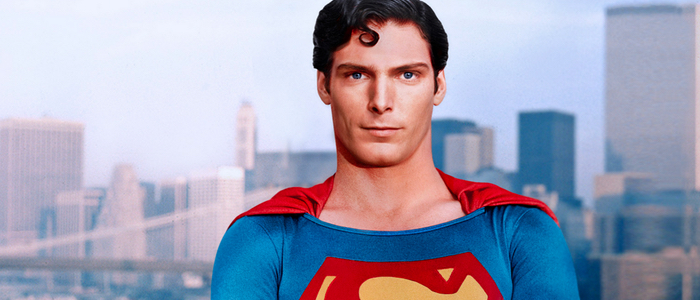
In truth, however, the modern comic movie owes everything to Superman and its star, Christopher Reeve. His first turn in the famous blue tights hasn’t aged exceptionally well, but it still stands out as one of finest examples of a big-screen superhero adaptation done right. Gone are the childish theatrics and abysmally small budget, the mindless plot, and for the most part, the wink-wink, nudge-nudge counter culture irreverence of something like the 1960s Batman television series. Superman: The Movie took its source material seriously. Richard Donner, the film’s director, insisted on a high level of verisimilitude, which isn’t something most Hollywood filmmakers would’ve gone for. Word has it the original screenwriter—none other than Mario Puzzo of Godfather fame—loaded his script with so many tongue-in-cheek gags the film may as well have been a super-farce. For an entire generation of fans, Christopher Reeve embodied the Man of Steel, fighting for truth and justice, making everyone believe a man could fly.
And of course, historically the franchise bombed out after four entries because, you know, DC. Same thing happened to the Batman franchise in the nineties. The folks at Warner Brothers were so shocked and sickened by Tim Burton’s Batman Returns, they snatched the option to make a third bat-sequel from his grubby, weird, Edward-scissor-like hands and passed it off to the marketing machine. Again, four movies was all that first Batman series got, but by then, the genie was out of the bottle, and it wouldn’t be long until Marvel ruled the roost. Marvel, by the way, had been in bankruptcy right until the time X-Men released in theaters. Quite a Cinderella story for the House of Ideas, one nobody could have predicted two decades ago.
In 2008, Marvel and Paramount Pictures released Iron Man, and it was off to the races. Starring the always impeccable Robert Downey Jr., Iron Man injected new life into the genre, and in so doing, completely rewrote the rules of Hollywood. Over ten years later, the Marvel Cinematic Universe is twenty-three movies strong and still growing. Two MCU movies are scheduled to hit theaters in 2020, Black Widow and The Eternals. The thing about Marvel is they’re willing to take risks, knowing that if they do their characters justice, fans will show up. And we do. In droves.
The MCU is truly a mighty thing, containing team-ups like The Avengers and Guardians of the Galaxy, more experimental and hipper entries like Thor: Ragnarok (and doubtless) the upcoming Thor: Love and Thunder, politically relevant films like Black Panther, and everything in between. Yeah, they’re still just silly comic book movies, but the entire world is in love with them, and their impact on our culture cannot be overstated. Just imagine all those kids growing up with Captain America posters on their walls. That’s a lot of money in the making, and Marvel’s parent company, Disney, knows it.

The future of this genre is wide-open, and its not hard to imagine a time Marvel and DC have become two of the most powerful and ubiquitous entertainment companies in the world. Their most popular characters are already known everywhere, and they have been for decades. Really, this is just the cherry on top for a literary form invented for children in the first half of the 20th century. Superman wasn’t just the first superhero, he was the first super media product. The chiseled face that launched a thousand ships. And that doesn’t even begin to account for all the successful and wonderful comic book movie adaptations that don’t include a single cape or superpower. Greats of the sub-sub genre include Ghost World, American Splendor, 300, Road to Perdition, and Sin City. Check any of those out for a palate cleanser. You won’t be disappointed.
It’s funny, but the comic book industry itself has only shrunk in recent years. The good news for comic readers is the movies aren’t likely to completely replace good old paper and ink any time soon. After all, where would all those mega powerful, newly wealthy studio execs get their ideas? What, Hollywood come up with something fresh? Yeah. And Captain America is a communist.
Next month we’ll get back to the movie reviews, folks. For now though, go and have yourself a Marvel movie marathon, especially if you’ve never done one before. Yeah, it’s a lot of confusing action and universe-ending doom, but hey, saving the world has never been so fun. Or so lucrative. Am I right, Disney?

Check out Jeff Bowles Central on YouTube – Movies – Video Games – Music – So Much More!
You can keep up on what Jeff’s been watching and catch all of his great movie reviews the second Friday of each month on Writing to be Read. Subscribe to email or follow on WordPress today.
Share this:

Interview with erotic romance author Nicky F. Grant
Posted: February 10, 2020 Filed under: Adult, Erotic Romance, Erotica, Fiction, Interview, Writing | Tags: Author Interview, BDSM, Beyond Surrender series, Erotic Romance, Erotica, Nicky F. Grant, Writing to be Read 2 Comments
My author guest today is a woman who knows who she is and what she wants out of life, and she goes after it with gusto. She writes sizzling hot erotic romance about love, sex, power and control. In 2019, she received a Stiletto Award in the erotic/BDSM category, from the Contemporary Romance Writers of America for her first novel, Beyond the Masks. She loves life and she loves what she does. It is my pleasure to have her with us today. Please join me in giving a warm welcome to Nicky F. Grant.
Kaye: Can you tell us briefly about your own author’s journey?
Nicky: It happened by accident, actually. I was (and still am) a huge reader of romance. I’d devour an erotic romance book every two days and it got to a point where they became the same. Different character names, but the similar formula. My husband and I were kicking back with a few drinks and came up with a plot idea for Beyond the Masks. One where it focused on a strong CEO heroine and her professional and personal challenges with two alpha men. An angsty, love triangle. It was supposed to be something to tinker with, but I soon found myself swept up in the story. Now, I can’t get enough.
Kaye: Why do you write in the romance genre? What draws you to the power world of your Beyond Surrender Romance series?
Nicky: Erotic romance seems to have a bad rap in the “real world”, unfortunately. And some books with BDSM can come off a little over the top, in my opinion. Fun to read, but unrealistic.
My passion for this genre comes from a deep understanding of the emotional connections to love, sex, and BDSM. My goal is show each reader that there’s a profound connection between these things well beyond floggers and obedience that’s usually present in these books. BDSM exists in my world of Beyond Surrender, but as a “third character” between the heroes and heroines. It’s catalyst to spark their inner desires and understand why it’s okay to feel what they do.
Also, I want my readers to relate to my powerful female characters. I try to lift up women in all capacities and having fun in the bedroom while owning one’s sexual prowess is one of them.
Kaye: What is the biggest challenge to writing romance for you? What is your favorite part?
Nicky: A huge challenge is starting a new book. It takes me time to let go of past characters after I’ve written their Happily Ever After. Also, my confidence wavers with the thought of a new story. What if I don’t do it justice? What if readers don’t understand my twisted brain? It’s nerve-wracking!
On the flip side, my favorite part comes about halfway through writing a new book. It’s the moment where I truly understand the characters, their bond, emotional limits, chemistry, pasts, and futures. This does cause a whole re-write of the first half of the book, but it’s my process and I’m learning to embrace that!
Kaye: Your romance novels are about power “in the boardroom and the bedroom” and they contain erotic sex scenes. How do you know how high to turn up the heat?
Nicky: I’m chuckling at this question, because I’m a touch embarrassed. Man, I love a good “peel the paint of the wall” sexy scene! My scenes are explicit, which I still can’t believe my mother has read. Anyway, I let the characters tell me how high the heat should be. Usually, it’s scorching, but sometimes I may “fade to black”.
As the author, I’m very aware that each love scene must serve a purpose. It must bring the Hero and Heroine closer together or cause a ripple in the love story. Trust me, I’ve had to cut out scenes that lacked in moving the plot forward. It hurts to cut those darlings… but my duty as an erotic romance author, is to help the story along. I hate to admit it, but I get exhausted with my characters falling all over each other. 😉
Kaye: How do you develop a female character who is strong and confident, but still make her feel human?
Nicky: Great question. I take from my own experiences and that of other strong women in my life. I feel fortunate to be a woman with strong views in business, life, and sex. But the true beauty reveals itself when I embrace my own vulnerability.
My heroines are a reflection of that. For example, Shane Vaughn in Beyond the Masks is a female CEO in the music industry. Even though she’s challenged by the men in the field, she’s still vulnerable. She’s open and honest with her past flame, current lover, friends, and family. Somehow, she’s not jaded by keeping up a tough exterior. She’s human with real emotions. I strive to be her in ways, maybe that’s why her story found me. Swoon….
Kaye: In 2019, Beyond The Masks was a finalist for the Contemporary Romance Writers of America‘s Stiletto award in the erotic/BDSM category. Tell us a little about book 1 in the Beyond Surrender series and what receiving such a prestigious award means to you?
Nicky: I was with an author friend when I got the email. There was a shriek, a smile, and tears. Later, I did accept the Stiletto for best erotic romance in New York City. Dreamy, right?
I was incredibly moved to have experienced this among my incredibly talented peers. Especially when I pretty much drop-kicked my entry on the last day to enter! I never thought I stood a chance. That evening put my dreams into reality.
Kaye: What techniques do you use to draw your readers into the story and immerse them in it?
Nicky: Not sure if I have any specific techniques…but I’m attracted to angst, secrets, suspense, and alpha men. So, my stories have elements of these throughout. The one thing I keep on top of mind is, if I’m not enthralled in the story then my readers won’t be.
Kaye: What is the best piece of advice you ever received?
Nicky: Wow, there has been so much! The romance community is incredible when it comes to helping others. If I were to pass along any wisdom to a new author, I would tell them to find their voice. Don’t compare yourself to every other author on the market and don’t get wrapped up in, “I should be doing what they’re doing!”
Writing is a personal journey. All the voices in our heads (yes, there are voices) are rare and unique. If you write without fear, the muse will find you. And your characters will tell you their story when we listen.
Kaye: What is your favorite part of the story, beginning, middle or end? Why?
Nicky: I love the middle! This is where all the “fun and games” happen! The sexy times are heating up, the characters are falling in lust, and a “romp in the sheets” make for a happy writer. But the middle is where things really start rolling. Secrets are revealed, the antagonist works their evil, and the characters doubt themselves. Also makes for a happy writer…I’m a bit of a sadist when it comes to causing them misery, just to fall in love. It’s a tough job. 😉
Kaye: What is your favorite time of day to write? Why?
Nicky: First thing in the morning. My brain is fresh. Also, anything I’d been working through (tough plot points, etc) have a way of working themselves out as I sleep. I can spring out of bed with a hot cup of joe and tap out some words for an hour or two. It’s a strange meditation for me.
Kaye: What is next for Nicky F. Grant? Are you working on anything now?
Nicky: I have two books lined up this year. Hers to Protect, a part of the Girl Power Romance Collection and Dirty Talker, a book for Vi Keeland and Penelope Ward’s Cocky Hero Club series!
Link to Hers to Protect: https://www.goodreads.com/book/show/50656136-hers-to-protect
Link for Dirty Talker: https://www.goodreads.com/book/show/51008222-dirty-talker
Also, Beyond the Masks is coming to audiobook late February/early March! More on that at www.nickyfgrant.com. Readers can also sign up for my VIP newsletter with all the upcoming news on my website.
I want to thank Nicky F. Grant for sharing with us here on Writing to be Read. I love how enthusiastic she is about what she writes. It’s been a fun interview, Nicky, and I really enjoyed having you as my guest. Readers can learn more about Nicky and her books on her Amazon Author page, or at her website, above.
Like this post? Let me know in the comments. You can be sure not to miss any of Writing to be Read’s great content by subscribe to e-mail or following on WordPress. If you found this content helpful or entertaining, please share.Like this post? Let me know in the comments. You can be sure not to miss any of Writing to be Read’s great content by subscribe to e-mail or following on WordPress. If you found this content helpful or entertaining, please share.
Share this:

“Sainte”: End of a series or stand alone novel?
Posted: February 7, 2020 Filed under: Adult, Book Review, Books, Erotica, Fiction, romance | Tags: Amy Cecil, Book Review, Erotica, Knights of Silence, MC Romance, romance, Sainte, Writing to be Read Leave a comment
When I requested to review this latest book in Amy Cecil’s Knights of Silence MC series, she was concerned that readers who hadn’t read the previous books wouldn’t know what was happening, since Sainte is the completion of the series. When I read the second book in the series, Ice on Fire, for review back in 2017, I had no problem following what was happening in the still new series, so she agreed to let me give it a go now, with the last book.
She needn’t have worried. With Sainte, I was immediately pulled into the story. Enough was revealed through dialog and character thoughts and memories to clue me in to many of the events referred to from the previous books and follow along with the action. Cecil’s superbly crafted use of first person, present tense, (not a small feat), allows the reader to have insight into character motivations, as well as providing needed information that helps the reader to keep pace with the story.
Cecil’s characters have depth and back story enough to carry the story. This book centers around two characters and one romance, but references to what has come before in the series involving the other members of the MC to get them to this point are skillfully woven into the story. After reading Sainte, I want to go back and read the rest to get better acquainted with members of the club who were not the main focus of this story.
Even though I’m wasn’t familiar with events referenced from earlier in the series, a little patience usually reveals more detail, and I was easily able to follow along. Do I know everything that happened in this series from this one book? No. Am I intrigued enough to read the rest of the series to find out? Yes, but I really feel it does fine as a stand alone novel, as well.
I’m getting older and it’s been a long time since I stayed up until 2 a.m. to finish a book, but Amy Cecil managed to get me to do just that. Sainte is an excellent romance story. Or maybe I’m just a sucker for Happily Ever Afters. I give it five quills.

Note: There is some erotica in this story, as there seems to be with all of Cecil’s works, but she handles the love scenes with tact and only puts them where they serve a purpose to move the story forward. Cecil’s romances are all class.
You can purchase Sainte here: https://www.amazon.com/Sainte-Knights-Silence-Amy-Cecil-ebook/dp/B0836P299N/ref=sr_1_1?keywords=Sainte&qid=1579729548&s=books&sr=1-1
Kaye Lynne Booth does honest book reviews on Writing to be Read in exchange for ARCs. Have a book you’d like reviewed? Contact Kaye at kayebooth(at)yahoo(dot)com.
Share this:

Words to Live By: The Kid in the Machine
Posted: February 5, 2020 Filed under: Movie Review, Words to Live By, Writing, Writing Life, Writing Process | Tags: Words to Live By, Writing, Writing Life, Writing Tips, Writing to be Read 7 Comments
The first Wednesday of every month, writer Jeff Bowles muses on life, creativity, and our collective destinies as makers of cool stuff. You’re a writer, but have you ever thought about how or why? Here are some words to live by.
The Kid in the Machine
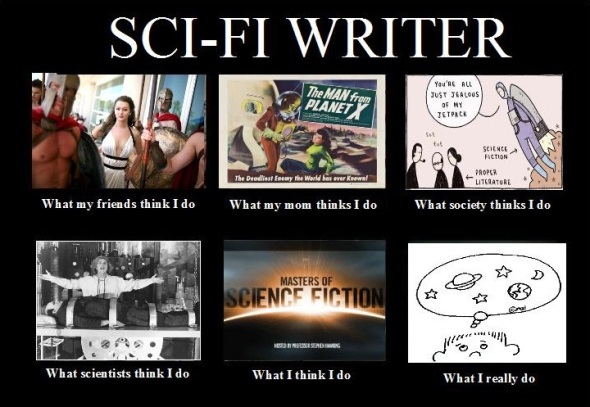
When I was a kid, science fiction was everything to me. Partially because my family instilled a deep love of the classics (you know, Star Wars, Star Trek, Battlestar Galactica, basically anything with the word Star in it), I watched movies and read comic books, collected toys and built model spaceships. At some point I decided I’d like to tell my own sci-fi stories, and at a relatively young age, I began writing my first novel. I didn’t finish it, of course, didn’t even get past page twenty, but you know, intergalactic star port descriptions are real tricky.
Even now, I still love a good space opera. I never stopped being a fan, never stopped dreaming of distant galaxies and intergalactic wars. In fact, my appreciation for all things speculative and nerdy only deepened, especially once it became clear sports and girls were out, but Lord of the Rings marathons were in. I love that epic fantasy stuff, that twisted horror, that magical realism and those far flung futures, and don’t tell anyone I went to high school with, but I’d rather read a good comic than indulge in any kind of respectable adult activity. Bill paying, for instance. Never did get the hang of that one.
That’s me, I suppose, but I know for a fact on some level it’s you, too. In many ways, the things we’re fans of help define us. I know you’re still a dorky kid on the inside. I bet the inner you still wears braces and drinks juice from a box. What really does it for you? What gets you excited as a fan? Classical literature? Hard-boiled detective stories? The biggest mistake I see many established authors make as they transition from nobody to “somebody” status is that they stop being fans. It’s almost like the red curtain to the whole show gets ripped away from them, and they’re left staring into the cold, mechanical under-croft of the modern storytelling machine. Jaded, I think is the word. You must make me a promise, guys. If you ever get to that place, have yourself a good movie marathon or read a book series that has always been your favorite. A storyteller who no longer likes stories? Criminal.
Ancient sages and modern neuroscientists agree, our personalities are not exactly what we think they are. More of a patchwork, really, a cobble of external influences, internal pressures, beliefs, both valid and invalid, mixed with a healthy dose of daily psychological wear and tear and deeply recessed emotional ideation we’ve tried hard to suppress or which has simply faded into our subconscious minds during the natural course of things. In some lesser known systems of mysticism (since we’re clearly on the subject), our conscious minds are more or less counterfeit anyway, are in fact the byproducts of heretofore unseen spiritual forces that influence our thoughts, our actions, even what kinds of truths we cling to, as essential and impressively ordered as they seem. In concrete terms, you are a body, you are a mind, but you are so much more. You’re the hidden watcher, the presence behind the eyes, the witness and willing participant of the little dramas and tragicomedies happening all around you. If you’re a storyteller, you exist in even stranger terms, because you’re both the creator and the created, and the work you produce is not really yours, but rather is divinely inspired and orchestrated to flow through you.
I mean, all well and good, right? Philosophy and practicality are poor bedfellows. Because while you’re sitting in your cramped home office in the dead of night, staring with hollow eyes at your ten-year-old computer monitor—you know, the one with the cracked screen you can’t afford to repair because you chose to be a “divinely inspired” writer—the work is never as easy as you’d like it to be. I gotta tell you, for people who literally conjure something from nothing on a regular basis, writers can be a grumpy and sour bunch. Sometimes all the passion and love and internal lexiconic fandom in the universe isn’t enough to kill that 2:00 AM headache you acquired from yet another impossible deadline. Life is life, reality is staggeringly persistent, and even the most grounded and stable amongst us can have epic bare-knuckle freak-outs. That’s an industry term, by the way.
To wit, I recently stumbled across a long and uncharacteristically honest social media thread that got my wheels turning. I’m Facebook friends with a lot of people in the writing business, and though I don’t personally know the vast majority of them, I’ve always felt a certain kinship with like minded individuals who’ve chosen paths very similar to my own. The original post asked the question, Have you ever quit writing long-term? Did you regret it? Now people in our culture are often inclined to save face and amass a front when it comes to their careers. Somehow, we’ve gotten it into our heads that the way we make money says more about us than our emotional or mental states, our long-term habits and behavioral matrices, or even our unerring innate natures, who we were before we became. After all, nobody asked you when you were five years old, Who is the essential you? They asked, What do you want to be? Like, can’t I just be the kid with a juice box who likes Saturday morning cartoons? No, teacher says, you’re an astronaut, Cindy. Next!
The responses to that Facebook post surprised me. I expected a lot of business about I’m a writer this, it’s what I do that, and there were some comments to that effect, but by and large, most respondents had to admit that if they hadn’t actually quit, they’d sure thought about it once or twice. One older gentleman actually said he gave up his very lucrative writing career years before and hadn’t looked back since. Good riddance, that was the gist. Now why would that be? Is this the norm? Isn’t writing supposed to be a joyful act?
It is, purely so, but only when a person is free to pursue it without constant worry and stress. That thing about writers tending to become alcoholics? It’s a tad overblown, but it has a ring of truth. And that gentleman, he wasn’t the only one to chime in with similar enthusiasm. Now I am not what you’d call a seasoned professional, not really. I’ve published, I’ve faltered and thought I’d quit (several times, actually), and I’ve gotten back on the horse, back to the business at hand. Not because I had deadlines. There was no external pressure for me. Because I had something to say, new experiences I wanted to share, truths I wanted to communicate. And you know what gave me the courage to do it?
Star Wars. Star Trek. Battlestar Galactica. I hadn’t written in several years, long enough I found I was ready to be a fan again instead of a base, lowly, underdog creator. And being a fan, just like when I was eight years old, I found once more the desire to tell my own stories. I don’t begrudge a professional who is sick to death of the business and wants out for good. Truth be told, I’ve never been in that position. But I am intimately familiar with the love of these things, the passion, the unabashed joy. I’ve stoked those fires within myself my whole life, and I can’t imagine a day at least some part of me won’t thrill whenever I see Luke Skywalker blow up the Death Star. Sure, it’s nerdy as hell, but it’s home, it’s the place I do my dreaming.
My advice to those who want out before they’ve said everything they want to say: go home. Go and be the dreamer awhile. Maybe even a long while. Dreams can manifest as surely as dawn follows dusk, Spock follows Kirk, Jimmy Olsen is Superman’s best pal. If you as a very impressive, very professional adult can’t touch base with the kid in the machine, apart from having my pity, you have my condolences. Rest in Peace, the guy or gal you really are. Consider the possibility the world is the lie, and that you were always the truth. Drive and the creative impulse are not inexhaustible. This is very true. It’s also true they can be recharged and brought back to tip-top fighting shape as certainly as Green Lantern charges his power ring.
Plus, you don’t have to lug around an alien lantern and swear an oath every time you do it. Unless you’re into cosplay, and in that case, why waste time reading some dumb article? You’re clearly needed elsewhere, space cop. Hi, my name is Jeff Bowles. I’m old enough for beer, but today of all days, I’d like a juice box, please.
Check out Jeff Bowles Central on YouTube – Movies – Video Games – Music – So Much More!
Want to be sure not to miss any of Jeff’s “Words to Live By” segments? Subscribe to Writing to be Read for e-mail notifications whenever new content is posted or follow WtbR on WordPress. If you found this useful or just entertaining, please share.
Share this:

February: Turning Up the Heat with Erotic Romance
Posted: February 3, 2020 Filed under: Books, Erotic Romance, Erotica, Fiction, romance, Writing | Tags: Erotic Romance, Erotica, romance, Writing to be Read 2 Comments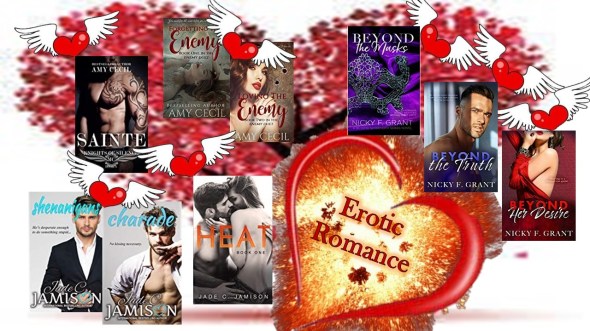
Why is Saint Valentine’s Day in February? Where I live, February is a cold month, not associated with love and warmth. So, Writing to be Read is turning up the heat this month by taking a look at erotic romance. Now, I’m not talking about erotica, which in my opinion is just sex for the sake of sex with no real story line and love has nothing to do with it, nor do plots. These stories can be rank and raunchy and downright smutty, but they are not erotic romance. (For more about the differences between romance, erotic romance and erotica see this article on The Productive Indie Fiction Writer.) I enjoy sex scenes like the best of them, but I’m also a sucker for the happily ever after.
Erotic romance features both romance and sex, and ranges in temperature from steamy to hot to sizzling. The romance story line usually carries the story, but the sexual elements keep the pages turning. This month we’re going to meet some erotic romance authors and take a look at some of their works. My “Chatting with the Pros” author guest will be romance author Amy Cecil, whose contemporary romance stories get pretty steamy, and guests for the supporting interviews are erotic romance authors Nicky F. Grant and Jade C. Jamison. I’ll also be reviewing Sainte, the last book in Amy Cecil’s Knights of Silence MC series, and Heat book 1, a prequel short to Heat: The Complete Series, by Jade C. Jamison.
Just as authors each have their different heat levels in which they like to write, as readers we all have our own temperature preferences, too. Let me know how hot you like it, to read or to write, in the comments. Then, join me as we turn up the heat and start warming things up with a look at erotic romance in February on Writing to be Read!
Like this post? Let me know in the comments. You can be sure not to miss any of Writing to be Read’s great content by subscribe to e-mail or following on WordPress. If you found this content helpful or entertaining, please share.
Share this:

What is your writing process?
Posted: January 27, 2020 Filed under: Fiction, WordCrafter Press, Writing, Writing Process | Tags: Books, Plot, Stories, Writing, Writing to be Read 3 Comments
Back when I began my M.F.A., one of the first questions I was asked was, “What is your writing process? To put the words in my head down on the page, right? I just write what I think and then revise, revise, revise until it comes out, hopefully, to something someone will want to read. That was my writing process, or so I thought. But, I learned that there is so much more to writing, especially if you are undertaking a novel length work, and every author has their own way of doing things. There is no right way to create story. We all have to find the ways that work for us.
Some writers are plotters, and some are pantsters, just letting the story flow, so they can be surprised right along with their readers at how the story turns out.. Those who are plotters find fabulous and creative methods to work out their plots, from using a whiteboard, to taping note cards on the wall above their desks, to good old fashioned outlining. While some authors, like Barbara Chapaitis, who was my “Chatting with the Pros” guest last January, are binge writers, who get an idea and then locks themselves in a room alone for days on end until the story is written.
Some like to do their writing at night, some in the morning hours when their creativity is at a high. Some write with their favorite music playing, while others require quiet in order to write. Some writers write everything out in longhand, while others type it out on their keyboards. Still others, like Kevin J. Anderson and Martin L. Shoemaker in their book, which I reviewed this month, “On Being a Dictator“.
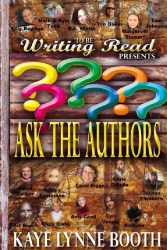
Coming soon
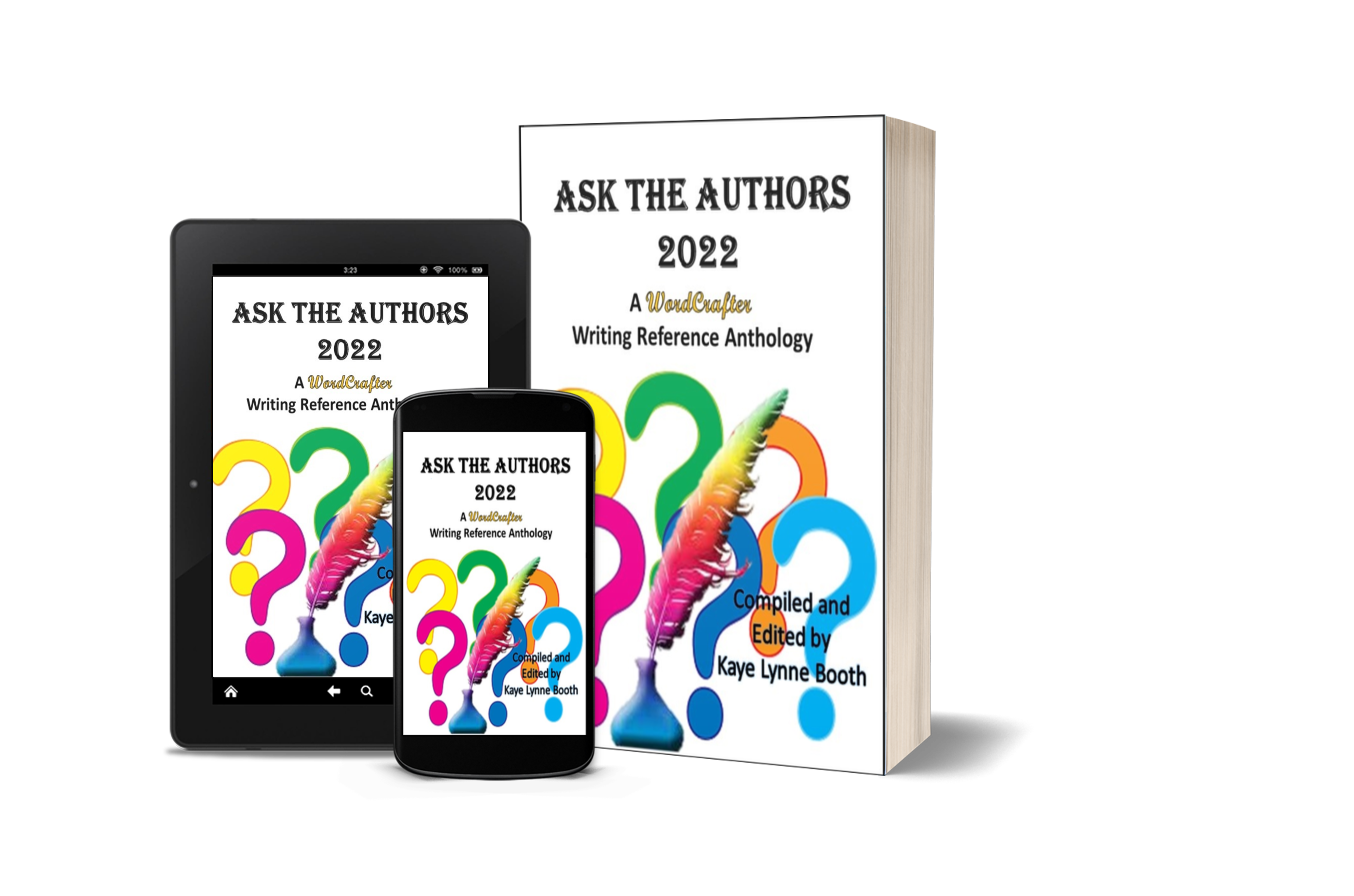
It is a subject that has fascinated me, and questions on the writing process are commonplace in my author interviews, because everyone does it different. In fact, back in 2018, when I was running the “Ask the Authors” series, I ran a segment on it in both rounds of the series, which is soon to become a chapter in the Ask the Authors book, scheduled to come out later this year from WordCrafter Press. I think it fascinates me because there are so many different ways to approach writing, and some of them are very creative.
Like many things, writing processes change and grow as we do. Back then, I carried a notebook and wrote stories out in longhand if a computer wasn’t handy. I just wrote from off the top of my head and let the words fall as they may. I loved to write while my favorite music played, and since there were others in the house, it was usually blasting into my head through a set of earbuds. But now… Now I carry my laptop everywhere and do a lot of pre-writing activities in my head. (The writing process begins long before the words ever hit the page.) I seldom listen to music while I write because I too often catch myself singing along instead of writing. (I’m seriously considering giving dictation another go, because many ideas are lost because I can’t get them down right away.) And I outline, especially for novel length works, but even a little on short stories, too.
What is your writing process? I would love to hear about your own unique approaches. Let me know in the comments.
Share this:

Meet poet and writer, Sally Cronin, and a review of her latest book
Posted: January 25, 2020 Filed under: Book Review, Books, Inspirational, Interview, Poetry, Treasuring Poetry | Tags: Book Review, Interview, Life's Rich Tapestry, Poetry, Poets, Robbie Cheadle, Sally Cronin, Treasuring Poetry, Writing to be Read 119 Comments
Today is the start of a new poetry appreciation series here on Writing to be Read where I will be introducing you to a number of wonderful poets in our blogging community, discussing well known poets and their poetry and reviewing poetry books. I hope you will participate in the discussions and enjoy meeting and greeting the poets, both new and known to you, and discovering new books of poetry.
My first guest is accomplished poet and writer, Sally Cronin, of Smorgasbord Blog Magazine blog. Sally has recently published a new book of poetry, 99-word flash fiction and short stories called, Life’s Rich Tapestry: Woven in words which I have reviewed below. Before we get there, however, Sally is going to share her thoughts about her favourite poem, The Law of the Jungle by Rudyard Kipling.
Over to Sally
What is your favourite poem?
That is an extremely tough question and had me stumped for a couple of days as I wanted to revisit the poems that I have loved since childhood to make sure that this really would qualify as my favourite poem.
The Law of the Jungle by Rudyard Kipling
(From The Jungle Book)
Now this is the Law of the Jungle — as old and as true as the sky;
And the Wolf that shall keep it may prosper, but the Wolf that shall break it must die.
As the creeper that girdles the tree-trunk the Law runneth forward and back —
For the strength of the Pack is the Wolf, and the strength of the Wolf is the Pack.
Wash daily from nose-tip to tail-tip; drink deeply, but never too deep;
And remember the night is for hunting, and forget not the day is for sleep.
The Jackal may follow the Tiger, but, Cub, when thy whiskers are grown,
Remember the Wolf is a Hunter — go forth and get food of thine own.
Keep peace with Lords of the Jungle — the Tiger, the Panther, and Bear.
And trouble not Hathi the Silent, and mock not the Boar in his lair.
When Pack meets with Pack in the Jungle, and neither will go from the trail,
Lie down till the leaders have spoken — it may be fair words shall prevail.
When ye fight with a Wolf of the Pack, ye must fight him alone and afar,
Lest others take part in the quarrel, and the Pack be diminished by war.
The Lair of the Wolf is his refuge, and where he has made him his home,
Not even the Head Wolf may enter, not even the Council may come.
The Lair of the Wolf is his refuge, but where he has digged it too plain,
The Council shall send him a message, and so he shall change it again.
If ye kill before midnight, be silent, and wake not the woods with your bay,
Lest ye frighten the deer from the crop, and your brothers go empty away.
Ye may kill for yourselves, and your mates, and your cubs as they need, and ye can;
But kill not for pleasure of killing, and seven times never kill Man!
If ye plunder his Kill from a weaker, devour not all in thy pride;
Pack-Right is the right of the meanest; so leave him the head and the hide.
The Kill of the Pack is the meat of the Pack. Ye must eat where it lies;
And no one may carry away of that meat to his lair, or he dies.
The Kill of the Wolf is the meat of the Wolf. He may do what he will;
But, till he has given permission, the Pack may not eat of that Kill.
Cub-Right is the right of the Yearling. From all of his Pack he may claim
Full-gorge when the killer has eaten; and none may refuse him the same.
Lair-Right is the right of the Mother. From all of her year she may claim
One haunch of each kill for her litter, and none may deny her the same.
Cave-Right is the right of the Father — to hunt by himself for his own:
He is freed of all calls to the Pack; he is judged by the Council alone.
Because of his age and his cunning, because of his gripe and his paw,
In all that the Law leaveth open, the word of your Head Wolf is Law.
Now these are the Laws of the Jungle, and many and mighty are they;
But the head and the hoof of the Law and the haunch and the hump is — Obey!
Robbie: This is a wonderful choice of poem, Sally. I also love it. Interestingly enough my favourite poem is also by Rudyard Kipling and I will share it later in this series.
What is your interpretation of this poem?
This is about living in harmony within a society whether it is a wolf pack or amongst a human pack. Having social etiquette and respect for others is essential if all are to avoid conflicts, get enough to eat, be accepted and to thrive. There is a natural order to things and if you learn that when you are young, when you leave your pack you are well equipped to survive on your own with the skills to begin your own pack. And whilst is sounds draconian, those rules are there to protect the young as well as teach them manners. It applies to both wolf cubs and man cubs….
Robbie: A wonderful interpretation of this poem and of life in general. I have similar thoughts on how societies can best achieve success and one of my favourite key words in this regard is the need for discipline.
What emotions does the poem invoke in you?
When I first read the Jungle Book I was too young to really appreciate the undertones in the story about life, survival and the human and animal parallels. But I loved the book and this poem was rich in both words and intent, and when I was ten or eleven and read for the second time, I could see how this philosophy of life in the pack, related to life in a family. It made me feel secure to think of my father as the Head Wolf, and it also made me very protective of my other family members including my younger brother, who probably did not appreciate all the attention I lavished on him as I would like to believe! It also brings back memories of our time with Sam [Robbie: Sam is a lovely dog who was part of Sally and David’s family for many years before he passed. He has his own book called Sam, A Shaggy Dog Story] as our own small pack and how interestingly he adopted his own social rules of etiquette that run parallel to those in the poem. For example he considered us his alpha male and female and he would not start his own dinner until we were eating our own. He was very protective of any young family members who visited and also the elderly, sticking close to them. If he spotted something that he considered might be dangerous to us, he would always put himself between us and the threat. Whenever I saw him exhibiting these kinds of behaviour it always bought this poem back to me and made me so proud.
Robbie: Isn’t it wonderful the powerful emotions and associations a poem can invoke in a reader. Sam was a wonderful dog. You can read my review of Sam, A Shaggy Dog Story here: Goodreads review
If you could choose to write like any well-known poet, who would it be?
That is another tough question Robbie as there are many poets who have stirred my emotions and also my imagination. And whilst I would love to be able to write like Rudyard Kipling both in prose and verse, I am always drawn to the young and sometimes short lived war poets. They conveyed the reality of war, stripping it bare of glory but telling a story in a few short lines. Their legacy is that we never forget those who died, even if we might not always learn the lessons we need to from their passing.
Rupert Brooke for me is one of the finest examples of these poets, and if I could convey the depth of emotion, intent and storytelling in my poetry, I would be very happy indeed. Whilst The Soldier is the most often quoted poem, certainly at military funerals, it is one of his peacetime poems that always resonates with me especially as I get older and celebrate married life.
Kindliness by Rupert Brooke
When love has changed to kindliness —
Oh, love, our hungry lips, that press
So tight that Time’s an old god’s dream
Nodding in heaven, and whisper stuff
Seven million years were not enough
To think on after, make it seem
Less than the breath of children playing,
A blasphemy scarce worth the saying,
A sorry jest, “When love has grown
To kindliness — to kindliness!” . . .
And yet — the best that either’s known
Will change, and wither, and be less,
At last, than comfort, or its own
Remembrance. And when some caress
Tendered in habit (once a flame
All heaven sang out to) wakes the shame
Unworded, in the steady eyes
We’ll have, — THAT day, what shall we do?
Being so noble, kill the two
Who’ve reached their second-best? Being wise,
Break cleanly off, and get away.
Follow down other windier skies
New lures, alone? Or shall we stay,
Since this is all we’ve known, content
In the lean twilight of such day,
And not remember, not lament?
That time when all is over, and
Hand never flinches, brushing hand;
And blood lies quiet, for all you’re near;
And it’s but spoken words we hear,
Where trumpets sang; when the mere skies
Are stranger and nobler than your eyes;
And flesh is flesh, was flame before;
And infinite hungers leap no more
In the chance swaying of your dress;
And love has changed to kindliness.
Robbie: An amazing poem, Sally, thank you for sharing it with us. The war poets certainly know how to highlight the best and worst life has to offer.
Thank you so much for inviting me over today to share my love of poetry and thank you for your wonderful reviews for my work which keep me motivated.
Robbie: Thank you for your contribution to Treasuring Poetry, Sally. Your thoughts and input are greatly appreciated.
Life’s Rich Tapestry: Woven in words by Sally Cronin
What Amazon says
Life’s Rich Tapestry is a collection of verse, microfiction and short stories that explore many aspects of our human nature and the wonders of the natural world. Reflections on our earliest beginnings and what is yet to come, with characters as diverse as a French speaking elephant and a cyborg warrior.
Finding the right number of syllables for a Haiku, Tanka, Etheree or Cinquain focuses the mind; as does 99 word microfiction, bringing a different level of intensity to storytelling. You will find stories about the past, the present and the future told in 17 syllables to 2,000 words, all celebrating life.
This book is also recognition of the value to a writer, of being part of a generous and inspiring blogging community, where writing challenges encourage us to explore new styles and genres.
My review
This new book sees author, Sally Cronin, delving into new genres in the form of a variety of styles of poetry and 99-word flash fiction pieces. It also includes a number of her delightful short stories, although those differ from others that I have read by this author as many of them feature an animal as the main character.
The poetry is beautiful and is split into sections, namely, Seasons of the year; All things human; Fairies and other folk; The natural world; Remembrance, Celebrating pets and Random thoughts. The poems included in the sections entitled Season of the year and The natural world largely feature the natural environment, including the various seasons and the different creatures that inhabit it, and makes use of all the senses to wrap the reader in the specific joys and pleasures of the flowers, the light, celebrations, birds and and other natural phenomena including drought, snow and frost.
The poetry sections entitled All things human, Remembrance and Random thoughts as well as some of the flash fiction and short stories utilize the writer’s amazing ability to invoke great emotion from her readers towards her characters and their circumstances and situations, while being easy to relate to and highly believable.
The poems and stories that feature pets and animals showcase the authors love of the animal world and convey the special relationships that frequently develop between people and their pets.
I appreciate the undertone of happiness that is generally present in this authors books and stories. It is a wonderful thing to be able to read a book that makes you feel great emotion and still come out on the other end with the impression that life is a wonderful and great journey. This is definitely a skill that Ms Cronin has and uses to its best advantage in all her books, poems and stories.
Purchase Life’s Rich Tapestry: Woven in words
About Sally Cronin
I have been a storyteller most of my life (my mother called them fibs!). Poetry, song lyrics and short stories were left behind when work and life intruded, but that all changed in 1996. My first book Size Matters was a health and weight loss book based on my own experiences of losing 70kilo. I have written another twelve books since then on health and also fiction, including four collections of short stories. My latest book is a collection of verse, micro fiction and speculative short stories titled Life’s Rich Tapestry: Woven in Words
I am an indie author and proud to be one. My greatest pleasure comes from those readers who enjoy my take on health, characters and twisted endings… and of course come back for more.
As a writer I know how important it is to have help in marketing books.. as important as my own promotion is, I believe it is important to support others. I offer a number of FREE promotional opportunities on my blog and linked to my social media. If you are an author who would like to be promoted to a new audience of dedicated readers, please contact me via my blog. All it will cost you is a few minutes of your time. Look forward to hearing from you.
My blog is https://smorgasbordinvitation.wordpress.com
And for more information on my books listed here at Amazon please visit
https://smorgasbordinvitation.wordpress.com/my-books/
You can connect with Sally Cronin on the following sites.
Twitter: https://twitter.com/sgc58
Facebook: https://www.facebook.com/sally.cronin
LinkedIn: http://uk.linkedin.com/in/sallycronin1
Pinterest: https://www.pinterest.ie/cronin1423/
Want to be sure not to miss any of Robbie’s “Treasuring Poetry” segments? Subscribe to Writing to be Read for e-mail notifications whenever new content is posted or follow WtbR on WordPress. If you found it interesting or entertaining, please share.