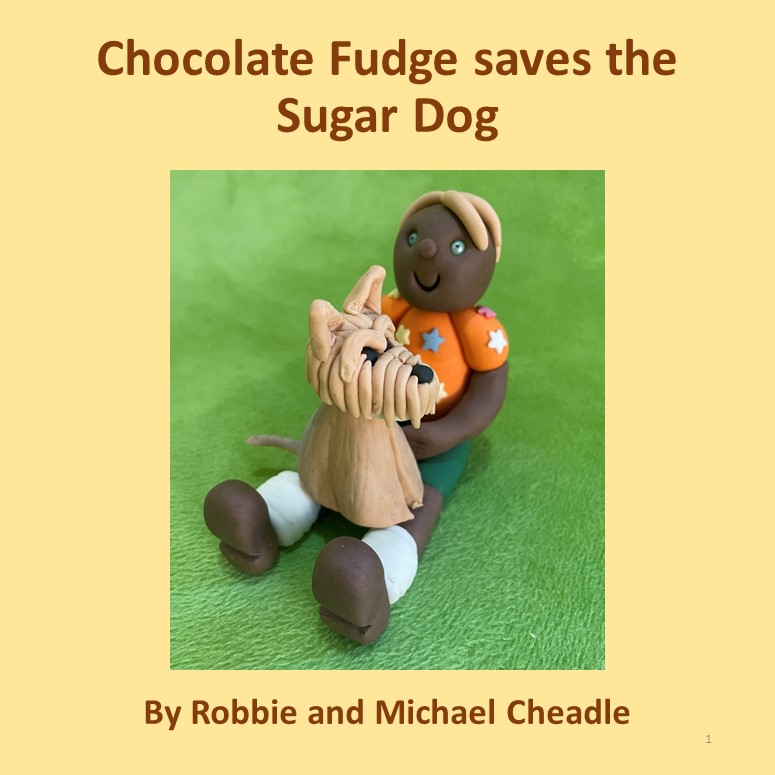
Day 4 of the WordCrafter “Chocolate Fudge saves the Sugar Dog” Book Blog Tour – Review by D.L. Mullen
Posted: March 3, 2022 Filed under: Blog Tour, Book Promotion, Book Release, Children's Books, Stories, WordCrafter Book Blog Tours | Tags: Children's Books, Chocolate Fudge saves the Sugar Dog, Michael Cheadle, Robbie Cheadle, Sir Chocolate book series, WordCrafter Book Blog Tours 37 Comments
Sir Chocolate and Lady Sweet,
Have a son, Chocolate Fudge,
A mild mannered and kindly lad,
He’d never bear a grudge.
From Book 8: Chocolate Fudge saves the Sugar Dog
We’ve had a great tour so far with a post from Robbie and a review by Miriam Hurdle on The Showers of Blessings blogsite on Day 1; an interview with Michael Cheadle and my review, here on Writing to be Read for Day 2; James Cudney interviews Robbie Cheadle on This is My Truth Now for Day 3.
For Day 4 of the WordCrafter Chocolate Fudge saves the Sugar Dog Book Blog Tour finds a guest post from Robbie on the villian of her story here, on Writing to be Read and D. L. Mullen’s review of her delightful children’s book over at the Undawnted blog site. Because Undawnted does not accept comments, you can comment, like or share here.
Robbie’s Post
In most good stories, there is a hero and a villain.
The villain of Chocolate Fudge save the Sugar Dog is …
… Lord Humbug

Lord Humbug was haughty and proud
His dogs: undisciplined, naughty, and loud
Yorkie could’ve drowned
While her brothers clowned
“I’ll train them,” Lord Humbug vowed
Lord Humbug is named for the expression “Bah Humbug”, a well-known catchphrase uttered by miserly old Ebenezer Scrooge, the main character in A Christmas Carol by Charles Dickens. Scrooge, who thinks Christmas is an enormous deception, retorts, “Bah! Humbug!” to anyone who dares to wish him a merry Christmas.
Lord Humbug’s black and whited stripped suit is based on Humbug sweets. These are traditional hard-boiled sweets available in the United Kingdom, Ireland, South Africa, Canada, Australia, and New Zealand. They are triangular shaped with rounded edges and are usually black and white stripped and peppermint flavoured.
Blurb
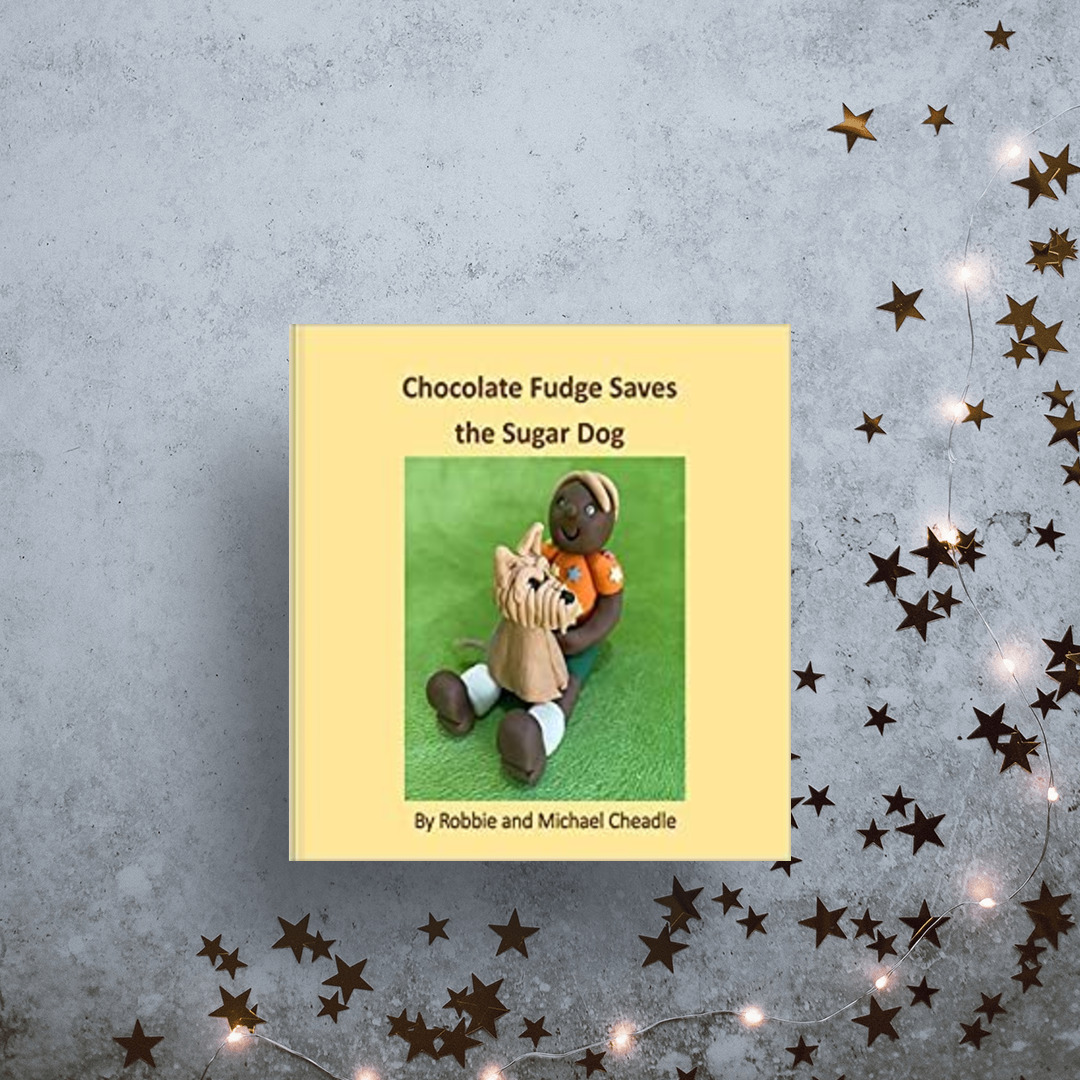
Sir Chocolate and Lady Sweet’s son, Chocolate Fudge, sees one of Lord Humbug’s dogs struggling to stay afloat in the hot chocolate pond.
Can Chocolate Fudge save the sugar dog from drowning?
Includes lovely new recipes.
Purchase links
Paperback: https://tslbooks.uk/product/chocolate-fudge-saves-the-sugar-dog/
Paperback: https://www.amazon.com/Chocolate-Fudge-Saves-Sugar-Dog/dp/1914245547
_______________________________________________________
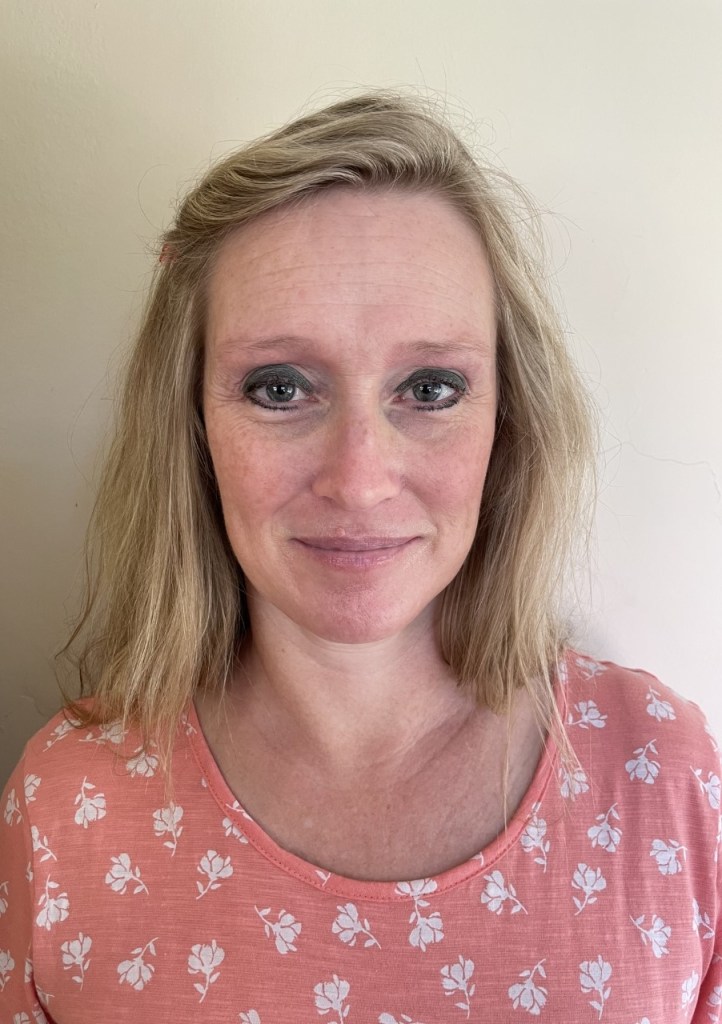
Robbie Cheadle is a South African children’s author and poet with ten children’s books and two poetry books.
The eight Sir Chocolate children’s picture books, co-authored by Robbie and Michael Cheadle, are written in sweet, short rhymes which are easy for young children to follow and are illustrated with pictures of delicious cakes and cake decorations. Each book also includes simple recipes or biscuit art directions which children can make under adult supervision.
Robbie has also published two books for older children which incorporate recipes that are relevant to the storylines.
Robbie has two adult novels in the paranormal historical and supernatural fantasy genres published under the name Roberta Eaton Cheadle. She also has short stories, in the horror and paranormal genre, and poems included in several anthologies.
Robbie writes two monthly posts for https://writingtoberead.com called Growing Bookworms and Treasuring Poetry and one monthly post, under the name of Roberta Eaton Cheadle, called Dark Origins: African Myths and Legends.
Robbie has a blog, https://robbiesinspiration.wordpress.com/ where she shares book reviews, recipes, author interviews, and poetry.
Robbie Cheadle’s books
Sir Chocolate books
Sir Chocolate and the strawberry cream berries story and cookbook
The adventures of Sir Chocolate and Lady Sweet in poetry form. Michael came up with the idea of Sir Chocolate and Lady Sweet and many of the characters contained in the books, when he was ten years old. His ideas were such fun that Robbie decided to turn them into little verse books for his entertainment. The book contains recipes for children to make with adult assistance.
Sir Chocolate and the baby cookie monster story and cookbook
Book 2 of the Sir Chocolate series: Sir Chocolate and Lady Sweet find a lost baby cookie monster. Join them on an adventure to return the baby to its mother and learn how to make some of their delicious recipes at the same time.
Sir Chocolate and the sugar dough bees story and cookbook
A greedy snail damages the flower fields and the fondant bees are in danger of starving. Join Sir Chocolate on an adventure to find the fruit drop fairies who have magic healing powers and discover how to make some of his favourite foods on the way.
Sir Chocolate and the Condensed Milk River story and cookbook
The Condensed Milk River where Sir Chocolate goes fishing has stopped flowing. The water creatures are losing their homes. Can Sir Chocolate and Lady Sweet solve this problem? Five lovely new recipes are also included.
Sir Chocolate and the Sugar Crystal Caves story and cookbook
The Condensed Milk River where Sir Chocolate goes fishing has stopped flowing. The water creatures are losing their homes. Can Sir Chocolate and Lady Sweet solve this problem? Five lovely new recipes are also included.
Sir Chocolate and the Fondant Five Story and Cookbook
Number 6 in the Sir Chocolate series: Five zoo animals go missing and Sir Chocolate needs to find them. Includes five lovely new recipes.
Sir Chocolate and the Ice cream Rainbow Fairies Story and Cookbook
Join Sir Chocolate and Lady Sweet on a fun adventure to discover why the milkshake rain is pale and white.
Silly Willy goes to Cape Town
When the George family go on holiday to Cape Town, Cautious Craig cannot believe what he has to endure at the hands of his naughty and wilful younger brother, Silly Willy. Willy throws tantrums at the most embarrassing and inappropriate times, causes a commotion on the aeroplane and tries to steal a chameleon from Butterfly World. What is a poor older brother expected to do in these situations?
While the Bombs Fell
What was it like for children growing up in rural Suffolk during World War 2?
Elsie and her family live in a small double-storey cottage in Bungay, Suffolk. Every night she lies awake listening anxiously for the sound of the German bomber planes. Often they come and the air raid siren sounds signalling that the family must leave their beds and venture out to the air raid shelter in the garden.
Despite the war raging across the English channel, daily life continues with its highlights, such as Christmas and the traditional Boxing Day fox hunt, and its wary moments when Elsie learns the stories of Jack Frost and the ghostly and terrifying Black Shuck that haunts the coastline and countryside of East Anglia.
Includes some authentic World War 2 recipes.
Open a new door
Open a New Door is a poetic peep into the lives of the poets, Kim Blades and Robbie Cheadle, both of whom live in South Africa.
The book is divided into four categories: God bless Africa, God bless my family and friends, God bless me and God bless corporates and work. Each part is sub-divided into the good, the bad and the ugly of the two poets’ experiences, presented in rhyming verse, free-style, haiku and tanka, in each of these categories and include colourful depictions of their thoughts and emotions.
The purpose of this book of poetry is encapsulated in the following tanka and haiku poems:
What drives me to write?
To share my innermost thoughts
The answer is clear
It’s my personal attempt
To make some sense of this world.
Inspiration blossoms
Like the unfurling petals
Of the Desert Rose
Behind Closed Doors
What goes on behind closed doors: in the boardroom, after death, in the home, during lockdown, and in nature? This collection of poems, ranging from rhyming verse to twisted nursery rhymes, captures the emotions and thoughts people hide behind the masks they present to the world.
What thoughts are hidden
Behind her immobile face
Quite expressionless
Eyes cold and indifferent
Scrutinising me – hawk like
This book includes some of Robbie Cheadle’s spectacular fondant art and cakes.
________________________________________________________________________________
Follow Robbie Cheadle at:
Website
https://www.robbiecheadle.co.za/
Blog
______________________________________________________________________
Thank you for stopping by to help us celebrate the new release of Robbie and Michael Cheadle’s Chocolate Fudge saves the Sugar Dog. Tomorrow’s blog stop will be over on Ziglar’s News, with one last post from Robbie and a review by Victoria Ziglar for a fitting wrap up of the tour. I do hope you will all join us there.
______________________________________________________________________
Book your WordCrafter Book Blog Tour today!
Share this:

Day 2 of the WordCrafter “Chocolate Fudge saves the Sugar Dog” Book Blog Tour – Author Interview & My Review
Posted: March 1, 2022 Filed under: Blog Tour, Books, Children's Books, Fiction, Poetry, Stories | Tags: Children's Books, Chocolate Fudge saves the Sugar Dog, Fondant Illustrations, Michael Cheadle, Robbie Cheadle, Sir Chocolate, Sir Chocolate book series, WordCrafter Book Blog Tours 74 CommentsIt’s day two of the WordCrafter Chocolate Fudge saves the Sugar Dog Book Blog Tour, and today I’m bringing you my review of this wonderful little book. Robbie and her son Michael co-write the Sir Chocolate books, illustrated with lovely fondant scenes and filled with delectable recipes which will make your tummy rumble. Many of us know Robbie and are familiar with her “Growing Bookworms” blog series and the Sir Chocolate books, so today I’d like to bring you and interview with her son and co-author, Michael Cheadle and share my review of Chocolate Fudge saves the Sugar Dog.

Author Interview
Kaye: How old are you, Michael?
Michael: I am 16 years old.
Kaye: How long have you been writing Sir Chocolate books with your mom?
Michael: Mom and I started writing the Sir Chocolate books when I was 7 years old and in Grade 1 at school.
Kaye: Being such a young author is quite an accomplishment. Does it make you a celebrity among your friends?
Michael: No, I have not told my high school friends about my books. It just hasn’t come up.
Kaye: Do you help your mom with the baking for the books, too?
Michael: I used to make a fondant creation for inclusion in the books although I haven’t done that for the most recent two books in the series. I don’t do fondant art anymore. I do enjoy baking with my mom and now I also cook with either mom or dad depending on who is doing the cooking that day.
Kaye: What do you like most about writing the Sir Chocolate books?
Michael: I enjoy thinking up a fun storyline with my mom and deciding on new and interesting characters for inclusion in the stories.
Kaye: What is the most difficult part of being a co-author with your mom for you?
Michael: My mom doesn’t always listen to my ideas and sometimes she changes them which can be annoying for me.
Kaye: Chocolate Fudge saves the Sugar Dog is the eighth book in the Sir Chocolate series. Which one is your favorite and why?
Michael: Sir Chocolate and the Sugar Crystal Cave story and cookbook is my favourite. I liked learning how to make sugar crystals. Mom and my first attempt to make the crystals was a failure because we didn’t let the water cool down enough before we inserted the sugar-coated sticks in the sugar mixture. The sugar on the sticks melted and no crystals formed. We redid the experiment and it worked very well.
Kaye: Do you think you might write books of your own when you are older?
Michael: Yes, I think I might write in the future. I have lots of ideas for stories.
Kaye: What are your aspirations for your future?
Michael: I want to go to university to study a Bachelor of Science: Computer Science like my brother, Gregory. I will write in my spare time like my mom does.
Kaye: What is the most important lesson gained from the collaborative writing experience?
Michael: I learned that if you put your mind to something, then you can achieve success in it. I wanted to write stories about a little man who lived in a world where you can eat everything. With my mom’s help, we have created Chocolate Land and all the creatures that live there and published 8 books in this series.
Kaye: Are you planning more Sir Chocolate books in the future?
Michael: Mom and I have a few books that are already written. My mom does most of the illustrations so it will depend on her and whether she wants to do more fondant and cake art. I think she will and the books will be published.
I want to thank Michael for agreeing to this interview. I think he provided some wonderful answers. It’s great to chat with an aspiring young author, and delightful to learn that Chocolate Fudge saves the Sugar Dog wont be the last in the Sir Chocolate book series.

My Review
I’m a huge fan of Dr. Suess, and the cadence and ryhming in the verse written by Robbie and Michael Cheadle is reminiscent of that found in the lovely books from Dr. Suess, so of course, I loved Chocolate Fudge saves the Sugar Dog. And then there is the beautiful illustrations created by the talented Robbie with fondant figurines making up the lovely scenes described in the verse, which let the story unfold before your eyes. (They may make you hungry too, because they look deliciously sweet.) One I found especially endearing is the scene for the actual rescue of the Sugar Dog, where Chocalate Fudge is emerged in the hot chocolate pond.
The extra added feature that the Cheadle books include which Dr. Suess never thought to include is the wonderful recipes, and the accompanying photo illustrations for each one are sure to make whet your appetite. Included in Chocolate Fudge saves the Sugar Dog, are recipes for scrumptious peanut butter cookies, delectable Oreo cupcakes, mouth-watering avacado and bacon scones, poured fondant icing, and chocolate chip shortbread dipped in chocolate. Yummy!
Chocolate Fudge saves the Sugar Dog is a delightful children’s book with delicious recipes sure to please both young and old. I give it five quills.
Purchase links
Paperback: https://tslbooks.uk/product/chocolate-fudge-saves-the-sugar-dog/
Paperback: https://www.amazon.com/Chocolate-Fudge-Saves-Sugar-Dog/dp/1914245547
________________________________________________________________
Thanks for dropping by and helping us celebrate the release of Robbie and Michael’s wonderful new book, Chocolate Fudge saves the Sugar Dog. In case you missed the opening day, yesterday on “The Showers of Blessings” with a post by Robbie and a review by blog host, Miriam Hurdle, you can still read it here.
I hope you all will continue to follow the tour, because we’ve got some great things planned for each blog stop. Tomorrow’s stop features an interview with Robbie and we have at least two more reviews coming, too, in addition to Robbie’s wonderful posts on Thursday and Friday. I hope to see you there.
________________________________________________________
Book your WordCrafter Book Blog Tour today!
Share this:

Treasuring Poetry – Meet poet and artist, Smitha Vishwanath
Posted: February 16, 2022 Filed under: Book Review, Books, Interview, Poetry, Review, Treasuring Poetry, Writing | Tags: Author Interview, Book Review, Roads: A Journey with Verses, Robbie Cheadle, Smitha Vishwanath, Treasuring Poetry, Writing to be Read 48 Comments
Which of your own poems is your favorite?
There are quite a few poems I like – some for the flow, some for the imagery and some for the memories they bring back with them, there’s one poem that has stood the test of time. It’s a poem I penned when my girls were one and three respectively. Seventeen years later, the girls have grown – each into young ladies with a distinct personality, but it’s beautiful how the description of them in the poem still holds true. It’s special because this poem is one thing that the girls agree about.
Tender Moments
I sneak silently into the room
A quick peak I take of my budding blooms
Their breathing soft – rises and falls, a melodious rhapsody
To the soothing sound of a Spanish symphony
Their countenance silken smooth; serene
Tugs my heart, an enticing scene
Each distinctly different, yet subtly the same
Contrasting as night and day; asleep, they look- Oh! So tame
Their striking silhouette, in the mellow moonlit night
Slightly stirring, they curl; enraptured I gaze at the sight
One’s creamy-white skin peeps from the warm woollen quilt above
And the other’s little chocolaty toe pushes its way from below
One, strong and athletic; the other, dainty and petite
Poles apart in every way; a miracle I behold, a divine treat
The window slightly ajar, lets in the wintry wind
Blowing their untied tresses over their satiny skin; I lean
O’er their tender frames, and sweep the bouncy, brown curls away
And the silk-smooth strands of the other, as in deep slumber they lay
Both unique, both special, both a part of me
Peas in a Pod, they are and shall forever be
What inspired you to write this poem?
I had walked into the children’s room one night, sometime in 2008; the girls were asleep. The curtains were drawn, and the moonlight cast a soft glow on them. I looked at them and I scribbled a version of the poem in my diary. However, it was only later, in 2017, that I reworked on the poem and published it on my blog for the NaPoWriMo prompt, ‘Write a poem that explicitly incorporates alliteration,’ on 12th April.
What are your plans for your poetry going forward?
I co-authored a poetry book ‘Roads- A Journey with Verses’ which was published in 2018. My poems have been published in various journals since then, but I haven’t got to publishing a solo book as yet. I’d like to do that, but I have a lot of starting trouble, and so, it’s taken me longer than I expected, to do it. Hopefully, I can do it this year.
What is your favorite poem?
It’s difficult to choose a favorite. I have quite a few that never fail to speak to me. However, if I have to choose it will be Emily Dickinson’s ‘Hope is a thing with feathers’ (copied from the poetry foundation)
“Hope” is the thing with feathers by Emily Dickinson
“Hope” is the thing with feathers –
That perches in the soul –
And sings the tune without the words –
And never stops – at all –
And sweetest – in the Gale – is heard –
And sore must be the storm –
That could abash the little Bird
That kept so many warm –
I’ve heard it in the chillest land –
And on the strangest Sea –
Yet – never – in Extremity,
It asked a crumb – of me.
Why do you like this poem?
No matter how many times I read it I can not help being in awe of the choice of words, the simplicity and most importantly, how easily and perfectly ‘hope’ is described. Every line in the poem is a gem and anyone who has ever experienced ‘hope’ will vouch for it.
Roads: A journey with verses
![ROADS : A Journey with Verses by [Vandana Bhasin, Smitha Vishwanath]](https://m.media-amazon.com/images/I/41bPyRdgWkL._SY346_.jpg)
What Amazon says
“Roads” is a poetic rendezvous that takes the reader on a panoramic journey, making one pause, ponder and celebrate life.
The book is a light, alluring read that instantly strikes a chord and elevates one’s spirits. A trove of 60 poems, it is quilled with beads of nine virtues: Courage, Wisdom, Serenity, Love, Hope, Strength, Joy, Compassion and Gratitude. The verses encapsulate life’s ebbs and flows while prompting the reader to enjoy its simple pleasures.
“Roads” is a book that you would want to keep on your bedside, for a quiet read before retiring for the night or for the morning wisdom to seize the day. With poems revolving around emotions that each of us experiences, “Roads” very easily develops a personal connect with the reader that is defiantly refreshing.
“Roads” is a journey with verses. Take it on yours.
My review
Roads: A Journey With Verses is a beautiful book of mainly freestyle poetry written by Smitha Vishwanath and Vandana Bhasin. I have read and enjoyed a lot of poetry on Smitha’s blog in the past, but this was my first introduction to Vandana’s poetry.
I thought this was a wonderful combination of work by two talented poets and I enjoyed the different styles of writing by the two contributors. Smitha writes delicately beautiful poems in which her messages are subtly shrouded as if within a loving cocoon of words. Vandana’s writing is more strident and forthright, but I enjoyed her style equally and her strong messages for women’s rights moved me greatly.
This book is divided into sections as follows: Courage, Wisdom, Serenity; Love, Strength, Compassion and Joy, Hope, Gratitude. Each section is divided into subsections setting out an arrange of delightful poems in each subcategory. Each subsection is introduced with a short introductory verse which conveys its meaning for the poets and each poem is introduced with a paragraph setting out the the meaning and purpose of the specific poem to the writer. I really enjoyed reading about the inspiration and meaning behind each poem.
A selection of my favourite verses from this book are as follows:
From the sub-section Strength –
Believe in yourself by Vandana Bhasin
“They’ll laugh at you, and even ridicule you
They’ll even endeavor to enervate your spirits
But let the force of their dissuasion empower your faith
and the sound of their derision echo your beliefs
Believe in yourself, even when none believes in you.”
From the sub-section Compassion –
Help! She’s calling by Smitha Vishwanath
“Her eyes shone a tear, her lips quivered with
fear; down her face ran a scar, like a spear.
Her leg bruised, her hand bleeding, she felt a
shooting pain.”
From the sub-section Joy –
Tender moments by Smitha Vishwanath
“Their countenance silken smooth; serene
Tugs my heart, an enticing scene
Distinctly different, yet subtly the same –
Contrasting as night and day; asleep, they look
– Oh! So tame
Their striking silhouette, in the mellow moonlit night
Slightly stirring, they curl; enraptured, I gaze at the sight
One’s creamy-white skin peeps form the warm woolen quilt above
And the other’s little chocolaty toe pushes its way from below
One, strong and athletic; the other, dainty and petite
Pole apart in every way; a miracle I behold, a divine treat.
From the sub-section Hope –
Wings of freedom by Vandana Bhasin
“Wings of freedom are all I need
I want to live and not just breathe
I want to fly high like a bird
I want to dream big, not chase the world”
Purchase Roads: A Journey with verse
About Smitha Vishwanath

Smitha Vishwanath is your quintessential ‘bored banker’ turned writer. After a rewarding career in Banking in the Middle East where she worked for leading banks in senior positions, she quit and moved to India in July 2018 with her husband who had been transferred to the country on an International assignment. Therein began her writing journey.
‘Roads’ is the first book she has co-authored. Having lived and studied in different countries and different states within India and worked with different cultures, Smitha understands that ‘change’ and ‘ups and downs’ are very much a part of life. It is this experience that reflects in her poems and her writing which are filled with positivity, acceptance and willingness to change for the better.
She also writes regularly through her blog : https://lifeateacher.wordpress.com
Smitha’s art
Smitha is also a wonderful painter. I wrote a blog post about one of her painting that I have hanging in my bedroom here: https://robbiesinspiration.wordpress.com/2021/07/10/a-new-painting/
You can find more of Smitha’s artwork here: https://www.spacesbysmithav.com/
About Robbie Cheadle

Robbie Cheadle is a South African children’s author and poet with 9 children’s books and 2 poetry books.
The 7 Sir Chocolate children’s picture books, co-authored by Robbie and Michael Cheadle, are written in sweet, short rhymes which are easy for young children to follow and are illustrated with pictures of delicious cakes and cake decorations. Each book also includes simple recipes or biscuit art directions which children can make under adult supervision.
Robbie has also published 2 books for older children which incorporate recipes that are relevant to the storylines.
Robbie has 2 adult novels in the paranormal historical and supernatural fantasy genres published under the name Roberta Eaton Cheadle. She also has short stories in the horror and paranormal genre and poems included in several anthologies.
Robbie writes a monthly series for https://writingtoberead.com called Growing Bookworms. This series discusses different topics relating to the benefits of reading to children.
Robbie has a blog, https://robbiesinspiration.wordpress.com/ where she shares book reviews, recipes, author interviews, and poetry.
Find Robbie Cheadle
Blog: https://www.robbiecheadle.co.za/
Blog: robbiesinspiration.wordpress.com
Twitter: BakeandWrite
Instagram: Robbie Cheadle – Instagram
Facebook: Sir Chocolate Books
______________________________________________________________________________________________
Want to be sure not to miss any of Robbie’s “Treasuring Poetry” segments? Subscribe to Writing to be Read for e-mail notifications whenever new content is posted or follow WtbR on WordPress. If you found it interesting or entertaining, please share.
Share this:

Growing Bookworms – Letting Go!
Posted: February 9, 2022 Filed under: Growing Bookworms, Parenting | Tags: Growing Bookworms, Parenting, Robbie Cheadle, Writing to be Read 83 Comments
I’m going to start today’s post with a short, hopefully amusing, story about my taking my oldest son to get his university access card last week. By way of background, the relevant entrance for this task is on a busy street with no parking. The area is also not a good one, so hanging about on the street in front of the entrance is not particularly appealing. Another thing to note is there have been a spate of kidnappings of older teens and young men recently in South Africa.
“I think that Greg should go on his own to fetch his University card,” I say to Terence. “He won’t want his mother with him. I will embarrass him.”
“No,” Terence says with authority, “Parents go with.”
Hmmm, I think. You attended this university thirty years ago, things might have changed.
There is no arguing with this man who is over the moon that his son has achieved a scholarship to study a BSc Computer Science at “his” university. Thirty years has disappeared in a trice and Terence is back in full University mode. You’d think he was going and not Greg.
At 8.30am on the appointed morning, a determined Terence drops Greg and I off on the street in front of the entrance, waves cheerfully, and heads off to work, which is fortunately close by.
We go to security. Greg calls a number and is granted access. I call the same number and am not allowed in. I notice a few other parents outside the security gate.
“You just go on your own,” I say. “I’ll wait for you here.”
Off Greg goes and I am stuck standing on the street in this undesirable area. There are two security guards and a few other waiting mom’s so I don’t panic. One lady is very nice and makes conversation while we wait.
Ten minutes later, Greg texts me: I don’t know where to go.
I message back: Come back to the gate and the security guard will tell you where to go. I saw her telling another boy.
Greg does not come back to the gate. There is complete cyber silence
Another ten minutes pass and he texts: I’ve found it and I’m waiting in the queue.
Happiness! He’s doing this on his own [as he should] and I’m confident we’ve come early and he won’t take long. I feel an idiot waiting outside the barred gate like an unwelcome guest. Other arriving students stare at me suspiciously.
The time drags. One hour passes and my back is aching. I don’t like standing here on the street. I feel agitated. I text Greg: How much longer?
He replies: I’m getting on a bus and going somewhere else.
I text him: where are you going?
He replies: I don’t know.
Complete cyber silence.
I text him – no reply.
I call him – no reply.
I decide he has been enticed into a bus by kidnappers and is on his way to Nigeria to be forced into male prostitution.
I have a panic attack and call him six times.
No reply.
I phone Terence at work and tell him our son has potentially been kidnapped.
Terence knows me. He doesn’t say anything. He gets into his white car and charges to the rescue.
Terence arrives and I jump into the car and burst into tears.
Greg sends a text: I’m getting my card.
I tell Terence that the kidnappers are responding to messages on Greg’s phone so they can throw us off the scent and cross the border.
Terence is undecided: Should he take me to the closest mental institution or try to find Greg.
Greg texts: I’m finished. Can you fetch me from Alpha Campus.
***
It was very funny. Afterwards. Of course, I broke a major rule of “letting your child go.” Stay in the moment rather than imagining the worse-case scenario. Catch yourself if you are catastrophizing a situation.
Letting go is more about letting go of our own fears and anxieties as parents. It is adjusting to the idea that you are no longer in control of your child and they are now making their own choices and decisions. It also means they are responsible for any fallout from those decisions.
I blame my anxiety about my children on their collective 32 operations, chronic health problems, and the two home invasions I have been involved in. I have trust and anxiety issues, but I still need to get a grip and accept that my son is now an adult. Even Michael, needs some freedom and to be given wings.
Some other advice to parents who struggle to let go is as follows:
- Stop trying to raise a “happy” child. Accept that making decisions and choices is going to result in mistakes and the resultant misery these bring. People need these experiences to grow and learn.
- Empower your child over time by giving them some power of less important decisions as they get older. If they refuse to study for an important test, let them fail. You can’t shelter your child from all the difficulties in life and they need to learn to prioritize.
- Set boundaries and follow through on punishments if your child fails to comply. If you tell him/her to be home by 10pm and he gets home at 11pm, ground him. He needs to learn about consequences for actions.
- Have respect for your child and his/her ability to handle situations as they grow up. Have faith in the values and ethics you have instilled in them.
Did you struggle to let go when it come to your children? Let me know in the comments.
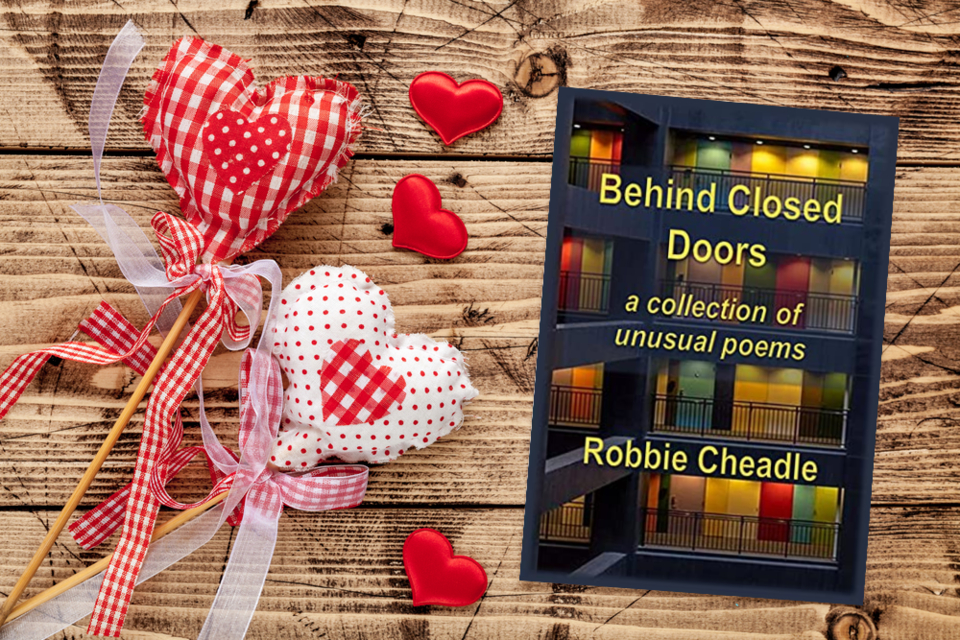
To round this post off, I am sharing a poem I wrote about letting go. It is included in my book, Behind Closed Doors.
He walks away by Robbie Cheadle
From the first day
he took a tentative step
on uncertain chubby legs
attached to adventurous feet
he moved away from her
embracing with enthusiasm
the mysterious outside world
She watched over him tenderly
as he learned about life
discovered the joy of friendship
and the heartbreak of loss
embarked on his academic journey
exploiting his strengths and
overcoming his weaknesses
and during all this time
mom was always enough
her smile healed all wounds
her kiss cured all pain
but she knew in her heart
that this investment of hers
was ultimately for another
a nameless faceless other
who would eventually take her place
she was preparing him to leave
and find his place in this world
His independence draws ever closer
her smile no longer enough
as he jostles for position
in the heartless world of men
her kiss no longer wanted
as he seeks the lips of the other
It’s heart wrenching to let go
knowing he must suffer pain
before he finds his enduring love
encounter setbacks and loss
before success and satisfaction
but it’s the duty of a mother
to set her son loose
to fly alone
About Robbie Cheadle
Robbie Cheadle is a South African children’s author and poet with 9 children’s books and 2 poetry books.
The 7 Sir Chocolate children’s picture books, co-authored by Robbie and Michael Cheadle, are written in sweet, short rhymes which are easy for young children to follow and are illustrated with pictures of delicious cakes and cake decorations. Each book also includes simple recipes or biscuit art directions which children can make under adult supervision.
Robbie has also published 2 books for older children which incorporate recipes that are relevant to the storylines.
Robbie has 2 adult novels in the paranormal historical and supernatural fantasy genres published under the name Roberta Eaton Cheadle. She also has short stories in the horror and paranormal genre and poems included in several anthologies.
Robbie writes a monthly series for https://writingtoberead.com called Growing Bookworms. This series discusses different topics relating to the benefits of reading to children.
Robbie has a blog, https://robbiesinspiration.wordpress.com/ where she shares book reviews, recipes, author interviews, and poetry.
Find Robbie Cheadle
Blog: https://www.robbiecheadle.co.za/
Blog: robbiesinspiration.wordpress.com
Twitter: BakeandWrite
Instagram: Robbie Cheadle – Instagram
Facebook: Sir Chocolate Books
______________________________________________________________________________________________
Want to be sure not to miss any of Robbie’s “Growing Bookworms” segments? Subscribe to Writing to be Read for e-mail notifications whenever new content is posted or follow WtbR on WordPress. If you found it interesting or entertaining, please share.
Share this:

Treasuring Poetry 2022 – Robbie Cheadle discusses the War Poets
Posted: January 19, 2022 Filed under: Historical Fiction, Historical Inspiration, Poetry, Treasuring Poetry, Writing | Tags: Poetry, Robbie Cheadle, Siegfried Sassoon, Treasuring Poetry, Vera Brittain, Walt Page, Writing to be Read 50 CommentsThe poet I was hoping to feature today, Walt Page, has been unwell and was unable to participate. I decided that I would share a beautiful poem of Walt’s today called Sometimes When it Rains. Walt told me I was the inspiration for this poem and I love it.

Sometimes when it rains
Sometimes when it rains
she loves to go walking
snuggled inside
her warm rain jacket
Walking in the rain
is a sanctuary for her
a time when she can
create her poetry
it is her time alone
to be inspired
she loves being with her family
and she loves creating her poetry
those of us who follow her poetry
are blessed with her friendship
we know she is probably out walking
and we look forward to her new poems
~The Tennessee Poet~
©Walt Page 2020 All Rights Reserved
Walt is currently on a sabbatical from writing poetry, but he has years of wonderful poetry available to readers of his blog here: https://waltswritingsonlife.wordpress.com/
For the past 14 months, I have been deeply down a WW1 hole, reading book after book about this devastating and world-changing war.
My interest in books about WW1 is due partly to my general fascination with war and partly as research for my work in progress, The Soldier and the Radium Girl, a novel set in the USA and France from 1917 to October 1939.
My interest in war poetry was sparked by Sally Cronin from Smorgasbord Blog Magazine who shares poems by the war poets during the week leading up to Remembrance Day.
This year, Sally shared poems by two specific war poets which interested me so much, I read up about them and subsequently read one of each of their works.
Siegfried Sassoon

This is what Wikipedia says about Siegfried Sassoon:
“Siegfried Loraine Sassoon CBE MC (8 September 1886 – 1 September 1967) was an English war poet, writer, and soldier. Decorated for bravery on the Western Front, he became one of the leading poets of the First World War. His poetry both described the horrors of the trenches and satirised the patriotic pretensions of those who, in Sassoon’s view, were responsible for a jingoism-fuelled war. Sassoon became a focal point for dissent within the armed forces when he made a lone protest against the continuation of the war in his “Soldier’s Declaration” of 1917, culminating in his admission to a military psychiatric hospital; this resulted in his forming a friendship with Wilfred Owen, who was greatly influenced by him. Sassoon later won acclaim for his prose work, notably his three-volume fictionalised autobiography, collectively known as the “Sherston trilogy”.”
Siegfried Sassoon features as a main character in Regeneration by Pat Barkers. I had just finished this book when I read Sally’s post about him: https://smorgasbordinvitation.wordpress.com/2021/11/11/smorgasbord-blog-magazine-poetry-rewind-in-remembrance-the-war-poets-siegfried-loraine-sassoon-cbe-mc-by-sally-cronin/
You can read my review of Regeneration here: https://www.goodreads.com/review/show/4354087186
I elected to read The War Poems by Siegfried Sassoon available from Amazon here: https://www.amazon.com/gp/product/0571202659/

Over the past few years, I have read the odd poem by Siegfried Sassoon and found them to be very moving. These poetic encounters were usually on Poppy Day when the world commemorates both WW1 and WW2. Although I had a high level appreciation of this war and knew about trenches and a little of the horror, I had never studied WW1 or read much about it outside of these Poppy Day poems.
Over the course of the last 14 months, I have been extensively researching WW1 and have read a number of books detailing life for both the soldiers in France and for the civilian populations at home. My research has covered the British, French, South African, and American perspectives of WW1. These books, which included All Quiet on the Western Front by Erich Maria Remarque, Farewell to Arms by Ernest Hemmingway, Testament of Youth by Vera Brittain, and Regeneration by Pat Barker, really opened my eyes about the dreadful conditions in the trenches, the filth, the rats, the dead bodies, and the fear, as well as the heartbreak of losing a generation of young men. As a result of all this reading and my immersement in life during this time of worldwide conflict, my appreciation and understanding of Sassoon’s war poetry grow and I decided to read it all.
Reading this book was an excellent investment of my time and energy. Siegried Sassoon’s words are powerful and hard-hitting, striking right to the core of the war time experiences of these young men – their hopes and dreams dying around them along with their friends and leaders. This is a book that all youngers should read, after being given some context to WW1, so that this time can be remembered and timeous steps taken to prevent a re-occurrence at any future date. Remembering history and the mistakes of mankind, are best weapons against complacency.
The poem that moved me the most in this collection was The death-bed. You can listen to me reading it here:
Vera Brittain

What Wikipedia says about Vera Brittain:
“Vera Mary Brittain (29 December 1893 – 29 March 1970) was an English Voluntary Aid Detachment (VAD) nurse, writer, feminist, socialist[1] and pacifist. Her best-selling 1933 memoir Testament of Youth recounted her experiences during the First World War and the beginning of her journey towards pacifism.”
You can read more about Vera Brittain here: https://en.wikipedia.org/wiki/Vera_Brittain
I recently read Vera’s memoir Testament of Youth and posted by review to Roberta Writes here: https://robertawrites235681907.wordpress.com/2022/01/19/roberta-writes-book-review-testament-of-youth-by-vera-brittain/
In conclusion
Finally, I am sharing one of my poems about a different kind of silent war. One that can still be contained and prevented from destroying our planet through carbon emissions and overuse of plastic if we reign it in. A compromise can be reached between profits and sustainability.
The Corporate Giant
It rears upwards
into the blue sky,
a monstrosity
of reflective glass, and
shiny stainless steel
towering over
the ant-sized people
who scurry about
in its imposing shadow.
***
An emotionless giant
it is bereft of a soul,
It feeds on small businesses
corner cafes, fruit and nut shops
independent butcheries, bakeries,
confectionaries and cake shops.
Even book sellers and
small stationers
are swallowed whole
disappearing into the gaping maw
of the corporate giant.
***
It shreds and ingests
taking the sustenance it seeks
spitting out the bones
independence and individuality
creativity and the unique
mere entrails, unwanted and discarded.
***
It stamps on difference
in its pursuit of profits
imperfections and blemishes
an unacceptable blight
on a perfect track record.
***
What remains will finally
emerge as a mirror
reflecting the sameness
uniformity and consistency
it holds so dear.
***
Providing its market
with the conformity
and rigidness
that has taken over
and turned the world grey.
About Robbie Cheadle
Robbie Cheadle is a South African children’s author and poet with 9 children’s books and 2 poetry books.
The 7 Sir Chocolate children’s picture books, co-authored by Robbie and Michael Cheadle, are written in sweet, short rhymes which are easy for young children to follow and are illustrated with pictures of delicious cakes and cake decorations. Each book also includes simple recipes or biscuit art directions which children can make under adult supervision.
Robbie has also published 2 books for older children which incorporate recipes that are relevant to the storylines.
Robbie has 2 adult novels in the paranormal historical and supernatural fantasy genres published under the name Roberta Eaton Cheadle. She also has short stories in the horror and paranormal genre and poems included in several anthologies.
Robbie writes a monthly series for https://writingtoberead.com called Growing Bookworms. This series discusses different topics relating to the benefits of reading to children.
Robbie has a blog, https://robbiesinspiration.wordpress.com/ where she shares book reviews, recipes, author interviews, and poetry.
Find Robbie Cheadle
Blog: https://www.robbiecheadle.co.za/
Blog: robbiesinspiration.wordpress.com
Twitter: BakeandWrite
Instagram: Robbie Cheadle – Instagram
Facebook: Sir Chocolate Books
______________________________________________________________________________________________
Want to be sure not to miss any of Robbie’s “Treasuring Poetry” segments? Subscribe to Writing to be Read for e-mail notifications whenever new content is posted or follow WtbR on WordPress. If you found it interesting or entertaining, please share.
Share this:

Dark Origins – A Christmas Carol by Charles Dickens
Posted: December 22, 2021 Filed under: Classics, Dark Origins, Fiction, Historical Inspiration | Tags: A Christmas Carol, Charles Dickens, Classic Literature, Dark Origins, Robbie Cheadle, Writing to be Read 35 Comments
In the spring of 1843, Charles Dickens read a government report on child labour in the United Kingdom. The report, compiled by a journalist friend of Charles Dickens, comprised of a series of interviews with working children. It detailed the long hours, crushing work, and poor conditions suffered by these children.
The new and heartless attitude towards child labour was a result of three things:
- an increase in the population by 64% in 30 years;
- workers leaving the countryside and crowding to the cities in search of work; and
- the demise of cottage industries and there replacement with mundane and menial labour in factories.
Employers thought of the workers as commodities whose labour was measured purely on output and productivity.
There was a lot of controversy among the wealthy classes and the clergy as to whether assistance should be extended to the poor. A lot of people were of the opinion that people were poor due to their own laziness and malingering and that giving help would exacerbate these tendencies.
The work houses of the day split up families, provided minimal food, and extracted hard labour from its occupants, including children, in an effort to discourage the poor from seeking help.
I am reminded at this point of the song Food, Glorious Food from the musical Oliver based on the book by Charles Dickens:
Rev. Thomas Malthus advocated letting the poor go hungry to decrease the population. His view was that it was better to let the poor starve to “decrease the surplus population”.
Charles Dickens’ response was to write the novella, A Christmas Carol, which eloquently expressed his views on employer responsibilities towards workers.
If you don’t know the story of A Christmas Carol, this is a very brief overview:
The story opens with Ebenezer Scrooge sitting in his counting house on Christmas Eve. His clerk, Bob Cratchit, is sitting shivering in the anteroom because Scrooge won’t spend any money on heating. He turns down his nephew, Fred’s, invitation to a Christmas party and chases away two men collecting money for charity. At the end of the day, he returns to his cold, dark home.
After Scrooge has retired for the night, he is visited by the ghost of his dead partner, Jacob Marley. Marley is weighed down by heavy chains and is destined to make his way through the afterlife dragging them after him because of his mean-spirited and selfish life.
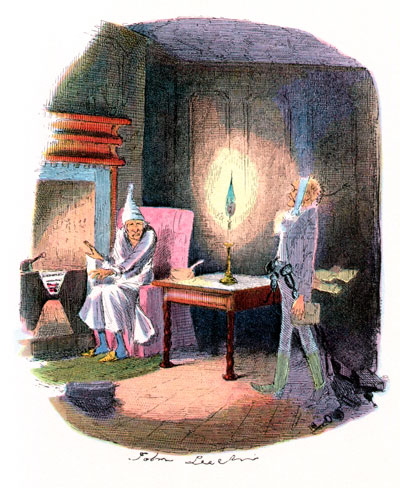
Marley tells Scrooge that he will be visited by three ghosts that night, the ghosts of Christmas Past, Present, and Future. The ghosts show Scrooge where he made mistakes in his past life due to choosing money over love and life, how his clerk and the Cratchit family are suffering because of his present day meanness, and show him a lonely future death. Scrooge is offered, and takes, an opportunity to change his ways and find redemption.
If you are interested in listening to A Christmas Carol beautifully read by Stephen Humphreys, you will find the links on Rebecca Budd’s blog: Clanmother: https://clanmother.com/2021/12/07/stephen-humphreys-reads-a-christmas-carol/
Wishing you all a Merry Christmas if you celebrate or Happy Holidays.
Although I cannot compare my take on Victorian child labour to Charles Dickens’ brilliant works, I have written several times about this and I thought I would share this short extract from my book, Through the Nethergate, about a serving girl in a tavern in Bungay in 1589.
“The rich, amber fluid flowed into the waiting tankard, in striking contrast to the damp, darkness of the barrel filled cellar.
The small, frail girl stood with the tankard in her trembling hand. She was hungry, thirsty and cold. She hadn’t had anything to eat or drink since last night’s frugal supper of leftovers in the Inn’s kitchen. A wave of dizziness washed over her as she contemplated the drink. Its golden depths seemed to entrance her as she lifted it to her lips.
At least the kitchen was warm, she thought, remembering the delicious heat of the enormous, roaring fireplace. The kitchen was a much better place to steal a moment of rest than this freezing cold
cellar, in the bowels of the building.
The strong, rich taste of the ale brought a smile to the girl’s pale face. She greedily drained the tankard, closing her eyes and allowing a feeling of well-being to permeate through her skinny, undernourished body. The girl, called Lizzie, worked as a servant at the pub and she was twelve years old.
She knew she should be grateful for the job, but it was hard to forgive the heavy-handed punishments metered out to her by Will, the owner of the establishment.
A rough hand grasped her shoulder, its thick fingers digging viciously into her flesh.
“What have you done?” the loud, grating voice of Will blasted through her euphoria.
Lizzie jerked with fear and the tankard fell from her fingers, clattering to the stone floor before rolling away.
She looked up into piggy eyes staring out of a fat and well-fed face. Will’s usually florid complexion looked even ruddier and coarser than usual.
“Why, you little thief,” continued Will. “You know what we do with thieves in this Inn.”
A short while later, Lizzie found herself chained to the wall of the cellar. Her pleas and cries for mercy had fallen on deaf ears as Will, filled with righteousness and piety at her ungodly action, attached the manacles to her wrists and ankles.”
__________________________________________________________________________________________________________
Want to be sure not to miss any of Robbie’s “Dark Origins” segments? Subscribe to Writing to be Read for e-mail notifications whenever new content is posted or follow WtbR on WordPress. If you found it interesting or entertaining, please share.
Share this:

Treasuring Poetry – An introduction to Word Weaving #1: A Word Craft Journal of Syllabic Verse edited and compiled by Colleen Chesebro and Jules Paige
Posted: December 18, 2021 Filed under: Anthology, Book Review, Books, Interview, Poetry, Treasuring Poetry, Writing | Tags: Anthology, Colleen Chesebro, Interview, Poetry, Robbie Cheadle, Treasuring Poetry, Word Weaving#1: A Word Craft Journal of Syllabic Verse, Writing to be Read 78 Comments
Today, I am delighted to introduce you to Word Weaving #1: A Word Craft Journal of Syllabic Verse, The Moons of Autumn, a delightful collaboration of syllabic poems by a variety of poets, edited and compiled by Colleen Chesebro and Jules Paige.
By way of background, Colleen Chesebro has run a weekly syllabic poetry challenge on her blog, Word Craft: Poetry and Prose for years. She has been a guiding light to the poetry community, sharing her knowledge about the many different forms of syllabic poetry and encouraging poets to experiment and all learn together.

What inspired you to put together a poetry anthology, is it a once off or will there be others?
My inspiration for the syllabic poetry journal came about when I realized that many of the poets who joined in my weekly challenge did not have the ways or means to publish their own books of poetry. I envisioned a yearly journal filled with creative syllabic forms. I’m not aware of another journal that presents both Japanese and American versions of syllabic poetry. This is a different concept and I think it has paid off.
Also, to note, the poet’s retained ownership of the poems submitted to the journal. All rights reverted to the respective author/artist upon publication. All we asked, was if their work was republished, we appreciated a mention that the Word Weaving Poetry Journal was the first place of publication.
While I planned this journal, I realized I wanted to host a poetry contest on wordcraftpoetry.com with paid prizes. It was logical to use the royalties from the sale of the Word Weaving Journal to pay for the prizes. As for another journal… I’ll let you know after the poetry contest in 2022. I’m aiming for the month of June for the contest on wordcraftpoetry.com. I’ll reevaluate at that time.
Which poem in the anthology touched you the most? Please provide the test of the poem and the author
This is a hard question to answer. My co-editor, Jules Paige and I first selected our favorites. We deliberated for some time over the poems… they were all so good! In the end we selected Ken Gierke’s gogyohka poem:
warmth of a pale light
found as clouds part
rewarded
while seeking the moon
on a cool autumn night
© Ken Gierke
We both felt this gogyohka best illustrated the concept of the “Moons of Autumn.” At the end of the Journal, Jules and I shared our three favorite poems by D. L. Finn, Merril D. Smith, and Ken Gierke.
If I had to go in deeper, my next favorite would be D. Wallace Peach’s tanka prose Idyll. The imagery in this poem is one of my favorites.
“Moon-spun”
November’s moon spins upon the tip of a white fir. Her fairy light whispers across the glades where alders part their leafless fingers into spindly shadows. The night glow sends the trolls trudging into the deep forest, brittle twigs crunching beneath their knobby feet. With nothing to fear, the deer lie down in a silver meadow. Old owl watches the coyotes croon to autumn’s stark beauty as they whiff the delicate scent of the coming snow.
a moon’s enchantment
befalls the northern forest
her magical light
banishes luring prowlers
inviting the night to sing
© D. Wallace Peach
What attracts you to syllabic poetry as opposed to other forms like freestyle and rhyming verse?
Syllabic poetry, especially the Japanese forms with their brevity of words, fills a special place in my heart. Not only do I like writing these forms, but I also enjoy reading what others have written. There is a simple beauty in haiku that I don’t find in other forms. Written mindfully, haiku are small poems with large meaning. It’s those a-ha moments of connection, I find the most pleasing.
For example:
summer clouds—
kayakers floating
the river
© Colleen M. Chesebro
In this haiku, I worked on imagery. The idea was to connect emotions by associating two or more images together in strange and unusual ways. It’s not as easy as it sounds. I find it is always best to look for alike or contrasting images to feature in my poem.
I targeted the “summer (my kigo) clouds” and the “kayakers floating the river,” as a summer activity. Clouds float – kayakers float, which are alike images.
A haiku should present an event in an image. It should SHOW us what happened without telling us about it or what emotion to feel. In the haiku above, what emotions do you feel?
Haiku poems share a specific event or observation. Haiku are not generalities, and we never use a simile or metaphor. Most haiku are written in seventeen onji (Japanese sounds) which equates to around twelve syllables (3, 5, 3). Most rhyming poetry doesn’t give me the same emotional impact as the simple haiku does. Although, I do enjoy creating some of the syllabic forms that use rhyme and meter.
What advice can you give people setting out on the path of writing poetry?
Poetry is about expression and creativity. Poets should write poetry daily. If you don’t practice, how can you perfect your craft? I write my poetry on my author blog at colleenchesebro.com and in a handwritten journal.
It’s best to get involved in a poetry community with poetry challenges where you can stretch your wings and try new things like we do on wordcraftpoetry.com. If you can’t find a challenge you like, start your own! Learning how to comment, critique, and write about the work of another poet is crucial to your own poetic journey.
Write more poetry! Find what forms bring you the most joy to write. Write them! Then, learn everything you can about that type of poetry.
Submit your poetry to literary journals and contests. I’ve had more poetry rejected than accepted, but that hasn’t stopped me yet.
What are your plans for Word Craft: Prose & Poetry going forward?
Wordcraftpoetry.com will continue to be a safe place to write syllabic poetry. We’re in our fifth year of the #TankaTuesday Poetry Challenge. Each week, I strive to make the challenges interesting. In 2022, we will have a few new prompts to freshen up our creativity. I will continue to feature a poet and their poem almost every week. Depending on the challenge week, the poet will choose the prompt for the next month’s challenge. It’s important to me to involve the poets in the challenges. That is what community is all about. Stay tuned. Who knows what I’ll think of next!
Thanks so much, Robbie for featuring me and the Word Weaving Journal on Treasuring Poetry.

Author biography
Colleen M. Chesebro is a Michigan Poet who loves crafting syllabic poetry, flash fiction, and creative fiction and nonfiction. She sponsors a weekly poetry challenge, called #TankaTuesday, on wordcraftpoetry.com where participants learn how to write traditional and current forms of syllabic poetry.
Along with JulesPaige, Colleen is also a co-editor of “Word Weaving, a Word Craft Journal of Syllabic Verse,” at wordweavingpoetryjournal.com. The debut issue of the journal published October 2021, with a kindle and print version of the journal.
Colleen’s syllabic poetry has appeared in various other online publications. Recently, she created the Double Ennead, a 99-syllable poetry form for the Carrot Ranch literary community at carrotranch.com. She hosts a challenge as a guest of the Saloon, every third Monday of the month.
Colleen’s poetry has poetry in various anthologies and journals including “Hedgerow-a journal of small poems,” and “Poetry Treasures,” a collection of poetry from the poet/author guests of Robbie Cheadle on the “Treasuring Poetry” blog series on “Writing to be Read” in 2020.
Colleen published “Word Craft: Prose & Poetry, The Art of Crafting Syllabic Poetry,” which illustrates how to write various syllabic poetry forms used in her Tanka Tuesday challenges; and a collection of poetry, flash fiction, and short stories called, “Fairies, Myths & Magic: A Summer Celebration,” dedicated to the Summer Solstice. She contributed a short story called “The Changeling,” in the “Ghostly Rites Anthology 2020,” published by Plaisted Publishing House.
Find Colleen Chesebro
Find Colleen at Word Craft: Prose & Poetry at wordcraftpoetry.com.
Find Colleen’s author blog at colleenchesebro.com.
Find Colleen’s pagan blog at awitchsbrew.wordpress.com
My review of Word Weaving #1: A Word Craft Journal of Syllabic Verse
This book, edited and collated by talented poets Colleen Chesebro and Jules Paige, is a delightful collection of meaningful poems by a variety of different contributors. The theme of the book is Harvest Moon and each poem gives insight into the meaning of this expression to the particular poet. Some poems are practical and some are ethereal, yet others are colourful and then there are the silvery ones, but they all share the common feature of being beautiful.
The poems in the book demonstrate as wide a variety of styles as there are contributors, with a common thread of all being syllabic. I came across a number of forms that were new to me, including senryu, haiga, and gogyohka among otehrs. There are also the more familiar syllabic forms such as haiku, tanka, haibun, tanka prose, etheree, nonet, shadorma, and cinquain.
My favourite poem in this collection is written by Kerfe Roig. I like it because it is filled with mystery and delight:
“who is this Other
come to greet me
glittering shadowed
behind and before
a changeling of light”
All the poems are gorgeous and this collection is a most worthwhile read for poetry lovers.
What Amazon says
Word Weaving is a yearly poetry journal, and for our first issue, we bring you poetry crafted from a broad mix of new and established voices across the spectrum of Japanese and American syllabic poetry forms. Enjoy this collection of poems that celebrate the Moons of Autumn.Contributing Poets:
Annette Rochelle Aben, Mona Bedi, Nancy Brady, Colleen M. Chesebro, Goutam Dutta, Bill Engleson, Elizabeth F., Andreea Finichiu, D.L. Finn, Jeff Flesch, Ken Gierke, Franci Hoffman, Thom Kerr, Sujata Khanna, Ruth Klein, Jules Paige, D. Wallace Peach, Gwen M. Plano, M. J. Mallon, R.V. Mitchell, Elaine Patricia Morris, Lisa Smith Nelson, Pat Raffington, Susmita Ramani, Kerfe Roig, Aishwarya Saby, Akhila Siva, Merril D. Smith, Willow Willers, and Cheryl Wood.
About Robbie Cheadle
Robbie Cheadle is a South African children’s author and poet with 9 children’s books and 2 poetry books.
The 7 Sir Chocolate children’s picture books, co-authored by Robbie and Michael Cheadle, are written in sweet, short rhymes which are easy for young children to follow and are illustrated with pictures of delicious cakes and cake decorations. Each book also includes simple recipes or biscuit art directions which children can make under adult supervision.
Robbie has also published 2 books for older children which incorporate recipes that are relevant to the storylines.
Robbie has 2 adult novels in the paranormal historical and supernatural fantasy genres published under the name Roberta Eaton Cheadle. She also has short stories in the horror and paranormal genre and poems included in several anthologies.
Robbie writes a monthly series for https://writingtoberead.com called Growing Bookworms. This series discusses different topics relating to the benefits of reading to children.
Robbie has a blog, https://robbiesinspiration.wordpress.com/ where she shares book reviews, recipes, author interviews, and poetry.
Find Robbie Cheadle
Blog: https://www.robbiecheadle.co.za/
Blog: robbiesinspiration.wordpress.com
Twitter: BakeandWrite
Instagram: Robbie Cheadle – Instagram
Facebook: Sir Chocolate Books
______________________________________________________________________________________________
Want to be sure not to miss any of Robbie’s “Treasuring Poetry” segments? Subscribe to Writing to be Read for e-mail notifications whenever new content is posted or follow WtbR on WordPress. If you found it interesting or entertaining, please share.
Share this:

Growing Bookworms – Teaching children about charity
Posted: December 8, 2021 Filed under: Books, Children's Books, Education, Inspirational | Tags: Charity, Giving, Growing Bookworms, Parenting, Robbie Cheadle, Teaching, Writing to be Read 51 Comments
Christmas is just around the corner and many people are gearing up for holidays, family gatherings, presents, and lots of delicious food. Of course, not everyone is in this privileged position and there are millions of people who will not have any of these things.
I thought December would be a good time to write about teaching children about charity.
People who care about earth and the people and animals we share it with want to raise generous children who understand the importance of charity and giving back to society. It is a good idea to raise the concept of charity with our children early on and this can be done in a way that doesn’t scare them or make them fearful.
From a young age, I told my children that while there are many children whose families are wealthier than we are and who have more than we do, there are millions of children who have far less. We discussed children that have lost their parents and who are living in orphanages or as foster children. We spoke about schools that give children a hot meal at lunch time and I explained that for some of those children it is the only meal they get in a 24-hour period.
I tried to involve my boys in my own charity activities which included making up packs of groceries for needy pensioners, donating books to underprivileged schools, and giving used clothing to various charities.
When children are part of activities that help others who are less fortunate than they are, it gives them a sense of perspective about their own good fortune to have a nice home, food to eat, and schooling. As they get older, they will also learn to appreciate a loving and supportive family. Being generous helps children learn to appreciate what they have and be more grateful. It makes them feel useful and fosters empathy.
My children have both grown into caring and empathetic young men who see a need and are willing to put their own money and time behind helping other people.
Quote from Michael: “Children need to learn about charity because people have to work together to create a good environment.”
Every Christmas, my sons and I undertake 10 hours of community service each. Michael is auto-immune so we do their hours from the safety of our own home and, as Michael and I like to bake, our activities often involve these activities.
Last year we, the boys and I, made 150 goodie bags for the elderly residence of a local old age home. My nephews helped with this activity and the four boys baked and iced 80 gingerbread boys. I made 70 slices of shortbread and each bag contained a baked good, some chocolates, and a Christmas joke.


This year, we baked two beer-box cakes for a Christmas party for an underprivileged school. We had fun adding the sprinkles.

We are also making 150 Christmas crackers filled with three delicious chocolates for the old age home. So far we have made 40.

These are all fun activities to do with children, you can invite the kids in the neighbourhood or your nephews and nieces, and they bring a lot of joy to the recipients.
Another way of teaching children about giving and generosity is through reading to them.
I will never forget the scene from Little Women when Marmee asks her four daughters if they will give their Christmas breakfast away to a poor family:
“‘Merry Christmas, little daughters! I’m glad you began at once, and hope you will keep on. But I want to say one word before we sit down. Not far away from here lies a poor woman with a little newborn baby. Six children are huddled into one bed to keep from freezing, for they have no fire. There is nothing to eat over there; and the oldest boy came to tell me they were suffering hunger and cold. My girls, will you give them your breakfast as a Christmas present?’
They were all unusually hungry, having waited nearly an hour, and for a minute no one spoke; only a minute, for Jo exclaimed impetuously,—
‘I’m so glad you came before we began!’
‘May I go and help carry the things to the poor little children?’ asked Beth, eagerly.
‘I shall take the cream and the muffins,’ added Amy, heroically giving up the articles she most liked.”
This is just one of many wonderful books that teach children about sharing, giving and the real meaning of Christmas.
Another, one of my personal favourites, is How the Grinch Stole Christmas by Dr Seuss.
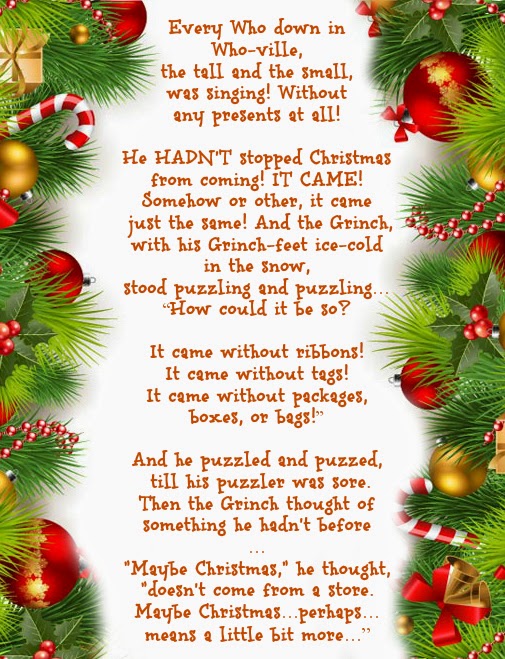
I must admit that every time I read that quote I get goosebumps.
This is the last Growing Bookworms post for 2021. If you celebrate, I wish you and your families a wonderful Christmas and all the best for the New Year. If you don’t celebrate Christmas, have a happy holiday period.
About Robbie Cheadle
Robbie Cheadle is a South African children’s author and poet with 9 children’s books and 2 poetry books.
The 7 Sir Chocolate children’s picture books, co-authored by Robbie and Michael Cheadle, are written in sweet, short rhymes which are easy for young children to follow and are illustrated with pictures of delicious cakes and cake decorations. Each book also includes simple recipes or biscuit art directions which children can make under adult supervision.
Robbie has also published 2 books for older children which incorporate recipes that are relevant to the storylines.
Robbie has 2 adult novels in the paranormal historical and supernatural fantasy genres published under the name Roberta Eaton Cheadle. She also has short stories in the horror and paranormal genre and poems included in several anthologies.
Robbie writes a monthly series for https://writingtoberead.com called Growing Bookworms. This series discusses different topics relating to the benefits of reading to children.
Robbie has a blog, https://robbiesinspiration.wordpress.com/ where she shares book reviews, recipes, author interviews, and poetry.
Find Robbie Cheadle
Blog: https://www.robbiecheadle.co.za/
Blog: robbiesinspiration.wordpress.com
Twitter: BakeandWrite
Instagram: Robbie Cheadle – Instagram
Facebook: Sir Chocolate Books
______________________________________________________________________________________________
Want to be sure not to miss any of Robbie’s “Growing Bookworms” segments? Subscribe to Writing to be Read for e-mail notifications whenever new content is posted or follow WtbR on WordPress. If you found it interesting or entertaining, please share.
Share this:

Growing Bookworms – The importance of teachers
Posted: October 13, 2021 Filed under: Education, Growing Bookworms, Parenting | Tags: Education, Growing Bookworms, Robbie Cheadle, Teachers, Writing to be Read 85 CommentsThe schools in South Africa are racing towards the end of a year fraught with lockdowns, illness and death. My sons have been on-line for long periods twice this year and many of the students have suffered the losses of friends, parents, grandparents, and other important people in their lives. Seeing how happy my sons are to be back at school and watching them forge ahead with their school work as their teachers valiantly try to reteach material and principles that were taught on-line and which the boys have failed to grasp properly, makes me feel more appreciative of their teachers than ever.
Gregory finishes school today. It is his last day of a 14-year journey and it is all rather emotional for the boys and teachers. His preliminary examinations went very well and he achieved an average of 92% for all 7 of this subjects including AP maths. This is partly due to hard work on Gregory’s part, but a lot of credit must go to his excellent teachers who really went all out to help the boys achieve the best they could. Greg attended on-line and in personal tutorials and extra sessions to prepare for his exams and some of them were over weekends during his teachers personal time.
As part of his leaving experience, he was invited back to his old nursery school, which forms part of his current school campus, and his old pre-preparatory school. How lovely it was to walk those corridors again and see the small desks and sinks, the art rooms and to find Greg’s handprint from when he was a 5-year old boy.
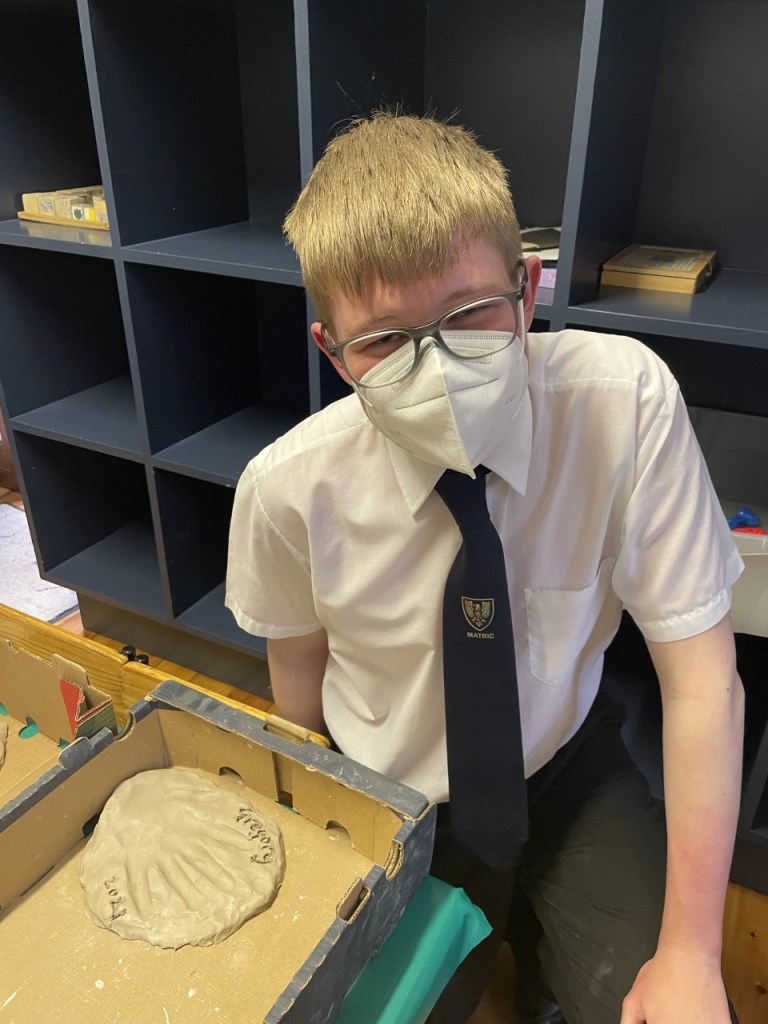
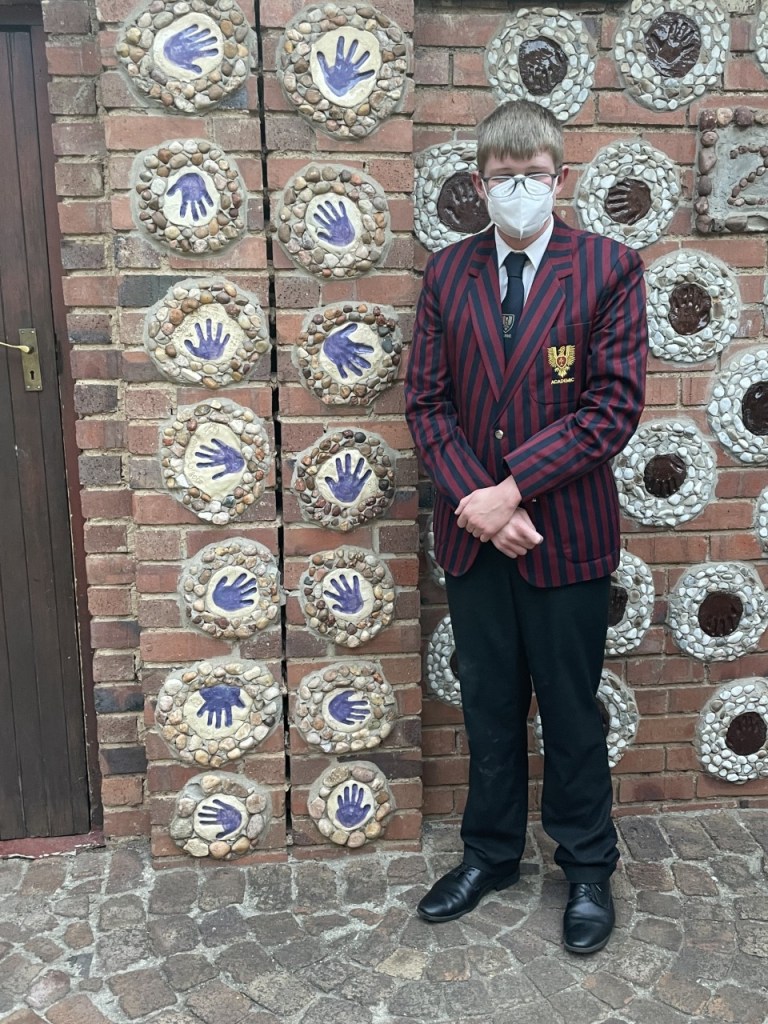
I believe that teachers are one of the most important professional groups in our society. They give children purpose, help prepare them to be successful citizens of our world, and help to inspire them to achieve and succeed both at school and in life.
A teacher imparts knowledge, good values, traditions and helps youngsters recognise modern challenges and overcome them.
The role of teachers is often underplayed and misunderstood with parents and others thinking they get lots of free time in the afternoons and during school holidays. This believe is certainly unfounded as every teacher I’ve ever known works a full day and more. They all teach extra murals and many offer extra tuition for students that struggle. Many of the teachers at my sons school are also involved in a community education programme and teach children from less privileged schools and backgrounds during part of their afternoons. Teachers also do a lot of marking and lesson preparation and that takes up a lot of their evenings and holidays. In summary, teaching is not a part-time job.
One of the toughest parts of teaching is teaching children from all sorts of homes and backgrounds about using their imaginations, creativity and challenging them to develop consistency, good work ethics, empathy and emotional intelligence.
I have met a number of wonderful teachers in the blogosphere and I appreciate them all for the wonderful teachers they are. Once a teacher, always a teacher, it’s not really something you stop doing as it is a part of your nature and behaviour patterns.
I am going to end this post by sharing a YouTube video about a special teacher, Jennie Fitzkee, who is a great champion of reading out loud and appeared recently on the Kelly Clarkson show. Bravo to Jennie for helping share the word about the importance of reading and thank you to Kelly Clarkson for raising the reading banner so high.
Here is link to the video: https://www.facebook.com/KellyClarksonShow/videos/1119312005268883
About Robbie Cheadle
Robbie Cheadle is a South African children’s author and poet with 9 children’s books and 2 poetry books.
The 7 Sir Chocolate children’s picture books, co-authored by Robbie and Michael Cheadle, are written in sweet, short rhymes which are easy for young children to follow and are illustrated with pictures of delicious cakes and cake decorations. Each book also includes simple recipes or biscuit art directions which children can make under adult supervision.
Robbie has also published 2 books for older children which incorporate recipes that are relevant to the storylines.
Robbie has 2 adult novels in the paranormal historical and supernatural fantasy genres published under the name Roberta Eaton Cheadle. She also has short stories in the horror and paranormal genre and poems included in several anthologies.
Robbie writes a monthly series for https://writingtoberead.com called Growing Bookworms. This series discusses different topics relating to the benefits of reading to children.
Robbie has a blog, https://robbiesinspiration.wordpress.com/ where she shares book reviews, recipes, author interviews, and poetry.
Find Robbie Cheadle
Blog: https://www.robbiecheadle.co.za/
Blog: robbiesinspiration.wordpress.com
Twitter: BakeandWrite
Instagram: Robbie Cheadle – Instagram
Facebook: Sir Chocolate Books
______________________________________________________________________________________________
Want to be sure not to miss any of Robbie’s “Growing Bookworms” segments? Subscribe to Writing to be Read for e-mail notifications whenever new content is posted or follow WtbR on WordPress. If you found it interesting or entertaining, please share.
Share this:

Treasuring Poetry – Meet poet and author Harmony Kent and my review
Posted: September 18, 2021 Filed under: Book Review, Books, Interview, Poetry, Treasuring Poetry | Tags: Author Interview, Book Review, Poetry, Poetry Collection, Robbie Cheadle, Writing to be Read 102 Comments
Today, I am delighted to feature poet and author Harmony Kent as my guest for Treasuring Poetry. I have read one of Harmony’s fictional books and her non-fiction book, Creative Solutions for the Modern Writer: Inspirational Tools to Fire Your Imagination, and they are both excellent. I have read and reviewed her poetry book, Slices of Soul: A Collection of Contemporary Poetry.
Welcome Harmony!
Which of your own poems is your favourite?
VOYAGE
Into the unknown we go
riding the ocean breeze
tacking this way and that
not too concerned with the far horizon
At peace, keeping an eye on the waves
that toss us about now and then
sailing through bright day
and deep dark night
It matters not
what tempest may come
we will weather the storms together
while we wend our way
We’ve lain our course
taken our soundings
and with love at the helm
we’ll keep a steady pace
Call it what you will
scow, skiff, sloop, hulk, schooner, bucket
so long as we caulk the boards and set the stays
we shall not founder
There’s no glory like it
in the heavens or on the Earth
than sailing free into the fire
of the sun as it sets into the glistening sea

What inspired you to write this particular poem?
When I met the love of my life, right away, we both went through some tough personal times. Those hardships brought us closer, and we’ve now been married for two years.
Which genre of poetry do you enjoy writing the most and why?
Some form of Haiku, because it forces me write with brevity and choose my words with utmost care.
Which genre of poetry do you enjoy reading the most?
As with my writing, my reading is eclectic. I enjoy a broad range of styles and genres.
What is your favourite poem?
Auguries of Innocence by William Blake
To see a World in a Grain of Sand
And a Heaven in a Wild Flower
Hold Infinity in the palm of your hand
And Eternity in an hour
A Robin Red breast in a Cage
Puts all Heaven in a Rage
A Dove house filled with Doves & Pigeons
Shudders Hell through all its regions
A dog starved at his Masters Gate
Predicts the ruin of the State
A Horse misused upon the Road
Calls to Heaven for Human blood
Each outcry of the hunted Hare
A fibre from the Brain does tear
A Skylark wounded in the wing
A Cherubim does cease to sing
The Game Cock clipped & armed for fight
Does the Rising Sun affright
Every Wolfs & Lions howl
Raises from Hell a Human Soul
The wild deer, wandering here & there
Keeps the Human Soul from Care
The Lamb misused breeds Public Strife
And yet forgives the Butchers knife
The Bat that flits at close of Eve
Has left the Brain that wont Believe
The Owl that calls upon the Night
Speaks the Unbelievers fright
He who shall hurt the little Wren
Shall never be beloved by Men
He who the Ox to wrath has moved
Shall never be by Woman loved
The wanton Boy that kills the Fly
Shall feel the Spiders enmity
He who torments the Chafers Sprite
Weaves a Bower in endless Night
The Caterpillar on the Leaf
Repeats to thee thy Mothers grief
Kill not the Moth nor Butterfly
For the Last Judgment draweth nigh
He who shall train the Horse to War
Shall never pass the Polar Bar
The Beggars Dog & Widows Cat
Feed them & thou wilt grow fat
The Gnat that sings his Summers Song
Poison gets from Slanders tongue
The poison of the Snake & Newt
Is the sweat of Envy’s Foot
The poison of the Honey Bee
Is the Artists Jealousy
The Princes Robes & Beggars Rags
Are Toadstools on the Misers Bags
A Truth that’s told with bad intent
Beats all the Lies you can invent
It is right it should be so
Man was made for Joy & Woe
And when this we rightly know
Through the World we safely go
Joy & Woe are woven fine
A Clothing for the soul divine
Under every grief & pine
Runs a joy with silken twine
The Babe is more than swaddling Bands
Throughout all these Human Lands
Tools were made & Born were hands
Every Farmer Understands
Every Tear from Every Eye
Becomes a Babe in Eternity
This is caught by Females bright
And returned to its own delight
The Bleat the Bark Bellow & Roar
Are Waves that Beat on Heavens Shore
The Babe that weeps the Rod beneath
Writes Revenge in realms of Death
The Beggars Rags fluttering in Air
Does to Rags the Heavens tear
The Soldier armed with Sword & Gun
Palsied strikes the Summers Sun
The poor Man’s Farthing is worth more
Than all the Gold on Africs Shore
One Mite wrung from the Labrers hands
Shall buy & sell the Misers Lands
Or if protected from on high
Does that whole Nation sell & buy
He who mocks the Infants Faith
Shall be mocked in Age & Death
He who shall teach the Child to Doubt
The rotting Grave shall neer get out
He who respects the Infants faith
Triumphs over Hell & Death
The Childs Toys & the Old Man’s Reasons
Are the Fruits of the Two seasons
The Questioner who sits so sly
Shall never know how to Reply
He who replies to words of Doubt
Doth put the Light of Knowledge out
The Strongest Poison ever known
Came from Caesars Laurel Crown
Nought can Deform the Human Race
Like to the Armours iron brace
When Gold & Gems adorn the Plow
To peaceful Arts shall Envy Bow
A Riddle or the Crickets Cry
Is to Doubt a fit Reply
The Emmets Inch & Eagles Mile
Make Lame Philosophy to smile
He who Doubts from what he sees
Will ne’er Believe do what you Please
If the Sun & Moon should Doubt
They’d immediately Go out
To be in a Passion you Good may Do
But no Good if a Passion is in you
The Whore & Gambler by the State
Licenced build that Nations Fate
The Harlots cry from Street to Street
Shall weave Old England’s winding Sheet
The Winners Shout the Losers Curse
Dance before dead England’s Hearse
Every Night & every Morn
Some to Misery are Born
Every Morn and every Night
Some are Born to sweet delight
Some are Born to sweet delight
Some are Born to Endless Night
We are led to Believe a Lie
When we see not Thro the Eye
Which was Born in a Night to perish in a Night
When the Soul Slept in Beams of Light
God Appears & God is Light
To those poor Souls who dwell in Night
But does a Human Form Display To those who Dwell in Realms of day
https://www.poetryfoundation.org/poems/43650/auguries-of-innocence
Slices of Soul: A Collection of Contemporary Poetry
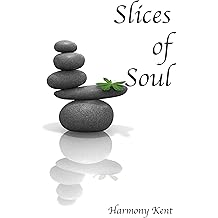
What Amazon says
Slices of Soul is a collection of contemporary poetry from author Harmony Kent that will both delight and call for deeper reflection. ‘Phantoms’ gives a gritty account of pain that you can never catch. ‘Enough’ expresses the contentment of Zen. ‘Diamonds’ shows the beauty to be found on a drab and rainy day. While ‘The Alchemist’ shows you how a guitar can turn lead into gold. This wonderful arrangement of fifty poems takes you from the abstract of Zen to the melody of music, and will reach into your mind, your heart, and your soul.
My review
Slices of Soul is a compelling and unusual collection of poetry which certainly does give the reader glimpses into the complex soul and unusual life of the poet.
I think it is important to note that the poet spent 13 years living in a Zen Buddhist Temple and that the poems featured in this book were written, during and after this period in her life. I believe that her spiritualism and surroundings had a bearing on the thoughts and ideas expressed through the poems in this book.
The poems are divided into sections: Shaved Head, written during her time at the Zen Buddhist Temple, Short Hair, written during the transitional period of her changing life circumstances, and Long Hair which effectively covers all the remaining sections in the book and were written after she’d adjusted to her new life.
I felt the tone of the poems changed over the course of the book from intense reflections on life, to studies of nature, to fierce expressions of emotion, to gentler articulations of love and contentment.
The two poems that impacted me the most in this collection are from the first two sections of the book, Shaved Hair and Short Hair:
The Path
The ten directions all merge into one
this winding road leads nowhere
and goes straight there
Lost and Found
Deep dark depths
I got lost on purpose
this desolate place
the only way
to get my bearings
Poetry lovers who like poems that make you think about things and see them differently will appreciate this book.
Purchase Slices of Soul
Amazon Author Page Harmony Kent
About Harmony Kent
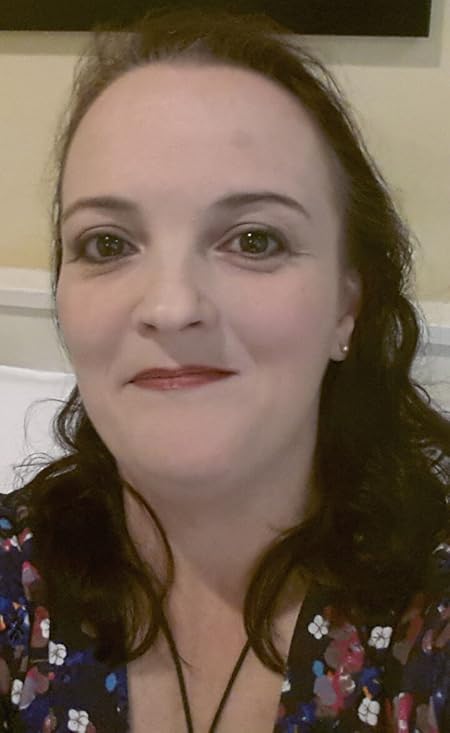
Harmony Kent is an award winning multi-genre author. Her publications include:
The Battle for Brisingamen (Fantasy Fiction) AIA approved
The Glade (Mystery/Thriller) AIA Approved/BRAG Medallion Honouree/New Apple Literary Awards Official Selection Honours 2015
Polish Your Prose: Essential Editing Tips for Authors (Writing/Editing) New Apple Literary Awards Top Medallist Honours 2015
Finding Katie (Women’s Fiction)
Slices of Soul (Contemporary Poetry)
Interludes 1 & Interludes 2 (Erotic Short Stories)
Moments (Short Stories and Poetry)
Jewel in the Mud (Zen Musings)
Backstage (Erotic Romance)
FALLOUT (Apocalyptic/post-apocalyptic Dystopia) BRAG Medallion Honouree
The Vanished Boy (Psychological Thriller)
As well as being an avid reader and writer, Harmony also offers reviews and supports her fellow authors. Harmony works hard to promote and protect high standards within the publishing arena. She is always on the look out for talent and excellence, and will freely promote any authors or books who she feels have these attributes. Harmony lives in Cornwall, England.
twitter: @harmony_kent
Goodreads: https://www.goodreads.com/HarmonyK
About Robbie Cheadle
Robbie Cheadle is a South African children’s author and poet with 9 children’s books and 1 poetry book.
The 7 Sir Chocolate children’s picture books, co-authored by Robbie and Michael Cheadle, are written in sweet, short rhymes which are easy for young children to follow and are illustrated with pictures of delicious cakes and cake decorations. Each book also includes simple recipes or biscuit art directions which children can make under adult supervision.
Robbie has also published 2 books for older children which incorporate recipes that are relevant to the storylines.
Robbie has 2 adult novels in the paranormal historical and supernatural fantasy genres published under the name Roberta Eaton Cheadle. She also has short stories in the horror and paranormal genre and poems included in several anthologies.
Robbie writes a monthly series for https://writingtoberead.com called Growing Bookworms. This series discusses different topics relating to the benefits of reading to children.
Robbie has a blog, https://robbiesinspiration.wordpress.com/ where she shares book reviews, recipes, author interviews, and poetry.
Find Robbie Cheadle
Blog: https://www.robbiecheadle.co.za/
Blog: robbiesinspiration.wordpress.com
Twitter: BakeandWrite
Instagram: Robbie Cheadle – Instagram
Facebook: Sir Chocolate Books
_____________________________________________________________________________________________________________________
Want to be sure not to miss any of Robbie’s “Treasuring Poetry” segments? Subscribe to Writing to be Read for e-mail notifications whenever new content is posted or follow WtbR on WordPress.