Welcome to the WordCrafter “Tales From the Hanging Tree” Book Blog Tour
Posted: September 9, 2024 Filed under: Anthology, Audio Excerpt, Blog Tour, Books, Dark fiction, Ghost Stories, Guest Post, WordCrafter Book Blog Tours, WordCrafter Press | Tags: Anthology, C.R. Johansson, DL Mullan, Joseph Carrabis, Kaye Lynne Booth, Matt Usher, Paul Kane, Sylva Fae, Tales from the Hanging Tree, WordCrafter Book Blog Tours, WordCrafter Press 7 Comments
Welcome to the opening day of the WordCrafter Tales From the Hanging Tree Book Blog Tour. We have a great tour planned, with guest posts and readings from contributing authors, and a great giveaway where you could win a free digital copy of this dark fiction anthology.
Tour Schedule
Monday Sept. 9 – Writing to be Read – Reading Excerpt by Joseph Carrabis & Guest Sylva Fae
Tuesday Sept. 10 – Roberta Writes – Guest Kaye Lynne Booth
Wednesday Sept. 11 – Carla Reads – Guest C.R. Johansson
Thursday Sept. 12 – Undawnted – Guest Paul Kane
Friday Sept. 13 – Writing to be Read – Reading Excerpt by DL Mullan & Guest Matt Usher
The Giveaway
Follow the tour and leave a comment at each stop you visit to let us know you were there and earn an entry in the giveaway for a free digital copy of Tales From the Hanging Tree.
About Tales From the Hanging Tree

There exists a tree that is timeless, spanning across all dimensions, which absorbs every life as those who are hanged as they die… and it remembers every one. The stories within are a select few of the Tales From the Hanging Tree.
Tales from the Hanging Tree is a wonderfully dark, themed anthology which revolves around an ephemeral and timeless hanging tree that absorbs the memories of all hanging victims. This WordCrafter Press anthology was created by invitation only and includes stories from authors Kaye Lynne Booth, Paul Kane, DL Mullan, C.R. Johansson, Joseph Carrabis, Sylva Fae, and Matt Usher.
Reading from “Mercy”, by Joseph Carrabis
About Joseph Carrabis
Joseph Carrabis told stories to anyone who would listen starting in childhood, wrote his first stories in grade school, and started getting paid for his writing in 1978. He’s been everything from a long-haul trucker to a Chief Research Scientist and holds patents covering mathematics, anthropology, neuroscience, and linguistics. After patenting a technology which he created in his basement and creating an international company, he retired from corporate life and now he spends his time writing fiction based on his experiences. His work appears regularly in several anthologies and his own published novels. You can learn more about him at https://josephcarrabis.com.

Inspiration for “The Devil’s Mark” by Sylva Fae
I am an author from Lancashire, England, and my maiden name was Jan Southworth – both of these facts are quite relevant to finding inspiration for the story.
Salmesbury Hall, a beautiful stately home in Lancashire, in the north of England, was originally built for the Southworth family, (one of the oldest families in the country) who resided there between 1325 and 1678. The house has a chequered past, which includes religious persecution, betrayal, witchcraft and murder. From being a young child, I was fascinated to read the history of my ancestors, the lords and ladies, saints and witches, but in particular about the women accused of witchcraft.
Jane Southworth was one of three women tried for maleficium, causing harm by witchcraft, in the Lancashire Witch Trials of 1612. The family was split at the Reformation, with one half staying Roman Catholic and the other half, including Jane and her husband, converting to the Protestant Church. There were strong disagreements, and when Jane’s husband was disinherited, her father-in-law spread rumours of her being a witch. Later, Jane and two others, were accused of witchcraft by a child named Grace Sowerbutts. Grace gave evidence at trial of witnessing the women shapeshifting into dogs, meeting with demonic creatures in the woods at night and murdering and eating a child. The accused women beseeched Grace to tell of who had coached her, and when cross-examined, it came out that she had been told what to say by Sir Christopher Southworth, a Jesuit priest. Thankfully, the evidence was thrown out and the women were acquitted, but sadly this was not always the case.
The themes of innocent women being accused of witchcraft, merely because they were deemed different or troublesome, seemed the perfect basis for the Hanging Tree anthology story. My story is purely fictional, but uses research taken from real trials and the ridiculous reasons some of these women were accused of witchcraft. I also like to see justice served, but you’ll have to read the story to find out how this happens in The Devil’s Mark.

About Sylva Fae
Sylva Fae is a married mum of three from Lancashire, England. She grew up in a rambling old farmhouse with an artistic family and an adopted bunch of dysfunctional animals. Her earliest memories are of bedtime stories snuggled up close to Mum to see the pictures. It was a magical time, those last special moments before dozing off to sleep would feed dreams of faraway lands and mystical beings. She spent twenty plus years teaching literacy to adults with learning difficulties and disabilities and now lives in Cheshire, juggling being a mum, writing children’s stories and keeping up with the crazy antics of their naughty rabbits.

Sylva and her family own a small woodland and escape there at every possible opportunity. Adventures in their own enchanted woodland, hunting for fairies and stomping in puddles, originally inspired Sylva to write stories for her girls. Whether it’s sat at the campfire in her own woods, or pottering around the beautiful local countryside, Sylva now finds her story inspiration being out in nature.
Sylva published her first children’s book Rainbow Monsters, in 2017. She has since published seventeen other children’s picture books, three chapter books, five illustrated anthologies, and has several short stories published in other anthologies. Three of her books have won Best in Category for children’s books at the Chanticleer International Book Awards and she’s won ten Reader’s Choice Awards. In addition to writing her own, Sylva has ghost written several books, and is an editor and writer for Connections eMagazine.
Links
Amazon author.to/SylvaFae
Facebook https://www.facebook.com/SylvaFae
TikTok @sylvafae54
Instagram @sylvafae
_______________________________
That wraps up today’s stop on the WordCrafter Tales From the Hanging Tree Book Blog Tour. Follow the tour through links in the schedule above and leave a comment for a chance to win a free digital copy of the book. Tomorrow we’ll be over at Roberta Writes, where I will be Robbie Cheadle’s guest. So be sure to join us there, where I’ll share my inspiration for this dark anthology.
__________________________
Book your WordCrafter Book Blog Tour today!
Share this:

Tales From the Hanging Tree Available for Pre-Order
Posted: September 5, 2024 Filed under: Anthology, Book Promotion, Book Release, Books, Dark Fantasy, Dark fiction, Horror, WordCrafter Press | Tags: C.R. Johansson, Dark fiction, DL Mullan, Joseph Carrabis, Kaye Lynne Booth, Matt Usher, Paul Kane, Sylva Fae, Tales from the Hanging Tree, WordCrafter Press 1 Comment
There exists a tree that is timeless, spanning across all dimensions, which absorbs every life as those who are hanged as they die… and it remembers every one. The stories within are a select few of the Tales From the Hanging Tree.
Stories by Kaye Lynne Booth, Paul Kane, DL Mullan, C.R. Johannson, Joseph Carrabis, Sylva Fae, and Matt Usher.
To release on September 10, 2024. Available for pre-order now: https://books2read.com/Hanging-Tree
______________________________
And don’t miss the WordCrafter Tales From the Hanging Tree Book Blog Tour September 9 – 13. Find out more right here, on Writing to be Read.
______________________________
This post is sponsored by WordCrafter Press.

This post is sponsored by WordCrafter Press.
Share this:

Writer’s Corner: Writing Short Fiction
Posted: September 2, 2024 Filed under: Anthology, Books, Short Fiction, Stories, WordCrafter, WordCrafter Press, Writer's Corner, Writing | Tags: Anthologies, Kaye Lynne Booth, Short Fiction, Writer's Corner, Writing Tips, Writing to be Read Leave a comment
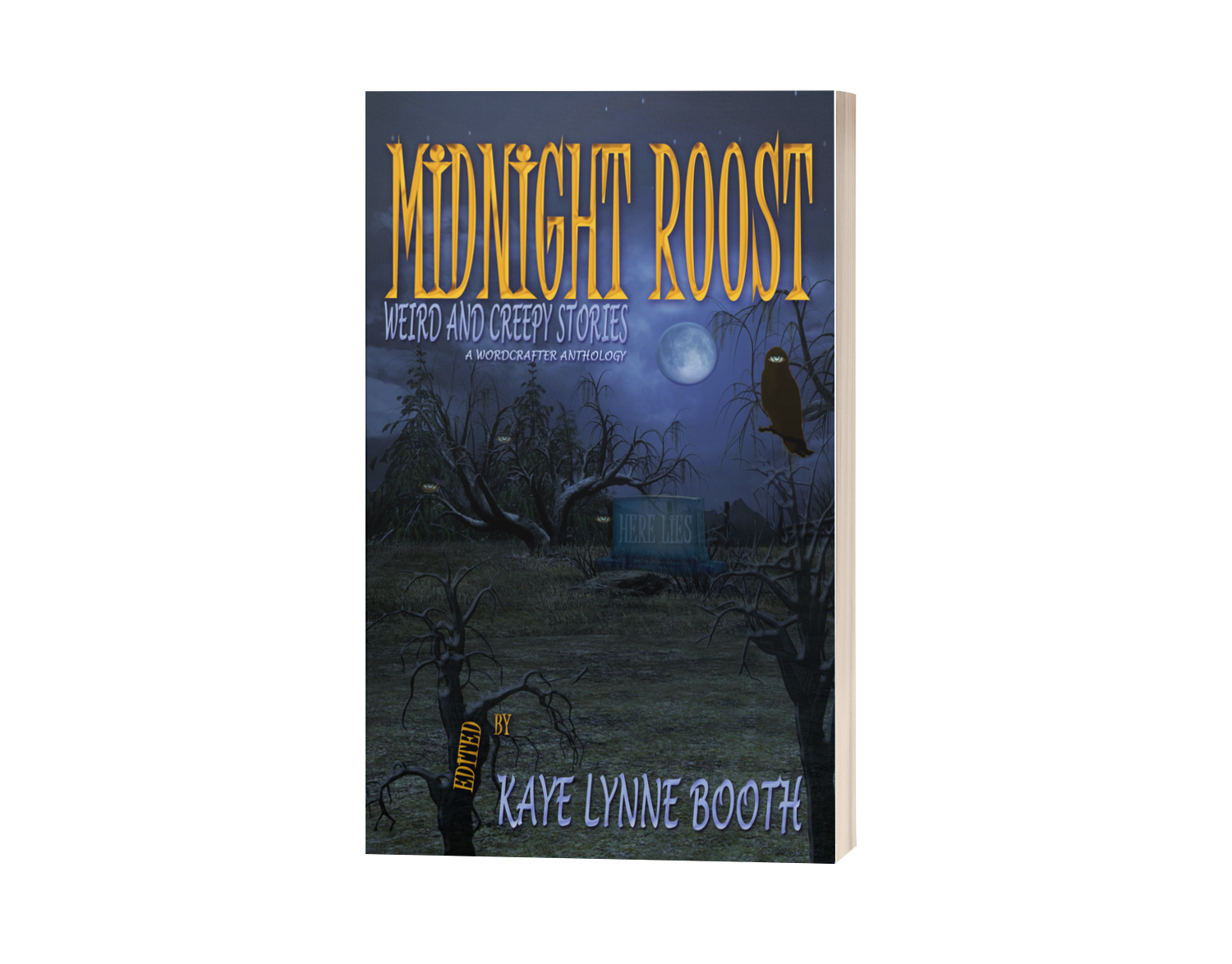
WordCrafter Press runs an annual short fiction contest and publishes a resulting anthology. It began back in 2019, with a short fiction contest which resulted in the Whispers of the Past paranormal anthology. That anthology ended up with nine stories, by seven different authors for a total of 107 pages. Last year’s (2023) dark fiction anthology, Midnight Roost: Weird and Creepy Stories, was a combination of contest entries and submissions by invitation, included twenty-three stories, by twenty different authors for a total of 403 pages. So, the annual anthology has grown in both scope and quality over the years.
To date, WordCrafter Press has a paranormal and a multi-genre (fantasy, science fiction, paranormal,and horror) anthology trilogy, (which is made up of both contest entries and submissions by invitation), and I’m currently building a dark fiction triology, as well.


This year’s dark fiction anthology, Midnight Gardens, will be spectacular as Book 2 of the WordCrafter Midnight Anthology Series, partnering up with last year’s Midnight Roost.


Writing short fiction is different than writing novel length works in many ways. Although short stories still require most of the same story elements as longer tales do, writers of short fiction must deal with them in a condensed format. There is no room for wasted or unnecessary words.
Likenesses with Short and Long Fiction
Like longer fiction, many of the story elements are still required to make a good story. Both formats need:
- A good hook to draw the reader into the story: For longer fiction, this can be accomplished in the first few paragraphs, or maybe even the first page, but for short fiction, it must be accomplished quickly, within the first paragraph, or even with the first sentence.
- An inciting incident: The inciting incident occurs at the beginning of the story and usually involves the main character making a choice which propells him into the tale and gets things moving. This is usually what makes the reader care about the character and what will happen next, making them keep reading.
- Well developed and interesting characters: With short fiction, this can be tricky because you don’t have a lot of time in which to build character. I make my short fiction characters dynamic and colorful to make them stand out from the page and bring them to life for my readers quickly. No matter the length of the work, the author should always know way more about the character than they will ever use in the story. A character which is alive in the author’s mind first and foremost, making it easier to bring them to life for the reader. (I discuss several methods of character development in my “Writer’s Corner” post from September 2023, “Developing Characters with Depth”.)
- Meaningful dialog: In short fiction, every word must count, so there is no room for everyday chit-chat. Every piece of dialog must serve a purpose. It is possible to let the reader see every nuance of your characters through the dialog consisting of both outer and inner dialog, as well as subtext, or unspoken body language, which can be used to emphasize or contradict spoken dialog. (I talk more about the use of subtext in my April 2024 “Writer’s Corner” post, “Visceral Character Portrayal”.)
- Descriptive details: Use one or more senses to describe the setting and set the scene for readers, allowing them to experience the setting or location through the character’s eyes, ears, nose, mouth and skin.
- Conflict and tension: Conflict can be either internal or external, or ideally, both, but it must force the character to make a choice and take action. Tension is created by events which involve opposing forces within the character (internal), between the character and opposing characters or forces beyond the character’s control (external). Obstacles are often placed in the way of resolving the conflict, making it even harder and increasing the tension even more.
- A satisfying resolution: All conflicts should be resolved at the end of the story in a manner that will satisfy readers and not leave them feeling cheated. This can happen in any number of ways, but the conflicts that we’ve spent the last few pages building up to must be resolved in a manner that is logical and believable for the reader. Things don’t have to be all fixed, but we at least need an inkling that things have changed and are now headed in the right direction.
Differences with Short and Long Fiction
- The right point of view and tense for the story: Many longer tales are told in the third person, past tense, which serves them well. Because we want to move through a short story rather quickly, we may need the story to move along at a faster clip. Often, this can be accomplished in short fiction by using a first person, present tense, giving the tale an intensified sense of immediacy, making short fiction better suited to this approach than for longer fiction.
- Quick build up to climax or turning point in the story: This is what the reader has been waiting for, the climatic moment that will change everything from this point out. It could be an epiphany where the character realizes what must be done, or maybe he knew it all along and this is the moment when he decides to do it, but it should bring about some sort of resolution. In short fiction, you don’t have the luxury of a slow build, making it necessary to ratchet up the tension quickly and get to this point directly.
- Descriptive dialog tags: For longer fiction, I was taught to stick to basic dialog tags, such as “said”, “asked”, “replied”, and maybe, “cried”, and then, use descriptors to illustrate the mood and tone, and raise emotion in and connect with readers. However, I have found that more descriptive dialog tags such as “smirked”, or “bellowed” are quite acceptable and even preferable for setting the scene with a minimal amount of words. I’m also beginning to see the value in leaving out the dialog tags all together where it is clear who the speaker is, to help keep the word count down by cutting out unnecessary words.
My Tips for Writing Short Fiction
- Begin close to the end. The beginning of the story illustrates what was and the ending illustrates how things have changed or at least, the direction in which they are now headed. A trick used in screenwriting is to mirror the ending at the beginning, and then go back in time to show how we got to that point. So the first and last scenes act like bookends to your story. By mirroring your first and last paragraphs, this technique can also work well with short fiction, where there is limited space in which to tell your tale.
- Each character should get their own paragraph containing dialog and subtext to show how the dialog is being delivered and making it clear to readers who is saying and doing what. When you switch characters, you switch to a new paragraph, (but not to a new point of view).
- Include enough setting description to let readers get a visual image in their minds, but only include those details that will add to the story or help progress the plot, moving the story forward.
- Choose a single point of view and stick with it. In short fiction, there isn’t enough room to develop multiple characters, so put us into one character’s head and leave us there.
- From an editor’s perspective, (one who reads through and edits a lot of short fiction), please format your manuscript in standard manuscript format, with title and author name centered at the top of page, in a legible 12 pt. font, double spaced. And most importantly, follow submission guidelines!
Advantages of Anthologies
So, why do I go to all the trouble of reading through all these submissions, compiling and editing, formatting and publishing all these anthologies?
I’ll tell you. It takes a lot less time to write a short story than it does a novel, so publishing two or more per year allows me to get my name out there on more books each year. And it’s mutually beneficial to all contributors, as they are able to claim the book for their own author pages, so they are getting more books out there, too. It’s a win-win.
Plus, if all the contributors help with promotion, broadcasting to their readers about the book, you get the results of a much wider reach with your marketing, which means we sell more books. WordCrafter antholgies pay out with a royalty split, so the more books we sell, the more we all make. Again, win-win.
If you’d like to get a story into a WordCrafter anthology, watch for the call for submissions for next year’s contest in October, after the release of Midnight Garden on October 8. I’m putting it out early this year, (I usually do it right at the beginning of each year), and may be changing the submission deadline, so even if you have submitted to past contests, be sure to keep an eye out for the call. I will also be announcing the title for next year’ s anthology and cover reveal. (For now, I can tell you that it will be the third volume in the Midnight Anthology Trilogy, so it will be more dark fiction).
About Kaye Lynne Booth
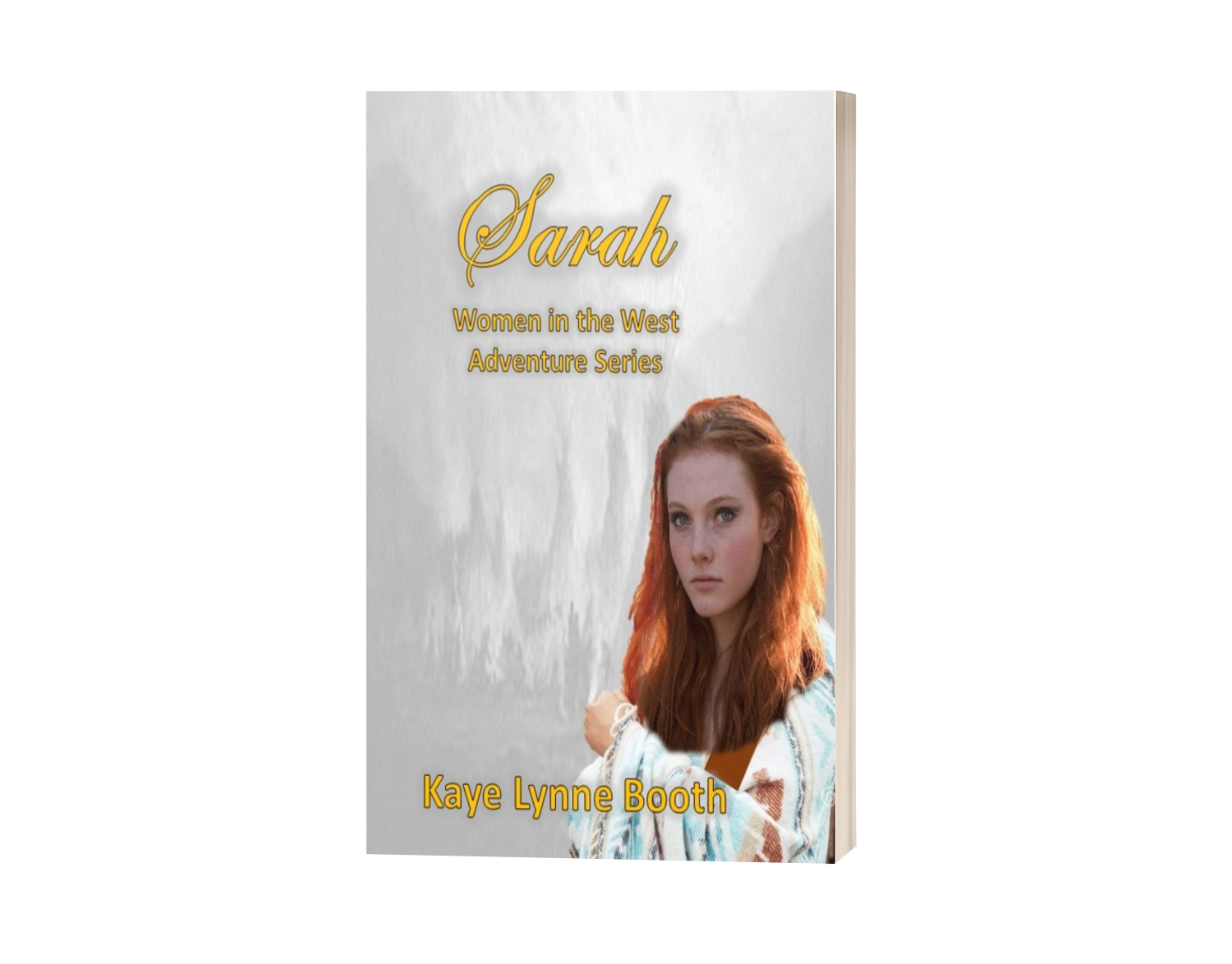
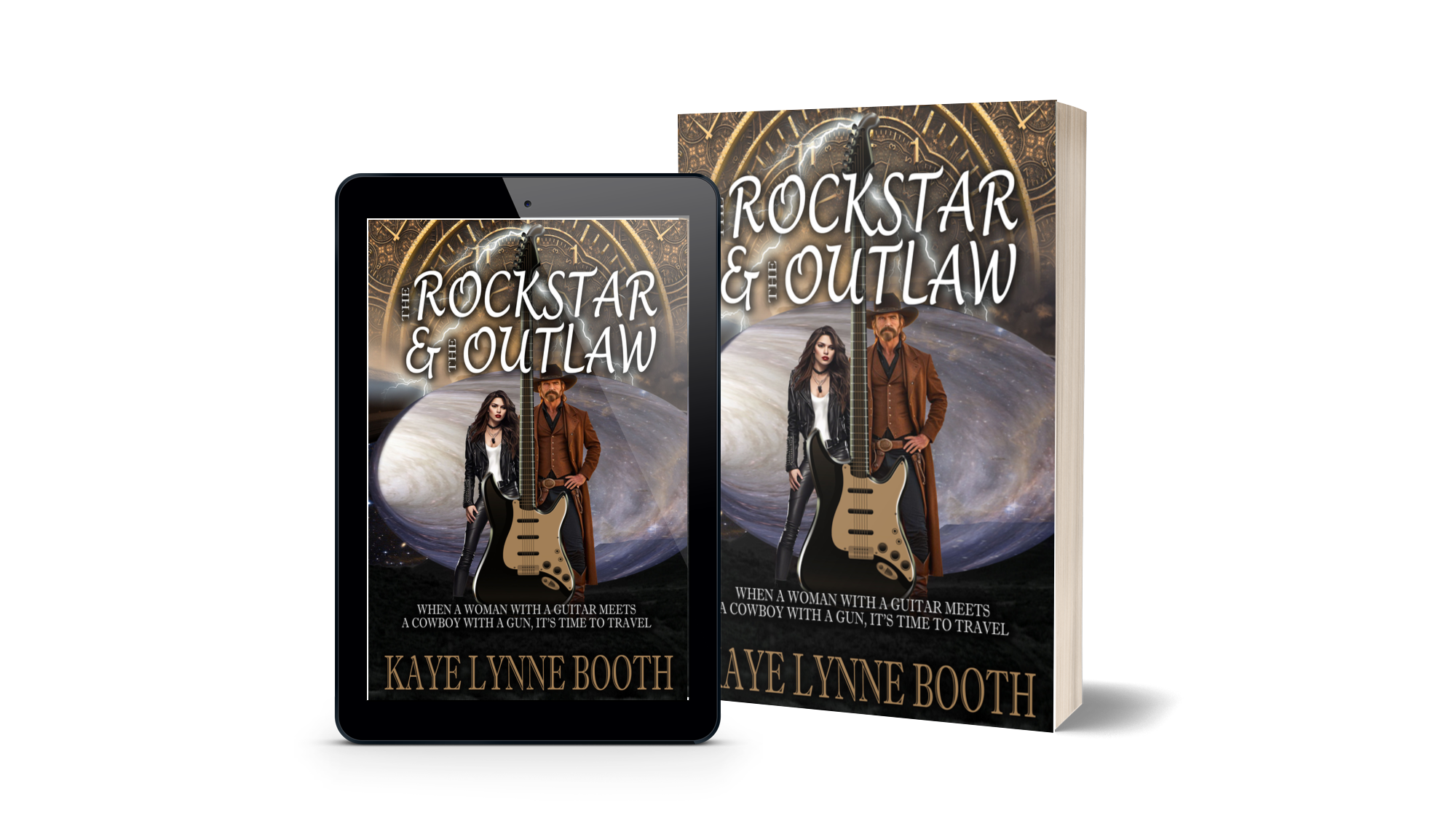
For Kaye Lynne Booth, writing is a passion. Kaye Lynne is an author with published short fiction and poetry, both online and in print, including her short story collection, Last Call and Other Short Fiction; and her paranormal mystery novella, Hidden Secrets; Books 1 & 2 of her Women in the West adventure series, Delilah and Sarah, and her Time-Travel Adventure novel, The Rock Star & The Outlaw. Kaye holds a dual M.F.A. degree in Creative Writing with emphasis in genre fiction and screenwriting, and an M.A. in publishing. Kaye Lynne is the founder of WordCrafter Quality Writing & Author Services and WordCrafter Press. She also maintains an authors’ blog and website, Writing to be Read, where she publishes content of interest in the literary world.

________________________________
Want to be sure not to miss any of Kaye’s “Writer’s Corner” segments? Subscribe to Writing to be Read for e-mail notifications whenever new content is posted or follow WtbR on WordPress. If you find it useful, interesting, or just entertaining, please share.
________________________________
This post is sponsored by The D.I.Y. Author and WordCrafter Press.
Being an author today is more than just writing the book. Authors in this digital age have more opportunities than ever before. Whether you pursue independent or traditional publishing models, or a combination of the two, being an author involves not only writing, but often, the publishing and marketing of the book.
In this writer’s reference guide, multi-genre author and independent publisher, Kaye Lynne Booth shares her knowledge and experiences and the tools, books, references and sites to help you learn the business of being an author.
Topics Include:
Becoming Prolific
Writing Tools
Outlining
Making Quality a Priority
Publishing Models & Trends
Marketing Your Book
Book Covers & Blurbs
Book Events—In Person & Virtual
And more…
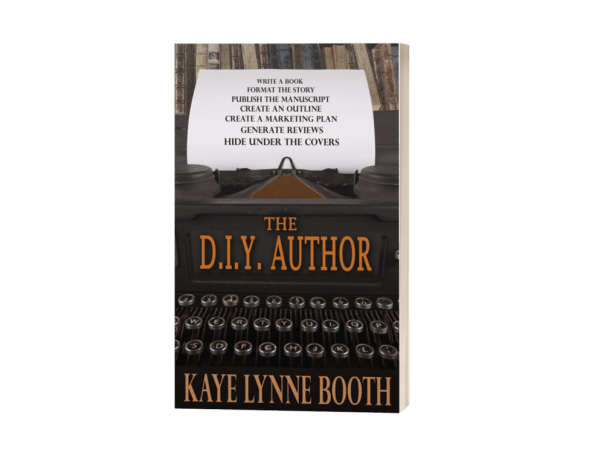
Purchase your copy today: https://books2read.com/The-DIY-Author
Share this:

WordCrafter News: Winners of Surprise Giveaway & Projects for August
Posted: July 29, 2024 Filed under: Books, Children's Books, Dark fiction, Giveaways, WordCrafter Book Blog Tours, WordCrafter Press | Tags: 2024 Dark Fiction Anthology, Charlie Chickadee Finds a NEw Home, Heather Hummingbird Makes a NEw Friend, Kaye Lynne Booth, My Backyard Friends series, Tales from the Hanging Tree, Timothy Turtle Discovers JEllybeans, WordCrafter Book Blog Tours, WordCrafter Press, Writing to be Read 2 Comments
Update for the WordCrafter My Backyard Friends Book Blog Tour

The WordCrafter My Backyard Friends Book Blog Tour was a lot of fun, but unfortunately, no one replied to the question posed at the last tour stop, on Writing to be Read, so there are no winners of the surprise giveaway to announce. And because we didn’t raise any money at the My Backyard Friends store for the print editions of the series, featuring Robbie Cheadle’s lovely illustrations, it looks like the books will only be available in ebook format for quite awhile, as I will not be printing them in black & white.
The My Backyard Friends store is gone, but you can still get digital copies of all three books from your favorite distributors at the following Books2Read purchase links.
Heather Hummingbird Makes a New Friend (ages 3-5): https://books2read.com/MBF-HeatherHummingbird
Timothy Turtle Discovers Jellybeans (ages 3-5): https://books2read.com/MBF-TimothyTurtle
Charlie Chickadee Gets a New Home (ages 6-8): https://books2read.com/MBF-CharlieChickadee
*Note: Actively seeking reviewers for this series. If interested, please contact me at kayebooth@yahoo.com.
August Projects
August will be a lull for me with no new releases to peddle. But, I’ll be hard at work preparing the last two anthologies planned for release this year. Submissions have been read, edited and the last revisions are coming due. I will be compiling them for release in September and October.
Tales from the Hanging Tree – Release Date: September 10th, 2024

Tales from the Hanging Tree is an by invitation only, themed anthology which is based on the following premise:
You would think being a paranormal tree with a life spanning over eons since the beginning of time would be pretty boring, but I’m here to tell you, I am far from bored. I suppose if I was a normal tree, I would be, but you see, I am the hanging tree and I’ve absorbed the lives and memories of every hanging that has ever taken place throughout time. I see their lives, I share their joys, I feel their pain. It would be too much for a normal tree to absorb even one life, so I exist to absorb them all. And I have seen many.
I’ve seen those accused of being outlaws and witches, some guilty, some not. I’ve seen those hanged from pure hatred, due to the color of their skin or the lifestyle they chose. When lives are cut short by the hands of others, or by their own doing, there must be somewhere for their life memories to go. For hangings, that’s me.
A boring existence, no. An often painful one, yes. But here I stand in the plane between life and death, with no recourse but to experience the lives of all hanging victims over and over again. I can’t get away from them, so I thought perhaps they would be easier to bear if I shared them with you here.
Between these pages, you will find their tales, for better or for worse. Many different lives, many different stories, with one thing in common. None have a happy ending.
Featuring stories by Joseph Carrabis, Paul Kane, C.R. Johansson, Sylva Fae, DL Mullan, Robbie Cheadle, Matt Usher, and Kaye Lynne Booth.
2024 WordCrafter Dark Fiction Anthology – To Be Released in October

___________________________________
This post sponsored by WordCrafter Quality Writing & Author Services.
Whether it’s editing, publishing, or promotion that you need, WordCrafter Quality Writing & Author Services can help at a price you can afford.
Stop by and see what we have to offer today: https://writingtoberead.com/readings-for-writers/wordcrafter-quality-writing-author-services/
Share this:

Wrapping Up the WordCrafter My Backyard Friends Book Blog Tour
Posted: July 22, 2024 Filed under: Book Promotion, Book Release, Book Sales, Books, Children's Books, Fiction, Giveaways, WordCrafter Book Blog Tours, WordCrafter Press | Tags: Charlie Chickadee Finds a NEw Home, Childrens Books, Heather Hummingbird Makes a NEw Friend, Kaye Lynne Booth, Kids Books, My Backyard Friends series, Robbie Cheadle, Timothy Turtle Discovers JEllybeans, WordCrafter Press 11 Comments
This is the final stop on the WordCrafter My Backyard Friends Book Blog Tour. So today, we’re just going to recap a few things about this series and meet the three characters who haven’t been introduced yet: Ethan Eagle from Heather Hummingbird Makes a New Friend, and Nancy Nuthatch and Katy Cat from Timothy Turtle Discovers Jellybeans. At the other stops, you should have met all the main characters, plus Becky Beaver from Timothy Turtle and Nicholas Nuthatch from Charlie Chickadee Gets a New Home. If you missed a stop or two, don’t worry. I’m including a tour schedule with links at the end of this post, in the wrap-up section. Also, before we go, I’ll reveal the surprise which I promised at the first stop. So with that in mind, let’s get on with the introductions.
But first, a reminder that you can buy direct at the My Backyard Friends Store while the tour is running and through July 24th. Discounted eBooks, pre-orders for signed print copies, (if we can raise enough to have them done in color. Monies for this item will be refunded, if not.), and the My Backyard Friends poster with all of your favorite characters.
About Heather Hummingbird Makes a New Friend
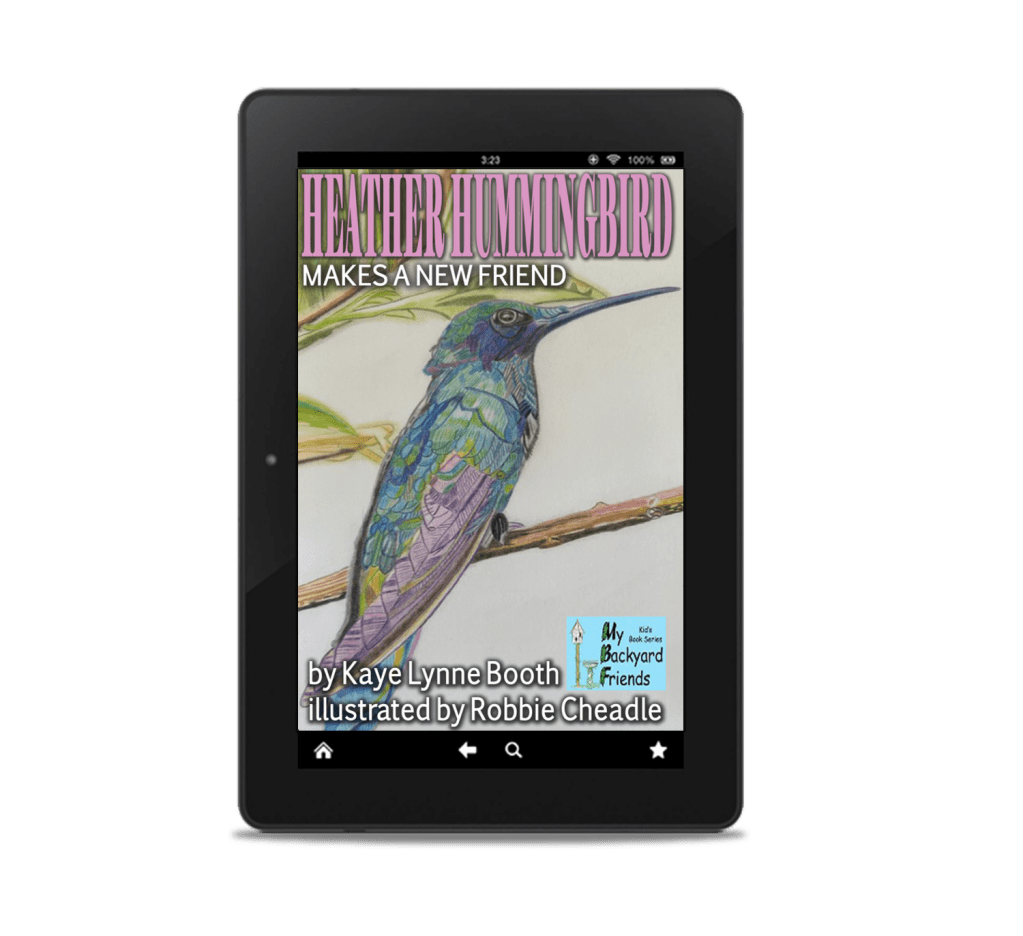
The My Backyard Friends kid’s book series is inspired by the birds and animals that visit the author Kaye Lynne Booth’s mountain home. Beautiful illustrations by children’s author, poet, and illustrator, Robbie Cheadle, bring the unique voices of the animal characters to life.Heather Hummingbird Makes a New Friend is a picture book with a message of friendship and cooperation.
Heather Hummingbird and Ethan Eagle are two unlikely friends who discover that it is good to accept help from others and that is what friends are for.
If you miss the My Backyard Friends Store, which will disappear on Wednesday July 24th, you can get a digital copy of Heather Hummingbird Makes a New Friend through this retailer purchase link: https://books2read.com/MBF-HeatherHummingbird
Meet Ethan Eagle

Interview with Ethan Eagle
What type of eagle are you?
Isn’t it obvious? I am an American Bald Eagle; a national symbol, I am told.
You have lots of feathers covering your head. Why do they call you a bald eagle?
There are approximately two thousand feathers on my head, and they are all white. No other eagle has a white head. The label comes from the old English “balde” which means white.
Are American Bald Eagles and endangered species?
I am told that we are no longer endangered, although I still do not believe there are many of us. For a while there we were because humans were using some kinds of poisons that made their way up the food chain to us. It thinned the shells on our eggs so that they often were crushed under the weight of the mother sitting on them, causing our numbers to dwindle. My mother used to talk about how precious life was and how past generations struggled to keep their young alive and bring them to maturity, so us kids would not behave in a reckless manner once we learned to use our wings.
Eagles can fly very fast. Did your tiny hitchhiker slow you down much?
Not at all. Heather is only about three inches in size and I bet she only weighs about two and a half grams. I was woried at first that she might not be able to keep her hold at high wind speeds, since I have a six-foot plus wingspan and my cruizing speed is about thirty miles per hour, but she grasped some feathers with her tiny claws and tucked her body down into my underdown, leting the outer feathers block her from the wind. Heather is pretty smart for a hummingbird.
Why do you think yours and Heather’s is an unlikely friendship?
Normally, we larger birds of prey don’t bother ourselves much with birds as small as hummingbirds. When I first met Heather I found her kind of annoying. She never slowed down, and she spoke in quick, brief little snippits. She’d ask me a question and then zip away before I could answer. But the day she helped me, even when I did not believe there was anything she could do, changed the way I thought about hummingbirds, and Heather in particular.
Do you consider Heather to be your friend?
By all means. Eagles don’t have many friends. I believe we are intimidating to the smaller birds, even the hawks. We tend to be loners and we are territorial with our own kind, so we cannot ‘hang out’ together or the like. Heather is the only true friend I’ve ever had.
Fun Facts About Eagles
- American Bald Eagles can live up to 20-25 years.
- Bald Eagles have incredible eyesight, and can see in front of them and at a forty-five degree angle at the same time.
- Bald Eagles eat mostly fish, but they are also carrion eaters.
- “If a Bald Eagle catches a fish that is too heavy to lift, it may grasp the fish with its talons and use its wings like oars to swim to shore.” (“Fascinating Eagle FAQ”. National Eagle Center. https://www.nationaleaglecenter.org/learn/faq/)
- Bald Eagles have special circulation in their legs and talons which allows them to withstand very cold temperatures and stand on the ice for short periods of time.
You can meet Heather Hummingbird and learn more about hummingbirds here.
Meet Katy Cat

Interview with Katy Cat
It’s interesting that a cat is friends with a turtle. How did that come about?
I’ve known Timothy Turtle since he was not much bigger than a tadpole. Even when he was small, I couldn’t very well eat him, because of his hard shell. I’d swat him around with my paws, but I never did him any damage. As he got bigger, he’d come by my yard on his way to the raspberry patch, or the strawberry patch, or even sometimes he would visit the melon patch. No doubt about it. That boy has a terrible sweet tooth.
Why would you suggest Timothy to turn around in his shell?
Oh for heaven’s sake, I was kidding. He had a tummy ache, and I just said that he might feel better if his tummy were in the round part of his shell. I didn’t think he could actually do it. My girl, Kimmy, called me and I had to run. Kimmy gets upset when I make her wait. When I came back, I found Timothy in a terrible bind, but I have to admit, it was kind of funny, too.
You know, I agreed to come answer your questions, but I don’t think I like what you’re implying. I might have been teasing him a little, like I always do, but I waasn’t being spiteful or mean. I don’t think I want to answer anymore of your questions.
And with a flip of her tail Katy Cat has left the building.
Fun Facts About Cats
- Cats can run up to 30 mph for short distances.
- Cats use their whiskers to sense changes in the air through vibrations.
- Adult cats can leap up to 5 or 6 feet in the air, distances up to six times their body length, especially with a running start.
- “Cats have three eyelids. The third eyelid is known as the palpebra tertia or the nictitating membrane, or more simply the haw. It’s common in animals and helps to keep the lens surface clean and moist.” (“39 Amazing Facts About Cats That You May Not Know”. I Heart Cats. https://iheartcats.com/amazing-facts-about-cats/)
- The bumps and ridges on a cat’s nosepad is unique, like a human’s fingerprints.
- Cats sweat through their paw pads.
- Cats have 32 different ear muscles and can rotate their ears 180 degrees.
- One study claims that male cats are left-pawed, while females are right-pawed.
- Cats sleep 12 – 16 hours per day, about 70% of their lives, and they dream. Science believes the dream about cat stuff like hunting a mouse or running for a food bowl, when their paws twtch in their sleep.
- Cats make over 100 vocal sounds and each one has meaning.
- The oldest known evidence of a pet cat was discovered by archeologists near Cyprus in 2004, and it predates Egyptian cat art by 4000 years.
- Cats walk like camels and giraffes with a pacing gate, meaning they move both feet on one side, then the other.
- Ancient Egyptians shaved off their eyebrows in mourning when their cats died.
About Timothy Turtle Discovers Jellybeans

The My Backyard Friends kid’s book series is inspired by the birds and animals that visit the author Kaye Lynne Booth’s mountain home. Beautiful illustrations by children’s author, poet, and illustrator, Robbie Cheadle, bring the unique voices of the animal characters to life.Timothy Turtle Discovers Jellybeans is a picture book with a moral message from a young turtle’s perspective.
Meet Timothy Turtle, who has a sweet tooth. He eats too many jelly beans and finds himself in a pickle. His friends Katy Cat and Betsy Beaver try to help, and Timothy learns that you can get too much of a good thing.
If you miss the My Backyard Friends Store, which will disappear on Wednesday July 24th, you can get a digital copy of Timothy Turtle Discovers Jellybeans through this retailer purchase link: https://books2read.com/MBF-TimothyTurtle
Meet Nancy Nuthatch

Interview with Nancy Nuthatch
Why did you agree to take time out of your busy day to help Timothy Turtle?
What else was I going to do? Let him starve? I had to forage and find insects for my hatchlings anyway. It didn’t take that much time to drop him an insect or two each day. They were enough to keep him alive, but not enough to let him gain weight until his tummy shrunk down to size.
Do you know Nicolas Nuthatch?
I should hope so. He’s my little brother. He’s more of a softie than I am. That’s how he met his friend Charlie Chickadee. The little guy needed a hand and Nick was there to offer one. They’ve been best friends ever since, even though they have a big age difference. I think Charlie looks up to Nick. I can’t complain. Charlie has always been a good kid.
As for me, I see Timothy around here and there. I’m sure he’s grateful for my help with his dilemma, but it’s not like he’s my best friend for life or anything. If I had to do it again, I would. It might not be such a bad thing to be a softie.
Fun Facts About Female Nuthatches
- Nuthatches lay 5 – 9 eggs each breeding season. The female sits on the nest and incubates the eggs for 12-14 days, while the male brings food to the nest for her. They have one brood per year.
- Both parents feed the youngsters until they are ready to leave the nest between 14-26 days. Young are fed a diet made up entirely of insects and spiders.
- Pairs mate for life and remain together year round. Mating behaviors begin in late winter, as early as January in some areas. Male raises his head and spreads his tail feathers, droops his wings, sways back and forth, and bows deeply to his mate in courtship. He may also feed her when courting. (“The White-Breasted Nuthatch”. Audobon. https://www.audubon.org/field-guide/bird/white-breasted-nuthatch#)
- Nuthatches nest in large natural cavities or vacated woodpecker holes. The females line the nest with bark fibers, grasses, twigs and hair. And they sweep the nest inside and out with insects crushed in their beaks. It is believed that the chemical secretions fend off predators.
Meet Timothy Turtle and learn more about turtles here.
Meet Becky Beaver and learn more about beavers here.
About Charlie Chickadee Gets a New Home
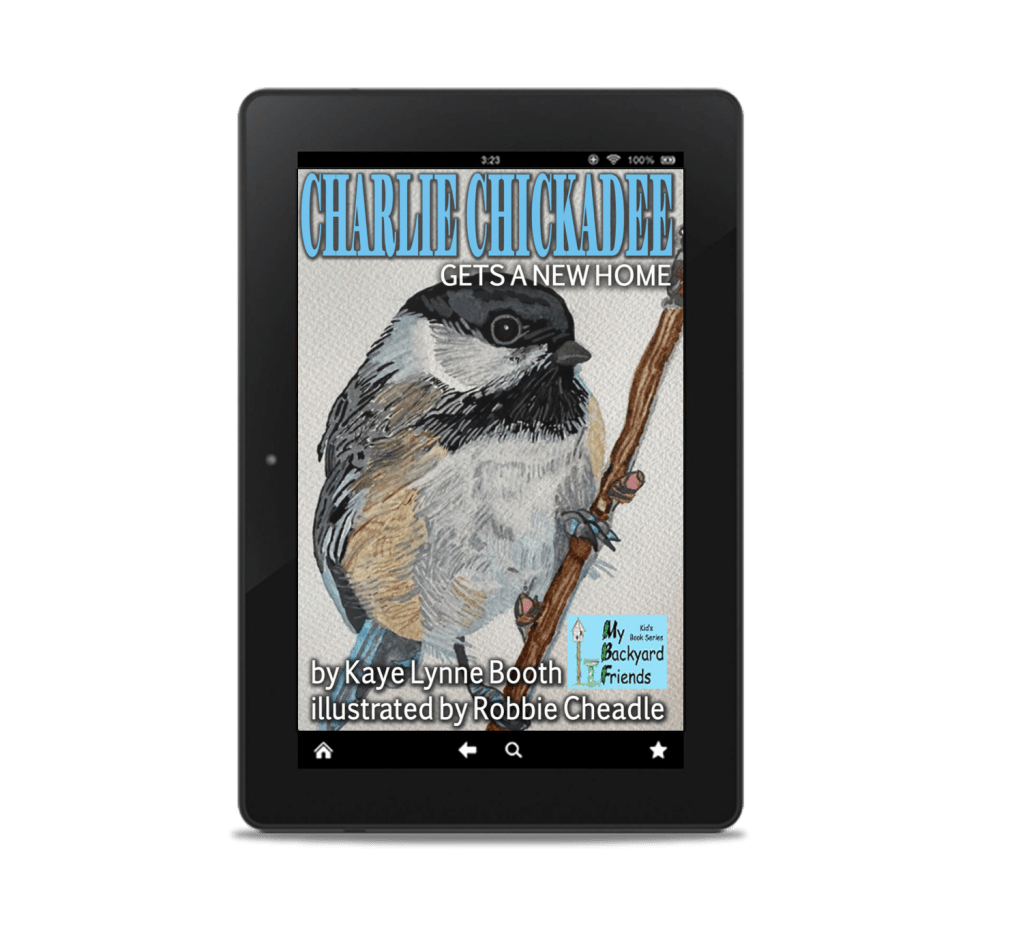
The My Backyard Friends kid’s book series is inspired by the birds and animals that visit the author Kaye Lynne Booth’s mountain home. Beautiful illustrations by children’s author, poet, and illustrator, Robbie Cheadle, bring the unique voices of the animal characters to life. Charlie Chickadee Gets a New Home is a story of survival from a young bird’s perspective.
Charlie Chickadee is happy with his family in their cozy nest. But whem the violet-green swallows thake the nest for their own, Charlie finds himself alone, seperated from his parents and on his own to face the dangers of the forest. His new friend Nicholas Nuthatch shows him the ropes and teaches him about the other birds and the woman who puts out food each day, and by a stroke of liuck, Charlie discovers the perfect spot and builds a new nest that he can be proud of.
If you miss the My Backyard Friends Store, which will disappear on Wednesday July 24th, you can get a digital copy of Charlie Chickadee Gets a New Home through this retailer purchase link: https://books2read.com/MBF-CharlieChickadee
Meet Charlie Chickadee and learn more about chickadees here.
Meet Nicholas Nuthatch and learn more about nuthatches here.
Wrap-Up
That about wraps things up for the tour. If you’ve followed the tour, you’ve met all the characters introduced in the first three books in the My Backyard Friends Kid’s Book Series. While we had them all together for the tour, we also put together a cool poster, kind of like a group photo, in honor of the tour. Every kid would love to have this poster, featuring Robbie Cheadles wonderful illustrations, on their wall. But you can only get this fabulous poster at the My Backyard Friends Store until July 24th, so get one for each of the kids in your life now.

But wait! There’s one more surprise to reveal.
Surprise Giveaway!
Tell me in the comments which character is your favorite and the most interesting thing you learned about them during the tour for a chance to win one of two digital sets of all three books in a random drawing. After the tour ends, I’ll leave the comments open until Wednesday, so that everyone will have time to go back and visit stops they missed and get their comments in. The winners will be announced in my August segment of “WordCrafter News” on Monday July 29th, along with who the most popular character turns out to be.
Tour Schedule
Monday – July 15 – Writing to be Read – Release Party & My Backyard Friends Store
Tuesday – July 16 – Roberta Writes – Mini-interview with Nicholas & Heather guest post by Kaye Lynne Booth
Wednesday – July 17 – Undawnted – Mini-interview with Heather Hummingbird & Review
Thursday – July 18 – Robbie’s Inspiration – Mini-interview with Becky Beaver & Timothy guest post by Kaye Lynne Booth
Friday – July 19 – Undawnted – Mini-interview with Timothy Turtle & review
Saturday – July 20 – Carla Loves to Read – Charlie guest post by Kaye Lynne Booth & reviews x3
Sunday – July 21 – Undawnted – Mini-interview with Charlie Chickadee & review
Monday – July 22 – Writing to be Read – Mini-interviews w/ Ethan Eagle, Nancy Nuthatch, and Katy Cat & Wrap up
___________________________________
Book your WordCrafter Book Blog Tour today!
Share this:

Day 7 of the WordCrafter My Backyard Friends Book Blog Tour
Posted: July 21, 2024 Filed under: Animals, Blog Tour, Book Release, Book Review, Books, Children's Books, Fiction, Interview, Review, WordCrafter Book Blog Tours, WordCrafter Press | Tags: Charlie Chickadee Gets a New Home, Kaye Lynne Booth, My Backyard Friends series, Robbie Cheadle, WordCrafter Book Blog Tours 2 Comments
Drop by Undawnted for Day 7 of the WordCrafter My Backyard Friends Book Blog Tour, where you can meet Charlie Chickadee in a mini-interview with DL Mullan, some fun facts about Chickadees, and a review of Charlie Chickadee Gets a New Home. Join us as we wind down the send off for this wonderful kid’s series, written by Kaye Lynne Booth and illustrated by Robbie Cheadle.
http://www.undawnted.com/2024/07/my-backyard-friends-meet-charlie.html
Share this:

Day 6 of the WordCrafter My Backyard Friends Book Blog Tour
Posted: July 20, 2024 Filed under: Animals, Book Release, Book Review, Books, Children's Books, Review, WordCrafter Book Blog Tours, WordCrafter Press | Tags: BookReview, Kaye Lynne Booth, My Backyard Friends series, Robbie Cheadle, WordCrafter Book Blog Tours Leave a commentToday, we’re hanging out over at Carla Loves to Read, where Carla Johnson-Hicks is reading and reviewing all three books with her grandchildren for Day 6 of the WordCrafter My Backyard Friends Book Blog Tour. Won’t you stop by to see what the kids think of this wonderful kid’s series written by Kaye Lynne Booth and illustrated by Robbie Cheadle, and find out how you can help support the color print editions.
Share this:

Day 4 of the WordCrafter My Backyard Friends Book Blog Tour
Posted: July 18, 2024 Filed under: Animals, Book Release, Books, Children's Books, Guest Post, Illustrations, WordCrafter Book Blog Tours, WordCrafter Press | Tags: Kaye Lynne Booth, My Backyard Friends series, Robbie Cheadle, Timothy Turtle Discovers JEllybeans, WordCrafter Press Leave a commentToday we’re over at Robbie’s Inspiration for Day 4 of the WordCrafter My Backyard Friends Book Blog Tour with a guest post from me, some fun facts about beavers, and a mini-interview with Robbie and Becky Beaver. Join us in helping to send off the series and raise enough to publish them in color print editions.
Share this:

Book Review: The Witches of Ravencrest
Posted: July 12, 2024 Filed under: Book Review, Books, Dark Fantasy, Dark fiction, Fiction, Paranormal | Tags: Book Reveiw, Dark fiction, Ghosts, Kaye Lynne Booth, The Witches of Ravencrest, Thorne & Cross, witches, Writing to be Read Leave a comment
About The Witches of Ravencrest

BEWARE THE WITCHES!
Murder Lurks in the Shadows
Governess Belinda Moorland has settled into life at Ravencrest and, as summer gives way to autumn, romance is in the air. She and multi-millionaire Eric Manning are falling in love … but powerful forces will stop at nothing to keep them apart. And as the annual Harvest Ball is set to begin, evil abounds at Ravencrest. Murder lurks in the shadows, evil spirits freely roam the halls, a phantom baby cries, signaling a death in the mansion, and in the notoriously haunted east wing, three blood-soaked nuns, Sisters Faith, Hope, and Charity, tend to the demented needs of a maid gone mad.
Vengeful Spirits
Ravencrest has come to life. In the gardens below, granite statues dance by moonlight, and a scarecrow goes on a killing rampage, collecting a gruesome assortment of body parts from unwilling donors … But Belinda’s greatest danger is the vengeful spirit of Rebecca Dane. Once the mistress of Ravencrest, Rebecca Dane has a centuries-old ax to grind with the powerful witch, Cordelia Heller – and Belinda becomes her weapon of choice.
Purchase Link: https://www.amazon.com/Witches-Ravencrest-Saga-Book-ebook/dp/B073GC59J8
My Review
The Witches of Ravencrest, by Tamara Thorne & Alistair Cross, is the Ravencrest Saga Book 2, set in an exquisitely dark world with a plethora of secrets where magic needs no explanation and spirits abound. I received a free digital copy from Freebooksie.
Belinda Moorland is the new governess at Ravencrest Manor, where powerful forces have been set loose, that even the Estate overseer, Grant Phister is unaware of. It doesn’t take long for her to get closer with the children’s father, Eric, but for reasons, yet to be revealed, there are forces working to keep them apart. Murder is amiss and power is building among the spirits as the harvest ball approaches, but Belinda may be more powerful than anyone suspects.
A tale filled with surprises that keeps you guessing at every turn. I give The Witches of Ravencrest five quills.
__________________
Kaye Lynne Booth does honest book reviews on Writing to be Read in exchange for ARCs. Have a book you’d like reviewed? You can request a review on the Book Review tab above.
_______________________________
This post sponsored by WordCrafter Quality Writing & Author Services.

Whether it’s editing, publishing, or promotion that you need, WordCrafter Quality Writing & Author Services can help at a price you can afford.
Stop by and see what we have to offer today: https://writingtoberead.com/readings-for-writers/wordcrafter-quality-writing-author-services/
Share this:

Writer’s Corner: Being Prolific
Posted: July 9, 2024 Filed under: Books, WordCrafter Press, Writer's Corner, Writing, Writing Life, Writing Resource | Tags: Author, Becoming Prolific, Books, Kaye Lynne Booth, Publishing, The D.I.Y. Author, WordCrafter Press, Writing 2 CommentsWhen I hear the word prolific, I think of Kevin J.Anderson, who puts out between 7-9 books per year. He’s one of the most prolific writers that I know of, although veteran bestselling authors, Dean Wesley Smith and Kathryn Christine Rusch, may rival, or even surpass him. But we cannot all be that prolific. But we can learn from authors like these, who have spent their lifetimes writing professionally, and making a decent living at it.
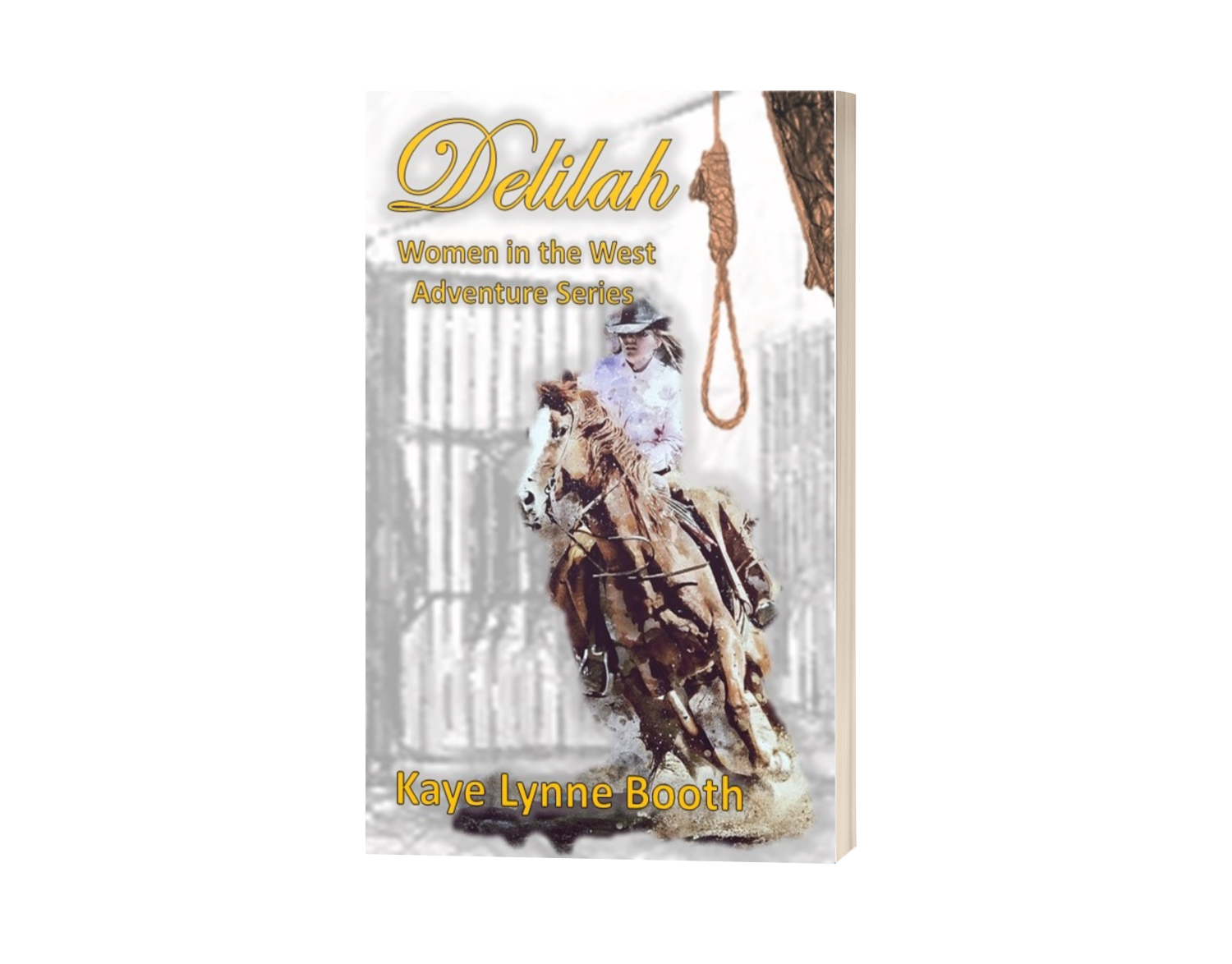
For many years, I did not know how to be prolific. Delilah took me three years to write, and then I worked almost another year revising it to re-release as the first book in the Women in the West Adventure Series. I even wrote a post in about accepting the fact that “We Can’t All be Prolific” because of how not-prolific I was back in 2022. It was something which I didn’t know could be changed or how to go about changing it.
Since then, I’ve learned a few things that have helped me to become more prolific, and I’m now publishing between 5 – 8 books per year. That’s why the first section of The D.I.Y. Author is dedicated to the methods I’ve used to increase my productivity and become a more prolific author; because I wanted to share some of the methods I’ve used to increase my writing productivity. By becoming prolific, I’ve been able to get my name out there where it can be recognized and having more products, in this case, books, to sell. When you publish 5 books per year, that’s 5 different chances to reach new readers, but its also five chances to remind current readers that you’re still around and active.
The following, are tips that I’ve accumulated, from The D.I.Y. Author.
Becoming Prolific
- Outlining: Creating at least a working outline to help guide the direction of your story. If you have an idea of where you are going before you start, you can get words on the page faster.
- Doubling Down on Research and Promotional Materials: Research is something that needs to be done for every book, regardless of genre. If you can find other uses for this same research, you can essentially make it do double duty. For example, during the historic research I did for the Women in the West Adventure Series, I uncovered many interesting facts that may or may not have been used in the story, and could also be used to make interesting blog posts for the tours for their releases, thus becoming a marketing tool, as well as a good story inspiration. Or you can use the same inspiration for a second story in some cases.
- Write the Damned Book: Just sit down and write. It’s a simple piece of advice, but one many authors, or would-be authors, fail to recognize. In The D.I.Y. Author, I offer a couple of methods of achieving the desired results, including Binge Writing, which isn’t always for everyone, and Persistant Determination, which is plugging away at it every chance you get.
- NaNoWriMo: The principle is to set aside the month of November to work exclusively on your novel at every opportunity and setting a daily wordcount which will allow you to reach a goal of 50,000 words within that timeframe. But you don’t need to wait until Novemeber to do this. Just set aside a 30 day period and dedicate to writing your story. I use NANoWriMo to get a start on one of the two novel length works I write and publish each year. In the book, I offer a couple of strategies for making the most of your time, including Time Blocking, and Tracking Your Word Count.
- Dictation: This is a strategy for becoming prolific that isn’t right for everyone, but works well for those who are comfortable with it.
- Networking and Collaborations: It takes longer to write a novel length work than it does to write a short story or two to include in an anthology, and it’s a great way to add more titles to your author pages. Through WordCrafter Press, I publish at least two anthologies per year, and sometimes more.
- Maximizing Your IP: Intellectual Property are the rights to your creative endeavors, or copyright, and an author needs to understand their copyrights, and take care not to sign away more than absolutely necessary when entering into a contract with a publisher. It is also important to understand when your rights will be returned, because when you hold the copyright, you can use that work in any way which you deem fit, allowing your writings to do double, or even triple duty.
- Optimizing Your Backlist: Many authors don’t put a lot into their backlist, but there are things you can do to keep your backlist items in front of readers’ eyes and on their minds, such as creating multiple formats, special editions, and price promotions.
- Taking Care of Mind, Body & Spirit: Keeping yourself healthy is also condusive to being prolific, as we all write better when our minds are sharp and alert, out bodies are well rested and healthy, and we have a place of our own, dedicated to writing.
- Outsourcing: When there is too much for one person to do it all, and believe me there will be, outsourcing certain tasks can be of great advantage, even to the D.I.Y. author.
Why Become Prolific?
To put it simply, the more prolific you are, the more books you have to sell. The bigger your library of books, the more opportunities for readers to discover you and your writing.
I’ve offered a basic list of the methods I’ve used to become more prolific. Some have worked better than others for me and I talk about them in more depth in The D.I.Y. Author. To learn more, you can get your copy from your favorite retailer here: https://books2read.com/The-DIY-Author.
____________________________________
About Kaye Lynne Booth

For Kaye Lynne Booth, writing is a passion. Kaye Lynne is an author with published short fiction and poetry, both online and in print, including her short story collection, Last Call and Other Short Fiction; and her paranormal mystery novella, Hidden Secrets; Books 1 & 2 of her Women in the West adventure series, Delilah and Sarah, and her Time-Travel Adventure novel, The Rock Star & The Outlaw. Kaye holds a dual M.F.A. degree in Creative Writing with emphasis in genre fiction and screenwriting, and an M.A. in publishing. Kaye Lynne is the founder of WordCrafter Quality Writing & Author Services and WordCrafter Press. She also maintains an authors’ blog and website, Writing to be Read, where she publishes content of interest in the literary world.
____________________
This post is sponsored by The D.I.Y. Author and WordCrafter Press.
Being an author today is more than just writing the book. Authors in this digital age have more opportunities than ever before. Whether you pursue independent or traditional publishing models, or a combination of the two, being an author involves not only writing, but often, the publishing and marketing of the book.
In this writer’s reference guide, multi-genre author and independent publisher, Kaye Lynne Booth shares her knowledge and experiences and the tools, books, references and sites to help you learn the business of being an author.

Topics Include:
And more…
Becoming Prolific
Writing Tools
Outlining
Making Quality a Priority
Publishing Models & Trends
Marketing Your Book
Book Covers & Blurbs
Book Events—In Person & Virtual
Purchase your copy today: https://books2read.com/The-DIY-Author