Welcome back to the “Ask the Authors 2022” Saturday blog series.
If you missed them, you can catch the first two segments here:
Segment 1 – Introductions for Kaye Lynne Booth & Kevin Killany/Writing Life Q & A
Segment 2: Introduction for Bobby Nash/Pre-Writing Rituals Q & A
This is the third segment for this series and today I’m going to introduce you to contributing author, Roberta Eaton Cheadle, who shares her essay about her own publishing journey in the book, and bring you a Q & A on plot, or storyline, from the WordCrafter writing reference anthology, Ask the Authors 2022.
Meet Roberta Eaton Cheadle
Roberta Eaton Cheadle is a writer of young adult and adult fiction in the supernatural fantasy, historical horror, and historical supernatural genres. Under the name Robbie Cheadle, she is a South African children’s author, publishing the Sir Chocolate series with her son, Michael, and a poet with 2 published poetry books.
To date, Roberta has published two novels, Through the Nethergate, and A Ghost and His Gold, along with several short stories in various anthologies including Whispers of the Past, Spirits of the West, and Where Spirits Linger, all edited and compiled by Kaye Lynne Booth, and Dark Visions, Nightmareland, Spellbound, Wings & Fire, and Shadowland, all compiled by Dan Alatorre.
Robbie is also a member of the Writing to be Read blogging team and co-editor of Poetry Treasures (2021) and Poetry Treasures 2: Relationships (2022), two poetry anthologies with contributing authors who were guests from her “Treasuring Poetry” blog series. When she is not writing, Robbie enjoys working in the garden and creating fondant and cake artworks to be featured in her children’s books.
And now for the Q & A.
Plot/Storyline
How do you feel about prologues? Love them or hate them? Why?
Mario Acevedo: I’m not a fan of prologues and as I see them as superfluous to the story. If you must include a prologue, then call it Chapter One to make sure readers like me won’t flip past it.
Paul Kane: I have no strong feelings about them either way. Sometimes I’ve used them, other times I’ve gone straight into Chapter One. I know some writers who say if you can avoid Prologues then do it and just start with the first chapter, but I think if it serves a purpose then there’s a place for one. I tend to include them in the thrillers, because it’s always an event that kicks things off – so for example in Her Last Secret, it’s the death of Jordan Radcliffe, in Her Husband’s Grave it’s the discovery of a body on Golden Sands beach, and in The Family Lie it’s a couple of campers who see a man on fire in the woods. I then split the narrative into parts, and in Chapter One I tend to introduce the main protagonist, so it might be the person who’ll be doing the investigating; someone whose eyes we’ll be seeing most of the events in the book through.
Chris Barili: I normally skip prologues in the books I read, especially if they’re more than two pages long, so naturally, I try to avoid them in my own writing. I tend to be of the mind that if it’s important enough to be in the story, I can be “Chapter One” or background info sprinkled throughout the story.
Bobby Nash: Prologues have their uses. I don’t think they need to be used in every story and I certainly don’t use them as an info dump. Sometimes, they work well.
Robbie Cheadle: I have no strong feelings about prologues. If the story requires one, then it should be there, if not, it can be omitted. I have not as yet included a prologue in one of my books.
Nancy Oswald: Not too fond of them. I think it’s better to jump right into the story.
Kevin Killiany: Prologues are essentially exposition—they explain the conditions or situation that make the story itself possible and necessary. Sometimes they contain information vital to the climax or outcome of the story that the writer could not figure out how to insert into the narrative itself. Like any tool they are not good or bad in and of themselves. I have, rarely, used prologues as placeholders in rough drafts; repositories to hold essential information until I work out how to work the really important bits into the narrative. Only one of my short stories ever went to press with both a prologue and epilog: “Simple Farmer”, Total Warfare, FanPro, 2006, a tie-in story for the Classic BattleTech RPG. They contained information long-time players knew, but new and less minutia-oriented readers would need to understand the story’s significance to the game.
What is the most difficult part of the story to write: beginning, middle or end?
Mario Acevedo: For me, the entire book is a challenge. I tell new writers not to sweat a perfect beginning because it’s often not till you write the ending do you figure what the beginning needs to say. The middle is called “the swamp” for good reason and the key here is to keep in mind the story question as you introduce plot twists.
Paul Kane: This changes, depending on at which point in the story or book you ask me. It’s hard to make a start on a project, because you’ve just got the blank page in front of you. But then it’s just as hard the next day to come to it and see another blank page… I tend to flag about halfway through and wonder what the hell I’m doing or wish I’d never even started it. The end is definitely the best part, if you’ve panned it well and can bring the book in for a good landing. There’s no more satisfying feeling in the world than having written the book. I always joke that I hate writing – which for a writer probably isn’t great – but I do love having written. Having a first draft that I can then tinker with. That’s my favourite part of the process if I’m honest, apart from getting the idea in the first place and developing that. But even at an early stage, you’ve got the whole mountain of a book to write ahead of you, which can be quite daunting.
Bobby Nash: I don’t know if I would call it more difficult to write, but the middle is usually where I start getting bogged down. Knowing when to transition from the middle to the end can be tricky.
Robbie Cheadle: It is all the same for me. I have the outline in my head, and I write in that direction. I do not find any parts more difficult, and I am for consistency and fluidity throughout my stories.
Jeff Bowles: For me, a short story or novel isn’t complete until I’ve managed to synthesize a decent tie-up ending. It can be tough to do, especially if you aren’t using a road map or outline of some sort, which I often do just to see where the story takes me. Sometimes I do a lot of preplanning, and that can certainly help, but even then, things in the plot can and do change, which means a good ending can still be hard to stick. Beginnings carry all the burden of proof, the reason someone will or won’t want to read your work, but even they depend on where a narrative ultimately ends up. As the saying goes, the seeds of an ending are always found in its beginning.
Nancy Oswald: Each book is different.
What are the elements of a good plot?
Paul Kane: That it hangs together well and is pacy. That there are no flabby bits which are unnecessary. Every bit of your story should be relevant and serve a purpose; if you could take certain bits out and still have the same plot, then they weren’t necessary in the first place. That it moves along well from beginning to the middle, to the end, and leaves a reader satisfied; and by that I mean content that they haven’t just wasted a chunk of their lives reading it. It’s why I always plan, so I can see the shape of the plot and work out what sections need to stay, which can be salvaged, and which need to be jettisoned.
Bobby Nash: I tell stories that I hope are coherent, make sense, and are entertaining. If that happens and the characters work, I’m happy.
What is the best hook you’ve ever written? Why?
Paul Kane: Ooh, that’s a hard one. Do you mean at the beginning of a story to make the reader go on? I’d say probably The Family Lie – and reviewers have mentioned this a lot! It’s the whole thing of showing those campers hearing something in the woods, looking out and seeing a guy on fire among the trees. I mean, what on earth’s going on there? If it doesn’t make you want to read on and find out then I’ve really not done my job properly. Up there with that is probably the start of Servants of Hell. That purposely mirrors the puzzle box scene with Frank from The Hellbound Heart, where he’s trying to solve the Lament Configuration and summon the Cenobites. I have a very similar scene, but right at the end you discover it’s Sherlock Holmes solving the puzzle just as the Cenobites show up. We then go back and find out how he ended up in that situation, but man what a hook! I was the one on fire the day I wrote that.
Chris Barili: Probably the opening to Guilty, the prequel to my Hell’s Butcher series. It opens with the main character face down in a saloon, dead from a gunshot wound. His first interaction is with a bartender who is half-rhinoceros.
Bobby Nash: I love this opening to Snow Falls.
“Abraham Snow knew he was about to die–
–and the thought of it pissed him off to no end.”
What kind of stakes do you set for your characters?
Paul Kane: Usually quite high stakes. Even if it’s something that’s high stakes for them alone, something that means a great deal to them, but might not to anyone else. You have to give characters motivation, nudge them to do things they might not otherwise do, and the only way to achieve that is by making it a high stakes gamble for them. They might lose their marriage, kids, or even their life. It makes a reader keep on turning the pages to find out how they’ll get on. In Lunar, the stakes really couldn’t be any higher for my protagonist Nick Skinner: he needs to find out why the world became stuck at a certain point in time; what the white-eyed Loons are roaming about, killing people; and he needs to find out where the love of his life Dawn is. Track her down and save her. Hopefully you go along with him for the ride to find out how he gets on.
Chris Barili: Again, that depends on the story and the genre. The stakes in a romance are a broken heart or happiness, while that in a horror story might actually be losing their heart.
Bobby Nash: Every story is different, but the stakes have to impact the character on some personal level. If the character doesn’t feel anything or there’s no stakes for them, the reader has no reason to get invested.
Robbie Cheadle:Through the Nethergate and A Ghost and His Gold were both about ghosts which have become trapped in between the physical world here on earth, and the afterlife. The reasons for this happening are different in both books, but the ghosts searching for redemption, so they can move on to the next level of existence is a common thread. The Soldier and the Radium Girl is different and is about a young couple’s quest for justice.
Do you write in subplots purposefully or do they develop organically for you?
Paul Kane: I work all those out beforehand, when I do my planning. That’s when subplots will occur to me and develop organically at the ideas level when I’m figuring it all out. As I mentioned, that doesn’t mean it’s all set in stone, there is always scope to change things if it makes the story better, but it allows you to figure out what main plots and subplots you’re going to need before you even start writing.
Chris Barili: Both. I plan some, and others pop up during the course of telling the story. If your characters are realistic enough, and you know them well enough you won’t be able to avoid the latter happening at least a little in your story.
Bobby Nash: A little of both. In writing series like Snow or Sheriff Myers, I know plot points for future books so I set up things that will pay off later. There are times, however, where I’ll decide something later and go back to set up the subplots and discover they are already there. Sometimes, my characters are smarter than I am.
Robbie Cheadle: Subplots do develop organically for me and are often a result of the interesting additional information I discover through my research as I go along.
Nancy Oswald: Develop organically.
Kevin Killiany: Subplots are always purposeful. In fact I always write complex or substantive subplots as individual stories in first/rough draft. Jigsawing the parts together—trimming, expanding, and polishing as needed—is part of the editorial process.
How do you assure that all subplots are resolved at the end of the story?
Mario Acevedo: I don’t because I like messy endings. The main story question is resolved, but usually involves a compromise by the protagonist. Unresolved subplots are good places to hitch up a sequel.
Paul Kane: Well, they might not be – but that would be something you leave dangling on purpose. For example, and this is a spoiler, at the end of The Gemini Factor we find out that one of the main characters Deborah is pregnant with twins. This was part of the subplot of her falling in love with Jack, a twin himself, who ends up getting killed. So we don’t really see the resolution of what she does about having his kids… unless I do a sequel, which actually I’m intending to do at some point. So leaving things open-ended sometimes can shoot off into yet another story. Pulling on a story thread that you’ve left dangling.
Chris Barili: Well, first off, some are not resolved because I want them to continue into the next book. For those that wrap up in the current book, I create a plot line, usually color-coded, in my beat sheet for that subplot so I don’t forget it.
Bobby Nash: Keep good notes. There was one time I realized that I had forgotten to resolve a plot point and so I started planning how to resolve it and the characters showed me which way to go. It turned out far better than my original idea. That’s why I trust my characters to get me where I need to go.
Robbie Cheadle: I engage the services of a developmental editor to read my stories carefully and help me tidy up lose threads, tighten the storyline, and produce the best story possible. I am also fortunate enough to have two Beta readers who read my work chapter-by-chapter and help me resolve issues and lose threads or contradictions as I go along.
Kevin Killiany: Sometimes they aren’t. Sometimes they’re hooks for the next story.
What methods do you use to add tension and conflict to your story?
Mario Acevedo: Make sure the characters, even those on the same side, have competing agendas.
Paul Kane: Well, I use suspense to ramp up the tension. And if you want to know how that works, just go away and watch a bunch of Hitchcock movies because he was the master. Show the bomb and the ticking clock under the table, but have the characters oblivious to it. That’s suspense, folks! As for conflict, you have to have characters with different points of view, just like in real life. Where do all the arguments come from in your own life? People who disagree with you on a certain course of action or about beliefs. Just look at something like The X-Files, which I watched from start to finish again recently. Mulder’s the believer, Scully’s the sceptic, and we watched the arguments – as well as sexual tension – between them for many years. Opposing viewpoints, yet when the chips were down they worked for the common good; the perfect combination. In my novel Arcana, which is set in an alternate universe, I had a young M-Forcer whose job it is to police magic users, unwittingly fall in love with a member of a group of magic users he’s chasing. Then you ask the question: what now? Will he turn his back on what he believes for love? Or bring her in? Or is there more to what’s going on in the first place than they know? It makes for tension, conflict and… if you’ll pardon the pun, given the novel in question, sparks.
Bobby Nash: Character moments are good for this. There are also tricks you can do on the writing side. Short, choppy sentences speed up the action. Long paragraphs slow it down. That sort of thing.
Robbie Cheadle: It depends on the book in question. With my current novel, there is a lot of irony because a lot of readers will be familiar with the story of the radium girls. War stories include their own tension due to the conflict situations that are innate in the history. I make use of flawed characters so that they do things that create conflict situations through their own poorly thought-out actions and their strong ideas and views about other characters and the situations they are in due to external circumstances.
Nancy Oswald: If I’m bored the reader will be too, so I try to pay attention to that and analyze where the story gets slow (or not).
Kevin Killiany: Mostly I just add tension and conflict. You should always keep in mind that every character is the hero of their own story—every character has a reason for what they’re doing. Begin with characters you care about (Not the reader, you; fake it ≠ make it.) and give them compelling reasons for their actions. When the actions and the underlying reasons for those actions of two people you care about run contrary to each other, the conflict generates the tension.
That wraps up the “Ask the Authors 2022” blog series for today. I thank you for joining us and hope you found some of this useful. Next Saturday will bring you an introduction to contributing author, Paul Kane and a Q & A on Character Development. See you then.
Ask the Authors 2022
And don’t forget to grab your copy of Ask the Authors 2022 from your favorite book distributor at the special price of 3.99 for the duration of this blog series, through the Books2Read UBL here: https://books2read.com/u/3LnK8e
Join Kaye Lynne Booth & WordCrafter Press Readers’ Group for WordCrafter Press book & event news, including the awesome releases of author Kaye Lynne Booth. Get a free digital copy of her short story collection, Last Call and Other Short Fiction, as a sampling of her works just for joining.
Welcome back for segment 2 of the “Ask the Authors 2022” blog series, with an introduction to Bobby Nash, who shares how to manage the many tasks which being an author entails, to the Ask the Authors 2022 Writing Reference Anthology, and a Q & A on Pre-Writing Rituals.
Last week, we learned a little about myself and author Kevin Killiany, in addition to the Q & A session on Writing Life. If you missed it, you can find it here.
And now on to this week’s post.
Meet Bobby Nash
Bobby Nash is not a man of action, a detective, or a hero, but he loves writing about characters who are all of those things and more. Bobby is an award-winning author of novels, comic books, short stories, screenplays, and more. He is a member of the International Association of Media Tie-in Writers and International Thriller Writers. On occasion, he acts, appearing in movies and TV shows, usually standing behind or beside your favorite actor. From time to time, he puts pen to paper and doodles. For more information on Bobby Nash and his work, please visit him at www.bobbynash.com, www.ben-books.com, and across social media.
Pre-Writing Rituals
Please tell us what genre(s) you write in and what type of research is required for your stories?
Mario Acevedo: I write commercial fiction—novels and short stories of supernatural fantasy, horror, and hard-boiled crime. My research is to make the story and setting sound as credible as possible.
Paul Kane: All kinds really. I’ve dabbled in a lot of genres and written in a lot of formats, from comics and audio scripting to TV and film. I started out doing journalism, so non-fiction, and had a couple of books out in that vein: The Hellraiser Films and Their Legacy is probably the most well-known. Then I returned to writing short stories, because I was always writing those growing up; especially for English classes where the teachers would get exasperated at the length of some of them. I started sending these off to small presses and was lucky enough to get some printed, which then led to a collection. At the same time I’d been trying to write a novel, The Gemini Factor. I’d had a stab at a few before, so technically this was about my third or fourth novel, but the first I wrote with any serious intention of getting it published – which it was eventually, and there was even an anniversary edition which came out in 2020 through Gestalt Media. That was a horror serial killer thriller, by the way – and indeed most of the stuff I was doing back then was horror, and I carried on in that vein for a little while. Then around 2007, I pitched a book to Abaddon/Rebellion for their post-apocalyptic Afterblight series, which was a reworking of Robin Hood. They accepted that and it was my first mass market novel, so I’d shifted into SF at that point and wrote three novels altogether – gathered together in the sellout Hooded Man – plus a novella for them. I also wrote my first YA novel, The Rainbow Man, as PB Kane. At the same time I was writing short films like The Opportunity and The Weeping Woman, and then some audios – I adapted The Hellbound Heart into a full cast audio drama for Bafflegab – as well as working on and running conventions. More recently I’ve moved into writing straight thrillers for HQ/HarperCollins under the name PL Kane and the first of those, Her Last Secret, Her Husband’s Grave and The Family Lie, have all done very well. In amongst all that, I’ve written a couple of short plays too, one of which – One for the Road – was performed at FantasyCon 2015. As for research, it very much depends on the kind of story you’re telling. Crime research is very different to SF, as you can probably imagine.
Chris Barili: I write in just about every genre, and I wouldn’t say one genre requires more research than the others. Rather, I’d say one series of stories requires it: Hell’s Marshal. Because it is set in the old west, I do extensive research to make sure it is accurate, or at least believable in light of the story itself.
Bobby Nash: I write in whatever genre the publisher wants. So far, I haven’t done a lot of fantasy, nor have I attempted romance or erotica. Most of my work has a thriller element to it. I also write a lot of action and crime fiction. Research varies from project to project.
Robbie Cheadle: My YA and adult books are all historical and most have a paranormal element. I do a lot of research for each book, plotting the historical events on a timeline and then overlying the events of my plot. A Ghost and His Gold had over thirty historical sources and my current work in progress, The Soldier and the Radium Girl, will end up have at least the same number of sources, possibly even more.
I also read a lot of books in the timeframe I am writing about, especially classic books that were written during the period. This helps me gain insight into the everyday lives of people living at the time and experiencing the historical events I’m writing about.
Nancy Oswald: I write mostly Colorado-set historical history for young readers. It’s not always in the same order, but I typically start by reading history of the area, but not always. I like to visit the sites and glean as much as I can about the area. For me, museums and history centers are a huge wealth of material.
Kevin Killiany: Young adult, because the stories are more direct and revelatory of character. “Hard” science fiction (which means the fictional science is compatible with and based on real world science) and historical. Both require serious research, because accuracy is essential to the authenticity of the story.
How do you prefer to conduct your research: Live? Online? First-hand accounts?
Mario Acevedo: While the Internet is the most used because it is right in my computer, I continue to surprise myself with what treasures you find in newspaper microfiche, libraries, and visiting a place.
Paul Kane: I mainly do my research through a mixture of online searches, books and documentaries. For example for Her Husband’s Grave I did a lot of digging into psychology and serial killers, because my main character Dr Robyn Adams helps the police with their serial cases. For The Family Lie, I watched documentaries about cults and stuff like Jonestown, which led to some sleepless nights I can tell you. The cult of personality and all that. You get first-hand accounts in documentaries about subjects like that, so I haven’t needed to go to the horse’s mouth yet. Apart from in one instance, where I had a weapons expert called Trev Preston who’d help me with some of the details in the Hooded Man series. I’d ask him bizarre things like, is possible to take down an Apache Helicopter with a bolas – and he’d say yes or no. The answer’s yes, by the way, and that scene is in Broken Arrow.
Chris Barili: I do almost all my research online. Just don’t have time or resources to go visit far away places. That said, I did do some of that during two recent road trips.
Bobby Nash: I enjoy meeting and talking to people who do the jobs. I’ve talked with FBI agents, police, doctors, etc. about their respective jobs to get a feel for what they do. That adds a personal touch to the characters I have in those roles. On-line research is an invaluable tool to have at your fingertips. I also like to travel and visit locations where I can set stories and scenes.
Robbie Cheadle: I do all my research on-line and I like to use diaries, letters, and journals from the time, if possible. Project Gutenberg is a wonderful resource for historical research.
Nancy Oswald: See above, but add first-hand accounts if they’re available. I usually save online for while I’m drafting, because inevitably I’ll need a piece of information that I couldn’t anticipate.
Kevin Killiany: I love a library—finding and searching through physical books—but these days the internet enables one to access more information quickly. Whenever possible, I visit locations used in my stories.
What are your best research sources?
Chris Barili: Town or county historians. As them the time and they will build you a clock.
Bobby Nash: Google is readily at my fingertips. Interviewing people is also a good source of information gathering and adds a personal touch.
Nancy Oswald: I like the online dictionary of etymology. Quick and accurate.
What do you look for in a source: Aim? Accuracy? Authority? Correlation?
Paul Kane: I think you’re always looking for accuracy, because it goes back to that thing of believability again. You need to be as accurate as you can with facts, just so the reader believes in what you’re doing. That said, it’s hard to research some of the things I write about, like monster cats coming back as ghosts and attacking people, but you just have to do your best. That’s where the imagination element comes into it. I recently wrote a story for a charity anthology that takes place in the universe of my novella The Rot, and I had to do tons of research into black mold to get that right – even just for short story. It’s that important.
Robbie Cheadle: I like my stories to be as historically accurate as possible, so I actively look for accuracy and correlate the information I find with as many other sources as possible.
Nancy Oswald: I usually check more than one source if I’m in doubt. For historical fiction I like to be accurate, but love, love, love historic photos for setting.
What pre-writing exercises do you employ: Outlining? Free writing? Brainstorming?
Paul Kane: I rarely need to brainstorm, because Ideas come to me all the time and I jot them down. This means I’ve got tons of notebooks to draw on if I ever go blank… And I do plans, outlines and chapter breakdowns for novels. I might not stick religiously to them, but I find it helps me focus and keep on the straight and narrow, to keep going whenever I lose where I might be in the story. Like a kind of roadmap. You wouldn’t set off for a destination without having one of those – or a Satnav, or your phone – so why set off on a journey of many hours of hard work and 80 or 90 thousand words without an idea of where you’re heading? Some people wing it, I know, but I suspect they’re just planning it all out in their heads or their subconscious.
Chris Barili: Yes. And more. Any tool I can get my hands on to make my writing better.
Bobby Nash: I rarely have time for pre-writing. Deadlines do not always allow for that. I spend my writing time writing. When I’m at the beginning of a project and creating characters, I will do free writing and just start jotting down notes as I get to know the characters. Sometimes, plot/story ideas will happen in this stage too.
Robbie Cheadle: I research each section before I start writing a new chapter. As mentioned previously, I have my ending plotted prior to commencing writing and that is the direction I write towards.
Nancy Oswald: Refer to answer about plotting or pantsing. Oh, it’s blank. None of the above. I think while I write most of the time, but I have used a time-line to plot on when I’m trying to track a fiction story-line and compare it to the actual historical events.
Do you try to write to market or write what you love?
Paul Kane: The quick answer is both. I’ve written stories just for the love it them, usually they’re new ones for collections – like ‘The Butterfly Man’, that was a story for a collection from PS of the same name. But I’ve also written for specific markets, like the Hooded Man stuff, or where an editor gives you a theme for an anthology. I wrote ‘The Shadow of Death’ for an anthology called Expiration Date, for instance, ‘Shells’ for an anthology called Terror Tales of the Seaside, and ‘Presence’ for Hauntings. So at that point you’re totally writing for a specific market or theme.
Chris Barili: Again, yes. I write to market within the boundaries of what I know and love. I won’t shoe-horn my writing into genres or labels, and while I write what I am passionate about, I don’t limit myself to things I know or share with the reader.
Bobby Nash: Write what you love. Writing to market can drive you crazy and often leave you unfulfilled. I speak from personal experience here.
Robbie Cheadle: I write what I enjoy and for my own pleasure. I would like others to enjoy my stories, but that is secondary to my primary aim of personal enjoyment. As a result, I have decided to continue to publish with smaller publishers rather than to try to get representation with a larger publishing house.
Jeff Bowles: I sort of try to do both at the same time, I suppose. I’ve always had this theory that solid, salable fiction can be fun and artistic, too. Crazy, I know, but that’s just how I feel! Anyway, I’ve sort of developed a unique style, and there’s certain subjects I seem to write about again and again, as it is with most authors, I think. When I try to write like other people, the results are mixed, so I learned a long time ago to try to hit the personal enjoyment metric and then sort out what I think is salable or not. It’s a fine line, one that’s almost always difficult to walk, but it’s almost always worth it in the end.
Nancy Oswald: I realized a long time ago I cannot write to a market. For one, living in rural Colorado, I can’t keep up with anything that resembles up-to-date or edgy. The last time I remember trying keep up with cool was when I was a teen (living in Denver) and I practiced doing “The Jerk” in front of a mirror.
Kevin Killiany: Obviously when writing tie-in fiction for a TV show or role-playing game, I have to write for the market. BUT I’m writing for that market because I love the game or show—you have to campaign constantly to get your foot in the door, and that requires a good deal of passion. With my own, original fiction, I write solely for me. If you guys like it, that’s fantastic.
________________________
That wraps up “Ask the Authors 2022” blog series for this week. Be sure to drop by next Saturday for an introduction to multi-genre author, Roberta Eaton Cheadle, and a Q & A on plot/storyline. (Okay, many of you already know Robbie, some of you quite well. Drop by anyway for the Q & A.)
Ask the Authors 2022
You can get your copy of Ask the Authors 2022 at your favorite book distributors at the special price of 3.99 for the duration of this blog series, through the Books2Read UBL: https://books2read.com/u/3LnK8e
Welcome to Writing to be Read, where we’re celebrating the release of Ask the Authors 2022, the writing reference anthology that features essays by ten wonderful authors who have agreed to share their writing wisdom with us, along with an extensive Q & A, divided by topics. Contributing authors are myself – Kaye Lynne Booth, Bobby Nash, Roberta Eaton Cheadle, Chris Barili, L. Jagi Lamplighter Wright, Nancy Oswald, Mario Acevedo, Jeff Bowles, Mark Leslie Lefebvre, Paul Kane, and Kevin Killiany.
“Ask the Authors is an up-to-date and broad-based compendium of advice from today’s working writers, to help you with understanding your own writing career. Great information!”
—Kevin J. Anderson, New York Times bestselling author of Spine of the Dragon
Every Saturday, this blog series will introduce you to one contributing author and share a portion of the Q & A session. Today you will meet myself and Kevin Killiany and the Q & A topic is “Writing Life”. To gain access to all of the writing wisdom contained within the book, you can get it at the special price of 3.99, (regularly 4.99) from your favorite book distributor through the Books2Read universal book link (UBL) for the duration of the blog series: https://books2read.com/u/3LnK8e
Here is the schedule for this Saturday series:
Segment 1: You are here. Introductions for me, multi-genre author, Kaye Lynne Booth & media tie-in and science fiction author Kevin Killiany/Q & A on Writing Life
Segment 2:An introduction to award winning author & media tie-in writer, Bobby Nash/Q & A on Pre-writing Rituals.
Segment 3: An introduction to multi-genre author & poet, Roberta Eaton Cheadle/Q & A on Plot/Storyline.
Segment 4: An introduction to best selling horror author, Paul Kane/Q & A on Character Development.
Segment 5: An introduction to multi-genre author, Mario Acevedo/Q & A on Action, Pacing & Dialog
Segment 6: An introduction to award winning middle grade author Nancy Oswald/Q & A on Tone: Voice, Person, Tense, & POV
Segment 7: An introduction to multi-genre author Chris Barili/Q & A on Setting & Worldbuilding
Segment 8: An introduction to speculative and horror author Jeff Bowles/Q & A on Editing & Revision
Segment 9: An introduction to award winning author and publishing industry expert Mark Leslie Lefebvre/Q & A on Publishing
Segment 10: An introduction to Y.A. & middle grade author L. Jagi Lamplighter/Q & A on Book Marketing
*Note: The Q & As include answers from several authors on each question and they may run rather long, but they are packed full of useful information, so I hope you will stick with us until the end of the series.
I’ll start things off today by introducing myself.
My name is Kaye Lynne Booth, and I live, work, and play in the mountains of Colorado. With a dual emphasis M.F.A. in Creative Writing, writing is more than a passion. It’s a way of life. I’m a multi-genre author, who finds inspiration from the nature around her, and her love of the old west, and other odd and quirky things which might surprise you. My first novel, Delilah, found a home with a small independent press, but I’ve published all of my other work independently.
For more than a decade, I’ve kept up my authors’ blog, Writing to be Read, where I post reflections on my own writing, author interviews and book reviews, along with writing tips and inspirational posts from fellow writers. In addition to creating my own imprint in WordCrafter Press, I offer quality author services, such as editing and social media book promotion, through WordCrafter Quality Writing & Author Services. When not writing or editing, I am bird watching, or hiking, or just soaking up some of that Colorado sunshine.
Oh yeah, and I am the editor and contributor to Ask the Authors 2022 and your blog series host, which means I’m the one asking the questions. And now that is out of the way, let’s move on to the Q & A and see what the contributing authors have to say about…
Writing Life
Please tell us your top 5 rules for writing success.
Mario Acevedo: I’ll give you one. From W Somerset Maugham: “There are three rules for writing a novel. Unfortunately, no one knows what they are.”
Paul Kane: I only really have three, and it boils down to the three P’s which I used to teach in my Creative Writing classes when I still did them. Patience, Persistence, Perspiration. Patience, because basically if you’re going to be a writer you need to be in it for the long haul. Some people are lucky, they get success really early on in their careers, but most have to work at it for a long time, winning little battles as they go.
This of course feeds into the second and third P’s, in that you’ll need to be prepared for knockbacks and rejections. You’re going to have to pick yourself up when you get a no, dust yourself off and get back on the horse. I’ve had countless rejections from publishers and editors in the past, but you just have to keep going, and remember that it’s all subjective. What one person hates another might love. Take on board any advice or feedback that makes sense to you, but don’t change anything you’ve written if it doesn’t because it’s your writing ultimately. Only you can write like you, with your background and experience and voice. If the advice you’re getting messes with that too much, then don’t do it.
And finally, Perspiration, because you’re not going to get anywhere unless you work for it. You should always strive to be better, even if you’ve been writing all your life. You’re never too long in the tooth to learn new things, to try new writing techniques or whatever, and the only way to be a good writer is to write, write and write. Oh, and to read a lot too.
Chris Barili:
Write.
Keep writing.
Write more.
Write daily.
And write whenever you can.
Bobby Nash: I wish I had a list of rules to share here. I have never thought of it in those kinds of terms. Certainly, treating it like a job has been invaluable in keeping on track. Writing daily is probably good advice. Learn to market your work is also a good one.
Robbie Cheadle:
Write as much as possible given your personal circumstances.
Seize opportunities to participate in writing and poetry challenges.
Seize opportunities to participate in writing competitions and anthologies.
Take advice that is given to you by more experienced writers, and I mean really embrace it and incorporate it into your writing going forward.
Enjoy your writing.
Nancy Oswald: Sit down, write, rinse, and repeat.
Kevin Killiany: I don’t have 5 writing rules, but I do have one reading rule: read as much as your write; some weeks read more. And I highly recommend these guidelines to your reading: A. Whenever possible read authors who will stretch your horizons. By that I mean authors who have histories, ethnicities, worldviews, cultures, gender identities, etc., different from your own. This is particularly important for white, cis-male, American writers such as myself, because we’ve been programmed from birth to see our culture as universal. [A codicil for writers who are of colors other than beige or whose identities otherwise differ from my own: read strong writers who share your identity or heritage in addition to (and maybe even before) seeking out others who could expand your perceptions.] B. Do NOT “read like a writer” as some guides suggest, with a highlighter and notebook at your elbow and underlining “important” passages. Read like a reader. Enjoy the story, lose yourself, don’t think about the writing. If, and only if, six months later you find yourself being haunted by a passage you can’t forget (scene, setting, dialog, etc.) go back and deconstruct how the writer pulled that off. Look for how the writer prepared the reader for the scene, the structure of the scene itself, etc.—learn how the writer did it so you can give your readers the same experience. C. Don’t read books you don’t like. If the story isn’t working for you—if the characters don’t work, the story doesn’t interest you, if the writing is dull—you are not going to learn anything. Time spent finishing a poorly written book is time wasted. [HOWEVER: If you hate the book because the writing is so powerful and evocative, it may well be worth reading. An example from my past: I hate The Bluest Eye. The hopelessness is so deep that every time I read it, I want to slit my wrists. But I’ve read it more than once because it is a master class in characterization and worldbuilding.]
Describe your personal writing space.
Mario Acevedo: Some writers claim their writing space as a sacred sanctuary that invites the Muse to drift in. My writing space is a sausage machine. I sit down on a schedule, flip a switch, and get to writing. The Muse is expected to clock in while wearing work clothes.
Paul Kane: We recently moved, so I have my pick of where to work at the moment. But I’m actually writing on my laptop on the couch, because it’s comfortable. I’ve done most of my work on there in the last few months and enjoyed it. For a while back there, whether it was to do with lockdown or whatever, I felt like I’d lost my writing mojo, but it’s slowly returning. Maybe I just got burned out as I did a lot of writing in the months after COVID hit big time – a crime novel and most of a collection called The Naked Eye for Encyclopocaplyse – and this change of scenery now has really boosted my fiction, as well as giving me the opportunity of working on a few new projects I hadn’t expected.
Chris Barili: Nothing special. Just a small home office on the first floor of my home. I also have a desk beside my bed (next to the fireplace) for those wake-up moments.
Bobby Nash: I have a very cluttered desk in an equally as cluttered office. I clean and straighten it on occasion, but the clutter always returns.
Nancy Oswald: Really? It’s my grown son’s old bedroom. No bed, but my mom’s sewing machine occupies one corner, my husband’s mom’s antique writing desk occupies another. There’s a dying plant, a small Navajo blanket, a horse painted on a plate, painted by my great grandmother is above the file cabinets, my son’s dusty karate belts on a hangar and several maps related to my research are on the wall next to that. The doors of the closet are also covered with maps—at the moment, these are insurance maps from 1896 Colorado Springs. There’s a chair with toppling books, book piles underneath the wrap around desk I purchased when I retired. You don’t even want to know what’s on top of the desk or what’s on the rest of the floor. Right now, it’s boxes and bags in various states of readiness for the marketing at crafts fairs I’m doing between now and Christmas. I’m looking forward to being able to walk in it again.
Kevin Killiany: Where I am now—wherever that is whenever ‘now’ happens.
Which of your books would you like to see turned into a movie? Who do you see playing the lead? Why?
Paul Kane: I’m lucky in that a few of my stories have been turned into TV episodes, short films and even a feature in 2021 called Sacrifice, starring Re-Animator’s Barbara Crampton. So that’s sort of happened for me anyway… There was talk a while back of turning my post-apocalyptic Robin Hood novels – gathered together in Hooded Man – into a movie, and we were hoping to interest someone like Michael Fassbender or Dominic West. But I’m not sure that’ll happen anyway now because the jumping off point is that 90% of the world’s population dies from a deadly disease. Of the books that haven’t been adapted yet, I’d love to see Before as an American Gods type TV streaming show for somewhere like Amazon, Netflix or Apple. I think the scope of that one, dealing as it does with past lives, is so massive it would be hard to fit it all into a movie. Arcana would make a great film, though, because of the mix of magic and crime; action and adventure. Leads for that one? I think someone like Charlie Hunnam and Emily Blunt as Callum and Ferne. The one people always ask me about is Sherlock Holmes and the Servants of Hell, which pitted Hellraiser’s Cenobites against the world’s greatest detective. That would be a rights nightmare film-wise, plus would take a budget in excess of most of the Marvel movies, so I wouldn’t hold your breath folks. That being said, never say never, and stranger things have happened.
Chris Barili:Guilty, with Frank Butcher played by either clint Eastwood or John Wayne (in their primes).
Bobby Nash: I think Evil Ways, Deadly Games!, or Suicide Bomb would make great movies. Snow and Sheriff Myers respective series would work better as a TV series, I think. As for who would play who, I don’t know. I try not to play that game because if it happens, I don’t want to be disappointed if the actor I had my heart set on is unavailable.
Robbie Cheadle: I think my Sir Chocolate stories would make a lovely TV series for small children. There could be a baking element to the show, where children learn how to make one of the recipes.
Nancy Oswald: I’d like to see the Ruby and Maude Adventures made into a movie. I’d like my donkey, Daisy, to play Maude.
Kevin Killiany: I have a young adult science fiction series, Dirt and Stars, that I would love to see become a TV series. The stories are set in an alternate history where most of the gee-whiz predictions Golden Age sci-fi of the 30s and 40s made about America in the year 2000 came true—fusion rockets, giant space stations, colonies on the moon, etc.—but the US is fiercely isolationist, cut off from the rest of the world. With the 21st century came the Civil Rights movement and the growing realization that America cannot sustain its monopoly on space. The Dirt and Stars series is set in the 2020s and follows several young people (15-18) coming of age even as the world around them is reinventing itself. Down to Dirt introduces Mara, a spacer—born and raised on Tombaugh Station—who’s been conditioned from birth to believe dirt (Earth) is little more than a prison for the diseased, criminal, unstable, or otherwise unfit for life in space; Beth, Mara’s Earth-born cousin, who believes in the fundamental goodness of everyone and is horrified by Mara’s racist elitism; and Jael, Beth’s best friend, grimly determined to be the first Black person to break the Space Service’s color barrier. Life on Dirt continues their stories and introduces Lije, first generation Ukrainian American whose father is spearheading a legal battle to break America’s control of access to space; and Fatima, a spacer of exceptional intelligence struggling to overcome a social communication disorder that makes interacting with others difficult, confusing, and sometimes painful. Rise from Dirt follows all five of them, but focuses on Jael’s fight to qualify for the Space Service training program. Book four (a work in progress that has gone through a few working titles) will introduce two new high school age spacers—one on Brahe Station, the other on Luna—as they deal with the unimaginable addition of “earthers” to their world.
Who do you see playing the lead? Why? Talented young actors that no one knows about. For every TV/movie star there are dozens of equally talented people who weren’t in the right place at the right time. I’d really like to play some small part in helping some of those young actors get their shot.
Is there anything unique or unusual about your writing process?
Paul Kane: Personally, I don’t think there is. I don’t have to sacrifice a chicken or something before I start or write upside down or anything; it’s all pretty normal stuff. I think that comes from my previous career as a journalist, just sitting at a desk getting the words down. I also had to do that for my BA and MA when I was writing essays, so all that was a good training ground for penning fiction too. It makes you disciplined about the craft. I am quite a superstitious person, so I suppose I do have little rituals I’ve developed over the years. I used to only be able to write novels on a laptop, and shorts on a desktop – when I still had one – but I’ve learned to adapt to circumstances. And I’m very reluctant to show my work to anyone too early, except perhaps my better half Marie (O’Regan), who’s also a writer and editor herself. Or to discuss my ideas with anyone other than her, unless it’s an editor or publisher I’m pitching to, so they’ll buy the work.
Chris Barili: I outline a bit differently than most people. I outline just a third of the story at a time, which allows me to make changes early in the story line much more easily.
Bobby Nash: I don’t think so. I sit down and write. Sure, I sometimes go over story points, scenes, etc. in my head before I start typing, but nothing out of the ordinary.
Robbie Cheadle: I think all writers have an individual writing process. I always write my endings first so that I know the direction my story must take and where I am heading. The endings never change. I also outline the bones of my stories before I start. I do this in my head and rarely write much down. People ask me if I don’t forget my outlines, but I don’t. I have a very good memory which is why I rarely re-read books; I can nearly always remember the characters and plot of books I’ve read, even when I read them many years ago.
Nancy Oswald: Unfortunately, when I was working full time, my motto was to find any scrap of spare time and move forward on whatever the project was. This led to some bad habits, because even though I’m retired, I have never let go of the idea that I have to fit writing in around other things. I’ve never been able to schedule writing time and stick to it. However, my husband did buy me a “ships” hour glass, and sometimes when I’m stuck or reluctant to write, I tell myself I can do one hour. Once I start, it usually goes beyond that, and once I’m into a project, I find I don’t need the hourglass at all.
Kevin Killiany: My first time through college (in the early 70s) I was a theatre major—an aspiring actor with the acting skills of a stage techie. I saw many, many plays in college, repertory, dinner, and community theaters from light booths, sound boards, and prop tables. As a result, I see stories as narratives built from discrete scenes, and frequently storyboard on graph paper: scenes are circles, boxes, or triangles linked by arrows denoting possible paths. When brainstorming a scene, I always start with dialog, spoken words without attributions, because a play begins as dialog, the script providing only broad suggestions for blocking and business, and comes alive as the directors and actors become familiar with the characters and the reasons for the words. Oh, and the scenes are never written in order. I write each part as it occurs to me.
What is the function of a story?
Mario Acevedo: To tell that story. Beyond that, to entertain, to educate, and if you’re like me, because you’re a constant day dreamer.
Paul Kane: I believe, first and foremost, that a story should entertain. You should get some enjoyment out of reading it, even if it’s a sad tale – in a sort of masochistic way, we think to ourselves at least that’s not happening to me.
It should be believable, and I don’t mean that it can’t be fantastical, just that the reader needs to believe in what you’re telling them. A lot of this comes from good description and characterization, because if you don’t believe in a sense of place or your characters then everything falls apart. If characters are just cardboard cutouts, you’re not going to care what happens to them or why.
So, the entertainment value first and foremost, because remember people are parting with their hard-earned cash to buy your story or book. If it can say something important as well, then all the better. I like to try and have a message or theme, like for example in my novel Before I was trying to say something I thought was important about the human condition. About what it means to be human, about life, love, the nature of good and evil, and everything in-between. Heady stuff. It doesn’t always have to, but if a story is educating and saying something you feel is worth saying, then all the better.
Bobby Nash: My first and foremost goal with my stories is to entertain. That’s what I’m here to do so that’s where I put my focus. I want the reader to enjoy the experience.
Robbie Cheadle: The function of my stories is to entertain while reminding readers of history and historical events. I believe strongly that we must remember our history and the terrible things that have affected humanity in the past so that we can make a good attempt to avoid reoccurrences.
Kevin Killiany: To entertain and through entertaining inspire thought.
What is your biggest writing challenge? Your biggest reward?
Paul Kane: The hardest thing I find, the hardest challenge, is to get started. Ideas come to me all the time, I write them down in little notebooks. In fact, I have different sized books for different things: small for just ideas, or snatches of dialogue; medium-sized for novellas and the like; and A4 ones for novels, because I work up chapter breakdowns and do research in those. For each novel I’ve written there’s an A4 notebook to go along with it. So, you have your idea and all your working out. No matter how prepared you are – and some people do more prep than others… I’m a big planner personally – just looking at that blank screen before you start is the most daunting thing in the world sometimes. It might not even be at the beginning of a project, either; just getting up every day and starting, even if you’re halfway through, can be hard. You have to force yourself to do it, push through those pain barriers – and if you look for distractions, you’ll find them, so try to keep focused on the task at hand. The flip side of that, of course, is when you’ve got your first draft done. You have a chunk of words you can play with, then refine and make better. That’s the most rewarding part for me, when you’ve done all that, or maybe even when the story’s finished – or as finished as it can be, because nothing’s ever truly done; you could fiddle with things forever. When you see it in print and people enjoy your work, that’s something truly special.
Chris Barili: Self-confidence followed closely by Parkinson’s Disease. One hits me psychologically, the other physically
Bobby Nash: My biggest writing challenge is me. Sad, but true. I am my own worst enemy. Once I get out of my own way, push distractions aside, and actually sit down and get started, I’m okay. Getting started is a big hurdle.
Robbie Cheadle: My biggest writing challenge is finding a stretch of about 2 ½ hours undisturbed time to write. I can write for a shorter time, but I usually find it takes me about 30 to 40 minutes to get back into the mindset of the story so shorter writing periods are not very efficient for me. I usually write on weekend days from 6 am to 8.30 am. Sometimes I write for an hour in the afternoon during the week but that depends on work. I am supposed to work from 9am until 3pm but that rarely happens and if I don’t start writing by 4pm, the day is lost to me from a writing perspective. I don’t write in the evening as I am tired. I do sometimes edit later in the day though.
Jeff Bowles: For me the challenge is always the sheer amount of time and work required to bring a new book to market. At the moment, I’m favoring indie publishing, which means everything from editing to production is riding on my shoulders. It takes a lot of effort to bang a fresh manuscript into shape. Luckily, I’ve got a lot of support from family, friends, and other professionals, so it’s always worth it in the end. The reward, as always, is seeing your book in the hands of others. It never really gets old.
Nancy Oswald: Getting started on a new project. Biggest reward, well, of course, finishing. Beyond that, I love holding the first printed copy of a new book.
Kevin Killiany: My biggest challenge is stopping. I write 500-word postcards, and I would have a wonderful time extending my narrative, exploring my characters, expanding my world. My biggest reward is having stopped. Because then I have a story to give people.
What is the single most important story element? Why?
Paul Kane: Probably characters, like I say. If you don’t believe in those then there’s no point to the story in the first place. I’m a big one for character studies – actually I have to rein it in sometimes because I get carried away. I’ll include various details about a person’s life when I’m only writing a prologue sometimes and people just want to cut to the chase and get to the meat of a story. I had to chop a lot of that at the start of my PL Kane crime novels Her Husband’s Grave and The Family Lie. All interesting stuff, but not the right time or the place. One of my Controllers stories ‘Eye of the Beholder’ was basically a character study of a woman called Lucy, taking you through her life, and at the end you realise these god-like creatures have been manipulating events for their own satisfaction. In a case like that, it’s actually working to help tell the story.
Chris Barili: Character. Without a dynamic, well-developed, and relatable character the story stops mattering.
Bobby Nash: I firmly believe that it all starts with characters, so that’s where I put my focus first. Telling a cohesive story is important.
Nancy Oswald: I think it’s character. As a reader, if I can’t latch onto or relate to a character, the reading is tedious.
Kevin Killiany: Character. People care about people.
Are you a plotter or a pantser (I believe ‘discovery writer’ is the trending term or as Dean Wesley Smith refers to it: “Writing into the Dark”)?
Mario Acevedo: I’m in between. I started as a panster and then after writing myself into a corner, I became a plotter. My plot outlines are brief chapter summaries—two-three sentences. I’ve learned however to keep the doors open for the Muse to suggest changes.
Chris Barili: Seriously addicted to outlining.
Bobby Nash: I’m somewhere in the middle. I have loose plots, but I leave open the possibility of the characters taking me to unexpected places, so sometimes the plot has to be adjusted. I’ve heard the term plantser used, but I don’t really like that term.
Robbie Cheadle: I am a plotter. I always have the ending of my stories in mind before I start, and I write towards that ending. As I write historical fiction, I usually follow the real path of the events that occurred heading in the direction of the ending. I often discover new and interesting information while I am researching for my stories, but that doesn’t ever knock me off my chosen storyline, it just adds to some of the ‘meat’ in the middle of the story.
Kevin Killiany: A bit of both. I work out what needs to happen when at the outset (storyboarding) but beyond that I usually don’t know how the narrative will get from point to point until I’m on the journey.
What is your best piece of advice for aspiring authors?
Mario Acevedo: Have faith in yourself. Keep learning and improving. Read a lot in every genre. You’ll be surprised how much blends from one category to another. And nothing happens until you sit down and write.
Paul Kane: Just to never give up. It always makes me sad when I see a talented writer walk away from the business or become so discouraged that they never send anything to editors, agents or publishers. It always makes me think ‘what great writing have we missed out on’? If Stephen King’s wife, Tabitha, hadn’t fished Carrie out of the bin, we’d have been missing out on all his excellent writing from that point onwards. No Shining, Salem’s Lot… No Stand. Heartbreaking. So keep going, keep fighting, because you never know where it might all lead.
Chris Barili: Don’t quit your day job until writing IS your day job. Then, really don’t quit your day job.
Bobby Nash: Determine where you want your writing to take you and set attainable goals to help get you there. Not every writer has the same goal, so you have to decide what success looks like for you, so you know what to aim toward. Then, once you do that, work to achieve those goals. Also, don’t forget to celebrate when you attain the goals. That’s important too.
Robbie Cheadle: Keep writing as much as possible. Practice makes perfect. I can’t believe how much I have learned between the launch of my first Sir Chocolate book in August 2016 and now. It’s been an amazing journey.
Kevin Killiany: I submitted my first short story in 1967. I sold my first story in 2000. I would have sold one sooner, but I kept giving up. Don’t keep giving up. Just as a musician perfects their craft through practice, we perfect our writing through writing. Approach everything you write as something you are creating for your own satisfaction, no one outside your head matters. Then do your best, because it is through doing your best every time that your best will steadily improve.
Before we end this first segment, I’d also like to introduce you to contributing author, Kevin Killiany. Unfortunately, due to the pandemic we’ve all been experiencing, he was unable to submit an essay to the work, but I want to introduce him here, so you’ll know who he is when you see his responses throughout this series in the Q & A portions. He’s a multi- genre and media tie-in writer and a generally all around good guy.
Meet Kevin Killiany
Growing up in Florida, Kevin was fascinated with space—he witnessed every manned launch from Cape Canaveral in the 60s, and never fully recovered from the discovery there were no rainforests on Venus for him to explore. Forced to stay on Earth, he eventually became a teacher, working with students at all grade levels before moving on to community support services, where he was a crisis intervention counselor and case manager for mental health and family preservation programs.
Kevin wrote his first story in 1967 and, after only thirty-three years of writing and submitting, became an immediate success with his first sale in 2000. In the years since he has written fiction for both Star Trek and Doctor Who and written web content, campaign books, stories, novels for various role playing games. Down to Dirt, book one of his original YA science-fiction series Dirt and Stars, was published in 2016.
The “Ask the Authors 2022” blog series is a 10 week Saturday series, so be sure to drop by next Saturday for an introduction to contributing author, Bobby Nash and a Q & A on Pre-Writing Rituals. If you grab a copy of Ask the Authors 2022 writing reference anthology while this blog series runs, from now until July 9th, you can get it at the special send-off price of 3.99, from your favorite book distributor through the Books2Read UBL here: https://books2read.com/u/3LnK8e
Sign up for the Kaye Lynne Booth & WordCrafter Press Newsletter for and book event news for WordCrafter Press books, including the awesome releases of author Kaye Lynne Booth. Get a free digital copy of Kaye Lynne Booth’s paranormal mystery novella, Hidden Secrets, just for subscribing.
It took me four years to paint like Raphael, but a lifetime to paint like a child.
–Pablo Picasso
We were certainly very sorry to hear about your death, Mr. Williams. Happens to even the best of His creatures, we suppose. Rest assured all the finger paints here on Planet Heaven are thrilled beyond words you have finally arrived. Begin reception of extraphysical sense and thought in three … two … one…
There. That’s better. This’ll help us get to know you. We see now, for instance, that your eyes have adjusted to the darkness, that you hear a thin dripping somewhere off to your left and that your feet scrape against rough, rough limestone. Understand, we finger paints have witnessed just about everything there is to witness.
Finger paints, yes. That’s what we are. Self-aware, creation-endowing finger paints. We dribble from a pin-hole wound in God’s lower back, right at the base of his spine. Whenever it’s time for him to paint, he scoops us up and lets out a giggle; a deified, bloody, Technicolor spinal tap. We wish you to know he’s been expecting you for quite some time. Sitting cross-legged here in his cavern, deep below the cliff face high, using his brittle fingers to paint portraits of your existence.
“Yay!” he often exclaims. “Colors time! Colors time!”
Few things get him so excited, save perhaps milk and cookies or his favorite Saturday morning anamatia.
Look, here’s the painting he calls Puppy, and there’s the one entitled First Time with a Lady. Note the lack of definition, of sharpness and lucidity. Sublime, isn’t it? Weren’t you an art history major? We’re great lovers of art, ourselves. In these paintings, Mr. Williams, if you don’t mind our interpretation too terribly, you aren’t so much a man but a concept. Of simple lines, basic shapes. Of any color that can exist in a rainbow of perfectly aligned moons and stars.
You approach God slowly, reverentially, overwhelmed, completely unsure of yourself and a thing so magnanimous as immeasurable love. You suddenly have visions of burning bushes and burning Sodom and savior children left to die on crosses for the salvation of all–
He spots you in an instant. His smile is broad and toothless. “Sorry, Daddy,” he says, eyes wide beneath bushy, peacock-feather brows, “I ax’dently spilled juice all over Taking too Many Per’skiption Pills.”
Taking too Many Prescription Pills, of course, is the one he painted just the other day after you’d passed out on the couch, stopped dreaming, stopped being much of anything.
God is ancient-looking and has paint stains all around his lips. He sits on the cavern’s floor, naked as the day he willed himself into being. He reaches for the painting in question, holds it up for you to see. Yes, completely ruined. The image of you–eyes rolled into your head, slobber trailing from your mouth–transcendentally post-Picassian though it may be, looks vaguely like a melting meat-puppet minus the hand up the meat-hole. It’s like Salvador Dali, but without the clocks.
When God says he spilled juice all over it, he means this rather literally. He drinks a lot of juice. Apple juice, to be precise. Not vino, vin, wijn, or the more aptly dubbed, Jesus Juice.
God cannot imbibe the red and/or white stuff. After all, he’s got the mind of a child.
“Daddy,” he says, “there’s sumfin I needs to ax you. Come closer.”
You lean in closer.
“No, Daddy, closer, closer.”
You get down on one knee, and you lean into his cracked, peeled-wallpaper lips.
“You love me, Daddy?” he whispers.
You nod. What man who can truly call himself a man does not love God?
“Love me bunches and bunches?”
You nod again. How humbling to hear the word and feel the breath and know the power that is–
God plants a big, sticky, icky one right on your cheek. He laughs in your face, then he slaps you so hard you see bloody Egyptian rivers.
Ouch. That smarts.
“Tee hee!” He says. “Got you, Daddy. Got you good. You’re gonna’ be God now!”
Precisely what, you inquire, does this mean, oh Lord of Space and Time?
And what, oh Lord of Space and Time, you query, shall be the object, function, and product of the change? For in changing God, does not man–nay, does not the universe–cease to exist in his glorious image?
“Huh?” says God.
You huff and shout, What the hell do you mean, baby needs changing!
And then God starts to cry.
Aw, look at him. You made God cry. Aw. Look at him, all naked, and old, and cross-legged, and bawling his eyes out. With his naked, old soul and his naked, old heart all torn to pieces. Tears and snot stream from every hole tears and snot are apt to stream from. We hope you’re happy now. We really hope you are.
You coo at God, and then you pat his back and scoop him up in your arms, because you’re desperate and just feel like such a jerk.
You never had any children. Never had any grandfathers, either. Leastways, you never had any grandfathers who acted just like the children you and your wife never managed … Well at least you say you’re sorry. Lord of mercy, you are so, so sorry. You never meant to yell at him. You love God. You love him just as much as you loved your wife, and your sister, and your mom, and your dog, and your…
But God, he is hurt. He pushes you away and screams at the top of his lungs, “I’m dyin’ Daddy! I’m gonna’ die real soon. I bleed each time I paint!”
What does he mean by this?
God shakes his head and frowns. He draws his fingers to his back, winces as he touches them to skin. He holds them up for you to see. Color. True and everlasting color, no kind of blood you’ve ever seen. You find us both horrible and enchanting. It’s like Edvard Munch, only you try not to scream.
“I been paintin’ so long,” God says. “So really, really long. I been paintin’ all of you. You know what’s gonna’ happin’ when there’s no more blood to bleed?”
He’s going to die. He’s going to die? Holy hell. You bite your lip and start to panic. He’s going to die? You run a hand through your hair. God can’t die. Holy hell. God can’t die, can he? You pose to him this very question.
He sighs, and though he looks even sadder and more impossibly frail than before, the tears stop flowing.
“I can,” he says. “Yup. And I’m real sad, too. So you’re gonna be God now, Daddy. I slapped you good, so now you got god-power. I made my daddy special. When I was paintin’ your pit’tures, I made sure to con … concen… con-cen-trate real, real hard.”
Enough with this daddy business! Why does God need a daddy? The creator of all that is infinite and everlasting can never, metaphysically speaking, create that which is, by act of temporal creation alone, both a beginning and an ending to his own existence. Can he?
Perplexed, unnerved, you find you only have the strength to ask him this:
Why did God cross the road?
He shrugs. “Prolly ‘cuz the big kids was chasin’ him again.”
# # #
God is dying in your arms, Mr. Williams. Right here, right now. We can feel him slipping away, death a fatal pressure building inside his spine. Recreation, such as painting pictures, is widely known to relieve pressure. And spinal taps are good, too.
He’s asked to die outside, far from his dank, dark cavern, because, as he says, the 29 moons of Planet Heaven remind him of his favorite spaceman animatia. The monstrous, towering cliffs of his river basin rise high and immeasurable all around you. The sky is a deep, ruddy purple, the grass a fine, silky blue.
Colors abound. In your nose. You smell the colors of the universe. On the tip of your tongue. Taste the colors of an endless dream. Smells like burnt cherry wood. Tastes like … paint. Because even though you had no children, Mr. Williams, you were a child once, and you know what paint tastes like. Because children eat it, and eat glue, and paper, and … God dying in your arms … if only you could eat paint and love it like you once did.
God’s breathing is heavy, labored. His lips are pulled back over his teeth, mule and horse-like. Does the body of God go to waste before the end?
“Daddy,” he says. His voice cracks and splinters. “Daddy, come closer.”
You lean in.
“No, Daddy, closer. Please, closer.”
You draw his body into yours, and you press your face in so close you can smell his breath.
“Don’t worry, Daddy,” he says. “I ain’t gonna slap you again.”
Well that’s a relief.
“I should, though. Cuz’ it’d be real funny.”
No, Lord, you say, please don’t.
He nods meekly. “Kay. Kay. Daddy?”
Yes?
“Daddy … Daddy?”
What is it, oh Lord of Space and Time?
“Don’t forget. Ladies wear dresses.”
You ask him what he means. You barely hear what he says next.
“When you paint ’em. Ladies wear dresses. Men wear pants. Doggies go arf, arf.”
You tell him to rest, to be still. He speaks again. So quiet, so fragile and insubstantial it breaks your heart to pieces.
“Also,” he says, “the act of creation is not a self-validating act in and of itself. Nor is the act of destruction. That’s childish, childish and misses the point of being the child.”
Childish? Child? Why is it he suddenly doesn’t sound like a child anymore?
“Wonder,” he says, “wonder,” and one final time, “wonder. In all that you do, my son, wonder. There is so much in this universe to … to paint for the sake of…”
And then God dies. No great final gasp, no moaning or earthly laments or anything so substantial that you think, yes, that’s it, that is the end. And you, Mr. Williams, are suddenly lost in your own grief, in thoughts of your wife, your sister, your mom, your dog and … how alone they all must be. How it feels to abandon. How it must’ve felt for God–just now, just a moment ago–to abandon so hastily all he’s ever loved and nurtured.
And now he’s dead, and in death so placid he may as well have drifted away, a newly winged thing, to paint pictures on the 29 moons of Planet Heaven.
So peaceful and serene. Except that…
The very next instant, his body explodes.
Pressure in the spine. Explosion, detonation. We come hurtling out. A million-billion gallons of paint splatter Planet Heaven and splatter you and splatter the universe beyond. Buildup, relief. Our viscous, fluid minds have blown out wide and interstellar. It’s like Jackson Pollock, only messier.
Red.
Green.
Blue.
Yellow.
An infinite pallet, besides.
We fill you up. Fill you in. Blood in, blood out. And you know such beauteous things. Such things no mere man could ever know. Is this what it means to be at the center of all places and times? You reach two fingers to your back and wince from the pain, bring those fingers to your open mouth and lick them. Oh, you think, maybe I still love to eat paint, after all.
END
Jeff Bowles is a science fiction and horror writer from the mountains of Colorado. The best of his outrageous and imaginative work can be found in God’s Body: Book One – The Fall, Godling and Other Paint Stories, Fear and Loathing in Las Cruces, and Brave New Multiverse. He has published work in magazines and anthologies like PodCastle, Tales from the Canyons of the Damned, the Threepenny Review, and Dark Moon Digest. Jeff earned his Master of Fine Arts degree in creative writing at Western State Colorado University. He currently lives in the high-altitude Pikes Peak region, where he dreams strange dreams and spends far too much time under the stars. Jeff’s new novel, Love/Madness/Demon, is available on Amazon now!
Check out Jeff Bowles Central on YouTube – Movies – Video Games – Music – So Much More!
That’s right. The writing reference you’ve all been waiting for has arrived. Ten talented authors and industry experts have gathered together with me to share their writing tips and advice in essay and Q&A, creating a writing reference anthology like no other.
Where can you find publishing industry experts willing to share their secrets?
Ask the Authors 2022is the ultimate writer’s reference, with tips and advice on craft, publishing and marketing. Eleven experienced and successful authors share what works for them and offer their keys to success in traditional publishing, hybrid, and indie. You’ll learn industry wisdom from Mark Leslie Lefebvre, Kevin Killiany, L. Jagi Lamplighter, Bobby Nash, Paul Kane, Nancy Oswald, Chris Barili, Jeff Bowles, Roberta Eaton Cheadle, Mario Acevedo and Kaye Lynne Booth.
This book offers up-to-date and tried-and-true ways to improve your craft, explores current publishing and book marketing worlds. Take a peek inside and find out what works for you.
Praise for Ask the Authors 2022
“Ask the Authors is an up-to-date and broad-based compendium of advice from today’s working writers, to help you with understanding your own writing career. Great information!” —Kevin J. Anderson, New York Times bestselling author of Spine of the Dragon
Ask the Authors 2022
Ask the Authors 2022 is available in both digital and print. You can get your copy from your favorite book retailer through the Books2Read universal book link (UBL) here: https://books2read.com/u/3LnK8e
Sign up for the Kaye Lynne Booth & WordCrafter Press Newsletter for and book event news for WordCrafter Press books, including the awesome releases of author Kaye Lynne Booth. Get a free digital copy of Kaye Lynne Booth’s paranormal mystery novella, Hidden Secrets, just for subscribing.
Dr. Julianus Techt’s Five Easy Steps to Building a Better You
by Jeff Bowles
You are an absolute horror show. You are a wreck and ruin of a human being. I can’t even stand the sight of you anymore. You’re weak. Feeble. Go on and do it. Go on and rid the universe of your wretchedness once and for all. Sound familiar? Hi, friends. Dr. Julianus Techt here. Life got you down? No friends? No significant love interests? No point in living one more excruciating, soul-crushing day? Believe me, I know the feeling. Congratulations on your purchase of Dr. Julianus Techt’s 5 Easy Steps to Building a Better You. This book, and the accompanying materials and spells companion crate, are each designed with the lowlife in mind. Contained within these pages, friends, are the answers you are looking for. Not happy with the man/woman you have become? Why not simply build a better you? The methods, magics, and matriculations I am about to divulge are time-tested and fool-proofed. I know exactly what it’s like. I was once in your shoes. My PhD is in world-class suffering. I earned my doctorate at the school of hard knocks. Now I am a new man entirely. Come along with me and discover the secrets to self-love, self-respect, and self-actualization. Your glorious, resplendent days in the sun are just 5 Easy Steps away….
Easy Step 1: Back to Basics
Why is it you hate yourself so much? Why is it you’re so despairingly, disconsolately desperate to become a better human being? Is it because, like me, you’ve let down every last friend, family member, and lover who’s ever cared about you? Or do you, like me, simply find life painful, disappointing, a series of valleys–each deeper and darker than the last–without even a passing glimpse of a single peak or shred of hope? Ha ha. Well, you were sharp enough to buy this book. So at least you’ve got that going for you. I want you to imagine what the better you will look like. Now I want you to open your materials and spells companion crate and make it happen. Inside the crate you will find, One (1) man-sized sheet of multi-colored construction paper Five (5) century-aged cherry wood logs, each weighing approximately twenty-five (25) lbs. One hundred seventy-five (175) lbs. of premium oil-based plastilina modeling clay. One (1) ancient scroll of Black Soul-Shard enchantments. And last, but not least, One (1) complimentary Pizza Barn coupon, buy 1 slice, get the second half-off. Arrange your materials and spells in whatever manner that best allows for ease-of-access and attenuation with the life-force powers of the universe and the forsaken black domain of the damnation/animation god, Frülik. Ready to begin? Good. I was hoping you’d say that.
Note: Dr. Julianus Techt’s 5 Easy Steps to Building a Better You is, if nothing else, a trial-and-error process. Steps 2-4 will enable you to produce 3 different soul-shard versions of yourself. If at any time you become satisfied with a soul brother or sister, please feel free to skip to step 5, There, isn’t That Better? Similarly, if at any time you feel threatened or are attacked by your soul brothers or sisters, please discontinue use, flee your house or place of residence, and immediately cash in your complimentary Pizza Barn coupon as you await police/emergency medical technician intervention.
Easy Step 2: Frülik
From your kitchen, retrieve one (1) large knife, serrated; one (1) cereal bowl; one and one-half (1 1/2) teaspoons of iodized table salt; one (1) sticky bandage, extra-large; and one (1) lb. of leftover meat to offer as supplication to Frülik, the damnation/animation god. Retrieve your ancient Black Soul-Shard scroll and refer to enchantment #12 as you perform the following: Sit down on the floor with your legs crossed. Pour the salt into the bowl and set it in your lap so that it can catch the copious amounts of blood about to gush from the palm of your hand. This next part may sting a little. Slice open your hand and hold it over the bowl. As you howl in agony, notice that your blood runs red. This will change as you begin to recite the enchantment, the one which begins, “Oh mighty Frülik! I offer you my blood and meat! Cleave my astral self in twain! Take from me now that which you desire most!” Notice that three things occur. The first is that your blood turns black. Don’t be alarmed. This is simply an indication you have just sold your soul for something far purer than you can possibly imagine. Notice, too, that the air around you has suddenly grown approximately 50° cooler. Your breath puffs frost. You snort in the cold like a castrated bull. You should probably be aware that the damnation/animation god, who will be arriving shortly, cannot abide warmth. It reminds him the living still thrive in the world beyond his forsaken realm, and that for him, all hope for love, passion, and earthly pleasures are lost, lost, lost. Anyway, the last thing you will notice is that a 10-foot tall, bone-armored, entrail-covered, cloven-footed demon god will scratch and claw his way from the cereal bowl filled with salt and your precious blood. Once he’s standing over you, with the edge of his massive Broadsword of Deepest Lacerations resting precipitously against your neck, he will squeal like a cancerous boar. He will then say something to the effect of, “Woe unto you! Woe! Your soul is damned to the bleakest pits of horror and suffering! Pestilence! Rotten, fetid, malodorous flesh! I shall feast on your severed scrotum each mealtime for a thousand lives of men!”*
*Please note that based on your gender, Frülik may or may not in fact use the word “scrotum.”
The damnation/animation god will now use his broadsword to cleave your head from your shoulders. Do not be alarmed, this is simply an astral projection of your head and nothing more. Unfortunately, the pain you feel is entirely real and will no doubt haunt you for years to come. Frülik is consumed by his own lust for spiritual power. He will snort and stomp and pull exactly three (3) individual shards of your soul out through your neck. His desire, of course, is to eat them and thereby enslave you for all time as his personal Concubine of Nightly Anguish. It is now appropriate to offer him the one (1) lb. of supplication meat. “Meager vittles!” he will bellow, but he will nevertheless proceed to stuff the meat into his face and forget all about the severed pieces of your spiritual essence hanging from your throat. Please refer to enchantment #16 on your ancient scroll. Recite and repeat until the damnation/animation god is banished, moaning and cursing your name, back to his profane realm. “Mighty Frülik!,” you will say. “Return to blackness! Mighty Frülik! A caelo usque ad centrum!” Once Frülik is gone, and his howls of abject agony and rage have finally subsided, you will feel the urge to pass out and slip into the Sleep of Ages. This is completely normal, a side-effect of doing business with a demon god, and I must tell you, feels rather nice after a nightcap of chamomile tea and vodka. Before you sleep, pull the three soul shards from the astral wound in your neck and lay them out, as best you can, with the rest of the materials from your companion crate. When you awaken in exactly twelve (12) days and nights, we will finally create your soul brothers/sisters. Won’t that be fun?
Easy Step 3: The Better You Emerges
Twelve (12) days and nights have now passed. Are we back in the land of the living? Excellent. Quick, what is fragile, tenuous, rough around the edges, and excruciatingly, mind-numbingly easy to reduce to cinder? No, it’s not Dr. Julianus Techt’s four failed marriages. It’s paper, friends. Simple, well-crafted, infinitely pliable commercial paper. Your next task is to create a soul brother/sister from the man-sized sheet of multi colored construction paper you’ve retrieved from the materials and spells companiontjngsopjojgs kijipsgmijijithinign ijisrjomoejoig Frülik fhsko sohoihionofihisniohi Frülik shinjpspsom Frülik shions Frülik loves Techt Frülik loves Techt Frülik luvs Techt Frülik has Techt Frülik has Techtmpr Say goodbye, Techt Say goodbye, Techgtnikjigjopop
Managing Editor’s Note: And this is the last thing he wrote for the project, people. The police entered his home last week to find the place torn to pieces but otherwise empty. They found on his workstation a single Tupperware dish containing a full pound of rotting meat. Due to the highly volatile and disturbed nature of this manuscript–and of course, in light of Dr. Julianus Techt’s mysterious disappearance–One-Hill Prairie Publishing hereby suspends all production plans for Five Easy Steps to Building a Better You until further notice. We have also mandated the immediate destruction of all mockup materials and spells companion crates. Our number one priority is to keep the particulars of this project from reaching the public. Can you imagine what’d happen if some poor fool actually attempted any of this?
Post-Script: We realize that working with Dr. Techt these past weeks and months has been trying, and at times, freakishly horrifying. Free mental health screenings and complimentary Pizza Barn coupons to all who apply.
END
Jeff Bowles is a science fiction and horror writer from the mountains of Colorado. The best of his outrageous and imaginative work can be found in God’s Body: Book One – The Fall, Godling and Other Paint Stories, Fear and Loathing in Las Cruces, and Brave New Multiverse. He has published work in magazines and anthologies like PodCastle, Tales from the Canyons of the Damned, the Threepenny Review, and Dark Moon Digest. Jeff earned his Master of Fine Arts degree in creative writing at Western State Colorado University. He currently lives in the high-altitude Pikes Peak region, where he dreams strange dreams and spends far too much time under the stars. Jeff’s new novel, Love/Madness/Demon, is available on Amazon now!
Check out Jeff Bowles Central on YouTube – Movies – Video Games – Music – So Much More!
They had the tumbleweed ambassador on the news a month before the big battle. The news guy and news girl said he was intelligent, and then a local representative of the Plains and Wildlife Service translated for him because tumbleweeds can’t talk and must sign everything by rolling and hopping and what not. “We mean your people no harm,” said the Plains and Wildlife Service guy. He spoke kind of slow and choppy. I guessed he wasn’t actually, what do you call it? Fluent in tumbleweed? He said, “The war has started, whether you realize it or not. The Prairie Queen has an army of deer, antelope and coyotes. She’s got the power of fire. She murdered our Wizard Father and made her castle from our dead tumbleweed brothers and sisters. The crazy bitch!” I winced at this last word. I’m only twelve years old, after all. My dad used to talk real rough like that. He used to cuss and laugh and say to me, “Don’t repeat that to your mother, Amie Masterson. I don’t want to fight no little girl.” Then we’d roughhouse a bit. My dad died last year, though. Some kind of cancer. Mom never told me which. I don’t usually watch the late news. I’m supposed to be in bed. But Mom passed out on the sofa early. I laid a blanket over her and picked the empty wine bottle off its side so it wouldn’t drip on the carpet. The Plains and Wildlife Service guy said, “Have you not noticed her spot-fires outside your city? We want to kill your precious girls!” The tumbleweed popped up into the air and spun angrily. Plains and Wildlife Guy said, “Oh, I’m sorry, I’m sorry. We want to utilize your precious girls. We have no defenses. We need soldiers. The Prairie Queen cannot stand against the wealth of your girls. Or so we believe.” There was some more talking. I was getting sleepy. The news guy said, “And of course we know the city has been expanding into the Queen’s prairieland at an exponential rate.” And the news girl said, “Right you are, Tom. In retrospect, that may have been a huge mistake. Oops.” And then a commercial for local heating and cooling repair came on. I went to kiss Mom on the forehead. She moaned softly, smiled for a second, and then settled into a noisy, listless snore. Mom is a good mother, but I think Dad dying did some stuff to her. I guess that’s normal. She never used to drink wine. There was a knock at the door. I was scared for a second, but only because Mom said never to open the door to strangers at such a late hour. There was another knock. “Mom,” I said, “someone at the door.” Mom didn’t wake up. I nudged her, shook her, but still nothing, all snores, drool dribbling from the corner of her mouth. I went to the door, looked through the peephole. There was nobody there. “The heck?” I said. I slid back the deadbolt and opened the door. A tumbleweed sat on our welcome mat. It had a leather glove duct-taped to its scrawny, scratchy limbs. It was kind of a big tumbleweed. The color of autumn wild grass. It leaned in to, like, look in our house. “Is this because I’m a precious girl?” I said. The tumbleweed shook. “And you’re recruiting all the girls and that means me, right?” It shook again. “Only thing is I can’t leave. Mom’ll be super pissed. Oops. Mom’ll be super angry.” The tumbleweed rolled, over and over, until the glove and duct tape came undone and stuck and sat limp and kind of sad on our porch. The tumbleweed wiggled and bent toward the glove. I shrugged and picked it up. There was a big rock inside. There was also some red dirt. I brought the dirt to my nose to sniff it. It smelled salty, briny, kind of like how I imagine the ocean smells, like vast rotting shipwrecks beneath the waves where porpoises and turtles swim and play. “What’s this stuff?” I said. The tumbleweed smashed into my leg. My hand jerked, the dirt flew, a bunch of it went up my nose. I sneezed. Someone said, Me entiendes? I sneezed again. A big cloud of red flew from my nostrils. Someone said, Ne me comprenez-vous? “Huh?” I snorted. “S’that even English?” Oh, English, English! Oh, of course! Yes, how sally of me. “What? Sally?” I wriggled my nose and wiped allergy tears from my eyes. Silly! Silly! Of course! Stupid Dumb-Dust. I’m dumb, you know? All tumbleweeds are dumb. Call me Aaron. Aaron Sisymbrium Altissimum. Don’t worry about that last part. That’s my family name. Are you ready to be a soldier, girl? “Soldier?” I said. “You mean to fight the Prairie Queen?” That’s precisely what I mean. Time is short. Matters are barbiturate. “Barbiturate?” Aaron twitched. Desperate! Desperate! If we don’t stop her now, she’ll kill all the tumbleweeds, and then, girl, she’ll kill all the humans, too. I looked over my shoulder. Mom was still snoring away on the couch. Wine makes adults snore. That’s something I learned. Come on, soldier, said Aaron, no more dilly dallying. Don’t you want to make your fellow humans proud?
I learned a lot of things in Tumbleweed Army. I learned how to march, how to roll up into a little ball to protect myself. Learned how to say, “Yes, ma’am!” like I meant it. Most of all, I learned coyotes and deer and antelope were really scary because they could eat the tumbleweeds and break the wizard’s spell and use their shoulder-mounted flamethrowers to burn everything. The Prairie Queen had the power of fire. She wanted to burn it all, burn the world, which I guess included my home and my mom, which is why I stayed. There was a girl there called Jade. She was an older girl. Really pretty, with deep almond skin and bright green eyes. We’d be in the middle of flamethrower-dodging exercises, and she’d come up to me and look at the way I was darting and dodging around, and she’d say, “Looking real good, Masterson. Looking real sharp.” The tumbleweeds didn’t do any of the teaching or drilling themselves. They only knew tumbling. They left it to all the thirteen and fourteen-year-olds to teach us everything we needed to know. Maybe they should have asked for the real army, the adult army. Even they seemed weirded out by a little girl army, and sometimes they acted like they didn’t know how they’d ended up with us at all. If the adult army was looking for us, they never found us, secret and hidden away on the outskirts of the city like we were. Also the tumbleweeds had this special concealing magic. The last thing they had left of their Wizard Father. Aaron told me, Our Wizard Father was a great man. He granted us intelligence and the freedom we so cherish. But the concealing magic’s fading. We can’t stay hidden from the Queen forever. I was like, okay, you’re fine, the older girls know everything. They’ve designed this whole thing and know everything there is to know. That’s probably why our uniforms were pink and sparkly, and why our flags carried pictures of Justin Bieber and Lady Gaga, and why even though the cutoff age was fourteen, you could tell they were serious and skilled and were girls on a mission, girls ready to kill. I missed my mom. I’m not going to lie about that. I missed her so bad it didn’t matter to me she didn’t listen anymore when I talked to her about school, or that I always saw her crying first thing in the morning, or that everything Dad made her promise when he was in the hospital sort of, well, just went forgotten and we didn’t talk about it. I was in that army for four weeks, then we had the big battle, but I never forgot Mom, and I guess she never forgot me, but I couldn’t say goodbye to her just in case I might die, because the tumbleweeds were real, real strict about enemy code breakers and antelope misinformation squads.
One night as I was laying down to sleep in my tent, Jade came and undid the tent flap and she and a few girls brought in a little white cupcake with a single candle flickering and hopping kind of like a tumbleweed. “What’s this?” I said sleepily. “It’s your birthday, Masterson,” said Jade. “My birthday?” She nodded and said, “Make a wish.” I wished to kiss a boy, but knew it probably wouldn’t come true because there were no boys for miles and miles. Me and the girls shared the cupcake, but the cupcake was made out of mashed potatoes, because the tumbleweed galley only had potatoes because Aaron told us all you eat is potatoes in the army and we didn’t argue. “Jade,” I said, choking down my last bite. “Do you think things will go back to normal after this? I mean, after we kill the Prairie Queen and all? Do you think all us girls can go back to how we were?” Jade thought about this. She nodded. “Yes, I think we can. At least I hope we can. Wizards and Queens and Dumb-Dust, all that stuff shouldn’t exist. I think it only exists because the world needs stuff to make you wonder. You know what I mean? My Dad always says, ‘Boy it really makes you wonder’. I think that sort of thing is really important.” “Why?” I said. One of the other girls chimed in. “Because everything would be so boring otherwise.” “Boring’s not bad,” said Jade. “Boring’s only bad if you get used to it. There’s always people stepping on other people. Trying to take things that don’t belong to them, you know? Because people get used to that, too. Like that spot where our city and their world meet up….”
So there was this spot where our city and their world met up. For miles and miles, our buildings rose high, and interstates ran, and traffic lights blinked red, yellow, green, red, yellow, green. But on this spot, there were a few loose suburban fingers of little houses that looked nice but that also all looked the same, and those fingers kind of stretched out, and then they ended, and their world was beyond, the prairie world, high grass and rolling hills, pretty wildflowers and peaceful vistas. The wind could rustle through, and it could carry a dry, dusty scent, and maybe there’d be pollen on the wind, but there were no honking car horns or televisions blaring. People didn’t shout at each other. There were no people. The city wasn’t there yet. Maybe it would be someday. Of course it would be. The city just kept growing and growing and growing, and nobody bothered to ask the Queen if it was okay. Nobody stopped to think it might be a bad thing if the prairie world got swallowed up, got paved over, with houses and restaurants and, you know, post offices and stuff built all over it. We had the battle on that spot. It was time. No more hiding. Me and all the girls—thousands of girls—we lined up at the fence line of that last wandering suburban finger. The hot mid-afternoon sun beat down on us. Smell in the air like columbines. We came in our pink sparkly uniforms, with our flags waving. The grenade girls all had purple caps. Girls with rifles had big red badges on their chests. There were also film-crew girls, who’d appointed themselves to the rank, who held up smartphones and snapped selfies with the battlefield-to-be in the background. I was light infantry, just like Jade, and that meant we had no weapons, only pig-tails and three-ring binders, because the tumbleweeds had chosen girls for a reason, and we all figured we’d be even scarier all dressed up for school. Prairie Queen’s afraid of school girls. Prairie Queen’s afraid of school girls. We kind of told each other that over and over again, sort of like a, what do you call it? A mantra? Prairie Queen’s afraid of school girls. Prairie Queen’s afraid of school girls. And we said it again and again, and it made us less afraid, even though we knew we might die that day. The ground beneath our feet trembled. Far off across the field, over the rise and fall of grassy hills, we saw the first ranks of animals and their flamethrowers. The coyotes were the fastest and lightest, and they ran ahead of the herd, belching fire, scorching earth, I guess to scare us. They howled and yipped at the antelope and deer. You kind of figure antelope and deer don’t make noises, but they do. This strained, desperate, sharp kind of screaming noise. And when there are thousands of them—and there were thousands—it comes off like a banshee wail, like a great roaring throat sound loud as jet engines. I don’t know why, but the sound made us cry. It was so loud. The screaming, the yipping, the flames and flames and flames. I cried like I knew a soldier should never cry. But it was okay, because Jade cried, too. Maybe I felt like running home to my mom, and maybe Jade did also, but she didn’t, she stood there like she was the bravest crying girl in the world, and she called back to us through her tears, “Steady, now! Wait until you see the whites of their eyes!” And I didn’t know what that meant, because animals don’t have white eyes, but I stood my ground all the same, even though my legs trembled, even though the tears drenched my uniform and my tongue felt stuck to the roof of my mouth. The tumbleweed commanders came rolling out to marshal our forces. I saw Aaron there with Commander Johnston Salsola Kali. Commander Johnston waved a scraggly little twig-limb and said through the Dumb-Dust, Today you do your species proud! Today you are not girls, but women! Human women of distinction, finery, and absolute quality. We have no idea how it is you came to defend us, but be not afraid, dear human beings! For though you may die—yes, you may die, yes, yes!—for though that may be so, remember, one and all, that the Queen may take your lives, but she shall never take your Sweden! In unison, the thousands-girl army said, “Huh?” Commander Johnston said, Bother! Freedom! Freedom! Freeeeeeedom! The army roared. Girls fired rifles in the air. They said, “Freeeeeeedom!” Even though freedom wasn’t really the thing, but getting trampled and burned up, but a cry of freedom was enough, and I said it, too. Jade told us to stand at the ready. We did. She told us to march ahead at the quick step. We did that, too. I think the older girls had watched old war movies before the battle, so everything they were telling us to do was really smart and accurate for what soldiers are supposed to do in battle. We marched at the quick step. The rifle girls and grenade girls were right behind us. The rifle girls fired rounds over our heads. This was smart because the animals kind of flinched and froze at the noise. Bang! Bang! Bang, bang, bang! And anyway, it wasn’t the animals we were after, but the Queen, who, tumbleweed intelligence told us, would be in the middle of her formations, in the mobile command station made of dead tumbleweed bodies all stuck together. “Double-time, march!” said Jade. We picked up the pace. Coyotes snapped and howled at us. The deer and the antelope shot steady burning jets of fire. We began our dodging maneuvers, still in ranks, still in line, but dodging that fire like crazy. A girl beside me—Kirsten—went down screaming. Our standard bearer went up in flames, but the next girl in line—a film-crew girl—picked up the smoldering flag and soldiered on, still bravely snapping selfies and snagging footage of the whole bloody mess. And it occurred to me that the world was a crazy place. It made you wonder. Really made you wonder, you know? Girls weren’t supposed to be soldiers. Were they? Were girls supposed to be soldiers? I bent over Kirsten. Girls weren’t supposed to be soldiers, were they? Little girls? Kids and teenagers? I froze to the spot. I tried to touch her. Girls weren’t supposed to be soldiers. She was too hot, too bubbling, too much melted Kirsten. Girls weren’t supposed to be soldiers. They weren’t, were— Jade slapped me. “Snap out of it, Masterson!” she said. “The command station! Look, it’s right there!” And it was right there. It looked like a castle on wheels. Made of tumbleweeds. Thousands upon thousands of poor dead tumbleweeds. Burn the world! Burn it all! Nobody else would die! Nobody! Jade and I and the remnants of our unit—all told, seven girls—we darted in and out of flames and animals. Grenades exploded all around us. Dying things, dying from bullet wounds, dying from the burn. We mounted the ramp of that mobile command station. We tried to punch through the tumbleweed walls, but the Queen had cast a spell, and the walls were solid as steel. Jade told us to begin the chant, the mantra. We began it. “Prairie Queen’s afraid of school girls! Prairie Queen’s afraid of school girls! Prairie Queen’s afraid of school girls!” The mobile command station rolled to a stop. “Prairie Queen’s afraid! Prairie Queen’s afraid!” The animals stopped. Their roaring streams and jets and flames. They stopped their screaming. The coyotes stopped howling and yipping and yapping. “Prairie Queen’s afraid of school girls!” And our army stopped, too. Nobody told them what to do if the animals quit fighting. Nobody expected that. The battlefield went silent, all but the wind, and the flickering and popping of little grass fires here and there, and us seven girls, and our chanting, our mantra. “Prairie Queen’s afraid of school girls! Prairie Queen’s afraid—” “The Prairie Queen fears nothing!” The voice boomed and echoed across the field. It was low, brassy, not human at all. The command station exploded. I went flying. I hit the ground. The air rushed from my lungs. Tumbleweed shrapnel bit at me, scratched me up. I felt the pain of it, but I couldn’t breathe, couldn’t breathe at all. The voice came again. With a kind of wispy whipcrack to each syllable. “The Prairie Queen fears nothing! Nothing!” Like the blast of a shotgun, my breath came back to me. I sucked in air like it was a thick milkshake, like the best chocolate milkshake I’d ever tasted. Hands took hold of me, lifted me, jerked me up. My feet didn’t touch the ground. “You, girl! Do you think I fear you?” It wasn’t hands that had a hold of me. And it wasn’t a nasty old Queen hovering inches from my face. I expected a scary old lady. The Prairie Queen was a blade of wild grass. Just a single, tall, stout blade of wild grass, with no face, no mouth, no eyes. Split from her body, willowy grass arms, with little willowy grass hands. She shook me. She said, “What stupidity! What inane musings! To think I could fear this dull creature! This girl. You people. You take so much. I will take from you!” And then she threw me to the ground and started whipping me with her green grassy hands. It stung. It slivered and sliced. I started bleeding. The girls just watched. The animals watched. Stunned. “Help!” I said. “Help!” “You will not take from me,” screeched the Queen. “You will not take from me.” She whipped me. Welts and cuts and lacerations and ripping, tearing skin. I curled into a ball, like the older girls had taught us, but the whipping kept coming and kept coming and kept coming. A little ball of fire started circling her wild grass head. The Queen said, “Burn the wizard. Burn the weeds. Burn your city to the ground!” The ball grew and grew, and it circled faster and faster and— Movement in the field. A tumbleweed rolled and hopped over me and smashed into the Queen. The ball of fire circling her head exploded. The tumbleweed ignited. The Queen ignited, too. “Masterson!” Jade was moving now. She tossed me a grenade. I pulled the pin and flicked it at the Queen. The burning tumbleweed was in the way. I rolled behind an antelope carcass.
Mom found me bleeding on the sofa the next morning. There was a collection of wine bottles in our living room. And also a bunch of notebooks and pens and candy wrappers. And also pizza boxes because adults like whole pizzas and whole bottles of wine. That’s something I learned. Mom was drinking from a fresh bottle, sort of stumbling down the hall. She spotted me and said, “Oh my God, Amie?” “Hi, Mom.” She dropped the bottle. Wine splashed our white carpet. She flung herself at me and started kissing me all over and crushing me. “Ow!” I said. “Ow, Mom! I’m hurt. I’m bleeding.” “Jesus Christ, you’re bleeding!” “I know.” “Band-Aids! Hydrogen Peroxide!” Mom patched me up as best she could. We both agreed I should go to the hospital, though. War’s like that I guess. Sometimes people die. Sometimes they have to go to the hospital. I watched the television as she fawned over me and poured peroxide over all my wounds. It bubbled and itched and burned. I still watched TV. The Plains and Wildlife Service guy translated for Tumbleweed Commander Johnston. I didn’t need him to, though. Commander Johnston said, This day, this VQ day, this victory over the Queen, we shall remember it always, just as we shall remember and honor anew a bond of brotherhood between weed kind and humankind. Let it never be said your people backed down when all free folk everywhere fell under the flaming, fiery yoke of prairie oppression. “It’s absolutely crazy,” said my mom. “It’s crazy you girls had to do this.” Commander Johnston said, Your girls are our heroes. We don’t know why you sent them to us. All we know is we’re glad you did. At this, Plains and Wildlife Guy paused, and, loud enough for the studio microphones to pick him up, he said, “What do you mean? You specifically said girls. Precious girls. You took them from us before we even—” Commander Johnston quivered. No, the girls were your idea. You’re the ones who kept saying girls, girls. We asked for pearls. Thousands of precious pearls. As a means of currency. You know, to buy the aid of Southeast Asian mercenaries. Plains and Wildlife Service Guy looked into the camera. He shook his head. He sighed and rubbed his temples. Regardless, said Commander Johnston, it was the bravery of two—one weed, one girl—who gave us our victory, who stopped the wicked Queen and her lust for death and destruction. Aaron Sisymbrium Altissimum. Amie Masterson. My mom paused. We owe our lives to you. And then they showed the moment. The moment I don’t think I’ll ever forget. Aaron went rolling and hopping. It was Aaron. It was his death all over again. He smashed into the Queen. They both ignited. Jade threw me the grenade. I flicked it, rolled away. The screen went white for a moment. Big boom. And that was the end of the war. “Dear God, Amie.” My mom’s voice was soft, barely above a whisper. “You did that?” I nodded, staring at the screen, watching the replay, feeling all those grassy whip lashes again and again, feeling that impact, the way it hit the antelope carcass. Smell of gunpowder. Shrapnel in my leg. Antelope meat in my hair and in my mouth. “You did that?” my mom said again. “I did. I did do that.” “But you’re just a little girl.” I put my hand on hers. Squeezed it. “Mom?” I said. “Yeah?” “Too many wine bottles. Less wine, okay Mom?” Mom hesitated. She nodded and said, “Okay, less wine.” “And Mom?” “Yes, honey?” “It was my birthday last week.” “I know.” “Can I have a cake? A real cake? Not a potato cake.” “What’s a potato cake?” “It’s what you eat on your birthday when you’re in the army. Don’t you know anything about the army?” Mom stared at me. She glanced at the TV, the footage, the whipping, the fire, the explosion. She shook her head. “No,” she said, “I guess I haven’t the slightest clue.”
THE END
Jeff Bowles is a science fiction and horror writer from the mountains of Colorado. The best of his outrageous and imaginative work can be found in God’s Body: Book One – The Fall, Godling and Other Paint Stories, Fear and Loathing in Las Cruces, and Brave New Multiverse. He has published work in magazines and anthologies like PodCastle, Tales from the Canyons of the Damned, the Threepenny Review, and Dark Moon Digest. Jeff earned his Master of Fine Arts degree in creative writing at Western State Colorado University. He currently lives in the high-altitude Pikes Peak region, where he dreams strange dreams and spends far too much time under the stars. Jeff’s new novel, Love/Madness/Demon, is available on Amazon now!
Check out Jeff Bowles Central on YouTube – Movies – Video Games – Music – So Much More!
Jeff Bowles has been a member of the Writing to be Read team since March of 2017, as well as being a talented science fiction and horror author with his own unique style. He’ brought us blog series such as “Jeff’s Pep Talk”, “Words to Live By”, “Craft and Practice”, “Jeff’s Movie Reviews” and Jeff’s Game Reviews”. He’s been on haitus for several months, but now he’s coming back with a fantastic new blog series, “Bowlesian!: Short Stories from the Brink”, which will feature some of his amazing short fiction each month. You can catch it on the first Wednesday of every month starting… tomorrow, March 2, 2022. You won’t want to miss it!
__________________________________________
Jeff Bowles is a science fiction and horror writer from the mountains of Colorado. The best of his outrageous and imaginative work can be found in God’s Body: Book One – The Fall, Godling and Other Paint Stories, Fear and Loathing in Las Cruces, and Brave New Multiverse. He has published work in magazines and anthologies like PodCastle, Tales from the Canyons of the Damned, the Threepenny Review, and Dark Moon Digest. Jeff earned his Master of Fine Arts degree in creative writing at Western State Colorado University. He currently lives in the high-altitude Pikes Peak region, where he dreams strange dreams and spends far too much time under the stars. Jeff’s novel, Love/Madness/Demon, is available on Amazon now!
Check out Jeff Bowles Central on YouTube – Movies – Video Games – Music – So Much More!
The first Wednesday of the month, writer Jeff Bowles muses on life, creativity, and our collective destinies as makers of cool stuff. You’re a writer, but have you ever thought about how or why? Here are some words to live by.
Paperback Writer
Over the holidays, I watched the new Beatles documentary released on Disney+, The Beatles: Get Back. I’m a huge fan of the group and always have been. I realize there are non-Beatles fans out there, but I have to admit, I’ve always been mystified by their lack of enthusiasm. To me and millions of other Beatlemanics, the band is a historical landmark, having written and recorded music that changed pop culture for generations to come.
This blog entry is about inspiration and legacy. I liked to write stories as a kid, but really, I wanted to be a rock star. This would’ve been in the mid-90s. At the time, many potential role models existed for me and every other outcast kid who picked up a guitar. I wasn’t into Nirvana or Linkin Park at that age, didn’t appreciate Red Hot Chili Peppers or Green Day. I loved The Beatles, plus lots of other groups from the 60s and 70s. Never mind that my older brother and mom began spoon-feeding me this stuff at a very early age, or the fact that I looked up to my brother and enjoyed liking the things he thought were cool. The Beatles were special, supernatural even. I believed that then and I believe it now.
But the truth is, I haven’t been feeling particularly inspired lately. Not even Christmas cheered me up. In fact, it only made me feel worse. This Get Back documentary, it’s exhaustive (and a little exhausting). Only a mega Beatles nerd could’ve pieced it together. Peter Jackson (director and co-writer of The Lord of the Rings trilogy) happens to have been that nerd. The film is almost eight hours in length, split over three episodes, focusing on just one month or so in the lives of the famous foursome.
The great thing about it is that we really get to see The Beatles’ creative process up close. Lots of labor and missteps, mistakes and dead ends. Critics have said this proves they weren’t as legendary as fans have always claimed. To me, it makes them more human, which is a comfort, because it proves anyone anywhere can muster enough talent and drive to produce work of honest significance.
Inspiration is great, but it’s not nearly as effective as perspiration. When I was learning to play and sing and write songs, John Lennon was my idol. I wanted to be him, and man did all the other kids in school think I was strange. I remember looking up at the stars one night when I was ten years old and whispering to the heavens,
“I want to be the greatest rock star ever.”
Or something to that effect. As it turned out, I lived a small (very small) portion of that dream. Played music with people all the way through my teens and early twenties. Lots of tiny coffee house gigs, open mic nights, bars, private celebrations. When I was twenty-one, I met the woman I would one day marry, and eventually I found I wanted different things out of life. Writing short stories and novels, the pursuit of some kind of career in this field, it replaced my desire to make music almost entirely. I grew dedicated to the craft and learned a hell of a lot. For the most part, writing has made me happy. I’m glad I took the years necessary to get good at it.
But I wouldn’t have found that dedication, that fire in my heart, if I weren’t already intimately familiar with it. There is an electric feeling that occurs inside the body and mind of a musician caught in the flow of her or his own creativity. The Beatles clearly knew that feeling well. It’s potent and wonderful, thrilling and powerful.
I came to learn that writing is a slower burn. Tons of work up front, and then maybe (maybe) a bit of adulation months or years later. But it still holds moments of intense creative gratification. No matter who you are, how popular or famous or legendary, this process, this mental birthing experience, it can be difficult and frustrating. John Lennon, Paul McCartney, George Harrison, and Ringo Starr were all wonderful musicians. They had nothing to prove to anyone, yet they still worked themselves to the bone to make stuff that simply had no equal.
So here’s my question for all of you: how dedicated are you to what you love? What thrills you and gets you excited for writing or anything else in life? Maybe it’s a bit unfashionable to admit that music recorded some sixty years ago makes me feel ready to take on the world, but it does. Especially when I get to see it up close, visceral, all the creative battles, coming to the logical and favorable conclusion of work that stands the test of time.
Next time you’re feeling down in the dumps and not at all creative, head back to the source—your personal wellspring of inspiration—and see if it won’t refill your cup a little. Pick up a guitar, or a pencil or paintbrush or a media powerhouse of a computer, or maybe just watch a good film about one of your favorite things on earth. All hail the makers of cool stuff. Be they Beatles or bestsellers or nobodies in particular.
Peace and love to you this new year. May it bring you everything you need, and maybe a few of the things you want, too. Until next time.
Jeff Bowles is a science fiction and horror writer from the mountains of Colorado. The best of his outrageous and imaginative work can be found in God’s Body: Book One – The Fall, Godling and Other Paint Stories, Fear and Loathing in Las Cruces, and Brave New Multiverse. He has published work in magazines and anthologies like PodCastle, Tales from the Canyons of the Damned, the Threepenny Review, and Dark Moon Digest. Jeff earned his Master of Fine Arts degree in creative writing at Western State Colorado University. He currently lives in the high-altitude Pikes Peak region, where he dreams strange dreams and spends far too much time under the stars. Jeff’s new novel, Love/Madness/Demon, is available on Amazon now!
Check out Jeff Bowles Central on YouTube – Movies – Video Games – Music – So Much More!
Want to be sure not to miss any of “Words To Live By” segments? Subscribe to Writing to be Read for e-mail notifications whenever new content is posted or follow WtbR on WordPress. If you found it useful or entertaining, please share.
Welcome to Day #3 of the WordCrafter Linger Spirits Whisper Book Blog Tour, where we’re celebrating the release of Linger Spirits Whisper paranormal anthology set. Connoisseurs of ghost stories will want to add this unique paranormal set to their collections. The release is today and you can get your copy here.
Lingering Spirit Whispers
Today we’re over at Un dawnted, where D.L. Mullen is interviewing contributing author Jeff Bowles, who has stories in two of the three anthologies included in this set.
Jeff Bowles is a science fiction and horror writer from the mountains of Colorado. The best of his outrageous and imaginative work can be found in God’s Body: Book One – The Fall, Godling and Other Paint Stories, Fear and Loathing in Las Cruces, and Brave New Multiverse. He has published work in magazines and anthologies like PodCastle, Tales from the Canyons of the Brave New Multiverse. He has published work in magazines and anthologies like PodCastle, Tales from the Canyons of the Damned, the Threepenny Review, and Dark Moon Digest. Jeff earned his Master of Fine Arts degree in creative writing at Western State Colorado University. He currently lives in the high-altitude Pikes Peak region, where he dreams strange dreams and spends far too much time under the stars. Jeff’s new novel, Love/Madness/Demon, is available on Amazon now!
His story “A Peaceful Life I’ve Never Known” was the winning story in the 2019 WordCrafter Paranormal Short Fiction Contest and is featured in Whispers of the Past.
And his story “Wenekia” is featured in Spirits of the West.
I hope that you will join us and follow the rest of the tour to learn more about the stories included in this set and their authors. Undawnted does not have commenting abilities, but feel free to leave any comments you have on the interview here: http://www.undawnted.com/2021/12/wordcrafter-lingering-spirit-whispers.html




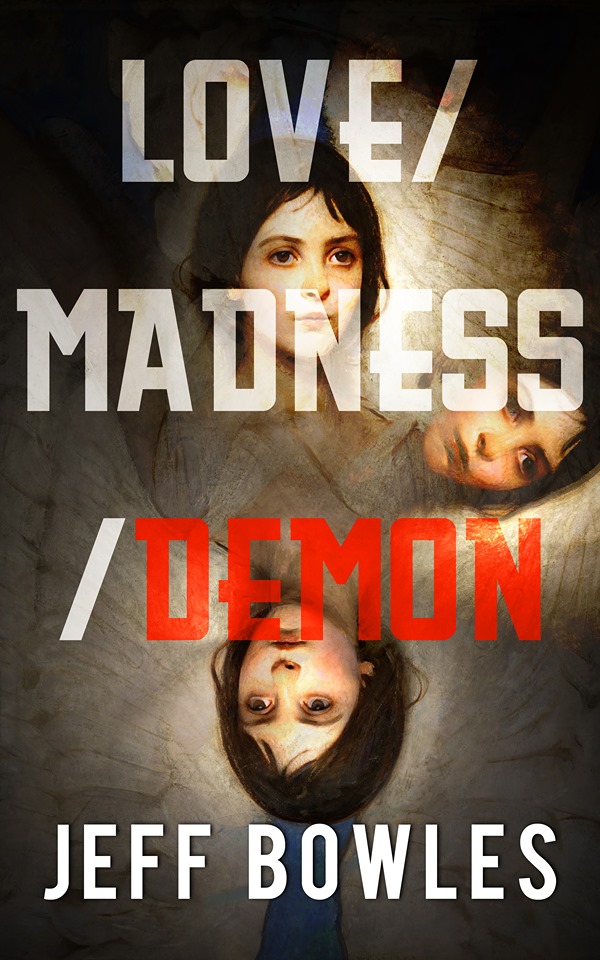























Words to Live By – Inspiration, Legacy, and Beatles Music
Posted: January 5, 2022 | Author: Jeff Bowles | Filed under: Commentary, Creativity, Opinion, Words to Live By, Writing | Tags: Inspiration, Jeff Bowles, music, The Beatles, Words to Live By, Writing to be Read | 3 CommentsThe first Wednesday of the month, writer Jeff Bowles muses on life, creativity, and our collective destinies as makers of cool stuff. You’re a writer, but have you ever thought about how or why? Here are some words to live by.
Paperback Writer
Over the holidays, I watched the new Beatles documentary released on Disney+, The Beatles: Get Back. I’m a huge fan of the group and always have been. I realize there are non-Beatles fans out there, but I have to admit, I’ve always been mystified by their lack of enthusiasm. To me and millions of other Beatlemanics, the band is a historical landmark, having written and recorded music that changed pop culture for generations to come.
This blog entry is about inspiration and legacy. I liked to write stories as a kid, but really, I wanted to be a rock star. This would’ve been in the mid-90s. At the time, many potential role models existed for me and every other outcast kid who picked up a guitar. I wasn’t into Nirvana or Linkin Park at that age, didn’t appreciate Red Hot Chili Peppers or Green Day. I loved The Beatles, plus lots of other groups from the 60s and 70s. Never mind that my older brother and mom began spoon-feeding me this stuff at a very early age, or the fact that I looked up to my brother and enjoyed liking the things he thought were cool. The Beatles were special, supernatural even. I believed that then and I believe it now.
But the truth is, I haven’t been feeling particularly inspired lately. Not even Christmas cheered me up. In fact, it only made me feel worse. This Get Back documentary, it’s exhaustive (and a little exhausting). Only a mega Beatles nerd could’ve pieced it together. Peter Jackson (director and co-writer of The Lord of the Rings trilogy) happens to have been that nerd. The film is almost eight hours in length, split over three episodes, focusing on just one month or so in the lives of the famous foursome.
The great thing about it is that we really get to see The Beatles’ creative process up close. Lots of labor and missteps, mistakes and dead ends. Critics have said this proves they weren’t as legendary as fans have always claimed. To me, it makes them more human, which is a comfort, because it proves anyone anywhere can muster enough talent and drive to produce work of honest significance.
Inspiration is great, but it’s not nearly as effective as perspiration. When I was learning to play and sing and write songs, John Lennon was my idol. I wanted to be him, and man did all the other kids in school think I was strange. I remember looking up at the stars one night when I was ten years old and whispering to the heavens,
“I want to be the greatest rock star ever.”
Or something to that effect. As it turned out, I lived a small (very small) portion of that dream. Played music with people all the way through my teens and early twenties. Lots of tiny coffee house gigs, open mic nights, bars, private celebrations. When I was twenty-one, I met the woman I would one day marry, and eventually I found I wanted different things out of life. Writing short stories and novels, the pursuit of some kind of career in this field, it replaced my desire to make music almost entirely. I grew dedicated to the craft and learned a hell of a lot. For the most part, writing has made me happy. I’m glad I took the years necessary to get good at it.
But I wouldn’t have found that dedication, that fire in my heart, if I weren’t already intimately familiar with it. There is an electric feeling that occurs inside the body and mind of a musician caught in the flow of her or his own creativity. The Beatles clearly knew that feeling well. It’s potent and wonderful, thrilling and powerful.
I came to learn that writing is a slower burn. Tons of work up front, and then maybe (maybe) a bit of adulation months or years later. But it still holds moments of intense creative gratification. No matter who you are, how popular or famous or legendary, this process, this mental birthing experience, it can be difficult and frustrating. John Lennon, Paul McCartney, George Harrison, and Ringo Starr were all wonderful musicians. They had nothing to prove to anyone, yet they still worked themselves to the bone to make stuff that simply had no equal.
So here’s my question for all of you: how dedicated are you to what you love? What thrills you and gets you excited for writing or anything else in life? Maybe it’s a bit unfashionable to admit that music recorded some sixty years ago makes me feel ready to take on the world, but it does. Especially when I get to see it up close, visceral, all the creative battles, coming to the logical and favorable conclusion of work that stands the test of time.
Next time you’re feeling down in the dumps and not at all creative, head back to the source—your personal wellspring of inspiration—and see if it won’t refill your cup a little. Pick up a guitar, or a pencil or paintbrush or a media powerhouse of a computer, or maybe just watch a good film about one of your favorite things on earth. All hail the makers of cool stuff. Be they Beatles or bestsellers or nobodies in particular.
Peace and love to you this new year. May it bring you everything you need, and maybe a few of the things you want, too. Until next time.
Jeff Bowles is a science fiction and horror writer from the mountains of Colorado. The best of his outrageous and imaginative work can be found in God’s Body: Book One – The Fall, Godling and Other Paint Stories, Fear and Loathing in Las Cruces, and Brave New Multiverse. He has published work in magazines and anthologies like PodCastle, Tales from the Canyons of the Damned, the Threepenny Review, and Dark Moon Digest. Jeff earned his Master of Fine Arts degree in creative writing at Western State Colorado University. He currently lives in the high-altitude Pikes Peak region, where he dreams strange dreams and spends far too much time under the stars. Jeff’s new novel, Love/Madness/Demon, is available on Amazon now!
Check out Jeff Bowles Central on YouTube – Movies – Video Games – Music – So Much More!
Want to be sure not to miss any of “Words To Live By” segments? Subscribe to Writing to be Read for e-mail notifications whenever new content is posted or follow WtbR on WordPress. If you found it useful or entertaining, please share.
Share this: