Treasuring Poetry – An introduction to the poetry of Lindsey Martin-Bowen and a review
Posted: March 18, 2026 Filed under: Book Review, Collection, Interview, Poetry, Review, Treasuring Poetry | Tags: #poetry, #RobbieCheadle, #TreasuringPoetry, Book Review, Interview, Lindsey Martin-Bowen, Treasuring Poetry, Where Water Meets the Rock, Writing to be Read 21 Comments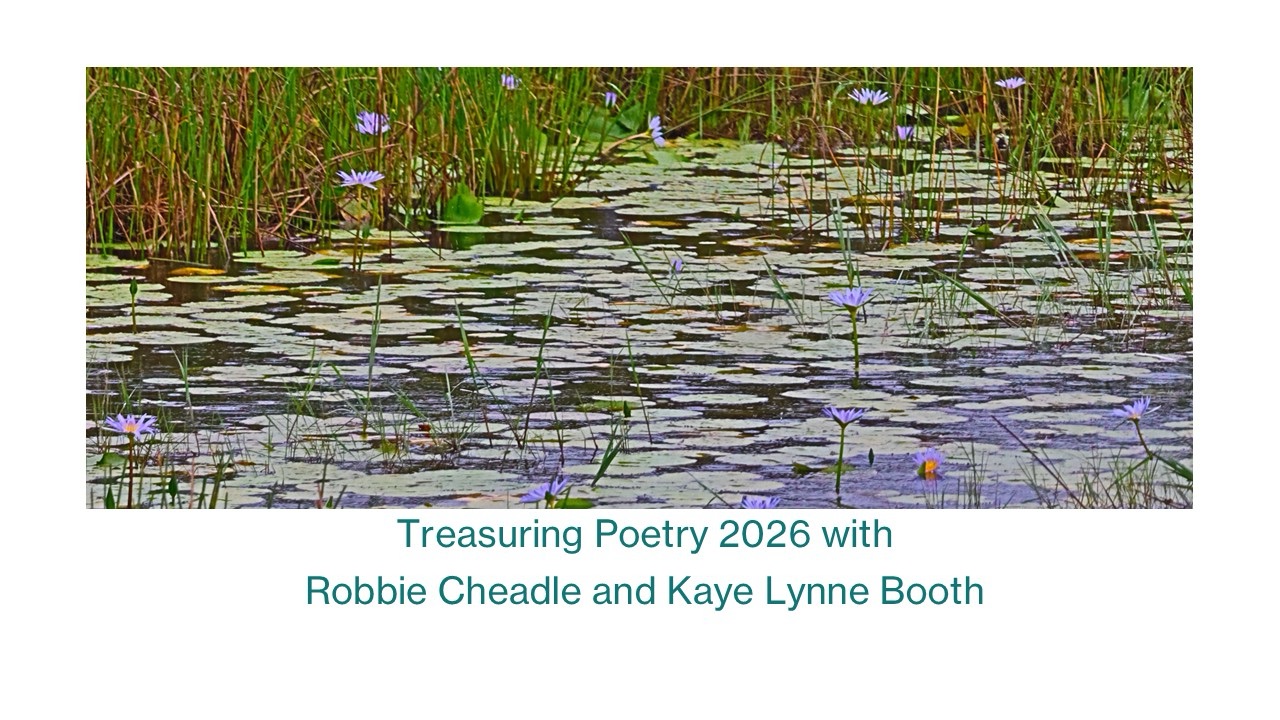
Today, I am delighted to host talented poet Lindsey Martin-Bowen as my March Treasuring Poetry guest. Lindsey is a fellow contributor to Writing to be Read and you can read her latest post here: https://writingtoberead.com/2026/03/04/lindseys-writing-practice-out-of-this-world-writing-exercise/
Interview with Lindsey Martin-Bowen
My poetry journey: How I became a poet
I must admit as a child, I wrote more stories than poetry. And the poems I wrote then were sentimental and trite. (During grade school (from third or fourth through sixth grade), I compiled annual Christmas books containing “Christmas” stories I wrote—but each year, the manuscript also included a Christmas poem (or one about winter) and a Christmas tale from Readers Digest (which influenced me to compose Christmas books). I also illustrated the books with colored pencils the first year and I gradually moved to water color illustrations (which I sometimes marked with felt-tip pens). My sixth-grade teacher (Mrs. Ferguson) introduced us to Robert Frost and Carl Sandburg, whom I liked, but I liked Emily Dickson the best when I attended elementary school—and I still consider her one of my favorites today. (Unfortunately, at the time, I was too naive to pickup on her style (and skills).
Being the nerd I was in high school, I opted to take a journalism classl. There, for the Christmas issue (of our high-school newspaper), I wrote a humorous Christmas poem from the staff, which I illustrated with an ink sketch of Santa , his gift-filled sleigh (which included B/W head-shot photos of each new-staff member )
and eight reindeer flying through skies above my sketches of Victorian two-stories. (Even then, I preferred old homes to the contemporary ranch styles where most my classmates and I lived.)
Also in high school, I continued writing in my diary, which I used to create short stories (from events in that diary). And I submitted those stories in English classes when a teacher requested them. But my poems were overly sentimental and personal. And basically about teen angst. (For example, one was entitled “Alone.”)
In fact, during my senior year in high school, my English composition teacher enjoyed my short stories and offered encouraging comments. I wouldn’t have shared my poetry, but she’d asked to see it. So I submitted the dreary poems I’d written (mainly centering on unrequited love). She read them and returned them without comment. I mean—absolutely NO comments. No encouragement. So I figured I was no better poet than I’d been a violinist. Sigh.
Thus, my true poetry journey did not take flight until my sophomore year at the University of Missouri-Kansas City, when fellow student Robert (“Bob”) Haynes and I became close friends. Even then, he was an excellent poet—and he boosted me along the journey to poet-hood. He shared not only his poems, but pointed out many contemporary experts who’d been gaining attention in the early 1970s, , such as W.S. Merwin, Galway Kinnell (both born the same year as my father: 1927), Lawrence Ferlinghetti, and Alan Ginsburg, popular in the late 1960s.-and who gave a reading at UMKC. Bob also introduced me to surrealists Kenneth Patchen and Kenneth Koch, who inspired my frenzies, (which I didn’t write until fifty years later.) I discovered James Tate, who I’d include as a “surrealist,”too. Shortly thereafter I enrolled in the university’s poetry writing classes taught by professors Dan Jaffe and David Ray, who introduced me to an array of well-known contemporary poets, including Diane Wakoski (whom Dan Jaffe brought to UMKC to give a reading), James Dickey, Etheridge Knight, Denise Levertov, John Berryman, David Ignatow, Randall Jarrell, William Stafford, Robert Lowell, Thomas Merton, Later, I also started reading Adrienne Rich, Denise Low, and Mary Oliver.
And, I did improve—enough that my senior year, Dan Jaffe asked me to read a few of my poems at a poetry reading on the UMKC campus for the public. He also published two of my poems in an anthology he compiled, one that included many professional poets.
Favorite poem by another poet
O my goodness—I’ve read so many poets and poems, this one is a tough question. Along with the previous set of poets I mentioned, I’ve always admired Emily Dickinson’s style and work, along with William Butler Yeats (especially his “The Second Coming.” And T.S. Eliot: His “Wasteland” is remarkable, but far too long to include here. And the sounds in that poem make it come alive so much that it’s best to listen to a recording of it. Even his “The Love Song of J. Alfred Prufrock” is a bit long to include. Thus, I’ll share Yeates’s “The Second Coming,” which not only inspired one of my poems that I’ll share later, but also remains relevant to our current world situation (a century later).
The Second Coming
Turning and turning in the widening gyre
The falcon cannot hear the falconer;
Things fall apart; the center cannot hold;
Mere anarchy is loosed upon the world,
The blood-dimmed tide is loosed, and everywhere
The ceremony of innocence is drowned;
The best lack all conviction, while the worst
Are full of passionate intensity.
Surely some revelation is at hand;
Surely the Second Coming is at hand.
The second Coming! Hardly are those words out
When a vast image out of Spiritus Mundi*
Troubles my sight: somewhere in sands of the desert
A shape with lion body and the head of a man,
A gaze blank and pitiless as the sun,
Is moving its slow thighs, while all about it
Reel shadows of the indignant desert birds.
The darkness drops again; but now I know
That twenty centuries of stony sleep
Were vexed to nightmare by a rocking cradle,
And what rough beast , its hour come round at last,
Slouches toward Bethlehem to be born?
1920-1921
Favorite style of poetry and why
Although I love my surreal frenzies, I also like other forms of poetry, including sonnets, when they come “naturally.” (The two times I’d written sonnets but didn’t realize it until I re-examined them, tweaked them here and there, and voila! I’d written two sonnets without trying—the best for me). Those two appeared n my second published poetry book (the first full collection) Standing on the Edge of the World (Washburn University/Woodley Press 2008).
I’ve also fallen in love with the Japanese tanka form. (Haiku doesn’t allow enough syllables for my poems. 😉 ) Thus, I created a section of tankas in my last collection, CASHING CHECKS with Jim Morrison (redbat books 2023). More about that later.
Moreover, I generally write in “free verse” with sounds and rhythms and internal rhymes (not at the end of a line), that flow so smoothly, the rhyme doesn’t “hiccup” or stop the reader. Why is this usually my favorite form? As I’ve mentioned in a number of my bios, “poetry is my way of singing.” Thus, in most poems I write, I strive to use sound so they have somewhat the same effect that a song does.
Favourite poem of my own
O so many poems—so little time. I cannot name one favorite poem. But three of them come to mind. First, here’s my response to “The Second Coming,” which I wrote in response to the violence occuring in Ferguson, Missouri:
Re-reading “The Second Coming’ by W.B.Yeats
after Ferguson, Missouri\
No one listens anymore. No one works
in tandem. No horses pull this cart.
Now trembling, it falls apart.
The center hub’s blown, exploded.
Rioting in city squares—rioting along beaches.
Is this anarchy—or something more?
The blood of victims rushes onto shores.
Innocents no more, their lungs fill
till they can’t speak—can’t breathe.
Their passions now sneseles, uneasy—
bringing the strange revelation:
the Second coming lies on the horizon.
It’s the day, it’s the day—
O yes, it’s the holy day—
it’s the Day of the Dead.
A wide-winged beast rises above—
eyes black and gleaming, onyx
glistening through bone.
O Momma, Momma,
come back, come back
again. The world’s too cold.
No lion-bodied beast alouches
toward Bethlehem. It’s a creature
with a jackal’s head, a jackal’s soul.
Where Water Meets the Rock, p. 30 (39 WEST PRESS 2017)
Two other poems I must also count as favorites, because they seemed to write themselves.
The words came to me without me planning them. It was if they suddenly appeared in my brain, and I had to scramble to pen them onto paper before they evaporated.
The first, I wrote during the months that revealed my father was not to stay much longer on this earth. (This was when the frenzies started coming to me. Many of the frenzies are absurd—but comical. This one’s more serious. (And I’ve included it in three of my books: It must be a favorite.)
It’s Never Like the Movies—
for my father
this dying, no background chords
rising to a crescendo,
no adagio of strings.
You watch these ants instead,
trickle across peonies
They disappear. And you
can’t keep your grip
on that granite wall of reason
but slip downstream
into some wild current
till you run aground .
There, you search
for the deserted place, a Holy Land,
where Ekijah met God.
Even if you’re hiking
the Appalachian Trail, up
Standing Indian Mountain,
you watch vultures circle
in and out of clouds festering
into some murky, yellow soup.
And when lightning hits,
Father Davis says Hail Marys—
and there, on the horizon,
you see wovoka whirl
in his dance of ghosts.
Standing on the Edge of the World, p. 85 (Washburn U/Woodley Press, 2008)
Inside Virgil’s Garage, p.52 (Chatterhouse Press, 2013)
The Book of Frenzies, p. 76 (Pierian Springs Press, 2022)
And “From the Emerald City to the Mountain of Quaff” is special to me because it came to me in pieces—often as I was awaking from sleep. At the time, it seemed to be one of the most imaginative poems I’ve written. Perhaps that’s why one of my former poetry professors, David Ray selected it to run in an anthology he assembled (Whirleybird Anthology of Kansas
City Poets, 2012).
From the Emerald City
to the Mountain of Quaff
(or This Must Be Kansas)
Go out and get that long face lost, you say,
Bury me in Jerusalem, I reply.
I want to be one of the first to rise,
like yeast on a rock in the desert,
among iron stones, hills filled with brass,
in a land of olive oil and honey—
wrapped in silver and gold,
where water eats fire
and fire drowns water, and the angel
of the presence outlasts them both.
Or, if poetry must be delirious and weird,
or even a prophetic frenzy,
then bury me in absurdia,
where the lemons bloom.
Inside Virgil’s Garage, p. 7 (Chatter House Press 2008)
Kansas City Voices (October 2007)
Whirlybird Anthology of Kansas City Poets, Whirlybird Press (2012).
The BOOK of FRENZIES, p. 66 (Pierian Springs Press 2022)
About CASHING CHECKS with JIM MORRISON
This book has a strange history. Although it resulted in being a sequel to CROSSING KANSAS with JIM MORRISON (Paladin Contemporaries 2016), it wasn’t exactly planned. I wrote the first collection in about six months. It was odd, too, because it took two years for me to write and revise the book’s initial poem entitled “Crossing Kansas with Jim Morrison, which, of course, became the book title. Yet—once that poem came together, I wrote the rest of the book within six months and entered it into the 2015-2016 QuillsEdge Chapbook Contest, Although it didn’t win, it was a finalist. Concurrently, Thorny Locust literary magazine ran three poems from the collection, and Amethyst Arsenic, another lit mag, took one more.
And the Jim Morrison poems kept coming to me. So I added them and others that fit into the collection, to make a complete book, which Paladin Contemporaries published that summer. On Amazon, the book made it to number 23 or so on the top 100 Poetry Books by Women list—and stayed there most of the following year. (Inside Virgil’s Garage was on that same list concurrently, but it didn’t rise as high Crossing Kansas w/JM did.
About two years later after Where Water Meets the Rock was published, I put together CASHING CHECKS, designed around the themesof actual money becoming obsolete. (Checks, along with credit cards, debit cards, and other contemporary methods of payment don’t include actual money, correct? It money going the way of the manual—or even electric typewriter?) That collection, of course, included other sectons centering around the tanka form and the frenzies. (At present three of my collectons include a section of “frenzies,” and of course, The BOOK of FRENZIES contains solely frenzies, some less zany than others).
In short, after accruing more Jim Morrison poems—I mean, Jim just wouldn’t hush, but kept popping words into my brain—I considered merging the new Jim Morrison poems with the CASHING CHECKS book.
When I submitted both versions to redbat books, both the publisher and her editor preferred the collection containing Jim Morrison. So that’s where we went with it.
What’s next?
What’s next? I’m now working on a manuscript, named for a 10-stanza poem (which can be set in five pages or in in ten, whichever works best) that’s appeared in three publications. I’ve been adding to it and hope to complete a full collection within a few months. The DARK HORSE WAITS in BOULDER, my fourth novel (third on Amazon) is scheduled to be released this spring—so that will precede the poetry book release. At present, I have one more poetry collection I’ve started but don’t see it going anywhere for a year or more. That one may be my last poetry collection, too. (Three more novels and one short story collections are ahead of that poetry collection.) And then, what may be my last novel—now in a VERY ROUGH state-of-being—just may allow the likely last poetry collection to supercede it .But who knows? Rock star archetype Jim Morrison may hop into one or the other manuscript and upset the entire scene.
My review of Where Water Meets the Rock
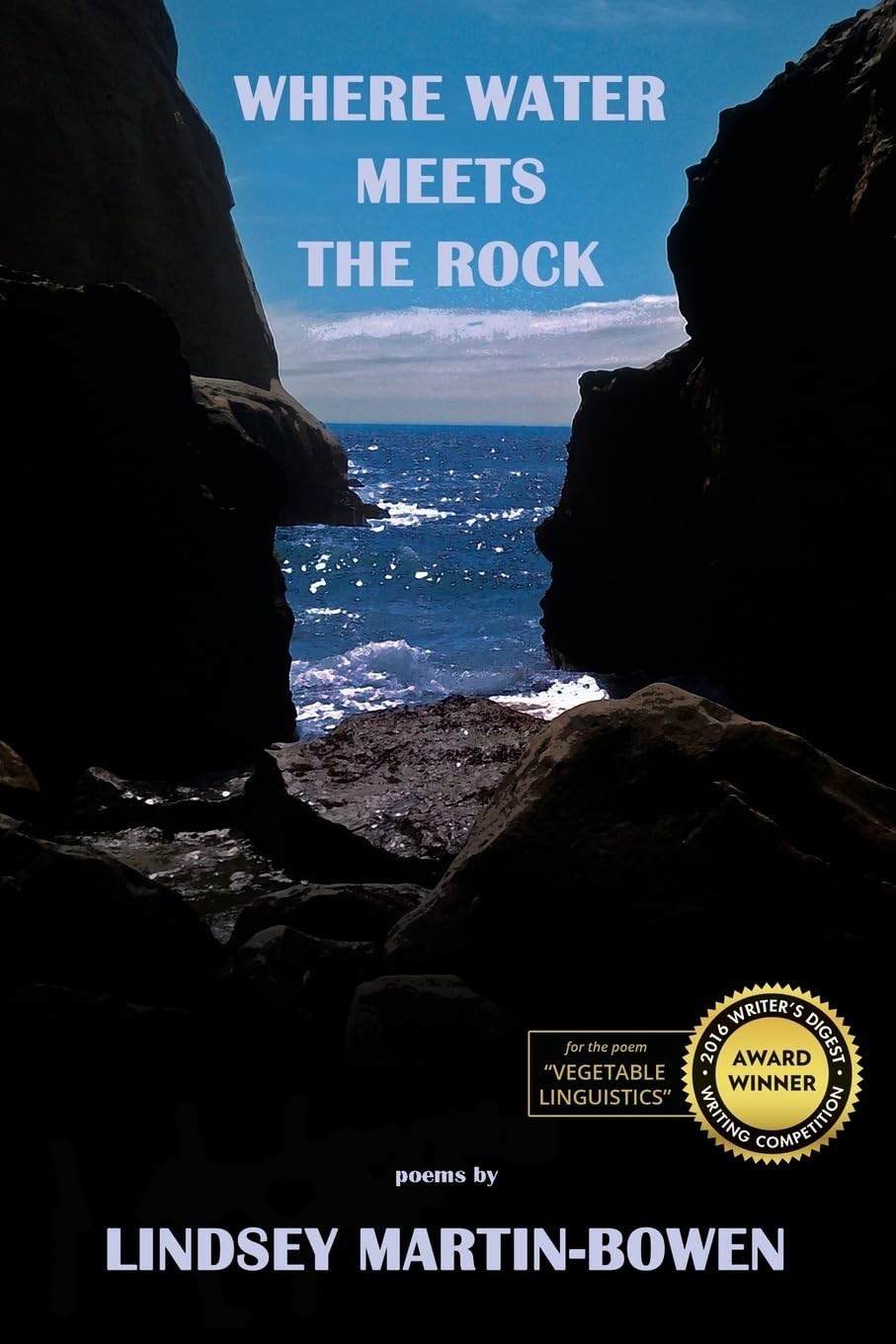
I enjoy reading poetry collections that include a common thread that links all the poems together. The common thread for this collection is loss and recuperation. This theme is relatable to everyone as we all suffer loss in various forms throughout our lives and we are forced to recuperate whether we want to or not.
The collection is divided into three sections: Erosion which explores the slow build up to loss; Frenzies which seeks to unravel the immediate chaos and emotion that follows loss; and On the Shore which delves into the slow path to acceptance and continuation.
The poems are unique and make use of various techniques to either exaggerate or bring out the humorous side of deep emotion and complex thought patterns relating to loss.
A poem that resonated strongly with me in Erosion is titled Psyche in the Suburbs. For me, this poem exposed the conflicting emotions of love, resentment, and self sacrifice that arise when caregiving for aging relatives.
This is the final stanza in this poem:
“Now, lavender scents fill the air,
sending me to the Aegean Sea.
When I step onto the asphalt,
I remember the bottled water.
I must go back. Without it,
the world will know her face
grows old. And she’ll blame me.”
Another poem in this section I especially related to is entitled My Bones are Glass. I have often thought this same thing when dealing with the elderly and aging. The poet includes an apology to Mark Strand, one of my favourite poets, so the style also worked very well for me.
Section 2: Frenzies, includes a lot of humour relating to people’s eccentricities and wants in their final moments. The poems also touch on the need for the observers to fulfil every desire and make the passing easier – perhaps to alleviate the guilt of survival. I enjoyed the poems although humour in poetry is not my personal favourite style. This section lifts the tension in death and loss and will appeal to most readers.
Section 3: On the Shore was very compelling for me. It explored inevitable change and endings coupled with new beginnings of a different sort. I reminded me that we move from one phase to another in our lives without even realising it until we look back and the end and beginning stand out in stark reality. The poem I enjoyed the most in this section was Two Mothers with Kids in Winchell’s. Perhaps because my children are now adults and have both finished school so I can understand and appreciate this poem through the lens of a soon to be empty nester.
This is one stanza in the poem that I strongly related to:
“The Winchell’s mothers nod, talk in buzzing hums,
eye their toddlers, who hop, slide on linoleum.
The kids scratch glass, balance on window ledges.
The pregnant one smooths seersucker. “Guys,” she says,
“They don’t like that here. Come, be quiet, Sit down.”
Like seatbelts, her words rein them in. I frown,
wonder how she renders her voice firm but not loud.”
As a mother who always worked, this stanza fills me with thoughts about what might have been had my own path taken me along a different path. What kind of mother would I have been had I not always been struggling to balance work and home demands. A writer who can introduce such reflections has to be great.
I highly recommend this compelling collection.
Where Water Meets the Rock is available from Amazon US here: https://www.amazon.com/Where-Water-Meets-Lindsey-Martin-Bowen/dp/1946358053
Lindsey Martin-Bowens Amazon Author page is here: https://www.amazon.com/stores/Lindsey-Martin-Bowen/author/B00JA31KW0
About Lindsey Martin-Bowen

Lindsey Martin-Bowen’s CASHING CHECKS with Jim Morrison has just been released this fall (2023) by redbat books (a La Grande, Oregon publisher) as part of its Pacific Northwest Writers series. She serves as a Literary Consultant for Pierian Springs Press, which published The BOOK of FRENZIES in April 2022 (hardback copy in December 2022–BEFORE she became its Literary Consultant). She has taught Criminal Law and Procedure (online) at Blue Mountain Community College, Pendleton, Oregon since January 2019. Until August 2018, she taught writing, literature, and Criminal Law at MCC-Longview and taught literature and writing at the University of Missouri-Kansas City 18 years.
A Pulitzer-Prize nominee, her fourth full-length poetry collection, WHERE WATER MEETS THE ROCK (39 West Press 2017) contains “Vegetable Linguistics,” which received an Honorable Mention in the Non-rhyming Poetry category of Writers Digest’s 85th Annual Writing Competition (2016). Her third collection, CROSSING KANSAS with Jim Morrison, won the “It Looks Like a Million” Award for the 2017 Kansas Authors Club competition. The book is an expansion of her chapbook named a finalist in the 2015-2016 QuillsEdge Press Chapbook Contest. “Bonsai Tree Gone Awry” from INSIDE VIRGIL’S GARAGE (Chatter House Press 2013) was nominated for a Pushcart Prize. This collection was also runner-up in the 2015 Kansas Authors Club Nelson Poetry Book Award. Woodley Press (Washburn University) published her first full-length collection, STANDING ON THE EDGE OF THE WORLD, which McClatchy newspapers named one of the Ten Top Poetry Books of 2008. Paladin Contemporaries released her novels RAPTURE REDUX (2014), HAMBURGER HAVEN (2009) and CICADA GROVE (1992). Her work has appeared in NEW LETTERS, I-70 REVIEW, THORNY LOCUST, FLINT HILLS REVIEW, PORTER GULCH REVIEW, SILVER BIRCH PRESS, COAL CITY REVIEW, PHANTOM DRIFT, TITTYNOPE ZINE, BARE ROOT REVIEW, , AMETHYST ARSENIC, THE SAME, THE ENIGMATIST, ROCKHURST REVIEW, BLACK BEAR REVIEW, LITTLE BALKINS REVIEW, KANSAS CITY VOICES, LIP SERVICE, 21 anthologies, and others.
With Dennis Etzel, Jr., she edited GIMME YOUR LUNCH MONEY: Heartland Poets Speak out against Bullies (Paladin Contemporaries 2016). She holds an MA in English (creative writing emphasis) and a Juris Doctor degree.
Before focusing upon teaching and writing poetry and fiction, she served as a full-time journalist and magazine editor for THE LOUISVILLE TIMES, the Johnson County SUN, MODERN JEWELER Magazine, and THE NATIONAL PARALEGAL REPORTER. She also worked as a legal editor for the Office of Hearings and Appeals (USDI) in Washington, DC.
She has two brilliant children and contends with super Chihuahuas Chia Maria La Rue and Chico the Man, her canine companions. And often, she spars verbally with poet Carl Rhoden.
About Robbie Cheadle

South African author and illustrator, Robbie Cheadle, has written and illustrated sixteen children’s books, illustrated a further three children’s books, and written and illustrated three poetry books. Her work has also appeared in poetry and short story anthologies.
Robbie also has two novels and a collection of short stories published under the name of Roberta Eaton Cheadle and has horror, paranormal, and fantasy short stories featured in several anthologies under this name.
You can find Robbie Cheadle’s artwork, fondant and cake artwork, and all her books on her website here: https://www.robbiecheadle.co.za/
________________________
Did you know you can sponsor your favorite blog series or even a single post with an advertisement for your book? Stop by the WtbR Sponsor Page and let me advertise your book, or you can make a donation to Writing to be Read for as little as a cup of coffee, If you’d like to show your support for this author and WordCrafter Press.
__________________________
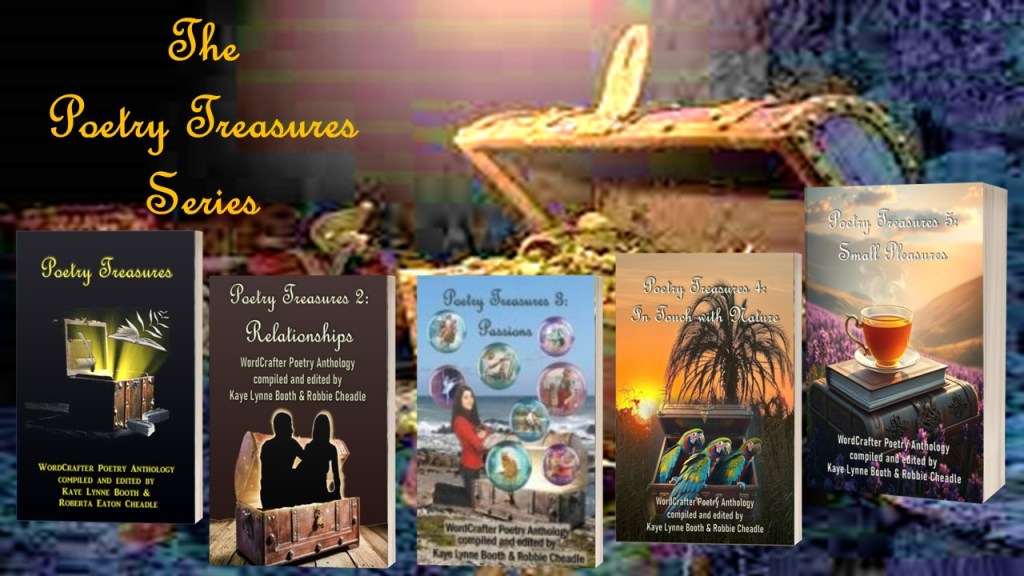
This segment of “Treasuring Poetry” is sponsored by WordCrafter Press and the Poetry Treasures series.
Get Your Copy Today!
Poetry Treasures: https://books2read.com/PoetryTreasures
Poetry Treasures 2: Relationships: https://books2read.com/PT2-Relationships
Poetry Treasures 3: Passions: https://books2read.com/u/b5qnBR
Poetry Treasures 4:In Touch With Nature: https://books2read.com/PT4-Nature
Poetry Treasures 5: Small Pleasures: https://books2read.com/PT5-SmallPleasures
Share this:

Book Review: “Bewilderness”
Posted: March 13, 2026 Filed under: Book Review, Books, Review, Science Fiction | Tags: Bewilderness, Book Review, Jonathan Maberry, Science Fiction, Writing to be Read 6 Comments
About Bewilderness – To be released August 11, 2026

Dr. Abby Corman has a bold idea: open a stable doorway between our world and an uninhabited parallel Earth. A new world we can use to mine resources to end poverty, grow enough food to end all hunger, and allow for population growth to end overcrowding. What could be a more noble aspiration for a brilliant young scientist?
But the path to hell is paved with good intentions…
The Gateway is in a secure lab in a huge office building in New York. Ultra-modern, totally secure, impenetrable by industrial spies or foreign agents. Once it goes into lockdown for the Gateway test firing, it becomes the world’s largest and most unbreakable vault.
Locked doors, though, can do more than keep bad things out. They can trap bad things in.
The Gateway spins completely out of control, sending infinite Earths onto a collision course with ours. Now, our reality is cracking apart, allowing creatures from Earth’s distant past and monsters from parallel worlds to emerge, turning New York into a hellscape.
Abby Corman did not open the Gateway, but she is the only one who knows how to close it. But an alien Hunter and her pack of deadly hellcats have stepped into our world, and they will stop at nothing to kill Abby. Because in a universe of parallel worlds, one Earth’s savior can be the worst criminal other Earths have ever known.
Purchase Link: https://wordfirepress.com/products/bewilderness?_pos=1&_psq=Bewilderness&_ss=e&_v=1.0
My Review of Bewilderness
I received a digital copy of Bewilderness, by Jonathan Maberry from the publisher, WordFire Press, in exchange for an honest review. All opinions stated here are my own.
I chose to review Bewilderness because Jonathan Maberry is the author, and I know his stories are of a quality to be admired. In this, I was not disappointed. Mayberry has created a first-rate science fiction novel and a situation where literally anything is possible. This story has cinematic potential, and I wouldn’t be surprised to find it in theaters in the future. The book is a solid, well written, well thought out story with fleshed-out characters and almost non-stop action to keep those pages turning.
Abby Corman is a scientist of the highest caliber, assigned to a top-secret government funded project, called Gateway. Only, she’s not just assigned to it, she created it. They are preparing for the test run of the Gateway machine, which cab tap into uninhabited parallel worlds, offering unlimited resources to replenish Earth’s dwindling supplies, and ending world hunger. But when their funding is threatened and her partner panics and fires her, locking her out and bringing in another scientific mind, who may understand the project, but has no regard for safety protocols, and they fire the Gateway, bypassing the test run. Something goes terribly wrong, leaving the Gateway cycling through thousands of strange parallel worlds, and allowing creatures from those worlds to enter this one, turning New York into a pre-historic disaster zone. It’s up to Abby to set things right, making her way through a veritably impenetrable fortress turned upside down, and running from an alien huntress and her pack of hell cats, who is determined to stop her.
Cutting-edge suspense will keep you on the edge of your seat as you follow Abby in her quest to save the world. I give Bewilderness five quills.

About Kaye Lynne Booth

For Kaye Lynne Booth, writing is a passion. Kaye Lynne is an author with published short fiction and poetry, both online and in print, including her short story collection, Last Call and Other Short Fiction; and her paranormal mystery novella, Hidden Secrets; Books 1 & 2 of her Women in the West adventure series, Delilah and Sarah, and book 1 in her Time-Travel Adventure series, The Rock Star & The Outlaw, as well as her poetry collection, Small Wonders and The D.I.Y. Author writing resource.
Kaye holds a dual M.F.A. degree in Creative Writing with emphasis in genre fiction and screenwriting, and an M.A. in publishing. Kaye Lynne is the founder of WordCrafter Quality Writing & Author Services and WordCrafter Press, where she edits and publishes two short fiction anthologies and one poetry anthology every year amidst her many writing projects. She also maintains an authors’ blog and website, Writing to be Read, where she publishes content of interest in the literary world.
_________________________________________
Kaye Lynne Booth does honest book reviews on Writing to be Read in exchange for ARC digital copies, (she also accepts print copies). Have a book you’d like reviewed? You can request a review on the Book Review tab above.
Share this:

Read & Cook – On the Beach by Nevil Shute and chicken shawarma recipe
Posted: March 11, 2026 Filed under: Book Review, Books, Fiction, Post-Apocalyptic, Recipes, Review, Robbie Reads and Cooks | Tags: #ReadandCook, #recipe, #RobbieCheadle, Book Review, Chicken Shawarmas, Neville Shute, On the Beach, Read and Cook, Robbie Cheadle, Writing to be Read 54 Comments
Given the current state of affairs in the world, I think now is a good time to share my review of this post and pre-apocalyptic novel.
My review of On the Beach by Nevil Shute
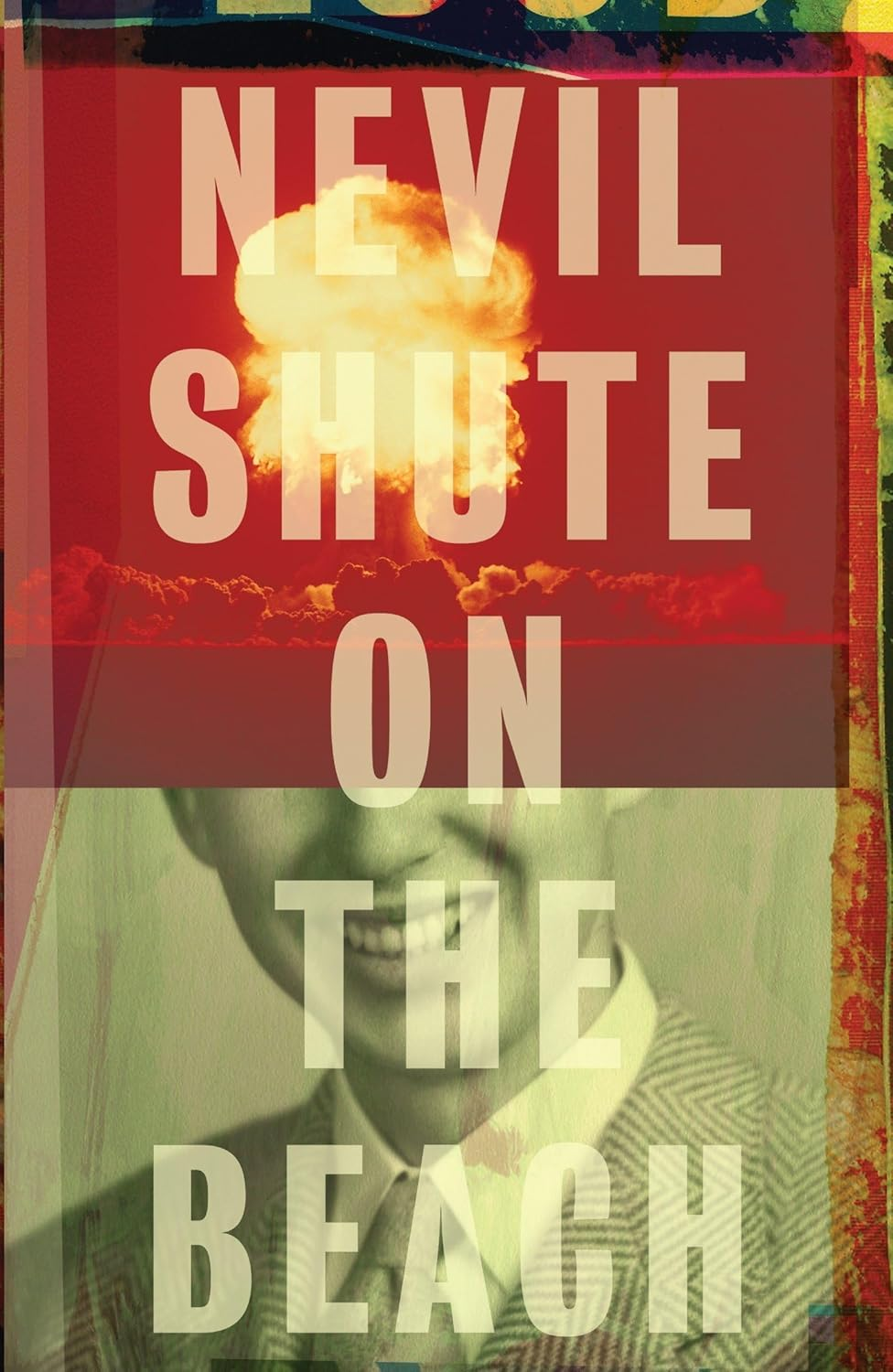
One the Beach is a post-apocalyptic novel set in Australia. The Northern Hemisphere has been completely destroyed by a nuclear war, and the residents of Southern Hemisphere are waiting for the inevitable arrival of deadly radiation. The story is set in Australia during the heat of the summer, and all of the characters are struggling to come to grips with their situations as short-term survivors of the war and the awful knowledge of their impending deaths from radiation as the nuclear fallout travels steadily southwards.
Lieutenant Commander Peter Holmes of the Royal Australian Navy is given a new and welcome assignment during this period of waiting for the inevitable deaths of himself and his family. He is appointed as the liaison officer to the American submarine, the U.S.S. Scorpion, commanded by Dwight Towers from New England in the U.S.A. The Scorpion had been near Australian waters when the global conflict erupted, and Towers and his men are now stranded with no country or homes to return to. There is an immediate contrast between the two men, Holmes and Towers, as Holmes still has his home, his wife and his baby daughter while Towers knows his home and family are gone. Towers, however, has retreated into fantasy of a sort where he still thinks of his wife and children as being alive and well and waiting for his return home even though he knows they are dead. It is incredibly moving and makes Towers’ loss that much more tragic and poignant.
Towers’ submarine has been placed under Australian command and Holmes is tasked with inspecting the Scorpion and briefing Towers about their orders to set out northwards in search of surviving life. This mission gives Holmes a small glimmer of hope that all might not be lost. In an attempt to distract Towers from his unhappy situation, Holmes extends an invitation for Towers to visit his home in Falmouth and enjoy the beach and time with Holmes’ family and friends. Towers accepts and during the visit is introduced to Moira Davidson, a beautiful and engaging young lady who has turned to alcohol and partying for solace.
The story involves three primary threads, namely, the journey of the submarine and its findings, a light romance of a sort between Moira and Towers, and the preparations by the Australian characters for their eventual deaths from radiation.
This story was an exceptionally intense and sad read for me as the characters are all such decent and ordinary people. The beach setting and sunny days at the beginning of the story combined with the forced merrymaking and pleasure taking of Holmes group of acquaintances slowly gives way to the cold and bleakness of winter and the acceptance by the various characters of their deaths. Many choose to end their lives with a pill provided by the Government for this purpose prior to succumbing to the radiation poisoning. There is no happy ending to this story and that is what’s so striking and awful about this story. There is no hope for survival for anyone right from the beginning. This is one of the few books I’ve read in my life that has made me cry.
The standout theme for me of this novel is finding meaning and purpose in the face of certain death. All of the characters in On the Beach exist in a strange period of time between the ending of the Northern Hemisphere through nuclear war and the ending of their own existence when the radioactive fallout reaches them, a period of approximately six months. The novel delves into the reactions of different people to an uncontrollable situation that can only end in death and demonstrates how some people can rise above despair and self-pity and make the most of the time they have left. Some characters turn to perpetual drunkenness or reckless car racing, but many resolve to carry on to the end with dignity and continue to do their duty. For Holmes, his duty includes continuing with his navel duties even though they ultimately become irrelevant. His wife continues to care for their baby daughter and run her home as if nothing could ever harm them.
This book was written at the height of the Cold War when the United States and the Soviet Union were engaged in ideological rivalry and a nuclear arms race. On the Beach reflects the fears of the period about a potential nuclear war and the destructive potential of atomic bombs.
Quotes from On the Beach
“It’s not the end of the world at all,” he said. “It’s only the end of us. The world will go on just the same, only we shan’t be in it. I dare say it will get along all right without us.” Dwight Towers raised his head. “I suppose that’s right. There didn’t seem to be much wrong with Cairns, or Port Moresby either.” He paused, thinking of the flowering trees that he had seen on shore through the periscope, cascaras and flame trees, the palms standing in the sunlight. “Maybe we’ve been too silly to deserve a world like this,” he said. The scientist said, “That’s absolutely and precisely right.” There didn’t seem to be much more to say upon that subject, so they went up on to the bridge for a smoke, in the sunlight and fresh air.”
“Mary looked at her gratefully. “Well, that’s what I think. I mean, I couldn’t bear to—to just stop doing things and do nothing. You might as well die now and get it over.” Moira nodded. “If what they say is right, we’re none of us going to have time to do all that we planned to do. But we can keep on doing it as long as we can.”
“Two days later they reached Port Darwin and lay in the harbour beneath the town. Here they could see nothing but the wharf, the roof of Government House, and a bit of the Darwin Hotel. Fishing boats lay at anchor and they cruised around these, hailing, and examining them through the periscope. They learned nothing, save for the inference that when the end had come the people had died tidily. “It’s what animals do,” John Osborne said. “Creep away into holes to die. They’re probably all in bed.” “That’s enough about that,” the captain said. “It’s true,” the scientist remarked. “Okay, it’s true. Now let’s not talk about it any more.” The report certainly was going to be a difficult one to write.”
Purchase On the Beach from Amazon US here: https://www.amazon.com/Beach-Nevil-Shute/dp/0307473996
Recipe for chicken shawarmas
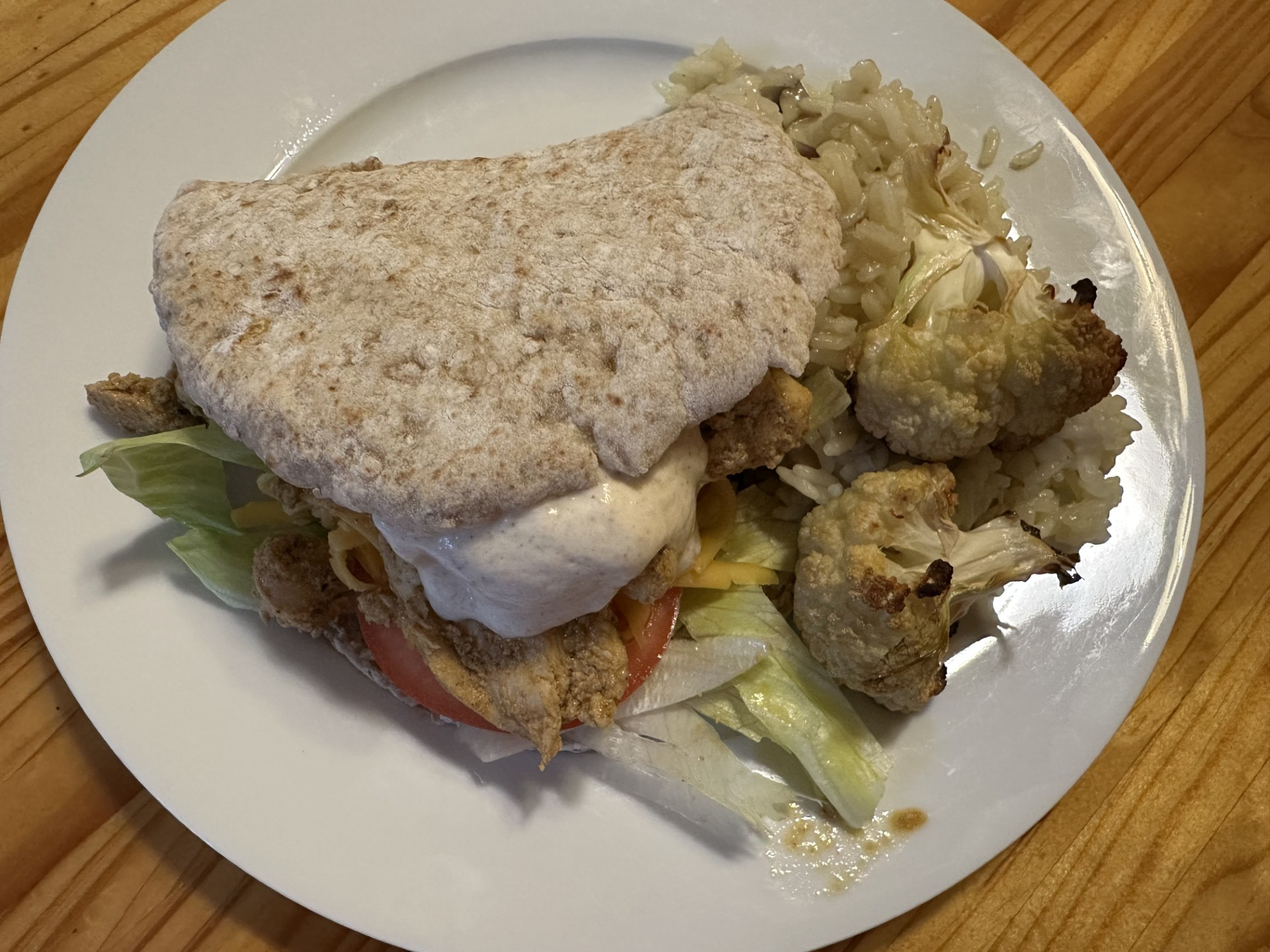
Marinade
15 ml garlic flakes
15 ml ground coriander
15 ml cardamon
5 ml ground cayenne pepper
20 ml ground paprika
10 ml chicken stock powder
black pepper to taste
10 ml lemon juice
45 ml olive oil
Combine the marinade ingredients in a bowl. Add 8 cubed skinless chicken breasts, cover, and leave to marinade for at least three hours. Overnight is best.
Cook the chicken pieces in a wok or frying pan until they are cooked through.
Yoghurt sauce
250 ml double thick Greek yoghurt
10 ml garlic flakes
5 ml cumin
2,5 ml lemon juice
salt and pepper to taste
Mix the ingredients together in a small bowl.
Slice5 or 6 flatbreads in half. Slice tomato, red onion, cheese, and lettuce.
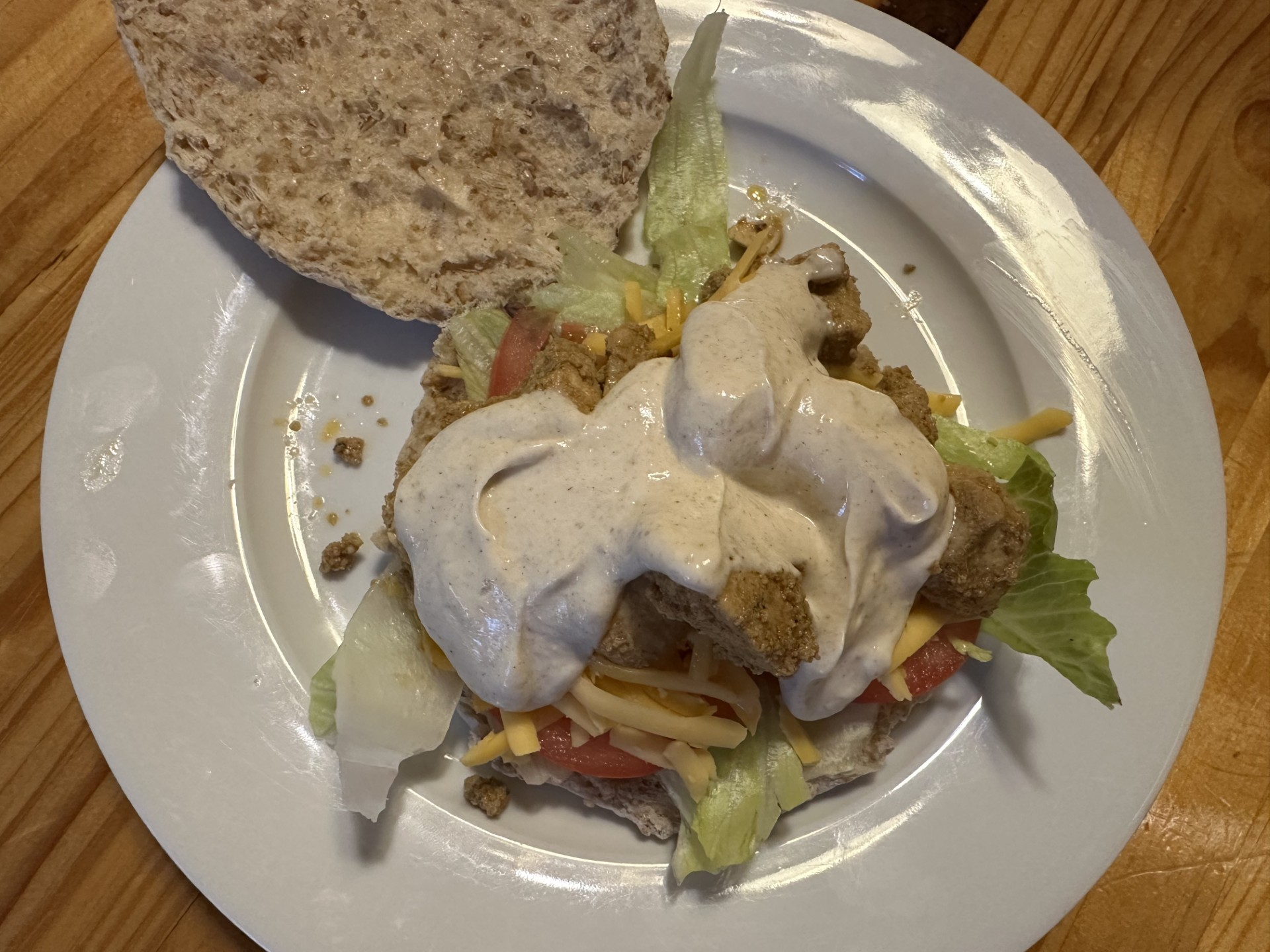
Assemble your shawarmas by adding a layer of lettuce, tomato, cheese, red onion, and chicken and topping it all with the yoghurt sauce.

About Robbie Cheadle

Robbie also has two novels and a collection of short stories published under the name of Roberta Eaton Cheadle and has horror, paranormal, and fantasy short stories featured in several anthologies under this name.
You can find Robbie Cheadle’s artwork, fondant and cake artwork, and all her books on her website here: https://www.robbiecheadle.co.za/
Find Robbie Cheadle
Blog https://wordpress.com/home/robbiesinspiration.wordpress.com
Bluesky https://bsky.app/profile/robbiecheadle.bsky.social
YouTube https://www.youtube.com/channel/UCVyFo_OJLPqFa9ZhHnCfHUA
Goodreads https://www.goodreads.com/author/show/15584446.Robbie_Cheadle
_________________________________
Did you know you can sponsor your favorite blog series or even a single post with an advertisement for your book? Stop by the WtbR Sponsor Page and let me advertise your book, or you can make a donation to Writing to be Read for as little as a cup of coffee, If you’d like to show your support for this author and WordCrafter Press.
___________________________________
This segment of “Read and Cook with Robbie Cheadle” is sponsored by WordCrafter Press and their themed anthologies.

Tales From the Hanging Tree: Imprints of Tragedy: There exists a tree that is timeless, spanning across all dimensions, which absorbs every life as those who are hanged as they die… and it remembers every one. The stories within are a select few of the Tales From the Hanging Tree.
Curses: Chronicles of Darkness:
There are all types of curses.
Cursed places, cursed items, cursed people, cursed families.
Curses that last throughout time. Curses which can’t be broken. Curses which are brought upon ourselves. Curses that will kill you and those that will only make you wish you were dead.
Legends: Monsters That Go Bump in the Night: Coming in 2026
Share this:

Treasuring Poetry – Meet poet and author, Laura Lyndhurst, and a review
Posted: February 18, 2026 Filed under: Book Review, Books, Collection, Interview, Poetry, Review, Treasuring Poetry | Tags: #RobbieCheadle, #TreasuringPoetry, Book Review, Interview, Laura Lyndhurst, Poetry, Robbie Cheadle, Social Climbing and Other Poems, Treasuring Poetry, Writing to be Read 31 CommentsHi everyone, today I’m thrilled to introduce you to Laura Lyndhurst. Laura is an accomplished author and poet and is also a new member of Story Empire blog which is a great resource for writers. You can read Laura’s first Story Empire post here: https://storyempire.com/2026/02/10/sowing-the-seeds-of-a-story/
Welcome Laura!
Tell us a bit about yourself and your poetry journey. How did you come to be a poet?
I never intended to write poetry. At school it was my least-favourite of the three prose-poetry-drama disciplines, and I didn’t like many of the poems that we studied. It was the same at university, when I finally got there in my forties. I was obliged to study Romanticism for my first-year core module, and I hated it. Wordsworth, Coleridge, Shelly; I wasn’t keen on them, although I was okay with some of Keats’s work. In the second year I couldn’t help but study more poetry, and I didn’t mind John Donne at all.
As to my own work, it was when I joined a Facebook writing group that it started. The group leader decided to post a picture every day for the month of October, inviting the group members to write a few paragraphs of prose around them. I sat with the first picture, thought, wrote—and what came out was poetry. The leader and members liked it, and thereafter I challenged myself to write poem every day from the picture prompt. At the end of the months I decided to publish them in a book, to claim copyright on them as much as anything. I called it October Poems, after the month in which I wrote them, and three more little collections followed in the next year or two.
What is your favourite poem by another poet and why?
That’s difficult. I like poetry more now than I used to, and there are several poets whose work appeals. I tend to listen to Leonard Cohen’s songs more than I read his poems, but he does have a way with lyrics; I mean, ‘the place is dead as Heaven on a Saturday night’ is so great. Hardy’s ‘The Darkling Thrush’ is up there, along with ‘This Be The Verse’ by Phillip Larkin. ‘Pity me not because the light of day’ by Edna St. Vincent Millay and ‘Rubbish at Adultery’ by Sophie Hannah attract, from the serious and the not-so as well. Choice for today, however, has to be ‘Refugee Blues’ by W.H. Auden. It never gets old, unfortunately, and although it’s written around one specific ethnic refugee group it can be applied to the myriad groups in existence before and since it was written; and now, in the 2020s, it feels massively relevant. You can find it here: https://allpoetry.com/refugee-blues
What is your favourite style of poetry and why?
Another difficult question. I don’t have a favourite style as such. I’ll read many different poems, some I’ll like and some I won’t, but the style of writing doesn’t have much bearing on why I like them or not. I do have an author friend, Thomas Leverett, who writes extensively in haiku form, and I loved his E Pluribus Haiku, which feels like travelling around the USA in haiku form. It’s on the link below, if you’re interested.https://www.amazon.com/Pluribus-Haiku-Anthology-3487-ebook/dp/B08X2YRQB2
Which is your favourite of your own poems?
I love them all, some more than others, it has to be admitted. I’ll choose the last one I wrote, however, because it is the last one and about ‘the end’. It’s from Social Climbing and Other Poems, and inspired by Clive Thompson’s photo of the altar of a Greek Orthodox Church.

Due Process
Your case has been a lengthy one; eighty-four years it’s taken, to
observe your less-than-perfect deeds and gather evidence to
aid the prosecution. But now you’ll have your day in court and
the jury gathered here, the Twelve, will finally decide, for or
against, whether you stay righteous here or whether you go down.
You wish to conduct your own defence? No, really, that won’t do, you’ll
be given representation. One of these saintly suits here gathered,
yes, that’s right, the ones with haloed wigs, will intercede for you.
Sorry for the delay; we understand that it’s a real nerve-wracking time for
you, but we can’t begin until His Honour gets here to take His place there,
in the big chair. The witnesses are here for you, plus jury, twelve good men
and true, not to forget the female sex, the immaculate, to try to push
your sins aside and hide you ‘neath their garments of compassion.
But nothing can occur until the God-Father is here; He’s judge
and jury all in one, Divine Justice in person. So please don’t fret,
or maybe do, for He knows you as well as you, and maybe better.
This whole set-up is just for show, to satisfy the need to see the
wheels of justice set in motion; your sentence fixed already,
your judgement day is here.
And here Our Father approaches now.
The court will rise …
Tell us a bit about your book, Social Climbing and other poems – what is the inspiration for the collection?
At the time I was friends with a photographer, Clive Thompson, and one of his pictures inspired a poem – ‘So This is Christmas’, which I recently published on my blog. Clive then allowed me to put together a book of my poems written to the prompts of some of his pictures.
What’s next for Laura Lyndhurst in the world of writing?
No more poetry, I’m afraid; nothing planned, at any rate, but if something occurs then I’ll be putting it together. At present I’m editing my latest novel, a whodunnit of sorts; a new departure for me, sort-of, because although I like adding a bit of a mystery to some of my stories this will be the first time I’ve brought the police in to investigate. It’s more focussed on before the murder, the personalities involved and their potential motivations. After that I’ll see what else occurs to me.
Many thanks for interviewing me. I’ve enjoyed it very much.
My review of SOCIAL CLIMBING: and Other Poems
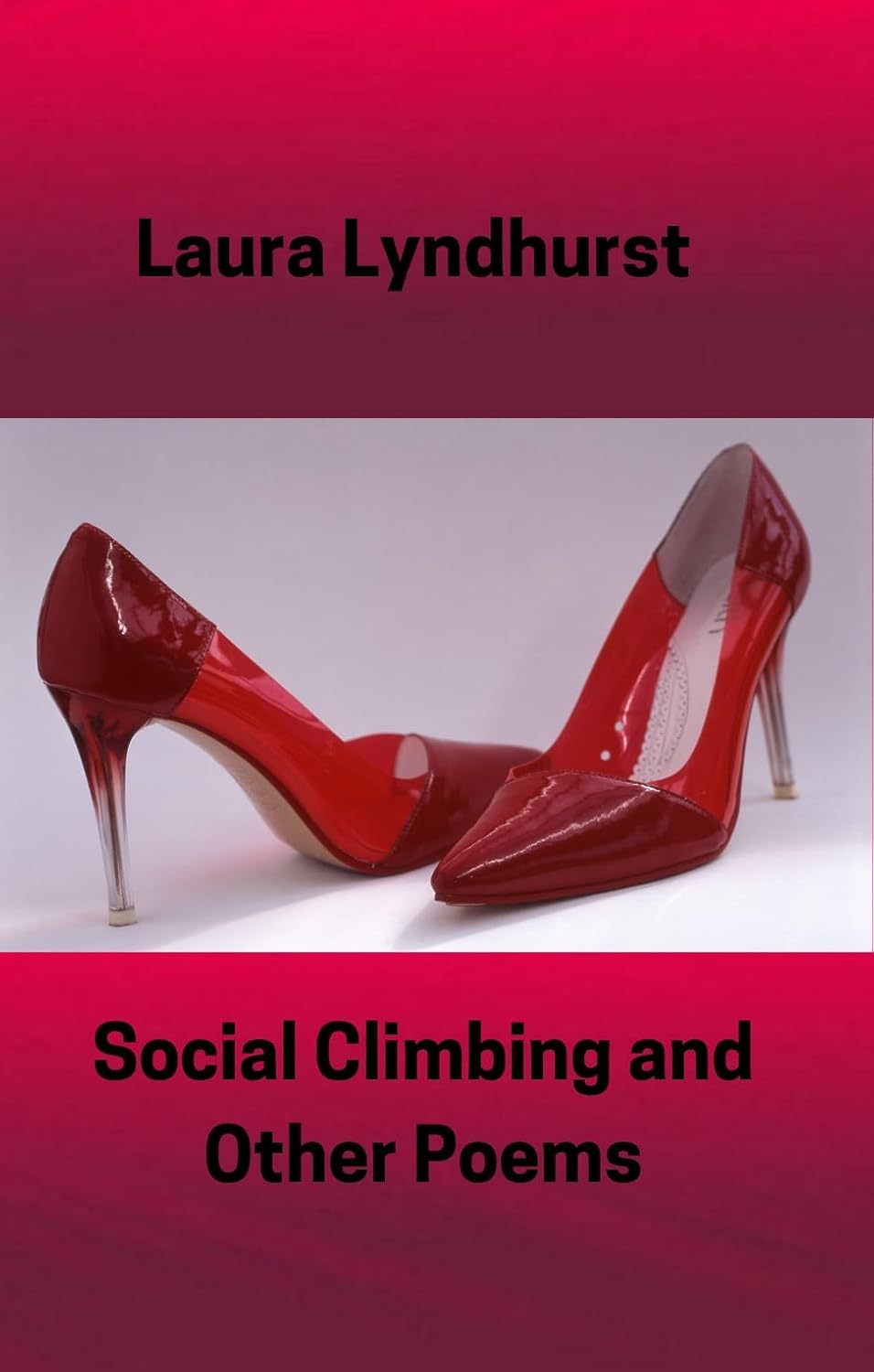
When I saw the cover of this collection, the shiny, red high heeled shoes against a white background, it reminded me of the movie, The Devil Wears Prada featuring Merril Streep and I was completely fascinated. I was not disappointed as this interesting collection of freestyle poems is a head on collision with an array of social situations, many of which are uncomfortable.
“The sit inside and watch the show, these Parisian fans of opera; but we,
lacking the means to buy the tickets for the red-plush, well-upholstered
seats and ornate murals, gilt-decked swirls and whirls of rococo decor,
prefer to take our entertainment in quite another way. Out here in the street”
from Street Theatre
Laura slices to the heart of human emotions and frustrations and these poetic expressions resonated with me. One poem I particularly delighted over is “I don’t know much about art but I know what I like”.
“So I’m breaking out of normalcy,
gone so very Modernisth,
this El Greco’s got his paintbox out
and given life a twist.”
Honestly, this poem made me laugh until I cried. Fantastic!
Each poem is introduced with a beautiful colour photograph by photographer, Clive Thompson.
Do yourself a favour, purchase this collection and allow Laura to put your life in perspective for you.
About Laura Lyndhurst
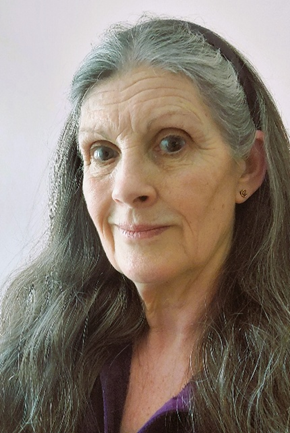
Laura Lyndhurst was born and grew up in North London, England, before marrying and travelling with her husband in the course of his career.
When settled back in the UK she became a mature student and gained Bachelor’s and Master’s degrees in English and Literature before training and working as a teacher.
She started writing in the last few years in the peace and quiet of rural Lincolnshire, and published her debut novel, Fairytales Don’t Come True, in May 2020. This book forms the first of a trilogy, Criminal Conversation, of which the second is Degenerate, Regenerate and All That We Are Heir To the third. Innocent, Guilty, the first of another trilogy, continues the story told in these three books and leads on to The Future of Our House, which is followed by Uphill, Downhill, Over, Out as the sixth and final book to end the series. An Honourable Institution was published as a stand-alone novel in January 2025, as was The Guilty Party in September 2025.
Laura also developed a taste for psychological suspense, which led to the writing and publication of You Know What You Did, to which What Else Did You Do? is the sequel.
Laura has also published four small books of poems, October Poems, Thanksgiving Poems and Prose Pieces, Poet-Pourri and Social Climbing and Other Poems.
Find Laura Lyndhurst
Website: https://booksthatmakeyouthink2.co.uk/
Facebook: https://www.facebook.com/laura.lyndhurst (personal profile)
Facebook: https://www.facebook.com/lauralyndhurstauthor/ (author profile)
Amazon: https://www.amazon.co.uk/stores/Laura-Lyndhurst/author/B088QFJJ3Q
Goodreads: https://www.goodreads.com/author/show/20336562.Laura_Lyndhurst
Instagram: https://www.instagram.com/lyndhurstlauraauthor/
Pinterest: https://uk.pinterest.com/lyndhurstlaura/
Tiktok: https://www.tiktok.com/@alectrona47
About Robbie Cheadle
South African author and illustrator, Robbie Cheadle, has written and illustrated sixteen children’s books, illustrated a further three children’s books, and written and illustrated three poetry books. Her work has also appeared in poetry and short story anthologies.
Robbie also has two novels and a collection of short stories published under the name of Roberta Eaton Cheadle and has horror, paranormal, and fantasy short stories featured in several anthologies under this name.
You can find Robbie Cheadle’s artwork, fondant and cake artwork, and all her books on her website here: https://www.robbiecheadle.co.za/
________________________
Did you know you can sponsor your favorite blog series or even a single post with an advertisement for your book? Stop by the WtbR Sponsor Page and let me advertise your book, or you can make a donation to Writing to be Read for as little as a cup of coffee, If you’d like to show your support for this author and WordCrafter Press.
__________________________
This segment of “Treasuring Poetry” is sponsored by WordCrafter Press and the Poetry Treasures series.
Get Your Copy Today!
Poetry Treasures: https://books2read.com/PoetryTreasures
Poetry Treasures 2: Relationships: https://books2read.com/PT2-Relationships
Poetry Treasures 3: Passions: https://books2read.com/u/b5qnBR
Poetry Treasures 4:In Touch With Nature: https://books2read.com/PT4-Nature
Poetry Treasures 5: Small Pleasures: https://books2read.com/PT5-SmallPleasures
Share this:

Book Review: “Hummingbird Moonrise”
Posted: January 23, 2026 Filed under: Book Review, Books, Fiction, Mystery, Paranormal, Review | Tags: Book Review, Book Reviews, Books, Fiction, Hummingbird Moonlight, Magic, mystery, Sheri L. Dodd, Writing to be Read Leave a commentAbout Hummingbird Moonrise
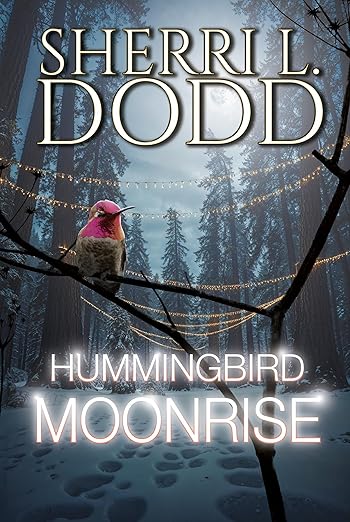
The past two years have taken their toll on Arista Kelly. Once an eternal optimist, now she has faced the darkness and must recalibrate what true happiness means for her. Meanwhile, Shane, her ex-boyfriend, is pulling all the right moves to help keep her sane from her heightening paranoia. But it doesn’t help that Iris, her Great Aunt Bethie’s friend, has disappeared.
Still, one additional trial remains. While searching for Iris, Bethie and Arista stumble upon a grand revelation in the eccentric woman’s home. With the discovery, they realize their run of chaos and loss of kin may have roots in a curse that dates back to the 1940s—the time when their family patriarch first built Arista’s cottage in the redwoods and crafted his insightful Ouija table.
This pursuit will not follow their accustomed recipe of adrenalized action, but the high stakes remain. Will the mysterious slow burn of unfolding events finally level Arista’s entire world or be fully extinguished, once and for all?
Purchase Link: https://www.amazon.com/Hummingbird-Moonrise-Paranormal-Mystery-Crystals-ebook/dp/B0FB5QV948
My Review of Hummingbird Moonrise
I received a free digital copy of Hummingbird Moonlight, by Sherri L. Dodd from the review program of Sandra’s Book Club in exchange for an honest review. All opinions stated here are my own.
I chose this book because of the title. It’s common knowledge that I love hummingbirds, and I couldn’t resist a story with hummingbirds in the title.
I had trouble keeping the characters straight due to so many of the character names beginning with the same letter or being very similar. We’ve got a Matty, a Manny, a Maddie, a Mike and a Mateo. Also, an Arista, an Auntie, and an Alicia. To make matters worse, Auntie is also the character of Bethie, but I was almost halfway through the book before I figured that out.
This is book 3 in the series, so that may well have had something to do with my confusion. The author does not re-introduce characters in this book for those who haven’t read the first two books. Nor are referrals to events that happened in the first to books recapped so that readers coming in late in the series have no reference. I was way past the middle of the book before I knew why I was seeing the actions of Mike and his sister, Katie and the strange little girl, while I’m sure someone who had read previous books would have understood and been able to easily follow. There are referrals to earlier events, but they are not explained well.
If you don’t mind just going along for the ride and feeling a little clueless, this is a fine story of magic and mayhem. An ancient family curse and a reversal curse have led to doom for two families. Our characters are the last souls surviving in their family lines and their survival lies in the outcome. Arista and Aunt Bethie are the last of the Kelly clan, and Iris may be the last survivor of the clan casting the original curse on their brood. However, Iris may have risen from the dead and also, she may be possessed by Fergus, whom she killed and fed to the pigs. (I guess I’m still a bit confused.)
Curses, spells, potions, gwishins, and spirit possessions. This story has all the elements of a magical mystery adventure, if you can keep everybody straight, but I do not recommend it as a standalone. I give Hummingbird Moonrise three quills.

About Kaye Lynne Booth
For Kaye Lynne Booth, writing is a passion. Kaye Lynne is an author with published short fiction and poetry, both online and in print, including her short story collection, Last Call and Other Short Fiction; and her paranormal mystery novella, Hidden Secrets; Books 1 & 2 of her Women in the West adventure series, Delilah and Sarah, and book 1 in her Time-Travel Adventure series, The Rock Star & The Outlaw, as well as her poetry collection, Small Wonders and The D.I.Y. Author writing resource.
Kaye holds a dual M.F.A. degree in Creative Writing with emphasis in genre fiction and screenwriting, and an M.A. in publishing. Kaye Lynne is the founder of WordCrafter Quality Writing & Author Services and WordCrafter Press, where she edits and publishes two short fiction anthologies and one poetry anthology every year amidst her many writing projects. She also maintains an authors’ blog and website, Writing to be Read, where she publishes content of interest in the literary world.
_______________________________________
Kaye Lynne Booth does honest book reviews on Writing to be Read in exchange for ARC digital copies, (she also accepts print copies). Have a book you’d like reviewed? You can request a review on the Book Review tab above.
Share this:

Chatting with New Blood: Author Thomas M. Jacobson
Posted: January 19, 2026 Filed under: Book Review, Books, Chatting with New Blood, Interview, Memoir, Nonfiction, Review | Tags: Book Review, Chatting with New Blood, Interview, Kaye Lynne Booth, Memoir, Thomas M. Jacobson, Underdog: Against All Odds, Writing to be Read 12 Comments
My guest today is a holocaust survivor, the youngest surviving passenger on the MS St. Louis, who grew up to be a successful civil rights attorney, representing civil rights activists in Milwaukee in the 1960s through the end of the twentieth century. and he was the attorney who sued and obtained half a million dollars for the families of the victims of the serial killer, Jeffrey Dahmer. He seems to find ways to think outside the box and make change happen, even in stagnant times. He has written a fascinating book, Underdog: Against All Odds, which relates his story, including a thrilling deposition with Dahmer in the Columbia Correctional Institution.
About Author Thomas M. Jacobson
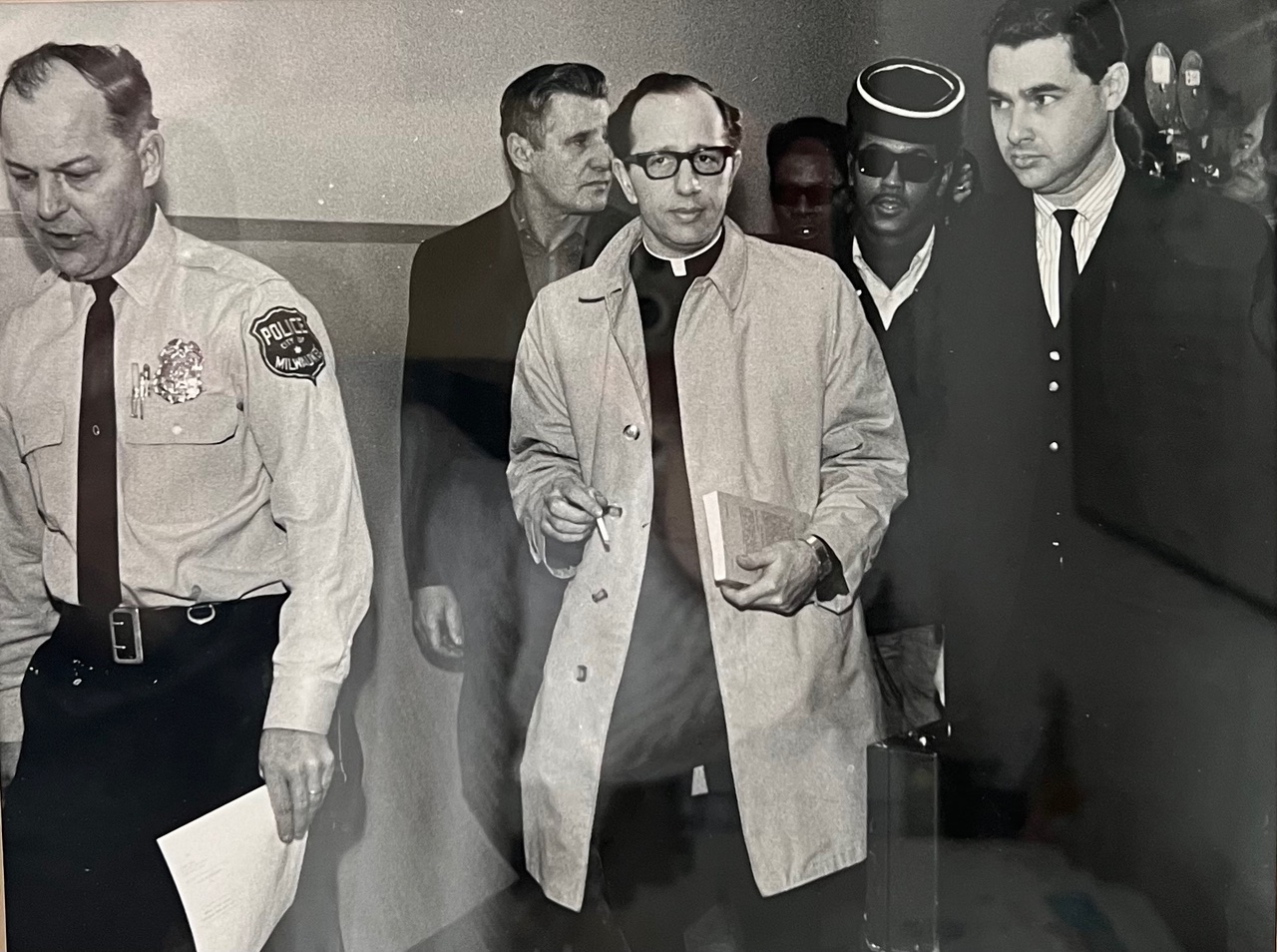
Thomas M. Jacobson, born May 8, 1938, in Bamberg, Germany, escaped Hitler, coming to America on the harrowing MS St. Louis voyage one year later. He graduated from UW Madison Law School in 1962, partnering with Lloyd Barbee to start the first integrated law firm in Milwaukee. Jacobson represented all the Milwaukee civil rights movers and shakers over the next thirty years, including Father James Groppi, the Daniel Bell family, comedian/human rights activist Dick Gregory, and Alderperson/Black Panther Commander Michael McGee. He successfully argued two cases in the U.S. Supreme Court, overturning Wisconsin’s Garnishment before Judgment and Change of Venue laws. In 1970, Jacobson was the Democratic candidate for Wisconsin Attorney General. In the late 1970s, he served as the Chairperson of the Wisconsin Public Defender’s office. Jacobson represented eight families of the victims of the world’s worst serial murderer, Jeffrey Dahmer, suing and successfully obtaining one-half million dollars for eleven victim families.

My Interview with Thomas
Kaye: Would you begin by telling us about your author’s journey? What inspired you to write a book about your experience?
Tom: My path to becoming an author wasn’t planned, but grew out of a life shaped by story and consequence. I was a child refugee, one of the youngest surviving passengers on the MS St. Louis, turned away from safety, and that early experience of injustice stayed with me long after I built a career as a civil rights lawyer. For decades, I focused on advocacy rather than authorship. A memoir wasn’t on my agenda. But over time, I realized that the arc of my life, from refugee to advocate, was itself a narrative worth preserving.
I wrote Underdog, Against All Odds, The Fight For Justice, because stories can carry truth in a way arguments alone cannot. As fewer firsthand witnesses remain, personal testimony becomes essential. I hoped to show how lived experience can inform a lifelong commitment to justice, how writing can serve as another form of resistance, remembrance, and standing up for democracy.
Kaye: When approaching the writing of the book, what’s the best piece of writing advice you were given?
Tom: As a lawyer, I was trained to persuade and to control the narrative. Writing a memoir required me to unlearn some of that, to slow down, to sit with uncertainty, and to trust the reader. Once I stopped trying to justify every decision and focused instead on bearing witness, the story found its voice. That advice shaped the entire book. It reminded me that a memoir isn’t about winning an argument, it’s about offering an honest account and letting the truth do the work. The best advice was to write what you know to be true, even when it’s uncomfortable. Honesty, intellectual and moral, is what gives writing its power and authority.
Kaye: Underdog has three different themes, each representing a different time in your life. Can you talk a little bit about each one?
Tom: The opening of Underdog focuses on childhood survival. As a young refugee, life was defined by forces beyond my control: The Nazi government’s atrocities against my family and the indifference of people to this injustice. This theme centers on vulnerability, displacement, the moral consequences and decisions of others, and what it means to begin life with no voice and no leverage or power to resist.
The middle of the book marks the transition from survival to resistance. This period of my life is about education, self-definition, and the decision to fight back using intellect rather than force. Law becomes the weapon that replaces the power that I never had. This theme is learning how institutions work, how they fail, and how an underdog can still challenge them.
The final theme centers on adulthood and professional life, when I finally had standing in the courtroom and a measure of authority. This part of Underdog addresses moral responsibility, representing the powerless, pursuing justice even when it’s unpopular, and recognizing that winning a case is not the same as standing up for justice.
Together, these three themes trace a life that moves from powerlessness to agency to accountability, the journey of an underdog who never forgot what it was like to have nothing.
Kaye: What happened after immigrating to the U.S. that led you to be a civil rights attorney later in life?
Tom: After immigrating to the U.S., I learned that power could be challenged through law. As a child refugee, authority had meant danger or indifference. In America, I saw that, slowly and imperfectly, the law could be used to protect the vulnerable rather than crush them.
I was drawn to civil rights law because the Holocaust taught me to fight and to resist was the only path to justice and survival. I understood what it meant to be excluded, unheard, and disposable. Education gave me a voice, and the law gave me standing to confront injustice. Becoming a civil rights lawyer wasn’t a career choice so much as a continuation of survival, resilience, and insistence that the system live up to all that the U.S. Constitution guaranteed its citizens: life, liberty, and the pursuit of happiness.
Kaye: Do you view Underdog as a way to raise awareness about civil rights?
Tom: While Underdog is not primarily an advocacy book, it inevitably raises awareness about civil rights. The story shows how rights are lost long before they are violated through indifference, silence, and the normalization of exclusion. By tracing my life from refugee to civil rights lawyer, the book invites readers to see civil rights not as abstract ideals, but as lived experiences with real human consequences. If Underdog encourages readers to recognize that injustice can be challenged through resistance, strength, and perseverance, then it has accomplished one of the messages I want to send.
Kaye: What are some of the major events represented in Underdog?
Tom: My family’s escape from Nazi Germany in 1939, Hitler’s ascension to power in 1933, the Nuremberg laws, Krystallnacht, my father’s incarceration in the Dachau concentration camp, the failed voyage of the MS St. Louis, the commencement of the 1960s civil rights struggle in Milwaukee with the murder of Daniel Bell, a young Black man shot in the back of the head by a white police officer, and the planting of a knife to falsely create a self-defense cover-up by the cities entire law enforcement agencies, the struggles for a fair housing bill in Milwaukee by Father James Groppi and Alderperson Vel Phillips, Lloyd Barbee’s lawsuit finding defacto segregation in Milwaukee public schools unconstitutional, my suing successfully the City of Milwaukee on behalf of the Daniel Bell family twenty years after his murder, my lawsuits finding Wisconsin’s Change of Venue and Garnishment before Judgement laws unconstitutional in the U.S. Supreme Court, and my deposition of the world’s worst serial murderer, Jeffrey Dahmer, leading to eleven victim families receiving a half million dollars.
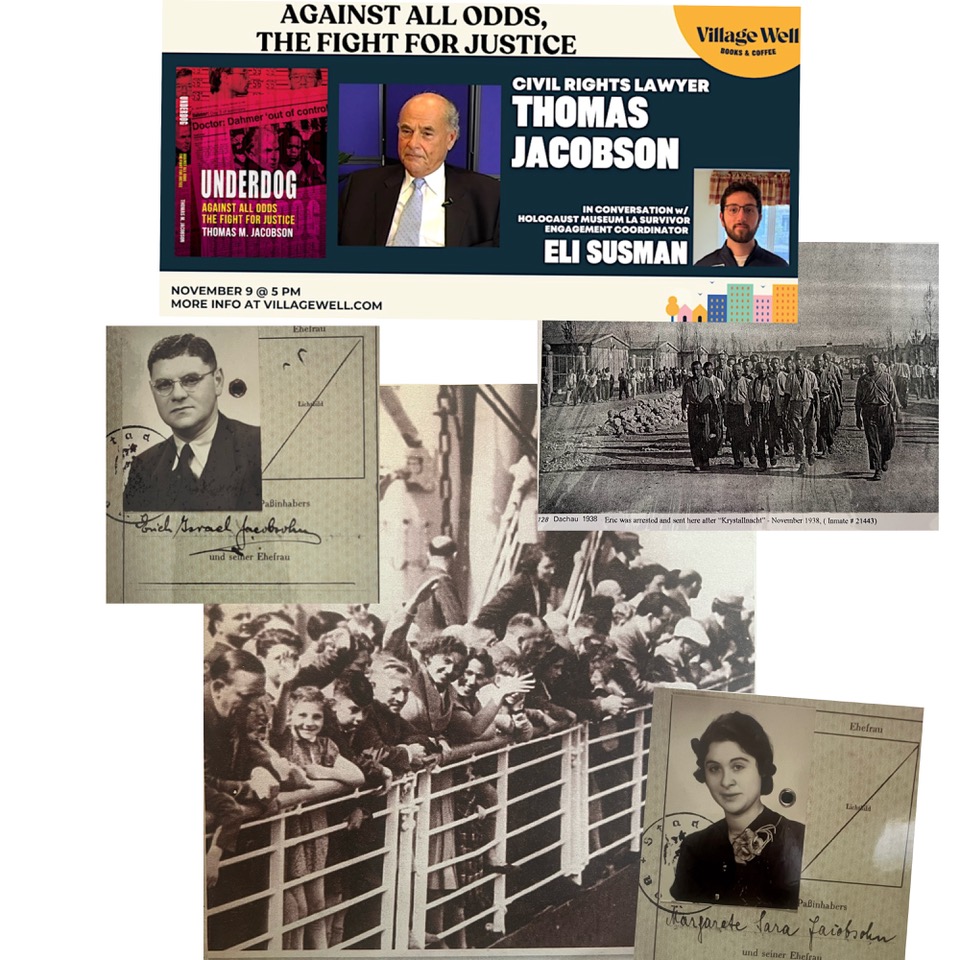
Kaye: What is the most important message or messages which you hope to bring to your readers?
I want readers to understand that what happened to refugees like those on the St. Louis was not inevitable, but the result of a choice, indifference, silence, and lack of courage. The most important message is that justice is never automatic. Survival exists only when you are willing to fight. Your rights exist only when you are willing to defend them, especially for those in the minority, the unpopular, the powerless, and those easy to ignore and exploit. One life, fully lived, can push history. You don’t need power to matter. You need persistence, guts, and moral resolve.
Kaye: What advice would you give to another with a message to get across?
Tom: Know your audience. Lead with the key point. Use simple language and be clear and concise. Use empathy and perspective. Leave the reader with a call to action, telling them what you want them to do, think, or feel.
Kaye: What are some of the challenges that you faced in writing this book?
Tom: Writing Underdog was one of the most intense experiences of my life. Revisiting memories of trauma, injustice, and loss was emotionally exhausting, yet necessary to tell the story honestly. I faced the challenge of balancing truth with readability, ensuring the legal cases, civil rights battles, and personal experiences were accurate, yet engaging. Deciding what to include and what to leave out was difficult because every memory felt significant, and I had to confront my own perspective honestly—translating complex legal and historical events in a way that anyone could understand, while keeping the narrative cohesive required careful editing. Writing about real people and sensitive events also required courage, knowing it might draw scrutiny, but I believed the story was important enough to write.
About Underdog: Against All Odds, the Fight for Justice

UNDERDOG is the memoir of one of the youngest passengers on the MS St. Louis, escaping Nazi Germany to Holland and eventually settling in Milwaukee, Wisconsin. Against All Odds, Fighting for Justice is the story of a human rights lawyer representing all the prominent civil rights leaders in Milwaukee during the 1960s and decades thereafter.
The world’s worst serial murderer, Jeffrey Dahmer, writing from Columbia Correctional Institution on February 4, 1994, had this to say about Thomas Jacobson’s efforts to make him pay for his gruesome slaughter of seventeen victims.
Purchase Link: https://www.amazon.com/Underdog-Against-Odds-Fight-Justice/dp/B0DV45SFC2
My Review of Underdog: Against All Odds, the Fight for Justice
I received a print copy of Underdog: Against All Odds from author Thomas M. Jacobson in exchange for an honest review. All opinions stated here are my own.
As the youngest passenger on the MS St. Louise as a fleeing refugee from the brutal Nazi regime of Adolf Hitler, it came as no surprise that Thomas M. Jacobson, grew up and took a profession where he defended the underdogs of the U.S. Defender of civil rights and protector of those scorned unfairly, he has made some huge strides in bringing equality and fairness in the U.S. from one of the most prejudiced cities in America. He managed to bring some semblance of compensation to the families of the victims of serial killer Jeffrey Dahmer when many refused to see them as victims at all. His accomplishments are huge. His methods may be a bit unorthodox, but they produced successful results.
I have to admit that at times, reading about writs and filings, and court proceedings can be a bit dry, but the methods he used and the ways he managed to get around the obstacles adversaries set in front of him are fascinating, and I couldn’t wait to learn how he triumphed. Often, his triumphs were small and didn’t result in immediately noticeable changes, because change moves slowly, especially when pushed by the heavy wheels of justice. Scorned by many in his own life, as bigoted people opposed him for his stance on civil rights, justice and fairness and his efforts to undo biased laws to ensure the fair treatment of his clients in the extremely biased city of Milwaukee, Wisconsin, Jacobson stopped at nothing in pursuit of a favorable verdict, making him a formidable force to feared by those who opposed him.
Although I don’t agree with all of Jacobson’s opinions, I do admire his determination and tenacity to fight for what he believes in. Underdog is a well written, gripping struggle for justice for the weak and disadvantaged. I give it four quills.

More About Thomas M. Jacobson
Underdog Press Clippings
State Bar of Wisconsin YouTube
Phoenix Holocaust Museum Interview
https://drive.google.com/file/d/1uZd3Knv3rR_rSTU_EIhiWcwyJja8W359/view?usp=sharing
The Daily Cardinal
The Milwaukee Community Journal
The CapTimes
LA Holocaust Museum
https://www.holocaustmuseumla.org/event-details/underdog-against-all-odds-the-fight-for-justice
92.7 WMDX
https://civicmedia.us/shows/whats-going-on/2025/07/01/jeffrey-dahmer-attorney-thomas-jacobsons-role
Village Well Book Talk
https://villagewell.com/events/3642720251109
About Author Kaye Lynne Booth
For Kaye Lynne Booth, writing is a passion. Kaye Lynne is an author with published short fiction and poetry, both online and in print, including her short story collection, Last Call and Other Short Fiction; and her paranormal mystery novella, Hidden Secrets; Books 1 & 2 of her Women in the West adventure series, Delilah and Sarah, and book 1 in her Time-Travel Adventure series, The Rock Star & The Outlaw, as well as her poetry collection, Small Wonders and The D.I.Y. Author writing resource.
Kaye holds a dual M.F.A. degree in Creative Writing with emphasis in genre fiction and screenwriting, and an M.A. in publishing. Kaye Lynne is the founder of WordCrafter Quality Writing & Author Services and WordCrafter Press, where she edits and publishes two short fiction anthologies and one poetry anthology every year amidst her many writing projects. She also maintains an authors’ blog and website, Writing to be Read, where she publishes content of interest in the literary world.
___________________________________________
Did you know you can sponsor your favorite blog series or even a single post with an advertisement for your book? Stop by the WtbR Sponsor Page and let me advertise your book, or you can make a donation to Writing to be Read for as little as a cup of coffee, If you’d like to show your support for this author and WordCrafter Press.
__________________________________
This post sponsored by WordCrafter Quality Writing & Author Services.

Whether it’s editing, publishing, or promotion that you need,WordCrafter Quality Writing & Author Services can help at a price you can afford.
Stop by and see what we have to offer today: https://writingtoberead.com/readings-for-writers/wordcrafter-quality-writing-author-services/
Share this:

Book Review: “In the Name of Blood Vampires are Relative”
Posted: January 9, 2026 Filed under: Book Review, Books, Dark fiction, Fiction, Review, Speculative Fiction | Tags: Book Review, DL Mullan, In The NAme of Blood Vampires are Relative, Speculative Fiction, Vampire fiction, Writing to be Read Leave a commentAbout In the Name of Blood Vampires are Relative
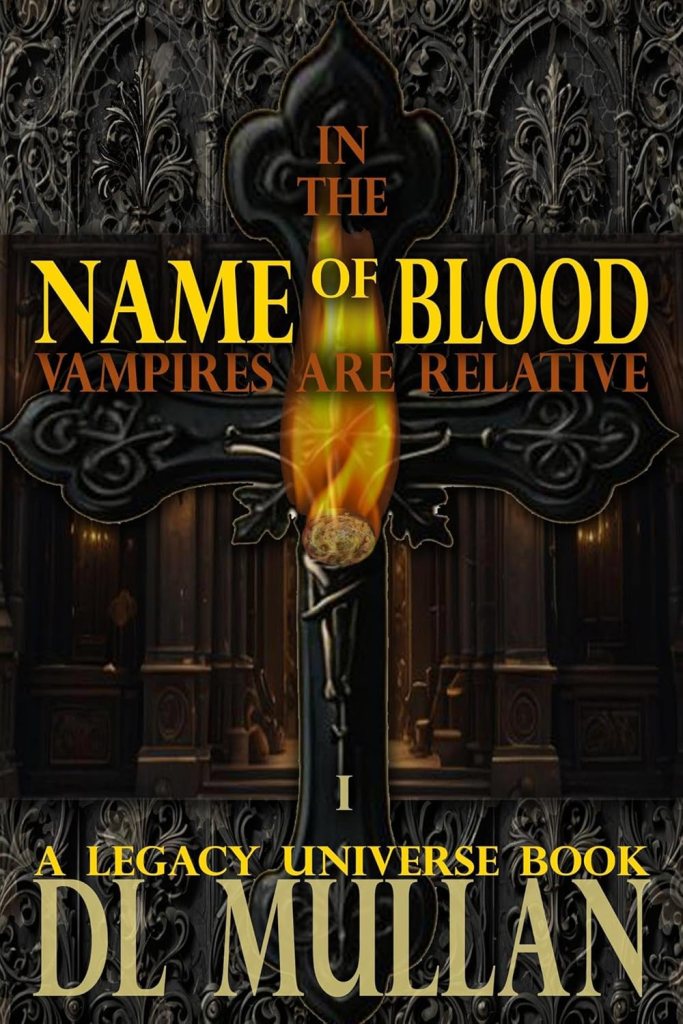
Riley Austin believes life is predictable. That is, until she helps her friend, Tony, catch the kidnapper of three little boys. While using her sixth sense to find the missing kids, she and Tony are attacked and Riley is taken by Julian, a vampire, who wishes to use her gift for his own purposes.
When he asks for her assistance, Riley discovers a kindred spirit in Julian. Moreover, she discovers that an insane, power-hungry vampire, called Wilhelm, is at the center of many disappearances. A bond grows between Julian and Riley and is strengthened when she saves his life. For her own protection, Julian returns her to the safety of the mortal realm.
What Julian does not realize is that Riley was never going to remain safe…
My Review of In the Name of Blood Vampires are Relative
I received a digital copy of In the Name of Blood Vampires are Relative from author DL Mullan in exchange for an honest review. All opinions stated here are my own.
Lured into a conflict between two vampires, one a viciously insane vampiric killer who thrives on torturing her, Riley is determined to see Wilhelm stopped at any cost. The other vampire, Julian, is after the same prey, placing them both on the same side, and he is equally determined to keep Riley from harm’s way because they are related. This is book one in Mullan’s Legacy Universe series, and I got the distinct impression that Riley will play an important role in something much bigger in future books.
Mullan doesn’t use dialog tags, which makes it difficult to know who is speaking at times, but probably reads aloud smoother. Perhaps she plans to do audiobook versions in the future. Her characters are larger than life, and you can almost feel Riley’s pain from Mullan’s vivid descriptions. I’m not sure I buy into vampires with governing bodies, as these seem to, but I can accept it for what it is and immerse myself in the world for a time.
An interesting take on the vampiric universe. I give In the Name of Blood Vampires are Relative four quills.
About Kaye Lynne Booth
For Kaye Lynne Booth, writing is a passion. Kaye Lynne is an author with published short fiction and poetry, both online and in print, including her short story collection, Last Call and Other Short Fiction; and her paranormal mystery novella, Hidden Secrets; Books 1 & 2 of her Women in the West adventure series, Delilah and Sarah, and book 1 in her Time-Travel Adventure series, The Rock Star & The Outlaw, as well as her poetry collection, Small Wonders and The D.I.Y. Author writing resource.
Kaye holds a dual M.F.A. degree in Creative Writing with emphasis in genre fiction and screenwriting, and an M.A. in publishing. Kaye Lynne is the founder of WordCrafter Quality Writing & Author Services and WordCrafter Press, where she edits and publishes two short fiction anthologies and one poetry anthology every year amidst her many writing projects. She also maintains an authors’ blog and website, Writing to be Read, where she publishes content of interest in the literary world.
___________________________________
Kaye Lynne Booth does honest book reviews on Writing to be Read in exchange for ARC digital copies, (she also accepts print copies). Have a book you’d like reviewed? You can request a review on the Book Review tab above.
Share this:

Book Review: “Shadows of Deceit” & “The Gift”
Posted: December 26, 2025 Filed under: Book Review, Books, Dark fiction, Fiction, Mystery, Review | Tags: Book Review, Kaye Lynne Booth, Shadows of Deceit, Stephanie M. Matthews, The Gift, Timothy R. Baldwin, Writing to be Read Leave a commentAbout Shadows of Deceit

A rookie PI. A city full of secrets. One deadly game she may not survive.
When rookie private investigator Cassie Maddox takes on her first big case in the gritty streets of Lenape City, she stumbles into a web of corruption, betrayal, and murder.
What begins as a simple job spirals into a dangerous cat-and-mouse chase with the city’s most powerful figures.
Haunted by her father’s legacy as a decorated detective, Cassie is determined to prove herself—even if it means uncovering secrets that cut too close to home.
To find the truth, she must risk everything: her independence, her family, and maybe even her life.
Purchase Link: https://www.amazon.com/dp/B0FG3B7LFB
My Review of Shadows of Deceit
I received a digital review copy of Shadows of Deceit, by Timothy R. Baldwin through Sandra’s Book Club in exchange for an honest book review. All opinions stated here are my own.
Young Cassie is overwhelmed by a need to prove herself as she avoids following in her father’s footsteps. So, when her first case as a P.I. turns into more than just a cheating husband, she is determined to solve it on her own. But her bulldog determination causes her to make mistakes, miscalculations and misjudgements until she finds herself over her head in web of corruption and deception, and playing a very dangerous game.
A typical hard crime novel, but the stakes aren’t high enough. Although we’re told that Cassie is swimming in dangerous waters, we don’t really see it past her friends being kidnapped and knocked around. But we don’t see that, just the after effects. It doesn’t feel so dangerous. I never really felt the peril. Even when the case is solved, I’m not sure what the real scam was, or who was doing what.
While it could be a good detective story, Shadows of Deceit fell short of the mark for me. I give it three quills.
About The Gift

“The Gift” will change Christmas forever.
The breakout thriller novel of Canadian author Stephanie M. Matthews, “The Gift” will leave you breathless in this story about a darkness that haunts a little Belgium village, and the lengths it will take to save a young woman from being lost to it forever. This is a vividly haunting Christmas story that will not be easily forgotten.
The darkness begins here.
Purchase Link: https://www.amazon.com/Gift-Stephanie-M-Matthews/dp/0995313202
My Review of The Gift
I received a digital review copy of The Gift, by Stephanie M. Matthews, through Sandra’s Book Club, in exchange for an honest review. All opinions stated here are my own. The author, Stephanie M. Matthews has done a smashing job of weaving religious and philosophical symbolism in to make the storyline work in this fantastical tale.
The Gift is a dark Christmas tale with an undercurrent theme of the age-old struggle between good and evil. Fae goes to the village of her heritage at her grandmother’s request. It is her grandmother’s wish Fae receive a very special gift, and Fae can’t imagine what it might be. The village closes down to the outside world on Christmas eve, allowing no one in or out on account of a strange event when the village was saved from a Nazi invasion which no one is willing to talk about. In order to receive her gift, she must spend the night in the village, but the villagers are less than welcoming, strongly urging her to leave before Christmas eve begins.
The more she learns about the village residents and their strange customs, the more mystery that shrouds her anticipated present, the more determined she becomes to collect it. But everything comes with a price, and the price of Fae’s gift may be higher than she ever imagined.
The Gift is everything that a Christmas tale shouldn’t be: dark and scary, with Christmas horror, rather than Christmas cheer. I give it four quills.
About Kaye Lynne Booth
For Kaye Lynne Booth, writing is a passion. Kaye Lynne is an author with published short fiction and poetry, both online and in print, including her short story collection, Last Call and Other Short Fiction; and her paranormal mystery novella, Hidden Secrets; Books 1 & 2 of her Women in the West adventure series, Delilah and Sarah, and book 1 in her Time-Travel Adventure series, The Rock Star & The Outlaw, as well as her poetry collection, Small Wonders and The D.I.Y. Author writing resource.
Kaye holds a dual M.F.A. degree in Creative Writing with emphasis in genre fiction and screenwriting, and an M.A. in publishing. Kaye Lynne is the founder of WordCrafter Quality Writing & Author Services and WordCrafter Press, where she edits and publishes two short fiction anthologies and one poetry anthology every year amidst her many writing projects. She also maintains an authors’ blog and website, Writing to be Read, where she publishes content of interest in the literary world.
____________________________________
Kaye Lynne Booth does honest book reviews on Writing to be Read in exchange for ARCs. Have a book you’d like reviewed? You can request a review on the Book Review tab above.
Share this:

Book Review: “Flat Spin”
Posted: December 19, 2025 Filed under: Audio Books, Book Review, Crime, Fiction, Noir, Review | Tags: Audiobook, Book Review, Crime Fiction, David Freed, Flat Spin, Noir, Ray Porter, Writing to be Read 1 CommentAbout Flat Spin
Flat Spin is the first installment in David Freed’s acclaimed thriller series featuring Cordell Logan, a sardonic pilot with dwindling savings and a shadowy past.

Flying out of California’s sunny Rancho Bonita, Cordell Logan is a flight instructor and aspiring Buddhist whose attempt at a quiet(er) life is shattered when his ex-wife Savannah arrives on his doorstep. Her new husband—and Logan’s former comrade-in-arms—Arlo Echevarria, has been murdered and she needs his help.
Logan and Echevarria used to be members of a top-secret military assassination team known as Alpha. Savannah begs him to tell the police what he knows in order to help them solve the murder, but sharing that sort of information raises both ethical and practical concerns. After an attempt on Logan’s own life it becomes clear that this goes deeper than he thought, and that solving the murder himself may be the only way to ensure his—and Savannah’s—safety.
Pulitzer Prize-winning reporter David Freed brings his own experience to bare in this brilliant binge-worthy mystery perfect for fans of Robert B. Parker and Robert Rotstein.
Chirp Purchase Link: https://www.chirpbooks.com/audiobooks/flat-spin-by-david-freed-9ff63f01b8
Amazon Purchase Link: https://www.amazon.com/Flat-Spin-Cordell-Logan-Mystery/dp/B0CKTWFTW5
My Review of Flat Spin
I purchased an audiobook of Flat Spin, by David Freed and narrated by Ray Porter, through a Chirp $1 Deal. All opinions stated here are my own.
Before I begin, I have to give kudos to the narrator, Ray Porter. This guy has such a wide range of character voices that it is absolutely amazing. As he reads the story, each character is given a distinctive voice, which really helps to put the listener into the story. He does both male and female voices, Asian voices, Russian voices and African American voices, all with apparent ease, and the listener is able to distinguish between characters and know who is speaking. Superb!
Cordell Logan is a retired special operative and flight instructor turned amateur detective to find a killer when his ex-wife asks to find her current husband’s killer. The story tone is one that reminded me of tales of hard-core detective protagonist, such as Mickey Spillane, or Mike Hammer. (Know what I mean, kid?) The tone is purposeful and is emphasized by the audiobook’s narrator, Ray Porter. And the amount of bad luck and misfortune which falls in the protagonist’s way is reminiscent of James Rockford of The Rockford Files.
Although, a fairly run of the mill hard crime fiction detective novel, the talent of the chosen narrator makes this story shine above the crowd in my book. I give Flat Spin five quills.
_______________________________________
About Kaye Lynne Booth
For Kaye Lynne Booth, writing is a passion. Kaye Lynne is an author with published short fiction and poetry, both online and in print, including her short story collection, Last Call and Other Short Fiction; and her paranormal mystery novella, Hidden Secrets; Books 1 & 2 of her Women in the West adventure series, Delilah and Sarah, and book 1 in her Time-Travel Adventure series, The Rock Star & The Outlaw, as well as her poetry collection, Small Wonders and The D.I.Y. Author writing resource.
Kaye holds a dual M.F.A. degree in Creative Writing with emphasis in genre fiction and screenwriting, and an M.A. in publishing. Kaye Lynne is the founder of WordCrafter Quality Writing & Author Services and WordCrafter Press, where she edits and publishes two short fiction anthologies and one poetry anthology every year amidst her many writing projects. She also maintains an authors’ blog and website, Writing to be Read, where she publishes content of interest in the literary world.
______________________________
Kaye Lynne Booth does honest book reviews on Writing to be Read in exchange for ARCs. Have a book you’d like reviewed? You can request a review on the Book Review tab above.
Share this:

LINDSEY’S WRITING PRACTICE: Book Review – “Midnight Roost: Weird & Creepy Stories”
Posted: December 3, 2025 Filed under: Anthology, Book Review, Books, Dark fiction, Lindsey's Writing Practice, Paranormal, Review | Tags: Book Review, Linda Griffin, Lindsey Martin-Bowen, Lindsey's Writing Practice, Midnight Roost: Weird & Creepy Stories, Writing to be Read 1 Comment
Warning: These Stories May Disturb Your Sleep
Review: Midnight Roost (Volume 1 of the Midnight Anthology series)
By Lindsey Martin-Bowen
I confess it: My preferred reading choices have leaned toward the “rom-coms,” both traditional literary and contemporary, i.e., Jane Austen’s Pride and Prejudice, Emma, Sense and Sensibility, and so forth: Emily Brontë’s Wuthering Heights and Charlotte Brontë’s Jane Eyre, James Joyce’s “Ulysses,” and his short stories, especially “Araby.” Likewise, early 20th century novelist Daphne Du Maurier thrilled me by combining romance and suspense in Rebecca and Fisherman’s Cove. Plus, a more recent plethora of novels, (especially The Accidental Tourist and Pultizer-prize winning Breathing Lessons) by Anne Tyler, and Toni Morrison’s Beloved have enticed me to donate my hours (and cash) many times, as did Joan Didion’s Play It as It Lays.
Further, even if Edgar Allen Poe’s “The Tell-Tale Heart,” Oscar Wilde’s “The Picture of Dorian Gray,” and Franz Kafka’s “Metamorphosis” intrigued me, they didn’t match my love for the romances.
Yet after reading Midnight Roost, comprising 23 not only chilling, but well-wrought tales, I declare Move over, Poe, Wilde, Kafka, Steven King—here’s a fiction collection that matches your scary stories. And as alluring as the Twilight Zone stories may be, they’ve “got nuthin” over the mastery of the fictional elements (detailed sensual descriptions, rhythmic,flowing sentences, and strong tension buildup—interlaced wth imaginative, sometimes bizzare settings and outcomes) than these 23 tales reveal. In short, this masterfully-written collection mesmerized me. And here’s why:
The first two tension-filled stories play with the “haunted house” archetype, even though the reader can’t be sure it’s the house that’s haunted, especially in Zack Ellafy’s “House on the Plains” which opens with a sad story— after her marriage ended, Madison attempts to set up a new household—yes, on the Plains. Not only does her initial move into the house create tension, when her husband follows her to her new home, he adds to the stress by threatning her life.
The setting plays a huge role in the themes and outcome in the second tale, too. Chris Barili opens “Shaken” with a baby crying. Neither of the parents, Misty and George can make their son stop, and when nothing will stop his tears, the couple slowly realizes their child isn’t crying because of colic. And the world beyond the earth may well have caused the babe’s screams.
In contrast to the two opening stories, Joseph Carrabis’s “The Beach” occurs outdoors (on a real beach), which the protagonist “hadn’t seen in forty years,” when “[m]oss and ivy grew over the gate’ s red brick pillars, once clearly visible.” Throughout most of this tale, Carrabis’s detailed imagery engaged me up to the tense ending.
This collection includes two more Carrabis pieces combining strong imagery and symbolism, “Blood Magic,” uses the Genesis “apple” imagery intertwined with witches whose arms are tree limbs and who present humans with apples to resolve their problems. Again, his detailed imagery captures the reader. Set in a “copse of ancient, dark boled trees,” this story builds even more tension than “The Beach” and “Binky.” And Carrabis indeed knows how to twist a tale, enhance its drama by turning it upside-down, especially toward the ending, where it zaps the reader.
Then toward the end of the anthology, Carrabis’s futuristic “Binky” explores genetic markers and abortion advocates with with this frightning tale that entices readers to question today’s sociological values.
D.L. Mullan set “Mangled” in an opposite setting from the previous landscapes. In fact, it opens within what appears to be a hospital inside a space ship. Told in the first person point-of-view by a wounded female soldier, now a patient sharing visions now appearing in her heads “images splashed in my mind’s eye. My twentieth birthday party. Then a picture of my graduation from boot camp. The darkness of a moonless night, where millions of stars shone in their galaxies above filled me with apprehension . . . ” Despite all the trauma, the narrator takes the reader into an unexpected dimension hinting at hope. Insightful multi-levels of meaning exist here.
“The Easterville Glass Ghost” by Christa Planko is indeed a ghost story, and the main character Taryn studies a history of the town’s glassworks, which includes an “other-worldly” event with a likely “friendly spirit” that “she believed wanted to look out for her well-being. A foreman, maybe. Taryn could feel the spirit smile when that thought entered her mind.” Clever writing here made reading this story a delight.
Award-winning and best-selling author of more than 100 books and master at character development, Paul Kane penned a contemporary piece about an old legend, “The White Lady,” set in a blizzard that changes life dramatically for Harry Sharpe, publicist for Binge TV Productions, a man who “always believed you made your own luck.” After Sharpe gave up driving his car, he trudged through snow till he found his way to a nearby inn, entitled The White Lady. There, he encountered hints of his fate from the barman, an expert on “The White Lady” legends worldwide, who explained,
“Like so many variations going back centuries, she is said to have no
visible face.” He shrugged. “I did a bit of research when I knew it was
going to be important. You do, don’t you?”
Harry shrugged himself now; he couldn’t give a flying shit. Ex-
except he found himself saying, “And your version?”
The man smiled. “The original spirit of vengeance, ours is.”
Harry couldn’t help grinning too. “I’ve seen that one as well, only
it was Nicolas Cage riding a motorcycle.”
“Vengeance for the wronged, vengeance against—”
Harry flapped his hand, cutting the man off in mid-flow. “Urban
legends. I don’t blame you for pushing the marketing side of things,
I t’s what I’d do. Play to the tourists, the audience, right? But you can
save the spiel as far as I’m concerned.”
That conversation hooked me—and I quickly read the 23-page story. It’s now one of my favorite “thriller” stories ever.
A new addition to WordCrafter Press authors, Colorado’s Sonia Pipkin displays Disney-like appeal in “Once Upon a Time.” Not only does her tale with that phrase, but it draws readers into “a magical forest, [where] woodland creatures lived in peaceful co-existence, and not one human was the wiser.” Layering this opening with crisp descriptions of a sky “the perfect shade of aazure blue, trees with full leafy crowns,” she enforced the peaceful setting by adding, “not one drop of blood had ever been spolt on the soil in the enchanted land until that day.”
After building tension among the creatures with their response to events that transpire that day,, she recounts the “Goldilocks” tale—but with a twist—from the bears’ point-of-view.
And trust me, this story’s depth and word choices allow readers to see this is no mere “fairy tale” today. Just ask any deer who may roam in your neighborhood, as they do in mine.
Another tale, C.R. Johansson’s “She Shed Galleria,” reveals the author’s talent for developing intriguing, even odd-ball characters that can snare a reader’s heart, even if those characters are quite ornery. Such is Uluna, a portrait artist who owns the She She Galleria, dresses in mink, and likes to paint men performing work that excites them. Auto mechanic Bob describe her when she waltzed into a bar where he nursed a beer:
Having grown up surrounded by hunters, he recognized the expensive mink fur that lined the collar of the woman’s long, thick coat which swallowed her body like a giant bear. Even without the coat, he knew she was rich by the way she shook her head in contempt while she surveyed the room, as if the bar and the people were vermin.
After Bob became one of her subjects, this story twists into one that could easily find a home in The Twilight Zone among such tales with a comparable “oddball” sense of humor. I loved it. (But note, this is one for the “over-21” crowd.)
Another of my favorites, South African author Roberta Eaton Cheadle’s “The Behemoth’s Rage” exhibits flowing, descriptive language emulating sounds of the sea, which it personifies with detailed imagery. For example, the saga opens with,
The sun breached the horizon, spilling brilliant light across both sky and ocean. The water, an expanse of silver satin encrusted with clusters of glittering diamonds, paid homage, gracefully rising and dropping into curtseys.”
The light unveiled the dark grey behemoth, seated on the shore. It illuminated her edges, turning them into a froth of lighter grey lace. Shards of brilliance splashed across her sombre mourning dress. The aging face of the immobile matriarch disappeared into thick, golden edged clouds, leaving a headless hulk.
Especially significant in this tale is the word, “Behemoth,” (also known as Leviathan) alluding to the huge creature in Job 40:15-24, wherein God humbles Job by presenting the behemoth to him. With a parallel theme, Cheadle’s piece retells an old sea legend, but describes the creature as a female and adds a twist at the end—one that isn’t in Job 40.
Patty L. Fletcher’s “Casualties of War” opens with the lines,
DERRICK SAT AMONG the drunken Clear Bloods, allowing
their teasing to wash over him. He hated this role, but what choice
did he have? If he didn’t learn what plans were being set against
the Blended Lives Federation, all which he’d fought for would be
for nothing.
Ah ha! From this intro, I interpreted this story about “war casualties” was set in the Old West during the struggles between the settlers and Native American tribes. I wondered if it would entail time-travel or if it would reflect actual historical events in our nation’s early decades, which it would symbolically connect to the our nation’s contemporary situation.
Then,after a few pages, I realized my misinterpretation: Yes, the story contains aspects that apply to our nation—but dear readers, it was a tale quite opposite from what I anticipated. I won’t spoil the ending—or any possible interpretations: Both are surprises you won’t forget.
In contrast, Keith J. Hoskins’s tale, “Teddy,” centering around Quarterback Brad Jarrett, “is based on a true story,” according to its narrator. And it opens with Jarrett throwing a pigskin to the runner who scored the winning touchdown. When his team members hosted him to their shoulders, Jarrett “relished the splendor of the moment and bathed in the praise,” thinking “Could life get any better.”
Surely Hoskins expanded that story into a different dimension by making Jarrett’s stuffed Teddy bear come alive—but only to the quarterback. The ensuing battle between the two makes this surreal story a delight.
Another story that would serve well as a Twilight Zone episode, Denise Aparro’s “The Pines” leaves the reader in a strange space with female protagonist Orna Douglas, who happens to be both a nurse and a mystery writer. Opening with “The ping of brass.” auditory and visual descriptions, and quick dialogue, this story captures a reader and moves quickly. Bravo!
Likewise, Julie Jones’s “Night of Terror” opens opens with a description and rapid movement that also makes it another excellent Twilight Zone candidate:
THE FIRST SPACESHIP showed up around two o’clock in the afternoon. Doug and
Billy ran in from the sandbox to tell use about it, too worked up to notice Miss Clara
hollering about tracking up the clean floors. Their alarm cinvinced us something was ]
going on, though a UFO seemed far-fetched. We went outside to look at the sky—to
appease the upset boys, if nothing else—and there it was, just like they said.
Dear readers, his story hooked me immediately—and engaged me till its ending.
Another quick-moving tale with lush imagery and humor, Isabel Grey’s “Rabbits Cannot See Pink Fireworks,” written from a rabbit’s point-of-view, hooked me into reading it through the wee hours. The ninth-year rabbit storyteller not only provides a unique perspective, but adds nuances of social comment on a still controversial subject in our current society.
One more possible Twilight-Zone nomination, Robera M. Senese’s“Take Two” focuses upon a daughter-mother relationship. It opens showing the daughter, Sondra, revealing her perfectionism
in her profession:
“SONDRA STOOPED TO PEER through the camera focus. The camera rested
on a tripod set up in front of her usual recording location in the corner of her bedroon.
Yes, perfect. The lighting on the stool in front was just right, making the red leather
look lush. Beside her was her makeup table, styish and shining with black lacquer.
Once, she had noted in oneofher videos that the table was a little too shiny. A lovely
charcoal grey table runner took care of that problem and also stopped the various
makeup bottlesand boxes from sliding on the smooth surface.
After Sondra decides to help her aging mother, Florence “freshen” her looks, the tale
becomes more intriguing with what may be a surprise ending. Likely, many readers may
find that ending justified, too.
“Immediate Intervention” by Mario Acevedo takes on a more somber tome in this futuristic piece that may become closer to reality within a few years. Along with bringing in AI and algorithms, the story creates a frightening reality wherein The System rules human outcomes.
In contrast, Kaye Lynne Booth’s “Melina” leads the reader into the magical world of a mermaid (Melina) and her encounter with humans. Thestory opens with a delightful scene of Melina flipping her tail “playfully at her little siser, Elsbeth, who gives a mental titter and swims off . . .” Being a mermaid, Melina is able to sit with her sister by sending thought waves to her.
This allows Elsbeth (who swam too far away) to contact her sister when she becomes caught in
a fisherman’s net. In her attempt to help thr young mermaid, Melina becomes captured by humans
and begins to morph legs. Great tension here—but no spoilers. Part of this tale’s charm is its intensity.
Michacele Jordan’s “Afterwards” is a psycho-drama about Brad, riddled with nightmares after he’d suffered a car crash, an accident that killed a young woman, who re-appeared in his subsequent constant nightmares. This sent Brad to a psychiatrist, Dr. Rosenberg, whose “traffic light green” eyes haunted him while she attempts o help him regain his mental health. Albeit grounded in “reality,” this
one’s another suspenseful tale.
And speaking of suspense, Robert Kostanczuk’s “A Visitant Comes to the Window” evokes shades of imagery from Franz Kafka’s “The Metamorphosis” wherein the main character, Gregor transforms “into a gigantic insect.” This tale just may be more frightening.
Indeed, the last two stories in this collection definitely raised the hairs on the back of my neck. M.J. Mallon’s “The Cull” reflects some ideas similar to those in Oscar Wilde’s “The Painting of Dorian Gray,” but this tale is far more gastly—and heartbreaking.
And finally, Isabel Grey’s award-winning (WordCrafter’s Short Fiction Award 2023) “Red Door House” sent the proverbial chills down my spine (all the way to my toes). At first, the story brought to mind Toni Morrison’s Pulitzer Prize-winning novel, Beloved, wherein House 124 is haunted by the ghost of the character Sethe’s murdered daughter..
Yet that haunting is mild compared to the Red Door House—a house that narrates this wild tale.
Indeed, those who love thrillers will likely enjoy this one. Yes, the story is indeed well-written, especially the way it builds suspense. But the ending overwhelmed me, perhaps because my 1906 historic house may be haunted, I don’t know. Nevertheless, it was a tad too thrilling for my sensitivities—and kept me up till 4 AM., shivering. Sigh.
About Lindsey Martin-Bowen
On Halloween 2023, redbat books released Lindsey Martin-Bowen’s 7th poetry collection, CASHING CHECKS with Jim Morrison. Her 4 th collection, Where Water Meets the Rock, was nominated for a Pulitzer; her 3rd, CROSSING KANSAS with Jim Morrison was a finalist in the QuillsEdge Press 2015-2016 Contest. In 2017, it won the Kansas Writers Assn award, “Looks Like a Million.” Writer’s Digest gave her “Vegetable Linguistics” an Honorable Mention in its 85th Annual (2017) Contest. Her Inside Virgil’s Garage (Chatter House Press 2013) was a runner-up in the 2015 Nelson Poetry Book Award. McClatchy Newspapers named her Standing on the Edge of the World (Woodley Press/Washburn University) was one of the Ten Top Poetry Books of 2008. It was nominated for a Pen Award.

__________________________________
Did you know you can sponsor your favorite blog series or even a single post with an advertisement for your book? Stop by the WtbR Sponsor Page and let me advertise your book, or you can make a donation to Writing to be Read for as little as a cup of coffee, If you’d like to show your support for this author and WordCrafter Press.
__________________________________
This segment of “Lindsey’s Writing Practice” is sponsored by the Midnight Anthology Series & WordCrafter Press.

Midnight Roost: Weird and Creepy Stories: 20 authors bring your nightmares to life in 23 stories of ghosts, paranormal phenomenon and the horror from the dark crevasses of their minds. Stories of stalkers, both human and supernatural, possession and occult rituals, alien visitations of the strange kind, and ghostly tales that will give you goosebumps. These are the tales that will make you fear the dark. Read them at the Midnight Roost… if you dare. https://www.amazon.com/Midnight-Roost-Kaye-Lynne-Booth-ebook/dp/B0CL6FPLVJ
Midnight Garden: Where Dark Tales Grow: 17 authors bring you 21 magnificent dark tales. Stories of magic, monsters and mayhem. Tales of murder and madness which will make your skin crawl. These are the tales that explore your darkest fears. Read them in the Midnight Garden… if you dare. https://www.amazon.com/Midnight-Garden-Where-Tales-Anthology-ebook/dp/B0DJNDQJD3
Midnight Oil: Stories to Fuel Your Nightmares: 14 authors bring you 16 dark tales that explore your deepest fears. These are the stories which nightmares are made of. Tales of monsters, mayhem, and madness which will make you shiver in the dark. Read them while you burn the Midnight Oil… if you dare. https://books2read.com/Midnight-Oil