Book Review: Three Years of Her Life
Posted: November 4, 2023 Filed under: Anthology, Book Review, Books, Fiction, Historical Fiction, Historical Romance, Review | Tags: Book Review, C.E. Robinson, Historical Fiction, Historical Romance, Three Years of Her Life, Writing to be Read 6 Comments
About the Book
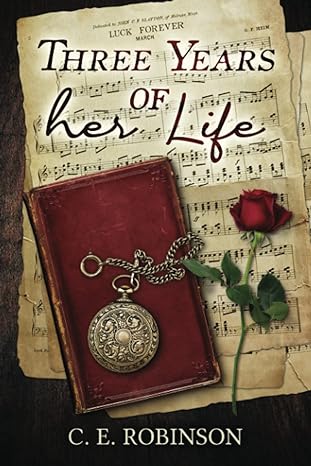
This debut novel is an indelible portrait of family love, trust, commitment, and unrelenting prejudice. A stirring tale that rides the line between historical fiction and romance., inspired by a famous musician’s hidden secret in Germany.
Three Years of Her Life, set in New England and Central Europe, is similar in concern and significant issues to bestselling America epic books of the Great Depression, The Great War and the U.S. South. People and places focused, the novel’s heartwarming and heart wrenching themes mark history in unsettled times.
My Review
The first thing that struck me about Three Years of Her Life, by C.E.Robinson, was the gorgeous cover. I was fortunate to have a print copy gifted to me by the author, which is always a treat. Most of the historical romance I read are westerns, but when well written, I have a taste for it at times. As her debut novel, C.E. Robinson has done a smashing job with this one. This novel was engaging, never losing my interest and I enjoyed every turn of the page. I found myself creating extra opportunities to read this print edition.
A romance set in the 1960s, ventures deeper into the past as Elizabeth and Erik delve into the hidden secrets of Elizabeth’s grandfather, to unravel a mystery dating back to Nazi Germany. What they uncover could unravel her whole family as old predjudices simmer just below the surface, and sometimes boil over into the public eye. Then the past reaches out to touch them both, when Erik is detained in East Germany as they raise the Berlin Wall, and Elizabeth, pregnant with their first child, journeys to West Germany to somehow bring him home. A tale of true love of the purest kind, as Elizabeth does what she must to keep the man she loves.
Mystery, intrigue and danger. Three Years of Her Life has all that and more. This historical romance is thoroughly engaging. I give it five quills.
______________________________________________
Kaye Lynne Booth does honest book reviews on Writing to be Read in exchange for ARCs. Have a book you’d like reviewed? You can request a review here.
Share this:

Book Review: Yes, And
Posted: November 3, 2023 Filed under: Audiobook Review, Books, Commercial Fiction, Drama, Review | Tags: Ageing, Bethany Luhrs, Book Review, Cynthia Gunderson, Humor, Writing to be Read, Yes. And 2 CommentsAbout the Book
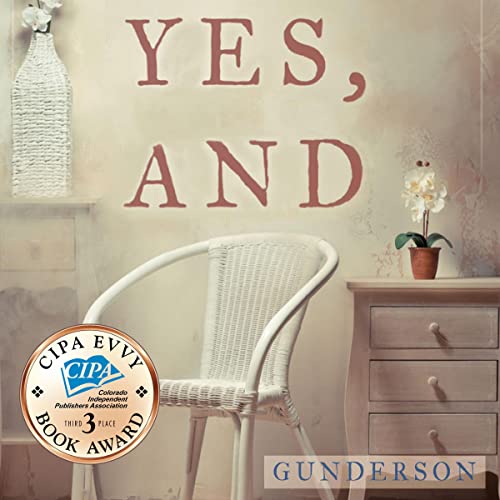
College student Toby and sharp 87-year-old Jo may sound like an unlikely pair, but the neighbors find unexpected friendship when they take on Jo’s money-hungry nursing aides and work to uncover Toby’s purpose. Together, they embark on madcap adventures and explore life’s mysteries in this touching, humorous tale that’s perfect for fans of Fredrik Backman.
My Review
I listened to the audio book, Yes, And, by Cynthia Gunderson and narrated by Bethany Luhrs. This story was different, outside of my usual reading or listening fare, but the title intrigued me, and so I picked it up with a Chirp deal. It is a heart warming, feel good story in many ways, yet it is not all smiles. It focuses on realistic situations and events that are relatable.
Jo is an older woman whose mind may be slipping some, but has it together most of the time. She believes her caregivers are stealing from her, but it is written off as paranoia, or forgetfulness by most. When young Toby moves in next door, an unlikely friendship forms as they team up to find out if Jo is right. This is a story about finding our own path in life and respecting the paths of others.
This is a touching tale of acceptance and caring, proving that everybody needs somebody. Gunderson’s dialog is spot on, and her characters are realistic and likeable. In fact, I kind of fell in love with them, just a little.
Bethany Luhrs does a nice job of differentiating characters, and somehow manages to do an eighty-something woman and a twenty-one year old man with equal conviction. Kudos on a story well read.
This book had the potential to be a really great story, with an ‘everybody needs somebody’ theme. Unfortunately, there was not enough foreshadowing, so often twists in the story came as a bigger surprise than they should have been and this reader felt like something important was missed, so I can only give it four quills.

_____________________________________________________
Kaye Lynne Booth does honest book reviews on Writing to be Read in exchange for ARCs. Have a book you’d like reviewed? You can request a review here.
Share this:

POP—Is the Marvel Cinematic Universe Dying?
Posted: November 1, 2023 Filed under: Uncategorized 5 Comments
Exploring popular culture with both feet planted on terra firma. This is your monthly POP—
Is the Marvel Cinematic Universe Dying?
by Jeff Bowles
The original Iron Man movie launched the Marvel Cinematic Universe back in 2008, and perhaps nobody was more surprised than Marvel at how gigantic a success both that film and its subsequent sequels and spinoffs would become. Not long before Iron Man landed in theaters, the president of Marvel Studios, Kevin Feige, along with a squad of very talented, very shrewd writers and filmmakers, began to map out and then to successfully execute something never seen before in the movie business: a complete, functional shared universe, one that maximizes profits by intermingling a whole host of extremely popular characters.
Grossing just shy of $30 billion as of the time of this writing (and yes, that’s billion with a b), the thirty-one movies and nine Disney+ television series that make up the MCU have certainly set Hollywood on fire. So far, the universe is composed of five “Phases” that have each presented unique storytelling opportunities, including larger story arcs that have taken time and more than a few entries to complete, not unlike the semi-serialized storytelling made popular by comic book publishers decades ago.

You know, comic book publishers like Marvel and DC, the latter of which has its own cinematic universe, albeit it a somewhat smaller and less profitable one. The truth is, and it’s clear few in Hollywood understood this before it smacked them in the face, Marvel Studios is a bit of a ringer when it comes to the game of entertainment profit-making. It’s accurate to say the company has many decades of experience publishing lucrative, popular, larger-than life stories with hundreds of disparate and often unaffiliated characters thrown into the mix. Marvel’s roster of colorful heroes and villains is deeper than most non-fans know. Their origin stories have origin stories. As the old man might say, they could do this all day.
Except that maybe they can’t.
You see, due to unforeseen factors here in the second decade of Marvel Studios’ victory lap of a success story, the MCU, Marvel’s parent company Disney, and the entire Hollywood system have stumbled into something pretty alarming: fewer people are paying to see their movies and shows.
Why is that? There are a number of factors, in fact. This is not a simple issue. The big causes, of course, are the growing diversity and wealth of competing entertainment options, the great stagnation of the American middle class (vs. the price-gouging tendencies theaters, streamers, and other film and television providers have developed as inflation continues to rise), an unplanned writers and actors strike, the rise of AI, adjacent culture wars aplenty, and perhaps most significantly of all, the COVID pandemic, which couldn’t have been predicted even if the Hollywood elite were in fact unanimously psychic.
And they aren’t. Here’s the proof. It does seem as though Marvel is in a bit of trouble right now, which is a phrase both ridiculous and insane to have to write (see that $30 billion figure). There is no real reason the MCU shouldn’t continue accumulating monumental accomplishments, and you know, lesser failures, which are slightly more numerous than ‘true believer’ fans want to admit.
It’s correct both diehard and casual audiences are less over-the-moon for Marvel movies than they were ten years ago. That’s simply the nature of the entertainment beast. Here today, dollar bin tomorrow. However, Marvel as a corporate storytelling entity has traditionally proved immune to this effect, due to the fact that a Marvel Comics fan is not built like other fans. These people—my people—have weathered so much unpopularity in their lives it forms part of their identities. We were born in cultural squalor, birthed into dingy little comic shops no non-nerd dared enter, raised and bred on stories with so much impact, so much color, so much action and fun the movies and shows and other forms of storytelling all the “normies” love seem just, you know, like, lame by comparison.
The truth is that when a good Marvel movie comes out—and I do mean a good one—Marvel fans almost always show up. This thing, this loyalty, it makes for what the analysts call a core audience, a big one, which is something every single producer in Hollywood would sell her/his/their left arm and a single thumb to snag. The bigger problem is quality. This is Marvel’s smorgasbord to ruin, and every observant fan knows it. Because while those afore-mentioned unforeseen factors have certainly had a major impact, Marvel itself could lose the whole thing simply by producing, well, less than stellar work.
Now, as far as comic book movie quality goes, casual audiences typically like but don’t always love Marvel. For every Avengers: Endgame or Captain America: The Winter Soldier there’s a Thor: Love and Thunder or a Secret Invasion (the most recent completed MCU series available on Disney+, but come on, if you weren’t a little disappointed by it, you were probably watching Loki instead). The first three phases of movies were average to great, but after Endgame, most fans agree, quality has been on the decline. It turns out Iron Man’s birth in 2008 may have been just as consequential as his … you know what? I won’t spoil Endgame if you haven’t seen it, but for crying out loud, it’s a four-year-old movie. Catch up already!
Overall quality has slipped for two reasons, as I see it, and in retrospect, each of those reasons is more short-sighted than the last. Although Kevin Feige and Marvel meticulously planned out the first ten years or so of their behemoth mad-science experiment, they don’t seem to have done so hot crafting a second. The two Avengers movies that end the Infinity Saga (Infinity War and Endgame) must’ve been monumental in their undertaking. It’s no wonder, is it, that those responsible felt the crunch a little too keenly to keep their eyes on the long game?
To a certain degree, and more than once, narrative threads have been buried in this latest batch of Marvel content. Concinnity and follow-through have become an issue, as plot points plumet more than drop and wayward character cameos wither on the vine. I mean, how and why is Harry Styles Thanos’ brother? How and why, Marvel?! Just be patient? We’ll find out when we find out? Oh, okay. Asking for a friend.
Something else Feige neglected, the power of corporate mergers. It’s well known that when Disney bought Marvel back in 2009, the House of Mouse was betting big and hoping it’d pay off bigger. It did, but Disney also bought a couple other major entertainment entities at that time, such as Lucasfilm, National Geographic, and 20th Century Fox.
The acquisition of Fox had big implications for Marvel. In addition to producing new Star Wars movies and an endless, I don’t know, ice flow of Titanic documentaries, Disney also arranged for the film rights reunion of Marvel with a few key characters the comic company sold off in the 1990s to bail itself out from bankruptcy. Namely, The X-Men and the Fantastic Four, but Kevin Feige himself also made a deal with Sony Pictures, the owners of Spider-Man and all his corresponding characters, to feature the highflying web-head in some key MCU films, a huge boon if there ever was one. The Spider-Man movies have been moving financial mountains for Sony since 2002. So too have the X-Men films for Fox, since 2000 in fact, and do not doubt Feige is planning a major MCU homecoming for everyone’s favorite irascible mutants. When the time is right, of course.

Unfortunately, adding more toys to the toy box has tended to slow down and even halt some parts of Marvel’s famously rocksteady product pipeline. MCU filmmakers have often been forced to readjust and change things up, sometimes right in the middle of production. That sort of thing is typically not good for the quality control process, and sometimes the end results have felt rushed. As all the gears set themselves in motion in what became the Infinity Saga, you could almost feel the momentum gathering from your theater seat. Not so with this new “Multiverse Saga”, which just hasn’t ever managed to get airborne, narratively speaking.
Ironically, the last internal hurdle Marvel has had to face is their own parent company. For all the love (and money) with which Disney has showered the little comic company that could, bare economics and the necessity and nuisance of corporate expansion have forced Disney to place some demands on Marvel that clearly have been difficult to meet. First off, Disney compelled Marvel to expand their brand from a shared movie universe to a shared movie and TV free-for-all, requiring fans to subscribe to streaming or miss out, all for the glory of Disney+, which initially seemed like a smash success, but which has been struggling of late. Disney+ isn’t a bad service as such, but their initial monthly consumer asking price was far too low to maintain for long, and their original programming has been … you know … The Book of Boba Fett and Hocus Pocus 2.
On top of that, Bob Iger, the once and future Disney CEO, has seemed eager to shake things up within his company and all its subsidiaries, once again owing to the fact that fewer people are going to theaters to see his stuff. Iger and Feige are in a tight spot, and it’d be easy to conclude Bob Iger would sell Marvel and Lucasfilm and all his company’s many acquired Fox properties if it meant saving the mouse side of the business for good. As it was in Uncle Walt’s day, Disney is in the movie and theme park business, and if business isn’t booming, neither, I suspect, will be Thor’s raging thunder. So to speak. Sorry, bad Marvel puns are too easy to hammer out. Ugh…
The funny thing is, Disney has recently added huge Marvel expansions to both its California and Florida resorts, and they plan on building a third in Hong Kong. Avengers Campus, as it’s called, features a life-size Avengers headquarters, several state-of-the-art rides, and more food, beverage, and merchandise options than you can shake Cap’s shield at. But will it be enough? Because everyone knows people are visiting theme parks less, too.
And maybe that’s the real problem. Everybody—and I do mean everybody—does seem much less enthused about spending money on this stuff than they were a decade ago. Can you blame us, Marvel? The world has become a nerve-racking place. Mass shootings, international wars, global pandemics. I’d sure love there to be an Avengers in real life, but I’m not so sure I want to waste my hard-earned cash on their every big-screen adventure. Times are getting tougher, entertainment options are expanding, and truth be told, Marvel kind of overdid it.
Between Feige and Iger, no superhero prospect need go undeveloped. If it sells, let it sell, if it doesn’t, well, we have an answer for that, too. These knuckleheads (said with all respect due) flooded the marketplace with comic-book-isms galore. Some people eat this stuff up, but many do not. What do you say to folks who prefer more grounded ‘adult’ cinema? Drama? Romance? Maybe even some decent high-brow comedy? Sorry, sir or madam and any accompanying friends and dependents, but all you can see at the movie house tonight is Marvel, Marvel, Marvel, and maybe one Batman flick. No, most people who don’t have Spider-Man’s responsibility credo tattooed on their souls won’t pay for that or celebrate it in any way. So, Marvel overdid it. So what? Isn’t that what Hollywood does? Run things into the ground until they’re unpopular, then find some other poor unsuspecting trends to acquire and exploit?
Traditionally, yes, that’s how it’s always seemed to us, watching as we’ve been from our stadium theater seating. There’s really no need to expect any less today than we expected twenty or forty or even sixty years ago. Is the MCU dying? I think it’s too soon to start the funeral march, but if Disney ever seriously considers selling Marvel—and to be clear, at present, there’s no indication this will happen anytime soon—the MCU will essentially be back to square one. New funding may mean new projects, but not if audiences have stopped going to see them.
Money talks, just as it’s always been, and moviegoers vote with their wallets. The good news is that Marvel’s history and legacy are rock solid. They really are the House of Ideas. They’ve told so many stories throughout the decades, both good and bad, it’d make Stephen King blush. Admittedly, publishing comics and producing big-budget blockbusters are two very different things, but with a bit of good luck and good public sentiment, anything and everything is sustainable. Am I right?
To be perfectly blunt, I’m not so sure Marvel can die. Like Blade, they’re the daywalker that just keeps coming. Like Pheonix, they always seem to rise from the ashes. Like Scarlett Witch, they’re absolutely crazy to make an impact. And make no mistake about it, if Marvel could die, if that were even possible, it’d be a noble, glorious death, just like… nope, still won’t spoil it for you. All I can say is this: stop seeing those Marvel movies if you want to find out just how tenuous the studio’s hold on mass-market media really is. I mean, but don’t, because I love this stuff. Sorry, I just do.
See you next month. Same POP time, same POP channel. Have a wonderful November, everyone!

Jeff Bowles is a science fiction and horror writer from the mountains of Colorado. The best of his outrageous and imaginative work can be found in Resurrection Mixtape, Love/Madness/Demon, God’s Body: Book One – The Fall, Godling and Other Paint Stories, Fear and Loathing in Las Cruces, and Brave New Multiverse. He has published work in magazines and anthologies like PodCastle, Tales from the Canyons of the Damned, the Threepenny Review, and Dark Moon Digest. Jeff earned his Master of Fine Arts degree in creative writing at Western State Colorado University. He currently lives in the high-altitude Pikes Peak region, where he dreams strange dreams and spends far too much time under the stars.
_____________________________________________________
Want to be sure not to miss any “Pop with Jeff Bowles”? Subscribe to Writing to be Read for e-mail notifications whenever new content is posted or follow WtbR on WordPress. If you found it entertaining, please share.
Share this:

WordCrafter News: Giveaway Winners, A Halloween Book Event, NaNoWriMo and a New Blog Series
Posted: October 30, 2023 Filed under: Anthology, Blog Tour, Book Event, Books, Dark Fantasy, Dark Humor, Fiction, Ghost Stories, Giveaways, Horror, NaNoWriMo, Paranormal, Science Fiction, Short Fiction, Speculative Fiction, Stories, WordCrafter Book Blog Tours, WordCrafter News, WordCrafter Press | Tags: Black Cauldron Book Event, Giveaway Winners, Midnight Roost, NaNoWriMo, Sarah, WordCrafter Book Blog Tours, WordCrafter News, WordCrafter Press 8 Comments
Wrapping up the WordCrafter Midnight Roost Book Blog Tour
We had a great tour for Midnight Roost and many of you visited one or more tour stops and commented, for a chance to win a free digital copy of Midnight Roost. We were giving away three copies for this tour, and all that’s left to do now is to give you the winners. So, without further ado…
(Drumroll please.)
And the winners are…
- BeetleyPete
- Vera Day
- Lauren Scott
If your name appears on the above list, please contact me at KLBWordCrafter@gmail.com to claim your free digital copy of Midnight Roost: Weird and Creepy Stories.
In Case You Missed the Tour
Midnight Roost is a truly creepy anthology from 20 talented authors that you won’t want to miss. But, if you missed the tour, you can still get a copy here: https://books2read.com/u/318L0l
About Midnight Roost

20 authors bring your nightmares to life in 23 stories of ghosts, paranormal phenomenon, and the horror from the dark crevasses of their minds. Stories of stalkers, both human and supernatural, possession and occult rituals, alien visitations of the strange kind, and ghostly tales that will give you goosebumps. These are the tales that will make you fear the dark. Read them at the Midnight Roost… if you dare.
Halloween Book Event

Tomorrow is Halloween. My favorite holiday. To celebrate, WordCrafter is cohosting the author takeover during Sonoran Dawn’s Black Cauldron All Hallow’s Eve Book Event all Halloween day. Join us for promos, games, and giveaways, Halloween music and a whole lot more. Sign up and join in at the link below.
https://www.facebook.com/events/876710947358939/
Author takeover spots are available. If interested in promoting your books, artwork, or other creative projects, contact me at KLBWordCrafter@gmail.com and put Author Takeover in the subject line.
November NaNoWriMo
I’m so excited about participating in National Novel Writing Month this year because I’m itching to delve into Sarah. I’m still not prolific enough to think I’ll write the whole novel in a month, but I know from last year, with The Rock Star & The Outlaw, that participating in NaNoWriMo can offer one heck of a start.
For those who don’t know, Sarah is book 2 in the Women in the West Adventure series. Last January I ran a Kickstarter campaign for book 1, Delilah. I plan to run another Kickstarter campaign for Sarah this coming January, so it is time to write the book. In preparation, I’ve done my research and have a working outline ready. I’ve already had a lot of fun fleshing out the two supporting characters that backers got to name from Delilah’s campaign, Lillian Alura Bennett, and Owoz Crebo. One historical female character which will make an appearance in Sarah, which is a trademark of the series, is Kate Elder, a.k.a. Big Nose Kate, Doc Holiday’s infamous companion. So, I have everything I need at the starting gate, and I’m just waiting for the starting gate to open on November 1st.
New Blog Series Starting in November

I’m so pleased to be able to make this particular announcement. The first Wednesday in November, Jeff Bowles will be returning to the blog with a new blog series about pop culture, “Pop with Jeff Bowles”. He’ll be talking about the many areas of pop culture: comics and comic hero movies, video games, television, music, and more. Drop by Writing to be Read the first Wednesday of each month and check it out.
Note: Also in November and December, you may notice some extra reviews coming out on Saturdays as I try and get in all of my 2023 reads, so I can start fresh in 2024. For requested reviews, I like to post in a timely manner, and I don’t want to wait into the new year to post, as I’ve probably already passed their release date due to my back log. So, if you have requested a review and sent me an ARC copy this year, be watching, because they all should be coming up.
____________________________________________
Want exclusive content? Join Kaye Lynne Booth & WordCrafter Press Readers’ Group for WordCrafter Press book & event news, including the awesome releases of author Kaye Lynne Booth. She won’t flood your inbox, she NEVER sells her list, and you might get a freebie occasionally. Get a free digital copy of her short story collection, Last Call and Other Short Fiction, just for joining.
Share this:

Book Review: The Hedge Witch & The Musical Poet
Posted: October 28, 2023 Filed under: Book Review, Books, Fairy Tales, Fantasy, Flash Fiction, Poetry, Review | Tags: Book Review, Flash Fiction, M J Mallon, Poetry, The Hedge Witch & The Musical Poet, Writing to be Read 6 CommentsAbout the Book

The Hedge Witch & The Musical Poet is a collection of poetry and flash fiction celebrating the beautiful vulnerability of the forest kingdom. It begins with the poetic tale of the kind-hearted Hedge Witch, Fern, who discovers an injured stranger in desperate need of her woodland spells and magic.
The sweet pairing learn from each other and through Fern’s guidance, Devin embraces the power of magic to leave behind his troubled past to become The Musical Poet.
Purchase Link: https://www.amazon.com/Hedge-Witch-Musical-Poet-Fiction-ebook/dp/B0B56G2GHT/
My Review
The Hedge Witch & The Musical Poet, by M J Mallon is a lovely poetic collection which forms a lyrical tale of a man found in the forest and transformed, with the help of the Hedge Witch, into the poet the forest needs him to be. This enchanting tale unravels through a combination of flash fiction and poetry which explores magical realms and celebrates the forest. The playful, happy tone makes this tale the perfect short read for a palate cleanser after a more serious story where the fate of the world is at stake, or following a deep dive into the human psyche. It’s also a light story which can be consumed within a half hour or so, if you’ve got some time to kill. I used it as both, since I read it twice.
Delightfully entertaining, I give The Hedge Witch & The Musical Poet five quills.
________________________________________________________________
Kaye Lynne Booth does honest book reviews on Writing to be Read in exchange for ARCs. Have a book you’d like reviewed? You can request a review here.
Share this:

Book Review: Snowman Shivers & Prospero’s Ghost
Posted: October 27, 2023 Filed under: Book Review, Books, Dark Humor, Fiction, Ghost Stories, Humor, Short Fiction, Stories | Tags: Book Review, Dark Humor, Free Books, Kimberly Footit, Mark Leslie, Prospero's Ghost, Short Fiction, Snowman Shivers, Writing to be Read 4 CommentsAbout Snowman Shivers
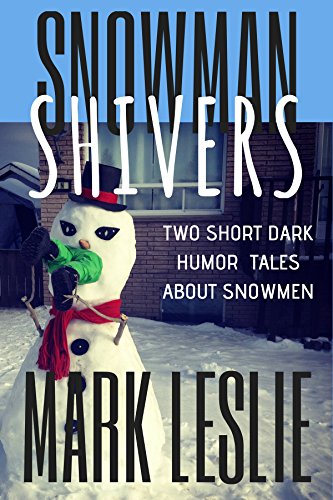
You might never build another snowman again!
If you ever cast an uncomfortable glance over your shoulder when passing the silent snowy sentinels that stand looking at you as you pass on the icy sidewalk, if you’ve ever questioned what might really happen if the old silk hat placed on Frosty the Snowman’s head was truly magic, then these two dark humor snowman tales by Mark Leslie are for you.
Amazon Purchase Link: https://www.amazon.com/Snowman-Shivers-Humor-Tales-Snowmen-ebook/dp/B006KF67GK/
My Review
Did you ever wonder what really happens when snowmen really come to life. Snowman Shivers, by Mark Leslie offers two darkly humorous that may send shivers up your spine, or at least evoke a few chuckles, and I guaruntee you will never think about snowmen in the same way.
About Prospero’s Ghost
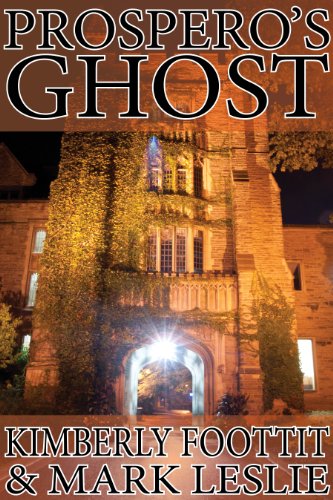
Decades after his death, renowned Shakespearean scholar Dr. Marshall Emerson returns from the grave to seek vengeance on those who dared disturb his fitful sleep.
Emerson, whose specialty was the bard’s The Tempest and was nicknamed “Professor Prospero” could never be spotted walking the grounds of McMaster University without the precious 1861 folio edition of Shakespeare’s works clutched in his hands.
When McMaster University library and bookstore staff begin producing replica versions of his original text on a newly acquired Espresso Book Machine, Emerson’s ghost returns, intent to put a stop to this “desecration” of his beloved text.
Amazon Purchase Link: https://www.amazon.com/Prosperos-Ghost-Cautionary-Short-Story-ebook/dp/B008BC28NQ/
My Review
I said it before, and I will say it again. I’m just a sucker for a good ghost story. Prospero’s Ghost, by Kimberly Footit & Mark Leslie is delightful short story of haunting porportions. It seems a love of literature A tale of a haunted campus library that can be read in one sitting, this story is for ghost lovers everywhere.
Get Them Free
You can find both of these books in the “FREE Reads” on Mark Leslie’s Books2Read author page here: https://books2read.com/markleslie. (You can find them both on Amazon, too, but Prospero’s Ghost is .99 cents, instead of free.)
_________________________________________________
Kaye Lynne Booth does honest book reviews on Writing to be Read in exchange for ARCs. Have a book you’d like reviewed? You can request a review here.
Share this:

Dark Origins – A Journal of the Plague Year by Daniel Defoe based on the Great Plague of London, 1665 #DarkOrigins #readingcommunity #history
Posted: October 25, 2023 Filed under: Books, Dark Origins, Fiction, Historical Fiction | Tags: A Journal of the Plague Year, BookReview, Daniel Defoe, Dark Origins, Robbie Cheadle, Writing to be Read 28 Comments
Overview

A Journal of the Plague Year by Daniel Defoe is a most interesting book particularly in light of the recent Covid-19 pandemic that swept the world.
It is written in the first-person as a first hand account of the protagonist’s, identified as H.F. and described as an unmarried saddler, experiences during the great plague that afflicted London in 1665. The story is fiction but it contains detailed statistics of the death bills as the plague started to take hold and over the months of its duration, charts, data and extracts from government documents which make it read like the non-fictional personal diary of someone who was recording the facts and figures of the time.
When the plague first comes to the city, it is contained to certain parishes and is staved off by the colder winter weather, but when late spring and summer arrive, the numbers of the infected and the dead increase significantly. The protagonist is aware that the rich are leaving the city, but he is very religious and believes that God wants him to stay.
He describes how the poor are tricked into purchasing preventative medicines and charms by quack doctors, fortune tellers, and other tricksters. It is interesting that he picks this thread up again later in the book and states that all of these ‘pretenders’ succumb to the plague.
H.F. describes in detail the horror of the plague. How infected people go mad and run naked through the streets until they drop down dead. He describes how the authorities implement a system of the shutting up of houses in terms of which when any member of a household was identified as having being infected, the entire household were locked up in the house and a watchman placed outside the door so they could not escape. The protagonist is not in favour of this system as it results in all the inhabitants of the household becoming infected and dying of the plague. It also results in a lot of desperate bids to escape shut up houses that resulted in the plague spreading further. Interestingly enough, a similar attempt to keep people in their homes during the Covid-19 pandemic also didn’t achieve the expected success and resulted in a huge amount of resistance by people.
H.F. depicts a governing structure in the city that is sympathetic to the situation of the poor and ensures that people have access to bread at a reasonable price throughout the duration of the plague. He goes into a lot of detail about the price of bread versus the weight of the loaves before the plague. The city is kept free of bodies which are collected at night and taken to mass graves.
The protagonist also goes into a lot of detail about the effect of the plague on the people of the city. The grief experienced by survivors who have lost their entire families and who follow their dead loved ones and throw themselves into the mass graves and other ‘infected’ people who effectively kill themselves because of the pain the disease is inflicting on them.
The narrator tells a lengthily story about three brothers who leave the city to escape the plague and meet up with a small band of other people also leaving. The difficulties experienced by Londoners who left the city and attempted to live in the countryside while the plague raged are detailed. The suspicion and lack of welcome by the rural villages and town who do not wish to accept any Londoners into their areas for fear of their carrying the plague, and the lack of shelter, food, and other amenities. The three brothers and their band manage to make a success of it with some help from a local wealthy landowner. They actually outlive a lot of the villagers when the plague does spread out of London and into the surrounding countryside.
Reading this book after the Covid-19 pandemic was fascinating. The parallels between this event more than 350 years ago in London and the experiences and reactions of people during the time of the pandemic are have a dreadful similarity. People turn to religion and to quack remedies, people resist the attempts by authorities to contain the disease by findings ways to escape from their homes, people suffer depression and loss.
This book is certainly not for everyone as it is filled with facts and figures, but I found it very interesting and appreciated the historical information shared.
The Great Plague of 1665 – 1666

The plague that broke out in London in 1665 was the worst outbreak to effect England since the black death of 1348. It is believed at approximately 15% of the population of London died. The recorded deaths were 68,596 but it is believed at least 100,000 people died. The population of the city in 1665 was 460,000.
The plague was carried by fleas on rats and they were attracted to the poorer parts of the city where rubbish and waste filled the streets.
There were three types of plague:
- Bubonic plague that caused swellings (buboes) in the lymph nodes found in the armpits, groin and neck. These sufferers experienced headaches, vomiting and fever. Sufferers had a 30% chance of dying within two weeks.
- Pneumonic plague which attacked the lungs and spread to other people through coughing and sneezing; and
- Septicaemic plague which occurred when the bacteria entered the blood. The chances of survival of this type of plague were very slim.

The treatments and methods of prevention were privative. Patients were bled with leeches. The air was cleansed using smoke and heat as people thought bad air caused the distemper. Children were encouraged to smoke to ward off bad air. Some people sniffed a sponge soaked in vinegar.
When the winter arrived, the plague started to decrease. Scientists believe this was due to people developing a stronger immunity to the disease rather than the great fire of London on 2 September 1666, making any notable impact through the destruction of houses within the walls of the city and on the banks of the River Thames. Many of the plague deaths had occurred in the poorest parishes outside the city walls
On The Plague Year: London, 1665
By DM Lovic
In London Town, the children played, the kittens purred, the flowers bloomed,
The adults laughed, the horses neighed, for no one knew they all were doomed.
Yes, all within the world was right when Death sneaked into town that night.
Beneath a haunted summer moon, upon a flute that whistled flat,
He played a slow, hypnotic tune that summoned every flea and rat
Who came from cellar, slum and glade to march the Devil’s plague parade.
Searching streets from side to side, the weakest souls with sword he struck,
Then left a token on their hide to signify the loss of luck.
For no one touched would e’er be saved, ‘twas six mere hours from spot to grave.
The wealthy fled to distant hills, doors were bolted, shutters locked,
But none could stop the morbid chills when death stood on the stoop and knocked.
Inside, they wept and fought with fate but, patiently, he’d smile and wait.
Sickness turned into despair, howls of terror, dreadful shrieks,
They echoed through the London air for weeks and weeks and weeks.
But panicked cries and wailing tears were only music to his ears.
One ghastly year that madness reigned and when Death fin’ly had withdrawn,
The price was tallied and explained: one hundred thousand souls were gone.
And London Town, in stark reverse, returned to life without the curse.
On city streets, the children played, the kittens purred, the flowers bloomed,
The adults laughed, the horses neighed, for every soul knew he was doomed.
From: The Poetry Nook
About Roberta Eaton Cheadle

Award-winning, bestselling author, Roberta Eaton Cheadle, is a South African writer and poet specialising in historical, paranormal, and horror novels and short stories. She is an avid reader in these genres and her writing has been influenced by famous authors including Bram Stoker, Edgar Allan Poe, Amor Towles, Stephen Crane, Enrich Maria Remarque, George Orwell, Stephen King, and Colleen McCullough.
Roberta has two published novels and has horror, paranormal, and fantasy short stories included in several anthologies. She is also a contributor to the Ask the Authors 2022 (WordCrafter Writing Reference series).
Roberta also has thirteen children’s books and two poetry books published under the name of Robbie Cheadle, and has poems and short stories featured in several anthologies under this name.
Roberta’s blog features discussions about classic books, book reviews, poetry, and photography. https://roberta-writes.com/.
Find Roberta Eaton Cheadle
Blog: https://wordpress.com/view/robertawrites235681907.wordpress.com
Twitter: https://twitter.com/RobertaEaton17
Facebook: https://www.facebook.com/robertawrites
Amazon: https://www.amazon.com/Roberta-Eaton-Cheadle/e/B08RSNJQZ5
_____________________________________________________________________________________________
Want to be sure not to miss any of Robbie’s “Dark Origins” segments? Subscribe to Writing to be Read for e-mail notifications whenever new content is posted or follow WtbR on WordPress. If you found it interesting or entertaining, please share.
Share this:

Meet the authors of “Midnight Roost”: Today, Joseph Carrabis
Posted: October 23, 2023 Filed under: Anthology, Book Release, Books, Dark Fantasy, Fairy Tales, Fiction, Ghost Stories, Horror, Paranormal, Science Fiction, Short Fiction, Speculative Fiction, Stories, WordCrafter Press | Tags: "Binky", Antholoy, Dark fiction, horror, Joseph Carrabis, Midnight Roost, WordCrafter Press Leave a comment
Purchase Link: https://books2read.com/MidnightRoost
Share this:

Final Stop on the Wordcrafter “Midnight Roost” Book Blog Tour
Posted: October 23, 2023 Filed under: Anthology, Audio Excerpt, Blog Tour, Book Promotion, Book Release, Books, Dark Fantasy, Dark Humor, Fiction, Ghost Stories, Giveaways, Horror, Paranormal, Science Fiction, Short Fiction, Speculative Fiction, Stories, WordCrafter Book Blog Tours, WordCrafter Press | Tags: Anthology, C.R. Johansson, Dark fiction, Denise Aparo, Kaye Lynne Booth, Midnight Roost, Rebecca M. Senese, Robert Kostanczuk, WordCrafter Book Blog Tours, WordCrafter Press, Zack Ellafy 9 Comments
It’s the final stop on the WordCrafter Midnight Roost Book Blog Tour and today we’re going to wrap things up with a reading by contributing author Denise Aparo from her haunting story, “The Pines”,and some excerpts from stories from authors who weren’t able to participate in the tour. So, kick back and enjoy the reading and peruse the excerpts, meet the authors and join in the discussion by leaving a comment and earn a chance at a free digital copy of Midnight Roost.
Meet Author Denise Aparo
Denise Aparo is a new WordCrafter Press author, so I’m just getting to know a little ab out her, too. Her story, “The Pines” wasn’t the winning story in the short fiction contest, but I still felt that its dark parnormal feel would fit into the anthology. Now that the book is compiled and I can see the finished product, I think I made the right decision. It is a perfect addition to the Midnight Roost collection. Listen to the reading below and see if you don’t agree.
Reading from “The Pines”
About Denise Aparo
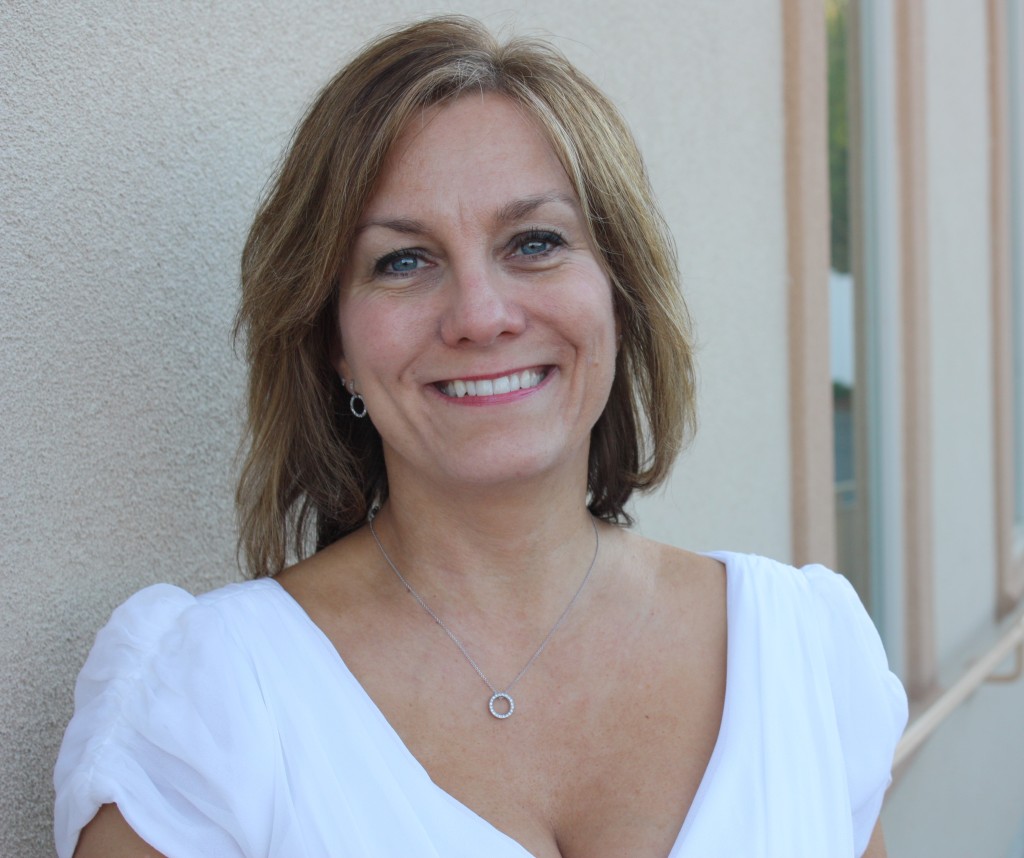
Denise Aparo is a New England native, born and raised in the clockmaking city of Bristol, Connecticut. She lives with her husband, Joe, and they have five grandchildren. She is also a freelance writer who spends her time working on her novel and writing short stories. She also spends her time gardening, crafting, and crocheting.
Denise likes to write Paranormal Fiction, genre of Historical Fantasy. She recently completed her first novel, Crossbows. She has a Masters of Arts in English and a Fine Arts/Creative Writing with concentration in Fiction from Southern New Hampshire University (SNHU) and a member of Sigma Tau Delta, International English Honor Society, and The National Society of Leadership and Success, Sigma Alpha Pi, with SNHU.
She is a member of the Connecticut Authors and Publishers Association (CAPA) and the author of a new WordPress writing blog, The Write Voice, The Write Voice | The write voice at the write time, a blog that boasts, “Like multiple genres, there are many cultures – each with an individual voice.” Denise is a new addition to the WordCrafter Press authors.
____________________________________________________
Excerpt from “Melina” by Kaye Lynne Booth

Excerpt from “She Shed Galleria” by C.R. Johansson

Excerpt from “House on the Plains” by Zack Ellafy

Excerpt from “Take Two” by Rebecca M. Senese

Excerpt from “A Visitor Comes to the Window” by Robert Kostanczuk

That wraps up today’s stop, and the whole tour. I hope you enjoyed meeting Denise and the excerpts from the other stories. Be sure to visit any stops you missed through the links in the schedule below for more chances to win a free digital copy of Midnight Roost. I will announce the winners in next Monday’s “WordCrafter News” post, here on “Writing to be Read”
Giveaway
A chance to win a free digital copy of Midnight Roost at every stop. Just leave a comment to show your support for the tour, the anthology, and all of the fantastic authors.
Tour Schedule
Monday – October 16 – Opening Day –Isabele Grey (Interview & Reading) & Joseph Carrabis (Reading) – Writing to be Read
Tuesday – October 17 – M J Mallon (Reading) & Christa Planko (Interview & Guest Post)– Undawnted
Wednesday – October 18 – Chris Barili (Guest Post) & Paul Kane (Guest Post) – Patty’s Worlds
Thursday – October 19 – Julie Jones (Reading) & Keith Hoskins (Guest Post) – Robbie’s Inspiration
Friday – October 20 – Michaele Jordan (Reading) & Mario Acevedo (Guest Post) – Writing to be Read
Saturday – October 21 – Patty Fletcher (Guest Post) & DL Mullen (Guest Post & Video) – Roberta Writes
Sunday – October 22 – Sonia Pipkin (Guest Post) & Roberta Eaton Cheadle (Reading) – Kyrosmagica Publishing
Monday – October 23 – Closing Post –Denise Aparo (Reading) & excerpts from other stories – Writing to be Read
About Midnight Roost: Weird and Creepy Stories
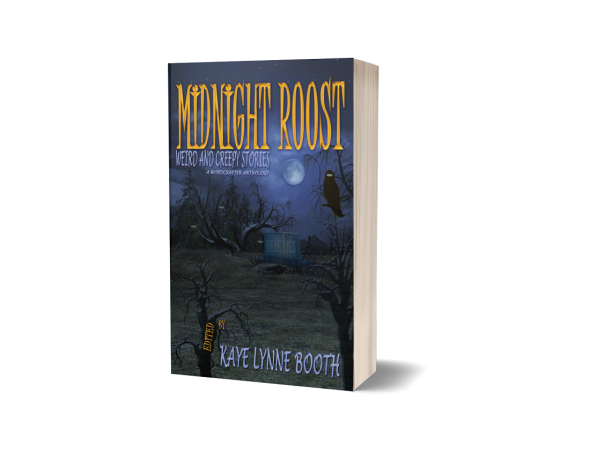
20 authors bring your nightmares to life in 23 stories of ghosts, paranormal phenomenon, and the horror from the dark crevasses of their minds. Stories of stalkers, both human and supernatural, possession and occult rituals, alien visitations of the strange kind, and ghostly tales that will give you goosebumps. These are the tales that will make you fear the dark. Read them at the Midnight Roost… if you dare.
Purchase Link: https://books2read.com/u/318L0l
________________________________________________
Book your WordCrafter Book Blog Tour today!




















Writer’s Corner: The Value of Going Wide & Books2Read Links
Posted: November 6, 2023 | Author: kayelynnebooth | Filed under: Book Sales, Commentary, Indie Publishing, Publishing, Self-Publishing, Writer's Corner | Tags: Books2Read, Publishing Wide, Writer's Corner, Writing to be Read | 14 CommentsWhy Publish Wide?
We’ve all heard of Amazon. They are the single largest book distributors out there, but they aren’t just a book distributor, but they require exclusivity and they make authors jump through hoops for them to give us a second glance. Now, I admit, I have a problem with going exclusive with Amazon KU, although I know there are may authors out there who do quite well. But Amazon also has a habit of cancelling author accounts for percieved infractions to their Terms of Service. So, just stop and think for a moment what would happen if Amazon were to decide that something you do violates their TOS and cancels your account. You can appeal the decision, and you might even win, but in the meantime, your books are not available anywhere and you’re loosing money, or at least the potential for money.
Most of us have heard of Barnes & Noble, Smashwords, Apple Books, and Rakutan Kobo. These are the larger book distributors, and books are what they do, so authors can get a little loving care when dealing with these guys, but with the exception of Smashwords, you may have to be an author with a bigger name to get noticed. But here’s the thing. Publishing on each of these platforms is possible, (with the exception of KU, which requires exclusivity, but Amazon will let you publish without being in KU), but it would be very time-consuming. Any time that I spend publishing, is time that I’m not writing, so for me, publishing once to D2D and letting them take care of the rest is appealing.
Some distributors are only available in certain countries outside the U.S. Others are subscription services, or like Overdrive, sell only to libraries. My books are available on all of them and I only have to hit publish twice: once for the digital format and once for the print book. To me extending my reach in this way just makes good sense.
Why Use Books2Read Links?
I work with a lot of authors doing WordCrafter anthologies, and I ask them all to use Books2Read links in their promotions. I’ve had several people feeling the need for an Amazon link, because that is what they’ve become accustomed to. I had to explain that the Amazon link shows up under the Books2Read link, along with links for Barnes & Noble, Apple Books, Rakutan Kobo, Scribd, Smashwords, Baker & Taylor, Overdrive, Tolino, Bibliotheca, Odilo, Borrow Box, Palace Marketplace, Gardners, Vivlio, and others. Google Play is the only one I know of that D2D does not work with. If you haven’t heard of some of the above distributors, don’t be surprised. I hadn’t either until I started publishing through Draft2Digital.
Every book I publish through D2D gets a Books2Read link, so with one click readers can find links for all the distributors carrying my book and select their favorite distributor in order to make their purchase. This makes my books available on all devices, not just Kindle. Above is a screenshot of my Books2Read landing page for The Rock Star & The Outlaw. You can see the distributors where my books are available. There may be others where print is available, but print links must be added manually, so I’ve only added the two largest ones. I’ll add others down the road when I find time. There are enough distributor choices here to reach readers on any device in many different countries.
____________________________________________________
For Kaye Lynne Booth, writing is a passion. Kaye Lynne is an author with published short fiction and poetry, both online and in print, including her short story collection, Last Call and Other Short Fiction; and her paranormal mystery novella, Hidden Secrets; Book 1 of her Women in the West adventure series, Delilah, and her Time-Travel Adventure novel, The Rock Star & The Outlaw. Kaye holds a dual M.F.A. degree in Creative Writing with emphasis in genre fiction and screenwriting, and an M.A. in publishing. Kaye Lynne is the founder of WordCrafter Quality Writing & Author Services and WordCrafter Press. She also maintains an authors’ blog and website, Writing to be Read, where she publishes content of interest in the literary world.
____________________________________________________
Want exclusive content? Join Kaye Lynne Booth & WordCrafter Press Readers’ Group for WordCrafter Press book & event news, including the awesome releases of author Kaye Lynne Booth. She won’t flood your inbox, she NEVER sells her list, and you might get a freebie occasionally. Get a free digital copy of her short story collection, Last Call and Other Short Fiction, just for joining.
Share this: