“Fool’s Gold Rush”: Old friends, action, humor – what more could a reader want?
Posted: October 23, 2020 Filed under: Action/Adventure, Book Review, Books, Fiction, Humor, Review | Tags: Action, Book Review, Fool's Gold Rush, Humor, Tim Baker, Writing to be Read 2 Comments
Reading Tim Baker’s Fool’s Gold Rush was like a reunion with old friends. As in all of Baker’s books, Ike is the anti-hero the reader can’t help but like, and Brewski plays the role of the loyal sidekick. Already, the reader is guarenteed a great action adventure. And Fool’s Gold Rush delivers.
With a plot that takes more twists and turns than a winding mountain road, this tale will keep readers turning pages. While trying to help his sister get away from her abusive husband, Lee gets caught up in a scam to raise money for her hospital bills and pay off the gambling debt he owes to Ralph Denobian. When Ike and Brewski come to collect, they decide to lend a hand and end up in the middle of a kidnapping and a plot to steal Ike’s gold from the museum. When the kidnapper finds out about the gold, the deal changes and he wants to exchange the gold for Lee’s sister and her autistic son, Ronny, but when the thieves get away with the gold, making the exchange may not be possible. Ike knows nothing comes easy, and with every setback he bares down and regroups until he finds a way to make things work out in his favor.
Like all of Baker’s books, Fool’s Gold Rush is well-crafted and filled with plot twists, unique characters, and lots of surprises. I give Fool’s Gold Rush five quills.

Other books I’ve reviewed by Tim Baker include: Eyewitness Blues, Unfinished Business, Pump It Up, Living the Dream, Doomed to Repeat, Blood in the Water, 24 Minutes, Full Circle, No Good Deed, Backseat to Justice, and Water Hazard. (Yep, I’m a long time fan.)
Kaye Lynne Booth does honest book reviews on Writing to be Read in exchange for ARCs. Have a book you’d like reviewed? Contact Kaye at kayebooth(at)yahoo(dot)com.
Share this:

Craft and Practice with Jeff Bowles – The Odds and Ends of Worldbuilding
Posted: October 21, 2020 Filed under: Craft and Practice, Fiction, World Building, Writing, Writing Process, Writing Tips | Tags: Craft and Practice, Jeff Bowles, World Building, writing advice, Writing Process, Writing to be Read 1 Comment
Each month, writer Jeff Bowles offers practical tips for improving, sharpening, and selling your writing. Welcome to your monthly discussion on Craft and Practice.
How Well Can You Play Jazz?
In the grand scheme of things, there are some elements of storytelling that make a larger impact than others. Character, point of view, scene, dialogue, these are all textual, the brass nuts and bolts your readers will engage with directly. Then there are elements of craft that are more supportive, behind-the-scenes, the framework and scaffolding that keep your story together.
Worldbuilding falls into this latter category. No matter what you do as a storyteller, regardless of genre or narrative intent, you will have to build worlds for your characters to inhabit. If you’re a genre writer (sci-fi, fantasy, horror, etc.) odds are you’re in need of more of this scaffolding than, say, a writer of contemporary adult fiction, or really, anything set in a non-magical or non-hyper-technological world.
For instance, if I want to write a family drama set in Waco, Texas, I can most likely get away with using my imagination. A gas station in Texas is the same as a gas station here in my home state of Colorado. A bar is a bar, a home is a home, a restaurant is a restaurant. Now, if I I’m a very skilled and enterprising writer, I might actually travel out to Waco, especially if I’ve never been there before. I might walk the streets, soak in the ambience, listen to how the locals talk, how they interact with each other. Nice, right? Conversely, I could do it the lazy way and just use Google Maps. You know, worldbuilding for slugs.
Don’t worry, there’s no judgement here. I’m slug number one. Anything worth doing is worth doing the easy way, or so my habitual procrastination always tells me. Still, you may find it difficult to easily jot off scene details when your story is set on an intergalactic space station, or in a magical realm full of wizards and dragons, or perhaps in a unique and genre-bending setting heretofore unimagined by non-writing mortals. Like dragons tearing ass through awesome space stations. Bestseller material. I’m sure of it.
As with everything, novice writers tend to lean on advice found on the internet or in books on craft published thirty years ago. Take it from your local writing advice guy, there’s nothing wrong with that. We all need instructors, examples, positive influences to look up to, no matter how experienced we become. Worldbuilding advice from certain genre masters includes meticulous research, lots of thinking and planning, note-taking, mapmaking, character family lineage, alien astronomy, mythical world histories, languages built on complete working syntax and sentence structures.
And far be it for me to second-guess the masters. However, it must be noted that even they aren’t huge on taking their own advice. I once had a professor who picked the brain of Fantasy author George R.R. Martin on this very subject. When asked how it was he built such engrossing, immediately present and lush worlds, Martin didn’t rattle off dry advice like, “I draw up detailed maps,” or, “I don’t write a single word until I have the look and feel of every fork and every knife placed on each house dining hall table.”
Nope. It seems the creator of the Game of Thrones series likes to wing it. He said, simply enough, that if he wanted a character to have a fork in her hand, he’d describe it on-the-fly and then move on to the next thing. Dialogue, for instance, which can convey information about a world in subtle yet effective ways. He’d then need to describe a goblet or a roaring fireplace into which his character could spit the unwanted rind of a piece of old cheese. Was there a history behind that fireplace? Yeah, maybe. And in this way, his worlds build themselves automatically. In other words, for him the process is organic, unrehearsed, true to the spirit of conjuring stuff from fairy dust and raw intuition.
Not to suggest Martin eschews preparation in every case, because I’m sure he doesn’t. Never start a book without thinking about it at least a little. You know not to do that, right? Stephen King offers similar advice to Martin’s in his seminal autobiography/writing manual, On Writing.
“Description should begin in the writer’s imagination and finish in the reader’s.”
By which he means an economy of words and ideas is our best friend. After all, we don’t write fiction to glorify our own intellects. At least not all of us do. We write to entertain, edify, enlighten, shock, or otherwise affect our readers. Let them participate. Don’t overburden them with extraneous fluff.
Generally speaking, I don’t do much worldbuilding. Some writers come to see it as a crutch, but I don’t think that’s true. It’s a matter of comfort and personal style. There are many highly skilled authors who do take the time to establish their working narrative milieus in exacting detail before committing them to an initial draft. I can’t fault them for this. I’ll just say that for the majority of us, especially those of us who are just starting out, all that detail can become a liability. What’s to stop us from using it—all of it—to create infodumps of mythic proportions? You know what an infodump is, don’t you? It’s when a writer loses confidence and shoves a pile of overcooked world down my throat.
“Look! There’s story here! Don’t choke on my custom third-age elf lore, please. I made it just for you.”
It’s okay to play jazz a little bit, throw stuff at the wall and see what sticks. You never known what your narrative needs until it asks you directly. Trust me on this. Ever overprepare for a job interview? Caught off guard by unexpected questions, flustered now, rattling off hyperbole and corporate nonsense instead of real knowledge acquired through years of experience. Too much worldbuilding can become a mess precisely because we think we know what to expect yet never seem to.
Sometimes we fall into a rut and overprepare because it’s easier than the actual writing. It’s a different animal, playing with your characters in real terms. Everything you do up to that point is academic and therefor inert. Besides, improvisation as an author’s best friend. You may find over the course of your career it’s your saving grace. You’ve got instincts. I say use them. The best stories ever told have had an organic, unaffected, natural quality, don’t you find? Besides which, I like Jazz. It’s surprising, fresh, sometimes complicated, but never boring. Unless you like Country, and if that’s the case, I need you to stop reading this blog post and go develop a decent sense of music.
Joking. Only joking.
Well, that’s about it for Craft and Practice this month, folks. Drop me a line in the comments section below. Are you a meticulous worldbuilder? Do you find that a more improvisational approach is best? In November, we’ll take a look at a sister topic, character development. See you then!
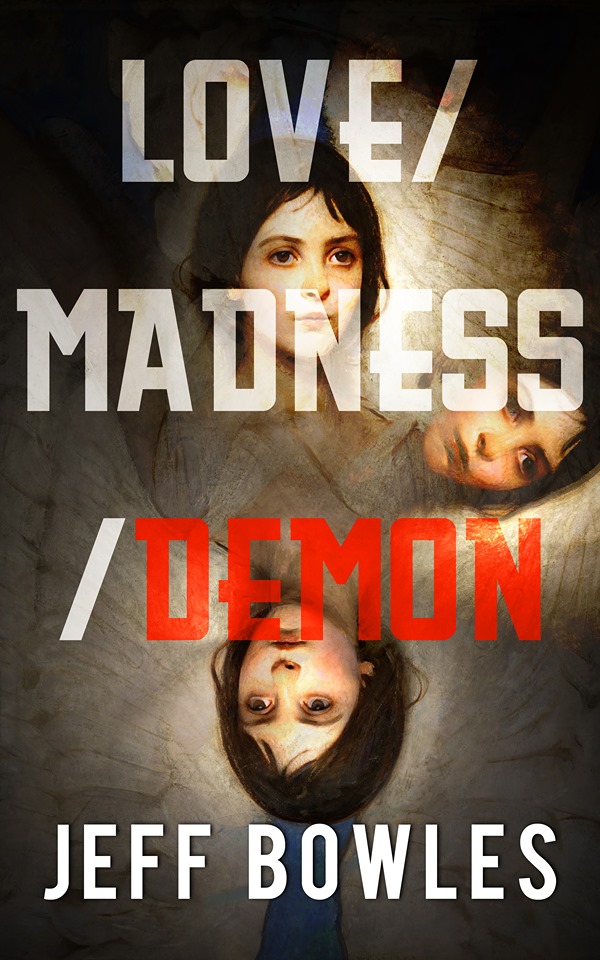
Jeff Bowles is a science fiction and horror writer from the mountains of Colorado. The best of his outrageous and imaginative work can be found in God’s Body: Book One – The Fall, Godling and Other Paint Stories, Fear and Loathing in Las Cruces, and Brave New Multiverse. He has published work in magazines and anthologies like PodCastle, Tales from the Canyons of the Damned, the Threepenny Review, and Dark Moon Digest. Jeff earned his Master of Fine Arts degree in creative writing at Western State Colorado University. He currently lives in the high-altitude Pikes Peak region, where he dreams strange dreams and spends far too much time under the stars. Jeff’s new novel, Love/Madness/Demon, is available on Amazon now!
Check out Jeff Bowles Central on YouTube – Movies – Video Games – Music – So Much More!
Want to be sure not to miss any of Craft and Practice with Jeff Bowles segments? Subscribe to Writing to be Read for e-mail notifications whenever new content is posted or follow WtbR on WordPress
Share this:

Chapter books versus short stories for children
Posted: October 14, 2020 Filed under: Books, Children's Books, Fiction, Growing Bookworms, Reading, Stories | Tags: #Childrensfiction, Growing Bookworms, Reading, Short Stories, Writing to be Read 34 Comments
I was having a conversation with my sister recently. Her younger son has recently been diagnosed with dyslexia and he finds reading difficult. He is an incredibly bright young man and I believe he is frustrated by his reading barrier. I experienced this same frustration with my younger son, Michael, who has an auditory processing learning barrier.
Our conversation led to a discussion about books and the fact that her son avoids reading as much as possible. He becomes difficult and even rude in an attempt to escape the hardship of having to try to read.
I recall similar behaviour by my son, so I am deeply sympathetic. It is incredibly difficult to remain patient and kind when your child is going against you at every turn.
I gave my sister some advice based on my own experience with teaching Michael to read. I advised her to try tandem reading, which I wrote about previously here: https://writingtoberead.com/2019/02/13/alternating-reading-with-your-child/, combined with short stories and not chapter books.
Chapter books are wonderful, but they are longer and more complex, they have more characters and often include sub-plots. When a child is struggling to read due to a reading barrier, it makes their reading slower. They also have to expend a lot of energy and focus on understanding and interpreting each word. The result of this is that it is much more difficult for the child to follow the greater story as they are distracted by the word-by-word struggle. If the child can’t appreciate the story, he or she doesn’t learn to love the written word and enjoy the delights of reading. The storyline disappears in the battle to conquer each sentence.
My advice to Hayley was to chose age appropriate books which encompass a short story within each chapter and to read the story in tandem with her son with the goal of finishing one complete story every night.
I discovered that the child doesn’t have to read a huge amount to benefit. I started off with Michael reading a paragraph but even a few sentence was fine if he struggled. When he’d read a bit, I took over and finished that page and the next one. This helped the story to progress and engaged him in the plot.
He then had another turn. At the end of the story, we had achieved something great together. We had read and enjoyed a whole story. There is a great sense of accomplishment in that and Michael could remember the details of the story because I kept it moving along. He developed a love of reading.
He still likes to be read to, but at 15 years old, I am not always a fan of the books he’s interested in, so I buy him audio books. As a result, Michael enjoys and appreciates reading and books and has a good vocabulary.
Some examples of books with a story per chapter are as follows:
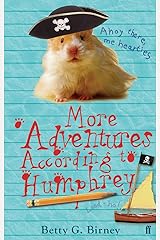
The Humphrey the Hamster book series by Betty G. Birney: https://www.amazon.com/Betty-G-Birney/e/B001ILME1S
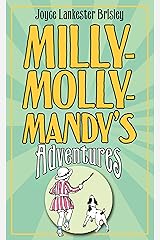
The Milly-Molly-Mandy books by Joyce Lankester Brisley: https://www.amazon.com/Milly-Molly-Mandy-Storybook-Joyce-Lankester-Brisley/dp/0753474719
Mary Poppins by P.L. Travers: https://www.amazon.com/P-L-Travers/e/B000APNNWW
![Mary Poppins: The Original Story (Mary Poppins series Book 1) by [P. L. Travers]](https://m.media-amazon.com/images/I/51fn80jRDYL.jpg)
About Robb,ie Cheadle

Hello, my name is Robbie, short for Roberta. I am an author with seven published children’s picture books in the Sir Chocolate books series for children aged 2 to 9 years old (co-authored with my son, Michael Cheadle), one published middle grade book in the Silly Willy series and one published preteen/young adult fictionalised biography about my mother’s life as a young girl growing up in an English town in Suffolk during World War II called While the Bombs Fell (co-authored with my mother, Elsie Hancy Eaton). All of my children’s book are written under Robbie Cheadle and are published by TSL Publications.
I have recently branched into adult and young adult horror and supernatural writing and, in order to clearly differential my children’s books from my adult writing, I plan to publish these books under Roberta Eaton Cheadle. My first supernatural book published in that name, Through the Nethergate, is now available.
I have participated in a number of anthologies:
- Two short stories in Spellbound, a forthcoming collection of horror stories edited by Dan Alatorre;
- Two short stories in the forthcoming Spirits of the West, A Wordcrafter Western Paranormal Anthology edited by Kaye Lynne Booth;
- Two short stories in #1 Amazon bestselling anthology, Dark Visions, a collection of horror stories edited by Dan Alatorre;
- Three short stories in Death Among Us, an anthology of murder mystery stories, edited by Stephen Bentley;
- Three short stories in #1 Amazon bestselling anthology, Nightmareland, a collection of horror stories edited by Dan Alatorre; and
- Two short stories in Whispers of the Past, an anthology of paranormal stories, edited by Kaye Lynne Booth.
I also have a book of poetry called Open a new door, with fellow South African poet, Kim Blades.
Find Robbie Cheadle
Blog: https://bakeandwrite.co.za/
Blog: robbiesinspiration.wordpress.com
Twitter: BakeandWrite
Instagram: Robbie Cheadle – Instagram
Facebook: Sir Chocolate Books
Want to be sure not to miss any of Robbie’s “Growing Bookworms” segments? Subscribe to Writing to be Read for e-mail notifications whenever new content is posted or follow WtbR on WordPress.
Share this:

Anthologies: An alternative path to publication
Posted: October 12, 2020 Filed under: Books, Fiction, Paranormal, Publishing, Stories, Western, Western Paranormal, WordCrafter, Writing, Writing Contest | Tags: Anthologies, Short Fiction, Spirits of the West, WordCrafter Press, WordCrafter Short Fiction Contest, Writing to be Read 4 Comments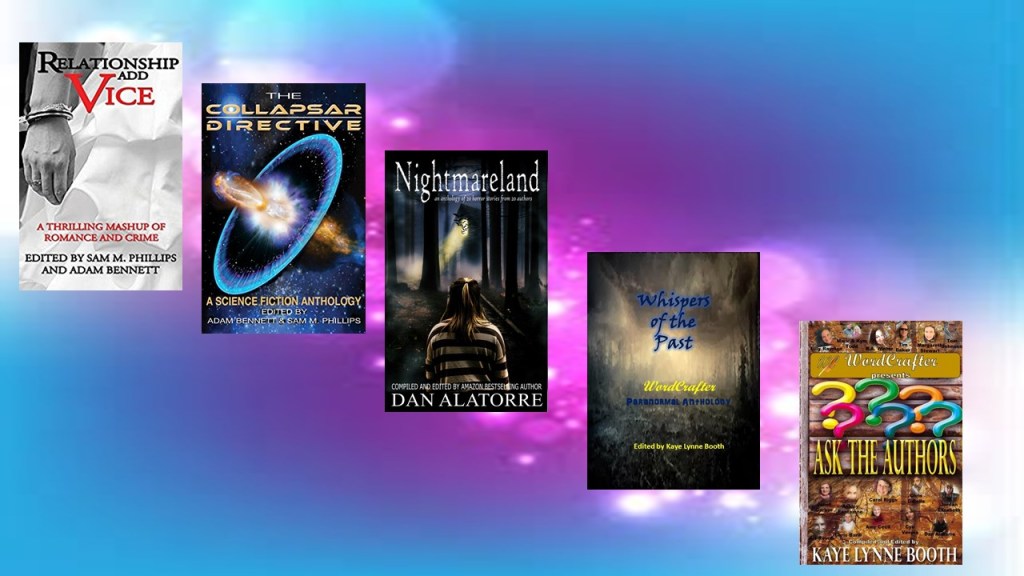
I’m seeing a lot of promotions for anthologies these days. This excites me because short fiction anthologies are a wonderful way for rising authors to gain new readers. If you look for them, there are plenty of opportunities for short fiction submissions and contest entries, and many of those hold the possibility of having your short story featured in a new anthology.
All authors want to see their work published, but full length novels take months or even years to craft and polish before being ready to consider publication. And if an author is considering the traditional route of pitching their work until they find an interested publisher, they could be looking at that manuscript gathering dust on the shelves for a very long time. Short fiction offers a chance for authors to get their names out there on multiple works in a much shorter period of time than it would take to write and publish multiple novels.
Even before I published Delilah, I had two short stories accepted for publication online. Then my story, “If You’re Happy and You Know It”, was accepted by Zombie Pirate Publishing and it appeared in their The Collapsar Directive anthology. I learned very quickly that one difference in having short fiction published in an anthology, as opposed to being published online, was the spirit of comraderie among all the authors featured. The other cool perk of being published in an anthology was the invitation to submit to the next planned anthology. Hence, my story, “The Devil Made Her Do It”, appeared in the next anthology ZPP put out, Relationship Add Vice.
The trick to getting into an anthology is to read the submission guidelines and submit a story that meets them. Most of the time, that may mean writing a story specifically for that submission call or contest. When I was invited to submit a story for Dan Alatorre’s Nightmareland, the guidelines were pretty general, “horror”, and I happened to have a piece of flash fiction that fit into the genre. All it required was a bit of polishing and my story, “The Haunting of Carol’s Woods”, was ready for submission and acceptance. But, many submission calls are more specific.
For the above mentioned submission to ZPP for Relationship Add Vice, submission guidelines required a story that contained elements of romance and crime fiction. Chances are that you don’t have a story sitting in your files with those elements and you would need to create a new story to submit to meet these guidelines. I did have the beginnings of one, as it happened, but that certainly isn’t always the case.
The submission guidelines are important. Read and follow them carefully. Other than the type of story, they may include specific formatting requirements and other submission instructions. Many publishers are strict about their guidelines and will put down a story without finishing it, if the story doesn’t meet even one of the specifications. Of course, that doesn’t apply only to anthologies. Every submission you make should conform to the given submission guidelines, whether we’re talking about short fiction, novel manuscripts, articles or poetry. Why read something if the submitting author can’t even follow directions?
With each of these anthologies, I got that same feeling of comraderie and networking with my fellow authors. I love that feeling. Because anthologies, by definition, have several different authors, they also carry with them the advantage of widening the pool of possible readers. Each author promotes the anthology to their reader audience, so it is possible to extend your own reach beyond your own reader following and gain new readers who read your work in the anthology and want to read more. It’s a win-win for all authors involved.
Naturally, when I started WordCrafter Press in 2019, the first undertaking was to launch a short fiction contest and compile and publish the resulting anthology, Whispers of the Past. The submission guidelines required a paranormal stort story and the contest winner received a $25 Amazon gift card.
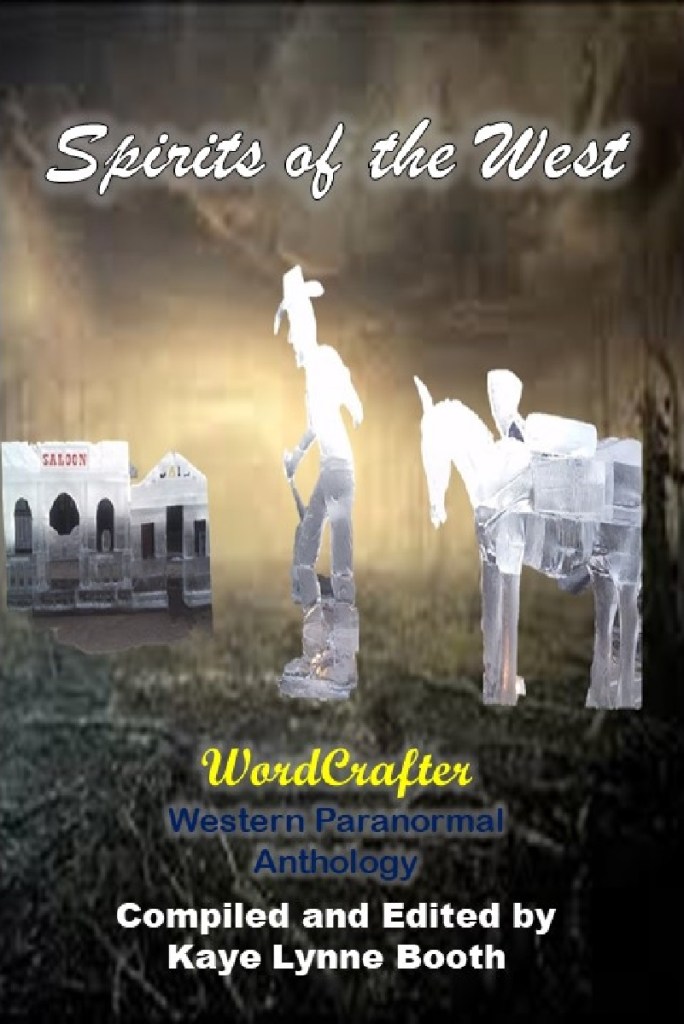
For 2020, the contest submission call requested a piece of short fiction with elements of both the paranormal and western genres. It may have seemed a weird combination to some, but to me, it seemed only natural. The old west is filled with ghosts and spirits, and my first novel was a western. I think it was the western genre that threw potential authors off, but what resulted from this genre combination were some very interesting stories, including two South African ‘westerns’ by WtbR team member Robbie Cheadle, “The Thirstyland Journey” and “The Ghost in the Mound”, and a science fiction ‘western’ by WtbR team member Art Rosch, “Clouds in the West”. This author of this year’s winning story is Enid Holden, and she has two stories included in the anthology: the winning story, “High Desert Rose” and another paranormal western, “The Queen of Spades”. And my contribution is a story I wrote specifically for the occassion, “Don’t Eat the Pickled Eggs”. “Wenekia”, by last year’s contest winner, Jeff Bowles and “Gunsmoke” by author Tom Johnson are also included. This unique collection of paranormal westerns have been compiled into the Spirits of the West anthology and scheduled for an October release.
Authors can find calls for submissions or short fiction contests all over the internet these days. If you just look for them, you’re sure to find one that works for your writing style and preferences, or maybe one that offers a challenge and takes you into writing realms where you’ve never before ventured. In January, I’ll be announcing the theme for the 2021 WordCrafter Short Fiction Contest, so be sure to watch for that, too. If you want to get your name out there, grow your audience and have people read your work, short fiction anthologies are a great start, or they can be a supplement to already published books. Find one that suits you and submit a story today.
Share this:

“Disappeared”: A novel that hits home on multiple levels
Posted: October 2, 2020 Filed under: Book Review, Books, Fiction, Mystery, Thriller, Young Adult | Tags: Book Review, Disappeared, Lucienne Divers, mystery, Thriller, Writing to be Read, Young Adult Fiction Leave a comment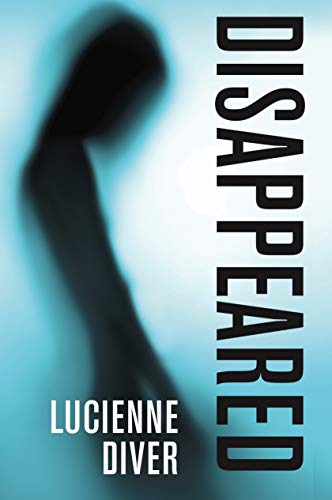
Disappeared, by Lucienne Diver is a Y.A. novel that deals with real life issues. This story was well written, easily attaining the suspension of disbelief in the reader. This book appealed to me because the characters and the situations are relateble for young people on so many levels.
This is the story about what two teenage siblings, Jared and Emily, do when their mother disappears without a trace. People disappear every day, and many of them are never heard from again. This happened with a woman in a community near to me, who disappeared last May. As I’ve watched the story unfold in the local and national media, I’ve often wondered often how the family could deal with the not knowing and all the questions left unanswered.
Disappeared gives a realistic portrayal through the eyes of the two teens of what it would be like, to have that missing person be your mother, to feel the need to uncover the truth, no matter what the cost, and to internalize feelings too painful to deal with on a concious level. This book deals with real life issues which young adults today may find themselves dealing with. Divers jumps into the sensitive issues of families on rocky ground and teen depression with both eyes open, handling them in a kind and caring manner. These are issues that can be only too real for today’s teens, making the subject matter easily relatable within a Y.A. audience.
Filled with surprises, complications and plot twists, this story is crafted to keep the reader guessing. I give Disappeared five quills.

You can purchase your copy of Disappeared here: https://www.amazon.com/Disappeared-Lucienne-Diver-ebook/dp/B0875K2V3J/ref=sr_1_1?crid=2Q75CDGNWKDJD&dchild=1&keywords=disappeared+lucienne+diver&qid=1601589693&s=books&sprefix=Disappeared+Divers%2Cdigital-music%2C279&sr=1-1
Kaye Lynne Booth does honest book reviews on Writing to be Read in exchange for ARCs. Have a book you’d like reviewed? Contact Kaye at kayebooth(at)yahoo(dot)com.
Share this:

“The Freedom Conspiracy”: A delightfully entertaining Y.A. science fiction adventure
Posted: September 19, 2020 Filed under: Book Review, Fiction, Science Fiction, Young Adult | Tags: Book Review, Nathan B. Dodge, Science Fiction, The Freedom Conspiracy, Writing to be Read, Young Adult Fiction 2 Comments
Who hasn’t dreamed of going to the moon or another planet, or living the adventurous life of an undercover agent? Emmerse yourself in the fictional world of The Freedom Conspiracy, by Nathan B. Dodge and you can virtually do both. This Y.A. novel has all the elements of a good space opera or spy thriller, with a teenaged hero who most young people will relate to. But you don’t have to be young to enjoy this adventure; this exciting tale may even make you feel young for a while. Its a really fun story to read; once you’ve started reading, you may not want to put it down.
Joel is a typical teenager, and life on the Moon is fairly routine, until he gets a coded letter from his father, who was on a government assignment on Earth. Before he and his friend Cary can make sense of it, they find themselves on the run from men who seem intent on killing them. With the help of a mysterious guardian angel, who appears out of nowhere in a nick of time, and no other choice, they borrow Cary’s dad’s Ziviano time jump ship and escape to Earth in search of his father’s friend Derek Wilson, who helps them to unravel the mysteries contained in his father’s message, but it isn’t good news. Joel’s dad has uncovered a conspiracy that goes all the way to top government officials. Now his dad is in trouble and it’s up to he and Derek to find and rescue him.
A hero’s journey that young readers will love. I give The Freedom Conspiracy five quills.

Kaye Lynne Booth does honest book reviews on Writing to be Read in exchange for ARCs. Have a book you’d like reviewed? Contact Kaye at kayebooth(at)yahoo(dot)com.
Share this:

The great Roald Dahl
Posted: September 9, 2020 Filed under: Books, Children's Books, Fantasy, Fiction, Growing Bookworms, Reading | Tags: #Reading, Charlie and the Chocolate Factory, George's Marvelous Medicine, Growing Bookworms, James and the Giant Peach, Roald Dahl, Writing to be Read 43 Comments
September 13 is the birthday of Roald Dahl, children’s writer extraordinaire. Of course, Roald Dahl also wrote for adults and I have read and enjoyed a number of his adult stories, including my favourite, Lamb to the Slaughter.
I believe he is best known, however, for his children’s books which are filled with his unusual imagery, imagination and his wacky sense of humour. Roald Dahl is guaranteed to appeal to the most reluctant child reader and his books are a terrific way to get them engaged in a good story which will entertain you as the parent too.
My favourite Roald Dahl book is The Witches, but today, I am going to focus on Michael’s and Gregory’s favourite Roald Dahl books.
Michael’s favourite – James and the Giant Peach
James and the Giant Peach is all about a young English lad who is orphaned at an early age due to an escaped rhinoceros from the zoo eating both his parents. James is sent to live with his Aunt Spiker and Aunt Sponge, who are the most horrible pair imaginable and treat him very badly.
One afternoon when James has been banished from the house by his selfish and mean aunts, he meets an old man in the garden who gives him a packet of magic green wriggly things which he says will change James’ life. Unfortunately, James drops the bag and all the wriggly magical things escape into the ground under an old peach tree.
The next morning, when James wakes up, there is a peach growing on the tree. It grows and it grows and James soon becomes embroiled in an amazing adventure.
I enjoyed this book because it features a number of human sized insects: Miss Spider, Miss Ladybird, the Old-Green-Grasshopper, the Earthworm, the Glowworm, and my personal favourite, the Centipede. This book teaches youngsters all about these amazing creatures and goes a long way towards demystifying them and making them seem really interesting and appealing. This is a refreshing change from the usual disdain that insects are treated with and they use their special talents, like the ability to spin thread, to save the day.
You can purchase James and the Giant Peach here: https://www.amazon.com/James-Giant-Peach-Colour-Roald-ebook/dp/B01LOHTSAU

Gregory’s favourite – George’s Marvellous Medicine
I say this is Gregory’s favourite Roald Dahl book, but it is more accurate to say its my mother’s favourite. My mother loves this story and has listened to it many times with both Gregory and Michael.
George’s Grandma lives with his family and a more tyrannical and awful old lady you will never find in the whole of England. Grandma is set in her ways, takes nasty medication and spends her time complaining, grousing, grouching, grumbling and griping.
One day, George’s parents go out leaving him in charge of looking after Grandma, including administering her medication. George decides to make her his own medicine as the old one isn’t doing the trick. Anything he makes could only be an improvement. All sorts of amazing things go into George’s medicine and when he gives it to the old woman, it has the most marvelous and amazing impact on her.
This is a story filled with vivid imagination and fun.
You can purchase George’s Marvellous Medicine here:
https://www.amazon.com/Georges-Marvellous-Medicine-Roald-Dahl-ebook/dp/B002VISNF8

Charlie and the Chocolate Factory
Charlie and the Chocolate Factory is one of Roald Dahl’s most famous books for children and has been made into a movie twice. My personal favourite of the two movies is the older musical with Gene Wilder.
Here is my favourite song from this movie:
The oompa loompa violet beauregarde song
If you would like to find out more about Roald Dahl, you can do so on the official Roald Dahl website here: https://www.roalddahl.com/home/teachers
And on his fan site here: https://www.roalddahlfans.com/
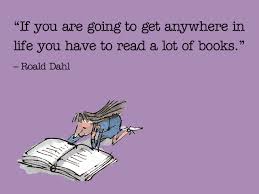
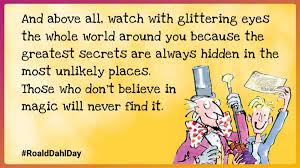
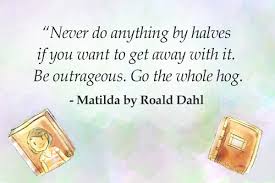
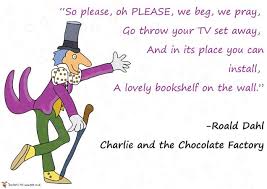
Official quotes from Roald Dahl Books
About Robbie Cheadle
Hello, my name is Robbie, short for Roberta. I am an author with seven published children’s picture books in the Sir Chocolate books series for children aged 2 to 9 years old (co-authored with my son, Michael Cheadle), one published middle grade book in the Silly Willy series and one published preteen/young adult fictionalised biography about my mother’s life as a young girl growing up in an English town in Suffolk during World War II called While the Bombs Fell (co-authored with my mother, Elsie Hancy Eaton). All of my children’s book are written under Robbie Cheadle and are published by TSL Publications.
I have recently branched into adult and young adult horror and supernatural writing and, in order to clearly differential my children’s books from my adult writing, I plan to publish these books under Roberta Eaton Cheadle. My first supernatural book published in that name, Through the Nethergate, is now available.
I have participated in a number of anthologies:
- Two short stories in Spellbound, a forthcoming collection of horror stories edited by Dan Alatorre;
- Two short stories in the forthcoming Spirits of the West, A Wordcrafter Western Paranormal Anthology edited by Kaye Lynne Booth;
- Two short stories in #1 Amazon bestselling anthology, Dark Visions, a collection of horror stories edited by Dan Alatorre;
- Three short stories in Death Among Us, an anthology of murder mystery stories, edited by Stephen Bentley;
- Three short stories in #1 Amazon bestselling anthology, Nightmareland, a collection of horror stories edited by Dan Alatorre; and
- Two short stories in Whispers of the Past, an anthology of paranormal stories, edited by Kaye Lynne Booth.
I also have a book of poetry called Open a new door, with fellow South African poet, Kim Blades.
Find Robbie Cheadle
Blog: https://bakeandwrite.co.za/
Blog: robbiesinspiration.wordpress.com
Twitter: BakeandWrite
Instagram: Robbie Cheadle – Instagram
Facebook: Sir Chocolate Books
Want to be sure not to miss any of Robbie’s “Growing Bookworms” segments? Subscribe to Writing to be Read for e-mail notifications whenever new content is posted or follow WtbR on WordPress.
Share this:

“Keeper of the Winds”: A Classic Hero’s Journey
Posted: August 31, 2020 Filed under: Book Review, Fantasy, Fiction, Young Adult | Tags: Book Review, Fantasy, Jenna Solitaire, Keeper of the Winds, Russell Davis, Writing to be Read, YA, Young Adult Fiction Leave a comment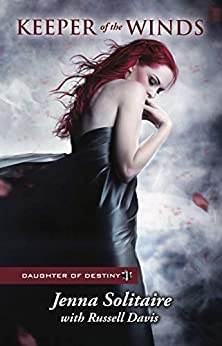
Keeper of the Winds, by Jenna Solitaire with Russell Davis, is not your typical story written by an author under a psuedonym. Davis writes this hero’s journey as Jenna Solitaire, in first person, present tense and nails the teenaged heroine’s persona. If you are an author yourself, you may realize that this is not an easy feat to pull off. Davis has created a character that young adult readers can relate to, making this powerful magical fantasy journey sure to be a hit with YA audiences everywhere.
Jenna lost her parents and grandmother early in life and knows little of her family history. Now she is burying the grandfather who raised her and he last living relative. When she finds a strange board hidden in her grandmother’s things and tries to use it, she awakens forces of power long dormant, setting off a chain of events that will lead her to her ultimate destiny. But, there are those who would steal the board and the power that it holds, and they will stop at nothing to eliminate all obstacles in their way. Can Jenna discover who she really is and master her newly discovered abilities before they can gain control of the board, and either take her captive or eliminate her?
A classic hero’s journey written with a compelling voice that makes Keeper of the Winds a young adult fantasy journey to remember. I give it five quills.
Keeper of the Winds is available on Amazon.
Kaye Lynne Booth does honest book reviews on Writing to be Read in exchange for ARCs. Have a book you’d like reviewed? Contact Kaye at kayebooth(at)yahoo(dot)com.
Share this:

Craft and Practice with Jeff Bowles – Story Synthesis: The Ultimate Tool in the Toolkit
Posted: August 24, 2020 Filed under: Craft and Practice, Fiction, Writing | Tags: Craft and Practice, Fiction, Jeff Bowles, Story synthesis, Writing, Writing to be Read 3 CommentsEach month, writer Jeff Bowles offers practical tips for improving, sharpening, and selling your writing. Welcome to your monthly discussion on Craft and Practice.
The Ultimate Tool in the Toolkit
Remember when you were a kid and you had to lie to your parents? Maybe you trashed the house while they were away, dented the passenger-side door of their new car, or perhaps you can go back even farther with me and you remember drawing with crayons on the wall or stealing the last cookie from the cookie jar.
Whatever you did, I’ll bet you had to tell one heck of a story to get out of trouble. Maybe it worked, maybe it didn’t. Odds are, if you told a real whopper, they grounded you for a week. Too many details, or maybe too few. Too many working components you couldn’t keep track of, or maybe you introduced logic gaps and they picked the damn thing apart on you, literary-critic-style. The key all along would’ve been balance, believability mixed with a healthy dose of surprise. And boy were they surprised. What lovely colors you added to their wall.
As storytellers, we often do something similar, draw all over the walls and then spin an incredible yarn about it. Although, if you feel the need to call us liars, remember that the preferred technical term is “professional liars”. Story synthesis relies on your reasoning skills, ability to drive a narrative in fun and creative ways, and your talent for convincing your readers everything happened just like you said.
Story synthesis applies to every level of the storytelling process, from brainstorming and outlining to drafting and revisions. It applies to character histories, plot details, scene details, dialogue choices, and you must believe me when I tell you this, if you can’t synthesize spare parts on the fly in an organic, natural, and logical manner, you’ll leave your readers cold, and no one wants cold readers, now do they? In very real terms, story synthesis is the most important tool in the toolkit, one not every author has developed to its full potential.
It’s a bit of a magic act, a spell you’ve got to cast on yourself. It happens while you’re writing, which of course means it must be at least somewhat subliminal and unconscious. What we’re really talking about here, though, is completion and resonance. Do all the different parts of your story add up? Do they make sense in context? Does anything come out of left field? Or conversely, is your story just too milk toast?
Story synthesis isn’t hard as such, because your brain synthesizes concepts from disparate elements all day long anyway. It does, however, require a bit of practice to do well, especially if you’re writing a long-form story, like a novel. Much as a spider would, your job as an author is to take all the loose threads you’ve spun and collect them together into a coherent web. This is why it’s usually a bad idea to abandon a project and then pick it up again later. Those threads might be lost on you. The process by which you were synthesizing the narrative died an untimely death, and now you can’t pick your way through and reassemble it, at least not in the same manner.
Story emerges from character, unless you’re outlining too heavily, in which case story emerges from, well, an outline. What’s the difference? In one scenario, it appears to the reader that your characters are making their own choices. In the other, it’s clear you’ve rigged the deck, and that the whole experience is artificial. In my experience, people who rely too heavily on outlines doubt their ability to synthesize story in a natural way. Either that or they think outlining will save them time and effort. As Stephen King once said, “Outlines are the last resource of bad fiction writers who wish to God they were writing masters’ theses.”
At any one moment in the process, ask yourself what your characters want and how, reasonably so, they can go about getting it. The rest will flow from that, though not effortlessly, so don’t get it twisted. Maybe you’ve written yourself into a corner. A common enough situation. And though you’ve had a general plan all along, something ended up rushed and malformed. You may need to go off the rails to land back on your feet. So to speak. I say blow the whole thing to pieces. Do something to really shake yourself loose. You’ve got to navigate your own twisting waterways with grace, or put another way, all those balls you’ve tossed into the air? They’d better be in your hands and not on the floor by the end of your routine.
Don’t be afraid. Some of the best writing you’ll ever produce will be wholly unexpected. Be the trapeze artist, the reed in the wind. Be willing to exert a little nonchalant flexibility when you feel most worried all your herculean efforts have gone up in smoke. The synthesis of your tale into something readable and engaging begins when you relinquish a little control and trust your creativity and rational mind. Because really, it requires both.
Synthesis in this context applies most especially to story climaxes, the worst of the worst, the hardest to pull off. Sure, beginnings are tricky, and middles are a tough nut to crack, but the endings, oh, the endings. I’d like you to imagine a pot of boiling stew. Now imagine your readers watched you cook this amazing stew from start to finish. They watched you cut up the veggies and meat, saw you season everything and stand at the stove for hours, stirring and tweaking. They’re even aware you’ve been taste testing, which is important because it means they trust that you at least find the flavor remarkable.
But let’s say that stew wasn’t synthesized properly. Maybe you were working off a recipe and failed to notice it needed certain improvements, or maybe it just came to you and you rushed the chopping and cutting. Potato pieces the size of peas. Celery stocks that may as well be whole. If dinner doesn’t go well, it hardly matters what you think you did or how well you think you did it. I mean just look. You left a whole pile of carrots sitting on the cutting board. Why didn’t you throw those in? And that beef broth you only used half of? It probably explains why your stew tastes like wet cardboard.
You see? Good story synthesis means combining all of your disparate and seemingly unconnected ingredients together creatively, confidently, logically. In fact, if you do find yourself in no man’s land over a piece of fiction, get excited, because it means you’ve got the opportunity to pull off something truly magical. As you’re writing, keep track of everything you still have to pay off. You know what a payoff is, right? If someone mentions a mountain in Chapter One and we never see its summit, not even by Chapter Forty, that’s not a good payoff. You might even keep a list running so you miss not a single opportunity to pull one more good thread together.
Like the man said, “Not all who wander are lost.” I urge you to get lost in your writing this month. Check and see that this particular superpower is performing at peak levels. And remember, good story synthesis isn’t about shock and awe, not necessarily. It’s about balance, inevitability, structural harmony. Plus tons of shock and awe. You wouldn’t want people to get bored, now would you? I’ll be back in September with more Craft and Practice. Good hunting, everybody.
Check out Jeff Bowles Central on YouTube – Movies – Video Games – Music – So Much More!
Want to be sure not to miss any of Craft and Practice with Jeff bowles segments? Subscribe to Writing to be Read for e-mail notifications whenever new content is posted or follow WtbR on WordPress




















Butt in Chair, Write the Damn Book
Posted: October 5, 2020 | Author: kayelynnebooth | Filed under: Books, Commentary, Fiction, WordCrafter Press, Writing, Writing Life, Writing Process, Writing Tips | Tags: Spirits of the West, The Outlaw and the Rock Star, WordCrafter Press, Writing, Writing Process, Writing Tips, Writing to be Read | Leave a commentSome of the best advice I ever received on writing a novel length work came from one of my M.F.A. instructors, Russell Davis. He said, “Ass in chair, write the damn book”. And you know, he was right. If you don’t sit your butt in that chair and start writing every chance that you get, chances are that novel will end up unfinished, sitting on a shelf, collecting dust rather than on an Amazon bestseller list. No the only way to complete a novel is to just sit down and write.
Lately though, finding time to put my butt in the chair and keep it there has been a real challenge. All the strategies I had used successfully to create productive writing have fallen to the wayside since Covid came along and turned our worlds upside down and inside out. WtbR team member Robbie Cheadle made a good point when she said that lockdowns and quarentines have blurred the lines between work and personal lives. With many people working from home, the boundaries between work and personal time may not be as distinct as they were before. There is no commute on which to transition from work to home life, or vice versa.
That is kind of what happened with me. Although I’m back to the grind of commuting now, when I was staying at home, I threw everything I had into my writing. My personal life and relaxation were laid to the wayside. Then, when I went back to work, I was overwhelmed with work, school and all of the many projects I had started working on while at home.
Although my butt was in the chair, I found it difficult to focus on any one project and to prioritize which project I should be working on. My school work fell behind. Life circumstances changes that required more of my tijme and attention. My regularly scheduled blog posts weren’t getting written; I struggled to finish my short paranormal western story for the Spirits of the West anthology; and the book I had planned to write this year was just plain not happening. It doesn’t do a bit of good to place your butt in the chair, if all you do while there is stare at a blank screen.
So, I pulled back and prioritized all the different things that I needed to get accomplished. I regrouped, so to speak. Even though I am very close to earning a degree in marketing, I decided it would have to wait and I withdrew from my schooling. I went camping to give myself some ‘me’ time, and rediscovered the Colorado mountains that I’ve always loved, and my passion for writing, and found myself once more sitting down in front of my laptop and writing with purpose.
It was amazing, but once I started writing for the right reasons, because I wanted to write, not out of obligation, I was able to focus and the words fell onto the page. It just goes to show you that staying home and away from people doesn’t necessarily mean that you’ll be able to pump out the best writing that you ever have. Beside sitting your butt in the chair, focus is another necessary element.
In addition to getting this blog back on track, and doing a bit of restructuring on it, I finished the story for the Spirits of the West anthology, “Don’t Eat the Pickled Eggs”, and I’m currently working through the kinks in the publishing process, as well as working on my next novel length work, The Outlaw and the Rock Star. It is a time-travel western inspired by the music of The Pretty Reckless, and I have three and a half chapters so far. This is where my priorities lie and these projects are what I intend to focus on. Writing is where my heart is, and I feel like I’m back in the saddle again. Ass in chair, focus, and write the damn book.
______________________________________________________________________________
Like this post? Let me know in the comments. You can be sure not to miss any of Writing to be Read’s great content by subscribe to e-mail or following on WordPress. If you found this content helpful or entertaining, please share.
Share this: