Pros and Cons of Traditional vs. Independent vs. Self-Publishing (Part 7): Interview with Children’s Author, Nancy Oswald
Posted: November 28, 2016 Filed under: Books, Children's Books, Fiction, Publishing, Self-Publishing | Tags: independent publishing, Nancy Oswald, Publishing, Self-Publishing, Traditional Publishing 7 Comments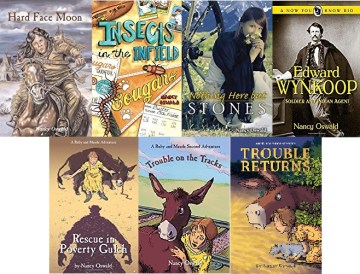
In this series, we’ve taken a look at the publishing industry, which today, isn’t played by the same rules as it was 30 years ago, when traditional or independent publishing houses were about the only options an aspiring writer had. The rise in digital and self-publishing has opened up new options for aspiring authors and changed some of the rules by which the game is now played. We’ve heard from self-published authors, Jeff Bowles, Tim Baker and Arthur Rosch, and traditionally published authors, Stacia Deutsch and Mark Shaw, as well as independently published author, Jordan Elizabeth.
In this week’s interview, we’ll hear from an author who has published work via all three publishing models, award winning children’s author, Nancy Oswald. She’s published traditionally with Holt, a big New York publisher, and a small independent publisher, Filter Press, LLC. In addition, her first book was published by Scholastic Canada, but she later rewrote it and self-published a Create Space version in 2013. Nancy’s Ruby and Maude Adventure series includes Rescue in Poverty Gulch, Trouble on the Tracks and her latest book, to be released this month, Trouble Returns. (Be sure and catch my review of Trouble Returns this Friday on Writing to be Read.) Her other publishing credits include Hard Face Moon, Edward Wynkoop: Soldier and Indian Agent, Nothing Here But Stones, and Insects in the Infield. And she has a very unusual story about how she broke into the publishing industry.
Kaye: When did you know you wanted to be an author?
Nancy: In my early teens, I thought writing children’s books would be really cool and I enjoyed writing—some poetry—but most of it school related. I didn’t get serious about publication until I was in my late twenties.
Kaye: Would you share your own publishing story with us?
Nancy: I wrote several books that I call my “cardboard cover” books for my stepson who was five when I married my husband. They were hand written and crudely illustrated and as you’ve probably guessed, had cardboard covers that were put together with rings that clipped through the pages and the cardboard and held the whole thing together. I did a couple of cardboard cover books for friends, too. But my stepson outgrew his “picture” books, so I started in on a chapter book. We lived in British Columbia at that time, so I mailed him the first chapter for Christmas and sent one chapter a month to him, finishing the book the next Christmas. This book was typed, yes on a typewriter, but still was a FAT cardboard cover book. After many many rewrites, this book became my first published novel for young readers. It had 35 rejections and was finally picked up by Scholastic Canada and five years later was reprinted by them. To this day, thanks to Scholastic’s book club program, it has outsold any of my other books.
Kaye: What do you see as pros and cons of self-publishing?
Nancy: In 2013, I self-published the above mentioned book. I’ve had the rights back since about 1996, so I rewrote the book, adding about 10,000 words and it ended up as a winner in the CIPA Evvy award competition. My likes: I really enjoyed having full control. I used Create Space and used their interior design service, but did the other parts myself. The Create Space team was accessible and helpful, and I had a really positive experience from beginning to end. A word of caution: you really need to have a clear idea of the design, font size, layout ahead of time. You have to be clear in communicating what you want. Negatives: Reviews were hard to get, ALL of the marketing is up to you, and if you don’t have a well-edited, professional looking copy, it will sink you
Share this:

Pros and Cons of Traditional vs. Independent vs. Self-Publishing (Part 6): Interview with Independently Published YA Author, Jordan Elizabeth
Posted: November 21, 2016 Filed under: Books, Fiction, Opinion, Promotion, Publishing, Steampunk, Writing, Young Adult | Tags: independent publishing, Jordan Elizabeth, Publishing 3 Comments
Share this:

Pros and Cons of Traditional vs. Independent vs. Self-Publishing (Part 5): Interview with Traditionally Published Author, Mark Shaw
Posted: November 14, 2016 Filed under: Books, Nonfiction, Opinion, Publishing, Self-Publishing, Writing | Tags: Mark Shaw, Publishing, Self-Publishing, Subsidy Publishing, Traditional Publishing 3 Comments

Those who remember traditional publishing prior to the digital age, recall an industry which was not easy to break into, but with persistence, it could pay off with large advances, and a contract from one of the “Big Five” publishing houses. Your publisher took care of the rest: editing and proofreading, cover and/or illustrations, publicity and marketing. In many ways, it is the same today, but one thing self-publishing and independent publishing have changed, is that they showed traditional publishers that authors were capable of doing their own promotion and marketing. Today’s authors, it seems, are now expected to carry the weight for these tasks no matter which model is chosen.
The rise of digital and self-publishing also brought about a rise in publishing scams, designed to take advantage of aspiring authors and empty their pocketbooks. In the 1990s, when I began writing, they called them vanity presses.An author would send in their work and receive a very favorable response, praising their work and offering to publish it for a fee. As the author moves through the publishing process, the fees keep adding up. Today they are called subsidy publishers. As with traditional publishers, subsidy publishers hold the rights to the book, although the author is paying them to publish it.
So far in the series we’ve heard from self-published authors, Jeff Bowles, Tim Baker and Art Rosch, and we’ve heard from traditionally published author Stacia Deutsch. Join me today to get more of the traditionally published POV in my interview with author Mark Shaw. Among his 25 published works are books I’ve had the pleasure of reviewing as The Southern Colorado Literature Examiner: The Mask of Holiness, a biography of Thomas Merton, and Stations Along the Way, a biography of former Hitler youth leader, Ursela Martens. In addition to being a traditionally published author, Mark is a literary consultant and entertainment attorney, so he knows of what he speaks.
Kaye: When did you know you wanted to be an author?
Mark: I’m a former criminal defense lawyer and I never considered being an author until I covered the Mike Tyson rape trial for CNN, ESPN, and USA Today. I believed Tyson was denied justice and so I wrote my first book, Down For the Count.
Kaye: Would you share your own publishing story with us?
Mark: I was able to find a literary agent to represent the Tyson book and he found a traditional publisher. I had enjoyed the writing process and the book sold well so I looked for new subjects to write about and within a few years I had published several traditionally published books. Looking for a theme to weave through new books, I landed on “justice denied” and the last four or five I have written including my latest “The Reporter Who Knew Too Much: The Mysterious Death of What’s My Line TV Star and Media Icon Dorothy Kilgallen,” are symbolic of the type of books I write. Sometimes I have to pinch myself that this book will be my 25th since I never had any formal training as a writer but I’m blessed that people have enjoyed the “stop and think” aspect of the books and continue to praise my body of work.
Kaye: What do you see as pros and cons of self-publishing?
Mark: As noted in my book about the publishing process, “How to Become a Published Author: Idea to Publication,” as long as it’s what we call “traditional self-publishing (no subsidy publisher) then okay, but the career of any writer who uses a subsidy publisher where they pay to have the book published (Dorrance, iUniverse, Trafford, AuthorHouse, XLibris, etc.) is doomed with many who have come to me for consulting telling horror stories of losing their life savings, their homes, etc. Subsidy Publishing is the absolute kiss of death and so many writers fall prey to subsidy publishers that promise the moon and end up with boxes of books in the basement they can never sell since libraries and most bookstores won’t touch them. This is unfortunate since aspiring authors can use a combination of Create Space and Ingram Spark to publish a book with very minimal cost and this traditional self-publishing method is a badge of honor and libraries and bookstores will be interested in purchasing and stocking the book.
Kaye: What do you see as the pros and cons of independent publishing?
Mark: There seems to be confusion as to what this term means but as long as it doesn’t include subsidy publishing, I’m all for it.
Kaye: What do you see as the pros and cons of traditional publishing?
Mark: I encourage writers to try the traditional publishing route by using query letters and book proposals and a good strategy for landing a literary agent or publisher and if that doesn’t work, then use traditional self-publishing. The advantages of traditional publishing include the publisher paying for all aspects of the publishing process, editing, layout, cover, etc. without the writer putting up a cent but most importantly traditional publishing includes distribution (my new book has Simon&Schuster distribution) which traditional self-publishing lacks since the author must do the distribution. One disadvantage these days for a first time author is that unlike ten years ago, many traditional publishers will not do much toward promotion and thus the author is expected to do the major part of the work.
Kaye: How much does the non-writing work, (marketing & promotion, illustrations & book covers, etc…), that you must do yourself vary between the different models?
Mark: You are talking about completely different subjects here. With marketing and promotion, regardless of the method of publishing, an author has to understand that he or she must be the guiding force behind book publicity. With illustrations and book covers, etc. traditional publishers will handle this task while the author of any traditional self-published book is responsible for handling these matters and there are several outstanding consultants who can help with this tasks. Again, writers should stay away from subsidy publishers many of whom produce inferior books that cause problems right away with the authors’ reputation.
Kaye: Do you recommend traditional publishing for today’s aspiring authors, and why or why not?
Mark: Absolutely but writers must proceed with a well-developed strategy such as the “10-Step Method” outlined in “How to Become a Published Author.” There are no shortcuts possible here and most writers don’t want to put in the hard work necessary to secure a literary agent so their chances of securing a publisher are optimized.
I want to thank Mark for sharing his thoughts with us. Also, I’m excited to be reviewing his latest book. Be sure and catch my review of The Reporter Who Knew Too Much on November 25, right here on Writing to be Read. To learn more about Mark Shaw or his books visit his website.
Don’t miss next Monday’s post and my interview with independently published YA author, Jordan Elizabeth, and get her thoughts on today’s publishing industry on Writing to be Read.
If you liked this post, subscribe to email and receive a notification each time a new post is made on Writing to be Read.
Share this:

Pros and Cons of Traditional vs. Independent vs. Self-Publishing (Part 4): Interview with Traditionally Published Children’s Author, Stacia Deutsch
Posted: November 7, 2016 Filed under: Books, Children's Books, Fiction, Opinion, Promotion, Publishing, Self-Publishing, Writing | Tags: independent publishing, Publishing, Self-Publishing, Stacia Deutsch, Traditional Publishing 3 Comments
So far, in this publishing series, we’ve heard from three self-published authors who say self-publishing is the way to go for today’s authors. In Part 1, we heard from my talented friend and cohort, Jeff Bowles. In Part 2, we heard from tale spinner, Tim Baker. And last week, in Part 3, we heard from storyteller and author, Arthur Rosch. This week, we’ll hear from the other side of the writing field, as I interview a traditionally published author.
Join me for today’s interview with Stacia Deutsch, who is the author of more than two hundred children’s books, both original and write for hire. I had the pleasure of first, being a cohort to and then, studying under this amazing children’s author, so vibrant and full of energy, and always smiling. She is the author of the eight book, award winning, chapter book series Blast to the Past. Her resume includes Nancy Drew and the Clue Crew,The Boxcar Children, and Mean Ghouls from Scholastic. Stacia has also written junior movie tie in novels for summer blockbuster films, including BATMAN, THE DARK KNIGHT and the New York Times Best Sellers: CLOUDY WITH A CHANCE OF MEATBALLS JR. and THE SMURFS.
Kaye: When did you know you wanted to be an author?
Kaye: What do you see as the pros and cons of traditional publishing?
Stacia: I love being with traditional houses and finding my books in the big box stores, or at the airport, or at Scholastic book fairs. There is no other way into those places. The issue is that you aren’t making every cent from your own book, but you have little outlay as well. My agent gets 15% of everything I sell.
Kaye: How much non-writing work, (marketing & promotion, illustrations & book covers, etc…), do you do yourself for your books?
Stacia: It’s a big deal for the author to do their own promotion and really necessary. You have to be devoted to your audience, and build a following to be successful. You need a budget. Do you want to travel, do a book tour? website? blog tour? Everything costs. So, regardless of how you get published, play how much money and time you are willing to put into it.
Kaye: Would you recommend your chosen path to publication, to emerging writers? Why or why not?
Stacia: I am an advocate for traditional publishing. I think agents and editors are gate keepers for quality. But if you have a good idea, that doesn’t fit what houses are looking for, go for it. Just be aware of what you’ll need to do to make it work.
Share this:

Pros and Cons of Traditional vs. Independent vs. Self-Publishing (Part 3): Interview with Self-Published Author Arthur Rosch
Posted: October 31, 2016 Filed under: Books, Fiction, Memoir, Opinion, Publishing, Self-Publishing, Writing | Tags: Art Rosch, Book, Books, Fiction, Novel, Novels, Publishing, sci-fi, Self-Publishing, Writing 3 Comments
Your at a dinner party, chatting with other guests when someone asks what you do. You say that you’re an author and everyone is adequately impressed. It’s not every day you meet a bonefide author. Then you mention that you are self-published, and suddenly they all have somewhere better to be.
Self-publishing carries with it a certain stigma. In part, it may be due to a certain number of poor quality self-published books that flooded the market with the rise in popularity of the self-publishing market. With the rise of digital media, almost over night, it was no longer necessary to seek out and captivate a traditional publisher, and anyone, whether they write well or not, could become an author. In the beginning, as it is with most rising trends, self-publishing was a rather expensive proposition, and many authors didn’t have a whole lot to invest, so they skimped by on costs by skipping things like professional editing. Some maybe had their mother or their aunt or their brother give it a once over, but none of them had a trained eye. Others didn’t even do that, believing that their writing was so good, it didn’t need to be edited, or perhaps they were just out to make a buck, and didn’t really care if they put out a quality book. But, for whatever reasons, a lot of less than good quality self-published books made their way out into the market, marring the reputation of the self-publishing industry.
Companies like Amazon and Smashwords put another bump in the industry when they offered authors yet another avenue for publication with the e-book. Digital publishing was cheaper and easier than publishing print copies. In fact, it is virtually free to publish digitally, freeing up funds to be used for things like editing in order to create a quality piece of literature. Of course, there will always be those who are just in it for the money and don’t really care if the book they put out there is good quality, as long as it makes them money. They’re the types that will take advantage of the savings of digital publication to line their own pockets and still won;t bother to pay an editor. They are the authors that wouldn’t survive in the digital publishing world, but hopefullly, there are less of them now.
Despite the stigma attached to self-publishing, there are many talented self-published authors out there, who care about creating and publishing a quality literary product. Today’s interview is with self-published author, Arthur Rosch, who puts whatever time and effort is required into his books, sometimes taking years to complete them. Art is a talented writer. His publishing credits include his travel memoir, The Road has Eyes: A Relationship, An RV, and a Wild Ride through Indian Country, his literary novel, Confessions of an Honest Man, and his epic science fiction novel, The Gods of the Gift. Art shares a positive outlook on self-publishing with previously interviewed self-published authors, Tim Baker and Jeff Bowles. Here, Art shares his thoughts on the publishing industry with his very generous answers, as he candidly relates his own publishing journey.
Kaye: Would you share your own publishing story with us?
Art: I’ve been reading for pleasure since I was five.years old I remember the day I learned to read. It came like a lightning bolt. Aha! So that’s how it works! I made the connection between letters and the sounds they represented. It was my third week in kindergarten. I hated school but I loved to read books. I started by reading historical novels. The other kids were reading “Dick And Jane Go To The Farm”.
When I was fifteen I fell madly in love with a girl. She wanted certain attributes in a boyfriend. One of those requirements was that said boyfriend should be a poet. So, I began to write poetry to please my girlfriend. She turned out to be far less faithful than the process of writing. I gave up on the girl and stuck with the writing. When I was twenty five I was seized by the ambition to write a novel. The project became a science fiction novel called THE GONGS OF SPACE. It was awful. It did, however, attract the interest of literary agent Scott Meredith. I signed a two year contract, and proceeded to write more novels. None of them sold. I had plenty of imagination but lacked some fundamental skills in the craft of writing.. I also needed more life experience.
I’m old enough to remember the “old” model of publishing. I had an entree into that world of agents, editors and publishers. A short story of mine won Playboy Magazine’s Best Story Of The Year Award. I had my fifteen minutes of fame. All the doors were open.
Playboy invited me (with an expense account) to their twenty fifth anniversary party.. I came away with a pocket full of business cards from important people in the publishing industry. Unfortunately, at that time I was dabbling in drugs. That dabble turned into a roaring addiction that derailed me for twenty years. I wrote during those decades. I wrote a lot. But I was like the Hubble Telescope before it was repaired. I couldn’t focus. I had a wonderful opportunity that I wasted by making a very bad choice. This kind of blunder is the stuff of life. I admit, I screwed up. I prefer to regard that interval in my life as “experience”. It was my Dark Night Of The Soul I had lost my family, my home, my possessions and my dignity. But I learned from my suffering.
What can a writer do without insight into the human condition? What decent writer is not also an observer and a psychologist?. My addiction years were loaded with with lessons. I sank to the bottom of the social order. I was on the streets, completely mired in the human experience. I learned from the streets. I learned hard. Then I had to put myself back together.
Addiction is one of the central pillars of my life narrative. I wanted to heal myself, so I went into a long therapy and read everything I could find about family dynamics, addiction and obsession.. Some writers need to spend an apprenticeship in the realm of compulsion, irrationality, bad choices and failure. By the time I was in my mid forties I had a thorough apprenticeship under my belt.
When I surfaced from that underworld, I started looking for an agent. A whole generation of agents had come and gone. The publishing world had changed. I was now (by my own evaluation) a fine writer with a distinctive voice. Agents weren’t interested in me. I wrote hundreds of query letters. I had three novels and a memoir that were ready for editing and representation. I got rejections again and again. How many times did I read the same phrases? “Not quite right for us”, “good luck with your writing career”, “though you write well, I couldn’t quite fall in love with this project.”
It’s likely that you’ve also read these phrases.. In 2001 I wrote to the Scott Meredith Agency in an attempt to re-kindle some kind of relationship. My letter was answered by the head editor. Meredith had passed away and the agency continued under a new owner. My novel, CONFESSIONS OF AN HONEST MAN was well under way. The editor loved the manuscript and offered to work with me. I was not a client of the agency. I was a side-project. The editor, B.N. Malzberg., charged no fee, and worked with me on his own time. The guidance he provided helped to make CONFESSIONS OF AN HONEST MAN into a mature and viable novel.
Still, no agents wanted to represent me. It was an odd situation. Malzberg didn’t have the authority to bring me on board. I don’t know why. I never will. I’m grateful to Mr. Malzberg for the help he gave me in bringing that wonderful novel to fruition.
Kaye: What are your thoughts on the self-publishing industry?
Art: I spend a lot of time writing my novels. Some of my books have been in process for thirty years. THE GODS OF THE GIFT, a sci fi epic, was begun in 1978 and wasn’t completed until 2012. Nowadays the book scene is so competitive that a writer needs to have an extensive body of work. Writers are forced to view their works as Product. The more product you have, the more you can sell. I have to learn to write more quickly. My travel memoir, THE ROAD HAS EYES, was finished in a year. Now I’m writing a crime novel. In a month I’ve racked up 20,000 words. I do all my own cover designs. I hire out the formatting. I mostly self-edit but that’s not really a good idea. It’s better to join a writing group and share your work with your peers. Better still, hire a good editor.
It’s useful to identify one’s “brand” with a genre. It’s also good to write series. The reading audience loves series. My crime novel will be a series based on the characters I’ve invented. I have a fantasy trilogy in the works. Book One is complete. Book Two, the sequel, is under way. I’m not known as a genre writer. With good reason. My portfolio consists of one memoir, one literary novel, three sci fi novels and a crime novel-in-progress. I also have nearly three hundred blog posts in the form of reviews, poems and essays. My “brand recognition” doesn’t stick. Fortunately I have relationships with magazines like Across The Margin and Exquisite Corpse. ATM has published a lot of my work. I’ve also published as a photographer with magazines like
Shutterbug and Popular Photography. I had a centerfold in CAT FANCY. Our beautiful cat, Agate, was shown without her clothes. Agate didn’t care. She never wears clothes. We don’t believe in dressing up animals to look like people.
Kaye: Why did you choose to self-publish your books?
Art: Four years ago I began to explore the self-publishing world. Getting a book published is easy. Marketing the book is another matter. I’m not a good marketer. I plunged into the crazy world of podcasts, webinars and the pitches of various book marketing gurus. I was trying to get a basic grip on marketing strategies. The problem is that the parameters for marketing change so fast that it’s impossible to know how to approach the world of self-promotion.. Also, I was broke. Marketing costs money. I spent $1500 on paid-for reviews and marketing “helpers”. These investments weren’t completely useless, but they didn’t do much to boost my sales.
I would estimate that at least $5000 is required for a marketing budget. That’s just for starters. If you’re lucky, and if you have some talent, your investment will begin to show returns fairly quickly. You’re going to need a knack for business promotion. Marketing a self published book requires patience. Patience. Patience. Just don’t give up. You’re going to encounter a lot of rejection and a lot of discouragement. It goes with the profession of writing.
Kaye: How much non-writing work, (marketing & promotion, illustrations & book covers, etc…), do you do yourself for your books?
Art: The first thing I do every day is drop a Tweet about one of my books. Twitter is free. Facebook is…well, not quite free. As the world’s population increases, so do the number of writers competing for a piece of the audience pie. I’ve learned, to my dismay, that you don’t have to be a good writer to be successful. You just have to be a good story teller. Many popular writers tell the same story over and over again. They hit on a formula that works, and they milk it. I don’t have it in me, to be a lazy writer. I pour my heart and soul into everything I do. My books enjoy modest sales. My platform is almost non–existent. It will take time to develop my platform until it’s something more than a few Popsicle sticks taped together.
Most of my “writing time” is actually study time. When I write, I write. But I spend three or four hours a day studying marketing. And I’ll admit I’m confused. The major advertising venues change their parameters suddenly and arbitrarily. Facebook had an advertising algorithm that was favorable to the writer. Then they changed the algorithm. The amount of pay changed downward. Same with Amazon, same with Google. It’s like writing in an earthquake. The ground shifts under our feet. But that’s life, isn’t it? The ground always shifts under our feet. The one thing you can count on is CHANGE.
Kaye: Would you recommend self-publishing to aspiring authors?
Art: Traditional publishing now resembles self-publishing so much that it’s difficult to pry them apart. If you sign a contract with a big house you’re still going to have to do your own marketing. If you’re a major name, that’s different. Steven King doesn’t do his own marketing. But Arthur Rosch will indeed have to market, whether he’s self published or under contract to Random House. So…why not self publish? Statistics reveal that self publishing is garnering an ever-increasing market share. There’s no longer a stigma attached to self publishing.
Don’t give up. Persist. Stay with what you love, and if you love writing, then, you must write. Right?
You can visit my book website at roschbooks.com. My e-books are $2.99. I signed up for the Amazon KDP promotion but I haven’t seen any benefit. Next step will be to publish real paperback books. I recommend self-publishing for the simple reason that many of us have no choice. It’s so difficult to hook an agent these days that you might as well fish for salmon in the local park’s swimming pool.
I want to thank Art for sharing his story with us. Be sure and check in next week on Writing to be Read, when I’ll talk with traditionally published children’s author, Stacia Deutsch and get her views on the publishing industry.
Did you like this post? Subscribe to email and be notified each time a new post is made here on Writing to be Read.
Share this:

Pros and Cons of Traditional vs. Independent vs. Self-Publishing (Part 2): Interview with Self-Published author, Tim Baker
Posted: October 24, 2016 Filed under: Action/Adventure, Books, Fiction, Opinion, Promotion, Publishing, Writing | Tags: Action, Blindogg Books, Books, independent publishing, marketing, Novels, Opinion, promotion, Publishing, Self-Publishing, Tim Baker, Traditional Publishing, Writing 3 Comments
Today I want to talk a little about definitions, because people often independent publishing as an umbrella term to cover authors who are self-published, as well as those authors who are published through an independent publishing house. I’m guilty of this, too, as the title for this article series does not differentiate, although the series will be looking at all three options. From here on out, I will differentiate between self-published and independently published authors, and refer to smaller presses as independent presses vs, the larger publishing houses, which shall be referred to as traditional publishers.
In Part 1 of this series, I interviewed self-published author Jeff Bowles to get his thoughts on the publishing industry as an emerging author today. Today’s interview is with Tim Baker, the author of nine novels, two novellas, and a collection of short stories, all self-published under his own brand, Blindogg Books. I’ve had the privilege of reviewing many of those books and can tell you he writes a well crafted story. His publishing credits include Living the Dream, Water Hazard, Backseat to Justice, No Good Deed, Unfinished Business, Eyewitness Blues, Pump It Up, Full Circle, Dying Days, with Armand Rosamillia, and Path of a Bullet. You can contact Tim Baker or find out more about his work by visiting his website at blindoggbooks.com.
Kaye: Would you share your own publishing story with us?
Tim: My love for reading came early in life when I discovered Treasure Island and The Adventures of Huckleberry Finn at the age of ten.
A high school journalism class and a creative writing course in college turned my love of reading into a love of writing. In 1988, I began writing a book called Full Circle, which combined my love of writing with my interest in Karma. A chain of events caused the unfinished, handwritten manuscript to be tucked into a box. During the ‘90s, my time was divided between raising my son, owning a home and building a career in engineering, leaving no time for writing. It remained untouched until February of 2015 when I dusted it off and completed it for release in November 2015.
By the time I moved to Florida in 2006, my dream of penning a novel was all but forgotten…until one night when a dream rekindled my passion for writing.
Then, in April 2007, I had a dream about two old friends and a submerged box of gold bars. The next day I found himself trying to figure out the story behind the dream. By the end of that day, the impetus of a story had formed and I had scribbled out two chapters in a spiral notebook.
One year later, my first novel, Living the Dream, was complete and the dam had burst — I soon followed up with my second novel Water Hazard.
Kaye: When did you know you wanted to be an author?
Tim: The funny thing is that I never really wanted to be an author – at least not consciously.
Even though I’ve always enjoyed reading and writing…it wasn’t until after my first book was published that I realized I was an author. All of a sudden I was an author – which was fine, because by then I had come to the realization that I loved writing.
Kaye: What made you decide to self-publish?
Tim: It wasn’t until after I completed the manuscript for my first novel (Living the Dream) that I started thinking about having it published. After a year of research I had learned a great deal about the differences between traditional publishing and indie publishing, and I decided that indie suited me better – primarily because I had read dozens of accounts about the overwhelming odds of landing a traditional publishing contract. I was not thrilled with the prospect of putting the fate of my novel in the hands of somebody who could shoot it down for any reason at all. This just didn’t seem fair.
Kaye: How did Blindogg Books come about?
Tim: Blindogg Books came about because my research taught me that indie authors need a brand for marketing purposes. I also learned that there are at least 3 other published authors named Tim Baker…so I decided to go with something other than my name.
During the 90s I raised and socialized puppies to be guide dogs for the blind…eventually I picked up the nickname “blind dog” which was changed to blindogg for internet identity reasons. When I needed a name for my brand I thought Blindogg Books had a nice ring to it. (for more info on this go to my blog)
Kaye: What do you see as the pros and cons of independent publishing?
Tim: I’ve had this conversation with many people and I like to sum it up this way;
Independent publishing is a “good news/bad news” situation. The good news is that anybody can publish a book – the bad news…anybody can publish a book. The vast majority of indie authors produce quality work, however the fate of their work depends on the book buying public, so when potential readers read one of the few indie works that just wasn’t ready for publication (for whatever reason) they tend to paint all indie authors with the broad brush of low quality. So even though it’s very easy to have your work published, it’s very difficult to convince readers who have had a bad experience that your work is worthy of their money.
Kaye: What do you see as the pros and cons of traditional publishing?
Tim: Not having any experience in the traditional world I can only speculate. I have to think that having the power of a large publishing house behind you for promotion and advertising is a nice relief from self-promotion. I also think it would be nice to get a big advance for a book. On the down side, I wouldn’t want to work under a contract which dictates when I have to finish a book. I’ve also heard that those big advances are only good if you sell enough books to cover the amount advanced. Obviously we all think our work will sell – but if it doesn’t (for whatever reason) I’d hate to have to give money back!
Kaye: What do you see as the pros and cons of independent publishing?
Tim: I’ve had this conversation with many people and I like to sum it up this way;
Independent publishing is a “good news/bad news” situation.
The good news is that anybody can publish a book – the bad news…anybody can publish a book.
The vast majority of indie authors produce quality work, however the fate of their work depends on the book buying public, so when potential readers read one of the few indie works that just wasn’t ready for publication (for whatever reason) they tend to paint all indie authors with the broad brush of low quality. So even though it’s very easy to have your work published, it’s very difficult to convince readers who have had a bad experience that your work is worthy of their money.
Kaye: How much work do you contract out? Book Covers? Editing? Etc…?
Tim: Everything!! I write it – then let others do the things I’m not qualified to do. This includes editing, formatting (for kindle and paperback) and cover design/layout. Many indie authors try to do these things themselves, but I would rather pay somebody to do it because I know they’ll do a much better job than I will and I won’t be wasting my time doing something that somebody else could do in half the time, leaving me more time for writing and marketing.
The most important one of the lot (in my opinion) is editing. Any money spent on a qualified editor is money well spent. Hiring your high school English teacher or a friend/relative who is “really good at English and reads a lot” will not give you a professional quality job.
Nobody knows more than me how difficult it is to fork out hundreds of dollars foran editor, but I want my books to be the best they can be.
Kaye: So, you’re saying self-published books that aren’t of good quality stigmatize the reputation of independently published books in general?
Tim: Yes. Readers, like all consumers, don’t want to waste money on sub-par products, so if they buy an indie book that is poorly written, edited or formatted they are likely to assume that this is the level of quality for all indie books.
Kaye: Do you think one of the major contributing factors to this stigma is authors who don’t want to spend money to have their books professionally edited? Or do you see other causes?
Tim: Absolutely. This is one of my biggest pet peeves. As I said above, many indie authors think editors are like dentists – a necessary evil. I think a qualified editor is more like a good tailor. You can buy a suit off the rack and it might look decent, but a suit that is professionally tailored will make you look outstanding – and people will notice the difference!
This is not to say there aren’t other causes.
People who write a book without trying to learn even the most basic “rules” lower the bar for all of us. I hate using the word rules, let’s say guidelines…whatever you want to call them – they are critical to producing a book that will make people want to read your next one. These days there is no excuse for not learning how to write a good book. There are a gazillion websites and blogs out there devoted to teaching people how to write – use them. Most of them are free.
But – the best way to learn how to write is to read. Learn from the good books as well as the bad…
Kaye: How much non-writing work, (marketing & promotion, illustrations & book covers, etc…), do you do yourself for your books?
Tim: I don’t have an exact number, but my conservative estimate is that for every hour I spend writing – I spend three hours marketing. I tell people all the time – writing the book is the easy part…selling it is where the work starts.
Kaye: Would you recommend your chosen path to publication, to emerging writers? Why or why not?
Tim: I’m not sure how to answer that – mostly because my path wasn’t chosen as much as it was found. I had no idea what I was doing – so I did lots of research – the most valuable of which was learning from other writers. So for any emerging writers who may be reading this I can only say this…there is a ton of information at your fingertips. The internet and especially social media can help you find the path best suited for you. Get out there and tap into it. Ask questions, do your research and learn from those who went before you.
I want to thank Tim for sharing his thoughts on the publishing industry and his advice with us. Be sure to check out next weeks interview with self-published author, Arthur Rosch, on Writing to be Read.
Did you like this post? Subscribe to email for notification each time a new post is made on Writing to be Read.
Share this:

The Pros and Cons of Traditional vs. Independent Publishing: Interview with Jeff Bowles, self-published author
Posted: October 10, 2016 Filed under: Books, Promotion, Publishing | Tags: Godling, independent publishing, Jeff Bowles, Publishing, Traditional Publishing 6 Comments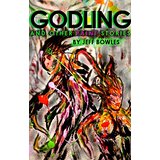
In my post last week, Today’s Authors Wear Many Hats, I talked a little about the roles authors play in the publishing process vary between traditional and independent publishing. It got me thinking about how much the publishing process has changed since the days when I sold my first poem in 1997, before computers, the internet, and the digital revolution hit the scene.
I remember back in 2010, when I first started doing the Southern Colorado Literature Examiner gig, independent publishing, (or self-publishing, was frowned upon, the general feeling being that if you could write, you’d be able to get a traditional publisher. Digital media was still fairly new, but it opened up opportunities that made it so virtually anyone could get a book published. But, self-published authors were generally thought to be author want-to-bes, lacking in the talent and ability, so they had to publish their own book.
Over time, opinion toward self-published authors has changed, but I think it has been a long, hard struggle for self-published authors. Amazon came along and said, “Pssst! Hey! Yeah you. You got a manuscript you want to get published? You can sign on with us and publish your book for free.” Suddenly, anyone could publish a book, and just about anyone did. There were those who just want to get their book out quick and not spend the time or money required to put out a quality piece of literature, who have further tarnished the name of independently-published authors. But there truly are some fine authors out there who have chosen to self-publish in spite of the stigma attached to independent publishing, who have proven that the quality of an independently published book can be every bit as good as those put out by traditional publishers.
It was only within the last five or six years that feelings toward self-publishing have shifted. While earning my M.F.A. I watched the opinions of my professors, who are all successfully published authors change over time, from warning against self-publishing to viewing it in a more acceptable light and actually presenting it as a viable option for today’s emerging authors.
With all this in mind, I’ve asked both authors and publishers to share their thoughts on both self-publishing and traditional publishing, for this, Pros and Cons of Self-Publishing vs. Traditional Publishing article series. I hope you’ll join me as I delve into this discussion with some representative players in the publishing game.
My first interview is with self-published author, Jeff Bowles, who has had numerous short stories published by in reputable publications such as Stupefying Stories Showcase, PodCastle,Nashville Review, The Threepenny Review, Pseudopod, and Spark: a Creative Anthology. He recently self-published his collection of short stories, Godling and Other Paint Stories on Amazon. Jeff was also one of my cohorts in the Creative Writing program at Western State,so he now has his M.F.A. with emphasis in genre fiction. He is a talented writer, with a self-proclaimed god complex, who has written some amazing stories.
Kaye: You’ve had quite a bit of short fiction published. Are there any publishing credits I didn’t mention in my introduction?
Jeff: My first short story appeared in an academic student arts journal called Riverrun, I also recently made a sale to Black Static also.
Kaye: When did you know you wanted to be an author?
Jeff: I knew when I met my wife. I was a musician before, though I’d always wanted to be an author of some sort since I could remember. We wanted to have a family someday so I just decided working from home as a writer would always be better than touring as a singer/songwriter. I began my professional writing career about eight years ago now, I guess. Never looked back, but believe me there have been times I’ve wanted to. The very first story I wrote was in the third grade and it was a nice little piece of Star Wars fan fiction, in which Uncle Owen comes back to life as a dark Jedi assassin with wolf fur. Luke was gonna be in trouble, man!
Kaye: As a rising author, are you in favor of traditional publishing, self-publishing or a combination of both?
Jeff: I think a combination of both is definitely the way to go, though traditional publishing will always be the best as far as I’m concerned. If you’ve got the resources and you can snag reviews and distribute advanced copies of your work to the right people, self-pubbing is a damn fine way to get seen. But as an industry, we’re predicated on the big sales to the big publishers. I’d recommend young writers do their best to place their material with the largest publishers they can, and then if all else fails, get your stuff out there via Amazon or Barnes & Noble or some other online service.
Kaye: What do you see as the pros and cons of independent publishing?
Jeff: The major pro is that it’s easy to do these days. Every sale you make comes to you and if you’re good at self promotion, you can make a major dent in your readership just by being out front and being you. The major con is that the traditional publishing industry will always have more resources to throw around for their big name authors, which means if you can get to that place, you’ll never want for an audience and you may not have to do too much legwork yourself.
Kaye: What do you see as the pros and cons of traditional publishing?
Jeff: As far as pros go, it’s the industry that can get you a spot in the NYT Bestsellers list, though the odds of that happening are always going to be slim. Cons of traditional publishing include the realization that as a new author, you’re going to be sidelined a bit in favor of writers who’ve been around the block a few times. You will still have to do most, if not all of your own promotional work, though distribution and rights management will most likely be on autopilot. Get yourself a good literary agent to negotiate your contracts and make sure you keep working your butt off after that first book hits the market. When it comes to short story sales, traditional publishing is definitely still the name of the game. If you can get your work published under the umbrella of a large publisher, you definitely should.
Kaye: How much non-writing work, (marketing & promotion, illustrations & book covers, etc…), did you have to do yourself to publish your book?
Jeff: There are a ton of resources these days for marketing and promoting a book. Amazon has it’s own internal advertising service which puts your work right in people’s faces over their Kindles, and Facebook and Google also allow for promotions which can be seen by thousands of eyes a day. I painted the cover of my book myself, and the interior design was mine as well. If you haven’t got any artistic ability you can hire craftspeople on the internet to help you put an amazing-looking book together. I was kind of lucky in that it hasn’t cost me much at all to produce Godling and Other Paint Stories, but if I had a bit more money, I know I could very easily be doing more. The sky’s the limit with this stuff. Your marketing potential will be matched by your time and resources.
Kaye: Would you recommend other authors publish independently? Why or why not?
Jeff: I would certainly recommend it. I think in a perfect world you’d want to be doing maybe 70% to 80% of your publishing via the traditional model, but I don’t know that I’d want to give up self-publishing entirely, just because it allows for so much flexibility. I’ve got material in my personal archive that’s never seen the light of day and I know for a fact much of it would be too risky for a traditional publisher. You can kind of stick your experiments and B-sides on Amazon at anytime. I love that about modern publishing. No matter what you do, you’ve got the ability to get your work seen, and that’s the ultimate high for a writer.
I want to thank Jeff Bowles for sharing his thoughts with us here on Writing to be Read, and I hope you will all drop by in the following weeks to hear from more authors, both independently and traditionally published, and publishers, too, to see how opinions vary on traditional vs. independent publishing models.
Like this post? Subscribe to Writing to be Read for e-mail notifications whenever new content is posted.
Share this:

Weekly Writing Memo: Overcoming the Blank Page
Posted: August 17, 2016 Filed under: Books, Fiction, Publishing, Stories, Uncategorized, Weekly Writing Memo, Writing | Tags: Creative Fiction, creative process, Fiction, Screenwriting, Writing, writing advice, Writing Process 1 Comment Sometimes when it comes to writing, the hardest thing to overcome is the simplest. One such example of this is to overcome the intimidation of a blank page and to simply get started. Those first moments when you sit down in front of the page and tell yourself you’re going to write can be huge, and overwhelming. All sorts of thoughts can pass through your head that make putting the first words down on the page near impossible. Am I good enough? Do I have anything to say? How do I do this? Will anyone want to read it? Etc. These kinds of thoughts can stop your writing in its tracks before you even begin. Knowing how to overcome the blank page can be vital, and while there isn’t a method that works for everyone, there are several things that I find work well.
Free Write First
One of the easiest ways I find to get into writing is to simply allow myself to free write for a while. Even if I have a specific story idea in mind, I will sometimes think of my character or my setting and just write whatever comes to mind. It doesn’t always flow in a pretty way, or even make sense, but it does allow me to explore the characters or setting without restrictions and it gets me writing. Once I start putting words on the page, focusing them becomes easier. I also find that just getting started on the act of writing makes some of the tension around writing dissipate. So however you do it, get started by freewriting and getting words on the page. Even if you have to start by writing about your day or something, see where the freewriting takes you. Once you no longer have a blank page, it’s easier to focus on creating something cohesive that you can turn into a story.
Copy Someone Else
This is a method that has been around for a while, and was even used in the movie Finding Forrester. When you are just getting started writing and struggling, try grabbing a random book and copying down the first paragraph of it. As you are writing, let your mind wander, and when you’re comfortable, stop copying and start making it your own. Sometimes using someone else’s work to get you started writing can help you transition into your own work. Just remember to go back once you finish and to change the beginning so it is no longer copying the original author’s work. The key to this is that it gets words on the page, and in making what you write your own.
Make A Rough Outline
When I have a specific story idea in mind, but am struggling to get started, I find that writing down 3-5 bullet points of where I want the immediate section of story I’m working on to go helps. Usually I will do this when I start each chapter. I grab a piece of paper and jot down the 3-5 key moments of the chapter that form the arc of it, then when I write I have “goals” to write toward. It’s just enough outlining to keep the story focused while I’m writing, but not so much that people who hate outlining will feel like they’ve over planned anything.
It works for me because I prefer abbreviated outlines, and it allows me to discover how the characters get from one big moment to the next as I write. So take a few moments to create a small arc for what you want to write, and then let yourself write to those points. It’ll help you visualize what you’re planning to write, and it’ll give you points in the story to write toward. Just try not to make your bullet points too broad, or you can end up feeling lost as to where to start again.
Try a Different Medium
One of the last things I try when I’m struggling to write is to switch mediums. Sometimes I find that I just can’t write a certain story at the computer, and instead I end up writing with a notepad and pen. It seems silly, but just switching mediums like that can actually help get you started. Sometimes I think the notepad works better than the computer when I’m struggling because the notepad feels less permanent and professional. I’m just jotting down ideas! Not writing for real! Which isn’t true at all, but it feels that way. So allow yourself to try a different medium and see if it changes anything. At the very least, switching to something like a notepad where you can do things by hand can allow you to doodle and jot ideas to brainstorm while you are working on getting to the real writing. Which can be just as productive.
Final Notes:
The final thing to remember if you are stuck on the white page is that you don’t have to start by writing right away. If writing simply isn’t working, trying outlining or researching or brainstorming for your story. If you do those things, you’ll still be working on your story in some way, and maybe it’ll help you feel more confident so you can get started. Just remember, at some point you have to stop doing these things and get to the writing, so don’t procrastinate too long!
Share this:

Acceptance or Rejection – Which do You Prefer?
Posted: June 27, 2016 Filed under: Commentary, Fiction, Opinion, Promotion, Publishing, Western, Writing | Tags: Acceptance, Creative Fiction, Fiction, Flash Fiction, I Had to Do It, Kaye Lynne Booth, Rejection, Western, Writing 1 Comment
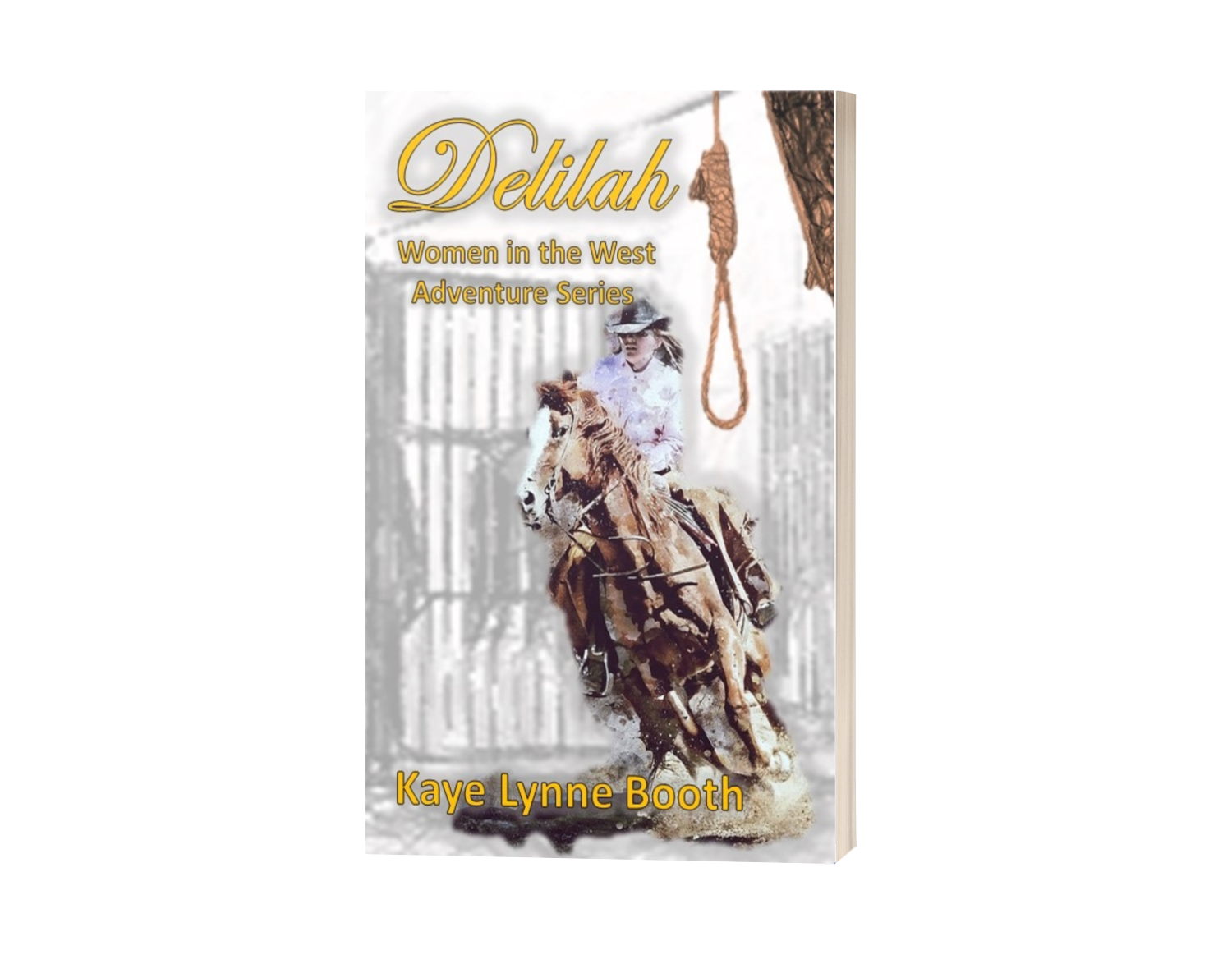
 Back in May, I wrote a post about dealing with the rejection by a publisher of Delilah. My response to the rejection was to submit my novel elsewhere and keep hoping it will get picked up. More recently, I did a post on hybrid publishers, as I explored the concept after I had a hybrid publisher request my full manuscript. Unfortunately, they passed on Delilah, too. It is out to yet another publisher now.
I could go into another post about rejections. Lord knows, I’ve gotten plenty. But I’ve always been one to see the glass half-full side, rather than half-empty, focusing on the positive side to everything, so I think I’d rather talk today about acceptances. I don’t think anyone will disagree when I say acceptances are much better than rejections. You don’t have to be a writer to figure that one out.
You don’t get them as often as rejections, but they’re a lot more satisfying. But there’s a reason I want to write a post on acceptances. If you follow me on Facebook, or Twitter, or Google+, you may have seen my very recent post announcing that my flash fiction western story, I Had to Do It, has been picked up by Zetetic: A Record of Unusual Inquiry.
It’s true this isn’t a big paying publication. I’m certainly not going to get rich from this one little 850 word story. Flash fiction never pays a lot. There’s simply not enough words to make the pennies add up to much, even with higher paying publications. But, I was still elated when I received the acceptance, because my story found a home and people will now read it, and because it is still one more publishing credit for me. I can’t explain the rushing feeling of excitement and pride that small note from the editors brought me. I think most of all, it was thrilling to know that someone else really liked my writing. It was a affirmation of my own belief that my writing really is pretty good.
That probably sounds silly to those who have not yet received an acceptance. (Never fear. It will come.) But we writers are an odd lot, and we are filled with fears and self-doubt. Filled with it. Most of the time we can keep these elements of our inner beings at bay by simply pecking away at the keyboard or filling up sheets of notebook paper, but every once in a while we let our guards down and that’s when they strike. The fear and self-doubt simmer in us, just down below the surface, until they see an opportunity, a weakness, and then they reach up and grab a handful of us and don’t let go.
I think just about every writer worries that the only person in the whole world that really thinks their writing is good is themselves. Friends and family don’t count because they may be saying they like it so as not to hurt your feelings. When you receive an acceptance, any acceptance, it tells you other people do like your writing, and motivates you to get busy writing more.
It’s a good feeling. One I think every writer needs to experience. It can’t happen unless you submit relentlessly and write, write, write. That’s my advice. Write your heart out and then submit like crazy, and never, ever give up. The notes that say, “yes”, make it worth surviving all the ones that said, “no”. So what are you waiting for? Get writing!
Like this post? Subscribe to Writing to be Read for e-mail notifications whenever new content is posted.










Today’s Authors Wear Many Hats
Posted: October 3, 2016 | Author: kayelynnebooth | Filed under: Books, Commentary, Opinion, Promotion, Publishing, Writing | Tags: Books, Opinion, promotion, Writing | 5 CommentsIn days gone by, authors needed only to wear a “Writer’s Hat”, their agent taking care of finding a publisher for their work, the publisher taking care of the actual publication and all of the marketing and promotion. But, today’s author has seen the rise of Amazon and digital publishing, and a surge in the self-publishing industry as a whole. The surge in the self-publishing industry brought about many changes, including what an author’s role is in the publication process. The rise of Amazon and digital publishing changed the way readers consumed the written word and the ways in which a writer’s works reach the general public, and boosted their book’s potential readership to a global scale.
With traditional publishing, an author writes a novel or has an idea for a book, in the case of non-fiction, so they query publishers to if they can find one who is interested in their work. When they finally receive a letter expressing a publisher’s interest in their work, amid all the letters of rejection, they send their complete manuscript o the publisher, or in the case of non-fiction, they finish writing their book and then send it. Then they wait some more while other read and ponder their work, and then pass judgement on it. If they are accepted they may receive an advance, but some publishers only offer royalties. My M.F.A. professor, Russel Davis advised, “Get as big an advance as you possibly can because chances are you’ll never see any royalties.” He advised this because he knows the advance is just that, and it must be paid back before any royalties can be owed you, so that advance may be all you ever get for your book, unless of course it goes viral and hits all the best seller lists. (Hey, stranger things have happened.)
The rise of digital publishing offered more publishing choices than ever before. Now an author can publish their book digitally or in print, or both. The rise of Amazon, with their 70% royalty for authors made it possible for authors to publish their work with very little out of packet expense, and Amazon’s market spans the globe, offering a much broader potential readership than would have been possible before. Amazon does offer any advance, in exchange for a higher percentage of royalties, so you still have to sell a lot of books to make any real money, although small amounts will trickle in from time to time.
Other changes Amazon and digital publishing brought about may not have been quite so positive. Amazon doesn’t charge the author up front to publish a book, so anyone can afford to publish with Amazon, and anyone did. There was a rise in the number of authors who chose to self-publish, but many of them weren’t any good, or were just too lazy to have their book edited and revise it before publication. The result was a lot of poor quality books out there, giving self-published authors a bad reputation in “reader world”. And that’s where it counts. Although many good authors self-publish high quality books, you know the old cliché, all it takes is one bad author the reputation of the whole bunch.
So, which way is better, independent or traditional publishing? I still don’t know, but be on the lookout for a series of articles that look at the pros and cons of each, “Traditional vs. Independent Publishing”, which will delve into this question further. I suspect it will depend on what your individual needs are, and what you’re expectations from publication are. I plan to interview authors and publishers to find out the answers. To be sure you don’t miss them, subscribe by email in the upper right hand corner, and you’ll receive notification every time there is a new post.
For now, it looks like either way an author chooses to go, he or she had better purchase a hat rack, because it doesn’t like we’ll be hanging any of them up for good any time soon. On top of writing, authors today must also know how to market and promote our work, build an author platform, create book trailers, and those of us who are gifted with artistic talent even illustrate their own books and design their own book covers. For now, it looks like that’s what we have to do to publish our books successfully.
Like this post? Subscribe to Writing to be Read for e-mail notifications whenever new content is posted.
Share this: