Posted: July 17, 2020 | Author: kayelynnebooth | Filed under: Audio Books, Book Review, Books, Fantasy, Fiction | Tags: Audio Books, Book Review, Chris Barili, Fantasy, Marc Swezczyk, Shadowblade, Writing to be Read |
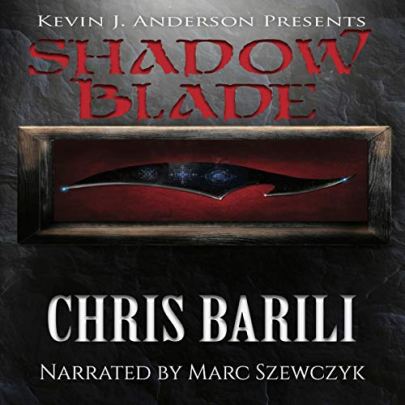
Audiobooks. They are the latest digital form of literature, quickly rising in popularity with readers on the go. And why not? What a great way to multitask. Instead of having to find a quiet time to sit and read the printed word, you can listen to the story while getting multiple things accomplished. I listened to Shadowblade, by Chris Barili, narrated by Marc Swezczyk while ironing, while cleaning the bathroom, while driving, and while sitting at the campfire. It was kind of cool to do chores when I’d rather be reading, and actually be able to do both.
As my first experience with audio books, I found it to be a convenient form of literature. I received my copy via my Kindle Fire, through Amazon. Like digital books through Amazon, it downloaded to my Fire automatically. It was time saving, in that I could listen to it at times that normally would be uproductive to my writing. It reminded me of the old radio serials, but you can start and stop whenever it is convenient, and don’t have to wait a week to find out what happens next. I think I could have gotten through the book a lot quicker in overall time spent reading, had I read it myself, just because I read faster than the pace of narration, but by allowing me to listen at times when I normally wouldn’t be able to read, it was helpful with my very busy schedule.
Marc Swezczyk was a good choice for a narrator on this story, in that his dialects and difficult name pronunciations sounded quite natural. His voice changed slightly for each character switch, making dialog easy to follow, as well. However, outside of the dialog, his narration falters with an unvaried pace and lack of inflection. This causes the some of the pain stakingly crafted action scenes to fall flat and the narrative seems to drone on in places. Having previously reviewed Shadowblade, I honestly didn’t feel as though Swezcyyk made this story shine as brightly as it could have.
Shadowblade is a great fantasy story, and Marc Swezczyk’s narration brings the interesting and diverse characters to life in the audio version, however he was unable to draw me into the scenes, which does not do this superbly written story justice. I give Shadowblade audio four quills.

I see the audio book being the future of literature, so I wonder how it is from the author’s side of things. If you are an author who has tested the waters in the audio realm, please comment to share your experiences with audio books. Is it easy to publish audio? Was it difficult to find a narrator? Is it expensive? We here at Writing to be Read want to know.
Kaye Lynne Booth does honest book reviews on Writing to be Read in exchange for ARCs. Have a book you’d like reviewed? Contact Kaye at kayebooth(at)yahoo(dot)com.
Posted: July 6, 2020 | Author: kayelynnebooth | Filed under: Books, Fiction, Paranormal, Stories, Western, Western Paranormal, WordCrafter Press | Tags: 2020 WordCrafter Short Fiction Contest, Short Fiction, Short Stories, Spirits of the West, Western Paranormal, WordCrafter Press, Writing to be Read |

It’s taken twice as long as it should have, but I am now proud to announce the winner of the 2020 WordCrafter Short Fiction Contest. This year’s theme genre was western paranormal, requiring story submissions to contain both western and paranormal elements. WordCrafter left the guidelines open to loose interpretation, resulting a wide variety of story submissions, in which the required elements were used in some very creative ways. It was a difficult choice, but I’m happy to congradulate Enid Holden on her wonderful story, “High Desert Rose”.

As the winning submission author, Enid will receive a $25 Amazon gift card and her story will be published in the WordCrafter western paranomal anthology, Spirits of the West. We’re aiming for a release date sometime in October, so be sure and watch for it. The anthology will also include “Gunsmoke”, as a tribute to the author, the late Tom Johnson, as well as stories by several of authors from last years antholgy, Whispers of the Past.
Like this post? Let me know in the comments. You can be sure not to miss any of Writing to be Read’s great content by subscribe to e-mail or following on WordPress. If you found this content helpful or entertaining, please share.
Posted: June 8, 2020 | Author: kayelynnebooth | Filed under: Ask the Authors, Books, Collaboration, Craft and Practice, Nonfiction, Writing, Writing Inspiration, Writing Life, Writing Process, Writing Reference, Writing Tips | Tags: Ask the Authors Anthology, WordCrafter Press, writing advice, Writing Reference, Writing Tips, Writing to be Read |
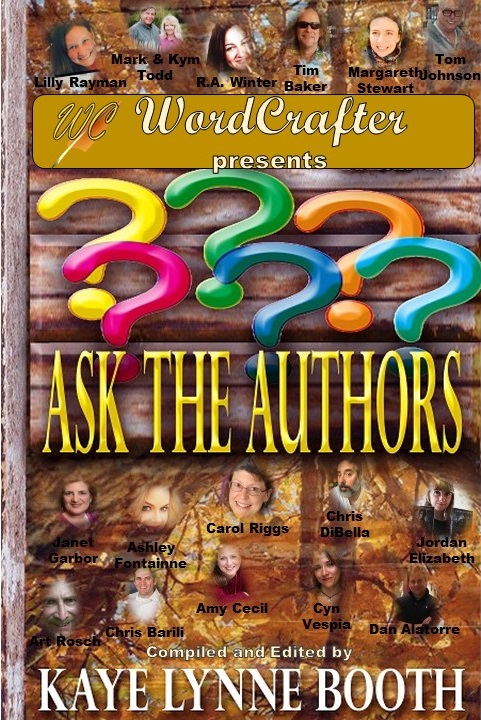
It has been two years in the making, but I’m pleased to announce that the WordCrafter Q&A anthology, Ask the Authors, has finally been released. This anthology has its origins right here on Writing to be Read back in 2018, when I ran a twelve week blog series of the same name. I compiled those interviews to create a valuable author’s reference, with writing tips and advice from seventeen different authors on all areas of writing, craft and promotion.
Contributing authors on this project include Dan Alatorre, Tim Baker, Chris Barili, Amy Cecil, Chris DiBella, Jordan Elizabeth, Ashley Fontainne, Janet Garber, Tom Johnson, Lilly Rayman, Carol Riggs, Art Rosch, Margareth Stewart, Mark and Kym Todd, Cynthia Vespia, and R.A. Winter. Single and multi-genre authors combined, write fiction for both Y.A. and adult readers, in a multitude of genres: medical thriller, science fiction, commercial fiction, action/adventure, crime fiction, weird western, romance, steampunk, fantasy, paranormal fiction, murder mystery, thrillers, speculative fiction, pulp fiction, literary fiction, humor, nonfiction, dark fantasy, and western. Subject matter includes all aspects of writing from process and inspiration, to craft and practice, to publishing, to marketing and book promotions. This is one writing reference no author should be without.
Get your copy today!: https://books2read.com/u/mdzvwO
Like this post? Let me know in the comments. You can be sure not to miss any of Writing to be Read’s great content by subscribe to e-mail or following on WordPress. If you found this content helpful or entertaining, please share.
Posted: May 27, 2020 | Author: kayelynnebooth | Filed under: Character Development, Fiction, Mind Fields, Writing | Tags: Art Rosch, Character Development, Feedback, Mind Fields, villains, Writing, Writing to be Read |

Mind Fields
Nothing infuses energy into a story like a good villain. If you ardently hate a villain in a book you’re reading, then you’re hooked! You’ve invested emotion in the battle between good and evil, you’re waiting for justice to be served.
These wicked characters must get under your skin. They have to arouse a visceral sense of repulsion and fear, the way spiders and snakes evoke primitive terror, the way decaying fecal ooze repels the senses. Villains are difficult to write because we instinctively recoil from the dark sides of life and the more grotesque aspects of our selves. That dark side, that shadow, is the only place from which a truly compelling villain can emerge. We can’t tear off evil like a number at the grocery meat counter.
“Number Twenty Two!”
“Here I am. Let’s see. What have you got that’s horrible and scary?”
Let us pause and consider the concept of Evil. What is it?
I’ve parsed my own definition of evil to a simple formula: Evil is the inflicting of pain to avoid pain. Evil lays its destructive spell on those in its path because someone (or some Thing) has found reliable ways to scatter pain onto others. I exclude those beings who enjoy causing pain because it’s their nature. Such creatures exist, but not for the purpose of this essay.
Evil characters have malice and they have power. Many of them are concealed behind a facade of charm or apparently benign goodwill.
Evil people are trying to wriggle out from under a burden of pain by forcing others to feel that pain.
It’s not always so simple. Each of us is a composite personality. Our inner child is really a little car filled with squabbling midgets. The steering wheel passes from hand to hand, the brakes are fought over, the car veers crazily.
A villain takes advantage of the muddle of human nature by having a clear point of focus. A fixation, an obsession, a purpose. This purpose empowers the villain at the expense of ordinary people. Bad guys know who they are and why they act. In many narratives the hero struggles with doubt and obscurity of motivation. His struggle isn’t just with the villain; it’s with his own confusion. When he sees clearly, when he knows what he wants, he obtains the weapons he needs.
All through this post I’ve been thinking of two characters: Adolph Hitler and South Park cartoon nasty Eric Cartman. Hitler annihilated millions; Cartman is a fictional character in a television show. Yet they have attributes in common.
My emotions regarding Hitler are an historical abstraction. He’s become a universal symbol of evil. Cartman, on the other hand, keeps my guts in an uproar. I HATE the fucker, I loathe him! It’s a very personal engagement.
The lessons of Cartman are numerous. All of his actions are manipulations. He is completely without sincerity. He’s a bigot. There is no minority group who escapes his ire. When he’s told that white people have become a minority group, he simply doesn’t hear the message. This may be Cartman’s greatest signifier: his inability to hear anything with which he disagrees. Intellectual and moral deafness is a widespread symptom of evil.
Cartman, and villains in general, like to blame other people for their own emotional discomfort. This profound moral choice, to blame others, is a basic step into the world of evil. When writing a villainous character, it’s useful to give him someone to blame. Give him a scapegoat.
A villain can’t be frightful without power. It may be supernatural power, political power, military power, physical power, but a villain cannot elicit fear, revulsion and anger without significant power. It’s the abuse of power that sparks the reader’s anger. Most of us see power as a privilege that entails responsibility.
We get angry when power is used for gratification of the ego and the appetites.
Cartman’s power comes from several sources. He’s clever, inventive, without moral scruple and completely selfish. His mother gives him everything he wants because it’s easier that way. Cartman is a fatherless boy. His mother always takes the lazy way out; she gives in to her son’s demands. If I take South Park as a microcosm, a model for the larger society in which we live, Cartman’s mother represents economic power. She makes him rich in comparison to the other kids.
He has all the latest toys, the best video games and a total lack of supervision.
To further amplify Cartman’s power he has a follower: Butters. This sweet but witless innocent will go along with any outrageous scheme Cartman dreams up. Cartman generates momentum. While Stan, Kyle or Kenny may have qualms about Cartman’s ideas, Butters is always there to support him. The plan, the idea, the scheme always seems to run away with itself before it can be thought through.
Its consequences are never anticipated. The only brakes on Cartman’s destructive power are the other boys’ common sense and lack of malice. In the end, Cartman always brings himself to destruction, but he will never admit defeat. In some people this is an admirable trait. In Cartman, it’s merely irritating.
In Hitler it cost millions of lives. If Cartman were a real adult person he would be a frightful monster. Think what Hitler and Cartman have in common. Scapegoats. Blame. Moral and intellectual deafness. Unwillingness to take responsibility for errors in judgment. A will that generates great momentum, and attracts followers who are willing to obey without question.
In the episode called “Breast Cancer Show Ever” Cartman takes a schoolyard beating by a mere girl, by Wendy Testaburger. She played the righteous avenger when Cartman mocked breast cancer and persisted in telling hurtful jokes on the subject of breasts. When she established the time for the duel, when Cartman realized that Wendy was serious, he tried to buy her off. She would have none of it. In spite of the fact that Cartman was pounded to a bloody mess, he twisted events in his mind so that he won the fight, that he was still “Cool”, or “Kewl” in the eyes of his compatriots. Kyle and Stan told Cartman “You suck, you’ve always sucked. We hate you.” Cartman can’t hear these declarations. He is still Kewl.
This amazing deafness made me want to jump through the screen and pound the fat twerp to a pulp. My emotions were completely engaged. When a writer can raise the emotional stakes to such a pitch, that writer has succeeded in creating a compelling villain.
I have used a silly villain in a silly cartoon show to highlight the power of a good villain to propel a good story. Ignore Cartman at your own risk. He’s a first class little asshole.
People ignored and dismissed Hitler as a buffoon. We know what happened to those people. Monstrous villains have arisen throughout history. We are writers; we deal in fiction. The most frightening villains in fiction draw resonance from history’s tyrants. Lazy writers may imitate these tyrants in their narratives. Good writers draw villains out through themselves, knowing that each of us is capable of monstrosity.
A Midwesterner by birth, Arthur Rosch migrated to the West Coast just in time to be a hippie but discovered that he was more connected to the Beatnik generation. He harkened back to an Old School world of jazz, poetry, painting and photography. In the Eighties he received Playboy Magazine’s Best Short Story Award for a comic view of a planet where there are six genders. The timing was not good. His life was falling apart as he struggled with addiction and depression. He experienced the reality of the streets for more than a decade. Putting himself back together was the defining experience of his life. It wasn’t easy. It did, however, nurture his literary soul. He has a passion for astronomy, photography, history, psychology and the weird puzzle of human experience. He is currently a certified Seniors Peer Counselor in Sonoma County, California. Come visit his blogs and photo sites. www.artrosch.com and http://bit.ly/2uyxZbv.
Want to be sure not to miss any of Art’s “Mind Fields” segments? Subscribe to Writing to be Read for e-mail notifications whenever new content is posted or follow WtbR on WordPress. If you find it interesting or just entertaining, please share.
Posted: May 22, 2020 | Author: kayelynnebooth | Filed under: Alternate Worlds, Book Review, Books, Comic Hero, Fantasy, Fiction, Super Hero, Super Villains | Tags: Alternate World, Book Review, Echo One, Mercedes Lackey, Secret World Chronicles, Superheroes, Supervillains, Writing to be Read |

In my theme post for this month, I admitted that comic books and superheroes are not my usual reading fare, but in the spirit of our May celebration, I felt the need to review outside of my norm. Echo One, by Mercedes Lackey, Cody Martin, Dennis K. Lee and Veronica Giguere is an anthology of short stories which are set in the Secret World Chronicles universe, which I am unfamiliar with, so in reading this book, I’m at a slight disadvantage. However, as I read through these delightfully entertaining stories, a few things about the Secret World Chronicles universe quickly became clear, and although I had no backstory on these characters, I was easily able to immerse myself in each individual story, and invest myself in some of the characters, particularly Vicky Nagy and her rather unusual family.
This secret world takes place during WWII, and humans with super powers, called metahumans, exist on both sides of the conflict, which makes them excellent superheroes and supervillains. As you can imagine, the possibilities of metahumans on the German side triumphing, open up a plethora of world altering consequences that must be prevented. Great superhero stuff!
In addition, there are others whose powers lay in the world of magic, opening up realms of possibilities for the good guys to save the world. They are of a secret society, with only a few select humans who are aware they anything but the metahumans they pass themselves off to be. I found these stories to be really fun reads, and I didn’t have to know all the details of previous tales in order to enjoy them thoroughly. The characters are colorful and unpredictable, with the potential for surprise lurking behind every turn of the page.
Alternate universe superhero stories are always fun and entertaining reads, and Echo One is no exception. Great for those times when you’re not in the heavy literary mood and are just reading for the pure enjoyment of it. I give it four quills.

Amazon Buy Link: https://www.amazon.com/Echo-One-Tales-Secret-Chronicles-ebook/dp/B087QV6D5Q/ref=sr_1_1?crid=VKWWZF1LONQ5&dchild=1&keywords=echo+one+lackey&qid=1589244140&s=books&sprefix=Echo+One%2Cstripbooks%2C797&sr=1-1
Kaye Lynne Booth does honest book reviews on Writing to be Read in exchange for ARCs. Have a book you’d like reviewed? Contact Kaye at kayebooth(at)yahoo(dot)com.
Posted: May 18, 2020 | Author: kayelynnebooth | Filed under: Character Development, Chatting with the Pros, Comic Hero, Crime, Fiction, Super Hero, Super Villains, Writing | Tags: Chatting with the Pros, Comic Book Heroes, Kevin J. Anderson, Superheroes, Supervillains, Writing to be Read |

I am so pleased to welcome my author guest this month on “Chatting with the Pros”. He is the most prolific writer I know and he’s written numerous books that have made international bestsellers lists. He’s best known for his science fiction and fantasy stories, but he’s done a good amount of writing for hire and lives by the motto of, “I can do that”. I’ve asked him to join me here today as we celebrate superheroes and supervillains, because of one single book that he wrote, Enemies and Allies, which delves into the universe of superheroes, in hopes that he will share with us his unique perspective on this often overlooked genre. Please help me welcome Kevin J. Anderson.

Kaye: When did you know you wanted to be an author?
Kevin: When I was five, even before I could write. I knew I wanted to tell stories.
Kaye: You’ve been on bestseller lists, won multiple-awards for your writing, had your books made into screenplays, published both short fiction and novel length works, collaborated with some big name authors, and started your own independent press. In your own eyes, what has been your greatest writing accomplishment to date?
Kevin: I think the greatest thing is being able to do what I love and actually make a living at it—not getting one thing published, not winning an award, not seeing a movie option on one of your stories, but by being able to do this not as a hobby, but as the thing by which I pay the bills. I’ve been full time for 25 years now. I’m probably unemployable otherwise.
Kaye: Do you remember the first book you ever read?
Kevin: THE TIME MACHINE by HG Wells
Kaye: In Enemies & Allies, who was the most difficult character to write? Why?
Kevin: Superman/Kal-el/Clark. Sometimes he comes off as a simplistic boy scout, but I really think I got to the core of why he’s a superhero, and why he’s very human at the same time.
Kaye: How does writing a superhero or a super villain differ from writing plain old heroes and villains? What makes super heroes so special?
Kevin: They can do bigger, more epic things, which is great fun as a writer, but you also have to give them greater weaknesses. The things they do MATTER to the future of the world and the human race, not just “Gee, who’s going to ask me to prom?”

Kaye: In Enemies & Allies, which superhero did you favor, Batman or Superman?
Kevin: I found Batman much easier to write and understand, a gritty lost soul, and so I worked a lot harder to get just as deep into Superman, to flesh him out more, and I think I succeeded in finding a very good balance between the two extremes while keeping them both heroes.
Kaye: What is the hardest part to writing a super villain?
Kevin: Supervillains are fun. You can be as twisted as you want and you can dive into their motivations. Why are they the bad guy?
Kaye: Which would you rather write, a superhero or a super villain? Why?
Kevin: Supervillains. But in most of my writing I try to make it a matter of perspective as to who is the villain and who is the hero. Depends on what side you’re on.
Kaye: Do you see superhero/supervillain qualities coming out through the characters in your other stories? Which stories do you see this in most?
Kevin: I still consider them all as characters, with good sides and bad sides, each with powers or skills. I have only done two superhero books out of my 165 titles, so actually approached it the other way around, bringing all my other writing skills to bear in a novel featuring superheroes.
Kaye: Imagine a future where you no longer write. What would you do?
Kevin: Wait, another apocalypse??? Hmmm, if I couldn’t write, I would be a publisher or a public speaker or a teacher…but I’m already doing those things. In these times, you can’t just be ONE thing. If I had to scrap everything related to the industry, I suppose I would be a forest ranger, because I love the outdoors.
Kaye: Is there anything unique or unusual about your writing process?
Kevin: I get a lot of attention because I do all my writing by dictation, talking into a digital recorder while I hike. But I have been doing it for thirty years, so I don’t consider it unusual at all.
Kaye: Which is your favorite type of writing? Short fiction? Novels? Comic Books? Screenplays? Poetry? Graphic Novels? Why?
Kevin: Novels. I like the big scope, a project I can sink my teeth into and spend lots of time developing it.
Kaye: What advice do you have for aspiring authors?
Kevin: Don’t quit your day job. Keep writing and refining and getting better, and never stop.
Kaye: What do you think is the single most important element in a story?
Kevin: It’s not a single-element thing. It’s like saying which is the most important wheel on your car. You have to get the plot, the characters, the prose, the worldbuilding, the idea, everything.
Kaye: What is the one thing in your writing career that is the most unusual or unique thing you’ve done so far?
Kevin: Probably working with legendary Rush drummer Neil Peart to convert the last Rush album, Clockwork Angels, into a bestselling novel. One of my proudest accomplishments.
I want to thank Kevin for joining me today and sharing his insight into the making of a superhero or supervillain, and his thoughts on writing. Kevin is currently working in the fantasy realm, with his newest thoughts on Gods and Dragons. You can learn more about Kevin and his books at WordFire Press or on his Amazon author page.
Also, Kevin’s convention bookstore is no longer traveling, so there are a lot of signed copies of his books in inventory right now, as well as some obscure and hard to find books. Some sets discounted to half-price or even more, including all six original Dune books for $30. You can check out the selection at http://www.wordfireshop.com.
Join me next month, when we will be delving into speculative fiction, and my “Chatting with the Pros” author guest will be Dave Wolverton.
Like this post? Let me know in the comments. You can be sure not to miss any of Writing to be Read’s great content by subscribe to e-mail or following on WordPress. If you found this content helpful or entertaining, please share.
Posted: May 4, 2020 | Author: kayelynnebooth | Filed under: Animation, Blog Content, Comic Hero, Movies, Super Hero, Super Villains, Writing to be Read | Tags: Comic books, David Perlmutter, DC, Echo One, Encyclopedia of American Animated Television Shows, Jason Henderson, Kevin J. Anderson, Marvel, Superhero, Supervillain, Writing to be Read |
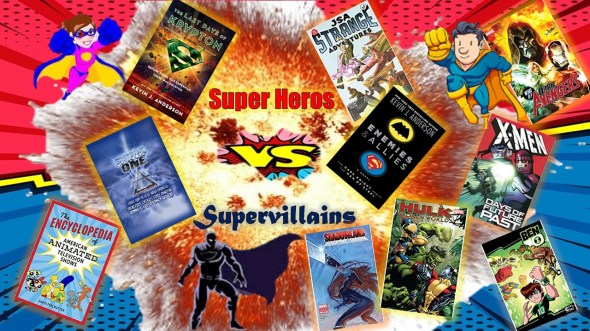
In May, on Writing to be Read, our theme is Superheroes & Supervillains in celebration of comic books and comic universes, and all that it has evolved into over the years. Comic books aren’t really in my wheelhouse. I’m more of a Saturday morning cartoon type of gal, with Underdog and Mighty Mouse as my favorite heroes, and I still watch reruns of the original Batman series with Adam West and Burt Ward on ME TV. But I wanted to run this theme because I think there is a little bit of superhero in every protagonist we write, and a little bit of supervillain in every adversary.
Because I’m not versed in the comic universes, I’m turning to others, who know comics and superheroes much better than I. Jeff Bowels is much younger and wiser in this area, and he will be offering us his expertise and insight on the evolution of the comic and its characters this month, as well as a look at the similarities and differences between the characters of the Marvel and DC universes. In addition, my “Chatting with the Pros” author guest this month is international bestselling author, Kevin J. Anderson, who also authored the book, Enemies and Allies. My supporting interview will be with comic author and novelist, Jason Henderson, who most recently authored Young Captain Nemo. Both of these authors appeared at the recent WordCrafter 2020 Stay in Place Virtual Writing Conference and they know what it takes to create superheroes and supervillains in their own science fiction and fantasy writing. My review for The Encyclopedia of American Animated Television Shows, by David Perlmutter posted last Friday, and I will also be reviewing Echo One: Tales From the Secret Chronicles anthology from WordFire Press. And don’t miss “Mind Fields” this month, where Art Rosch will give us a piece on the character development of villains.
Comics are based on serialized art, and Famous Funnies is considered by many to be the first comic book, coming out in 1933 and publishing until 1955. DC‘s Superman got his start in a comic strip, and he was the first character to wear a cape, setting the image for many of the superheroes that have followed. He made his debut in his own comic book in 1939, the same year that Marvel launched Timely Comics. Not long after, DC came out with Batman in Detective Comics #27, the most sought after comic among collectors and fans alike, and he and Superman both celebrated their 80th birthdays last year.
Other superhero characters followed, including Wonder Woman, Green Lantern, Cyborg and Aquaman, who along with Batman and and Superman, came to be known as the Big Seven of DC’s Justice League, and Stan Lee and Jack Kirby’s Fantastic Four: Mister Fantastic, Invisible Girl (now Invisible Woman), Thing and Human Torch, and Marvel’s X-Men: Professor X, Cyclops, Iceman, Angel (later known as Archangel), Beast and Marvel Girl (a.k.a. Pheonix/Dark Pheonix). And let’s not forget Marvel’s Hulk, Spiderman, and Ironman, Wolverine, and DC’s Swamp Thing.
It’s interesting to see how the characters, and comics have evolved into other forms of media. While comic books remain popular, as the turnout for any Comicon can demonstrate, today we see comics and comic book characters in the form of graphic novels, and they’ve made the jump to visual media, first in television, and then in film. We’ve also seen the rise of the anti-hero, giving us characters such as Dead Pool, who are the epitome of the reluctant hero in every hero’s journey. (See my review of Dead Pool (2016) here.) Although superhero, (and anti-hero), movies had a lull in popularity during the 1980s and 90s, they’ve seen a rise during the 21st century and are big money at the box office today. Statista claims that the superhero movies of 2019 grossed 3.2 billion dollars in combined domestic revenue.
However, we can only weigh the strength and goodness of the superhero by the evilness and capabilities of the villains they face. DC wove the history behind how Batman’s first adversary came to become a supervillain, the notorious Joker. Just as superheroes evolve and change, so do supervillains, and the Joker is no exception. He has changed and evolved over the years, but not always on the same evolutionary time table as superheroes. (See Jeff Bowels’ review of Joker from 2019.) But even with a supervillain, who is super-evil, there must always be a grain of humanity that makes them vulnerable. They weren’t just born evil. They have tragic histories that have twisted them into the super-evil, hard hearted villains that they are, and that makes them relatable on some level, even if we can’t bring ourselves to root for them and breath a sigh of relief when they meet their demise.
The heroes and villains in genre fiction may not have super powers or be invincible, but they do share certain qualities with the superheroes and supervillains of the comic book world, like altruism (for heroes), and selfishness and greed (for villains), and basic humanity (for all). They have a lot to teach us about making relatable heroes and villains we can love to hate. Please join us this month as we explore the world of comics, superheroes and supervillains, on Writing to be Read.
I shared above that my favorite comic superheroes as a kid were Mighty Mouse, Underdog and Batman. Let me know in the comments who your favorite superheroes or supervillains are, and why they are your favorite in the comments. Let’s talk superheroes and supervillains.
Like this post? Let me know in the comments. You can be sure not to miss any of Writing to be Read’s great content by subscribe to e-mail or following on WordPress. If you found this content helpful or entertaining, please share.
Posted: May 1, 2020 | Author: kayelynnebooth | Filed under: Animation, Book Review, Books, Classics, Comic Hero, Nonfiction, Super Hero | Tags: Animated Series, Book Review, Cartoons, David Perlmutter, Saturday morning cartoons, Super Heroes, The Encyclopedia of American Animated Television Series, Writing to be Read |
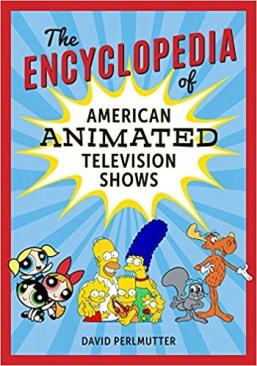
If you are a cartoon buff or just miss Saturday morning cartoons, The Encyclopedia of American Animated Television Shows, by David Perlmutter could prove to be a valuable resource. Who created them? When did they air? Who produced them? Who played the character voice? Summaries of many of these programs are included.
This book has animated series from Abbott and Costello to Zorro. Opening the pages of this book made me feel like Saturday morning cartoons all over again. I found the histories of all of my favorite animated series within its pages; Scooby-Doo, Where Are You?; Casper the Friendly Ghost; The Jetsons; Fat Albert and the Cosby Kids; Bugs Bunny; The Flintstones; and The Smurfs. It even features School House Rock.
There is sure to be something for fans big and small, and they aren’t all from out of the distant past. Younger generations still harboring that inner child may place higher value on more recent animated series, including American Dad; King of the Hill; Southpark; The Simpsons; and Beavis and Butthead.
Of course, it features all of the super heroes from both Marvel and D.C. Comics, from Flash Gordan; Teen Titans; Spider-Man; Superman; Batman and Robin; Wolverine and the X-Men; The Fantastic Four; and even Mighty Mouse and Underdog. Although, none of them have series named for them because they are the bad guys, all our favorite super villains are in there, too.
The Encyclopedia of American Animated Television Series is an invaluable resource if comics are your thing, providing an overview which illustrates how animated series and literature hold a valuable place in the evolution of American entertainment outlets. Filled with a plethora of information on the evolution of animation and comic characters. I give it five quills.

Kaye Lynne Booth does honest book reviews on Writing to be Read in exchange for ARCs. Have a book you’d like reviewed? Contact Kaye at kayebooth(at)yahoo(dot)com.
Posted: April 27, 2020 | Author: kayelynnebooth | Filed under: Ask the Authors, Books, Fiction, Nonfiction, Paranormal, Promotion, Stories, WordCrafter, WordCrafter Press, Writing, Writing Contest, Writing Event, Writing Reference | Tags: 2020 Stay in Place Virtual Writing Conference, 2020 WordCrafter Short Fiction Contest, Ask the Authors Anthology, Whispers of the Past, WordCrafter, WordCrafter Press, Writing Events, Writing to be Read |

WordCrafter
April has been a busy month for WordCrafter. The 2020 Stay in Place Virtual Writing Conference is tomorrow, April 28th. Wow! Even during all this Stay at Home stuff, time has just flown by. I can’t believe the day has already arrived. I hope everyone will join us. If you didn’t recieve an invite you can click on the link above to sign up, (just click on ‘Going’.) That gets you into the free Facebook event portion of the conference, where there will be a video or live stream presentation every hour, as well as author takeovers where you can meet some talented authors and converse via the comment section.
But that’s not all. You can also click on ‘Find Tickets’ to gain access to the interactive portion of the conference on Zoom. (Please do this ahead of time, so I have time to get the access information to you.) This portion of the conference will feature interactive workshops and panel discussions that you won’t want to miss, including the Keynote with Kevin J. Anderson. Each individual session is $5 or you can get an ‘All Events Pass’ and attend all of the sessions for $50. I know many of us don’t have an abundance of money right now, so I tried to keep this affordable.
WordCrafter’s 2020 Virtual Writing Conference
We have 22 presenters, (you can learn more about our talented presenters here), offering presentations, workshops and panel discussions.
- Opening Introductions
- “The Gateway to the Unknown: Poetry Thought Shop” with Rosemerry Wahtola Trommer – 9:10 am
- “The Art & Craft of Writing” workshop with L. Jagi Lamplighter – 10 am
- “Promoting Your Book BIG” with Dave Wolverton – 10:10 am
- Short Fiction Panel: Lamplighter; Raine; Maberry; DeMarco; Wilber; Killiany-11 am
- “The Power of Motivation: What your characters do and why” with Mario Acevedo – 11:10 am
- “Visceral Story Beginnings” workshop with Sean Taylor – 12 pm
- “Story Ideas and the Choices You Make” with Jason Henderson – 12:10 pm
- World Building Panel: Lamplighter; Raine; Maberry; De Marco; Killiany – 1 pm
- “Working with Other People: How to direct others successfully” with Anthony Dobranski – 1:10 pm
- “Writing Across Genres” workshop with Chris Barili – 2 pm
- “Creating Villains We Love To Hate” with Art Rosch – 2:10 pm
- Keynote – “The Popcorn Theory of Success” by Kevin J. Anderson – 3 pm
- “How to Swim Upstream: When you’re not mainstream in your market/genre” with Anthony Dobranski – 3:10 pm
- The Ins & Outs of Writing Media Tie-Ins Panel: DeCandido; Maberry; Nash; Killiany – 4 pm
- “Short Fiction” with L.D. Colter – 4:10 pm
- Book Marketing Panel: Nash; Henderson; Wolverton; Alatorre – 5 pm
- “Writing in the Face of Adversity” with Chris Barili – 5:10 pm
- “The Savage Horror of Back Cover Copy” workshop with Anthony Dobranski – 6 pm
- “The Importance of Promotion” with Bobby Nash – 6:10 pm
- “Business Class Tarot” workshop with Anthony Dobranski – 7 pm
- “The Business of Writing” with Keith R.A. DeCandido – 7:10 p.m.
- “Bringing the Funny: How to Apply Humor in Your Writing” workshop with Jody Lynn Nye – 8 pm
- Closing Ceremonies

While things have been busy in preparation for the conference, I don’t want anyone to forget the fast approaching deadline for the “WordCrafter 2020 Short Fiction Contest”, on April 30th. (See Full Submission Guidelines).There’s still time to submit your story, so put on the finishing touches and polish it up. I’m dying to read your entry!

The great news is that Ask the Authors is finished and finally being released. It’s been a long haul and it was quite a project, but the result is a quality author’s reference no author should be without.
Buy Link: https://books2read.com/u/mdzvwO
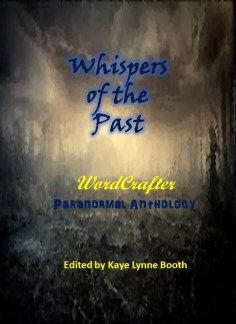
Last, but not least, Whispers of the Past is on sale for .99 cents starting tomorrow, April 28th, 2020 through Thursday, April 30th at all outlets.
Buy Link: https://books2read.com/u/38EGEL
Like this post? Let me know in the comments. You can be sure not to miss any of Writing to be Read’s great content by subscribe to e-mail or following on WordPress. If you found this content helpful or entertaining, please share.