Writer’s Corner: What’s an Author to Do?
Posted: June 5, 2023 Filed under: Book Sales, Books, Indie Publishing, Publishing, Self-Publishing, Writer's Corner, Writing | Tags: Book Sales, pricing strategies, Writer's Corner, Writing to be Read 8 Comments
I usually try to avoid letting loose here when something angers me, but I’ve encountered a situation which I feel deserves a good rant, and so I’m going to tell you what urks me, because I can. You don’t have to listen, or continue reading. If I get too caried away, you can just stop, click out of this blog, and go on to read or view something else, but I’m hoping that you will stick with me. If you are an author on Amazon, it concerns you, and maybe even if you are a reader who makes purchases from Amazon, so that’s just about everyone.
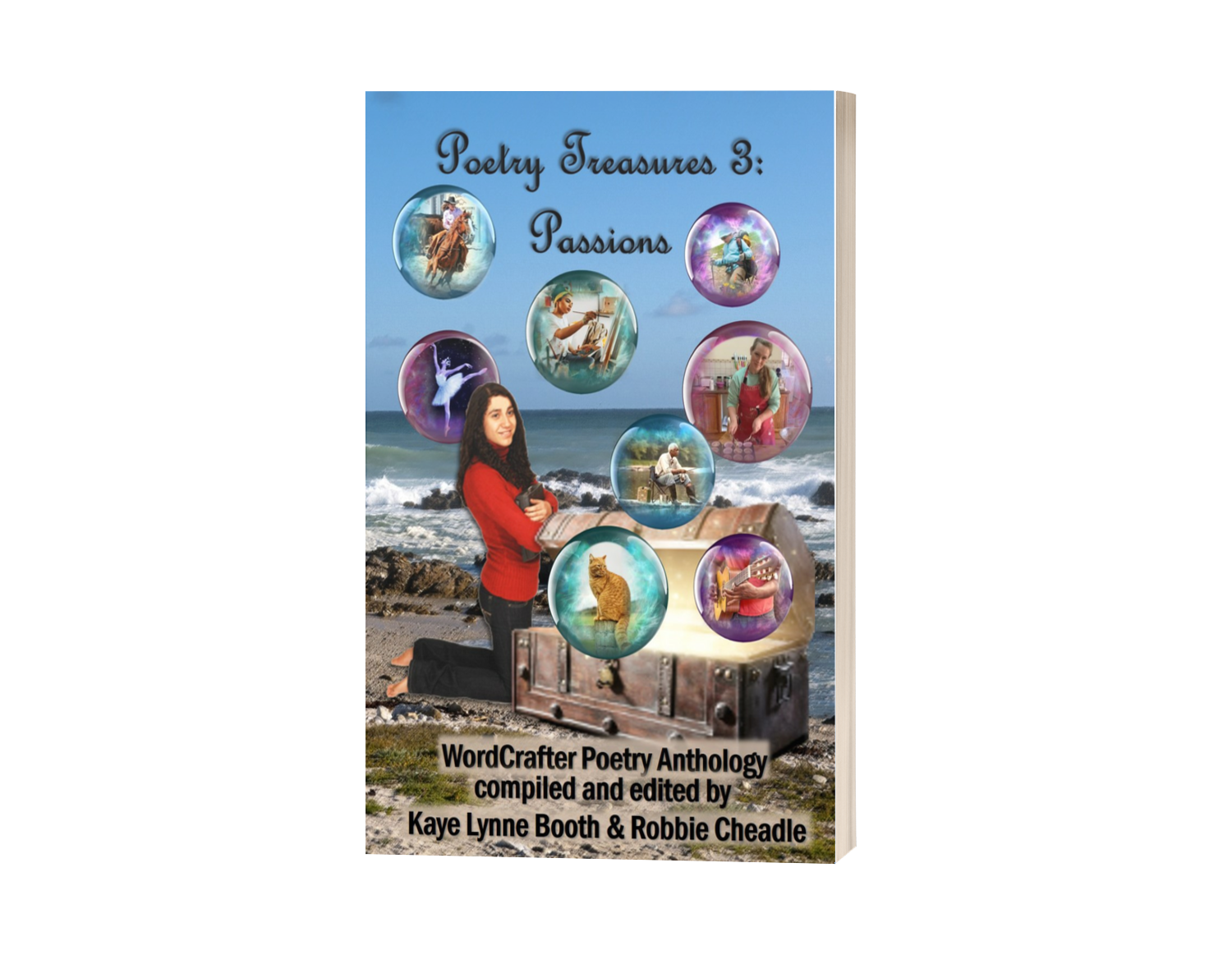
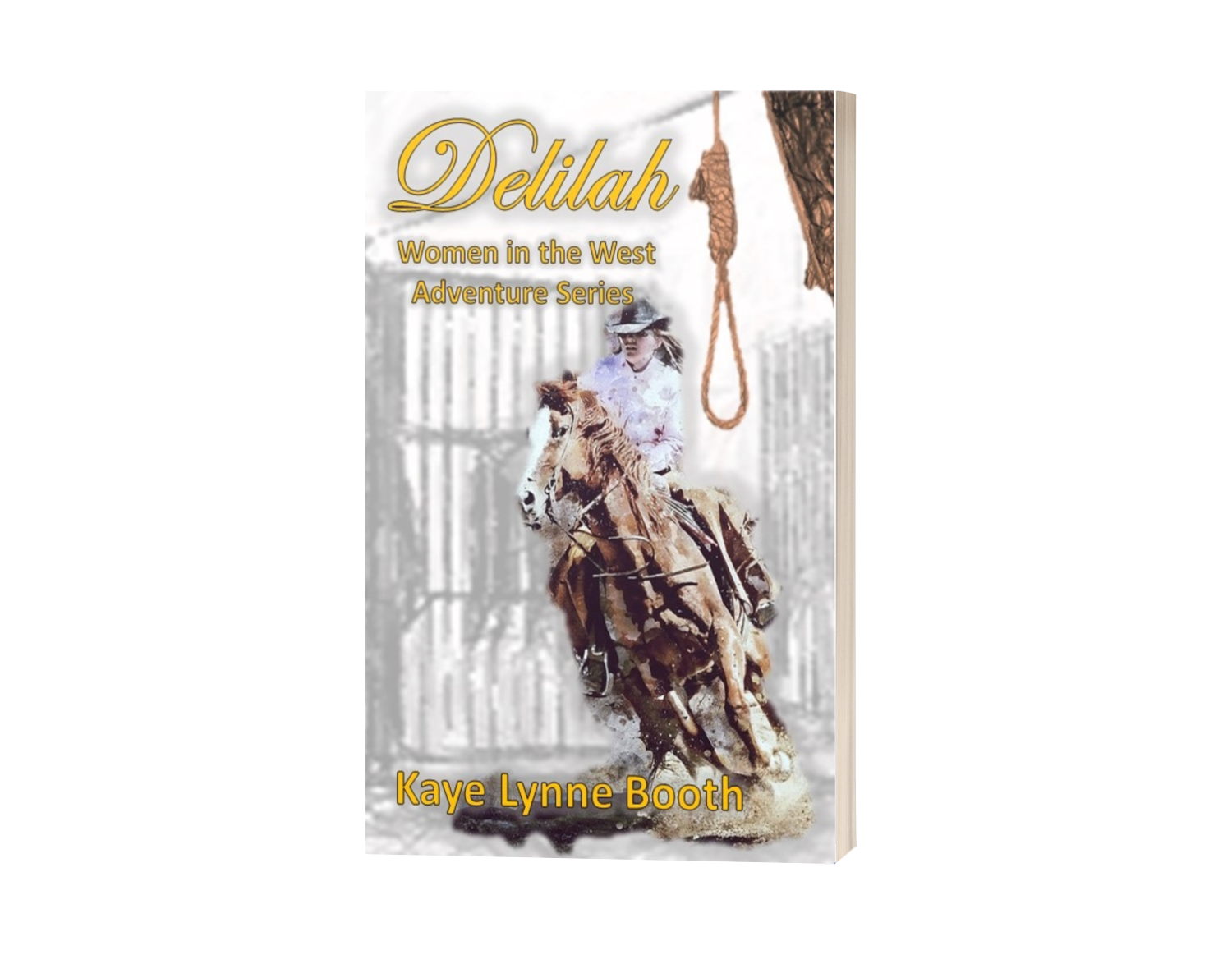
As most of you know, I released Delilah through distributors last month. Now, Amazon always drags their feet when I submit for publication, pre-order and distribution, and they are always the last distributor to accept books for pre-order and sale. The print book comes up early, but the Kindle edition is never accepted until the release day. The same happened with Poetry Treasures 3: Passions, and I had folks chomping at the bit to find the pre-order on Amazon, for their Kindle readers. I’m of the opinion that this is their way to express disapproval of my use of a third party aggregator, instead of publishing direct and exclusive to Amazon, and I expect it. This is obviously detrimental to my pre-orders, but what’s an author to do?
Delilah didn’t show up as available on Amazon until the day of release, but then I noticed that the price they had listed for print was listed as much higher than the price that I had set for the book, and down below, where they show third party vendors, it showed that there were at least four copies that were new or like new, at lower prices, with three supposedly used copies available at the price point I had set. I asked myself, how could there exist all these copies of my book, when it just released and hasn’t even sold that many copies yet? And how can they put a $21.81 price tag, (which is a ridiculous pricing strategy anyway), when the price I set, and the price with all the other distributors, is $16.99? What happened to price matching? I mean, seriously. I put a lot of time in to setting that price. Print books are always overpriced anyway, because of the cost of materials, but I was hoping to find a few readers out there willing to pay $17 for a book by a relatively unknown author, did they really think people would pay almost $23? No wonder I wasn’t selling any books. And if someone did buy a book at that price, I wouldn’t get additional royalties for it, it’s all pure profit for Amazon. How is that fair? Since it is my product, shouldn’t I have control of what price is set?
I directed my questions to Draft2Digital, whose support team is excellent at getting back to you and doing whatever they can to solve any issues their authors and publishers my have. The response I got, was the same reponse that they recieved when they inquired at Amazon – a copy of the Amazon ToS, with the section pertaining to third party vendors highlighted. I signed it, I have to abide by it. D2D support claims this is occuring even with traditionally published authors, whose books are still on pre-order, and third party venders claiming that they have used or like new copies before the first copy has been shipped, and Amazon claims, “We see this practice as a no harm, no foul, just some free (if odd) advertising for the book.”
As consumers, we’ve all seen those little third party vendor boxes, claiming to have copies available for cheaper. I’ve even taken advantage of the lower price for the used copy when I needed the book and my pockets were near empty. I didn’t realize that this might really be false advertising which undermines the authors and publishers of the book. What they are doing is not illegal. The customer does recieve a book for the advertised price. They are saying that these books are being offered by third party venders, but I have my doubts when I know those books aren’t even out there yet. The way I figure it, it has to be Amazon, because there is no way a third party vendor could order a book before it is even released, and get it out to the coustomer in a resonable amount of time, but Amazon can meet the demand and make it appear third party.
As authors, there is only so much much we can do, and the effects of what we can do are very limited. We either sign the Amazon ToC, or we don’t sell on Amazon. As a proponant of going wide, that doesn’t sound so bad, to eliminate Amazon distribution, which you have to jump through extra hoops to get anyway. But I think I need to really evaluate where my book sales are coming from, but I’m guessing that a majority of my book sales come from Amazon, because that’s where most readers go when looking for a book. I know I get some through Barnes & Noble, Apple Books, and Kobo, but I’ll bet the sales from all of those channels don’t equal the sales I get from Amazon, regardless of their slightly shady sales tactics.

So, it looks like Amazon has authors right where they want them. They don’t even have to price match anymore. They can set whatever price they want for your book, claim third party vendors, (who may or may not truly exist), have copies which they couldn’t possibly have, regardless that their shady marketing strategies may be sabotaging our book sales. What they are doing is no accident. No. It is purposeful. They are aware of what they are doing, and they covered their butts by writing it into their ToC. Basically, we are helpless to do anything about it. I really am going to take a close look at my numbers, but I doubt I will find that Amazon isn’t as big a part of my sales as I think they are. It would be nice if I could drop Amazon to show them I won’t put up with dishonesty surrounding my product, but the truth is, authors need them, bacause they have become this big conglomerate monster who is the biggest global book distributor, for better or for worse.
I can shout from my blog site, alerting my readers that they can purchase from other distributors and not pay the extorted Amazon price, and I feel I need to, because what Amazon is doing may be legal, but it still feels dishonest, and they are doing it with my product and misrepresenting my brand. I can encourage readers to purchase from other distributors, but I can’t change the reality that most of them will buy through Amazon. I can cancel my Prime subscription, which I did, but I doubt Amazon will loose much sleep over that.
But there may be some hope in sight. Angela, over at Writer’s Weekly, talks about this same problem for other authors, explaining what Amazon has been doing, but not why, and offers some hope that these practices may change soon. It seems backm in 2011, Amazon purchased Book Depository, and they’ve been making them the main buy button on some books, with a higher price and no free shipping. I think the higher prices would be detrimental to sales, and certainly having to pay for shipping would be, especially to Prime memebers who already payfor that benefit in their monthly subscriptions, but apparently Amazon felt they could make more monhey that way? What happened to their price matching strategy? They can’t even match the price the author set for the book, let alone match a discounted price for a book. The good news is it seems like this problem may be ending, as they are getting rid of Book Depository, but I brace myself to see what Amazon will do next to put the screws to authors.
We are not totally helpless. As a publisher, (and if you self-publish, you are a publisher, too), we can publish wide, and offer readers a choice of book distributors. Many may still choose to purchase through Amazon because of ease, because they pay for Prime, because they read digital books on a Kindle device, or just because that’s what they are used to, but at least this way, they have a choice. And to make it easier still for readers, we can use a linking service, such as Books2Read, which gathers all available distributors into one link and visually shows readers that they have a choice. It’s much easier than posting links for each distributor with each promotion, even if you copy/paste. You get Books2Read links automatically when you publish through D2D, but I think it’s free to create an independent account. I’m not sure on that last point, because I have mine through D2D, but I believe it to be true. Let me show you one of WordCrafter Press‘ Books2Read links. When they click on the purchase link for the book in your promo, this is what potential readers see. Then they can choose the distributor of their choice to make a purchase.

This works for authors who choose to hybrid publish, too. Say you want to publish to most distributors through D2D, but you wish to publish direct to Amazon, because they get better service that way, and you want to publish your book in hard cover, which D2D doesn’t do. Books2Read allows you add those other distributor links, so everything is found in one place. WordCrafter doesn’t do this, but I’ll show you what Mark Leslie’s Books2Read landing page looks like for his latest release, Hex in the City, because I know that he is a hybrid publisher, meaning he has some books published traditionally, and others that he’s published himself. I don’t see anyway to purchase direct from his site. That may still be down the road a ways. Publishing wide and using Books2Read to give readers a choice of distributors is one small way that authors can encourage readers to use distributors other than Amazon, distributors that won’t deal with your book in a shady manor or try to screw authors just because they can and get away with it. It probably won’t bring about any drastic changes, but it’s something.

Again, according to Writere’s Weekly, I’m not the only one unhappy with Amazon. Even their own KDP authors appear to be grumbling about the way they treat their own authors by falsely marking books “In Stock”, a determination which apparently effects the costs for shipping authors pay. It’s not exactly the problem which I ran into, but similar. If you think I’m upset, you should check out this story. Some authors are having to fight for their royalties due, it seems, because they spoke out against the big A. Now this is scary. Just think about being an exclusive KDP author and having Amazon decide they don’t like you for whatever reason. If you are exclusive, that’s all of your book sales income. By going wide, you couls at least fall back on the income from other distributors. Even if it isn’t much, it would be better than just loosing everything. You can read more about that here:
It seems like, whether we publish direct through Amazon, or through a third party aggregator, authors are all in the same boat, and Amazon is going to do whatever they want. They aren’t going to change their pricing practices, or their shipping processes, for anyone. They have us over a barrel, because they are the biggest global book distributor. Most book sales come from Amazon, because most consumers chose the ease of shopping and satisfying customer experience which Amazon offers and the other book distributors cannot compete. We could all pull our books and only sell through the other book distributors, but that might be like cutting off our noses to spite opur faces. Let’s face it, for an author, not having your books available on Amazon would be like commiting writing career suicide. Publishing wide and offering readers a choice of distributors sounds like a much better option to me no matter how much Amazon peeves me.
__________________________________________________________________
For Kaye Lynne Booth, writing is a passion. Kaye Lynne is an author with published short fiction and poetry, both online and in print, including her short story collection, Last Call and Other Short Fiction; and her paranormal mystery novella, Hidden Secrets. Kaye holds a dual M.F.A. degree in Creative Writing with emphasis in genre fiction and screenwriting, and an M.A. in publishing. Kaye Lynne is the founder of WordCrafter Quality Writing & Author Services and WordCrafter Press. She also maintains an authors’ blog and website, Writing to be Read, where she publishes content of interest in the literary world.
_________________________________________________________________
Want exclusive content? Join Kaye Lynne Booth & WordCrafter Press Readers’ Group for WordCrafter Press book & event news, including the awesome releases of author Kaye Lynne Booth. She won’t flood your inbox, she NEVER sells her list, and you might get a freebie occasionally. Get a free digital copy of her short story collection, Last Call and Other Short Fiction, just for joining.
Share this:

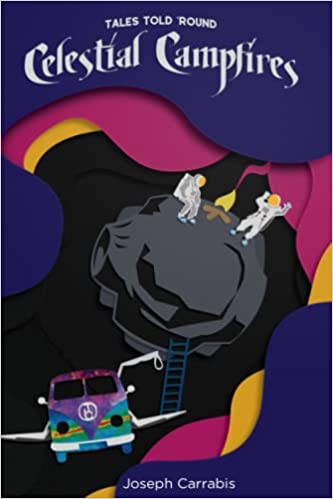
Book Review: Tales Told ‘Round Celestial Campfires
Posted: May 31, 2023 Filed under: Book Review, Books, Fantasy, Fiction, Horror, Review, Science Fiction, Short Fiction, Stories, Writing | Tags: Book Review, Fantasy, horror, Joseph Carrabis, Science Fiction, Short Fction, Short Stories, Tales 'Round the Celestial Campfire, Writing to be Read 3 Comments
About the Book
… everything written here actually happened
No, really, it did. I’ve seen things and been places and met…creatures…most people can’t imagine. Or wouldn’t want to. Or should. It all depends on the person and the creature.But much like Gahan Wilson’s “I only paint what I see”, I only write about what’s actually happened…
So sit back, relax, have something tasty near at hand or tentacle or claw. Read these when other people are around…if you can trust they’re really people. Or read them alone, when it’s dark out. Maybe. Unless you’re not sure what things go bump in the night or scurry unseen in the dark.
Purchase Link: https://www.amazon.com/Tales-Told-Round-Celestial-Campfires/dp/0984140336
My Review
Tales Told ‘Round Celestial Campfires, by Joseph Carribis is a collection of tales of wide variety. A little fantasy, a little science fiction, a bit of horror. They are not tales for the faint of heart, but tales for the strong of mind. The stories which make up this collection create a cross between science fiction, and legend and lore, with a bit of philanthropy thrown in for spice. Readers who enjoy pondering the story, savoring it, delving into the inner depths of it, this collection is for you. Carrabis’ stories make you think. They make statements on human nature and humankind, and the not-so-human kind.
Most Memorable
- “Winter Winds”, where children are taught about some unusual animals which only come out in foul weather has a clever twist at the end which brought a smile ot my face.
- “Those Wings Which Tire, They Have Upheld Me”, a rich fantasy story about the ultimate sacrifice and learning human kindness.
- “The Goatmen of Aguirra”, which is an unusualand thought provoking story about a visit with goat-like creatures on a distant planet.
- “Cymodoce”, is rather sad tale of forbidden love.
- “The Boy Who Loves Horses”, is about a gifted boy, more comfortable with horses than with people.
- “Them Doore Girls”, a hauntingly eerie tale about two sisters who were the only survivors of the shipwreck which took their parents’ lives, is probably my very favorite.
Joseph Carrabis is a master storyteller. He has created a delightfully amusing collectionstories with he potential to keep you awake at night. I give Tales Told ‘Round the Celestial Campfires five quills.

__________________________________________________________________________
Kaye Lynne Booth does honest book reviews on Writing to be Read in exchange for ARCs. Have a book you’d like reviewed? You can request a review here.
Share this:

“Lion Scream” rakes in another five star review
Posted: May 29, 2023 Filed under: Book Review, Books, Collection, Poetry, Review | Tags: Book Review, Lion's Scream, Robbie Cheadle, Writing to be Read 2 CommentsShare this:

Book Review: The Dragon Business & Skeleton in the Closet
Posted: May 26, 2023 Filed under: Book Review, Books, Epic Fantasy, Fantasy, Fiction, Humor, Review | Tags: Book Review, Epic Fantasy, Humor, Kevin J. Anderson, satire, Skeleton in the Closet, The Dragon Business, Writing to be Read Leave a commentAbout The Dragon Business

Is your kingdom bothered by a pesky dragon problem?
Need any giant monsters slain?
Are your own knights in shining armor unreliable or—worse—cowards?
Young Cullin, wanting to see the world, joins a band of renowned knights errant who will slay your dragon for a price. Satisfaction guaranteed!
The only problem is, it’s all a scam. The “dragon” is no more than rumors and tall tales spread by Cullin and his gang, giant three-toed footprints stomped into the ground near strategically burned-down huts and charred skeletons (procured from the local graveyard). It’s a great con job, so long as Cullin and company can take the money and run, move on to the next kingdom before anyone catches on.
But even con men can be caught in their own game. Clever, spunky Princess Affonyl doesn’t want any part of the arranged marriage to an evil duke from a neighboring kingdom. And she realizes that a fearsome dragon, even an imaginary one, is the perfect cover for her escape.
It’s one caper after another as these medieval dirty, rotten scoundrels try to outsmart one another. And they discover that the dragon business is more than just a game…especially if a real dragon might be involved.
Purchase Links:
WordFire Press: https://wordfirepress.com/books/the-dragon-business/
Amazon: https://www.amazon.com/Dragon-Business-Kevin-J-Anderson/dp/1680570692
My Review
This book was originally released in 2018, but the digital copy which I read came from KJA’s January 2023 Kickstarter campaign.
The Dragon Business, by Kevin J. Anderson, drops readers right into the middle of a medievil con game. The marks are the kingdoms our three slightly bumbling tricksters travel to, selling their services as dragon slayers, which is fairly safe, since the dragons were all killed off long ago. But rumor of dragons in the area stir kingdoms to fear and it might be worth a great deal to a kingdom’s rulers to see the matter settled and the people calmed, wouldn’t you think? But eventually, all good capers go awry, and when a real dragon comes to town, it may now be up to our three heros, and a runaway princess, to save the day.
The funniest epic fantasy story you’ll ever read. Humorous and thoroughly entertaining. I give The Dragon Business five quills.
__________________________________________________________________________________
About Skeleton on the Closet

The Princess Bride meets Dirty, Rotten Scoundrels
Join former scamp Cullin and his merry band of confidence men (and one liberated princess) as they put The Sting in the Middle Ages. With dreams of being a hero, or at least a storyteller, Cullin travels with Sir Dalbry, a washed-up knight in shining armor; Reeger, ready and eager for any part of the dirty work; and Affonyl, former princess, who wanted to study science and alchemy, rather than embroidery.
Together, they cross the land with one scam after another, concocting their own heroic deeds, preparing mock dragon heads, or selling kraken tusks and mermaid scales.
But when attempting to con King Longjohn, whose castle is supposedly bursting at the seams with treasure, the caper turns sour. The powerful Wizard-Mage Ugnarok and his army of ugly and muscular (if not too bright) orcs takes over Longjohn’s castle, imprisoning the king, pillaging the halls, and carrying on with typical orc-like mayhem.
Cullin and his friends are trapped in the castle’s labyrinth of secret passages, just trying to survive … or is this the opportunity for a grander scam than they have ever attempted before?
Orcs are terribly superstitious—you can’t bash a ghost, after all—and it’s like Die Hard in a castle, as Cullin, Affonyl, Reeger, and Dalbry set up a grand haunting that will scare off even the scariest orc army.
Purchase Links:
WordFire Press:
Amazon: https://www.amazon.com/Skeleton-Closet-Dragon-Business-Adventure-ebook/
My Review
After coming to know these characters in The Dragon Business, I couldn’t help but feel right at home as King Cullen begins the telling of this new tale for his son, Maurice. In my review of The Dragon Business, I said it was “the funniest epic fantasy story you’ll ever read”, but I may stand corrected here, as Skeleton in the Closet had me rolling with laughter even harder than that first book. Our troupe of con artists are up to new tricks as the market for the Dragon Business becomes saturated, with every con artist in the land jumping on the bandwagon. So Cullin, Reeger, Dalbry and Affonyl are back and they are thinking up some new tricks for conning Kings and Queens out of their vast riches.
What starts out as an artisitc masterpiece scam turns into a ghost haunting scam, when a group of vile Orcs invade the castle of our scammers mark, King Long John, looking for treasure which doesn’t exist. The Orcs won’t leave until they find the treasure, which our heros know they won’t, so they have no choice but to haunt the castle and save the king, in hopes that there will be a reward beyond his empty coffers.
Several questions still lurks in my mind, such as, how did Cullin and Affonyl finally discover that they were meant to be together? How did Cullin end up being king? And how did Reeger end up a tavern owner with a wife? And what happened to poor Dalbry, who doesn’t seem to be around anymore? So you see, there could be more tales to come, and that makes someone who has quickly become a fan of this series, very happy.
Funny and entertaining, This is a book you won’t want to put down. I give Skeleton in the Closet five quills.
___________________________________________________________
Kaye Lynne Booth does honest book reviews on Writing to be Read in exchange for ARCs. Have a book you’d like reviewed? You can request a review here.
Share this:

Tales from the Bird Sanctuary: Spring Inspiration
Posted: May 22, 2023 Filed under: Bird Watching, Poetry, Tales from the Bird Sanctuary, Uncategorized | Tags: Birds, Birdwatching, Poetry, Tales from the Bird Sanctuary, Writing to be Read 2 Comments
I love April. It’s National Poetry Month, which always puts me in a state of looking for and appreciating the beauty in the world around me, so I can express it in my poetry. And what better time to focus on the beauty in the world, than when things are just starting to green up, and the migrating birds are flocking in to the bird sanctuary.
“But, what does a bird sanctuary have to do with with National Poetry Month?” you might ask. After all, this is a “Tales from the Bird Sanctuary” post, where talk of poetry may not seem to fit. The truth is, since I started this blog series last year, I’ve been wondering what it was doing on a blog about books and writing. But as I spent most of April preparing and launching Poetry Treasures 3: Passions and compiling my own poetry collection, Small Wonders, and watched all the migrating birds coming in for the summer and the green of my tulips popping upm through the soil, it occured to me that Spring is the season of new beginnings, in nature and in my writing endeavors.
You Know It’s Spring…
You know that it’s Spring when new birds start appearing in pairs
You know it’s Spring whe the first Hummingbird buzzes by your head
You know it’s Spring when green pokes through brown whereever you look
You know it’s Spring when the sun warms the days, but the nights still carry a chill
You know it’s Spring when the buzz of insects fills the air once more
Bird Tales
This year, the first Hummingbird was spotted on April 4th, which was a bit early in the season, but I welcomed him, putting up the first nectar feeder of the year to accomodate my early guest.

Mid-April I had more birds than I could count. New birds migrating in filled my trees raising a cacphony of birdsong and the bird sanctuary was a very busy place.
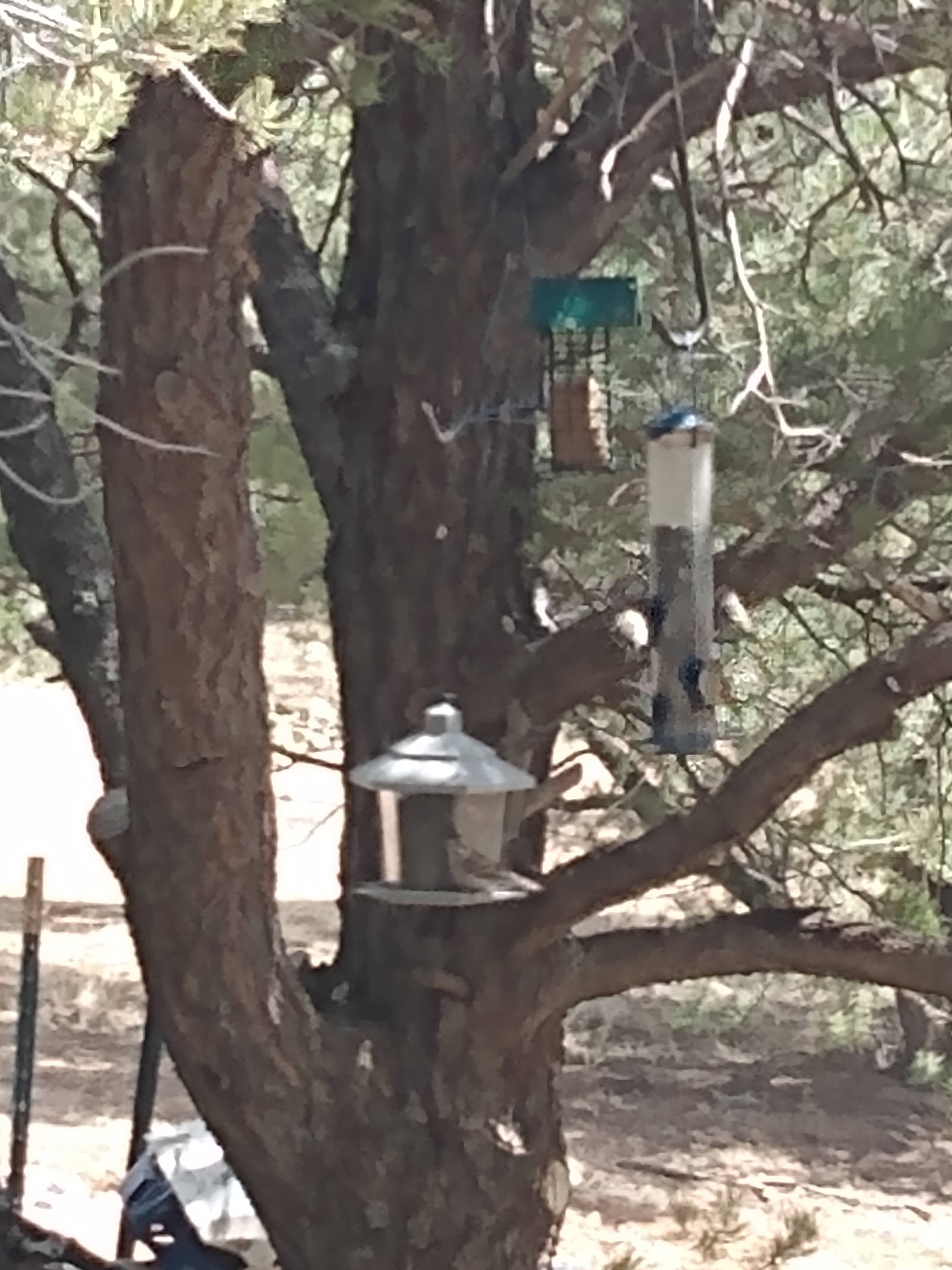

How many birds do you see? When Spring hits and the migrating birds come in, there are birds everywhere you look. The noise level can be quite surprising when you get so many birds all chattering at once. They are on the ground, too, but they all scatter when I come out and I haven’t been able to get that on film, as yet.

The first Robin is a sure sign of Spring. This may be one of last year’s youngsters, returning. I like to think it is the one that came right up to my porch and asked me for food when daddy would bring them out each morning, two years ago, but it’s more likely to be one of its youngsters. Perhaps this one will have a brood of its own this year.

Nuthatch sampling the suet. Nuthatches hang at the sanctuary all year long. I have had multiple families over the years. Last year I had pygmy nuthatches make an appearance, and I’m hoping I will see them again this year. They are smaller, with rufus colored breasts. They are darling.

And the birds weren’t the only spring visitors I had this year. The water attracts more than just birds, and so do my little green plants poking up out of the soil. They will be a challenge in my garden all summer. I planted a new raspberry bush which I will have to keep a close eye on. For now though, they’re just after the water, so I’ll have to refill the bird baths when they go.
____________________________________________________________________
For Kaye Lynne Booth, writing is a passion. Kaye Lynne is an author with published short fiction and poetry, both online and in print, including her short story collection, Last Call and Other Short Fiction; and her paranormal mystery novella, Hidden Secrets; and book 1 of her Women in the West adventure series, Delilah. Kaye holds a dual M.F.A. degree in Creative Writing with emphasis in genre fiction and screenwriting, and an M.A. in publishing. Kaye Lynne is the founder of WordCrafter Quality Writing & Author Services and WordCrafter Press. She also maintains an authors’ blog and website, Writing to be Read, where she publishes content of interest in the literary world.
_______________________________________________________________________
Want exclusive content? Join Kaye Lynne Booth & WordCrafter Press Readers’ Group for WordCrafter Press book & event news, including the awesome releases of author Kaye Lynne Booth. She won’t flood your inbox, she NEVER sells her list, and you might get a freebie occasionally. Get a free digital copy of her short story collection, Last Call and Other Short Fiction, just for joining.
Share this:

Book Review: A Hard Ticket Home
Posted: May 19, 2023 Filed under: Audio Books, Audiobook Review, Book Review, Books, Crime, Fiction, Mystery | Tags: A HArd Ticket Home, Audio Books, Book Review, Brent Hinkley, Crime Fiction, David Housewright, mystery, Writing to be Read 2 CommentsAbout the Book
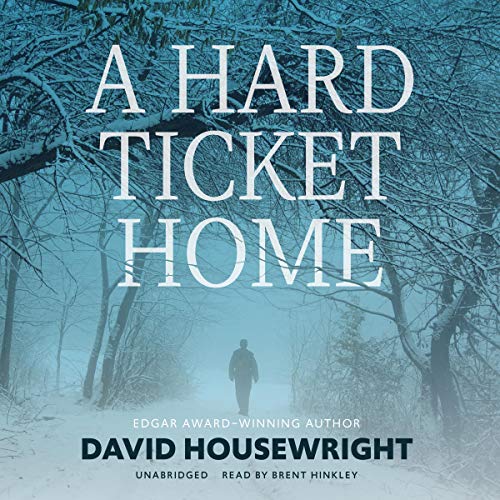
Ex-St. Paul cop Rushmore McKenzie has more time, and more money, than he knows what to do with. In fact, when he’s willing to admit it to himself (and he usually isn’t), Mac is downright bored. Until he decides to do a favor for a friend facing a family tragedy: Nine-year-old Stacy Carlson has been diagnosed with leukemia, and the only one with the matching bone marrow that can save her is her older sister, Jamie. Trouble is, Jamie ran away from home years ago.
Mac begins combing the backstreets of the Twin Cities, tracking down Jamie’s last known associates. He starts with the expected pimps and drug dealers, but the path leads surprisingly to some of the Cities’ most respected businessmen, as well as a few characters far more unsavory than the street hustlers he anticipated. As bullets fly and bodies drop, Mac persists, only to find that what he’s looking for, and why, are not exactly what he’d imagined.
David Housewright’s uncanny ability to turn the Twin Cities into an exotic, brooding backdrop for noir fiction, and his winning, witty hero Rushmore McKenzie, serve as a wicked one-two punch in A Hard Ticket Home, a series debut that reinforces Housewright’s well-earned reputation as one of crime fiction’s stars.
Purchase Links:
Amazon/Audible: https://www.amazon.com/A-Hard-Ticket-Home/dp/B082TLLK5Q/
Chirp: https://www.chirpbooks.com/audiobooks/a-hard-ticket-home-by-david-housewright
My Review
I listened to the audio book A Hard Ticket Home, written by David Housewright and narrated by Brent Hinkley. This book is a cross between your typical detective story and a cozy mystery, with distinctive characters. Hinkley sets the perfect tone, giving it kind of a Mickey Spillane feel, which is perfect for the genre and the story.
Rushmore McKenzie isn’t a cop anymore. He’s a billionaire, but even though he doesn’t need the money, he makes a hobby of playing P.I. When he’s called upon to find the long lost sister, Jamie, of none year old Stacy Carlson, in order to find a possible bone marrow doner and save Stacy’s life, he steps into more than he bargained for. Just as he locates Jamie, she is murdered in hideous fashion, and he finds himself on the middle of a murder mystery as he tries desperately to find Jamie’s missing son, who might be the only one left who could save Stacy’s life. But Mac has drawn attention in his investigation, and now someone is trying to kill him, too.
Filled with twists and turns that keep readers guessing, I give A Hard Ticket Home five quills.
__________________________
Kaye Lynne Booth does honest book reviews on Writing to be Read in exchange for ARCs. Have a book you’d like reviewed? You can request a review here.
Share this:

Review in Practice: That Th!nk You Do
Posted: May 15, 2023 Filed under: Book Review, Books, Nonfiction, Review, Review in Practice | Tags: Human Brain, Joseph Carrabis, Nonfiction, Review in Practice, That Th!nk You Do, The Human Condition, Writing to be Read 8 Comments
If you ever wonder about how to think like an expert, the difference between your inner critic and the actor within, your ability to be heard, the value of being a musician, how to protect yourself from liars or how to overcome fears, you will find answers in this book.
Through each chapter there is a magic wand taking you into an area of life that you may have experienced yourself or it will be something new to consider. There is synthesis between the known and unknown, the seen and unseen, the mental and the physical, the desires of the heart and the aspirations of the spirit; and the overall theme of we are all just trying to make it from one day to the next with joy, peace, and happiness.
Joseph gives his own insights throughout the pages of what he believes are the backbone of our life experiences – both the great and the not so great. He leaves it up to the reader to discern what is true for them. You will find yourself wanting to explore more of each of his analysis of life’s nuggets, many of which we create ourselves through questions, desires for specific outcomes and the need to be heard.
Purchase Link: https://www.amazon.com/That-Th-You-Do-Healthy/dp/0984140379/
It happened that I read this innovative book at just the time in my life when I really needed it. My job of eight years had just come to an abrupt end, and I was trying to figure out how I was going to carry on and where I would go from here. It felt as if my life was over, as if I were balancing precariously on a ledge, on the verge of toppling over, with no where to go but down. Okay. I know that seems a bit melodramatic, but that’s what it felt like.
That Th!nk You Do, by Joseph Carribis takes a look at human thought processes, explanations for why we do what we do, and techniques for dealing with life’s challenges. I have to admit that this book offered several ‘Aha!’ moments for me. Carribis offers unique insight into human behavior, and compassionate advice for handling the curve balls life throws at you. He is not a professional health expert, but an intelligent guy with some good ideas, which may or may not work for you, but probably worth a try.
This book showed me new ways to chase away self-doubt, overcome fear and worry about what the future holds, and set some goals for myself to work towards. Of course, I’ve been working toward taking my writing business full time as means of making my living for many years, but facing the fact that now I was at a point where I needed to make it all work was really scary. If I couldn’t, I didn’t know what I would. If I didn’t find a way to pay my bills and fast, I knew I would topple from that ledge and it would be all down hill from there.
Everybody has those times when they let self-doubt creep in, or allow their own fears to bring about inaction. It happens to all of us. That Th!nk You Do holds some insightful solutions which just might help. If nothin g else, it made me look at the situation a bit differently. Joseph Carribis may not be a professional, but he offers some great insights and suggestions that can benefit us all.
______________________________________________________________

For Kaye Lynne Booth, writing is a passion. Kaye Lynne is an author with published short fiction and poetry, both online and in print, including her short story collection, Last Call and Other Short Fiction; and her paranormal mystery novella, Hidden Secrets. Kaye holds a dual M.F.A. degree in Creative Writing with emphasis in genre fiction and screenwriting, and an M.A. in publishing. Kaye Lynne is the founder of WordCrafter Quality Writing & Author Services and WordCrafter Press. She also maintains an authors’ blog and website, Writing to be Read, where she publishes content of interest in the literary world.
______________________________________________________________________
Want exclusive content? Join Kaye Lynne Booth & WordCrafter Press Readers’ Group for WordCrafter Press book & event news, including the awesome releases of author Kaye Lynne Booth. She won’t flood your inbox, she NEVER sells her list, and you might get a freebie occasionally. Get a free digital copy of her short story collection, Last Call and Other Short Fiction, just for joining.
Share this:

Book Review – Rayna: Dragon Slayer
Posted: May 12, 2023 Filed under: Book Review, Books, Dark Fantasy, Fantasy, Fiction, Hifgh Fantasy, High Fantasy, Review | Tags: Book Review, Cynthia Vespia, Dragon slayers, High Fantasy, Kaye Lynne Booth, Rayna, Writing to be Read 10 CommentsAbout the Book

She was a warrior forged from flame, a slayer of mighty dragons, until one final quest changed everything
Rayna had been hunting dragons since the day one burned her family to ash. Her skills, enhanced by a massive broadsword, made her a legendary dragonslayer. Marred by a mysterious stigmata labeled “the dragon’s curse” she was both revered and feared as she hunted down the dragons across Atharia.
Rayna thought she’d slain them all. But when the royal house sought the slayer they told her of another. One more dragon plagued the land…the very same beast which burned Rayna’s home years before. Fueled by vengeance Rayna takes up the quest to fulfill her life’s purpose and purge the beasts from the world. But as she gets closer to the kill, Rayna learns a bitter truth that will drastically alter her path and turn the hunter into the hunted.
Painful, pivotal memories surface as Rayna races to find the culprit behind the mayhem, recover a lost child, and get to the real target to set things right.
Rayna the Dragonslayer is the first in an exciting dragon fantasy adventure series A Time of Dragons. It’s a symphony of sword & sorcery, high fantasy, and a heroic quest that is like The Mandalorian merging with Game of Thrones.
Purchase Link: https://www.amazon.com/Rayna-Dragonslayer-Time-Dragons-Book-ebook/dp/B0BRWZY8KY
My Review
A tough female protagonist is what drew me to pick up Rayna, by Cynthia Vespia. (Plus, it has a kick butt cover.) I’ve talked a bit about making strong female protagonists believable and relatable, and Ms. Vespia did not disappoint. Rayna is strong, agile and tough enough to slay dragons, which I hear can be rather tricky. She is portrayed as being physically and mentally strong, yet still emotionally vulnerable, which makes her relatable for just about everyone. Though tough and hard, Rayna also reveals a side that is very human, one perhaps even she didn’t know was there. Rayna is one heroine who I look forward to reading more about.
Dragon slaying in a land of castles and Kings, with lots of sword play and a bit of magic thrown in makes this tale a must for high fantasy lovers. I give Rayna five quills.
____________________________________________________________
Kaye Lynne Booth does honest book reviews on Writing to be Read in exchange for ARCs. Have a book you’d like reviewed? You can request a review here.
Share this:

Growing Bookworms – The benefits of cooking and baking with children
Posted: May 10, 2023 Filed under: Children's Books, Growing Bookworms, Literacy, Parenting, Teaching children | Tags: Baking, Children, cooking, Growing Bookworms, Robbie Cheadle, Teaching Life Skills, Writing to be Read 54 Comments
I wrote this post six years ago when I hadn’t been blogging for very long and didn’t have many followers. During my recent attendance at the South African Festival of Children’s Literature where I was asked to speak about cake and fondant art and its benefits to children, I thought again about all these benefits and decided to share it again for Growing Bookworms.
Most children love to spend time in the kitchen either cooking or baking. It is a fabulous bonding experience with Mom or another caregiver and they always enjoying eating the results of their hard work afterwards.
I love to bake and both my sons have travelled the cooking, baking and eating road with me. Michael, particularly, loves to cook. He prefers to make more practical things than I do such as savoury and/or sweet pancakes, French toast and even stews and curries which he sometimes makes with his Dad. I like to cook but I also enjoy making all sorts of fancy sweet treats and cakes.
I remember baking with my small boys. Gregory used to love to measure and pour the ingredients into the bowl. Funnily enough, Greg also loved to wash up. Sadly, this did not continued into his teenage years. I used to strip him down to his nappy and stand him on a few chairs lined up in front of the sink [so that he could not fall off] and set him free in front of a sink of soapy water. He used to splash around happy with a cloth washing up the bowl and wooden spoon. I kept the washing of any sharp implements and breakables for myself.
Michael, on the other hand, has never been a fan of any kind of cleaning up. He likes to measure, pour and, especially, to mix. He also likes to “lick” out the bowl. I have photographs of Michael covered from head to toe in chocolate cake mix with the bowl upside down on his head. What fabulous fun.
Other than the obvious fun and bonding factors, there are a list of other great benefits to baking with your children. I did some research on this and this is what I found:
- Maths skills: Baking helps children to learn maths concepts, in particular, measurement and simple fractions (half a cup, a quarter of a lemon). In addition, multiplication and division are involved if you half or double a recipe. Other kinds of cooking may also involve patterning (for example with salads and kebabs) and simple addition (how many people are you feeding? how many cupcakes do you need for the class?);
- Art skills: Decorating cupcakes, cutting out biscuits and making animals and people out of fondant (sugar dough). All of these activities encourage creativity and develop design abilities. An element of construction can also be involved if you are making a gingerbread house or a marshmallow tower and children learn how to fit pieces together and get a tower to stand up;

Cupcakes decorated for charity by the children of St Columba’s Presbyterian Church Sunday School – Parkview, South Africa
- Comprehension skills: Baking and cooking teaches children how to read and interpret a recipe. They learn to follow a sequence of steps and how to organise the required ingredients. Baking also teaches children techniques and vocabulary such as folding, beating, kneading and blending;
- Science skills: Contrary to popular belief, baking is a science. Children learn the scientific effects of raising agents such as yeast and baking powder. They learn about the interaction between certain substances such as salt and bicarbonate of soda, cream of tartar and milk, yeast and warm water. If they make a mistake and/or leave out an ingredient, disaster often follows which helps enforce these learning points;


Picture credit: Photographs by Robbie Cheadle. Cream of tartar, Bicarb and milk mixed together create a good raising agent for biscuits. It also froths and bubbles and makes a perfect fuel for a biscuit rocket ship to the moon.
- Life skills: Baking and cooking with your children teaches them lifelong skills. In the future, the job of feeding themselves and their future families will become theirs. Baking and cooking skills will stand them in good stead when they leave home; and
- Self-esteem: Baking and cooking helps increase children’s self-esteem as they see and taste the results of their efforts. It also teaches children to work together with someone else in a team and that hard work pays dividends in the end.
I am not an occupational therapist but I found the following additional benefits listed on an OT website for children:
- Bilateral coordination;
- Eye-hand coordination;
- Hand strengthening; and
- Spatial perception and planning skills.
These four benefits make perfect sense to me in the context of baking and cooking with children.
So, what are you waiting for, get cooking. An easy way to start is with mini pizzas. You can buy the bases ready made from most grocery stores and you can also buy the tomato paste source to spread on the bases. Grate some cheese, cut up some mushrooms, pineapple, ham and anything else that you fancy and let the kids have fun assembling their own pizzas.
About Robbie Cheadle
Award-winning, bestselling author, Robbie Cheadle, has published thirteen children’s book and three poetry books. Her work has also appeared in poetry and short story anthologies.
Robbie also has two novels published under the name of Roberta Eaton Cheadle and has horror, paranormal, and fantasy short stories featured in several anthologies under this name.
The ten Sir Chocolate children’s picture books, co-authored by Robbie and Michael Cheadle, are written in sweet, short rhymes which are easy for young children to follow and are illustrated with pictures of delicious cakes and cake decorations. Each book also includes simple recipes or biscuit art directions which children can make under adult supervision.
Robbie’s blog includes recipes, fondant and cake artwork, poetry, and book reviews. https://robbiesinspiration.wordpress.com/
Share this:

Riding Tunnel Drive on Easter Sunday
Posted: May 8, 2023 Filed under: Holidays, Nature, Recreation | Tags: Arkansas River Walk, Canon City, Colorado, Easter Sunday, Royal Gorge, Writing to be Read Leave a comment
This year was the first time in seven years that I had Easter Sunday off. It was a beautiful day in southern Colorado, so I decided to do something I hadn’t done in several years. In Canon City, Colorado, they have a river walk that now spans from one end of town to the other. I used to ride this trail all the time when we lived in Canon City, and Mike and Josey were kids, but not for many years. When I was riding it, it was in sections and the route was not a continuous one, but they’ve completed the full length since my last ride in Canon City. On Easter Sunday, I started off at the Department of Recreation on Reynold’s Avenue and road clear through town, which is a fairly flat route and an easy ride all along the Arkansas River, to Tunnel Drive, which has a steep climb at the beginning, and then follows the river through the canyon from above.
Tunnel Drive is a path was the old wagon road which follows the river into the Royal Gorge Canyon along the east side. It runs through a series of three tunnels blasted through the granite of the mountainside, hence the name. When I’d come here with my boys, you could see bats hanging from the tunnel ceilings, and near dusk, you might see them flying. But besides bats, these tunnels and this trail have an interesting history. Originally proposed as an open ditch system to carry water to Penrose until citizens turned against the project after blasting caused damage to nearby houses, and then funding fell through, it eventually carried water through the canyon in an elborate piping system to the Canyon City water department. According to Brooke Johnson of the Canon City Daily Record, “A 30-inch wooden pipeline ran from the center of the Royal Gorge alongside the gorge walls across the river bringing water to an open ditch.” In fact, you can still see the remnants of the old pipeline running along the Gorge in spots, high up on the canyon walls, and there are pieces still remaining at the end of the trial.
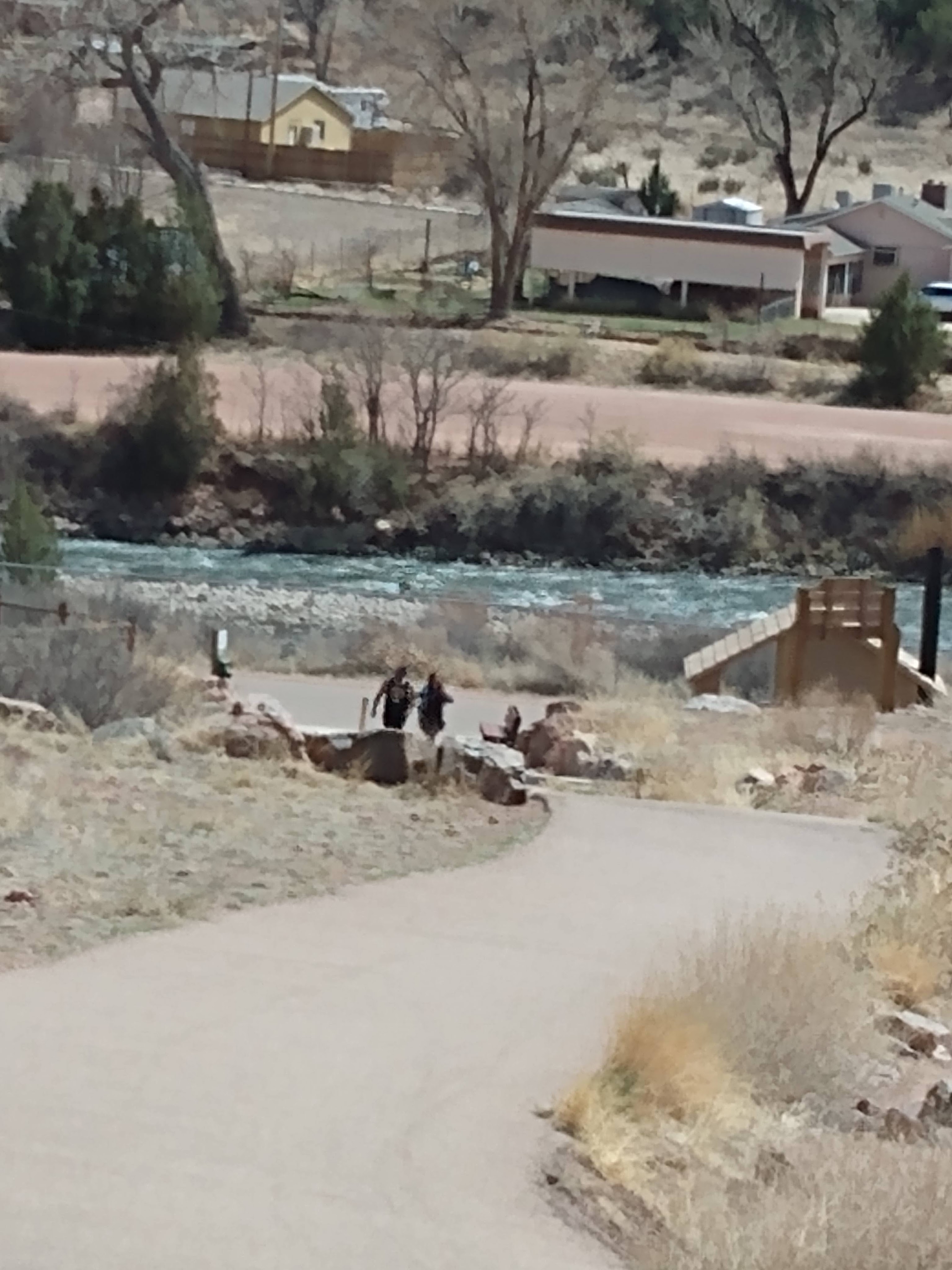
As I mentioned, the start of this trail is pretty steep, and I won’t lie, I walked my bike to the top. Even an electric assist bike needs help for a climb like this one, and this old lady didn’t have it in her. But once up the hill, the ride to the end of the line is fairly smooth through three tunnels and across two bridges to the end of the line, about a three mile ride one way. At the last bridge I was fortunate to see the Easter Sunday train coming down the canyon below, which was kind of cool.


Canon City has it’s own tourist train that runs up the Gorge and back these days, complete with a dining car, an open car and one that is glassed in for those who don’t wish to brave the elements, but still want to enjoy the view. $119.00 per person to take the Easter train. I checked because I was thinking of doing that with my son for Easter Dinner, but a little too pricey for my pocketbook. Instead we ended up going to The China Garden and ate Chinese food for Easter dinner. As usual, Josey wouldn’t let me take his picture, even though we haven’t had a meal on Easter Sunday together for the last seven years, so I settled for photos of the food.

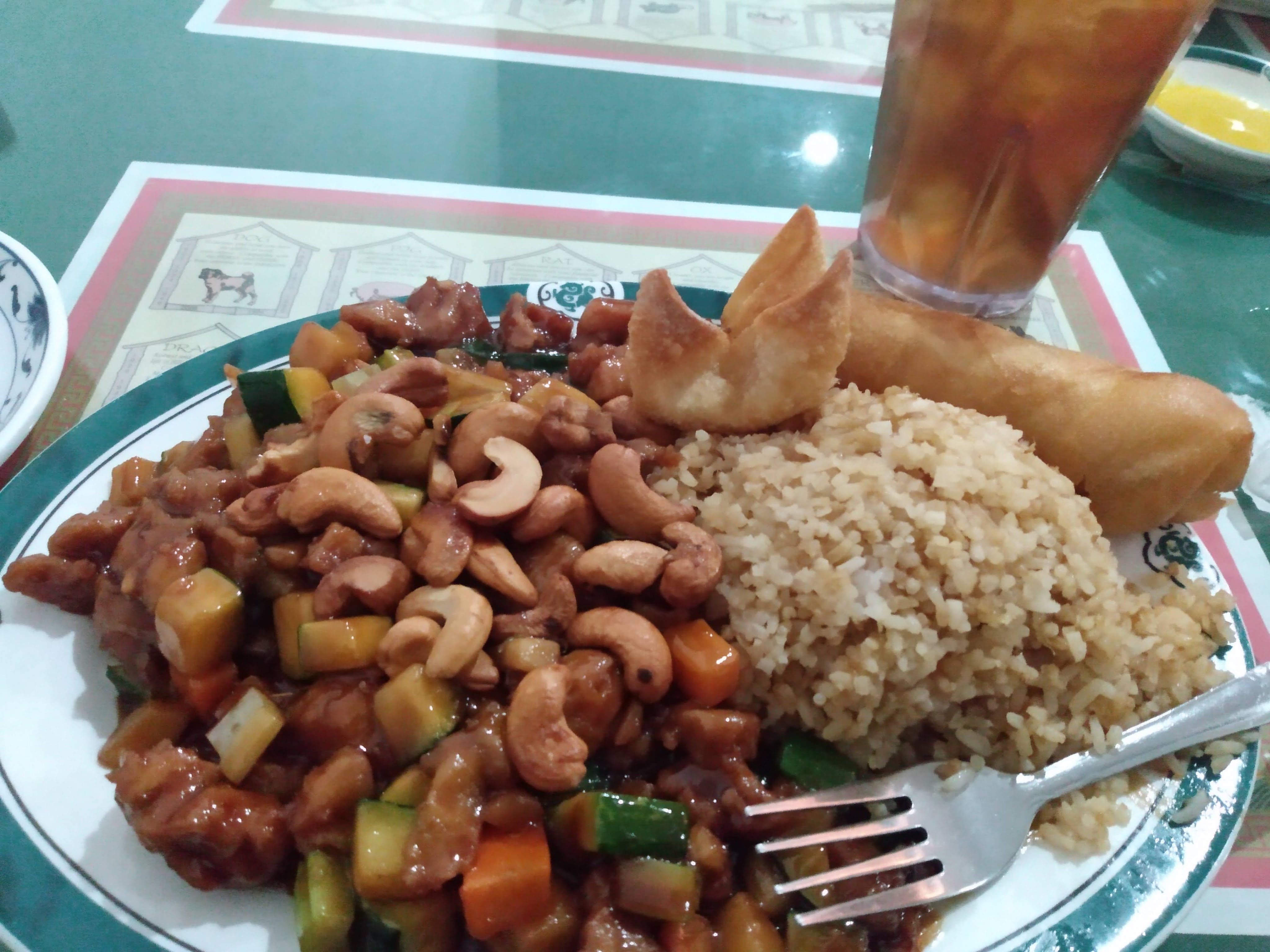
It was a very pleasant day, over all. It was a nice way to spend an Easter Sunday for someone who had maybe forgotten how. The river walk was a pleasant ride, as was the ride over Tunnel Drive. It all brought back fond memories of times past. Maybe I’ll go to the Royal Gorge Bridge for Memorial Day. HAven’t been there in a while either.
References
Royal Gorge Region: Tunnel Drive
Johnson, Brooke. 18 July 2020. “Back in Time: Tunnel Drive Originally Had a Different Purpose”. Canon City Daily Record. Retrieved from https://www.canoncitydailyrecord.com/2020/07/18/back-in-time-tunnel-drive-originally-had-a-different-purpose/
About Kaye Lynne Booth
For Kaye Lynne Booth, writing is a passion. Kaye Lynne is an author with published short fiction and poetry, both online and in print, including her short story collection, Last Call and Other Short Fiction; and her paranormal mystery novella, Hidden Secrets. Kaye holds a dual M.F.A. degree in Creative Writing with emphasis in genre fiction and screenwriting, and an M.A. in publishing. Kaye Lynne is the founder of WordCrafter Quality Writing & Author Services and WordCrafter Press. She also maintains an authors’ blog and website, Writing to be Read, where she publishes content of interest in the literary world.
______________________________________________________________________
Want exclusive content? Join Kaye Lynne Booth & WordCrafter Press Readers’ Group for WordCrafter Press book & event news, including the awesome releases of author Kaye Lynne Booth. She won’t flood your inbox, she NEVER sells her list, and you might get a freebie occasionally. Get a free digital copy of her short story collection, Last Call and Other Short Fiction, just for joining.