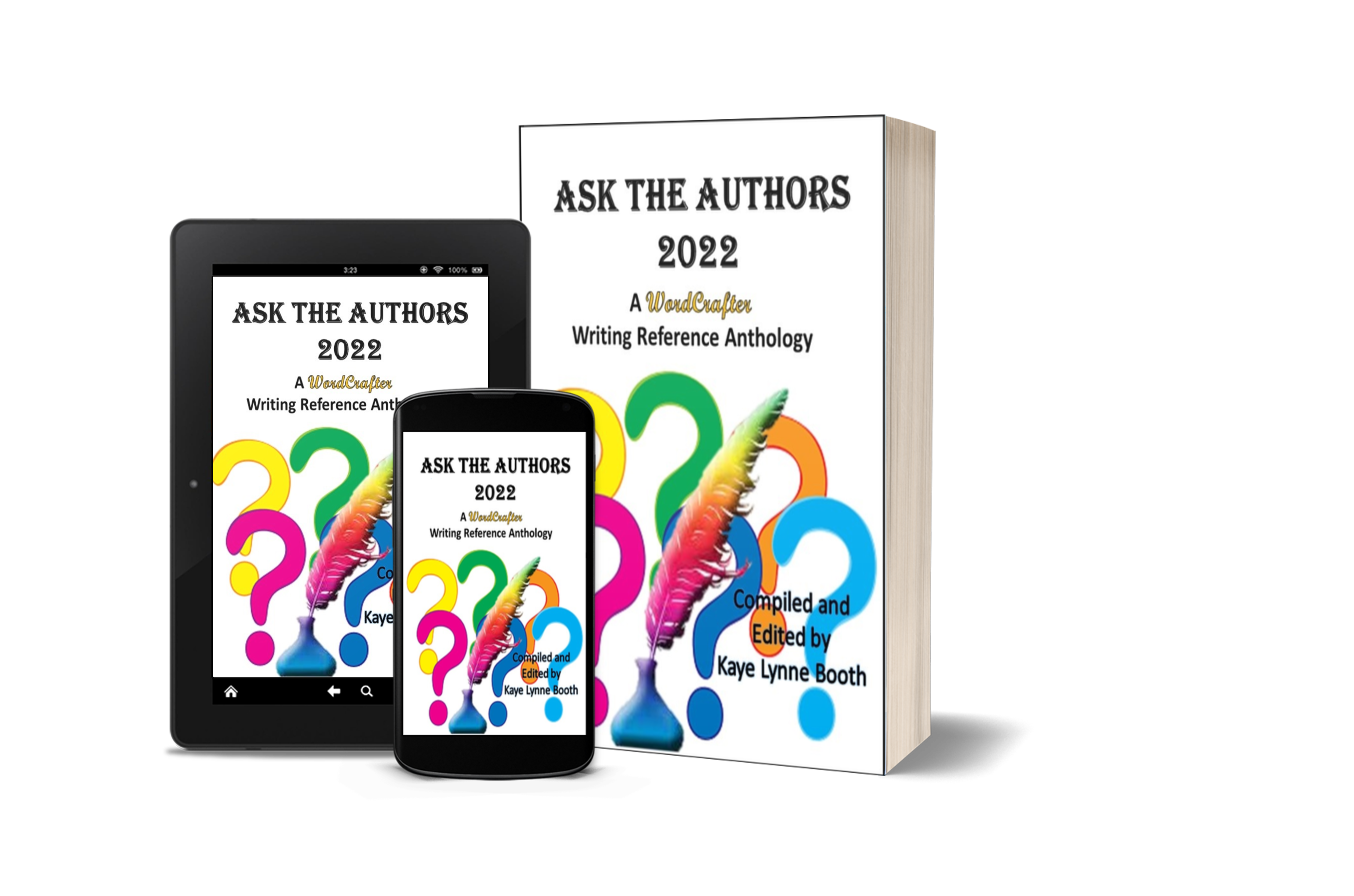
Treasuring Poetry – Meet author and poet, Marcia Meara, and a book review #poetry #readingcommunity #TreasuringPoetry
Posted: April 19, 2023 Filed under: Book Review, Books, Interview, Poetry, Review, Treasuring Poetry | Tags: A Boy Named Rabbit, Marcia Meara, Poetry, Robbie Cheadle, Summer Magic, Treasuring Poetry, Writing to be Read 90 Comments
Today, I am delighted to welcome poet and author, Marcia Meara, as my April Treasuring Poetry guest. Marcia is sharing some of her thoughts about poetry and poems and I am sharing my reviews of A Boy Named Rabbit: Wake-Robin Ridge Book 2 and
Why do you write poetry?
I’ve written poetry since I was 5-years old, when I filled legal tablets with page after page of verses about cowboys and horses. (As imagined by a little girl who’d seen a few movies.) I really can’t remember when I didn’t love writing, and poems were what got me started. The rhythm and musicality of poetry is what I love most, and the main reason I still write poems today.
Do you think poetry is still a relevant form of expressing ideas in our modern world? If yes, why?
I think poems are very relevant, indeed. Poetry speaks of beauty and love and hate and danger and betrayal and every other human emotion, need, or failing. Do I think it’s as popular as it once was? No. Nor does it sell as well as novels and other works of fiction. But neither of those has any bearing on the actual relevance of poetry, and the more readers we poets manage to attract, the more likely folks are to understand exactly that.
Which poem by any other poet that you’ve read do you relate to the most and why?
That’s difficult to say, since I’ve been reading poetry for 75 years or so, including most of the greatest ones from poets like Edgar Allan Poe, Emily Dickinson, William Wordsworth, Amy Lowell, Elizabeth Barrett Browning, Robert Browning, Edna St. Vincent Millay, John Keats, Alfred Lord Tennyson, Henry Wadsworth Longfellow, Percy Bysshe Shelley, Walt Whitman, Dylan Thomas, Carl Sandberg, T. S. Eliot, Sara Teasdale, Ogden Nash, and on and on. You get my drift, I’m sure. It’s very hard for me to choose a favorite, but one poem I have always loved and never tire of is Poe’s The Raven. It’s long, I know, but the rhythm is so perfect, and the painful sadness of the subject, so very, very POE.
The Raven
Edgar Allan Poe – 1809-1849
Once upon a midnight dreary, while I pondered, weak and weary,
Over many a quaint and curious volume of forgotten lore—
While I nodded, nearly napping, suddenly there came a tapping,
As of someone gently rapping, rapping at my chamber door—
“Tis some visitor,” I muttered, “tapping at my chamber door—
Only this and nothing more.”
Ah, distinctly I remember it was in the bleak December;
And each separate dying ember wrought its ghost upon the floor.
Eagerly I wished the morrow;—vainly I had sought to borrow
From my books surcease of sorrow—sorrow for the lost Lenore—
For the rare and radiant maiden whom the angels name Lenore—
Nameless here for evermore.
And the silken, sad, uncertain rustling of each purple curtain
Thrilled me—filled me with fantastic terrors never felt before;
So that now, to still the beating of my heart, I stood repeating,
“‘Tis some visitor entreating entrance at my chamber door—
Some late visitor entreating entrance at my chamber door;—
This it is and nothing more.”
Presently my soul grew stronger; hesitating then no longer,
“Sir,” said I, “or Madam, truly your forgiveness I implore;
But the fact is I was napping, and so gently you came rapping,
And so faintly you came tapping, tapping at my chamber door,
That I scarce was sure I heard you”—here I opened wide the door;—
Darkness there and nothing more.
Deep into that darkness peering, long I stood there wondering, fearing,
Doubting, dreaming dreams no mortal ever dared to dream before;
But the silence was unbroken, and the stillness gave no token,
And the only word there spoken was the whispered word, “Lenore?”
This I whispered, and an echo murmured back the word, “Lenore!”—
Merely this and nothing more.
Back into the chamber turning, all my soul within me burning,
Soon again I heard a tapping somewhat louder than before.
“Surely,” said I, “surely that is something at my window lattice;
Let me see, then, what thereat is, and this mystery explore—
Let my heart be still a moment and this mystery explore;—
‘Tis the wind and nothing more!”
Open here I flung the shutter, when, with many a flirt and flutter,
In there stepped a stately Raven of the saintly days of yore;
Not the least obeisance made he; not a minute stopped or stayed he;
But, with mien of lord or lady, perched above my chamber door—
Perched upon a bust of Pallas just above my chamber door—
Perched, and sat, and nothing more.
Then this ebony bird beguiling my sad fancy into smiling,
By the grave and stern decorum of the countenance it wore,
“Though thy crest be shorn and shaven, thou,” I said, “art sure no craven,
Ghastly grim and ancient Raven wandering from the Nightly shore—
Tell me what thy lordly name is on the Night’s Plutonian shore!”
Quoth the Raven “Nevermore.”
Much I marvelled this ungainly fowl to hear discourse so plainly,
Though its answer little meaning—little relevancy bore;
For we cannot help agreeing that no living human being
Ever yet was blest with seeing bird above his chamber door—
Bird or beast upon the sculptured bust above his chamber door,
With such name as “Nevermore.”
But the Raven, sitting lonely on the placid bust, spoke only
That one word, as if his soul in that one word he did outpour.
Nothing further then he uttered—not a feather then he fluttered—
Till I scarcely more than muttered “Other friends have flown before—
On the morrow he will leave me, as my hopes have flown before.”
Then the bird said “Nevermore.”
Startled at the stillness broken by reply so aptly spoken,
“Doubtless,” said I, “what it utters is its only stock and store
Caught from some unhappy master whom unmerciful Disaster
Followed fast and followed faster till his songs one burden bore—
Till the dirges of his Hope that melancholy burden bore
Of ‘Never—nevermore.'”
But the Raven still beguiling my sad fancy into smiling,
Straight I wheeled a cushioned seat in front of bird, and bust and door;
Then, upon the velvet sinking, I betook myself to linking
Fancy unto fancy, thinking what this ominous bird of yore—
What this grim, ungainly, ghastly, gaunt and ominous bird of yore
Meant in croaking “Nevermore.”
This I sat engaged in guessing, but no syllable expressing
To the fowl whose fiery eyes now burned into my bosom’s core;
This and more I sat divining, with my head at ease reclining
On the cushion’s velvet lining that the lamp-light gloated o’er,
But whose velvet violet lining with the lamp-light gloating o’er,
She shall press, ah, nevermore!
Then, methought, the air grew denser, perfumed from an unseen censer
Swung by Seraphim whose foot-falls tinkled on the tufted floor.
“Wretch,” I cried, “thy God hath lent thee—by these angels he hath sent thee
Respite—respite and nepenthe, from thy memories of Lenore;
Quaff, oh quaff this kind nepenthe and forget this lost Lenore!”
Quoth the Raven “Nevermore.”
“Prophet!” said I, “thing of evil!—prophet still, if bird or devil!—
Whether Tempter sent, or whether tempest tossed thee here ashore,
Desolate yet all undaunted, on this desert land enchanted—
On this home by Horror haunted—tell me truly, I implore—
Is there—is there balm in Gilead?—tell me—tell me, I implore!”
Quoth the Raven “Nevermore.”
“Prophet!” said I, “thing of evil—prophet still, if bird or devil!
By that Heaven that bends above us—by that God we both adore—
Tell this soul with sorrow laden if, within the distant Aidenn,
It shall clasp a sainted maiden whom the angels name Lenore—
Clasp a rare and radiant maiden whom the angels name Lenore.”
Quoth the Raven “Nevermore.”
“Be that word our sign in parting, bird or fiend!” I shrieked, upstarting—
“Get thee back into the tempest and the Night’s Plutonian shore!
Leave no black plume as a token of that lie thy soul hath spoken!
Leave my loneliness unbroken!—quit the bust above my door!
Take thy beak from out my heart, and take thy form from off my door!”
Quoth the Raven “Nevermore.”
And the Raven, never flitting, still is sitting, still is sitting
On the pallid bust of Pallas just above my chamber door;
And his eyes have all the seeming of a demon’s that is dreaming,
And the lamp-light o’er him streaming throws his shadow on the floor;
And my soul from out that shadow that lies floating on the floor
Shall be lifted—nevermore!
Which of your own poems is your favourite and why?
I could say whichever one I’m writing at the time, but that wouldn’t be fair. Nor likely true, either, though I do think each one is a favorite at least during the moments of creation. However, instead of going that route, I’m going to choose the poem which most depicts large portions of my own life, spent canoeing on the wild and scenic rivers and creeks of Central Florida. Fittingly, it’s called On the River, and is included in my book, Summer Magic: Poems of Life & Love.
An extract from On The River by Marcia Meara
“Crystal green flows beneath me,
Leafy arches rise above,
Dip, glide.
Dip, glide.
Slide.
Duckweed parts as I float by.
I wonder where they went,
Those ducks?
Gone overnight, it seems.
Another parting, another loss,
And I slide by,
Under all that green.
Dip, glide.
Dip, glide.
Just there, in deepest shade,
Sleeping emeralds cling.
Tree frogs rest in their
Smooth, damp skins,
Waiting for the sliver moon.
They’ll open their eyes for the silver moon.
Sleeping now,
I pass him, too.
And on I go.
Dip, glide.
Dip, glide.”
Is writing poetry easy for you compared to prose or do you do a lot of editing and revision of your poems?
Oddly enough, I seldom do much, if any, editing on my poetry. When I’m “in the zone” the words I want seem to come to me, sometimes surprising me by fitting together exactly the way I like. This is definitely not true when I’m writing prose. Then, I spend a lot of time cleaning up, tweaking, and cutting before sending it off to an editor for more of the same. With poetry, if I’m in the mood, the words seem to flow much more smoothly and easily.
What mode (blog, books, YouTube, podcasts) do you find the most effective for sharing your poems with poetry lovers and readers?
I’ve actually never done any real marketing with my work, be it poetry or prose, and that’s something I do hope to change soon. But all I did with my book of poetry was publish it on Amazon and share poems now and then on my blog, The Write Stuff. NOTE: This is NOT how I would recommend new writers get the word out, no matter what their genre or style might be!
My review of Summer Magic: Poems of Life and Love by Marcia Meara

This book comprises the most beautiful freestyle poetry by Marcia Meara. The poetry is divided into two sections, the first is about the magic of life as experienced by a ten year old boy and the second is about love.
I loved both sections of the book but the poems about the joys and experiences of a ten year old boy were particularly poignant and meaningful for me as I have two sons who were ten years old in the not that distant past.
The two poems in this section that I enjoyed the most are, firstly, The Rope Swing which depicts the freedom and joy of swinging on a hot summer day. The depiction of a young boy of ten is very accurate and brings back lovely memories for me.
My second favourite poem is entitled Moccasins and describes the lovely and understanding relationship moms have with their sons.
The Rope Swing
The first stanza goes as follows:
“Sailing up, up into
Blue summer sky,
Hot rope rough against his hands,
He shouts with joy, and lets go.
For a crystal moment,
He hangs suspended,
Frozen in time
Like a fly in amber.”
Moccasins
“His dad smiles.
Moms are like that, Mac.
Moms always know what
Their children want most.
And Moms always want
Their children to have their
Heart’s desires.”
The poem I enjoyed the most in part two of the book describes the beauty of young love and the joy of watching small children play and develop.
The Sound of Dreams Coming True
“Listen, she says,
Kissing his fingers,
As a little girl laughs,
Chasing butterflies
With her big brother.”
Purchase Summer Magic: Poems of Life and Love by Marcia Meara here: https://www.amazon.com/Summer-Magic-Poems-Life-Love-ebook/dp/B00FNBLIPC
My review of A Boy Named Rabbit: Wake-Robin Ridge Book 2 by Marcia Meara
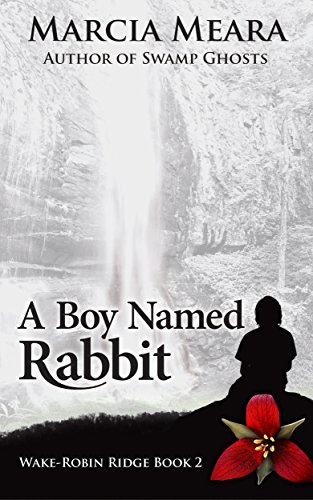
Sarah Gray and MacKenzie Cole from book 1, Wake-Robin Ridge, are now married and living in Mac’s lovely home built near the top of the mountain. Sarah is pregnant with their first child and Mac is happy and managing to keep his deep anxiety following the deaths of his ex-wife and son, Ben, under control. Mac’s emotional state is still delicate and he is desperately determined to keep his wife and their baby safe.
Ten-year old Rabbit has grown up in the mountains under the guidance and care of his grandparents who have taught him survival skills. The trios lifestyle is rough and ready with Gran living in a makeshift tent and the young boy and his grandpa generally sleeping outdoors in all weathers. At Grandpa’s insistence, the family has nothing to do with any people who are all designated as ‘bad people’ by Grandpa.
Gran has a progressive lung illness and Grandpa leaves his wife and Rabbit on their own one morning to travel into town and purchase medicine for her. He never returns. Gran continues to decline and, knowing she is dying, tells Rabbit that all people are not bad. She explains that contrary to Grandpa’s comments, there are also good people and Rabbit needs to find the good people, in particular, a man with winter blue eyes and hair like a crow’s wing. Gran dies and Rabbit is left on his own in the wilderness. With no other option, Rabbit packs up his belongings and sets off to find the man with the winter blue eyes.
Rabbit is well depicted as an old soul with a high intelligence despite his lack of book learning. His upbringing has provided him with survival tools and also the ability to assess situations and react in a clear headed and calm way. He is very endearing to the reader with his interesting way of looking at situations while still retaining the need for love and emotional immaturity of a young boy. He is very loving and giving and the reader can’t help routing for a good outcome for Rabbit.
Mac’s character continues to grow in this second book as he is faced with having to face up to his fears and deal with unexpected and unplanned events and circumstances despite his fears and anxieties. It is an intriguing journey to watch Mac struggling internally to move forward despite his anxiety and it is impossible not to be delighted by his progress and small victories.
Sarah is even more generous and loving than I remembered from book 1, and is the perfect wife to Mac. It is obvious she has a huge heart which is big enough for Mac, her unborn child, and Rabbit.
As with all lives, especially in fiction, the trio are faced with adversity and obstacles which they need to try to overcome. The storyline is engaging and entertaining and brings out the best in the various characters.
Purchase A Boy Named Rabbit here: https://www.amazon.com/Boy-Named-Rabbit-Wake-Robin-Ridge-ebook/dp/B00SQ4PID6
About Marcia Meara
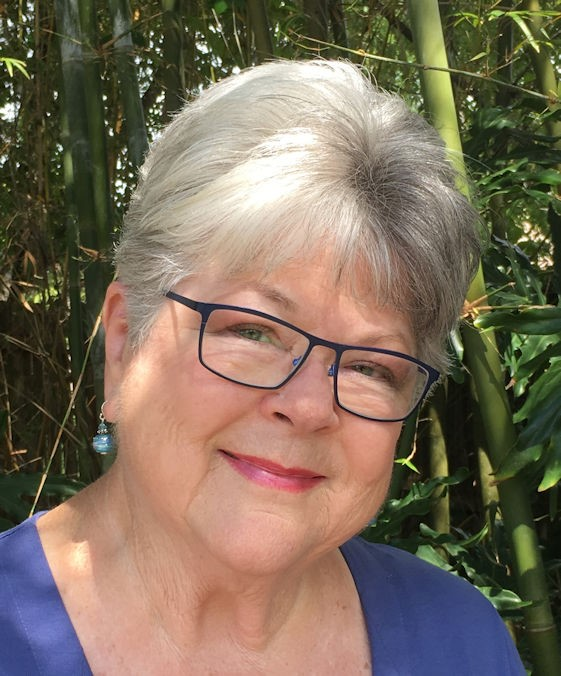
Marcia Meara lives in central Florida, just north of Orlando, with her husband of over thirty years and four big cats.
When not writing or blogging, she spends her time gardening, and enjoying the surprising amount of wildlife that manages to make a home in her suburban yard. She enjoys nature. Really, really enjoys it. All of it! Well, almost all of it, anyway. From birds, to furry critters, to her very favorites, snakes. The exception would be spiders, which she truly loathes, convinced that anything with eight hairy legs is surely up to no good. She does not, however, kill spiders anymore, since she knows they have their place in the world. Besides, her husband now handles her Arachnid Catch and Release Program, and she’s good with that.
Spiders aside, the one thing Marcia would like to tell each of her readers is that it’s never too late to make your dreams come true. If, at the age of 69, she could write and publish a book (and thus fulfill 64 years of longing to do that very thing), you can make your own dreams a reality, too. Go for it! What have you got to lose?
Purchase Marcia Meara’s books
Novels
Wake-Robin Ridge: Book 1
A Boy Named Rabbit: Wake-Robin Ridge Book 2
Harbinger: Wake-Robin Ridge Book 3
The Light: Wake-Robin Ridge Book 4
Swamp Ghosts: Riverbend Book 1
Finding Hunter: Riverbend Book 2
That Darkest Place: Riverbend Book 3
Riverbend Spinoff Novellas
The Emissary 1
The Emissary 2 – To Love Somebody
The Emissary 3 – Love Hurts
Poetry
Summer Magic: Poems of Life and Love
Reach Marcia on Social Media Here:
Blog: The Write Stuff
Facebook
Email: marciameara16[at]gmail[dot]com
About Robbie Cheadle
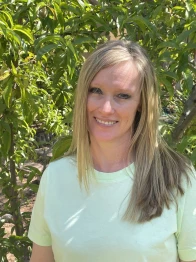
Award-winning, bestselling author, Robbie Cheadle, has published thirteen children’s book and two poetry books. Her work has also appeared in poetry and short story anthologies.
Robbie also has two novels published under the name of Roberta Eaton Cheadle and has horror, paranormal, and fantasy short stories featured in several anthologies under this name.
The ten Sir Chocolate children’s picture books, co-authored by Robbie and Michael Cheadle, are written in sweet, short rhymes which are easy for young children to follow and are illustrated with pictures of delicious cakes and cake decorations. Each book also includes simple recipes or biscuit art directions which children can make under adult supervision.
Robbie’s blog includes recipes, fondant and cake artwork, poetry, and book reviews. https://robbiesinspiration.wordpress.com/
Share this:

Welcome to the WordCrafter “Poetry Treasures 3: Passions” Book Blog Tour
Posted: April 17, 2023 Filed under: Anthology, Book Release, Books, Poetry, Poetry Readings, WordCrafter Press | Tags: Kaye Lynne Booth, Passions, Poetry, Poetry Anthology, Poetry Treasures 3: Passions, Robbie Cheadle, Rosemerry Wahtola Trommer, Smitha Vishwaneth, WordCrafter Press 90 Comments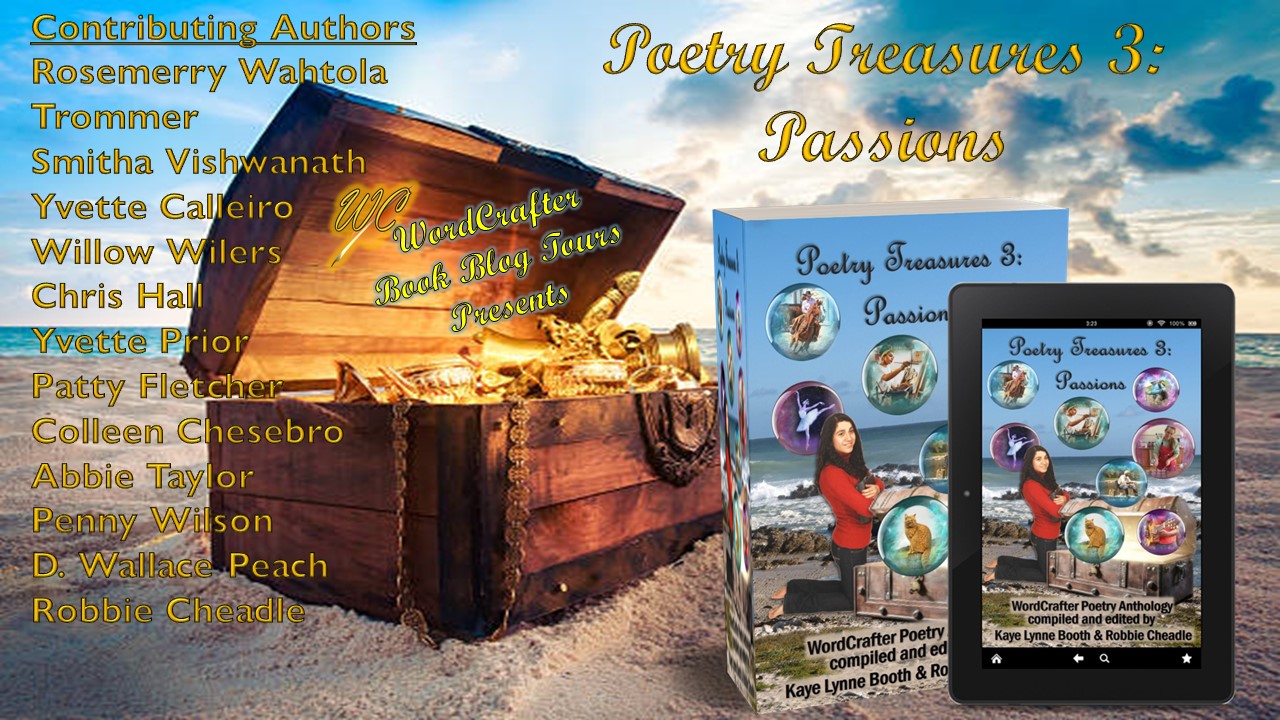
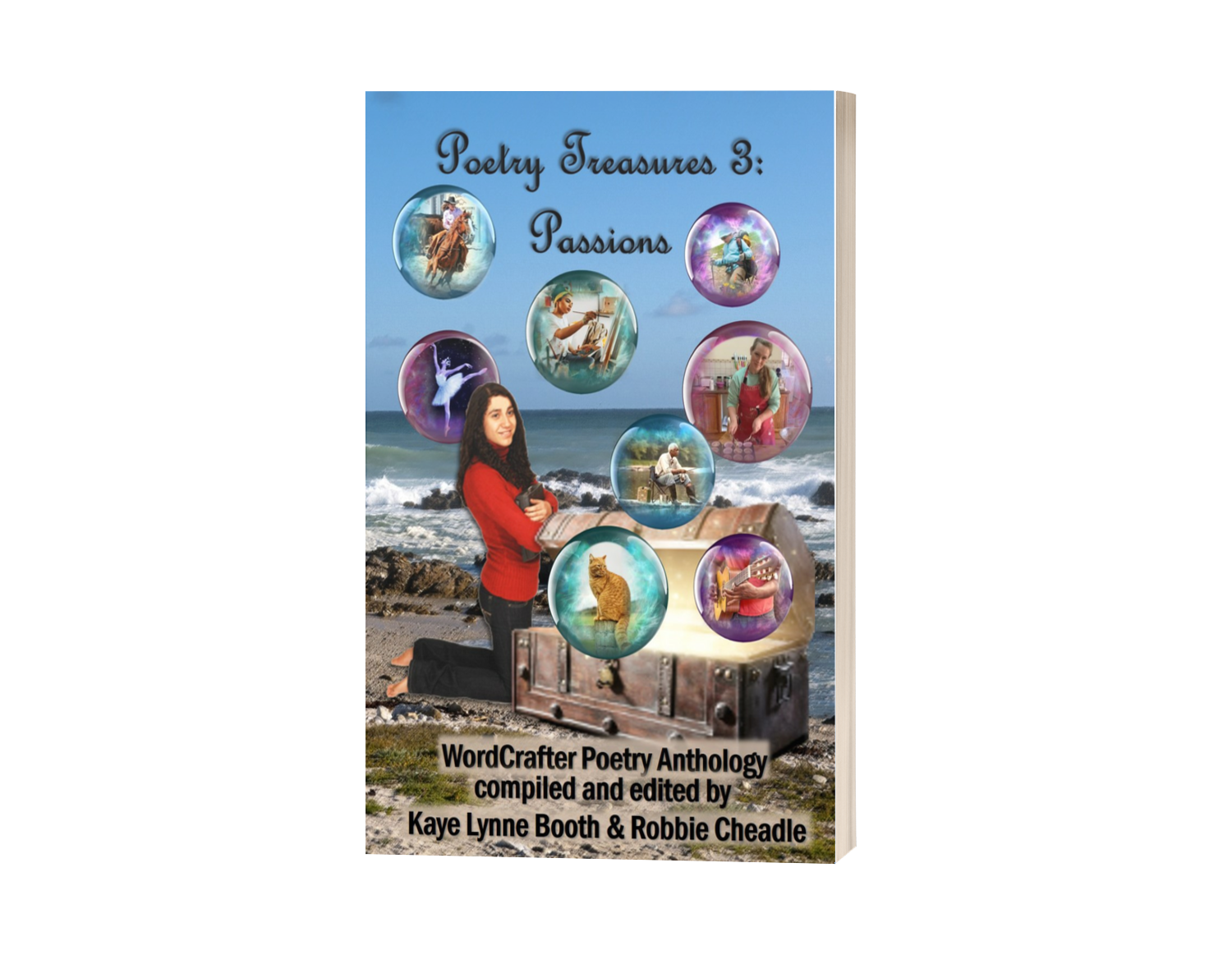
Welcome to the WordCrafter Poetry Treasures 3: Passions Book Blog Tour! This is a very special tour, because at each stop, you will meet not one, but two of the contributing poets of the anthology. We’ve got a great tour planned with readings and inspiration posts from the authors, and book reviews. (Scroll down for the tour schedule with links, but be aware that the links won’t function until each post goes live.)Plus we have a great giveaway, so follow the tour to meet the contributing authors and additional chances to win a digital copy of Poetry Treasures 3: Passions!
Giveaway
Comment and let us know you were there, and get a chance to win a copy of Poetry Treasures 3: Passions in the digital format of your choice.Follow the tour and leave your comments along the way. One entry per stop.
About Poetry Treasures 3: Passions
Passions treasures within.
Open the cover
and you will discover
the Poetry Treasures
of guests on
Roberta Eaton Cheadle’s
2022 “Treasuring Poetry” blog series
on Writing to be Read.
Included are treasures from:
Patty Fletcher, D. Wallace Peach, Yvette Prior,
Penny Wilson, Colleen M. Chesebro, Abbie Taylor,
Yvette Calliero, Smitha Vishwaneth,
Chris Hall, Willow Willers, Rosemerry Wahtola Trommer,
and Roberta Eaton Cheadle

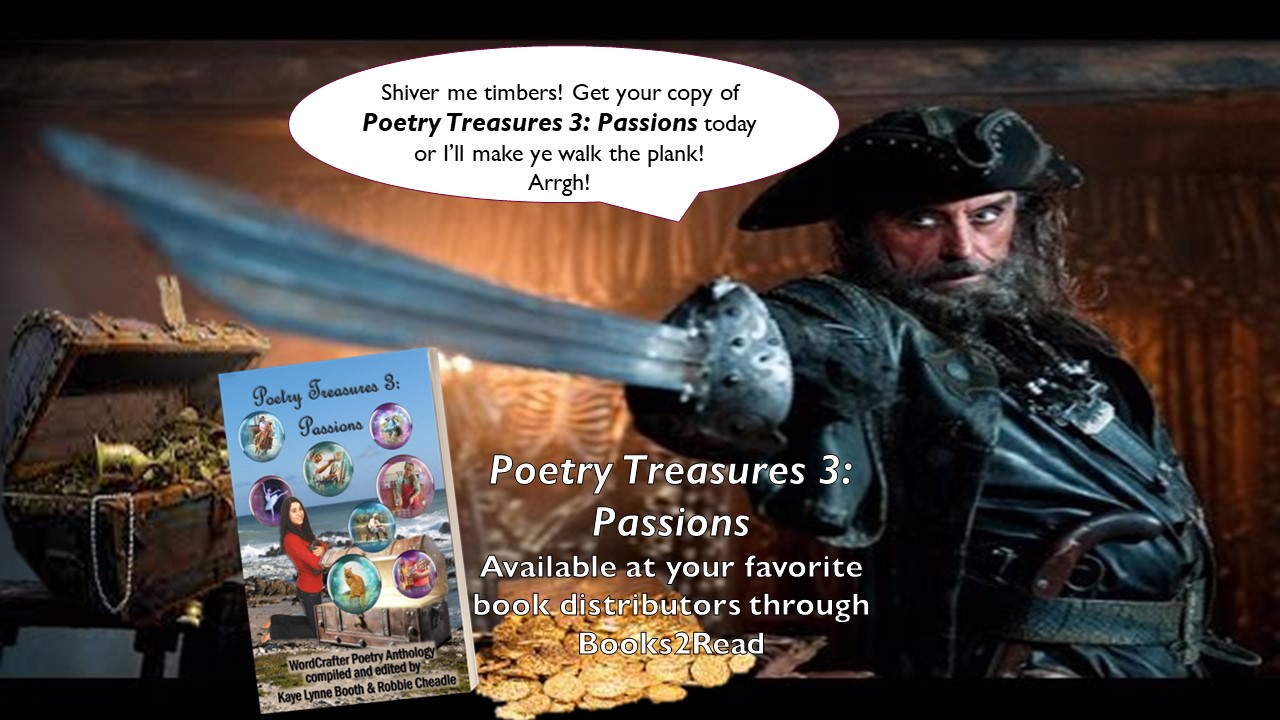
Purchase Poetry Treasures 3: Passions from your favorite distributor through Books2Read
Today’s Stop
On today’s stop, we have video readings from Rosemerry Wahtola Trommer and Smitha Vishwanath. Rosemerry is sharing a reading of her poem, “Twenty Years Ago, Ten Years Ago, Last Week”, and Smitha is sharing a reading of her poem, ” “. Both of these lovely poems are featured in Poetry Treasures 3: Passions.
Meet Rosemerry Wahtola Trommer
Today’s stop features a peotry reading by contributing Rosemerry Wahtola Trommer, which is a real treat. Rosemerry is a performance poet, and I was privileged to attend one of her live performances back in 2010. She was spectacular. The way she draws you into the poem and makes you feel her words is amazing. Rosemerry is a wonderful, vibrant lady, who embraces the written word as if it were a lover, caressing and shaping it into what she needs it to be. I had the pleasure of featuring an interview with her, right here on Writing to be Read. That’s why I asked Robbie to invite her to be a guest on “Treasuring Poetry”, and why I am so pleased to have her work featured in this WordCrafter anthology. It is a privilege and an honor to work with her. I hope you will enjoy this reading as much as I have.
Rosemerry Wahtola Trommer co-hosts Emerging Form (a podcast on creative process), Secret Agents of Change (a surreptitious kindness cabal) and Soul Writer’s Circle. Her poetry has appeared on A Prairie Home Companion, PBS News Hour, O Magazine, American Life in Poetry, onCarnegie Hall stage, and on river rocks she leaves around town. Her collection Hush won the Halcyon Prize. Naked for Tea was a finalist for the Able Muse Book Award. Her most recent collection is All the Honey. Her daily audio series, The Poetic Path, can be found on the Ritual app, her daily poetry practice can be read on her blog, A Hundred Falling Veils, and her book of mindfulness poetry prompts is Exploring Poetry of Presence II. One-word mantra: Adjust.

Twenty Years Ago, Ten Years Ago, Last Week
If I could go back in time
and offer advice to my younger self,
I wouldn’t.
I would let her fail all over again.
I’d let her falter. I’d let her lose.
I’d let her stumble
and struggle and bomb.
But I would lean in close
and let her know
I am deeply in love with her.
It’s so easy now to give her this,
this self-compassion in full bloom,
this thing she believed
was impossible.
Reading of “Twenty Years Ago, Ten Years Ago, Last Week”

Meet Smitha Vishwanath
I first met Smitha Viswaneth through her interview with Robbie Cheadle on the “Treasuring Poetry” blog series, right here, on Writing to be Read, so I can’t say that I know her well, but I’ve been learning a lot about her. Smitha is an award winning poet of a National Poetry Month Challenge two years in a row, and she’s been nominated poet of the month several times on Spillword. She has poetry published in several online publications, and her debut novel, Coming Home, just came out last month.

Smitha Vishwanath is your quintessential ‘bored banker’ turned writer. After a rewarding career in Banking in the Middle East where she worked for leading banks in senior positions, she quit and moved to India in July 2018 with her husband who had been transferred to the country on an international assignment. Thereon she began her writing journey.
‘Roads’ is the first book she has co-authored. Having lived and studied in different countries and different states within India and worked with different cultures, Smitha understands that ‘change’ and ‘ups and downs’ are very much a part of life. It is this experience that reflects in her poems and her writing which are filled with positivity, acceptance and willingness to change for the better.
She also writes regularly through her blog: https://lifeateacher.wordpress.com
A child called, ‘Passion’
A child called, Passion,
I met him on my walk, one day
and asked him to come home.
He replied, ‘On one condition-
only if you give me your undivided attention.’
‘How difficult could that be? aloud, I wondered,
I raised a family with children- two!’
Smiling impishly, he said ‘Not much, if you surrendered.”
I laughed at his presumptuousness
Little knowing how true to his words he’d be.
The moment, Passion, walked in through my door
He obscured the rest of the world from sight
and kept me waking into the night
He pranced around all day-tireless, and unbound.
It made me loathe the day, him, I found.
Passion was a stubborn child
demanding complete allegiance.
His appetite was unappeased,
his thirst unquenched;
he made no allowance!
A ruthless master, a sorcerer
He turned me into a willing slave.
I fulfilled his every bidding;
the years went by, I couldn’t tell
and the children flew before I knew.
But, Passion, he stayed behind.
I grew old, and he grew kind.
Passion, that stubborn child
remained wilful until the end
and refused to leave,
even though my body was hard to mend.
He nourished my body and fed my soul
And made me feel as good as whole.
Passion, that stubborn child, simply would not let go;
no doctor could understand that child’s miraculous cure.
So, if you ever cross paths with a child called, ‘Passion.’
Hold onto him with a firm hand
Even if you must endure.
Lug around for a while if you must-
but don’t ever let go.
For when all the others leave-
He will be standing by your side
For, Passion, is a stubborn child
and loyal as can be
Let nobody tell you otherwise.
Reading of “A Child Called ‘Passion'”
Wrap Up
That’s it for the first stop on the WordCrafter Poetry Treasures 3: Passions Book Blog Tour. I hope you’ve enjoyed meeting Rosemerry and Smitha and the samples of their works. As an extra added treat, you can catch an interview with Robbie Cheadle and I on the Word Craft Poetry site with Colleen Chesebro, which happens to coincide with our opening day. So, after you’ve met our two poets, Rosemerry and Smitha, you might click on the link above to pop in and check that interview about the anthology, too.
A raving five-star review of Poetry Treasures 3: Passions on Goodreads.
Raving Revue
“…It’s an eclectic collection and a fabulous way to discover new poets to read. Expect varying interpretations of poetic passions. Not all are amorous! Some are thoughtful, personal to the author, (the author’s interests, experiences and loves,) and many have deep insight into human trials and tribulations…”
M.J. Mallon
You can find the full review here: https://www.goodreads.com/book/show/128125978-poetry-treasures-3#CommunityReviews
Follow the tour to meet other contributing authors and for more chances to enter the giveaway. The links in the schedule below won’t work until each post goes live. Tomorrow we will be over at Patty’s World with Patty Fletcher with a guest post from Contributing author, Colleen Chesebro and a reading by Robbie Cheadle of contributing author, Chris Hall’s poem, ” What Will Become of Us?”, so don’t miss it. I hope to see you there.
Tour schedule 4/17 – 4/21
Monday – Opening Day – Readings by Rosemerry Wahtola Trommer & Smitha Vishwanath – Writing to be Read
Tuesday – Guest Post from Colleen Chesebro & Reading by Robbie Cheadle of poem by Chris Hall – Patty’s Worlds
Wednesday – Readings by D. Wallace Peach & Abbie Taylor – The Many Showers of Blessing
Thursday –Reading by Willow Willers & a Guest Post by Patty Fletcher/Review – Carla Loves to Read
Friday – Readings by Penny Wilson & Yvette Calliero – Robbie’s Inspiration
Saturday – Closing Post – Reading by Yvette Prior & Guest Post by Judy Mastrangelo – Writing to be Read
__________________________________________________
Book your WordCrafter Book Blog Tour today!
Share this:

Growing Bookworms – Meet children’s author and blogger, Norah Colvin, creator of Readilearn #childrensfiction #childrenseducation #Growingbookworms
Posted: April 12, 2023 Filed under: Children's Books, Growing Bookworms, Interview | Tags: Children's Books, Growing Bookworms, Let's Move, Nora Colvin, Robbie Cheadle, Wombat Digs In, Writing, Writing to be Read 127 Comments
Today, I am delighted to introduce you to children’s author, Norah Colvin. Norah is a retired teacher and runs a marvelous educational site called Readilearn which is packed with wonderful teaching aids and ideas for promoting learning among children. Welcome Norah!
I have read and enjoyed a few of your children’s pictures books. They comprise of delightful age appropriate stories and lovely illustrations. Is there any particular children’s book author whom you admire and consider to be a role model for your writing?
Robbie, thank you so much for inviting me here to talk about my books and favourite authors. There are so many authors whose work I love, it’s hard to know where to start, but I guess if I had to pick just one, I’d have to say Mem Fox.
Mem has written so many wonderful picture books that touch my heart. Each one is a gem. She is enormously prolific and writes in many different styles. Possum Magic, her first picture book, was published in 1983, too late for my son and a few years before my daughter was born. I fell in love with this book and Mem as soon as I read it. But I love so many others of her books too, especially Koala Lou (I can’t read it aloud with tearing up), and Whoever You are (same thing). For others of her books that I love, it’s best to just go to her website and check out her full list. I love them all!
One book of Mem’s that I found especially inspiring was her memoir Mem’s the Word. I had always wanted to be a published writer but had never been successful in having any of my submissions accepted. In the memoir (great name for a book about Mem, eh?) Mem revealed that she’d had her first book published when she was forty or almost forty. That gave me hope. I was not yet 40 at the time, only almost. Not only that, Possum Magic had been rejected nine times and had gone through many changes and edits before it was published. Possum had even started life’s journey as a mouse. I thought maybe there was hope for me yet. It took decades after that for me to have these little picture books published with Library For All, but I have been a published educational writer since the early 1990s (last century!)
Mem has also written a brilliant book for parents called Reading Magic. It is all about the importance of reading aloud to children and I just love it. Whenever I know someone who is becoming a parent for the first time, I gift them this book and one of Mem’s picture books as well, usually Ten Little Fingers and Ten Little Toes if I can find it, or Possum Magic. While I can talk (and write, which I often do) about the importance of talking with, reading to and playing with children, a message from Mem gives extra authority to the message. While we’re talking about Mem – although she is an Australian and was born here, she grew up in Africa, Zimbabwe, I think.
You can read more about Mem Fox on Norah’s blog here: https://norahcolvin.com/2015/09/25/a-celebration-of-australian-picture-books-mem-fox/
Where do you find inspiration for your children’s picture books?
This is a tough one to answer, though it should be easy, as stories are everywhere. One of my favourite sayings to children I was teaching, my own children and now my grandchildren is “There’s a story in that”. A story can arise from almost any situation, and be triggered by a thought, a word, a scent on a breeze, a sound. A story is taking a moment, a thought, and turning it into something magical that resonates with others. Of course, if I’d had more success with that latter part, maybe I’d have more stories published and would be more confident in answering this question. But I guess, in fact, children are my inspiration. I love spending time with young children. They are just the most amazing, joyful, full of wonder wonderful little humans with huge hearts. When I’m writing stories for or about children, I try to capture what it means to be a young child and release the six-year-old that still resides within me.
How do you go about ensuring the language and flow of ideas in your children’s books are appropriate for the target age group?
I hope the language and flow of ideas in my stories is appropriate for the young children in my target audience. I have spent a lot of time with young children. I was one once myself and am still a six-year-old at heart (see above). I was a teacher of 5 – 7 year-olds for almost 30 years, had two children of my own, and two grandchildren. A day never went by in the classroom or at home when I didn’t read at least one (often many more) stories to my children. I think all these things – talking with children, spending time with children, and reading stories and books to them (and to myself) – have helped me write in language that is age appropriate.
Do you include specific messages for young children in your picture books? What are your aims with these books?
I try to not be didactic in my stories but to allow messages of empowerment come through the events and character development, encouraging children to love themselves, to be confident, to be friendly towards and respectful to others, to be courageous and curious and try new things, and … I often consider my stories to be ‘a slice of life’, an incident that could occur in any family, an incident that children may identify with. I avoid the darker emotions and try for something lighter. There’s too much darkness. Let there be light, I say. Learning and life are meant to be fun after all.
Your books are part of the Library for All initiative. Could you please share a bit about the objectives of Library for All and why you are a participant in this project.
I’m so pleased you have asked about Library For All (LFA). It is Library for All that has published these first picture books of mine that you have mentioned. I am absolutely delighted and feel extremely honoured to be able to contribute to the Library For All collection. It is such an amazing organisation with a mission that is close to my heart – to make knowledge and books accessible to all equally. Authors and illustrators donate their stories and illustrations to LFA. It’s a great way to be able to support their work. I have fifteen books published with LFA. The first one to be published Wombat Digs was written in a workshop run by LFA with the aim of expanding their titles. I was lucky to have this story written and accepted in that workshop. Most of my stories are nonsense phonics stories written at the request of LFA. Two of the stories have been translated, one for Timor-Leste and one for Kiribati. I was so surprised to receive the one for Kiribati this week. I didn’t know it was being translated. How exciting. You can see all the titles on my Amazon author page. While I receive no income from sales, I’m delighted that the funds contribute to the good work of LFA.
You have a website, Readilearn, Digital Resources for Teachers. Please tell us a bit about your objectives with this website and how teachers and other caregivers can benefit from your digital resources.
Readilearn has been a labour of love. When I was teaching, as most teachers do, I spent many hours away from the classroom preparing lessons to not only encourage learning but to make learning fun. I was/am never in favour of handing out worksheets just to keep children busy. I’ve never considered that respectful of their intellect or a good use of time. I believe that children learn through trying things for themselves and through discussions with the teacher and each other.
When I left the classroom, I wanted to support teachers by doing some of the preparation for them, preparing lessons that were ready for them to teach, lessons that gave the children opportunities to interact with and discuss what they were learning. I wanted to make the lessons a bit more fun and meaningful than just filling out numerous worksheets filled with repetitive exercises. I also wanted to make it affordable so that teachers didn’t have to spend a lot of their hard-earned money (as most of us, especially early childhood teachers, do) on quality resources.
As most of my teaching days were spent working with 5 – 7-year olds, that’s the age group I’ve targeted. Teachers of children in that age group don’t have to scroll through oodles of resources to find something age appropriate. However, as I said, they are lessons ready for teachers to teach (including home-schooling parents). They are not designed for children to use on their own. It is the interactions and the discussions that are important. This is especially so for the interactive lessons which are accessed online. While there are some downloadable worksheets (many of them free), they usually provide follow-up support for the online lessons or provide other teaching ideas. Teaching is an amazing job. It has enormous rewards, but it has its challenges too. If I can make a teacher’s day a little easier and learning a little more fun and meaningful for the children, I’m happy.
Thank you, Norah, for being a wonderful guest and sharing all this amazing information about your writing and Readilearn.
My review of Wombat Digs In by Norah Colvin
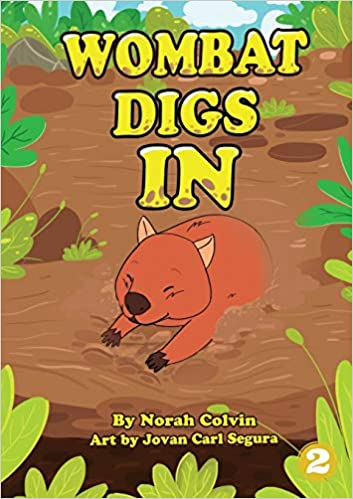
This is an adorable book for small children about a wombat who is struggling to keep up with some of the other animals including the kangaroos who can bounce, the possums who can climb, and the fruit bats who can fly. Wombat is feeling a little dejected, but when Baby Koala falls out of the tree, Wombat’s own special skill of digging comes to the forefront. This little book is illustrated with simple and bright pictures that small children will love.
Purchase link:
Amazon Au: https://www.amazon.com.au/gp/product/192596003X
Amazon US: https://www.amazon.com/Wombat-Digs-Norah-Colvin/dp/192596003X
My review of Let’s Move by Norah Colvin

This is a delightful little book for teaching very young children about animals and movement. The illustrations are adorable and I particularly liked the snails that slide and the snakes that slither.
Purchase link:
Amazon Au: https://www.amazon.com.au/gp/product/1925960064
Amazon US: https://www.amazon.com/Lets-Move-Norah-Colvin/dp/1925960064
About Norah Colvin
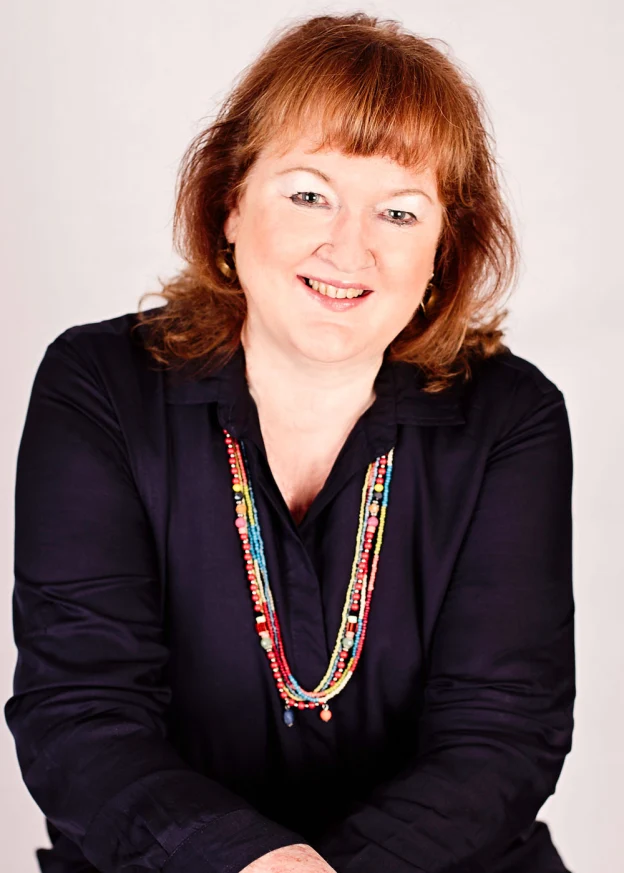
Norah Colvin is a passionate educator and writer.
She is a published educational writer and freelance author for publishers such as Jacaranda Wiley, Greygum Software, Blake Education, Pascal Press, MacMillan and ITC Publications.
She has two children’s books published with Library For All, a ballad included in the Share Your Story Tell ‘Em They’re Dreaming anthology and flash fiction in the Carrot Ranch Rough Writers Anthology Vol 1. She loves to write picture books manuscripts for the six-year-old in her own and others’ hearts.
She belongs to the following writers’ groups:
SCBWI
Queensland Writers Centre
Book Links
Write Links
Writing NSW
Creative Kids Tales
and other Facebook writing groups.
She blogs at www.NorahColvin.com and produces teaching resources for her educational website www.readilearn.com.au.
About Robbie Cheadle
Award-winning, bestselling author, Robbie Cheadle, has published thirteen children’s book and two poetry books. Her work has also appeared in poetry and short story anthologies.
Robbie also has two novels published under the name of Roberta Eaton Cheadle and has horror, paranormal, and fantasy short stories featured in several anthologies under this name.
The ten Sir Chocolate children’s picture books, co-authored by Robbie and Michael Cheadle, are written in sweet, short rhymes which are easy for young children to follow and are illustrated with pictures of delicious cakes and cake decorations. Each book also includes simple recipes or biscuit art directions which children can make under adult supervision.
Robbie’s blog includes recipes, fondant and cake artwork, poetry, and book reviews. https://robbiesinspiration.wordpress.com/
Share this:

Celebrate National Poetry Month with WordCrafter Press: New Release!
Posted: April 2, 2023 Filed under: Anthology, Book Promotion, Book Release, Books, Poetry, WordCrafter Press | Tags: Abbie Taylor, Chris Hall, Colleen Chesebro, D. Wallace Peach, Judy Mastrangelo, Kaye Lynne Booth, Patty Fletcher, Penny Wilson, Poetry, Poetry Treasures 3: Passions, Robbie Cheadle, Rosemerry Wahtola Trommer, Smitha Vishwanath, WordCrafter Press, Yvette M. Calleiro, Yvette Prior 21 Comments
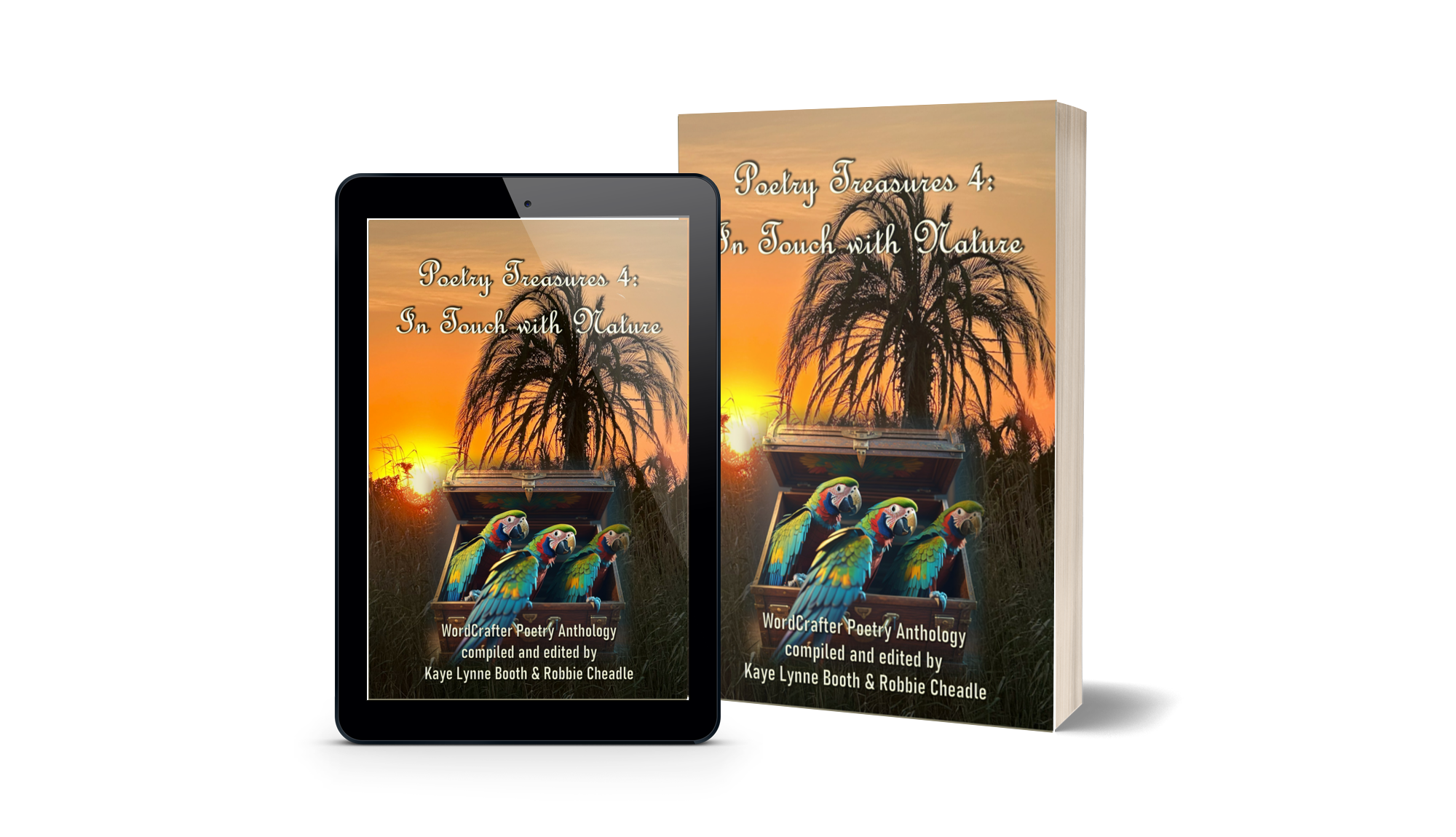
Poetry Treasures 3: Passions will release on April 18 and is available for pre-order now. This exceptional collection of poets & poetry includes the works of guests from the 2022 “Treasuring Poetry” blog series, as they share their passions with us. Learn more about this anthology and help WordCrafter Press send this poetry anthology off right with a book blog tour April 17 – 21, starting right here, on Writing to be Read.
About Poetry Treasures 3: Passions
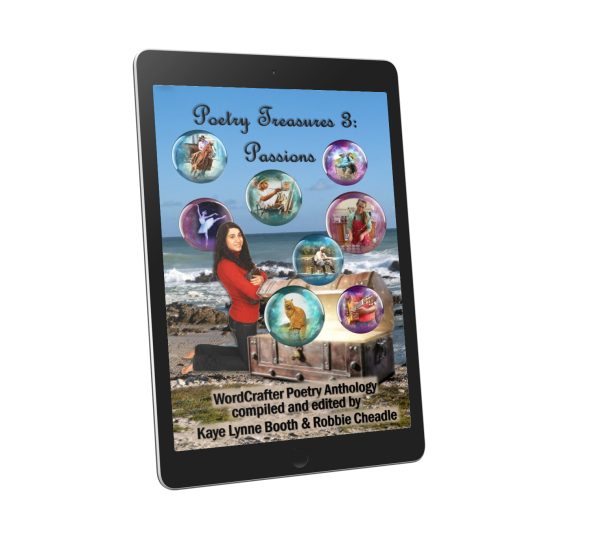
Passions treasures within.
Open the cover
and you will discover
the Poetry Treasures
of guests on
Roberta Eaton Cheadle’s
2022 “Treasuring Poetry” blog series
on Writing to be Read.
Included are treasures from:
Patty Fletcher, D. Wallace Peach, Yvette Prior,
Penny Wilson, Colleen M. Chesebro, Abbie Taylor,
Yvette Calliero, , Smitha Vishwanath,
Chris Hall, Willow Willers, Rosemerry Wahtola Trommer,
and Roberta Eaton Cheadle
Poetry Treasures 3: Passions is available for pre-order now from your favorite book distributors through Books2Read: https://books2read.com/u/b5qnBR
Share this:

WordCrafter Press Celebrates National Poetry Month
Posted: April 1, 2023 Filed under: Anthology, Book Promotion, Books, Collection, Poetry, Promotion, WordCrafter Press | Tags: Arthur Rosch, Behind Closed Doors, Feral Tenderness, National Poetry Month, Poetry, Poetry Anthology, Poetry Collection, Poetry Treasures, Poetry Treasures 2: Relationships, Robbie Cheadle, WordCrafter Press 3 Comments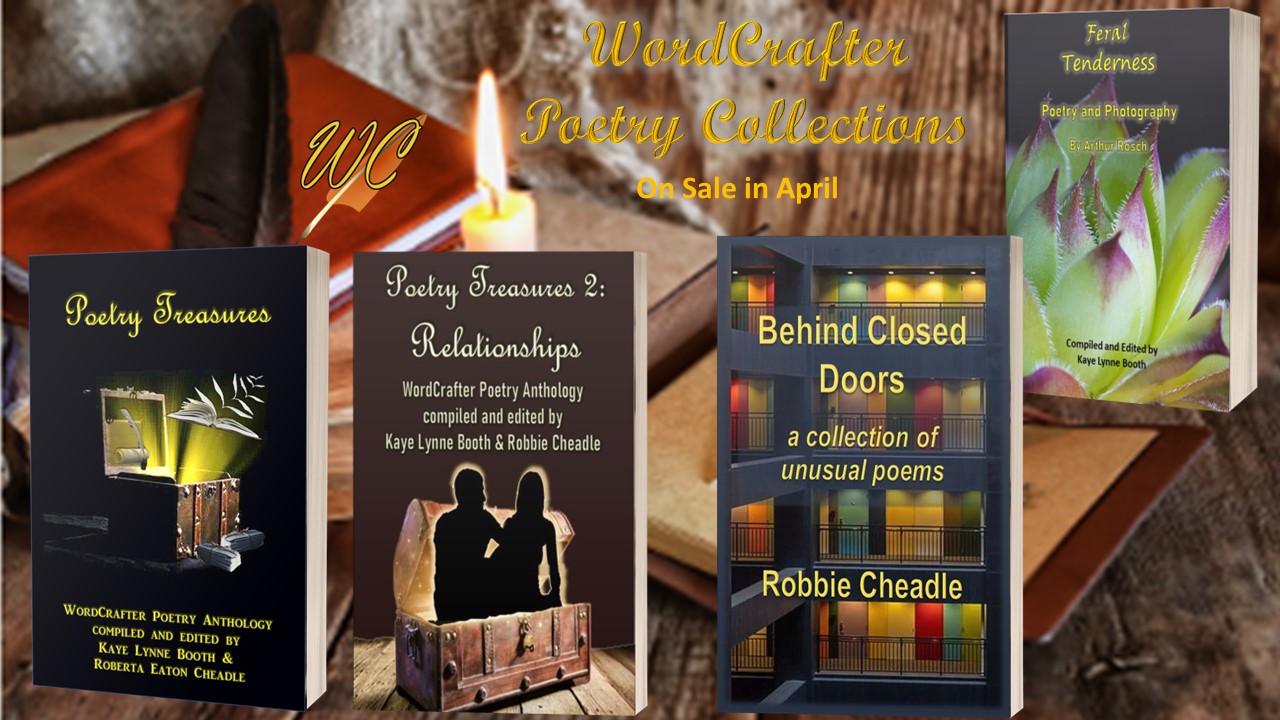
Celebrating National Poetry Month
April is National Poetry Month here in the U.S. and WordCrafter Press is celebrating the joy of the written word by putting four WordCrafter Press poetry books on sale for the whole month! You can get your copy of your favorite from your favorite book distributor.
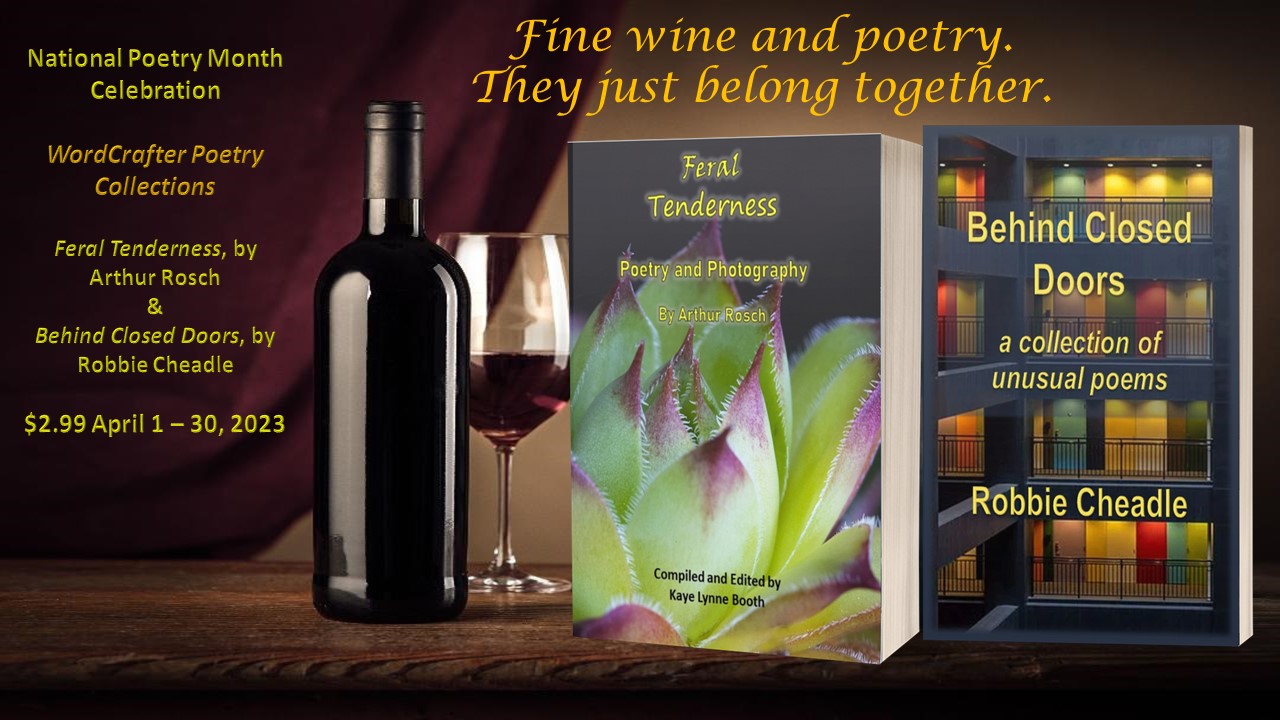
Behind Closed Doors, by Robbie Cheadle

Poetry Treasures 2: Relationships anthology
Share this:

Dark Origins – The Chimes, A Goblin Story: a novella by Charles Dickens
Posted: March 22, 2023 Filed under: Classics, Dark Origins, Fiction, Short Fiction, Stories | Tags: Charles Dickens, Classic Literature, Dark Origins, Robbie Cheadle, The Chimes, Writing to be Read 42 Comments
I have been participating in a Dickens Readathon which is being hosted by by Marsha Ingrao from Always Write blog (this is her latest post for the challenge: https://alwayswrite.blog/2023/02/13/dickenschallenge-novella-4-the-battle-of-life/); Trent McDonald from Trent’s world (https://trentsworld.blog/2023/02/07/the-third-annual-dickens-challenge-a-triple-threat/) and Yvette Prior (https://priorhouse.wordpress.com/2023/02/09/five-novella-descriptions-2023-dickenschallenge-read-one-novella-by-june-9th-post-2/).
I have recently read The Chimes, a Dickens novella which was first published in 1844, one year after the well known A Christmas Carol. It’s social critisism perfectly suited my criteria for Dark Origins posts and I decided to share my thoughts and research on this novella for my March Dark Origins post.
The story involves the disillusionment of Toby “Trotty” Veck, a poor working-class man who works as a casual messenger or ‘ticket-porter’. Dickens goes to great lengths at the beginning of the story to detail Trotty’s poverty as per the following description:
“Making, with his leaky shoes, a crooked line of slushy footprints in the mire; and blowing on his chilly hands and rubbing them against each other, poorly defended from the searching cold by threadbare mufflers of grey worsted, with a private apartment only for the thumb, and a common room or tap for the rest of the fingers; Toby, with his knees bent and his cane beneath his arm, still trotted.“

The story commences on the afternoon before New Year’s Day. Trotty is waiting for work outside the church. Work has been slow for a few weeks despite his willingness to work hard. He is depicted as being a cheerful man despite his lot in life, but on that cold winter’s afternoon he reads a newspaper which includes a number of scathing reports about the poor. He embarks on a train of thought that the working classes are unworthy and their poverty is a result of this unworthiness. Trotty wonders whether the poor are born corrupt and are incapable of redemption.
His lovely daughter, Meg, arrives, bringing him a meal of tripe she has cooked. Meg tells her father that she is going to marry her childhood sweetheart, Richard, despite the fact they are both poor. She makes it clear that she accepts their poverty and does not expect their situation to ever change. These are her words:
“‘He says then, father,’ Meg continued, lifting up her eyes at last, and speaking in a tremble, but quite plainly; ‘another year is nearly gone, and where is the use of waiting on from year to year, when it is so unlikely we shall ever be better off than we are now? He says we are poor now, father, and we shall be poor then, but we are young now, and years will make us old before we know it. He says that if we wait: people in our condition: until we see our way quite clearly, the way will be a narrow one indeed—the common way—the Grave, father.’”
Dickens intention with this depiction is to highlight the terrible plight of the poor who are trapped in a capitalist system where the wealthy always abuse the poorer. He is also demonstrating Meg’s and Richard’s passive acceptance of their situation. Dickens believed this passive acceptance of the status quo by the working classes to be wrong.
Trotty has misgivings about the marriage, but hides it and they are happy until they encounter the proud and wealthy Alderman Cute and two other gentlemen. The gentlemen succeed in making Trotty, his daughter, and her fiancé feel as if they have no right to exist, never mind to marry and have children who with perpetuate the cycle of poverty. Alderman Cute degrades and humiliates Trotty and the working classes in general.
” ‘You see, my friend,’ pursued the Alderman, ‘there’s a great deal of nonsense talked about Want—“hard up,” you know; that’s the phrase, isn’t it? ha! ha! ha!—and I intend to Put it Down. There’s a certain amount of cant in vogue about Starvation, and I mean to Put it Down. That’s all! Lord bless you,’ said the Alderman, turning to his friends again, ‘you may Put Down anything among this sort of people, if you only know the way to set about it.’“
Cute gives Trotty a note to carry to Sir Joseph Bowley MP, who gives charity to the poor but is another arrogant and hypocritical man. Trotty’s encounter with Bowley leave him feeling even more humiliated and disillusioned.
“‘What man can do, I do,’ pursued Sir Joseph. ‘I do my duty as the Poor Man’s Friend and Father; and I endeavour to educate his mind, by inculcating on all occasions the one great moral lesson which that class requires. That is, entire Dependence on myself. They have no business whatever with—with themselves. If wicked and designing persons tell them otherwise, and they become impatient and discontented, and are guilty of insubordinate conduct and black-hearted ingratitude; which is undoubtedly the case; I am their Friend and Father still. It is so Ordained. It is in the nature of things.’“
Later that evening, Toby reads some sad and depressing news in the evening paper. He believes he hears the church bells chiming his name and he sets out to climb the church tower and hear what they have to say to him. This is the beginning of the supernatural part of the story that leads to Trotty realising that the poor are not born bad but that many of them end up in bad situations due to their terrible circumstances.

Passage illustration:
“He saw the tower, whither his charmed footsteps had brought him, swarming with dwarf phantoms, spirits, elfin creatures of the Bells. He saw them leaping, flying, dropping, pouring from the Bells without a pause. He saw them, round him on the ground; above him, in the air; clambering from him, by the ropes below; looking down upon him, from the massive iron-girded beams; peeping in upon him, through the chinks and loopholes in the walls; spreading away and away from him in enlarging circles, as the water ripples give way to a huge stone that suddenly comes plashing in among them. He saw them, of all aspects and all shapes. He saw them ugly, handsome, crippled, exquisitely formed. He saw them young, he saw them old, he saw them kind, he saw them cruel, he saw them merry, he saw them grim; he saw them dance, and heard them sing; he saw them tear their hair, and heard them howl. He saw the air thick with them. He saw them come and go, incessantly. He saw them riding downward, soaring upward, sailing off afar, perching near at hand, all restless and all violently active. Stone, and brick, and slate, and tile, became transparent to him as to them. He saw them in the houses, busy at the sleepers’ beds. He saw them soothing people in their dreams; he saw them beating them with knotted whips; he saw them yelling in their ears; he saw them playing softest music on their pillows; he saw them cheering some with the songs of birds and the perfume of flowers; he saw them flashing awful faces on the troubled rest of others, from enchanted mirrors which they carried in their hands. [“Third Quarter,” pp. 83-85, 1912 edition]“
Dickens uses the goblins in the bells as his instruments for social criticism and to make his points about the unjust treatment of the poor who are often wrongly accused an imprisoned for any reason due to the government’s attitude of ‘to jail with them’. The goblins also expose the social inequality innate in Victorian society and the hypocrisy of the politicians and aristocrats of the time.
Conclusion
Of the four so called Christmas novellas written by Charles Dickens I have read so far (A Christmas Carol, The Chimes, The Battle of Life and The Cricket on the Hearth, a Fairy Tale of Home), this is the one that brought the snobbery, hypocrisy, and arrogance of the Victorian gentry home to me the hardest.
The impact of the social inequality on the psyche of the working classes represented by Trotty and his daughter, Meg, and the injustices of the legal system presented by the treatment of Will Fenn, are truly heartbreaking as is the misguided attitude of the philanthropist represented by Sir Bowley.
How easy it is to judge others from a position of wealth and privilege.
You can read The Chimes for free here: https://www.gutenberg.org/files/653/653-h/653-h.htm
Have you read The Chimes? What did you think of its message?
About Roberta Eaton Cheadle

Award-winning, bestselling author, Roberta Eaton Cheadle, is a South African writer and poet specialising in historical, paranormal, and horror novels and short stories. She is an avid reader in these genres and her writing has been influenced by famous authors including Bram Stoker, Edgar Allan Poe, Amor Towles, Stephen Crane, Enrich Maria Remarque, George Orwell, Stephen King, and Colleen McCullough.
Roberta has two published novels and has horror, paranormal, and fantasy short stories included in several anthologies. She is also a contributor to the Ask the Authors 2022 (WordCrafter Writing Reference series).
Roberta also has thirteen children’s books and two poetry books published under the name of Robbie Cheadle, and has poems and short stories featured in several anthologies under this name.
Roberta’s blog features discussions about classic books, book reviews, poetry, and photography. https://roberta-writes.com/.
Find Roberta Eaton Cheadle
Blog: https://wordpress.com/view/robertawrites235681907.wordpress.com
Twitter: https://twitter.com/RobertaEaton17
Facebook: https://www.facebook.com/robertawrites
Amazon: https://www.amazon.com/Roberta-Eaton-Cheadle/e/B08RSNJQZ5
_____________________________________________________________________________________________
Want to be sure not to miss any of Robbie’s “Dark Origins” segments? Subscribe to Writing to be Read for e-mail notifications whenever new content is posted or follow WtbR on WordPress. If you found it interesting or entertaining, please share.
Share this:

Treasuring Poetry – Meet multi-genre author and poet, Patricia Furstenberg, and a review #Poetry #writingcommunity #bookreview
Posted: March 15, 2023 Filed under: Book Review, Books, Interview, Poetry, Review, Treasuring Poetry | Tags: "Writing to be Read, As Good As Gold, Author Interview, Book Review, Patricia Furstenberg, Poetry, Robbie Cheadle, Treasuring Poetry 65 CommentsToday, I am delighted to welcome author and poet, Patricia Furstenberg, as my March Treasuring Poetry guest.
Why do you write poetry?
To me, writing poetry is like being a flâneuse of the literary world.
The history and meaning of flâneuse (with its masculine form, flâneur) derive from the turn of the century, late 19th to early 20th. It defines those men and women who had the time, the inclination, the passion (and the finances, back then) to wonder along the streets of a big city and to observe and be a part of the daily city life. Those who enjoyed taking in the city.
It was after this past holiday, when my family and I covered about 200km on the streets of Romania, in Bucharest and Sibiu, that I learned this expression, flâneuse.
Writing poetry is my reaction to being a flâneuse in a city of words. Writing poetry is like strolling among literary creations, classical or modern (buildings made of words if you wish) and taking in their beauty and rhythm. A turn of the word here, a phrase there, they blend with the breeze, the song of bird, or the memories of my youth (like dappled shadows) – creating poetry.
Do you think poetry is still a relevant form of expressing ideas in our modern world? If yes, why?
Absolutely. Poetry permanently sheds a light on the world; it helps us see our everyday life through a different perspective. It adds colour to a world monotonous in its everyday violence. It also highlights, thus helping us remember, the forgotten beauty of life.
Poetry also creates bridges that unite us, past distances (and I mean social distances) or any other barriers. Poetry is that one constant in times of change. Because poetry helps us understand our emotions and communicate them. It helps us make sense of an uncertain future or of a tumultuous past. Poetry translates, by use of imagery that what – at first – is hard to comprehend and it appears scrambled.
Which poem by any other poet that you’ve read, do you relate to the most and why?
So many times I asked myself this question and the answer varied, but more often it was Robert Frost’s “The Road Not Taken” the poem I most relate with.
The Road Not Taken
Two roads diverged in a yellow wood,
And sorry I could not travel both
And be one traveler, long I stood
And looked down one as far as I could
To where it bent in the undergrowth;
Then took the other, as just as fair,
And having perhaps the better claim,
Because it was grassy and wanted wear;
Though as for that the passing there
Had worn them really about the same,
And both that morning equally lay
In leaves no step had trodden black.
Oh, I kept the first for another day!
Yet knowing how way leads on to way,
I doubted if I should ever come back.
I shall be telling this with a sigh
Somewhere ages and ages hence:
Two roads diverged in a wood, and I—
I took the one less traveled by,
And that has made all the difference.
Life, the simple act of living and of leading a happy and fulfilled family life, are such a tremendous gift – but we tend to take it for granted. I think that contemplating the road that brought us here, as well as the ones followed by our ancestors, is a valuable exercise.
“The Road Not Taken” by Robert Frost is about the choices and the opportunities we encounter in life. But unlike Frost’s poem, I believe that it isn’t the regret over the roads not taken that should overshadow our future, but the excitement for further choices, born out of our past decisions. Life is a continuous maze, and a beautiful and exciting one.
Which of your own poems is your favourite and why?
I enjoyed following the antics of the puppies depicted in my poetry book “as Good as Gold”. There were times when I would write and laugh. When I grew up in Romania we would live in an apartment so we shared some pretty close living quarters with our dog. Whoever looked after a puppy will remember that, at the beginning, they hardly sleep through the night.
While writing “As Good as Gold” I enjoyed mentally watching a puppy conversing with the moon, or meeting an owl (during night-time, of course) for the very first time. Writing from experience… Today I look fondly on those memories. Thus, my favourite poem is “Why, Rain?” where we follow a puppy on his first encounter with a surprise storm during what starts like a perfect summer day, just right for some nature exploration.
Is writing poetry easy for you compared to prose or do you do a lot of editing and revision of your poems?
I enjoy writing poetry for its free form and lack of constraints. Poetry allows my thoughts to roam unrestrained. For me, writing poetry is like finding shapes in the clouds – they can be anything and I won’t be wrong in writing them as such. The reader, in turn, can interpret them the way she sees them and none will be wrong for taking that what her / his heart chose to see.
Writing prose asks for much more structure, although I enjoy it just as much. Writing prose is like building a house.
Poetry is like writing a song. Sometimes you hum it for a long time before you get the melody out on paper just the way you heard it in your mind. Prose is more like writing a symphony. Just as rewarding, perhaps more demanding. Prose will confer a whole set of ideas, where poetry will distil the thought to a perfect, silky thread.
What mode (blog, books, YouTube, podcasts) do you find the most effective for sharing your poems with poetry lovers and readers?
As an independent author with self-published poetry books as well as poems published in various poetry anthologies I find that, today, readers show a fear of commitment towards poetry. I discovered that publishing my poems on my blog or into an online literary magazine I can reach a wider audience than publishing a poetry book.
My review of As Good as Gold, A dog’s life in poems by Patricia Furstenberg

As Good as Gold: A Dog’s Life in Poems is a delightful and uplifting collection of poems about domestic dogs and puppies. Each poem is accompanied by a lovely photograph of the dog through whose eyes the poems is written. I liked that the poems were told from the perspective of the dogs and I thought the freestyle form of poetry suited this book well as each poem is a mini story or adventure.
The writing style is conversational and relaxed. The following few extracts give a feel for the style of the poetry:
“Puppy tiptoes,
Takes a peek.
Sniffs carefully …
What IS that squeak?”
“It’s oval, it bounces, it floats away,
It’s pink like his tongue, it wants to play!
“I’m coming!” barks pup and off he goes.
Down the hill the pink shape flows
And puppy follows suit. It’s just within his reach,”
For cat lovers, there are also a few poems told from the perspective of our feline friends and I loved those especially, as I am a cat owner.
I think this book is a lovely way of teaching children about animals as pets and the writing is appropriate for both children and adults, all of whom will adore the antics and curiosity displayed by the dogs, especially the puppies.
Purchase links
Patricia Furstenberg’s Amazon Author page
About Patricia Furstenberg
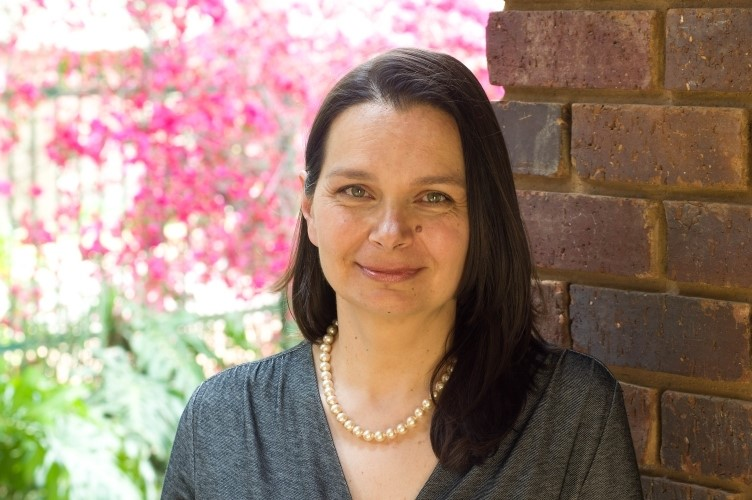
Writer and poet Patricia Furstenberg authored 18 books to date. Patricia grew up in Bucharest and was brought up listening to the legends and folktales of Romania’s past. She came to writing through reading, her passion for books being something she inherited from her parents. Her writing career followed a sinuous road that passed through a Medical Degree, practicing medicine, extensive traveling, and it also produced a happy marriage and two children. The recurrent motives in her writing are unconditional love and war, while Patricia’s keen interest for history and dogs brought her writing, through a perfect loop, to her native Romania. Today Patricia writes fiction and poetry. Her poems were published in anthologies by Green Ink Poetry, The Poem Magazine, and Lothlórien Poetry Journal as well as in over thirty online literary journals
Find Patricia Furstenberg
Twitter / Instagram / Facebook / LinkedIn / Goodreads / Book Bub / AllAuthor
About Robbie Cheadle
Award-winning, bestselling author, Robbie Cheadle, has published thirteen children’s book and two poetry books. Her work has also appeared in poetry and short story anthologies.
Robbie also has two novels published under the name of Roberta Eaton Cheadle and has horror, paranormal, and fantasy short stories featured in several anthologies under this name.
The ten Sir Chocolate children’s picture books, co-authored by Robbie and Michael Cheadle, are written in sweet, short rhymes which are easy for young children to follow and are illustrated with pictures of delicious cakes and cake decorations. Each book also includes simple recipes or biscuit art directions which children can make under adult supervision.
Robbie’s blog includes recipes, fondant and cake artwork, poetry, and book reviews. https://robbiesinspiration.wordpress.com/
Share this:

Growing Bookworms – Developmental benefits of music for young children
Posted: March 8, 2023 Filed under: Children's Books, Growing Bookworms, music, Teaching children | Tags: Growing Bookworms, Musical, Musical Stories, Robbie Cheadle, Teaching children, Writing to be Read 44 CommentsWhen I was at school, we had music lessons during which we learned to play certain easy songs on an instrument like a recorder or a xylophone. We were also taught to sing musical notes in much the same way as Maria teaches the von Trapp children to sing notes in the film The Sound of Music.
I can remember listening to stories that taught me and my classmates about musical instruments and the different sounds they make. Peter and the Wolf comes to mind, as well as my personal favourite, Sparky’s Magic Piano.
If you are interested in watching Sparky’s Magic Piano, or have a child you would like to share it with, you can watch it here:
I always wanted to learn how to play the piano. Our neighbour started teaching me once and I was getting along nicely, but then we moved to another town and the opportunity didn’t present itself again.
Both my sons had music lessons and Gregory passed Grade 5 theory and practical piano. Michael initially wanted to learn the violin, but that didn’t last very long. He went on to learn the piano for a few years and is now having drum lessons.
Before my sons were born, I remember reading that learning to play an instrument was beneficial to the study of mathematics and this is one of the reasons I encouraged music so much with my sons. I understand that this link has been demonstrated through a study conducted by NAMM (National Association of Music Merchants Foundation) (You can read more about it here: https://www.nammfoundation.org/educator-resources/why-learn-play-music-advocacy-brochure-0).
More recently, I discovered recently that scientists at the University of Southern California’s Brain and Creativity Institute have discovered a link between music in early childhood and accelerated brain development. You can read more about that study here: https://news.usc.edu/102681/childrens-brains-develop-faster-with-music-training/
Studies have demonstrated that learning music can improve speech and readings skills in children by increasing their abilities to differential between different sounds and understand the patterns of language.
The top ten benefits of music and learning a musical instrument for children are as follows:
- Improved brain development due to music’s ability to stimulate parts of the brain that govern hearing, memory, movement, and emotion.
- Improved social skills as music helps children identify facial expressions, communicate with peers, and empathise with others.
- Increases creativity and builds problem solving skills.
- Learning to play an instrument promotes self-discipline in children.
- Learning to play an instrument increases children’s self-esteem.
- Musically trained children have better memories as music strengthens the hippocampus in the brain, which plays a vital role in regulating learning, memory encoding, memory consolidation, and spatial navigation.
- There is an overlap of the brain connections which process music and language with the result that learning music and learning to read complement each other.
- Music is a natural mood enhancer and helps children to reduce stress by calming and soothing them.
- Children who learn music have a better ability to control their own behaviour, emotions, and impulses.
- Learning a musical instrument improves co-ordination in children.
The one thing I noticed with my son, Gregory, who was reading music fluently at the age of five, was that the transition from written musical notes to written letters was a bit of an effort for him. It was a bit like learning a second language. This was not a big disadvantage for him, but it did take a little longer for him to learn the alphabet than I expected. Michael learned the alphabet before I started music lessons with him, and he found it more difficult to learn the music notes than the alphabet.
About Robbie Cheadle
Award-winning, bestselling author, Robbie Cheadle, has published thirteen children’s book and two poetry books. Her work has also appeared in poetry and short story anthologies.
Robbie also has two novels published under the name of Roberta Eaton Cheadle and has horror, paranormal, and fantasy short stories featured in several anthologies under this name.
The ten Sir Chocolate children’s picture books, co-authored by Robbie and Michael Cheadle, are written in sweet, short rhymes which are easy for young children to follow and are illustrated with pictures of delicious cakes and cake decorations. Each book also includes simple recipes or biscuit art directions which children can make under adult supervision.
Robbie’s blog includes recipes, fondant and cake artwork, poetry, and book reviews. https://robbiesinspiration.wordpress.com/
Share this:

Growing Bookworms – Meet children’s book author, Darlene Foster, and learn about her Amanda travel series and a review #childrensfiction #bookreview #growingbookworms
Posted: February 8, 2023 Filed under: Adventure, Book Review, Books, Children's Books, Fiction, Growing Bookworms, Interview, Review, Teaching children | Tags: Amanda in France, Author Interview, Book Review, Darlene Foster, Growing Bookworms, Robbie Cheadle, Writing to be Read 112 CommentsToday, I am delighted to introduce Darlene Foster, author of the Amanda travel series of books for children aged 9 to 12 years old. I have read several of the Amanda books and enjoyed them all.
Your Amanda stories appeal to me as they take me back to my own childhood readings days of The Famous Five and Adventure series. Was there any particular children’s author who influenced the style of your Amanda series?
That makes me very happy to hear this since the Enid Blyton books were very popular. I didn’t read the Famous Five series growing up in Canada, but I enjoyed The Bobbsey Twins by Laura Lee Hope as they travelled to interesting places, encountered danger and solved mysteries. I also enjoyed Trixie Belden, Donna Parker, and Nancy Drew because the main character in each series is a young girl who overcomes obstacles and solves mysteries. The author who influenced me the most was Lucy Maude Montgomery. She created a character I totally admired. Anne Shirley is spunky, caring, positive and resourceful. Her relationship with her best friend, Diana Barry, is described incredibly well, as is the setting in the charming province of Prince Edward Island.
Are the characters of Amanda and Leah based on any particular person or people?
Amanda is the twelve-year-old me I would have liked to have been. I felt my life was boring living on a farm and dreamt of travelling the world. So there is a bit of little me in Amanda. The great thing about being a writer is that you can recreate your childhood and be whoever you want to be! Leah is a combination of some of my closest friends as well as a dear aunt who is my age. Leah is Amanda’s, Diana Barry.
When you visit schools and chat to the children, how do they react to the travel element of the Amanda books? Do they find it exciting and exotic or do some find it scary and overwhelming?
I am always amazed at how many of the students have done a lot of travelling already. One of my first questions at a school presentation is, “How many of you have travelled to other countries?” There is always a sea of hands. Then I ask if they have been to the country in my most recent book. There are usually some who have travelled there. The classrooms are very diverse these days and many of the students were born in a country other than Canada or the US. The international schools I visit in Spain contain students from all over the world. Children are much more well travelled these days for various reasons. They always suggest I write a book that takes place in their or their parents’ original country. I would say that most children today relate to the travel element of my books. If they haven’t been to the countries I’ve written about, they plan to visit them someday.
What comes first, the setting, characters, or the plot idea?
For me, the setting always comes first. I choose a place that I find intriguing and go from there. The two main characters, Amanda and Leah are always the same, but I have fun coming up with a few new ones for each story. The plot is the last thing I work on and the part I find the most difficult at times. It usually evolves as I write the story.
What are your goals for the Amanda series? Are you planning to make it a long-term series like The Famous Five?
As long as people continue to want to read these books, I plan to continue writing them. There are so many more places Amanda could visit. I’m currently working on book number ten, Amanda in Scotland: The Standing Stones. There are twenty-one Famous Five books; I’m not sure I’ll write that many but you never know!
Books for children are harder to market than books for adults. How do you go about marketing your books and what works best for you?
This is true. Word of mouth is always the best; getting the books in the hands of children is vital so they can spread the word. Visiting schools, libraries, and book stores is effective but not always possible. Over the past couple of years, I’ve been doing virtual visits to schools all over the world. This has been great for getting the students, teachers and school librarians to know about my books. I have learned that I need to market the books to adults as well since they are the ones who actually purchase the books and write the reviews. Being part of a blogging community has worked well for me as everyone is so supportive and helpful in getting the word out about my books. I have also learned a lot from other bloggers/writers. Marketing is ongoing, and there is a huge learning curve.
Thank you, Robbie, for the opportunity to talk about my books and writing in general.
You are a delightful guest, Darlene, and I am thrilled to host you here and discuss your books.
My review of Amanda in France

Amanda in France is the latest in the adventure series of books by Darlene Foster. I have read several of the books in this series, and enjoyed them all. The author has a marvelous way of integrating historical and environmental landmarks into her works in a natural and interesting way that is appealing to young readers.
Amanda and Leah are fortunate enough to accompany Aunt Jenny to Paris, France. Paris is a fascinating location and Amanda is completely bowled over by the sights, sounds, and foods on offer. The threesome are staying in a dormitory attached to the Shakespeare and Company book store, where they will work a couple of hours each day. Amanda, a great lover of books, is delighted and can’t wait to share her book knowledge and enthusiasm with others and promote reading.
Naturally, the girls meet a wide spectrum of new people, including the fascinating but mysterious, Phillipe Lawrence, an older man who is doing research for a book; Jerome, a young man who has become involved with some dodgy friends; and Pierre, who works at the Paris Opera House.
The new characters and fabulous sites set the stage for another exciting and interesting Amanda adventure that includes their visiting famous gardens, graveyards, and helping to save works of art during the fire at Notre-Dame Cathedral.
Congratulations to the author on another exciting and well written adventure story.
Purchase Darlene Foster’s books
Darlene Foster’s Amazon Author page
About Darlene Foster

Growing up on a ranch near Medicine Hat, Alberta, Canada, Darlene Foster dreamt of writing, traveling the world, and meeting interesting people. She also believed in making her dreams come true. It’s no surprise she’s now the award-winning author of Amanda Travels, a children’s adventure series featuring a spunky twelve-year-old who loves to travel to unique places. Readers of all ages enjoy following Amanda as she unravels one mystery after another. When not traveling herself, Darlene divides her time between the west coast of Canada and the Costa Blanca, Spain with her husband and entertaining rescue dogs, Dot and Lia. www.darlenefoster.ca
Darlene has a blog where she shares here stories and adventures here: https://darlenefoster.wordpress.com/
About Robbie Cheadle
Award-winning, bestselling author, Robbie Cheadle, has published thirteen children’s book and two poetry books. Her work has also appeared in poetry and short story anthologies.
Robbie also has two novels published under the name of Roberta Eaton Cheadle and has horror, paranormal, and fantasy short stories featured in several anthologies under this name.
The ten Sir Chocolate children’s picture books, co-authored by Robbie and Michael Cheadle, are written in sweet, short rhymes which are easy for young children to follow and are illustrated with pictures of delicious cakes and cake decorations. Each book also includes simple recipes or biscuit art directions which children can make under adult supervision.
Robbie’s blog includes recipes, fondant and cake artwork, poetry, and book reviews. https://robbiesinspiration.wordpress.com/
Share this:

Treasuring Poetry 2023 – Meet poet and author Andrew McDowell and a review #poetry #bookreview #Treasuring Poetry
Posted: January 18, 2023 Filed under: Book Review, Books, Interview, Poetry, Review, Treasuring Poetry | Tags: Andrew McDowell, As the World Burns, Author Interview, Book Review, Mystical Greenwood, Poetry, Robbie Cheadle, Treasuring Poetry, Writing to be Read 40 CommentsWhich famous poet has influenced your poetry the most?
When I was young, I admired William Shakespeare. I was impressed with how he used words to convey emotions and ideas, and I wanted to follow his example. In my junior year of high school, I participated in a Poetry Out Loud contest where we had to recite a poem. I chose Sonnet XVIII (“Shall I compare thee to a summer’s day?”) and won third place. The Shakespearean sonnet was the first poetic form I tried to consistently write in beyond regular rhyming lines. It would not be until college that I began branching out to other forms and eventually free verse.
Which poem that you’ve read has impacted the way you see things in life?
This was a tough one, but one poem that has impacted me is Robert Frost’s famous “The Road Not Taken.”
Two roads diverged in a yellow wood,
And sorry I could not travel both
And be one traveler, long I stood
And looked down one as far as I could
To where it bent in the undergrowth;
Then took the other, as just as fair,
And having perhaps the better claim,
Because it was grassy and wanted wear;
Though as for that the passing there
Had worn them really about the same,
And both that morning equally lay
In leaves no step had trodden black.
Oh, I kept the first for another day!
Yet knowing how way leads on to way,
I doubted if I should ever come back.
I shall be telling this with a sigh
Somewhere ages and ages hence:
Two roads diverged in a wood, and I—
I took the one less traveled by,
And that has made all the difference.
In what way has this poem influenced your viewpoint?
Most people interpret it as about making new trails, which is how I interpreted it as a child. Many times, when I’ve been walking, when I took a turn different from the norm, the last three lines presented themselves in my mind.
However, I’d heard that interpretation is accurate, so I looked it up, and to my surprise, it’s true. Frost wrote it as a joke regarding his friend and colleague Edward Thomas, who often hiked with him and had trouble deciding which way to go. The poem is not only about how choices we make determine where we go in life, but also that we often look back and wonder whether we’ve made the right choice. Though I did not grow up with that interpretation, I have found it to be true and profound.
Perhaps Frost’s way of telling poetry influenced me, too; I remember a professor in college, who taught a poetry class I was in, observed that I liked to end poems with a meaning or lesson, drawing a parallel to Frost.
What is your favorite of your own poems?
This was another tough one, because several have special meaning to me. But of those I have published so far, one that deeply resonates is “Lonely Wolf,” which appeared in the 2019 Spring Edition of And I Thought Literary Magazine. It was written in college as a failed attempt at a pantoum, but after a few rejections, I rewrote it as a villanelle. It speaks to the loneliness I have felt—socially and romantically.
I am a lonely wolf who walks at night.
Amongst the tall pine trees and heavy snow,
Hear my cry to the half-moon shining bright.
***
Young once within a den huddled tight.
The years passed and sadly I had to go.
I am a lonely wolf who walks at night.
***
Embarking for the greatest peak tonight,
There shall I convey my long-held sorrow.
Hear my cry to the half-moon shining bright.
***
Though many have come within my sight,
Why they stand distant I can never know.
I am a lonely wolf who walks at night.
***
Winter’s bitter cold reigns in silent might.
Dark silence only brings light to my woe.
Hear my cry to the half-moon shining bright.
***
Here I stand alone on this rocky height.
Here I do bay up where countless stars glow.
I am a lonely wolf who walks at night.
Hear my cry to the half-moon shining bright.
What’s next for you in your writing career?
My focus right now is fiction. My fantasy novel Mystical Greenwood came out in a new edition, so my primary goal is to complete the sequel. I do have many unpublished poems, so I want to keep an eye out for publishing opportunities. A volume of poetry isn’t out of the question—if I can find a unifying theme (my poems touch on many unique ones).
About Andrew McDowell

Andrew McDowell became interested in writing at age 11, inspired by childhood passions for stories and make-believe. By the time he was 13, he knew he wanted to be a writer. He studied at St. Mary’s College and the University of Maryland, College Park. He is a member of the Maryland Writers’ Association.
In addition to his fantasy novel Mystical Greenwood, Andrew has written poetry, short stories, and creative nonfiction, and he is interested in writing drama and lyrics. He was diagnosed with Asperger syndrome, an autism spectrum disorder, when he was 14.
Find Andrew McDowell
Website | Facebook | Twitter | YouTube | LinkedIn | Tumblr | Goodreads | Amazon
Review of Mystical Greenwood
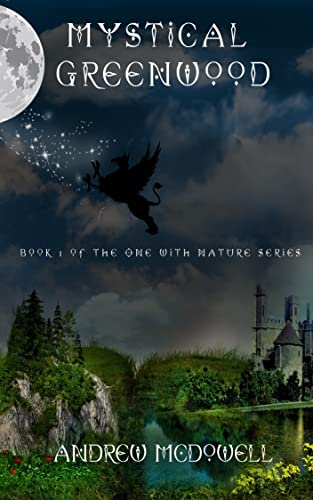
What Amazon says
Dermot is a fifteen-year-old boy living in a remote village in the land of Denú. He has always longed for something more in his life. Now, everything changes after he sees a renowned creature–a gryphon–in the sky, and then crosses paths with a reclusive healer who harbors a secret.
Soon, he and his brother have no choice but to leave the only home they’ve ever known. They travel with new friends across the land through several great forests, along the way meeting an old man, a family of unicorns, and witnessing an important birth. They must evade fire-breathing dragons and dark-armored soldiers hunting them down, all serving an evil sorcerer determined to subjugate the kingdom, and who will stop at nothing to destroy them.
Denú’s only hope is if a renowned coven returns to face the enemy after years in hiding. Dermot, however, suspects their own role may be more significant than he thought, as he slowly discovers a power which exists amongst the trees and creatures of every greenwood. Can they save those they hold dear? Will Dermot find what he has sought? Or will all that’s free and good be consumed by darkness?
My review
Andrew McDowell has written an extraordinary fantasy tale which centres around the guardians of nature and the Greenwood, called driadors. The plot follows a typical good versus evil path, but the overlay of the protection versus the destruction of the natural environment was unusual, topical, and really fantastic.
Dermot and his brother, Brian, do not get on. Brian is the son who always does as he is asked by his parents and fits the mould of a pleaser, while Dermot is a dreamer and has always felt he was intended for more than his life as an apprentice blacksmith to his father. The rivalry between the two boys comes to a head when Dermot is carried away by a hunting gryphon. Dermot persuades the gryphon to drop him but he is injured during his fall. He wakes up in the care of a healer called Saershe, and her grandson, Ruairi. Dermot realises that they are not ordinary forest dwellers and, following his return home, he becomes obsessed with finding them again.
Brian becomes aware that Dermot has had some sort of unusual experience during his absence and uses this knowledge to stir up trouble for Dermot with their parents. Meanwhile, an evil force in the shape of a fallen driador called Taranis, is lurking just beyond the village, waiting for an opportunity to wreak havoc and destruction and restart an old battle against the driadors. Dermot and Brian will have to learn to trust and rely on each other, and harness the power of nature if they want to save the Greenwood, their friends, family, and themselves.
This is an unusual and well paced story with interesting characters, and these elements more than makes up for the odd moments in the book when Dermot and Brian’s emotional reactions to situations seem slightly lacking in depth or incongruent to the circumstances.
The author has great potential as a writer and I would love to read the next book in this series and find out what happens next in the battle for control between Taranis and the driadors.
Purchase Mystical Greenwood
Andrew McDowell Amazon Author Page
My review of As the World Burns: Writers and Artists Reflect on a World Gone Mad

What amazon says
As the World Burns: Writers and Artists Reflect on a World Gone Mad is an anthology of poetry, prose, essay, and art inspired by the unprecedented events of the year 2020. It embraces fierce and raw creative works relating to life during the Covid-19 pandemic, Black Lives Matter, Donald Trump, and the economic uncertainty and horror of the last eight months. One hundred and fourteen writers and artists spanning ten countries and 30 states are represented in this powerful volume. It is both a story of survival and an act of resistance.
“We speak with many voices, to the damage wrought in these violent, fevered months. Let us never forget or turn away, from what is just, what is necessary, to keep light alive in this world.”
My review
This is an interesting recording by numerous contributors, of the status of the world and society in the run up to the Covid lockdowns, and during the subsequent on-going pandemic. The writings, which comprise of mainly poetry, but also some essays and visual art pieces, also cover events that ran parallel to the lockdowns and pandemic that had an impact on society and politics.
Reading this anthology is an adventure as the messages are intense and vivid and the styles of writing hugely varied due to the significant number of contributors. Although not all the styles of poetry appealed to me, they were all memorable due to the strong emotional messaging, and well worth reading.
My favourite poems are as follows: Falls the Shadow by John W. Leys, I Think the Birds don’t Care by Kelsey Hontz (the words “Somebody has mixed up the two themes of apocalypse and paradise, which would be a fireable offense if anybody were still in the director’s chair for this year of hindsight.” really resonated with me.), Lately by L. Stevens, Quarantine by Andrew McDowell, Upon Waking in a Pandemic by Christine E. Ray, Choice Perhaps by Jane Dougherty, Thirteen Ways of Looking at Life before the Virus by Leslea Newman, Am I Angry? by John W. Leys, Virus by Erik Klingenberg (nightpoet), and Tumbling by Merril D. Smith.
Two of the essays, were particularly interesting to me. I-Soul-Ation by Dr. Sneha Rooh. The closing words of this essay have sadly not come to fruition, in my opinion:
“I would like to think that we will hug people longer, be grateful to be able to work, that we will smile brighter when the masks come off and we’ll let the smiles fully enter our hearts, that we will be careful abut the lies sold to us and remember that we are precious mortals with precious lives and an immense ability to connect and care.”
I am of the view, that the world has returned to its previous status quo with alarming speed and that as a species, we have learned nothing from the lockdowns and the pandemic.
The other essay I particularly enjoyed was Serendipity by Kim D. Bailey.
This book is an important documenting of life during this difficult and stressful time of life when the entire world united to face a common enemy. Sadly, we have still not learned our lesson, as I mentioned above, but perhaps some of us have found more courage to fight for a better eventual outcome for our planet and for humanity.
Purchase As the World Burns
About Robbie Cheadle

Award-winning, bestselling author, Robbie Cheadle, has published thirteen children’s book and two poetry books. Her work has also appeared in poetry and short story anthologies.
Robbie also has two novels published under the name of Roberta Eaton Cheadle and has horror, paranormal, and fantasy short stories featured in several anthologies under this name.
The ten Sir Chocolate children’s picture books, co-authored by Robbie and Michael Cheadle, are written in sweet, short rhymes which are easy for young children to follow and are illustrated with pictures of delicious cakes and cake decorations. Each book also includes simple recipes or biscuit art directions which children can make under adult supervision.
Robbie’s blog includes recipes, fondant and cake artwork, poetry, and book reviews. https://robbiesinspiration.wordpress.com/