“Once” May Not Be Enough for This Love Story
Posted: December 30, 2016 Filed under: Book Review, Books, Fiction, Inspirational | Tags: Book Review, Books, Inspiration, Inspirational Fiction, Mian Mohsin Zia, Novel, Once, Opinion, Review, Reviews Leave a comment
Once – Ask Me Anything, Not Love by Mian Mohsin Zia, is a inspirational tale of the struggle for love by one man, Morkel, whose brand is “M–, No Time for Love”. But love strikes when it is least expected and who you would least expect to fall under it’s spell. Although it is a love story, it’s no romance and there are no HEAs in this tale.
I can’t deny that this is a cute story, but I had a hard time suspending disbelief, due partially to the fact that the characters weren’t deep enough for me to be able to care, and also because the dialog did not feel real to me. People just don’t talk that way in my experience. The characters are idealistic and I felt they acted in ways that were very unrealistic, as well. Morkel, the protagonist, comes off as being full of himself and he claims that as a novelist, he can read people, yet when love walks up and stares him in the eye, he doesn’t see it.
That being said, it is a well structured story with a clear character arc. Morkel changes as he realizes his own need for and ability to love. I found it very entertaining, but the ending was disappointing for me. I guess I’ve come to expect a HEA when I think of a love story, and I felt the promise of the premise was not fulfilled.
I will admit that Mian Mohsin Zia puts out a quality eBook, with very few typos. Obviously, he spends the money to have it edited and promote it right, as well. I suspect this may account for his amazing popularity as an author. In self-publishing, it seems, you really do get what you pay for.
Once – Ask Me Anything, Not Love is a love story from the male perspective, a unique and entertaining tale, but not a romance. I give it three quills.

Share this:

A Peculiar Experience: Miss Peregrine’s Home for Peculiar Children
Posted: November 5, 2016 Filed under: Commentary, Film Review, Screenwriting, Screenwriting, Uncategorized, Writing | Tags: Movies, Opinion, Review, Reviews 1 Comment
The first word that came to mind after seeing Miss Peregrine’s Home for Peculiar Children was peculiar. The movie is peculiar. I went into the film knowing next to nothing about it. I haven’t read the book, I think I may have seen a trailer at some point but don’t really remember it, and I hadn’t looked into the story at all. All I knew about the film was that it was directed by Tim Burton, it was based on a book, and it was about some kind of school for gifted kids.
I am a huge fan of fantasy films, and I love Tim Burton’s work, so I was super excited to see what this movie had in store for me. That being said, by the end of the film I couldn’t quite put my finger on how I felt about it, other than that one word I mentioned above—peculiar. The film is just peculiar. It’s beautifully shot, and the actors, especially Eva Green, do a wonderful job, but the film didn’t leave me feeling satisfied. It left me with a lot of questions, and a few complaints.
——————————SPOILERS BELOW—————————
Visuals and World
I like starting by talking about something I liked, and this film was visually beautiful. It had some great shots, and everything from the camera angles to the clothing was spot on for me. The style and artistic elements of Tim Burton’s films are always one of my favorite parts, and this film was no exception. The one thing that truly kept me hooked throughout was the visual element, and just the fact that I was enjoying looking at the film.
The other element I really liked was just the concept of the world. I loved the idea of Jake traveling through the time loops at the end, working his way back to the peculiars. I’m not sure I have a clear idea of how it would work, but I do think I got enough of a sense that it was believable. The details they gave at the end as well were just enough to create this sort of romanticized image of his journey back to the group without extending the final act unnecessarily, which was perfect.
The Conflict
I think the biggest downfall for me in the film was the fact that the real goal and conflict of the story took more than an hour to get to. I know because I looked at my watch when they finally started discussing Samuel L Jackson’s character and why they had to stop him. I don’t mind a long movie, and I don’t mind giving the plot time to build and unfold, but this film felt like it just took too long. Yes, the visual elements of the movie were stunning and wonderful, and it was a fascinating world to get lost in, but I wish we could have got lost in it while the plot was moving forward.
From the moment Jake first sees Samuel L Jackson’s character outside his grandfather’s house to the moment we finally learn he’s the antagonist almost an hour had passed. I usually have a good memory for details in a story, but by this point in the film I had almost forgotten that Jackson was in it and I was mostly just trying to figure out where the story was going. I feel like part of the problem that made the story seem like it was standing still was that Jake’s goal in the story initially was not to find out what happened to his grandfather, it was to see if his grandfather told the truth. The moment Jake arrives at Miss Peregrine’s we know that he was and then Jake has no real goal, no conflict. Yes, there’s still some information he can find, but he doesn’t actively seek it.
If there had been slight more focus on the thing that killed his grandfather, and more determination behind Jake’s search for answers, I think the time it took to get to the plot wouldn’t have been as bad, but it still went on too long. Getting lost in the world was great, but it felt like the plot paused for a short period of time while we got immersed in the world. Instead, entering the new world should have boosted the plot into action.
Plot Holes
The one thing that really surprised me about this film was that there were three big plot elements that I felt were too big to have been missed. The first is a simple one—Jake’s parents. I love Chris O’Dowd, but the parents disappear from the story when they’re there at all. I guess I could buy the whole impulsive trip across the world for the story, but once they get there the dad becomes almost a burden to the plot. Instead of being a smooth element in the story, a problem Jake has to work around to get where he wants to go, it feels like the dad is forced into the story in a clunky way that makes it completely obvious that he’s supposed to be in the way of Jake’s goal. It’s never more obvious that the dad doesn’t fit in the story then at the end—he doesn’t even get a proper wrap up of his plotline! While I think Chris O’Dowd played the role beautifully, and he always makes me laugh, his character never comes back into the story at all, making it feel like the whole plotline shouldn’t have been in the movie.
The second thing that surprised me is the reveal of the twin’s powers at the end. Throughout the film I wondered about the two of them as they were the only ones to not have their powers clearly shown or mentioned (unless I missed the first mention). At the end when their masks are lifted and the woman turns to stone, it immediately made me think two things. 1. Oh, that’s cool. 2. Wait, why didn’t they just do that to Samuel L Jackson in the house when he first came into the time loop? Their powers defeat the whole movie.
If we had learned about their powers earlier and there was some kind of explanation about why they couldn’t use them all the time—such as on Jackson’s character—it would have ruined the reveal, but it would have kept the sequence of events justifiable. By not having this, we got the cool reveal of their powers at the end, but it makes all the other characters look stupid. The twins could have dropped into the pit with all the evil people and turned them all to stone. They could have done it the first time they saw Jackson. They could have followed Jake downstairs when he goes to rescue the birds and done it then. Not justifying the lack of use of their powers creates a huge plot hole.
Final Notes
Overall, I did enjoy Miss Peregrine’s Home for Peculiar Children despite the flaws. As I said above, visually it’s just a fun movie to watch, and seeing Eva Green embody Miss Peregrine was fabulous. She really is wonderful in the role. The plot holes and issues mentioned above are just things that made the movie go from great to just okay for me. I’ll have to watch it again at some point to see if there’s something I missed regarding the twins or the father, but overall I think the first word that came to mind when watching the movie is the right one. It really is peculiar. It’s fascinating, and alluring, and I wanted to love it, but I just couldn’t get lost in it the way I wanted to no matter how hard I tried.
Share this:

“DeadPool” works on so many levels
Posted: September 16, 2016 Filed under: Film Review, Super Hero | Tags: Action, Anti-Hero, Dead Pool, Film Review, Review, Super Hero 1 Comment
This week I had the pleasure of watching the movie, Dead Pool. (Not the one with Clint Eastwood as Dirty Harry, the 2016 one about the Marvel Comic character.) This movie was so much what I expected, but also so much which I didn’t expect. In Dead Pool, Marvel has given us an anti-hero we can’t help but stand behind.
Right away, in the first scene we learn that Dead Pool, aka Wade Wilson, has an axe to grind against someone named Francis. The rest of the first half of the movie is spent giving us the backstory, so we understand the reason that axe is so sharp. Our villain, Francis, aka Ajax, not only tortures Wade in some extremely cruel and unusual ways, but in essence, he steals his life from him, forcing him to mutate in ways that make it so he can never go back. Believing that he’s lost the one thing that means the most to him, his super-sexy girlfriend, Vanessa, (and she’s not even a super hero, she’s just human), Wade takes on the identity of Dead Pool and will stop at nothing to make Francis cough up the cure.
In the movie description, Dead Pool is described as coming out of the experiment with “a ‘dark, twisted’ sense of humor, but I maintain the sense of humor was there in Wade, an ingrained part of him that even mutation couldn’t change. As we get to know Wade through flashbacks, it’s apparent that he is the perfect anti-hero, not real likeable, an ex-special forces killing machine turned mercenary. But, we also see that he has redeeming qualities through his obvious love for Vanessa and his ultimate, unselfish sacrifice, walking out of her life rather than burden her with his terminal cancer. Even though he’s not the most likeable guy, it’s hard not to empathize with him.
Okay, so his character is snarky. This may or may not be a redeeming quality. He says whatever is on his mind, prompting many chuckles from viewers, he says the things average folks might want to say, and behaves in ways which are undesirable. But the guy is honest and straight forward, in a smarmy kind of way. He makes it clear that he’s no hero and he is not out to help anyone but himself, in his quest to get Vanessa, and his life, back. You’ve got to give him credit, even if he is kind of a jerk at times. One more reason why he is the perfect anti-hero.
In fact, his character reminds me a lot of the characters Jim Carey plays, especially in the way he talks incessantly and often doesn’t think about the possible consequences before opening his mouth, or his totally outrageous behaviors. The trait certainly ticks off Francis/Ajax, creating a tension between the two adversaries, which leads to Francis/Ajax pushing harder to cause Wade’s mutation. So, in fact, Wade brings his circumstances down upon himself. In fact, that may be Wade’s fatal flaw, but he doesn’t seem to ever learn when to keep his trap shut. But then, that could be because for an immortal, a flaw really can’t be fatal.
Wade/Dead Pool may not be the most likeable character, but Francis/Ajax, the villainous character who forced the mutation on him, is even more unlikeable. In fact, it’s easy to actively dislike Francis with his super-fast reflexes and total inability to feel anything, making him a truly bad guy, and providing us with yet another reason to root for Dead Pool. No doubt that’s why Francis/Ajax is the villain. His lack of feeling also makes him the perfect adversary for Dead Pool, who heals super-fast, but feels the all pain, both physical and emotional. They balance each other out.
I’m not usually a big fan of digital imaging. I think most of it comes off looking pretty fakey. However, knowing Dead Pool came from the world of comics, I think I expected it to not be realistic and the digital imagery works for me. Comic book characters are expected to do things that seem totally unreal. They have super powers that allow them to do these outrageous things.
Which brings us to the discussion of Dead Pool’s super powers. I’m not sure exactly how his mutation has affected him or amazing feats he is able to perform beyond miraculous healing, accelerated movements and super human strength. Although they are alluded to, they are not spelled out for us. He doesn’t breathe flames or shoot webbing to swing from building on. Apparently, he puts his red tights on one leg at a time, like the rest of us, (no phone booth transformations for this guy). He uses weapons to defeat his adversaries and feels pain when he’s injured, just like a regular Joe. And he knows his limitations, too, calling on the help of Colossus and Nagasonic Teenage Warhead when the going gets tough and Vanessa’s life is on the line.
In many ways, Dead Pool was your basic super hero movie. Guys with super powers get out there and punch the crap out of one another. On the other hand, it wasn’t what I expected in a super hero at all. Dead Pool doesn’t save the world, or even his city, and his motivations are selfish. I think this movie was well written with interesting and colorful characters who are full of surprises, is filled with action, and is very entertaining. I give Dead Pool four quills. 
Share this:

“Victorian”: A Ghostly Story Packed Full of Secrets
Posted: September 2, 2016 Filed under: Book Review, Books, Speculative Fiction, Young Adult | Tags: Book Review, Books, Fiction, Ghosts, Jordan Elizabeth, Review, Secrets, Victorian, Young Adult 1 Comment
Victorian, by Jordan Elizabeth, is a truly unique YA story featuring not one, but two young girls, Celeste and Weronica, who each have a dark secret hidden in the past that keeps them closed off to others. When they both get jobs at a historical fair in a strange old village which harbors secrets of its own, things turn interesting, as each one learns to trust again with the help of the fair’s colorful cast of characters and the ghosts of the past.
Elizabeth’s characters are realistic and believable. Weronica acts as if she’s self assured, but worries more about what others think of her than she lets on. She shares only enough to keep curiosity at bay, keeping her ghosts close and the secrets they hold even closer. Celeste really just wants to belong, but fear that her secret will be revealed causes her to hold others at bay. Her ghosts are really those of the historic village, but they hold the key to unlocking her secrets, as well as unraveling the mysterious past of the village.
This well-crafted story builds just the right amount of suspense to keep the pages turning, as it alternates between the two co-protagonist’s points of view. The story line is easy to follow, the village setting becoming a character in and of itself. Victorian is well worth the read.
I give Victorian four quills. 
Share this:

“A Shot in the Dark” is a Wild Ride
Posted: August 26, 2016 Filed under: Action/Adventure, Book Review, Books, Fantasy | Tags: A Shot in the Dark, Action, Book Review, Books, Fantasy, Fiction, Jesse James Dawson, K. A. Stewart, Review 1 Comment
It’s not every day we have a demon hunter for a friend. Not unless you are a friend of Jesse James Dawson, that is. In A Shot in the Dark, by K. A. Stewart, an annual weekend camping trip turns into a fight for survival for Jesse and his friends. Jesse must wager everything, including his soul as he faces off with an old adversary, full of new and improved deadly surprises in the remote Colorado mountain retreat.
A Shot in the Dark is an action filled story dealing in matters, not only of life and death, but of heaven and hell. In dealing with questions of good and evil, the answers aren’t always black and white, but often lie somewhere in the gray. Now the only question is, will Jesse’s friends still be his friends if they live through this supernatural wilderness adventure.
Stewart’s likable characters and unusual villains make settling in for this demon hunting tale quite enjoyable. Antagonist Jesse James Dawson and his friends pull out all the stops, combining traditional weaponry, magic and religion to battle the minions of the underworld, but can he bring all his friends home safely?
As the second book in Stewart’s Jesse James Dawson series, I give A Shot in the Dark three quills.

Share this:

2016 Write the Rockies Conference Growing with Success
Posted: July 26, 2016 Filed under: Writing | Tags: Alan Wertes, Broughton Coburn, Creative Fiction, Fiction, J.D. Payne, J.S. Mayank, James Gunn, Michael Brody, Poetry, Publishing, Rebecca McEwen, Review, Robin Wayne Bailey, Russell Davis, Screenwriting, Western State Colorado University, Writing, Writing Conference, Writing the Rockies Confernce, Writing to be Read 1 Comment

When I attended my first Writing the Rockies Conference at Western State Colorado University, back in 2012, it was a three day event, with panels and workshops on genre fiction, screenwriting, and poetry. It had a couple of publishing workshops, too, but the poetry symposium was a major event. You could sign up for critiques and pitch sessions with small presses and agents, and they served delicious sack lunches made by Western State’s great kitchen staff. Every year since, the conference has gotten bigger, including more and more great events for authors, poets, screenwriters and publishers future.
The 2016 Writing the Rockies Conference has continued in that growth trend. Director of Western State’s M.F.A. in Creative Writing program and head organizer of the conference, David J. Rothman tells us that Writing the Rockies is now the most diverse of all college hosted writing conferences, boasting writing workshops, keynotes and panels, 3-day intensive workshops and critical seminars in five individual concentrations: genre fiction, screenwriting, creative nonfiction, publishing, in addition to their wonderful poetry symposium. It is now five day event, which takes advantage of inspirational surroundings of the beautiful Gunnison Valley, with one whole day for group hikes in the beautiful area surrounding near-by Crested Butte. Gone are the sack lunches of the past, but the food is still good, with Western’s kitchen staff providing both breakfast and lunch for conference attendees.
The conference is so packed full of wonderful writing events and opportunities that no one can do them all. Aspiring writers must pick and choose those events that will be most beneficial to them. I had the pleasure of attending events in all five concentrations, creating a well-rounded educational experience, from which I learned a lot.
I started off with the genre fiction panel, which featured three former presidents of the Science Fiction & Fantasy Writers of America – authors James Gunn, Robin Wayne Bailey and Russell Davis gave a grand overview of the history of SFWA and the science fiction genre. I was also privileged to attend the screenwriting panel, featuring screenwriters for both feature films and television – J.D. Payne, Alan Wartes and J.S. Mayank, where we discussed how to take notes on your screenplay or series, who to take notes from, and ways to politely disregard notes that are detrimental to the structure of your script.
Unfortunately, I was unable to attend Conference Keynote, by George Sibley, or the Poetry Keynote, by Julie Kane on Wednesday evening. If they were anywhere near the quality and usefulness of the four Keynotes I did hear, then I have truly missed out.

Fulcrum Press Editor Rebecca McEwen
Publishing Keynote Speaker
The Publishing Keynote was given by Fulcrum Press editor, Rebecca McEwen, who talked about the value of small presses and when you might want to consider submitting press that is not among the big five. According to McEwen, there are currently 30 small independent publishers in Colorado.

Author Robin Wayne Bailey
Genre Fiction Keynote Speaker
The Creative Nonfiction Keynote was delivered by author Broughton Coburn, who has created story from many of the events in his extraordinary life and turned them into bestselling books. His touching story of bringing an elderly Indian woman to America with him, brought smiles to all faces in the audience. He talked about finding common threads in your true-life story which can then be used to tie things together as you put the story on the page.
Author Broughton Coburn
Creative Nonfiction Keynote Speaker
Author Robin Wayne Bailey, gave an inspiring Genre Fiction Keynote on the importance of life experience in writing, and how moving writing can be, coming near to tears himself as he spoke of times past as he recounted parts of his own personal history for emphasis. And, there were chuckles from the audience throughout screenwriter J.D. Payne’s Screenwriting Keynote on the journey to becoming a screenwriter, ways to handle the criticism and rejection that are so very prominent in the Industry, and how to take notes, another big part of writing for television or film.

Screenwriter J.D. Payne
Screenwriting Keynote Speaker
I attended a genre fiction workshop and two screenwriting workshops, since these are my major concentrations. The first screenwriting workshop, led by screenwriter, Mary Beth Fielder, was on the transformational arc that every story and every major character needs to have. She talked about looking at the subtext to indicate what’s really going on in each scene, and how to use basic human needs to determine what your characters goals are.
The second screenwriting workshop, on creating conflict, was led by screenwriter J.S. Mayank, pointing out that in story we do the opposite of what we do in real life. In real life, we tend to avoid conflict, while in story we invite it. To provide examples of scenes with well-crafted conflict, video clips from several different movies were shown, some that made us laugh, others that made us want to cry.
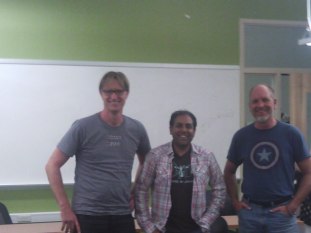
J.D. Payne, J. S. Mayank, and Alan Wartse
Screenwriting Panel at the
2016 Writing the Rockies Conference
The genre fiction workshop, on creating complex female characters, led by women’s fiction author Candace Nadon. She talked about the female stereotypes used in creating female characters, and ways to recognize and avoid them in your writing. Most of her advice for creating strong female characters, was in the form of what not to do, proving that there is a fine line to balance strength and feminity.
Screenwriter and co-organizer of the Crested Butte Film Festival, Michael Body was both educational and entertaining in his screening lecture. He used actual clips submitted to the festival for consideration. Two of the clips were humorous, but the other one was just plain bad, illustrating well the many reasons films do, or don’t get into film festivals. The bad one was so bad that the audience elected not to finish watching it.

Screenwriter Michael Brody
Co-Founder of The Crested Butte Film Festival
Along with everything else, the talent featured at the Writing the Rockies Conference also grows each year. In addition to the genre fiction and screenwriting names above, this year’s poetry symposium featured were renowned poets and critics, such as A.M. Juster, Jan Schreiber, John Talbot, Bruce Bennett, Christopher Norris, Emily Grosholz, Thomas Cable, Paul Edwards, Natalie Gerber, Niles Ritter, Frederick Turner, Richard Wakefield, and Robert Maranto.
Of the thirty publishers in Colorado today, at least seven were represented at the 2016 Writing the Rockies Conference: Conundrum Press Publisher, Caleb Seeling; Fulcrum Press editor, Rebecca McEwen; Slant News editor, Kyle Harvey; Dave Trendler, of VeloPress; Fred Ramey of Unbridled Books; Lithic Press Publisher, Danny Rosen; and Senior Acquisitions Editor of NavPress, David Zimmerman.
Creative Nonfiction is a new concentration which was added this year, featuring award-winning author, Kase Johnstun; essayist, Kelsey Bennett; and nature writer, Alissa Johnson. Genre fiction authors not mentioned above included Clay Reynolds; children’s author, Stacia Deutsch; and speculative fiction author, Michaela Roessner.
The 2016 Writing the Rockies Conference appeared to be a great success. It holds many opportunities for aspiring writers, and 2017 promises to have e1ven more, becoming larger and more prestigious than ever before. I anticipate 2017 conference attendees will have quite a treat in store.
Like this post? Subscribe to Writing to be Read for e-mail notifications whenever new content is posted.
Share this:

“Hollywood Game Plan” Prepares Upcoming Screenwriters to Hit the Ground Running
Posted: July 22, 2016 Filed under: Book Review, Books, Nonfiction, Screenwriting | Tags: Book Review, Carole Kirschner, Hollywood, Hollywood Game Plan, Review, Screenwriting 2 Comments
More than any other industry, the film making arena is a world where connections are everything and success may depend on who you know. Breaking in takes persistence, determination, and maybe even a dash of creativity. Oh, and talent helps, too.
Hollywood Game Plan, by Carole Kirschner, is a must read for anyone trying to break in to the entertainment business. This book gives you the lowdown on what jobs there are in both the creative and the production areas and tells what it takes to land each position, all the way to the top of the Industry.
Much of the advice found within its pages, basic things like being on time, working hard, dressing appropriately, or listening and following directions, could apply to any industry. But, it also contains tips and tricks that are Industry specific to the world of film making, and pays heed to the rules of Hollywood etiquette, which should never be broken unless you’re trying to commit career suicide. From how to use your Industry contacts to move your way up the ladder, to when it is appropriate to seek out advice or assistance from higher-ups. Among the list of cardinal rules not to be broken are:
- Start at the bottom and work your way up – everybody has to pay their dues.
- Be willing to do any chore your boss requires, even the most menial, or most nerve racking, tasks with a smile.
- Never talk badly about an employer, even if he’s the boss form hell.
- You’re going to get fired. Everyone gets fired. Don’t take it personal. Move on.
- Be nice to people. You never know who may turn out to be a future boss.
- Network, network, network. Keep a record of contacts and follow-up appropriately on all.
- Work for free, if you can afford to, and do the best job possible. You never know where it could lead.
- Work harder than anyone else and anticipate your employer’s needs.
Hollywood Game Plan helps you create a solid plan for launching your career as a screenwriter, even if you must begin in a job other than the one you aspire to. This book outlines the step by step approach to laying the groundwork for your new career, from honing your resume and crafting a solid cover letter, to landing that first job, making preparations to make the move to L.A., to working your way up the Hollywood creative or production ladders, and into your dream job.
I give Hollywood Game Plan four quills. 
Kaye Lynne Booth does honest book reviews on Writing to be Read, and she never charges for them. Have a book you’d like reviewed? Contact Kaye at kayebooth(at)yahoo(dot)com.
Share this:

The new “Point Break” fails to raise adrenaline levels
Posted: July 2, 2016 Filed under: Commentary, Film Review, Writing | Tags: Film Review, Point Break, Review, Writing Leave a comment
I just watched the new Point Break, the one that came out last year, and I am sad to say, I was very disappointed. Maybe on the big screen, the special effects were impressive, but on video, they are obvious computer imaging. In the original, 1991 movie, when they jumped out of the plane and were free falling through the sky, viewers could feel the adrenaline rush, and when they were riding the waves, we almost felt wet. The graphics on the 2015 movie aren’t even convincing, and viewers don’t feel that same excitement when they swooped through a mountain canyon in wing-suits. A lot of it just didn’t look real, so there was no reason for the adrenaline to flow.
Perhaps if the title were changed, and the characters in the 2015 movie didn’t have the same names as the characters in the original 1991 Point Break, it could be judged upon its own merit. But as it stands, they’ve set the new movie up to be compared to the original, which I feel is a big mistake. The original movie was an action movie, in which an FBI agent infiltrates a group of surfers who are bank robbers, and it was fun to watch. The 2015 version has a completely different tone than the original movie, being more of an international crime suspense thriller with a lot of extreme sports thrown in.
The transition to the international plot did not work well. The Johnny Utah character, played by Luke Bracey, I conveniently involved in extreme sports, before becoming an FBI agent, so he doesn’t waste time learning to walk the walk in order to infiltrate the culture. He’s already a member of the club. They all know him. Then, just as conveniently, maybe even more so, he figures out where to look for the bad guys, goes straight there and the first group he encounters are the guys he’s looking for, and the Brohdi character, played by Edgar Ramirez, more convenient still, saves him from drowning after a surfing incident. Too many coincidences for me to buy in. Sorry.
And let me add here, though I’m reviewing this film based on the merit of the screenplay and story, that Bracey is no Keanu Reeves and Ramirez is no Patrick Swayze. In the original movie, it was clear early on that our bad guys were thrill seekers, adrenaline junkies, and viewers understood where they were coming from, what their motivation to take so many risks and live so dangerously was. I did not get that sense about these guys. And I didn’t really get a sense of how bad they were. The creators failed to create a villain I could love to hate.
(SPOILER ALERT – There may be spoilers from this point on.)
Patrick Swayze’s Bohdi character was such a villain. You knew he was a bad guy and he had to go down, but you could understand why Utah agrees to let him go out his own way, at the end, after winning their struggle in the water. Ramirez’s Bohdi is not. I didn’t get what made him tick, or what his motivations were. At the end of the 2015 movie, when Utah lets Bohdi go, I didn’t get it. There’s no struggle, no fight. Utah doesn’t even try and talk Bohdi out of it. Bohdi says, “You’ve got to let me go”, and Utah says, “Okay.” Maybe I don’t get it, because empathy with these characters is something I never felt through the whole movie. There was just no connection.
Also, the villains in the original Point Break were bank robbers, financing their surfing tour with their spoils. The villains it the 2015 movie appeared as modern day Robin Hoods, robbing from the rich and giving away all the spoils. It’s difficult to see them as bad guys because they have a cause.
The one interesting twist I felt the 2015 movie had was the girl, Samsara, who we at first believe is a love interest, but later we are surprised to learn she’s a part of the crew, after Utah shoots and kills her in the kiss of death moment. Of course, in the original, the girl is a love interest and the bad guys use her as leverage to get Johnny Utah’s cooperation, so I was expecting something similar here. I liked that twist, where there was not much else to be liked about this movie. As I mentioned above, I think this movie might have done alright as a standalone, but it doesn’t measure up to the original movie. I was not impressed with the recent Point Break movie, and I can only give it two quills.
Kaye Lynne Booth does honest book reviews on Writing to be Read, and she never charges for them. Have a book you’d like reviewed? Contact Kaye at kayebooth(at)yahoo(dot)com.
Share this:

Chronology is full of surprises
Posted: June 24, 2016 Filed under: Book Review, Books, Fantasy, Fiction, Horror, Science Fiction, Speculative Fiction, Steampunk, Stories | Tags: Anthology, Book Review, Books, Creative Fiction, Fantasy, Fiction, horror, Review, Speculative Fiction, Steampunk, Writing 3 Comments
I’ve just had the pleasure of reviewing a new anthology of short fiction put out by Curiosity Quills Press. When asked if I’d like to review Chronology, I had the impression that it was a steampunk anthology, which is a genre I’m newly discovering. Some of the stories in this collection do have steampunk elements, such as Wind Up Hearts, the steampunk-ish romance that is sure to break readers’ hearts, by Bram Stoker Award finalist, Stan Swanson, or Flight of the Pegasus by Dr. Darin Kennedy. There’s also That Which is Hidden, a haunted steampunk-ish werewolf romance, by Julie Frost. But, I was pleasantly surprised to find the stories in Chronology to be a diverse mixture of speculative fiction.
Some are futuristic, leaning more toward science fiction, such as the apocalyptic Afterparty by Mark Woodring, Limited Liability, a futuristic outer space story by Matthew Graybosch or Gookie Visits Her Moma by G. Miki Hayden, an alternate universe science fiction story about a space bounty hunter whose current bounty takes her back to her home planet. Many others are more in the fantasy realm, such as Draconic King, by award winning author, James Wymore, or Yours Until the Ink Dries, a true faerie tale, as a young outcast girl discovers her true identity in her drawings, by Y.A. author Jordan Elizabeth. And then there are those stories that fall into the mythical realm, such as Strange Flesh, a well-crafted story of mythical creatures by Katie Young, or Wampus Cat, a tale of Appalachian legends come true by international bestselling author Scott Nicholson.
Still, others have a horror element or two, such as The Lair, a story of a cursed treasure hunt in jungle swamps, by best-selling independent author, Tony Healey, or Lava, a spectral love story by New York Times bestselling author, Piers Anthony, or In the Clutches of the Mummy Prince, by B.C. Johnson, which was not very scary. Also I had trouble relating with the main character in Johnson’s story, who wasn’t very likeable. There is also The Comeback, the weirdest zombie romance I’ve ever heard of, told from the zombie’s POV, by techno-thriller and MG fantasy author, Tara Tyler, and Inmate #85298, a chilling death row tale, by author and screenwriter, Andy Rausch.
Of course, there are also those stories that weren’t so easy to classify, including White Chapel, which sheds new light on the story of Jack the Ripper, by author, editor and podcast co-host, Andrew Buckley, or Signs Unseen, the story of a small town race war, by J.P. Moyahan, or Bait and Witch, a troublesome witch story by speculative fiction author, J.P. Sloan. There is also The Bull, by novelist and short story writer, J.R. Rain, which turns a Minotaur into a superhero, and The Unattended Life, a reminder to stop and smell the roses by J.E. Anckorn, and an intriguing airship romance, Above the Clouds, by Richard Roberts.
Yes, it is a big book, about 530 pages, but it is definitely a good read. In addition to the stories mentioned above there are the three I enjoyed the most, which I saved to tell you about in more detail. The following stories stuck out in my mind the most, but not in any particular order.
The Room Below, by novelist Wilbert Stanton is a horror story worthy of Lovecraft, or King. This story about a stay in a mental institution that puts One Flew Over the Cuckoo’s Nest to shame. It held my attention and kept me on the edge of my seat, and had a surprising, yet satisfying ending.
The Colorado King, by Nathan Yocum is a story in which survival is the name of the game as a father and daughter travel over post-apocalyptic badlands in search of kin and refuge, bringing with it some very hard lessons. This well-crafted tale grabs readers’ attention and doesn’t let go, yet it leaves readers feeling like there should be more, probably due to the fact that it is an excerpt. I’m guessing that it is from Yocum’s novel, The Zona.
And finally, Innocent Deception, by Matthew Cox is a well-crafted story which has a surprising reveal in its final pages. The daughter of a pharmaceutical company’s CEO is kidnapped and held for ransom, but the plan falls apart when the mother doesn’t want the kid back.
Overall, I give Chronology 3 Quills. 
Kaye Lynne Booth does honest book reviews on Writing to be Read, and she never charges for them. Have a book you’d like reviewed? Contact Kaye at kayebooth(at)yahoo(dot)com.











Looking Back Over 2016
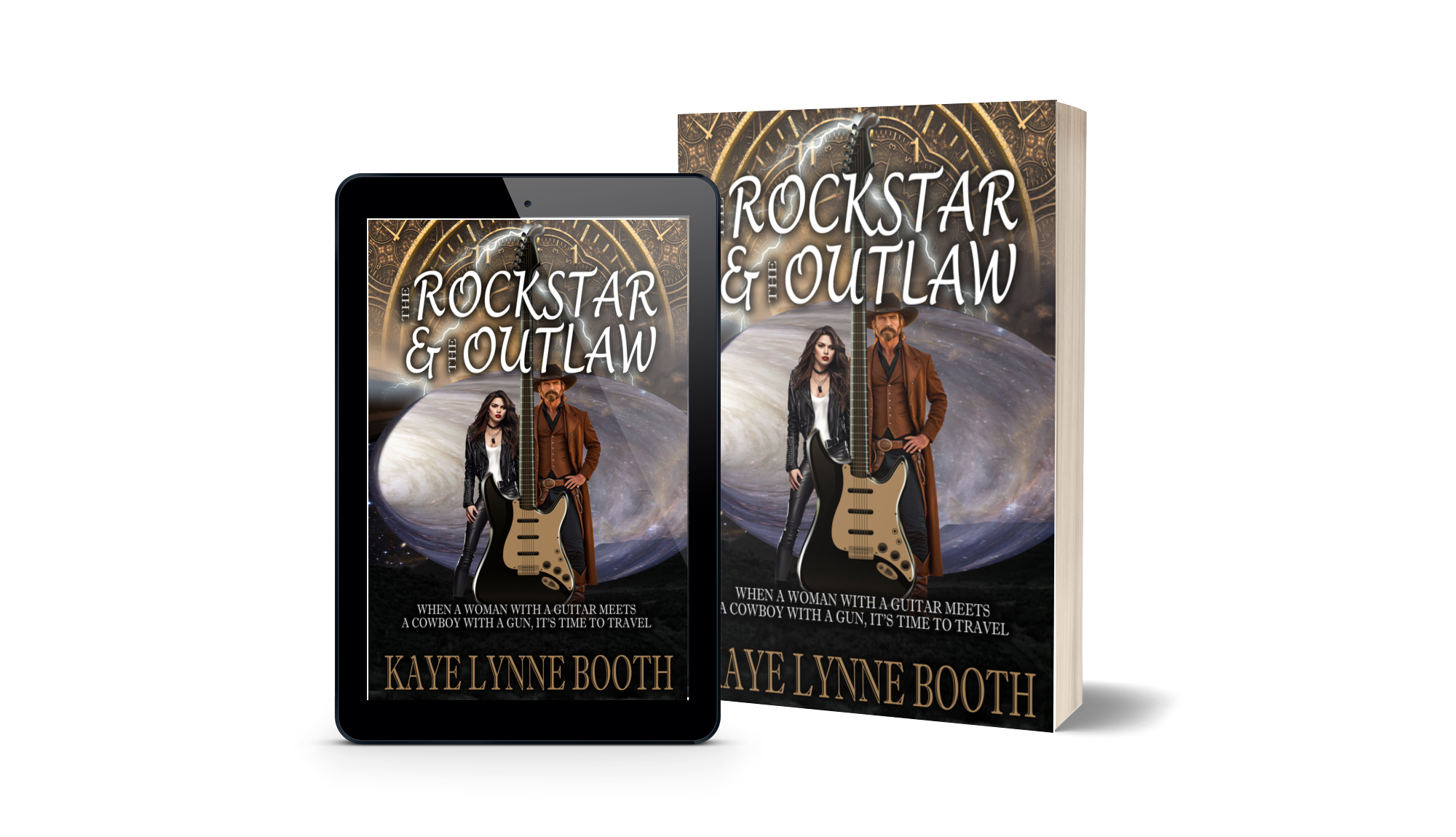
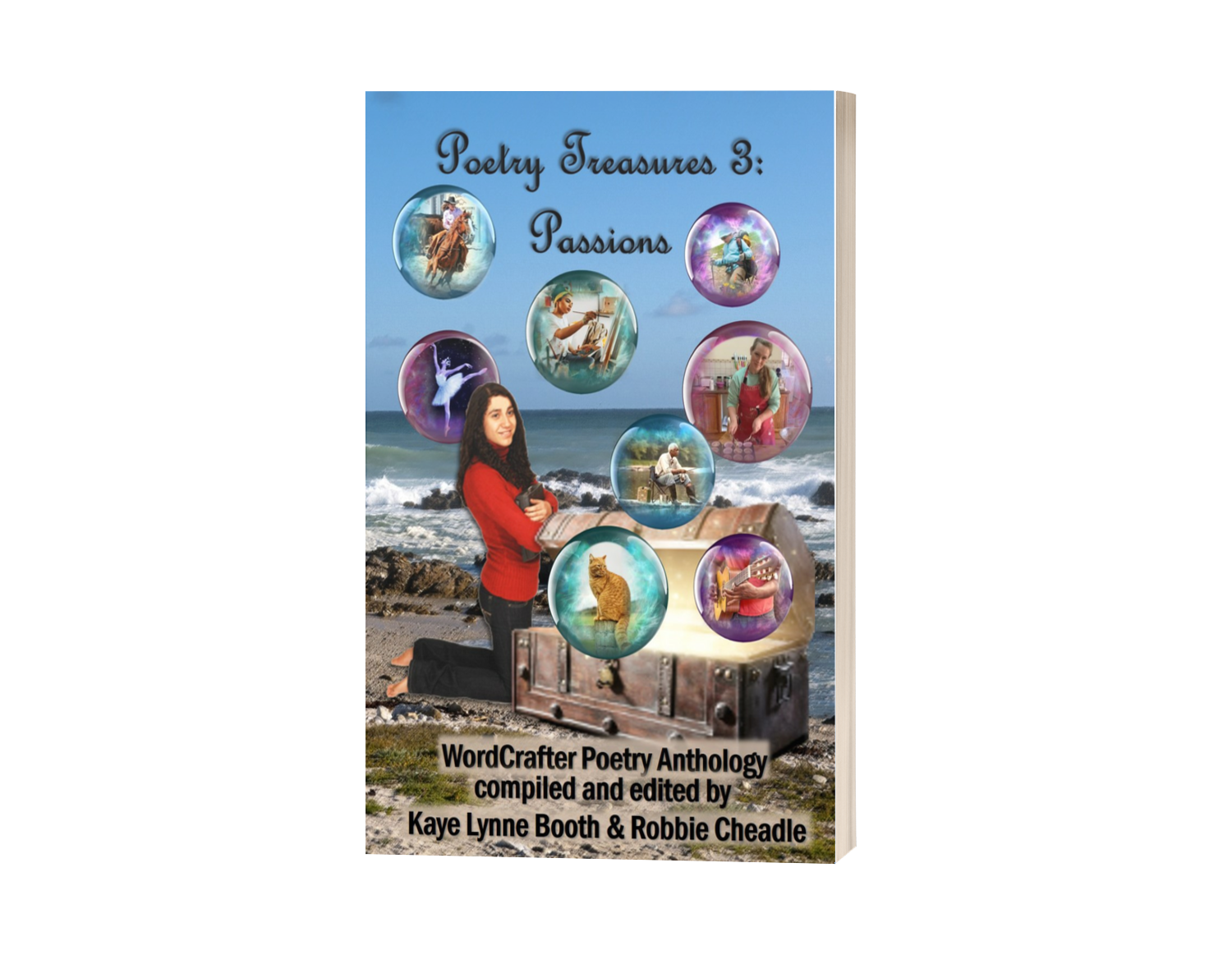
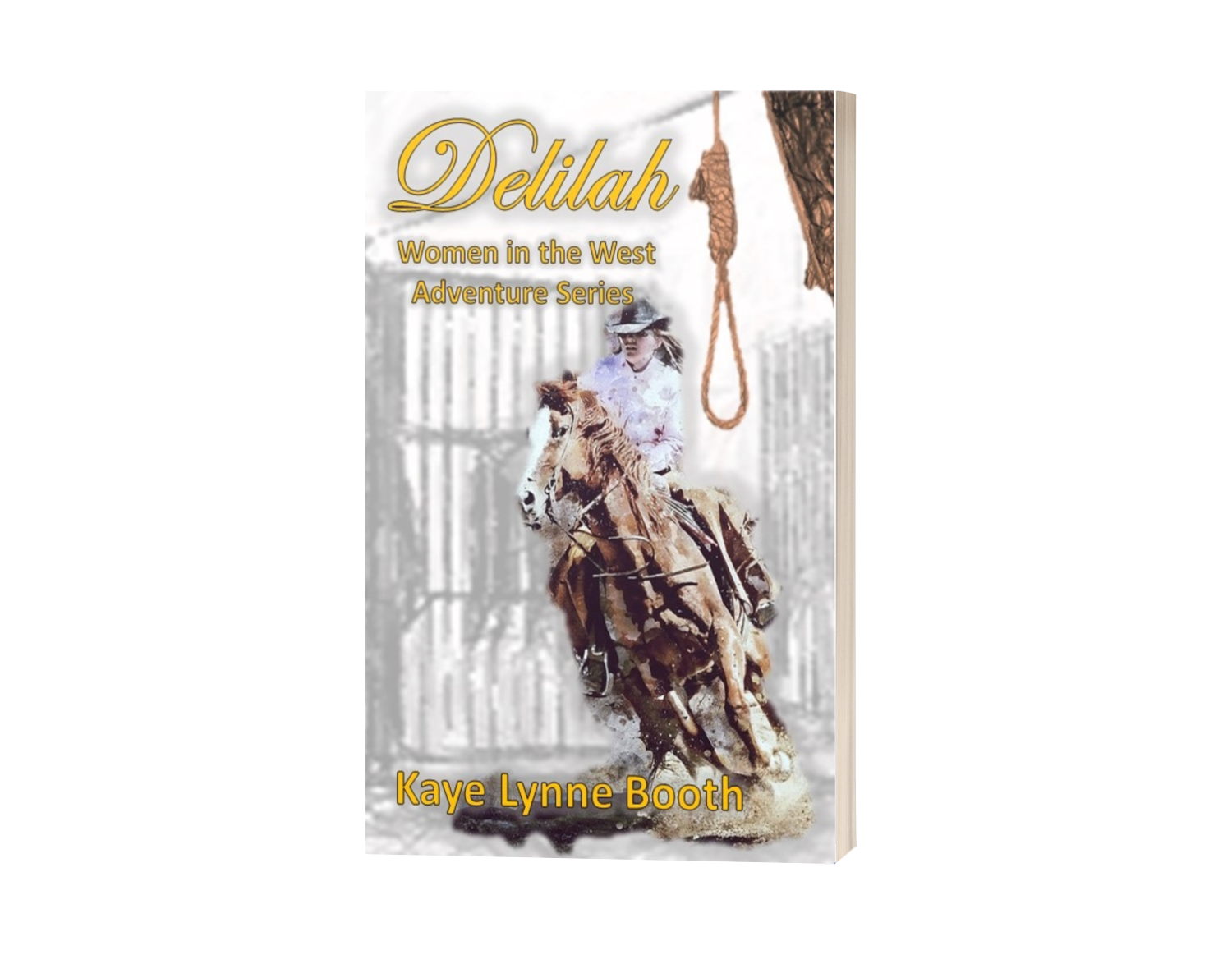
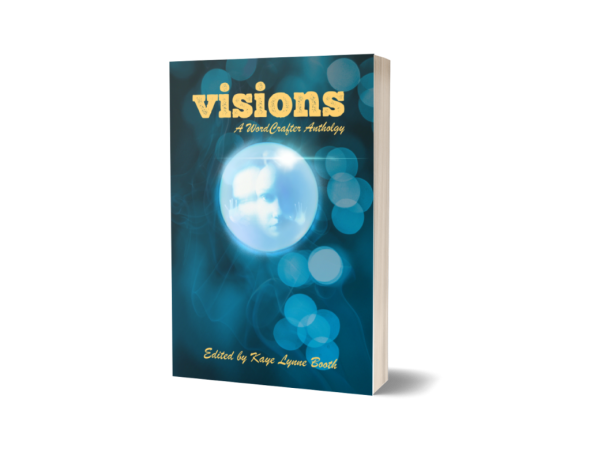
Posted: December 26, 2016 | Author: kayelynnebooth | Filed under: Articles, Book Review, Books, Children's Books, Commentary, Fiction, Film Review, Horror, Movies, Nonfiction, Poetry, Promotion, Publishing, Screenwriting, Self-Publishing, Steampunk, Stories, Weekly Writing Memo, Western, Writing, Writing Event, Writing Tips, Young Adult | Tags: 2016, Book Reviews, Books, Fiction, marketing, Movies, Novel, Novels, Poetry, Review, Reviews, Writing, Writing to be Read | 4 CommentsThis will be the last reflective post of the year. Next Monday’s post will find us in 2017. For my writing career it has been a slow take off, but I’ve seen progress. In July, I completed my Master of Fine Arts degree in creative writing. With emphasis in both genre fiction and screenwriting, and two completed novels, Delilah and Playground for the Gods Book 1: In the Beginning, two full feature film scripts and one comedy series pilot script in hand, I eagerly jumped right in to get my feet wet in either the publishing and/or screenwriting industry. I began submitting my work to agents, publishers, and competitions like crazy. I received mostly rejections, as expected, and although I still haven’t found a home for either novels or scripts, I did manage to find a home for two poems and two short stories. Not too bad. While the poems, Aspen Tree and Yucca! Yucca! Yucca!, appeared in print, (in Colorado Life (Sept.-Oct. 2016) and Manifest West Anthology #5 – Serenity and Severity, respectively), my short story, I Had to Do It was published on Zetetic: A Record of Unusual Inquiry, and my not so short, short story, Hidden Secrets was published on Across the Margin.
2016 has been a pretty good year for Writing to be Read. The revamping of the blog site was completed in March, I’ve managed post things on a fairly regular basis, we were honored with guest posts by my friend Robin Conley, and my visits and page views have risen, with almost 2000 visitors and over 2,500 page views. Looking at this, makes me feel pretty good about the blog, as a whole. Another good change is the addition of screenwriting content, which I believe has drawn a larger audience by widening the scope of the content.
Many of my posts were reflections of my own writing experience. These included: Why Writing is a Labor of Love; Fear is a Writer’s Best Friend; I’ve Come A Long Way, Baby; Writing the Way That Works For You; Creating Story Equals Problem Solving; What’s A Nice Girl Like Me Doing Writing in a Genre Like This?; Acceptance or Rejection – Which Do You Prefer?; A Writer’s Life is No Bowel of Cherries; Write What You Know; Discouragement or Motivation?; What Ever Happened to Heather Hummingbird?; How You Can Help Build a Writer’s Platform; and Why Fiction is Better Than Fact.
Screenwriting content included this past year seemed to be popular. In addition to my Making of a Screenplay series and Writing Horror is Scary Business, Writing to be Read also featured Writing Comedy for Screen is a Risky Proposition, and a book review for Hollywood Game Plan, by Carole Kirshner, which I can’t recommend highly enough for anyone desiring to break into the screenwriting trade. Robin’s Weekly Writing Memo also included several writing tips that could be applied equally to literature or screenwriting.
Another project I’m particularly proud of is my ten part series on publishing, Pros and Cons of Traditional vs. Independent vs. Self-Publishing, which I just finished up last week. In this series I interviewed nine professionals from within the industry to get the low down on the three different publishing models. My interviews included self-published authors Jeff Bowels, Tim Baker and Art Rosch, traditionally published authors Stacia Deutsch (children’s books) and Mark Shaw (nonfiction), and independently published YA author Jordan Elizabeth. To balance things out a bit, I also interviewed children’s author Nancy Oswald, who has published with all three models, Clare Dugmore of Curiosity Quills Press and Caleb Seeling, owner and publisher at Conundrum Press.
I feel very fortunate to have had Robin Conley join us with her Weekly Writing Memo and her guest movie reviews. The useful writing tips in her Weekly Writing Memos covered a wide range of topics including critiquing, using feedback, ways to increase tension, Relatability or Likeability?, 3 Types of Plot, story research, what to write, making your audience care, world building, handling feedback, writing relationships, establishing tone, editing, word choice, How to Start Writing, endings, queries, Parts of a Scene, making emotional connections, the influence of setting, Building a Story, Inciting Your Story, movement and dialog, Writing Truth, time, Overcoming the Blank Page, Networking, character names, theme, set up, cliches, parentheticals in screenwriting, horror inspiration, and Learning to Write. Robin’s guest post movie reviews included Pride and Prejudice and Zombies, Batman vs. Superman, Miss Perigrin’s Home for Peculiar Children, and The Neon Demon.
I am thankful for Robin’s valuable content and am glad that she will still be contributing Memos on a monthly, rather than a weekly basis. Although I was sad to lose her weekly content, I am happy for her as she moves forward in her own writing career and I wish her well in her writing endeavors. For those of you who looked forward to her weekly posts, you can catch more of her content on her own blog, Author the World.
2016 was a great year for Writing to be Read, even if it was kind of rough for the author behind the blog. You readers helped to make it a good year and I thank you. Now it’s time to look ahead and see what’s in store for 2017 Writing to be Read. I mentioned some of the things I hope to achieve above: more posts pertaining to the screenwriting industry, and coverage of more events throughout the year are two of the goals I have set for my blog. I also plan to add some author, and hopefully, screenwriter profiles into the mix. I had good luck with author profiles during my Examiner days, and I think they will be well received here, as well.
I also hope to bring in some guests posts by various authors or bloggers, or maybe screenwriters, just to give you all a break from listening to me all the time. I believe Robin plans to continue with Monthly Writing Memos, which will be great, too.
I look forward to all the great books that I know are coming my way in 2017, too. The first reviews you have to look forward to are a short memoir, Banker Without Portfolio by Phillip Gbormittah, a YA paranormal romance, Don’t Wake Me Up by M.E.Rhines, a Rock Star romance, Bullet by Jade C. Jamison and a short story, How Smoke Got out of the Chimneys by DeAnna Knippling.
I hope all of you will join me here in the coming year. Follow me on WordPress, or subscribe to e-mail for notifications of new posts delivered to your inbox. Have a great 2017 and HAPPY WRITING!
Share this: