LINDSEY’S WRITING PRACTICE: Interview with Author & Poet Robbie Cheadle & A Review
Posted: June 3, 2026 Filed under: Books, Collection, Interview, Lindsey's Writing Practice, Poetry, Review | Tags: Book Reveiw, Interview, Lindsey Martin-Bowen, Lindsey's Writing Practice, Lion Scream, Nature, Poetrty Collection, Robbie Cheadle, South Africa, Wildlife, Writing to be Read 50 Comments
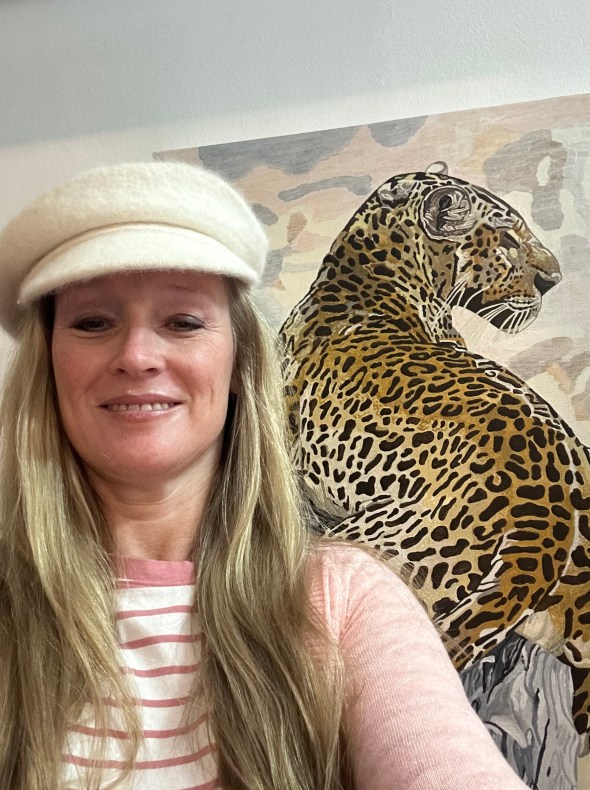
How do I define Robbie (a/k/a Roberta) Cheadle?
In essence: Amazing. This multi-talented, empathetic, creative woman displays talents in many areas.
Further, she pens words that she hopes will move others to help protect our world.
Along with writing poetry books, novels, short stories, and children’s literature, Robbie Cheadle not only decorates some of her pages with exquisite, professional photos that she shot—and even more amazing, she fashions cakes with sculptures of lions and other African wildlife, and flowers that accompany her writings.
Here’s a chance to peer into the mind of this remarkable woman. Enjoy!
About Roberta Eaton (Robbie) Cheadle
Roberta Eaton Cheadle, is a South African writer and poet specialising in historical, paranormal, and horror novels and short stories. She is an avid reader in these genres and her writing has been influenced by famous authors including Bram Stoker, Edgar Allan Poe, Amor Towles, Stephen Crane, Enrich Maria Remarque, George Orwell, Stephen King, and Colleen McCullough.
Roberta has two published novels and a collection of short stories and has horror, paranormal, and fantasy short stories included in several anthologies. She is also a contributor to the Ask the Authors 2022 (WordCrafter Writing Reference series).
Roberta is also the author and illustrator of seventeen children’s books, illustrator to a further three children’s books, and the author and illustrator of four poetry books published under the name of Robbie Cheadle, and has poems and short stories featured in several anthologies under this name.
Roberta’s blog features discussions about classic books, book reviews, poetry, and photography. https://roberta-writes.com/.
My Interview with Robbie Cheadle
How did you come to write poetry?
From a young age (4 years old), I read a great deal. Television was very limited in South Africa when I was a child and my first sister was only born when I was 4 years old. Catherine was born prematurely and my parents moved to a cottage on a farm in the country to try to protect her from germs. I didn’t attend school during this time, and I had to entertain myself. I did that by reading. I grew to love the L.M. Montgomery books, especially her lesser-known series, Emily of New Moon. In the books, Emily’s late father was a poet and writer. Emily tries her hand at poetry as a way of keeping his memory alive. I was inspired by Emily to
write short poems and descriptive pieces and did this throughout my senior primary school and high school years. English and History were my favourite subjects at school, and I excelled at both of them. I have been writing poetry ever since. It has evolved into a diary of my life.
What is your favourite poem by another poet?
When I was in primary school, about ten years old, we had to learn several poems by heart. Ever since then I have loved The Listeners by Walter de la Mare. The poem is full of mystery and delight.
The Listeners
By Walter de La Mare
‘Is there anybody there?’ said the Traveller,
Knocking on the moonlit door;
And his horse in the silence champed the grasses
Of the forest’s ferny floor:
And a bird flew up out of the turret,
Above the Traveller’s head:
And he smote upon the door again a second time;
‘Is there anybody there?’ he said.
But no one descended to the Traveller;
No head from the leaf-fringed sill
Leaned over and looked into his grey eyes,
Where he stood perplexed and still.
But only a host of phantom listeners
That dwelt in the lone house then
Stood listening in the quiet of the moonlight
To that voice from the world of men:
Stood thronging the faint moonbeams on the dark stair,
That goes down to the empty hall,
Hearkening in an air stirred and shaken
By the lonely Traveller’s call.
And he felt in his heart their strangeness,
Their stillness answering his cry,
While his horse moved, cropping the dark turf,
’Neath the starred and leafy sky;
For he suddenly smote on the door, even
Louder, and lifted his head:—
‘Tell them I came, and no one answered,
That I kept my word,’ he said.
Never the least stir made the listeners,
Though every word he spake
Fell echoing through the shadowiness of the still house
From the one man left awake:
Ay, they heard his foot upon the stirrup,
And the sound of iron on stone,
And how the silence surged softly backward,
When the plunging hoofs were gone.
I like this poem so much I did a recording of it for my YouTube channel: https://youtu.be/gy_7mM2RcuI?si=Gmf2kfXkwrCoBnjp
What is your favourite of your own poems?
Currently, this is my favourite of my own poems:
Life on the Water (Tanka story)
medley of cool shades
cerulean and turquoise
lightened or darkened
depending on water’s mood
and artist’s vision
***
painstaking brush strokes
capturing shadows and light
frothy, foaming crests
enhanced with metallic white
dancing across blue
***
water shifts and sighs
subtle movements captured in
careful ripple lines
swiftly flowing currents caught
in muted aquamarine
***
sand laden wavelets
curl sluggishly around rocks
smothered by sweet caress
of ocean’s heaving bosom
with its rhythmic rise and fall
***
houseboat moves onwards
temple to unconstrained thoughts
colours meld as one
in swirls, rises, and deep troughs
impermanent no longer
***
dreams, soft and wispy
condensation trails through sky
subtle as sunlight
transferred to stark, white canvas
soft splashes ricocheting
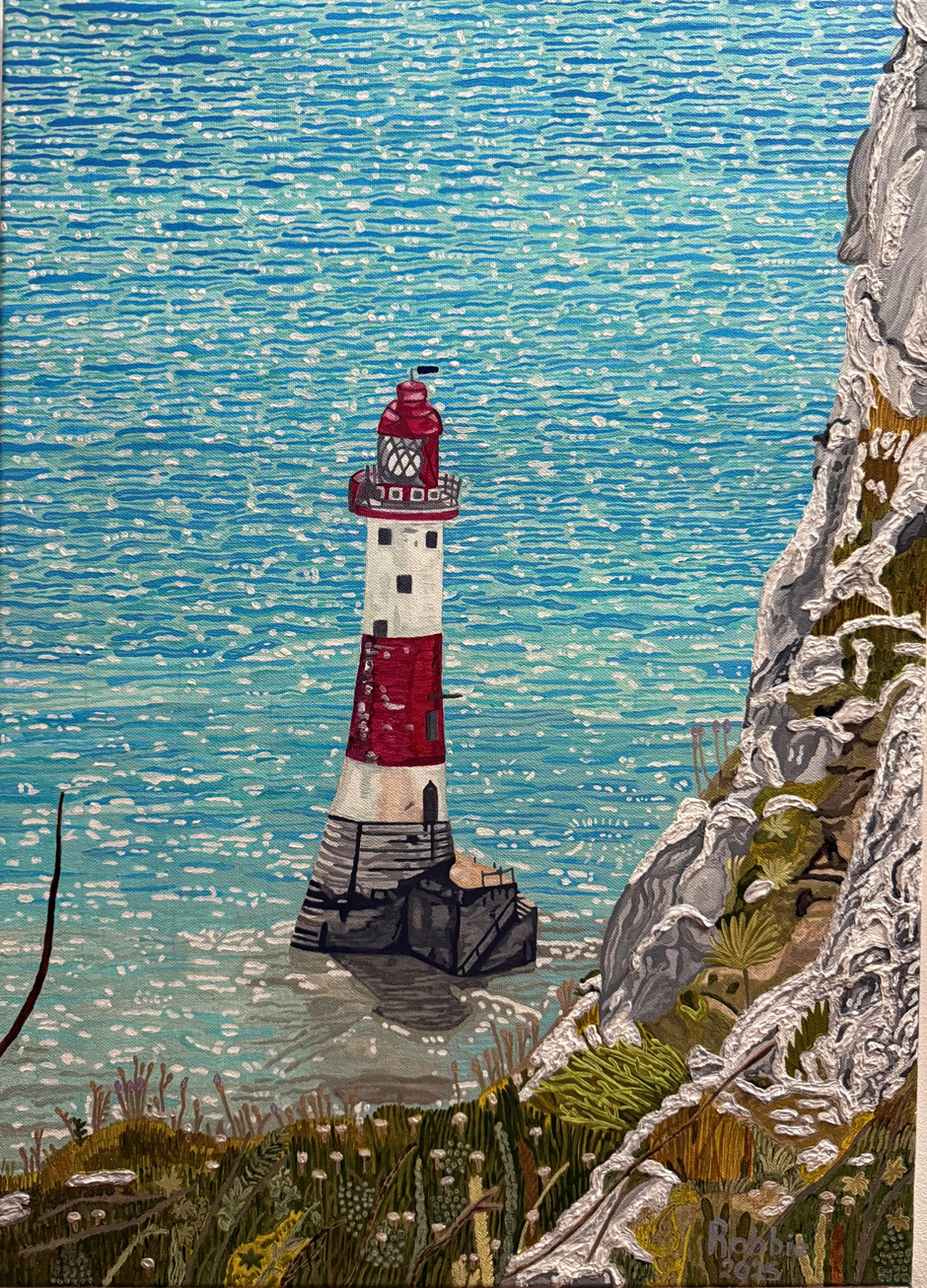
Picture caption: My acrylic painting called Fyrtorr which means beacon in Old English.
Tell us a bit about the inspiration for Lion Scream
Here’s an extract from Lion Scream:
The initial idea for a book of poetry that taught people about the numerous amazing creatures of southern Africa and highlighted their plight in the face of the Sixth Mass Extinction, came to me during a visit to Ukutula Lodge & Game Reserve (“Ukutula”).
Ukutula is also a conservation facility specializing in genetic mammal research and predator conservation.
On my return home, my brother-in-law gifted me a print of Edvard Munch’s famous painting, The Scream.
According to a diary entry by Munch, the inspiration for this painting was as follows:
“One evening I was walking along a path, the city was on one side and the fjord below. I felt
tired and ill. I stopped and looked out over the fjord – the sun was setting, and the clouds
turning blood red. I sensed a scream passing through nature; it seemed to me that I heard
the scream. I painted this picture, painted the clouds as actual blood. The color shrieked.
This became The Scream.”
Based on The Scream, I created a cake I titled Lion Scream – Nature’s Response to the Sixth Mass Extinction and Global Warming, which depicted a lion, made from fondant, clasping its face and screaming, while standing on a bridge above a river of blood. Behind the lion, is an erupting volcano.
This cake was intended to be an artistic depiction of the natural world’s reaction to
continuous land development by humans, resulting in the loss of habitat for the creatures
which share this earth with us, and the increasing impact of global warming on humanity
and the greater planet.
Lion Scream: Nature’s Response to the Sixth Mass
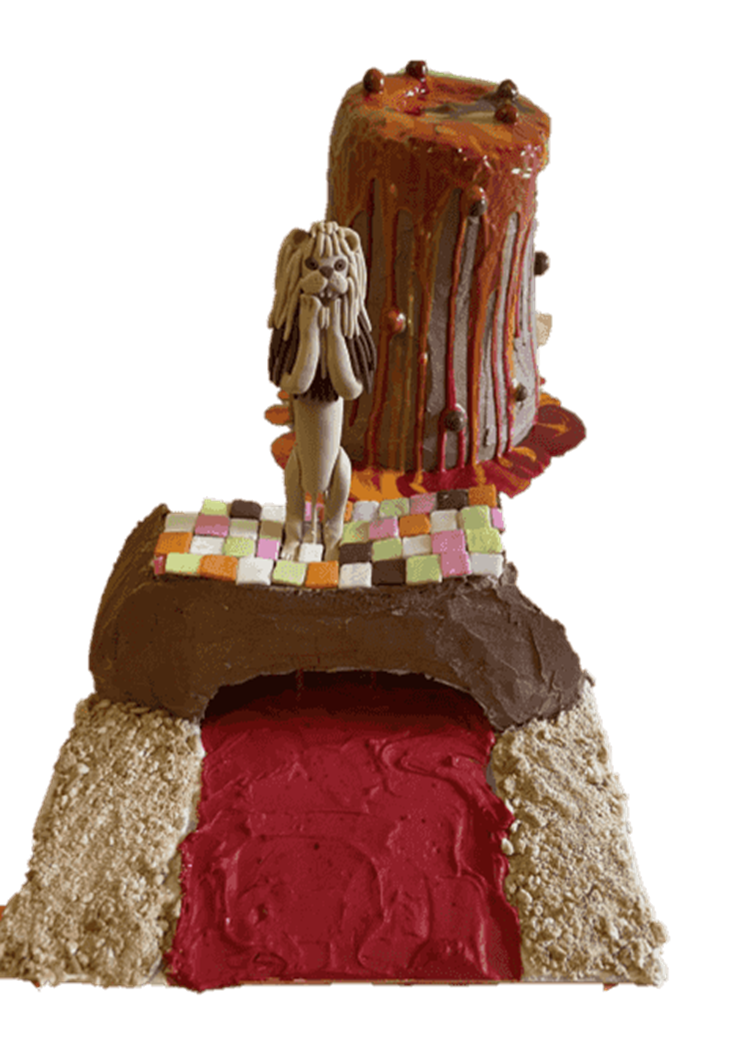
Picture Caption: Extinction and Global Warming Cake Art by Robbie Cheadle
Have you witnessed the killing of an African animal which acted as a trigger for your interest in animal conservation?
When I was 21, I met a man who hunted animals for sport. Prior to this, I had never had much interaction with wild animals other than in zoos. My mother grew up on a cattle farm and had little interest in engaging with animals in the wild. Interestingly, I’ve noticed she shares this disinterest with other people I know who also grew up on farms. Anyhow, this man invited me to go to Kimberley with him and his friends. They were going hunting, but they were also going to visit the ‘big hole’ in Kimberley which is an interesting feature of South African history. I agreed to go because I wanted to see Kimberley. The hunting trip was a complete horror show for me. I hadn’t really thought about what a hunting trip meant, and the men attempted to kill an antelope. It was a common antelope, what I call “lion snacks” as they keep the stock of impalas high in game reserves because they are food for the
big cats. The shooter’s shot went wide, and he ended up wounding a baby impala. Aside from any other aspect, it was not the right season for hunting as the mother antelopes had small calves. The baby ran making the most terrible high-pitched sound, and the men had to go after the poor little thing. Eventually, they did put it out of its misery. I was completely horrified. After this trip, I ended the relationship and became involved in wildlife conservation. This has developed into my poetry books and paintings featuring southern African wildlife.
What’s next?
Currently, I am busy with the final edits to a collection so South African inspired short stories and poems. The book is called The Last Man, South African History, Legends, & Poetry. This book will be published through TSL Publication in the United Kingdom. I am also working on several new poetry collections and the second book in the Something Fancy book collection. This second book, Chocolate & Treats, should be ready for publication in early November this year. I always have a lot of projects on the go. I am also painting. My latest painting is of a Vervet Monkey and is part of my Into the Light series of painting. I am planning to paint an African Painted Dog next. It will be a much bigger project. I do a small one in between the larger ones so that I can practice drawing more often. The big paintings take me three to four months to complete.
Thank you for this lovely interview opportunity, Lindsey. I appreciate your interest in my work.
Lindsey’s Review of LION SCREAM Syllabic Poetry about Southern African Wildlife
by Robbie Cheadle
Not only is Robbie Cheadle (a/k/a Roberta Cheadle) an excellent, engaging poet and fiction writer, she’s a woman with a mission—a crucial mission for not only the future of our planet and the wildlife on it, but for humanity itself. Plus, in this 163-page collection, her method of persuasion includes not only facts and figures about the demise of many of our planet’s creatures in Africa, it delights the reader with superb—and righteous, at times biting, poetry and fiction.
Most delightful is Cheadle’s use of the constraints of syllabic structure in unrhymed forms that recreate the tension between wild beasts and the fragment of society pushing them off their native environments. For example, the book’s opening poem, “Lion Scream” is a perfectly structured tanka (one of my favorite forms). I perceive the tanka as a haiku with more depth. As opposed to the 17-line poem, tankas are structured in five lines with the syllabic form: five, seven, five, seven, seven, which Cheadle does in “Lion Scream”:
There is no jungle
Only acres of smooth stumps
There is no jungle
No habitat, no food source
Hopeless lion screams tonight
(Cheadle credits “The Lion Sleeps Tonight” in Disney’s The Lion King with inspiring this
tanka.)
Although the collection contains other tankas, most of the poems are set in the Double Enneal format, far more complex. A Double Ennead comprises three stanzas of five lines each. Thus, the syllabic count for each stanza is 6/5/11/6/5, (33 syllables per stanza) i.e., each stanza is set as:
six syllables
five syllables
eleven syllables
six syllable
five syllables
Again, each of those syllabic counts are repeated in the second and third stanzas, totaling ninety-nine syllables for each poem.
In the collection’s introduction, Cheadle explains why she uses this format most frequently throughout the book:
“I selected this form of syllabic poem for LION SCREAM for two reasons . . . because I love syllabic poetry and the short dramatic statements it enables me to make through a few carefully chosen words.”
Her second reason concerns her mission: “. . . due to the importance of nature conservation to me, and my desire to share insights about the impact of habitat loss, hunting, and poaching on the wild animals of southern Africa, I decided that 99 syllables gave me more, a little more scope to make my specific points.”
Further, Cheadle photographed all but three of the photos in the book. After perusing the collection she shot —on par with those in National Geographic, depicting several species of wildlife, I felt as if I’d viewed a video of Africa, particularly in those sections about lions, elephants, and zebra, creatures especially close to my heart.
I admit my first encounter with elephants and camels was in the Kansas City Zoo, where we children rode those captive creatures. This book brought back those memories from an era wherein most persons believed such wildlife would continue to stroll the earth indefinitely.But Cheadle reveals that is no longer a future many experts anticipate.
Along with her own photos, the collection offers links to many of Africa’s animals. For instance, in the section, “My Experiences with Rhinos,” she includes four links to videos she took of rhinos, after noting, “My most recent sightings have largely been of dehorned animals, which I always find jarring. It is strange to see a rhino without its famous horn.”
Having grown up in South Africa, she first saw horned rhinos, and she questions, “I wonder if my grandchildren will know rhinos have horns. If the fight against poaching is unsuccessful, my grandchildren will only experience rhinos through pictures in history books.”
From the number of Double Enneads she included for elephants and lions, it appears they may be her favorite beasts. Along with those long poems and marvelous photographs, she includes sections, “About African Elephants, “My Experiences with Elephants,” “My Experiences with Lions,” and “More Experiences with Lions.”
Then, she wraps up the poetry section with photos of the African landscapes. A Double Ennead, “The Romance of the Sunflowers” and an explanation about how sunflowers feed the environment in “Sunflowers and the Environment” precede photos of African landscapes of mountains, plains, and striking sunsets, interlaced, of course, with more poetry.
Cheadle wraps up this collection with a short story, “The Nutcracker,” which deals primarily with how the changing environment causing the loss of wildlife can impact the human species, too. She follows that piece with her inspiration and explanation of the story. I rate this collection with FIVE STARS. Thank you, Robbie, for sharing it.
—Lindsey Martin-Bowen
About Lion Scream
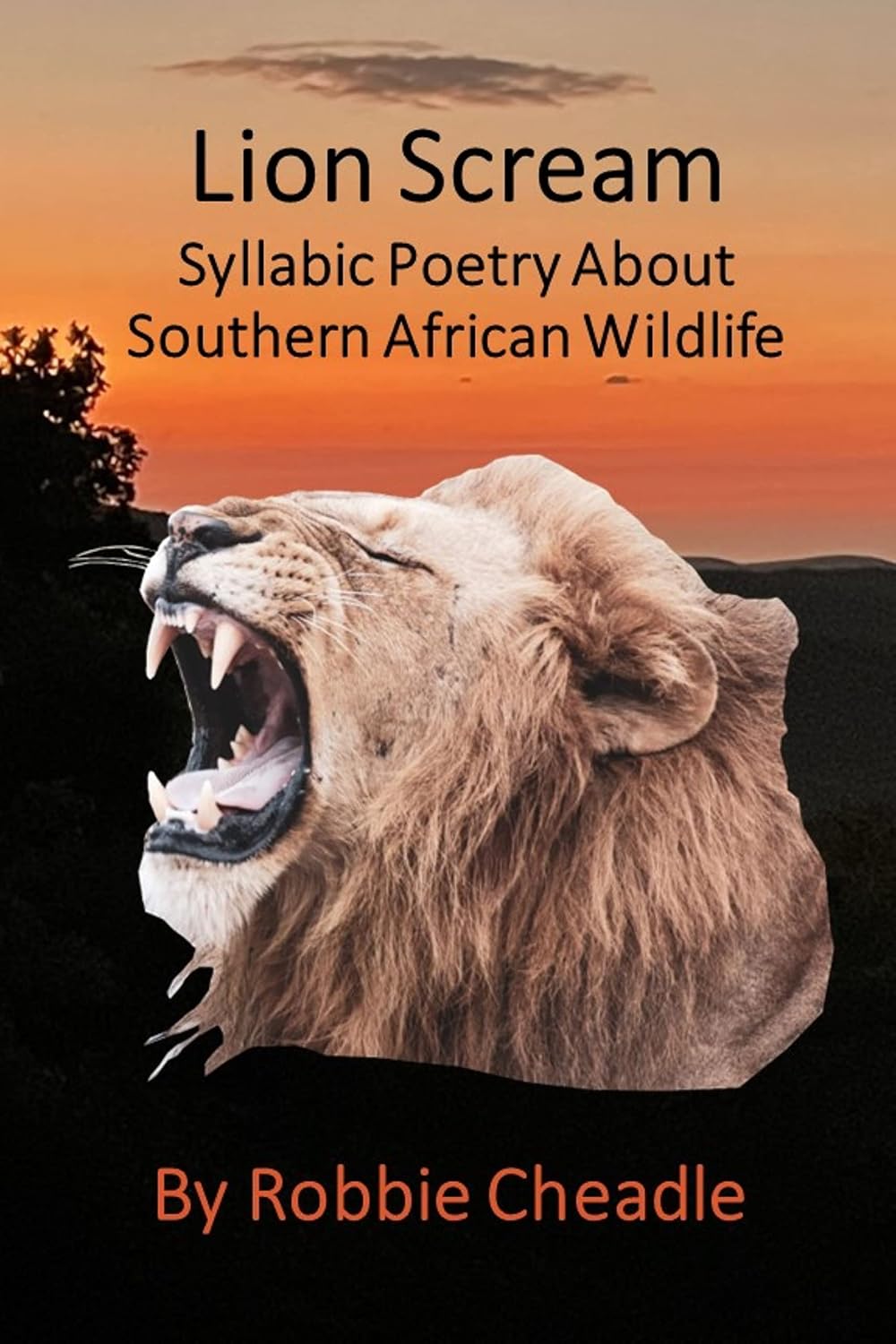
Do you rely on Earth for your survival?
Lion Scream is a graphic collection of poetry and prose. The book portrays the author’s experiences with South African wildlife and the growing impact of the Sixth Mass Extinction and Climate Change on the natural environment.
Lion Scream
There is no jungle
Only acres of smooth stumps
There is no jungle
No habitat, no food source
Hopeless lion screams tonight
Purchase Link: https://www.amazon.com/Lion-Scream-Syllabic-Southern-Wildlife-ebook/dp/B0BXP5N766
About Lindsey Martin-Bowen
On Halloween 2023, redbat books released Lindsey Martin-Bowen’s 7th poetry collection, CASHING CHECKS with Jim Morrison. Her 4th collection, Where Water Meets the Rock, was nominated for a Pulitzer; her 3rd, CROSSING KANSAS with Jim Morrison was a finalist in the QuillsEdge Press 2015-2016 Contest. In 2017, it won the Kansas Writers Assn award, “Looks Like a Million.” Writer’s Digest gave her “Vegetable Linguistics” an Honorable Mention in its 85th Annual (2017) Contest. Her Inside Virgil’s Garage (Chatter House Press 2013) was a runner-up in the 2015 Nelson Poetry Book Award. McClatchy Newspapers named her Standing on the Edge of the World (Woodley Press/Washburn University) was one of the Ten Top Poetry Books of 2008. It was nominated for a Pen Award.

_______________________________________________
Did you know you can sponsor your favorite blog series or even a single post with an advertisement for your book? Stop by the WtbR Sponsor Page and let me advertise your book, or you can make a donation to Writing to be Read for as little as a cup of coffee, If you’d like to show your support for this author and WordCrafter Press.
________________________________________________
This Segment of “Lindsey’s Writing Practice” is sponsored by WordCrafter Press and The Dark Horse Waits in Boulder, by Lindsey Martin-Bowen.
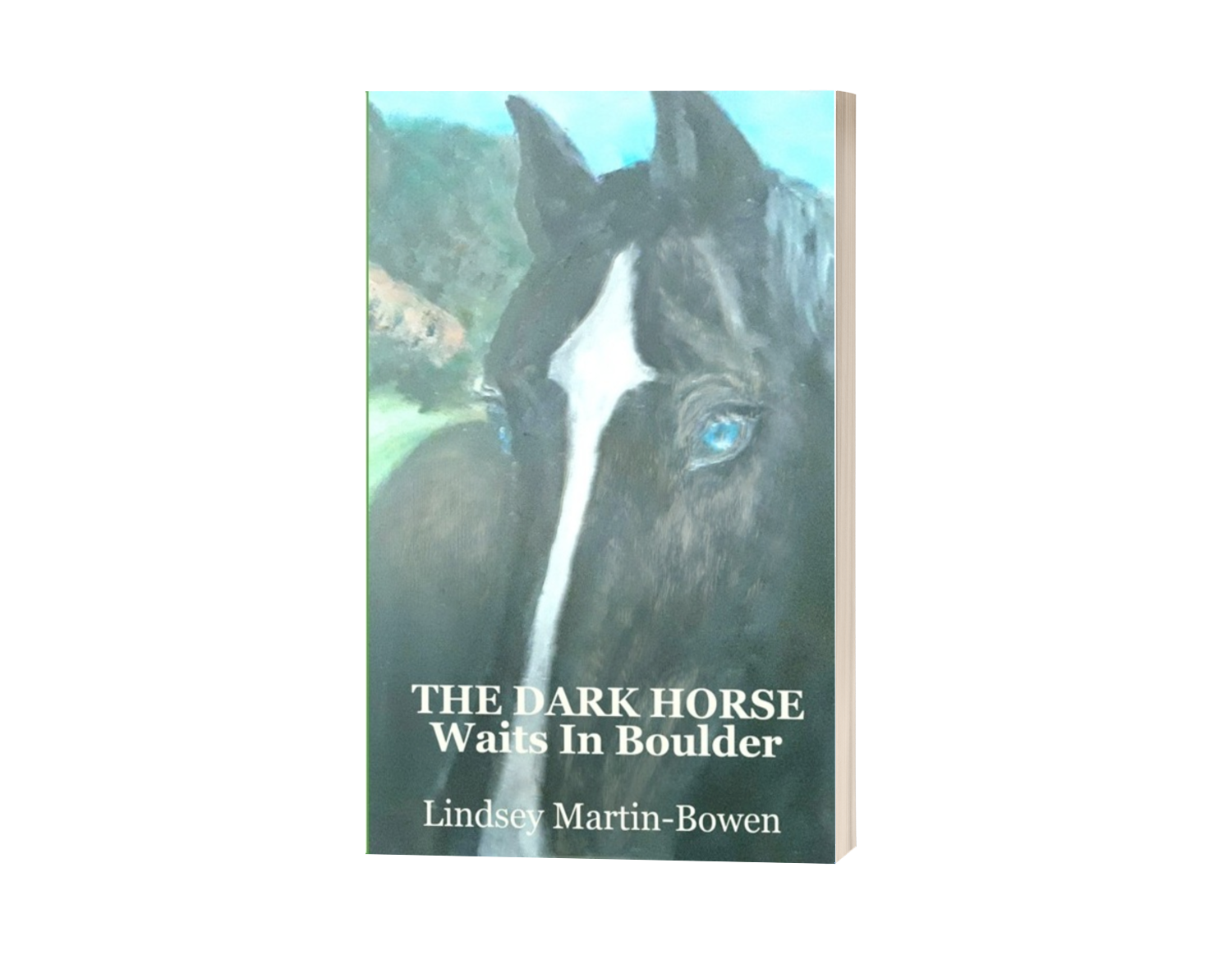
Recently divorced Charli Erickson arrives in Boulder, Colorado during the 1970s—a wild time for that city—where she hopes to develop her “rock poet” talent and find the perfect mate. Instead, she links up with the imperfect Ched Lyons, a Boulder native who leads her in a multitude of adventures, including scaling a mountain and a 1,200-mile motorcycle ride to southeastern Utah. While she intermittently envisions a black stallion with blue eyes, who puzzles and enchants her, she also strives to make sense of its appearance.
Through Charli’s snarky humor recounting her tales, readers will enjoy this Rom-Com doubling as a woman’s adventure story and may relate to scenes from the wild, zany era that followed the serious, revolutionary 1960s.
Get your copy today: https://books2read.com/The-Dark-Horse-Waits-in-Boulder
Discover more from Writing to be Read
Subscribe to get the latest posts sent to your email.










Hi Ladies a great interview! … I have always said Robbie is a polymath… and she is. Lindsay you too are a worthy writer … 💜
LikeLiked by 2 people
Thank you, Willow. Linsey does write wonderful poetry and I have one of her novels on my TBR
LikeLiked by 2 people
When two major influences in the creative world come together, such as in this interview, there is sure to be a great time. Thank you, Lindsey, for this opportunity by sharing the multi-faceted talent of Robbie Cheadle!
LikeLiked by 2 people
Hi Annette, thank you for your lovely comment. Hugs 🥰💓
LikeLiked by 2 people
Wonderful review, Lindsey. What doesn’t this powerhouse do? !!!!! Robbie is amazing. So much for to hear about you too… you have quite a collection of books❣️
LikeLiked by 2 people
Hi Cindy, thank you. I’m am grateful to Lindsey for this wonderful interview and her thoughtful review. Lion Scream is the book I value the most of my collections. It contains a piece of my soul.
LikeLiked by 2 people
You’re so
Very welcome,
Robbie! It was a wonderful interview and I loved that book as well!
♥️
LikeLiked by 2 people
Thank you, Cindy. I’m so glad.
LikeLiked by 1 person
Thank you, Cindy.
Yes, Robbie continues to amaze me.
I found your review of Michele Sefton’s Jade’s Broken Bridge intriguing and thoughtful, too.
Best,
Lindsey
Dr. Lindsey Martin-Bowen, JD
Poet and Novelist
Professor, Writing,
Criminal Law, Procedural Law
American Ct. Systems,
Blue Mountain College
[cid:088526b4-6554-4bd4-956e-c5b270bd29ea]
redbat books https://www.redbatbooks.com/checks.htmlhttps://www.redbatbooks.com/checks.html?fbclid=IwAR0m_KlcMiOmJmp7HCV3b1UVOXDYK618KAjXbXmW4lfWNl3mPcRyWQqtzzA
LikeLiked by 2 people
🌻💛
LikeLiked by 1 person
Hi Lindsey, thank you so much for this wonderful post and your insightful and thoughtful review. I am delighted you appreciated Lion Scream, the book that means the most to me.
LikeLiked by 1 person
Robbie– LION’S SCREAM is a powerful book. I wish I could locate a “hard copy” and buy it. That’s why I prefer printed books–I often re-read them or sections of them, and I especially enjoy reading in bed.
Thank you for sharing that work with all of us.
Best always,
Lindsey
Dr. Lindsey Martin-Bowen, JD Poet and Novelist Professor, Writing, Criminal Law, Procedural Law American Ct. Systems, Blue Mountain College
[cid:18d9a029-5ef1-43ae-b30d-e9acd1bd3553] https://www.amazon.com/CASHING-Morrison-Pacific-Northwest-Writers/dp/1946970093/ref=sr_1_7?crid=3UHV9EL4PZBBL&keywords=Lindsey+Martin-Bowen&qid=1699629101&s=books&sprefix=lindsey+martin-bowen%2Cstripbooks%2C175&sr=1-7
redbat books https://www.redbatbooks.com/checks.htmlhttps://www.redbatbooks.com/checks.html?fbclid=IwAR0m_KlcMiOmJmp7HCV3b1UVOXDYK618KAjXbXmW4lfWNl3mPcRyWQqtzzA ________________________________
LikeLiked by 2 people
Thank you, Lindsey 💕
LikeLiked by 1 person
[…] LINDSEY’S WRITING PRACTICE: Interview with Author & Poet Robbie Cheadle & A Review […]
LikeLiked by 1 person
It was so nice to read your great interview of Roberta (Robbie) and your wonderful review of Lion Scream, Lindsey. I truly enjoyed reading Roberta’s and Walter de La Mare’s fantastic poetry.
LikeLiked by 2 people
Hi Tim, thank you for visiting me here. I love that poem, it’s filled with mystery and delight.
LikeLiked by 2 people
My pleasure, Robbie. 😍 It’s a fabulous poem.
LikeLiked by 2 people
Thank you, T.W.
I found your blog posts engaging. I especially like the way you compared memories of loved ones to objects in a Shaman’s bag. And I loved the green, vibrant view of Detroit, a city I’ve never seen in person. Actually, because of its booming auto industry, I’d pictured Detroit as gray or colorless–much like a black and white film. (I realize that’s ridiculous. It was merely my ignorant response to smoke and gasoline fumes.) Now, I’ll weave in green foliage when I envision Detroit. Thank you for that, too.
Best,
Lindsey
Dr. Lindsey Martin-Bowen, JD
Poet and Novelist
Professor, Writing,
Criminal Law, Procedural Law
American Ct. Systems,
Blue Mountain College
[cid:086e4ce4-9387-4090-afa6-662c1beb223f]
redbat books https://www.redbatbooks.com/checks.htmlhttps://www.redbatbooks.com/checks.html?fbclid=IwAR0m_KlcMiOmJmp7HCV3b1UVOXDYK618KAjXbXmW4lfWNl3mPcRyWQqtzzA
LikeLiked by 2 people
You’re welcome, Lindsey.
I’m glad you liked some of my blog posts. 😍
LikeLiked by 1 person
How nice to see YOU being interviewed and reviewed Robbie. Your answers to all the questions were brilliant actually. And very nicely detailed.
LikeLiked by 1 person
Hi Shey, thank you for visiting. I’m pleased you enjoyed the interview. I am thrilled by it and zlindsey’sxwonderfulvrrview of Lion Scream.
LikeLiked by 1 person
Oops Lindsey’s wonderful review of Lion Scream 🙃
LikeLiked by 2 people
Dinnae worry! My keyboard is an abso nightmare. And part of that is the awful internet signal here.
LikeLiked by 2 people
💚
LikeLiked by 1 person
A great post/conversation, Lindsey and Robbie!
Robbie, nice to hear how important L.M. Montgomery’s excellent “Emily” trilogy was to you as a kid. 🙂 And the thought of hunting animals is indeed sickening. 😦
LikeLiked by 2 people
Thank you, Dave.
I appreciate your kind words, and I especially enjoyed reading your “Even the Plots of Past Novels Change in the Destructive Era of Trump.” Excellent insights there.
Dr. Lindsey Martin-Bowen, JD
Poet and Novelist
Professor, Writing,
Criminal Law, Procedural Law
American Ct. Systems,
Blue Mountain College
[cid:e25e4a9f-b9c8-49e4-acf4-b7e46a847837]
redbat books https://www.redbatbooks.com/checks.htmlhttps://www.redbatbooks.com/checks.html?fbclid=IwAR0m_KlcMiOmJmp7HCV3b1UVOXDYK618KAjXbXmW4lfWNl3mPcRyWQqtzzA
LikeLiked by 3 people
You’re very welcome, Lindsey, and thank you for the kind words, too, about that Trump-related post!
LikeLiked by 1 person
Hi Dave, there are so few animals left, hunting them seems criminal. Thank you for your thoughtful comment 🥰
LikeLiked by 2 people
Totally agree, Robbie!
LikeLiked by 2 people
[…] https://writingtoberead.com/2026/06/03/lindseys-writing-practice-interview-with-author-poet-robbie-c… […]
LikeLiked by 2 people
❤ 🙂
LikeLiked by 1 person
I agree, Robbie is a multi-talented, hardworking and caring person, willing to learn and grow. This was a great interview. The hunting trip must have been horrible to witness and life-altering. We are so fortunate to have Robbie as a member of the blogging community.
LikeLiked by 2 people
Thank you for posting, Darlene.
I enjoyed reading about “Michele Selton’s Jade’s Broken Bridge, and perusing your collection of photos in Alberta.
Dr. Lindsey Martin-Bowen, JD
Poet and Novelist
Professor, Writing,
Criminal Law, Procedural Law
American Ct. Systems,
Blue Mountain College
[cid:ec897dfe-c0ac-4bdf-9729-4aa3a01079a1]
redbat books https://www.redbatbooks.com/checks.htmlhttps://www.redbatbooks.com/checks.html?fbclid=IwAR0m_KlcMiOmJmp7HCV3b1UVOXDYK618KAjXbXmW4lfWNl3mPcRyWQqtzzA
LikeLiked by 3 people
Hi Darlene, you are very kind and supportive. That hunting incident has staying with me always. I still shudder at the memory.
LikeLiked by 2 people
Thanks for the interview of my multi-talented blogging friend, Robbie. Shared on Twitter for you both. Best wishes, Pete.
LikeLiked by 2 people
Thank you beetley pete.
I appreciate your kind words and appreciate you sharing on Twitter. I couldn’t open your post, “Ollie: The Skin He’s In,” but I found your “3000: A Rather Pointless Milestone” insightful. Although I don’t officially “blog,” but have only time to write a monthly column for WTBR, I do have “followers” on Facebook. I’m unsure how frequently they follow me (except my “regulars”), I feel surprised at the numbers but don’t know how accurate they are.
Still, it helps when one wonders if anything I send out there–whether writings or posts–helps others. If it does, if even for one person, it helps me. What can I say? Along with being a writer, I’m a teacher. 😉
Thanks again.
Dr. Lindsey Martin-Bowen, JD
Poet and Novelist
Professor, Writing,
Criminal Law, Procedural Law
American Ct. Systems,
Blue Mountain College
[cid:8c7c47df-7a19-44cb-8b6a-503e83274a77]
redbat books https://www.redbatbooks.com/checks.htmlhttps://www.redbatbooks.com/checks.html?fbclid=IwAR0m_KlcMiOmJmp7HCV3b1UVOXDYK618KAjXbXmW4lfWNl3mPcRyWQqtzzA
LikeLiked by 3 people
I do blog quite a lot, Lindsey. I never check stats mainly because I never think about them so don’t remember to do it. I just barrel forward and hope for the best 🤣😂
LikeLiked by 2 people
Hi Pete, thank you for visiting me here. Your share is appreciated.
LikeLiked by 2 people
Excellent review for Lion Scream and a very engaging interview with Robbie. I have to say, the hunting for sport story really touched a nerve. Killing animals just for the fun of it is sick and cruel. The animals being hunted have just as much right to live as we have.
LikeLiked by 2 people
I couldn’t agree more, Liz. I don’t support hunting at all. It is popular in South Africa and most hunters stick to what’s called culling and relates to reducing numbers of certain animals when they get too high.
LikeLiked by 2 people
Hunting is popular in the US, too. ☹
LikeLiked by 2 people
Great interview, and the poems are wonderful.
LikeLiked by 1 person
Thank you, Edwin Ortiz.
Your reviews impressed me, too.
Best always,
Lindsey
Dr. Lindsey Martin-Bowen, JD
Poet and Novelist
Professor, Writing,
Criminal Law, Procedural Law
American Ct. Systems,
Blue Mountain College
[cid:b001f9d5-29f3-450d-84d5-102f57e67cd7]
redbat books https://www.redbatbooks.com/checks.htmlhttps://www.redbatbooks.com/checks.html?fbclid=IwAR0m_KlcMiOmJmp7HCV3b1UVOXDYK618KAjXbXmW4lfWNl3mPcRyWQqtzzA
LikeLiked by 2 people
You’re very welcome, and thank you. 🙏🏼
LikeLiked by 1 person
A very interesting interview hearing some more about Robbie’s early life. Humans do love to hunt, what was a necessity to eat evolving into a sport in probably most countries. I have never been hunting, but when I was in England my mother wrote ( in pre internet days ) and told me how horrified she was on Xmas Day when my brother’s wife gave him a crossbow! They liked going camping in the bush and hunting kangaroos…
LikeLiked by 1 person
I enjoyed the interview. Hunting deer is a popular sport.
LikeLiked by 1 person
Just when you think you know someone, an interview pops up and you learn even more. I so enjoyed Robbie’s interview. I learned more about The Scream. BTW, when a child in my class was painting his rendition of The Scream, he shushed everybody because he needed to concentrate. That was a great moment. I learned about how Robbie became passionate about protecting wildlife, thanks to her horrible encounter. That’s just the beginning. Thank you, Lindsey.
LikeLiked by 1 person
Thank you, Jennie.
I’m happy that Robbie’s words and photos touched you. They did the same to me.
And so did your three posts: “Talking Death with Children,” “Not All Days Are Good Days,” and “Wishtree by Katharine Applegate: Then and Now.” I wish more of my kindergarten and early elementary school teachers had exhibited your wisdom. (I admit, I did enjoy one of my teachers reading “Winnie the Pooh” to us.)
But we did not have a wish garden or discuss death. Back then, I believe that was considered a faux pas in those public, suburban elementary schools.
I, too, taught for more than 35 years–but solely at the college and university level. Having students read their journal entries outloud was the closest my classes came to the in-depth experiences you shared. Thank you for sharing them with me, too.
Best always,
Lindsey
Dr. Lindsey Martin-Bowen, JD
Poet and Novelist
Professor, Writing,
Criminal Law, Procedural Law
American Ct. Systems,
Blue Mountain College
[cid:ced62168-4bc2-46d4-bd64-d3edff67b0d1]
redbat books https://www.redbatbooks.com/checks.htmlhttps://www.redbatbooks.com/checks.html?fbclid=IwAR0m_KlcMiOmJmp7HCV3b1UVOXDYK618KAjXbXmW4lfWNl3mPcRyWQqtzzA
LikeLiked by 2 people
Thank you for your lovely comment, Lindsay. Much appreciated! I’m glad my posts resonated with you and gave you pause to reflect on your childhood. Like you, talking about death was a no-no, and I’ve realized that makes things like fear even worse for children. My one and only memory of a teacher reading to the class was my first grade teacher reading The Little House, by Virginia Lee Burton. That’s it! Pretty sad. All the best.
LikeLiked by 1 person
Wonderful post! I highly recommend Robbie’s book!
LikeLiked by 1 person