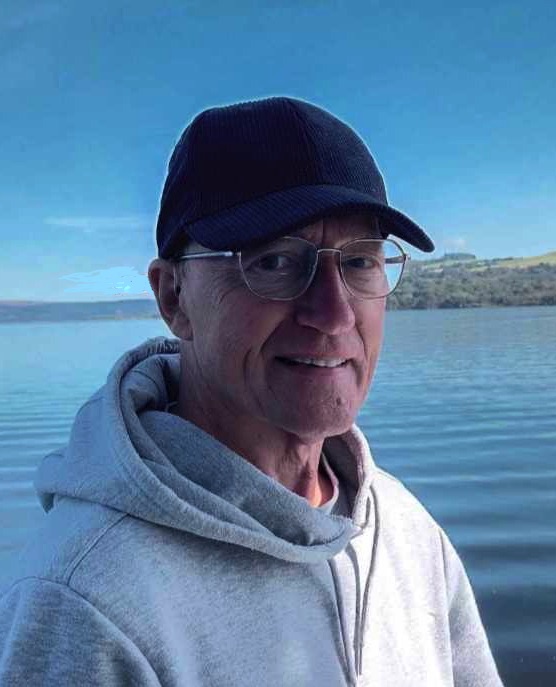
I met Tom Benson through an author’s group on Facebook, and he has since become a frequent visitor here, on Writing to be Read. Come to find out, Tom has been at this writing thing for over a decade, and has several books out there in at least three different genres.
About Tom Benson
In 1969 at the age of 17, Tom left his native Glasgow to join the British Army. Tom’s military career spanned from 1969 to 1992. He followed this with a career in Retail Management, in which he was employed from 1992 to 2012.
Tom has been writing since 2007.
He has published novels, anthologies of short stories, a five-part novel, a variety of erotica books, and a series of genre-based poetry.
Tom is presently working on more novels.
My Interview with Tom Benson
Kaye: Your Light at the End series is categorized in the metaphysical science fiction sub-genre category. I’d never heard of that particular sub-genre. Can you talk a little about what attributes define metaphysical science fiction?
Tom: In simple terms, it’s a branch of philosophy that deals with life beyond what we know or see (usually, but not exclusively, the supernatural). This broad label includes existence, space, cause and effect, and more. Although there would be nothing supernatural in my story, because of the change of circumstances I intended for my characters, I felt the sub-genre was a good fit.
Kaye: The Light at The End series might also be categorized as post-apocalyptic science fiction. Right? Why don’t you tell us a little about that series?
Tom: Apart from short stories, I’d never written in this genre, until I was inspired when visiting Cruachan Power Station. Cruachan is a functional hydroelectric installation operating from within a mountain in Scotland. My story sees a coachload of tourists taking shelter from the start of a nuclear war inside a railway tunnel within a mountain. They’re compelled to investigate the tunnel when the entrance collapses behind them. Without giving spoilers, as they learn about their new environment, they also learn to depend on each other for survival. The group begins a new life inside the mountain. I intended it to be one book, but it grew as I developed the story, and it’s become a popular trilogy with a spinoff, Sylvia.
Kaye: Ten Days in Panama is classified on Amazon as both thriller and romance genres. I think it is brilliant that you combined the two genres and then used both in your keyword selections to broaden your reading audience instead of focusing on one, to the exclusion of the other as many authors choose to do. Of course, the story came first, and you just capitalized on what you had. Tell us a little about this story, and how you ended up combining these two genres?
Tom: I opened with a British investigative reporter keen to follow up on a big story, and he needed the help of an expert in marine biology. He chose a female scientist in Panama, and they arranged to meet there. I wanted the thrust of the story to be a thriller, whereby the reporter’s life was under threat, but I saw the opportunity for a ‘will they, won’t they?’ scenario between the two main characters. I’m a Scotsman who lives in England, and I’ve never been to Panama. However, my friend Carmen Lopez, (a fellow author) lives in Panama, and she is a microbiologist. She was incredibly useful in helping me with various aspects of research. Carmen was also a wonderful sounding board as I developed the relationship between the main characters.
Kaye: You also write military stories and poetry. Would I be correct in assuming these come from your own personal experience serving in the military?
Tom: Yes, some of my military poetry is based on personal experience, and some is fiction. My military short stories, too, include factual tales, but others are fictional. The series, A Life of Choice, is my military memoir detailing my 23-year career in the British Army. The digital edition is a series of five eBooks.
Kaye: Many of your protagonists are female. Why have you chosen females to take the lead in your stories?
Tom: In the 1960s, as a young teen, I was a fan of The Man from U.N.C.L.E.. Apart from the TV series, at around that time, I began to read everything I could about clandestine operations and international espionage. When The Girl from U.N.C.L.E. screened for one season, I was fascinated to see April Dancer (Stefanie Powers) demonstrating that a woman could be as capable as a man in the covert role. I bought all the ‘U.N.C.L.E.’ books, and the idea of a modern heroine remained a favourite in my mind. It should be remembered that many of the Special Operations Executive (SOE) operatives during WWII were courageous young women. In the late 90s, I saw The Long Kiss Goodnight (starring Geena Davis), which remains one of my favourite films. There are now many films and series in which the lead is a woman, whether an assassin, a vigilante, a resistance fighter or working with law enforcement. I believe it’s important to remember that it’s not only men who can demonstrate courage or participate in clandestine missions.
Kaye: What do you do to get into the female perspective for your characters?
Tom: I found it difficult at first, but I practised with short stories and acquired plenty of feedback from female readers. As I do with all of my stories, I build a character profile so that by the time the character hits the page, I know their full description, likes, dislikes, strengths, weaknesses, wardrobe (including disguises), favourite weapons, vehicles and, importantly, their past and how they became who they are. I give a female lead all the characteristics I admire in a woman and reinforce that with a no-nonsense attitude and a suitable background. I strive not to let a female character become a sex object, although occasionally, it helps with certain situations in which she might gain the upper hand.
Kaye: The A Taste of Honey series is your most recent. It’s a crime thriller, but it’s more about vigilante justice. Would you like to tell us about that series?
My aim with the first book was twofold: to create a hard-hitting vigilante thriller using a female lead and to set it in the US for various reasons. The premise is that ‘Honey’ is an NYPD detective who is awoken by a call from her sister’s cellphone, but it isn’t her sister’s voice she hears. The detective drives across the country to Greensburg, Indiana. In the basement of the family home, she finds a scene of abuse and torture. She also finds clues as to who was responsible. Honey crosses the line and sets out on a mission of vengeance, which takes her to different states. The sequel, Another Taste of Honey, sees the ex-detective fly to Europe to search for two men who evaded her in the US. While in Europe, several others make the mistake of tangling with Honey—a woman on a mission.
Kaye: What is the best piece of writing advice you were ever given?
Tom: In my early efforts writing short stories, a fellow author told me feedback wasn’t always positive, so I ought to ‘get used to taking the knocks’. I learned to differentiate between criticism for the sake of it and constructive criticism. When mentoring a novice writer, I expand on the advice I was given. I suggest to any new scribe that ‘Acting ongenuine feedback can have a positive effect on your writing.’ An important piece of advice is given in Stephen King’s excellent book, On Writing: ‘If you don’t have time to read, you don’t have time to write.’
Kaye: As a multi-genre author, what do you find is most difficult about marketing your books?
The short answer—justifying the cost of advertising. The long answer—I quickly learned that getting a foothold in the market was difficult, with only one or two titles published. I paid for my first author’s website, my early covers, and advertising. Making money has never been my incentive when writing, but I had a major rethink when considering how much I paid out with little return. I recognised that my main marketing tool didn’t have to cost me anything but time and effort. After the first couple of years, with more titles published, I concentrated on strengthening my brand—which I believe is an author’s main marketing tool. I created a new website, practised and designed new book covers, and stopped paying for publicity. Since then, my only advertising has been on social media; it’s free, and with many more books published in different genres, I’m only dependent on reviews and recommendations. I created laminated bookmarks myself, which I include when sending a paperback edition to a charity. I have also paid for business cards to be made so they can be left in restaurants, cafes, and campsites here in the UK or in Europe when I visit.
Kaye: Where can readers learn more about you and your books?
Tom: I was a poet and regular blogger in my early creative writing days, and though my poetry and blogging have eased off, I maintain a writing blog at www.tombensoncreative.com. I also have an author website I created myself at www.tombensonauthor.com
Thank you, Kaye, for the opportunity to reach a wider audience regarding my writing, and I hope your readers enjoy this article.
I received digital copies of A Taste of Honey and Another Taste of Honey, by Tom Benson, in exchange for an honest review. All opinions stated here are my own.
This series features a strong female protagonist, which is always a plus for me, and Benson does a nice job of making her believable, giving her an appropriate backstory as a police operative gone rouge, and plenty of friends to help her along the way. Honey Woods is on the hunt for the men who tortured and killed her younger sister in her previous life as Police Detective Kimberly Forest. She is an expert marksman, a master of disguises and seasoned law operative, and she still takes time for a morning run each day to stay in shape for the seemingly impossible tasks which lie ahead.
When Kimberly finds her sister’s tortured body in a basement dungeon, she vows to stop at nothing to get justice for what they’ve done to her sister and other young girls like her. She leaves her old life behind, acquiring a new identity as Honey, and everything begins to fall conveniently into place.
Her search for justice leads her to a ring of men, pillars of the community, who have been kidnapping, abusing and murdering young girls for a very long time, as well as other deserving recipients of her unique style of justice in A Taste of Honey. In Another Taste of Honey, our heroine travels to Europe in pursuit of the remaining two members of the ring still needing to be held accountable. When you’re on the receiving end of Honey’s justice, it may not be so sweet.
I strongly suggest reading these books in sequence, as I suspect I’d have a more difficult time relating with the character had I not already known her motivations. If the reader doesn’t understand this character, they might mistake her for a villain as she humiliates and emaciates her opponents.
This series provides an entertaining read that keeps readers guessing as to what devious, but fitting treatment Honey will serve to her next target. I give the A Taste of Honey series four quills.
___________________________________________
Did you know you can sponsor your favorite blog series or even a single post with an advertisement for your book? Stop by the WtbR Sponsor Page and let me advertise your book, or you can make a donation to Writing to be Read for as little as a cup of coffee, If you’d like to show your support for this author and WordCrafter Press.
_______________________________________
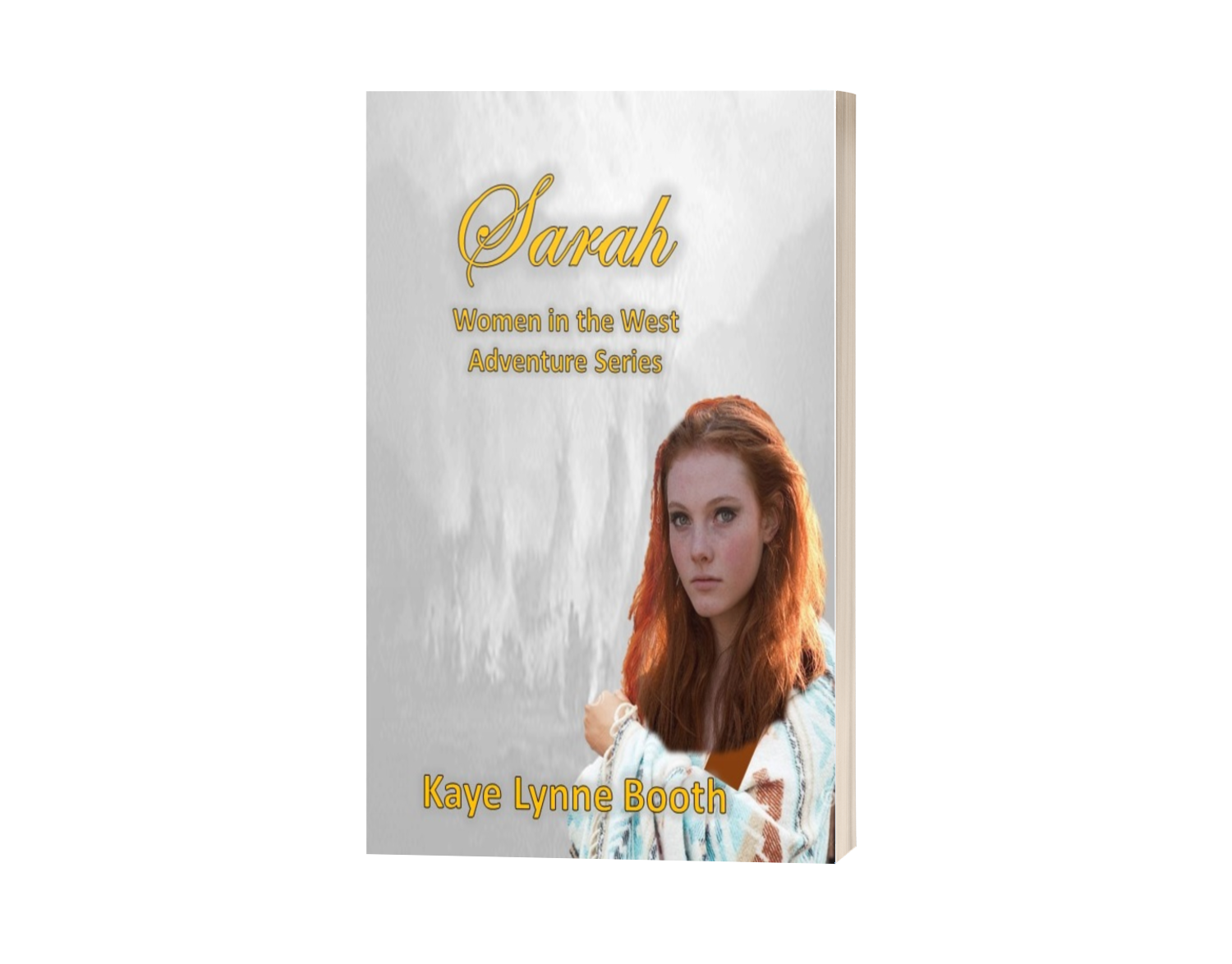
This segment of “Chatting with the Pros” with Kaye Lynne Booth is sponsored by The Women in the West Adventure Series and WordCrafter Press.
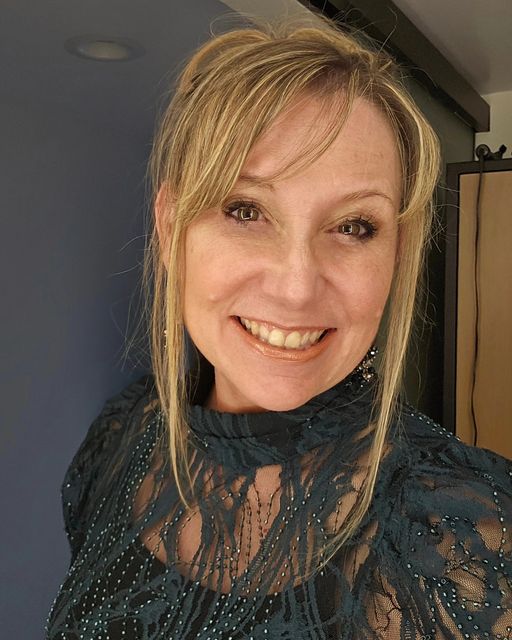
I first met Darlene when she sent me a pitch for this interview in response to a call for pitches I put out. I’m always thrilled to meet other children’s authors and I have to say, I really liked her attitude and her approach. I believe children’s authors have the gift of viewingthe world through a child’s eyes, or maybe they just retain more of their own inner child than others do. When I saw her author photo (below), I saw this in her wonderful smile and the sparkle in her eye.
Join me here, in learning more about her and her lovely children’s books, the Amanda Travels Series, (ten books and still more to come). She also writes short fiction, which has been featured in several anthologies, and has a short fiction collection, .
About Darlene Foster
Darlene Foster grew up on a ranch in Alberta, Canada, where her love of reading inspired her to see the world and write stories. She is the author of the exciting Amanda Travels series featuring spunky Amanda Ross, a twelve-year-old girl who loves to travel. All ages enjoy following Amanda as she unravels one mystery after another in unique destinations. When not travelling, meeting interesting people, and collecting ideas for her books, Darlene enjoys spending time with her family in Canada and her house in Spain with her husband and entertaining rescue dogs, Dot and Lia.
My Interview with Darlene
Kaye: Please tell us a little about your author’s journey.
Darlene: Since I was a little girl on the farm, I enjoyed telling stories, often making them up in my head as I daydreamed. My wonderful grade-three teacher suggested I write my stories down. I had a short story published in the local newspaper when I was twelve but didn’t do much serious writing until I was a grandmother. I visited a friend in the United Arab Emirates and had such a great time that I planned to write a story about it. After several unsuccessful attempts, I decided to try writing the story from a twelve-year-old’s point of view. Amanda in Arabia: The Perfume Flask was born. It took me three years to write the book and another five years to find a publisher, but I persisted. In the meantime, I wrote Amanda in Spain: The Girl in The Painting and had ideas for Amanda in England: The Missing Novel. I now have ten books in the series and am working on the eleventh.
Kaye: You are a member of the Children’s Writer’s Guild. Can you tell us how authors benefit from being a member of such organizations?
Darlene: I belong to CWILL BC (Children’s Writers and Illustrators of BC) I love being part of an organization like this as it is important to mix with other authors. One of the many benefits is the sharing of knowledge. It is the best way to keep up to date on the writing/publishing industry which is an ever-changing world. It’s imperative to keep on top of trends etc. These organizations put together workshops and special events, in person or online, and provide marketing opportunities. Because of my membership, I have done in-class presentations all over the world via Zoom. I used to belong to more similar organizations, but there is only so much time to commit.
Kaye: You have a children’s series, the Amanda Travels series. Tell us about the books and the series.
Darlene: Here is the Reader’s Digest version. Spunky Amanda Jane Ross loves travelling to interesting places, meeting cool people and learning fascinating new things. Her curiosity and eagerness to help people often gets her into trouble wherever she goes. Her adventures have taken her to the deserts of Arabia, castles in England, Spain’s sunny beaches, historic cities along the Danube, spooky buildings in New Mexico, the tulip fields of Holland, and mysterious standing stones in Scotland. Life is never dull for this tween.
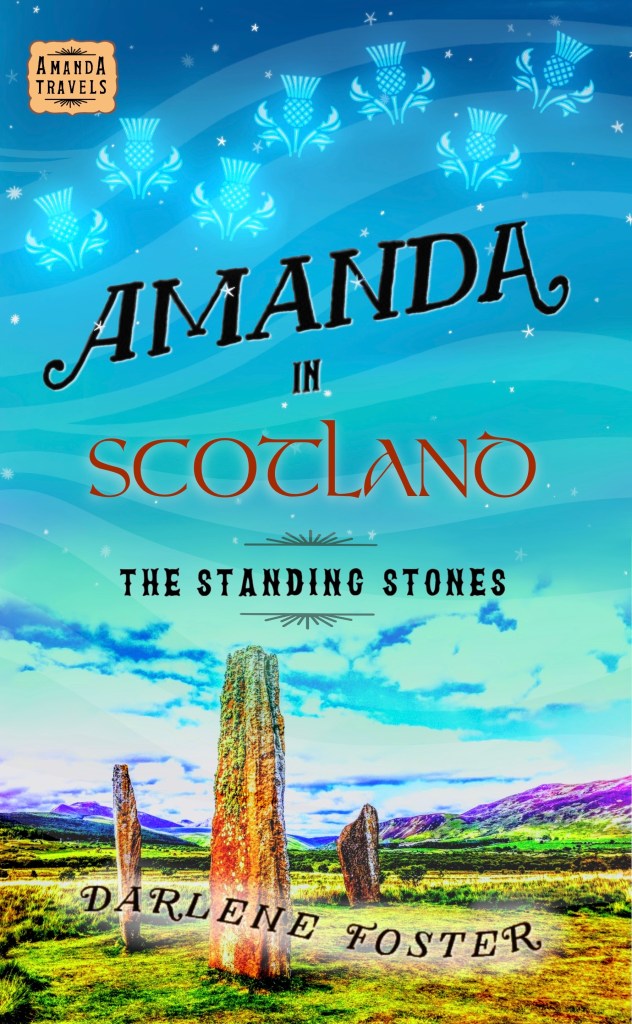
Kaye: Amanda in Scotland makes ten books in the Amanda Travels books, and in each one she travels to a different country. Would I be wrong in assuming that you have visited all the places Amanda has traveled?
Darlene: You would not be wrong. In fact, I have made it a policy that Amanda can not go anywhere I haven’t been!
Kaye: Which country is your favorite? Why?
Darlene: That’s difficult to answer as I like all of them for different reasons. Perhaps the United Arab Emirates as it was so very different from anything I had ever experienced, and it got me started writing the series.
Kaye: Which country is Amanda’s favorite? Why?
Darlene: Amanda doesn’t have a favourite country. She loves them all and always has a great time wherever she goes. As long as she is making friends,learning new things, and solving a mystery, she is happy.
Kaye: If Amanda goes to a different country each year, how old was she when the series began? How many countries does Amanda go to each year?
Darlene: Amanda turned twelve when she wished for travel and adventure before blowing out the candles on her birthday cake. She stays twelve years old throughout the series. Nancy Drew is the same age in all 34 books. I believe Trixie Belden stays around the same age too. The books are stand-alone and don’t have to be read in any particular order. I prefer writing for tweens instead of teenagers.
Kaye: Where does Amanda plan to travel next?
Darlene: Amanda will be off to Ireland to attend her cousin’s wedding. She will have a fabulous adventure in the Emerald Isle; the land of leprechauns, fairies and dangerous bogs. The working title is, Amanda in Ireland: The Body in the Bog.
Kaye: You are a traditionally published author and the Amanda Travels series is signed with Simon & Schuster. (Congratulations, by the way.) How much of the marketing and promotion for your books are you required to do?
Darlene: The first nine books were published by Central Avenue Publishing, a small independent press in Canada. CAP has recently become an imprint of Simon & Schuster, which is wonderful. I self-published, through Draft2Digital, Amanda in Scotland: The Standing Stones. As for marketing and promotion, I have always done most of my own. I set up book signings and visits to bookstores, schools and libraries, as well as blog tours and social media marketing. I do some marketing every day as it is part of the job. It is great to have a distribution company like Simon & Schuster for bookstores, libraries, and schools to order from.
Kaye: After being traditionally published for nine books, why the switch to independent publishing through D2D?
Darlene: My publisher has decided not to publish kids’ books anymore. We are still on good terms, and I am leaving the first nine books with her. The publishing world is very changeable and as writers, we need to be adaptable.
Kaye: According to your bio, you are an award-winning author. Would you tell us about the awards you’ve won for your books? Which are you most proud of?
Darlene: I have won awards for my short stories, which can be found in a number of anthologies. I’m very proud of my story, The Day Dief Came to Town. It’s based on an hilarious event from my childhood. It was the first prize I got for my writing and gave me the confidence to carry on. I included it in my short-story collection, You Can Take The Girl From The Prairie
Kaye: Your books are available in both digital and print editions. What differences do you see in digital and print sales for children’s books?
Darlene: Initially (15 years ago), I sold 50% e-books and 50% print books. Now it is more like 25% e-books and 75% print books. Kids still enjoy holding a book in their hands, and adults prefer buying print books for them. School libraries like to stock print books, and teachers use the print books as part of their curriculum.
Kaye: What advice do you have for new authors trying to break into the children’s market?
Darlene: Never give up and never stop learning. Search out other writers who can serve as mentors or become part of your street team.
Kaye: Where can readers find out more about you and the Amanda Travels series?
Kaye: You’ve been a wonderful guest. Thank you so much for your candid responses.
About Amanda in Scotland: The Standing Stones
What could possibly go wrong on the magical Scottish Isle of Arran? It’s such a peaceful, charming place with castles, mountains, old graves and ancient standing stones.
Amanda Ross and Leah Anderson are visiting Aunt Jenny who owns an old house on the island. But something is not right. A mysterious woman, who seems to have stepped out of the past, keeps appearing, Leah’s father hasn’t contacted the family for some time, and Aunt Jenny’s house may have an uninvited guest.
Amanda is intrigued by this picturesque island, often called Little Scotland. She watches exciting sheepdog trials, attends a lively ceilidh, makes friends with the locals, and visits the mystical Holy Island. Join Amanda as she tries to solve the mystery of the strange woman and the disappearance of Leah’s father. Will the past catch up with the present?
I received a digital copy of Amanda in Scotland: The Standing Stones from the author in exchange for an honest review. All opinions stated here are my own.
Amanda in Scotland: The Standing Stones, by Darlene Foster is a delightful middle-grade mystery reminescent of the Nancy Drew mysteries, with the element of travel thrown in. In the Amanda Travels Series, Amanda is a curious and bright twelve year old, who discover and solve myteries through her travels. Readers are introduced to the various countries she travels to through Amanda’s eyes as she learns about the history and culture of each destination.
This story takes us to the Arran in Scotland, where Amanda visits her travel friend, Leah, and her Aunt Jenny. As the girls explore Arran and the surrounding islands, they meet a mysterious woman, recieve puzzling messages from Leah’s father, and they experience other odd occurances which don’t add up. On an island where many places are reported to be haunted, Amanda determines to follow the clues and unravel the mystery. Like any good mystery, all is revealed by the end of the story.
Foster manages to give vivid descriptions, allowing readers to picture the castles, ruins and landscapes of Scotland in stunning detail, while delighting in the thrill of solving a mystery. I’ve no doubt the other books in the series are just as delightful. A great way for young readers to learn about the world around us. I give Amanda in Scotland five quills.
_______________________________
About Kaye Lynne Booth
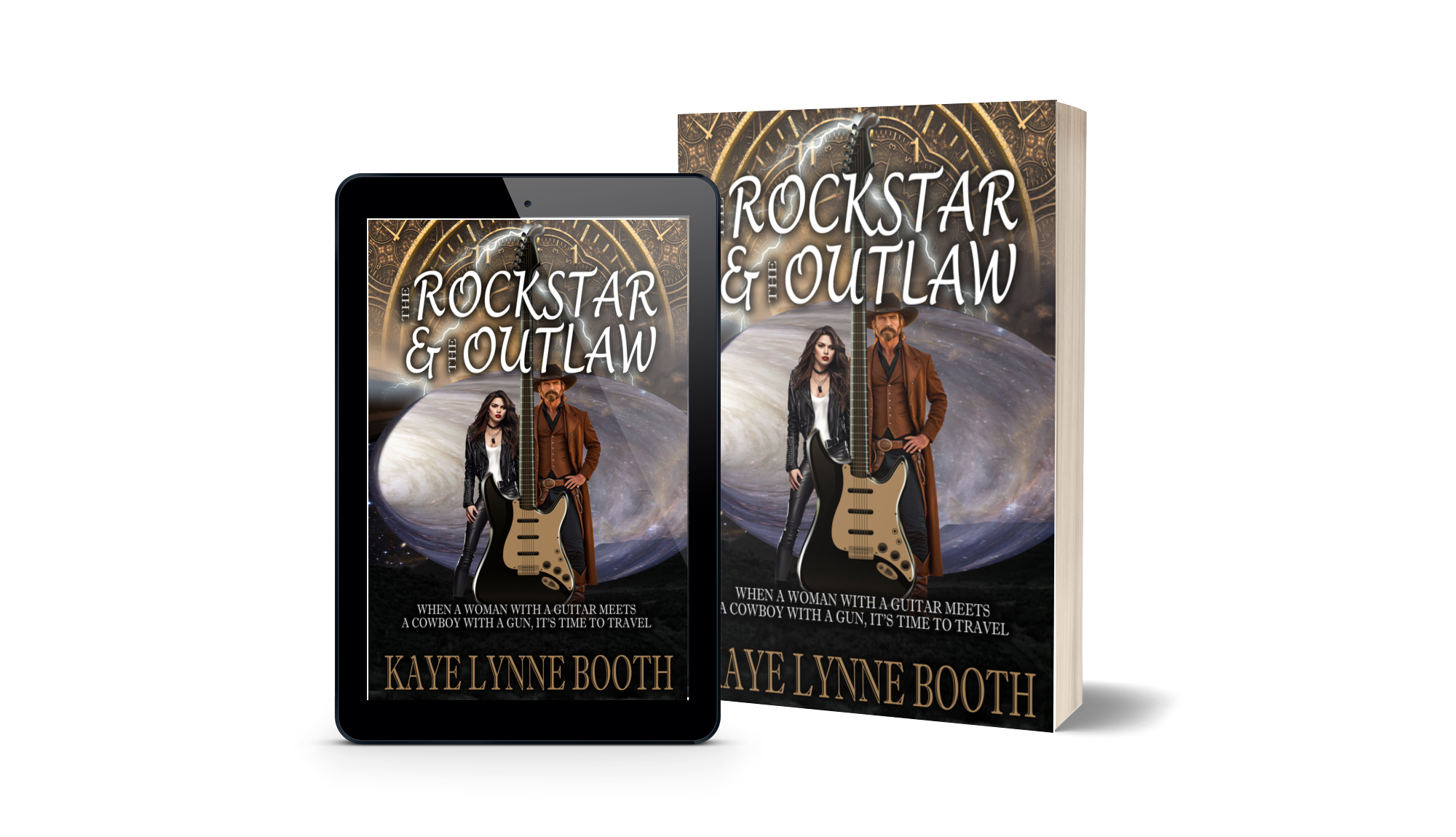
For Kaye Lynne Booth, writing is a passion. Kaye Lynne is an author with published short fiction and poetry, both online and in print, including her short story collection, Last Call and Other Short Fiction; and her paranormal mystery novella, Hidden Secrets; Books 1 & 2 of her Women in the West adventure series, Delilah and Sarah, and her Time-Travel Adventure novel, The Rock Star & The Outlaw,as well as her poetry collection, Small Wonders and The D.I.Y. Author writing resource. Kaye holds a dual M.F.A. degree in Creative Writing with emphasis in genre fiction and screenwriting, and an M.A. in publishing. Kaye Lynne is the founder of WordCrafter Quality Writing & Author Services and WordCrafter Press. She also maintains an authors’ blog and website, Writing to be Read, where she publishes content of interest in the literary world.
________________________________
Did you know you can sponsor your favorite blog series or even a single post with an advertisement for your book? Stop by the WtbR Sponsor Page and let me advertise your book, or you can make a donation to Writing to be Read for as little as a cup of coffee, If you’d like to show your support for this author and WordCrafter Press.
__________________________________
This segment of “Chatting with the Pros” is sponsored by the My Backyard Friends Kid’s Book Series and WordCrafter Press.
The My Backyard Friends kid’s book series is inspired by the birds and animals that visit the author Kaye Lynne Booth’s mountain home. Beautiful illustrations by children’s author, poet, and illustrator, Robbie Cheadle, bring the unique voices of the animal characters to life.
If you are a rising author just beginning publishing journey or a seasoned pro who is making it work for you and would like to share how it’s done, I want to hear from you! I’m looking for authors to interview for two blog series: “Chatting with New Blood” and “Chatting with the Pros”. I offer both interviews and a book review for both series.
So send me your pitches and let me know what you have to offer my readers. Let me add your name to the 2025 interview schedules. I have openings as early as February. If you have a book scheduled to come out, let me know and I’ll try to schedule your interview around the release. Send your pitch to KLBWordCrafter@gmail.com with the series title your interview would fit in the subject line.
Check out past segments below to see what an interview and review on these blog series looks like to see if you might be interested.
For Kaye Lynne Booth, writing is a passion. Kaye Lynne is an author with published short fiction and poetry, both online and in print, including her short story collection, Last Call and Other Short Fiction; and her paranormal mystery novella, Hidden Secrets; Books 1 & 2 of her Women in the West adventure series, Delilah and Sarah, and her Time-Travel Adventure novel, The Rock Star & The Outlaw,as well as her poetry collection, Small Wonders and The D.I.Y. Author writing resource. Kaye holds a dual M.F.A. degree in Creative Writing with emphasis in genre fiction and screenwriting, and an M.A. in publishing. Kaye Lynne is the founder of WordCrafter Quality Writing & Author Services and WordCrafter Press. She also maintains an authors’ blog and website, Writing to be Read, where she publishes content of interest in the literary world.
____________________________________
This post sponsored by WordCrafter Quality Writing & Author Services.
Whether it’s editing, publishing, or promotion that you need, WordCrafter Quality Writing & Author Services can help at a price you can afford.
My guest this month on “Chatting with the Pros” is Todd Fahnestock, a talented epic fantasy author for both adults and teens. I met Todd, kind of, when we both participated in the 2024 Novel Writing Story Bundle. In fact, his nonfiction writer’s resource, Falling to Fly, is the subject of this month’s “Review in Practice”, and you can catch that post this coming Monday.
He is the author of many epic fantasy series and that fascinates me because epic fantasy spans long periods of time, with multiple characters and multiple storylines to follow. As an author, I’ve been playing around with writing in multiples, (see this month’s “Chatting with the Pros” segment), I find it fascinating to learn how other authors handle this aspect of writing. So, let’s get right to the interview.
About Todd Fahnestock
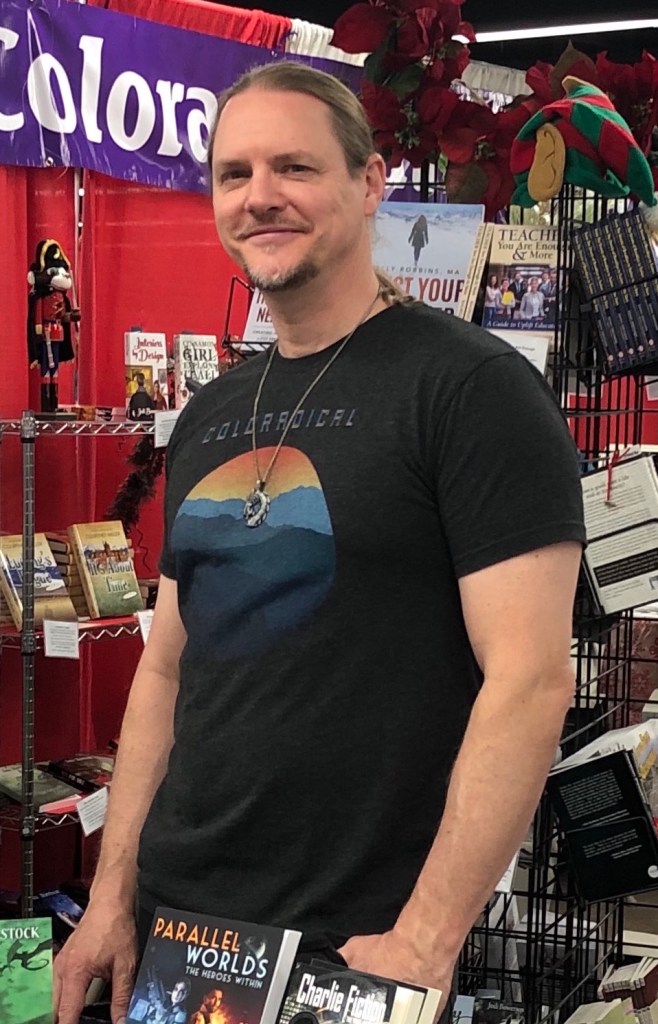
Todd Fahnestock is an award-winning, #1 bestselling author of fantasy for all ages and winner of the New York Public Library’s Books for the Teen Age Award. Threadweavers and The Whisper Prince Trilogy are two of his bestselling epic fantasy series. He is a founder of Eldros Legacy—a multi-author, shared-world mega-epic fantasy series—three-time winner of the Colorado Authors League Award for Writing Excellence, and two-time finalist for the Colorado Book Award for Tower of the Four: The Champions Academy (2021) and Khyven the Unkillable (2022).
His passions are great stories and his quirky, fun-loving family. When he’s not writing, he travels the country meeting fans, fabricates philosophy with his son, plays board games with his wife, dissects movies with his daughter, and plays to the point of bruises with Galahad the Weimaraner.
Visit Todd at toddfahnestock.com.
Interview with Todd Fahnestock
Kaye: Tell us a little about your background or your author’s journey.
Todd: Ha ha! Well, if you want the entire story, I highly recommend reading Falling to Fly, which is a memoir I wrote about this very question. It goes into detail for about 50K words about my writer’s journey, starting with the little beginnings of discovering epic fantasy novels when I was fourteen to speaking in front of a packed-house at Planet Comicon in Kansas City.
I’ll try to do a shorter version here.
So when I was in 8th grade, I was waiting for my brother to pick me up from school, and I wandered over to the public library which was, conveniently, just across the street from Smiley Junior High. After thumbing through the Sports Illustrated Swimsuit editions in the magazine section, I started wandering through the stacks looking for something a bit more mentally stimulating. I stumbled across Lloyd Alexander’s The Book of Three. The cover just captured me; it transported me away to a place that felt foreign and familiar at the same time, so I opened the book and…
Wow. I hadn’t even known what I was looking for, but The Book of Three had a huge, helping of it. I got lost in the epic fantasy trope.
The story is about a young man my age who has no idea about the magical, dangerous world outside his little farm. The highest honor he can imagine is being promoted to assistant pig keeper within the farm, but he gets swept into an epic journey where he will fight alongside kings, battle legendary monsters, and foil supernatural villains.
I was hooked.
In fact, in a very real way, fantasy books saved my life. My parents were going through a divorce at the time, and in my real life I felt clipped free on a tumultuous ocean, drifting in a boat with no rudder. Fantasy books became a safe port for me. Inside a fantasy story, I could feel powerful. I could feel heroic. I could be unafraid. I clung to those stories like a lifeline.
I went on to read Weis & Hickman’s Dragonlance series, Brooks’ Shannara chronicles, and Piers Anthony’s Xanth series. I devoured every fantasy book I could find.
When I got a little older—eighteen years old to be exact—the most amazing thing I could think to do with my life was to write stories like the ones that had captivated me in my junior high days. So I did. I started writing my first novel in an Independent Study class during my senior year.
It was a magical story about a nigh-invincible, acrobatic swordsman named Koric… with absolutely NO possibility of being published. But I thought it was amazing, so I wrote a second, and a third, and… well, here I am now.
Kaye: Why do you write fantasy as opposed to other genres you might write?
Todd: I’ve actually written in a few other genres: memoir, middle grade, time travel. I even have a 1980s road trip, coming-of-age story with a twist of magic (not sure exactly what genre that is), but I always come back to high fantasy.
I think it’s for two reasons. First, fantasy is completely open-ended. I can get as imaginative as I want while doing little to no research. Anything about the world I don’t know, I can simply invent, and that’s my strong suit.
Second, high fantasy is optimistic. It’s hopeful. High fantasy is the very essence of triumph. I drag my characters through hell, but it is with the hope that they will find their way through the dark, that they will prevail in the end. I love that trope. I simply can’t get enough of it.
So that unique combination simply draws me back again and again. If I’m feeling silly, I can create some snark to serve my mood, a crusty little gromnambulan who rides on the character’s shoulder and has a penchant for eating poker chips or something. If I’m feeling angry and vicious, I can pour all of that negative energy into the most vile villain I can create. I can make that pessimism useful to convey the overall optimism I hold by coming up with a way for my heroes to defeat him. And, of course, I love creating heroes most of all, unlikely misfits who find a way to prevail or—I also love this one—destined characters with unbelievable abilities who are going to be put to the utmost test of their strength/brilliance/competency.
Kaye: You write epic fantasy. Is it more difficult to keep the stories going in epic proportions?
Todd: Ha ha! I don’t know that I’d say it’s more difficult. More difficult than what? Than doing research on how strains of a biological weapon breed and multiply so that I can accurately depict a world-threatening event in a thriller? I don’t know. I’ve never written a thriller.
I know I hate doing research and I love imagining things, looking for my own internal logic rather than sticking to the hard facts of the real world. So maybe in my case, it’s easier to keep stories going in epic proportions than doing that. Epic fantasy is what I’ve known for decades. It seems natural to me.
But it’s not easy.
I do struggle often with trying to fit something together over a larger arc, but I’m getting better at it every time I finish a longer series.
I think holding the threads of an epic story takes up a lot of RAM in my head. In the real world, I’ll forget names. I’ll forget dates. My wife often gets frustrated with me because I can’t remember to bring something up from downstairs that she asked me to get literally two minutes ago, but I think a lot of this is because most of my brainpower is subconsciously sorting plot threads so that when I get to the keyboard, things seem to ‘magically’ sort themselves out.
That’s just a theory, but it seems applicable.
Kaye: You are an author of fantasy for all ages. Can you talk about the main differences in writing teen and young adult fantasy, and adult fantasy?
Todd: Sex.
Ha ha! No, not entirely. But that’s a big one. When people come up to my booth and ask me what age range a book is, that’s what they’re mostly asking about. I’ve interacted with many readers at many cons—and I’m mostly talking about parents who are looking for something for their teenage or tween-age readers—and they don’t care that much if Khyven the Unkillable is hacking a sword through a mythical cat beast. They wanna know if there’s any graphic snogging in the book.
I’ll even often have some pretty creepy or frightening descriptions of monsters—bordering on horror—but it doesn’t seem to bother parents or young audiences. I think young readers can handle more than we give them credit for. And a lot of them are hungry for that kind of thing.
Other factors, especially with readers younger than eleven or so, is the vocabulary. Too many big words and you’re gonna lose them. But there are a LOT of precocious eleven- and twelve-year-old readers out there, and the more epic—and complicated—the story, the more they love it. It’s interesting.
For the last three or four years, I’ve been hanging in the PG-13 range (Eldros Legacy). There are a few romantic relationships in that 5-book story, but it’s just a bit of kissing and if it’s something more, it’s only implied. We close the door, put a sock on the handle.
Adults often WANT the spicier side of things. They want a little more description of the snogging, a bit of a heavier emphasis on the snogging. So when I’m writing an adult story, I try to up the sexy quotient. I don’t think I ever get “erotica” graphic, but I dance right up to the edge of it.
Kaye: Which do you enjoy writing most, heroes or villains? Why?
Todd: Heroes. I never get tired of exploring how and why someone becomes a hero, whether it’s to themselves or to the world, whether it’s a badass warrior who’s selfish and needs to learn to put others above himself or a geeky high school kid who needs to find his confidence.
I think we’re all trying to find our inner hero, whatever that hero looks like. Joseph Campbell stipulates in his book The Hero with a Thousand Faces that we have a regular cycle we go through as humans.
Step 1: We start in our comfort zone (status quo)
Step 2: We are pushed into the Special World (something NOT the status quo)
Step 3: We go through trials
Step 4: We reach a crisis point
Step 5: We find the wisdom/strength/magic sword to overcome the crisis
Step 6: We defeat our internal or external demons
Step 7: We return to the status quo
There are other details he illuminates, but those are the basics. This is the format of the Hero’s Journey, and it is used in hundreds of stories you’ve read or movies you’ve seen. The original Star Wars is a classic example, but you can find it everywhere. This format is used over and over and over again, and the reason is because it resonates so powerfully, so intimately, with us. And the reason it does is because we LIVE this journey almost every day.
Step 1: We head out to work (status quo)
Step 2: We come across a frustration (car won’t start).
Step 3: We go through trials (inspecting the car/Googling the problem/finding the part/installing it ourselves or taking it to a mechanic).
Step 4: We reach a crisis point (yelling and throwing the wrench/kicking the fender).
Step 5: We find the “magic sword” (money, time, effort).
Step 6: We fix the problem.
Step 7: We get back on the road…
There are a million ways to solve these problems, and there are a million different kinds of heroes to solve these problems. I haven’t yet tired of exploring all the different facets.
As an aside, I do enjoy writing villains, too. I love it. It allows me to dance in my dark side, to imagine the very worst of the worst. It’s… cathartic. And frightening. Thinking of the things that lurk in my dark side sometimes makes me shiver. But bringing those thoughts into the light…
…and then having the heroes bring the smackdown is very satisfying.
There’s a scene in the fifth Eldros Legacy book where one of the characters has been abused and twisted and tormented by one of the villains. She finally gets the chance to bring justice to him in a very personal (and bloody) way. I stand up and cheer when I get to that scene.
Kaye: Would you tell us about your podcast, Fantasy in the Margins?
Todd: Absolutely. This is a new thing I started in November of 2024. Essentially, I release a three-chapter chunk of the audio book Khyven the Unkillable (the first book in the Eldros Legacy: Legacy of Shadows series) each week, and then I do an author’s commentary on the chapters. Sometimes I’ll talk about what I liked the most—or hated the most—about its creation.
Oftentimes I’ll break it down as though I’m teaching a writing class on how to put together a story. I talk a lot about Save the Cat (a writer’s how-to book). It’s a lot of fun.
It’s also a great way to get the audiobook for free.
Kaye: You sell direct on your site. In addition to books, you also sell merchandise related to your books. I took a peek, and there’s some pretty cool stuff there. Does selling direct from your site offer you an advantage as an author?
Todd: It has huge advantages as an author.
My policy is to use all the platforms I can. I’m on Amazon. I’m in bookstores. If someone wants to find me or has a preferred platform they like to buy from, I make it as easy as possible.
But I spend a lot of time meeting readers face to face. I make and build relationships with them, and they buy directly from me at those events and online. Often, they would like to continue buying directly from me, and I want to let them. Thus, the website.
An added benefit is that if I sell directly, I make more money per book.
The merchandise is fun, too. That was started by my assistant, and it’s awesome to think people have Wishing World blankets or Eldros mugs in their houses.
I think it also helps in building my brand. The more stuff with my name and/or my characters on it that is out in the world, the more recognizable my brand becomes.
Kaye: Your work has won or been considered for many awards over the years. Which of these would you say you are the most proud of, and why?
Todd: Oh… That’s a tough one. It was such an honor to have one of my short stories (written with my friend Giles Carwyn) be selected by the New York Public Library’s Books for the Teenage. It was completely unexpected, and we were actually living in New York at the time, so we got to go to the reception.
Getting nominated twice for the Colorado Book Award (for Tower of the Four: The Champions Academy and Khyven the Unkillable) was quite an honor.
But I think my favorite are my wins from the Colorado Authors League. I have three of those now for Tower of the Four: The Champions Academy, Khyven the Unkillable and Ordinary Magic, a memoir about me and my 14-year-old son hiking The Colorado Trail, a 486-mile trek from Denver to Durango.
Kaye: What is the best writing advice you’ve ever received?
Todd: Oh jeesh. You’re going to make me pick ONE?
Sorry. Can’t do it. Gonna give you three.
Margaret Weis, author of the Dragonlance novels, once said to me when I was a wide-eyed fledgling novelist:
“You can’t listen to the bad reviews… but you can’t listen to the good reviews either.”
It was like a Zen Buddhist koan. I totally understood the first part. Don’t let the haters get you down, right? Got that. Old wisdom.
But the second part? I puzzled over that for years. Why NOT listen to the good reviews? Isn’t that the whole point? People who love what you do telling you so?
Yeah, I didn’t get it until I started having success… and then it hit like a hammer.
When Tower of the Four won awards and Khyven the Unkillable was creating a buzz behind-the-scenes in the publishing industry, I was on top of the world. I felt like I was finally hitting my artistic stride. I could do no wrong.
Then I went to work on my next book. The demons in my mind swarmed me: “What if this book isn’t an award winner? What if you’ve lost your mojo?”
I completely locked up. I struggled to get to the midpoint and then gave up with a gasp, thunderstruck and full of fear that I’d lost my ability to write.
I had to set aside that work-in-progress and intentionally write a “crappy novel.” That is to say, write without fear of disappointing anyone, especially myself. To just let myself create whatever came out. That broke the log-jam. I found my stride again, but I will remember that lesson forever.
Another great bit of advice was delivered by Jim Butcher, author of the Harry Dresden Urban Fantasy phenomenon. He said:
“Don’t worry about getting ridiculous in your writing. You are in far greater danger of losing a reader to boredom than from a reader saying, ‘This is too silly. I can’t possibly read more of this because it’s so ridiculous.’”
I carry that with me everywhere. To me it means: be brave when you write. Write the things that scare you, things you’re afraid people will judge. That’s the good stuff. That’s the stuff people identify with. I assure you, you’re not alone in feeling like others might judge you. And the readers that feel those same things will develop a kinship with you, the author who understands them. That’s what makes fans.
Lastly, Dean Wesley Smith once said during his Writing into the Dark class:
“Stay in your creative mind when you write.”
He clarified by saying writers have a “creative mind” and a “critical mind.” My impression was that Dean didn’t have much use for the “critical mind.” Even when editing. He said that the creative mind, when it comes across something that doesn’t work in your writing, will say something like, “Oooo! This gives me the opportunity to create this.” Or “Oh wow. I see what I was trying to do here. I wanna rewrite this so that I can get closer to my vision.”
The critical mind, on the other hand, says things like, “This chapter sucks! What were you thinking?”
In short, the creative mind is excited.4 The creative mind wants to build.
The critical mind wants to criticize. It is not a builder.
As a writer, stay in the creative mind.
Kaye: Thank you for being my guest today, Todd. It’s been a pleasure chatting with you. Before we go, tell us where readers can go to find out more about you and your books.
Todd: Thank you for having me! This has been a treat.
As to finding my books, you can get them from my website: toddfahnestock.com
For ebooks, it’s cheaper for you (and more money for me). And if you’re a hardback or paperback reader, you can get signed copies!
You can also get unsigned books on Amazon or order them from your local bookstore, too. They’re all there.
Thanks again, Kaye. Have a fantastic weekend!
About Tower of the Four: The Rise of Magic
In a world where magic binds fate, trust is the most dangerous spell of all.
Ovalia was once a powerful mage, bound by loyalty to her closest companions. But when betrayal strikes, her friends—four trusted allies—cast her into The Dreaming, a nightmarish dimension where time and reality twist and tear apart. There, a dragon of unimaginable power incinerates her in a burst of fiery wrath.
But death is not the end.
Resurrected by an ancient magic, Ovalia emerges from The Dreaming stronger, fiercer, and driven by a singular purpose: vengeance. With her power growing in ways she cannot yet control, she will stop at nothing to make her former friends pay for their treachery. Yet the deeper she plunges into a world of revenge, the more she discovers the dark secrets of those she once trusted—and the devastating price of her resurrection.
Now, as shadows close in and alliances shift, Ovalia must decide whether she will remain a weapon of destruction… or become something far more dangerous.
My Review of Tower of the Four: The Rise of Magic
I received a digital copy of Tower of the Four: The Rise of Magic, by Todd Fahnesstock, in exchange for an honest review. All opinions stated here are my own.
Tower of Four: Rise of Magic, comprises episodes 7-9 in Todd Fahnestock’s Tower of the Four fantasy series. Even though I have not read episodes 1-6, I found the rules of the world clearly outlined where needed and had no problem following the later episodes in this volume.
The world building is top notch, as Fahnestock does a great job of introducing us to a world of magic, where seemingly nothing is impossible. Or is it? Fahnestock takes us on an adventure, as magic is conception on this world, through several turns of the tables over the centuries, cluing readers in to the rules of magic, and showing us just what it can do.
The characters are well-developed, but unpredictable, which in epic fantasy, can be a good thing. You never know who will be tempted or tricked into switching sides, and of course all good villians have an unsuspected trick up their sleeve. In this epic tale, the villians have more than a few. But, as is often in life, the character’s true inner selves, may be their downfall.The possession of magical powers changes people in unsuspected ways, and those who are at first percieved as heroes, may later be seen as villians in this tale of betrayal and revenge.
A magical adventure that is truly entertaining. I give Tower of the Four: The Rise of Magic five quills.
____________________________________
Did you know you can sponsor your favorite blog series or even a single post with an advertisement for your book? Stop by the WtbR Sponsor Page and let me advertise your book, or you can make a donation to Writing to be Read for as little as a cup of coffee, If you’d like to show your support for this author and WordCrafter Press.
_____________________________________
This segment of “Chatting with the Pros” is sponsored by The Rock Star & The Outlaw and WordCrafter Press.
A time-traveler oversteps his boundaries in 1887. Things get out of hand quickly, and he is hanged, setting in motion a series of events from which there’s no turning back.
In 1887, LeRoy McAllister is a reluctant outlaw running from a posse with nowhere to go except to the future.
In 2025, Amaryllis Sanchez is a thrill-seeking rock star on the fast track, who killed her dealing boyfriend to save herself. Now, she’s running from the law and his drug stealing flunkies, and nowhere is safe.
LeRoy falls hard for the rock star, thinking he can save her by taking her back with him. But when they arrive in 1887, things turn crazy fast, and soon they’re running from both the outlaws and the posse, in peril once more.
They can’t go back to the future, so it looks like they’re stuck in the past. But either when, they must face forces that would either lock them up or see them dead.
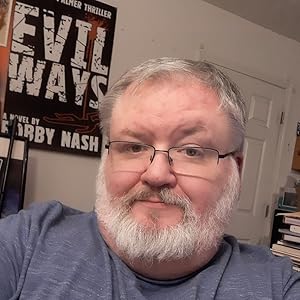
I’m pleased to have award winning author Bobby Nash as my guest today on “Chatting with the Pros”. Bobby writes both novels and short fiction, graphic novels and comic books, and has even written screenplays and worked on the movie sets.
About Bobby Nash
An award-winning author, Bobby Nash writes novels, comic books, short stories, novellas, graphic novels, and the occasional screenplay for a variety of publishers. He is a member of the International Association of Media Tie-in Writers and International Thriller Writers. On occasion, Bobby appears in movies and TV shows, usually standing behind your favorite actor and sometimes they let him act. Recently, he was seen in Creepshow, Joe Stryker, Doom Patrol, The Outsider, Ozark, Lodge 49, Slutty Teenage Bounty Hunters, and more. He also draws from time to time.
He was named Best Author in the 2013 Pulp Ark Awards. Rick Ruby, a character co-created by Bobby and author Sean Taylor also snagged a Pulp Ark Award for Best New Pulp Character of 2013. Bobby has also been nominated for the 2014 New Pulp Awards and Pulp Factory Awards for his work. Bobby’s novel, Alexandra Holzer’s Ghost Gal: The Wild Hunt won a Paranormal Literary Award in the 2015 Paranormal Awards. The Bobby Nash penned episode of Starship Farragut “Conspiracy of Innocence” won the Silver Award in the 2015 DC Film Festival. Bobby’s story in The Ruby Files Vol. 2 “Takedown” was named Best Short Story in the 2018 Pulp Factory Awards, one of five nominations for The Ruby Files Vol. 2 (created by Bobby Nash & Sean Taylor). Bobby’s digest novel, Snow Drive was nominated for Best Novel in the 2018 Pulp Factory Awards. Bobby was part of Moonstone’s Yours Truly, Johnny Dollar, which won a 2020 Pulp Factory Award for Best Pulp Anthology. Bobby’s novel, Nightveil: Crisis at the Crossroads of Infinity was also named Best Pulp Novel in the 2020 Pulp Factory Awards. In 2020, The Sangria Summit Society awarded the New Pulp Fiction Award to Bobby Nash for his work on Snow Falls and the Snow series.
Kaye: You’ve been in the writing and publishing business a long time. What is your take on how the publishing industry has changed, and what adaptions have you had to make?
Bobby: There are certainly many more options for getting stories to readers now than when I started back in the pre-internet, pre-self-publishing model we have today. When I was getting started, you wrote a query, synopsis, and three chapters, printed them out, put them in a self-addressed stamped envelope, and mailed them to a publisher in the hopes you might hear back, or at the very least receive a form letter. Self-publishing wasn’t as well regarded as it is today so that wasn’t really an option. No internet limited your reach back then. Things are more open today, but that also means there are more books out there as well, so you have to work even harder to make your book stand out in a crowded field.
Today, being a writer means you’re running a small business. Marketing, promotion, publicist, travel/event planner, etc. That’s all on the writer, whether self-published or traditional.
I had to teach myself how to promote. I had to learn how to handle book production, pre-press, cover design, how to write a press release, things like that. I learned how to speak in public, to do panels and interviews, live podcasts, stage performances, and the like. As an author, you’re not just trying to sell books. You’re selling an experience. You’re part of that experience so you’re selling yourself as well. Branding is important to building an author brand. It is a bit time-consuming, but is important to my career as an author. Writing is just a small part of my job.
Kaye: According to your bio, you’ve written “novels, comic books, short stories, novellas, graphic novels, audio dramas, and the occasional screenplay”. Which form of writing would you say you enjoy most? Why?
Bobby: Not sure if ‘enjoy most’ is the best way to describe it. Each works different creative muscles so they’re not always easily compared. With prose, it’s all me so I see it all as I’m doing it. With comics, audio, and screenplays, I do my part, it goes away, then later comes back to me to do more, then goes away, and on and on until it’s finished. I’m part of a team there so I’m in and out at various stages of the process. Each has its enjoyable parts and the parts I like less. Just the nature of the beast, I suppose. I love them all. I will say that comic books were my first love. All of this desire to create, to tell stories, was born in the pages of comic books.
Kaye: Which type of writing presents the most challenge for you? Why?
Bobby: Novels require more time. As they are all me, I’m responsible for everything in them. That means I have to describe things in detail without it coming across as dull or as an info-dump. I’m painting the picture for the audience with words only. With scripts, most of what I write is direction for the artist or actors. They then interpret those details, adding another layer to the story. In a novel, if we walk into a character’s living room, I describe it so the reader can ‘see’ it. In a comic, I tell the artist it’s a living room. I will say that there are certain things that need to be there if important, but I leave it to the artist to design the living room. It’s a very different mindset. When I write for the artist, it’s not to entertain them, but to let them know what’s going on. The artists and actors aren’t my audience. They’re my partners.
Writing characters that are not mine also presents its own challenges. Doing work-for-hire on publisher-owned titles or media tie-ins means making sure I write the characters correctly. Research and study come in handy there. The characters have to stay in character. If not, the reader will notice something’s not right.
Kaye: You’ve done some work with graphic novels and comic books. How does the writing in these mediums differ from fiction?
Bobby: Comics are collaborative. The artist has input into the storytelling. We’re a creative team. When I write a script, as I mentioned earlier, most of what I write in the script is direction, so the artist knows what I’m thinking in regard to the panel. I also tell them what dialogue I’m planning, though this may change after I see the art. The artist then takes this information and creates the page with art and making that art flow and tell the story. Here’s an example of a script panel.
Panel 1. Bobby sat at the desk in his office, writing. Books and comics are stacked everywhere. Controlled chaos. He’s typing on a laptop, a soda and several action figures on his desk. He appears stumped. His hair is uncombed. Glasses slid down his nose. Deep in thought about his current story.
Caption: MEANWHILE, THE WRITER SITS TUCKED AWAY IN HIS OFFICE, UNAWARE OF THE DANGER HEADED HIS WAY.
WHY CAN’T I MAKE THIS PAGE WORK?
SFX (in the distance): BOOM!
SFX is sound effects. Something like that. The artist would then figure out the best way to draw this panel. It never comes back to me the way I pictured it in my head, which is fine. It almost always comes back better than I imagined. Seeing the art come in is one of the big joys of writing comics. It always makes me smile.
Kaye: How does one get into writing comic books or graphic novels? Is there a secret society one must break into? What’s the secret handshake?
Bobby: This is a harder question to answer than you might think. There’s an old joke that says that anyone who manages to break into comics is expected to brick up that entrance and close it off. Ha! Ha! Getting to work for larger, established comic book publishers is tough. Really tough. Most do not take submissions. Those that do want you to turn in a finished project, story, art, letters, colors, ready to print. Today, you basically have to be a comic book creator to get hired by publishers that create comics.
That said, we live in an age where you can put out your own comics yourself. Self-publishing, comic ebooks, and webstrips are all wonderful ways to show the world your work. If your goal is to work for Marvel, DC, Dark Horse, etc., then showing the editors there your published work is the only way to show these publishers what you can do. If they like what they see, then they may reach out to you about possibly pitching something to them.
If you want to create comics, then create comics. That’s step one.
From there, you keep trying, keep creating, and hope you capture someone’s attention if doing work-for-hire comics is for you. There are smaller publishers that will hire creators to create comics. I write comics on a work-for-hire basis, but it took a long time to get into those publishers. Once they know you and your work, and if they like working with you, it’s easier to get additional comic book opportunities.
Kaye: Do you do your own illustrations for these books?
Bobby: Heavens, no. I leave that to the professionals who are so much better at it than I. I can draw. I doodle. I sketch. I can give the artist a sketch if I have a specific idea on how I would like to see a scene so he or she can see what I was thinking, but otherwise, I leave that to the artists. They’re so much better at it than me.
My dream as a kid was to be a comic book artist. I started writing so I would have stories to draw. Turns out, I was better at writing comics than drawing them. Eventually, I focused on the writing and eventually was hired to write a comic. I never looked back.
Kaye: You are a member of the International Association of Media Tie-Ins. Can you give a brief explanation of what a media tie-in is and tell us a little about how you got into that arena?
Bobby: Media tie-ins are stories based on characters that originated in other mediums. Novels, comics, short stories, etc. based on television shows or movies are media tie-ins. Star Trek, Star Wars, MCU, etc. These characters are usually licensed from the owner of the property and creators are hired by the publisher, often with approval from the rights holder. Stories are also approved by the rights holders as well. Media tie-ins generally come with a lot of rules, a lengthy list of the type of stories you can and cannot do. The owners of Zorro, for example, are there to protect Zorro. They won’t allow you to write a story that hurts the character. One of the biggest misconceptions I hear about media tie-ins are that many readers assume this is fanfiction. It’s not. With fanfic, you basically write what you want with no oversight. With tie-ins, there is oversight. There are rules. The challenge we, as writers, face is how to tell the best story we can within those parameters, which is not really that big a challenge. You just have to know what you can and cannot pitch. Don’t kill any main characters, cut off their arms, get them married or have children, things like that. Big changes to the characters will come from the owners. I’m just borrowing the character and returning it the way I received it.
I like to describe media tie-in writing like an episode of Star Trek. The original series usually opened with the Enterprise flying through space. Everyone is on the bridge, happy, maybe laughing. Then, trouble happens. The crew has to deal with, then solve a problem. At the end of the episode, the Enterprise flying through space. Everyone is on the bridge, happy, maybe laughing. Media tie-in writing generally happens like that. I can bend the characters, but not break them.
My media tie-in journey started with a local access morning kids television series called Roger Rocket. He was an astronaut musician who had puppets on the spaceship with him and they played music videos for kids. I met him at a comic shop and he hired me to write a comic for his show. Though, very little of my work survived him deciding to rewrite it himself, that was my first tie-in experience. Years later, Moonstone invited me to write a Green Hornet short story. From there, I was lucky to be invited to write other characters like Zorro, Kolchak: The Night Stalker, The Lone Ranger, Night Beat, Yours Truly, Johnny Dollar, Box 13, Remo Williams, At The Earth’s Core, and a number of properties owned by various authors and publishers. It’s fun to play in someone else’s sandbox from time to time.
Kaye: How does one get into media tie-ins? Do you go knocking or do they find you? What advice would you give to someone trying to break in to media tie-ins? Is there a secret handshake for that one?
Bobby: Much like comics, they tend to find you. Unlike anthologies or company-owned characters, getting hired for media tie-ins means you have to be approved by the editor and publisher then approved by the owners of the media tie-in property. I was once tapped by an editor for a media tie-in project only to be told no by the owners of the property because they wanted a more well-known writer. That’s their choice, of course. It stung, though.
Usually, media tie-ins are not open calls. The publisher reaches out and invites writers they know to be part of it. There’s a method to writing tie-ins. You have to understand what kind of stories you can tell or not. Because I now have experience, I know what stories not to pitch because they will probably never be greenlit. As I mentioned previously, media tie-in writing is not fanfiction. That’s very important to remember. Writing tie-ins comes with a lot more rules, a lot more do’s and don’ts than other types of writing. You have to write a story that fits the brand you’re writing. The characters have to act and sound right. They have to be in character. Your story should fit seamlessly into the world of the media project that you’re writing.
As with comics, get work out there. Write your own characters and get them out there as your resume, as your writing samples. That will be what tells the publishers if your style fits their licensed characters. Once publishers get to know you, they may invite you to be part of their media tie-in projects.
As with everything in publishing, a lot of it boils down to timing and luck.
Kaye: Your work has won or been considered for many awards over the years. Which of these would you say you are the most proud of, and why?
Bobby: The first one is always special. There are also those that happen without you even knowing. I won best author in the Pulp Ark Awards, which was a huge surprise. Winning the Sangria Summit Society’s Pulp Fiction Award was also a nice surprise. I had no idea I was in the running for either. Awards are nice. It’s a bit of an ego boost. You feel like you’re doing something right, but also that others have noticed. Awards aren’t why I write, but it is a great feeling when it happens.
Kaye: Which do you enjoy writing most, heroes or villains? Why?
Bobby: Villains get the best lines. They get to do the coolest stuff. Villains are fun to write.
Kaye: Every author has those stories which are near and dear to their heart, those that are just special for whatever reason. Which of your works would you say falls into that sweet spot for you? Why?
Bobby: My go to answer for this question is usually Evil Ways. Evil Ways was my first published novel, and the book that launched this career of mine. It wasn’t always fun or easy. My original publisher turned out to be horrible, but I had a book in hand as a resume that allowed me to reach out to other publishers and show them my work. I picked up some writing gigs that kept me working until my contract ran out and I got the rights to Evil Ways back. Then, I published it myself, which was my first foray into self-publishing. So, yeah, I owe a lot to Evil Ways.
Kaye: You have a Patreon, where you market your books. Can you tell us a little about that? How effective do you find Patreon to be compared to other venues for selling your books?
Bobby: Patreon is nice. I have a small following. I post a writing blog there, keeping everyone up do date on work. I also have an ebook club ($5 and up tiers) where most of my ebooks exist. I also run serialized novels and novellas there, posting chapters every week-ish (sometimes I fall behind). Patrons are part beta readers that way. This allows me to be more productive and gets at least two additional novellas out a year more than I would otherwise. Good motivation.
I like Patreon. I don’t really sell many books through there though. My patrons tend to be readers who were probably already getting the books who are there to support me. That support means a lot to me.
Kaye: Which book marketing strategies do you find to be most effective?
Bobby: My most impactful way to sell books is at in-person events. Getting out to conventions, conferences, libraries, bookstores, and other events where I can meet people, talk up the books, just get to know readers. Outside of that, I use social media, I do interviews like this one, go on podcasts and virtual panels, write and send out press releases to news outlets, create and send out a free monthly newsletter (you can sign up at https://www.subscribepage.com/NashNews), and other opportunities as they present themselves to talk about writing and my books. There are many marketing methods out there. Not all of them work the same for every book. A promotion method that works for Evil Ways, for example, might not work for Dante’s Reckoning. You have to be willing to try new promotional paths to see what works and what doesn’t.
Kaye: Your most recent work seems to be your Dante novels. Would you like to talk a little about that series?
Bobby: The Dante books are fun. I wrote a short story for Valhalla Books’ The Devil’s Due prose anthology. The theme was that all deals come with a price. I wrote a story set in the old west, a mining town called Dante. There, a deal had been made years before with an other-dimensional being. It was time to pay up, but there were those in the town who wanted to keep the final settlement from happening. It was a fun little horror/western story. The publisher later came to me and asked what happened next. I told him I didn’t know. I just wrote a short story. I hadn’t planned any further than that. He said, this is a series. So, I got busy writing. Book 3, Dante’s Reckoning just released this Halloween. I am working on book 4, Dante’s Rebirth for 2025. I love it when things work out this way. I’m glad the publisher saw something in the concept that made him want to keep it going.
Kaye: Where can readers who would like to learn more about you and your works find you?
Bobby: I’m all over social media. There’s links at my website, which is www.bobbynash.com. This is the main hub of all things me. Ha! Ha! There are links to everywhere you can find me on the site. My indie press, BEN Books is at www.ben-books.com. These are the titles I publish myself. Please visit me and say hello.
About the A Tale of Dante Series
Welcome to Dante!
Dante, Arizona is not your average mining town.
Many dreamers have come to this barren speck of desert to strike it rich. Gold, silver, and other valuable minerals are there for the taking if you’re brave enough to pay the price, this wealth, power, and influence. Dante turned peasants into millionaires overnight.
Some suggest that these men sold their souls for the find of a lifetime. Did Dante’s founders make a deal with the devil? If so, what was it? More importantly, what will it cost the town? Nothing happens for free. Every deal has its price and there are still deals to be made.
This brings new blood to town as well as old blood. When a young reporter’s assistant becomes enamored of the daughter of a new arrival, he learns the terrifying truth behind the town. A deal was made.
And payday is coming.
Dante’s long nightmare begins here with the short story that started it all and two new tales from Dante. From the pages of The Devil’s Due comes Dante’s Tenth by award-winning author Bobby Nash.
My Review of the A Tale of Dante Series
I remember reviewing my first weird western, before I was even aware that there was such a genre, back in 2020, a book in the western genre with dragons, trolls, dwarves, and other beings from the fantasy domain. Since that time, I’ve read and review several more weird westerns and I’ve grown quite fond of the genre. Naturally, when I saw that Bobby Nash had a weird western series, I offered to review the whole series for this segment of “Chatting with the Pros”. And I’m glad that I did. One never knows what will happen next in the A Tale of Dante series, where vampires lurk in the shadows and werewolves roam the desert landscape surrounding Dante, Arizona. By hiding in plain sight, they manuvuere behind the scenes and interact with the unmidful miners and townfolk.
The town sits central in the hub of a great evil, where deals were struck long ago and now, a debt has become due. At times it is hard to tell the good guys from the bad, but make no mistake that there will be a reckoning. These stories can be read as stand alones, but I recommend reading Dante’s Showdown before Dante’s Reckoning, as the later takes place after the former. Dante’s Tenth is a collection of three short Dante stories which offer insight into three of the characters readers meet in the other two books.
The protagonists are likeable, and the villians deplorable, and lines are drawn between good and evil, if a little blurred at times. Vampires and werewolves abound in the old west town of Dante, and even the good guys carry guns. Bobby Nash brings us a vampiric priest and an army of the undead, a couple of gunfighters and a newspaper reporter who takes her job seriously to champion on the side of goodness and stop the final reckoning from taking place.
An excellent weird western series, I give the Tales of Dante series five quills.
__________________________________
This segment of “Chatting with the Pros” is sponsored by WordCrafter Quality Writing & Author Services.
Whether it’s editing, publishing, or promotion that you need, WordCrafter Quality Writing & Author Services can help at a price you can afford.
My “Chatting with the Pros” guest for October is crime fiction author Jenifer Ruff. She was a guest back when I first ran the blog series, and I am delighted to have her back for the renewel of the series. (You can see our original interview here.) I am a big fan of her Agent Victoria Heslin Series and I’ve also read the first book in her FBI & CDC series. (You’ll find the links to those reviews in the interview below.)
About Jenifer Ruff
USA TODAY bestselling author Jenifer Ruff writes dark and twisty thrillers, including the award-winning Agent Victoria Thriller Series. Jenifer lives in North Carolina and the mountains of Virginia with her family and a pack of greyhounds. If she’s not writing, she’s probably devouring books or out exploring trails with her dogs. For more information you can visit her website at Jenruff.com or join her at Facebook at facebook.com/authorjruff/
Interview
Kaye: Your books are published under Greyt Companion Press, which is your independent press. Why did you choose to publish independently? Did you try traditional publishing first?
Jenifer: Honestly, I didn’t know what I was doing at first. I didn’t look for an agent, I just started with a small publisher a friend had used. They were great, and it didn’t cost me a penny, but I soon realized I wanted more control over my books. Over the past few years, working full-time as an author and publisher, my writing opportunities grew to a bit more than I could handle alone. Now I have a literary agent who is helping me with some traditional opportunities, foreign rights, and sub rights.
Kaye: As an independent author, can you tell us about your author journey and how you became a U.S.A. Today bestselling author?
Jenifer: Since my first book was published almost ten years ago, I’ve written and published sixteen more books, learned as much as I could about the craft of writing, publishing, and book marketing. I love all of it, and with the industry and tools constantly changing, it’s impossible to ever get bored.
Kaye: I have to say I love your Victoria Heslin thriller series, and I’ve read and reviewed all but two of them. But that series isn’t the only one you write. You also write the FBI & CDC series, and the Brook Walton series. Can you talk a little about each series, so readers might get an idea of each one?
Jenifer: First, thank you so much for reading and reviewing my books. I’m so grateful! Here is a little about each series. All of my books are dark and twisty, but clean (no sex, no swearing.)
Victoria is an introverted special agent with the FBI. She is also an heiress, which allows her to pursue her passion of rescuing animals. She is smart, determined, selfless, and courageous. Victoria’s investigations include tracking serial killers, spree killers, and several missing person cases. She also survived a plane crash and its harrowing aftermath, an incident that made global headlines as rescuers struggled to find the missing jet.
The Brooke Walton Series – Everett, Rothaker, The Intern
This dark psychological thriller series features Brooke Walton, an Ivy League psychopath, on her journey through college and medical school. Brooke is the most determined woman ever. She won’t let anyone or anything stand in the way of her goals. Her stories give you a chilling look inside her mind. Brooke is my favorite creation. Readers either love her, want to see her locked up for life, or can’t quite decide.
The FBI & CDC Thriller Series – Only Wrong Once, Only One Cure, and Only One Wave: The Tsunami Effect
This series features infectious disease expert Dr. Madeline Hamilton and FBI Anti-Terror Agent Quinn Traynor. They’ve dedicated their lives to preventing epidemics and terrorism. I’ve placed them in terrifying situations, forcing them to risk their own lives again and again to protect the rest of us.
Kaye: Most stories are not non-stop action. What are some tips you can offer rising authors for keeping the tension going and holding readers’ interest?
Jenifer: If you’re bored with what you’ve written, readers probably will be too, so scrap the bits that don’t excite you. Always have a central question that needs answering (Who did it? What is the motive? What is the connection?) to keep readers turning the pages.
Kaye: There is some of you in the character of Victoria Heslin, for sure. For one thing, she has a bunch of greyhounds, and you do, as well. Although I don’t think you have as many as she does. What other aspects of Jenifer Ruff went into the creation of Victoria Heslin?
Jenifer: Besides her love for animals, Victoria is an introvert. She’s not shy, but the act of socializing drains her energy, while quiet activities and alone time fill her up – and that is totally me. In most of the Victoria books she picks up a mystery-thriller to read on her Kindle when she has downtime. That’s something I do every day.
Kaye: A current hot topic in the writing and publishing worlds is the use of generative AI in writing and imagery, and even AI narration for audiobooks. Where do you stand on the use of AI?
Jenifer: I think AI is amazing, and I’d prefer it not get any better at writing or narration for the sake of everyone currently making a living in those occupations! I don’t think it could ever push authors and audio book narrators out of the market completely, since so much of a book’s success is related to marketing efforts, and of course luck. But who knows. It’s exciting and also scary.
Kaye: What is the best advice you have for aspiring authors of Crime Fiction?
Jenifer: Read as much as you can in the genre. If you simply enjoy writing and are happy to see your book in print, there are many stress-free ways to accomplish that goal. If sales are important, you must be on social media promoting your books, constantly making an effort to reach new readers. There’s really no way around that these days, unless you have an amazing publishing team doing it for you.
Kaye: Would you like to tell us about your latest book?
Jenifer:The Bad Neighbor is book 9 in my Victoria series but written as a standalone like the rest of them. I just finished proofing the audiobook—narrator Kate Handford just blew me away with her recording—and it’s fresh in my mind. Writing villains is my absolute favorite, getting into their heads and creating their motives, and this one was especially interesting to me. Here’s a taste of what it’s about.
In the idyllic Mountain Meadows neighborhood, a fresh start can quickly become a fatal ending. For newcomers Chris and Zoey Hamilton, the affluent community seems like the perfect location to build a life together. Instead, history repeats itself when Zoey vanishes without a trace—just like the previous homeowner five years ago.
The secrets in Mountain Meadows run deep, and the greatest threats aren’t lurking in the shadows…they’re hosting dinner parties, attending parent-teacher conferences, going to yoga, and waving hello from behind their perfectly trimmed hedges. One of those polite, smiling individuals will stop at nothing to keep the past buried.
Kaye: Where can interested readers find out more about you and your books?
Jenifer: All my books and audiobooks are available on Amazon or through my website Jenruff.com. Print and audiobooks can also be ordered from any major retailer. If my books aren’t in your local library, you can always request them. Libraries are usually very accommodating to requests.
Thank you so much for interviewing me and for your thoughtful questions. I really appreciate it!
My Review of The Bad Neighbor
I received a digital copy of The Bad Neighbor in exchange for an honest review. All opinions expressed here are my own.
That being said, and as already stated, I am a big fan of Jenifer Ruff’s Agent Victoria Heslin Thriller series, of which this is book 9. Each book tells of a different case or situation in which our protagonist, Victoria Heslin, finds herself in. Usually, it’s an accounting of a case that she’s working as a government agent, but occassionally, as in When They Find Us, Heslin is off duty and the situation occurs in her personal life.
In The Bad Neighbor, Heslin finds trouble brewing right in her own neighborhood when a new neighbor turns up missing, and Victoria and her lover, Ned, join in the search to find her and uncover hidden secrets about her neighbors which make them all look a little guilty. It seems that everyone has something to hide and one of them is a killer.
As all the other books in this series, The Bad Neighbor is well written, masterfully leading the reader through twists and turns which eventually lead to a solution to the mystery. This book is everything that a crime fiction thriller should be and makes one wonder how much we really know about our neighbors, and how much do we really want to know. I give it five quills.
_______________________________________
Kaye Lynne Booth does honest book reviews on Writing to be Read in exchange for ARCs. Have a book you’d like reviewed? You can request a review on the Book Review tab above.
________________________________________
Stop by the WtbR Sponsor Page and let me advertise your book, or you can make a donation to Writing to be Read for as little as a cup of coffee, If you’d like to show your support for this author and WordCrafter.
Welcome to “Chatting with the Pros”. Today, my September guest is author, publisher, and educator Marie Whittaker. Like myself, Marie likes to dip her toes in several different ponds at the same time, and she is a multi-genre independent author, associate publisher and project manager at WordFire Press, and director of Superstars Writing Seminars, and she teaches publishing courses to graduate students at Western State Colorado University.
I met Marie in her capacity at WordFire Press, when I reached out, requesting a Kevin J. Anderson ARC to review back in 2016. Since then, she has kept me in the loop as new WordFire books became available, so I was never at a loss for reviewing materials, and she has been an invaluable resource in lining up authors for the WordCrafter virtual writing conferences in 2020 and 2021, and in connecting with authors for interviews. I was privilaged to get in a few sessions with her at Western, where she shared just a minunte sampling of her vast publishing knowledge with students. But she always shared something that I hadn’t previously known and I always learned something useful from her and she’s prepared to share some great stuff with us here. I hope you will all join me in giving this lady a big welcome.
About Marie Whittaker
Marie Whittaker is an award-winning essayist and author of fantasy for all ages. She is the creator of The Adventures of Lola Hopscotch. A past finalist for an Indie Book Award, and many of her stories appear in various anthologies, including Weird Tales. She enjoys teaching about project and time management for creatives. Marie has worked as a truck driver and raft guide and is now Associate Publisher at WordFire Press and Executive Director for Superstars Writing Seminars. A Colorado native, Marie is a mom to two adult children and Grammy to one who is made of pure magic. Marie resides in Manitou Springs, where she writes and enjoys hiking, gardening, and renovating her historic Victorian home. Marie is an advocate against animal abuse, a dog mom, cat mom, and bunny mom, and habitually adopts rescue animals. Find more about her at mariewhittaker.com.
Interview
Kaye: You are the Associate Publisher and Project Manager for WordFire Press. How do you manage to juggle all the responsibilities of that job, directing Superstars, plus all you do instructing and organizing students at Western, and being a mom and an author yourself?
Marie: It really helps that I love what I do, have a great boss, and am supported by two excellent teams. I also have project management tools at work and live by my calendar for both my professional and personal time blocking. I love teaching. Being an instructor in Gunnison for the WCU Creative Writing Program is a big honor! My kids are adults and out of the house now, but I have a crew of furbabies that have all hit their geriatric years at the same time so it’s like I’m running a pet nursing home over here. Ha! I love these little souls.
Kaye: You are director of Superstars Writing Seminars, which is held in Colorado Springs, Colorado each February. Please tell us about the seminars. What can attendees expect?
Marie: Superstars is a drink-from-the-firehose, deep dive into the business of writing and our industry. As the “OG” conference on the business of writing, we strive to bring in professionals who teach at the top of their fields within our industry. But the best thing of all is Tribe. Superstars has strong tribe culture and our network is one of the best out there. The conference lasts for five days now that we’ve added programming on Sunday until noon. You can find out more at superstarswriting.com. As a special gift to your readers, they can use code MARIE1371 to register with a $100 discount.
Kaye: You have a page on your website labeled “Consulting for Creatives”. Can you talk about the things you do that would fall under author support? What kind of services do you offer?
Marie: I offer a lot in the way of helping creatives find the work/life balance. I love helping other creatives find ways to succeed with time management. I offer advice on different publishing plans, as there are so many ways to create a successful model these days. I mean, not everyone wants to deal the traditional publishing. Some authors want to self-publish. Some want to proceed into the industry with a hybrid approach, like me. I enjoy sharing resources and tools I’ve discovered in my career so far. That can be found, along with my rather dusty blog, at mariewhittaker.com.
Kaye: You are the author of “horror, urban fantasy, children’s books, and supernatural thrillers”. That is quite a combination. How did it come about that you write in this mixture of genres? What inspires you to write?
Marie: I started off writing horror and I’ll always be a horror girl at heart. Most of my fantasy work has horror elements woven through the themes. I created The Adventures of Lola Hopscotch when I got to a good place in my career and decided I wanted to do something to help kids. The series helps kids with bullying and since I was a bullied kid, the topic sits close to my heart. There are three books to that series and the second one, of course, is a children’s horror book. I couldn’t help myself. As far as inspiration goes, I get hit with new story ideas all the time and it’s mostly when a story idea lands at the same time as the title for the work. Once that happens, I’m off to start taking notes and creating the story.
Kaye: For your adult fiction, you write under a penname, Amity Green. Why did you choose to do so? What purpose does it serve? How did you select a new name for yourself?
Marie: That is such a funny story. I mentioned that when I got started, I was writing a lot of horror. I also wrote some romance. My kids were little back then. I decided on a pen name to keep my writing life separate from my home life for my kids. When deciding on the pen name, I was thinking it over while driving from my home town in Colorado to my new home in Austin. The highway took me through a little town called Amity, Texas. It was in the part of Texas that is green and pretty. So, I came up with Amity Green. These days, I write under my real name and am rebranding my previous nom de plume’s work. My LLC is still Amity Studios, which I intend to keep.
Kaye: Please tell us about your urban fantasy Fate and Fire series.
Marie: This is one of my favorite projects. When I was studying British Literature in London, I got the idea for a teenager who was doing the same thing. This character, Tessa, is a lover of antiquities, like me. Then the idea for an adventure happened and she ended up being locked in an old bookstore and changed into a living, breathing gargoyle. I was reading a lot of shapeshifter stuff back then, so… Anyway, she is one of my most loved characters. She’s tenacious and snarky, and her character arc is fantastic. She goes from being an orphan to an underground hero. I adore her story.
About Scales
“With SCALES, Marie Whittaker kicks off the exciting new FATE AND FIRE series in a big way. Wild, creepy, and deeply imaginative dark fantasy. Highly recommended.” —Jonathan Maberry, New York Times bestselling author of V-WARS and GLIMPSE
When Tessa Conley earns a scholarship to study in London, she’s locked in an ancient bookstore and transformed into a living, breathing gargoyle in this thrilling dark fantasy tale of magic, myth, and destiny.
Kaye: Your supernatural thriller, The Witcher Chime, was a finalist for the Indie Book Awards in 2017. What is it that makes that book stand out?
Marie: This book is some gritty, supernatural, ghost story horror told in a loose thriller format. I got the idea for the story when I was driving a haul truck on a mine site and had to drive during graveyard shifts. Ironically, I wrote that book back when I was getting rights back to another project and I wanted to learn more about being an indie publisher. So, I decided not to send it to any agents and just publish it myself. I entered it into a few indie contests. I’m really happy I published this book myself. It proved to be the best tool for learning about what goes on behind the scenes in the publishing marketplaces.
Kaye: You have a children’s series, The Adventures of Lola Hopscotch. Tell us about the books and the series.
Marie: This project started out as just one picture book to help kids with bullying. I decided to reach out to a new audience by using Kickstarter. The campaign funded and we created Lola Hopscotch and the First Day of School, which was published the following year. The project did pretty well on Kickstarter and we ended up with enough money to have art created for another book. I was thrilled to write Lola Hopscotch and the Spookaroo, which is the kid’s horror book I mentioned earlier. After that, it seemed a trilogy was in order, so I wrote the last book in the series. There’s A New Kid, Lola Hopscotch! helps kids understand how to be kind to new kids at school who might be different in some way. We picked a platypus for the new kid. It was a great time. The trilogy was featured by the PACER Center for Antibullying and StandfortheSilent.org.
About the Lola Hopscotch Series
The Adventures of Lola Hopscotch is a children’s picture book series focusing on spreading kindness, meant for adults to read with kids in order to foster communication about sensitive social issues from an early age.
Kaye: You have something you’d like to share with readers connected to your Lola Hopscotch books. Tell us the exciting news.
Marie: Since the publication of the first book, adult and kid fans of Lola Hopscotch have been asking, “Where can we get the bunny?” I’ve never expanded an IP to include toys or games, much less plush! So, I didn’t really know what to do for the longest time. I finally decided to dig into some research. After all, I, too, want the bunny. So, we decided to embrace a new crowdfunding platform and began working with the good folks over at BackerKit. They are wonderful so far. We put together a fun campaign that you can follow right now. Here’s the handy link. I would LOVE it if you would follow the project and help bring Lola Hopscotch to life for kids to hold while they read.
Lola Hopscotch Plush Pre-Launch
Kaye: What is the single best piece of advice you can offer to aspiring authors?
Marie: Keep writing, and never stop learning. The moment you think you know everything there is to know about our industry is when you accept the career of a midlister, at best. Set expectations for yourself and your writing career so you can balance your life from the beginning. And lastly, it’s my experience that series sell better than stand alone books. Just food for thought.
My Review of Chupadogra
I recieved a digital ARC copy of Chupadogra in exchange for an honest review. All opinions stated here are my own.
Chupadogra: The Manitou Monster Hunters Club, by Marie Whittaker, is Book 1 in her Legendary Roots series. Its a delightful middle grade story about a young boy, Jack, who like the Jack in the fairy tale, is drawn to a magical item better left lie. That Jack is tempted by some magic beans, while this one is called by a magic book, but both magical items lead to adventures beyond their wildest dreams and battle a monster of myth. Like that other Jack, he must use his wits, (and the help of a former bully and his younger sister), to outsmart his opponent, who is bigger, and meaner, but not so bright.
Jack disobeys his grandmother, and lets out all his family secrets, along with a mythical cat-eating Chupadogra, so it naturally falls to Jack to capture the beast and save the cats of Manitou Springs. Lauren Vanbury becomes an unlikely ally in his quest, and they are joined by his kid sister, Gracie, who won’t be left out, no matter how hard Jack tries to exclude her. This story is full of surprises as readers learn the magical secrets right along with Jack and his friends, but there’s no spoilers here.
A charming middle grade mystery which carries readers into worlds of magic and myth. Delightfully entertaining. I give Chupadogra five quills.
__________________________
Kaye Lynne Booth does honest book reviews on Writing to be Read in exchange for ARCs. Have a book you’d like reviewed? You can request a review on the Book Review tab above.
_____________________________
Would you like to see your book or blog site advertised on Writing to be Read? Visit the WtbR Sponsor Page.
Just want to show your support for this author and the Writing to be Read site? Make a donation
My guest this month on “Chatting with the Pros” is New York Times bestselling author, Jonathan Maberry. Not only is he a five-time Bram Stoker Award winner, and comic book writer, his vampire apocalypse series, V-Wars, became a Netflix original series. Like last month’s guest, Jonathan Maberry is a prolific writer in multiple genres, including horror, science fiction, fantasy, suspense, thriller, and action. He is a board member for the Horror Writer’s Association, and president of the International Association of Media Tie-in Writers, as well as the editor of the rebirth of the iconic Weird Tales Magazine.
I had the pleasure of working with Jonathan briefly when he participated in the 2020 WordCrafter Stay in Place Virtual Writing Conference, where I learned that he is a prettty stand-up guy. Since he is the editor of Weird Tales Magazine, I also had the privelage of working with him on Weird Tales: Best of the Early Years 1926-27and editing his story for the Gilded Glass anthology as an intern at Wordfire Press through Western State Colorado University came with a big case of imposter syndrome on my part. Who was I to be editing the work of this award-winning, bestselling author? But he was great to work with in the capacity of both author and co-editor, and it is a pleasure to have him as my guest today.
Interview with Jonathan Maberry
KAYE BOOTH: You are an award-winning author, including the Bram Stoker Award for horror, the Scribe Award for media tie-ins, the Inkpot Award from the San Diego Comic Con, and numerous accolades for children’s and teen books. In fact, in 2016 you had an award named after you and were the first recipient at the Canyon Crest academy Writer’s Conference, which was the first teen writer’s conference in the U.S. Can you tell us about the Jonathan Maberry Aspiring Teens Award, the conference and why you were chosen for the honor?
JONATHAN MABERRY: That award came as a shock to me. I had been teaching for a few years at the wonderful Canyon Crest Academy Writers Conference and have been a strong supporter of the event. Before that I taught the Experimental Writing for Teens program back in Doylestown, Pennsylvania…and several students from that group went on to make professional sales in novels, short stories, and nonfiction. I’ve always liked working with our younger creatives –it’s my way of selfishly insuring I’ll always have great books to read. When the conference decided to name the award after me because of my work as an author of Young Adult and Middle Grade fiction, my work in comics for Marvel, and other things, I was so surprised. It’s a deep honor to help present the award each year, and there are many, many folks out there who deserve it. We must all work together to help guide and teach the next generation of creatives.
KAYE BOOTH: You also have several comics and graphic novels. How does your writing process differ for these types of books?
JONATHAN MABERRY: I’m primarily a novelist. I think in long, complex stories. However, a different skill set is needed for comics. Novels are solo ventures, however, and comic books are created by a team. The writer pitches the story and presents an outline to the editor. Editors in comics are a lot more hands-on than in other mediums –more like a movie director. Once the editor approves the comic going to script, he then picks the art team. This could be a penciler and inker –two types of artists; or it could be an artist who does both. Then the colorist and letterer are picked. The writer decides how many panels will be on each page and provides art direction. The artist sends back rough pencil sketches to show how the art direction would translate into visual storytelling. The editor, artist, and writer discuss this, make adjustments, and then the artist typically sends pages as they’re completed. There’s multiple pairs of eyes on this every step of the way. The colorist enters the picture around this point, often long before the entire thing is drawn. Colors matter, and I’ve learned from experience that the colorist is much like the lighting person in film –those colors suggest mood and tone. The last player is the letterer, and he has to make sure the dialogue and any narrative have room in each panel. This often requires that the writer do a pass to slim down the dialogue so as not to block the art, just as it’s important for the writer to consider which images best accompany dialogue–mor art can show with little or no dialogue; dialogue-heavy panels should not require complex art. Then there’s multiple passes where everyone tries to find any graphic or textual errors. It’s a fun process, but time-consuming. And it’s key for a writer to keep the ego in check. This is a team, not a solo thing, and every player brings experience, insight, and skill. A wise writer allows them to participate in the process of telling the story in what is predominately a visual medium. Comics are fun, though. And the collaborative process can really be fun and enriching.
KAYE BOOTH: Do you do the illustrations?
JONATHAN MABERRY: Although I am an artist, I don’t do my own comic book art. I’m not on that level of art skill, and besides, the artist choice is complex. The editor often suggests multiple possible artists, and discusses with the writer whether any given style suits the story. Once chosen, it’s useful for the writer to check out that artist’s previous work and then adjust his writing style to be harmonious with it. Being an artist myself helps with this process.
KAYE BOOTH: Some of your work has been turned into film, including V Wars, and Rot & Ruin. How does one break into this arena? Do you have to know somebody who knows somebody, or are the tricks that can help you in breaking into the trade?
JONATHAN MABERRY: When I stepped into the fiction world I knew no one in Hollywood. I’ve made a lot of friends through events like San Diego Comic-Con and other pop culture things where I’m on panels with other writers, comic book people, and folks from Hollywood. Many of my works have been optioned –and an option is when a producer “leases” a work for a specified period of time in the hopes he/she can put together a package (often a showrunner/head writer, maybe a director, maybe an actor, etc) that will be appealing to a studio. Mostly it’s freelance producers who option works.
My first optioned work was Patient Zero, my fourth novel. It was optioned by Michael De Luca for SONY, which took it to ABC, and it nearly made it to TV. At that time, the network exec decided to go instead with a remake of Charlie’s Angels. And that sort of thing happens to all writers. Later, when I wrote the V-Wars books and comics for IDW Publishing, they had created a media division, and it was IDW who shopped the project around and eventually found a home on Netflix. Alas, the show launched at the beginning of Covid, so even though it was a hit (#1 in 120 global markets), they canceled it. And, that’s Hollywood, too. I had nothing to do with that process.
However, because of my increased visibility due to V-Wars, I began getting invitations to send lists of my IPs to producers. IP = Intellectual Property (novel, short story, comic, etc). And sometimes a studio exec will invite me to L.A. for a face-to-face. During those meetings –which are openly fishing expeditions—I would chat about my works and which I feel would make for a good movie or TV show. One example was when Carl Rogers, the Vice-president of Alcon Entertainment invited me up for a sit-down. We chatted for a couple of hours, and afterward they optioned my teen post-apocalyptic zombie novels, Rot & Ruin for film development, and we are currently at the second draft of the script. More recently my Joe Ledger novels have been optioned for television. In both cases I’ll be an executive producer if we go from development into actual production. As an EP, I’ll have extensive creative input.
I also have a book-to-film agent, Dana Spector of CAA, and she is actively pitching my works to producers.
KAYE BOOTH: These days it seems like traditional publishing is faltering, or at least taking a back seat in many authors’ minds as they opt to take control of their own careers and publish independently. As someone who has been in the business for a while now, what do you see as the future for the publishing industry?
JONATHAN MABERRY: I disagree that traditional publishing is faltering. What’s changed is that indie publishing has matured thanks to the many advantages of digital sales (eBooks and downloadable audiobooks) and lower costs because of print-on-demand. Crowdfunding like Kickstarter, BackerKit and other utilities have allowed indie authors to finance well-edited and beautifully-designed books. Social media also gives indie writers a length of reach they never had before. Traditional publishing is actually learning from indie publishing, but the size of their companies makes it a bit harder to pivot in the direction of innovation. It is happening though.
I’ve been publishing for a long time. I began in the pre-Internet typewriter days when I was writing nonfiction magazine feature articles and nonfiction books (college textbooks and mass market). I saw the gradual changes as publishing evolved with the times. Since breaking into fiction in 2006, we had economic downturns that did a lot of damage to publishing corporations, as well as the rise of digital tech. I live quite comfortably off of my income as a traditionally-published author. Part of that is having a smart literary agent –Sara Crowe of Sara Crowe Literary—who has helped guide my career and with whom I’ve sold 60 novels, sixteen short story collections, 26 anthologies (as editor), ten nonfiction books, 28 runs of comics, and a board game in 18 years. So, no, I don’t think traditional publishing is in trouble. What’s key, though, is the writer also changing with the times. When new technology comes along that looks like it’s going to stick around long enough to matter, it’s part of my job to investigate, understand, and implement it in ways that support my career.
KAYE BOOTH: Many of the stories you write are really scary, weird, and creepy stuff. Where do the ideas for these stories come from?
JONATHAN MABERRY: Writing genre fiction does not involve giving a handful of characters a pleasant day. We write about crisis in its many forms. It doesn’t matter if it’s a zombie apocalypse or a fragile romance or Curious George misplacing his keeper’s yellow hat. There is a crisis at the heart of all drama.
For me, I like it darker because it allows me to write about people finding their way through –and hopefully out of—that darkness. I grew up dirt-poor and in a very violent household. My father was a terrible person, an abuser, and a racist. However my grandmother was amazing. She was basically Luna Lovegood as an old lady –she believed in everything that made up what she called ‘the larger world’, including ghosts, ESP, vampires, sprites, angels, faeries, werewolves, crisis apparitions, and all the rest. So, I was exposed to various kinds of ‘darkness’ as a kid. One very negative and one in which I found a great deal of comfort. My grandmother taught me not only about the folklore, myths and beliefs regarding the supernatural, but encouraged me to read anthropology, sociology, philosophy, and science in order to separate what is not part of the larger world and allow for what might be.
Funny, but a lot of folks ask why I write about monsters. I tell them that I don’t –I write about people who fight monsters, and that is a significant difference. In order to tell a story about rising above adversity, where one or more people confronting apparently impossible odds and an overwhelming threat, you have to make that threat real and the challenge steep. That way, the story is really about them finding courage, cultivating optimism, working together, becoming empowered, and taking agency over their own lives and destiny.
KAYE BOOTH: What are some tips you can offer to rising authors for making things scary or suspenseful?
JONATHAN MABERRY: There are a few ways to make a scary story really stand out. First, there’s the research. Folklore, mythology, and cultural beliefs offer thousands of scary elements, including older and much stranger versions of vampires, ghosts, demons, werewolves, etc. So, instead of doing a rinse-and-repeat thing with the standard Hollywood or publishing-world versions of these monsters (which, by the way, are largely extrapolations of story elements created by writers and not from any actual folklore), read deeply and build stories on less well-known and therefore less-predictable monsters. For example, nowhere in folklore is a vampire afraid of a cross or killed by sunlight. Nowhere in folklore is a vampire unable to enter a house unless invited. The sunlight and cross thing comes from Bram Stoker’s Dracula; and the sunlight was introduced as a convenient plot device in the 1922 silent horror film, Nosferatu.
Second, writers should start by taking a close look at what scares them. Them, specifically. When writing from one’s own fears, the connection to the emotions is right there, and if the writer is brave enough, then the confessional elements are truer and not watered down.
Then, write about what the characters in any given scene are feeling, maybe eavesdrop on their thoughts. Let the suspense of a threat not yet fully understood play a larger role than the reveal of the creature itself. Anticipation is so important to good horror storytelling. Once the monster is revealed, the story often morphs from suspenseful horror to terror-action. Not the same thing at all.
KAYE BOOTH: What do you think is the biggest misconception aspiring authors have about publishing that first book?
JONATHAN MABERRY: Oh, they think that first book is going to flip the switch and change their lives. Most people have no idea how small advances are for newbies, especially since the last couple of economic downturns. Also, they forget to put some of that money aside for taxes. They assume that their book will land in every single bookstore, and that doesn’t even happen for the top tier. They assume their published work will be on bookstores indefinitely. They expect the publisher to do the lion’s share of advertising. They believe they’ll be sent on a book tour. And they think that a published book is going to guarantee sell the next one pitched.
There are a lot of misconceptions. Dispelling these, and helping to set more realistic expectations and to learn how to be a more effective player in one’s own career path is one of the reasons I began the Writers Coffeehouse over 20 years ago. These are free 3-hour monthly networking events, typically hosted by indie bookstores, hosted and facilitated by actively published writers. The purpose is to help other writers to make good career decisions, learn the way publishing works, maybe find an agent, write better queries, learn social media strategies, and generally understand both the craft of writing and the business of publishing. I’ve been running the San Diego chapter at Mysterious Galaxy Bookstore in San Diego (https://www.mystgalaxy.com) for the last eleven years. We also have a Facebook page on which writers can ask questions, share information, brag about career milestones, and be part of a mutually-inclusive and supportive community. )www.facebook.com/groups/TheWritersCoffeehouse/). Ours is held from noon to 3pm on the first Sunday of every month. I host it, but when I’m not available it’s hosted by either Peter Clines, Scott Sigler, or Henry Herz –all successful writers.
KAYE BOOTH: Is there one book you have wanted to write, but haven’t written yet. If so, what is it and why not?
JONATHAN MABERRY: Oh, I have a bunch of dream projects, and I hope to get around to them at some point. One is a literary novel, Fruitwood Manor, about a retired soldier who buys an old hotel and turns it into a writers colony.
About Jonathan Maberry
JONATHAN MABERRY is a New York Times bestselling author, 5-time Bram Stoker Award-winner, 4-time Scribe Award winner, Inkpot Award winner, anthology editor, writing teacher, and comic book writer. His vampire apocalypse book series, V-WARS, was a Netflix original series starring Ian Somerhalder. He writes in multiple genres including suspense, thriller, horror, science fiction, epic fantasy, and action; and he writes for adults, teens and middle grade.
His works include the Joe Ledger thrillers, Kagen the Damned, Ink, Glimpse, the Rot & Ruin series, the Dead of Night series, The Wolfman, X-Files Origins: Devil’s Advocate, The Sleepers War (with Weston Ochse), NecroTek, Mars One, and many others. Several of his works are in development for film and TV. He is the editor of high-profile anthologies including Weird Tales: 100 Years of Weird, The X-Files, Aliens: Bug Hunt, Out of Tune, Don’t Turn out the Lights: A Tribute to Scary Stories to Tell in the Dark, Baker Street Irregulars, Nights of the Living Dead, and others. His comics include Black Panther: DoomWar, The Punisher: Naked Kills, Bad Blood and many others. His Rot & Ruin young adult novel was adapted into the #1 horror comic on Webtoon and is being developed for film by Alcon Entertainment. He the president of the International Association of Media Tie-in Writers, and the editor of Weird Tales Magazine. He lives in San Diego, California.
I received an ARC copy of Mystic: The Monk Addison Case Files, by Jonathan Mayberry from Wordfire Press in exchange for an honest review. All opinions are my own.
The unique character of Monk Addison is a literary Dexter, but with more valid motivation and a lot less planning. Monk lives in Pine Deep, a small town where weird occurrances are commonplace and villainous human monsters seem to be in abundance, so those few who know Monk’s story take it in stride. Monk is a bounty hunter who sees the dead murder victims, and avenges them, sealing a bond with each one to him with a blood-ink tattoo of their face on his skin. Once the tattoo and bond are complete, he lives their final moments through the victims eyes, be coming them and reliving their pain, their emotions, in the hope of gleening of glimpse of their killers face or other clues to the identity. Then, he seeks out the one or ones responsible and ends them before they can do the same to someone else.
Mystic is a collection of well-crafted short stories and poetry which relate his experiences with that other kind of case. Not the usual skip-trace, but the ones in which it’s too late for the client, and the goal is to save future would-be victims from suffering the same fate. I have to give kudos on the cover. It is unique, sums up the character and the story premise visually and is one that won’t soon be forgotten.
This short fiction collection is packed full of surprises. I never knew what to expect as I rooted for this antihero character and his friends. I give Mystic five quills.
About Mystic: The Monk Addison Case Files
Gerald “Monk” Addison used to be a soldier. Sometimes he’s a bounty hunter. Mostly, he’s a killer of killers.
His body is covered with the faces of victims of serial killers, human traffickers, and other monsters. Their blood is mixed with holy water and then inked onto his skin, allowing him to relive their deaths. To feel what they felt, and to see what they saw. The faces of the killers.
And then Monk goes hunting.
He is forever haunted by the ghosts who hire him. A madman mystic. A man driven to darkness and acts of shocking violence. Monk is a good man on a dark and dangerous road in search of personal redemption. In search of red justice.
Mystic collects the Monk Addison case files, pitting him against the most dangerous kinds of human monsters. These are stories of a complex and driven hunter of men. They are tales of a mystic hunting the nightmare streets and back alleys.
ic is set for release on December 3rd, 2024. You can purchase many books by Jonathan Maberry from his WordFire Press author page.
_________________
This segment of “Chatting with the Pros” is sponsored by The D.I.Y. Author and WordCrafter Press.
An author involves not only writing, but often, the publishing and marketing of the book.
In this writer’s reference guide, multi-genre author and independent publisher, Kaye Lynne Booth shares her knowledge and experiences and the tools, books, references and sites to help you learn the business of being an author.
Welcome to the revival of “Chatting with the Pros”, where I’ll be interviewing seasoned authors and experts in the publishing industry to learn what works for them and why. Learn from the experts and industry professionals as we explore the ins and outs of the publishing industry and gather tips and tools to add to our writer’s toolboxes to help make us all better writers.
Today I am pleased to introduce my guest for this first segment, international and national best seller, Kevin J. Anderson. I had the privilege of studying under him at Western State Colorado University, and besides being a successful author in the traditional publishing arena, he runs his own independent publishing house, Wordfire Press, and teaches the business of book publishing at Western. I pleased to welcome him here today because of all that, but there another reason which is maybe even more important. Kevin J. Anderson is a genuinely nice guy who enjoys down to earth things like hiking in the Colorado wilderness, as he dictates his next story, and he always makes time for fellow authors. Even with his extremely busy schedule making appearances at conferences and in person events, preparing for the upcoming movie release of Persephone, and teaching graduate courses, he didn’t hesitate to grant me this interview.
His generosity with his time and willingness to share with my readers is much appreciated, and you all are probably excited about it, too. So, I’ll just give you his bio real quick, and then we’ll get on with the interview.
About Author Kevin J. Anderson
I have written more than 175 books, including 59 national or international bestsellers. I have over 24 million books in print worldwide in thirty languages. I’ve been nominated for the Nebula Award, Hugo Award, Bram Stoker Award, Shamus Award, and Silver Falchion Award, and I’ve won the SFX Readers’ Choice Award, Golden Duck Award, Scribe Award, and New York Times Notable Book; in 2012 at San Diego Comic Con I received the Faust Grand Master Award for Lifetime Achievement.I have written numerous bestselling and critically acclaimed novels in the Dune universe with Brian Herbert, as well as Star Wars and X-Files novels. In my original work, I am best known for my Saga of Seven Suns series, the Terra Incognita trilogy, the Dan Shamble, Zombie PI series, and Clockwork Angels and Clockwork Lives with Neil Peart. Along with my wife Rebecca Moesta, I am also the publisher of WordFire Press. Find out more about me at wordfire.com, where you can sign up for my newsletter and get some free fiction.
Interview
You started out as a traditionally published author, back when that was the only way to do it. Now you have your own independent publishing company, Wordfire Press, where you publish your own books as well as the books of others. What prompted you to make the switch to independent publishing?
The publishing world changed in so many ways. As you say, there used to be only one main career path for an author, and many parts of it were out of the author’s control. But remarkable tools and opportunities became available around 2010 or so—an author with skills and persistence could now create their own books (covers, typesetting, interior design) and make ebooks and print books that were comparable to what trad publishers were doing…and that happened at the same time traditional publishing hit some real rough patches, with major houses consolidating down to only five big publishers (where there used to be a dozen or more), advances dropping, Borders book chain going bankrupt.
I had a lot of my own backlist titles that were out of print and readers wanted them, but no trad publisher wanted to reissue them. Many of my author friends were in the same situation. So I decided to do it myself.
You are always willing to help your fellow authors when you can. In fact, you share your expertise with aspiring authors and publishers on a daily basis as the head of the publishing program for Western State Colorado University, where I got my M.A. in publishing. I learned so much from you there, and you can’t share it all in one interview, so tell me, what is the most important piece of advice that you hope every one of your students comes away with?
That there are plenty of possibilities out there for an aspiring author or publisher—more so now than ever before. If you put in the work and learn what you’re doing, you CAN get your book published and available for sale worldwide. Whether or not it’s successful depends on a lot of factors, many of which are out of your control—but a lot of them ARE things you can control. Big publishers are very slow to adapt to changing market circumstances, but you can be nimble and respond to what readers want. Be a speedboat instead of an oil tanker.
You are one of the most prolific writers that I know of. You do things a little differently from many authors, in that you dictate your stories and have a team of folks who work with you to be sure the publication of each book goes smoothly. So, what is your best piece of advice for authors wishing to increase their productivity?
Ha, well I could plug my book Million Dollar Productivity, which distills a lecture/workshop I have given hundreds of times. There are many different tips and techniques to find more time to write and to squeeze more writing out of the time you have. A lot of it is prioritizing your work—consider it your job, and put in a day of work. I am a lot more productive by writing with dictation—I go out on a walk or a hike and I tell my story aloud, which (to me) is a lot faster and more inspirational than sitting in an office and pounding on a keyboard.
And I think the real key is that I truly love to write.
Within the past couple of years, you’ve begun to sell books direct through Kickstarter. Could you tell my readers why you did that and how it is working out for you?
That was a surprise to me, and not something I thought I was interested in doing. I had seen other authors run Kickstarters to raise money for pet projects they wanted to do. Then I had a series I loved—Dan Shamble, Zombie P.I. The first four novels were published by a trad publisher, not very successfully. Humorous horror was not my “brand” of big epic SF, but I just had so much fun writing them. I published a story collection at my own WordFire Press, and eventually got the rights back to the novels and reissued them at WordFire. Finally I wrote the next novel in the series and published it myself. They did OK, but nothing comparable to the big books I was doing with trad publishers, so I had kind of given up on the series.
But fans kept asking for more, and a friend of mine suggest I run a Kickstarter for the next novel in the series. That way the fans could put their own money down and prove they were interested. If not enough people supported it, I wouldn’t do it. Wow, did they want it! The Kickstarter earned three times as much money as the trad publisher was paying. It showed me the real power of a dedicated fan base. I’ve run five total now, all of them very successful, and I save them for very special projects I want to do.
Any advice for someone considering running a Kickstarter campaign?
Know what you’re doing, do something unique—and have as big a platform as you can. Your supporters will come from the pool of people who like your writing, like your subject matter, and believe that you will deliver. And don’t underestimate how much WORK it is, not only to build the campaign, but to run it and promote it successfully, and then the real fun of having to produce the book (and all the goodies) that you promised.
What do you think is the biggest misconception aspiring authors have about publishing that first book?
That they will instantly get rich and famous. Most first novels don’t do very well at all, but the next one maybe does a little better, and then the next one. It’s a long haul.
You write mostly science fiction and fantasy. You’ve written Star Wars books, and X-Files, and of course the Dune books with Brian Herbert. Persephone is coming out as a motion picture soon, or maybe it has already. You’ve written the Dan Shamble, Zombie P.I. books and The Dragon Business books, which are a mixture of dark humor and fantasy or speculative fiction. Your story take place in fantastical imaginary worlds which are always fun to read. Where do your ideas come from?
Mostly from reading a lot, watching a lot of movies and shows, and having a goofy imagination. I’m a big fan of the various genres and I love living in them.
As someone who has been in the business for a while now, what do you see as the future for the publishing industry?
I think it’s very bright and vibrant. I was just at a convention last weekend that had an entire dealers’ room set aside solely for authors who had published their own books and were there to meet new readers and promote their work. The “democratization” of publishing is amazing and writers have a direct line to connecting with their readers, rather than going through a lot of intermediary steps. IF you’re willing to do the work.
A current hot topic in the writing and publishing worlds is the use of generative AI in writing and imagery, and even AI narration for audiobooks. Where do you stand on the use of AI?
I like AI as a *tool* for streamlining some of the more tedious parts of writing. Effectively a really smart spellchecker. And writers are stupid if they refuse to use a spellchecker. I use an AI routine to swiftly and cleanly transcribe my dictation, and it works great. It doesn’t rewrite anything, doesn’t “improve” what I wrote…just alleviates the grunt work.
But I’m not OK with using AI as a crutch to write your book for you. That’s what your brain is for.
Is there one book you have wanted to write, but haven’t written yet. If so, what is it and why not?
In college I minored in Russian History, and I was captivated by Russian/Ukrainian history and folklore. I always wanted to write my Russian equivalent of SHOGUN, and I have the great story in my head, but the sheer amount of work and research it would entail just makes it impossible for me. I don’t know that I’ll ever get around to it.
___________________________________
Thank you so much for sharing with us, Kevin. You’ve been a wondereful guest. I know you are a fountain of writing and publishing information, and we can only cover so much in this brief interview. In addition to being one of the most prolific authors I know of, you are also one of the busiest, but you always answer emails promptly and were gracious enough to join us here today.
Kevin loves readers as much as he does his fellow authors. If you’re a science fiction or fantasy fan, then you are both. You can learn more about Kevin on the WordFire Presswebsite, or better yet, sign up for his Newsletter, where he shares lots of photos of conferences and cats, and there is occasionally a free book.
Join us next month on “Chatting with the Pros”, when my guest will be author and publishing industry expert, Mark Leslie Lefebvre.
________________________________________
This segment of “Chatting with the Pros” is sponsored by The D.I.Y. Author and WordCrafter Press.
n author involves not only writing, but often, the publishing and marketing of the book.
In this writer’s reference guide, multi-genre author and independent publisher, Kaye Lynne Booth shares her knowledge and experiences and the tools, books, references and sites to help you learn the business of being an author.
I’m so excited to tell you about the new things happening on Writing to be Read, starting this month. We’ve got a new way to build revenue for the blog and promotion opportrunities for you, as well as two new blog series on Saturdays. Read on to learn more.
Sponsor page is now live
I’m happy to be able to tell you that the new sponsor page on Writing to be Read is now live . Now you can be a WtbR sponsor and get your books or services promoted right here on this blog each month. Sponsors must be book, writing, or publishing releated. That’s the only rule. By becoming a WtbR sponsor, you not only help to support this blog and my author business, but you take advantage of affordable marketing opportunities that help you to reach a wider audience with your books and services.
Here’s how it works. You can choose from a single time promotion or a weekly ad for a sponsorship of three months or annualy. The new page has all the pricing and other details. All sponsors will also be listed on the sponsor page, as well. You can be a WtbR sponsor and sponsor your favorite WtbR blog series for as little as $5 a month. If you are interested in being a sponsor, I encourage you to contact me at KLBWordCrafter@gmail.com prior to submitting payment found there. Let’s chat to find the sponsorship plan that will work best for you.
If you’ve been following this blog for a few years, you may remember this blog series, although it has been a couple of years since I ran a segment. It’s not a new blog series as much as a revived blog series where I interview seasoned professionals to gain insights into the worlds of writing and publishing. We’re starting out right, with national and international bestselling author Kevin J. Anderson as my guest for the first segment. He’ll share insights into the publishing industry, talk about what works for him, and offer advice on increasing your writing productivity.
“Chatting with New Blood”
This series is a companion series to the “Chatting with the Pros” series, where I will be interviewing new authors and chatting about their author journey and their debut novels. For this series, my first guest with be author Julie Jones, and we’ll be chatting about her weird western novel, Blood Follows Blood.
Will I see you there?
I hope I have piqued your interest in the upcoming changes. Watch for the two new blog series on Saturdays and be sure to visit the sponsor page to become a member of the WtbR sponsors. Your support is always appreciated.
_______________________________________________
For Kaye Lynne Booth, writing is a passion. Kaye Lynne is an author with published short fiction and poetry, both online and in print, including her short story collection, Last Call and Other Short Fiction; and her paranormal mystery novella, Hidden Secrets; Books 1 & 2 of her Women in the West adventure series, Delilah and Sarah, and her Time-Travel Adventure novel, The Rock Star & The Outlaw. Kaye holds a dual M.F.A. degree in Creative Writing with emphasis in genre fiction and screenwriting, and an M.A. in publishing. Kaye Lynne is the founder of WordCrafter Quality Writing & Author Services and WordCrafter Press. She also maintains an authors’ blog and website, Writing to be Read, where she publishes content of interest in the literary world.
This post is sponsored by The D.I.Y. Author and WordCrafter Press
Being an author today is more than just writing the book. Authors in this digital age have more opportunities than ever before. Whether you pursue independent or traditional publishing models, or a combination of the two, being an author involves not only writing, but often, the publishing and marketing of the book.
In this writer’s reference guide, multi-genre author and independent publisher, Kaye Lynne Booth shares her knowledge and experiences and the tools, books, references and sites to help you learn the business of being an author.