Weekly Writing Memo: What Do I Write?
Posted: March 16, 2016 Filed under: Fiction, Uncategorized, Weekly Writing Memo, Writing, Writing Tips | Tags: Books, Creative Fiction, Fiction, Writing, Writing Process 3 Comments I think the writing questions I hear the most are questions about where to get ideas, and what ideas are good ones. People constantly want the secret formula for the next bestseller, or confirmation before they start writing that the idea they’re working on is great. The problem is, there is no magical way to tell before something is written.
Of course, there are ways you can help improve an idea before writing, but there isn’t a secret guide to a guaranteed selling idea. That being said, there are some tips to help you decide whether the idea you have is one you want to pursue.
What do I write?
Ideas are everywhere. Look at friends and family, look at the news or celebrity magazines, and find what interests you. I always advise writing something that truly gets you involved and not just something that you think will sell. The more you love the story, the better the writing will be, and the audience will be able to feel your enthusiasm for it. So find a story involving something you love, or something that fascinates you.
Once you have a topic, the next step is to figure out your character and your plot. Those things are blog posts of their own, so I’ve posted a few links to previous ones I’ve written on the subjects below for more in-depth information. In general, though, you need to understand who your character is and how they would behave, and you need to know what kind of trouble they are going to get into that will disrupt their world.
Beginning a Story: What’s in a Beginning?; Tips for Finding Your Story’s Beginning
Plot: 3 Types of Plot; 5 Ways to Increase Tension in Story
Character: 5 Tips for Establishing Character; Relatability or Likability
Is my idea good enough? Interesting enough? Sellable? The next big hit?
Maybe you already have an idea, but you’re not sure it’s interesting or sellable. You can always ask a few people and get a second opinion, but in general until the story is written there is no way to say one way or another. A great idea can be presented in a poor way and make people think it won’t work, but then you write it and it does. A bad idea can be made to sound wonderful, but then it can fall apart in the writing.
The only way to find out if your idea works, is to write and see how it turns out. That being said, you can help increase the chances that your idea works by doing your homework up front. Outline, develop your characters, develop your setting, and learn as much as you can about writing as possible. No matter how good of a writer you are, there is always more to learn.
Has it been done before?
Beyond the concern of whether a story idea is interesting, the other concern I often hear is whether the idea has been done before. It’s easy to look at your story concept and think of everything similar that has been done. You’ll start to feel inadequate, or like a mimic, or that your story doesn’t measure up. This is a valid concern because you don’t want a story that is too similar to an existing one, but all stories have elements that overlap with other stories. There is nothing wrong with being inspired by another story, or having something similar with another story, but the key is to have something to distinguish your story from the existing one.
For example, an easy reference of distinguishing traits is to look at the movies White House Down and Olympus Has Fallen. The two movies came out around the same time and had incredibly similar plots, but what distinguishes them from each other, besides actors, is tone. White House Down isn’t a comedy, but it does come off as a bit more lighthearted and comedic at times. Olympus Has Fallen, on the other hand, is more of a serious action movie in the vein of the original Die Hard. Now if the movies had been written one after the other, whichever was written second would have had to do even more to distinguish itself from the original, but because they came out at the same time they get away with being so similar.
The important thing is to remember that as long as you’ve taken steps to separate your idea from whatever existing idea you’re looking at, then you should be fine. Focus on making it your own, on writing it the best you can, and embrace your story, and always have something that makes your story your own unique, be it style, viewpoint, character, or plot.
Final Notes:
The easiest way to truly learn to understand stories, and to know what is and isn’t sellable, is to consumer stories that are selling. Read, watch movies, listen to podcasts, check magazines, and take in stories in all of their forms. One of the easiest ways to learn about writing and telling a story is to see how it’s been done for centuries and think critically about them.
You need to take in stories wherever you can, and always take note of what you like, what you didn’t, and WHY. The more you study existing works and learn how the storytelling is executed, the more techniques and tools, so to speak, you’ll have at your disposal for your own writing. So study, explore, and embrace your idea. In the end, once you get it out you can always verify with someone else whether the idea is too similar to something that exists or if it’s any good, then tweak as needed, but until it’s on paper, no one will ever be able to say for sure. So go write, stop procrastinating with worry and self-doubt, and maybe you’ll surprise yourself.
Share this:

Weekly Writing Memo: Researching for Story
Posted: March 9, 2016 Filed under: Fiction, Uncategorized, Weekly Writing Memo, Writing, Writing Tips | Tags: Books, Creative Fiction, Fiction, Writing 3 CommentsIn last week’s memo we talked about the 3 Types  of Plot, and this week we’re going to discuss researching. When is the perfect time to research for your story? How much research do you do? When do you start writing? The answers won’t be the same for everyone or every story, but there is some general advice you can use as a guide.
Before You Write:
The kind of research you need to do before you write is anything that connects to the core of your story, and the kind of stuff you can’t write the story without knowing. For example, if you’re story is going to be about a detective solving a crime, then you need to understand the basics of how a detective would go about doing that. The key part of that statement is that you only need to know the BASICS so you can get started writing.
I’m not advocating writing about things you don’t understand or winging it. All I’m saying is to get started writing, you just need a general understanding of how the process works. The finer details won’t really affect the writing of the overall first story draft, so they’re they kind of thing you can come back and add later.
It’s better to get the writing done, and then see what you need to add and research more after, rather than become so absorbed in the researching that you waste time studying things you don’t need to know for the story. You can go back and do more later and will if you want your story to be accurate, but the pre-writing research is about getting a general sense of things, and finding out any vital details for your story so you can write. The rest can come later once you’ve written.
During the Writing:
When I’m in the process of writing, I try to keep the researching to a minimum. It’s easy to let yourself get sidetracked with little pockets of research, and one quick detail can rapidly turn into exploring new information for hours.
My general rule is if I can find it with a 5 minute or less Google search, I will look it up and immediately go back to writing. For example, if I need to know what a specific tool a character is using to do a job, I will do a quick search. If it is not important, is going to take longer than 5 minutes, or is just something I think I may want to research to add later, then I make a note and don’t stop.
I keep a word document for every project I’m working on that is basically a list of things to fix, research, revise, or keep track of. If I come up with something I want to add to the story later that I need to research, I add it to the list. That way I don’t forget it, know where I want to add it, and can come back to it later. Some things end up not being important to the story once I finish, so it works out nicely to have them on the list instead of stopping every time a topic comes up.
The only other research I do when I’m writing is if I discover there is something vital to the story that I didn’t realize I needed, and I can’t go on without it. Then I stop, research for a few hours if needed, and try to get back to writing. The key is, you want to minimize disruptions while writing, and only break away to research when you HAVE to, or when it’s minimal and won’t stop your progress. The point of writing, is to write.
After the Writing:
After a story is finished you should have a better idea of what you need to research further, and that is when it’s time to delve back into research for a short period. Go back and do all the research on the list you made while writing, and then go back and do some more in depth research of the topic. I usually will read a book, or several, by an expert, I’ll browse resources online or in the library, and even read a few books or watch a few movies in similar genres or on similar subjects depending on what I’m writing.
After the writing works as a convenient time to do this because you should generally take a break before revising, so if you use that break to research, when you go back to revise you can add what you learned in the revision process and save yourself time. A lot of the “after writing” research is about learning the nuances and small details that make the writing more realistic, and make it “pop” as some like to say.
For example, when I initially researched for my mystery novel, I studied the process of investigating a missing person, I learned what the laws were for reporting an adult missing, what the general process a detective would go through to investigate, and what the family’s process would be emotionally and legally. That was all I needed to do the first draft of my novel because those were the things that affected the overall plot of the story, and behavior of the characters.
After that first draft, I did some further research on forensics of investigating a crime, as well as police lingo, further missing person research, and read a few accounts of personal experiences with missing persons. All of this helped me tweak the more specific details of my writing to make it more accurate and realistic, but none of it really affected the overall plot.
Final Notes:
The thing to remember is that pre-writing research is about learning enough to get started, not developing the entire world or learning all you can about a subject. It’s about giving yourself a solid basic understanding of the subject so you can write, like taking a 101 class in college.
The during-writing research is about finding out only what you absolutely need to know to get back to writing, and not interrupting the process. It should really be minimal, non-existent if possible. The post-writing research is about specificity and going in-depth.
When you find yourself focusing more on the research than the writing you need to ask yourself how much you really need to know to get started. Are you just researching because you enjoy it or because the story needs it before you can write? Are you lacking confidence in the story and wasting time researching to delay the writing?
While research is fun and engaging, the important thing is to remember that the more time you spend researching, the less time you’re spending writing. If you’re going to be a writer, you have to let yourself write.
Share this:

Weekly Writing Memo: 3 Types of Plot
Posted: March 2, 2016 Filed under: Fiction, Stories, Uncategorized, Weekly Writing Memo, Writing, Writing Tips | Tags: Books, Creative Fiction, Fiction, Writing 4 CommentsIn previous posts we’ve talked about minor issues such as 5 ways to Increase Tension, as well as whether your characters need to be Likable or Relatable. In this post we’r e going to focus on a larger concept of story—the three types of plot. Every story should really have multiple levels of plot going on, and in general there are three types of plot that should be in most stories for them to have depth, and enough content to be fulfilling.
- The Grand Plot
The Grand Plot is the larger plot that is the overarching conflict of the story. This can be anything, really, as long as it is grand enough to run the length of the story. In a series, it can be the larger plot that spans the series, or in a single movie or novel, it’s the larger plot that is the focus of that one story.
For example, if you look at The Hunger Games, the Grand Plot in the first book is whether Katniss Everdeen will survive the games. As a series, however, the Grand Plot is about the fall of the Capital and President Snow.
Essentially the Grand Plot has to be something that has enough conflict to sustain the entire film or novel. It can be made up of a bunch of smaller conflicts, such as Katniss having smaller battles to face during the games (other players, poison berries, beasts, etc), but it essentially boils down to one thing (in The Hunger Games, it is survival).
When choosing a Grand Plot for your story, ask yourself what kinds of problems your protagonist could run into while pursuing a solution to that plot. If you can only think of one or two, then it is probably not a good Grand Plot. Returning to The Hunger Games example, Katniss has to face Capital politics, she has to face her urge to sacrifice herself for Peeta, she faces other tributes, and dangerous wildlife, and more. Those are all minor conflicts that arise during her pursuit of the Grand Plot, so there is plenty of conflict. If, however, The Hunger Games was just about Katniss being locked in a room and having to survive with no external factors, there probably wouldn’t be enough conflict to sustain a story and there would need to be a different Grand Plot. The Grand Plot has to be a big enough goal for there to be an entire story (novel or film) written about it.
- The Personal Plot
While the Grand Plot is something that is the overarching plot for a larger story, the personal plot is a plotline that may or may not last the entire main story. It is something that has meaning for the protagonist in some way, and is often the motivator for the protagonist to pursue the Grand Plot.
For example, if you look at the first Die Hard movie. The Grand Plot is that Bruce Willis has to stop the terrorists who are holding his wife’s office building hostage. The Personal Plot, however is what motivates Bruce Willis to take action beyond his sense of justice—his desire to protect his wife. The movie Taken with Liam Neeson has a similar plot makeup. The Grand Plot of the movie is really taking down this trafficking ring, however the Personal Plot is Liam saving his daughter.
The Personal Plot usually links up with the Grand Plot in some way, and in general, once the protagonist pursues the Personal Plot, they end up going a step further and achieving the Grand Plot. For example, as a series, the Grand Plot in The Hunger Games is the destruction of President Snow and the Capital. The Personal Plot for the series is Katniss surviving and protecting those she cares about. On a smaller scale, in the first book the Grand Plot is Katniss surviving the games, while her Personal Plot is still protecting those she loves (Peeta and Prim).
The key to writing the Personal Plot is that it has to be the thing that makes your protagonist want to act. It is what makes the goal personal for your protagonist, and it is the thing that keeps them from giving up because they have a personal investment in succeeding. If Katniss didn’t want to protect those she loved, she could have just given up and died in the games, instead she HAD to survive in order to make sure Peeta made it.
The Grand Plot and the Personal Plot will most likely overlap, but the Grand Plot is always at least one step bigger than the Personal Plot. Like in Die Hard, saving his wife is the first step for Bruce, while saving everyone else is the next. In The Hunger Games, saving herself and those she loves is the first step for Katniss, and taking down the Capital and President Snow in order to save their society as whole is the next. By doing one thing (saving the one they love), the protagonist is spiraled into doing the bigger thing (saving everyone) because they realize that only saving the one they love is not enough.
- Secondary Plot
Secondary Plot are the little plot arcs that pop up while the protagonist is pursuing the Grand Plot. For example, in John Wick when the assassin chick is hired to kill him, she is a secondary plot—a small problem along the way to him achieving his goal. Often times these Secondary Plots involve a problem of a secondary character. In The Hunger Games, the Secondary Plot often comes from Peeta. When he is injured and ill during the games, Katniss having to figure out a way to help him is a Secondary Plot.
There can be many, many layers of Secondary Plot within a story, and it all depends on how many characters there are and how long it takes the protagonist to complete the Grand Plot. The simpler your Grand Plot is, the more Secondary Plot you will probably need. For example, The Lord of the Rings has a pretty simple Grand Plot—deliver the ring to Mordor and destroy it. Much of the rest of the story is all Secondary Plot that arises through the secondary characters.
For example, conflicts with people trying to steal the ring from Frodo, such as Boromir or Gollum, are all Secondary Plot. These Secondary Plots often are roadblocks for the protagonist on the way to solving the Grand Plot, because they force the protagonist to stop and solve another problem before they can continue on their journey to solving the big problem. Often times these Secondary Plots serve as learning moments for the protagonist so that they can learn what they need in order to succeed at the Grand Plot. When Boromir tries to steal the ring, Frodo learns that he has to go out on his own and cannot rely on the safety of the group to help him achieve his mission.
These kinds of moments are minor, but they are the things that continue to propel the protagonist into action and renew their vigor to achieve the Grand Plot. They can be anything from minor stepping stones on the road to the Grand Plot, to major side arcs for the story—such as Aragorn becoming King in Lord of the Rings.
When figuring out the Grand Plot for a story, always ask yourself: What kind of problems your protagonist will run into along the way? How will secondary and tertiary characters be effected? What will they need from the protagonist? What does your protagonist need to learn in order to succeed at the Grand Plot? Once you know these answers, you know what kinds of Secondary Plots to add to your story that will seem natural, as well as have purpose.
Final Notes:
The different layers of plot have different purpose, but they are all important in story. The Grand Plot is the big problem to be solved, so to speak. The Personal Plot is what motivates your protagonist to solve the big problem, and the Secondary Plot is the little conflicts that your protagonist has to overcome along the way and learn from. Without all three elements, your story can feel like it is light on depth and conflict.
The important thing is that all of the plot elements should tie together in some way and influence each other. Don’t have a random side plot where your character stops their big goal and goes to save a cat or something. Everything should be connected and serve a purpose, so whenever you have your character do something, make sure you have the larger plot in mind and can answer the question “what is the purpose of this?”
Later this week I’ll be doing a post on my blog (Author the World) about plotting specifically in Horror stories, so if you’re interested make sure to stop by and check it out.
Share this:

“Wild West Ghosts” may turn readers into believers
Posted: February 13, 2016 Filed under: Book Review, Opinion, Western | Tags: Book Review, Books 2 Comments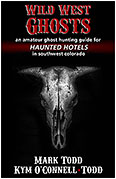
Wild West Ghosts, by Mark Todd and Kym O’Connell Todd may turn some readers into believers. The cover describes the book as “an amateur ghost hunting guide for HAUNTED HOTELS in southwest Colorado”, but it is so much more. Wild West Ghosts might be more accurately described as a travel guide for ghost hunters, outdoors enthusiasts, tourists and history buffs alike.
In addition to the detailed instructions provided for amateur ghost hunters, which lay out the methodology and equipment which the Todds used to achieve their results, and accounts of the local ghost lore of each area, they’ve included vivid site descriptions and colorful area histories which add an old west flavor. In addition, an outline of contemporary area attractions for each site is provided for visitors looking for more than ghosts on their vacation, including highlights of the area, Annual Festivals and events, and cultural and recreational opportunities.
By design, the locations chosen are a bit off the beaten path. The southwestern Colorado locations visited include Creede, Crested Butte, Cripple Creek, Del Norte, Delta, Fairplay, Gunnison, Norwood, Ouray, Paonia, South Fork, and Twin Lakes. For each location is provided with an account of the Todds visit, including details of any strange or ghostly phenomena they encountered either on their spirit box or EMF meter. Many accounts include ethereal conversations they were unaware of at the sites, which were discovered only after they were able to play back audio-only recordings. Their experiences are related in conversational tone, with professional manner and a dash of humor.
For those on a spirit quest, ghost hunting instructions are given in simple, easy to understand terms, ideal for first time ghost hunters. The authors thoughtfully included an account of their test run, made to familiarize themselves with the equipment, along with the lessons that they learned, so those thinking of trying their hand at the ghost hunting thing need not make the same mistakes. Related photos and maps locating each site have also been included to enhance both reading and ghost hunting experiences.
Mark Todd and Kym O’Connell Todd are partners in life, as well as in writing. They reside in the Gunnison area, where Mark teaches creative writing at Western State Colorado University. Their previous works as a team include the humorous, quirky Silverville Saga: Little Greed Men, All Plucked Up and the Majick Outhouse, which all revolve around a fictional Colorado mountain town and keeps readers chuckling to the last pages. To learn more about the Todds and their writing, visit their website, Write in the Thick of Things.
I give Wild West Ghosts five quills. 
Share this:

Past and Present come together to tell the story of “Escape from Witchwood Hollow”
Posted: February 5, 2016 Filed under: Book Review, Fiction, Uncategorized, Young Adult | Tags: Book Review, Books, Young Adult 3 Comments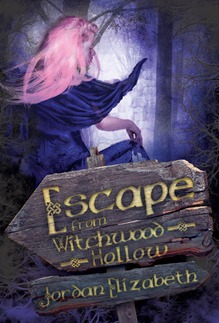
I can’t be sure of the accuracy of some of the historical details and there were a number of typos which were slightly distracting from the story. Other than that, I found Escape from Witchwood Hollow, by Jordan Elizabeth, to be a carefully crafted tale, which braids together multiple time periods with skill and talent. Escape from Witchwood Hollow is a highly entertaining YA novel, that will charm and captivate readers, both young and old.
The legend of Witchwood Hollow begins in the 1600’s, when an English noblewoman is run out of town, accused of being a witch, and she hides in the surrounding woods. To avoid detection, she places a spell on the hollow where she chooses to make her home. Those who enter the hollow, never return and the legend grows.
Jordan Elizabeth inter-weaves the story of the noblewoman with the stories of two other young women, Abertine from the 1800’s and Honoria, a young woman of modern times, into an intricate pattern that fits into the bigger legend in a way that makes her tale easy to follow and fascinating to unfold. Each young woman is connected with the legend, each in her own way, but it seems that Honoria holds the key. But, Honoria has her own ghosts to deal with, when she is left an orphan following the attacks on the World Trade Centers.
I give Escape from Witchwood Hollow four quills.

Share this:

Time Flies
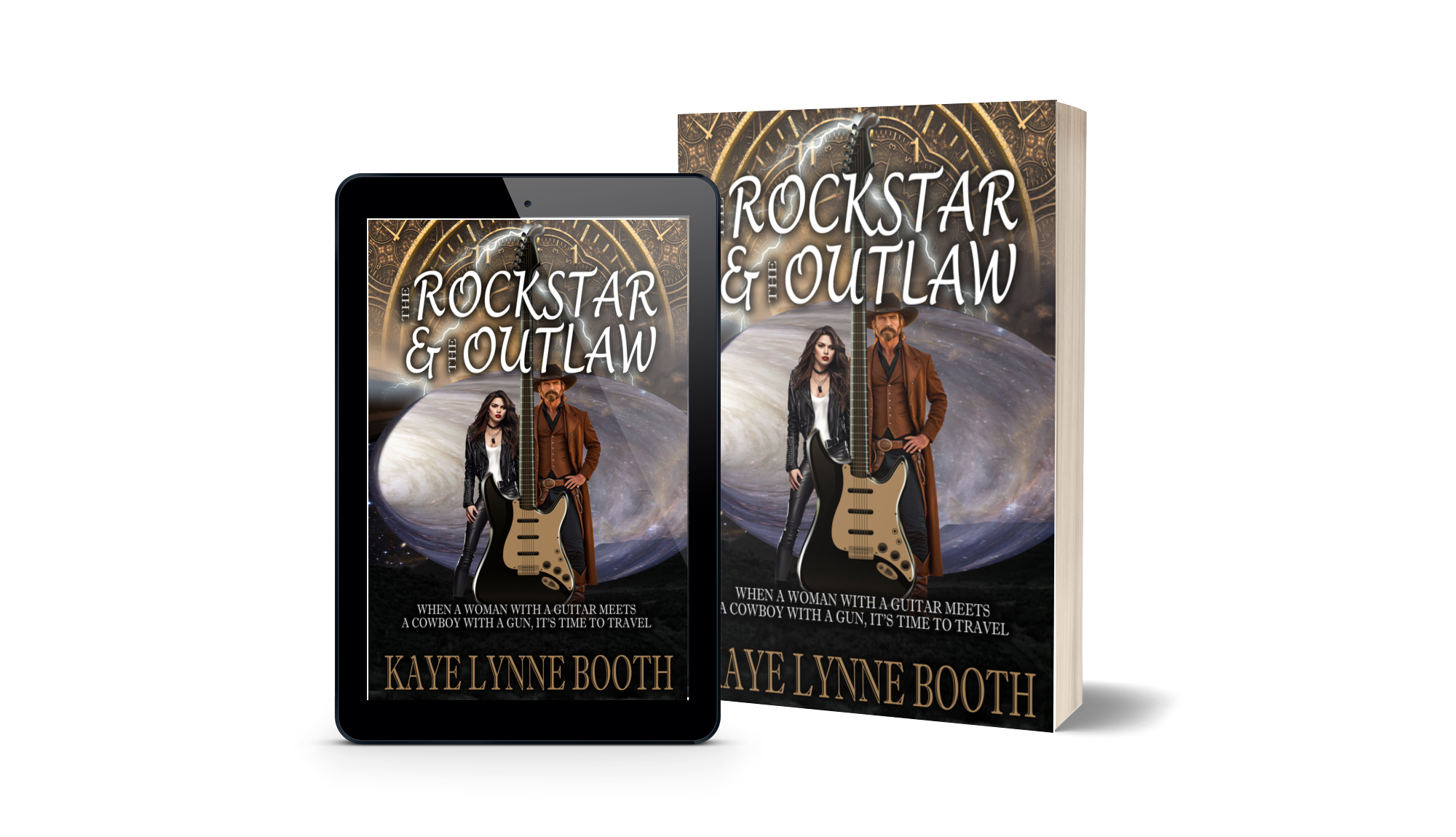
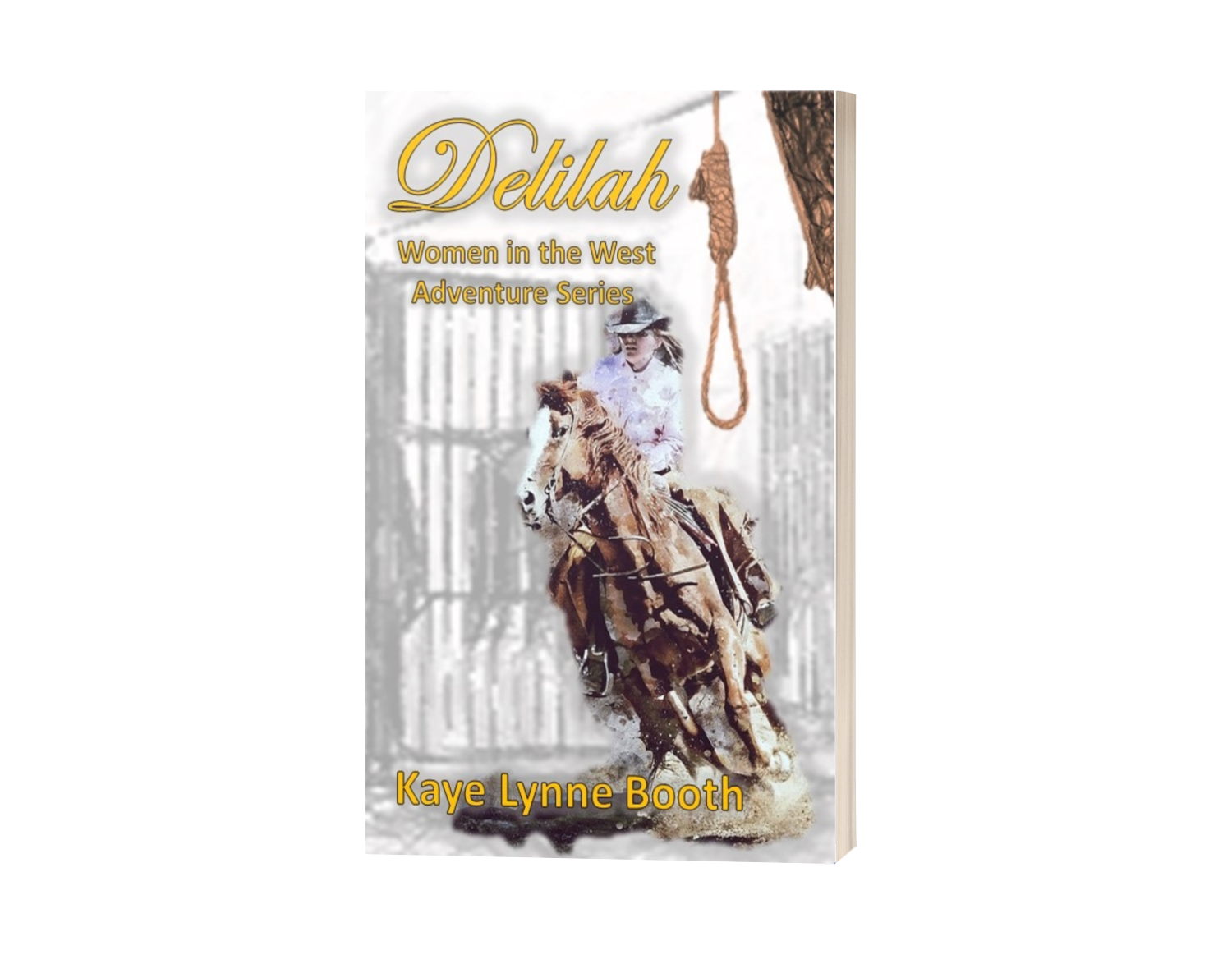
Posted: January 12, 2014 Filed under: Fantasy, Fiction, Mystery, Western, Writing | Tags: Books, Fantasy, Fiction, mystery, New Year, Western, Writing Leave a comment Wow! It’s 2014 and I just realized how long it’s been since I published here, I’ve been busy earning my degree, along with the many other demands that life places on all of us. But hard work and dedication pays off. In fact, since I began the MFA program at Western State Colorado University, I’ve produced rough drafts for two novels, which I’m now working on revising. The first is a western, Delilah, and the second is a middle grade mystery, The Adventures of Ann and Kinzi. I’m currently working on a mythological fiction/fantasy/science fiction novel, with the working title, A Playground for the Gods, which I’m considering using as my thesis.
Delilah is a tough young woman who grew up on the Colorado frontier. On her way home to the San Luis Valley, she’s brutally raped and left for dead, sending her on a quest for vengeance. Her hunt for her tormentors leads her to the Colorado mining town of Leadville, where the colorful inhabitants work their way into Delilah’s heart and give her hope for a future she’d thought lost along with her innocence. Now she must stay alive and protect her new-found friends as she faces the many dangers of the western wilderness and the outlaw elements of the growing new Colorado territory.
The Adventures of Ann and Kinzi is the story of two young girls growing up during the depression. Their shared love of animals and the fact that they’ve both lost their mothers are the common ground on which cements their friendship. When strange things start happening at the McViddie farm, where they care for the horses, and one of their classmates disappears, Ann and Kinzi set out to solve the mystery and save their friend, but they must do it without being caught by the kidnapper themselves.
In A Playground for the Gods, Inanna is the goddess of love and war on a quest to save humanity. The foolish judgement of men and their misuse of the technology the gods have provided have brought them to the brink of self-destruction and convinced the gods that humanity is not ready to receive the secrets of long life and powers that would make them godlike. They’re preparing to find a new planet on which they hope to find a new species to bestow their gifts upon. Inanna must prove that humans are worthy of their godly gifts, and convince them not to leave humanity in such a mess.
That’s it. That’s my excuse for neglecting this Writing to be Read blog. Now all I can do is ask forgiveness from my readers and offer the promise that if they stick with me, I promise to blog on a regular basis in the coming year. I don’t foresee that I will abandon novel-writing, but I do plan to try to organize my time better, so I’ll be able to commit to at least two or three posts a month. I hope you will all join me for the journey.
I’d also welcome any feedback on which of the above stories capture your interest and why. Comments are always appreciated.
Share this:

“Unfinished Business” by Tim Baker an entertaining read
Posted: September 25, 2013 Filed under: Book Review, Fiction, Uncategorized | Tags: Books, Fiction, Tim Baker, Unfinished Business 2 Comments
“Unfinished Business” by Tim Baker
No one is ever ready to die because we never know when our time is up. Some, who die of a terminal illness, may know that death is approaching and have time to put their affairs in order, but death strikes most unprepared and they leave this life with unfinished business hanging… well, unfinished. Unfinished Business by Tim Baker is a creative and original story that explores the possibilities how the universe may balance the scales and take care of those things that have been left unfinished by departed souls. This delightfully entertaining story will tickle your funny bone and keep you guessing.
When Meg Seabury loses her friend and mentor, Lita, she inherits an unexpected gift, although at times she wonders if it isn’t a curse. Suddenly, Meg is able to see the final thoughts of those who cross the threshold of the funeral home where she works, and she soon learns that it is up to her to finish what they didn’t have the chance to take care of. Her new abilities lead her on a strange roller-coaster ride to places she would never go and compels her to do things she would never do in her old “normal” life. Not all that’s left undone are positive events. Meg finds she doesn’t have a choice but to carry through, restoring the balance of the universe, even if it leads her into dangerous situations or could land her in jail.
Unfinished Business is now added to the list of novels by Tim Baker recommended by this reviewer, which also includes Water Hazard, No Good Deed, Pump It Up, Backseat to Justice and Living the Dream. All Tim’s books are available at www.blindoggbooks.com.
Share this:

“No Good Deed” Keeps Readers Guessing
Posted: January 16, 2012 Filed under: Book Review, Uncategorized | Tags: Books, No, Reviews, Tim Baker 4 Comments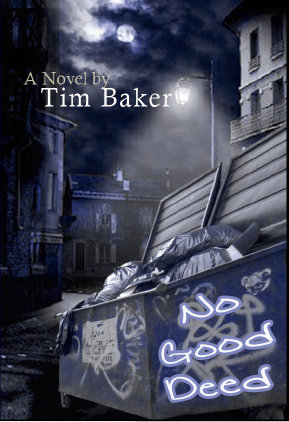 A large sum of mob money is suddenly up for grabs in “No Good Deed”, by Tim Baker. Nobody knows where it is, but everyone is trying to find it. A betrayed girlfriend whose looking for answers, two wise guys who haven’t got a clue, a grounds maintenance worker out for a piece of the big pie, and a guy who is down on his luck and sees an opportunity to turn his life around are thrown together by some unanticipated circumstances. No one is who or what they seem to be and wrong assumptions lead to mayhem in a race to get the cash. Kurt is looking for a respectable life and someone to share it with, but what he gets is trouble around every turn. Candy is looking for answers as to why her boyfriend would plan a new life that didn’t seem to include her, unwittingly placing her own life in danger. Al is looking to regain the life that he lost any way that he can. Howard is just looking for some easy money, but unknowingly sets all of them up for an enormous fall. Not until the battle is over, will readers know who will come out on top, and who won’t come out at all. “No Good Deed” is a truly entertaining story that will keep readers turning the pages just to find out what will happen next.
Share this:

It’s Up to You, the Reader
Posted: December 22, 2010 Filed under: Book Review, Writing | Tags: Aunt Lou, Book Review, Books, Children's Books, Chosen, Chris Keys, Cynthia Vespia, Demon Hunter, Fiery Dragons, Fishing Trip, Ghost Stories, I'll be There to Write the Story, Laura Resau, Midnight Ride of Blackwell Station, Mishka Zacharin, Mosquito, Naked Edge, New Year's Resolutions, Poetry, Raw Edges, Reprisal!, Review, Ruby Notebook, Secret to Lyinig, Spirit Lens, The Last Lie, The Truth Comes Out, Thomas Merton, Tim Baker, Water Hazard, Writing 2 CommentsNew Years is almost here and what writer doesn’t include in their list of resolutions a resolve to improve their writing? In 2010, I had the privilege of reviewing many truly good reads, by some really awesome authors. With 2011 just around the corner, I thought it might be beneficial to take a look at those reviews to see what worked and what didn’t. The only problem is I don’t really have an unbiased opinion, so I thought that I’d leave it up to you. So, here are links to twenty-two book reviews, both here and on the Southern Colorado Literature Examiner. Please take a look at them, if you haven’t already, and then vote for the ones that you think are the best in the comments section. You can choose more than one, but please include a brief explanation as to why you liked each particular review, or why you didn’t, so that I can identify areas that might need some work. If you read the book, do you agree or disagree with my review? I will approve all comments as long as they are not downright nasty. Next week I will publish a list of the top reviews, according to you, the readers. I couldn’t do it without you.
“The Ruby Notebook” holds the key to many secrets
When “Mosquito” gets hold of you, it sucks you in and doesn’t let go
Anna Strong is a force to be reckoned with in “Chosen”
Storyline in “The Truth Comes Out” keeps readers guessing
You’ll think twice about water after reading “Water Hazard”
“Reprisal! The Eagle Rises” gives readers something to think about
“I’ll Be There to Write the Story” – A true tale that will touch your heart and stir your spirit
“The Last Lie”: a perplexing tale that will keep readers guessing
“Why Did This Happen to Me, Aunt Lou?” Inspires and Delights
“Killing the Cobra” is packed with action
“The Midnight Ride of Blackwell Station” is delightfully entertaining for all ages
“The Secret to Lying” holds the key to more than one secret
“Raw Edges: A Memoir”: a journey of self discovery and revelation
“Star in the Forest”, a glimpse of reality through a young girl’s eyes
Pamela Clare brings another sizzling romance in, “Naked Edge”
“The Spirit Lens”, a spellbinding tale that will captivate readers
“From the Spleen of Fiery Dragons”, by Mishka Zacharin
From the Old Blog to the New – Reviews of “Demon Hunter: The Chosen One” and “Demon Hunter: Seek and Destroy”
“The Fishing Trip: A Ghost Story”, by Chris Keys
“Beneath the Mask of Holiness” depicts the human side of Thomas Merton
“The Secret of Everything” is an absolute must read










Pride and Prejudice and Zombies: Classic Meets Monsters
Posted: February 26, 2016 | Author: Author the World | Filed under: Book Review, Commentary, Opinion, Uncategorized | Tags: Books, Movie Review, Writing | 1 CommentPride and Prejudice and Zombies (PPZ) takes a classic piece of literature and gives it a modern horror twist by adding zombies to the story. While the 2016 movie is based on the 2009 book written by Jane Austen and Seth Grahame-Smith, the result is an entirely different thing.
The book plot is essentially the same as the original Pride and Prejudice. The Bennett sisters are single women in want of husbands, and their mother is determined to find them each one. When the eldest sister, Jane, meets the well-to-do Mr. Bingley, she’s immediately smitten and so is he. The sparks between Jane’s sister, Elizabeth, and Bingley’s friend, Mr. Darcy, however, are not of the same sort. Elizabeth and Darcy go through a series of verbal sparring matches, letting their pride and prejudice get in the way of their chance at love.
Seth Grahame-Smith’s book edition adds zombies in the mix, and turns the Bennett sisters into skilled fighters. There are other minor changes, like at one point a verbal sparring match between Darcy and Elizabeth is turned into a physical fighting match, but overall the story of the PPZ book is much the same as the original novel there are just zombies in the world.
The PPZ movie, however, did what I wish the book had. The zombies become a crucial part of the story rather than just a world detail and minor complication. The premise for the PPZ movie is that zombies have taken over much of England except for a barricaded safe zone. Darcy is a Colonel in the war against the zombies, and a skilled fighter. The Bennett sisters have all been trained in Chinese martial arts and sword fighting, and are skilled fighters themselves. The fight against the zombies, and their growing numbers, is much more central to the plot of the movie and I think it works better than the zombie element in the book. The romantic plot of the movie follows much the same plot as the original book, with the exception of Wickham and Lydia.
I think the book PPZ is enjoyable because it’s essentially Pride and Prejudice just with the added elements of zombies. That being said, I found it annoying that the zombie element was not integrated into the plot more and that it seemed frivolous. I dislike things that aren’t essential to the story being thrown in. The PPZ movie, however, fixed that for me and did it in a way I enjoyed. The zombies aren’t just your typical walking dead, they’re an actively malevolent threat that leaves potential for a sequel. However, the movie did have issues of its own. If you can make it past the first thirty minutes (more details of issues below the spoiler tag), things do settle out and end up in a fun story, but there are some things to overlook to get there.
Overall, it’s worth the watch if you enjoy both zombie movies and Pride and Prejudice. Just be prepared for a mix of genres, and don’t hang your expectations too strongly on this being your typical Pride and Prejudice remake. By the end, I was ready to watch the second one (if it ever gets made), even though the beginning falters.
**** MOVIE SPOILERS BELOW ****
The biggest issue in the movie is the first thirty minutes. It’s clear the writers struggled with how to start this version of the story because it’s kind of all over the place tonally.
Tonally, there are some awkward moments that just don’t quite sit right. For example, early on there is a strange sexualized moment with Darcy and a doctor who is checking him over. Which I understand is supposed to foreshadow the doctor is not good at his job and has let an infected person into the house, but it isn’t blended well into the story. Plus, later on there are several moments where the Bennett sisters are getting ready for the party at Mr. Bingley’s when they are arming themselves that are also sexualized in the same odd way. While I didn’t mind that it was equal opportunity sexualization, it created a strange pause in the story and just didn’t blend smoothly. Then the sexual element would disappear and it’d feel like the storytelling shifted.
The tone problem continued early on when it came to humor as well. There were some great humorous moments – Matt Smith as Mr. Collins was wonderful – but they also weren’t blended in with the story well. They stuck out here and there like they were saying “this is supposed to be funny.” And while a lot of the moments were funny, they were also awkward at times and interrupted the story flow.
One moment specifically where I think it was meant to be humor but it just struck out for me, was when Darcy sees Elizabeth and the Bennett sisters fight the zombies at Mr. Bingley’s party. It goes from this big fight sequence to focusing on Darcy, and everything stops while he spouts this speech about Elizabeth and how he sees her differently now. Then it goes back to the action. I interpreted it as intending to be funny, but it felt instead like they paused the action movie to have an “Austen moment” and then hit play again. Which, could have been funny, but it almost didn’t feel deliberate which turned it into an awkward moment.
Once the story got going, however, things definitely balanced out and I felt like I could orient myself better in the story. The first thirty minutes just had me confused as I tried to figure out what type of story I was watching. That being said, I feel safe in saying that this is not an easy to classify movie. It’s not quite horror, not quite romance, not quite comedy… It definitely has some fun action moments, but it also doesn’t follow the typical action lines. It’s truly a crossover movie, and once you accept that while watching it becomes easier to stay with it. You just have to make it through the beginning and let yourself accept it as something new.
Honestly, I think this is the sort of movie that would really benefit from a dual viewing. The first to get oriented in the method of storytelling and cross-genre elements, and the second so you can just sit back an enjoy.
If the beginning was fixed, this would easily be a 4-4.5 Star movie for me, but as it stands, I can only give it:
3.5 Stars
Share this: