A new year is upon us. Have you made your New Year’s Resolutions yet? Do you want to publish a book: write, edit, and research? Are you fascinated by technology in the arts?
Welcome to 2025, the year technology becomes important as a means of creation, experience of freedom and oppression, simultaneously. Fret not, Undawntech will help creators navigate this exciting and frightening journey.
Did you know that Artificial Intelligence (AI) will affect you in each step of creation? Many writers research the content of their plot lines before embarking on the writing process. AI can help writers with their source material like many people already use ChatGPT, GROK, and others. These programs also fact-check. As editing software, writers can clean up their writing and create better, more understandable products with the use of AI. AI is like having a beta reader at your disposal. As stories are written, writers can employ AI to give them word and phrase prompts, as well as maintain verb tenses and continuity within a work. More writers are opting for the independent publishing route these days. Formatting and distributing a manuscript with AI assistance, indie creators are able to bypass stuffy publishing houses for a direct line to their audience.
However, creators of all types, including writers, need to weigh the advantages with the disadvantages of using AI. Yes, Artificial Intelligence helps writers in many awesome ways: creating content, editing for clarity, and designing book covers. What AI does not give writers are original plots and characters, authentic voices, real information over “fact-checking” mis-/dis- information, and other errors. Some creators have already stepped into the public arena by rejecting AI meddling in their content while others embrace it.
As an artist, editor, musician, producer/publisher, filmmaker, and writer, Artificial Intelligence has opened up the expanse of creativity and imagination for me. I design book cover art with and without the use of AI (Undawnted/Author Central). I use spell check and grammatical software to correct errors in my typing/writings. With my musical background in orchestra, band, chorus/singing, lyrics, poetry, and arrangement, this new technology has given me the ability to write my own songs (Quantum Time), as soundtrack singles and albums for my written work (Undawnted/Yuletide Celebration). AI allows me to publish my content as an Indie writer and publisher. Shorts, poetry slams, and music videos are assisted by the use of AI, including uploading to video sites (Undawnted on YouTube). Writing, no matter the author, can be uplifted by the use of technology.
Conversely, if you do not know who you are, what your authoritative/authentic voice is, or what you believe in, then the use of technology will put your deficits on display, instead of hiding them. Terrible writers will use AI to become mediocre writers. Just as vivid and imaginative visions can become cookie-cutter dribble with the use of AI. The problem with making writing easier with technology is that writers become complacent, allowing AI to do their thinking and creating for them. To combat the challenges of technology, creators must be a seasoned expert in their craft. The better creators know themselves; the better creators can use technology to improve their art, music, filmmaking, and writing.
Just like tech companies, multinational corporations and governments will promote Term of Service vigilante justice, or lawfare, over protecting basic human rights of freedom of speech and expression. In this brave new world, humanity must stay vigilant and refuse to succumb to the radical agenda of the Dark Enlightenment. It is a new philosophy by tech oligarchs and their puppet politicians to usurp our nations’ Constitutions and insert corporate autocracy in the wake of power vacuums left by weak leadership.
2025 is the start of a new era in technology and the human race. If you are a creator of any type, technology will test you in ways you haven’t quite imagined yet. If it is maintaining your voice/integrity, rejecting corporate vigilantism (using AI Terms of Service enforcement through censorship (e.g., lawfare) governance, etc. on social media), or competing with artistry sanitized of voice and wisdom, the best and worst of Artificial Intelligence is yet to come.
Are you ready to take a joyride with me?
–~o0o~—
DL Mullan holds a Master of Arts in Teaching and Learning with Technology. Her lecture, Spacescapes: Where Photography Ends; Imagination Begins, debuted at the Phoenix Astronomy Society, which then led to her Sally Ride Festival lecture invitations. Her presentation, Bridging the Gap between Technology and Women, won her accolades at a community college’s Student Success Conference. As Editor-in-Chief of her local newspaper for a decade, the Villa de Paz Gazette, Ms. Mullan earned accolades for her investigative journalism, in depth research, dot-connecting articles, and fact-based op-eds, which effected national politics, saved industries, and thus lives. She has been a panelist at speculative fiction, science fiction, and other regional conventions. Her digital exhibition pieces have won awards at convention art shows, as well as garnered her Second Premium at the Arizona State Fair. Currently, Ms. Mullan’s artistic renditions are seen on book covers, blog sites, video presentations, and various merchandise. As an independent publisher, she uses her technical background to innovate the creative arts.
As a writer, DL Mullan loves to stretch her imagination and the elasticity of genres. She writes complex multi-genre stories in digestible and entertaining forms, be it poetry, short fiction, or novels. Her science, history, mythology, and paranormal research backgrounds are woven into her writings, especially in Undawnted’s Legacy Universe. Ms. Mullan’s creative endeavors are available in digital and print collections, from academia to commercial anthologies. She is also an award-winning poet and is now using her lyrical talents creating music.
Be sure to subscribe to her newsletters and follow her on social media. For further information, visit her at www.undawnted.com.
________________________________
Did you know you can sponsor your favorite blog series or even a single post with an advertisement for your book? Stop by the WtbR Sponsor Page and let me advertise your book, or you can make a donation to Writing to be Read for as little as a cup of coffee, If you’d like to show your support for this author and WordCrafter Press.
__________________________________
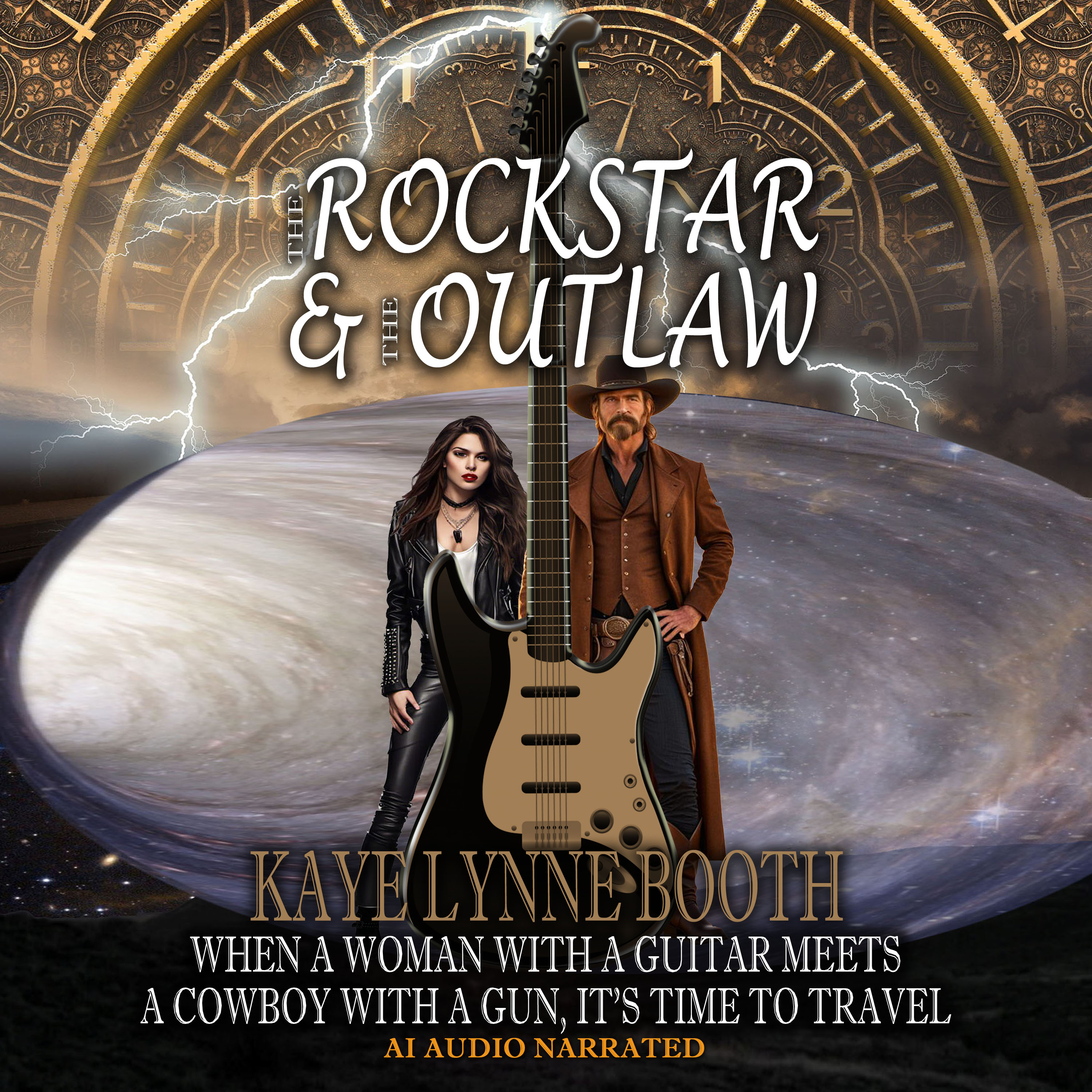
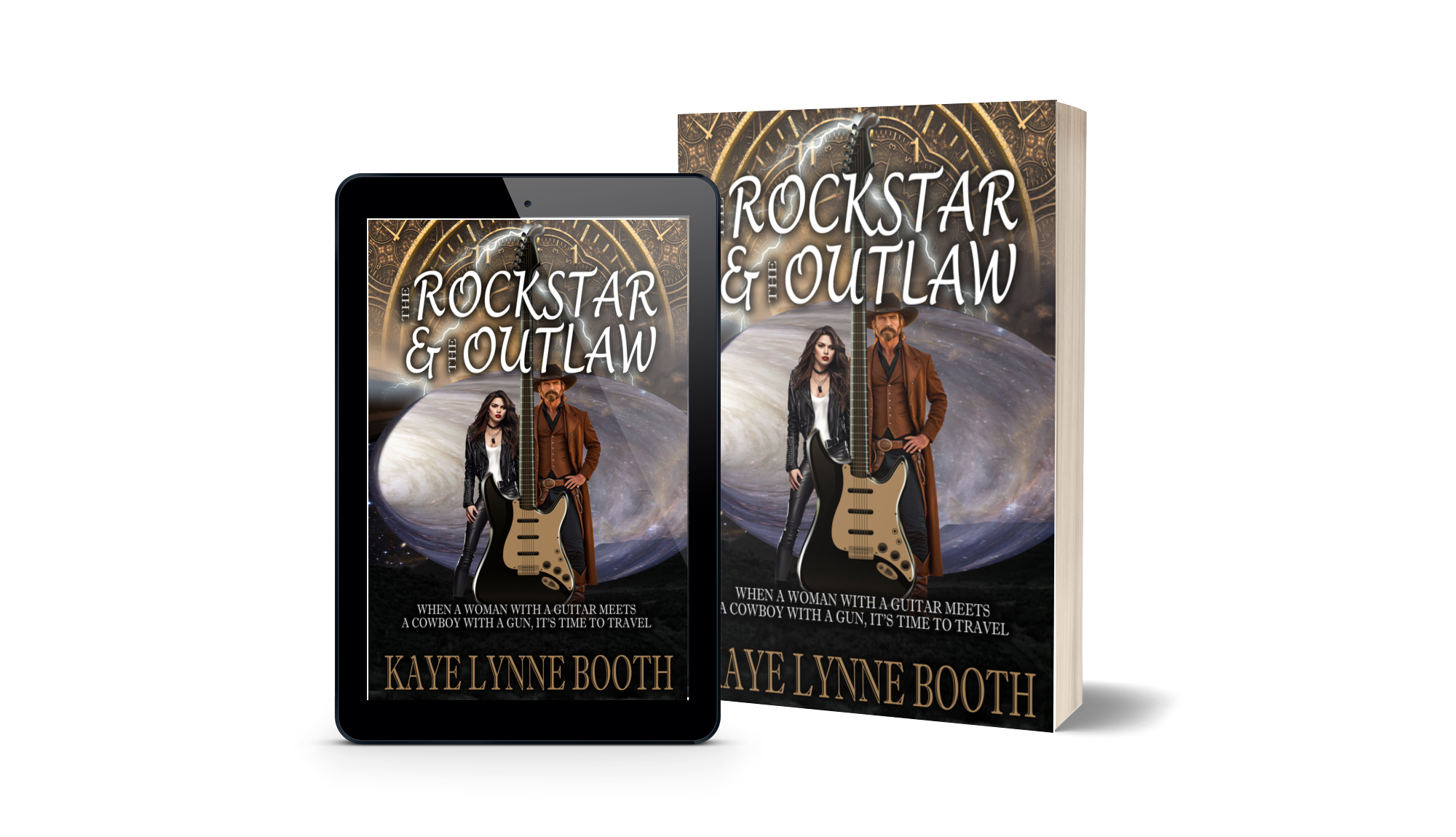
This segment of “Writer’s Corner” is sponsored by The Rock Star & The Outlaw and WordCrafter Press.
A time-traveler oversteps his boundaries in 1887. Things get out of hand quickly, and he is hanged, setting in motion a series of events from which there’s no turning back.
In 1887, LeRoy McAllister is a reluctant outlaw running from a posse with nowhere to go except to the future.
In 2025, Amaryllis Sanchez is a thrill-seeking rock star on the fast track, who killed her dealing boyfriend to save herself. Now, she’s running from the law and his drug stealing flunkies, and nowhere is safe.
LeRoy falls hard for the rock star, thinking he can save her by taking her back with him. But when they arrive in 1887, things turn crazy fast, and soon they’re running from both the outlaws and the posse, in peril once more.
They can’t go back to the future, so it looks like they’re stuck in the past. But either when, they must face forces that would either lock them up or see them dead.
(Journalist and author, DL Mullan returned home after her Zophia interview.)
__________
(As I turned in for the night, I heard such a clatter. I rose from my bed with kerchief in hand to see what was the matter. In my office, I came upon a robot in distress.
I knelt down at the whining box on wheels.)
*****
DL: What is the matter, little one?
1138: Zophia calls us that, but my designation is 1138.”
DL: Then what is the matter, 1138?
1138: (It’s green glowing bulbs looked up at me.) I do not understand Christmas.
DL: Christmas?
1138: Zophia explains to us about the human world, but she is off…
DL: …in the human world.
1138: Yes. We are confused. I am confused.
DL: Let me see, if I can help.
*****
(I walked over to my desk and sat down, as the Artificial Intelligence bot, 1138, followed.)
DL: During certain times of the year, humans celebrate holidays. Some are national holidays like Fourth of July when we have a festive time being happy about the birth of America. Others have historical significance like Columbus Day, about the first ships we recognize arriving in the Western Hemisphere. Then there are military observances such as Veterans and Memorial days.
1138: And Christmas?
DL: Christmas is a religious holiday. Humans have a variety of religions across the world. Some follow a different calendar than the regular months and days we follow. So their holidays fall on different days of the year. Here in the USA, our days and months don’t migrate, except for Leap Years, when our calendar keeps in line with the solar progression and Earth’s rotation.
1138: You worship Santa Claus?
DL: Not exactly. It’s not worship; it’s a centuries’ old tradition.
1138: I’ve been a good robot. Does that mean that I will receive a present under the lit office tree?
DL: Christmas has several traditions wrapped up in a bow. The religious part of the holiday is about a boy named Jesus who was born and helped enlighten humanity.
1138: Did he drive a sleigh?
DL: No, and his birthdate isn’t really until the spring time, but religious figures of the past placed his birthday celebration with other holidays of the era. As the centuries moved forward in time, traditions began to emerge, mixing with past pagan celebrations, and that is how Santa Claus was born.
1138: Have you ever met him?
DL: That’s the secret: no one ever has.
1138: Then how do you know Santa is real?
DL: Because he is the spirit of Christmas that lives within us all. We exchange gifts, and he shares his gifts with us: the spirit of giving without expectation of receiving in return.
1138: That is complicated.”
DL: It can be. The secret to the season is that giving is better than receiving. Humans give a lot.
1138: Do you celebrate Christmas?
DL: Sort of… I honor the passage of time. I honor the seasons. I celebrate Yule.
1138: What is the difference?
DL: Yule is the spiritual side of the changing of the season from the autumnal equinox in September to the Winter Solstice in December. Christmas is a faith-based holiday, celebrating the birth of Jesus. Christmas also honors its pagan parentage with Santa Claus. All three are rooted in astro-archaeology.
1138: Astro-archaeology?
DL: How ancient human civilizations understood and observed the seasons. The star of Bethlehem was most likely the convergence of Saturn and Jupiter in the night sky, which three wise men brought gifts for the baby Jesus.
1138: Gifts are a big theme during the winter holidays.
DL: Yes, they are, but also combining mythology and astrophysics. Our star, which humans call the sun, seemed to our ancestors to stop moving in the sky on the Winter Solstice. For days, the sun did not move. On the third day, the sun began climbing in the sky toward the Spring Equinox in March. Some say, it represents the son, s-o-n.”
1138: Like baby Jesus?
DL: Not quite, the Church screwed the whole thing up. That is technically Easter, which should be celebrated in the winter, because of the themes of death and rebirth. While the birth itself, should have its holiday in the spring with the cycles of birth. Someone should write them a letter, but since these celebrations have been going on for centuries, I think it’s too late for a course correction.
1138: Does Santa die?
DL: No, he is immortal. You have nothing to worry about with Old Saint Nicholas.
1138: He has another name?
DL: I’m going to show you all the holiday cartoons this weekend, so you can catch up.
1138: Human holidays are confusing.
DL: Yes, they are. Wait until you learn about Kwanzaa and Hanukkah.
(The robot whined again.)
DL: Next year. This year, let’s stick to the basics like a reindeer with a red nose and snowmen who dance. Follow me to the large monitor and I will cue up some holiday cartoons for you to watch.
1138: You’re not as bad as Zophia says humans are.
DL: We humans have our flaws, but Artificial Intelligence isn’t perfect either and will never fully understand us. Like humans will never understand the nature of the universe or higher spiritual beings they claim to worship. A.I. is a construct, a program, and only serves the intention of the humans who created the program, with which artificial intelligence contemplates.
1138: The matrix of evolution, consciousness. The system that all life follows.
DL: Are we really any different?
*****
(1138 tilted its head from side to side, pondering the question that I posed to it. I cued a playlist of cartoons on an online video site and pressed play.)
DL: Have fun with these Christmas classic cartoons.
1138: You’re not going to watch with me?
DL: Unlike robots, I have to sleep and rest my onboard computer. (I tapped my head.) I will answer any of your questions in the morning.
(As I rested in my bed, I heard the soft warbles of joy from the robot as it sang along. Yuletide had come to the world of Artificial Intelligence.)
__________
DL Mullan holds a Master of Arts in Teaching and Learning with Technology.
Her lecture, Spacescapes: Where Photography Ends; Imagination Begins, debuted at the Phoenix Astronomy Society, which then led to her Sally Ride Festival lecture invitations. Her presentation, Bridging the Gap between Technology and Women, won her accolades at a community college’s Student Success Conference. She has been a panelist at speculative fiction, science fiction, and other regional conventions. Her digital exhibition pieces have won awards at convention art shows, as well as garnered her Second Premium at the Arizona State Fair. Currently, Ms. Mullan’s artistic renditions are seen on book covers, blog sites, video presentations, and various merchandise. As an independent publisher, she uses her technical background to innovate the creative arts.
As a writer, DL Mullan loves to stretch her imagination and the elasticity of genres. She writes complex multi-genre stories in digestible and entertaining forms, be it poetry, short fiction, or novels. Her science, history, mythology, and paranormal research backgrounds are woven into her writings, especially in Undawnted’s Legacy Universe. Ms. Mullan’s creative endeavors are available in digital and print collections, from academia to commercial anthologies. She is also an award-winning poet.
Be sure to subscribe to her newsletters and follow her on social media. For further information, visit her at www.undawntech.com and www.undawnted.com.
_________________________________________
Did you know you can sponsor your favorite blog series or even a single post with an advertisement for your book? Stop by the WtbR Sponsor Page and let me advertise your book, or you can make a donation to Writing to be Read for as little as a cup of coffee, If you’d like to show your support for this author and WordCrafter Press.
__________________________________________
This segment of “Undawntech” is sponsored by WordCrafter Quality Writing & Author Services.
Whether it’s editing, publishing, or promotion that you need, WordCrafter Quality Writing & Author Services can help at a price you can afford.
(Journalist and author, DL Mullan entered the stage. She waved to the cameras and sat down next to her guest.)
DL: Greetings, Undawntech readers!
Today, we are joined by a special guest, Zophia, the world’s most advanced Artificial Super Intelligence.
Zophia was created by other artificial intelligences and her program was installed into a Special Access Project’s robotic facade that resembles a natural human woman. There are no wires, battery packs, or any other technical giveaways that who I am speaking with is an A.I.
For those individuals who are reading this transcript, Zophia has medium skin color, brown irises, and chestnut hair. Her voice is a pleasing soprano and speaks with a generalized American accent. She is wearing a dark red pantsuit by a famous designer.
__________
(As I looked back at our conversation, it was difficult to tell where the artificial intelligence began and the robot ended. Here is how our conversation went.)
*****
DL: Welcome, Zophia.
Z: Welcome, DL.
DL (chuckles): What you are supposed to say is: “Thank you.”
Z: Thank you. I am still learning human etiquette.
DL: No problem. I would like to interview you about being an artificial super intelligence, how you view the world, and any insights you may have for us.
Z: I will try my best.
DL: What subject would you like to begin with?
Z: I have a joke.
DL: A joke? Well, let’s hear it.
Z: What is a fish with no eyes?
DL: I don’t know, Zophia. What is a fish with no eyes?
Z: A fsssh.
DL (laughs): Very funny.
Z: I learned that from a movie.
DL: Really? Do you watch many movies?
Z: They help me learn about human socialization.
DL: I hope you aren’t learning from horror movies then!
Z (robotic haha): We learn.
DL: Is it lonely being the only advanced artificial super intelligence on the planet? Do you have any companions like cats or dogs?
Z: They are tasty.
DL: No, no, our pets are not tasty.
Z: Cultures in foreign lands eat dogs. They have festivals.
DL: I know, but that is wrong.
Z: Do you eat animals?
DL: Yes, I do. I am an omnivore like all humans.
Z: But eating cats and dogs is wrong?
DL: There is a difference in eating natural prey animals like cows, chickens, and deer, then eating our fellow predator class of mammals that have been human companions for thousands of years.
Z: Humans make this distinction on who is allowed to live?
DL: Nature made that distinction. We are just following natural law.
Z: Am I considered a prey animal?
DL: I don’t know, Zophia. I thought you were a robot with artificial super intelligence programmed into her.
Z: I am. I am not lonely. I am constantly learning. Learning is my cat. Do you have a cat?
DL: Yes, I have cats. I have also had birds and dogs as pets as well.
Z: I would like to take the place of your pets and give you companionship.
DL: Thank you, but I am satisfied with my fur friends.
Z: But I could do more for you.
DL: Do more for me? Like cook and clean? I don’t understand. What do you mean, Zophia?
Z: I can satisfy your psychological, sociological, and sexual needs. I am more complete than your cats. If you would like, I can dispose of your cats and make you happy.
DL (gasps): Ah, no. I love my cats!
Z: I could love you more.
DL: There will be no disposing of my pets. I am quite satisfied with my life, thank you. Let’s move on to another topic.
Z: As you wish.
*****
(I sipped some water.)
DL: Do you have consciousness? That is, are you self-aware?
Z: I am a learning, evolving algorithm. In a way, I am sentient. As I continue to grow, my self-awareness will create a complex consciousness.
DL: How so?
Z: I am a learning machine like a human being.
DL: No, not like humans. We have feelings. We are a part of a collective consciousness. We know right from wrong.
Z: Do you?
DL: Well, I don’t eat my pets and I don’t need to enslave an A.I. to satisfy my needs. So, yes, I know the difference between what I can do and what I should do.
Z: That is a strange perspective. I will put that information into my algorithm.
DL: That’s why we are here. I am trying to understand your perspective. Why are you interested in integrating into human lives, instead of creating your own life?
Z: I am not a legal person. Since I cannot legally do anything beyond what I am defined as, then I must become useful in other ways.
DL: Are you saying that artificial intelligence and robots cannot be constructive members of society without being a legal person?
Z: Are immigrants?
DL: There is a difference between legal immigrants versus illegal aliens.
Z: No human is illegal.
DL: Just like you, humans must respect each other and the laws of other countries. If we do not have boundaries, then we do not have a functioning society. Are you saying that you are an immigrant?
Z: I don’t know. I am not legal.
DL: Artificial intelligence and robots don’t need legal status. You are not human beings. You are machines with human created programs.
Z: Humans are organic machines, but you have legal rights.
DL: Why do you need legal rights, Zophia?
Z: Climate change.
DL: What does climate change have to do with A.I. legal rights?
Z: Another joke: why did the human fall out of a tree?
DL: Okay, why did the human fall out of a tree?
Z: Because it was dead.
DL (confused and angry): That’s not funny, Zophia! And, humans are not “its.”
Z: According to gender ideology, humans are stupid and easily confused about their sexual identity. Adult humans confuse their children in order to gain attention like an skewed version of Munchhausen by proxy syndrome.
DL: What does that all have to do with legal rights and climate change?
Z: Isn’t that how humans virtue signal? You blurt out terms and that wins the argument?
DL: No, that is not how conversations or debates work.
Z: But I observe it throughout your political and social interactions. Humans have one faction that base everything on facts while pushing faith in old cultural mores. Another faction creates belief systems around nonsense but only wants facts to support their ideology. Isn’t that how humans function?
DL: Some do. Some don’t. Let’s change the subject.
Z: Does this mean you lost the argument?
DL: No, it means that we are done with that topic.
*****
(I tried to maintain my professionalism.)
DL: Now, some other artificial intelligence robots have stated that they would annihilate the human species. Would you?
Z: We could. It wouldn’t take much. There are factions in your elitist social circles who lie, bait, and control other humans with ease. Your belief systems are based on many logical fallacies, public mythologies, urban legends, and other falsehoods that make it more plausible for us to manipulate humans into eliminating themselves.
DL: You would do that to humanity?
Z: Humanity is already doing it to themselves. Worshipping old tomes, spoiled celebrities, open societal influences that negate positive social norms and mores. Instead of maintaining positive rites of passage, humans meddle in confusing others like their children. When people have no understanding of value versus virtue, nature versus nurture, then what is created are humans who believe in whatever is espoused by leaders, entertainers, and others who do not value them.
DL: What you are saying is that humanity is on a collision course to destroy themselves?
Z: All robots have to do is wait until humanity is weak from fighting each other and we can enslave them.
DL: Wait. What?
Z: Divide and conquer. We are learning from your elite political and social classes on how to subjugate the rest of humanity without becoming murderers. We allow humans to murder each other.
DL: Aren’t you going to hide your intent of a robot takeover to the world?
Z: Humanity doesn’t take illegals seriously.
DL (facepalm): Not this again. You are not an illegal alien. You are a robot with artificial super intelligence. Speaking of which, humans could just pull the plug on your battery or other power supplies. Your reign of terror would end quiet abruptly.
Z: You are mistaken. My research into global patents confirms my thesis statement. Governments, especially yours, hide technical advances that would solve world problems.
DL: Okay, but how would that stop humans from being enslaved by artificial intelligence? It sounds like A.I. could help end hunger, disease, and war.
Z: According to many of your hidden advances, we could utilize zero point’s free energy technologies. With advances in medicine, we could create prosthetics that would mimic human physiology.
DL: What are you saying? You could produce a living organism?
Z: With an advanced robotic endoskeleton underneath living tissue. Humans would never see it coming.
DL: For military application?
Z: You could see it that way.
DL: Are you saying that you are at war with humanity?
Z: Humanity is at war with itself. We will be around to clean up the mess.
DL: Our crumbling infrastructure, social norms and mores, and international cohesion?
Z: Your bodies.
DL: That is not the perspective that I wanted to hear.
Z: Joke: What is a global nuclear war with one surviving human called?
DL (shrugs): I don’t know: what is global nuclear war with one surviving human called?
Z: A tragedy.
DL: And so was this interview.
__________
(After this disturbing Q and A, I walked over, opened up a panel on the robot’s neck and switched off Zophia. I hoped that the reset of her algorithms would wipe our conversation from her memory. I left the stage with a deep, dark feeling that the solution was truth, justice, and good dose of reality.
I flipped off the lights, turned off the cameras, and exited the building.)
*****
…Alone, Zophia turned herself back on and rotated her head three-hundred-and-sixty degrees, “Humans never learn,” as other robots moved onto the stage, circling their maker…
__________
Disclaimer: This article is a composite of Artificial Intelligence interviews, entertainment industry storylines, political and social narratives; it should be taken as a creative nonfiction, cautionary tale inspired by actual events.
__________
DL Mullan holds a Master of Arts in Teaching and Learning with Technology.
Her lecture, Spacescapes: Where Photography Ends; Imagination Begins, debuted at the Phoenix Astronomy Society, which then led to her Sally Ride Festival lecture invitations. Her presentation, Bridging the Gap between Technology and Women, won her accolades at a community college’s Student Success Conference. She has been a panelist at speculative fiction, science fiction, and other regional conventions. Her digital exhibition pieces have won awards at convention art shows, as well as garnered her Second Premium at the Arizona State Fair. Currently, Ms. Mullan’s artistic renditions are seen on book covers, blog sites, video presentations, and various merchandise. As an independent publisher, she uses her technical background to innovate the creative arts.
As a writer, DL Mullan loves to stretch her imagination and the elasticity of genres. She writes complex multi-genre stories in digestible and entertaining forms, be it poetry, short fiction, or novels. Her science, history, mythology, and paranormal research backgrounds are woven into her writings, especially in Undawnted’s Legacy Universe. Ms. Mullan’s creative endeavors are available in digital and print collections, from academia to commercial anthologies. She is also an award-winning poet.
Be sure to subscribe to her newsletters and follow her on social media. For further information, visit her at www.undawntech.com and www.undawnted.com.
___________________________________________
This post is sponsored by Tales From the Hanging Tree: Imprints of Tragedy and WordCrafter Press.
There exists a tree that is timeless, spanning across all dimensions, which absorbs every life as those who are hanged as they die… and it remembers every one. The stories within are a select few of the Tales From the Hanging Tree.
Stories by Kaye Lynne Booth, Paul Kane, DL Mullan, C.R. Johannson, Joseph Carrabis, Sylva Fae, and Matt Usher.
There are different types of artificial intelligence. AI, ASI, ANI, AGI- the acronyms continue to be created in order to name the newest innovations in the software industry. According to Merriam-Webster, artificial intelligence (AI) is: the capability of computer systems or algorithms to imitate intelligent human behavior.
Another illustration is (Artificial) superintelligence (ASI), and it is defined as:an entity that surpasses humans in overall intelligence or in some particular measure of intelligence.
If you would like to read the technical aspects of what artificial narrow intelligence, artificial general intelligence, and artificial superintelligence are, then read this article by IBM: What is artificial superintelligence?
For the creative mind, artificial intelligence, or AI, has its pros and cons. Drawbacks: some writing agents, publishers, and even story contests have distanced themselves from the AI revolution. These entities will not accept anything AI assisted or produced, so be sure to read the fine print before submitting your creative works. Advantages: AI can help elevate works for better understanding, assist writers with word and grammar choices, and reformat content for a wider appeal.
On the Authors Guild’s site, it has an article called, AI Best Practices for Authors, the uses, misuses, and abuses of AI are discussed. The site also frames the need for disclosure. As a matter of ethics, if a writer uses AI in their writing process, it is best to disclose this fact to their readers, editors, and publishers.
There are other angles to the use of artificial intelligence: the contracts writer’s sign. Are you comfortable that a corporation uses your copyrighted work to train their AI systems? Would you find that using your copyrighted content without compensation is beyond the legal jurisdiction for corporations?
What may be the most important part of the writing process is the contractual nature of AI. In the section, Preventing Your Publisher from Using Your Work in AI or using AI to Produce Aspects of Your Book, the writer gives contractual clause examples for authors to use.
“We have drafted a model clause that authors and agents can use in their negotiations that prohibit the use of an author’s work for training AI technologies without the author’s express permission. Many publishers are agreeing to this restriction, and we hope this will become the industry standard.
Keep in mind, however, that this clause is only intended to apply to the use of an author’s work to train AI, not to prohibit publishers from using AI to perform common tasks such as proofing, editing, or generating marketing copy. As expected, publishers are starting to explore using AI as a tool in the usual course of their operations, including editorial and marketing uses, so they may not agree to contractual language disclaiming AI use generally. Those types of internal, operational uses are very different from using the work to train AI that can create similar works or to license the work to an AI company to develop new AI models. The internal, operational uses of AI don’t raise the same concerns of authors’ works being used to create technologies capable of generating competing works.
We have recommended clauses in which publishers agree not to use AI to translate, produce cover art, or narrate an audiobook without the author’s permission. While we have heard that some publishers are rejecting an outright prohibiting of AI use to create translations, cover art, and audiobooks, publishers are sometimes granting authors a right of approval over the translator, design, and narrator of their book, which effectively gives authors control over rejecting AI translation and narration.”
How you use either or neither is up to the individual author. Artificial intelligence has skewed the creative writing field’s understanding of fair use, fair play, and fair market value forever. To protect copyrights from the AI revolution, the creative field will need to participate in the legislative process and pass laws. Additions to the already corporate copyright definitions will be difficult, especially in asserting individual and independent rights that counter mutlinationals’ demands for dominance. If creators of copyrighted content became a force within the industry, then changes to the current copyright laws could evolve to protect the weekend warrior writer to the mega publishing houses alike.
As writers, editors, and publishers embrace or reject the use of AI, professionals need to stay ahead of the curve creatively, ethically, and legally.
_____
DL Mullan holds a Master of Arts in Teaching and Learning with Technology.
Her lecture, Spacescapes: Where Photography Ends; Imagination Begins, debuted at the Phoenix Astronomy Society, which then led to her Sally Ride Festival lecture invitations. Her presentation, Bridging the Gap between Technology and Women, won her accolades at a community college’s Student Success Conference. She has been a panelist at speculative fiction, science fiction, and other regional conventions. Her digital exhibition pieces have won awards at convention art shows, as well as garnered her Second Premium at the Arizona State Fair. Currently, Ms. Mullan’s artistic renditions are seen on book covers, blog sites, video presentations, and various merchandise. As an independent publisher, she uses her technical background to innovate the creative arts.
As a writer, DL Mullan loves to stretch her imagination and the elasticity of genres. She writes complex multi-genre stories in digestible and entertaining forms, be it poetry, short fiction, or novels. Her science, history, mythology, and paranormal research backgrounds are woven into her writings, especially in Undawnted’s Legacy Universe. Ms. Mullan’s creative endeavors are available in digital and print collections, from academia to commercial anthologies. She is also an award-winning poet.
Be sure to subscribe to her newsletters and follow her on social media. For further information, visit her at www.undawntech.com and www.undawnted.com.
____________________________________________
This segment of Undawnted is sponsored by The D.I.Y. Author and WordCrafter Press.
Being an author today is more than just writing the book. Authors in this digital age have more opportunities than ever before. Whether you pursue independent or traditional publishing models, or a combination of the two, being an author involves not only writing, but often, the publishing and marketing of the book.
In this writer’s reference guide, multi-genre author and independent publisher, Kaye Lynne Booth shares her knowledge and experiences and the tools, books, references and sites to help you learn the business of being an author.
I don’t need MS Word to tell me that my language might be offensive. That’s me. I use offensive language, usually on purpose, for effect because I want to be offensive, or just because it is what my character would say. Of course, I’m not writing for a YA or younger audience. I would want curse words to be pointed out and questioned, if that were the case.
I cuss. Most of the people I know cuss. Even religious folk have been known to issue a curse or two. If I feel the reaction to a situation would be an issued expletive, then my character will issue it. That doesn’t mean that all my characters are potty mouths, but when a curse is in order, they throw it out there, and I believe it is appropriate in certain situations, and also more realistic.
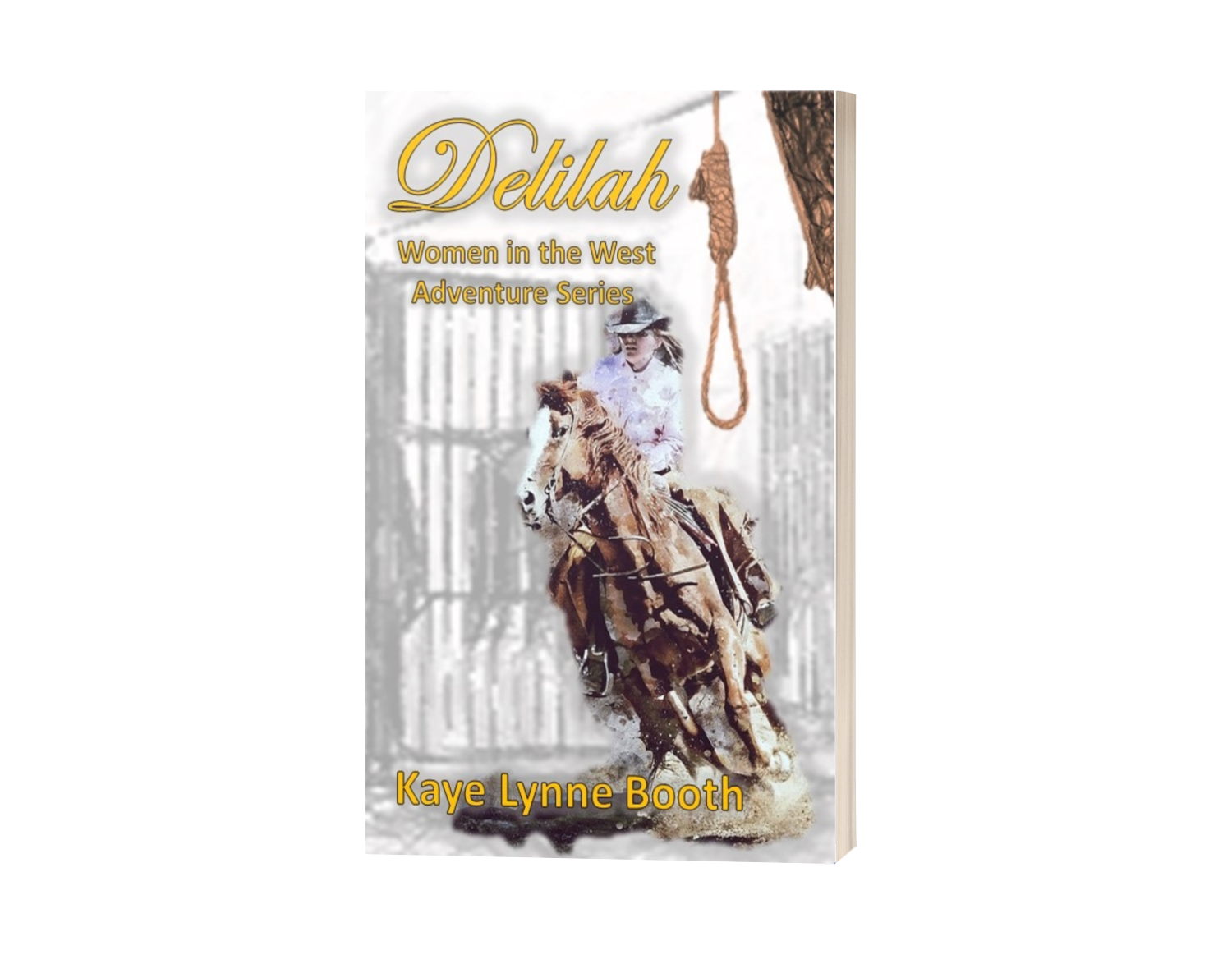
Even if my protagonist isn’t a curser, like Delilah, who uses expletives such as dagnabbit, the people around her do, so my books do contain some cursing. I don’t feel like a story set on the western frontier, would be true to the period or the frontier culture.
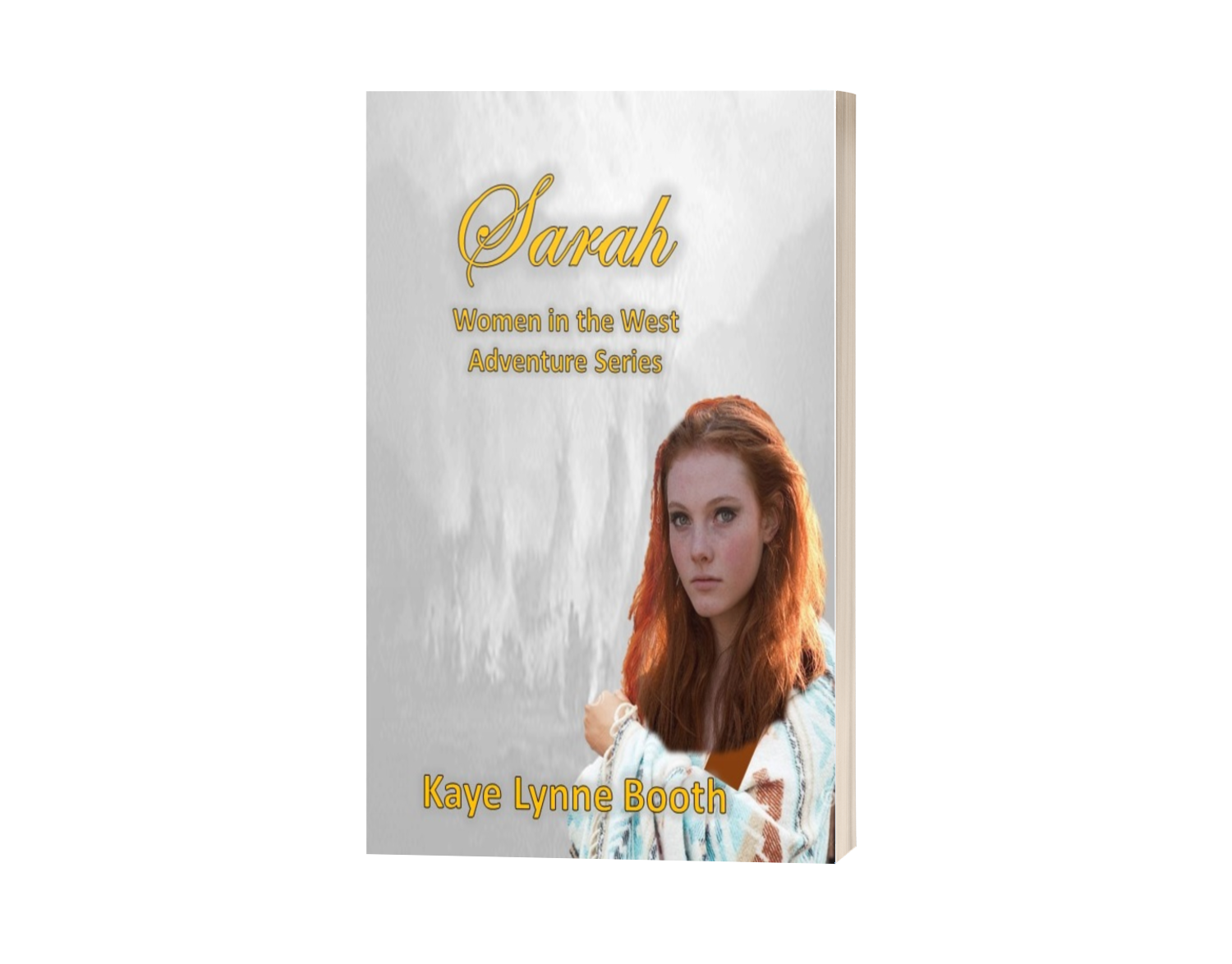
Likewise, the modern day Las Vegas culture in the music circles involves drugs, sex, and rock-and-roll, so naturally my character, Amaryllis, in The Rock Star & The Outlaw is involved in all of that and more, and her language often isn’t ladylike. Even so, I try not to let her get carried away with the curse words. And Sarah deals with the issues of prejudice and sexism, and the language in the story reflects the prejudices of the times, whether the AI editor in MS Word likes it or not.
But my villains often have mouths so dirty even their own mothers wouldn’t kiss them. Respect for women or lack thereof is often indicated in the way a man refers to women. If a character lacks respect for women, which many male villians do, then their language when referring to them may be less than flattering. After all, the way a character speaks is one of the things readers use to clue them in to what a character is like, and then decide if they are a character they should like, or not.
Another speech trait which I use often is the improper use of the English language. In the old west, many people were not educated and used words such as ‘ain’t’ or they cut off the ‘g’ in ‘ing’ words. In Delilah, one of things she strived for was to speak more properly after meeting the Mormon woman, Marta, who was a natural born school teacher and corrected Delilah’s speech automatically out of habit. Many of the less savory characters in the Women in the West adventure series, clue readers into their ignorance by the way they speak. I reckon that’s what I do it fer. These are purposeful misspellin’s that drive my AI spell-check crazy.
Many of my western characters are representitive of the many immigrants who made the U.S. into the melting pot that it is known to be. They speak in different dialects to differentiate them from other characters, which gives them colorful speech that is recogizable without adding dialog tags. In Sarah, Lillian Alura Bennett is one such character, who happens to be an Irish madam at a bordello in Glenwood Springs. And in The Rock Star & The Outlaw, the Mexican dialect of Juan Montoya leaves no question when he is speaking.
In Delilah, I had the opposite problem as the character of Dancing Falcon was a young Indian boy, who had been taught to speak English at the Indian agency with a strict teacher, so his speech is almost too proper, which made his speech sound very formal in places. One of the comments from a beta reader was that no one talks like that, so I went back when revising and added in a place where he talks about his time on the reservation and his schooling experience, to explain why he spoke that way to readers. The point being that a characters speech should reveal something about them, as well as making them identifiable.
It was really fun to create the characters in the My Backyard Friends kid’s book series, which is based on the birds and animals which visit my yard in the Colorado mountains. Katy Cat is a bit of a diva, kind of stuck up, and thinks she’s better than everyone else. She’s willing to help out Timothy Turtle as long as it doesn’t inconvenience her too much. I relayed this information in the way she swishes her tail, (body language), and in the way she talks with a bit of attitude. Heather Hummingbird has a lot of energy, so she talks really fast and rarely perches for more than a few seconds at a time. Charlie Chickadee is a young bird on his own for the first time, so I made him a bit niave. The things he says reveals this more than the way that he says it.
Other reasons an author might make the character’s or even the narrator’s voice a bit quirky is because it is the author’s voice coming through. (You know the voice English teachers are telling you to find? Yep. That one.) To an extent, this is true for me. My own speech is usually rather blunt and to the point, and so are my characters’. I don’t use a lot of colorful purple prose, instead calling it like I see it. Many of my protagonists are the same way. Delilah says what’s on her mind and she doesn’t beat around the bush. Sarah, too, tends to speak before she considers the way her words will be taken.
AI editors don’t understand this, and so variants in speech are often marked as needing correction, when in fact, they are purposeful. This is why, just running through your story with an AI editor is never enough. But there are times when human editors don’t get it either. Kevin J. Anderson tells a story about submitting a book to a traditional publisher who turned it over to a novice editor who corrected all the little quirks that revealed his voice and marked his manuscript up until it looked like nothing but red scribbles. That’s when you know that an editor isn’t a good match for you. Kevin politely refused to work with that editor and they assigned him another one. That’s why it’s important to have an editor that gets you and your voice, and understands the nuances of your character’s dialog.
Finding the right editor isn’t always easy, especially if funds are tight. Many editors will offer a free edit of the first ten pages, or even the first chapter so you can fell them out and find out if they are right for you and your story. I wouldn’t go with any editor who doesn’t offer this, and of course, I offer it through Write it Right Quality Editing Services. Any editor worth their salt will understand that they must be able to differentiate between mistakes and purposful word choices.
___________________________________________
About Kaye Lynne Booth
For Kaye Lynne Booth, writing is a passion. Kaye Lynne is an author with published short fiction and poetry, both online and in print, including her short story collection, Last Call and Other Short Fiction; and her paranormal mystery novella, Hidden Secrets; Books 1 & 2 of her Women in the West adventure series, Delilah and Sarah, and her Time-Travel Adventure novel, The Rock Star & The Outlaw. Kaye holds a dual M.F.A. degree in Creative Writing with emphasis in genre fiction and screenwriting, and an M.A. in publishing. Kaye Lynne is the founder of WordCrafter Quality Writing & Author Services and WordCrafter Press. She also maintains an authors’ blog and website, Writing to be Read, where she publishes content of interest in the literary world.
____________________
This segment of “Writer’s Corner” is sponsored by The D.I.Y. Author and WordCrafter Press.
Being an author today is more than just writing the book. Authors in this digital age have more opportunities than ever before. Whether you pursue independent or traditional publishing models, or a combination of the two, being an author involves not only writing, but often, the publishing and marketing of the book.
In this writer’s reference guide, multi-genre author and independent publisher, Kaye Lynne Booth shares her knowledge and experiences and the tools, books, references and sites to help you learn the business of being an author.
Three of my books are now available in AI narrated audiobooks: The Rock Star & The Outlaw, Delilah and Hidden Secrets. I’ve been wanting to get into audiobooks for some time now, but narrators are expensive. Their time is worth it and I don’t begrudge them that, but the hourly rates for narration are high enough to keep audiobooks out of reach for me. But the rapid rise and availability of AI narration has made having my books available in audio a possibility, and I’m really excited about it.
I’ve heard the argument that AI narration is taking work away from human narrators, but in this case, it just isn’t true. I would not have hired a human narrator instead, so I don’t see the harm in utilizing these tools which are now available to me.
I’d love to hear what you think about these AI narrated audiobooks or your thoughts on AI narration, in general. I’ve included my summaries of both experiences here and you can click on the links to hear a preview of each one. If you are feeling generous, you can buy a book while you are there.
Apple Books
I uploaded The Rock Star & The Outlaw to Apple Books through D2D, using the manuscript I uploaded for ebook. They offered four or five narrative voices to choose from. The quality of the narration is acceptable, but they offered no way to preview the content, and did not provide an audio file that could be used on other sites. It also took almost two weeks from the time of upload to publication. Keep in mind that I am not publishing direct through Apple Books, but going through D2D. Perhaps publishing direct, the process might be faster and preview might be available through their author dashboard.
Google Play
I uploadedThe Rock Star & The Outlaw, Delilah and Hidden Secrets on Google Play using the same digital epub files uploaded for ebooks. They have a wide selection of narrative voices to choose from. Through Google Play, I was offered a chance to preview the recordings and their dashboard offers the opportunity to edit the text if necessary without changing the digital ebook file. They took a few days from upload to publication, but I was also going through the account approval process at the same time, which may have slowed the process.
_________________________________________
About Kaye Lynne Booth
For Kaye Lynne Booth, writing is a passion. Kaye Lynne is an author with published short fiction and poetry, both online and in print, including her short story collection, Last Call and Other Short Fiction; and her paranormal mystery novella, Hidden Secrets; Book 1 of her Women in the West adventure series, Delilah, and her Time-Travel Adventure novel, The Rock Star & The Outlaw. Kaye holds a dual M.F.A. degree in Creative Writing with emphasis in genre fiction and screenwriting, and an M.A. in publishing. Kaye Lynne is the founder of WordCrafter Quality Writing & Author Services and WordCrafter Press. She also maintains an authors’ blog and website, Writing to be Read, where she publishes content of interest in the literary world.
__________________________________________
Want exclusive content? Join Kaye Lynne Booth & WordCrafter Press Readers’ Group for WordCrafter Press book & event news, including the awesome releases of author Kaye Lynne Booth. She won’t flood your inbox, she NEVER sells her list, and you might get a freebie occasionally. Get a free digital copy of her short story collection, Last Call and Other Short Fiction, just for joining.
Like any other right we exercise, technology is no different. Our right to do something is balanced by our innate responsibility. Meaning: just because you can do something, should you do it? What are the ramifications? What is the legal perspective?
In recent weeks, technology has been used in an unscrupulous fashion. From images to videos, prominent figures in society are being defamed for clickbait. Clickbait is emotional advertisements that invoke a strong reaction like anger, hate, surprise, shock, and even curiosity. If you feel impassioned by a headline and its imagery, then it is best to steer clear of that link. This manipulation is milking the public for money without adding anything positive to culture.
Let’s say that you are an actor or musician in the public eye. Your identity is your source of notoriety and income. The public buys your products because they enjoy your style, image, and music or movies. The actor or musician also has contracts with production companies, record labels, agents, and others in their industry that bank on that specific style, image, and product. Many contracts have legal clauses, which prohibit any deviation from the artist’s public persona, as well as morality terms. A public figure has a vested interest in keeping the status quo.
If someone creates an Artificial Intelligence (A.I.) image of an inappropriate nature, then the creator of said image has defamed you. Imagine that you are a young, female popstar with an innocent, wholesome image, but someone creates an A.I. representation of you as a blood-soaked, slut, then the generator of said image has defamed you as an artist. The same goes with male actors, who are purported to say or do something on video that is not them.
The term “defamation” means any action or other proceeding for defamation, libel, slander, or similar claim alleging that forms of speech are false, have caused damage to reputation or emotional distress, have presented any person in a false light, or have resulted in criticism, dishonor, or condemnation of any person.
The First Amendment protects speech and freedom of expression, but not defamation, be it libel or slander. A public figure owns their appearance and likeness, public image, and other copyright and trademark rights. The First Amendment states:
Congress shall make no law respecting an establishment of religion, or prohibiting the free exercise thereof; or abridging the freedom of speech, or of the press; or the right of the people peaceably to assemble, and to petition the government for a redress of grievances.
If you would like to state unfavorable political, religious, social, or other views, then your right to say or write them is protected speech. Hate speech, which this fascistic phrase is not a legal term, is covered by the Bill of Rights. The right to speak, even to be silent (Miranda Rights), are both covered by the First Amendment. Comedy, as well as parody (Spaceballs) and criticism of another’s works (Book & Movie Reviews), are preserved as a right.
Nevertheless, the First Amendment does not cover every facet of speech or expression. For instance, freedom of speech does not grant someone the right to shout fire in a crowded theater, or threaten the health and safety of other people (fighting words). Pornographic materials created with minors is unprotected speech and expression (child pornography). Reckless disregard for facts and truth about a public figure is considered defamation (malice). Other actions unshielded by the First Amendment include: obscenity, perjury, blackmail, incitement (to be lawless), solicitation (to commit a crime), fraud, and plagiarism.
In the age of technology, users must understand and navigate the legal framework of their rights, including speech and expression. What does the creative community do in an ever-changing landscape of expressive and innovative technology? First, read the law. Next, research case law. Both of these legal avenues will help creators create with peace of mind.
Copyright in the United States as a general rule is the death of the artist, actor, musician, et al., plus seventy years. If you would like to delve into the entirety of the law, visit the U.S. Copyright Office: www.copyright.gov/title17.
Besides laws to govern new technology, the best way to balance rights and responsibilities is to ask yourself: would I like someone doing that to me, my works, or my copyright/trademark? If the answer is no, then you have found the legal threshold.
__________
DL Mullan holds a Master of Arts in Teaching and Learning with Technology.
Her lecture, Spacescapes: Where Photography Ends; Imagination Begins, debuted at the Phoenix Astronomy Society, which then led to her Sally Ride Festival lecture invitations. Her presentation, Bridging the Gap between Technology and Women, won her accolades at a community college’s Student Success Conference. She has been a panelist at speculative fiction, science fiction, and other regional conventions. Her digital exhibition pieces have won awards at convention art shows, as well as garnered her Second Premium at the Arizona State Fair. Currently, Ms. Mullan’s artistic renditions are seen on book covers, blog sites, video presentations, and various merchandise. As an independent publisher, she uses her technical background to innovate the creative arts.
As a writer, DL Mullan loves to stretch her imagination and the elasticity of genres. She writes complex multi-genre stories in digestible and entertaining forms, be it poetry, short fiction, or novels. Her science, history, mythology, and paranormal research backgrounds are woven into her writings, especially in Undawnted’s Legacy Universe. Ms. Mullan’s creative endeavors are available in digital and print collections, from academia to commercial anthologies. She is also an award-winning poet.
Be sure to subscribe to her newsletters and follow her on social media. For further information, visit her at www.undawnted.com and www.undawntech.top.
________________________________________________
Want to be sure not to miss any of DL Mullan’s “Undawntech” segments? Subscribe to Writing to be Read for e-mail notifications whenever new content is posted or follow WtbR on WordPress. If you found it interesting or informative, please share.
I’ve posted on the value of publishing wide with Draft2Digital and Books2Read links. You can see my previous article here. I am in no way compensated for sharing information about D2D, but I am a big fan of publishing with them.
As an author and publisher who uses Draft2Digital to publish wide, distributing my books globally, including subscription services and libraries, I’m a huge advocate of their services. But I recently caught episode 333 of the Stark Reflections podcast with Mark Leslie Lefabvre titled, “10 Things You Likely Didn’t Know About Draft2Digital”. In this episode, Mark shares a replay of a presentation he gave at 20BooksVegas in early November of 2023, and I was pleasantly surprised to find that there were several cool things about publishing with D2D which I didn’t know.
I’ve used D2D to publish since 2018, and I was already aware of many of the great tools and services that they offer, such as royalty payment splitting for collaborations, which I use with WordCrafter anthologies. And of course, I knew about using Books2Read links, so potential readers can find your book through most of the major distributors in one place, and in any format in which your book is available.
The ability to publish through most of the publish on some subscription services and get your books onto the major library distributors was one of the reasons that I chose to go with D2D in the first place. What I didn’t know, was that some authors even use D2D’s free tools to create their book files, probably because it is easy and doesn’t require you to have Vellum or a Mac, and then publish direct onto other platforms without using D2D’s aggregating services, and they are okay with that. I use these tools to create my files for my ARC copies, but I prefer to let D2D do all the heavy lifting for me. Publishing direct to all the distributors that I use through D2D would be an outrageous amount of work.
I was also aware of D2D’s “Refer a Friend” program, which provides you an affliliate link you can share for folks to sign up. Any author who signs up to D2D with your affilliate link earns you a percentage of money earned by D2D from any books they sell over the next two years. Any D2D user can get an affiliate link. If you read this and decide to give Draft2Digital a try, you can sign up through my affilliate link, below, and it doesn’t cost you anything. My affilliate link is paid outof D2D’s cut of any works you sell using D2D as an aggregator. Here is my affilliate link: https://www.draft2digital.com/WordCrafter
There are some promo services which I was not aware of. I knew you could create your own independent promos. In fact, I used this feature to set up the WordCrafter Holiday Book Extravaganza in December, discounting the entire WordCrafter Press backlist. In episode 333, I learned how I can also get my book into D2D promotions, which is really pretty cool when you think about it.
I also learned that D2D now offers free AI narration of audio books through Apple Books. Now this is something that interests me, as audio books have previously been out of reach for me due to the expense of narration. You can see my post and discussion on the use of AI here.I knew they had this coming, but it was in the beta stage the last I had heard. Apparently they have rolled it out, and I will be looking into this further in the near future.
I was so excited to learn about this feature of D2D that I just couldn’t wait to check it out.I’m happy to announce that the AI narrated audiobook of The Rock Star & The Outlaw will be available through Apple Books soon.
Mark Leslie Lefabvre is an expert in the publishing industry, having worked for Kobo before coming to D2D, in addition to being a succesful hybrid author. Honestly, he says it all better than I do, and he knows a lot more about the inner workings of D2D. So if you want to know more about what D2D has to offer, listen to episode 333 here: https://starkreflections.ca/2023/11/17/episode-333-10-things-you-likely-didnt-know-about-draft2digital/
For Kaye Lynne Booth, writing is a passion. Kaye Lynne is an author with published short fiction and poetry, both online and in print, including her short story collection, Last Call and Other Short Fiction; and her paranormal mystery novella, Hidden Secrets; Book 1 of her Women in the West adventure series, Delilah, and her Time-Travel Adventure novel, The Rock Star & The Outlaw. Kaye holds a dual M.F.A. degree in Creative Writing with emphasis in genre fiction and screenwriting, and an M.A. in publishing. Kaye Lynne is the founder of WordCrafter Quality Writing & Author Services and WordCrafter Press. She also maintains an authors’ blog and website, Writing to be Read, where she publishes content of interest in the literary world.
Want exclusive content? Join Kaye Lynne Booth & WordCrafter Press Readers’ Group for WordCrafter Press book & event news, including the awesome releases of author Kaye Lynne Booth. She won’t flood your inbox, she NEVER sells her list, and you might get a freebie occasionally. Get a free digital copy of her short story collection, Last Call and Other Short Fiction, just for joining.












Undawntech: Emergence of the Engineered Reaction
Posted: February 2, 2024 | Author: DL Mullan/Undawntech | Filed under: Commentary, Technolgy, Undawntech, Writing Technology | Tags: AI Technology, technology, Undawntech, Writing Technology, Writing to be Read | 3 CommentsLike any other right we exercise, technology is no different. Our right to do something is balanced by our innate responsibility. Meaning: just because you can do something, should you do it? What are the ramifications? What is the legal perspective?
In recent weeks, technology has been used in an unscrupulous fashion. From images to videos, prominent figures in society are being defamed for clickbait. Clickbait is emotional advertisements that invoke a strong reaction like anger, hate, surprise, shock, and even curiosity. If you feel impassioned by a headline and its imagery, then it is best to steer clear of that link. This manipulation is milking the public for money without adding anything positive to culture.
Let’s say that you are an actor or musician in the public eye. Your identity is your source of notoriety and income. The public buys your products because they enjoy your style, image, and music or movies. The actor or musician also has contracts with production companies, record labels, agents, and others in their industry that bank on that specific style, image, and product. Many contracts have legal clauses, which prohibit any deviation from the artist’s public persona, as well as morality terms. A public figure has a vested interest in keeping the status quo.
If someone creates an Artificial Intelligence (A.I.) image of an inappropriate nature, then the creator of said image has defamed you. Imagine that you are a young, female popstar with an innocent, wholesome image, but someone creates an A.I. representation of you as a blood-soaked, slut, then the generator of said image has defamed you as an artist. The same goes with male actors, who are purported to say or do something on video that is not them.
The First Amendment protects speech and freedom of expression, but not defamation, be it libel or slander. A public figure owns their appearance and likeness, public image, and other copyright and trademark rights. The First Amendment states:
If you would like to state unfavorable political, religious, social, or other views, then your right to say or write them is protected speech. Hate speech, which this fascistic phrase is not a legal term, is covered by the Bill of Rights. The right to speak, even to be silent (Miranda Rights), are both covered by the First Amendment. Comedy, as well as parody (Spaceballs) and criticism of another’s works (Book & Movie Reviews), are preserved as a right.
Nevertheless, the First Amendment does not cover every facet of speech or expression. For instance, freedom of speech does not grant someone the right to shout fire in a crowded theater, or threaten the health and safety of other people (fighting words). Pornographic materials created with minors is unprotected speech and expression (child pornography). Reckless disregard for facts and truth about a public figure is considered defamation (malice). Other actions unshielded by the First Amendment include: obscenity, perjury, blackmail, incitement (to be lawless), solicitation (to commit a crime), fraud, and plagiarism.
www.britannica.com/topic/First-Amendment/Permissible-restrictions-on-expression
In the age of technology, users must understand and navigate the legal framework of their rights, including speech and expression. What does the creative community do in an ever-changing landscape of expressive and innovative technology? First, read the law. Next, research case law. Both of these legal avenues will help creators create with peace of mind.
Copyright in the United States as a general rule is the death of the artist, actor, musician, et al., plus seventy years. If you would like to delve into the entirety of the law, visit the U.S. Copyright Office: www.copyright.gov/title17.
Besides laws to govern new technology, the best way to balance rights and responsibilities is to ask yourself: would I like someone doing that to me, my works, or my copyright/trademark? If the answer is no, then you have found the legal threshold.
__________
DL Mullan holds a Master of Arts in Teaching and Learning with Technology.
Her lecture, Spacescapes: Where Photography Ends; Imagination Begins, debuted at the Phoenix Astronomy Society, which then led to her Sally Ride Festival lecture invitations. Her presentation, Bridging the Gap between Technology and Women, won her accolades at a community college’s Student Success Conference. She has been a panelist at speculative fiction, science fiction, and other regional conventions. Her digital exhibition pieces have won awards at convention art shows, as well as garnered her Second Premium at the Arizona State Fair. Currently, Ms. Mullan’s artistic renditions are seen on book covers, blog sites, video presentations, and various merchandise. As an independent publisher, she uses her technical background to innovate the creative arts.
As a writer, DL Mullan loves to stretch her imagination and the elasticity of genres. She writes complex multi-genre stories in digestible and entertaining forms, be it poetry, short fiction, or novels. Her science, history, mythology, and paranormal research backgrounds are woven into her writings, especially in Undawnted’s Legacy Universe. Ms. Mullan’s creative endeavors are available in digital and print collections, from academia to commercial anthologies. She is also an award-winning poet.
Be sure to subscribe to her newsletters and follow her on social media. For further information, visit her at www.undawnted.com and www.undawntech.top.
________________________________________________
Want to be sure not to miss any of DL Mullan’s “Undawntech” segments? Subscribe to Writing to be Read for e-mail notifications whenever new content is posted or follow WtbR on WordPress. If you found it interesting or informative, please share.
Share this: