It’s All in Finding the Right Market
Posted: January 9, 2017 Filed under: Books, Fantasy, Fiction, marketing, Promotion, Science Fiction, Writing, Young Adult | Tags: marketing, Pitching, Playground for the Gods, promotion, Revision, Young Adult Fiction 2 Comments
My friend and cohort, author Jeff Bowles wrote a post Choosing to Become a Better Writer vs. the God Complex, where he offers advice on what to do when your novel hasn’t been picked up by a literary agent as soon as you’d hoped, as is currently the situation with his thesis novel. I had to chuckle when I read this, not because the post was meant to be funny, (it wasn’t), but because of the timeliness of the post, as I find myself in the same situation and I have been pondering what to do with my own thesis novel, Playground for the Gods: Book 1: The Great Primordial Battle.
Jeff’s advice is sound. Revise. Submit. Repeat. And he’s right in saying that to achieve success in writing, as in most things in life, you must persist in your efforts and endeavor to persevere. In fact, I’d decided on the same course of action for my novel, with a slight twist and a lot of determination. So, my first 2017 New Year’s writing resolution is to get my thesis novel published in the coming year.
Since completing my thesis novel, the first novel in my science fantasy Playground for the Gods series, I’ve submitted it to seven publishers and four literary agents. It was rejected by two agents and four publishers, and is still waiting for word on three publishing houses and two agents. I don’t hold out hope of hearing from the agents, many don’t even bother to respond unless they’re interested, but the publisher who has had my submission the longest has had my submission for six months. There may still be hope there, but I have to wonder.
I’ve been feeling a bit discouraged with these results, so I started thinking about why my novel wasn’t catching the interest of publishers or agents. e first thing I looked at were my query letters. So, the first thing I looked at were my query letters. As I said, I’ve sent out multiple queries for the first book and been rejected multiple times. I looked at all my queries to see if the problem might be in my presentation.
The query letter is an author’s introduction and it is very important. It’s the first thing an agent or publisher sees, and it determines whether they chose to get to know you and your work better. A query should look professional, and it should tell the publisher or agent about the work you want them to buy into and about the author. It raises their interests and gets them to ask for more than just the excerpt you sent with it. A request for a complete manuscript is the ultimate goal.
Some of you may know the story behind this novel, but for those who don’t I’ll relate it briefly. The summer I presented the proposal packet for my thesis novel was the worst summer of my college career. I had this great idea for a story about a species from a different planet, who come to Earth and present themselves as deities. It was to be a science fantasy novel with a strong female protagonist, Inanna. I presented my idea to my cohorts and nobody got it, (this was partly because I was trying to cram way too much into one book, but at the time it just felt to me like the idea wasn’t well received and I was crushed). So, maybe publishers and agents weren’t getting it now, the same way my cohorts and instructors didn’t get it then?
This led me to take a hard look at the audience which I thought I was writing for and the types of agents and publishers I’ve been pitching to. I’ve sent out my queries for my science fantasy novel to publishers and agents who handle both science fiction and fantasy. Something I had overlooked was that the biggest audience for science fiction and fantasy are young adult readers.Epiphany! I’ve been pitching to the wrong audience!
Because of the summer from hell, mentioned above, my thesis novel has turned into a four book science fantasy series, Playground for the Gods. Book 1: The Great Primordial Battle shows the destruction of the Atlan home planet, which explains the reason they are searching for a new home and chose Earth, and how it was almost destroyed before they could make it their home. Book 2: In the Beginning tells the story of how the Atlans made Earth their home and cohabited with humans, and how Inanna becomes the goddess of war and love, forcing her to deal with the dualities within herself. The hero’s journey that Inanna takes in my original story will now be the Book 3: Inanna’s Song. In Book 4: Enki’s Folly, Enki, (the sort-of anti-hero), tries to fix his past mistakes by traveling through time.
By the end of my courses, I had Book 1 and it’s complete submission packet, Book 2‘s chapter outline, synopsis and partial first draft, along with the outline, synopsis and a few chapters of Book 3 completed. If I could do that major transformation in less than a year’s time, I’m thinking I should be able to transform my books into a YA series with minimal revision.
Next, I took another look at the story itself, and I realized that aside from a few instances of harsh language, this book almost reads like a YA novel. Most of the characters are teens, although Atlans don’t experience time the way humans do, (what passes for a year for us is comparable to a millennia for them), and still, some are more mature than others. The series has many of the YA tropes already: a young female protagonist who is idealistic, (Inanna); a perfectly perfect Mary sue character in Inanna’s BFF, (Ki); missing, or at least distant parents (Atlan familial units are pretty messed up); plenty of half-human/half-something else characters – mermen and Minotaurs, the characters are diverse; and there’s a rebellion against the existing power structure, (in reverse).
The one thing that might prevent Playground for the Gods from becoming a successful YA science fantasy novel is the degree of sexual content, which is actually vital to the story line. We’re not talking about unnecessary sex here. We are talking about the story doesn’t work without it. Although it could be toned down some, I imagine I would have several parents who were hot, should I try to market this series as YA, even though it has a lot of the expected tropes. So, I had to look once more at audience, where I took an in-depth look at a market called New Adult.
New Adult has protagonists aged 18-24, and is aimed at audiences aged 18-30, but may appeal to readers of 30 or more. Just as some YA may appeal to adult readers, so New Adult may appeal to older readers, as well. It carries steamier sexual content, that you probably wouldn’t want your thirteen year old reading, but is perfectly acceptable for older readers. In a 2014 article on Book List Online, YA or NA?, by Michael Cart, Harliquinn Senior Editor Margo Lipschultz points out that “NA rose to popularity as a subgenre that bridged the gap between contemporary YA and contemporary romance, it’s gradually expanding… ” NA is not just a romance market any more, and I’m thinking that the steamier scenes in the PfG series could find a home there.
Another 2014 Book List feature article, What is New Adult Fiction?, by Gillian Engberg, Donna Seaman and others quotes Neil Hollands, adult services librarian at the Williamsburg (VA) Regional Library as stating,
“…librarians talking about NA are often thinking of books that appeal to “both male and female readers, in their late 20s and 30s. The books we’re looking for try to capture the feel of a generation, including integrating technology’s effects on communication and relationships, new outlooks on a range of political and social issues, and more recognition and blending of the genres that younger readers are most familiar with.”
Now that sounds like my series. While it still has some of the YA tropes and qualities, it also has more mature content and deals with social and relationship issues, the value of technology for better or for worse, and characters in the right age bracket basically, (give or take a few million years), and would appeal to an older audience of new adults.
From my very first M.F.A. class it was drilled into us the important of knowing your audience and doing the research. And I did do my research in the adult market, and now I’ve done my research in the YA market. But, after discovering that it’s a little too steamy for YA, I’ve gone back to research the NA markets, and I’m currently revising The Great Primordial Battle for an NA audience. When I’m done, I plan to promote to the NA markets with high expectations, while I get busy on Books 2 and 3.
Leave a comment to let me know if you think I’m on the right track with PfG: Book 1: The Great Primordial Battle.
You can find updates on the Playground for the Gods series on its Facebook page, here.
Like this post? Subscribe to Writing to be Read for e-mail notifications whenever new content is posted.
Share this:

“Banker Without Portfolio” or Writer Without a Story?
Posted: January 6, 2017 Filed under: Memoir, Nonfiction | Tags: Banker Without Portfolio, Book Review, Phillip P. Gbormittah 3 Comments
I think Banker Without Portfolio: The Ugly Truth Everyone Needs to Know, by Philip P. Gbormittah is meant to be inspirational. Certainly, Gbormittah proclaims his love of Jesus loudly and attributes the little success he has had and all of his upstanding morals to the grace of God, but it doesn’t really stand up to scrutiny. The author makes himself out to be altruistic and morally unblemished, praying for God to meet all of his needs, but after a decade at a banking institution, to still not have received a raise in grade and income makes it seem as if his prayers aren’t really being answered.
The book cover is misleading, or perhaps misrepresentative of the true content, since this memoir is written by an author whose skin is a different color than that on the cover photo. Gbormittah might be missing out on a huge opportunity here, for had he played up his discrimination in the work place as an issue of color in today’s market, he might have had a best seller, even without improvements in writing style.
On the last pages, the author summarizes, “My love life suffered. My nuclear family relationships suffered.” But I have to ask why we didn’t see any of this throughout the story? It wasn’t until almost half way through the book that we learned he was married, and we never get to meet his wife or get a description of her.
Discrimination in the world of high finance is the theme, but the two dimensional character we get here doesn’t allow us to really care about the injustice of it because the character doesn’t feel human, and that’s bad because he is a real character. Although the story is about the author’s professional life, to get a glimpse of his personal life would have made for a more well rounded character, who we could actually care about. Let us meet the wife instead of just hearing about her? How did he feel toward her. We don’t know, because Gbormittah doesn’t allow readers to be privy to this information.
We don’t get to see him as a loving, indifferent, or abusive husband. He could be any of them, and it might have made a difference in how much we readers are willing to invest in the character, how much we care about what happens. The only side of him we do see a little of is his professional side, how he interacts in the workplace, and even then we’re only allowed a small glimpse. But even then, the majority of what we know, we only know because we are told, rather than shown, these things.
As it is, Banker Without Portfolio: The Ugly Truth Everyone Needs to Know does a lot of telling us what happened, but very little showing. There is lots of conflict, but very little resolution and no reason for readers to care. I can only give it two quills.

Kaye gives honest book reviews and she does not charge for them. If you have a book you would like reviewed contact Kaye at kayebooth[at]yahoo[dot]com.
Share this:

Bringing in the New Year Write
Posted: January 2, 2017 Filed under: Author Profile, Books, Fiction, Film Review, Screenwriting, Writing, Writing Event, Writing Tips | Tags: Feedback, Opinion, profiles, Reviews, Writing, Writing to be Read 4 Comments
It’s 2017! Where does the time go? It seems like just yesterday that I was venturing forth to start Writing to be Read on Today.com. Most of you won’t remember. It was supposed to be a site that would monetize my blog, so without a clue as to what I should write about, I jumped right in. I wrote about all kinds of things and at the end of every post I published one of my poems, in order to cover the full scope of the literary world, or something like that. That was in 2010, seven years ago. Wow! Unfortunately, several months later Today.com folded and the sight just disappeared, along with all the writing I had done there. In a panic, I found WordPress and re-created my blog here.
Since then it has be remodeled several times until it is what you see here today. As I said in my Looking Back on 2016 post last week, this past year has been a good one for Writing to be Read as it has grown in popularity. So to start the new year out, I’d like to take a closer look at what I hope to accomplish with the blog this year. In last weeks post I mentioned a few ideas I wanted to see come to fruition: author and screenwriter profiles, more screenwriting content, coverage of more writing events, and guest posts by authors, screenwriters and other industry professionals. That is the shape I foresee for Writing to be Read.
But, you know, this blog wouldn’t be anywhere without you, the reader. Watching my statistics, it’s you that determines what content I create. It’s you that make the number of followers climb, you who increase my page views. With this in mind, I know I can’t move forward without asking you what content you would like to see here in the coming year. Are there topics of interest you’d like to learn more about? Do you have questions you’d like to have answered through one of my posts? And while we’re at it, who would you like to see profiled or interviewed? What books or movies would you like to see reviewed? What topics would you like to see investigated? What events would you like to see covered? What kinds of things will keep you coming back for more?
Another goal I hope to accomplish is to continue to increase my following and have more reader interaction through comments. I appreciate every reader I have gained over the years. Some of you, I have come to think of as friends as well as readers. I also welcome new readers. If you are here for the first time, or maybe you’ve been here before but you haven’t subscribed to email or followed on WordPress yet, please do so before you click on the next website. I make no money off Writing to be Read. My only reward is to watch my followers grow and know I am being read. Subscribe, follow, leave a comment to let me know you were here, or do all three. With your help, we can make 2017 the best year ever for Writing to be Read.
Share this:

“Once” May Not Be Enough for This Love Story
Posted: December 30, 2016 Filed under: Book Review, Books, Fiction, Inspirational | Tags: Book Review, Books, Inspiration, Inspirational Fiction, Mian Mohsin Zia, Novel, Once, Opinion, Review, Reviews Leave a comment
Once – Ask Me Anything, Not Love by Mian Mohsin Zia, is a inspirational tale of the struggle for love by one man, Morkel, whose brand is “M–, No Time for Love”. But love strikes when it is least expected and who you would least expect to fall under it’s spell. Although it is a love story, it’s no romance and there are no HEAs in this tale.
I can’t deny that this is a cute story, but I had a hard time suspending disbelief, due partially to the fact that the characters weren’t deep enough for me to be able to care, and also because the dialog did not feel real to me. People just don’t talk that way in my experience. The characters are idealistic and I felt they acted in ways that were very unrealistic, as well. Morkel, the protagonist, comes off as being full of himself and he claims that as a novelist, he can read people, yet when love walks up and stares him in the eye, he doesn’t see it.
That being said, it is a well structured story with a clear character arc. Morkel changes as he realizes his own need for and ability to love. I found it very entertaining, but the ending was disappointing for me. I guess I’ve come to expect a HEA when I think of a love story, and I felt the promise of the premise was not fulfilled.
I will admit that Mian Mohsin Zia puts out a quality eBook, with very few typos. Obviously, he spends the money to have it edited and promote it right, as well. I suspect this may account for his amazing popularity as an author. In self-publishing, it seems, you really do get what you pay for.
Once – Ask Me Anything, Not Love is a love story from the male perspective, a unique and entertaining tale, but not a romance. I give it three quills.

Share this:

“100 Ghost Soup”: A Modern Chinese Folk Tale
Posted: December 23, 2016 Filed under: Book Review, Books, Fiction | Tags: 100 Ghost Soup, Book Review, Books, Fiction, Robert Chansky Leave a comment
100 Ghost Soup by Robert Chansky is an unusual story told in the tradition of a Chinese folk tale or legend. Chansky’s style and tone make the reading almost musical at times, and is particularly suited to reading aloud. This delightfully entertaining tale is written as if it could go on forever. Just when you think the story is finished, you find that there is still more – not an unpleasant surprise.
Bei Jimo is an seventeen year old orphan who has always wanted but two things: a name and a family. He sees an opportunity to have both those things in the month before he turns eighteen, when he learns someone wants to adopt him. Jimo tries to seize it, in spite of the fact that it’s only for one month, but he quickly learns that all is not as it seems.
In this tale the line between reality and illusion is a fine one and it is hard to tell which side of it one is on. It is a tale of fox spirits and celestial ministers, which looks at what it is to be family and the differences between truth and deceit, having a job and having meaningful work, the meaning of true wealth, and the role we play in our own fate and that of others. Although confusing at times and full of surprises, as when it is discovered that the cow is Elder Brother, the words to 100 Ghost Soup are loaded with great wisdom.
This book is quite long, but it is a well written, easy read which is very entertaining. The Chinese tone of both words and character, the tricks and puzzles, the obvious that it so well hidden it must be pointed out all work together to make me feel that I’ve just read an ancient Chinese folktale in a modern setting. I give 100 Ghost Soup five quills.

Share this:

Monthly Writing Memo: 5 types of Heroes
Posted: December 22, 2016 Filed under: Comic Hero, Screenwriting, Screenwriting, Super Hero, Uncategorized, Weekly Writing Memo, Writing | Tags: Action, characters, Novels, Stories, Writing 3 CommentsWelcome to the first Monthly Writing Memo! So for my own blog, Author the World, I’ve been thinking about doing a post about villains. As those of you who have been following know, I’ve been studying horror as I work on my horror film script. During this process, I’ve been wondering about the different types of villains, which in turn made me wonder about the different types of heroes in stories. So for this Month’s Writing Memo, I thought I’d do a post about heroes, and then later this week my post on villains will be up on Author the World.
In general, I think all heroes can really be broken down into a few main types, and every hero in a story usually falls into one of them. The way I’ve divided them up is by what motivates them rather than what they specifically do, or how they go about being a hero.
- The Savior –
The Savior is someone who actively tries to be a hero. They want to help people and save the day, so they seek out ways they can do this. The most obvious example of this is many superhero stories where characters like Superman or Spiderman actively seek out those in danger to help them. These characters do it solely because they want to help people and be a hero. Some want recognition, some want the satisfaction of saving people, but either way the thing that drives them is the need to be the hero. It’s a compulsion almost, and when they don’t just help when they see someone in danger, they actively seek the danger (and the victims) out.
- The Soldier –
The Soldier is similar to the Savior in that they feel the desire to help people, but the soldier does it out of a sense of duty and honor. That’s not to say they don’t have other motivations as well, but this character type is driven by the sense that it is their responsibility to help people, and they must take action. I think if you look at the movie “Die Hard” you’ll see John McClane fits into this character type. Yeah, he’s in the wrong place at the wrong time, but he is also a police officer and when he sees the problem he feels it is his duty to take action. Many of these character types are those military or police type characters, or have other positions that are focused on helping people in some way. Some other example jobs that a character can have to fit this role include teacher, doctor, or even counselor/therapist.
The goal of this character is to do their “job” and help people because they think it is their responsibility and duty. Maybe it can cross over into the Savior role of feeling driven to help people, but the slight distinction is where the Savior would say “I helped because they were in trouble,” the Soldier would say “I helped because it was my job/responsibility to help.”
- The Mercenary –
The Mercenary Hero doesn’t necessarily have to be getting paid, though some form of payment is generally the motivation for them to be the hero. They are a hero because they get something out of it. An example of this is are characters like Nicholas Cage’s character in National Treasure. That is a personal mission for him and he doesn’t do it for anyone else, he does it for largely selfish reasons—he desperately wants the truth and the excitement of discovering the treasure.
The Mercenary is driven by what he/she personally gets out of being the hero. They can be paid to do the job, they can be on a personal mission of love or vengeance or profit, but whatever it is they are being the hero because it serves them, not because they want to serve the people they are saving.
- The Reluctant Hero –
The Reluctant Hero is one of my favorite types of heroes to write because they don’t try to be perfect, and often try to extricate themselves from the drama, but they morally feel the urge to help when they see a situation. Unlike the Savior they won’t seek out the conflict, and unlike the Mercenary they don’t want anything for themselves, but similarly to the Soldier they feel a sense of duty.
The Reluctant Hero is someone who doesn’t want to be a hero, and they aren’t doing it because it’s their job like the Soldier. They are a person who just happens to be in the wrong place at the right time, and they morally can’t bring themselves to turn away from those in need. If asked why they helped, they would respond “I couldn’t turn my back on it, and it was the right thing to do.” They don’t feel like it’s their duty, they just feel like they were the only one there at the time who could do it, so they did.
I think the one thing that is often interesting about the Reluctant Hero is that, if someone else was around who could successfully do the saving, the Reluctant Hero would let them, but often they are put in situations where either they have to try, or all is lost.
- The Anti-Hero –
The final type of hero isn’t quite a hero at all – the Anti-Hero. The Anti-Hero is not someone who is trying to help anyone, and they’re most often not a good person. There are slight varying definitions of this, but in my opinion, the Anti-Hero is a character who ultimately has their own larger goal, but they do kind, heroic things along the way in pursuit of their goal. I think this falls into a lot of gangster characters who do wonderful things for the “little people” but who aren’t really good characters at all, and whose larger goals are really something quite unhero-like.
Another version of the Anti-Hero is someone who does dark, violent things in order to achieve something good. This kind of character is like Batman at times (The Dark Knight is the obvious example). Batman kills and commits crimes in order to make Gotham a better place, going from loved hero to wanted criminal.
Either way, the main thing about the Anti-hero is that they don’t follow the same rules as the normal hero, and that they will often commit villain-like acts in the pursuit of their goal. These sorts of acts will stand in stark contrast with the heroic elements, and it will make the audience question whether the character is hero or villain.
Final Notes:
I’m sure there are some more minor variations of heroes, but in general, I think most heroes in stories can be divided up into one of the five categories above. If you aren’t sure about which your character is, ask yourself what motivates them to be a hero? What motivates them to commit heroic acts? If you have that answer, you should be able to pinpoint what type of hero they are.
For my blog post on the various types of villains, stop by Author the World on Friday. Until next month, happy writing!
Share this:

Pros and Cons of Traditional vs. Independent vs.Self-Publishing (Part 10): Conclusions
Posted: December 19, 2016 Filed under: Books, Commentary, Promotion, Publishing, Self-Publishing, Writing | Tags: Books, independent publishing, marketing, Opinion, promotion, Publishing, Self-Publishing, Traditional Publishing, Writing 7 Comments
This series on publishing has been a lot of fun to create, and I hope maybe there are some of you who have read all of parts 1-9. I started it because I found that while those in my academic career seemed to be in favor of traditional publishing, with many instructors providing information about self-publishing as an option only reluctantly, while authors all around me were getting their work out there by self-publishing their books.
As I looked into the topic more, I found that some folks used the terms independently published and self-published as if they were interchangeable, while independent publishers are really smaller independent publishing houses that are not among the “big five” traditional publishers. As stated in Part 2, for the purposes of this series that is how I will refer to and view independent publishers.
One of the reasons I enjoyed writing this publishing series was that I am fortunate to know many authors, from all three publishing models, and I was able to gather many different viewpoints, examining it from all sides. Overall, I was able to obtain a pretty healthy balance between the three models. I interviewed self-published authors Jeff Bowles, Tim Baker and Arthur Rosch. In the traditional publishing arena, I talked with children’s author, Stacia Deutsch and historical and biographical author, Mark Shaw. I was only able to interview one independently published author, YA author Jordan Elizabeth, but to even it out, I also interviewed two independent publishers, Curiosity Quills Press and Caleb Seeling, owner of Conundrum Press. And for a nice rounded point of view, I spoke with my friend and children’s author, Nancy Oswald, who has published under all three models.
Now is the time to look at the series as a whole and see what conclusions can be drawn. While I think all authors secretly long for a traditional publishing deal, because being picked up by a major publishing house is ingrained in us as a symbol of success, I see independent publishing houses as a feasible alternative to holding out for the big boys, which can take a long time and for some of us, may never pay off. In some instances, debut authors have a better chance of being picked up by a smaller independent press. With both these options identifying markets which would be a good fit for your work, preparing submissions, writing cover letters and queries, synopsis and outlines will take up a lot of time which might be better spent on writing stories. Once accepted by either a major or a smaller publishing house, the author may be expected to do a good portion of the marketing and promotion, as well, although services such as editing and illustration may be provided.
The upside to signing with a traditional publisher is that the major publishing houses pay out an advance on projected royalties, so major money can be seen in your near future. Independent houses may also pay out advances, but they won’t be nearly as big, and some do pay out a higher percentage of royalties. Of course, as Tim Baker pointed out in Part 2, the flip side to collecting a sizeable royalty is if your book flops. It would be a drag to have to pay it all back. Independent houses may also pay out advances, but they won’t be nearly as big, and some do pay out a higher percentage of royalties.
For self-published authors, there are no advances, but they keep a higher portion of their royalties than with traditional or independent publishing houses. Still, there is no big money now, and no guarantee that there ever will be. Authors may be waiting a long time for their writing to pay off.
As Stacia Deutsch mentioned in Part 4 of the series, traditional publishers provide professional editing and illustrators, to be sure your final product is of good quality. I believe this is true of independent publishing houses, as well, but you won’t find it available through the self-publishing process; one reason self-publishing carries with it such stigma. Gatekeepers insure the book you put out will be the absolute best it can be.
Despite the stigma surrounding self-published authors, due in part to a few self-publishers who like to take short cuts in lieu of putting out a quality product, there are some very good self-published authors out there. As Jordan Elizabeth pointed out in Part 6, self-publishing has a lot to offer. Self-published authors have a lot more control over their work than traditionally published authors, who do not chose their own cover art, and may not even get to keep their own title.
As Jeff Bowles pointed out in Part 1, another possible advantage to self-publishing is the ease and relative inexpense for today’s authors. You can publish a book with Amazon almost for free, and collect either 35% or 70% of your royalties, depending on the price you place on your book. I can attest to this as it is what I did with my short story, Last Call, and it didn’t cost me one cent. At least that way, if my story doesn’t rise to the top of the best sellers lists, (which it hasn’t), I really haven’t lost anything. The important thing to remember when self-publishing is that you need to put out a quality product. It is worth it to find a good editor, and for all of us starving writers out there, an editor can be employed for a minimal expense. I also suggest utilizing a good critique partner when funds are low, but be sure to have some type of editing done, by someone other than yourself, before publishing your book.
Although Amazon has made publishing extremely easy and inexpensive for authors, they have also monopolized the industry and are making it more difficult for independent publishers, as Caleb Seeling explained in Part 8. Learn more about the negative effects Amazon has had on the publishing industry in the Institute for Local Self Reliance’s report, which emphasizes, from a consumer standpoint, the need to buy local and battle monopolization. If readers heed this warning and buy their books from local independent, or chain, bookstores right down the block, the publishing industry may change yet again.
Amazon’s monopolization affects authors and reviewers as well, as is discussed in What Amazon’s New Review Policies Mean for “Writing to be Read”. As much as Amazon’s review policies effect the reviewer, they also effect the authors who are depending on those reviews to get their books sold.
Author Mark Shaw gave us a heads up about vanity, or subsidy publishers, charging unsuspecting authors exorbitant fees to publish their work as Mark Shaw warns in Part 5. They prey on authors who desire to get their work published so bad that they are willing to empty their coffers to do so. These publishers can get outrageously expensive for authors, so don’t be drawn in. The kicker is that even if you publish on Amazon or Create Space in order to fit your budget, you still may need to spend quite a bit of time and/or money on marketing as Art Rosch tells us in Part 3.
Independent publishing houses, also referred to as small or medium-sized presses, work along the same lines as traditional publishers, but they don’t publish as many books each year as the big five do. In addition, they tend to be more specific in what they are looking for, with most having very specialized niches that your book must fit into to be published. Although all independent publishers may not follow this practice, publisher Caleb Seeling says he actually seeks out authors whose work fits into his niche. In any case, authors should be familiar with submission guidelines of the publishing house they are submitting to, whether large or small. In her article, How to Smartly Evaluate a Small Publisher, Jane Friedman, of The Hot Sheet, (the publishing industry’s news letter for authors), offers some great tips on what to look for.
In Part 7, Nancy Oswald points out one of the big advantages to publishing with a small press is the more personal relationship between author and publisher. Whereas a traditional publishing house may not be able to put a name with a face, independent publishers work closely with their authors because they only have a few at any one time. Independent publishers may also have a shorter wait time for publication than traditional houses, which can be quite lengthy.
And then there are the new kids on the block, like Curiosity Quills Press, which are hybrid publishers, offering various combinations of traditional percs with self-publishing author responsibilities. These small independent presses may charge authors for some services, like subsidy publishing, but they also provide a certain amount of author copies at no cost, provide author support, and the services they do charge for are optional. You can find out more about this new model of publishing in my post, Hybrid Publishers: What are they all about?
After hearing from the experts, it seems no matter which model you choose to publish under, there is still a lot of non-writing activities required of authors, including marketing and promotion, resulting in the need for Today’s Authors to Wear Many Different Hats. Of course, you can also do as author Jeff Lyons suggests in his interview with Arwen Chandler, and hire a third party to handle such tasks, so we, as authors can get down to the business of writing. The only problem I see with this is that you must make money before you can spend money, paying someone else to do the tasks that don’t come as naturally as writing does.
Like this post? Subscribe to email to receive notifications to your inbox each time a new post is published. Or follow Writing to be Read on WordPress.
Share this:

“Cast No Shadows”: A Collection of Ghostly Tales
Posted: December 16, 2016 Filed under: Book Review, Books, Speculative Fiction, Stories | Tags: Anthology, Book Review, Cast No Shadows, Ghost Stories 1 Comment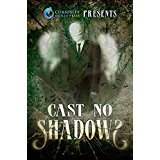
Cast No Shadows is a Curiosity Quills Press anthology of ghost stories for YA readers, but some may not be what you’d expect when you think of ghost stories. Stories such as The Last Act of Keri and Trent by Derek McFadden or Nellie’s Playmate by Lorna McDonald Czarnota use a different POV to tell their tale, and aren’t crafted to bring goosebumps to the flesh, but to unfold a ghost’s story in a creative way.
In other stories seeing and/or talking to ghosts is treated as a common every day occurrence. Stories such as Amity or Tillie in Utica by Jordan Elizabeth, Ghostly Affection by Grace M. DeLeesie, The Sun Valley Bistro by Kae T. Quinn, Ghosts of Holy Cross by Ashley Pasco, Graveyard Dust by Heather Talty, A Minor Matter of Deatb by W. K. Pomeroy, Death of a Necromancer by Misha Murphy, Ghost of Shadmoor Park by Grant Eagar, and Simon and the Ghost by Jeremy Mortis are crafted to entertain and make readers think, rather than to scare.
Still other stories in this collection are intended to surprise readers with the unexpected, as in Attic Secrets by Ashley Pasco, The Regal by Jeremy Mortis, Dark Rider by Amy L. Gale, The Sailor by Lisa Oaks, Sarah by Rachel Pond, The Staircase by Clare Weze, A Trace of Time by Joan O. Scharf, Try Me by Christine Blake, or Yankee Inn by Jordan Elizabeth.
Which is not to say that you’ll find no stories here that contain that eerie scare factor. It’s a large anthology, and stories like Faceless by James McNally, This Ol’ Haunted House by Gloria Slade, Jacked by A. F. Plant, Silent Opera and Swamp by Joan O.Scharf are aimed at stirring up that creepy feeling within readers.
Stories that I feel did this the best were Moving in with the Ghost by A Elizabeth Zumchak, Sweet Hollow Road by C. K. Raggio, House on Hazlenut Lane and The Blood Stained Handkerchief by Jordan Elizabeth. These four would be the five quill stories out of the entire collection, the ones that replay in your mind when you lay down to sleep at night.
Overall, I thought this anthology was a great group of ghost stories for a YA audience. Even the scariest ones achieved the effect without being too gruesome or violent. I give Cast No Shadows four quills. 
Kaye gives honest book reviews and she does not charge for them. If you have a book you would like reviewed contact Kaye at kayebooth[at]yahoo[dot]com.
Share this:

Pros and Cons of Traditional vs. Independent vs. Self-Publishing (Part 9): Interview with Curiosity Quills Press
Posted: December 12, 2016 Filed under: Books, Fiction, Publishing, Self-Publishing, Writing | Tags: Curiosity Quills Press, Hybrid Publishing, independent publishing, Publishing, Writing 5 Comments
This series has looked at three models of publishing from every angle. We’ve heard from independent authors Jeff Bowels, Tim Baker and Art Rosch, and traditionally published authors Stacia Deutsch and Mark Shaw, independently published author Jordan Elizabeth, and an author who has published under all three models, Nancy Oswald. We’ve also heard from Caleb Seeling, the owner of the independent publishing house, Conundrum Press.
This week, we hear from a small independent hybrid publisher that specializes in genre fiction of the highest quality. I have been privileged to review two Curiosity Quills anthologies, Chronology and Under a Brass Moon. I have also reviewed several books by Curiosity Quills author Jordan Elizabeth, who we heard from in Part 7, and Keepers of the Forest by James McNally.
Founded in 2011 by Eugene Teplitsky and Alisa Gus, Curiosity Quills was created as a resource portal to help writers, such as themselves survive the publishing industry, and quickly morphed into a publishing press which today, has solidified it’s share in the market. They work with major retailers such as Amazon, Barnes & Noble and Audible, and publish six new titles every month. Curiosity Quills Press offers the some of the advantages of a traditional publisher and offers their authors a chance to participate in the publishing process.
Kaye: How did Curiosity Quills Press come about?
CQ: Back in early 2011, Alisa and Eugene were an aspiring author couple working on a little MG project called Gatecrashers. In an effort to build up our socials and gain a following prior to release, they created a blog called Curiosity Quills (which was nearly called Curiosity Kills… dodged a bullet there!). Throughout that year, many guest authors and industry pros were hosted on the CQ blog to share their stories, wisdom, and experiences with the world. Before they knew it, a sizeable community formed around the CQ blog – and A&E had the brilliant idea of being more hands on about helping the authors hanging out on the site. It wasn’t long before Michael Shean and Rod Kierkegaard, Jr. became the first published authors of Curiosity Quills Press. Unfortunately, this was also the death knell for Gatecrashers or any other further writing project for Alisa and Eugene – turns out running a traditional publishing house is a HUGE time-suck!
Kaye: What are the publishing goals of Curiosity Quills?
CQ: We have a number of goals at CQ, and these can be broken down into the following points:
- To bring the highest quality genre fiction to the masses, at affordable prices.
- To spotlight genre fiction that some traditional publishers might find too unconventional; instead of following genre trends and the mainstream in what is popular, we try to stay ahead of that, anticipating gaps in the market.
- To diversify genre fiction, by publishing stories featuring characters of all race, sexuality, gender identity, social standing etc. While we want to stay ahead of the mainstream, we also want to be inclusive and representative of the ever growing, expanding world we live in.
Kaye: What do you see as the advantages of independent publishing over traditional or self-publishing for today’s authors?
CQ: Independent publishing offers the best aspects of both traditional and self-publishing. On the one hand, we’re able to offer the highest standards of cover designers, editors, proofreaders etc. on par with any traditional press.
We also offer authors access to a wide rage of services, such as NetGalley and features on sale subscription sites like Book Bub. And, as with traditional publishers, we are always focusing our efforts to get our titles into chain bookstores, like Barnes & Noble, as well as selling the rights for our titles to audiobook publishers, and film companies.
But, unlike traditional publishers, we offer a closer, more family-like community for our authors, and try to involve them in the publishing process as much as possible, getting their input on cover design, marketing campaigns etc.
Because of our close-knit community, there are always over authors – at various stages in their careers – on hand to answer questions, help promote each other’s works, and collaborate with.
Kaye: How has the increasing trends in self-publishing affected the role of independent presses?
CQ: Authors want to be much more involved in the process, and on the whole, we’re more than happy to accommodate this. We view publishing as a partnership, where both the publisher and the author bring different things to the table.
As mentioned above, the close-knit community leads to a family of authors all striving together to make CQ the best it can be, which is something you don’t always find with self-published authors. While there is still a level of camaraderie there, all self-published authors are competing against each other, in ways authors of independent presses aren’t.
Kaye: What do you see as the future role of independent publishing houses within the changing publishing industry?
CQ: Independent publishing houses will continue to bring readers what they want, know and love, while also broadening their horizons and opening them up to a wealth of new stories that might get overlooked by the mainstream.
At the same time, independent publishing houses will strive to bring authors an experience they won’t get anywhere else in the publishing industry, with all the benefits of traditional and self-publishing, but less of the drawbacks.
I want to thank Clare Dugmore and Curiosity Quills for sharing with us here on Writing to be Read. I know they are busy people and I appreciate them taking the time to answer my interview questions. Next week I will follow up with conclusions on the series in Part 10 of Pros and Cons of Traditional vs. Independent vs. Self-Publishing.
Like this post? Subscribe to email and get notification to your inbox each time a new post is published.




















Looking Back Over 2016
Posted: December 26, 2016 | Author: kayelynnebooth | Filed under: Articles, Book Review, Books, Children's Books, Commentary, Fiction, Film Review, Horror, Movies, Nonfiction, Poetry, Promotion, Publishing, Screenwriting, Self-Publishing, Steampunk, Stories, Weekly Writing Memo, Western, Writing, Writing Event, Writing Tips, Young Adult | Tags: 2016, Book Reviews, Books, Fiction, marketing, Movies, Novel, Novels, Poetry, Review, Reviews, Writing, Writing to be Read | 4 CommentsThis will be the last reflective post of the year. Next Monday’s post will find us in 2017. For my writing career it has been a slow take off, but I’ve seen progress. In July, I completed my Master of Fine Arts degree in creative writing. With emphasis in both genre fiction and screenwriting, and two completed novels, Delilah and Playground for the Gods Book 1: In the Beginning, two full feature film scripts and one comedy series pilot script in hand, I eagerly jumped right in to get my feet wet in either the publishing and/or screenwriting industry. I began submitting my work to agents, publishers, and competitions like crazy. I received mostly rejections, as expected, and although I still haven’t found a home for either novels or scripts, I did manage to find a home for two poems and two short stories. Not too bad. While the poems, Aspen Tree and Yucca! Yucca! Yucca!, appeared in print, (in Colorado Life (Sept.-Oct. 2016) and Manifest West Anthology #5 – Serenity and Severity, respectively), my short story, I Had to Do It was published on Zetetic: A Record of Unusual Inquiry, and my not so short, short story, Hidden Secrets was published on Across the Margin.
2016 has been a pretty good year for Writing to be Read. The revamping of the blog site was completed in March, I’ve managed post things on a fairly regular basis, we were honored with guest posts by my friend Robin Conley, and my visits and page views have risen, with almost 2000 visitors and over 2,500 page views. Looking at this, makes me feel pretty good about the blog, as a whole. Another good change is the addition of screenwriting content, which I believe has drawn a larger audience by widening the scope of the content.
Many of my posts were reflections of my own writing experience. These included: Why Writing is a Labor of Love; Fear is a Writer’s Best Friend; I’ve Come A Long Way, Baby; Writing the Way That Works For You; Creating Story Equals Problem Solving; What’s A Nice Girl Like Me Doing Writing in a Genre Like This?; Acceptance or Rejection – Which Do You Prefer?; A Writer’s Life is No Bowel of Cherries; Write What You Know; Discouragement or Motivation?; What Ever Happened to Heather Hummingbird?; How You Can Help Build a Writer’s Platform; and Why Fiction is Better Than Fact.
Screenwriting content included this past year seemed to be popular. In addition to my Making of a Screenplay series and Writing Horror is Scary Business, Writing to be Read also featured Writing Comedy for Screen is a Risky Proposition, and a book review for Hollywood Game Plan, by Carole Kirshner, which I can’t recommend highly enough for anyone desiring to break into the screenwriting trade. Robin’s Weekly Writing Memo also included several writing tips that could be applied equally to literature or screenwriting.
Another project I’m particularly proud of is my ten part series on publishing, Pros and Cons of Traditional vs. Independent vs. Self-Publishing, which I just finished up last week. In this series I interviewed nine professionals from within the industry to get the low down on the three different publishing models. My interviews included self-published authors Jeff Bowels, Tim Baker and Art Rosch, traditionally published authors Stacia Deutsch (children’s books) and Mark Shaw (nonfiction), and independently published YA author Jordan Elizabeth. To balance things out a bit, I also interviewed children’s author Nancy Oswald, who has published with all three models, Clare Dugmore of Curiosity Quills Press and Caleb Seeling, owner and publisher at Conundrum Press.
I feel very fortunate to have had Robin Conley join us with her Weekly Writing Memo and her guest movie reviews. The useful writing tips in her Weekly Writing Memos covered a wide range of topics including critiquing, using feedback, ways to increase tension, Relatability or Likeability?, 3 Types of Plot, story research, what to write, making your audience care, world building, handling feedback, writing relationships, establishing tone, editing, word choice, How to Start Writing, endings, queries, Parts of a Scene, making emotional connections, the influence of setting, Building a Story, Inciting Your Story, movement and dialog, Writing Truth, time, Overcoming the Blank Page, Networking, character names, theme, set up, cliches, parentheticals in screenwriting, horror inspiration, and Learning to Write. Robin’s guest post movie reviews included Pride and Prejudice and Zombies, Batman vs. Superman, Miss Perigrin’s Home for Peculiar Children, and The Neon Demon.
I am thankful for Robin’s valuable content and am glad that she will still be contributing Memos on a monthly, rather than a weekly basis. Although I was sad to lose her weekly content, I am happy for her as she moves forward in her own writing career and I wish her well in her writing endeavors. For those of you who looked forward to her weekly posts, you can catch more of her content on her own blog, Author the World.
2016 was a great year for Writing to be Read, even if it was kind of rough for the author behind the blog. You readers helped to make it a good year and I thank you. Now it’s time to look ahead and see what’s in store for 2017 Writing to be Read. I mentioned some of the things I hope to achieve above: more posts pertaining to the screenwriting industry, and coverage of more events throughout the year are two of the goals I have set for my blog. I also plan to add some author, and hopefully, screenwriter profiles into the mix. I had good luck with author profiles during my Examiner days, and I think they will be well received here, as well.
I also hope to bring in some guests posts by various authors or bloggers, or maybe screenwriters, just to give you all a break from listening to me all the time. I believe Robin plans to continue with Monthly Writing Memos, which will be great, too.
I look forward to all the great books that I know are coming my way in 2017, too. The first reviews you have to look forward to are a short memoir, Banker Without Portfolio by Phillip Gbormittah, a YA paranormal romance, Don’t Wake Me Up by M.E.Rhines, a Rock Star romance, Bullet by Jade C. Jamison and a short story, How Smoke Got out of the Chimneys by DeAnna Knippling.
I hope all of you will join me here in the coming year. Follow me on WordPress, or subscribe to e-mail for notifications of new posts delivered to your inbox. Have a great 2017 and HAPPY WRITING!
Share this: