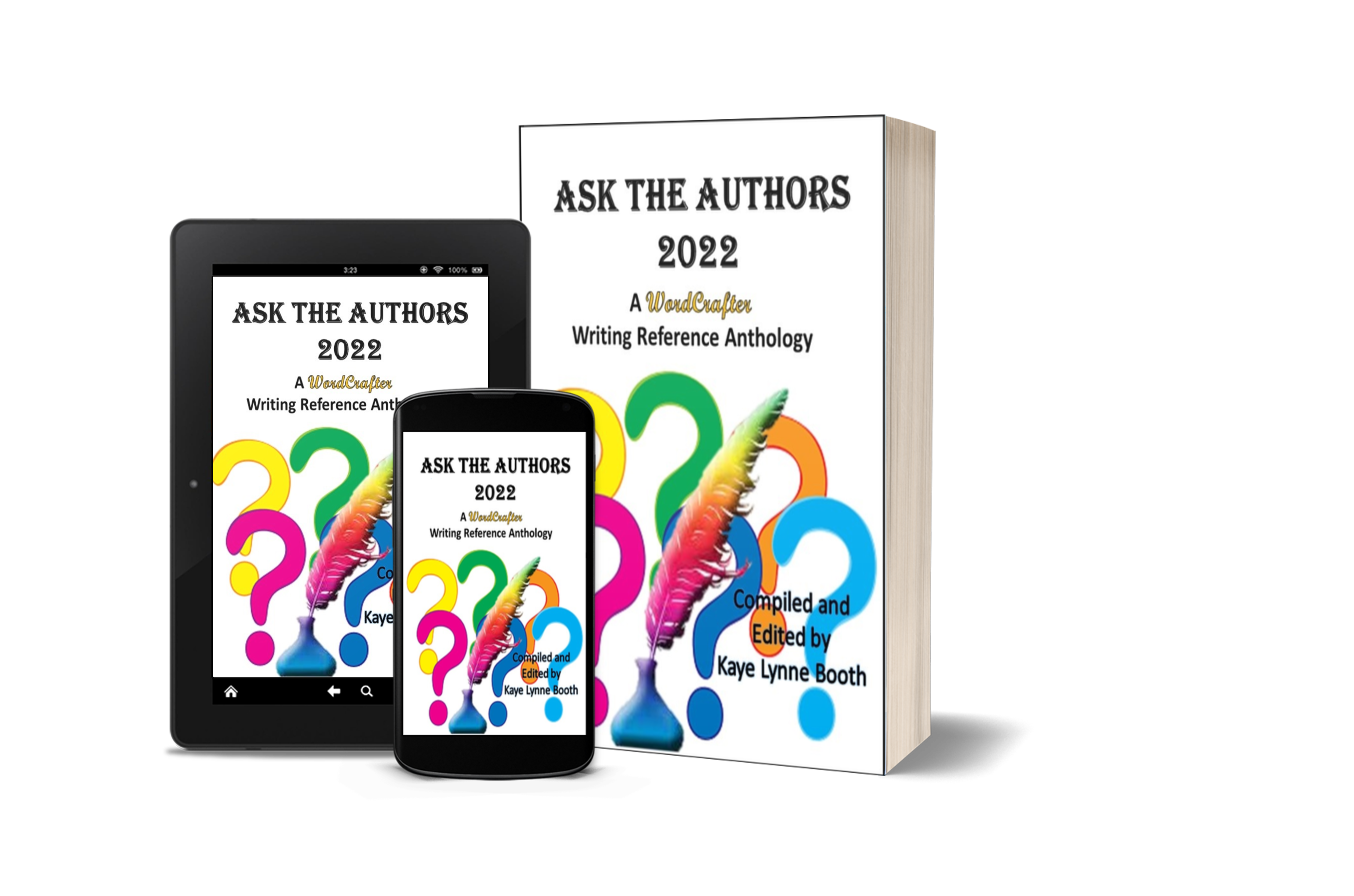
Interview with Shiju Pallithazheth, author of “Katashi Tales”
Posted: April 27, 2019 Filed under: Book Review, Books, Fairy Tales, Fiction, Magical Realism, Stories, Writing | Tags: Katashi Tales, Morality Tales, Shiju Pallithazheth, Short Fiction, Short Stories, Writing to be Read 13 Comments
It pleases me to present a special Saturday interview with a man who has made huge contributions to literary communities world wide. He is the author of the recently released magical realism story collection, Katashi Tales, as well as the founder of Motivatinal Strips social media forum, which promotes the unification of authors and people across the globe. I am honored to have him as my author guest today. Please help me welcome Shiju Pallithazheth.
Kaye: You are not only an author, but a scholar, striving to improve yourself and others through the promotion of world literature. Can you share a little about your journey to becoming an author? When did you discover your love of literature? When did you know you wanted to be an author?
Shiju: To this context, I would like to narrate my favourite penned quote..
‘My friends used to play with toys in their childhood, while I was playing with tiny English alphabets made of plastic. We all grew up together. They became engineers, doctors, accountants etc. and I ended up being a writer.
Guess that quote narrates the answer.
Kaye: Is there anything unusual or unique about your writing process?
Shiju: Yes! I write fast lest I forget where I started… lol
Kaye: What do you feel is the single most important element in a story?
Shiju: Characters that fit aptly in a plot.
Kaye: What is the most unusual or unique thing you have done so far?
Shiju: I have unified writers from 105 countries for what they love doing. Guess that’s unique and interesting.
Kaye: You are the founder of Motivational Strips, a social media forum designed to celebrate humanity and world literature. What do you hope to achieve with this very selective group of authors?
Shiju: The readers are going berserk to identify quality reads as well as writers. The whole agenda of Motivational Strips is literary unification. It started as a crawling baby ten months back. It withstood will power and today it has daily visitors crossing 130 thousand. So that sums up to 4 million visitors a month.
Kaye: Why do they visit the forum ?
Shiju: They love the literary works of the writers, and feel it’s a safe and secure place to network. The forum has achieved commendable milestones within a short time. All credit goes to its members as well as administration. Today it has World Nations Writers Union as well as Union Hispanomundial De Escritores (UHE) as its associates. World Nation Writers Union had Late Dr Koffi Annan ( Former UN General Secretary) as its co president in the past. UHE has former Costa Rica President and Nobel Prize laureate Dr Oscar Arias Sanchez as its present Hon. President. The above mentioned merger speaks volumes on the mission of Motivational Strips. It has affiliated six other qualitative groups in Facebook for writers so that worldwide writers have variation and choice. So we are liberal on writers’ interest. In a nutshell, Motivational Strips keeps writers interest over its own. The forum has novice beginners to many literary icons and award winning authors. Many Nobel Prize Nominees interact and coach the writers for literary progress. It has more than 60K poems and articles penned by writers from more than 105 nations. Now, does that sound small?
Kaye: Motivational Strips honors and encourages those who have made a significant contribution to world literature. I received a Certificate of Honor, myself. What do you feel has been your own greatest contribution which you have made?
Shiju: I have been one among them, that’s the greatest contribution!
When you want to steer a mighty unification process in literature or any other creative fields, you have to know how to strengthen its roots. The leaders can’t stand away and ask the members to keep the roots firm. The ideal leader is one, who has a desire to learn and to teach relevance. Just like how an editor takes responsibility to edit a book to relevant material, a leader has to jointly interact to keep the basics right.

Kaye: Your collection of magical realism stories with life lessons, Katashi Tales, is coming out in April. What are some of the life lessons you hope to convey with these tales?
Shiju: Katashi Tales is all about morals. It has a storyline that will take the reader through a journey of magical realism. It ends with realities and values to cherish in life. It has varied forms of narration to keep away monotony, as well as expectations. The expectation level of the reader goes up as the chapters progress. The reason why the expectation level goes up is because of the way the stories have been placed. It gives exposure to the reader in meeting different characters and feeling the ambiance in unknown places. Many new places one has never heard of or read about in life will be revealed in the plot. The book speaks for itself. Each of the fifteen stories teaches a different lesson.
Kaye: The stories in Katashi Tales carry with them lessons or morals, similar to western folklore. Do the lessons just unfold as you write the stories, or do you craft the story to fit the lesson?
Shiju: No, it unfolds in unexpected twists and turns in the plot. The story line was never meant or designed with planned thoughts. The characters revealed themselves in my imagination. I felt as if my presence was in the plot, and witnessed them weaving great stories with tiny outlines. It was fun to write those fables. I experienced the feelings and ambiance of the cute characters in the jungle. They were dying to tell their stories. They are adorable innocent characters, that teach us humans, that they have great stories, principles, ethics and morals, as well.
As Katashi Tales is released worldwide, I’m glad to say that, today being second day of its release, the book is already in the No 2 position among best sellers in KOBO.
Kaye: What is the most challenging part for you of writing magical realism?
Shiju: Magical realism is an art in literature that needs great understanding of the readers’ expectation. I feel bringing reality to a fantasy script is the greatest challenge in writing.
Katashi Tales is a typical attempt of magical realism.
Kaye: You write in many genres. What is your favorite type of writing?
Shiju: I do not limit myself to any favourites. Moods and ambiance decide my choice for the season. But humility and interactions has taught me to be a greater learner. I enjoy writing for writers, as well readers. If you go through my posts in Motivational Strips, you will understand the fact, that my favourite is what the writers/readers desire syncs with.
Kaye: What do you enjoy doing when you are not writing?
Shiju: I love researching people’s behaviour, as well mine. Doing a comparison helps a lot in correction of oneself and adaptation to the public mass behavioural patterns.
Kaye: What do you consider to be your greatest accomplishment to date?
Shiju: I’m still learning, I feel that’s a great accomplishment in my life.
Kaye: What is the best piece of advice that was ever given to you?
Shiju: ‘Learn to see the good side of people rather than digging their faulty holes to bring out the trash.’ That was my late grandpa’s advice. I cherish it close to my heart.
Kaye: What is something most of your readers would never guess about you?
Shiju: I’m a busy corporate executive and do rob myself of sleep to promote writers in Motivational Strips, as well affiliates, because of my love for literature.
Kaye: What advice do you have for aspiring authors?
Shiju: Observe, interact and write. Mistakes are bound to happen as well as success. Take them both in positive spirit. Don’t sell your soul, you can sell your writings though.
I want to thank Shiju for sharing with us today. He’s a man who has done some impressive things for the literary world and the human world, as well, perhaps. Katashi Tales sounds like a wonderful book filled with delightful and meaningful stories. You can learn more about Shiju Pallithazheth or get your copy of Katashi Tales at the following links.
MOTIVATIONAL STRIPS: https://www.facebook.com/groups/252154565336217
AUTHOR PAGE: https://www.amazon.com/MR-Shiju-H.-Pallithazheth/e/B07QQZDS86
AMAZON UNIVERSAL LINK: http://Author.to/Katashitales
KATASHI TALES KINDLE: https://www.amazon.com/dp/B07QPVCNGC
KATASHI TALES PAPERBACK: https://www.amazon.com/gp/product/1094684120
https://www.amazon.co.uk/dp/1094684120
KOBO: https://www.kobo.com/us/en/ebook/katashi-tales
BARNES & NOBLE: https://www.barnesandnoble.com/w/books/1131274084
Like this post? Let me know in the comments. You can be sure not to miss any of Writing to be Read’s great content by subscribe to e-mail or following on WordPress.
Share this:

Interview with romance author Chris Barili (AKA B.T. Clearwater)
Posted: April 22, 2019 Filed under: Books, Contemporary Romance, Fiction, Interview, Paranormal, romance | Tags: Author Interview, B.T. Clearwater, Chris Barili, Paranormal, Paranormal Romance, romance, Smothered, Writing to be Read 4 Comments

Today I have the pleasure of interviewing author Chris Barili, and although he’s written in other genres, and his latest release is the fantasy novel Shadow Blade, which I reviewed last month, he also writes romance under the name B.T. Clearwater. You can read my review of his paranormal romance, Smothered, here.
In January, we talked to women’s fiction author Barbara Chepaitis and western author Loretta Miles Tollefson about the fact that women authors still are encouraged to use sex neutral pen names when writing certain genres, but here we have a male author who uses one when writing romance. We’re going with talk to Chris about writing romance and why there aren’t more male romance authors today. Or are there? Let’s find out what Chris Barili has to say about it.
Kaye: You have fiction published under your own name, but when it came to Smothered, your publisher suggested you publish as B.T. Clearwater. This is the reverse of what many female authors experience when publishing in certain genres, such as western. Did you feel like there is discrimination toward male romance authors?
Chris: My publisher didn’t encourage the pseudonym, actually. That was advice from a mentor and college professor, who recommended different pen names for different genres due to perceptions in the industry that if you write one genre well, you’re limited to that genre. I also publish westerns under a different pen name, T.C. Barlow.
And while I didn’t experience discrimination toward me as a male romance writer, I did get some raised eyebrows and comments like, “You write THAT?” So I had my youngest daughter think up a pen name that used my initials, and that sounded gender neutral. She came up with B.T. Clearwater.
Kaye: Do you think it is harder for male authors to make it in the romance genre than it is for female authors? Why?
Chris: I think it’s harder because not enough men have tried, so there’s no benchmark for it, no evidence to the doubters that men can do it. Men tend to avoid it because of the stigma associated with writing “that” kind of fiction.
Kaye: What is the biggest challenge of writing romance for you?
Chris: Probably making it “juicy” enough for a modern audience. I’m an old-fashioned guy, so I like love stories, and I tend to focus on the emotional relationship rather than the sexual one. Many (not all, but many) romance readers are looking for the steamy stuff, and that just isn’t me.
Kaye: You have a family, and are involved in cycling and martial arts, yet you find time to write and attend conferences and seminars. What are your secrets for juggling writing with your home life?
Chris: Mostly, I neglect my dog. 😊 No, that’s only a little true. As with anything, finding time for writing is a matter of discipline and sacrificing things that are less important. I had to remove a video game from my computer because it was distracting me from writing. Similarly, my DVR is 90% full of programs I fully intended to watch, but can’t get to because of writing. You have to make writing THAT important. My priorities are: my family, my health, the day job, writing. Everything else comes later.
Kaye: What is your favorite genre to write in? Why?
Chris: I’m actually published in every fiction genre: fantasy, science fiction, romance, horror, western, and crime. I don’t know that I have a favorite, but I do most of my writing in the fantasy and romance genres. They’re all fun to write, and one of the things I learned during my MFA studies under Russell Davis at Western is to let the story find its genre. Don’t try to force it into one you’re comfortable writing.
Kaye: If Smothered was made into a film, who would you like to see play male and female leads?
Chris: Interestingly, when I develop a character, I often choose a model, actor, public figure, etc to roughly model their looks. In this case, I used actor James Denton as a rough look-a-like for Mike, and Annie was loosely modeled on Jeanine Garofalo. So yeah, them.
Kaye: What’s is the single most important element in a romance story?
Chris: Damage. The lead female character has to be broken somehow, and the only way she can heal herself is to be with the male lead. It’s corner, and not a great way to base a real relationship, but that’s kind of the trope of romance. She has to realize she cannot live without him.
Kaye: Where did you find the inspiration for Smothered?
Chris: Again, my MFA studies, only this time in a class with Michaela Roessner. She had us write a sex scene that gets interrupted somehow, and I had mine interrupted by the ghost of the woman’s late mother, who appears at the foot of the bed. That interested me so much that it grew into a novel, which was my MFA thesis.
Kaye: What was the most fun part of writing a romance for you?
Chris: Romance is a very formulaic genre, and the fun part, for me anyway, is finding a way to make that formula sound new. They say there are no new stories, only new ways of telling old ones, and I think that’s what I like about romance. Proving to doubters that it CAN be original and unique.
Kaye: Is there a future for B.T. Clearwater? Can readers expect to see more from this author?
Chris: Oh yeah, B.T. has a novella published in Gwyn McNamee’s Last Resort Motel series, called “Room Fifty-Eight.” That came out a few months ago, and will appear in a box set soon. And B.T.’s latest novel, Rise and Fall, needs to go off to the freelance editor soon for a work-over. I decided to take B.T. full indie, to self-publish those stories, because self-pubbed romances can do very well. Gwyn has given me some tips on how to get it right. So when Rise and Fall and the next two in that series are ready, I’ll upload them and see how they do.
Kaye: Chris Barili has a fantasy novel coming out in June, Shadow Blade, which I recently reviewed. Would you like to tell us a little bit about that one?
Chris: Shadow Blade was actually my backup thesis. Yeah, I had a backup. Outlined both, but wrote Smothered and saved Shadow Blade for after graduation due to the world-building it needed. It tells the story of Ashai Larish, an assassin for the feared Denari Lai order. The Denari Lai are a religious order that keeps their killers loyal by addicting them to the very magic that makes them so effective at killing. In Ashai’s case, he is sent to kill a king and his daughter, but falls in love with the princess, and finds himself fighting to keep her alive rather than to kill her.
Shadow Blade is being published by WordFire Press, as a “Kevin J. Anderson Presents” title, where the best-selling author highlights a new author “to watch.” It’s on a review tour now, and should come out in e-book and hard cover in May, and by the time this article airs, it will be out as part of WordFire’s “Epic Fantasy” bundle at StoryBundle.com.
I want to thank Chris for joining us and sharing today. It is interesting to learn about writing romance from a male perspective. You can learn more about Chris and all of his works on his author blog and website, his Amazon Author page, his Goodreads Author page, as well as on Facebook and Twitter. You can learn more about the works of B.T. Clearwater on Amazon, Goodreads, Simon & Schuster, and Smashwords.
Like this post? Subscribe to Writing to be Read for e-mail notifications whenever new content is posted or follow WtbR on WordPress.
Share this:

Writing for a YA Audience: Romance Darkly
Posted: April 17, 2019 Filed under: Books, Fiction, romance, Steampunk, Western, Writing, Writing for a YA Audience, Writing Inspiration, Young Adult | Tags: Inspiration, Jordan Elizabeth, Steampunk, Treasure Darkly, Western, Writing for a YA Audience, Writing to be Read, Y.A. Romance, YA, Young Adult, Young Adult Fiction 1 Comment
My mom and uncle are obsessed with Westerns. They grew up watching Westerns and still make time for them every weekend. While watching a Western with my mom, I had the idea of writing a young adult Western…with a steampunk twist. I brainstormed a ranch with a family secret. Along came TREASURE DARKLY.
After the first draft, it was recommended I add in a romantic theme. Thus, Clark and Amethyst fell in love. It worked. I didn’t have to force them together. They were already best friends, and it flowed that they should develop romantic feelings for each other.

Then came the challenging part. My first editor for the story wanted more romance. I wasn’t a romance writer. Sure, my main characters each had a love interest, but I wouldn’t call my early works romances.
I set out to read romance novels to get a feel for the genre. I read some young adult romances, some Harlequins, and then I discovered a love of paranormal romance. I devoured those and wanted more. Eventually, I felt ready to write my own romance.
Young adult romances are tricky. Some people don’t want any sex in YA novels; some people say its okay. I struggled with that fine line before firmly stepping onto the “no sex” side. Yes, the book does get a bit steamy, but there is never explicit sex.
“But teens already know everything about sex,” I’ve been told.
Okay, that might be the case, but it doesn’t mean every young adult book has to contain graphic sex scenes. I want my books to be more about the adventure and setting than erotica.

Photo by Anderson Weiss on Pexels.com
Jordan Elizabeth is a young adult fantasy author who dapples in the steampunk realm. You can connect with Jordan via her website, JordanElizabethBooks.com.
Want to be sure not to miss any of Jordan’s Writing for a YA Audience segments? Subscribe to Writing to be Read for e-mail notifications whenever new content is posted or follow WtbR on WordPress.
Share this:

Chatting with the Pros: Interview with romance author Maya Rodale
Posted: April 15, 2019 Filed under: Author Profile, Books, Chatting with the Pros, Fiction, Historical Romance, Interview, romance, Writing | Tags: Author Interview, Chatting with the Pros, Historical Romance, Maya Rodale, romance, Writing to be Read 3 Comments
Today on “Chatting with the Pros” my guest author is a historical romance novelist, Maya Rodale. She writes strong female characters who stand up for themselves and still manage to maintain their feminity. Her books have appeared on the USA Today bestselling list and have been published in several languages. Her novel, The Wicked Wallflower won the RT Reviewer’s Choice Award for best historical hero, and What a Wallflower Wants was labeled as a romance novel for the #MeToo movement. I’m pleased to have the opportunity to chat with her today and learn her thoughts on romance, female authors and women’s place in the world.
Kaye: What are some tips for writing strong female characters in a time period when there weren’t many to be found, and making them believable?
Maya: The more I dig deeper in my research of history the more I believe that this is a myth. Women have always gotten out of the house and done great, wonderful, terrible things; but it hasn’t been recorded, or their stories haven’t been told, or (male) historians deemed it unimportant. Women have never been boring, silent bystanders to the world.
I think we’ve been (maybe deliberately) shut out of history books and as a result we don’t know the long and full history of women being active participants in the world. Start with a look at the New York Times Overlooked Obituaries, for example.
The problem isn’t that strong historical female characters aren’t accurate, the problem is that we have been made to believe they are. And in the name of “historical accuracy” we unwittingly perpetuate that in our novels.
My tip for writers: find those stories, write those stories! And then explain your research in the author’s note. And my advice for readers: check your biases and preconceived notions and let yourself get swept up in the story. You may just learn something new about history too.
 Kaye: You wrote a nonfiction book titled Dangerous Books for Girls: The Bad Reputation of Romance Novels Explained. Can you explain briefly why romance has a bad rep and it is justified?
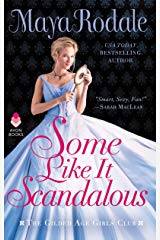 Kaye: You have a new book in your Gilded Age series coming out in June, Some Like it Scandalous. Would you like to tell us about it?
I want to thank Maya for joining me today and sharing her views with my readers. I think some may walk away with a different perspective on the romance genre. You can learn more about Maya on her very creative website: http://www.mayarodale.com/ and on her Amazon Author page, her Goodreads Author page, or on her Fantastic Fiction Author page.
Like this post? Subscribe to Writing to be Read for e-mail notifications whenever new content is posted or follow WtbR on WordPress.
Share this:

“The Christmas Cruise”: A science fiction time travel romance
Posted: April 12, 2019 Filed under: Book Review, Books, Contemporary Romance, Fiction, romance | Tags: Book Review, Contempoary Romance, romance, Science Fiction, Tammy Tate, The Christmas Cruise, Time travel, Writing to be Read Leave a comment
The Christmas Cruise, by Tammy Tate is a really cute romance story which could have been so much more. This story combines romance with science fiction when the two main characters, who are attracted to one another but won’t admit it to themselves, both happen to be swept from their Christmas cruise in the Burmuda Triangle onto a deserted island from the past.
It’s a good plot and it could work if the characters were more developed and didn’t just accept what was happening without a second thought. The story moves from point A to point B in a fairly straight line, at a fairly quick pace, lacking any real twists or surprises. Just the fact that they are the only two to be swept away gave me trouble buying in, and when they return without any logical explaination as to how it happened, it lost me totally.
If the author had taken the time and effort to expand the plot, and portray believable reactions to absurd circumstances, The Christmas Cruise could have been a really entertaining story. As it is, it lacks depth of character and is difficult to swollow. I can only give it three quills.

Kaye Lynne Booth does honest book reviews on Writing to be Read in exchange for ARCs. Have a book you’d like reviewed? Contact Kaye at kayebooth(at)yahoo(dot)com.
Share this:

How reading encourages diverse thinking
Posted: April 10, 2019 Filed under: Books, Children's Books, Diversity, Fiction, Growing Bookworms, Reading | Tags: Children's Books, Diversity, Growing Bookworms, Reading, Robbie Cheadle, Writing to be Read 27 Comments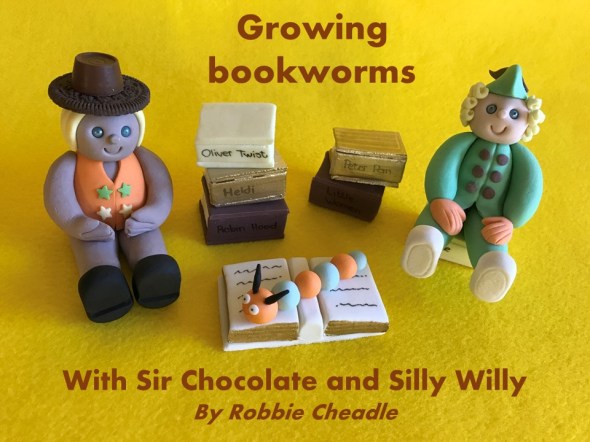
We all want our children to grow up to an environment free from bias and discrimination. We want them to have opportunities to achieve their dreams and to believe they can accomplish anything. We also want our children to feel included and loved in all situations, from school, to home to religious institutions.
The best way to achieve this is to weave diversity into the fabric of our children’s lives. We can do this in many ways, one of which is by providing our children with a selection of multicultural books which allow them to imagine experiencing life in a different way and from a different perspective.
When you read multicultural books you are transported to a different culture and are exposed to new ideas about housing, food, schooling, transport and religion. I always remember when I read the books written by Charlotte, Emily and Anne Brontë as a teenage girl. These books were my first real exposure to the poor treatment of children and women during the Victoria era. I was horrified by the terrible conditions the orphaned girls experienced at Lowood School and the terrible illnesses that ravaged the learners. Later on in my life I read books about the lives of several female Victorian writers and I came to realise just how restricted their lives were. Female’s were not considered to have the intelligence or seriousness necessary to write novels. My own mother experienced discrimination as a young girl when her father refused to buy her a school uniform when she won a scholarship to attend a local grammar school. He didn’t believe in educating girls.
As I have walked my path as a reader, I have read a wide variety of books about life in numerous countries from the great cities of the USA, London and Paris to country towns and rural villages in Africa and Asia. Through reading, I have experienced life in Japan, China and Chile. I have tried to share these experiences with my own children by reading them abridged versions of classic stories like The Story of Doctor Dolittle by Hugh Lofting, a story of an empathetic doctor who travels to Africa and has adventures on this great continent, The Last of the Mohicans by James Fennimore Cooper, set in Upper New York State during the French Indian wars, To Kill a Mockingbird by Harper Lee set in Alabama and Oliver Twist set in Victorian London. They have also read a number of more recent books set in various countries.
Multicultural books teach us about other peoples cultures and religious beliefs and helps to instill positive attitudes about acceptance and tolerance. Some of the books that spring to mind that I read to my pre-teen boys are Fattipuffs & Thinifers by André Maurois which teaches children about segregation in an entertaining and light hearted way, I am David by Anne Holm, the story of a boy who escapes from a Bulgarian communist concentration camp and makes his way to Denmark, and The Diary of a Young Girl written by Anne Frank, that tells of her life as a young Jewish girl growing up in the Netherlands during the Nazi occupation. These sorts of books help teach children that while we all have different religions, celebrations and traditions, we are actually all the same. We all need to eat, drink and sleep. We all aspire to an education, job and happy family life.
While it is good for children to understand history and learn from the mistakes of the past, it is best to select titles that present a variety of points of view so as to prevent stereotyping.
The modern world is becoming more cosmopolitan and diverse due to the ease with which people can travel and communicate. My son plays computer games with friends from all over the world including India, the UK, the USA and Dubai. His school provides a boarding option and caters to boys from all over the world and a variety of different backgrounds, including Chinese, American, British, German, French and a number of African countries. There are Jewish, Muslim, Hindu and Christian boys all attending classes together, doing activities and sports together and enjoying themselves as a group. Diversity is a popular topic with many modern authors and I have recently read three lovely picture books aimed at teaching children about acceptance in a fun and simple way.
Myrtle the Purple Turtle by Cynthia Reyes is about Myrtle, a turtle who is purple and, as a result, she and her family are different from other turtles. You can read my review on Goodreads here: Goodreads review of Myrtle the Purple Turtle.
Kids get it by Sally Huss is a story about self-worth and the equality of all children in the eyes of God. You can read my Goodreads review here: Goodreads review of Kids Get It.
The cover of Who do I see in the Mirror? by Vese Aghoghovbia Aladewolu shares “the important message relayed to children is to love the skin they’re in.”. You can read my Goodreads review here: Goodreads review of Who do I see in the Mirror?
There are also a large selection of non-fiction books for children which describe the cultures and lives of the people of the world.
What do you think about the role of books in promoting diversity? Let me know in the comments.
About Robbie Cheadle

Hello, my name is Robbie, short for Roberta. I am an author with six published children’s picture books in the Sir Chocolate books series for children aged 2 to 9 years old (co-authored with my son, Michael Cheadle), one published middle grade book in the Silly Willy series and one published preteen/young adult fictionalised biography about my mother’s life as a young girl growing up in an English town in Suffolk during World War II called While the Bombs Fell (co-authored with my mother, Elsie Hancy Eaton). All of my children’s book are written under Robbie Cheadle and are published by TSL Publications.
I have recently branched into adult horror and supernatural writing and, in order to clearly differential my children’s books from my adult writing, I plan to publish these books under Roberta Eaton Cheadle. I have two short stories in the horror/supernatural genre included in Dark Visions, a collection of 34 short stories by 27 different authors and edited by award winning author, Dan Alatorre. These short stories are published under Robbie Cheadle.
I have recently published a book of poetry called Open a new door, with fellow South African poet, Kim Blades.
Find Robbie Cheadle
Blog: https://bakeandwrite.co.za/
Blog: robbiesinspiration.wordpress.com
Goodreads: Robbie Cheadle – Goodreads
Twitter: BakeandWrite
Instagram: Robbie Cheadle – Instagram
Facebook: Sir Chocolate Books
Want to be sure not to miss any of Robbie’s Growing Bookworms segments? Subscribe to Writing to be Read for e-mail notifications whenever new content is posted or follow WtbR on WordPress.
Share this:

“Ripper”: Not your typical historical romance
Posted: April 5, 2019 Filed under: Book Review, Books, Fiction, Historical Fiction, Historical Romance, romance | Tags: Amy Cecil, Book Review, Historical Romance, Ripper, romance, Writing to be Read 2 Comments
Romance author Amy Cecil writes both contemporary and historical romance, but her latest release, Ripper, is like no historical romance I’ve ever read. Set in London, during the times of the Jack the Ripper roamed the streets of White Chapel, this story explores possibilities and throws in more than a few surprising twists.
Life is looking up for Marie, with a new client turned lover, it looks as if she might be able to leave behind her life of poverty. But Jax’s behaviors cause suspicions she can’t ignore, suspicions that, if proven true, might make it impossible to follow this dream life she’s found. What’s a girl to do when she learns the man she loves might be Jack the Ripper?
A cleverly-crafted tale that will keep readers guessing until the last pages. I give Ripper five quills.

Kaye Lynne Booth does honest book reviews on Writing to be Read in exchange for ARCs. Have a book you’d like reviewed? Contact Kaye at kayebooth(at)yahoo(dot)com.
Share this:

Jeff’s Pep Talk: Back in the Saddle
Posted: April 3, 2019 Filed under: Fiction, Opinion, Pep Talk, Writing | Tags: Editorial, Inspiration, Jeff's Pep Talk, Opnion, Writer's Block, Writing to be Read 3 Comments
Back in the Saddle
By Jeff Bowles
The first Wednesday of every month, science fiction and horror writer Jeff Bowles offers advice to new and aspiring authors. Nobody ever said this writing thing would be easy. This is your pep talk.
If you’ve been following the Pep Talk, you know I’m big on writers cutting themselves some slack. Burnout kills creativity and breeds writer’s block. So while I’ve always been a fan of the idea that we need to keep working in order to evolve, grow, and succeed, I’m incredibly cognizant of the ever-present reality most writers hit a wall every now and then, and that it’s okay to admit and even embrace that.
Now, a bit of an admission. The past two years or so, I’ve been struggling to rebound from my own slowdown. This decade has been intense for me, particularly on the creative front. I went from earning my MFA in a very hard and fast environment, to publishing short stories at a fairly decent rate, to suffering some unfortunate circumstances in my personal life, to not writing a single word for several years.
Really, this has been the worst burnout phase of my life. I’m in my mid-thirties now, so it stands to reason that ten years of working, practicing, and publishing finally caught up with me. Furthermore, we can’t stop living very human lives under very human circumstances. If I hadn’t experienced such a shake-up on a personal level, I might have been able to keep working. But things being what they were…
So this Pep Talk is not about showing yourself some love when you’re slowing down. It’s about being eager and ready when you’re speeding back up. I recently started a new writing project, a novel, and I’m pleased to report I’m about 9,000 words in. If that doesn’t sound like much of an achievement to you, it’s probably because you’re a hard-nosed writer who puts in your time, come rain or shine. And before my productivity started to drop off, I was right there with you. But the truth is we all need a break sometimes. All of us. Actually, very often life forces us to take breaks, and we can bemoan, resist, and condemn them, but it doesn’t change the fact that a career in the publishing industry is—in its most ideal form—a long-term project. As such, detours are something of an obligation.
For several years on end, my average yearly wordcount was around 120,000. And that was after a few years of maybe 75,000 to 100,000 words. Really, I was ramping up to something big. I’m a short story guy with some long-form publications in the indie realm. Not precisely a best-seller, but not a newbie either. And as I said, grad school was intense. I think a lot of people who go after an MFA have a similar experience, right on down to needing time off after graduation. The sad and torrid fact of the matter is I haven’t attempted a book-length project since I completed my thesis novel four years ago. That’s a huge dry spell for me, so I’ll take that nice 9,000-word head start, thank you very much.
If being kind to yourself in the face of writer’s block is about realizing you’re not a story machine (no matter how much you want to be), booting up your systems after some downtime requires acknowledging any fears or insecurities that might come up. It’s scary getting back in the saddle, or at least it can be. It’s also pretty exciting, isn’t it? Maybe, like me, you started wondering if you’d ever be productive again. Am I finally done with this whole writing thing? Where are my abilities?! Why don’t I feel like telling stories!? WHY, GOD, WHY!?
Got a flair for the dramatic? Well step right up, ‘cause this next one could be a doozy: in almost any case, we need to be able to accept the fact we might be rusty. Now I took a break of a few years, but I’ve known authors who went ten, fifteen, or twenty, and who were startled to encounter really crummy writing on their part. I know, it’s disappointing. Turns out none of us is a miracle worker. So a little piece of advice, maybe start slow, a short story or two. Heck, start writing blog posts or flash fiction or maybe even try your hand at a new genre, like creative nonfiction or poetry. That’s actually a good place to start. Writing truth is, in my experience, almost always easier than writing fiction. The point is you need a jumping on point, something you can sink your teeth into that doesn’t require you to … well, break your damn teeth.
And respect yourself enough to know when it’s time to work and when it’s not. Again, I really do appreciate the workhorse model of writing. That’s how the beast feeds itself. It’s the lifeblood of what we do. I just think it’s a bit self-deluded and unkind to think you can go on like that forever. Maybe some of us can, but for the majority, it does no good to crash and burn. Don’t knock yourself for it, man. And don’t let colleagues or friends and family make you feel bad or lazy or lost.
When it’s time to get back to work, it’s time. You’ll know you’re ready because—hey, here’s a nice big no-brainer for you—you’ll actually feel like it. Don’t push yourself too hard too soon. It’s a pretty organic process when it comes down to it. You can’t get blood from a stone, though I’m sure if you hit yourself in the head enough times with said stone blood would ensue. Never imagine yourself to be something you aren’t, a literary god, born of good fortune and the primal mud from which warriors emerge, Achilles of the word processor, Odysseus of plot structure and acute character psychology. Nah, you’re just a humble guy or gal who likes to crank out some good writing every now and then. Maybe you thought this day would never come. How do you feel now that it has?
I believe that life is almost always a matter of two steps forward, one step back. It’s how we progress as human beings. So two steps forward, one step back, two steps forward: hey look, the math checks out. You’re one step ahead of where you were last time. It’s like a Jacob’s ladder, right? You zig left, zag right, but you’re always climbing higher. Don’t feel like writing today? Consider, if you will, investing in some fun. Watch a few old movies that always manage to inspire you. Read a good book. Listen to some music, or try your hand at painting, sculpting, songwriting, video production, anything that engages your creativity and that doesn’t have all that unbearable weight built up behind it.
This is a fun job. Remember that. It’s fun. We get to tell stories and entertain people with our words. If you’ve been at this a while, and you’ve done silly things before, like attempting to quit but finding it quite impossible, then consider the possibility you’re meant for this life. You shouldn’t shirk being meant for something. Any way you slice a lifelong love affair, it’s fate, my friends. It’s kismet. Maybe you aren’t a literary god, but rest assured, the real gods up on Mount Word-lympus have plans for you that go back eons. One last time, do however much you actually feel you can do, and get excited about the prospects. If, lord forbid, you someday end up in a terrible driving, skying, skydiving, or rogue spelunking accident, you’re going to want a surgeon who can put you back together with slow and steady hands. Do yourself a favor and be that surgeon for your writing.
Until next time, everybody. The straightest line between two points is … wait, you guys are using straight lines?! So that’s why my writing is so crooked.
Check out Jeff Bowles Central on YouTube – Movies – Video Games – Music – So Much More!
Share this:

“Shadow Blade”: A high fantasy novel of intrigue and mystery
Posted: March 29, 2019 Filed under: Book Review, Books, Dark Fantasy, Fantasy, Fiction | Tags: Book Review, Chris Barili, Dark Fantasy, Fantasy, High Fantasy, Shadow Blade, Writing to be Read 2 Comments
Spies and assassins, deception, adventure, magic – Shadow Blade, by Chris Barili has it all. With an intriguing story line that keeps readers guessing, with twists and turns around every corner, this story is everything a fantasy adventure should be. In the tradition of high fantasy, Barili has created a rich medieval style world of kings and castles, princesses and assassins, where magic is addictive and nothing is as it seems.
When a Denari Lai assassin falls in love with his target, it’s pretty certain that things are going to get complicated. Throw a second assassin into the mix and it’s near certain that there will be trouble and things may not end well. As you get to know Ashai, the Denari Lai assassin whose heart may be bigger than his training, and Princess Makari, whose kindness has earned the adoration and respect of an entire kingdom, you’ll find that you can’t help but root for them both to triumph against all odds.
Ashai didn’t intend to fall in love with Makari, but when he does it proves to be quite a dilemma. His love for her goes against everything he’s been taught, causing him to question his training. When a Denari Lai is set on a target, he stops at nothing to accomplish the sanction, but in a sudden turn of the tables, Ashai will now stop at nothing to prevent it. In his quest to save the woman who now haunts his dreams, he becomes a target. He doesn’t know who to trust, but he finds allies in some unsuspected places, enemies lurking in the shadows, and a surprise around every corner. He’ll do anything to keep Makari safe, even forfeiting the very magic that he draws his strength from and risking his very existence.
Chris Barili has crafted a delightful fantasy adventure in Shadow Blade. It has a well- developed fantasy world, with unique and memorable characters that will stay with you. You won’t want to put it down. I give it five quills.

Kaye Lynne Booth does honest book reviews on Writing to be Read in exchange for ARCs. Have a book you’d like reviewed? Contact Kaye at kayebooth(at)yahoo(dot)com.
Share this:

Writing for a YA Audience: Writing about a Dollhouse
Posted: March 20, 2019 Filed under: Fiction, Mystery, Speculative Fiction, Steampunk, Writing, Writing for a YA Audience, Young Adult | Tags: Clockwork Dollhouse, Jordan Elizabeth, mystery, Steampunk, Writing for a YA Audience 3 Comments
Dollhouses have always intrigued me. That and steampunk, but we’ll get to that later.
As a child, I had three dollhouses. One was wooden, made by my maternal grandfather. One was metal. I used it for my Little People. The third was plastic and I used it for my Victorian Playmobile set (I still feel bad that I never got the official dollhouse that went with the sets!). I loved setting up the rooms and just looking at them. My dolls didn’t always move around in them. It was more for show. I used my imagination to act out scenes.
There’s another dollhouse that sticks out in my mind, only I didn’t own it. As a child, my mother and I went through an estate sale in the neighborhood. In the basement, there was a dollhouse built to replicate the actual house. I fell in love with it. Unfortunately, it was expensive. It was old and showed the effects of being in a basement. Plus, it didn’t fit through the door! I can still picture that dollhouse to this day. I became obsessed with having an intricate dollhouse just like that one.
My grandmother bought me a wooden dollhouse kit. It came with working windows, shingles, and a drainpipe. It also came with a bit of trouble – none of us were carpentry inclined. The dollhouse sat in its box in my basement for years. Eventually, my then-boyfriend (now husband) attempted to put it together, but didn’t get farther than popping out the pieces. A few years ago, a friend’s husband put it together. It looks just as amazing as I’d always hoped it would.
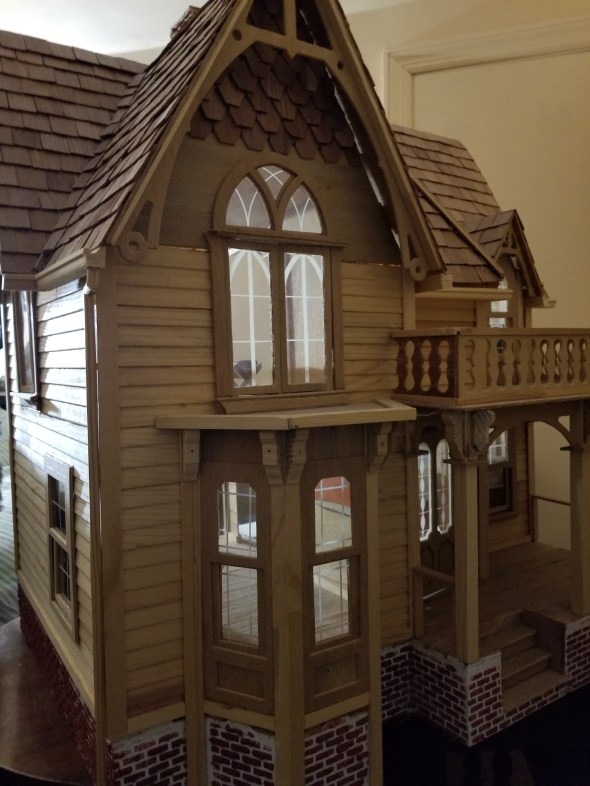
My mother and I bought wallpaper, wainscoting, furniture, dolls… We’re in love with it, but we haven’t done too much decoration-wise. Some of the furniture came in sets and we already know we’re horrible at putting sets together. This dollhouse, sitting on the hall table, with its beautiful dolls keeps pulling at my imagination. I wanted to create a story about a dollhouse, one with secrets. Since I love the steampunk genre, I wanted to add in a taste of that. Thus, along came CLOCKWORK DOLLHOUSE, a short story about dolls and secrets.
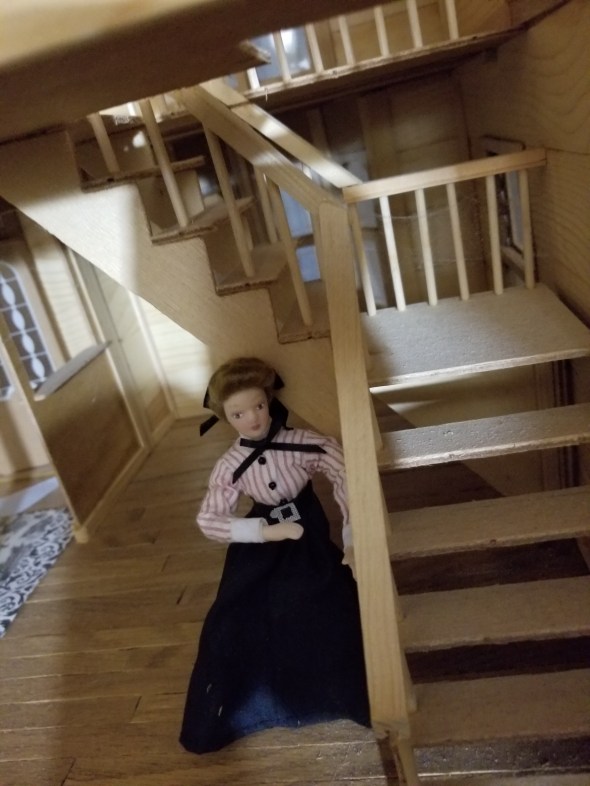
Have you ever seen a dollhouse that beckoned you into its walls?
Jordan Elizabeth is a young adult fantasy author. If you have any spooky dollhouse furniture you want to part with, she would be happy to take it off your hands! You can connect with Jordan via her website, JordanElizabethBooks.com.
Want to be sure not to miss any of Jordan’s Writing for a YA Audience segments? Subscribe to Writing to be Read for e-mail notifications whenever new content is posted or follow WtbR on WordPress.