The great Roald Dahl
Posted: September 9, 2020 Filed under: Books, Children's Books, Fantasy, Fiction, Growing Bookworms, Reading | Tags: #Reading, Charlie and the Chocolate Factory, George's Marvelous Medicine, Growing Bookworms, James and the Giant Peach, Roald Dahl, Writing to be Read 43 Comments
September 13 is the birthday of Roald Dahl, children’s writer extraordinaire. Of course, Roald Dahl also wrote for adults and I have read and enjoyed a number of his adult stories, including my favourite, Lamb to the Slaughter.
I believe he is best known, however, for his children’s books which are filled with his unusual imagery, imagination and his wacky sense of humour. Roald Dahl is guaranteed to appeal to the most reluctant child reader and his books are a terrific way to get them engaged in a good story which will entertain you as the parent too.
My favourite Roald Dahl book is The Witches, but today, I am going to focus on Michael’s and Gregory’s favourite Roald Dahl books.
Michael’s favourite – James and the Giant Peach
James and the Giant Peach is all about a young English lad who is orphaned at an early age due to an escaped rhinoceros from the zoo eating both his parents. James is sent to live with his Aunt Spiker and Aunt Sponge, who are the most horrible pair imaginable and treat him very badly.
One afternoon when James has been banished from the house by his selfish and mean aunts, he meets an old man in the garden who gives him a packet of magic green wriggly things which he says will change James’ life. Unfortunately, James drops the bag and all the wriggly magical things escape into the ground under an old peach tree.
The next morning, when James wakes up, there is a peach growing on the tree. It grows and it grows and James soon becomes embroiled in an amazing adventure.
I enjoyed this book because it features a number of human sized insects: Miss Spider, Miss Ladybird, the Old-Green-Grasshopper, the Earthworm, the Glowworm, and my personal favourite, the Centipede. This book teaches youngsters all about these amazing creatures and goes a long way towards demystifying them and making them seem really interesting and appealing. This is a refreshing change from the usual disdain that insects are treated with and they use their special talents, like the ability to spin thread, to save the day.
You can purchase James and the Giant Peach here: https://www.amazon.com/James-Giant-Peach-Colour-Roald-ebook/dp/B01LOHTSAU

Gregory’s favourite – George’s Marvellous Medicine
I say this is Gregory’s favourite Roald Dahl book, but it is more accurate to say its my mother’s favourite. My mother loves this story and has listened to it many times with both Gregory and Michael.
George’s Grandma lives with his family and a more tyrannical and awful old lady you will never find in the whole of England. Grandma is set in her ways, takes nasty medication and spends her time complaining, grousing, grouching, grumbling and griping.
One day, George’s parents go out leaving him in charge of looking after Grandma, including administering her medication. George decides to make her his own medicine as the old one isn’t doing the trick. Anything he makes could only be an improvement. All sorts of amazing things go into George’s medicine and when he gives it to the old woman, it has the most marvelous and amazing impact on her.
This is a story filled with vivid imagination and fun.
You can purchase George’s Marvellous Medicine here:
https://www.amazon.com/Georges-Marvellous-Medicine-Roald-Dahl-ebook/dp/B002VISNF8

Charlie and the Chocolate Factory
Charlie and the Chocolate Factory is one of Roald Dahl’s most famous books for children and has been made into a movie twice. My personal favourite of the two movies is the older musical with Gene Wilder.
Here is my favourite song from this movie:
The oompa loompa violet beauregarde song
If you would like to find out more about Roald Dahl, you can do so on the official Roald Dahl website here: https://www.roalddahl.com/home/teachers
And on his fan site here: https://www.roalddahlfans.com/
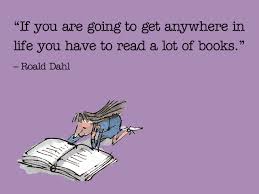
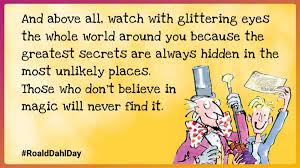
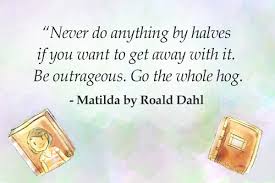
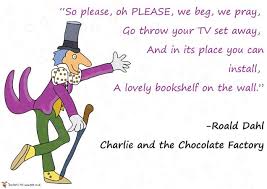
Official quotes from Roald Dahl Books
About Robbie Cheadle

Hello, my name is Robbie, short for Roberta. I am an author with seven published children’s picture books in the Sir Chocolate books series for children aged 2 to 9 years old (co-authored with my son, Michael Cheadle), one published middle grade book in the Silly Willy series and one published preteen/young adult fictionalised biography about my mother’s life as a young girl growing up in an English town in Suffolk during World War II called While the Bombs Fell (co-authored with my mother, Elsie Hancy Eaton). All of my children’s book are written under Robbie Cheadle and are published by TSL Publications.
I have recently branched into adult and young adult horror and supernatural writing and, in order to clearly differential my children’s books from my adult writing, I plan to publish these books under Roberta Eaton Cheadle. My first supernatural book published in that name, Through the Nethergate, is now available.
I have participated in a number of anthologies:
- Two short stories in Spellbound, a forthcoming collection of horror stories edited by Dan Alatorre;
- Two short stories in the forthcoming Spirits of the West, A Wordcrafter Western Paranormal Anthology edited by Kaye Lynne Booth;
- Two short stories in #1 Amazon bestselling anthology, Dark Visions, a collection of horror stories edited by Dan Alatorre;
- Three short stories in Death Among Us, an anthology of murder mystery stories, edited by Stephen Bentley;
- Three short stories in #1 Amazon bestselling anthology, Nightmareland, a collection of horror stories edited by Dan Alatorre; and
- Two short stories in Whispers of the Past, an anthology of paranormal stories, edited by Kaye Lynne Booth.
I also have a book of poetry called Open a new door, with fellow South African poet, Kim Blades.
Find Robbie Cheadle
Blog: https://bakeandwrite.co.za/
Blog: robbiesinspiration.wordpress.com
Twitter: BakeandWrite
Instagram: Robbie Cheadle – Instagram
Facebook: Sir Chocolate Books
Want to be sure not to miss any of Robbie’s “Growing Bookworms” segments? Subscribe to Writing to be Read for e-mail notifications whenever new content is posted or follow WtbR on WordPress.
Share this:

“Keeper of the Winds”: A Classic Hero’s Journey
Posted: August 31, 2020 Filed under: Book Review, Fantasy, Fiction, Young Adult | Tags: Book Review, Fantasy, Jenna Solitaire, Keeper of the Winds, Russell Davis, Writing to be Read, YA, Young Adult Fiction Leave a comment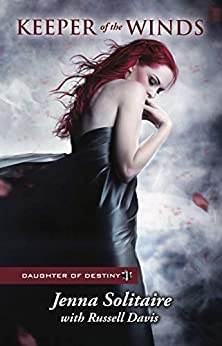
Keeper of the Winds, by Jenna Solitaire with Russell Davis, is not your typical story written by an author under a psuedonym. Davis writes this hero’s journey as Jenna Solitaire, in first person, present tense and nails the teenaged heroine’s persona. If you are an author yourself, you may realize that this is not an easy feat to pull off. Davis has created a character that young adult readers can relate to, making this powerful magical fantasy journey sure to be a hit with YA audiences everywhere.
Jenna lost her parents and grandmother early in life and knows little of her family history. Now she is burying the grandfather who raised her and he last living relative. When she finds a strange board hidden in her grandmother’s things and tries to use it, she awakens forces of power long dormant, setting off a chain of events that will lead her to her ultimate destiny. But, there are those who would steal the board and the power that it holds, and they will stop at nothing to eliminate all obstacles in their way. Can Jenna discover who she really is and master her newly discovered abilities before they can gain control of the board, and either take her captive or eliminate her?
A classic hero’s journey written with a compelling voice that makes Keeper of the Winds a young adult fantasy journey to remember. I give it five quills.

Keeper of the Winds is available on Amazon.
Kaye Lynne Booth does honest book reviews on Writing to be Read in exchange for ARCs. Have a book you’d like reviewed? Contact Kaye at kayebooth(at)yahoo(dot)com.
Share this:

Craft and Practice with Jeff Bowles – Story Synthesis: The Ultimate Tool in the Toolkit
Posted: August 24, 2020 Filed under: Craft and Practice, Fiction, Writing | Tags: Craft and Practice, Fiction, Jeff Bowles, Story synthesis, Writing, Writing to be Read 3 Comments
Each month, writer Jeff Bowles offers practical tips for improving, sharpening, and selling your writing. Welcome to your monthly discussion on Craft and Practice.
The Ultimate Tool in the Toolkit
Remember when you were a kid and you had to lie to your parents? Maybe you trashed the house while they were away, dented the passenger-side door of their new car, or perhaps you can go back even farther with me and you remember drawing with crayons on the wall or stealing the last cookie from the cookie jar.
Whatever you did, I’ll bet you had to tell one heck of a story to get out of trouble. Maybe it worked, maybe it didn’t. Odds are, if you told a real whopper, they grounded you for a week. Too many details, or maybe too few. Too many working components you couldn’t keep track of, or maybe you introduced logic gaps and they picked the damn thing apart on you, literary-critic-style. The key all along would’ve been balance, believability mixed with a healthy dose of surprise. And boy were they surprised. What lovely colors you added to their wall.
As storytellers, we often do something similar, draw all over the walls and then spin an incredible yarn about it. Although, if you feel the need to call us liars, remember that the preferred technical term is “professional liars”. Story synthesis relies on your reasoning skills, ability to drive a narrative in fun and creative ways, and your talent for convincing your readers everything happened just like you said.
Story synthesis applies to every level of the storytelling process, from brainstorming and outlining to drafting and revisions. It applies to character histories, plot details, scene details, dialogue choices, and you must believe me when I tell you this, if you can’t synthesize spare parts on the fly in an organic, natural, and logical manner, you’ll leave your readers cold, and no one wants cold readers, now do they? In very real terms, story synthesis is the most important tool in the toolkit, one not every author has developed to its full potential.
It’s a bit of a magic act, a spell you’ve got to cast on yourself. It happens while you’re writing, which of course means it must be at least somewhat subliminal and unconscious. What we’re really talking about here, though, is completion and resonance. Do all the different parts of your story add up? Do they make sense in context? Does anything come out of left field? Or conversely, is your story just too milk toast?
Story synthesis isn’t hard as such, because your brain synthesizes concepts from disparate elements all day long anyway. It does, however, require a bit of practice to do well, especially if you’re writing a long-form story, like a novel. Much as a spider would, your job as an author is to take all the loose threads you’ve spun and collect them together into a coherent web. This is why it’s usually a bad idea to abandon a project and then pick it up again later. Those threads might be lost on you. The process by which you were synthesizing the narrative died an untimely death, and now you can’t pick your way through and reassemble it, at least not in the same manner.
Story emerges from character, unless you’re outlining too heavily, in which case story emerges from, well, an outline. What’s the difference? In one scenario, it appears to the reader that your characters are making their own choices. In the other, it’s clear you’ve rigged the deck, and that the whole experience is artificial. In my experience, people who rely too heavily on outlines doubt their ability to synthesize story in a natural way. Either that or they think outlining will save them time and effort. As Stephen King once said, “Outlines are the last resource of bad fiction writers who wish to God they were writing masters’ theses.”
At any one moment in the process, ask yourself what your characters want and how, reasonably so, they can go about getting it. The rest will flow from that, though not effortlessly, so don’t get it twisted. Maybe you’ve written yourself into a corner. A common enough situation. And though you’ve had a general plan all along, something ended up rushed and malformed. You may need to go off the rails to land back on your feet. So to speak. I say blow the whole thing to pieces. Do something to really shake yourself loose. You’ve got to navigate your own twisting waterways with grace, or put another way, all those balls you’ve tossed into the air? They’d better be in your hands and not on the floor by the end of your routine.
Don’t be afraid. Some of the best writing you’ll ever produce will be wholly unexpected. Be the trapeze artist, the reed in the wind. Be willing to exert a little nonchalant flexibility when you feel most worried all your herculean efforts have gone up in smoke. The synthesis of your tale into something readable and engaging begins when you relinquish a little control and trust your creativity and rational mind. Because really, it requires both.
Synthesis in this context applies most especially to story climaxes, the worst of the worst, the hardest to pull off. Sure, beginnings are tricky, and middles are a tough nut to crack, but the endings, oh, the endings. I’d like you to imagine a pot of boiling stew. Now imagine your readers watched you cook this amazing stew from start to finish. They watched you cut up the veggies and meat, saw you season everything and stand at the stove for hours, stirring and tweaking. They’re even aware you’ve been taste testing, which is important because it means they trust that you at least find the flavor remarkable.
But let’s say that stew wasn’t synthesized properly. Maybe you were working off a recipe and failed to notice it needed certain improvements, or maybe it just came to you and you rushed the chopping and cutting. Potato pieces the size of peas. Celery stocks that may as well be whole. If dinner doesn’t go well, it hardly matters what you think you did or how well you think you did it. I mean just look. You left a whole pile of carrots sitting on the cutting board. Why didn’t you throw those in? And that beef broth you only used half of? It probably explains why your stew tastes like wet cardboard.
You see? Good story synthesis means combining all of your disparate and seemingly unconnected ingredients together creatively, confidently, logically. In fact, if you do find yourself in no man’s land over a piece of fiction, get excited, because it means you’ve got the opportunity to pull off something truly magical. As you’re writing, keep track of everything you still have to pay off. You know what a payoff is, right? If someone mentions a mountain in Chapter One and we never see its summit, not even by Chapter Forty, that’s not a good payoff. You might even keep a list running so you miss not a single opportunity to pull one more good thread together.
Like the man said, “Not all who wander are lost.” I urge you to get lost in your writing this month. Check and see that this particular superpower is performing at peak levels. And remember, good story synthesis isn’t about shock and awe, not necessarily. It’s about balance, inevitability, structural harmony. Plus tons of shock and awe. You wouldn’t want people to get bored, now would you? I’ll be back in September with more Craft and Practice. Good hunting, everybody.
Check out Jeff Bowles Central on YouTube – Movies – Video Games – Music – So Much More!
Want to be sure not to miss any of Craft and Practice with Jeff bowles segments? Subscribe to Writing to be Read for e-mail notifications whenever new content is posted or follow WtbR on WordPress
Share this:

“In the Shadow of the Clouds”: A Steampunk Romance
Posted: August 21, 2020 Filed under: Book Review, Books, Fiction, Steampunk, Young Adult | Tags: Book Review, In the Shadow of the Clouds, Jordan Elizabeth, Steampunk, Writing to be Read, YA, Young Adult, Young Adult Fiction Leave a comment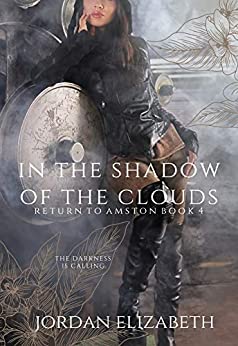
In the Shadow of the Clouds, by Jordan Elizabeth is book 4 in her Return to Amston series, but it works equally well as a stand alone novel. It’s a top rate steampunk adventure with a dash of romance. I’m familiar with the steampunk worlds of this author, and always find her steampunk tales engaging and entertaintaining. (See my review of Runners & Riders, the first book in the series.) This story is no exception.
For Bianca, life hasn’t been easy. After being ignored by her indifferent mother, being turned out into the streets by the madame of the brothel where her mother makes her living, and being sold off by her grandparents to be the bride of an oppressive man, it is no wonder she trusts no one and feels as if there is nowhere where she really belongs. But when her husband dies unexpectedly, she inherits his airship company and sees a way to provide a living for herself, if she can straighten out the mess he left it in. And she’s just headstrong enough to do it with the help of her handsome young pilot.
Charlie hired on as pilot in hopes of one day regaining the air ship company, which once belonged to his family, who were killed by cloud pirates when he was just a boy. He flies every trip with an eye out for an opportunity to exact revenge on those who attacked his family’s air ship so many years ago. He denies the feelings developing for his boss, but when cloud pirates capture Bianca and Charlie rescues her, he learns what truly happened to his family and why, he gets an unexpected surprise that could change his entire life.
In the Shadow of the Clouds is an exceptional YA tale of young romance and adventure. Thoroughly entertaining. This is one of those stories that leaves you smiling. I give it five quills.
In the Shadow of the Clouds is available on Amazon.
Kaye Lynne Booth does honest book reviews on Writing to be Read in exchange for ARCs. Have a book you’d like reviewed? Contact Kaye at kayebooth(at)yahoo(dot)com.
Share this:

“Love/Madness/Demon”: A theological tale of fates
Posted: August 19, 2020 Filed under: Book Review, Books, Fantasy, Fiction | Tags: Angels and Demons, Book Review, Jeff Bowles, Love/Madness/Demon, Writing to be Read Leave a comment
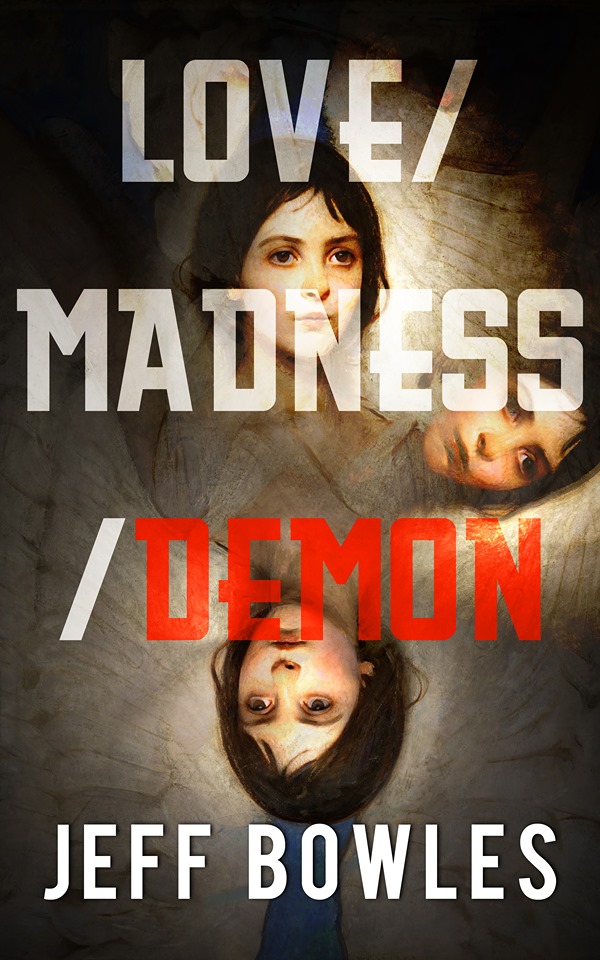
Love/Madness/Demons, by Jeff Bowles might make you question everything you ever thought you believed or disbelieved. This fictional tale was inspired by true life experiences. Are there forces at work that steer our destiny? Is life just a matter of predetermined fate? Does freewill even play a part in our lives? These are questions I’m sure we’ve all pondered at one time or another, and this tale of eternal love and betrayals will bring them once again to the forefront of the reader’s mind.
Arthur and Madeline are twin flames, soul mates, who have encountered each other again and again through many different lifetimes, and are destined to be together once more in this life. Arthur believes he’s in love with Madeline, and it makes no difference that he is married to Allissa, whom he once thought that he loved, and maybe still does. But, stalking his soul mate has not been effective in convincing her to leave her husband, Stuart, and his bizarre behavior lands him in a mental hospital. Is he losing his mind or are the voices that he hears really there? Why does the voice of Madeline tell him to do things that can only succeed in away everyone he cares for?
Madeline is happily married to Stuart, and although she has a fondness in her heart for Arthur, whom she met in college, she doesn’t understand his behavior any more than Arthur’s wife does. She turns her strange experiences with Arthur into a story, with fictiona; characters, whom it seems, have all crossed over into reality and want her dead.
The reader is given some insight, with glimpses into the dimensions of the divine, so we know that Arthur and Madeline are indeed being influenced by higher powers who aren’t necessarily out for their best interests. Destructive forces threaten to destroy their lives and all that they care about, and they are helpless to stop the events which have been put into motion. Or perhaps, they are the only ones who can stop it.
An intricately woven story of heaven and hell and the earthly realm in between, Love/Madness/Demon will keep the pages turning as the story of Madeline and Arthur and their connections to one another unfolds, and the forces of evil turn up the heat. I give it five quills.
Love/Madness/Demon is available on Amazon.
Kaye Lynne Booth does honest book reviews on Writing to be Read in exchange for ARCs. Have a book you’d like reviewed? Contact Kaye at kayebooth(at)yahoo(dot)com.
Share this:

Shadow Blade: Audio book brings characters to life
Posted: July 17, 2020 Filed under: Audio Books, Book Review, Books, Fantasy, Fiction | Tags: Audio Books, Book Review, Chris Barili, Fantasy, Marc Swezczyk, Shadowblade, Writing to be Read Leave a comment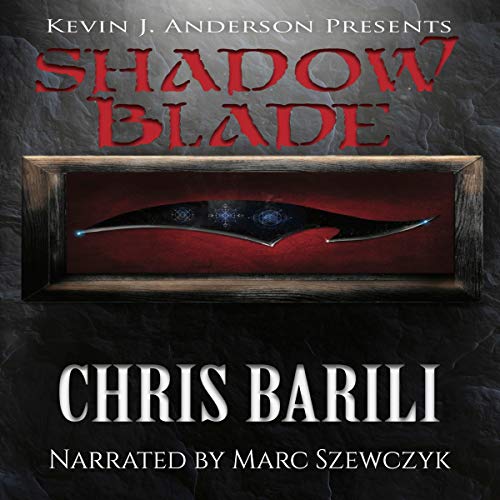
Audiobooks. They are the latest digital form of literature, quickly rising in popularity with readers on the go. And why not? What a great way to multitask. Instead of having to find a quiet time to sit and read the printed word, you can listen to the story while getting multiple things accomplished. I listened to Shadowblade, by Chris Barili, narrated by Marc Swezczyk while ironing, while cleaning the bathroom, while driving, and while sitting at the campfire. It was kind of cool to do chores when I’d rather be reading, and actually be able to do both.
As my first experience with audio books, I found it to be a convenient form of literature. I received my copy via my Kindle Fire, through Amazon. Like digital books through Amazon, it downloaded to my Fire automatically. It was time saving, in that I could listen to it at times that normally would be uproductive to my writing. It reminded me of the old radio serials, but you can start and stop whenever it is convenient, and don’t have to wait a week to find out what happens next. I think I could have gotten through the book a lot quicker in overall time spent reading, had I read it myself, just because I read faster than the pace of narration, but by allowing me to listen at times when I normally wouldn’t be able to read, it was helpful with my very busy schedule.
Marc Swezczyk was a good choice for a narrator on this story, in that his dialects and difficult name pronunciations sounded quite natural. His voice changed slightly for each character switch, making dialog easy to follow, as well. However, outside of the dialog, his narration falters with an unvaried pace and lack of inflection. This causes the some of the pain stakingly crafted action scenes to fall flat and the narrative seems to drone on in places. Having previously reviewed Shadowblade, I honestly didn’t feel as though Swezcyyk made this story shine as brightly as it could have.
Shadowblade is a great fantasy story, and Marc Swezczyk’s narration brings the interesting and diverse characters to life in the audio version, however he was unable to draw me into the scenes, which does not do this superbly written story justice. I give Shadowblade audio four quills.

I see the audio book being the future of literature, so I wonder how it is from the author’s side of things. If you are an author who has tested the waters in the audio realm, please comment to share your experiences with audio books. Is it easy to publish audio? Was it difficult to find a narrator? Is it expensive? We here at Writing to be Read want to know.
Kaye Lynne Booth does honest book reviews on Writing to be Read in exchange for ARCs. Have a book you’d like reviewed? Contact Kaye at kayebooth(at)yahoo(dot)com.
Share this:

Announcing the Winner of the WordCrafter 2020 Short Fiction Contest
Posted: July 6, 2020 Filed under: Books, Fiction, Paranormal, Stories, Western, Western Paranormal, WordCrafter Press | Tags: 2020 WordCrafter Short Fiction Contest, Short Fiction, Short Stories, Spirits of the West, Western Paranormal, WordCrafter Press, Writing to be Read 2 Comments
It’s taken twice as long as it should have, but I am now proud to announce the winner of the 2020 WordCrafter Short Fiction Contest. This year’s theme genre was western paranormal, requiring story submissions to contain both western and paranormal elements. WordCrafter left the guidelines open to loose interpretation, resulting a wide variety of story submissions, in which the required elements were used in some very creative ways. It was a difficult choice, but I’m happy to congradulate Enid Holden on her wonderful story, “High Desert Rose”.
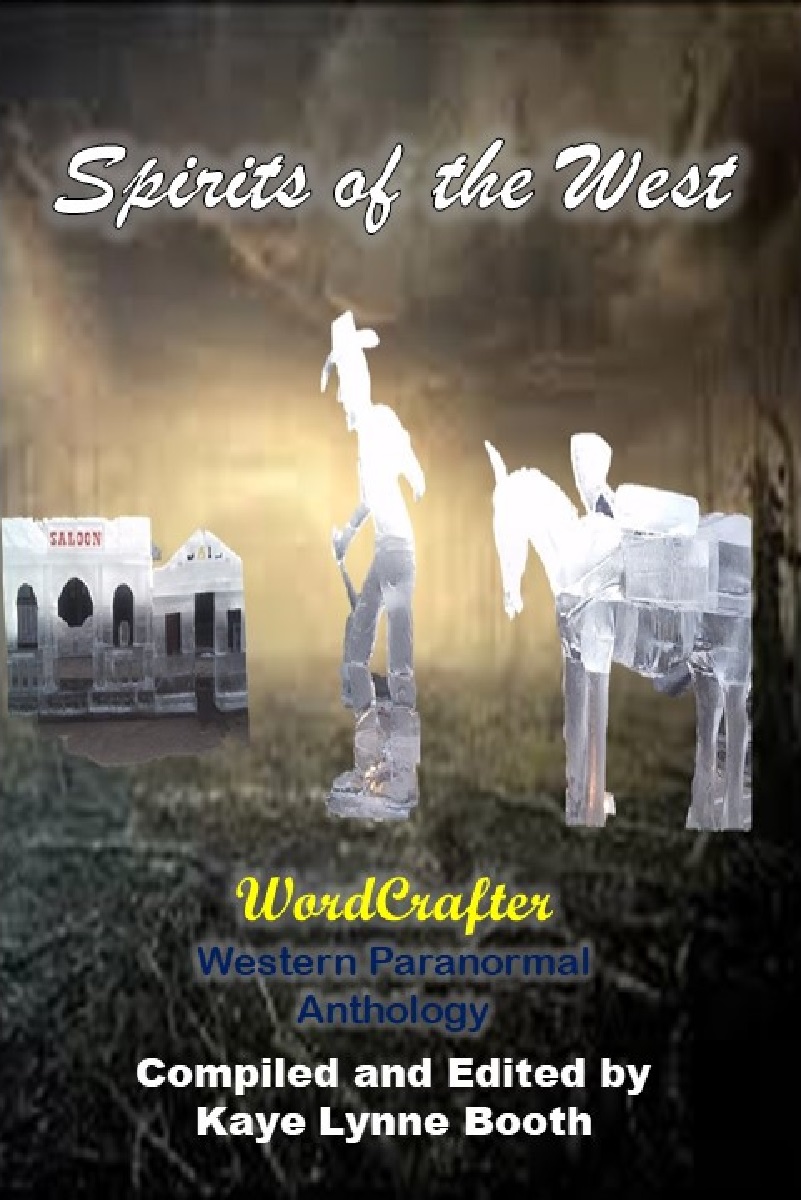
As the winning submission author, Enid will receive a $25 Amazon gift card and her story will be published in the WordCrafter western paranomal anthology, Spirits of the West. We’re aiming for a release date sometime in October, so be sure and watch for it. The anthology will also include “Gunsmoke”, as a tribute to the author, the late Tom Johnson, as well as stories by several of authors from last years antholgy, Whispers of the Past.
Like this post? Let me know in the comments. You can be sure not to miss any of Writing to be Read’s great content by subscribe to e-mail or following on WordPress. If you found this content helpful or entertaining, please share.
Share this:

“Mind Fields”: The Power of Villains in Storytelling
Posted: May 27, 2020 Filed under: Character Development, Fiction, Mind Fields, Writing | Tags: Art Rosch, Character Development, Feedback, Mind Fields, villains, Writing, Writing to be Read 1 Comment
Mind Fields
Nothing infuses energy into a story like a good villain. If you ardently hate a villain in a book you’re reading, then you’re hooked! You’ve invested emotion in the battle between good and evil, you’re waiting for justice to be served.
These wicked characters must get under your skin. They have to arouse a visceral sense of repulsion and fear, the way spiders and snakes evoke primitive terror, the way decaying fecal ooze repels the senses. Villains are difficult to write because we instinctively recoil from the dark sides of life and the more grotesque aspects of our selves. That dark side, that shadow, is the only place from which a truly compelling villain can emerge. We can’t tear off evil like a number at the grocery meat counter.
“Number Twenty Two!”
“Here I am. Let’s see. What have you got that’s horrible and scary?”
Let us pause and consider the concept of Evil. What is it?
I’ve parsed my own definition of evil to a simple formula: Evil is the inflicting of pain to avoid pain. Evil lays its destructive spell on those in its path because someone (or some Thing) has found reliable ways to scatter pain onto others. I exclude those beings who enjoy causing pain because it’s their nature. Such creatures exist, but not for the purpose of this essay.
Evil characters have malice and they have power. Many of them are concealed behind a facade of charm or apparently benign goodwill.
Evil people are trying to wriggle out from under a burden of pain by forcing others to feel that pain.
It’s not always so simple. Each of us is a composite personality. Our inner child is really a little car filled with squabbling midgets. The steering wheel passes from hand to hand, the brakes are fought over, the car veers crazily.
A villain takes advantage of the muddle of human nature by having a clear point of focus. A fixation, an obsession, a purpose. This purpose empowers the villain at the expense of ordinary people. Bad guys know who they are and why they act. In many narratives the hero struggles with doubt and obscurity of motivation. His struggle isn’t just with the villain; it’s with his own confusion. When he sees clearly, when he knows what he wants, he obtains the weapons he needs.
All through this post I’ve been thinking of two characters: Adolph Hitler and South Park cartoon nasty Eric Cartman. Hitler annihilated millions; Cartman is a fictional character in a television show. Yet they have attributes in common.
My emotions regarding Hitler are an historical abstraction. He’s become a universal symbol of evil. Cartman, on the other hand, keeps my guts in an uproar. I HATE the fucker, I loathe him! It’s a very personal engagement.
The lessons of Cartman are numerous. All of his actions are manipulations. He is completely without sincerity. He’s a bigot. There is no minority group who escapes his ire. When he’s told that white people have become a minority group, he simply doesn’t hear the message. This may be Cartman’s greatest signifier: his inability to hear anything with which he disagrees. Intellectual and moral deafness is a widespread symptom of evil.
Cartman, and villains in general, like to blame other people for their own emotional discomfort. This profound moral choice, to blame others, is a basic step into the world of evil. When writing a villainous character, it’s useful to give him someone to blame. Give him a scapegoat.
A villain can’t be frightful without power. It may be supernatural power, political power, military power, physical power, but a villain cannot elicit fear, revulsion and anger without significant power. It’s the abuse of power that sparks the reader’s anger. Most of us see power as a privilege that entails responsibility.
We get angry when power is used for gratification of the ego and the appetites.
Cartman’s power comes from several sources. He’s clever, inventive, without moral scruple and completely selfish. His mother gives him everything he wants because it’s easier that way. Cartman is a fatherless boy. His mother always takes the lazy way out; she gives in to her son’s demands. If I take South Park as a microcosm, a model for the larger society in which we live, Cartman’s mother represents economic power. She makes him rich in comparison to the other kids.
He has all the latest toys, the best video games and a total lack of supervision.
To further amplify Cartman’s power he has a follower: Butters. This sweet but witless innocent will go along with any outrageous scheme Cartman dreams up. Cartman generates momentum. While Stan, Kyle or Kenny may have qualms about Cartman’s ideas, Butters is always there to support him. The plan, the idea, the scheme always seems to run away with itself before it can be thought through.
Its consequences are never anticipated. The only brakes on Cartman’s destructive power are the other boys’ common sense and lack of malice. In the end, Cartman always brings himself to destruction, but he will never admit defeat. In some people this is an admirable trait. In Cartman, it’s merely irritating.
In Hitler it cost millions of lives. If Cartman were a real adult person he would be a frightful monster. Think what Hitler and Cartman have in common. Scapegoats. Blame. Moral and intellectual deafness. Unwillingness to take responsibility for errors in judgment. A will that generates great momentum, and attracts followers who are willing to obey without question.
In the episode called “Breast Cancer Show Ever” Cartman takes a schoolyard beating by a mere girl, by Wendy Testaburger. She played the righteous avenger when Cartman mocked breast cancer and persisted in telling hurtful jokes on the subject of breasts. When she established the time for the duel, when Cartman realized that Wendy was serious, he tried to buy her off. She would have none of it. In spite of the fact that Cartman was pounded to a bloody mess, he twisted events in his mind so that he won the fight, that he was still “Cool”, or “Kewl” in the eyes of his compatriots. Kyle and Stan told Cartman “You suck, you’ve always sucked. We hate you.” Cartman can’t hear these declarations. He is still Kewl.
This amazing deafness made me want to jump through the screen and pound the fat twerp to a pulp. My emotions were completely engaged. When a writer can raise the emotional stakes to such a pitch, that writer has succeeded in creating a compelling villain.
I have used a silly villain in a silly cartoon show to highlight the power of a good villain to propel a good story. Ignore Cartman at your own risk. He’s a first class little asshole.
People ignored and dismissed Hitler as a buffoon. We know what happened to those people. Monstrous villains have arisen throughout history. We are writers; we deal in fiction. The most frightening villains in fiction draw resonance from history’s tyrants. Lazy writers may imitate these tyrants in their narratives. Good writers draw villains out through themselves, knowing that each of us is capable of monstrosity.
A Midwesterner by birth, Arthur Rosch migrated to the West Coast just in time to be a hippie but discovered that he was more connected to the Beatnik generation. He harkened back to an Old School world of jazz, poetry, painting and photography. In the Eighties he received Playboy Magazine’s Best Short Story Award for a comic view of a planet where there are six genders. The timing was not good. His life was falling apart as he struggled with addiction and depression. He experienced the reality of the streets for more than a decade. Putting himself back together was the defining experience of his life. It wasn’t easy. It did, however, nurture his literary soul. He has a passion for astronomy, photography, history, psychology and the weird puzzle of human experience. He is currently a certified Seniors Peer Counselor in Sonoma County, California. Come visit his blogs and photo sites. www.artrosch.com and http://bit.ly/2uyxZbv.
Want to be sure not to miss any of Art’s “Mind Fields” segments? Subscribe to Writing to be Read for e-mail notifications whenever new content is posted or follow WtbR on WordPress. If you find it interesting or just entertaining, please share.
Share this:

“Echo One”: A story collection from the Secret World Chronicles
Posted: May 22, 2020 Filed under: Alternate Worlds, Book Review, Books, Comic Hero, Fantasy, Fiction, Super Hero, Super Villains | Tags: Alternate World, Book Review, Echo One, Mercedes Lackey, Secret World Chronicles, Superheroes, Supervillains, Writing to be Read 2 Comments
In my theme post for this month, I admitted that comic books and superheroes are not my usual reading fare, but in the spirit of our May celebration, I felt the need to review outside of my norm. Echo One, by Mercedes Lackey, Cody Martin, Dennis K. Lee and Veronica Giguere is an anthology of short stories which are set in the Secret World Chronicles universe, which I am unfamiliar with, so in reading this book, I’m at a slight disadvantage. However, as I read through these delightfully entertaining stories, a few things about the Secret World Chronicles universe quickly became clear, and although I had no backstory on these characters, I was easily able to immerse myself in each individual story, and invest myself in some of the characters, particularly Vicky Nagy and her rather unusual family.
This secret world takes place during WWII, and humans with super powers, called metahumans, exist on both sides of the conflict, which makes them excellent superheroes and supervillains. As you can imagine, the possibilities of metahumans on the German side triumphing, open up a plethora of world altering consequences that must be prevented. Great superhero stuff!
In addition, there are others whose powers lay in the world of magic, opening up realms of possibilities for the good guys to save the world. They are of a secret society, with only a few select humans who are aware they anything but the metahumans they pass themselves off to be. I found these stories to be really fun reads, and I didn’t have to know all the details of previous tales in order to enjoy them thoroughly. The characters are colorful and unpredictable, with the potential for surprise lurking behind every turn of the page.
Alternate universe superhero stories are always fun and entertaining reads, and Echo One is no exception. Great for those times when you’re not in the heavy literary mood and are just reading for the pure enjoyment of it. I give it four quills.
Kaye Lynne Booth does honest book reviews on Writing to be Read in exchange for ARCs. Have a book you’d like reviewed? Contact Kaye at kayebooth(at)yahoo(dot)com.










Craft and Practice with Jeff Bowles – Writing for Catharsis
Posted: July 15, 2020 | Author: Jeff Bowles | Filed under: Books, Commentary, Craft and Practice, Fiction, Inspirational, Writing, Writing Inspiration, Writing Life, Writing Tips | Tags: Catharthis, Craft and Practice, Healing, Jeff Bowles, Writing, writing advice, Writing to be Read | 6 CommentsThe third Wednesday of each month, writer Jeff Bowles offers practical tips for improving, sharpening, and selling your writing. Welcome to your monthly discussion on Craft and Practice.
Writing for Catharsis
Writing is a hard enough gig without the existence of one persistent, unceasing fact: things change, nothing lasts, and all things pass away. You could make a decent mantra out of that, couldn’t you? I mean it’s true enough I don’t even really have to repeat it. I will though. Several times, in fact, because I’d like to impress upon you the urgency of a world in desperate need of good, personal, dare I say it, emotional storytellers.
This month’s Craft and Practice will be a little different. We’re going to talk about our feelings. Wait! Don’t click off! You can’t run from them any more than I can. Things change, nothing lasts, all things pass away. And if you and your incredible writing superpowers are needed anywhere in the world, it’s quite possible they’re needed at home most of all.
You see, people can recognize the transience of life without too much effort, but they’re either too locked into their own experiential tangents to do anything about it, or they simply keep their stories to themselves. Writers don’t have that luxury, and nor should we be afforded it. It’s our job to comment, profile, report, extol, condemn, codify, decode. If not for everyone living today and for a hundred generations beyond, then at least for ourselves, right here and now. What does this all boil down to? We can write about all the crazy stuff that happens to us and call it catharsis. Neat, huh?
I recently released a novel called Love/Madness/Demon. It deals, in part, with a psychotic episode I experienced four or five years ago. Now at that time I didn’t know or understand what was happening to me. If you or someone you know is struggling with mental health issues, I urge you seek qualified help, because once I was able to do so, once a true diagnosis came my way, things slowly began to turn around for me. But I knew as I started recovering that what I’d gone through—what I’d put my loved ones through—it constituted serious traumatic territory, and I also knew that it might make me feel better to write about it someday.
It did. That’s the long and short of it. Moreover, spending sufficient time with my story as a finished manuscript tended to help even more. I had to tread, retread, and re-retread the same ground again and again. The worst moments of the ordeal tended to lose their hold on me. Now writing as catharsis implies you’ve repressed or buried something. Some people haven’t done anything of the sort, though I’d wager that to one degree or another, the vast majority of us have. This is life, after all, the greatest bare-knuckled, knock-down cage match of them all. If you’ve taken a few lumps in recent years, you aren’t alone.
I think it’s best to approach cathartic writing from a place of complete honesty. What are you doing it for otherwise? And realistically, you’ve got endless literary modes available to you. I chose fiction because it’s what I’m most comfortable with, but maybe you prefer poetry or nonfiction.
Nonfiction may be the best way to approach the craft for the sake of healing because you can just write the truth as it seemed to you. Now, you may have to wrestle with legalities, ditto with fiction, but I tend to believe most of the advice given to writers about these things are of the overblown, cover-one’s-own-ass variety. Can you write about things that really happened to you? Of course you can. Who says you can’t? What you can’t do is drag someone’s name through the mud in the process, but I’ve got a good feeling about you. You’re not interested in hurting others with your writing. You’re a paragon of humility and moral excellence. I mean, I can just tell by looking at you. What a punim.
I hurt after my psychotic break. A lot of people around me did. Because I was delusional, because I didn’t understand what was happening to me, I lashed out frequently and did things it’s taken me a lot of time to try and get over.
But your experience with cathartic writing will be wholly different. I hope and pray you haven’t got any major traumas in your direct experience. But if you have, and if you’re lucky enough to have been given an aptitude for the written word, I highly suggest putting your emotional self on the line and trying to do a little self-evaluation and self-nurturing. Even if you intend on never letting another soul read it, the initial intimacy and privacy of the act are paramount. I’d never suggest a person try to write their pain away rather than seek the help of a licensed professional, but I’ve found that a good therapy program lines up very well with cathartic writing. In fact, there were times in my recovery I didn’t have the ability to engage in counseling, so the writing of Love/Madness/Demon was even more crucial to me.
I feel better now. I don’t feel perfect. In fact, I still have a lot of bad days. But it was worth it to me to at least try to alleviate some of the pressures of everything I’d gone through. Maybe you can do the same for yourself. I hope you can. Things change, nothing lasts, all things pass away. It’s sort of a very painful time for many people out there. Writing about what ails us? There are worse ways to cope.
Jeff Bowles is a science fiction and horror writer from the mountains of Colorado. The best of his outrageous and imaginative work can be found in God’s Body: Book One – The Fall, Godling and Other Paint Stories, Fear and Loathing in Las Cruces, and Brave New Multiverse. He has published work in magazines and anthologies like PodCastle, Tales from the Canyons of the Damned, the Threepenny Review, and Dark Moon Digest. Jeff earned his Master of Fine Arts degree in creative writing at Western State Colorado University. He currently lives in the high-altitude Pikes Peak region, where he dreams strange dreams and spends far too much time under the stars. Jeff’s new novel, Love/Madness/Demon, is available on Amazon now!
Check out Jeff Bowles Central on YouTube – Movies – Video Games – Music – So Much More!
Want to be sure not to miss any of Jeff’s Pep Talk segments? Subscribe to Writing to be Read for e-mail notifications whenever new content is posted or follow WtbR on WordPress
Share this: