Treasuring Poetry – A chat with poet and blogger, Marsha Ingrao, and a review #TreasuringPoetry #poetrycommunity #bookreview
Posted: June 18, 2025 Filed under: Book Review, Books, Interview, Poetry, Review, Treasuring Poetry, Women's Fiction and Poetry | Tags: Embracing the Power to Live, Marsha Ingrao, Poetry, Robbie Cheadle, Treasuring Poetry, Writing to be Read 68 Comments
Today, I am delighted to host blogger and hostess of Story Chat about which she says the following: “Story Chat is more than a writing challenge. It is a unique and proven online program that encourages interaction between authors and readers. It’s part writers group, part beta readers, part fun fiction, and pure enjoyment.”
You can find out more about Story Chat here: https://alwayswrite.blog/story-chat-2025-a-unique-blogging-program/
Now, over to Marsha.
Robbie, thank you so much for inviting me to be on your blog. It is such an honor. I’ve spent a lot of time reading and researching poetry since you sent these questions to me, so it’s taken me a long time to come up with the answers.
What is your favourite style of poetry to read i.e. haiku, ballad, epic, freestyle, etc.?
I adore reading tankas, but my favorite style to read is freestyle, words that are natural without the constraints of order.
What is your favourite poem in your favourite style to read?
Mary Oliver is a new author to me, but well-known to many. I picked her because I have so many favorites among our friends, and I don’t want to choose. Mary Oliver published poetry from 1963 to 2015 before she passed in 2019. She was well known for her observations of the natural world, tying them to deep emotions or emotional events, as you can see in the following poem.
Gethsemane
By Mary Oliver
The grass never sleeps.
Or the roses.
Nor does the lily have a secret eye that shuts until morning.
Jesus said, wait with me. But the disciples slept.
The cricket has such splendid fringe on its feet,
and it sings, have you noticed, with its whole body,
and heaven knows if it ever sleeps.
Jesus said, wait with me. And maybe the stars did, maybe the wind wound itself into a silver tree, and didn’t move,
maybe
The lake far away, where once he walked as on
a blue pavement,
lay still and waited, wild awake.
Oh the dear bodies, slumped and eye-shut, that could not
keep that vigil, how they must have wept,
so utterly human, knowing this too
must be a part of the story.
(Mary Oliver Devotions p. 129, © 2019 by NW Orchard LLC, Penguin Books)
What I loved about this poem is that it takes a familiar biblical event way outside the box. When you saw the title, Gethsemene, did you think about the grass sleeping or the wind winding itself into a silver tree? I didn’t, until her poem suggested that I think about it.
How can I train myself to think past and around the outer edges of my topic? That is my goal this year.
What is your favourite style of poetry to write?
I like free style, acrostic, limericks, and tankas best. But I also enjoy other syllabic poems and some of the French form poetry when I want a challenge. What I want to improve this year are some of the nuances that I’ve missed in writing syllabic poetry as well as thinking outside the box with freestyle poems.
What is your favourite of your own poems?
Messages From the Cat (free verse)
Poems, no longer innocent kittens,
Intentionally sneak up on you at night,
Concise imagery padding silently across the carpet,
Weaving its way into your dreams.
Rhyming couplets stealthily leap onto your bed,
Pretending they would curl at your feet for a long nap,
Or lie warm against the curve of your spine,
But instead, they pounce on your head, tearing it open.
If you cry out, call for help,
Precise verses slip away, leaving only an open gash.
Life’s language drips from the wound.
You jump to consciousness, capture each phrase
As it percolates from your throbbing skull
Like slush melting away from Frosty on a sunny day.
At sunrise, linguistic gems gleaming,
Iambic felines sun themselves
In a streaming hot shower of midmorning light,
Licking their forms to glistening perfection,
For all to stroke with admiration,
While you trod off to work,
Exhausted from your sleepless scratch with immortality.
Please tell us about your poetry book, Embracing the Power to Live. How did this book come about? What would you like readers to take away from this collection?
You’ve asked several important questions, Robbie. I hope I’ll answer the first question as I answer the second and third ones.
I’ve written (and kept) poems since the 1980s when my first husband and I moved to Visalia, California, to pastor a tiny church in the rural community of Ivanhoe, California. At that time, I experimented with different styles of poetry, most of which were out of date, but writing them challenged me.
After I retired in 2012, I wanted to write a book, but my blog led me in a different direction. Arcadia Books contacted me because of some of my posts about Woodlake, California. Five months later, they published my book, Images of America Woodlake.
Then I tried fiction, and struggled for years trying to write a bestseller that would become the next Netflix series. That didn’t happen.
I loved blogging, and that’s what I did best, so I gave up my dream of publishing a book of my own work until I met Colleen Chesebro and had a year of writing Haiku and other syllabic poetry under my belt. Meanwhile, several of my blogging friends started publishing poetry books. I was intrigued. Normally, I struggled to read a whole book of poetry. However, Robbie, when I read your book, Lion Scream, that changed for me. I was not ready for this poem. I had to put the book aside and wait for my heart to calm down. I had never read such moving poetry in my life.
Rhino Dilemma
Near-sighted eyes observe
Through tall, swaying grass
Yellowish curtain hides heavy-set body
But, camouflage fails him
The poachers close in
Small bird cries a warning
Animal reacts
Stands upright, facing the wind, ready for flight
Tranquiliser gun fires
Ground shakes when beast falls
Savage men move quickly
Hack out valued horn
Animal left bleeding;
awakes to sure death
Tears of pain and anguish
Slide from fading eyes
Cheadle, Robbie. Lion Scream: Syllabic Poetry About Southern African Wildlife (pp. 22-23). Kindle Edition.
As I read the poem aloud to a friend, while I prepared for this interview, it brought tears to my eyes and made my stomach churn. I wanted my poems to matter, but I didn’t have an agenda. So, I fell back on what I do naturally, which is to encourage people to do what they do best.
When I picked my word of the year for this year, the title fell into place. I wanted to create something that would be uplifting to others and would help them fulfill their own dreams. So, somehow, I had to go from the poems I had written about random topics and pull them together with new poems that would minister to people’s souls and encourage them to find their own creativity.
I drew a lot from Sunflower Tanka and Cindy Georgakas’s book Celebrating Poetry. As I read her book, I fell in love with certain poems and the titles of poems. For example, isn’t her title “Messages from the Moon” a great title? The idea of the moon sending me messages set my imagination on fire. It became “Messages from the Cat” in Embracing the Power to Live. There were no similarities in the poetry or the subject, but I loved the title.
I have already started to realize the joy that comes from reaching the goal of helping others. I’ve shared on social media and my blog about my neighbor Dan Daniels. Dan started writing poetry at age 11 when he was a rough and tumble New York City kid in a large family. He started working at about age seven.
As he handed me an aged sheet of paper with a typewritten poem, he told me I was only the second person he had ever shared his poem with. I was blown away. He is now in his 80s, and he and his wife inspired one of the poems in my book, “Aging Gracefully.” This is his poem, and I am proud to announce that you are now collectively the third person he is sharing it with.
Stand Amongst the Flowers Gentle
By Dan Daniels
Stand amongst the flowers gentle
Look and smell and feel their power
How they light the day with beauty
Not long enough to stay an hour.
Stand amongst the flowers gentle
Let them fill your soul inspired
Touch them all with love and kindness
Nothing more of you required.
Nature all around us speaks
We, who hear, must answer strongly
Love all that nature has to give
Stand amongst the flowers gentle.
Robbie, I can’t wait to read what your readers say about Dan’s poem. When I called to ask permission to use his poem, he and his wife were sitting in their living room reading Embracing the Power to Live and talking about where he might have hidden the other poems he wrote through the years. Dan has Parkinson’s Disease, so I am going to help him publish them in a small book that he can give to his family as part of his legacy to them.
Another friend called me the week the book came out to tell me she was ordering it for a couple of relatives of hers who had stopped communicating with each other and with her. She thought somehow my book might encourage them to start talking. Helping Dan come out of his poetry shell and helping people find ways to communicate their feelings exemplifies the reasons I wrote the book, Embracing the Power to Live.
Thank you again for inspiring and encouraging me, and for inviting me to take part in this project. It means so much to me.
Thank you, Marsha, for this wonderful interview. It is truly amazing how much you have gained from being part of this on-line poetry community. I am deeply honoured that my poem resonated with you and thank you for the contribution of Dan’s gorgeous poem as well as detailing how Sunflower Tanka and Celebrating Poetry inspired and guided you.
My review of Embracing the Power to Live

What Amazon says
Embracing the Power to Live is a poetic journey of a woman’s perseverance despite life’s hard knocks. This collection taps into the true spirit of poetry—reaching ordinary people with the message that they are enough. Some poems hold profound meaning. Others are included simply for the fun of playing with words – a joy reborn when she stepped into the world of syllabic poetry.
Told by different authority figures in her life that she would never marry or achieve her dreams, the author defied the discouraging voices. Her poetry shatters shame uplifts the spirit, and encourages readers to embrace the strength to do the same.
This collection isn’t a self-help guidebook—it’s an invitation to laugh, weep, grow, and live together, connecting hearts through poetry. Embracing the Power to Live is for anyone who seeks to rise above a spinning world to gain strength, perspective, and a new beginning.
My review
This is a most unusual and enjoyable collection of poems, photographs, memories, and religious quotes that collectively tell the story of the poet’s life. A most interesting memoir, the poet has not shied away from sharing her human experience in all its marvelous highs and compelling lows. The short paragraphs embellishing the poems with additional colour and memories are enlightening and the photographs make the whole experience more visual and vivid.
This book is presented in different chapters, each focusing on different aspects of life and living to highlight and reveal in. While the poems are all encompassing and share moments of sadness and discomfort, the collective package is a positive experience of finding contentedness and peace to support the poet on her journey through life in all its manifestations. Religion, the poet’s guiding light, is threaded throughout the book as a common thread of hope and support.
I am sharing one poem, It’s hard being semi smart (pantoum) which I feel embodies the spirit of this book and its relatability to us all.
It’s hard being semi-smart because,
It’s so hard to choose.
I have many skills with several flaws
And activities that enthuse.
It’s so hard to choose
Because I’m sort of good.
And activities that enthuse
Make me think I should.
Because I’m sort of good,
I try to do too much.
Makes me think I should,
But nothing has the master’s touch.
I try to do too much.
I have many skills with several flaws.
But nothing has the master’s touch.
It’s hard being semi-smart because.
In closing, I must mention the cover of this book which I think is gorgeous.
Purchase Embracing the Power to Live from Amazon US here: https://www.amazon.com/Embracing-Power-Live-Marsha-Ingrao-ebook/dp/B0F6423PSJ
Find Marsha Ingrao’s Amazon Author page here: https://www.amazon.com/stores/author/B0CJ9ZLQ9C
About Marsha Ingrao

Marsha’s newest book, Embracing the Power to Live, a poetry anthology and memoir, is set to come out in late May or early June. She is the contributing editor for Story Chat Volumes I and II. Previous works include a chapter in This Is How We Grow (2023) by Yvette Prior, contributions to Sunflower Tanka, a Poetry Anthology by Colleen Chesebro and Robbie Cheadle (2024), and Images of America: Woodlake – Arcadia Publishing (August 13, 2015), available on Amazon. In addition, Ingrao published numerous poems and articles. She has blogged since 2012.
She earned a Bachelor of Arts, Teaching, and Administrative Credentials from Fresno State University. As a bilingual teacher, she earned a CLAD Certificate. While employed at Tulare County Office of Education, she earned her Master’s in Curriculum and Instruction from Fresno Pacific University. At the county office, she developed curriculum for Migrant Education and later served as a History Consultant for the county’s Educational Resource Services.
Ingrao believes in lifelong learning. Today, she remains active as a blogger, writer, photographer, and history buff.
She grew up in Indiana and Oregon, moved as an adult to Colorado, then near the Giant Sequoias. After living in Arizona for four years, she and her husband, Vince, her dog, Goldie, and her cat, Moji, have recently returned to the land of the big trees in California.
About Robbie Cheadle

South African author and illustrator, Robbie Cheadle, has written and illustrated sixteen children’s books, illustrated a further three children’s books, and written and illustrated three poetry books. Her work has also appeared in poetry and short story anthologies.
Robbie also has two novels and a collection of short stories published under the name of Roberta Eaton Cheadle and has horror, paranormal, and fantasy short stories featured in several anthologies under this name.
You can find Robbie Cheadle’s artwork, fondant and cake artwork, and all her books on her website here: https://www.robbiecheadle.co.za/
________________________
Did you know you can sponsor your favorite blog series or even a single post with an advertisement for your book? Stop by the WtbR Sponsor Page and let me advertise your book, or you can make a donation to Writing to be Read for as little as a cup of coffee, If you’d like to show your support for this author and WordCrafter Press.
__________________________
This segment of “Treasuring Poetry” is sponsored by WordCrafter Press and the Poetry Treasures series.

Get Your Copy Today!
Poetry Treasures: https://books2read.com/PoetryTreasures
Poetry Treasures 2: Relationships: https://books2read.com/PT2-Relationships
Poetry Treasures 3: Passions: https://books2read.com/u/b5qnBR
Poetry Treasures 4:In Touch With Nature: https://books2read.com/PT4-Nature
Share this:

WordCrafter Books Are Discounted for the 2024 Smashwords Read an Ebook Week
Posted: March 3, 2024 Filed under: Book Sales, Books, Dark Fantasy, Dark fiction, Fairy Tales, Fantasy, Fiction, Ghost Stories, Historical Fiction, Humor, Mythology and Legend, Nonfiction, Paranormal, Poetry, Science Fiction, Short Fiction, Smashwords, Speculative Fiction, Stories, Western, Women in History, Women's Fiction, Women's Fiction and Poetry, WordCrafter Press, Writing Reference, Writing Resource, Writing Tips | Tags: 50% Off, Books, Smashwords 2024 Read an eBook Week, WordCrafter Press 2 Comments
When:
March 3 – 9, 2024
Where:
On Smashwords: https://www.smashwords.com/ebookweek
What:
All WordCrafter Press books
The Discount:
50% off!
Find all WordCrafter Press books on Smashwords:
https://www.smashwords.com/profile/view/Kaye_LynneBooth
Get all your favorite WordCrafter Press books today!
If there are WordCrafter Press books on your TBR list, now is the time to buy them. All WordCrafter Press Books are 50% off for the Smashwords 2024 Read an Ebook Week. That’s right. All titles in the WordCrafter Press catalog are on discounted 50% this week only on Smashwords.
Titles Included:
- Ask the Authors: Writing Reference Anthology, by Kaye Lynne Booth, et. al.
- Ask the Authors 2022: Writing Reference Anthology, by Kaye Lynne Booth, et. al.
- Behind Closed Doors: A Collection of Unusual Poems, by Robbie Cheadle
- Delilah: Book 1 of the Women in the West adventure series, by Kaye Lynne Booth
- Feral Tenderness: Poetry & Photography, by Arthur Rosch
- Hidden Secrets: Paranormal Mystery Novella, by Kaye Lynne Booth
- Last Call and Other Short Fiction: short story collection, by Kaye Lynne Booth
- Lingering Spirit Whispers: Paranormal Anthology bundle, by Kaye Lynne Booth, et. al.
- Midnight Roost: Weird and Creepy Stories, by Kaye Lynne Booth, et. al.
- Once Upon an Ever After: Modern Fairy Tales & Folklore, by Kaye Lynne Booth, et. al.
- Poetry Treasures: Poetry Anthology, by Kaye Lynne Booth and Robbie Cheadle, et. al.
- Poetry Treasures 2: Relationships: Poetry Anthology, by Kaye Lynne Booth and Robbie Cheadle, et. al.
- Poetry Treasures 3: Passions: Poetry Anthology, by Kaye Lynne Booth and Robbie Cheadle, et. al.
- Raise the Tide: Daily Devotional, by James Richards
- Refracted Reflections: Twisted Tales of Duality & Deception, by Kaye Lynne Booth, et. al.
- Small Wonders: Reflective Poems, by Kaye Lynne Booth
- Spirits of the West: Western Paranormal Anthology, by Kaye Lynne Booth, et. al.
- The Rock Star & The Outlaw: Time Travel Adventure, by Kaye Lynne Booth
- Visions: Multi-genre Anthology, by Kaye Lynne Booth, et. al.
- Where Spirits Linger: Paranormal Anthology, by Kaye Lynne Booth, et. al.
- Whispers of the Past: Paranormal Anthology, by Kaye Lynne Booth, et. al.
Share this:

Writer’s Corner: Revisiting Poetry – A Look Back
Posted: April 3, 2023 Filed under: Books, Collection, Poetry, Women's Fiction and Poetry, word play, WordCrafter Press, Writing | Tags: Kaye Lynne Booth, Poetry, Poetry Collection, Writer's Corner, Writing to be Read 7 Comments
It All Started with Poetry
When I first started writing, I wrote poetry. In fact, my first sale of my writing, back in 1996, was for a poem. I wrote on a manual typewriter and submitted via snail mail, (I know. I’m dating myself terribly.). My poem, “A Prayer for Guidance” was published in a small poetry magazine called Dusk & Dawn, which is no longer in publication, and I made a whole $5 from it, but boy, was I ever proud of that sale.
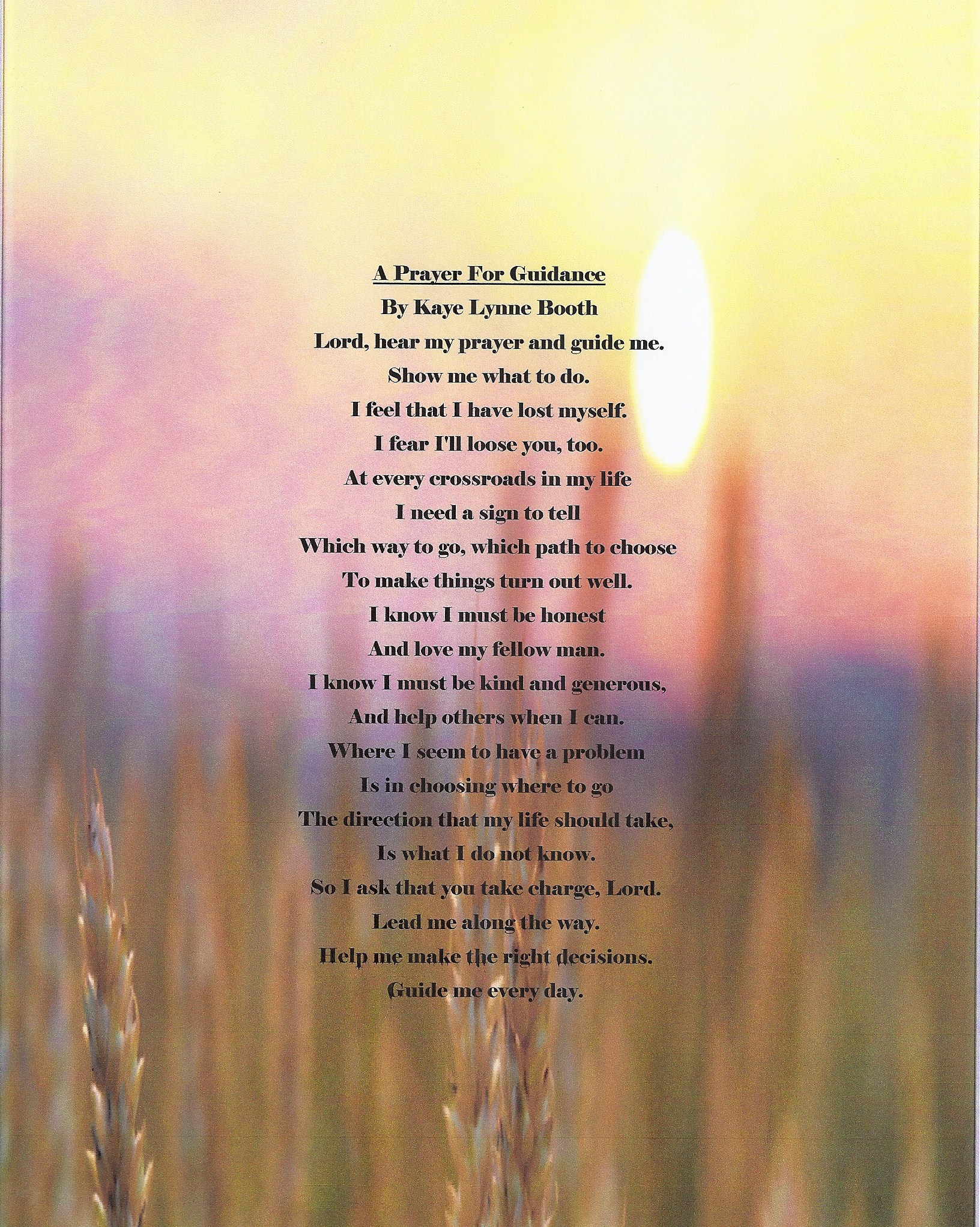
I put my poetry on backgrounds, like the one above for my very first writing event. It was a local event that a friend saw advertised in the paper and said, “You should see if you can get a table. I called and got a table at the event, then realized I had nothing to offer at my table. I hadn’t yet published a book or anything, so I printed up my poetry on backgrounds , which I sold at my table for $5 a piece, and made almost $100.
For that event, I had a poem called “Voices” about the different voices that speak in my head, and as I was searching for backgrounds, I came across a painting of the same title, that I knew was the perfect background for this poem. So I poked around on the internet until I found a way to contact the artist, Mitchell Barret, and sent him an email, requesting to use his painting as my background. I was more than surprised when I recieved a phone call from him all the way from England. You must understand that this was right at the beginning of the internet era, and I still had a land line with long distance charges, so a call from another contentent was a pretty big deal to me, and I absolutely adored his English accent, although I had to ask him to repeat himself a couple of times during the call. He gave me permission to use his painting for the writing fair, and we conversed for a while, sparking up a friendship that was one of my first internet networking experiences.

Poetry & Art
In a later contact, Mitch said he was working on a series of paintings and he would like to include some poetry with them. He sent me the sketches for the paintings, and I wrote a poem for him. “Intimacy and the Harliquin Dance”. To my knowledge only one of those paintings ever came to fruition, but he did use a portion of my poem in his painting, which he titled “Intimacy”. The painting was on display and was sold at the Keliedescope Gallery, in Battle Sea Park, London in 2010.

After Michael
When my son died in 2009, I wrote poetry almost constantly. When I wasn’t physically putting words to page, I was putting my feelings to verse in my head. I wrote enough poetry about Michael and my loss of him to fill a chapbook. It was my way of processing my grief, I think. I don’t know if any of it was really good, but I felt it to be some of the most powerful writing I’d ever done.
Most of my poetry was rhyming, and by this point, I had taking some creative writing courses, where my poetry professor informed me ryhming poetry was no longer in vogue. Because of the rhyming, sing-song style of my poetry, it was evaluated by one critic as childish. And perhaps it is a bit childish. Rhyming poetry is fun to write. I’m a big fan of Sid Shelden and Dr. Suess, after all.
When I enrolled at Western State Colorado Unversity to earn my M.F.A. in Creative Writing, my focus shifted away from poetry and I began writing fiction, which has taken up my energies ever since, but I’ve never lost my love for poetry. I still submitted poetry here and there, even getting a few published in magazines such as Colorado Life Magazine, and anthologies such as Manifest West #5: Serenity and Severity. I just wasn’t writing anything new in the poetry realm.
Renewed Interest
A couple of years ago, I came across a book by Colleen Chesebro, WordCraft Prose & Poetry: The Art of Crafting Syllabic Poetry, which delves into the art of syllabic poetry. I couldn’t read this book without dabbling with the different forms myself, reviving my love for poetry all over again. (See my “Review in Practice” of WordCraft Prose & Poetry here.) And I used my newfound poetry skills to answer a creative challenge posed on the blog of Teagan Riordan Geneviene with a Shadorma poem with an image.

Now that my M.A. in publishing is completed, I find a have more time in which to ponder the words which I place on the page, and play with poetry. For that is what poetry ultimately is – play with words. I don’t mean that it shouldn’t be taken seriously, but that creating with words, no matter the form it takes, should be fun and satisfying for the creator, and poetry offers a wider license for this than do other forms of writing. This is known over at Colleen M. Chesebro’s WordCraft Poetry blog, where every Tuesday brings a #TankaTuesday challenge involving syllabic poetry, introducing readers with all kinds of new poetic forms. And so, I’ve been revisiting poetry once again, playing with sllybic poetry and rhymes. (I still love rhyming poetry, even if it is out of fashion.)
A New Poetry Collection on the Horizon
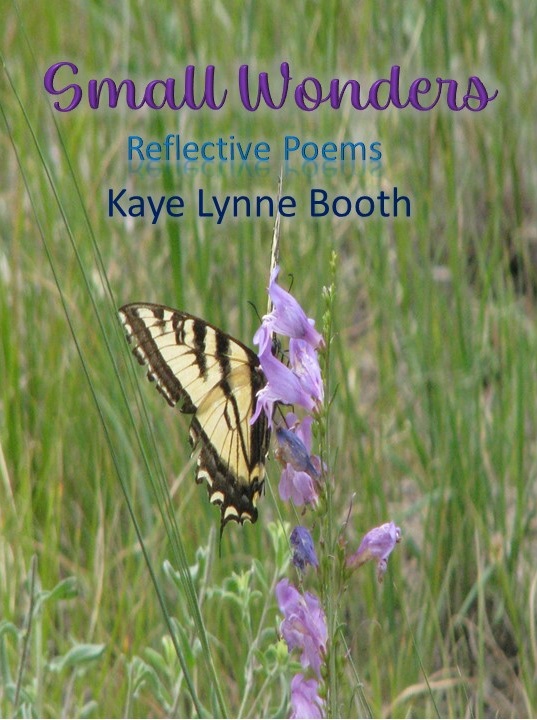
As I look through the poetry I’ve done in the past, I’m finding a plethora of poetry that needs to be shared. So, in addition to the two novels, and two anthologies which I had planned to publish through WordCrafter Press in 2023, I’m going to publish my first collection of poetry, some old, some new; some rhyming, some syllibic, and maybe even some freestyle to be included. It will take me down an old road to go through the poetry already written, and over a new road to experiment with forms of poetry both new and old, and the process of compiling the collection will be fun. Heck, it may even get me an invitation to be a guest on “Treasuring Poetry” with Robbie Cheadle.
To me, poetry is word play at its finest. What does poetry mean to you?
____________________________________________________________
Poetry Treasures 3: Passions in April
April is National Poetry Month here in the U.S., so it is fitting that the release of the annual Poetry Treasures anthology, from WordCrafter Press comes sometime in April each year. This year’s volume will be Poetry Treasures 3: Passions. It will be released on April 18, 2023, and is available now for preorder.
Preorder Link: https://books2read.com/u/b5qnBR

Passions treasures within.
Open the cover
and you will discover
the Poetry Treasures
of guests on
Roberta Eaton Cheadle’s
2022 “Treasuring Poetry” blog series
on Writing to be Read.
Included are treasures from:
Patty Fletcher, D. Wallace Peach, Yvette Prior,
Penny Wilson, Colleen M. Chesebro, Abbie Taylor,
Yvette Calliero, , Smitha Vishwaneth,
Chris Hall, Willow Willers, Rosemerry Wahtola Trommer,
and Roberta Eaton Cheadle
_______________________________________________________

For Kaye Lynne Booth, writing is a passion. Kaye Lynne is an author with published short fiction and poetry, both online and in print, including her short story collection, Last Call and Other Short Fiction; and her paranormal mystery novella, Hidden Secrets. Kaye holds a dual M.F.A. degree in Creative Writing with emphasis in genre fiction and screenwriting, and an M.A. in publishing. Kaye Lynne is the founder of WordCrafter Quality Writing & Author Services and WordCrafter Press. She also maintains an authors’ blog and website, Writing to be Read, where she publishes content of interest in the literary world.
___________________________________________________________
Want exclusive content? Join Kaye Lynne Booth & WordCrafter Press Readers’ Group for WordCrafter Press book & event news, including the awesome releases of author Kaye Lynne Booth. She won’t flood your inbox, she NEVER will sells her list, and you might get a freebie occasionally. Get a free digital copy of her short story collection, Last Call and Other Short Fiction, just for joining.
Share this:

Treasuring Poetry – Meet poet and author, Yvette Prior and a book review #Poetrylovers #readingcommunity @bookreview
Posted: September 21, 2022 Filed under: Author Profile, Bird Watching, Book Review, Interview, Poetry, Review, Treasuring Poetry, Women's Fiction and Poetry | Tags: Author Interview, Avian Friends, Book Review, Robbie Cheadle, Treasuring Poetry, Writing to be Read, Yvette Prior 61 Comments
Today, I am very excited to welcome Yvette Prior from Priorhouse blog as my September Treasuring Poetry guest. Yvette is among the first bloggers I met when I started Robbie’s Inspiration and she was always encouraging and supportive of my artwork and writing. Thank you, Yvette.
Today, Yvette, a talented poet and author herself and a huge supporter of other writers and bloggers, is going to share some of her thoughts about poetry and some readings from her lovely poetry book, Avian Friends.
What is your favourite poem and why?
Winter Chill
Stood and listened
to birds tweet and whistle
had breakfast to make
day to begin
stuff to do
but standing
in winter chill
at the back door
harmony
stopped me
hope flew in
melodious infusing during a winter chill
trees still bare
yet birds were there
dulcet air
momentary loss of care
cold days
soon to part ways
winter hard is exiting
birds returning
spring soon erupting
green grass, pleasant breeze
flowers, butterflies, bees
replacing freeze
shivering, I shut the door
musical deliverance once more
Behind the poem
Winter Chillwas written about a brief experience I had when I opened the backdoor one winter’s day. I was stopped in my tracks. It was the first time I had heard the birds in a long time and their “harmony stopped me” as “hope flew in.” I am not what people would refer to as a “birder.” I do not put out seeds and we don’t have any feeders on our property (although I might add some later). The birds have just found a nice little habitat on their own and I am grateful. In this poem, I described the scene exactly as it unfolded -opened the door, heard the birds, and I was reminded that a better season was on its way. This idea could apply to more than just a cold weather season ending – it could also apply to the trials and heavy times in life. Challenging times do not last forever and sometimes we might just need to pause – in the midst of a difficult season – and find small (healthy) ways to enjoy “momentary loss of care.” Hope can mean so much too – and so anytime we have Hope fly in – let’s embrace it.
Please share a poem you enjoy and why you enjoy it
This is just to say by William Carlos Williams
I have eaten
the plums
that were in
the icebox
***
and which
you were probably
saving for breakfast
***
Forgive me
they were delicious
so sweet
and so cold
Williams’ poem whispers so much to me and one takeaway is the freedom someone felt to indulge in the plum. There are times we sacrifice times we do outreach and hold back – but this depicts the opposite – it shows us someone so comfortable with the other person where they ate the plum (while knowing the person was saving it). The poem makes me smile because I can imagine how juicy and tasty it was. And the title and tone of the poem lets us know that the consumer here is not apologizing for eating it either. That’s my take.
What are your plans for your poetry going forward?
I try to write every day, in a paper notebook, and most of this year I have been busy working on non-poetry projects so I only wrote a handful of poems this year. My goal is to get back to my musings with poetry. Even if all of the poems do not make it into a future book, I enjoy writing them.
I started writing in middle school but really got into poetry while in college. In between classes, I created free verse poems. I moved words around andenjoyed simple rhyming schemes.
I know that folks sometimes put down the easy rhymes, but I like them. It is not about creating difficult poetry for me – it really is a type of solitude with words and ideas.
Thank you, Yvette, for your lovely answers and for being my guest today.
Yvette has shared a lovely YouTube video recital of some of her poems from Avian Friends.
My review of Avian Friends by Yvette Prior
What Amazon says
In Avian Friends, you will find more than forty poems that offer encouragement and uplifting stories. The poems are free rhyme and connect to different life scenarios. Each poem also includes a “behind the poem” section, which provides personal reflections, teaching tidbits, and ideas for wellness. Backyard birds inspired the poems and the topic of faith has been gently woven in (not in a religious way) with the hope that diverse readers can enjoy the content.
The poems in this book are not complicated poems; instead, they are light and can lift the reader’s mood. The poems are for those who do not always read poetry – as well as for the poetry lover.
My review
Avian Friends is a delightful book of poetry that centres around the author’s interactions with birds in her personal life. In the reactions and interactions of her avian friends, the author finds threads of similarity to human reactions to circumstances and experiences and in relationships. She weaves these thoughts into the observations expressed in her poems.
One of the most interesting section of poems for me where the ones written following the death of a young and close relative. The author’s grief is palpable and her understanding of nature and the role of all creatures in the cycle of life help her come to terms with her sorrow and emotions.
An verse from Part III Life and Death:
“The nest was found
on the ground after the storm
nestlings didn’t make it
we mourned
fuzzy little creatures
oversized eyes
chests without air
buried with care
patting down soil
reminded me that we, too, will die …”
I have referred to the poet as the author because there is a lot of reflective prose in this book. Each poem is followed by a discussion which provides the poet’s inspiration for the poem, and includes quotes and information about birds and other aspects of life that contribute to the meaning behind the poem. I really enjoyed these explanatory sections and gleaned a lot of insight into the poet’s emotions and thought process from it.
Enjoyment of this book is certainly not limited to people who love birds as, in many instances, the birds are a metaphor for human life. This book will be enjoyed by all lovers of poetry.
Purchase Avian Friends
Amazon paperback: https://www.amazon.com/Avian-Friends-Yvette-Prior-Ph-D/dp/1973831228
Amazon kindle: https://www.amazon.com/Avian-Friends-Encouraging-inspired-Backyard-ebook/dp/B07QHNZF81
About Yvette Prior

Yvette Prior lives on the East Coast of the United States with her spouse, Chris, and together they have three adult children, two grandchildren, and no pets (after having many dogs over the years).
Yvette enjoys working with people and her varied work background includes education, social work, hospitality management, and lots of outreach. Her passion area is studying about health and wellness and after earning a Ph.D. in I-O Psychology, she poured into waiting book projects and she has not stopped writing since.
Her goal as a writer is to educate, edify, and encourage readers. Her personal blog can be found at priorhouse.wordpress.com
About Robbie Cheadle

Robbie Cheadle is a South African children’s author and poet with eleven children’s books and two poetry books.
The eight Sir Chocolate children’s picture books, co-authored by Robbie and Michael Cheadle, are written in sweet, short rhymes which are easy for young children to follow and are illustrated with pictures of delicious cakes and cake decorations. Each book also includes simple recipes or biscuit art directions which children can make under adult supervision.
Robbie and Michael have also written Haunted Halloween Holiday, a delightful fantasy story for children aged 5 to 9 about Count Sugular and his family who hire a caravan to attend a Halloween party at the Haunted House in Ghost Valley. This story is beautifully illustrated with Robbie’s fondant and cake art creations.
Robbie has published two books for older children which incorporate recipes that are relevant to the storylines.
Robbie has two adult novels in the paranormal historical and supernatural fantasy genres published under the name Roberta Eaton Cheadle. She also has short stories, in the horror and paranormal genre, and poems included in several anthologies.
Robbie Cheadle contributes two monthly posts to https://writingtoberead.com, namely, Growing Bookworms, a series providing advice to caregivers on how to encourage children to read and write, and Treasuring Poetry, a series aimed at introducing poetry lovers to new poets and poetry books.
In addition, Roberta Eaton Cheadle contributes one monthly post to https://writingtoberead.com called Dark Origins: African Myths and Legends which shares information about the cultures, myths and legends of the indigenous people of southern Africa.
Robbie has a blog, https://robbiesinspiration.wordpress.com. where she shares book reviews, recipes, author interviews, and poetry.
Find Robbie Cheadle
Blog: https://www.robbiecheadle.co.za/
Blog: robbiesinspiration.wordpress.com
Twitter: BakeandWrite
YouTube: https://www.youtube.com/channel/UCVyFo_OJLPqFa9ZhHnCfHUA
Facebook: Sir Chocolate Books
______________________________________________________________________________________________
Want to be sure not to miss any of Robbie’s “Treasuring Poetry” segments? Subscribe to Writing to be Read for e-mail notifications whenever new content is posted or follow WtbR on WordPress. If you found it interesting or entertaining, please share.
Share this:

WordCrafter “Will Write For Wine” & “Stories I Stole From Lord Byron’s Bastard” Book Blog Tour Day 4
Posted: June 30, 2022 Filed under: Author Interview, Author Profile, Beach Reads, Blog Tour, Book Promotion, Books, Fiction, Giveaways, Guest Post, Humor, Interview, Romantic Comedy, Short Fiction, Stories, Women's Fiction and Poetry, WordCrafter Book Blog Tours | Tags: Author Interview, Author Profile, Beach Reads, Romantic Comedy, Sara W. McBride, Short Fiction, Short Story Collection, Stories I Stole From Lord Byron's Bastard, Will Write for Wine, WordCrafter Book Blog Tours 23 Comments
Stories I Stole from Lord Byron’s Bastard is a collection inspired by Venetian history. The fictional character, Alexis Lynn, wrote these stories in the novel Will Write for Wine by Sara W. McBride, but they are fun stand-alone adventures to be enjoyed with an excellent glass of Italian wine.
https://www.puckpublishing.com
Today’s tour stop comes with a fun interview with author Sara W. McBride in addition to her guest post. So kick back a while and enjoy the tidbits offered here as you learn more about Sara and her wonderful books.
Introduction

Sara W. McBride, like many modern-day biological researchers, invents new swear words to sling at million-dollar machines while locked in a dark hole of a decaying academic hall. This has caused her to witness ghosts and create a romantic fantasy life within her head, which she now puts down on very non-technological paper with her favorite Jane Austen style quill pen.
Her first novel in the Alexis Lynn series, Will Write for Wine, and the companion short story collection, Stories I Stole from Lord Byron’s Bastard, both set in Venice, Italy, were recently released by Puck Publishing. She’s hard at work on the second Alexis Lynn novel, a Regency mystery series, and a haunted play. She strongly feels the world needs more haunted plays.
Give-Away!
Don’t forget the awesome giveaway Sara is running on this tour, with a digital copy of each book up for grabs. You can enter the give-away for a chance to win at the link below:
http://www.rafflecopter.com/rafl/display/d9280cae1/?

Credit: Wikipedia, Lazzaretto Vecchio Island, Plague Hospital
Interview with author Sara W. McBride
Why do you write?
Sara: To be immortal! Just kidding. It’s my fabulous mental escape into worlds and lives that I wish I could live.
Please tell us a bit about your publishing journey?
Sara: In 2014, I organized, edited, and published the first two NaNoWriMo Los Angeles anthologies. Then I helped with the next three. The group is still producing an annual anthology. It was a great way to learn the logistics of self-publishing and how to shape short stories. This year, my husband and I launched Puck Publishing, and we’re hoping to publish something every month.
Over the past twenty years, I’ve written fourteen bad novels that I’m glad I never published. LOL!
What made you decide to self-publish?
Sara: In the late 1990s, I was an assistant to a Hollywood book agent and I learned the ins and outs of traditional publishing and movie book deals. The agents and publishers were so parasitic on the author, it gave me the willies. In those days, traditional publishing paid high advances, but the treatment of the authors still put a bad taste in my mouth.
Today, they rarely pay above a $10,000 advance to a new author, they expect the author to do all the marketing, and then the publisher keeps the copyright and sells it off whenever they like, to whomever they like, and the book goes out of print.
I’ve seen too many friends get screwed by traditional publishing.
Will Write for Wine takes place in the artistic and romantic setting of Venice. Have you explored the physical locations for your books in the flesh, in order to get the details right when writing about these locations? Have you been there? Have you lived there? Why did you choose this setting?
Sara: I’ve had five research trips to Venice, totaling about five weeks. I’ve been in almost every church and museum of Venice, and a few places I probably wasn’t supposed to enter. I apparently don’t understand the meaning of yellow caution tape or closed doors.
Most of the Venice locations in the book are real places, but Manu’s osteria is fictional. However, I stole menu items from many of my favorite osterias in Venice.
I think Venice is one of the most magical and haunted cities in the world. Many people describe it as a floating museum; the entire city is trapped in the Renaissance. But if you simply sit still, sip a glass of wine in a campo or piazza, listen to the opera singers, and watch the people and pigeons, there’s a vibe that sinks into you. Every part of the city is simultaneously dead and alive. It is that barrier, that thin line between life and death that pervades every stone, stench, and serenade of Venice. Delicious!
Stories I Stole From Lord Byron’s Bastard involves Venetian history. What is the fasciation of this area for you?
Sara: I’m a history nerd! Venice is one of those cities that drips with history, but not just through architecture and museums, through the people, the food, the many generations that still live in the same house, the ghosts that are accepted as common place, and the street signs. Ponte del Diavolo, the Devil’s Bridge is bound to inspire a story in anyone. Gheto Novo, or the New Ghetto, caused me to question the history of the Jewish community within Venice.
It’s difficult for me to walk from one piazza to another in Venice without my mind percolating a story based purely on the sights, sounds, and smells. And I love the smells of Venice. Both the good and the bad. Only Venice can induce an entire story purely through its smells. I’ve learned to navigate the labyrinth of Venice by sniffing the air. How is that not a story!
Is there anything unique or unusual about your writing process?
Sara: I don’t know the end until I get there. I just write into a dark void and somehow it all works out. It keeps the process magical and fun. I used to outline, but I always got bored with the book before I finished it. Outlining turned writing into work. Ick! Writing needs to be fun for both the writer and the reader.
Is your writing process plot driven or character driven?
Sara: Character driven! Definitely.
Do you write with music, or do you prefer quiet?
Sara: Quiet! Or the hubbub of a coffee house crowd, hotel lobby, airplane terminal.
Atmosphere is important. What do you do to get into the writing zone?
Sara: There’s a zone? How do I find that? I want a writing zone. I just go about my day and jot down paragraphs, dialogue, and then type them in when I’m next at my computer.
How much of the story do you know before the actual writing begins?
Sara: NONE! Okay, maybe the opening scene. But usually not even that. Just a character in a place, who is feeling something.
Wine plays a big role in your character, Alexis Lynn’s life. What is the attraction?
Sara: I love wine! I also love beer, whisky (Scottish spelling), Compari cocktails, and most dishes cooked with truffles. However, to preserve my liver, I typically only drink once-a-week, so it’s a big event for me. I cherish my weekly glass of wine and how it complements my meal. Alexis drinks way more than I do. Fictional wine can’t damage a fictional liver.
Are you a wine connoisseur? What is your favorite wine?
Sara: I love wine! I once dreamed of becoming a wine sommelier. Isn’t my favorite wine obvious? Soave! Like Alexis Lynn, I also discovered Soave on my first trip to Venice. It’s been a favorite ever since, but difficult to find in America. Hence, more motivation to travel!
What’s something most readers would never guess about you?
Sara: My husband and I got engaged four days after we met. Unlike Alexis Lynn and her marital troubles, my husband and I have had a relatively easy, adventurous, crazy, happy and supportive marriage. This summer, we’re celebrating out twenty-five year anniversary. But I don’t know how we’re celebrating. Any suggestions?
You’ve got a scientific background, like your character. How much of Alexis Lynn is you?
Sara: Um … She’s totally me! Are authors allowed to confess that?
What time of day do you prefer to do your writing? Why?
Sara: Morning, if given a choice. But it happens all day.
What’s the hardest part of the story for you to write: beginning, middle or end?
Sara: I write chapters as if they are short stories, and then I arrange them into a book when I think I’ve developed something that has a beginning, middle or end. Is that weird? I don’t write chronologically. And I have chapters/stories that didn’t make it into this book that will be in the next one.
Alexis Lynn has a conversation and wine tasting with Casanova. Would you like to talk a bit about the inspiration for that scene?
Sara: I was enjoying my weekly glass of wine while reading the memoirs of Casanova and thought, “Man, this guy would give horrible marriage advice!” Then I grabbed my computer.
Besides Casanova, which author, poet or artist, dead or alive, would you love to have lunch with?
Sara: Lord Byron, or course! He’s bloomin’ brilliant, but people only remember him as a seducer. Sure, he seduced a few women, usually married ones, and has some famous bastards; the famous mathematician, Lady Lovelace, is one of his illegitimate children. But he also wrote the first English-Armenian dictionary, and was a very, charming, intelligent debater. His letters are filled with wisdom and humor. In an incredibly elegant manner, almost complimentary, he was able to inform someone of their idiocy. I would love to have lunch with Lord Byron, even if he spent an hour politely insulting me.
Besides writing, what are your favorite things to do?
Sara: Travel! I also love hiking, playing board games, reading every genre, watching cheesy Hallmark Christmas movies in the middle of summer, and learning Italian so I can one day move to Venice.
What is the biggest challenge of being a writer?
Sara: Pulling together a bunch of short stories into a cohesive novel and then figuring out what scenes are missing.
It was funny with Will Write for Wine, my husband included a little gondola and gondolier on the cover, and I suddenly realized that I didn’t have any gondola scenes in the book. Both the gondola scenes were the last scenes I wrote.
If writing suddenly made you rich and famous, what would you do?
Sara: Move to Venice and write more!
What’s the most fun part of writing a novel or short story/screenplay? What’s the least fun part?
Sara: Most fun? Dialogue! I’m originally a playwright, so I love dialogue.
Least fun? Killing a character I like. Killing a nasty character is delightful, but killing a kind character, or a character I’ve spent years with, is heart-wrenching.
How much non-writing work, (research, marketing & promotion, illustrations & book covers, etc…), do you do yourself for your books?
Sara: I do everything myself, but my husband does the cover art and most of the website maintenance. We have fun working together.
If your book was made into a film, who would you like to play Alexis Lynn?
Sara: Oh! Juicy question. Reese Witherspoon. Yep, definitely Reese Witherspoon. Mid-40s, cute, and like Alexis, she exudes positivity even when her world is falling apart.
What goals do you set for yourself in your writing?
Sara: Don’t plan ahead. If I don’t know what’s going to happen, neither does the reader. This is really funny because I’m writing a murder-mystery right now and halfway through the book, my murderer, who I didn’t know was the murderer, just totally confessed to the murder. So, um, geez, I guess that book is going to be a different style of murder mystery. LOL! So, I guess my goal in writing is to always be surprised.

Buy Link: https://www.amazon.com/Stories-Stole-Lord-Byrons-Bastard-ebook/dp/B0B27TS5GL
As you can see, Sara is an author who loves what she does ad is pretty comfortable in her own skin. Now, let’s hear about her inspiration for the fourth story in Stories I Stole From Lord Byron’s Bastard, “Lazzaretto Vecchio: A Dowry for Saffron”.
Guest Post by Author Sara W. McBride
Inspiration for “A Dowry for Saffron”
What inspired the story, “Lazzaretto Veccchio: A Dowry for Saffron?”
“Sia laudato il signor Iddio non ci sono stati morti.”
Bless the Lord, there have been no deaths [today].
December 24, 1630, in Sant’Eufemia, Venice.
* * *
This quote is from the opening of a Nature paper, “A digital reconstruction of the 1630-1631 large plague outbreak in Venice,” by Gianrocco Lazzari, et al. Published Oct. 20, 2020.
* * *
I’ve always been fascinated by the European plagues, but when I read the above Nature paper, the effects of the 1630-31 plague on Venice consumed my mornings for several weeks. This especially seemed relevant while living through a new global pandemic, thankfully with much lower mortality rates.
In 1348-49, bubonic plague killed one-third of the European population, up to 25 million people, and Venice, as a crossroads for international trade, lost half its residents. Imagine living in a bustling city of 100,000 people, and half of them die within 18 months. It would be horrifying and haunting.
In response to the devastating plague of 1348-49, Lazzaretto Vecchio was established in 1423 as the first quarantine island in the Mediterranean region, and was used to separate the healthy from the sick during Venetian plagues. Lazzaretto Nuovo was established shortly afterward as a place where ships suspected to carry sickness among their passengers or crew were anchored for 40 days. English acquired the word “quarantine” from the Italian term for 40 days, quaranta giorni. The lagoon island of Poveglia also became a quarantine outpost sometime in the 15th century. It’s rumored that half the soil of Poveglia is human ash from burned plague corpses. Then it became a mental hospital from 1922-1968. No wonder the place is one of the most haunted locations in Europe.
Considering the 15th century world had no idea how disease was spread, the idea of quarantining the sick or foreigners arriving from plague stricken areas was very innovative.
The story, “Lazzeretto Vecchio: A Dowry for Saffron,” takes place during Venice’s plague of 1630-31, which killed a third of the city’s population. Both plague islands were used to isolate and treat the sick, however, caregivers were needed to work at the island hospitals, mostly because, I assume, workers kept dying of plague.
The Italian city of Ferrara had a long history of successfully avoiding plagues that ravaged other parts of Italy. They closed their city gates and screened all arrivals for any signs of disease. They insisted that Fedi, proofs, identification papers from a plague-free zone must be presented. Ferrara, starting as early as medieval times, engaged in public sanitation campaigns, sweeping away garbage and liberally spreading lime powder on any surface that had come into contact with an infected person.
When an Italian physician, Girolamo Fracastoro, published a text in 1546 describing the “seeds of disease” as something that could stick to clothes and objects, Ferrara increased their sanitation practices during plagues and burned the clothes of any infected people. Removing garbage, spreading lime powder and burning infected clothing probably reduced the flea pestilence that actually carried Yersinia pestis, the bacterium that causes plague.
Many natural remedies were prescribed for protection against the plague, but a medicinal oil designed by a Spanish physician, Pedro Castagno, was written into Ferrara’s, “Reggimento contra la peste,” regimen against the plague. The oil, called Composito, was recommended to be applied to the body.
“Before getting up in the morning, after lighting a fire of scented woods (juniper, laurel and vine shoots), warm the clothes and above all the shirt, rub first the heart region, near the fire to ease balm absorption, then the throat. [Afterwards], wash hands and face with acqua chiara (clean water) mixed with wine or vinegar of roses, with which sometimes all the body should be cleaned, using a sponge.”
Ferrara city’s regimen against the plague
The contents of Composito was never fully disclosed, but researchers examined the records of materials ordered by Castagno and determined that the oil contained venom from scorpions and vipers, and myrrh and Crocus sativus, which is a saffron flower from which the filaments produce the golden spice saffron. Both myrrh and saffron are known to have antibacterial properties, as does scorpion venom with the bonus that it’s also a pain reliever. So basically, Composito was an early antibiotic and pain reliever combo. Pretty nifty!
According to census records, Venice’s population was around 140,000 in 1624. By 1633, that number had fallen to 102,000. More than 43,000 deaths were recorded over just three years, with nearly half of them taking place between September and December 1630. The city of Venice began several public works projects, like the grand Baroque church, Santa Maria della Salute, greeting guests at the entrance to the Grand Canal. The church’s construction began in November 1630 with the goal of keeping citizens employed and maintaining art and labor skills.
The city of Venice also purchased food for the quarantined, both in the city and on the plague islands. It is logical to speculate that in the early months of 1631, Venice might have asked Ferrara, a city with success at conquering the plague, if their convents could be paid in order to encourage volunteers to work at the plague islands. My story is fictitious, but the stage was set for the events I describe in the story. I also talked about pirates in the story. Yes, there were pirates at this time: mercenary pirates and government deployed pirates (particularly from England).
My story focuses on a group of nuns who have been “volunteered” by their convents, and how they sacrifice one nun into a marriage in order to secure their much needed ingredient of saffron for Composito, their only hope for survival on the plague islands. The politics and finances of Venice in 1631 created a world where this story could have happened. There’s a lot of history not recorded in text books, and this is a story that no one would want recorded.
Something fun for readers:
In my research of the plague islands, I was surprised by the lack of ghost ship stories haunting the Venetian lagoon. If you know of any, please write me at sara@puckpublishing.com. If you’ve ever visited the eerie lagoon island, Poveglia, the plague island, turned insane asylum, turned old-folks home, which now stands empty—less the chilling screams on foggy nights—I want to hear about it.

Buy Link: https://www.amazon.com/Will-Write-Wine-Alexis-Novel-ebook/dp/B09XVM6Y38
____________________________________________________________________________________
_________________________________________________________________
Book your WordCrafter Book Blog Tour today!
Share this:

Poetry And The Feminine Principle
Posted: February 27, 2019 Filed under: Poetry, The Many Faces of Poetry, Women's Fiction and Poetry | Tags: Art Rosch, Elizabeth Barrett Browning, Emily Dickinson, Jane Hirschfield, Mary Oliver, Poetry, The Many Faces of Poetry, women in poetry 3 Comments
There seem to be fewer female poets than male poets but that’s probably a sexist phenomenon. There are fewer PUBLISHED, FAMOUS lady poets, that’s all. Doing a search there are names that come to the top of the list: Mary Oliver, Jane Hirschfield, Emily Dickinson, Elizabeth Barrett Browning. I like to contrast the moderns with the Victorians because they make a little study in how much the world has changed. In 1850, assuming you had spectacular talent, “making it” as a poet was a matter of family connections, money and social place. The Victorians valued depth in education. Dickinson and Browning were well read in Greek Classics (in the original Greek), Milton, Shakespeare, et al. Today, attaining prominence as a poet is a matter of marketing and luck. Podcasts, platforms and persistence. Talent trails behind.

Mary Oliver And Friend
Mary Oliver is regarded as the English speaking world’s most beloved poet. I always think of flying geese when Oliver is mentioned. There’s a reason for that. This was the first poem I heard by Mary Oliver: Wild Geese. It’s a good example of her accessibility. Oliver celebrated nature, including human nature. She had a great eye/ear for the natural world’s subtle beauties.
Wild Geese, by Mary Oliver
You do not have to be good.
You do not have to walk on your knees
For a hundred miles through the desert, repenting.
You only have to let the soft animal of your body
love what it loves.
Tell me about your despair, yours, and I will tell you mine.
Meanwhile the world goes on.
Meanwhile the sun and the clear pebbles of the rain
are moving across the landscapes,
over the prairies and the deep trees,
the mountains and the rivers.
Meanwhile the wild geese, high in the clean blue air,
are heading home again.
Whoever you are, no matter how lonely,
the world offers itself to your imagination,
calls to you like the wild geese, harsh and exciting —
over and over announcing your place in the family of things.

Emily Dickinson
Now let’s turn our attention to Emily Dickinson. She was such an interesting person that I feel saddened by the brevity with which I must treat her in this essay. She was the daughter of a prominent lawyer, politician and man of civic affairs. This was Edward Dickinson. He provided a liberal and wealthy environment in which Emily could do pretty much as she pleased. She obtained a first class education at Amherst Academy and Mt. Holyoke, and cultivated friendships with the likes of Walt Whitman and Ralph Waldo Emerson. Emily is famous for her reclusive ways. When she was finished with her education she retired into a world that consisted of her bedroom and the extensive family garden. She maintained vast correspondence with the best minds of the era. She also wrote nearly 1800 poems. A year after her death the first collection of her poems was published and became a huge hit. I find her poems cryptic and timeless. Many of them are just a few lines, and, to tell you the truth, I don’t really understand some of them. I plan to read them again, and perhaps yet again. It seems that she was writing for her own pleasure. There was no thought of an audience. In this way her poems attain a great purity.
I like to see it lap the Miles,
And lick the valleys up,
And stop to feed itself at tanks;
And then, prodigious, step
Around a pile of mountains,
And, supercilious, peer
In shanties by the sides of roads;
And then a quarry pare
To fit its sides, and crawl between,
Complaining all the while
In horrid, hooting stanza;
Then chase itself down hill
And neigh like Boanerges;
Then, punctual as a star,
Stop—docile and omnipotent—
At its own stable door.
Jane Hirschfield
.
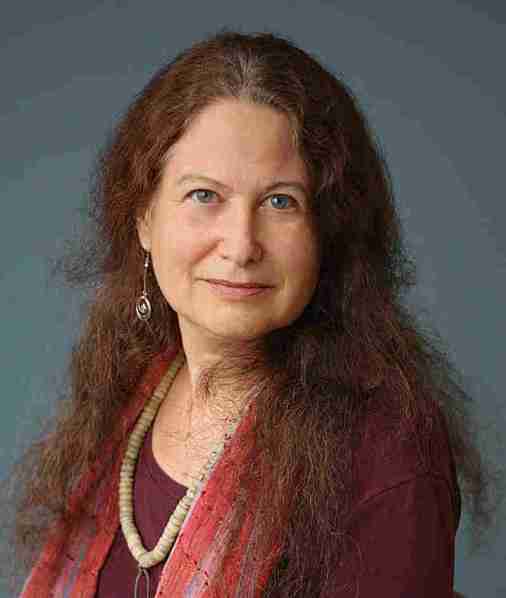
It’s important to know that Jane Hirschfield is a student of Zen Buddhism. She was ordained in 2011 at The San Francisco Zen Center. Hirschfield gets irritated, however, when people try to identify her poetry as “Zen” or anything else. It’s just poetry. Winner of so many awards it gets ridiculous, Jane Hirschfield is a kind of poetry goddess of our times. She’s 65 as of today. She may be around for yet a while. Her poetry has a kind of practicality. It deals with familiar things in unfamiliar ways. Her poems are full of dogs and horses, images of man’s interaction with nature. There are musings on the dilemma of living within one’s own mind. I find such questions easy to understand. I, too, am some kind of Buddhist.
Rebus, by Jane Hirschfield
You work with what you are given,
the red clay of grief,
the black clay of stubbornness going on after.
Clay that tastes of care or carelessness,
clay that smells of the bottoms of rivers or dust.
Each thought is a life you have lived or failed to live,
each word is a dish you have eaten or left on the table.
There are honeys so bitter
no one would willingly choose to take them.
The clay takes them: honey of weariness, honey of vanity,
honey of cruelty, fear.
This rebus – slip and stubbornness,
bottom of river, my own consumed life –
when will I learn to read it
plainly, slowly, uncolored by hope or desire?
Not to understand it, only to see.
As water given sugar sweetens, given salt grows salty,
we become our choices.
Each yes, each no continues,
this one a ladder, that one an anvil or cup.
The ladder leans into its darkness.
The anvil leans into its silence.
The cup sits empty.
How can I enter this question the clay has asked?

Elizabeth Barrett Browning
Elizabeth Barrett Browning was born into an aristocratic English family and received a classical education. Getting such schooling was not a given for women of that age. Usually it depended on the father’s disposition. In Elizabeth’s case, dad was a poet and the family luxuriated in artistic pursuits. Elizabeth was educated alongside her younger brother. No feminist outrages here. The Barretts were extremely wealthy and lived within the intellectual mainstream of the Victorian era.
It all seemed so wonderful until I came to the tragic stories of the Barrett family.
Elizabeth’s brother drowned. Elizabeth came down with tuberculosis and had an accident that permanently damaged her spine. In its way this is typical of upper class Victorian suffering. They suffered extravagantly: people died young, children were scythed down by fevers, chronic brain afflictions abounded. Elizabeth spent the rest of her life on morphine, opium and other such medications. Still, she had the stubborn persistence of all artists and produced a huge body of work. This first poem, below, “How Do I Love Thee” is one of the most famous poems in the world. It is also called “Sonnet 13”. I follow it with “Sonnet 14”.
How do I love thee? or Sonnet 13, by Elizabeth Barrett Browning
How do I love thee? Let me count the ways.
I love thee to the depth and breadth and height
My soul can reach, when feeling out of sight
For the ends of Being and ideal Grace.
I love thee to the level of every day’s
Most quiet need, by sun and candlelight.
I love thee freely, as men strive for Right;
I love thee purely, as they turn from Praise.
I love with a passion put to use
In my old griefs, and with my childhood’s faith.
I love thee with a love I seemed to lose
With my lost saints, — I love thee with the breath,
Smiles, tears, of all my life! — and, if God choose,
I shall but love thee better after death.
Sonnet 14, by Elizabeth Barrett Browning
If thou must love me, let it be for nought
Except for love’s sake only. Do not say
‘I love her for her smile—her look—her way
Of speaking gently,—for a trick of thought
That falls in well with mine, and certes brought
A sense of pleasant ease on such a day’—
For these things in themselves, Beloved, may
Be changed, or change for thee,—and love, so wrought,
May be unwrought so. Neither love me for
Thine own dear pity’s wiping my cheeks dry,—
A creature might forget to weep, who bore
Thy comfort long, and lose thy love thereby!
But love me for love’s sake, that evermore
Thou mayst love on, through love’s eternity.
Thus we have a painfully brief glimpse into the worlds of some famous lady poets. It’s a rich universe and I feel ridiculous popping these classics out on the page so casually. These women were/are great poets! Profoundly human, they deal with universal themes, the glorious quiz of life on earth. Is there a difference between the male and female poets? Are men better than women? Hell no. Somewhere there’s a planet with six genders, each with distinctive characteristics and functions. They quarrel endlessly about whether a frem is superior to a bloot and why forgles make the best musicians. It’s always the same stuff. Art. That useless but essential stuff: Art. P.S. I think the it’s the werkish who make the best Jerk n’ Jell paddle players.
A Midwesterner by birth, Arthur Rosch migrated to the West Coast just in time to be a hippie but discovered that he was more connected to the Beatnik generation. He harkened back to an Old School world of jazz, poetry, painting and photography. In the Eighties he received Playboy Magazine’s Best Short Story Award for a comic view of a planet where there are six genders. The timing was not good. His life was falling apart as he struggled with addiction and depression. He experienced the reality of the streets for more than a decade. Putting himself back together was the defining experience of his life. It wasn’t easy. It did, however, nurture his literary soul. He has a passion for astronomy, photography, history, psychology and the weird puzzle of human experience. He is currently a certified Seniors Peer Counselor in Sonoma County, California. Come visit his blogs and photo sites. www.artrosch.com and http://bit.ly/2uyxZbv.
Want to be sure not to miss any of Art’s The Many Faces of Poetry segments? Subscribe to Writing to be Read for e-mail notifications whenever new content is posted or follow WtbR on WordPress.




















