Trouble Seems to Follow Ruby and Maude in “Trouble Returns”
Posted: December 2, 2016 Filed under: Action/Adventure, Book Review, Books, Children's Books, Fiction, Stories | Tags: Children's Books, Colorado, Colorado Springs, Cripple Creek, Historical Fiction, Nancy Oswald, Ruby and MAude Adventures, Trouble Returns 3 Comments
Trouble Returns, by Nancy Oswald, is the third book in her Ruby and Maude Adventure children’s series. The series are historically based stories about Ruby, an independent and headstrong young girl, and her ice cream loving donkey, Maude, and their adventures in Cripple Creek in the late 1890s. I had the pleasure of reviewing the first book, Rescue in Poverty Gulch, in which Maude is donkey-napped and Ruby risks her own life to save her beloved friend and companion.
Ruby must face her greatest fears in Trouble Returns, when she must face the villain, Jake Hawker, who’s she’s tangled with twice before, in a court of law, when she testifies against him. But she finds her fears very real when he breaks out of jail and comes after Ruby and her friends and family. Can Ruby triumph over Jake Hawker for a third time?
Trouble Returns is crafted to be a stand alone book as well, making me aware enough of events in the second book, Trouble on the Tracks, that I was able to easily follow the full story line, although I hadn’t read the second book, without giving me a bunch of block exposition. As you might guess from the titles, books two and three feature an additional character, who steals readers’ hearts: Trouble, Ruby’s lovable little cat.
I found this story to be a delightfully entertaining story which was skillfully written. Oswald has crafted another story that readers of all ages won’t want to put down. She’s done her research and the historic details are wonderful. Another plus for me was the fact that it is available in paperback, because I’m an old fashioned type of gal. I give Trouble Returns five quills.

Kaye Lynne Booth does honest book reviews on Writing to be Read, and she never charges for them. Have a book you’d like reviewed? Contact Kaye at kayebooth(at)yahoo(dot)com.
Share this:

Weekly Writing Memo: Horror Inspiration
Posted: November 3, 2016 Filed under: Fiction, Screenwriting, Screenwriting, Stories, Thriller, Uncategorized, Weekly Writing Memo, Writing, Writing Tips, Young Adult | Tags: Books, characters, Fiction, horror, How To, Movies, Novel, Stories, Writing Leave a comment One question I hear asked a lot to writers is, “where do you find your stories?” This question is sort of silly to me because stories are everywhere around you if you look. Every item you come across in your day has a story for how it became what it is, and got where it is. If you ask enough questions, eventually you’ll find some interesting element that you can turn into a compelling story if you try. I could go on for a long time about ways to find a story, so instead I decide, in honor of Halloween, to narrow the focus this week and discuss where to find inspiration for horror stories in particular.
For me, I really think horror stories have to either start with the protagonist or the “monster.” By monster, I mean whatever villain is in your story, be it a literal monster, a ghost, a serial killer, a psychological monster, a location, etc. I say this because the core of most horror stories is the conflict between these two entities — the protagonist and the monster — and I think starting with one of them can be the easiest way to start a horror story. If you start with the monster, you can ask yourself who would it go after and find your protagonist. If you start with the protagonist, you can ask yourself what type of monster would they encounter and go from there. Immediately either one can give you your story, but where do you find the protagonist or the monster?
Protagonists
If you want to start your horror story by coming up with your protagonist and you have no ideas in mind, you can go several directions:
- Pick someone you know and turn them into a character by changing some of their traits to make them slightly different.
- Pick a stranger on the street and create a character from them based on what you can infer from their appearance and behavior.
- Pick a stereotype character and then do a free write or character sheet to turn them into something more and give them depth.
- Pick an occupation and then create a character that fills that job role.
There are a ton of other ways to come up with a character, but these are a few of my favorite simple ones. Once you have a character in mind you can find your monster by asking yourself where would this character go to find trouble? Does it find them, or do they seek it out by going somewhere they shouldn’t? Do they have a friend that takes them to a haunted forest? Do they live near a mental asylum where a killer can escape? Do they work in a hospital where people die every day and ghosts may linger? Do they go swimming or camping in a secluded area where monsters could lurk in the shadows?
Think about all the places your character may go on a daily or weekly basis and think about what kinds of monsters they could encounter there. If none of these places is suitable, then think about what kind of friends your character has, and what kind of trouble those characters could get the protagonist into. Do they have a reckless friend who likes going into abandoned buildings? A crazy friend who sees things? A friend who picks up shady drifters and brings them home? Once you have the monster your character would most likely meet, you can start creating the plot between the monster and the protagonist and find your story.
Monsters
As I said earlier, when I use the term “monster” I don’t necessarily mean a literal monster, but rather I mean any type of antagonist your character will come up against in the story. Monsters can be anywhere, and if you’re prone to writing horror it’s a good idea to keep a list somewhere of various monster ideas whenever you come up with one. A few places that I generally find monster ideas include:
- Reading about urban legends and mythical creatures. Those cheap tabloid papers have some great ones of these, as do those random lists of legends, myths, and creatures that are all over the internet. Pick one and make it your own, give it a setting, and see where it takes you.
- Phobias. These are a great source for monster inspiration because once you pick a phobia you can use it to build your monster. Think of phobia that you like, or look up a list and pick one, and then ask yourself if your character has that fear what kind of monster would trigger it? Do they have a fear of being alone? Then how about you forget them in the middle of the ocean after a deep sea diving expedition (Open Water). Do they have a fear of the dark, well how about a monster that only appears in the darkness and can make the lights go out (Lights Out, Darkness Falls)? Whatever phobia you choose, ask yourself where or how your character can be forced to face it, and what kind of monster could cause them to. Sometimes it’s even the monster that has the fear (Lights Out) and it can be used as part of how the protagonist defeats them, so you can also try to create a monster from that angle as well.
- True unsolved mysteries or famous oddities. These are a great source for horror because they’re true, unexplained, and usually, have just the right amount of creepiness to them that they can be twisted even further for the perfect horror story.
Any of the options above can work for finding a monster to create your horror story around, but they aren’t the only way. At the heart, the monster comes from the twisting of something that is somewhat normal to something threatening. Think about it. Cujo was a dog, a ghost is just a (dead) person, water is just water, etc, but all can be turned and twisted to become a monster. So if you can’t find some kind of monster from the ideas above, then try taking something random and asking how could it be dangerous? How could it be scary?
Once you have the “monster,” then ask yourself what kind of character would they either go after or accidentally encounter? Is the monster in a lake at a teen summer camp? Are they in a house that a nice young family has just moved into? Are they in a school where kids just want to go to prom? Once you know who your monster’s victims are, and where the monster hunts, then you have your story.
Share this:

“Under a Brass Moon”: A Cool Collection of Steampunk and Science Fiction Stories
Posted: October 7, 2016 Filed under: Book Review, Fiction, Science Fiction, Speculative Fiction, Steampunk, Stories | Tags: Benjamin Spurduto, Book Review, Fiction, G.Miki Hayden, James Wymore, Jessica Gunn, Jordan Elizabeth, Short Fiction, Under a Brass Moon 1 Comment
Under A Brass Moon: A Sci-Fi Steampunk Anthology is not quite as big the last anthology by Curiosity Quills Press which I reviewed, Chronology, but it is still pretty big. Unlike Chronology, which was full of pleasant surprises for me, Under a Brass Moon was just what it promised to be in the title: a collection of sci-fi and steampunk stories, and every story had elements of one or both genres.
The biggest contributor is YA author Jordan Elizabeth, who had six stories featured. Included is a Cogling short story, Upon Which Victor Viper Sat, which is a steampunk ghost story. (See my review of Cogling here.) A cursed hotel, where spirits are trapped. When Lady Rachel Waxman’s chest of paper cranes is stolen from Edna, she is determined to get them back, even if it means she must face a cursed hotel with trapped spirits and a desperate boy, willing to do anything, even murder, to regain his family’s fortune. Maiden in the Clock Tower is a stand-alone love story, along the lines of a fairy tale, with a rather sweet Happily Ever After. The other four short stories are companion stories to her Treasure Chronicles series, of which I also had the pleasure of reviewing Treasure Darkly. They Call Her Treasure is a humorous piece, sure to rouse a chuckle or two, but the other three, Treasure in the Field, Run of the Treasure and The Other Face of Treasure fell short for me, as if they weren’t finished and the promise of the premise wasn’t quite fulfilled. It’s a problem I find a lot in writing short fiction.
The second biggest contributor is James Wymore, with four stories: Sherriff Anderson’s Steam Deputies, a steampunk western shootout with steam powered deputies; Gearhead, a story of victory from apparent defeat when a captured gearhead knight tricks the Baron and steals his captured war machine; Vault, a magical steampunk story of witches and wizards and trapped spirits; and The Dark Glass, a tale of Jinda, an orphan girl, and her brother, who dream of escape from the care of the mean old butler who has been assigned with their care, but when Jinda discovers the key that leads to the treasure their father left them and escape is close at hand, the story ends. Like the Treasure Chronicle short stories of Jordan Elizabeth, mentioned above, this short story fails to deliver on the promise of the premise.
One of the problems with short stories is that it is hard to get in a full story arc with so few words. Other stories from this collection which left me feeling there should be more include Talking Metal, by W. K. Pomeroy, Fritz Finkel and the Marvelous Mechanical Thing, by award winning author Lorna Macdonald Czarnota, (We get to see why the two can’t be together, the obstacles their love faces. We get to see the grand measures taken in leiu of courtship, because it is a short story. There is a realization that she feels the same way he does, but steps to achieve the goal are only alluded to. The reader is left feeling cheated and wanting more.), Lucky Escape for Goldilocks Girl, by Irish writer Perry Mcdaid, (This protagonist had the feel of a female steampunk Robin Hood, promising to be an exciting story, but alas, it falls short of delivering on the premise.), and Queen of Cobwebs, by Jeremy Mortis, (A mechanical spider vampire tale. The protagonist is not very proactive and is rescued by outside intervention. This tale had the potential to be really good, but didn’t follow through.) Another story that didn’t quite do the trick for me were Harvester, by poet and author Amberle L. Husbands, a story about sentient plants, which lost me totally.
Under the Brass Moon also features two steampunk time travel stories: A Connecticut Yankee in Queen Victoria’s Court, by G. Miki Hayden, and Hour of Darkness, by Ashley Pasco; and two steampunk spy stories: Kung Pow Chicken for Pygmalion, by fantasy and science fiction author D.J. Butler, and The Poison We Breathe, by Christine Baker. For a steampunk ghost story, check out Calliope, by award winning author Terri Karsten, and for a great not-love story, try Henry the Tailor, by Grant Eagar. Upcoming writer Nick Lofthouse also does a passable science fiction story where the future isn’t so promising in Vacant.
My favorite stories from Under the Brass Moon include The Iron Face of God, by freelance writer and author Benjamin Spurduto, which is a pretty good steampunk mystery. It kept my interest. The story didn’t really let on to the motive for the murders, but maybe that’s okay with this one.
Also on my favorites list is Ethereal Coil, by MG/YA novelist S.A. Larsen, where nothing is as it appears, and The Women of Lastonia, by Lorna Marie Larson, which is a science fiction story that takes readers to outer space and planets far away. A Gulliver’s Travels of outer space, but this starship crew break the first rule of space travel when they rebel against the planet’s distasteful laws, which dictate they give up one of their shipmates or interfere with the evolution of the alien species.
Last but not least, my favorite story from this collection is The Balloon Thief, by New Adult author Jessica Gunn, a steampunk heist story where everyone is after the treasure and no one is who they seem. This story is well written and quite enjoyable.
Overall, the stories in this collection were entertaining, but many of them left me disappointed just due to the fact that I didn’t feel they had a full story arc and there should have ben more. Even the ones which left me wanting more, were entertaining stories, though not all were enchanting. I give Under the Brass Moon three quills.

Kaye Lynne Booth does honest book reviews on Writing to be Read, and she never charges for them. Have a book you’d like reviewed? Contact Kaye at kayebooth(at)yahoo(dot)com.
Share this:

Weekly Writing Memo: To Cliche, or not to Cliche
Posted: October 6, 2016 Filed under: Fiction, Science Fiction, Screenwriting, Screenwriting, Stories, Uncategorized, Weekly Writing Memo, Writing, Writing Tips | Tags: characters, Novel, Reviews, Stories Leave a comment A writing friend and I got in a heated discussion the other day as to whether clichés in writing can ever be a good thing. He is an adamant believer that clichés should be actively hunted down and eliminated from all dialogue, as well as most other areas of writing when possible. I, on the other hand, have a more lenient approach. I think clichés can be useful in specific circumstances, and sometimes they’re the best choice for the job. So when are clichés a good thing?
Avoiding Awkward
Sometimes if you can’t find a simple way to reword or rework a scene to avoid the cliché, then you can end up making the writing convoluted and awkward, which is worse than just using the cliché. A cliché can be invisible in the story and the audience may not even notice it, but awkward writing will interrupt the flow and stand out to an audience. It can also become obvious that you’re trying to avoid the cliché, and that can be distracting as well.
A really easy example is the phrase “that’s classified.” If you wanted to you could avoid it in a lot of ways, but there has to be a limit to how far you’ll go to avoid a cliché, and how much space you want to use to do so. If you try to avoid “that’s classified,” you could end up with something convoluted like, “I can’t tell you that because you are not qualified to access that information.” Just reading it makes me roll my eyes because it’s incredibly obvious I’m avoiding the cliché. In fact, it reads like a convoluted way of saying “that’s above your pay grade.” Which is another cliché.
The point is, avoiding the cliché in this case is turning out awkward, and it’s becoming obvious to the audience that it is what I’m doing. You don’t want your audience to stop and think about the writing when they’re enjoying the story – unless they stop to go “DAMN, that was good!” That is always acceptable! You want the audience involved, and in a situation like this it’s easier to throw in the cliché to get the message across and keep the story moving, rather than finding some roundabout way to avoid it.
Simplicity
Sometimes the decision for me to use the cliché comes down to one thing – simplicity. Sure, there are a lot of ways to word things that may let me avoid a cliché, but sometimes the cliché is the easiest, clearest way to get whatever message I want across to the audience. If I can use a cliché and it only takes 2 words instead of 20, then I better have some big motivation as to why those 20 words are needed. I’m a firm believer that every word has to count in a story, and as I said above, sometimes the cliché is just the simplest way to go. Will there be better ways to say things, probably, but does that mean you need to change your wording? No.
Cliches aren’t inherently bad. They can be overused, and they can be used at bad times, but sometimes they’re the best way to go for the sake of keeping the story moving forward. So always consider how complicated the route to avoid the cliché is. Ask yourself, if I avoid this cliché, will I slow the story down? Will it waste space on the page? Does the cliché add or take away anything from the scene? If the answers to these don’t give you a reason to take out the cliché, then I say go with the simplest method of keeping it in.
Character Culture
The biggest argument I think there is for keeping a cliché is that in some character cultures, clichés are ingrained in the system. By character cultures I mean communities like police officers, military personnel, doctors, politicians, etc. These kind of cultures that are part of large organizations have certain things that are ingrained in them.
For example, cliché language is often used by the higher ups in these organizations because clichés are something that a huge group of people will all understand in the same way. Clichés also become ingrained in these organizations because they relay on training being passed down, and the clichés carry through. For example, police officers and military personnel are more likely to use phrases that they have been trained to use. Military men use things like “need to know” because it’s an easy way for higher ups to dismiss lower level employees without actually giving them any information, and those lower level employees generally have to listen because they don’t outrank anyone.
In these sorts of settings, clichés can be used by the higher ups as a very easy way to create a separation between those of different ranks. Think of all the cliché phrases you can for military and even police personnel and think of their purpose: Need to know, that’s classified, that’s above your pay grade, etc. They all serve to protect information, and to put someone lower down in their place. In politics, there is a similar thing going on. The cliché phrases are more about delivering a message without delivering specifics. They say “I will bring change” or “I have the experience to do [blah]” and so on without every really specific what their plan is or how they are qualified.
Similarly, in medical fields clichés exist to keep information vague or to deliver a clear message without getting into specifics. In medical fields you sometimes don’t have time to lay out all the information because of the life and death situation, so abbreviated phrases are used to get a message across to everyone in the room quickly.
In general, these kids of systemized or structural cultures have clichés ingrained in them because they help create structure, they are universally understood, they deliver information and meaning without specifics as needed, and these cultures often have similar situations happen over and over again which can lead to certain sequences of events becoming cliché. The point is, you don’t need these characters to use clichés all the time, but having them in these instances is more acceptable because the clichés are part of the culture and the training almost everyone goes through in these professions, so they are almost expected by an audience.
When to Cut the Cliché?
Now clearly clichés should be cut whenever you can cut them in a way that doesn’t involve the things I’ve mentioned above, but sometimes it can be hard to decide. If there is an easy way to avoid the cliché, then always use it. If the cliché makes the scene cheesy or eye-roll worthy, then definitely cut it. If your entire plot hinges on a cliché, again, think about changing it. The important thing is that the clichés you do use don’t interrupt the flow or come off as lazy. Use them because they’re the best tool for the job (cliché!), and use them because they serve the story. Don’t use them because you’re too lazy to think of something else.
If you aren’t sure, then get a second opinion and see if your beta reader finds it distracting. Ultimately, like anything else in writing it all depends on the specific situation. Clichés exist for a reason, just use them wisely!
Share this:

Weekly Writing Memo: All About the Setup
Posted: September 28, 2016 Filed under: Fiction, Screenwriting, Screenwriting, Speculative Fiction, Stories, Thriller, Uncategorized, Weekly Writing Memo, Writing, Writing Tips | Tags: Fiction, Screenwriting, Writing, writing advice, Writing Process Leave a comment One of the most important elements of a story for it to work is for everything to be set up properly. Your plot, your characters, and your resolution all need to be set up in such a way that your audience can believe them. If the audience doesn’t believe it, or “buy in” as it’s often called, then they won’t enjoy your story and may not even continue it. So how do you properly set up everything in your story so it works?
What does your audience need to know?
Think about your plot, your characters, and your world before you start writing. What does your audience need to know about each of these in order for them to understand your story? If needed, make a list. Add to it anything that needs to happen in order for your plot to unfold, and decide in what order those things need to happen.
The things on this list are the things you need to set up in order for your audience to get into your story. Does your character have a mental problem? Then even if you don’t reveal it right away you need to show signs of it, foreshadowing what is to be revealed so when the reveal happens the audience believes it. Does your world involve superhuman mutants? Then again, this is something that needs to be set up in your story so your audience understands the world. Even if you don’t want to reveal the mutants, you need to reveal that there is the possibility of something supernatural going on. Think of all these sorts of elements that will be in your story before you get writing so you have a clear image in mind of what you need to do. You don’t have to make the elements obvious or spell it out blatantly, but do find ways to at least hint at these details so they don’t throw off your audience when they come into play later.
When do they need to know it?
The second part of setting up a story is know WHEN to reveal things. How much do you need to set up right away, and how much can you hold onto and reveal later? You don’t want all these details to come out in a list when you’re writing. They should come out in small doses as necessary. For example, your audience needs to know right away that your character has an enormous scar if it plays into how people react to him/her throughout the story. However, your audience doesn’t need to know right away how your character got the scar. In fact, the audience may never need to know how the character got the scar unless it plays an important part in the story for some reason.
The common mistake I see when people are setting up a story is mainly not mentioning something until it is needed to move the plot forward. For example, if your character needs to know complex mathematics, but your entire story she never once uses math, it’ll seem awfully convenient if the moment she needs it she busts out some calculus. Anything such as this that is key to moving the plot forward, or key to solving a problem, should be established in advance of when the character needs it. If it is something that is constant, then it should be established right from the beginning. If it’s something minor, then it just needs to be established a few scenes or so before it becomes relevant.
How can I show it?
So how do you show these minor things in your story without them coming off as listing or uninteresting? Something like the mathematics example would be boring if the character just said “I’m good at math.” Instead, you could simply have a short moment where your character does some impressive mental math for some reason, or even have something subtle like a math diploma on the wall someplace. These kinds of small details, or small moments, can be a way to establish important elements without taking too much story time.
For anything minor, the quicker you can establish it and move on, usually the better. Anything that is a key element of the story can be established by doing continual small touches throughout the story as it unfolds. For example, if you want to establish someone has anxiety about something, you can have them behave in increasingly anxious ways until their full anxiety is revealed.
Final Notes
Ultimately, there will be three stages of setting up your story. The first is the things you’ll know right off that you need to establish before you even begin writing. The second will be the things you discover as you are writing. When you come across these things in the second stage, it’s important to remember to not just throw them in when they come up. Take a moment to sit back and think about where that detail could naturally fit into the story. If you just put it in where you think of it, will it seem like something that conveniently pops up to solve the story conflict?
The final stage of setting up your story will come after you get feedback. Whoever you use as your beta reader should be able to tell you what doesn’t make sense, and you can use that as a sounding board for what in your story needs more setting up, and what you can do less on. No matter how obvious you think something is, people will always have different viewpoints so if you can find a subtle way to set it up a tad more, it’s probably a good idea to do so.
Robin Conley offers great writing advice most Wednesdays on Writing to be Read. If you just can’t wait until next week to find out more, you can pop into her blog, Author the World, for more tips, or a weekly writing prompt.
Share this:

“Godling and Other Paint Stories”: Contemplate the Meanings
Posted: September 23, 2016 Filed under: Book Review, Books, Fiction, Stories | Tags: Book Review, Books, Creative Fiction, Fiction, Godling, Jeff Bowles 3 Comments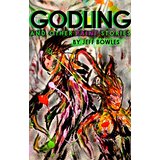
Godling and Other Paint Stories, by Jeff Bowles, is a collection of six short stories all thematically tied together by a very thin thread of paint, or more specifically, colors. In the ingenious mind behind these stories, it probably doesn’t seem far-fetched that paints would be self-aware, or that dogs could evolve into thinking talking animals with human-looking lips, but your average reader will take a look at these stories and say, “Wow!” But one thing these stories will make readers do, is ponder possibilities, because frankly, as an author with a God-thing going on, Bowles conceives of some really heavy concepts, the kind that really make you think.
The collection starts out with Godling, a science fiction tale of a God machine, which gave up its humanity for love, and may, or may not, be able to reunite to become whole once more. (With short stories, you really can’t have spoiler alerts, because they give away the whole thing, so you’ll have to read the story to find out what happens.)
Next is Traffic Patterns, a tale of a sentient traffic light that is granted godhood, for a time. And, Making Paint as a Means of Impermanence is filled with some truly disturbing images of how an attempt to gain immortality turns into an ever renewing ritual to maintain an impermeable existence. Wild Dogs of Buffalo is a canine Godfather, excuse me, I meant Dog Father. Anyway, I love it. It’s a truly entertaining read.
God, the Little Artist – An artist’s heaven. This is not the first time that author Bowles has killed God off in his stories. The main character is Mr. Williams. As in Robin? That’s what I kept picturing in my mind as I read this story. Robin Williams talking to the large baby God whose time is running out, as if perhaps God ages backward. When I’d finished, all I could think was Robin Williams as God. Now that’s scary. But, maybe it’s just me. (No spoiler alerts. Again read the story.)
Dr. Julianus Techt’s 5 Easy Steps to Building a Better You is an instruction manual on how to sell your soul in order to improve on God’s handiwork, which is you. Only Jeff Bowles would create such a story. As you read these stories, when you come to this last, do not… I repeat, DO NOT try this at home.
Godling and Other Paint Stories will be released on Amazon on September 25th, 2016. I highly recommend you grab a copy. Overall, this collection of short stories are all easy, enjoyable reads, which will give reader’s brains lots of food for thought. They are strange and unusual, but Jeff’s writing talent is such that it doesn’t take much to suspend your disbelief. I give Godling and Other Paint Stories five quills.

Kaye Lynne Booth does honest book reviews on Writing to be Read, and she never charges for them. Have a book you’d like reviewed? Contact Kaye at kayebooth(at)yahoo(dot)com.
Share this:

Weekly Writing Memo: Know Your Theme
Posted: September 22, 2016 Filed under: Fiction, Screenwriting, Stories, Uncategorized, Weekly Writing Memo, Writing, Writing Tips | Tags: Fiction, Screenwriting, Writing, writing advice, Writing Process 2 Comments Every story, whether intentional or not, has a theme within it. A theme is not necessarily a moral or lesson, but rather it is what your story is about at its core. Finding the theme of your story can sometimes take some work, as can making the theme come through in your writing, but it’s not as hard as it might seem.
What is your theme?
To find your story’s theme, ask yourself what your story is about. Maybe you won’t be able to break it down into a neat answer, but as long as you can answer the question you have the first step to finding your theme.
For example, let’s say you’re writing Die Hard. Your story would be about a cop who travels to visit his wife out of town, and ends up having to stop a terrorist plot. So what is the theme of this story? Well, it can be broken down in a lot of ways if you think about what the general terms of the story are: good triumphing over evil (cop vs villains), one man against the world (John vs the terrorists), or even how greed can lead to your downfall (the terrorists refusing to give up even though they’re losing because they’re determined to get the money).
The key to figuring out your story’s theme is to think about the larger concepts and the plot of your story, then try to break them down into simple terms as shown above. These larger ideas are the core of your story, and they help tell your audience what type of story it is. If you’re doing this and you are having trouble deciding what the main theme from your options is, ask yourself which potential theme if removed would completely change the story. The one that can’t be removed, and the one that is the biggest overall concept of the story, is your main theme.
How to show your theme?
Showing your theme throughout your story should not be hard. In Die Hard the theme of good triumphing over evil happens consistently. John is determined to do what’s right and to stop the bad guys, and despite all the trouble and missteps that happen, he ultimately always comes through. Even when he loses, it’s just further motivation for him to come back at the bad guys with even more vehemence so he can win. So for your own story, think of what your theme is and how your main character can represent that theme in some way.
Other ways to show your theme is to use something called mirroring. This is when you show the theme through minor secondary characters throughout the story. Sticking with the Die Hard example, you can see some minor mirroring of the theme “one guy against the world” when you look at the local cop who is stuck outside the building and is trying to help John. This cop is fighting against all the others to get John help and is the lone voice in the crowd. By showing your theme through these small mirroring acts you are also adding another layer of plot to your story.
You don’t always have to have the minor characters experience the same outcome as your protagonist either. You can use minor characters to show what the other possible outcome of your theme could be for your protagonist. For example, if your theme is good triumphing over evil, you could have a minor character lose to the evil to show the consequences if your character fails.
Can you have multiple themes?
As is clear with the Die Hard example, there is always a potential for there to be multiple themes in your story. Of course there should be one main theme that is the core of your story, but there can also be some minor themes that help build up your story as well. Maybe good vs evil is your main theme, but then you have themes involving love or, like in Die Hard, greed. These kinds of minor themes can contribute to your plot, as well as help deepen your characters, and many of them will appear without you having to force them into the story. If you look at your subplots, you should be able to see some of the themes that are present in them and bring them out a bit more so they are stronger.
Final Note
In general, it’s a good idea to know what your theme is before you start your story so you can keep your writing consistent. Sometimes, however, the theme comes out and is discovered as you write the story. Alternatively, you can also start your story thinking the theme is one thing, but as you write you discover it is really something else. This is fine, and happens all the time, but if it happens this way make sure you go back once you’re finished writing and make sure everything is consistent throughout the story. The most important thing about the theme of your story is that you’re consistent, and the clearer the theme is in your mind when you start writing, the easier this will be to do.
Robin Conley offers great writing advice most Wednesdays on Writing to be Read. If you just can’t wait until next week to find out more, you can pop into her blog, Author the World, for more tips, or a weekly writing prompt.
Share this:

Weekly Writing Memo: What’s in a Name
Posted: September 14, 2016 Filed under: Screenwriting, Stories, Uncategorized, Weekly Writing Memo, Writing, Writing Tips | Tags: Creative Fiction, Fiction, Writing, Writing Process 4 Comments Through all my conversations with other writers, I’ve learned that there seems to be two camps of people when it comes to naming characters, places, and things in stories. One group thinks that the names don’t matter, while the other spends hours finding just the right meaning for each name in their world. Personally, I think it depends on the story, as well as whatever it is you are naming. I do believe main characters should have names that mean something, or at the very least, ‘fit’ the character’s story, but I don’t think everything in your story has to have deeper meaning. If you want to give the people, places, and things you name in your story special meaning, there are several ways you can go about it.
Origins
One of the main things I do look at when I am naming something is the origin of the name. What country is the name originally from? What language is it? Is it predominant in a specific religion, or culture? These kinds of details can help you pick names that have more history behind them to help with whatever you are naming. If you have a character that you want to have an Irish background, then a name with a touch of Irish history would be perfect. It doesn’t have to be a historical or cliché name, but it is an option. Another option is to research popular names in Ireland and pick one that way instead. You may end up with a name that isn’t classically Irish, but it will still have a connection to Ireland.
The point of this kind of research for the names you give in your stories is that it creates a built in history for what you are naming. Without telling the reader, you are hinting at where your character might come from and what their family connections are. Now of course people in real life are often given names with no connection to their roots, and you can use this in your story as well if you want, but by making a deliberate choice to either use the name or not you are making every element of your story count. So be deliberate, and if you decide to go against your characters origins, then make that part of the story as well even if it’s a minor part.
Preconceptions
Something else you can use to your advantage when naming a character, place, or thing in a novel are known preconceptions about the name you use. For example, if you use a name from a myth, many people will recognize it and have certain ideas about that character. Zeus is a mighty god with great power, who also happens to be a bit of a player, and a character named Zeus might be suspected of having some of those traits. There are all sorts of fables and legends out there from every different culture and time period, and even if you use one that doesn’t have meaning to the majority of the population it will still help deepen your character. The point is that it is another layer for a reader to find, and the ones that do will love the touch.
Beyond past myths, you can also use names from modern pop culture and such. Big names like Kanye or Justin are well known enough that they also have immediate pre-conceptions to them. Maybe in another 20 years they won’t have the same impact on your readers as pop culture changes, but for modern readers you can use names like those to paint a picture of who your character is. Big public names have personas around them, and if you’re writing a character with a similar attitude you can use those pre-existing ideas to help nudge your reader in a certain direction before they know anything else about your character.
Meanings
One of the final elements you can use when naming things in your stories is symbolism. There are all sorts of names and words that have deeper meaning beyond them besides the word itself. Most names have some alternate meaning to them when you research the original language they came from. These sorts of meanings can be used to speak to the type of person your character is going to be. If you have a surprisingly brave character, then choosing a name that secretly means bravery could be a subtle nod to readers who know that. These are the kind of details that won’t change anything in the story for the most part, but they can add another layer of meaning to your story. It can be especially useful when naming objects in fantasy worlds.
Final Notes
No matter your take on naming in stories, it’s important to consider what the minor details of naming can do for your story. The small touches can often give a story the extra boost to make it something special. As a reader, I know I enjoy the small details that I discover later on about a story, such as deeper meanings in names, and it only makes me enjoy the story more. If you do go the special naming route, however, I find it works best if you don’t go too obvious with the symbolism in the name. You want it to be a small touch, not a neon sign in your audience’s face. Ultimately, if you find a special name is something that will add to your story, then use it, if not, then don’t. It’s your story, so you have to decide what benefits it the most. Trust your instincts and you’ll be fine.
Share this:

Weekly Writing Memo: Overcoming the Blank Page
Posted: August 17, 2016 Filed under: Books, Fiction, Publishing, Stories, Uncategorized, Weekly Writing Memo, Writing | Tags: Creative Fiction, creative process, Fiction, Screenwriting, Writing, writing advice, Writing Process 1 Comment Sometimes when it comes to writing, the hardest thing to overcome is the simplest. One such example of this is to overcome the intimidation of a blank page and to simply get started. Those first moments when you sit down in front of the page and tell yourself you’re going to write can be huge, and overwhelming. All sorts of thoughts can pass through your head that make putting the first words down on the page near impossible. Am I good enough? Do I have anything to say? How do I do this? Will anyone want to read it? Etc. These kinds of thoughts can stop your writing in its tracks before you even begin. Knowing how to overcome the blank page can be vital, and while there isn’t a method that works for everyone, there are several things that I find work well.
Free Write First
One of the easiest ways I find to get into writing is to simply allow myself to free write for a while. Even if I have a specific story idea in mind, I will sometimes think of my character or my setting and just write whatever comes to mind. It doesn’t always flow in a pretty way, or even make sense, but it does allow me to explore the characters or setting without restrictions and it gets me writing. Once I start putting words on the page, focusing them becomes easier. I also find that just getting started on the act of writing makes some of the tension around writing dissipate. So however you do it, get started by freewriting and getting words on the page. Even if you have to start by writing about your day or something, see where the freewriting takes you. Once you no longer have a blank page, it’s easier to focus on creating something cohesive that you can turn into a story.
Copy Someone Else
This is a method that has been around for a while, and was even used in the movie Finding Forrester. When you are just getting started writing and struggling, try grabbing a random book and copying down the first paragraph of it. As you are writing, let your mind wander, and when you’re comfortable, stop copying and start making it your own. Sometimes using someone else’s work to get you started writing can help you transition into your own work. Just remember to go back once you finish and to change the beginning so it is no longer copying the original author’s work. The key to this is that it gets words on the page, and in making what you write your own.
Make A Rough Outline
When I have a specific story idea in mind, but am struggling to get started, I find that writing down 3-5 bullet points of where I want the immediate section of story I’m working on to go helps. Usually I will do this when I start each chapter. I grab a piece of paper and jot down the 3-5 key moments of the chapter that form the arc of it, then when I write I have “goals” to write toward. It’s just enough outlining to keep the story focused while I’m writing, but not so much that people who hate outlining will feel like they’ve over planned anything.
It works for me because I prefer abbreviated outlines, and it allows me to discover how the characters get from one big moment to the next as I write. So take a few moments to create a small arc for what you want to write, and then let yourself write to those points. It’ll help you visualize what you’re planning to write, and it’ll give you points in the story to write toward. Just try not to make your bullet points too broad, or you can end up feeling lost as to where to start again.
Try a Different Medium
One of the last things I try when I’m struggling to write is to switch mediums. Sometimes I find that I just can’t write a certain story at the computer, and instead I end up writing with a notepad and pen. It seems silly, but just switching mediums like that can actually help get you started. Sometimes I think the notepad works better than the computer when I’m struggling because the notepad feels less permanent and professional. I’m just jotting down ideas! Not writing for real! Which isn’t true at all, but it feels that way. So allow yourself to try a different medium and see if it changes anything. At the very least, switching to something like a notepad where you can do things by hand can allow you to doodle and jot ideas to brainstorm while you are working on getting to the real writing. Which can be just as productive.
Final Notes:
The final thing to remember if you are stuck on the white page is that you don’t have to start by writing right away. If writing simply isn’t working, trying outlining or researching or brainstorming for your story. If you do those things, you’ll still be working on your story in some way, and maybe it’ll help you feel more confident so you can get started. Just remember, at some point you have to stop doing these things and get to the writing, so don’t procrastinate too long!
Share this:

Who is Robin Conley?
Posted: July 18, 2016 Filed under: Author Profile, Books, Fiction, Screenwriting, Stories, Writing, Writing Tips | Tags: Critiques, project 365, Robin Conley, Weekly Writing Memo, Writing, writing advice, Writing Tips 2 Comments
It occurred to me that although I introduced Robin Conley as my cohort in the M.F.A. program when she first began doing guest posts for Writing to be Read, I really didn’t give a lot of information about my friend and former cohort, who happens to be a very talented writer with a sharp eye for what does, or doesn’t, make a story work.
When she was introduced in my M.F.A. cohort at Western State of Colorado University, there was one amazing thing about her which stuck in my mind. She had challenged herself and her writing abilities by writing a short story a day for a year, and called it Project 365. Not only did she challenge herself, but she took it public. She got the idea as an undergraduate at Western Michigan University in 2010. Robin explains how Project 365 came about,
“ …we were reading a book of plays called 365 Plays/365 Days by Suzan-Lori Parks… her work inspired me to try something like it for myself to help me push myself to write every day, and to try new styles of writing. There weren’t any rules except that I had to write a complete story every day… as long or as short as necessary to tell the story, but the purpose… was trying something new. I played with genres, new characters, new styles (minimalism, surrealism, literary vs. genre, etc.) In order to keep myself on track, I started a twitter account (@Jminspirations) at the same time and a blog, and forced myself to post every story on the blog and then put a link on my twitter account.”
I found this to be amazing. Talk about inspirational. Wow!
At the time, that’s how I thought of her, the amazing girl who did the short story challenge. But over the past four years, I’ve gotten to know her better and she’s become a good friend to me, and in a way, she’s become my writing partner. We are working together in some of our writing endeavors, including her guest posts here. Through our Etsy store, Writing the World, we offer critiquing and proofreading services. Robin does guest posts for us, besides writing for her own blog. In addition to her own writing, she currently does writing for hire, volunteers as a script reader, and is teaching a couple of classes in screenwriting. (I think she may do some babysitting, too.) Besides being skilled at the craft, she’s smart and witty, and a she has a wonderful sense of humor.
I wanted my readers to know a little bit about Robin, so you’ll have a better idea of who you’re getting your weekly writing tips from. There’s no better way to tell you about her than to let her say it in her own words. The post runs a bit long, but Robin’s answers were so good, I couldn’t bring myself to cut much of them. I’m hoping after reading the following interview, you’ll be able to see a little bit of what I see in Robin, who I’ve come to know and consider a friend.
Kaye: We’ve already talked some about Project 365. How has that writing experience helped shape your writing career?
Robin: Project 365 was a strange part of my life that really pushed me to be a better writer. Every time I thought I wouldn’t be able to come up with a story idea, I somehow found one. It was stressful, and there were a lot of days where I wanted to do anything but write. Sticking with it taught me more about my writing than anything else I’ve done. By the final few months, I’d learned a lot about my process and my writing and I learned how to write no matter what else was going on.
So far, at least 2 of the stories have sprung into novels, and there are at least a dozen others that I also plan to turn into novels when I have the time. Many others I’ve revised and am working on sending out to publishers in hopes of finding a home for them. Of course, there are several that are just pretty crappy and probably won’t be used for anything other than as a “learn from my mistake” sort of thing, but that’s to be expected when doing so much in such a short time.
Kaye: What works have come out of the 365 stories?
Robin: One of my favorite stories that sprung from the 365 challenge is my Tour Guide that was part of my thesis novel, Labyrinth of the Dead, which I wrote for the MFA program. The world she is a part of was a pre-existing place I’d written about before, but the Tour Guide was a new character that I decided to play with while doing the challenge. She works in the underworld as a guide for the newly dead and leads them through the orientation process, so to speak.
Another story that came from the challenge has become a mystery novel, Indecision Killed the Cat. It’s about an anxiety-riddle woman who believes her troubled brother is missing, but no one believes her because of his past history of running off, and her irrational and unreliable way of thinking.
Kaye: In what way, if any has the challenge helped bring you to the point you’re at now?
Robin: Doing the challenge helped me grow more confident in my own writing. It let me explore genres and stories that I had been thinking about, but hadn’t tried writing in.
One of my main goals with the challenge was to help me focus. Before the challenge, I often found it hard to work on longer projects because I had so many ideas in my head and I felt overwhelmed by them or distracted… Now when I go to write I know exactly what I need to do in order to get started, where before I’d waste a lot of time. It really helped me be the writer I am today.
Kaye: What kinds of things influence your writing?
Robin: I’m influenced by everything. I love learning how things in the world work: people, jobs, cultures, nature… I love learning and I love watching how things are interconnected. When I write, it’s all about taking little details and connecting them in such a way that they tell a story. Every part of my life, every little thing I’ve interacted with every day, helps me tell stories.
Sometimes the smallest thing can inspire a story for me because it’s all about perspective. The way someone holds a beer bottle can be significant and inspiring. I know, it sounds silly and dramatic, but it’s true. It may inspire me because of the attitude, or the way the person is interacting with the bottle. Are they gesturing with it like it’s an extension of themselves? Or do they carry it like it’s nothing more than object? These kind of small details can make me start to wonder about a person, and before I know it, I’m no longer thinking about that person, I’m thinking about a character. Every character has a story, and I love finding out what it is. So once I have a glimmer, I have to delve deeper. Essentially, the answer to where stories come from for me, is simple: they come from curiosity. I want to know more, so I write until I find my answers.
Kaye: What’s your favorite genre to read? To write?
Robin: About 60% are books recommended to me by friends or family. I have several people who pretty much give me everything they read because they know I like to check out all types of stories as research for writing. If someone I know wanted to read it, I’m curious to see it for myself. My preferred genres are the classics, urban fantasy, horror, and anything involving zombies. In general, though, I’ll pick up any book that either has a character or plot that catches my attention, and I usually read several books at once. Right now I’m currently reading:
- David Copperfield by Charles Dickens
- The Brief Wondrous Life of Oscar Wao by Junot Díaz
- 21st Century Dead Edited by Christopher Golden
- House of Leaves by Mark Danielewski
- The Tools of Screenwriting by David Howard & Edward Mabley
In writing, I seem to lean toward telling stories that involve some form of fantasy, or something involving horror or supernatural elements. While these types of stories are my favorite, I end up writing in a wide variety of genres because what usually draws me to wanting to write a story is the character or a particular conflict. I like to follow the story and take it wherever it leads me instead of trying to focus too much on one genre or style.
Kaye: Like me, you hold a duel M.F.A. in Creative Writing, with emphasis in both genre fiction and screenwriting. What prompted you to spend the extra year to add that additional screenwriting emphasis?
Robin: I love telling stories, and I love absorbing stories in any form (movies, music, oral storytelling, plays, books, etc.) When I took my out of concentration course for the fiction program I decided to take Screenwriting because it would help me expand my ability to tell stories. The more mediums I am familiar with, the more options I have when I choose to tell a story. Plus, when I took the Screenwriting class I just really fell in love with the visual format and wanted to know more, so I decided to add the extra year in order to learn as much as I possibly could about screenwriting before I graduated.
Kaye: What is the biggest challenge for you when writing short fiction? Or when tackling a novel length work? • What is your biggest challenge when writing a screenplay? • Have you ever played with poetry?
Robin: Short Fiction – condensing the story. I love getting lost in characters and worlds, and finding a short story is often hard for me. I really have to force myself to focus on one small part of the story and make it matter, without getting lost in the bigger story.
Novels – I think I most struggle with the outlining and preparing to write stage. I hate the pre-writing stuff and always want to just get started, but I find that the pre-writing really helps me write faster and clearer so I force myself to do it.
Screenwriting – During my first drafts I really focus on the plot and getting that to work on the page first, which means my protagonist’s personality often gets lost even though I know it well. Future drafts are often all about bringing that personality out and fixing character stuff, which is a slow and tedious process for me.
Poetry – It was my first foray into writing. It was awful stuff that will hopefully never see the light of day again. These days I simply appreciate poetry and admire those who have the skill. It’s not my strong suit.
Kaye: Which is your favorite type of writing? Short fiction, genre fiction, or screenwriting?
Robin: I’m kind of torn on this these days, because I love the visual format of screenwriting, but I also adore getting lost in the world of a novel. I think for me, which is my favorite really depends on what story I’m working on at the given moment and which medium it seems to fit best.
Kaye: Is there anything unique or unusual about your writing process?
Robin: The main thing I can think of is that in my first draft I really focus on getting my plot down first and writing the motions of the story, while drawing character out comes second. I know my characters in advance before writing, but they don’t always come out on the page well in the first draft since I’m focused on plot. Doing it this way helps me write faster, and gets the plot all out on the page so I can look at it and see what is and isn’t working, because sometimes you can’t tell until it’s written.
I look at it as being similar to drawing. First you do a rough sketch to plan the drawing (outline), then maybe you do the structure of the drawing in black and white (plot), and then you go through and add color (character and finer details). Writing this way lets me really focus on my plots and make sure they are logically sound before I really delve into bringing out the character elements and some of the smaller details that help bring a story to life. The key, though, is knowing your characters really well first so they fit the plot.
Kaye: We’re offering some proofreading and critiquing through the Etsy store. What’s your worst pet peeve when reading or critiquing a book or story?
Robin: 1. When the author writes a character doing something for the sake of getting the plot to go where the author needs it to go, rather than staying true to the characters.
2. When critiquing and someone sends me something that is clearly a first draft and I can tell they haven’t read it over. It’s one thing if we’ve talked about sending the first draft for some specific reason, but it’s another to send something to someone asking for a critique when you haven’t even done a basic revision pass. You may only get one critique, so don’t waste it by sending something that is filled with mistakes you could catch on your own!
Kaye: What do you like to do when you’re not writing?
Robin: I have a lot of random hobbies and like learning new things, so what I’m up to is constantly changing. Lately I’ve been teaching myself to knit, and relearning some Spanish. In general, I love reading, movies, anything involving animals or nature, traveling, and photography.
That’s it, folks. I hope this interview has given you a better idea of who Robin Conley is, and instilled confidence when she offers writing advice. If you have questions for Robin, leave a comment to this post.
Robin Conley offers great writing advice most Wednesdays on Writing to be Read. If you just can’t wait until next week to find out more, you can pop into her blog, Author the World, for more tips, or a weekly writing prompt.