Growing Bookworms – War in Children’s Literature: yes or no? #GrowingBookworms #childrensliterature #warbooks
Posted: November 8, 2023 Filed under: Books, Children's Books, Classics, Fiction, Growing Bookworms, Historical Fiction | Tags: Children's Books, Growing Bookworms, Historical Fiction, Robbie Cheadle, War and children, Writing to be Read 68 Comments
The world is full of conflict currently, and this has been the case throughout the reign of ‘civilized man’ on this beautiful planet of ours.
According to save the children US, a total of 93,236 children have been killed or maimed in conflicts in the last ten years (this figure is from November 19, 2020 before the two recent conflicts centering around Ukraine and Israel), which equates to 25 children (an averaged size school classroom) of children every day.
These children were mainly victims of airstrikes, shelling, landmines, and other explosive weapons used in populated areas.
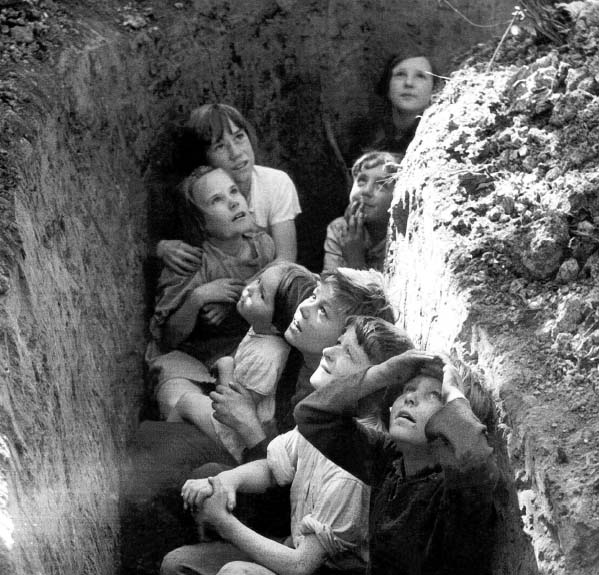
War and conflict is a very real factor of human society. Wars displace people and create refugees; people who are unable to continue living in their homes and carrying on with their daily lives because of violence. Refugees are a huge concern and area of focus in Western society.

With these thoughts and figures in mind, I ask, should children read books about war?
My answer is yes. Books and stories are a way of teaching empathy, understanding, and raising awareness.
Jennifer Armstrong is quoted as saying: “if we don’t encounter war in the safe way, by experiencing it through literature and art, how will we be moved to avoid the real thing? Reading about was doesn’t imply an endorsement of it: it’s a way of acknowledging part of the human experience that has been with us since the days of the Trojan War and long before. If you really want to teach young readers about peace, give them books about war.”
Jennifer Armstrong is the author of over 50 books for children from kindergarten through to high school. She is best known for writing historical fiction. You can read more about Jennifer Armstrong here: https://en.wikipedia.org/wiki/Jennifer_Armstrong
To:You
Mon 2023/11/06 09:29
Isaac Bashevis Singer wrote: “Children think about and ponder such matters as justice, the purpose of life, the why of suffering. They often find it difficult to make peace with the idea that animals are slaughtered so that man can eat them. They are bewildered and frightened by death. They cannot accept the fact that the strong should rule the weak.” You can read more about Isaac Bashevis Singer here: https://www.encyclopedia.com/people/literature-and-arts/hebrew-literature-biographies/isaac-bashevis-singer
I’ve always been fascinated by war and have been reading about children and adults in war situations since I was a young girl. These are a few of the books about war and conflict situations I was given by Sister Agatha when I was a young student (10, 11 and 12 years old) at Holy Cross Convent in George in the Western Cape of South Africa:
The Diary of a Young Girl by Anne Frank
Discovered in the attic where she spnt the last years of her life, Anne Frank’s remarkable diary has become a world classic—a powerful reminder of the horrors of war and an eloquent testament to the human spirit.
In 1942, as Nazis occupied Holland, a thirteen-year-old Jewish girl and her family fled their home in Amsterdam and went into hiding. For the next two years, until their whereabouts were betrayed to the Gestapo, they and another family lived cloistered in the secret upstairs rooms of an old office building. Cut off from the outside world, they faced hunger, boredom, the constant cruelties of living in confined quarters, and the ever-present threat of discovery and death.
In her diary Anne Frank recorded vivid impressions of her experiences during this period. By turns thoughtful, moving, and amusing, Anne’s account offers a fascinating commentary on human courage and frailty and a compelling self-portrait of a sensitive and spirited young woman whose promise was tragically cut short.
I am David by Anne Holm
David escapes from the concentration camp where he has spent his entire life and flees across Europe. He is utterly alone – who can he trust? What will await him? And all the while, how can he be sure that they won’t catch up with him…David learns that his polite manner, his haunted eyes and his thin features are strange to other people. He must learn to fend for himself in this strange new world.
When Hitler Stole Pink Rabbit by Judith Kerr
This semi-autobiographical classic, written by the beloved Judith Kerr, tells the story of a Jewish family escaping Germany in the days before the Second World War.
This beautiful new edition celebrates the fifty year anniversary of an adventure that Michael Morpurgo called “The most life-enhancing book you could ever wish to read.”
Suppose your country began to change. Suppose that without your noticing, it became dangerous for some people to live in it any longer, and you found, to your surprise, that your own father was one of those people. This is what happened to Anna in 1933.
Anna is too busy with her schoolwork and tobogganing to listen to the talk of Hitler. But one day she and her brother Max are rushed out of Germany in alarming secrecy, away from everything they know. Their father is wanted by the Nazis. This is the start of a huge adventure, sometimes frightening, very often funny and always exciting.
Judith Kerr wrote When Hitler Stole Pink Rabbit fifty years ago, based on her own journey, so that her own children would know where she came from and the lengths to which her parents went to keep her and her brother safe. It has gone on to become a beloved classic that is required reading for many children all over the world and is an unforgettable introduction to the real-life impact of the Second World War.
Number the Stars by Lois Lowry
A powerful story set in Nazi occupied Denmark in 1943. Ten-year-old Annemarie Johansen is called upon for a selfless act of bravery to help save her best-friend, Ellen – a Jew.
It is 1943 and for ten-year-old Annemarie Johansen life is still fun – school, family, sharing fairy stories with her little sister. But there are dangers and worries too – the Nazis have occupied Copenhagen and there are food shortages, curfews and the constant threat of being stopped by soldiers. And for Annemarie the dangers become even greater… her best-friend Ellen is a Jew. When Ellen’s parents are taken away to be ‘relocated’ by the Nazis, Ellen is taken in by Annemarie’s parents and suddenly Annemarie’s family are under threat too.
Annemarie has to call upon all her resources for courage and bravery as she helps her friend make a daring escape.
A Newbery Medal winner by an acclaimed author *For readers from 8 to 12 *
I still enjoy reading children’s books about war, and have written one, While the Bombs Fell, myself. These are few I’ve enjoyed.
War Horse by Michael Morpurgo
Michael Morpurgo has a number of children’s books that centre around war and conflict situations. This blurb is for War Horse.
An unforgettable tale of war, redemption, and a hero’s journey. It is 1914, and Joey, a farm horse, is sold to the army and thrust into the midst of World War I on the Western Front. When Joey is dragged away, his heart aches for Albert, the farmer’s son he is forced to leave behind. In the army the beautiful red-bay horse is trained to charge the enemy, drag heavy artillery, and carry wounded soldiers not much older than Albert off the battlefields. Amongst the clamoring of guns, and while plodding through the cold mud, Joey wonders if the war will ever end. And if it does, will he ever find Albert again? War Horse joins the Scholastic Gold line, which features award-winning and beloved novels. Includes exclusive bonus content!
Elizabeth’s War by DL Finn
It’s April of 1917, and World War I has reached Elizabeth’s family on their wheat farm in North Dakota. Although the battles are being fought overseas, the war has affected her in ways she couldn’t have imagined. Elizabeth is thrust into a new role after her brother and father leave the farm to do their part in the war. And she’s only eleven years old! Having almost died as a toddler, Elizabeth has been babied most of her life. Now she must learn to help out around the farm; cooking, cleaning, and tending to the garden and livestock. No longer can she run from her responsibilities, as she did when her horse Rosie was giving birth. There were complications during the delivery, and Elizabeth panicked and froze. The foal didn’t make it. Elizabeth faces her biggest challenge yet as a huge Christmas Eve snowstorm rages outside, cutting her family off from any help; and her mother is about to have a baby! Her brother and sister are laid up with chicken pox. Does Elizabeth face her fears or run from them? Can she help her family, who need her more now than ever? Or will she retreat like she did when Rosie needed her?
You can find out more about DL Finn’s latest book here: https://dlfinnauthor.com/2023/10/30/new-release-the-destination-harbor-pointe-series-book-3-dlfinnauthor-harborpointeseries-storyempire-writingcommunity-whattoread/
My Gentle War: Memoir of an Essex Girl by Joy Lennick
The affection Joy Lennick nee Mansfield felt and feels for Wales is immediately evident in this charming memoir.
Separated in World War 11 from her parents – with her father serving in the Royal Air Force abroad and her mother working in munitions – she finds herself living on a mountain with her two brothers. It is a world away from the cosy environment of her home in Dagenham, Essex.
You can read one of Joy Lennick’s blog posts here: https://joylennick.wordpress.com/2017/12/21/a-labyrinth-of-meanings/
While the Bombs Fell by Robbie Cheadle and Elsie Hancy Eaton
What was it like for children growing up in rural Suffolk during World War 2? Elsie and her family live in a small double-storey cottage in Bungay, Suffolk. Every night she lies awake listening anxiously for the sound of the German bomber planes. Often they come and the air raid siren sounds signalling that the family must leave their beds and venture out to the air raid shelter in the garden. Despite the war raging across the English channel, daily life continues with its highlights, such as Christmas and the traditional Boxing Day fox hunt, and its wary moments when Elsie learns the stories of Jack Frost and the ghostly and terrifying Black Shuck that haunts the coastline and countryside of East Anglia. Includes some authentic World War 2 recipes.
The ebook of While the Bombs Fell is available from Lulu.com here: https://www.lulu.com/shop/robbie-cheadle-and-elsie-hancy-eaton/while-the-bombs-fell/ebook/product-23768958.html?page=1&pageSize=4

You can find out more about the South African concentration camps in my book, A Ghost and His Gold. IT IS NOT FOR CHILDREN. https://tslbooks.uk/product/a-ghost-and-his-gold-roberta-eaton-cheadle/
About Robbie Cheadle
Award-winning, bestselling author, Robbie Cheadle, has published fifteen children’s book and two poetry books. Her work has also appeared in poetry and short story anthologies.
Robbie also has two novels published under the name of Roberta Eaton Cheadle and has horror, paranormal, and fantasy short stories featured in several anthologies under this name.
The eleven Sir Chocolate children’s picture books, co-authored by Robbie and Michael Cheadle, are written in sweet, short rhymes which are easy for young children to follow and are illustrated with pictures of delicious cakes and cake decorations. Each book also includes simple recipes or biscuit art directions which children can make under adult supervision.
Robbie and Michael’s new Southern African Safari Adventures series is aimed at teaching young children about Southern African wildlife in a fun and entertaining way. Each book contains a rhyming verse story about a particular animal, as well as illustrations by Robbie Cheadle, photographs and links to video footage about that animal.
Robbie’s blog includes recipes, fondant and cake artwork, poetry, and book reviews. https://robbiesinspiration.wordpress.com/
Share this:

Growing Bookworms – Tongue Twisters and a review of A Wrinkle in Time by Madeleine L’Engle
Posted: September 13, 2023 Filed under: Book Review, Books, Children's Books, Classics, Fiction, Growing Bookworms, Literacy, Nursery Rhymes, Reading, Review | Tags: A Wrinkle in Time, Growing Bookworms, Madeleine L'Engle, Robbie Cheadle, Tongue Twisters, Writing to be Read 57 CommentsThe benefits of Tongue Twisters for children (and adults too)
What is a tongue twister?
A tongue twister is a sequence of words or sounds, usually of an alliterative kind, that are difficult to pronounce quickly and accurately.
An example of a tongue twister
One of the tongue twisters I grew up with is Peter Piper Picked a Peck of Pickled Pepper.
This is a video of the tongue twister:
Benefits of tongue twisters
Tongue twisters are fun and often results in lots of laughter, but they also have benefits for children.
Tongue twisters are a great way of introducing different consonant sounds to small children. They help pronunciation by teaching the brain how to form the necessary signals and organs of speech to make the required movements.
Regular recitation stimulates control of the muscles used for speech, ensuring clearer pronunciation of words with difficult syllables. Tongue twisters help children to decease instances of pauses in speech and reduce hesitation over pronunciation.
Listening to a parent or caregiver reciting tongue twisters helps to improve a child’s listening skills and comprehension of spoken English. Learning a tongue twister, promotes memorization which improves memory and cognitive skills.
Disadvantages of tongue twisters
The disadvantage of tongue twisters is that they take children a long time to master and thus a lot of patience from the teacher.
Did you learn tongue twisters as a child?
Did you teach tongue twisters to your children?
Let me know if the comments
My review of A Wrinkle in Time By Madeleine L’Engle

I was recommended this book by a friend of mine as I am unfamiliar with American children’s books and wanted to try a few.
I enjoyed this extraordinary science fantasy which involves three children with unique characteristics, a missing father, three fascinating good witches, time travel, different planets with unusual inhabitants and culminates in a battle for the preservation of creativity and difference against robotic sameness and loss of individuality represented by a disembodied brain called IT. I thought the author used an intriguing storyline and set of characters to support her central themes of rejection of difference and pressure to conform, the importance of love, not judging based on appearances, and that total understanding of everything in life is not possible.
Ultimately, I saw this as a book that celebrated individuality and uniqueness in people and reminded the reader about the importance of art, music, prose and poetry to society. The world of Camazotz, a world controlled by IT where sameness is glorified and exceptions to the accepted normal destroyed, is not portrayed in an appealing light. It is the main character, Meg Murray’s, individuality and difference that help save her father and brother and the greater world of humans from IT.
I liked the message of acceptance of difference in this book and think it will be a great read for all children. Reading about difference goes a long way towards acceptance.
About Robbie Cheadle
Award-winning, bestselling author, Robbie Cheadle, has published thirteen children’s book and three poetry books. Her work has also appeared in poetry and short story anthologies.
Robbie also has two novels published under the name of Roberta Eaton Cheadle and has horror, paranormal, and fantasy short stories featured in several anthologies under this name.
The ten Sir Chocolate children’s picture books, co-authored by Robbie and Michael Cheadle, are written in sweet, short rhymes which are easy for young children to follow and are illustrated with pictures of delicious cakes and cake decorations. Each book also includes simple recipes or biscuit art directions which children can make under adult supervision.
Robbie’s blog includes recipes, fondant and cake artwork, poetry, and book reviews. https://robbiesinspiration.wordpress.com/
Share this:

Dark Origins – The shockingly dark original story of Pinocchio
Posted: May 24, 2023 Filed under: Children's Books, Classics, Dark Fantasy, Dark Origins, Fairy Tales, Fiction | Tags: "Writing to be Read, 2018 Writing the Rockies Conference, Dark Origins, Pinochio, Robbie Cheadle 62 Comments
The Adventures of Pinocchio is a children’s fantasy novel by Italian author, Carlo Collodi.
The story was originally published as a serial called The Story of a Puppet in the Giornale per I bambini, one of the earliest Italian weekly magazines for children starting from 7 July 1881. Originally, the story stopped after 8 episodes (published over 4 months) at Chapter 15. Due to popular demand, the episodes were resumed on 16 February 1882 and the following year, the story was published as a single book.
The storyline
In Tuscany, Italy, a carpenter named Master Antonio finds a block of wood which he immediately plans to carve into a table leg. The log cries out when he cuts it. Master Antonio falls to the floor as a result of shock and just at that moment his extremely poor neighbour, Geppetto, knocks on the door. The piece of wood instigates an altercation between the pair, but after a minor fisticuff, Geppetto receives the log as a gift. Geppetto is delighted and carves it into a marionette with the plan of making a living as a travelling puppeteer.
Quote: “On hearing himself called Polendina for the third time, Geppetto lost his head with rage and threw himself upon the carpenter. Then and there they gave each other a sound thrashing.
After this fight, Mastro Antonio had two more scratches on his nose, and Geppetto had two buttons missing from his coat. Thus having settled their accounts, they shook hands and swore to be good friends for the rest of their lives.
Then Geppetto took the fine piece of wood, thanked Mastro Antonio, and limped away toward home.”
As soon as Geppetto sets about carving the wood it becomes obvious that the puppet, called Pinocchio, will not be of good character.
Quote: “As he was about to put the last touches on the finger tips, Geppetto felt his wig being pulled off. He glanced up and what did he see? His yellow wig was in the Marionette’s hand. “Pinocchio, give me my wig!”
But instead of giving it back, Pinocchio put it on his own head, which was half swallowed up in it.
At that unexpected trick, Geppetto became very sad and downcast, more so than he had ever been before.
“Pinocchio, you wicked boy!” he cried out. “You are not yet finished, and you start out by being impudent to your poor old father. Very bad, my son, very bad!”
And he wiped away a tear.
The legs and feet still had to be made. As soon as they were done, Geppetto felt a sharp kick on the tip of his nose.
“I deserve it!” he said to himself. “I should have thought of this before I made him. Now it’s too late!””
Geppetto teaches Pinocchio to walk and he immediately runs away. The ungrateful puppet is caught by a law enforcement officer who, acting on the erroneous belief that Geppetto has mistreated the puppet, arrests Geppetto and puts him in prison.
Pinocchio returns to the empty house and meets the talking cricket which warns him of the perils of disobedience. In retaliation, Pinocchio throws a hammer at the cricket and accidentally kills it.

Having tried unsuccessfully to obtain some food, the puppet settles down to sleep on a stove. When he wakes up, his feet have been burned off. Luckily for Pinocchio, Geppetto is released from prison and returns home. He makes Pinocchio new feet. Caught up in short lived gratitude, Pinocchio agrees to attend school and Geppetto sells his only coat to buy him a schoolbook.
Pinocchio never makes it to school on that first day and his disobedience gets him into significant trouble. He narrowly escapes being used as firewood to cook a hungry puppeteer’s dinner. A fisherman coats him in flour and tries to fry him. As punishment for refusing to study, he is transformed into a donkey and thrown into the sea.
The worse of all his violent adventures is when Pinocchio is lynched from a tree by his recurring enemies, the Fox and the Cat. This is the point when Collodi ended his original Pinocchio magazine series. It was only popular demand by his readers that resulted in the Collodi reviving his puppet hero and finding a way out of this scrape for him.

Quote: “Happily for him, Pinocchio was made of very hard wood and the knives broke into a thousand pieces. The Assassins looked at each other in dismay, holding the handles of the knives in their hands.
“I understand,” said one of them to the other, “there is nothing left to do now but to hang him.”
“To hang him,” repeated the other.
They tied Pinocchio’s hands behind his shoulders and slipped the noose around his neck. Throwing the rope over the high limb of a giant oak tree, they pulled till the poor Marionette hung far up in space.
Satisfied with their work, they sat on the grass waiting for Pinocchio to give his last gasp. But after three hours the Marionette’s eyes were still open, his mouth still shut and his legs kicked harder than ever.
Tired of waiting, the Assassins called to him mockingly: “Good-by till tomorrow. When we return in the morning, we hope you’ll be polite enough to let us find you dead and gone and with your mouth wide open.” With these words they went.
A few minutes went by and then a wild wind started to blow. As it shrieked and moaned, the poor little sufferer was blown to and fro like the hammer of a bell. The rocking made him seasick and the noose, becoming tighter and tighter, choked him. Little by little a film covered his eyes.
Death was creeping nearer and nearer, and the Marionette still hoped for some good soul to come to his rescue, but no one appeared. As he was about to die, he thought of his poor old father, and hardly conscious of what he was saying, murmured to himself:
“Oh, Father, dear Father! If you were only here!”
These were his last words. He closed his eyes, opened his mouth, stretched out his legs, and hung there, as if he were dead.”
After this, Pinocchio’s story then continues its series of bleak set-pieces until finally our hero learns not to run away from his responsibilities. He begins to study hard and becomes a ‘good little kid’ and, at last, a real boy.
The dark origin of Pinocchio
It is clear from the narrative above the Pinocchio is a very dark story filled with violence, hunger, and illness. To understand how this story came about, the childhood of the author needs to be considered. According to https://metro.co.uk/, the house where Carlo Collodi was born in Florence in 1826, was on a long, narrow residential street which did not allow for any natural sunlight. He was the oldest of ten children and, to ease the burden on his parents, was sent away to live in a village with his mother’s family for much of his childhood.
While he was away, his family suffered a series of tragedies. Six of his nine siblings died before reaching adulthood. Some passed away as babies, while others lived long enough to become established parts of the family only to die later into childhood. The bleaker aspects of ‘The Adventures of Pinocchio’ are informed by the lasting impact of this pain on the author.
Themes
The themes of hunger, illness, and death are prevalent throughout the story.
Quotes:
“Are you not afraid of death?’
I am not in the least afraid!… I would rather die than drink that bitter medicine.’
At that moment the door of the room flew open, and four rabbits as black as ink entered carrying on their shoulders a little bier.
What do you want with me?’ cried Pinocchio, sitting up in bed in a great fright.
We are come to take you,’ said the biggest rabbit.
To take me?… But I am not yet dead!…’
No, not yet: but you have only a few minutes to live, as you have refused the medicine that would have cured you of the fever.’
Oh, Fairy, Fairy!’ the puppet then began to scream, ‘give me the tumbler at once… be quick, for pity’s sake, for I will not die–no… I will not die….”
***
“That puppet there,’ continued the Talking-cricket, ‘is a confirmed rogue. …’ Pinocchio opened his eyes, but shut them again immediately. ‘He is a ragamuffin, a do-nothing, a vagabond. …. Pinocchio hid his face beneath the clothes. ‘That puppet there is a disobedient son who will make his poor father die of a broken heart! …’ At that instant a suffocated sound of sobs and crying was heard in the room. Imagine everybody’s astonishment when, having raised the sheets a little, it was discovered that the sounds came from Pinocchio. ‘When the dead person cries, it is a sign that he is on the road to get well,’ said the Crow solemnly. ‘I grieve to contradict my illustrious friend and colleague,’ added the Owl, ‘but for me, when the dead person cries, it is a sign that he is sorry to die.”
***
“A boy’s appetite grows very fast, and in a few moments the queer, empty feeling had become hunger, and the hunger grew bigger and bigger, until soon he was as ravenous as a bear.
Poor Pinocchio ran to the fireplace where the pot was boiling and stretched out his hand to take the cover off, but to his amazement the pot was only painted! Think how he felt! His long nose became at least two inches longer.
He ran about the room, dug in all the boxes and drawers, and even looked under the bed in search of a piece of bread, hard though it might be, or a cookie, or perhaps a bit of fish. A bone left by a dog would have tasted good to him! But he found nothing.
And meanwhile his hunger grew and grew.”
Moral of the story
The moral of the story is that hard work, being good, and studying hard are the keys to success and it is only when Pinocchio devotes himself to the achievement of these three things that he transforms from a wooden puppet to a real boy with modern comforts. However, the author never lets the reader forget that disaster is always waiting to happen.
Quotes:
“I was just saying,” whined the Marionette in a whisper, “that it seems too late for me to go to school now.”
“No, indeed. Remember it is never too late to learn.”
“But I don’t want either trade or profession.”
“Why?”
“Because work wearies me!”
“My dear boy,” said the Fairy, “people who speak as you do usually end their days either in a prison or in a hospital. A man, remember, whether rich or poor, should do something in this world. No one can find happiness without work. Woe betide the lazy fellow! Laziness is a serious illness and one must cure it immediately; yes, even from early childhood. If not, it will kill you in the end.”
These words touched Pinocchio’s heart. He lifted his eyes to his Fairy and said seriously: “I’ll work; I’ll study; I’ll do all you tell me. After all, the life of a Marionette has grown very tiresome to me and I want to become a boy, no matter how hard it is. You promise that, do you not?”
“Yes, I promise, and now it is up to you.”
***
“Poor Pinocchio huddled close to the doghouse more dead than alive from cold, hunger, and fright. Now and again he pulled and tugged at the collar which nearly choked him and cried out in a weak voice:
“I deserve it! Yes, I deserve it! I have been nothing but a truant and a vagabond. I have never obeyed anyone and I have always done as I pleased. If I were only like so many others and had studied and worked and stayed with my poor old father, I should not find myself here now, in this field and in the darkness, taking the place of a farmer’s watchdog. Oh, if I could start all over again! But what is done can’t be undone, and I must be patient!””
If you would like to read the original The Adventures of Pinocchio, you can find it for free on Gutenberg here: https://www.gutenberg.org/files/500/500-h/500-h.htm
About Roberta Eaton Cheadle

Award-winning, bestselling author, Roberta Eaton Cheadle, is a South African writer and poet specialising in historical, paranormal, and horror novels and short stories. She is an avid reader in these genres and her writing has been influenced by famous authors including Bram Stoker, Edgar Allan Poe, Amor Towles, Stephen Crane, Enrich Maria Remarque, George Orwell, Stephen King, and Colleen McCullough.
Roberta has two published novels and has horror, paranormal, and fantasy short stories included in several anthologies. She is also a contributor to the Ask the Authors 2022 (WordCrafter Writing Reference series).
Roberta also has thirteen children’s books and two poetry books published under the name of Robbie Cheadle, and has poems and short stories featured in several anthologies under this name.
Roberta’s blog features discussions about classic books, book reviews, poetry, and photography. https://roberta-writes.com/.
Find Roberta Eaton Cheadle
Blog: https://wordpress.com/view/robertawrites235681907.wordpress.com
Twitter: https://twitter.com/RobertaEaton17
Facebook: https://www.facebook.com/robertawrites
Amazon: https://www.amazon.com/Roberta-Eaton-Cheadle/e/B08RSNJQZ5
_____________________________________________________________________________________________
Want to be sure not to miss any of Robbie’s “Dark Origins” segments? Subscribe to Writing to be Read for e-mail notifications whenever new content is posted or follow WtbR on WordPress. If you found it interesting or entertaining, please share.
Share this:

Dark Origins – The creepy true story behind Alice in Wonderland #DarkOrigins #AliceinWonderland
Posted: April 26, 2023 Filed under: Books, Children's Books, Classics, Dark Origins, Fantasy, Fiction | Tags: Alice in Wonderland, Children's Books, Classic Children's Literature, Dark Origins, Lewis Carroll, Robbie Cheadle, Writing to be Read 76 CommentsAlice in Wonderland is one of my favourite childhood books. I love it so much, I have seven different copies, one of which is vintage.
The book, Alice in Wonderland, starts with a young girl, Alice, sitting on a bank and watching her sister read a boring book with no pictures or conversations. Seeing a white rabbit passing by, she follows it down a rabbit hole. The rabbit walks and talks and has a pocket watch. Alice falls down and down the rabbit hole, all the while having an interesting conversation with herself, and ends up in a large entrance hall. There is a small door beyond which is a beautiful world, but Alice is to big to pass through it. She experiments with eating and drinking various items until she is finally small enough to gain entry to Wonderland.
Wonderland is a strange and mysterious world filled with unusual creatures and people. It is summed up by this quote: “If I had a world of my own, everything would be nonsense. Nothing would be what it is, because everything would be what it isn’t. And contrary wise, what is, it wouldn’t be. And what it wouldn’t be, it would.”
You can obtain a free copy of Alice in Wonderland from Gutenberg here: https://www.gutenberg.org/ebooks/11

About the author
Lewis Carroll was a pseudonym for Charles Lutwidge Dodgson, who was born in England in 1832. At the age of 18, Dodgson left home to attend Oxford University, where he studied and worked for the next 20 years. He was a student and then a professor and a mathematician.
Dodgson created the Lewis Carroll pseudonym while he was at Oxford, in order to write children’s books that would not be connected to his academic career. He was well known for developing close friendships with children but very few relationships with adults. He befriended the children of his colleagues and acquaintances and spent a lot of time with them, even writing them letters.
“Extra thanks and kisses for the lock of hair,” he wrote to a 10-year-old girl. “I have kissed it several times — for want of having you to kiss, you know, even hair is better than nothing.”
When Henry George Liddell became the Dean of Christ Church at Oxford, Dodgson became friends with his three young daughters: Lorina, Edith and Alice.
The story, Alice in Wonderland, came into existence in 1862 when Dodgson and a colleague took the three girls out on a picnic and rowing trip along the Thames. In order to keep the trio entertained, Dodgson started telling the story that would become Alice in Wonderland which was published in 1865.

Dodgson was also a keen photographer and it is known that he took photos of nude and semi-nude children – including a full-frontal nude shot of Alice’s sister Lorina.
Dodgson wrote:
“I confess I do not admire naked boys in pictures. They always seem to me to need clothes: whereas one hardly sees why the lovely forms of girls should ever be coverd [sic] up!”
In 1863, Dodgson’s friendship with the Liddell family came to a sudden end and he never again spent time alone with their daughters.
There’s no record of why Dodgson’s relationship with the family ended, but there is a theory that he proposed marriage to Alice. This wasn’t that unusual in the mid 1800s as the age of consent was 12 years old and some men did marry young girls.
Before even examining the deeper meaning and themes of Alice in Wonderland, its author and the creation of this story are cast in rather a creepy light.
Deeper meaning and themes of Alice in Wonderland
The Tragic and Inevitable Loss of Childhood Innocence
The theme of growing up is central to Alice in Wonderland. The author is credited with enjoying the innocence with which children approach the world. The multitude of physically changes Alice goes through in Wonderland are believed to be symbolic of puberty and the many changes that take place during that period of a person’s life.
Alice finds these changes disturbing and traumatic and she struggles to find a comfortable size, reverting eventually to her original size.
Relevant quotes:
“I wonder if I’ve been changed in the night. Let me think. Was I the same when I got up this morning? I almost think I can remember feeling a little different. But if I’m not the same, the next question is ‘Who in the world am I?’ Ah, that’s the great puzzle!”
“It was much pleasanter at home,” thought poor Alice, “when one wasn’t always growing larger and smaller, and being ordered about by mice and rabbits. I almost wish I hadn’t gone down the rabbit-hole–and yet–and yet–…”
“I knew who I was this morning, but I’ve changed a few times since then.”
Alice is also confused about who she is and her role in the world around her, namely, Wonderland.
“It’ll be no use their putting their heads down and saying “Come up again, dear!” I shall only look up and say “Who am I then? Tell me that first, and then, if I like being that person, I’ll come up: if not, I’ll stay down here till I’m somebody else”–but, oh dear!’ cried Alice, with a sudden burst of tears, ‘I do wish they WOULD put their heads down! I am so VERY tired of being all alone here!”
Life as a Meaningless Puzzle
As Alice travels through Wonderland, she encounters a series of situations and circumstances which she cannot make sense of and which have no clear solutions. This is symbolism for how life throws frustrating curveballs and problems that cannot be solved or unraveled in the expected way. Often, lateral thinking is required to circumvent issues and, sometimes, problems have no solution in life.
Relevant quotes:
“One day Alice came to a fork in the road and saw a Cheshire cat in a tree. ‘Which road do I take?’ she asked. ‘Where do you want to go?’ was his response. ‘I don’t know,’ Alice answered. ‘Then,’ said the cat, ‘it doesn’t matter.”
“Mad Hatter: Would you like a little more tea?
Alice: Well, I haven’t had any yet, so I can’t very well take more.
March Hare: Ah, you mean you can’t very well take less.
Mad Hatter: Yes. You can always take more than nothing.”
“The March Hare took the watch and looked at it gloomily: then he dipped it into his cup of tea, and looked at it again: but he could think of nothing better to say than his first remark, ‘It was the best butter, you know.’ Alice had been looking over his shoulder with some curiosity. ‘What a funny watch!’ she remarked. ‘It tells the day of the month, and doesn’t tell what o’clock it is!’ ‘Why should it?’ muttered the Hatter. ‘Does your watch tell you what year it is?’ ‘Of course not,’ Alice replied very readily: ‘but that’s because it stays the same year for such a long time together.’ ‘Which is just the case with mine,’ said the Hatter. Alice felt dreadfully puzzled. The Hatter’s remark seemed to have no sort of meaning in it, and yet it was certainly English. ‘I don’t quite understand you,’ she said, as politely as she could. ‘The Dormouse is asleep again,’ said the Hatter, and he poured a little hot tea upon its nose. The Dormouse shook its head impatiently, and said, without opening its eyes, ‘Of course, of course; just what I was going to remark myself.’ ‘Have you guessed the riddle yet?’ the Hatter said, turning to Alice again. ‘No, I give it up,’ Alice replied: ‘what’s the answer?’ ‘I haven’t the slightest idea,’ said the Hatter. ‘Nor I,’ said the March Hare. Alice sighed wearily. ‘I think you might do something better with the time,’ she said, ‘than waste it in asking riddles that have no answers.’ ‘If you knew Time as well as I do,’ said the Hatter, ‘you wouldn’t talk about wasting it.”

Death as a Constant and Underlying Menace
Over and over again, Alice finds herself in dangerous situations that suggest that death is lurking just around the corner. Although death never manifests in the book, the reader senses it and so does Alice. At the end of the book she comes to realise that despite the ridiculous circumstances in Wonderland, death could be a very real outcome and that is when she wakes up and the reader comes to understand the entire book is a dream.
Relevant quotes:
“Well!” thought Alice to herself. “After such a fall as this, I shall think nothing of tumbling down-stairs! How brave they’ll all think me at home! Why, I wouldn’t say anything about it, even if I fell off the top of the house!” (Which was very likely true.)”
“The executioner’s argument was that you couldn’t cut of something’s head unless there was a trunk to sever it from. He’d never done anything like that in his time of life, and wasn’t going to start now.
The King’s argument was that anything that had a head, could be beheaded, and you weren’t to talk nonsense.
The Queen’s argument was that if something wasn’t done about it in less than no time, she’d have everyone beheaded all round.
It was this last argument that had everyone looking so nervous and uncomfortable.”
Characterisation
Alice meets a plethora of characters that have become well known. It is believed that many of these characters, including Alice herself, suffer from mental health disorders. This is a list of some of the most famous characters with a description from Spark Notes (https://www.sparknotes.com/lit/alice/characters/)
The White Rabbit – “The frantic, harried Wonderland creature that originally leads Alice to Wonderland. The White Rabbit is figure of some importance, but he is manic, timid, and occasionally aggressive.” The White Rabbit suffers from an anxiety disorder and is in a constant state of panic.
The Queen of Hearts – “The ruler of Wonderland. The Queen is severe and domineering, continually screaming for her subjects to be beheaded.” The Queen of Hearts is completely self absorbed and has a narcissistic personality disorder.
The Cheshire Cat – “A perpetually grinning cat who appears and disappears at will. The Cheshire Cat displays a detached, clearheaded logic and explains Wonderland’s madness to Alice.” The Cheshire Cat is schizophrenic.
The Caterpillar – “A Wonderland creature. The Caterpillar sits on a mushroom, smokes a hookah, and treats Alice with contempt. He directs Alice to the magic mushroom that allows her to shrink and grow.” The Caterpillar is a drug addict who smokes a hookah and gives Alice a mushroom with mind and body-altering capabilities.

The Mad Hatter – “A small, impolite hatter who lives in perpetual tea-time. The Mad Hatter enjoys frustrating Alice.” The hatter is simply mad.
Have you read Alice in Wonderland? Did you spot these underlying themes and meanings?
Share this:

Dark Origins – The Chimes, A Goblin Story: a novella by Charles Dickens
Posted: March 22, 2023 Filed under: Classics, Dark Origins, Fiction, Short Fiction, Stories | Tags: Charles Dickens, Classic Literature, Dark Origins, Robbie Cheadle, The Chimes, Writing to be Read 42 CommentsI have been participating in a Dickens Readathon which is being hosted by by Marsha Ingrao from Always Write blog (this is her latest post for the challenge: https://alwayswrite.blog/2023/02/13/dickenschallenge-novella-4-the-battle-of-life/); Trent McDonald from Trent’s world (https://trentsworld.blog/2023/02/07/the-third-annual-dickens-challenge-a-triple-threat/) and Yvette Prior (https://priorhouse.wordpress.com/2023/02/09/five-novella-descriptions-2023-dickenschallenge-read-one-novella-by-june-9th-post-2/).
I have recently read The Chimes, a Dickens novella which was first published in 1844, one year after the well known A Christmas Carol. It’s social critisism perfectly suited my criteria for Dark Origins posts and I decided to share my thoughts and research on this novella for my March Dark Origins post.
The story involves the disillusionment of Toby “Trotty” Veck, a poor working-class man who works as a casual messenger or ‘ticket-porter’. Dickens goes to great lengths at the beginning of the story to detail Trotty’s poverty as per the following description:
“Making, with his leaky shoes, a crooked line of slushy footprints in the mire; and blowing on his chilly hands and rubbing them against each other, poorly defended from the searching cold by threadbare mufflers of grey worsted, with a private apartment only for the thumb, and a common room or tap for the rest of the fingers; Toby, with his knees bent and his cane beneath his arm, still trotted.“

The story commences on the afternoon before New Year’s Day. Trotty is waiting for work outside the church. Work has been slow for a few weeks despite his willingness to work hard. He is depicted as being a cheerful man despite his lot in life, but on that cold winter’s afternoon he reads a newspaper which includes a number of scathing reports about the poor. He embarks on a train of thought that the working classes are unworthy and their poverty is a result of this unworthiness. Trotty wonders whether the poor are born corrupt and are incapable of redemption.
His lovely daughter, Meg, arrives, bringing him a meal of tripe she has cooked. Meg tells her father that she is going to marry her childhood sweetheart, Richard, despite the fact they are both poor. She makes it clear that she accepts their poverty and does not expect their situation to ever change. These are her words:
“‘He says then, father,’ Meg continued, lifting up her eyes at last, and speaking in a tremble, but quite plainly; ‘another year is nearly gone, and where is the use of waiting on from year to year, when it is so unlikely we shall ever be better off than we are now? He says we are poor now, father, and we shall be poor then, but we are young now, and years will make us old before we know it. He says that if we wait: people in our condition: until we see our way quite clearly, the way will be a narrow one indeed—the common way—the Grave, father.’”
Dickens intention with this depiction is to highlight the terrible plight of the poor who are trapped in a capitalist system where the wealthy always abuse the poorer. He is also demonstrating Meg’s and Richard’s passive acceptance of their situation. Dickens believed this passive acceptance of the status quo by the working classes to be wrong.
Trotty has misgivings about the marriage, but hides it and they are happy until they encounter the proud and wealthy Alderman Cute and two other gentlemen. The gentlemen succeed in making Trotty, his daughter, and her fiancé feel as if they have no right to exist, never mind to marry and have children who with perpetuate the cycle of poverty. Alderman Cute degrades and humiliates Trotty and the working classes in general.
” ‘You see, my friend,’ pursued the Alderman, ‘there’s a great deal of nonsense talked about Want—“hard up,” you know; that’s the phrase, isn’t it? ha! ha! ha!—and I intend to Put it Down. There’s a certain amount of cant in vogue about Starvation, and I mean to Put it Down. That’s all! Lord bless you,’ said the Alderman, turning to his friends again, ‘you may Put Down anything among this sort of people, if you only know the way to set about it.’“
Cute gives Trotty a note to carry to Sir Joseph Bowley MP, who gives charity to the poor but is another arrogant and hypocritical man. Trotty’s encounter with Bowley leave him feeling even more humiliated and disillusioned.
“‘What man can do, I do,’ pursued Sir Joseph. ‘I do my duty as the Poor Man’s Friend and Father; and I endeavour to educate his mind, by inculcating on all occasions the one great moral lesson which that class requires. That is, entire Dependence on myself. They have no business whatever with—with themselves. If wicked and designing persons tell them otherwise, and they become impatient and discontented, and are guilty of insubordinate conduct and black-hearted ingratitude; which is undoubtedly the case; I am their Friend and Father still. It is so Ordained. It is in the nature of things.’“
Later that evening, Toby reads some sad and depressing news in the evening paper. He believes he hears the church bells chiming his name and he sets out to climb the church tower and hear what they have to say to him. This is the beginning of the supernatural part of the story that leads to Trotty realising that the poor are not born bad but that many of them end up in bad situations due to their terrible circumstances.

Passage illustration:
“He saw the tower, whither his charmed footsteps had brought him, swarming with dwarf phantoms, spirits, elfin creatures of the Bells. He saw them leaping, flying, dropping, pouring from the Bells without a pause. He saw them, round him on the ground; above him, in the air; clambering from him, by the ropes below; looking down upon him, from the massive iron-girded beams; peeping in upon him, through the chinks and loopholes in the walls; spreading away and away from him in enlarging circles, as the water ripples give way to a huge stone that suddenly comes plashing in among them. He saw them, of all aspects and all shapes. He saw them ugly, handsome, crippled, exquisitely formed. He saw them young, he saw them old, he saw them kind, he saw them cruel, he saw them merry, he saw them grim; he saw them dance, and heard them sing; he saw them tear their hair, and heard them howl. He saw the air thick with them. He saw them come and go, incessantly. He saw them riding downward, soaring upward, sailing off afar, perching near at hand, all restless and all violently active. Stone, and brick, and slate, and tile, became transparent to him as to them. He saw them in the houses, busy at the sleepers’ beds. He saw them soothing people in their dreams; he saw them beating them with knotted whips; he saw them yelling in their ears; he saw them playing softest music on their pillows; he saw them cheering some with the songs of birds and the perfume of flowers; he saw them flashing awful faces on the troubled rest of others, from enchanted mirrors which they carried in their hands. [“Third Quarter,” pp. 83-85, 1912 edition]“
Dickens uses the goblins in the bells as his instruments for social criticism and to make his points about the unjust treatment of the poor who are often wrongly accused an imprisoned for any reason due to the government’s attitude of ‘to jail with them’. The goblins also expose the social inequality innate in Victorian society and the hypocrisy of the politicians and aristocrats of the time.
Conclusion
Of the four so called Christmas novellas written by Charles Dickens I have read so far (A Christmas Carol, The Chimes, The Battle of Life and The Cricket on the Hearth, a Fairy Tale of Home), this is the one that brought the snobbery, hypocrisy, and arrogance of the Victorian gentry home to me the hardest.
The impact of the social inequality on the psyche of the working classes represented by Trotty and his daughter, Meg, and the injustices of the legal system presented by the treatment of Will Fenn, are truly heartbreaking as is the misguided attitude of the philanthropist represented by Sir Bowley.
How easy it is to judge others from a position of wealth and privilege.
You can read The Chimes for free here: https://www.gutenberg.org/files/653/653-h/653-h.htm
Have you read The Chimes? What did you think of its message?
About Roberta Eaton Cheadle
Award-winning, bestselling author, Roberta Eaton Cheadle, is a South African writer and poet specialising in historical, paranormal, and horror novels and short stories. She is an avid reader in these genres and her writing has been influenced by famous authors including Bram Stoker, Edgar Allan Poe, Amor Towles, Stephen Crane, Enrich Maria Remarque, George Orwell, Stephen King, and Colleen McCullough.
Roberta has two published novels and has horror, paranormal, and fantasy short stories included in several anthologies. She is also a contributor to the Ask the Authors 2022 (WordCrafter Writing Reference series).
Roberta also has thirteen children’s books and two poetry books published under the name of Robbie Cheadle, and has poems and short stories featured in several anthologies under this name.
Roberta’s blog features discussions about classic books, book reviews, poetry, and photography. https://roberta-writes.com/.
Find Roberta Eaton Cheadle
Blog: https://wordpress.com/view/robertawrites235681907.wordpress.com
Twitter: https://twitter.com/RobertaEaton17
Facebook: https://www.facebook.com/robertawrites
Amazon: https://www.amazon.com/Roberta-Eaton-Cheadle/e/B08RSNJQZ5
_____________________________________________________________________________________________
Want to be sure not to miss any of Robbie’s “Dark Origins” segments? Subscribe to Writing to be Read for e-mail notifications whenever new content is posted or follow WtbR on WordPress. If you found it interesting or entertaining, please share.
Share this:

The release party you won’t want to miss
Posted: July 18, 2022 Filed under: Anthology, Book Event, Book Promotion, Book Release, Books, Classics, Collaboration, Dark Fantasy, Fairy Tales, Fantasy, Fiction, Historical Fiction, Mythology and Legend, Publishing | Tags: Book Release, Dark Fantasy, Fairy Tales, Fantasy, Gilded Glass, Myths, Publishing, Release Events, Science Fiction, Western State College, Writing to be Read 6 Comments
Gilded Glass is scheduled for release on July 19th. This is a fantastic anthology of Twisted Myths & Shattered Fairy Tales which will stay with you long after the cover closes.
A mirror is far more than meets the eye. When you gaze into the gilded glass, what do you see—and what looks back at you?
A beautiful woman hiding an ugly secret?
A malevolent king who delivers a fate worse than death?
An urban legend who will becomes an unlikely ally?
An alien gladiator with reflective armor?
A monster to the rescue?
A goddess?
A distorted version of yourself?
Dare to gaze into these 24 original tales of sweet deceptions and cursed truths by Sherrilyn Kenyon, Jonathan Maberry, Alan Dean Foster, Kristine Kathryn Rusch, Michaelbrent Collings, and more.
Edited by international bestseller Kevin J. Anderson and Allyson Longueira and their Publishing graduate students at Western Colorado University, Gilded Glass: Twisted Myths and Shattered Fairy Tales offers stories with diverse roots, characters, and cultures, from frightening to funny, from once upon a time to far-flung futures and back to the modern day.
Deals are made and wishes granted. Friendships forged and enemies vanquished. You’ll love this anthology of modern myths, lore, and fairy tales, because everyone enjoys a happily ever after…
…or do they?
Stare deep into the gilded glass.
What you find might haunt you.
You can pre-order a copy of your own on the WordFire Press website here: wordfirepress.com/gpcw
Virtual Release Party
Join us on July 20th, at 6 p.m. MT, for the virtual book launch and help us send this exceptional anthology of modern myths and fairy tales off right. Meet the editors of Gilded Glass, and special author guests as we celebrate the release of this collection of science fiction and fantasy stories from both new and established writing talents.
In addition, there will be opportunity to learn more about all of the Western publishing cohort’s exciting solo projects. See how we’ve revived the classic works of masters of the past to be enjoyed in the future.

You can learn more about this terrific event on the Facebook event page and find a link to the livestream event here: https://www.facebook.com/events/4958121874299623/
Share this:

Celebrating Graduation with July Book Releases
Posted: July 11, 2022 Filed under: Anthology, Book Covers, Book Event, Book Promotion, Book Release, Books, Classics, Collaboration, Dark Fantasy, Fairy Tales, Fantasy, Fiction, Horror, Illustrations, Mythology and Legend, Pulp Fiction, Science Fiction, Short Fiction | Tags: Book Release, Classic Literature, Dark Fantasy, Fairy Tales, Fantasy, Gilded Glass, horror, Science Fiction, Weird Tales, Weird Tales: Best of the Early Years 1926-27, Writing to be Read 4 Comments
Well July is finally here and the time I’ve been waiting for, when I will have completed all the requirements for my master’s degree in publishing, is fast approaching. I’ve worked long and hard to earn this M.A. in publishing and now comes the time for the payoff. There’s a few really cool things about earning this degree that I’m really excited about – one of which, is that this time, I actually get to walk commencement in cap and gown. Although this was offered at the time I earned my M.F.A. in Creative Writing, they held commencement in May and it would have required an additional trip to Gunnison, Colorado which I was unable to make at that time, so I had to decline. But, this time around, they are having commencement at the end of the summer residency, which makes a whole lot more sense, and makes it possible for me to graduate proper.
I’m also excited about the release parties which are associated with the books released by our cohort. This includes the release of our class project, Gilded Glass: Twisted Myths & Shattered Fairy Tales, and my solo project, Wired Tales: The Best of the Early Years 1926-27. The first is a virtual release party on July 20 and you are all invited to join us. The second release party will be in person the following week, on July 27, which will be weird after two years of pandemic precautions which have kept most interactions with the public virtual. Wierd, but exciting, too. If you happen to be in the Gunnison area, it would be great to see you there, too.
So now, let me tell you about the two fabulous books which I had a hand in publishing.
Gilded Glass: Twisted Myths & Shattered Fairy Tales was our class project. We ran a call for submissions, which you may have seen right here on Writing to be Read, and then read through a slush pile of over 600 submissions to choose eighteen to twenty of the best ones to include in the anthology. And thanks to a grant from Draft2Digital, we were able to pay professional rates for the chosen stories, create and send out contracts, and handle all the edits for assigned stories. I was assigned a story which I fought for, during the selection process and it was great to get to work with the author I had championed. I was also assigned one of the big name authors KJA solicited stories from for this anthology. I admit, it was a little scary to edit the story of an award winning and best selling author, but it was also exciting. We all collaborated on the cover image and back cover copy, and the final result is the Gilded Glass anthology.
A mirror is far more than meets the eye. When you gaze into the gilded glass, what do you see – and what looks back at you?
A beautiful woman hiding an ugly secret?
A malevolent king who delivers a fate worse than death?
An urban legend who will become an unlikely ally?
An alien gladiator with reflective armor?
A monster to the rescue?
A goddess?
A distorted version of yourself?
Dare to gaze into these 24 original tales of sweet deceptions and cursed truths by Sherrilyn Kenyon & Madaug Hishinuma, Jonathan Maberry, Alan Dean Foster, Kristine Katheryn Rusch, Michaelbrent Collins, and more.
Edited by international bestseller Kevin J. Anderson and Allyson Longueira and their Publishing graduate students at Western Colorado University. Gilded Glass: Twisted Myths & Shattered Fairy Tales offers stories with diverse roots, characters, and cultures, from frightening to funny, from once upon a time to far-flung futures and back to modern day.
Deals are made and wishes granted. Friendships are forged and enemies vanquished. You’ll love this anthology of modern myths, lore and fairy tales, because everyone enjoys a happily ever after…
…or do they?
Stare deep into the gilded glass.
What you find might haunt you.
Gilded Glass will be released on July 19, 2022 and is now available for preorder through your favorite book distributor here: https://books2read.com/u/bwKZ8Y
__________________________________________________________
Weird Tales: Best of the Early Years 1926-27 was my solo project, which I compiled and edited in collaboration with Weird Tales editor and award-winning author, Jonathan Maberry. For this project, I read through all issues of the iconic Weird Tales magazine for 1926 & 27 and chose the stories I felt were the best ones, or at least representative of the magazine for those years. Then I compiled and edited them, (or at least proofread them, you don’t really edit the classics), and set the book up for publishing. I didn’t have choice of cover design, as this was one of two volumes published this year and they wanted them to be consistent in design, but I did get to choose the three covers to be featured, as well as original illustrations for the header images, and I got to write the back cover copy myself. The result was the republication of some classic short fiction by some of the early masters of science fiction, horror and fantasy, from before genre fiction was a ‘thing’.

Spectral visitations…
World-conquering spiders…
An ancient feud with an enchanted forest…
Demonic paintings…
Zombies, mummies, vampires…
…and more.
Founded in 1922, Weird Tales is an iconic publication of fantasy, science fiction, and horror stories. Weird Tales is the forerunner to today’s pulp and speculative fiction genres.
Within these pages you’ll find some of the best of the classic stories originally published in Weird Tales during the years 1926 and 1927, collected into a single volume. Featuring stories by legendary authors such as Seabury Quinn, E. Hoffman Price, Greye La Spina, Edward Hamilton, Frank Belknap Long Jr., H. Warner Munn, August W. Derleth, A. Merritt, and H.P. Lovecraft.
Weird Tales: Best of the Early Years 1926-27 is scheduled for July 12, 2022 and is available at your favorite book distributor here: https://books2read.com/u/bx1e8k
________________________________________________________________

For Kaye Lynne Booth, writing is a passion. Kaye Lynne is an author with published short fiction and poetry, both online and in print, including her short story collection, Last Call and Other Short Fiction; and her paranormal mystery novella, Hidden Secrets. Kaye holds a dual M.F.A. degree in Creative Writing with emphasis in genre fiction and screenwriting, and an M.A. in publishing. Kaye Lynne is the founder of WordCrafter Quality Writing & Author Services and WordCrafter Press. She also maintains an authors’ blog and website, Writing to be Read, where she publishes content of interest in the literary world.
______________________________________________________
Join Kaye Lynne Booth & WordCrafter Press Readers’ Group for WordCrafter Press book & event news, including the awesome releases of author Kaye Lynne Booth. Get a free digital copy of her short story collection, Last Call and Other Short Fiction, as a sampling of her works just for joining.
Share this:

Dark Origins – A Christmas Carol by Charles Dickens
Posted: December 22, 2021 Filed under: Classics, Dark Origins, Fiction, Historical Inspiration | Tags: A Christmas Carol, Charles Dickens, Classic Literature, Dark Origins, Robbie Cheadle, Writing to be Read 35 Comments
In the spring of 1843, Charles Dickens read a government report on child labour in the United Kingdom. The report, compiled by a journalist friend of Charles Dickens, comprised of a series of interviews with working children. It detailed the long hours, crushing work, and poor conditions suffered by these children.
The new and heartless attitude towards child labour was a result of three things:
- an increase in the population by 64% in 30 years;
- workers leaving the countryside and crowding to the cities in search of work; and
- the demise of cottage industries and there replacement with mundane and menial labour in factories.
Employers thought of the workers as commodities whose labour was measured purely on output and productivity.
There was a lot of controversy among the wealthy classes and the clergy as to whether assistance should be extended to the poor. A lot of people were of the opinion that people were poor due to their own laziness and malingering and that giving help would exacerbate these tendencies.
The work houses of the day split up families, provided minimal food, and extracted hard labour from its occupants, including children, in an effort to discourage the poor from seeking help.
I am reminded at this point of the song Food, Glorious Food from the musical Oliver based on the book by Charles Dickens:
Rev. Thomas Malthus advocated letting the poor go hungry to decrease the population. His view was that it was better to let the poor starve to “decrease the surplus population”.
Charles Dickens’ response was to write the novella, A Christmas Carol, which eloquently expressed his views on employer responsibilities towards workers.
If you don’t know the story of A Christmas Carol, this is a very brief overview:
The story opens with Ebenezer Scrooge sitting in his counting house on Christmas Eve. His clerk, Bob Cratchit, is sitting shivering in the anteroom because Scrooge won’t spend any money on heating. He turns down his nephew, Fred’s, invitation to a Christmas party and chases away two men collecting money for charity. At the end of the day, he returns to his cold, dark home.
After Scrooge has retired for the night, he is visited by the ghost of his dead partner, Jacob Marley. Marley is weighed down by heavy chains and is destined to make his way through the afterlife dragging them after him because of his mean-spirited and selfish life.
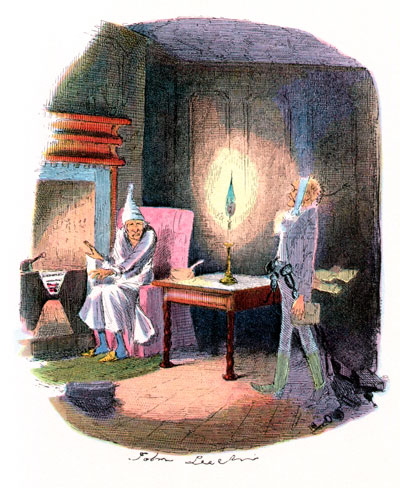
Marley tells Scrooge that he will be visited by three ghosts that night, the ghosts of Christmas Past, Present, and Future. The ghosts show Scrooge where he made mistakes in his past life due to choosing money over love and life, how his clerk and the Cratchit family are suffering because of his present day meanness, and show him a lonely future death. Scrooge is offered, and takes, an opportunity to change his ways and find redemption.
If you are interested in listening to A Christmas Carol beautifully read by Stephen Humphreys, you will find the links on Rebecca Budd’s blog: Clanmother: https://clanmother.com/2021/12/07/stephen-humphreys-reads-a-christmas-carol/
Wishing you all a Merry Christmas if you celebrate or Happy Holidays.
Although I cannot compare my take on Victorian child labour to Charles Dickens’ brilliant works, I have written several times about this and I thought I would share this short extract from my book, Through the Nethergate, about a serving girl in a tavern in Bungay in 1589.
“The rich, amber fluid flowed into the waiting tankard, in striking contrast to the damp, darkness of the barrel filled cellar.
The small, frail girl stood with the tankard in her trembling hand. She was hungry, thirsty and cold. She hadn’t had anything to eat or drink since last night’s frugal supper of leftovers in the Inn’s kitchen. A wave of dizziness washed over her as she contemplated the drink. Its golden depths seemed to entrance her as she lifted it to her lips.
At least the kitchen was warm, she thought, remembering the delicious heat of the enormous, roaring fireplace. The kitchen was a much better place to steal a moment of rest than this freezing cold
cellar, in the bowels of the building.
The strong, rich taste of the ale brought a smile to the girl’s pale face. She greedily drained the tankard, closing her eyes and allowing a feeling of well-being to permeate through her skinny, undernourished body. The girl, called Lizzie, worked as a servant at the pub and she was twelve years old.
She knew she should be grateful for the job, but it was hard to forgive the heavy-handed punishments metered out to her by Will, the owner of the establishment.
A rough hand grasped her shoulder, its thick fingers digging viciously into her flesh.
“What have you done?” the loud, grating voice of Will blasted through her euphoria.
Lizzie jerked with fear and the tankard fell from her fingers, clattering to the stone floor before rolling away.
She looked up into piggy eyes staring out of a fat and well-fed face. Will’s usually florid complexion looked even ruddier and coarser than usual.
“Why, you little thief,” continued Will. “You know what we do with thieves in this Inn.”
A short while later, Lizzie found herself chained to the wall of the cellar. Her pleas and cries for mercy had fallen on deaf ears as Will, filled with righteousness and piety at her ungodly action, attached the manacles to her wrists and ankles.”
__________________________________________________________________________________________________________
Want to be sure not to miss any of Robbie’s “Dark Origins” segments? Subscribe to Writing to be Read for e-mail notifications whenever new content is posted or follow WtbR on WordPress. If you found it interesting or entertaining, please share.
Share this:

Dark Origins – Peter Pan, Lost Boys who are murdered and mermaids who are Sirens.
Posted: August 25, 2021 Filed under: Classics, Dark Fantasy, Dark Origins, Pirate Fantasy, Stories, Writing | Tags: Dark Origins, Folklore, Peter Pan, Roberta Eaton Cheadle, Writing to be Read 42 CommentsMost of us know the Disney version of Peter Pan featuring Captain Hook, Mr Smee, Wendy, John, Michael, and the Lost Boys. Oh, and Tinkerbell, of course.
I am not sure how many people have read the original play called Peter Pan or the boy who wouldn’t grow up, written by J.M. Barrie in 1904, but it is a far cry from the innocent tale presented by Walt Disney.
We know from the Disney film that Peter Pan doesn’t want to grow up, but no mention is made of the extreme lengths Peter Pan is prepared to go to fight it.
Consider this extract: “The boys on the island vary, of course, in numbers, according as they get killed and so on; and when they seem to be growing up, which is against the rules, Peter thins them out; but at this time there were six of them, counting the twins as two.“
To put it bluntly, Peter Pan kills the lost boys to keep them from aging. While the film presents the view that Peter Pan is seeking eternal youth, he is, in fact, obsessed with death. This characteristic is believed to come from J.M. Barrie’s own childhood experience of losing his brother, David.
According to an article in The Herald, six-year old Jamie Barrie was hugely impacted by the death of his older brother, David, at the age of fourteen. David was said to have died the day before his birthday when he was accidently knocked over by a friend while skating, and fractured his skull on the ice. The article speculates that the ‘friend’ was in fact, young Jamie and that he was rejected by his mother as a result of the accident. You can read more about it here: https://www.heraldscotland.com/default_content/12469608.tragedy-behind-neverland-jm-barrie-cause-brothers-death/
And then there are the mermaids…
In the original Peter Pan story, the mermaids who inhabit Neverland all live in the lagoon. They enjoy the company of Peter Pan but are malevolent to everyone else. The are extraordinarily beautiful and have amazing singing voices, but they are vain and unfriendly.
The mermaids spend their days playing in the rock pools and ocean around Marooners’ Rock and they retire to their coral cave homes beneath the waves at night and during high tide.
The mermaids change when the moon is out and transform into darker creatures. They utter and wail strange calls in the moonlight. Captain Hook is terrified of the mermaids, calling them the ‘loreleis’ and saying that the lagoon is the most treacherous place in Neverland. A lorelei is a siren of Germanic legend whose singing lures Rhine River boatmen to destruction on a reef.

If you are interested in the true story behind Peter Pan and the life of J.M. Barrie, you can read more here: https://www.refinery29.com/en-us/2014/12/78880/peter-pan-jm-barrie-true-story
About Roberta Eaton Cheadle
Roberta Eaton Cheadle is a South African writer and poet specialising in historical, paranormal, and horror novels and short stories. She is an avid reader in these genres and her writing has been influenced by famous authors including Bram Stoker, Edgar Allan Poe, Amor Towles, Stephen Crane, Enrich Maria Remarque, George Orwell, Stephen King, and Colleen McCullough.
Roberta has short stories and poems in several anthologies and has 2 published novels, Through the Nethergate, a historical supernatural fantasy, and A Ghost and His Gold, a historical paranormal novel set in South Africa.
Roberta has 9 children’s books published under the name Robbie Cheadle.
Roberta was educated at the University of South Africa where she achieved a Bachelor of Accounting Science in 1996 and a Honours Bachelor of Accounting Science in 1997. She was admitted as a member of The South African Institute of Chartered Accountants in 2000.
Roberta has worked in corporate finance from 2001 until the present date and has written 7 publications relating to investing in Africa. She has won several awards over her 20-year career in the category of Transactional Support Services.
Find Roberta Eaton Cheadle
Blog: https://wordpress.com/view/robertawrites235681907.wordpress.com
Twitter: https://twitter.com/RobertaEaton17
Facebook: https://www.facebook.com/robertawrites
Amazon: https://www.amazon.com/Roberta-Eaton-Cheadle/e/B08RSNJQZ5
_____________________________________________________________________________________________
Want to be sure not to miss any of Robbie’s “Dark Origins” segments? Subscribe to Writing to be Read for e-mail notifications whenever new content is posted or follow WtbR on WordPress. If you found it interesting or entertaining, please share.
Share this:

Dark Origins – Hansel and Gretel
Posted: February 24, 2021 Filed under: Children's Books, Classics, Dark Origins, Fairy Tales, Fiction, Nursery Rhymes, Stories | Tags: Classic Literature, Dark Origins, Fairy Tales, Hansel and Gretel, Writing to be Read 33 CommentsMost people are familiar with the story of Hansel and Gretel, a German fairy tale collected by the Brothers Grimm and published in their Grimm’s Fairy Tales in 1812.
In summary, the story goes as follows:
Hansel and Gretel are a brother and sister whose starving parents decide to abandon them in the forest. Hansel overhears his parents plotting and drops pebbles on the path so that he and Gretel can find their way home later. The family’s plight does not improve and a short while later the mother [or stepmother depending on the version] persuades the father to take the children into the forest again and leave them there. This time, Hansel drops a trail of breadcrumbs but the birds eat them and the two children become lost in the forest.
The starving children come across a gingerbread house and they begin to break off bits and eat it. The house, however, is a trap set by a wicked witch who captures the children, enslaves Gretel and locks Hansel in a cage. She sets about fattening Hansel up so that she can eat him.
Gretel saves Hansel by shoving the witch into the oven which she has heated up in order to cook Hansel. The pair escape and manage to find their way home with the witch’s treasure. In the meantime, their mother [or stepmother] has died and their father is a broken man having abandoned his beloved children. The family live happily ever after.
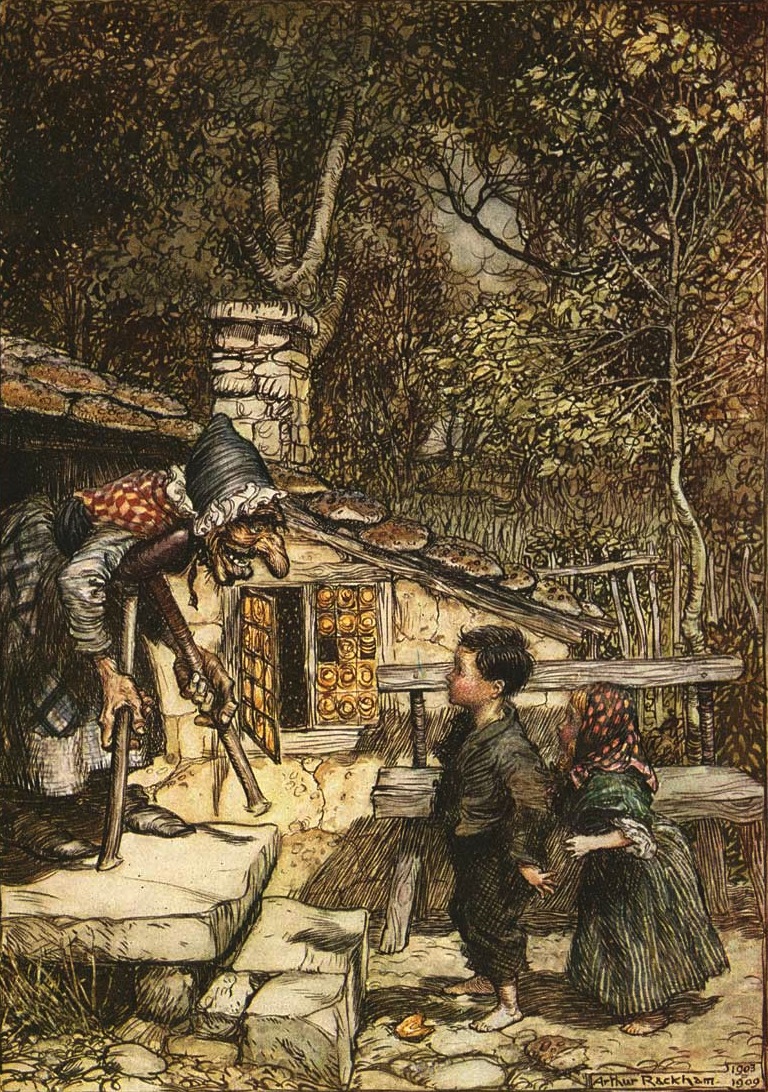
The real history behind this already rather grim story, is even more grim.
The true story of Hansel and Gretel may have its roots in the great flood and great famine of 1314. 1314 was a year of continuous rain and this continued throughout 1315 and 1316. The wet conditions resulted in crops rotting in the ground, harvests failing and livestock drowning or starving. Food prices increased dramatically as a result of severe food shortages.
The great famine is estimated to have effected 400,000 square miles of Europe, 30 million people and to have resulted in the deaths of up to 25 percent of the population in certain areas.
The famine was so bad that during the winter of 1315/1316, the peasants resorted to eating the seed grain they had stored for planting in the spring. People resorted to begging, stealing and even murder in their quest for food. Parents abandoned their children to fend for themselves and their were rumours of cannibalism. An Irish chronicler wrote that people “were so destroyed by hunger that they extracted bodies of the dead from cemeteries and dug out the flesh from the skulls and ate it, and women ate their children out of hunger.”
In the story of Hansel and Gretel, the pair are taken into the forest by their father and abandoned. They are taken in by an old woman living in a cottage. When the old woman starts to heat the oven, the children realise she is planning to roast and eat them. Gretel tricks the woman into opening the oven and pushes her inside.
It is interesting to note that this time of famine coincided with the end of the medieval warm weather period and the beginning of the little ice age. The changing climate with its cooler and wetter summers and earlier autumn storms damaged the harvests. Given the strange wet and cool summer South African is experiencing, coupled with severe cold in the northern hemisphere, this really is food for thought.
Another grim early tale along the lines of Hansel and Gretel is a Romanian story called The Little Boy and the Wicked Stepmother. You can read this story here: http://www.planetofbirds.com/the-story-of-the-little-boy-and-the-wicked-step-mother
The story of Hansel and Gretel was the inspiration for my recent twisted fairy tale Covid-19 cake which featured a gingerbread house and a witch who is trying to keep children out after they are declared to be vectors for the virus.

About Roberta Eaton Cheadle


Roberta Eaton Cheadle has published nine children’s books under the name of Robbie Cheadle. She has branched into writing for adults and young adults and, in order to clearly separate her children’s books from her adult books, is writing for older readers under the name Roberta Eaton Cheadle.
Her supernatural stories combine fabulous paranormal elements with fascinating historical facts.
Supernatural fantasy YA novel:
Through the Nethergate
Horror Anthologies (edited by Dan Alatorre):
Spellbound
Nightmareland
Dark Visions
Paranormal Anthologies (edited by Kaye Lynne Booth):
Spirits of the West
Whispers of the Past
Murder mystery Anthology (edited by Stephen Bentley)
Death Among Us
Find Roberta Eaton Cheadle
Blog: https://wordpress.com/view/robertawrites235681907.wordpress.com
Twitter: https://twitter.com/RobertaEaton17
Facebook: https://www.facebook.com/robertawrites
Amazon: https://www.amazon.com/Roberta-Eaton-Cheadle/e/B08RSNJQZ5
_____________________________________________________________________________________________
Want to be sure not to miss any of Robbie’s “Dark Origins” segments? Subscribe to Writing to be Read for e-mail notifications whenever new content is posted or follow WtbR on WordPress. If you found it interesting or entertaining, please share.