Treasuring Poetry: Meet poet and author Abbie Taylor
Posted: March 16, 2022 Filed under: Book Review, Books, Interview, Poetry, Review, Treasuring Poetry | Tags: Abbie Taylor, Author Interview, Book Review, How to Make a Better Musetrap, Poetry, Robbie Cheadle, The Red Dress, Treasuring Poetry, Writing to be Read 47 Comments
Today, I am delighted to introduce poet and author, Abbie Taylor, to discuss her favourite poems and poetry in general.
Which of your own poems is your favourite?
“The Bedroom” is one of those red herring poems that makes you think it’s about one thing, then turns out to be about another. It illustrates how much my late husband Bill depended on me after suffering two strokes that paralyzed his left side. It’s my favorite because even today, almost ten years after his passing, I’m amazed that I was able to meet his needs for six years after his strokes, despite my limited vision. Here’s the poem:
The Bedroom
At three in the morning,
I’m mildly aroused
by the gentle touch of his hand.
He only has one good arm and leg
but still knows how to please me.
As he strokes me,
and I breathe the scent of his sweat,
I purr with anticipation.
The mood is shattered
when he whispers, “I need to pee.”
What inspired you to write this particular poem?
Every night, after I brought Bill home from the skilled nursing facility, where he recuperated after his strokes, he woke me at least once, sometimes more than once, during the night, because he needed assistance to sit on the side of the bed and use a urinal. He was never demanding during this time. He gently woke me by rubbing my back and shoulders. Once I was fully awake, he said, I need to pee.” After he heard me read the poem during a public event, when he woke me, he would say, “What does your poem say I have to do?” Eventually, he was able to use the urinal in bed without sitting up first. So, all I had to do was get up and empty the urinal periodically, which made life a lot easier.
What are your plans for your poetry going forward?
I don’t have any definite plans. I’ve put together several collections but haven’t had much time to do anything with them. I imagine I’ll eventually publish them.
What is your favourite poem?
I’m assuming you want to know about my favorite poem by another author. Well, that would be “The Lanyard” by Billy Collins. Here it is, along with a link to a video of him reading it.
The Lanyard
BY BILLY COLLINS
The other day I was ricocheting slowly
off the blue walls of this room,
moving as if underwater from typewriter to piano,
from bookshelf to an envelope lying on the floor,
when I found myself in the L section of the dictionary
where my eyes fell upon the word lanyard.
No cookie nibbled by a French novelist
could send one into the past more suddenly—
a past where I sat at a workbench at a camp
by a deep Adirondack lake
learning how to braid long thin plastic strips
into a lanyard, a gift for my mother.
I had never seen anyone use a lanyard
or wear one, if that’s what you did with them,
but that did not keep me from crossing
strand over strand again and again
until I had made a boxy
red and white lanyard for my mother.
She gave me life and milk from her breasts,
and I gave her a lanyard.
She nursed me in many a sick room,
lifted spoons of medicine to my lips,
laid cold face-cloths on my forehead,
and then led me out into the airy light
and taught me to walk and swim,
and I, in turn, presented her with a lanyard.
Here are thousands of meals, she said,
and here is clothing and a good education.
And here is your lanyard, I replied,
which I made with a little help from a counselor.
Here is a breathing body and a beating heart,
strong legs, bones and teeth,
and two clear eyes to read the world, she whispered,
and here, I said, is the lanyard I made at camp.
And here, I wish to say to her now,
is a smaller gift—not the worn truth
that you can never repay your mother,
but the rueful admission that when she took
the two-tone lanyard from my hand,
I was as sure as a boy could be
that this useless, worthless thing I wove
out of boredom would be enough to make us even.
Why do you like this poem?
In a humorous way, it emphasizes the idea that our mothers do so much for us but we feel we don’t do enough for them.
About Abbie Taylor

Abbie Johnson Taylor is the author of three novels, two poetry collections, and a memoir. Her work has appeared in The Avocet and Magnets and Ladders. She lives in Sheridan, Wyoming, where, for six years, she cared for her totally blind late husband who was partially paralyzed by two strokes soon after they were married. Before that, she worked for fifteen years as a music therapist in nursing homes and other senior facilities. During that time, she also facilitated a support group for blind and visually impaired adults, taught Braille, and served on the advisory board to a state trust fund providing adaptive equipment to blind and visually impaired children and adults.
Contact Abbie Taylor
Website: https://www.abbiejohnsontaylor.com
Blog: https://abbiescorner.wordpress.com
Facebook: https://www.facebook.com/Abbies-Corner-of-the-World-988391584616528/
Amazon: https://www.amazon.com/Abbie-Johnson-Taylor/e/B00GDM1BWK/#nav-tophttp://
My review of The Red Dress by Abbie Taylor

The Red Dress is a lovely novel about a woman, Eve Sawyer, who has become a best selling author and has a devoted husband and three children, but who has never been able to move on from an unfortunate incident in her younger years when, in a fit of embarrassed irritation, she gave away the red dress that her mother had made for her to wear to her prom. Although Eve was goaded by her selfish roommate, Charlene, into giving her the dress, her mother has never forgiven her for this transgression and it has impacted heavily on their relationship. Her mother is now suffering from dementia and is being cared for in a home for the elderly, but she still remembers that Eve gave away this dress and holds it against Eve.
Eve wore the dress to her prom and she associated the dress with bad memories as her date had disappeared with her best friend, Adele, and she had found them in a compromising position in the back of his father’s car. Eve cuts Adele out of her life and has not contacted her in many years, even though Adele had returned to their home town to raise her son, conceived on the night of the prom.
The story starts with Eve receiving a Facebook request to connect with her old roommate, Charlene. She accepts the request, although she had doubts because she didn’t like Charlene. Before long, her daughter, Ashley, is in touch with Charlene’s daughter, Brenda, and the situation is irreversible. Eve is having her own problems with overwork and issues with her older daughter, Julie, who feels neglected as a result. Her husband is also irritated with her because he feels she favours their younger daughter and son and is harsh with Julie.
This is a story that tackles the themes of working mothers, unresolved grudges and situations from the past, raising teenage children, forgiveness, terminal illness, and death. The author does a good job of sharing Eve’s frustration at her mother and older daughter, irritation at Charlene for the trouble she has caused her, and hurt at Adele’s betrayal of their friendship.
Eve has to confront her negative emotions to resolve these lingering troublesome relationship issues from her past and move on with her future.
I enjoyed the character of Eve and found her to be realistic and relatable. Her situation vividly establishes the difficulties that can result from unsettled emotional problems from the past and juggling work and motherhood.
I enjoyed this story and would recommend it to readers of family dramas.
What Amazon says
When Eve went to her high school senior prom, she wore a red dress that her mother had made for her. That night, after dancing with the boy of her dreams, she caught him in the act with her best friend. Months later, Eve, a freshman in college, is bullied into giving the dress to her roommate. After her mother finds out, their relationship is never the same again. Twenty-five years later, Eve, a bestselling author, is happily married with three children. Although her mother suffers from dementia, she still remembers, and Eve still harbors the guilt for giving the dress away. When she receives a Facebook friend request from her old college roommate and an invitation to her twenty-five-year high school class reunion, then meets her former best friend by chance, she must confront the past in order to face the future.
Purchase The Red Dress
My review of How to Build a Better Mousetrap: Recollections and Reflections of a Family Caregiver (Poetry)

How to Build a Better Mousetrap is a memorable book of poetry which covers two distinct time periods in the author’s life.
Part 1: On Being a Family Caregiver, revolves around the poet’s role as caregiver to her husband following his having two strokes, a year apart, and becoming partially paralysed.
The second section section of the book comprises of Part 2: Recollections, Part 3: Reflections and Part 4: In the End which describes through the medium of freestyle poetry, the various states of the poet’s life from her early childhood through to her old age. There is little mention throughout the book of the author’s visual impairment, but I am aware of it as I have previously read an anthology, Understanding edited by Stevie Turner, that disclosed this information.
The poetry in this book is compelling and quite fascinating in its honesty as the poet ventures to express feelings and emotions that many people might seek to hide. It is refreshing to read expressions of helplessness and even the occasional anger and resentment towards a set of circumstances that have so drastically and unexpectedly impacted on the poet’s life. These emotions are overwhelmed by the poet’s clear devotion and love for her partner.
These verses from three different poems in this collection illustrate this internal conflict:
“In the beginning, you knew all about me
which buttons to push,
how to hook me up,
install programs, fix problems.
Now, you hesitate,
push the wrong buttons.
When I don’t give you the desired response,
you beat my keyboard, proclaim I don’t work.”
From Before and After
“I open my eyes,
gaze upon his sweet sleeping face,
long to hold, kiss him,
caress his hair, his cheek.”
from Awakening
“I’ll never tell you you’re stupid
when you forget something or don’t understand.
I’ll never tell you you’re lazy
when you sit at the kitchen table in your wheelchair
while I fix dinner, clean up.
I’ll never tell you you’re a baby
when I must do most things for you.”
from Things I’ll Never Tell You
What Amazon says
In January of 2006, Abbie Johnson Taylors husband suffered a stroke that left him paralyzed on his left side. After months of therapy in a nursing facility, he returned home in September of that year. Although he still had little use of his left arm and leg, it was hoped that through outpatient therapy, he would eventually walk again. In January of 2007, he suffered a second stroke that wasnt as severe, but it was enough to impact his recovery. In August of that year, his therapy was discontinued because he showed no progress. He has never walked since.
The first five poems tell the story of how Taylor found her husband when he suffered his first stroke, detail events in the first few months afterward, and describe Taylor and her husbands reactions. The rest of the poems in the first part were inspired by Taylors experiences while caring for her husband. Covering such topics as dressing, feeding, toileting, their relationship, and his computer, they often provide a humorous outlook. Some poems are from the husbands point of view. Poems in the next two parts cover childhood memories and other topics. The last section of poems was inspired by Taylors fifteen years of experience as a registered music therapist in a nursing home before marrying her husband.
Purchase How to Build a Better Mousetrap: Recollections and Reflections of a Family Caregiver
About Robbie Cheadle

Robbie Cheadle is a South African children’s author and poet with 9 children’s books and 2 poetry books.
The 7 Sir Chocolate children’s picture books, co-authored by Robbie and Michael Cheadle, are written in sweet, short rhymes which are easy for young children to follow and are illustrated with pictures of delicious cakes and cake decorations. Each book also includes simple recipes or biscuit art directions which children can make under adult supervision.
Robbie has also published 2 books for older children which incorporate recipes that are relevant to the storylines.
Robbie has 2 adult novels in the paranormal historical and supernatural fantasy genres published under the name Roberta Eaton Cheadle. She also has short stories in the horror and paranormal genre and poems included in several anthologies.
Robbie writes a monthly series for https://writingtoberead.com called Growing Bookworms. This series discusses different topics relating to the benefits of reading to children.
Robbie has a blog, https://robbiesinspiration.wordpress.com/ where she shares book reviews, recipes, author interviews, and poetry.
Find Robbie Cheadle
Blog: https://www.robbiecheadle.co.za/
Blog: robbiesinspiration.wordpress.com
Twitter: BakeandWrite
Instagram: Robbie Cheadle – Instagram
Facebook: Sir Chocolate Books
______________________________________________________________________________________________
Want to be sure not to miss any of Robbie’s “Treasuring Poetry” segments? Subscribe to Writing to be Read for e-mail notifications whenever new content is posted or follow WtbR on WordPress. If you found it interesting or entertaining, please share.
Share this:

Writer’s Corner – Five Podcasts Serious Indie Authors Won’t Want to Miss
Posted: March 7, 2022 Filed under: book marketing, Book Promotion, Branding, craft, Editing, marketing, Podcasts, Writing, Writing Tips | Tags: Book Promotion, Grammar Girl, Kaye Lynne Booth, Kevin J. Anderson, marketing, Podcasts, Publishing, Quick and Dirty Tps, Six Figure Authors, The Creative Penn, The Self Publishing Formula, Writer's Corner, Writing, Writing Excuses, Writing to be Read 5 Comments
In my publishing courses at Western State Colorado University, my instructors and mentors, Kevin J. Anderson and Allyson Longuiera have introduced us to several useful podcasts for independent authors and/or publishers and I’d like to share them with you here.
Writing Excuses : https://writingexcuses.com/2021/03/07/16-10-paying-it-forward-with-kevin-j-anderson/
Hosts Dan Wells, Mary Robinette Kowal, Peng Shepard, and Howard Taylor offer up tips and writing advice, mainly on craft. This podcast provides short sessions, they claim 15 minutes, but the session for the link above is closer to 30. It’s an interview with Kevin J. Anderson about paying it forward, and it’s really good, so I tought you all might enjoy it. Kevin started out with traditional publishing way back when, but has now established his own independent press in WordFire Press, so he speaks to both sides of the industry, and this interview is proof that whether published traditionally or independently, authors are a good bunch. I’m proud to be counted amoung this tribe.
But the episodes really are brief, so take a little time and explore the site. They have many interesting topics of value to authors at all stages of their career. Here’s the main page link: https://writingexcuses.com/
Six Figure Authors: https://6figureauthors.com/
With hosts Lindsay Baroker, Joe Lallo and Andrea Pearson, this podcast offers publishing and marketing tips, more than craft advice, but as six figure authors, they are crushing it and they are willing to share their advice with their listeners. I enjoy binging back episodes on my lengthy commute to and from my day job. They have a Facebook group which listeners can join, where they can pose questions to the hosts or their guests to be answered on the podcast. Lots of valuable information for authors here, whether just starting out or if you’ve been at it for a while.
The Creative Penn: https://www.thecreativepenn.com/podcasts/
I love this podcast! Host Joanna Penn (with a double N), is an author/enterprenuer and a futurist. Her podcast is filled with interviews and discussion about industry trends and where things might be headed. She’s got a killer accent which makes her fun to listen to, too.
The Self Publishing Formula: https://selfpublishingformula.com/spf-podcast/
Host Mark Dawson is a best selling independent author provides interviews and master classes on self-publishing. He and his co-host, James Blatch both have accents that are heavier and more difficult for me to understand, but they do offer up some valuable information on the independent publishing world.
Quick and Dirty Tips: https://www.quickanddirtytips.com/grammar-girl
This is every writers go-to podcast for all of your grammer questions, with Grammar Girl, Mignon Fogarty, who discusses proper grammar and common grammar mistakes. A quick reference for all grammar questions you are unsure of during writing and editing processes.
_____________________________________________________
Like this post? Let me know in the comments. You can be sure not to miss any of Writing to be Read’s great content by subscribing to e-mail or following on WordPress. If you found this content helpful or entertaining, please share.
Share this:

Day 2 of the WordCrafter “Chocolate Fudge saves the Sugar Dog” Book Blog Tour – Author Interview & My Review
Posted: March 1, 2022 Filed under: Blog Tour, Books, Children's Books, Fiction, Poetry, Stories | Tags: Children's Books, Chocolate Fudge saves the Sugar Dog, Fondant Illustrations, Michael Cheadle, Robbie Cheadle, Sir Chocolate, Sir Chocolate book series, WordCrafter Book Blog Tours 74 Comments
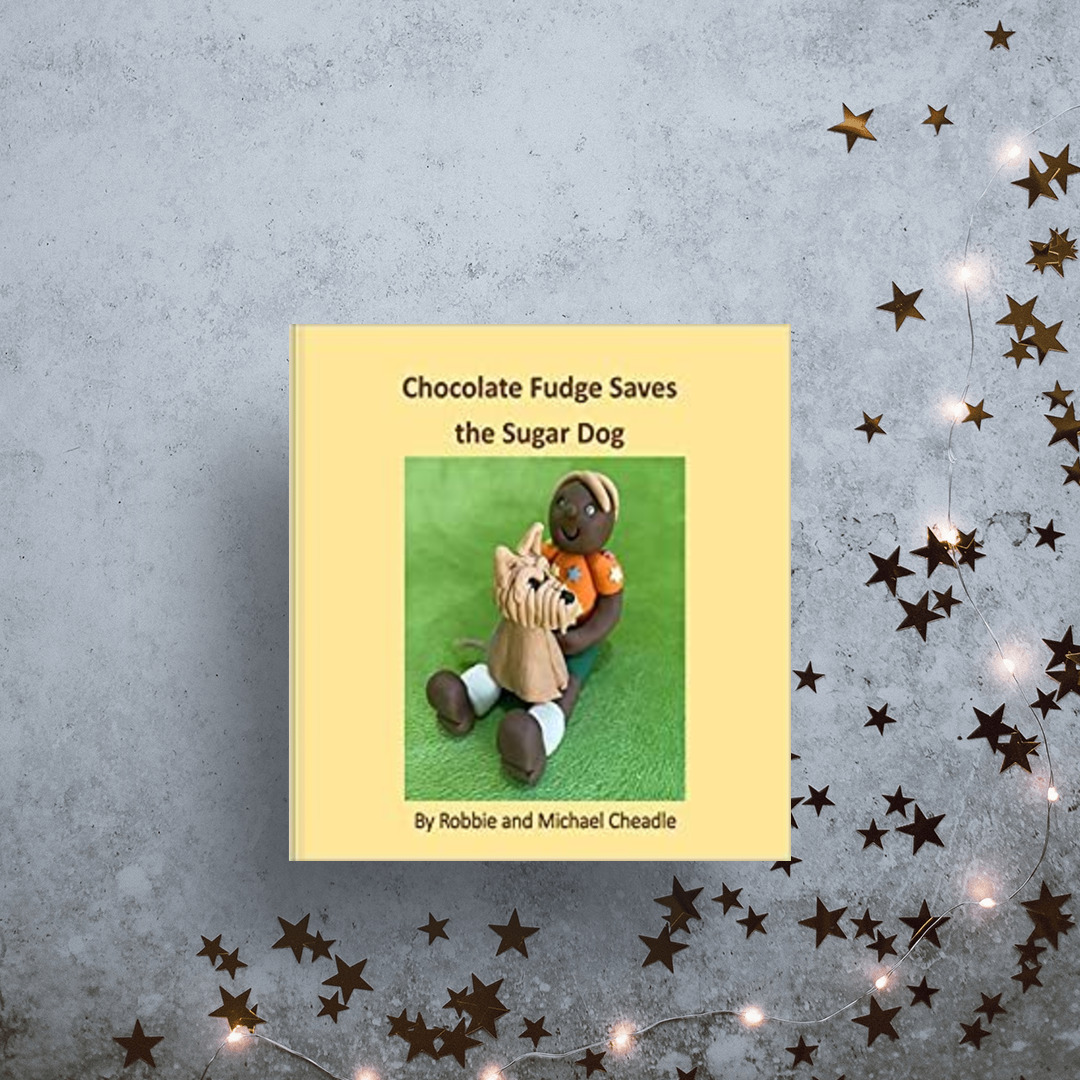
It’s day two of the WordCrafter Chocolate Fudge saves the Sugar Dog Book Blog Tour, and today I’m bringing you my review of this wonderful little book. Robbie and her son Michael co-write the Sir Chocolate books, illustrated with lovely fondant scenes and filled with delectable recipes which will make your tummy rumble. Many of us know Robbie and are familiar with her “Growing Bookworms” blog series and the Sir Chocolate books, so today I’d like to bring you and interview with her son and co-author, Michael Cheadle and share my review of Chocolate Fudge saves the Sugar Dog.

Author Interview
Kaye: How old are you, Michael?
Michael: I am 16 years old.
Kaye: How long have you been writing Sir Chocolate books with your mom?
Michael: Mom and I started writing the Sir Chocolate books when I was 7 years old and in Grade 1 at school.
Kaye: Being such a young author is quite an accomplishment. Does it make you a celebrity among your friends?
Michael: No, I have not told my high school friends about my books. It just hasn’t come up.
Kaye: Do you help your mom with the baking for the books, too?
Michael: I used to make a fondant creation for inclusion in the books although I haven’t done that for the most recent two books in the series. I don’t do fondant art anymore. I do enjoy baking with my mom and now I also cook with either mom or dad depending on who is doing the cooking that day.
Kaye: What do you like most about writing the Sir Chocolate books?
Michael: I enjoy thinking up a fun storyline with my mom and deciding on new and interesting characters for inclusion in the stories.
Kaye: What is the most difficult part of being a co-author with your mom for you?
Michael: My mom doesn’t always listen to my ideas and sometimes she changes them which can be annoying for me.
Kaye: Chocolate Fudge saves the Sugar Dog is the eighth book in the Sir Chocolate series. Which one is your favorite and why?
Michael: Sir Chocolate and the Sugar Crystal Cave story and cookbook is my favourite. I liked learning how to make sugar crystals. Mom and my first attempt to make the crystals was a failure because we didn’t let the water cool down enough before we inserted the sugar-coated sticks in the sugar mixture. The sugar on the sticks melted and no crystals formed. We redid the experiment and it worked very well.
Kaye: Do you think you might write books of your own when you are older?
Michael: Yes, I think I might write in the future. I have lots of ideas for stories.
Kaye: What are your aspirations for your future?
Michael: I want to go to university to study a Bachelor of Science: Computer Science like my brother, Gregory. I will write in my spare time like my mom does.
Kaye: What is the most important lesson gained from the collaborative writing experience?
Michael: I learned that if you put your mind to something, then you can achieve success in it. I wanted to write stories about a little man who lived in a world where you can eat everything. With my mom’s help, we have created Chocolate Land and all the creatures that live there and published 8 books in this series.
Kaye: Are you planning more Sir Chocolate books in the future?
Michael: Mom and I have a few books that are already written. My mom does most of the illustrations so it will depend on her and whether she wants to do more fondant and cake art. I think she will and the books will be published.
I want to thank Michael for agreeing to this interview. I think he provided some wonderful answers. It’s great to chat with an aspiring young author, and delightful to learn that Chocolate Fudge saves the Sugar Dog wont be the last in the Sir Chocolate book series.

My Review
I’m a huge fan of Dr. Suess, and the cadence and ryhming in the verse written by Robbie and Michael Cheadle is reminiscent of that found in the lovely books from Dr. Suess, so of course, I loved Chocolate Fudge saves the Sugar Dog. And then there is the beautiful illustrations created by the talented Robbie with fondant figurines making up the lovely scenes described in the verse, which let the story unfold before your eyes. (They may make you hungry too, because they look deliciously sweet.) One I found especially endearing is the scene for the actual rescue of the Sugar Dog, where Chocalate Fudge is emerged in the hot chocolate pond.
The extra added feature that the Cheadle books include which Dr. Suess never thought to include is the wonderful recipes, and the accompanying photo illustrations for each one are sure to make whet your appetite. Included in Chocolate Fudge saves the Sugar Dog, are recipes for scrumptious peanut butter cookies, delectable Oreo cupcakes, mouth-watering avacado and bacon scones, poured fondant icing, and chocolate chip shortbread dipped in chocolate. Yummy!
Chocolate Fudge saves the Sugar Dog is a delightful children’s book with delicious recipes sure to please both young and old. I give it five quills.
Purchase links
Paperback: https://tslbooks.uk/product/chocolate-fudge-saves-the-sugar-dog/
Paperback: https://www.amazon.com/Chocolate-Fudge-Saves-Sugar-Dog/dp/1914245547
________________________________________________________________
Thanks for dropping by and helping us celebrate the release of Robbie and Michael’s wonderful new book, Chocolate Fudge saves the Sugar Dog. In case you missed the opening day, yesterday on “The Showers of Blessings” with a post by Robbie and a review by blog host, Miriam Hurdle, you can still read it here.
I hope you all will continue to follow the tour, because we’ve got some great things planned for each blog stop. Tomorrow’s stop features an interview with Robbie and we have at least two more reviews coming, too, in addition to Robbie’s wonderful posts on Thursday and Friday. I hope to see you there.
________________________________________________________
Book your WordCrafter Book Blog Tour today!
Share this:

Writer’s Corner: Researching down a rabbit hole
Posted: February 21, 2022 Filed under: Books, Western, Women's Fiction | Tags: Colorado History, Delilah, Doc Holliday, Glenwood Springs, LEadville, research, Writer's Corner, Writing to be Read 3 CommentsI just took a short trip to Glenwood Springs, Colorado; one of many that I have taken in search of the truth about Doc Holliday; a curiosity that began while doing research for Delilah back in 2016. At the time, I found evidence connecting Doc Holliday with the mining camp of Leadville, where that story ends up, and I used that in my story line to give it authenticity. I learned a lot about John Henry (Doc) Holliday, but I also found a lot of facts which are conflicting, and those conflicts have tickled at my brain ever since.
Many of the facts which are not to be disputed are John Henry Holliday’s birthplace and date: Griffin, Georgia on August 14, 1851. In addition it is known that he attended the Pennsylvania College of Dental Surgery, but before he could get his practice well established, he was diagnosed with consumption, what we know of today as tuberculosis, ruining a promising career when no one wanted to be treated by “a lunger”, so headed out west to be a gambler, which was considered a legitimate way to earn a living in those days, similar to that of a professional poker player today, as differentiated from a gambler.
But it wasn’t until the 1881 events in Tombstone Arizona and the “shoot-out at the O.K. Corral”, involving Doc Holliday and the infamous Earp brothers that his noteriaty grew into legendary proportions. months to seek relief from the reported health benefits of the natural mineral hot springs and vapor caves located there. In those days there were close to fifty hot springs running up and down the banks of the Grand River (now known as the Colorado River), as this was before Walter Devereaux purchased the townsite of Glenwood Springs and secured funding to build The Hotel Colorado and The Hot Springs Pool, as well as the city’s first power plant in 1892.
Glenwood Springs is where Doc died in 1887. It is there that he was supposedly buried, although there are claims that the hillside cemetary was flooded and several graves were washed out into the streets below and bodies scattered, so that no one really knew whose bodies were reburied where, leaving the exact location of Doc’s final resting place a bit of a mystery. A more recent addition to the cemetary is a sign suggesting that because he was destitute and could no longer hold a job as a dealer in one of the saloons, that he may have been buried further up the hillside in the pauper’s graveyard where many were buried with no headstone. I find this assertion to be highly unlikely, and assume this sign was made in an attempt to deter vandalism.

Sign at the bottom of the trailhead to the hillside Linwood Cemetary in Glenwood Springs, Colorado.
When talking to the locals, I learned that vandalism has been a problem for the cemetary and particularly for the grave of the infamous dentist, gambler and gunman, and the headstone which currently marks Holliday’s alleged gravesite in the Linwood Cemetary is the third headstone to mark the spot. The one prior to this one is displayed in Bullock’s Store, where the basement houses The Doc Holliday Museum with an interesting collection said to be connected to the man, as well as the only surviving pieces of the original building, which was destroyed in a fire in a 1945 fire. The building is in the loction where The Hotel Glenwood stood, Doc spent the last six months of his life, in a room on the third floor, destitute and dying of consumption. It is rumored that, broke and unable to work due to his failing health, and according to Bill Kight of the Glenwood Springs Historical Society, it is rumored that a friend, Walter Devereaux and his longtime companion, Mary Katherine Horony-Cummings, also known as Big Nose Kate, cared for him during his last days and were at his side when he died. (Glenwood Springs: The Official Insider’s Guide 2021-22, “Get to Know Doc Holliday”, by Bill Kight)


These are pictures of the older headstones that have since been removed from the Linwood Pioneer Cemetary. You can tell how old they are because of the grainy quality of the photos. The one on the right is now on display at Bullock’s Store. There was too much snow to make the trek up to the hillside cemetary on this trip, so I wasn’t able to get a picture of the current headstone.
A few doors down on the block from Bullock’s is Doc Holliday’s Saloon. I couldn’t find any evidence that there was any real connection to Doc here, but they serve good food and historical atmosphere make it a favorite of mine whenever I visit Glenwood Springs. It’s a great place to relax and enjoy a rib-eye sandwich and a game or two of billiards. Nobody said a research trip has to be all work and no play.

It seems a little bit ironic that Glenwood plays up the association with Doc and Leadville doesn’t, knowing that he spent much more time in Leadville than Glenwood Springs, where Doc visited in hopes of improving his health to make his last days a bit more comfortable. Another irony of this move was that the moisture of the waters and the steam, as well as the altitude, would have actually been detrimental to his failing health, which is why Doc did better in the desert atmosphere of Arizona, but he was forced to flee and seek sanctuary in Colorado, due to being wanted for murder after the Tombstone affair. (Gary L. Roberts, True West Magazine, “Doc Holliday’s Lost Colorado Years”, June 2013)

The story of Delilah takes place during the time when Doc would have been in Arizona, but Doc had visited Leadville prior to that and so he received a mention in my book, although he wasn’t present in the story. Delilah takes place in a very small time in Colorado’s vast history which I used bits and pieces of in my story, but there is much more history that the story didn’t cover, so don’t be surprised if Doc Holliday shows up in person in one of the books in the Women of the West Adventure Series, which Delilah may soon become a part of, now that I’ve spent all this time down a research rabbit hole.
Share this:

Treasuring Poetry – Meet poet and artist, Smitha Vishwanath
Posted: February 16, 2022 Filed under: Book Review, Books, Interview, Poetry, Review, Treasuring Poetry, Writing | Tags: Author Interview, Book Review, Roads: A Journey with Verses, Robbie Cheadle, Smitha Vishwanath, Treasuring Poetry, Writing to be Read 48 Comments
Which of your own poems is your favorite?
There are quite a few poems I like – some for the flow, some for the imagery and some for the memories they bring back with them, there’s one poem that has stood the test of time. It’s a poem I penned when my girls were one and three respectively. Seventeen years later, the girls have grown – each into young ladies with a distinct personality, but it’s beautiful how the description of them in the poem still holds true. It’s special because this poem is one thing that the girls agree about.
Tender Moments
I sneak silently into the room
A quick peak I take of my budding blooms
Their breathing soft – rises and falls, a melodious rhapsody
To the soothing sound of a Spanish symphony
Their countenance silken smooth; serene
Tugs my heart, an enticing scene
Each distinctly different, yet subtly the same
Contrasting as night and day; asleep, they look- Oh! So tame
Their striking silhouette, in the mellow moonlit night
Slightly stirring, they curl; enraptured I gaze at the sight
One’s creamy-white skin peeps from the warm woollen quilt above
And the other’s little chocolaty toe pushes its way from below
One, strong and athletic; the other, dainty and petite
Poles apart in every way; a miracle I behold, a divine treat
The window slightly ajar, lets in the wintry wind
Blowing their untied tresses over their satiny skin; I lean
O’er their tender frames, and sweep the bouncy, brown curls away
And the silk-smooth strands of the other, as in deep slumber they lay
Both unique, both special, both a part of me
Peas in a Pod, they are and shall forever be
What inspired you to write this poem?
I had walked into the children’s room one night, sometime in 2008; the girls were asleep. The curtains were drawn, and the moonlight cast a soft glow on them. I looked at them and I scribbled a version of the poem in my diary. However, it was only later, in 2017, that I reworked on the poem and published it on my blog for the NaPoWriMo prompt, ‘Write a poem that explicitly incorporates alliteration,’ on 12th April.
What are your plans for your poetry going forward?
I co-authored a poetry book ‘Roads- A Journey with Verses’ which was published in 2018. My poems have been published in various journals since then, but I haven’t got to publishing a solo book as yet. I’d like to do that, but I have a lot of starting trouble, and so, it’s taken me longer than I expected, to do it. Hopefully, I can do it this year.
What is your favorite poem?
It’s difficult to choose a favorite. I have quite a few that never fail to speak to me. However, if I have to choose it will be Emily Dickinson’s ‘Hope is a thing with feathers’ (copied from the poetry foundation)
“Hope” is the thing with feathers by Emily Dickinson
“Hope” is the thing with feathers –
That perches in the soul –
And sings the tune without the words –
And never stops – at all –
And sweetest – in the Gale – is heard –
And sore must be the storm –
That could abash the little Bird
That kept so many warm –
I’ve heard it in the chillest land –
And on the strangest Sea –
Yet – never – in Extremity,
It asked a crumb – of me.
Why do you like this poem?
No matter how many times I read it I can not help being in awe of the choice of words, the simplicity and most importantly, how easily and perfectly ‘hope’ is described. Every line in the poem is a gem and anyone who has ever experienced ‘hope’ will vouch for it.
Roads: A journey with verses
![ROADS : A Journey with Verses by [Vandana Bhasin, Smitha Vishwanath]](https://m.media-amazon.com/images/I/41bPyRdgWkL._SY346_.jpg)
What Amazon says
“Roads” is a poetic rendezvous that takes the reader on a panoramic journey, making one pause, ponder and celebrate life.
The book is a light, alluring read that instantly strikes a chord and elevates one’s spirits. A trove of 60 poems, it is quilled with beads of nine virtues: Courage, Wisdom, Serenity, Love, Hope, Strength, Joy, Compassion and Gratitude. The verses encapsulate life’s ebbs and flows while prompting the reader to enjoy its simple pleasures.
“Roads” is a book that you would want to keep on your bedside, for a quiet read before retiring for the night or for the morning wisdom to seize the day. With poems revolving around emotions that each of us experiences, “Roads” very easily develops a personal connect with the reader that is defiantly refreshing.
“Roads” is a journey with verses. Take it on yours.
My review
Roads: A Journey With Verses is a beautiful book of mainly freestyle poetry written by Smitha Vishwanath and Vandana Bhasin. I have read and enjoyed a lot of poetry on Smitha’s blog in the past, but this was my first introduction to Vandana’s poetry.
I thought this was a wonderful combination of work by two talented poets and I enjoyed the different styles of writing by the two contributors. Smitha writes delicately beautiful poems in which her messages are subtly shrouded as if within a loving cocoon of words. Vandana’s writing is more strident and forthright, but I enjoyed her style equally and her strong messages for women’s rights moved me greatly.
This book is divided into sections as follows: Courage, Wisdom, Serenity; Love, Strength, Compassion and Joy, Hope, Gratitude. Each section is divided into subsections setting out an arrange of delightful poems in each subcategory. Each subsection is introduced with a short introductory verse which conveys its meaning for the poets and each poem is introduced with a paragraph setting out the the meaning and purpose of the specific poem to the writer. I really enjoyed reading about the inspiration and meaning behind each poem.
A selection of my favourite verses from this book are as follows:
From the sub-section Strength –
Believe in yourself by Vandana Bhasin
“They’ll laugh at you, and even ridicule you
They’ll even endeavor to enervate your spirits
But let the force of their dissuasion empower your faith
and the sound of their derision echo your beliefs
Believe in yourself, even when none believes in you.”
From the sub-section Compassion –
Help! She’s calling by Smitha Vishwanath
“Her eyes shone a tear, her lips quivered with
fear; down her face ran a scar, like a spear.
Her leg bruised, her hand bleeding, she felt a
shooting pain.”
From the sub-section Joy –
Tender moments by Smitha Vishwanath
“Their countenance silken smooth; serene
Tugs my heart, an enticing scene
Distinctly different, yet subtly the same –
Contrasting as night and day; asleep, they look
– Oh! So tame
Their striking silhouette, in the mellow moonlit night
Slightly stirring, they curl; enraptured, I gaze at the sight
One’s creamy-white skin peeps form the warm woolen quilt above
And the other’s little chocolaty toe pushes its way from below
One, strong and athletic; the other, dainty and petite
Pole apart in every way; a miracle I behold, a divine treat.
From the sub-section Hope –
Wings of freedom by Vandana Bhasin
“Wings of freedom are all I need
I want to live and not just breathe
I want to fly high like a bird
I want to dream big, not chase the world”
Purchase Roads: A Journey with verse
About Smitha Vishwanath

Smitha Vishwanath is your quintessential ‘bored banker’ turned writer. After a rewarding career in Banking in the Middle East where she worked for leading banks in senior positions, she quit and moved to India in July 2018 with her husband who had been transferred to the country on an International assignment. Therein began her writing journey.
‘Roads’ is the first book she has co-authored. Having lived and studied in different countries and different states within India and worked with different cultures, Smitha understands that ‘change’ and ‘ups and downs’ are very much a part of life. It is this experience that reflects in her poems and her writing which are filled with positivity, acceptance and willingness to change for the better.
She also writes regularly through her blog : https://lifeateacher.wordpress.com
Smitha’s art
Smitha is also a wonderful painter. I wrote a blog post about one of her painting that I have hanging in my bedroom here: https://robbiesinspiration.wordpress.com/2021/07/10/a-new-painting/
You can find more of Smitha’s artwork here: https://www.spacesbysmithav.com/
About Robbie Cheadle
Robbie Cheadle is a South African children’s author and poet with 9 children’s books and 2 poetry books.
The 7 Sir Chocolate children’s picture books, co-authored by Robbie and Michael Cheadle, are written in sweet, short rhymes which are easy for young children to follow and are illustrated with pictures of delicious cakes and cake decorations. Each book also includes simple recipes or biscuit art directions which children can make under adult supervision.
Robbie has also published 2 books for older children which incorporate recipes that are relevant to the storylines.
Robbie has 2 adult novels in the paranormal historical and supernatural fantasy genres published under the name Roberta Eaton Cheadle. She also has short stories in the horror and paranormal genre and poems included in several anthologies.
Robbie writes a monthly series for https://writingtoberead.com called Growing Bookworms. This series discusses different topics relating to the benefits of reading to children.
Robbie has a blog, https://robbiesinspiration.wordpress.com/ where she shares book reviews, recipes, author interviews, and poetry.
Find Robbie Cheadle
Blog: https://www.robbiecheadle.co.za/
Blog: robbiesinspiration.wordpress.com
Twitter: BakeandWrite
Instagram: Robbie Cheadle – Instagram
Facebook: Sir Chocolate Books
______________________________________________________________________________________________
Want to be sure not to miss any of Robbie’s “Treasuring Poetry” segments? Subscribe to Writing to be Read for e-mail notifications whenever new content is posted or follow WtbR on WordPress. If you found it interesting or entertaining, please share.
Share this:

Review in Practice: “Mastering Amazon Descriptions” & “How to Write Fiction Sales Copy”
Posted: February 14, 2022 Filed under: Advertising, book marketing, Book Promotion, Copywriting, Fiction, Hooks, Writing | Tags: Book Review, Brian D. Meeks, Dean Wesley Smith, How to Write Fiction Sales Copy, Review in Practice, Writing to be Read 6 Comments
It’s not enough to just write the book.
Today’s author must be both writer and marketer. Authors in the the world of digital media and the rise of independent publishing are responsible for not only writing the book, but selling it, too. Even authors who are traditionally published are often responsible for a good portion of the promotional efforts.
These days, everyone knows that people can and do judge books by their covers. Most authors emphasize the importance of a a good book cover in selling books, but they’re talking about more than just the image and text on the front. Perhaps as important as that front cover, is the book’s description or blurb, found on the back cover for print books, or in your ebook’s meta-data.
A good book description’s job is to capture reader interest and make them want to know more,. Whether we’re talking about the hook of the first line, which must make you read on to the next sentence and then the next, or about the description as a whole, which must hook the reader, making them want to buy the book to learn the rest of the story, the book description is one of the most powerful tools we have at our disposal to sell books. According to Brian D. Meeks, a good book description has three elements: a powerful hook, engaging copy, and visually appealing formatting.
Mastering Amazon Descriptions
In Mastering Amazon Descriptions, Brian D. Meeks offers a formulaic plan for writing book descriptions that will sell books, including examples of description re-writes for books in varied genres. Although these descriptions are specified as Amazon descriptions, I’m sure this technique will work equally well with Kobo, or Barnes & Nobel, or even the Apple Store. By the time you’ve read through this book, you’ll be writing back cover copy like a pro, because Meeks’ method is simple enough that almost anyone can do it.
To prove it, I’ll share with you the re-write I did of the description for Delilah, which I am preparing for its re-release in the coming year.
Here is the original description:
“Brutally raped and left for dead, her fourteen-year-old ward abducted, Delilah’s homecoming from prison quickly turns into a quest for vengeance. Tough and gritty, sheer will and determination take her to the Colorado mining town of Leadville in her hunt for her attackers and the girl, Sarah. Somehow along the way, the colorful inhabitants of Leadville work their way into Delilah’s heart, giving her a chance for a future she thought she’d lost along with her innocence.”
Here is the description I wrote for the re-release before I read Mastering Amazon Descriptions:
Delilah is a woman haunted by her past. Her homecoming from prison quickly turns into a quest for vengeance when she is brutally raped and left for dead, and her fourteen-year-old ward is abducted. Sheer will and determination take this tough and gritty heroine up against wild beasts of the forest, Indians and outlaws to the Colorado mining town of Leadville, where the colorful inhabitants work their way into Delilah’s heart, offering a chance for a future she thought she’d lost along with her innocence.
Now, here is the description I wrote using Brian D. Meeks’ method:
Haunted by her past.
Raped and left for dead; her fourteen-year-old ward abducted.
Sheer will and determination take this tough and gritty heroine up against wild beasts of the forest, Indians and outlaws.
Can the colorful inhabitants of Leadville work their way into Delilah’s heart, offering a chance for a future she thought she’d lost along with her innocence?
I don’t think anyone would argue that this last description is an improvement. It has a better hook, shorter sentences, and leaves the potential reader with a question to make them want to learn more and read the book.
How to Write Fiction Sales Copy

How to Write Fictin Sales Copy, by Dean Wesley Smith offers three different formulas for writing back cover blurbs and sales copy, which are aimed toward a wide distribution, and several different approaches. Smith is an old pro in this writing game and he’s good at what he does, (which is write). While his methods are not as formulaic and are not specific to Amazon, they are never-the-less effective in posing unspoken questions about the book and making readers want to know more. Smith also offers 32 actual story blurbs as examples in multiple genres.
To experiment with one of Dean Wesley Smith’s techniques, I thought I’d try to rewrite the blurb for my paranormal mystery novella, which is riddled with what Smith calls “The Author Problem”, which results from too many passive verbs and too much focus on the plot. My description doesn’t have a lot of passive voice, but it does focus on the plot too much, revealing more than necessary, which is a common author error. The idea behind the blurb is to give potential readers just enough to pique their interest and make them want to purchase the book. If you reveal too much of the plot, there’s no reason to buy.
Cassie is nervous about her return to her ancestral lands with her boyfriend Tony for more reasons than one. She hasn’t been up in these mountains since the unexplained drowning of her parents. And her parents aren’t the only ones who have died or mysteriously disappeared in the area. Cassie doesn’t really believe the old legends passed down from her Native American ancestors, but she harbors no desire to become the keeper of her tribal legacy or the protector of the gold that goes with it. In fact, she plans to tell her Grandmother to pass the legacy to someone else, perhaps her cousin Miranda, who has been searching for the treasure for years. Cassie wants nothing to do with it now that she carries Tony’s baby in her womb. When Cassie forces herself to go out on the lake that took the lives of her parents and she discovers a cave which holds the treasure of her people, she must admit that the legacy is real, which means the curse that guards the treasure and threatens the males of her tribe must also be real. When Miranda’s boyfriend, Jake disappears on the lake, Cassie must find a way to stop the curse, before Tony becomes the next victim.
So here is my attempt at a rewrite, using Smith’s basic blurb pattern, beginning with a character summary that “nails the genre if possible”.
Cassie wants nothing to do with the legacy her grandmother wants to hand down to her. She doesn’t believe in all those Native American legends anyway.
She and Tony plan to be married and start a family. They’re only returning to her ancestral lands now to tell her grandmother to pass the tribal legacy on to someone else, along with the cursed gold that goes with it.
When she forces herself to go out on the lake where her parents drowned, she discovers the cave which holds the tribal treasure and the lake takes another life. Now Cassie must rethink all that she believes. If the treasure is real, could the curse be real, too?
Can Cassie find a way to stop it before Tony becomes the next victim?
If you love paranormal mysteries, pick up a copy of “Hidden Secrets”.
Which one of these descriptions would make you more likely to buy the book? You can see what a difference a few simple changes can make.
Authors must be able to write sales copy, as well as fiction or nonfiction, because stories don’t sell themselves. On The 6 Figure Authors podcast suggest that if a book isn’t selling well, the first things to look at are cover art and blurb. We see here with the examples I provided, what a difference changing up the blurb can make. I recommend both Mastering Amazon Descriptions, and How to Write Fiction Sales Copy to any author who wants to polish their blurb writing skills and improve their sales copy.
Share this:

Writer’s Corner: Why you need to have your book edited
Posted: January 17, 2022 Filed under: Books, Editing, Fiction, Nonfiction, Short Fiction, WordCrafter, Write it Right Editing, Writing | Tags: Editing, Independent authors, independent publishing, WordCrafter Quality Writing & Author Services, Write it Right Quality Editing Services 1 Comment
Even traditionally published authors need to have their work edited. In the past, authors who were traditionally published could count on their publishers for certain benefits, including help with marketing, editing, cover art, etc… But with the rise of independently published authors, those benefits can no longer be taken for granted and today, some publishers don’t provide any more, is editing. In their article “Why your publisher won’t edit your manuscript – and what to do about it”, (https://withoutbullshit.com/blog/why-your-publisher-wont-edit-your-manuscript-and-what-to-do-about-it), Writing Without Bullshit claims that publishers in 2021 are looking for ‘publishable as is’ manuscripts. That means that they are expecting your manuscript to be ready to publish, requiring at the most, minimal copy editing before sending it through the publication process.
If traditionally published authors still need to have their work edited, then it goes to figure that it’s just as vital for an indie author. Independently published authors once carried a bad rep, because of a flux of new authors, or want-to-be authors, who flooded the market with poorly written and badly edited, if edited at all, books with the new lack of gatekeepers which came with the rise of independent publishing. While self-publishing became more affordable and accessible to aspiring authors, there were not the quality buffers of traditional publishing, leaving gaps wide enough to allow a plethora of poor-to-horrible quality books out into the market.
Independently published authors have managed to overcome that initial bad rep for the most part, but only by putting on the work and creating books of excellent quality, which are professionally edited, with covers that are professionally designed, at some expense to the author. But of course, we all want are books to be the best that they can be. Right? Right.
So why are some authors tempted to skip the editing step in the writing process? Maybe they think that as writers they know all the rules so they can edit it themselves just as well. But another set of eyes can pick up things that editing with author’s eyes may not. It’s true. And even if you use a critique group, beta readers, or even relatives or friends to look over your story or book draft, chances are, they will pick up mistakes that you have missed.
No matter the reason, what it all comes down to though, is that editing is expensive, and many aspiring authors, who haven’t hit the bestseller lists yet, can’t afford to pay a professional editor. I know I certainly can’t. I do have my fellow authors, who are kind enough to help me out, (authors really are a great group, aren’t they?), give my manuscripts and stories a going over, but authors are busy people and editing takes time; time that could probably be used better writing, so it is not an ideal arrangement.
That’s why when I founded WordCrafter Quality Writing & Author Services, and added Write it Right Editing Services to those available, my motto was “You should not have to mortgage your house to have your book edited.” So, I tried to make Write it Right Editing‘s rates affordable, especially for those who haven’t risen to the top, or made it into the six figure authors club yet.

If you don’t want to spend a fortune to have your book edited, or you just want a quick proofread to be sure your work is ready for publication, maybe it would be worth your time to drop over to the WordCrafter website and give Write it Right Editing a look. I’ve been editing since 2010 and I am currently part of the Mirror, Mirror editorial team for Kevin J. Anderson and the Western State Colorado University‘s publishing cohort, as well as my editing duties for WordCrafter, so I have plenty of experience editing novels, anthologies, poetry and non-fiction. I’ll be taking on new clients in 2022, as I move my writing business into the full-time realm. If you’d like to learn more about Write it Right Editing Services, visit the WordCrafter website here.
________________________________________________________________________________________________________
Kaye Lynne Booth lives, works, and plays in the mountains of Colorado. With a dual emphasis M.F.A. in Creative Writing, writing is more than a passion. It’s a way of life.

She’s a multi-genre author, who finds inspiration from the nature around her, and her love of the old west, and other odd and quirky things which might surprise you. She has short stories featured in the following anthologies: The Collapsar Directive (“If You’re Happy and You Know It”); Relationship Add Vice (“The Devil Made Her Do It”); Nightmareland (“The Haunting in Carol’s Woods”); Whispers of the Past (“The Woman in the Water”); and Spirits of the West (“Don’t Eat the Pickled Eggs”). Her western, Delilah, her paranormal mystery novella and her short story collection, Last Call, are all available in both digital and print editions.
In her spare time, she keeps up her author’s blog, Writing to be Read, where she posts reflections on her own writing, author interviews and book reviews, along with writing tips and inspirational posts from fellow writers. She’s also the founder of WordCrafter. In addition to creating her own imprint in WordCrafter Press, she offers quality author services, such as editing, social media & book promotion, and online writing courses through WordCrafter Quality Writing & Author Services. When not writing or editing, she is bird watching, or hiking, or just soaking up some of that Colorado sunshine.
___________________________________________________________________________________________________________
Like this post? Let me know in the comments. You can be sure not to miss any of Writing to be Read’s great content by subscribing to e-mail or following on WordPress. If you found this content helpful or entertaining, please share.
Share this:

Growing Bookworms: Books to help children cope with change
Posted: January 12, 2022 Filed under: Books, Children's Books, Growing Bookworms, Reading | Tags: Children's Books, Coping Skills, Growing Bookworms, Reading, Teaching Life Skills, Writing to be Read 69 Comments
Welcome to the first post of 2022 in the Growing Bookworms series.
A lot of people and children face change at the beginning of a new calendar year. In the Southern Hemisphere, children change grades and sometimes schools. Parents often change jobs and this can trigger changes to homes, schools, cities, and even countries.
Adults are better equipped to cope with change because they have more experience of life than children. Adults have already transitioned from junior school to high school and then often on to a tertiary education institution. Most adults have looked for, and gained, employment and have moved from their parents home to their own dwelling. Some adults have moved jobs and homes numerous times. As a result of the many life changes most adults have faced, they have learned strategies to help them cope with the anxieties and concerns that arise from major life changes.
Children often have not faced big changes in their lives before and can be frightened and intimidated by anticipated changes to their routines and friendships. Most children thrive on predictability and repetition.
Reading books to children about child characters who have faced and successfully managed big life changes can be reassuring and give some context to change. Books can also be conversation starters for children and enable them to verbalise their worries and anxieties.
The following three books are popular chapter books for children that centre around successful adaption to change.
The Secret Garden by Francis Hodgson Burnett
![The Secret Garden :illustrated Edition by [Frances Hodgson Burnett]](https://m.media-amazon.com/images/I/51e-cGecPaL.jpg)
What Amazon says
When orphaned Mary Lennox comes to live at her uncle’s great house on the Yorkshire Moors, she finds it full of secrets. The mansion has nearly one hundred rooms, and her uncle keeps himself locked up. And at night, she hears the sound of crying down one of the long corridors.
The gardens surrounding the large property are Mary’s only escape. Then, Mary discovers a secret garden, surrounded by walls and locked with a missing key. With the help of two unexpected companions, Mary discovers a way in—and becomes determined to bring the garden back to life.
Purchase link: https://www.amazon.com/Secret-Garden-Frances-Hodgson-Burnett-ebook/dp/B09Q3QQ4NQ
A short extract relevant to change:
“When she opened her eyes in the morning it was because a young housemaid had come into her room to light the fire and was kneeling on the hearth-rug raking out the cinders noisily. Mary lay and watched her for a few moments and then began to look about the room. She had never seen a room at all like it and thought it curious and gloomy. The walls were covered with tapestry with a forest scene embroidered on it. There were fantastically dressed people under the trees and in the distance there was a glimpse of the turrets of a castle. There were hunters and horses and dogs and ladies. Mary felt as if she were in the forest with them. Out of a deep window she could see a great climbing stretch of land which seemed to have no trees on it, and to look rather like an endless, dull, purplish sea.
“What is that?” she said, pointing out of the window.
Martha, the young housemaid, who had just risen to her feet, looked and pointed also. “That there?” she said.
“Yes.”
“That’s th’ moor,” with a good-natured grin. “Does tha’ like it?”
“No,” answered Mary. “I hate it.”
“That’s because tha’rt not used to it,” Martha said, going back to her hearth. “Tha’ thinks it’s too big an’ bare now. But tha’ will like it.”
“Do you?” inquired Mary.
“Aye, that I do,” answered Martha, cheerfully polishing away at the grate. “I just love it. It’s none bare. It’s covered wi’ growin’ things as smells sweet. It’s fair lovely in spring an’ summer when th’ gorse an’ broom an’ heather’s in flower. It smells o’ honey an’ there’s such a lot o’ fresh air—an’ th’ sky looks so high an’ th’ bees an’ skylarks makes such a nice noise hummin’ an’ singin’. Eh! I wouldn’t live away from th’ moor for anythin’.”
Mary listened to her with a grave, puzzled expression. The native servants she had been used to in India were not in the least like this. They were obsequious and servile and did not presume to talk to their masters as if they were their equals. They made salaams and called them “protector of the poor” and names of that sort. Indian servants were commanded to do things, not asked. It was not the custom to say “please” and “thank you” and Mary had always slapped her Ayah in the face when she was angry. She wondered a little what this girl would do if one slapped her in the face. She was a round, rosy, good-natured-looking creature, but she had a sturdy way which made Mistress Mary wonder if she might not even slap back—if the person who slapped her was only a little girl.”
The Railway Children by E. Nesbit
![The Railway Children Illustrated by [E. Nesbit]](https://m.media-amazon.com/images/I/510qoeODteL.jpg)
What Goodreads says
In this much-loved children’s classic first published in 1906, the comfortable lives of three well-mannered siblings are greatly altered when, one evening, two men arrive at the house and take their father away. With the family’s fortunes considerably reduced in his absence, the children and their mother are forced to live in a simple country cottage near a railway station. There the young trio—Roberta, Peter, and young Phyllis—befriend the porter and station master.
The youngsters’ days are filled with adventure and excitement, including their successful attempt to avert a horrible train disaster; but the mysterious disappearance of their father continues to haunt them.
The solution to that painful puzzle and many other details and events of the children’s lives come to vivid life in this perennial favorite, a story that has captivated generations of readers and, more recently, delighted television and movie audiences. In this inexpensive, unabridged edition, it will charm a whole new audience of young readers with its warmth and appeal.
Amazon Purchase link: https://www.amazon.com/dp/B09Q3GZSRF
A short extract relevant to change:
This is a short reading of a paragraph pertinent to change in this delightful children’s book:
Little House on the Prairie by Laura Ingalls Wilder

What Amazon says
The adventures continue for Laura Ingalls and her family as they leave their little house in the Big Woods of Wisconsin and set out for the big skies of the Kansas Territory. They travel for many days in their covered wagon until they find the best spot to build their house. Soon they are planting and plowing, hunting wild ducks and turkeys, and gathering grass for their cows. Just when they begin to feel settled, they are caught in the middle of a dangerous conflict.
The nine Little House books are inspired by Laura’s own childhood and have been cherished by generations of readers as both a unique glimpse into America’s frontier history and as heartwarming, unforgettable stories.
Purchase link: https://www.amazon.com/Little-House-Prairie-Ingalls-Wilder-ebook/dp/B01C2LYEOC
Reading of Chapter 1 of Little House on the Prairie by Jennie
Jennie has been teaching pre-school for over thirty years. You can find her blog here: https://jenniefitzkee.com/2022/01/08/the-morning-after-the-snow-memories-of-a-classic-childrens-book/
About Robbie Cheadle
Robbie Cheadle is a South African children’s author and poet with 9 children’s books and 2 poetry books.
The 7 Sir Chocolate children’s picture books, co-authored by Robbie and Michael Cheadle, are written in sweet, short rhymes which are easy for young children to follow and are illustrated with pictures of delicious cakes and cake decorations. Each book also includes simple recipes or biscuit art directions which children can make under adult supervision.
Robbie has also published 2 books for older children which incorporate recipes that are relevant to the storylines.
Robbie has 2 adult novels in the paranormal historical and supernatural fantasy genres published under the name Roberta Eaton Cheadle. She also has short stories in the horror and paranormal genre and poems included in several anthologies.
Robbie writes a monthly series for https://writingtoberead.com called Growing Bookworms. This series discusses different topics relating to the benefits of reading to children.
Robbie has a blog, https://robbiesinspiration.wordpress.com/ where she shares book reviews, recipes, author interviews, and poetry.
Find Robbie Cheadle
Blog: https://www.robbiecheadle.co.za/
Blog: robbiesinspiration.wordpress.com
Twitter: BakeandWrite
Instagram: Robbie Cheadle – Instagram
Facebook: Sir Chocolate Books
______________________________________________________________________________________________
Want to be sure not to miss any of Robbie’s “Growing Bookworms” segments? Subscribe to Writing to be Read for e-mail notifications whenever new content is posted or follow WtbR on WordPress. If you found it interesting or entertaining, please share.
Share this:

Ahead in 2022 on Writing to be Read, WordCrafter and author Kaye Lynne Booth
Posted: January 10, 2022 Filed under: Anthology, Books, Dark Fantasy, Editing, Fairy Tales, Fantasy, Fiction, Nonfiction, Short Fiction, Stories, Treasuring Poetry, Western, WordCrafter, WordCrafter Press, Writing Contest, Writing Reference, Writing to be Read | Tags: 2022 Ask the Authors, 2022 Poetry Treasures, 2022 WordCrafter Short Fiction Contest, Books, Delilah, Fiction, Kaye Lynne Booth, Once Upon an Ever After, Playground for the Gods, Poetry, Slivered Reflections, Visions, WordCrafter Press, Writing to be Read 8 CommentsWell, we’ve all made it through another year and now have a whole new year ahead of us. I’m not into making resolutions that will just be broken, probably before the month of January has come to a close, but it seems like this time of year always brings about changes, so I thought I might share with you the changes planned for 2022, some of which are already in process.

Writing to be Read
On Writing to be Read, we have a few changes to the line-up. Jeff Bowles will only be doing one blog series, “Words to Live By”, on the first Wednesday of every month. Art Rosch will be doing “Mind Fields” and “The Many Faces of Poetry” bi-monthly, alternating every other Friday. Robbie Cheadle will still be offering all three of her monthly blog series. While “Growing Bookworms” and “Dark Origins” will keep their spots on the second and fourth Wednesday of each month, but “Treasuring Poetry” will be moving from it’s Saturday spot to the third Wednesday of each month.
My new series, “Writer’s Corner” will appear once a month on Mondays, as will my reviews, including any “Review in Practice” posts. I was considering making my monthly “Chatting with the Pros” series into a podcast, but I think that will have to wait, since I have so much on my plate already for 2022. So, what I’m wondering now, is does anyone miss this series and would like to see me bring it back on the blog? If you do, or you would, I’d love to hear about it in the comments. It will help me to decide whether or not this series is worth reviving.
Author Kaye Lynne Booth
Back in May, for the 2021 WordCrafter New Beginnings Virtual Writing Conference, Anthony Dobranski, author of Business Class Tarot, did a workshop on the use of the cards he created. We didn’t have a great turn-out in 2021 and there were numerous set-backs, including my loss of internet causing me to miss out on a full day of the conference I was hosting, so when no one showed up for this wonderful workshop, Anthony was kind enough to do a reading for me. It was a lot of fun and I was surprised at how accurate to my own life his reading was. One of the things that was revealed was that I was trying to do too much and I needed to enlist others to take a part of the load on me, because I have always tried to be a one woman show and do all the various tasks involved in being an independent author and publisher. (You can see the video of the full reading here.)
Acting on the revelations from that reading, as I ramp up to transition into a full time writing career, with several releases planned for 2022, I realized I needed beta-readers and reviewers, and others to just help spread the word on social media, and so the Kaye Lynne Booth & WordCrafter Press Street Team group was born. It’s a great group with members who support my writing endeavors and want to be a part of the process. Members have exclusive access to behind the scenes information, opportunities to weigh in on scene and cover creation, and early access to new releases and book events, in exchange for their support as beta-readers and reviewers, or their help in spreading the word through their social media channels.
I’m also reviving my newsletter after letting it fall by the wayside for over a year. Newsletter recipients will receive early notice of new releases and book events, and sometime news of works by other authors bi-monthly. You can sign up for my newsletter here.
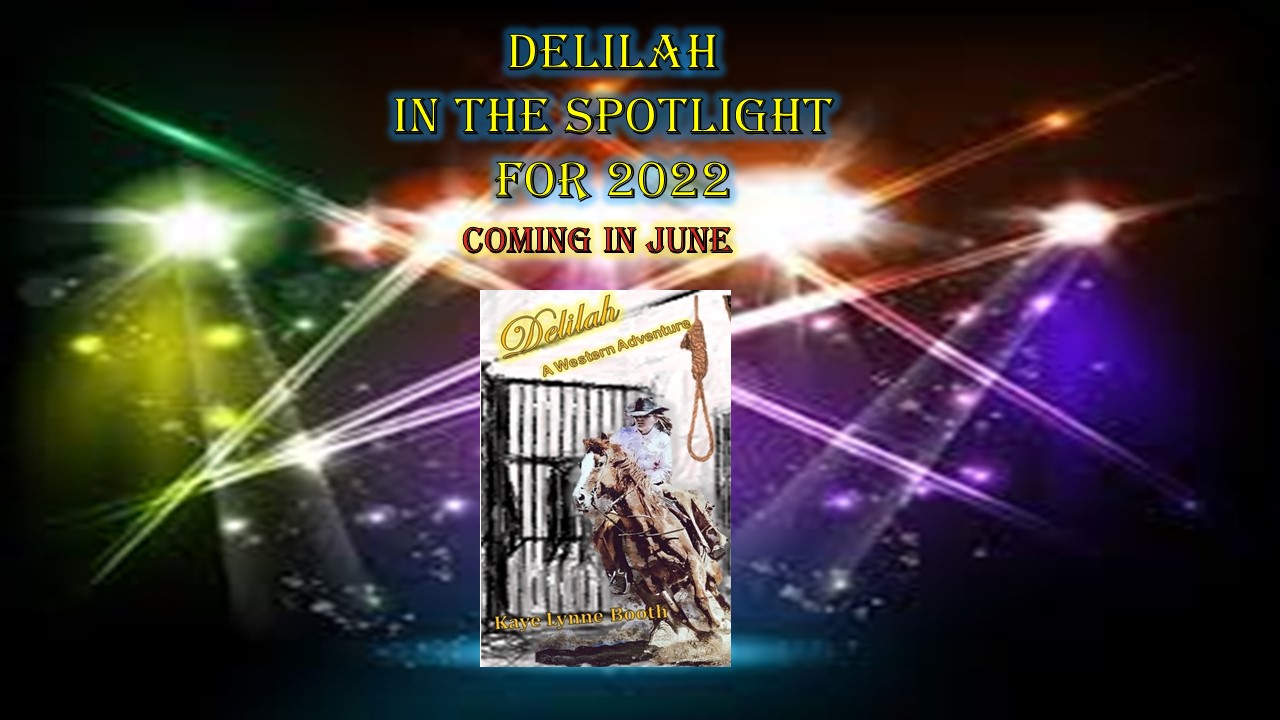
My first release for 2022 is scheduled for June, with the re-release of Delilah, in an edition that is the story I originally intended to tell. (You can find out more about the decision for this change here.) The current edition of Delilah will come down from the Amazon shelves sometime in April, and the new edition will be released wide, so it will be found not only on Amazon, but on Kobo, Barnes & Noble, Apple, Baker & Taylor, Bibliotheca, Borrow Box, Overdrive, Scribd, and other selected digital book outlets because WordCrafter Press publishes through D2D. (I’m a member of their affiliate program. Sign up for your own D2D account here.)
In the past, I told you about my science fantasy series, Playground for the Gods. The first book in that series was my thesis project when I was earning my M.F.A. at Western State Colorado University, back in 2016, so the it has been finished since then, yet you’ve never seen the implied promise of publication come to fruition. In 2022, I plan to release not just Book 1: The Great Primordial Battle, but also Book 2: In the Beginning, and Book 3: Inanna’s Song sometime toward the end of the year, but release dates for these haven’t been set yet.
WordCrafter Press & Author Services
WordCrafter Press has some great releases coming in 2022 as well. An updated version of the writing reference, 2022 Ask the Authors, is scheduled to be released in March. The original Ask the Authors, was taken from a Q&A blog series I ran in 2018. While the much of the advice offered from the 17 different authors who participated in that project is still valid today, this edition will address the changes in the publishing industry since the original edition was published and will feature an anthology of essays on craft and publishing in addition to the Q&A advice. This edition will feature advice from 13 authors, including Bobby Nash, Mark Leslie Lefebvre, Roberta Eaton Cheadle, Nancy Oswald, Christopher Barili, Mario Acevedo, L. Jagi Lamplighter Wright, Kevin Killany, Paul Kane, Jeff Bowles, Enid Holden, Christa Planko, and myself, Kaye Lynne Booth.

The call for submissions for the 2022 WordCrafter Short Fiction Contest posted on January 3rd. However, in 2022, WordCrafter Press will be putting out not just this one anthology, but a total of three short fiction anthologies. In addition to the Visions anthology, which contest submissions may be included in, that will be released in August, there will be two by invitation only anthologies: Slivered Reflections, which will be released in September, and Once Upon an Ever After, which will be released in November.
In 2021, we released the first edition of Poetry Treasures poetry anthology, featuring the works of Robbie Cheadle’s 2020 “Treasuring Poetry” poet guests on Writing to be Read, and we’ve decided to do it again. 2022 Poetry Treasures will feature the works of the 2021 “Treasuring Poetry” guests for a spectacularly unique poetry anthology, and will be released April to celebrate National Poetry Month.

Last, but not least, Write It Right Quality Editing Services is open to new editing clients in 2022. If you’re looking for affordable quality editing, Write It Right could be the editing service you’ve been looking for. A part of WordCrafter Quality Writing & Author Services.
I’m looking forward to 2022. I hope you’ll all join me in the coming year, as it promises to be a good one.
____________________________________________
Like this post? Let me know in the comments. You can be sure not to miss any of Writing to be Read’s great content by subscribing to e-mail or following on WordPress. If you found this content helpful or entertaining, please share.
Share this:

Review in Practice – Word Craft: Prose & Poetry
Posted: December 31, 2021 Filed under: Book Review, Books, Poetry, Review in Practice, Teaching Writing | Tags: Book Review, Poetry, Review in Practice, Sally Cronin, Syllabic Poetry, Word Craft: Prose & Poetry, Writing to be Read 5 Comments
Word Craft: Prose & Poetry, by Colleen Chesebro is an insightful and helpful instructional book for those who wish to learn more about writing syllabic poetry and prose. The first section covers Japenese syllabic poetry forms and American syllabic poetry forms are covered in section two. The author outlines the rules and inspirations for each form, and provides plenty of examples to help you get the idea.
Hiaku has been one of my favorite forms of poetry to read since it was introduced to me in the fourth grade. However, my fourth grade teacher didn’t really explain this poetry form in a way that my fourth grade mind could really grasp, so I’ve never felt very accomplished in writing Haiku. In Word Craft, Colleen Chesebro was able to explain the art of this form of poetry in a manner which my aged mind was able to grasp, giving me a much better handle on what I’m trying to do with this form of poetry. Haiku is much more than just putting the right number of syllables in each line. Haiku is written to evoke images and emotion in a succinct way. I was surprised to learn that the syllabic rules for Haiku are not set in stone, and can be varied. Below is a Haiku which I wrote after reading the chapters on this poetry form.
Spring skies let rain pour
Wings stretch, ruffling wet feathers
small Hummingbird preens
While I know poets who write Tanka poetry, which combines poetry and prose,I’ve never understood what they were doing with these poems. Although I can’t say that I’ve mastered the Tanka, I think I do understand it better, but I will need a lot of practice before I write something in Tanka or Tanka prose poem that I feel worthy of sharing.
I also had some experience in writing Hiabun, which is a combination of poetry and prose similar to Tanka Prose Poetry, but I never really understood the purpose of this form of poetry. You would think this would be the easiest form of poetry in this book for me to write, as the inspiration can come from anything and it can be in any point-of-view and any tense that you wish to write in, but I still have a hard time grasping the how of this poetry form. Fortunately, Colleen Chesebro includes many examples of each poetry style and I have no doubt that, with patience and practice I will eventually get a handle on the Haibun.
Forms of Japanese poetry that I wasn’t familiar with in this book include Senryu, which is similar in form to a Hiaku but differs in subject matter; Haiga, which uses either Haiku or Senryu and combines three art forms, imagry, poetry and calligraphy; and Gogyohka, which is based on the Tanka, but you do not count syllables, with one phrase to a line and a line-break after each breath. I found the Renga, which is design to be written by two poets, interactively, , kind of like a poetic conversation, to be in intriguing poetry form.
This is my first attempt at a Senryu poem.
Hot tea steams
on chill summer morn
wake up call
For me, the forms of American syllabic poetry were more difficult, perhaps because they tend to be longer. In the second portion of the book, Sally Cronin includes explanation and instruction and examples for Cinquains of all types, Etherees, Nonets, and Shadormas. I made several unsuccessful attempts at the basic types of each of these poetry forms, but they are much harder than they look. My hat is off to Cronin and anyone else that can meld their syllables with seeming ease.
I took a challenge on Teagan Riordain Genevieve’s blog and for that I wrote a Shadorma poem, which I published here, on Writing to be Read. You can see my example of a Shadorma here, but I don’t know if it is any good. It really was harder than I thought it would be.
If you like syllabic poetry, either Japanese or American, and would like to try your hand at it, I highly recommend the instruction of Word Craft: Prose & Poetry, by Sally Cronin. This book introduced me to new forms, as well as delving deeper into forms I was familiar with. I give it five quills.

________________________________________________________________________________________________________
Like this post? Let me know in the comments. You can be sure not to miss any of Writing to be Read’s great content by subscribing to e-mail or following on WordPress. If you found this content helpful or entertaining, please share.



















