Update on “Playground for the Gods” Series
Posted: March 20, 2017 Filed under: Books, Fantasy, Fiction, Science Fiction, Speculative Fiction, Writing | Tags: Kaye Lynne Booth, Novel, Playground for the Gods, Writing, Writing Process 2 Comments
While Book 1: The Great Primordial Battle is spending time with my alpha reader, I’ve been busy working on Book 2: In the Beginning. Now I know it seems strange name for a second book, but for this series, it’s actually quite fitting.
You see, Book 1 covers the time just before and after the Atlans arrival on Earth in prehistoric times, which result in a great battle between the Atlans and the monstrous creatures created by the angry Tiamat, Oldest of Old Ones. It is the story of how the Atlans came to be on Earth.
Book 2, on the other hand, takes place during Earth’s earliest civilizations. It explores Biblical times and even before, as well as visiting ancient Egypt and Minoan cultures. It looks at the beginning of time, hence the title, In the Beginning.
That said, I’ve finished the first draft for Book 2, and started on revisions. I guess maybe my writing process is a little weird. At Western, while earning my M.F.A. in Creative Writing, we talked a lot about our writing processes, and while everyone’s processes were different, I never found anyone whose process was like mine.
My first drafts are pretty rough, consisting mostly of the basic plotline. The basics of what happens in each chapter, so the way the story moves forward can be seen. Once, I have that down, I can go back and revise, adding description and action that helps the story move in each chapter, sharpening the image, hopefully, for readers. That’s where I am in the revision process now.
Before I send it off to my alpha readers, I’ll do another run through to check for repetition, spelling, grammar and punctuation errors, and eliminate unnecessary words. This is the pass that tightens up my writing to make it the best it can be before going to the alpha readers have a go at it.
Once I have it back with their comments, I may do up to three or four more passes, before I feel it’s ready to submit to publishers or agents. If all goes well, I will get Book 1 back from my alpha reader, which in this case may be a beta reader since I made revisions to the completed work after sending it out without raising any interest, about the time I have the final draft of Book 2 ready to send out for her scrutiny.
I think the main problem, possibly with both books right now, is a lack of emotion from my characters, which could result in a lack of emotional investment from readers. Identifying it as such is good, because if readers don’t care about the characters, they won’t continue reading. The challenge will be finding a way to fix it, so my readers will keep turning the pages. Fortunately, I found some great ideas for showing my characters’ emotions in a post titled Emotion vs. Feeling by David Cobett on Writer Unboxed.
The story is there. Now I just need to breathe life into it. That’s what writers do.
Like this post? Subscribe to Writing to be Read for e-mail notifications whenever new content is posted.
Share this:

“Tangled Web” May Be Just the Beginning
Posted: March 17, 2017 Filed under: Book Review, Books, Erotica, Fiction, romance | Tags: Book Review, Books, Erotica, Jade C. Jamison, Reviews, Rock Star Romance, romance, Tangled Web Leave a comment
Tangled Web is the first book in a new rock star romance series by Jade C. Jamison. I picked up this book because I was so impressed with another book I reviewed by the same author, Bullet, and this book did have the same power to draw me into the story. However, this story is much shorter and left me feeling like there should be more.
*****************************Spoiler Below*******************************
Two old friends discover that they each had hidden feelings for the other. In Tangled Web, we watch as this discovery emerges, but the story ends as they realize their feelings for one another. While it is the moment the story has been leading up to, it feels more like a climax than an ending. It is the moment when everything changes, but I felt short changed because the reader isn’t allowed the opportunity to learn the outcome of the grand event. We don’t get to see the “Happily Ever After”. I guess it is assumed, but it would be more satisfying to see it unfold.
The story is good, the erotic scenes tastefully written, and I quite enjoyed this read. Tangled Web has the potential to be a really good romance, but it left me wanting more. I give it three quills.

Kaye Lynne Booth does honest book reviews on Writing to be Read in exchange for ARCs at no charge. Have a book you’d like reviewed? Contact Kaye at kayebooth(at)yahoo(dot)com.
Share this:

Good Things in the Works for “Writing to be Read”
Posted: March 14, 2017 Filed under: Writing | Tags: Author The World, God Complex, Jeff Bowles, Monthly Memo, Pep Talk, Reviews, Robin Conley, Writing, Writing Tips, Writing to be Read 1 Comment
I’m so excited! There are changes coming for Writing to be Read. Last week I gave you an introduction to the newest addition to the Writing to be Read team, Jeff Bowles, who will be giving us a monthly writer’s Pep Talk. Since that post, even more good changes have occurred, and I’m pleased to announce that Jeff will be migrating Jeff’s God Complex blog to this site and sharing even more valuable content with us, two Wednesdays a month.
For Writing to be Read and its readers, that means Wednesdays will be awesome! Robin Conley will still be providing her Monthly Memo with great writing tips, and Jeff will provide his monthly Pep Talk. On the two Wednesdays left, Jeff will prov Jeff’s God Complex content. Now, if you want to know what God Complex content is, I’m not sure if I can explain, other than to say Jeff’s posts are unique and can go in any direction, but they are usually about writing. If you want to know more, you can check out Jeff’s posts on Jeff’s God Complex. I think you will see why this is so exciting.
In addition, Jeff has agreed to provide one gaming review per month in the Friday reviews, and I’m hoping Robin will provide one film review per month, as well. Never fret. That leaves room for at least two book reviews per month and will allow me more time to do them. If you want to pick up more writing tips from Robin, or you’re looking for some of her great writing prompts, check out her blog, Author the World.
One more thing that I will be looking forward to, and I hope you will, too, is a series of author interviews I’m planning to run taking a look at what works for each of them. No one thing works for everybody. Hopefully, in these these interviews you will find some ideas that work for you. So be on the lookout for my Writing that Works interviews, which will be coming soon.
Overall, I think these changes will greatly improve Writing to be Read and make it a more well rounded blog by providing a greater diversity in content, allowing me to offer a little something for everybody. I hope you will all drop by frequently to see what’s new. Or better yet, subscribe to email and get notification to your inbox each time there’s a new post, so you never miss on what’s up on Writing to be Read.
Share this:

“Crossroads” Moves Across Worlds
Posted: March 10, 2017 Filed under: Book Review, Books, Fantasy, Fiction, Paranormal, Speculative Fiction, Young Adult | Tags: Alternate World, Book Review, Books, Chandler McGraw, Crossroads, Reviews, Young Adult Leave a comment
Crossroads by Chandler McGrew is an alternate world YA story about a young girl, Kira, who finds herself on the run with her friend, Jen, after her parents and her carnival family are massacred. Unsure of where to go, but following her instincts, Kira explores her other-worldly powers which allow her to create, and uncreate, by will, learning about her family’s true origins and discovering that only she can save the last of her people.
It’s a role she didn’t ask for, and she doesn’t want as she realizes that she and Jen are being pursued and everyone she comes into contact with dies. Then she meets Sheila, who has the gift of talking to the dead, and is tied to Kira and the world beyond the mirror, although neither knows it. They go through the mirror and embark on a quest to stand against the evil empty-eyed man, who has overtaken Dream Time, (the world beyond the mirror, and is trying to overtake all worlds.
Crossroads is character-driven with a strong story line, but it is almost a little too convenient that although she does not understand what she is supposed to do, Kira always knows what to do when the time comes to do it. The answers just seem to come to her. I give it four quills.

Share this:

Welcome Jeff Bowles to “Writing to be Read”
Posted: March 6, 2017 Filed under: Author Profile, Fiction, Pep Talk, Speculative Fiction, Writing | Tags: Inspiration, Jeff Bowles, Motivation, Pep Talk, Writing, Writing to be Read 1 Comment
Kaye: When did you know you wanted to be a writer?
Jeff: I’ve kind of only ever had two passions in my life, music and writing. I wrote my first story when I was about ten years old, which also happens to be the age I wrote my first song. When I got older and met my wife, I realized being a musician wouldn’t be conducive to family life, what with touring and recording and the general pressures of the business. So at that time I decided to settle on my writing, and I haven’t looked back since. Good choice. You can write a song any old time you want. Short story tales are forever.
Kaye: What is the one thing in your writing career that is the most unusual or unique thing you’ve done so far?
Jeff: Let’s see … Probably the couple of comic scripts I sold to English comic book press FutureQuake. I’ve written everything from short stories, novelettes and novellas, to full-length novels, screenplays, newspaper articles, nonfiction, a bit of ghost writing, you name it. I found being diverse and far-reaching was way better than narrowing in on one small niche. At this point I could take a stab at anything, any time. Very helpful if you actually want to make a little money, and who doesn’t?
Kaye: You seem to have a bit of a preoccupation with God, which has certainly shown up in a lot of your writing. Can you tell us what that is all about?
Jeff: Ha ha, well I think I just found it to be the largest, most expansive concept in existence, right? I mean, I try to tackle topics and themes that are gargantuan in relation to small, fragile beings like you and I. That sort of thing has always appealed to me, so God was a natural extension, one most people have a strong gut reaction to in one way or another. My newer work–including my latest short story collection, dropping on March 28–has very little to do with God or gods or anything of that nature. I was also on a personal quest for God for many years, I suppose. I was raised agnostic, so my whole life I was searching for a reason to believe and worship, and corny as that might sound. Writing about Him always seemed like a good outlet for my spiritual curiosity.
Kaye: How many of your stories have been based on God to some extent, or featured God?
Jeff: Quite a few, actually. If not the Almighty Himself, I’ve tinkered with super beings, celestials, demigods, and everything in between. Most writers are timid about concepts. I go for the biggest, largest, hugest.
Kaye: Your thesis novel involves God, and Satan, too. Would you like to tell us a little about your novel?
Jeff: Sure. Body of Heaven, Body of Darkness is a contemporary horror fantasy. Harold Math watches in terror as God and Satan, each ten miles tall, beat each other to death in the rural desert of Nevada. Booze and anxiety become his life, until a strange, supernatural boy in a red cape causes a terrible car wreck that kills his fiancé and unborn son. The world slips into chaos as the deaths of the two immense beings herald national disasters and the destruction of the city of Los Angeles. A horrifying hell-beast emerges in the chaos and begins terrorizing the country, even as Harold reunites with an old flame and tries to put back together the shattered pieces of his life. At last, the boy in the cape reveals himself to Harold as the all-knowing Will of the Universe. He’s chosen him and three others to destroy this contamination before it spreads.
Kaye: In addition to being a very talented writer, you are an artist, as well? You did the cover for Godling, right?
Kaye: You’ve had quite a few things published, including a comic book. How did that come about? Did you do the artwork for that? Or was it collaboration? Tell us about the process in either case?
Jeff: No, I didn’t do the artwork. I wrote the script and submitted it to the publisher just like you’d do with any short story. They accepted it and paired me with an artist. I got to see his work evolve over the course of several months, and it was always rewarding to check out what true artistic talent could do with my material. I couldn’t draw like that if you paid me. Writing a comic book script, though, it’s something I urge a lot of science fiction and fantasy authors to try out. Very cool, very challenging medium to work in.
Kaye: What are your favorite genres to read? To write?
Jeff: Science Fiction, Fantasy, and Horror are my bread and butter. I like to read and write nonfiction and more literary work as well, but my home and my love will always be speculative stuff. It’s what I was raised on, so it’s the most natural thing in the world for me. Star Trek, Lord of the Rings, Star Wars, Marvel and DC, all these mega-nerd story types and franchises, I probably dream the stuff at this point.
Kaye: What is the biggest challenge for you when writing short fiction? Or when tackling a novel-length work? How about when writing comic books?
Jeff: For short fiction there’s always a push and pull between expressing myself fully, telling an engrossing story, and making something concise and fully realized with a limited word count. Novels are tricky because they’re a marathon, a long-haul project, though I find the actual writing to be easier than short form on a day-to-day basis. Comic book scripts are another beast altogether. Kind of the ultimate test of a writer’s mettle when it comes to precision and execution. Highly recommend writers try it out at some point. Probably learn a thing or two in the process. Sometimes it pays to be a mad scientist with your writing. Take no prisoners! Hold nothing back!
Kaye: Which is your favorite type of writing? Short fiction? Novels? Comic Books?
Kaye: Any advice for aspiring writers?
Jeff: Absolutely. NEVER GIVE UP!
You’ll probably find people in your life will try to dissuade you, or in the very least, that they’ll lack enthusiasm for your work, your calling, until you’ve been at it long enough you finally start to see results. You can’t let that get to you. Apply ass to seat and type until something’s done. Writers are a funny breed few people understand, and sometimes we become crotchety and bitter. But the truth is if you’re going to do this thing, you’ve got to stay focused and disciplined. Much like writing a novel, this job is a marathon. Many very famous authors had to work their butts off for years, if not decades, before people finally took them seriously. I will say it again. NEVER GIVE UP! PROMISE!
So, now you know a little about Jeff Bowles, which is good, because you should know who is giving you a writing Pep Talk. I hope you’ll join us every first Wednesday to read what morsels of writing wisdom Jeff has to offer. And I hope that now you’re as excited as I am to have him join the Writing to be Read team.
Interested in Jeff’s writing? Check out his latest short story collection, Godling and Other Paint Stories: https://www.amazon.com/Godling-Other-Paint-Stories-Bowles-ebook/dp/B01LDUJYHU
Twitter: @JeffBowlesLives
Facebook: http://www.facebook.com/jeffryanbowles
Tumblr: http://authorjeffbowles.tumblr.com
Amazon Author Page: https://www.amazon.com/JeffBowles/e/B01L7GXCU0/ref=sr_ntt_srch_lnk_1?qid=1479453494
YouTube’s Jeff Bowles Central: https://www.youtube.com/channel/UC6uMxedp3VxxUCS4zn3ulgQ
If you like this post, be sure to ‘Like’ it below. All comments are welcomed. To be sure to never miss a post, subscribe to email for notification of new content right to your inbox. Or follow me on WordPress.
Share this:

“Scarlett Wrigley and the Light Beneath the Veil”: A delightful middle-grade fantasy
Posted: March 3, 2017 Filed under: Book Review, Books, Fantasy, Middle Grade | Tags: Book Review, Charmaine Mullins-Jaime, Scarlett Wrigley and the Light Beneath the Veil Leave a comment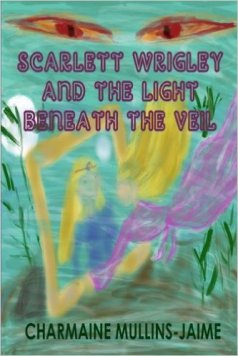
From the very start, Scarlett Wrigley and the Light Beneath the Veil, by Charmaine Mullins-Jaime, grabs readers interest and holds it, no matter their age.The characters are colorful, likable and fully developed. The plot is easy to follow and easy to buy-in to.
Scarlett is special from the day she was born and Scarlett Wrigley and the Light Beneath the Veil takes us on the magical journey of her coming of age. At the age of thirteen, Scarlett learns about the magical world which is and has always been around her, but now she is able to see beneath the veil which hides it. Who would have guessed that three fairies, a leprechaun and a bogey all lived under the Wrigley roof with Scarlett and her family, or that a bad elf would try to trick her into going with him to meet an evil goblin.
As Scarlett learns more and more about this strange other world, which she’s discovered exists along side her own, her own world is turned upside down, but in a good way, as she learns how to awaken her own powers. And she also learns that someone wants her mother dead and she holds the power to save her.
Scarlett Wrigley and the Light Beneath the Veil is a well-crafted story that will delight readers of all ages. I give it five quills.
Kaye Lynne Booth does honest book reviews on Writing to be Read in exchange for ARCs at no charge. Have a book you’d like reviewed? Contact Kaye at kayebooth(at)yahoo(dot)com.
Share this:

Ah! Sweet Rejection
Posted: February 27, 2017 Filed under: Books, Publishing, Western, Writing | Tags: Colorado Frontier, Delilah, Kaye Lynne Booth, Publishing, Rejection, Rejections, Western 2 Comments
Last week, I received a rejection letter for Delilah from a publishing house I submitted to back in October. Although I know it sounds odd, I was elated. “Why?” you may be asking, and with good reason. Rejections are not something writers are usually pleased about. In fact, just the opposite. But I was pleased with this rejection letter for one reason. It was not a form letter. In fact, the editor took the time not only to read the sample I submitted, but to give me constructive criticism and suggestions as to how the manuscript might be improved.
As a graduate student, my professors drilled the idea into our heads that a personal rejection letter, means your manuscript made it past the slush pile and actually received some attention from the editor. It was good enough that they actually read what you sent. And a rejection letter with personal feedback is even better, because then you don’t have to wonder why they rejected your work, and you can strive to fix anything that needs fixing before sending it out again.


My rejection letter was personal, rather than form, and it offered feedback. How sweet is that? I mean, I’m not happy the book was rejected, but I am happy that somebody read at least part of it, in this case, the first fifty pages. My reaction to this rejection is to study the personal feedback and then really look at the manuscript to determine the validity of the comments. Then revise and resubmit to the next publisher on my list for Delilah.
For those not familiar with me or my writing, Delilah is my 60,000 word western novel about a strong willed young woman, who served two years in the Colorado Territorial Prison, in the late 1880s. Delilah thought that time had hardened her against the cruelties of the world, but she wasn’t prepared for the trip back home and the hardships of the Colorado frontier. She heads to her home in San Luis, with sixteen year old, Sarah. An encounter with two outlaws, who take the girl captive, sets Delilah on a journey into the high country of Colorado mining towns. Along the way she faces wild animals, outlaws and Indians, makes colorful friends, and learns to love again. Delilah is a novel with the true flavor of the Colorado frontier.
A while back, I also had a hybrid publisher, who expressed interest, but wanted me to provide other western authors that would be interested in publishing with them. (To get a better idea of what I’m talking about when I say hybrid publishing, see my article, Hybrid Publishers – What are they all about?). I posted in a few places on Facebook, but did not come up with any other interested authors.
So, this is actually the second personal, (non-form) letter that I’ve received on Delilah. Of course, it would have been better if I had received an acceptance letter, but I believe in myself, I believe in my writing, and I know that one day, that acceptance letter will come. And, if not, I am not beyond the idea of publishing her myself, because I know she is that good.
To learn more about and read updates on Delilah, go to my Delilah Facebook page.
Like this post? Subscribe to Writing to be Read for e-mail notifications whenever new content is posted.
Share this:

“The Journey” Goes Where No One Has Ever Been
Posted: February 24, 2017 Filed under: Book Review, Books, Fiction, Stories | Tags: Books, Dan O'Brien, Reviews, The Journey Leave a comment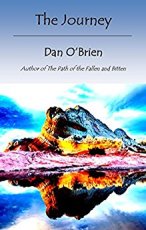
The Journey by Dan O’Brien is a philosophical tale which follows The Lonely on a quest to find purpose. The Lonely is guided on the quest by The Crossroads, and sent in all four directions, where The Lonely learns needed lessons from the entities who reside there, in order to move on.
The tale of The Journey is a uniquely different story that ponders the questions of existence. I give it three quills.

Kaye Lynne Booth does honest book reviews on Writing to be Read in exchange for ARCs at no charge. Have a book you’d like reviewed? Contact Kaye at kayebooth(at)yahoo(dot)com.
Share this:

Did You Ever Notice Mythology Has a Lot of S-E-X in It?
Posted: February 20, 2017 Filed under: Books, Fantasy, Science Fiction, Writing | Tags: Kaye Lynne Booth, Playground for the Gods, Writing 2 Comments
If you read my post, Rethinking the Playground for the Gods series… again, then you know I’m currently working on Book 2: In the Beginning in my Playground for the Gods series. In the past two weeks, I’ve increased the word count on this novel by about 10,000 words, and updated my character chart, where I keep track of who did what in each book. I view this as being not too shabby. But, as I’m revising and adding to my partial draft, I’m noticing how much of this series revolves around sex of some sort.
In my post, It’s All in Finding the Right Market, I took a look at different markets for my Playground for the Gods series besides the science fantasy market I’ve been promoting it in. In particular, I considered both YA and NA markets, as potential market venues for this series. I dismissed both after looking back over Book 1: The Great Primordial Battle, and determining that there was too much emphasis on sex for either of these markets. After attempting to revise the book for either of these two markets would totally upturn too many story premises.
To understand why sex is such an intricate part of this epic science fantasy series, it is necessary to understand what the series is. Playground for the Gods is based on an alternate universe in which the gods of ancient civilizations were really aliens from a far galaxy whose home planet had been destroyed. The characters are those of ancient gods and goddesses and they play out their own versions of some of the myths of the ancient world, adding their own unique adventures into the mix.
The thing that I’m noticing as I research the mythologies and write my story, is that there is a lot of sex involved in many of the ancient myths. And, sex is so intricately interwoven into them that to try and tell the tales with the sex extrapolated leaves tales that have lost much of their meaning.

For instance, I’ve been working on the part of the story in Book 2 which is based on the Egyptian myth of Isis and Osiris. If you know the myth, then you know that after Set chops up Osiris, Isis gathers all the pieces except one, his phallus, in order to resurrect him. Now, I have to tell you, this scene was extremely fun to write and it turned out to be quite humorous, but it doesn’t work to try and write it without the missing member. Without that, the whole story falls flat and doesn’t even make a lot of sense.
In fact, when trying to trace the lines in most ancient cultures, it seems everyone is related and incest is the norm. In Inuit mythology, Annigan rapes his sister Melina repeatedly. The Sumerian god, Anu raped his own daughter. In Greek mythology, there are same sex relations and even relations with birds or other animals. In Aztec lore, there are goddesses of carnality, sexual hunger, sexual power, sexual desire, sexual longing, sexual appetite and sexual misdeeds.
Ancient mythology is filled with sexual encounters between gods and goddesses, between gods and humans, and even strange fetish type behaviors. To write a story based on any of these myths, one cannot extract the sex and still make the story work.
 That’s why I couldn’t justify revising Book 1 to take out the sex and adult language to accommodate a YA or NA audience. While I am the author and I can make my characters do whatever I want, if in doing so, I unravel the fabric that the story is based on in order to appeal to a particular market, I’m not being true to my story or being fair to my readers. When the story doesn’t work, the readers won’t be able to suspend disbelief enough to buy into the story, and that’s not a good thing.
Visit my Playground for the Gods Facebook page for more information and updates about the series.
Like this post? Subscribe to Writing to be Read for e-mail notifications whenever new content is posted.
Share this:

“Ethereal Lives”: A Science Fiction Romance
Posted: February 17, 2017 Filed under: Book Review, Books, Fiction, romance, Science Fiction | Tags: Books, Ethereal Lives, Gem Stone, Reviews, romance, Science Fiction Leave a comment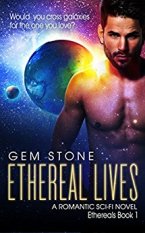
Ethereal Lives by Gem Stone is a refreshing story about a woman, Ariane, abducted by interstellar hijackers moments before Earth’s destruction. Being the only existing human makes our heroine a valuable commodity on the cosmic market. Somehow, on the way to their destination, where her captors can sell their cargo, Ariane falls in love with the ship’s captain, Ax. When the tables are turned, and Ax is captured by another ship, Ariane will stop at nothing to save him, even though he still intends to sell her.
The story is entertaining, but there are several plot points that make the suspension of disbelief very thin and the characters could be better developed. If you can get past that, it is an endearing tale and quite enjoyable. I give Ethereal Lives three quills.

Kaye Lynne Booth does honest book reviews on Writing to be Read in exchange for ARCs at no charge. Have a book you’d like reviewed? Contact Kaye at kayebooth(at)yahoo(dot)com.



















