Chronology is full of surprises
Posted: June 24, 2016 Filed under: Book Review, Books, Fantasy, Fiction, Horror, Science Fiction, Speculative Fiction, Steampunk, Stories | Tags: Anthology, Book Review, Books, Creative Fiction, Fantasy, Fiction, horror, Review, Speculative Fiction, Steampunk, Writing 3 Comments
I’ve just had the pleasure of reviewing a new anthology of short fiction put out by Curiosity Quills Press. When asked if I’d like to review Chronology, I had the impression that it was a steampunk anthology, which is a genre I’m newly discovering. Some of the stories in this collection do have steampunk elements, such as Wind Up Hearts, the steampunk-ish romance that is sure to break readers’ hearts, by Bram Stoker Award finalist, Stan Swanson, or Flight of the Pegasus by Dr. Darin Kennedy. There’s also That Which is Hidden, a haunted steampunk-ish werewolf romance, by Julie Frost. But, I was pleasantly surprised to find the stories in Chronology to be a diverse mixture of speculative fiction.
Some are futuristic, leaning more toward science fiction, such as the apocalyptic Afterparty by Mark Woodring, Limited Liability, a futuristic outer space story by Matthew Graybosch or Gookie Visits Her Moma by G. Miki Hayden, an alternate universe science fiction story about a space bounty hunter whose current bounty takes her back to her home planet. Many others are more in the fantasy realm, such as Draconic King, by award winning author, James Wymore, or Yours Until the Ink Dries, a true faerie tale, as a young outcast girl discovers her true identity in her drawings, by Y.A. author Jordan Elizabeth. And then there are those stories that fall into the mythical realm, such as Strange Flesh, a well-crafted story of mythical creatures by Katie Young, or Wampus Cat, a tale of Appalachian legends come true by international bestselling author Scott Nicholson.
Still, others have a horror element or two, such as The Lair, a story of a cursed treasure hunt in jungle swamps, by best-selling independent author, Tony Healey, or Lava, a spectral love story by New York Times bestselling author, Piers Anthony, or In the Clutches of the Mummy Prince, by B.C. Johnson, which was not very scary. Also I had trouble relating with the main character in Johnson’s story, who wasn’t very likeable. There is also The Comeback, the weirdest zombie romance I’ve ever heard of, told from the zombie’s POV, by techno-thriller and MG fantasy author, Tara Tyler, and Inmate #85298, a chilling death row tale, by author and screenwriter, Andy Rausch.
Of course, there are also those stories that weren’t so easy to classify, including White Chapel, which sheds new light on the story of Jack the Ripper, by author, editor and podcast co-host, Andrew Buckley, or Signs Unseen, the story of a small town race war, by J.P. Moyahan, or Bait and Witch, a troublesome witch story by speculative fiction author, J.P. Sloan. There is also The Bull, by novelist and short story writer, J.R. Rain, which turns a Minotaur into a superhero, and The Unattended Life, a reminder to stop and smell the roses by J.E. Anckorn, and an intriguing airship romance, Above the Clouds, by Richard Roberts.
Yes, it is a big book, about 530 pages, but it is definitely a good read. In addition to the stories mentioned above there are the three I enjoyed the most, which I saved to tell you about in more detail. The following stories stuck out in my mind the most, but not in any particular order.
The Room Below, by novelist Wilbert Stanton is a horror story worthy of Lovecraft, or King. This story about a stay in a mental institution that puts One Flew Over the Cuckoo’s Nest to shame. It held my attention and kept me on the edge of my seat, and had a surprising, yet satisfying ending.
The Colorado King, by Nathan Yocum is a story in which survival is the name of the game as a father and daughter travel over post-apocalyptic badlands in search of kin and refuge, bringing with it some very hard lessons. This well-crafted tale grabs readers’ attention and doesn’t let go, yet it leaves readers feeling like there should be more, probably due to the fact that it is an excerpt. I’m guessing that it is from Yocum’s novel, The Zona.
And finally, Innocent Deception, by Matthew Cox is a well-crafted story which has a surprising reveal in its final pages. The daughter of a pharmaceutical company’s CEO is kidnapped and held for ransom, but the plan falls apart when the mother doesn’t want the kid back.
Overall, I give Chronology 3 Quills. 
Kaye Lynne Booth does honest book reviews on Writing to be Read, and she never charges for them. Have a book you’d like reviewed? Contact Kaye at kayebooth(at)yahoo(dot)com.
Share this:

Weekly Writing Memo: Going Through the Motions
Posted: June 15, 2016 Filed under: Fiction, Screenwriting, Uncategorized, Weekly Writing Memo, Writing, Writing Tips | Tags: Creative Fiction, creative process, Writing, writing advice, Writing Process 1 Comment Lately I’ve been coming across a lot of writing where the emotional connection has been lacking. If your audience isn’t invested or connecting with your story somehow, they will not want to stick around to finish it. There are a lot of ways your writing could lack an emotional connection, but the main one I find is when your characters or your plot aren’t ringing true to the audience. When it feels like the characters are just going through the motions of the story, rather than really living and breathing the story, then it starts to feel false. So how do you keep it feeling realistic so your audience is emotionally invested?
Actions and Words
One of the most important elements in a story to help it feel realistic is that your characters dialogue and their actions match up. To do this, make sure your character is behaving in a way that goes with their attitude and dialogue. If your character is angry, and is yelling, don’t have their body language be weak and cowering. If your character is shy and afraid, don’t have them adopting a dominant posture. These things are minor touches in your writing, but if your characters’ words aren’t backed up by their actions and body language, then their words won’t ring true and will make the audience feel as if something is off, even if they can’t put into words what exactly it is.
The exception, of course, is if the character is someone who says one thing and does another, or if your character is purposely behaving in a contradictory way because of anxiety, fear, or ulterior motives. In those cases, you still have to be consistent with that character and continue that behavior throughout the story. If they act irrationally when they’re afraid, then show the audience that and make them behave that way every time. If they are a perpetual liar, or manipulator, then again show that and make sure the audience understands the contradictions.
Sincerity
The second element that helps make your audience emotionally connect is to feel like your characters are behaving sincerely. I don’t mean they have to be telling the truth all the time or behaving kindly, they just have to be behaving true to who they (the characters) are. If a character isn’t behaving the way they would in reality, then the audience will pick up on that and feel like they’re being lied to and not connect with the story.
This comes down to one thing – you want your characters to be people, not actors. If it feels like they’re actors pretending to be someone, then it will create an unnecessary barrier between the story and your audience. You want your characters to always be themselves, and to behave in accordance to how they would naturally behave unless there is a significant reason for them not to.
Others
A lot of people think that the only characters the above stuff matters for is for the main characters, and maybe the secondary or even tertiary characters, but it’s more than that. Every single character in your story matters, and every single character should have a motive for their behavior that they drives their behavior. Without this, minor characters in stories will feel like placeholders and even disrupt the story.
If you have a ton of minor characters who just pass through the story without distinguishing them by giving them their motivations, it’ll be like placing a color photo on all gray background. While that can be pretty and help make the main photo pop, it’ll make the background uninteresting.
In a story, this kind of thing makes the story as a whole suffer because your character is living in this world, and if the world is boring and uninteresting, or unrealistic, then it’ll start to affect the main character. If you give your minor characters one thing, give them a motivation for being in the scene and every action they take. As long as they are clearly motivated, and stick true to these motivations, they’ll help give the scene more purpose and make the story more dynamic, which means it’ll be easier for your audience to get invested.
Share this:

“Walks Along the Ditch” takes readers along on a walk through later life
Posted: June 10, 2016 Filed under: Book Review, Books, Poetry, Screenwriting, Writing | Tags: Bill Tremblay, Book Review, Books, Poetry, Review, Writing 1 Comment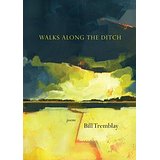
Walks Along the Ditch, by Bill Tremblay, is reflective poetry collection themed on the everyday awe found in nature and the world around us. Tremblay masterfully crafts simile and metaphor to form vivid word pictures that fill the mind’s eye and cause readers to contemplate the human condition and our natural environment, such as the vision he creates in his poem, Blue Heron.
“…It flaps its wings, one-thousand one,
one-thousand two, its pitch is changed,
its back-flaps open like Fred Astaire’s vest
on a mirrored floor. Settled, its crest
shaken out, the Ichabod steps slow
on his stalks with ganglionic grace
toward bull rushes gathering clouds
like a weaver at her shuttle, then
darting his long yellow chopsticks,
pulls a wriggling crawfish out,
cracking its shell, guzzling the meat
down its sink-catch throat…”
This collection of poems are calming and meditative, stirring new consideration of things familiar and known, but perhaps not often noticed. The artistry of his descriptions is no more apparent than in two lines from his poem, Before Dawn, “…Dawn light trills its piccolos. / Huge back ghosts become watermelon pink foothills…” It’s a new turn for Tremblay, whose moving narrative poetry of the past, such as The Magician’s Hat, a historical poetic collection around the life of Mexico’s muralist, David Alfaro Siqueiros, has commented on historical events, persons and eras. Walks Along the Ditch marks growth of Tremblay’s talent and takes his word craft to another plane.
I give Walks Along the Ditch four quills. 
Kaye Lynne Booth does honest book reviews on Writing to be Read, and she never charges for them. Have a book you’d like reviewed? Contact Kaye at kayebooth(at)yahoo(dot)com.
Share this:

Weekly Writing Memo: Parts of a Scene
Posted: June 8, 2016 Filed under: Fiction, Screenwriting, Uncategorized, Weekly Writing Memo, Writing, Writing Tips | Tags: Creative Fiction, Fiction, Screenwriting, Writing, writing advice, Writing Process Leave a comment Whether you’re writing a novel or a screenplay, you are going to be writing scenes for your story. The breakdown of a scene for each is essentially the same, and requires that three things happen.
The Setting
The first thing that has to be established in almost any scene is where it is taking place. Sometimes this can be as simple as establishing that it’s a mysterious unknown place, that’s fine, but some form of setting has to be established. Showing the setting helps ground the audience and helps them visualize what is happening.
To do this in a screenplay, you use the scene heading and then give a brief description of the location in a line or two. Find a succinct way to set the tone and layout of the scene without giving long descriptions. Also, make sure to mention any elements of the setting that are vital to the action of the scene. Don’t wait to mention there is a newspaper on a chair if a few lines down that newspaper is going to be used to slap someone!
This is true for fiction as well. It’s best to set up details that will come into play early on so that way when they are used, the audience feels they have been established instead of feeling like they were just thrown in when the writer needed them. Unlike in screenplays, fiction can let the setting unfold a little more naturally as the character interacts with it. You’ll still want to mention key elements as soon as you can for the best effect, but you can let some details come out more fluidly as the scene develops.
The Character
The second thing to establish in any scene is who the scene is about, and who the protagonist and antagonist of the scene is. In every scene there is one of each, even if one is an inanimate object or something. Every scene is driven forward by a character wanting something, and whatever is getting in the character’s way at that moment is the antagonist for the scene. There can also be an antagonist that is not present in the scene as well, but do consider who the antagonist within the scene is.
You’ll also want to find a way to introduce other characters that are present for the scene as early as possible. If a character is in the room while something is happening, and the audience isn’t aware of it, it can be startling when that character finally “appears” to the audience. It can also change a scene completely. So make sure to find a way to introduce each character within a scene so the audience knows who the players are.
The Conflict
Every scene is about one thing – someone wants something, and something (or someone) is stopping them from getting it. If this isn’t happening in your scene, then your scene has no conflict or tension and really needs to be reconsidered unless you have strong motivations for it.
The other key thing to remember for every scene is that every single character in the scene has a want, and their behavior is going to be driven by whatever that want is. You want some of those character desires to conflict to create tension. If the conflicts are the same (like two characters want a sandwich) then find a way to make the wants conflicting. For example, maybe they both want a sandwich, but they want the other character to make it for them. Or they both want a sandwich, but there is only enough bread for one.
If you know what your characters want, then you know how they will behave in a scene. You also know what you need to keep them from getting it for as long as you naturally can within the scene. Don’t let them get what they want easily, unless what they want isn’t really what they need! If it isn’t what they need, then the moment they get what they want, it’ll create new conflict. The point of every scene is to create tension and conflict, and to drive the story forward.
Final Notes
The final thing to consider when writing a scene is that you don’t want to spend a lot of time in the beginning setting up what your character is doing or trying to achieve. If you find yourself doing this, try jumping forward in the scene and seeing how it reads without the introduction.
For example, if a neighbor wants to borrow a cup of sugar, but the other neighbor wants someone to talk to, try this: Instead of showing Person 1 knocking on the door, show them already in Person 2’s kitchen and show Person 2 blabbering on about some subject that Person 1 cares nothing about. Maybe show Person 1 with an empty measuring cup in their hand and have them eyeing the cupboard.
Doing that tells us everything we need to know without going through the motions of the knocking on the door and asking for the sugar. It jumps straight to the conflict. And you almost always want to cut to the conflict when you can do so without the story suffering.
Robin Conley offers great writing advice most Wednesdays on Writing to be Read. If you just can’t wait until next week to find out more, you can pop into her blog, Author the World, for more tips, or a weekly writing prompt.
Share this:

Hybrid Publishers – What are they all about?
Posted: June 6, 2016 Filed under: Books, Publishing, Writing | Tags: Books, Delilah, Hybrid Publishers, Publishing, Writing 5 Comments
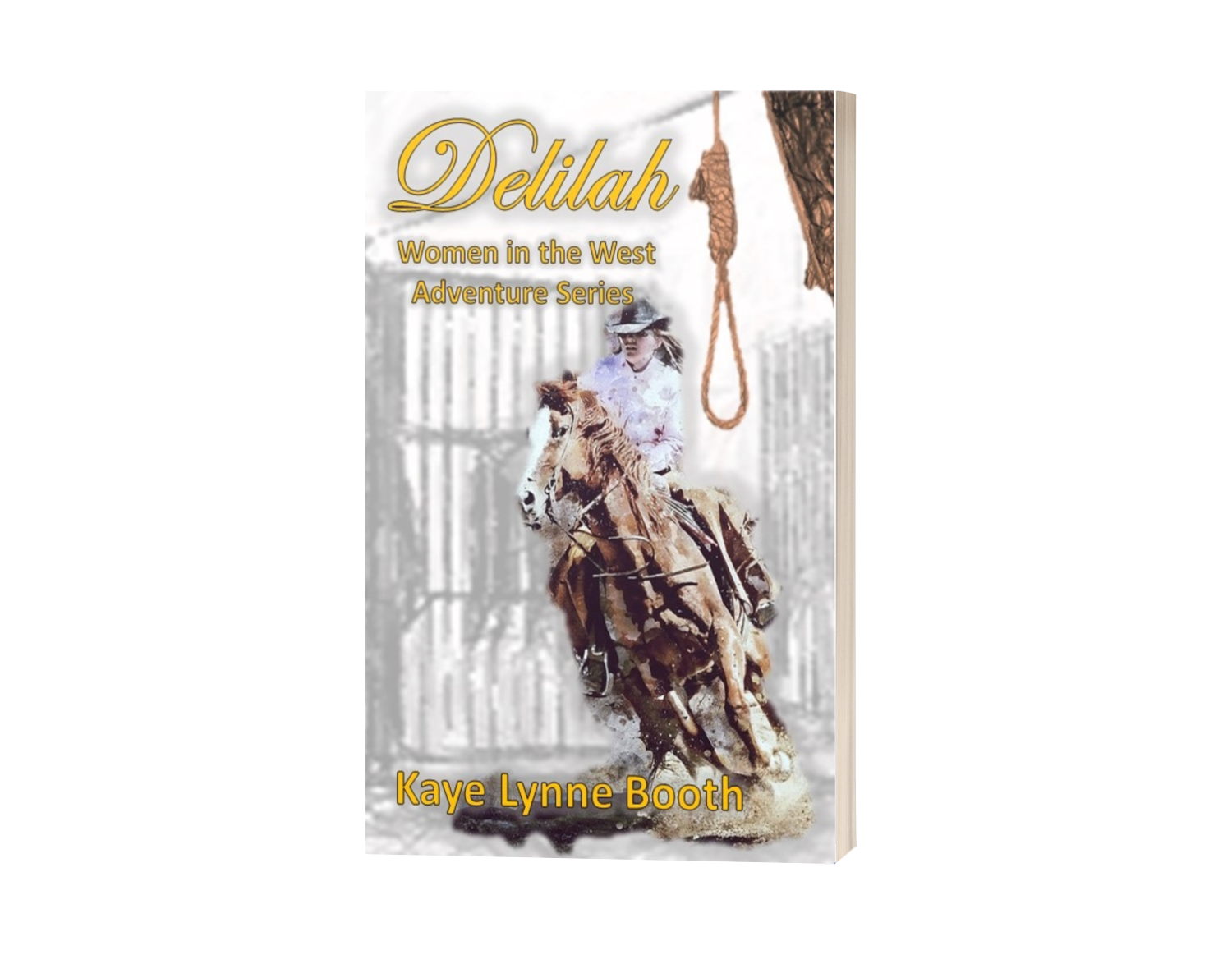
After the publisher I was so sure would take Delilah, didn’t, I did what I was taught in my M.F.A. classes and turned around and sent out another query to another publisher. I didn’t want to leave it sitting idle, so I turned around and sent it out again the same day to the first publisher I found that looked like they might be interested in a Western with a female protagonist. In a little over three weeks, I received a request for the full manuscript and was, of course, elated. The thing is, this publishing house isn’t one of the big 5, or even a small independent publisher, but a hybrid publisher.
We had discussed briefly hybrid publishers in one of my classes on the business of writing, but as I am now faced with the possibility of being offered a contract by one such entity, I felt it might be a good idea to delve a little deeper in order to understand what publishing through a hybrid publisher might entail.
I had a hard time finding anything recent on the subject, with most articles dating back between 2012 and 2014. It seems the term “hybrid publisher” can mean either an author who has works published both traditionally and self-published, or a publishing house that “splices” together elements of self-publishing and small press traditional publishing in any number of ways, according to published indie author and blogger, A.K. Taylor, in her August 6th, 2012 article on The Newbie Author’s Guide, “Rise of the Hybrid Publisher”. For our purposes here, we are talking about hybrid publishing houses rather than hybrid authors, although if they accept Delilah, and I accept their terms, I may someday be one of the later, as well.
According to Brooke Warner, publisher of She Writes Press, in her April 9, 2015 article on The Blog at HuffPost Books, “Hybrid Publishing: Getting a Handle on the New Middle Ground”, hybrid contracts are nothing new, they just aren’t widespread knowledge. Many traditional and independent publishers have been cutting hybrid deals where the author pays all or part of the publishing costs up front for years. What Warner calls partnership publishing allows authors to pay up front for publishing costs and receive a high percentage of the royalties, while the publishing house offers traditional distribution and qualify to submit books to traditional review channels to aide in marketing and drive sales.
Hybrid publishing work in much the same way. I found that there are several hybrid publishing houses out there. All offer some combination of traditional publishing services and benefits of self-publishing. According to Taylor’s article, there are certain things all hybrid publishers have in common:
- Author is involved in the whole publishing & marketing processes.
- Publisher offers traditional publishing and traditional marketing channels
- Royalties from 50 -100% (considerably higher than royalties offered by most traditional publishers)
- Quality craftsmanship
- Shorter contract duration (1-5 years) than traditional publishers, and then rights revert back to author
All hybrid publishers have some type of submission process, but some offer a traditional-type publishing contract, with only a small advance, if any, while others require authors to pay all or part of the publishing expenses up front. I suspected this would be dependent on whether they are a P.O.D. publisher, (publish on demand), or do a traditional print run, although according to the former publisher of Writer’s Digest, Jane Friedman, there are hybrid publishing houses who do not require the author to pay up-front expenses, although the do provide a traditional print run, and even traditional marketing services. In her Publishers Weekly article, May 15, 2015, “Not All Hybrid Publishers are Created Equal: How Authors Should Evaluate Their Choices”, she states that the services offered, as well as royalties and costs vary. It’s important to be sure that the publishing route you choose is going to produce a high quality product.
The publishing house that is considering Delilah may go either way once they have assessed my manuscript, assuming of course that they love it and can’t wait to offer me a contract. They may opt to offer me a contract similar to a traditional contract with no up-front cost to me, or they might chose to offer me a contract more like a self-publishing contract, requiring I pay all or part of the publishing expenses out of pocket.
As far as I could determine, when considering a contract with a hybrid publisher the following five areas should be kept in mind when determining whether the publishing house is right for you. These are the areas I will look at if I am offered a contract for Delilah.
- Speed of Publishing Process – I’m not a patient person, so quick results are appealing to me. I backed out of a contract with a P.O.D. publisher for one of my children’s books, after five years with no results. I like to make things happen and be able to see my hard work come to fruition, preferably before I’m dead.
- Type of Income/Out of Pocket Expense – I’m a starving artist, so of course, an advance would be preferable to covering the publishing expenses out of pocket. The cost was one reason I have shied away from self-publishing models. The idea of larger percentages in royalties is also appealing.
- Traditional print run or P.O.D. – I like the idea of the traditional print run, because it allows the author access to copies for review or to have on hand at signings and other writing events. With P.O.D. publishing, that stuff can get expensive. Plus the above mentioned experience with P.O.D. publishing has made me leery of it.
- Editing services – I believe one thing that gives self-published authors a bad rep are the authors who don’t think they need to have their manuscripts professionally edited before publishing, therefore putting out a poor quality book. Every book should be well edited before publishing, so I feel having editing services available could be invaluable.
- Marketing and promotional services – This is an area where I’m not great at. I’m a writer, not a sales person, although if I believe in something, I usually have good results when selling it, and I do believe in my writing. None-the-less, this is not one of my strong points, so I would take all the help I can get.
It appears that today’s author has three publishing choices, which is two more than author of the past had. More choices means more opportunity for success. In a January 8, 2014 Forbes article, “How Hybrid Publishers Innovate to Succeed”, David Vinjamuri gave this breakdown of the differences between traditional publishing, independent or self-publishing, and hybrid publishing.
- Traditional publishers pay big advances, but move like sea turtles on land. Extremely long process. You have to move at their pace, (a year or more from acceptance).
- Self-publishers/Independent publishers – Large royalties, P.O.D. Author pays all publishing costs up front.
- Hybrid Publishers – Better royalties than traditional publishing, but not as good as self-publishing. Much faster publishing process than traditional publishers, (4 to 6 weeks). Although generally do not pay large advances, many don’t require any money up front from the author. Hybrid publishers pay few if any salaries.
Every author dreams of being traditionally published, but traditional publishing is tough. You have to have thick skin and be able to handle repeated rejections. The only thing I have against self-publishing is the expense. I write to make money, and I have to sell something before I have money to spend. Hybrid publishing seems to me like it might be the best of both worlds and definitely something to consider.
During my M.F.A. courses, I wrote with the belief that I would find a traditional publisher for my work. Although we briefly discussed hybrid publishing and self-publishing, both were glossed over, leaving the impression that they weren’t really options for professional writers. But now that I’m faced with trying to get my work out there, I’m learning that they might be options I should consider. (I’ve already experimented with self-publishing with my short story, Last Call, in e-Book format on Amazon, but haven’t seen a lot of results from it.)
Many of the students in my classes were young, in their twenties and thirties. They may have time to build a career and wait to be discovered, but I am fifty-two years old. I don’t have all that time. I want to make my writing work for me while I’m still alive to enjoy it. So, if this publisher does come back with an offer for Delilah, I’ll consider it. You bet I will. Now I have enough knowledge about hybrid publishers to make an informed decision. Wish me luck.
Like this post? Subscribe to Writing to be Read for e-mail notifications whenever new content is posted.
Share this:

Weekly Writing Memo: The Query Letter
Posted: June 1, 2016 Filed under: Fiction, Uncategorized, Weekly Writing Memo, Writing, Writing Tips | Tags: Writing, writing advice, Writing Process 1 Comment A query letter to an agent or a publisher is one of the basic things you should be able to write if you want to be a writer. Sooner or later, if you want to go the traditional publishing route you will have to send a query letter out to get your writing read. So what goes in a query?
Salutation:
To start your query letter, you’ll want to address it to a specific person instead of using something generic. So find out the editor of the publishing companies name, or who reads the queries. If you’re sending it to an agent, make sure you know the agent’s name. You don’t want to use a generic greeting like “to whom it may concern” because you want to show the person you are sending it to that you’ve done your research about them, and that you’ve chosen them specifically for a reason. By addressing the letter to a specific person, you’re saying I want you specifically to read this because you specifically are right for my story, instead of implying that the letter could go to anyone.
Introduction:
The introduction paragraph of your letter needs to have a few specific details in it. First, it should say why you are writing the person. Are you seeking representation, or publication? Second, it should tell them what you are writing them about, specifically the name of your novel or piece you’re trying to sell, what genre it is in, and a general idea of the word count. Finally, the introduction paragraph should include a line or two summary or description of your novel that gives the general feel of the novel. This should be some sort of hook about your novel and doesn’t have to tell the whole story or anything. The point is to show the person reading the query what type of novel it is in as short a way as possible.
Synopsis:
The second paragraph of your query should be a brief summary of your novel. It doesn’t have to tell everything, but it should touch on who your protagonist is, who the villain is, and what the core conflicts of the novel are. You want it to sound as narrative as possible. I like to think of it as the paragraph that would go on the back of the book – it’s meant to get people to want to read your story. The point of this section of the query is to give the person reading it a taste of what your novel is about, and to get them interested enough to want to read more. So don’t give everything away, but do give them the important details if you can.
Bio:
The final paragraph of your letter should tell a bit about yourself. Specifically, mention your experience as a writer, any publication history, and if you’re seeking representation you should mention what other genres or projects you may be working in. This section shouldn’t be too long, as you just want to give the letter a sample about you. End this section with a final “thank you” to the person who is reading your letter, and maybe something about looking forward to hearing from them.
Sign-Off:
Finally, end your letter with some sort of sign off. Some people like the classic “sincerely”, others prefer to use something less formal such as “best” or “thank you.” Whatever you use, make sure to sign your name. You can also add your contact information below your name, and if you attached anything to the letter you should include the words “Encl.” and whatever is attached after. Such as: “Encl. First three pages and synopsis.” That way the receiver knows what is coming with the query.
Final Notes:
The best way to get good at writing queries is to look up examples online of successful queries, and to practice. There are a lot of examples out there if you look. Just remember, always read what the person you are querying wants you to send, and do everything you can to stick to those guidelines. Not sticking to the guidelines is a very quick way to get yourself rejected if the query reader isn’t feeling generous.
Share this:

Write What You Know
Posted: May 23, 2016 Filed under: Commentary, Fiction, Nonfiction, Writing | Tags: Creative Fiction, Fiction, Nonfiction, Writing, writing advice, Writing Process 1 Comment
As an emerging writer, I hear that advice a lot. I think we all do. But what does it really mean? Before a writer can write about a subject or topic, she must experience it. Which is not to say that it isn’t possible to research a subject and then write about it as if you’re an expert, or at least know what you’re talking about, but it is saying that when you experience something, you must own the emotional aspects associated with it, and that will come through in your writing.
Now you know why I am not a travel writer. I wish I were, but I don’t travel often. Travel writers get paid big bucks. No, I’m a prime example of a starving artist. I work menial labor jobs to scratch out a living, and seek out cheap entertainment. But I do write what I know.
When I started out freelancing, I knew one thing. I loved to write, and I wanted to find a way to make a living at it. When I filled out the application for Examiner.com, I had to pick a category to write on. I chose writing, and as the Southern Colorado Literature Examiner, I covered writing events in southern Colorado and wrote author profiles and book reviews for Colorado authors. I served in this capacity for six years, not because I was getting rich off it, but because I loved what I was doing. I met many Colorado authors, most of whom I’m still in contact with, I got free ARC copies of books for review and I occasionally was able to attend some great writing events, such as the 2013 Pike’s Peak Writers’ Conference, 2012 Writing the Rockies Conference and Performance Poetry Readings, with wonderful poets such as word woman, Rosemerry Wahtola Trommer. The money was never an issue for me, (I maybe made a whole $20 during the whole six years I wrote for Examiner), but the perks were great. It may have actually played a role in my acceptance to Western State Colorado University as a graduate student in their low-residency Creative Writing program, since I had interviewed and written a three part profile on the then director of their poetry concentration, David J. Rothman. But I digress.
When I applied to write for Demand Media writing How-to articles, they didn’t have a lot of call for articles to do with writing, so I had to think. What else did I know? I started out with simple things like How to Put a Chain Back on a Huffy 10-speed Bicycle. I’ve always been an avid gardener, since I helped my grandfather plant petunias when I was a little girl, so I ended up writing a lot of gardening How-tos, like How to Grow Vegetables in a Bathtub. The topics I wasn’t as familiar with required a minimal amount of research, like The Best Potting Soils for a Vegetable Garden and I had references at hand to look up anything I needed. At $8 per article, the research had to be minimal. If I spent too much time researching, the time spent wouldn’t prove to be profitable.
As I mentioned, I don’t do a lot of traveling, and my entertainment is limited by my pocketbook, but I’ve learned to write about the things I do know. You won’t catch me writing about the Emmies, or the Oscars, or $100 a ticket charity fundraisers, because I’ll never be at one of those events and I know very little about them. What you will see me writing about are weird, off the wall things like, How Writing is Like Building a Storage Shed, or Getting in Shape for Writing, which combines my own experience, with building or exercise, with my knowledge of writing.
Of course, that doesn’t work with everything. My experiences on this day involved digging a ditch. Somehow, that just doesn’t seem as creative building a shed. But I could always write a fictional story in which the characters dig a ditch. You see, “write what you know” applies to fiction, too. My whole children’s series, My Backyard Friends, feature characters based on the birds and wildlife that frequently visit my mountain home. I wrote a short story one time that developed from a visit to Lake DeWeese, not far from my home. It was about a woman who walks naked into a waterfall and disappears. The funny thing about that story, titled, The Woman in the Water, was that my narrator turned out to be male, giving it a very interesting twist. But it was still based on the experience I had, hiking up to the top of the dam, and then sitting, gazing down into the waterfall.
It really is important to write what you know, for although some can “fake it” convincingly with just research, in most cases, the readers know. When the words on the page don’t feel genuine, like they’ve come from deep within the author, readers can’t quite buy in to what they’re being told, whether it is something being explained to them in an article, or a fictional story they’re being asked to believe. And if readers can’t buy in to the story, or feel the authority in the author’s voice, they are often left feeling unsatisfied, with the promise of the premise unfulfilled.
In short, what is really meant when someone says “write what you know”, is that you should draw from your own experiences, whether they be many or few, and inject a little bit of yourself with words that come from deep within into your writing. Let the readers feel the same emotions you feel when you write about your topic, or create your story. Write honestly, and the readers will feel that, too.
Like this post? Subscribe to Writing to be Read for e-mail notifications whenever new content is posted.
Share this:

“Treasure Darkly” presents a great genre combo
Posted: May 20, 2016 Filed under: Book Review, Steampunk, Writing, Young Adult | Tags: Book Review, Books, Fiction, Jordan Elizabeth, Review, Steampunk, Treasure Darkly, Writing, Young Adult 3 Comments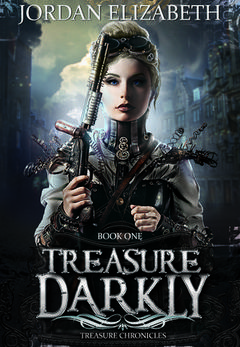
Clark Treasure carries within himself a dark treasure, which gives him control over life and death, and allows him to communicate with spirits. The army wants his secret and drives him into a life as a fugitive, in this haunted YA steampunk romance with a western flair, Treasure Darkly, by Jordan Elizabeth. Clark seeks refuge with the man he believes to be his father, a rich man with a lot of pull in Hedlund, the Big Valley of steampunk, hoping to ride on the Treasure name for protection. His true father comes to him as a spirit after the ruse has already been set in motion and sends Clark on a mission to take care of his unfinished business. Amethyst Treasure, the feisty, spoiled sister who’s not, becomes an object of affection when they both learn there’s no blood between them, and by the end of the book they’ve fallen in love, of course.
Elizabeth sets this first book up well to carry the rest of her Treasure Chronicles series, wrapping up the romance, while leaving the main story open ended to carry on another day, or another book or two. My only criticisms lie in the fact that at times, it didn’t feel like the characters actions and reactions were genuine and that Elizabeth detours from the main storyline from about Chapter 33, after Amethyst’s male friend from the city, Joshua, shows up at the ranch unexpectedly. The family choses this exact time to all go on a family outing, making it feel as if we’ve taken an abrupt jog into a subplot involving Amethyst’s brother, Jeremiah, and a brief romance. While this was a neat little tale driven by the urge to reveal character, I had to pause and ask myself why Elizabeth chose to stray so far from the main story with this section that doesn’t seem to move the story forward.
The place in which Elizabeth choses to end this tale feels unfinished, leaving many unanswered questions, but perhaps this was purposefully crafted to carry us into the next book in the series. For me, however, it felt like an abrupt drop off, leaving many loose ends dangling. It felt like there should have been more, maybe just one more chapter to tie everything neatly together before sending readers off to ponder the story in their own minds, which they will, because Treasure Darkly is a story that inspires deeper thought processes. It has an interesting and well thought out premise, that leaves many possibilities open to discovery. I look forward to seeing what future tales will be inspired for this series.
Overall, this is a very entertaining read. I’m a sucker for westerns, even in a steampunk world. Throwing in aspects from the spirit world, Elizabeth certainly added an interesting twist, if at times too convenient, but none-the-less enjoyable. I look forward to reading its sequel and hope to have the opportunity to review it, as well.
Jordan Elizabeth is a steampunk princess well on her way to living out her fairytale dream of being a successful YA author in New York. Her other works include Escape from Witchwood Hollow, Cogling, and Book Two of the Treasure Chronicle series, Born of Treasure. I give Treasure Darkly three quills.

Kaye Lynne Booth does honest book reviews on Writing to be Read, and she never charges for them. Have a book you’d like reviewed? Contact Kaye at kayebooth(at)yahoo(dot)com.
Share this:

The Making of a Screenplay: The Creative Process (Part 4)
Posted: May 16, 2016 Filed under: Movies, Screenwriting, Writing | Tags: creative process, Screenplays, Screenwriting, Writing, Writing Process 2 Comments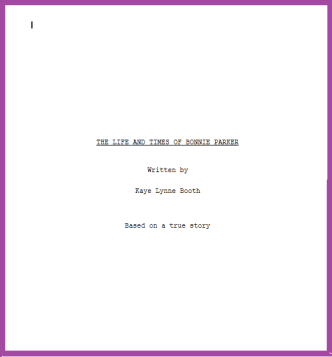
We’ve looked at how a screenplay goes from idea to beat sheet or outline in Part 1. And we’ve seen that the tools used to sell your screenplay, such as the logline and the pitch, are created before you ever start to actually write the script in Part 2. Last week, in Part 3, we looked at the type of research that goes into writing a screenplay. Today, I’d like to look another important step in creating a finished script.
Rewriting
The final step in completing any writing project is rewriting, or revising, to make sure that the finished piece you’re going to submit is the absolute best it can be. In literary writing, it’s called revision, and there may be several revisions before the piece is ready to be sent off in hopes of discovery. But you finish the first draft, before you start revising, or at least some writers do. Me, I’m a firm believer that the more things I fix as I go, the less I will have to fix later, so I do some revision during the writing process of the first draft. In screenwriting, it’s called is rewriting, and it actually takes place all the way through the writing process, which is more in sync with my writing style.
Once the draft for ACT I is finished, you look it over, get feedback from other screenwriters, if available, and then make changes and adjustments to the sections that aren’t working for whatever reason. You repeat the process when you’ve finished the draft up to the end of ACT II, but this time, you also watch to be sure that the two acts flow together well, in addition to ascertaining that ACT II works well. Again, after ACT III is finished, but on the final rewrite, you must be sure that it work as a whole, the flow of the beats are smooth and you’ve maintained a constant tone throughout. If you’ve done a good job on the prior revisions, there may be very little rewriting to do at this point, and it’s really just a matter of fine tuning your script.
For my thesis, I originally wanted to lead viewers through the story with a series of voice-overs by Bonnie, which included imagined journal entries and letters, as well as some of the poetry she actually wrote. I knew I wanted to do this from the start. However, on the last read through, my peers and my instructor brought it to my attention that the way my script was written, I stuck the poetry into scenes where I thought I wanted it, but the way it was written my audience would be looking at a blank screen while they listened to Bonnie’s voice-over, which was not the way I intended it to be.
The majority of my final rewrite was positioning these voice-overs, especially those with the poetry, some of which were quite long at strategic sections where they would seem to refer to what was happening in the story, and to keep the action going during them. In one scene that meant showing Bonnie writing the letter while the voice-over tells us what that letter said. That’s one that I had right. Other scenes needed to have the voice-over over the action, like a car chase. And in some, like at the end of ACT III, I needed the voice-over to play in sync with a montage of single snapshot scenes. There are different ways to write it, so that the voice-over is played the way I wanted it to in each case, and a good portion of my final rewrite consisted of tweaking the scenes with voice-over so they would play the way I wanted them to.
In the end, I came out with a screenplay that flows together well, tells the story I wanted to tell in a compelling and original way, and has a lot of commercial potential. Maybe someday you’ll see The Life and Times of Bonnie Parker on the marquee at the theater as you’re driving down the street.
Like this post? Subscribe to Writing to be Read for e-mail notifications whenever new content is posted.










Acceptance or Rejection – Which do You Prefer?
Posted: June 27, 2016 | Author: kayelynnebooth | Filed under: Commentary, Fiction, Opinion, Promotion, Publishing, Western, Writing | Tags: Acceptance, Creative Fiction, Fiction, Flash Fiction, I Had to Do It, Kaye Lynne Booth, Rejection, Western, Writing | 1 CommentI could go into another post about rejections. Lord knows, I’ve gotten plenty. But I’ve always been one to see the glass half-full side, rather than half-empty, focusing on the positive side to everything, so I think I’d rather talk today about acceptances. I don’t think anyone will disagree when I say acceptances are much better than rejections. You don’t have to be a writer to figure that one out.
You don’t get them as often as rejections, but they’re a lot more satisfying. But there’s a reason I want to write a post on acceptances. If you follow me on Facebook, or Twitter, or Google+, you may have seen my very recent post announcing that my flash fiction western story, I Had to Do It, has been picked up by Zetetic: A Record of Unusual Inquiry.
It’s true this isn’t a big paying publication. I’m certainly not going to get rich from this one little 850 word story. Flash fiction never pays a lot. There’s simply not enough words to make the pennies add up to much, even with higher paying publications. But, I was still elated when I received the acceptance, because my story found a home and people will now read it, and because it is still one more publishing credit for me. I can’t explain the rushing feeling of excitement and pride that small note from the editors brought me. I think most of all, it was thrilling to know that someone else really liked my writing. It was a affirmation of my own belief that my writing really is pretty good.
That probably sounds silly to those who have not yet received an acceptance. (Never fear. It will come.) But we writers are an odd lot, and we are filled with fears and self-doubt. Filled with it. Most of the time we can keep these elements of our inner beings at bay by simply pecking away at the keyboard or filling up sheets of notebook paper, but every once in a while we let our guards down and that’s when they strike. The fear and self-doubt simmer in us, just down below the surface, until they see an opportunity, a weakness, and then they reach up and grab a handful of us and don’t let go.
I think just about every writer worries that the only person in the whole world that really thinks their writing is good is themselves. Friends and family don’t count because they may be saying they like it so as not to hurt your feelings. When you receive an acceptance, any acceptance, it tells you other people do like your writing, and motivates you to get busy writing more.
It’s a good feeling. One I think every writer needs to experience. It can’t happen unless you submit relentlessly and write, write, write. That’s my advice. Write your heart out and then submit like crazy, and never, ever give up. The notes that say, “yes”, make it worth surviving all the ones that said, “no”. So what are you waiting for? Get writing!
Like this post? Subscribe to Writing to be Read for e-mail notifications whenever new content is posted.
Share this: