Day 5 of the WordCrafter “Midnight Roost” Book Blog Tour
Posted: October 20, 2023 Filed under: Anthology, Audio Excerpt, Blog Tour, Book Promotion, Book Release, Books, Fiction, Giveaways, Guest Post, Horror, Science Fiction, Short Fiction, Stories, WordCrafter Book Blog Tours | Tags: Anthology, Dark fiction, Ghost Stories, Mario Acevedo, Michaele Jordan, Midnight Roost, Paranormal, Science Fiction, WordCrafter Book Blog Tours, WordCrafter Press 3 Comments
Welcome to Day 5 of the WordCrafter Midnight Roost Book Blog Tour. It’s been a great tour so far. We’ve met contributing authors Isabel Grey, M J Mallon, Christa Planko, Chris Barili, Paul Kane, Julie Jones, and Keith Hoskins. Each has shared their inspirations for their stories, or readings from them, or both. Check the schedule below to see who’s still coming up, or to go back and visit any stops you’ve missed for more chances to win one of three free digital copies of Midnight Roost.
Today we’ll be meeting contributing authors, Michaele Jordan and Mario Acevedo. Michaele shares a reading from her story, “Afterwards” and Mario talks about the inspiration behind his story, “Immediate Intervention”.
Tour Schedule
Monday – October 16 – Opening Day –Isabele Grey (Interview & Reading) & Joseph Carrabis (Reading) – Writing to be Read
Tuesday – October 17 – M J Mallon (Reading) & Christa Planko (Interview & Guest Post)– Undawnted
Wednesday – October 18 – Chris Barili (Guest Post) & Paul Kane (Guest Post) – Patty’s Worlds
Thursday – October 19 – Julie Jones (Reading) & Keith Hoskins (Guest Post) – Robbie’s Inspiration
Friday – October 20 – Michaele Jordan (Reading) & Mario Acevedo (Guest Post) – Writing to be Read
Saturday – October 21 – Patty Fletcher (Guest Post) & DL Mullen (Guest Post & Video) – Roberta Writes
Sunday – October 22 – Sonia Pipkin (Guest Post) & Roberta Eaton Cheadle (Reading) – Kyrosmagica Publishing
Monday – October 23 – Closing Post –Denise Aparo (Reading) & excerpts from other stories – Writing to be Read
Giveaway
A chance to win a free digital copy of Midnight Roost at every stop. Just leave a comment to show your support for the tour, the anthology, and all of the fantastic authors.
Meet Author Michaele Jordan
Michaele Jordan’s contribution came by invitation, and I was pleased to include her story, “Afterward” in Midnight Roost: Weird and Creepy Stories. Last year, I worked with Michaele with the Visions anthology and I’m tickled to be working with her again. Her story is a paranormal tale which speaks on the human psyche. I’ll let you judge for yourself with the reading below, but I hope you’ll enjoy her story just as much as I did.
Reading from “Afterwards”
About Michaele Jordan

Michaele Jordan was born in LA, educated in New York, and lives in Cincinnati. She’s worked at a kennel, a Hebrew School and AT&T. Now she writes, supervised by a long-suffering husband and two domineering cats.
Her first novel, Blade Light, was serialized in Jim Baen’s Universe, followed by her occult thriller, Mirror Maze.
Her work has appeared in the “Magazine of Fantasy and Science Fiction,” “Abyss & Apex,” and “Buzzy Mag”. Horror fans will enjoy her ‘Blossom’ series, from The Crimson Pact series.
Her website, www.michaelejordan.com, is undergoing reconstruction, but just grab a hard hat, and come on in.
Michaele’s story, “Farewell, My Miko” is featured in the 2022 Visions anthology from WordCrafter Press.
_____________________________________________
Meet Author Mario Acevedo
I first came across Mario Acevedo back when I was the Southern Colorado Literature Examiner and I reviewed one of his graphic novels. Since then, he has served as a presenter and panelist at WordCrafter virtual writing events, and participated in the Ask the Authors 2022 writing reference anthology. He writes urban fantasy and speculative fiction, so I invited him to submit to this dark themed anthology, which turned out to be Midnight Roost. His story, “Immediate Intervention” is a futuristic science fiction tale which offers a quirky take on the regulation of population growth.
Excerpt from “Immediate Intervention”

Inspiration for “Immediate Intervention”
NASA recently announced that a capsule from the Osiris-Rex spacecraft had landed in Utah. The capsule contained debris collected from the asteroid Bennu.
For us science-fiction nerds, the scenario is all too reminiscent of the plot from Michael Crichton’s The Andromeda Strain. Our government assures us that precautions against contamination are in place. Which begs the question, precautions against what? If we don’t know what we protecting ourselves against, how would we know our protections are effective?
Certainly, there is much to be gained from an analysis of the asteroid’s material, but is it worth the risk? Why not study that extraterrestrial material in space?
Just because we can, doesn’t mean we should.
It’s a saying that’s become more significant with our ever increasing technical and industrial capabilities. Several examples come to mind: The creation of the atomic bomb. Gain-of-function research. News articles that raise the hairs on the back of your neck, i.e., stories involving reanimating dead flesh. Gee, what could go wrong? It’s as if the scientists involved have ignored the warnings of every zombie movie ever filmed. Then comes a story about the Chinese growing human tissue inside pig uteruses. Hello, Island of Dr. Moreau calling.
When Kaye Booth asked me to contribute a story to this horror anthology, I had the perfect concept to explore “Just because we can, doesn’t mean we should,” as in human inception and gestation in artificial wombs, to incubate what are known as “bag babies.” The so-called benefits of this development include “freeing women from the tyranny of pregnancy,” allowing parents to customize the genes of their baby, and giving the government the opportunity to control demographics to enact state policies. With bag babies, the government can control population growth without the pesky need for humans getting it on. Two examples warning us about the dangers of industrial-scale human incubation came to mind: Brave New World, and The Matrix.
In my story I saw the opportunity to discuss several themes addressing bag babies. The first is that human development is very complicated and nuanced. We know about the importance of an emotional connection between a mother and the infant while in the womb. When the baby is born, its prefrontal cortex is undeveloped and the brain is a blank slate. As the baby matures, what becomes evident is the empathetic connection between the infant and mother, then infant and father, then infant and others. This connection depends on environmental influences upon the baby in the womb, things like the mother’s heartbeat, her warmth, her emotional state, the projection of good vibes from mother to child. Some of this may sound esoteric but we know that babies born in emotionally toxic environments will become emotionally toxic people.
How then to replicate a nurturing environment for the baby in an artificial womb? Certainly, a fetus incubator could replicate heart beats and use soothing stimuli to mimic a human host mother. But would that be enough? Wouldn’t such a loss of the child-mother bond bring the risk of babies not developing a sense of empathy?
What would be the fallout of that?
In my story, this lack of empathy results in an inability to establish meaningful emotional connections, which in turn would lead to isolation, a sense of chronic loneliness, then depression. And from that, a proclivity to suicide.
The other theme would be one of, who am I? What am I? Who are my real parents? The DNA donors? Or the mother—the incubator? Would there be a sense of spiritual estrangement, that rather than feel part of the human continuum stretching back through prehistory, you see yourself as a fleshy widget, a product of commerce, another cog in the government’s machinery?
This leads to the question, who do you belong to? Presently, as a child, you belong to your parents until the age of emancipation. What happens if the state has sole responsibility over you and you’re seen as a replaceable component of the system? If the state had the authority to conceive you, could they not have the sole authority to terminate you?
With this, the elements for a good horror story fell into place. That the mother who bore you is the same monster who will devour you.
Just because we can, doesn’t mean we should.
About Mario Acevedo
Mario Acevedo is the author-artist of Cats In Quarantine: A Cartoon Memoir of the COVID-19 Pandemic. He is an award-winning cartoonist and artist who served as a soldier-artist for the US Army during Operation Desert Storm. Mario is the author of the national bestselling Felix Gomez detective-vampire series, The Nymphos of Rocky Flats and most recently Steampunk Banditos: Sex Slaves of Shark Island; the graphic novel from IDW, Killing the Cobra; and the YA humor thriller, University of Doom. He co-authored the Western novel, Luther, Wyoming. His work has won an International Latino Book Award, a Colorado Book Award, and has appeared in numerous anthologies to include Denver Noir; ¡El Porvenir, Ya!; Shadow Atlas: Dark Landscapes of the America;, A Fistful of Dinosaurs; Straight Outta Deadwood; Psi-Wars; and It Came From The Multiplex. Mario was a faculty member of the Regis University Mile-High MFA program and Lighthouse Writers Workshops.
Mario has also been a presenter and panel member for both the 2020 Stay in Place Virtual Writing Conference, and the 2021 New Beginnings Virtual Writing Conference. He is also a contributor to the Ask the Authors 2022: Writing Reference Anthology from WordCrafter Press.

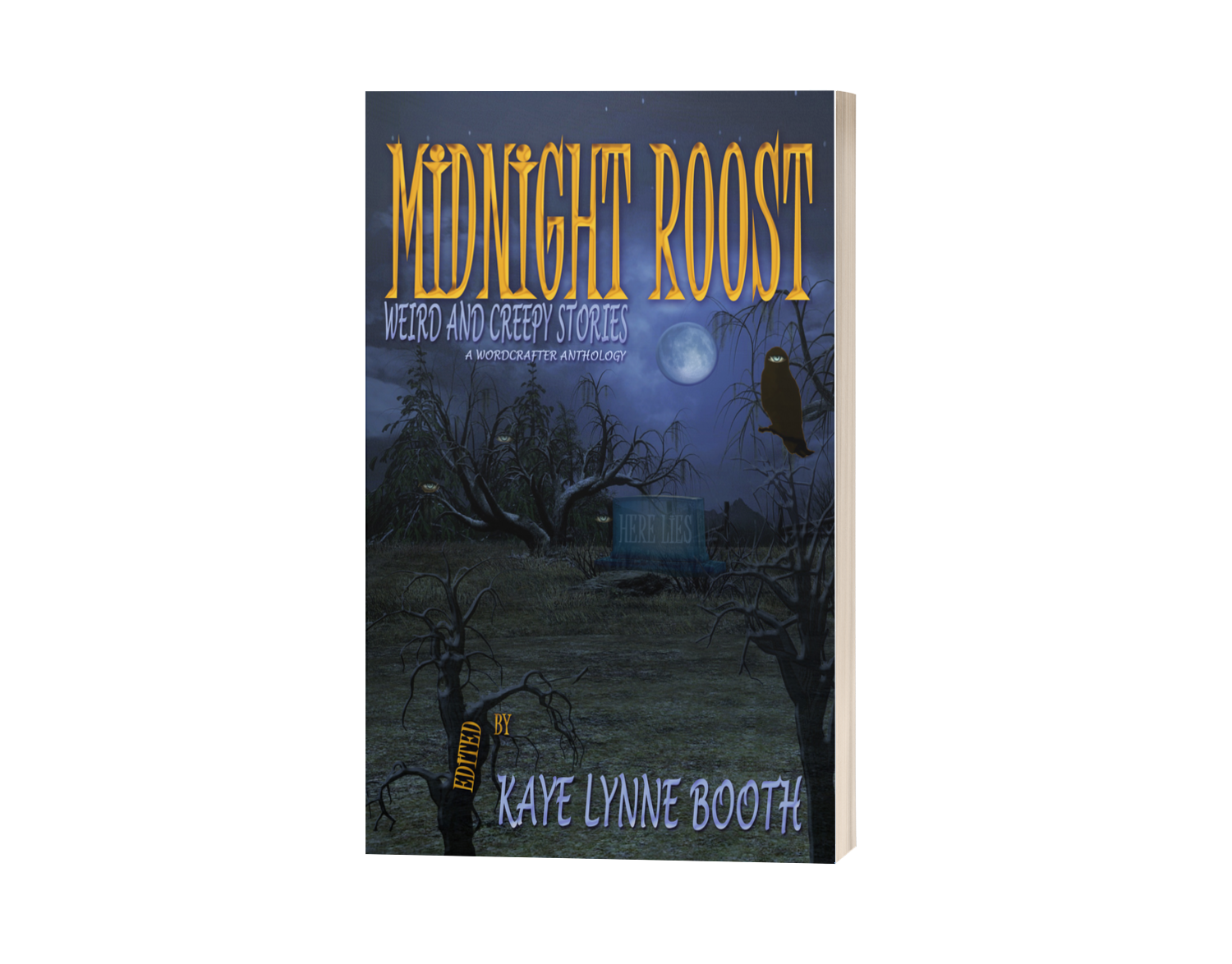
About Midnight Roost: Weird and Creepy Stories
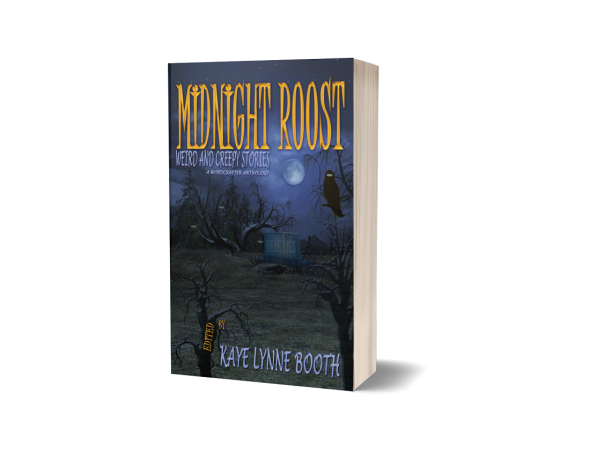
20 authors bring your nightmares to life in 23 stories of ghosts, paranormal phenomenon, and the horror from the dark crevasses of their minds. Stories of stalkers, both human and supernatural, possession and occult rituals, alien visitations of the strange kind, and ghostly tales that will give you goosebumps. These are the tales that will make you fear the dark. Read them at the Midnight Roost… if you dare.
Purchase Link: https://books2read.com/u/318L0l
That’s it for today’s stop. I hope you enjoyed meeting contributing authors Michaele Jordan and Mario Acevedo and learning about their stories. You can use the links in the schedule above to go back and visit earlier stops on the tour, but the links for future stops won’t be live until their scheduled day. Don’t forget to comment to show your support for all of the talented authors that contributed to Midnight Roost, and get more chances to win the giveaway.
Join us tomorrow, on Roberta Writes, where Robbie Cheadle hosts contributing authors Patty Fletcher and DL Mullan, who share lots of interesting things about their stories, “Casualties of War” and “Mangled”, respectively.
____________________________________________________________
Book your WordCrafter Book Blog Tour today!
Share this:

Meet the authors of Midnight Roost: Today, Robert Kostanczuk
Posted: October 19, 2023 Filed under: Anthology, Book Release, Books, Dark Fantasy, Fiction, Horror, Science Fiction, Short Fiction, Stories | Tags: "A Visitant Comes to the Window", Anthology, Dark Fantasy, Dark fiction, horror, Midnight Roost, Robert Kostanczuk, Science Fiction, WordCrafter Press 1 Comment
Purchase Link: https://books2read.com/u/318L0l
Share this:

Meet the authors of Midnight Roost on Joseph Carrabis’ Blog: Today, M J Mallon
Posted: October 13, 2023 Filed under: Anthology | Tags: Anthology, M J Mallon, Midnight Roost, Science Fiction, WordCrafter Press 1 Comment
Share this:

Book Review: Blindfold
Posted: September 1, 2023 Filed under: Action/Adventure, Book Review, Books, Fantasy, Review, Science Fiction | Tags: Action/Adventure, Blindfold, Book Review, Fantasy, Kevin J. Anderson, Science Fiction, Writing to be Read 6 Comments
The Book
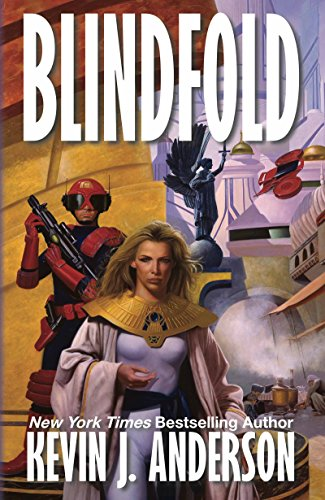
Atlas is a struggling colony on an untamable world, a fragile society held together by the Truthsayers. Parentless, trained from birth as the sole users of Veritas, a telepathy virus that lets them read the souls of the guilty. Truthsayers are Justice—infallible, beyond appeal.
But sometimes they are wrong.
Falsely accused of murder, Troy Boren trusts the young Truthsayer Kalliana…until, impossibly, she convicts him. Still shaken from a previous reading, Kalliana doesn’t realize her power is fading. But soon the evidence becomes impossible to ignore. The Truthsayers’ Veritas has been diluted and someone in the colony is selling smuggled telepathy. Justice isn’t blind—it’s been blinded.
From an immortal’s orbital prison to the buried secrets of a regal fortress, Kalliana and Troy seek the conspiracy that threatens to destroy their world from within. For without truth and justice, Atlas will certainly fall…
Purchase Link:
https://www.amazon.com/Blindfold-Kevin-J-Anderson-ebook/dp/B004XEKHFC
My Review
Blindfold, by Kevin J. Anderson takes place on the colony of Atlas, where the lands are divided among several landowners, each doing his part to make Atlas run like a well oiled machine, but not everyone plays by the rules. Killiana is a young Truthsayer who, comes to believe that her mindreaading powers may have falsely convicted Troy Boren, a young man who was in the wrong place at the wrong time. When she unwittingly uncovers that one landowner isn’t playing fair and may soon take over control of the colony, she finds herself a fugitive with Troy, as they fight to uncover the truth.
As all of Anderson’s works, Blindfold is well written and skillfully crafted to emmerse readers in the story. It keeps the reader guessing, and that keeps pages turning. I give it five quills.

____________________________________________________________
Kaye Lynne Booth does honest book reviews on Writing to be Read in exchange for ARCs. Have a book you’d like reviewed? You can request a review here.
Share this:

Book Review: The Inheritors
Posted: August 4, 2023 Filed under: Book Review, Books, Fantasy, Fiction, Review, Science Fantasy, Science Fiction | Tags: Book Review, Fantasy, Joseph Carrabis, Science Fiction, Selected Stories: Science Fiction Volume 2, The Inheritors, Writing to be Read 3 CommentsAbout the Book
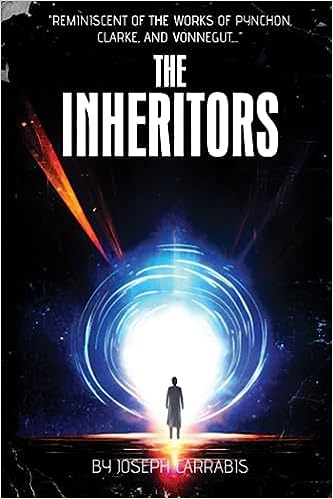
One young boy’s beliefs about himself and the universe changes the structure of reality.
A shapeshifting monster driven by primal desires shatters concepts of intelligent design and becomes an incarnation of vengeance.
A child with a strange gift is abducted from home and must learn to co-exist with beings far different from himself.
A boy exposed to dark magic and demonic rituals must tread carefully or become the thing he fears.
Creatures from the end of time travel through human history kidnapping children to save a bizarre future world.
Physics, mysticism, biological science, and theology are woven into a dark, thought-provoking novel taking readers on a journey they could have never imagined possible, challenged to rethink everything they thought they knew about history, time, space, and the nature of life itself.
“Reminiscent of the works of Pynchon, Clarke, and Vonnegut,…” – Clarabelle Miray Field, award winning poet and Editor-in-Chief, Carmina Magazine
Purchase Link: https://www.amazon.com/Inheritors-Joseph-Carrabis/dp/B0C9W7X7ZG/
My Review
The Inheritors, by Joseph Carrabis is a unique journey beyond the consciousness of man. This is a story that will make you think and perhaps ponder your very existence as Carrabis reveals his vision of the universe and what’s really going on through the complicated and often confusing universe he has created.
Out of a cave comes the first woman who can think and truly see the universe, who is scorned for her gift to the few who possess a higher way of thinking, we see a different picture of our own universe. When right and wrong become two sides of the same coin and it’s hard to determine who the good guys are, and thinking outside the box upsets the status quo, you’ll be introduced to a universe where gods are created.
A unique tale with philosophical undercurrents, The Inheritors is literary entertainment that makes you think about the way we think. Highly entertaining. I give it five quills.
______________________
Kaye Lynne Booth does honest book reviews on Writing to be Read in exchange for ARCs. Have a book you’d like reviewed? You can request a review here.
Share this:

Book Review: Tales Told ‘Round Celestial Campfires
Posted: May 31, 2023 Filed under: Book Review, Books, Fantasy, Fiction, Horror, Review, Science Fiction, Short Fiction, Stories, Writing | Tags: Book Review, Fantasy, horror, Joseph Carrabis, Science Fiction, Short Fction, Short Stories, Tales 'Round the Celestial Campfire, Writing to be Read 3 CommentsAbout the Book
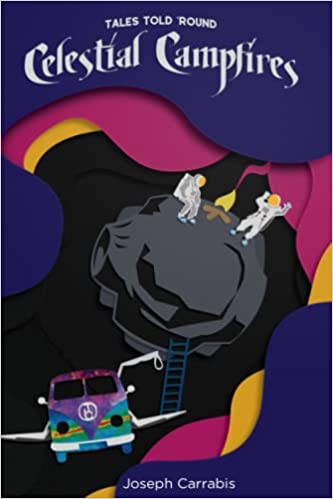
… everything written here actually happened
No, really, it did. I’ve seen things and been places and met…creatures…most people can’t imagine. Or wouldn’t want to. Or should. It all depends on the person and the creature.But much like Gahan Wilson’s “I only paint what I see”, I only write about what’s actually happened…
So sit back, relax, have something tasty near at hand or tentacle or claw. Read these when other people are around…if you can trust they’re really people. Or read them alone, when it’s dark out. Maybe. Unless you’re not sure what things go bump in the night or scurry unseen in the dark.
Purchase Link: https://www.amazon.com/Tales-Told-Round-Celestial-Campfires/dp/0984140336
My Review
Tales Told ‘Round Celestial Campfires, by Joseph Carribis is a collection of tales of wide variety. A little fantasy, a little science fiction, a bit of horror. They are not tales for the faint of heart, but tales for the strong of mind. The stories which make up this collection create a cross between science fiction, and legend and lore, with a bit of philanthropy thrown in for spice. Readers who enjoy pondering the story, savoring it, delving into the inner depths of it, this collection is for you. Carrabis’ stories make you think. They make statements on human nature and humankind, and the not-so-human kind.
Most Memorable
- “Winter Winds”, where children are taught about some unusual animals which only come out in foul weather has a clever twist at the end which brought a smile ot my face.
- “Those Wings Which Tire, They Have Upheld Me”, a rich fantasy story about the ultimate sacrifice and learning human kindness.
- “The Goatmen of Aguirra”, which is an unusualand thought provoking story about a visit with goat-like creatures on a distant planet.
- “Cymodoce”, is rather sad tale of forbidden love.
- “The Boy Who Loves Horses”, is about a gifted boy, more comfortable with horses than with people.
- “Them Doore Girls”, a hauntingly eerie tale about two sisters who were the only survivors of the shipwreck which took their parents’ lives, is probably my very favorite.
Joseph Carrabis is a master storyteller. He has created a delightfully amusing collectionstories with he potential to keep you awake at night. I give Tales Told ‘Round the Celestial Campfires five quills.
__________________________________________________________________________
Kaye Lynne Booth does honest book reviews on Writing to be Read in exchange for ARCs. Have a book you’d like reviewed? You can request a review here.
Share this:

Book Review: Kingdoms at War
Posted: February 24, 2023 Filed under: Audio Books, Audiobook Review, Book Review, Books, Fantasy, Review, Science Fantasy, Science Fiction | Tags: Audio Books, Book Review, Dragon's Gate, Fantasy, Kingdoms at War, Lindsay Buroker, Science Fantasy, Science Fiction, Vivian Leheny, Writing to be Read 3 Comments
The Audio Book

An epic series starter with nearly 1,100 five-star Goodreads ratings: Young mapmaker-in-training Jak dreams of exploring new worlds. But when he and his mother unearth the legendary dragon gate, Jak finds himself caught between his own growing power and magical enemies who will stop at nothing to eliminate him… From a USA Today bestselling author!
Purchase Link: https://www.chirpbooks.com/audiobooks/kingdoms-at-war-by-lindsay-buroker
My Review
I listened to the audio book of Kingdoms at War, written by Lindsay Buroker, and narrated by Vivienne Lehany. Buroker takes readers on a science fantasy adventure that won’t be soon forgotten, complete with her signature snark, and Lehany brings it alive with her mastery of varied character voices.
Just as Jack and his mother find the artifact his father lost his life searching for, their find is discovered by the zidar, and they are swept away with the dragon’s gate to the distant kingdom of King Yidar. But if Yidar figures out how to use the gate, it could mean distruction for Jack and all of his kind, so his mother gives the key to the Captain of the female mercenary regiment for safe keeping, this making the whole regiment a target. Can they figure out how to wake the gate up? And if they do, can they convince the dragons to help them gain their freedom from the wizard kings and their Zidar? But will they be able to get the dragon’s gate away from Yidar and prevent him from discovering it’s secrets?
Kingdoms at War is book one in Buroker’s Dragon’s Gate series, and it brings the promise of much more to come. A delightful tale which kept my full engagement throughout. I give it five quills.
____________________________
Kaye Lynne Booth does honest book reviews on Writing to be Read in exchange for ARCs. Have a book you’d like reviewed? You can request a review here.
Share this:

Bowlesian! – Detective Robot and the Murderous Spacetime Schism
Posted: January 4, 2023 Filed under: Books, Bowlesian!, Excerpt, Fiction, Humor, Science Fiction, Short Fiction, Speculative Fiction, Stories | Tags: Bowlesian!, Humor, Jeff Bowles, Science Fiction, Short Fiction, Short Stories, Writing to be Read 2 Comments
Detective Robot and the Murderous Spacetime Schism
by Jeff Bowles
We found victim one face down in a giant vat of beer. Red beer, frothy, churning and roiling in blood. Not precisely the best brew of the batch, I knew, but I couldn’t help wonder what it might taste like on a mechanical tongue.
“Detective Robot,” said Officer Allen, a short, stocky, often uncharitable young fellow who always seemed to smell of cooked sausage. “I can’t believe they called you out for this.”
I formed my golden jointed lips into a pleasant smile. “Why wouldn’t they have called? Rain or shine, we always get our man.”
My partner and fellow investigation consultant, Gorilla Todd, beat his big furry chest and pulled his lips back over his teeth.
“Step back, beat cop,” he said in his deep, gruff voice. “Let the man work.”
Gorilla Todd was five hundred pounds of hyper-intelligent simian. He was a post-nuclear, neuro-enhanced military lab experiment, lots of those wandering Grim Land. Bit of a bruiser, to be sure, but an honest and a loyal one.
“Thank you, Gorilla,” I said. “Officer Allen, must we really?”
Allen snorted. “Boy oh boy, you fellas need to learn your place. Are we still short-staffed on actual detectives? What’d you do to get the call on this? Grease a few palms? Robots run on grease, don’t they?”
Point of fact, we run on million-core supra-processors the size of toenail trimmings. But I wouldn’t expect a technologic druid like Allen to know the difference. We got the call because the Chief appreciated our work and professionalism. She requested us by name; the place was ours for the next few hours.
“Why a fusion brewery?” I said, taking in our surroundings.
“People don’t die in fusion breweries?” asked Allen.
“Usually not fashion models, no,” said Gorilla. “Not in the middle of the night.”
“And certainly not old women dressed up like them,” I said.
Allen blanched at this.
“Old women,” he said, scratching his head as he turned to face the vat. “Holy cow! She’s gone all pruney in the lager.”
“Ale,” I said. “Shall you fetch the net or shall I?”
* * * * *
Fusion brewing, popularized at the dawn of the last nuclear holocaust, involves the high-speed collision of plutonium-rich barley nuclei with the nuclei of hops machine grown in the atomic soils found in the ancient ruins of Hackensack, New Jersey. The resulting photonic explosion produces a bubbly, effervescent ale, light on the tongue, but with just enough zing to potentially threaten male fertility (as all nuclear beverages should).
Zippy Beer, or rather, Zippy Beer’s northeast production plant, did seem a rather strange place for homicide. Zippy was known throughout Grim Land as the safest, most environmentally conscious nuclear beer on the market. Fifty years without a tainted batch, their ocu-tisements often declared. Fusion belchers spat florid ale, sluicing through sloshers, roaring down pipeways, collecting and aging in anti-grav refrigeration closets.
I studied Allen carefully. He looked tired and overworked.
“I swear to God, she was young when I found her,” he said.
“Sure she was,” Gorilla Todd chuckled. “Makes all the sense in the world. Hey, mac, you been smokin’ them funny cigarettes?”
I tapped my chin with platinum fingers and examined the poor old dead dear. We’d pulled her from the vat and sprawled her out on the tiled factory floor. I searched and picked at her with the robo-pincers I used for toes.
“You’re having us on, aren’t you Officer Allen?” I said. “You see that high, high ceiling all those many meters up above? See how there’s no skywalk, no roof access?”
“Yeah?” said Allen.
“Now do you see this is the last vat in the line? Eleven vats down that way, but here, just the one. No ladder, either. Do you see?”
Gorilla Todd jumped to his feet and waved an arm over his head. “I know this one, robot! I know it!”
I nodded at him agreeably and opened up my chest slot with a bleep, bleep, bleep, CLACK. A high-protean banana cube flopped out and jiggled on the factory floor like jelly. All five-hundred pounds of Todd landed on it and gobbled.
“She materialized in the beer,” he said, smacking his lips. “And she aged on the spot. Some kind of schismatic time disruption, I think.”
“Very good, Gorilla,” I said. “You see, Officer Allen, once you have eliminated the impossible, whatever remains, however improbable, must be the—”
A hole tore open in the air above us. It went Riiiip, and then it stretched itself wide in a kaleidoscopic clash of colors and voices. Abraham Lincoln, the sixteenth President of the United States, fell through and landed on Officer Allen with a heavy thud.
Gorilla Todd shouted, “Holy cannoli! Who is that?”
“It’s Abraham Lincoln,” I said. “And he’s been shot!”
I checked my tertiary memory banks to be sure. The beard, the hat, it was Lincoln, all right. Bullet wound in the back of the head. He wasn’t dead yet. Eyes fluttering, gasping, but not dead yet. He’d arrived only moments after his famous assassination. Remarkable. His body aged on the spot, grew older by the second. Wrinkles, thinning skin, hair gone long, gray, brittle.
Allen wheezed like strangled bagpipes. He gave a final stifled groan, then he lay his head back, twitched, and went limp. I rushed over and checked him for a pulse.
“He’s dead, Gorilla,” I said. “The Great Emancipator snapped his neck.”
“Hmph. Don’t look too great to me.”
“Granted, though I’m certain he’s not at his best. Struck down by a cowardly actor. That’s democracy for you. What precisely are we dealing with, Gorilla?”
“Black magic?” said Todd.
“Doubtful.”
“Sinister Martian technology?”
“Highly unlikely, though you earn top marks for making me chuckle. No, Todd, our suspect resembles nothing so much as thin air.”
“What do you mean?”
I walked over to another vat and kicked at the release valve until golden nuclear beer gushed out and sprayed my feet. Bending low under the faucet, I proceeding to fill my robot super stomach with hoppy ale.
My jointed fingers tapped a supple syncopated rhythm on my forehead. Performed a million mental processes. A million plus fifty. The span of a single human heartbeat.
“Eureka!” I exclaimed. “The cause of the murderous spacetime schism is—”
Rather out of the blue, a naked caveman came screaming at us from the shadows. He shouted, “Gooba! Blabba!” and then proceeded to club me over the head with a tree branch.
“Ouch!” I shouted. “Help me, Todd, you great galoot!”
Gorilla Todd ripped the branch away and roared a mighty challenge. The caveman roared back. His skin rippled with flash wrinkles, hair going brittle and gray, just like Lincoln’s. Hearty fellow, he attacked Todd, ripped out a chunk of gorilla hair and fish-hooked my simian companion.
“You rotten mook!” Gorilla shouted, caveman fingers sliding in and out of his mouth. He wrapped his meaty hands round the caveman’s throat and began to throttle the poor fellow.
“Gorilla, no!” I said.
Five new holes ripped open in the air above us. One long, continuous Riiiip, and that same kaleidoscopic clash. Out of the holes fell a cute orange kitten, a young renaissance painter, a popular ancient professional football quarterback, a potted cactus, and lastly, Richard Milhous Nixon.
Nixon crumpled to the ground, got one look at Lincoln and shrieked, “Jesus Christ! What happened to that poor bastard?”
All of them aged. The kitten grew, got fat, got skinny, and died. The renaissance painter, fingers covered in vibrant red and green oils, said something in Italian about unfinished masterworks, choked on his tongue, and summarily expired.
“We gotta do something, Robot!” said Todd, still choking the dwindling, gasping caveman.
“Do what?” I said. “And stop choking that caveman!”
Nixon died screaming, gurgling, clawing at the air.
“Todd,” I said, “we have to dump the beer!”
“The beer?” said Todd.
“It’s a bad batch! It must be. There’s no murderer here. Tainted Zippy Beer has caused a schism in space and time!”
Seven more air holes ripped open. From them dropped a sea bass, the Marquis de Sade, two members of a light contemporary jazz quartet, an earth worm, Eddie Murphy, and a two hundred twenty-five foot tall California redwood tree.
The redwood thudded to the factory floor, split the concrete, rose and sprawled, broke through the high white ceiling. The factory lights flickered. Ceiling chunks rained down on us.
“The beer, Todd! Dump it!”
Todd let go the shriveled caveman. He leapt for the redwood, scaled its trunk hand-over-hand. He braced himself against the vat, pushed at it with all his might.
“It won’t budge!” he said.
Three more air holes ripped open. A snail, a circus elephant, a street vendor holding tacos.
Think. Think.
I tapped a rhythm on my forehead.
“Eureka!” I exclaimed.
I leapt for the tree, climbed for a branch, squared my shoulders, and then I dove into the beer.
In haste, I began to drink it, slurp it all up. My robot super stomach swelled. Five hundred gallons. Seven hundred, a thousand. The roiling, bloody fashion model beer, it washed down my throat at a hundred-thousand PSI. Rushing, roaring through my alloy sternum. My body rocked and strained. I groaned like industrial machinery.
“It’s working, Robot!” said Todd. “The holes are slowing down!”
A riip here, small rip there. And then it stopped.
Bodies grew old and died; the redwood rotted, split. Half fell and crushed the factory wall. In rushed the night air, our arid post-nuclear wind. Our city out there—Grim City One—twinkled like starlight. Bricks and heavy steel beams and girders fell all around us. Clouds of dust lifted and lingered until well after relative stillness had filled the factory.
Gorilla Todd gasped from exertion. He stumbled down from the remnants of the redwood and sat against its trunk, eyeing the bodies, all the destruction.
“You did it, Robot,” he said. “You’re a friggin’ genius, you know that?”
Of course I knew. I also knew I was big as a house. Big like a beer vat and just as full. Body engorged, I looked like a head swimming in sea of scrap metal, jammed into the vat like some kind of sardine.
“Tainted spacetime-schismatic beer,” I wheezed. “I might have known! Perhaps a super-accelerated atomic contaminant—a mutation in the solitary photosynthetic apparatus, for instance—exceeded localized time dilation barriers and generated contiguous Einstein-Rosen pathways. And to think, Albert Einstein believed time was non-real!”
“Erm, Ein-who?” said Todd.
“Call in a containment unit, Gorilla. Call in the best they’ve got. And get the Chief down here, too. I fear, Todd, our troubles are just beginning.”
Gorilla Todd huffed. He pondered a moment, and then his thick brow lifted as realization dawned.
“Oh no,” he said. “You don’t mean….”
“Precisely,” I replied. “In approximately thirty-nine minutes, I will have to void my robo-bladder like a racehorse. The game, as they say, my dear Gorilla Todd, is afoot.”
END

Jeff Bowles is a science fiction and horror writer from the mountains of Colorado. The best of his outrageous and imaginative work can be found in God’s Body: Book One – The Fall, Love/Madness/Demon, Godling and Other Paint Stories, Fear and Loathing in Las Cruces, and Brave New Multiverse. He has published work in magazines and anthologies like PodCastle, Tales from the Canyons of the Damned, the Threepenny Review, and Dark Moon Digest. Jeff earned his Master of Fine Arts degree in creative writing at Western State Colorado University. He currently lives in the high-altitude Pikes Peak region, where he dreams strange dreams and spends far too much time under the stars. His latest novel, Resurrection Mixtape, is available on Amazon now.
Share this:

Book Reviews: “The Unexpected Enlightenment of Rachel Griffin” & “Down to Dirt”
Posted: November 11, 2022 Filed under: Alternate Worlds, Book Review, Books, Fantasy, Review, Science Fiction | Tags: Alternate World, Book Review, Fantasy, Kevin Killiany, L. Jagi LAmplighter, Science Fiction, The Unexpected Enlightenment of Rachel Griffin, Writing to be Read 2 CommentsThe Unexpected Enlightenment of Rachel Griffin
Hogwarts hasn’t got anything on Roanoke Academy and the magical world created by L. Jagi Lamplighter in The Unexpected Enlightenment of Rachel Griffin. Rachel Griffin has worked hard to prepare for attending, and now as one of the youngest students at Roanoke, she has a lot of expectations to uphold and her magic must be in top form to keep up with the rest of her class. But there is something amiss at Roanoke Academy; a new magic being used for ill gains, an assasin disguised as an agent, a princess who goes places whenever she touches certain people, and a raven which only Rachel can see. Rachel must figure out what is happening and how to battle the forces of evil which seem to be decending upon them and threaten to take over her magical world.
Skillfully crafted to offer up all the pieces for readers to put the puzzle together. It’ a lot shorter than the story about the kid with the owl but just as thoroughly entertaining. Rachel Griffin is a sharp young lady with magical inclinations that will win your heart and make you want more. I give The Unexpected Enlightenment of Rachel Griffin five quills.

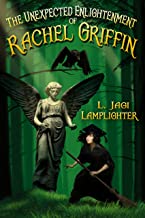
Purchase Link: https://www.amazon.com/Unexpected-Enlightenment-Rachel-Griffin-Books-ebook/dp/B01FVJ7DAY
Down to Dirt
Down to Dirt, by Kevin Killiany is a wonderful young adult science fiction novel with an underlying social moral. after spending her whole life in space, Mara’s family decides to send her to visit her Earth bound relatives on what spacers call Dirt. She arrives on Earth fearful and a little confused, but within a few weeks she will come to question everything she has ever been taught about Dirt. With a little help from her cousin, Beth, and her friend Jael, who each in thier own way challenge the prejudices that came with her, Mara begins to see things in different light.
Down to Dirt addresses social issues via a fictional alternate timeline world to create a story which is both engaging and entertaining. I give it five quills.

Purchase Link: https://www.amazon.com/Down-Dirt-Stars-Book-ebook/dp/B01HDT14HI
_________________________________________________
Join Kaye Lynne Booth & WordCrafter Press Readers’ Group for WordCrafter Press book & event news, including the awesome releases of author Kaye Lynne Booth. Get a free digital copy of her short story collection, Last Call and Other Short Fiction, as a sampling of her works just for joining.
Share this:

Day 8 of the WordCrafter “Visions” Book Blog Tour
Posted: October 24, 2022 Filed under: Anthology, Blog Tour, Book Promotion, Book Release, Book Review, Books, Fantasy, Fiction, Giveaways, Guest Post, Horror, Science Fiction, Short Fiction, Speculative Fiction, Stories, Urban fantasy, WordCrafter Book Blog Tours | Tags: Anthology, Book Review, Fantasy, horror, Joseph Carabis, Science Fiction, Visions, WordCrafter Book Blog Tours, WordCrafter Press 12 Comments
Today is Day 8 and we’re wrapping up the WordCrafter Visions Book Blog Tour here on Writing to be Read. We’ve had a fantastic tour for this unique fantasy, science fiction, and horror anthology. For anyone who might have missed a stop along the way, you’ll find links to each stop below. Note that they will not work until each post goes live. We’re running a great digital giveaway and all it takes to enter is a comment, so visit any stops you missed and leave a comment so I know you were there.
Monday – October 17 – Guest Post – Billie Holladay Skelley & Winning Story Interview with Roberta Eaton Cheadle – Writing to be Read
Tuesday – October 18 – Guest Post – Michaele Jordan & Review – Patty’s World
Wednesday – October 19 – Guest Post – D.L. Mullan – The Showers of Blessings
Thursday – October 20 – Guest Post – C.R. Johanssen & Review – Robbie’s Inspiration
Friday – October 21 – Guest Post – Patty L. Fletcher & Review – Zigler’s News
Saturday – October 22 – Guest Post – Jeff Bowles – Writing to be Read & Interview w/ Kaye Lynne Booth on SaraWesleyMcBride
Sunday – October 23 – Guest Post – Stephanie Kraner & Review – Roberta Writes
Monday – October 24 – Guest Post – Joseph Carabis – Writing to be Read & Review – Undawnted
Digital Giveaway
Three digital copies of Visions will go to three lucky winners.
Enter at each stop just by leaving a comment so I know you were there.
Follow the tour, comment at each stop, and learn more about this exceptional anthology.
_______________________________________________________________________________________

Grab your copy today from your favorite book distributor through the Books2Read UBL: https://books2read.com/u/49Lk28
About the Book
An author’s visions are revealed through their stories. Many authors have strange and unusual stories, indeed. Within these pages, you will find the stories of eighteen different authors, each unique and thought provoking. These are the fantasy, science fiction, paranormal, and horror stories that will keep you awake long into the night.
What happens when:
An inexplicable monster plagues a town for generations, taking people… and souvenirs?
A post-apocalyptic band of travelers finds their salvation in an archaic machine?
The prey turns out to be the predator for a band of human traffickers?
Someone chooses to be happy in a world where emotions are regulated and controlled?
A village girl is chosen to be the spider queen?
Grab your copy today and find out. Let authors such as W.T. Paterson, Joseph Carabis, Kaye Lynne Booth, Michaele Jordan, Stephanie Kraner, and others, including the author of the winning story in the WordCrafter 2022 Short Fiction Contest, Roberta Eaton Cheadle, tantalize your thoughts and share their
Visions
From Kaye Lynne Booth, editor of Once Upon an Ever After: Modern Fairy Tales & Folklore, Refracted Reflections: Twisted Tales of Duality & Deception and Gilded Glass: Twisted Myths & Shattered Fairy Tales.
_____________________________________________________________________
For today’s tour stop, we have a guest post by contributing author, Joseph Carrabis, here on Writing to be Read, and then over on Undawnted, DL Mullan has a review of his story, “Marianne”.

Guest Post
The Genesis of Marianne
Marianne originally was Mitre and dealt with how grown children deal with a senile parent. It was set at an ocean front home and many of the plot points in Mitre made it through to Marianne, except Mitre presented a dim view of people professing Christianity in order to avoid unpleasant responsibilities, and Mitre – a devout Catholic and an immigrant – is senile throughout the story.
The original Mitre draft – written sometime in the early 1970s. I was a live-in groundsman/driver/bodyguard for a wealthy family who lived in a mansion on the ocean – never worked for me although I appreciated the idea behind it and most of the plot points, so into a drawer it went (we didn’t have computers back then). I rewrote it twice in 1988 (at which point it made it into a computer), twice again in 1998, then again in 2013, 2015, 2017, twice in 2018 and ’19, and remained unsatisfied although I knew each rewrite got closer to the core story. I rewrote it four times in 2020 which is when Mitre became Marianne and I realized what wasn’t working for me. It took me four more rewrites to get the characters’ voices, the fantasy concept, the myth induction, and associated elements to work to my satisfaction.
Here are some specifics:
- What worked
- the low character count. Good short stories are rarely Cecile B. DeMille productions.
- The family dynamic.
- The relationship between Mitre/Marianne and her deceased husband.
- The oceanfront home setting.
- Licorice.
- What didn’t work
- Ragging on Christianity/Christians – too easy a target.
- The introduction of a Catholic, immigrant background – not relevant, red herrings, and weakened the story line.
- Poor storycrafting.
- What I liked originally – The resolution.
- Why I couldn’t let the story go – I don’t think I’ve ever let anything go. I have close to 16G of stories, novels, plot lines, characters, settings, et cetera, on my hard disk waiting for me to finish them. Specific to Mitre/Marianne, I couldn’t let go of the victimization and abuse of the elderly idea (even though it came to me long before it was a recognized cultural concern).
About Joseph Carrabis

Joseph Carrabis told stories to anyone who would listen starting in childhood, wrote his first stories in grade school, and started getting paid for his writing in 1978. He’s been everything from a long-haul trucker to a Chief Research Scientist and holds patents covering mathematics, anthropology, neuroscience, and linguistics. After patenting a technology which he created in his basement and creating an international company, he retired from corporate life and now he spends his time writing fiction based on his experiences. His work appears regularly in several anthologies and his own published novels. You can learn more about him at https://josephcarrabis.com.
_________________________________________________________________________
That wraps up up today’s tour stop on Writing to be Read, but be sure to drop over to Undawnted for a review of “Marianne” by DL Mullan.
Also, Joseph ran his own set of blog posts on the anthology, with sixteen contribiuting authors featured. His posts can be found as follows.
Janet Garber & “The Treatment”
Michaele Jordan & “Farewell, My Miko”
Stephanie Kraner & “Here, Now, Wherever”
Jeff Bowles & “Wilding of the Painted World”
Billie Holladay Skelley & “Secret Thoughts”
Sara Wesley McBride & “The Devil’s Bridge” & “The Haunted Palazzo”
Roberta Eaton Cheadle & “The Bite”
Christa Planko & “The Vanishing Tattoo”
Patty L. Fletcher & “The Portal Brings Christmas Love”
Kaye Lynne Booth & If You’re Happy and You Know It”
Zack Ellafy & “At the Mountains, Majesty”
C.R. Johanssen & “Her Beholder”
Thank you all so much for joining us and I hope you all enjoyed this tour as much as I have. There’s still time to get more entries in the giveaway by visiting each stop through the links at the top of the page. I will post the winners for the giveaway tomorrow in a special announcement post.
And don’t forget to grab your copy of Visions.
Purchase Link: https://books2read.com/u/49Lk28
_______________________________________________________________
Book your WordCrafter Book Blog Tour today!