A Peculiar Experience: Miss Peregrine’s Home for Peculiar Children
Posted: November 5, 2016 Filed under: Commentary, Film Review, Screenwriting, Screenwriting, Uncategorized, Writing | Tags: Movies, Opinion, Review, Reviews 1 Comment
The first word that came to mind after seeing Miss Peregrine’s Home for Peculiar Children was peculiar. The movie is peculiar. I went into the film knowing next to nothing about it. I haven’t read the book, I think I may have seen a trailer at some point but don’t really remember it, and I hadn’t looked into the story at all. All I knew about the film was that it was directed by Tim Burton, it was based on a book, and it was about some kind of school for gifted kids.
I am a huge fan of fantasy films, and I love Tim Burton’s work, so I was super excited to see what this movie had in store for me. That being said, by the end of the film I couldn’t quite put my finger on how I felt about it, other than that one word I mentioned above—peculiar. The film is just peculiar. It’s beautifully shot, and the actors, especially Eva Green, do a wonderful job, but the film didn’t leave me feeling satisfied. It left me with a lot of questions, and a few complaints.
——————————SPOILERS BELOW—————————
Visuals and World
I like starting by talking about something I liked, and this film was visually beautiful. It had some great shots, and everything from the camera angles to the clothing was spot on for me. The style and artistic elements of Tim Burton’s films are always one of my favorite parts, and this film was no exception. The one thing that truly kept me hooked throughout was the visual element, and just the fact that I was enjoying looking at the film.
The other element I really liked was just the concept of the world. I loved the idea of Jake traveling through the time loops at the end, working his way back to the peculiars. I’m not sure I have a clear idea of how it would work, but I do think I got enough of a sense that it was believable. The details they gave at the end as well were just enough to create this sort of romanticized image of his journey back to the group without extending the final act unnecessarily, which was perfect.
The Conflict
I think the biggest downfall for me in the film was the fact that the real goal and conflict of the story took more than an hour to get to. I know because I looked at my watch when they finally started discussing Samuel L Jackson’s character and why they had to stop him. I don’t mind a long movie, and I don’t mind giving the plot time to build and unfold, but this film felt like it just took too long. Yes, the visual elements of the movie were stunning and wonderful, and it was a fascinating world to get lost in, but I wish we could have got lost in it while the plot was moving forward.
From the moment Jake first sees Samuel L Jackson’s character outside his grandfather’s house to the moment we finally learn he’s the antagonist almost an hour had passed. I usually have a good memory for details in a story, but by this point in the film I had almost forgotten that Jackson was in it and I was mostly just trying to figure out where the story was going. I feel like part of the problem that made the story seem like it was standing still was that Jake’s goal in the story initially was not to find out what happened to his grandfather, it was to see if his grandfather told the truth. The moment Jake arrives at Miss Peregrine’s we know that he was and then Jake has no real goal, no conflict. Yes, there’s still some information he can find, but he doesn’t actively seek it.
If there had been slight more focus on the thing that killed his grandfather, and more determination behind Jake’s search for answers, I think the time it took to get to the plot wouldn’t have been as bad, but it still went on too long. Getting lost in the world was great, but it felt like the plot paused for a short period of time while we got immersed in the world. Instead, entering the new world should have boosted the plot into action.
Plot Holes
The one thing that really surprised me about this film was that there were three big plot elements that I felt were too big to have been missed. The first is a simple one—Jake’s parents. I love Chris O’Dowd, but the parents disappear from the story when they’re there at all. I guess I could buy the whole impulsive trip across the world for the story, but once they get there the dad becomes almost a burden to the plot. Instead of being a smooth element in the story, a problem Jake has to work around to get where he wants to go, it feels like the dad is forced into the story in a clunky way that makes it completely obvious that he’s supposed to be in the way of Jake’s goal. It’s never more obvious that the dad doesn’t fit in the story then at the end—he doesn’t even get a proper wrap up of his plotline! While I think Chris O’Dowd played the role beautifully, and he always makes me laugh, his character never comes back into the story at all, making it feel like the whole plotline shouldn’t have been in the movie.
The second thing that surprised me is the reveal of the twin’s powers at the end. Throughout the film I wondered about the two of them as they were the only ones to not have their powers clearly shown or mentioned (unless I missed the first mention). At the end when their masks are lifted and the woman turns to stone, it immediately made me think two things. 1. Oh, that’s cool. 2. Wait, why didn’t they just do that to Samuel L Jackson in the house when he first came into the time loop? Their powers defeat the whole movie.
If we had learned about their powers earlier and there was some kind of explanation about why they couldn’t use them all the time—such as on Jackson’s character—it would have ruined the reveal, but it would have kept the sequence of events justifiable. By not having this, we got the cool reveal of their powers at the end, but it makes all the other characters look stupid. The twins could have dropped into the pit with all the evil people and turned them all to stone. They could have done it the first time they saw Jackson. They could have followed Jake downstairs when he goes to rescue the birds and done it then. Not justifying the lack of use of their powers creates a huge plot hole.
Final Notes
Overall, I did enjoy Miss Peregrine’s Home for Peculiar Children despite the flaws. As I said above, visually it’s just a fun movie to watch, and seeing Eva Green embody Miss Peregrine was fabulous. She really is wonderful in the role. The plot holes and issues mentioned above are just things that made the movie go from great to just okay for me. I’ll have to watch it again at some point to see if there’s something I missed regarding the twins or the father, but overall I think the first word that came to mind when watching the movie is the right one. It really is peculiar. It’s fascinating, and alluring, and I wanted to love it, but I just couldn’t get lost in it the way I wanted to no matter how hard I tried.
Share this:

What Amazon’s New Review Policies Mean to “Writing to be Read”
Posted: October 17, 2016 Filed under: Book Review, Books | Tags: Amazon, Books, Goodreads, Honest Book Reviews, Reviews, Writing to be Read 6 Comments
Originally, Part 2 of my Pros and Cons of Traditional vs. Independent vs. Self-Publishing series was scheduled for today. The series will continue next week, but today I need to talk about the new changes in Amazon’s review policies, because it may directly affect the authors of the books I review.
Two of my reviews have recently been pulled by Amazon. The reason given was that I hadn’t spent at least fifty dollars on Amazon this month. Under their old review policy, if you had ever made one purchase on Amazon, you were eligible to post a review. I also noticed it posted that their review policy now states right on the review site that they do not accept reviews that are done with a free copy as compensation.
There are two issues here. One, I’m offering a free honest review, but it doesn’t make good sense for me to spend fifty dollars a month just so I can post them on Amazon. I don’t my reviews think I have ever spent fifty dollars on Amazon in one month. I am a starving writer, after all.
The other issue is the fact that I do offer reviews in exchange for a free copy of the book. It’s what I do. And I had been previously advised to state in my review that, “I received an ARC copy of this book in exchange for an honest interview.” This was supposed to make it so Amazon would accept the review, because it was right there out front where everyone could see, like a big disclaimer. Now, including this information will get my review kicked back.
Besides that, I don’t believe in paid revues. As a reviewer, I would feel obligated to give only favorable reviews if they were bought and paid for. I don’t give bad reviews often, but if I do give an honest opinion of the book, even if it doesn’t shine a positive light on the work. This new policy of Amazon’s will disqualify almost every review I give.
So, from here out authors please be aware when submitting a book for review, that while I have in the past submitted basic reviews to Goodreads and Amazon, I can no longer guarantee the Amazon posting. I don’t plan to start making purchases on Amazon for the privilege of posting. I can’t afford to do that, and I don’t think I should have to. But, I do plan to keep doing honest book reviews and posting them on my blog. Since Amazon has recently acquired Goodreads, there may be problems in the future if they adopt the same review policies there, but until that time, I plan to continue posting basic reviews on Goodreads. I can also post on Barnes & Noble and Smashwords if requested.
I know that Amazon rating is like gold to authors today, where the majority of the market trends are determined by reviews there, and I’m all about helping out my fellow authors, so it pains me to be unable to provide this service any longer. I can only hope that it won’t discourage authors from submitting books for review. I will also continue to heavily promote my reviews on Facebook, Twitter, LinkedIn, Google+, Pintrest and Tumblr, just as I always have.
So that’s where my reviews sit at this time, and I may still have an upset author here and there, who didn’t see this post. But, hopefully, this post will make what authors can expect from my reviews clear, so there will be no misunderstandings in the future. I want to thank all the authors who have sent books for review in the past, especially for their patience when my review que got backed up due to technical difficulties, of which, I have many. Ask that authors submitting books for future review, do so with the understanding that the review appearing on Amazon is not guaranteed
Kaye Lynne Booth does honest book reviews on Writing to be Read, and she never charges for them. Have a book you’d like reviewed? Contact Kaye at kayebooth(at)yahoo(dot)com.
Share this:

“Wrinkles” – A Diverse Story of True Love, Friendship and Faith
Posted: October 14, 2016 Filed under: Book Review, Books, Opinion, Uncategorized | Tags: Book Review, Books, characters, Fiction, Inspiration, Mian Mohsin Zia, Novels, Reviews, Wrinkles, Writing 1 Comment
While representing his company at the expo, Xavier meets the woman in the next booth, Anna, and before you know it, he believes he’s fallen in love with her. Xavier doesn’t know why Anna is keeping him at a distance, never allowing him to get too close, but he is relentless in his pursuit of her and enlists his mother’s advice and the help of his friends to win her heart.
I had trouble buying into some of the occurrences in Wrinkles: A True Love Story, by Mian Mohsin Zia, but I realize a lot of this can be attributed to the fact that the culture in the story is very different from mine. Because I’ve never been to Africa, where the story is set, many of the events and customs portrayed in this book were foreign to me, making it seem strange. I may not have understood it all, but the story was compelling and touching, and I just may have learned a few things about other cultures and religions which I wasn’t previously aware of. I loved that it carried the underlying theme of integration, racial and religious tolerance.
Xavier’s relationship for his mother goes way beyond parental respect, but there are glimpses of an insecure little boy residing in the big man. This is his fatal flaw. Xavier’s biggest fear is that of losing his mother, whom he refers to as his “Lifeline”. His respect for his mother makes him a more endearing, as the doting son.
Descriptions are vivid, but they relate too many unnecessary details. We don’t need to know all the colors of clothing, color of pacifier, what materials their clothes are made from, etc… The story is repetitive and states the obvious quite a bit. Everything is spelled out for us, not giving the reader credit for being able to follow along.
There were other problems with Wrinkles, concerning formatting, punctuation, and grammar. The dialog is very stiff and formal, with dialog tags which are either missing or misplaced, there are subtle switches in point of view, a slight case of adverbitis, and a passive voice. I have put down books in cases where problems such as these, but the characters are likable enough for me to overlook them and keep reading.
What really sticks out the most for me though, was the fact that the last piece of dialog from Faith, Xavier’s mother, doesn’t ring true to her character. Throughout the whole story, she has always taught honesty, through verbal lessons and through example, and here she promises the young boy that they all be with him forever, when he asks questions about aging. Of course, we all know it would be impossible for the adults in the family to remain with him forever. The point is it isn’t true and it comes from a major character, who has been pillar of honesty thus far.
Overall, I saw some problems with this book, but the uplifting theme, heart touching story, likable characters, and compelling romance plot still make it an enjoyable read. I give Wrinkles: A True Love Story three quills.

Kaye Lynne Booth does honest book reviews on Writing to be Read, and she never charges for them. Have a book you’d like reviewed? Contact Kaye at kayebooth(at)yahoo(dot)com.
Share this:

Weekly Writing Memo: To Cliche, or not to Cliche
Posted: October 6, 2016 Filed under: Fiction, Science Fiction, Screenwriting, Screenwriting, Stories, Uncategorized, Weekly Writing Memo, Writing, Writing Tips | Tags: characters, Novel, Reviews, Stories Leave a comment A writing friend and I got in a heated discussion the other day as to whether clichés in writing can ever be a good thing. He is an adamant believer that clichés should be actively hunted down and eliminated from all dialogue, as well as most other areas of writing when possible. I, on the other hand, have a more lenient approach. I think clichés can be useful in specific circumstances, and sometimes they’re the best choice for the job. So when are clichés a good thing?
Avoiding Awkward
Sometimes if you can’t find a simple way to reword or rework a scene to avoid the cliché, then you can end up making the writing convoluted and awkward, which is worse than just using the cliché. A cliché can be invisible in the story and the audience may not even notice it, but awkward writing will interrupt the flow and stand out to an audience. It can also become obvious that you’re trying to avoid the cliché, and that can be distracting as well.
A really easy example is the phrase “that’s classified.” If you wanted to you could avoid it in a lot of ways, but there has to be a limit to how far you’ll go to avoid a cliché, and how much space you want to use to do so. If you try to avoid “that’s classified,” you could end up with something convoluted like, “I can’t tell you that because you are not qualified to access that information.” Just reading it makes me roll my eyes because it’s incredibly obvious I’m avoiding the cliché. In fact, it reads like a convoluted way of saying “that’s above your pay grade.” Which is another cliché.
The point is, avoiding the cliché in this case is turning out awkward, and it’s becoming obvious to the audience that it is what I’m doing. You don’t want your audience to stop and think about the writing when they’re enjoying the story – unless they stop to go “DAMN, that was good!” That is always acceptable! You want the audience involved, and in a situation like this it’s easier to throw in the cliché to get the message across and keep the story moving, rather than finding some roundabout way to avoid it.
Simplicity
Sometimes the decision for me to use the cliché comes down to one thing – simplicity. Sure, there are a lot of ways to word things that may let me avoid a cliché, but sometimes the cliché is the easiest, clearest way to get whatever message I want across to the audience. If I can use a cliché and it only takes 2 words instead of 20, then I better have some big motivation as to why those 20 words are needed. I’m a firm believer that every word has to count in a story, and as I said above, sometimes the cliché is just the simplest way to go. Will there be better ways to say things, probably, but does that mean you need to change your wording? No.
Cliches aren’t inherently bad. They can be overused, and they can be used at bad times, but sometimes they’re the best way to go for the sake of keeping the story moving forward. So always consider how complicated the route to avoid the cliché is. Ask yourself, if I avoid this cliché, will I slow the story down? Will it waste space on the page? Does the cliché add or take away anything from the scene? If the answers to these don’t give you a reason to take out the cliché, then I say go with the simplest method of keeping it in.
Character Culture
The biggest argument I think there is for keeping a cliché is that in some character cultures, clichés are ingrained in the system. By character cultures I mean communities like police officers, military personnel, doctors, politicians, etc. These kind of cultures that are part of large organizations have certain things that are ingrained in them.
For example, cliché language is often used by the higher ups in these organizations because clichés are something that a huge group of people will all understand in the same way. Clichés also become ingrained in these organizations because they relay on training being passed down, and the clichés carry through. For example, police officers and military personnel are more likely to use phrases that they have been trained to use. Military men use things like “need to know” because it’s an easy way for higher ups to dismiss lower level employees without actually giving them any information, and those lower level employees generally have to listen because they don’t outrank anyone.
In these sorts of settings, clichés can be used by the higher ups as a very easy way to create a separation between those of different ranks. Think of all the cliché phrases you can for military and even police personnel and think of their purpose: Need to know, that’s classified, that’s above your pay grade, etc. They all serve to protect information, and to put someone lower down in their place. In politics, there is a similar thing going on. The cliché phrases are more about delivering a message without delivering specifics. They say “I will bring change” or “I have the experience to do [blah]” and so on without every really specific what their plan is or how they are qualified.
Similarly, in medical fields clichés exist to keep information vague or to deliver a clear message without getting into specifics. In medical fields you sometimes don’t have time to lay out all the information because of the life and death situation, so abbreviated phrases are used to get a message across to everyone in the room quickly.
In general, these kids of systemized or structural cultures have clichés ingrained in them because they help create structure, they are universally understood, they deliver information and meaning without specifics as needed, and these cultures often have similar situations happen over and over again which can lead to certain sequences of events becoming cliché. The point is, you don’t need these characters to use clichés all the time, but having them in these instances is more acceptable because the clichés are part of the culture and the training almost everyone goes through in these professions, so they are almost expected by an audience.
When to Cut the Cliché?
Now clearly clichés should be cut whenever you can cut them in a way that doesn’t involve the things I’ve mentioned above, but sometimes it can be hard to decide. If there is an easy way to avoid the cliché, then always use it. If the cliché makes the scene cheesy or eye-roll worthy, then definitely cut it. If your entire plot hinges on a cliché, again, think about changing it. The important thing is that the clichés you do use don’t interrupt the flow or come off as lazy. Use them because they’re the best tool for the job (cliché!), and use them because they serve the story. Don’t use them because you’re too lazy to think of something else.
If you aren’t sure, then get a second opinion and see if your beta reader finds it distracting. Ultimately, like anything else in writing it all depends on the specific situation. Clichés exist for a reason, just use them wisely!
Share this:

“No Good Deed” Keeps Readers Guessing
Posted: January 16, 2012 Filed under: Book Review, Uncategorized | Tags: Books, No, Reviews, Tim Baker 4 Comments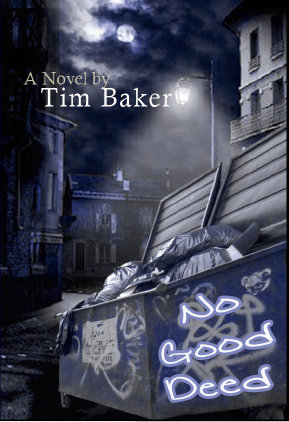 A large sum of mob money is suddenly up for grabs in “No Good Deed”, by Tim Baker. Nobody knows where it is, but everyone is trying to find it. A betrayed girlfriend whose looking for answers, two wise guys who haven’t got a clue, a grounds maintenance worker out for a piece of the big pie, and a guy who is down on his luck and sees an opportunity to turn his life around are thrown together by some unanticipated circumstances. No one is who or what they seem to be and wrong assumptions lead to mayhem in a race to get the cash. Kurt is looking for a respectable life and someone to share it with, but what he gets is trouble around every turn. Candy is looking for answers as to why her boyfriend would plan a new life that didn’t seem to include her, unwittingly placing her own life in danger. Al is looking to regain the life that he lost any way that he can. Howard is just looking for some easy money, but unknowingly sets all of them up for an enormous fall. Not until the battle is over, will readers know who will come out on top, and who won’t come out at all. “No Good Deed” is a truly entertaining story that will keep readers turning the pages just to find out what will happen next.











Looking Back Over 2016
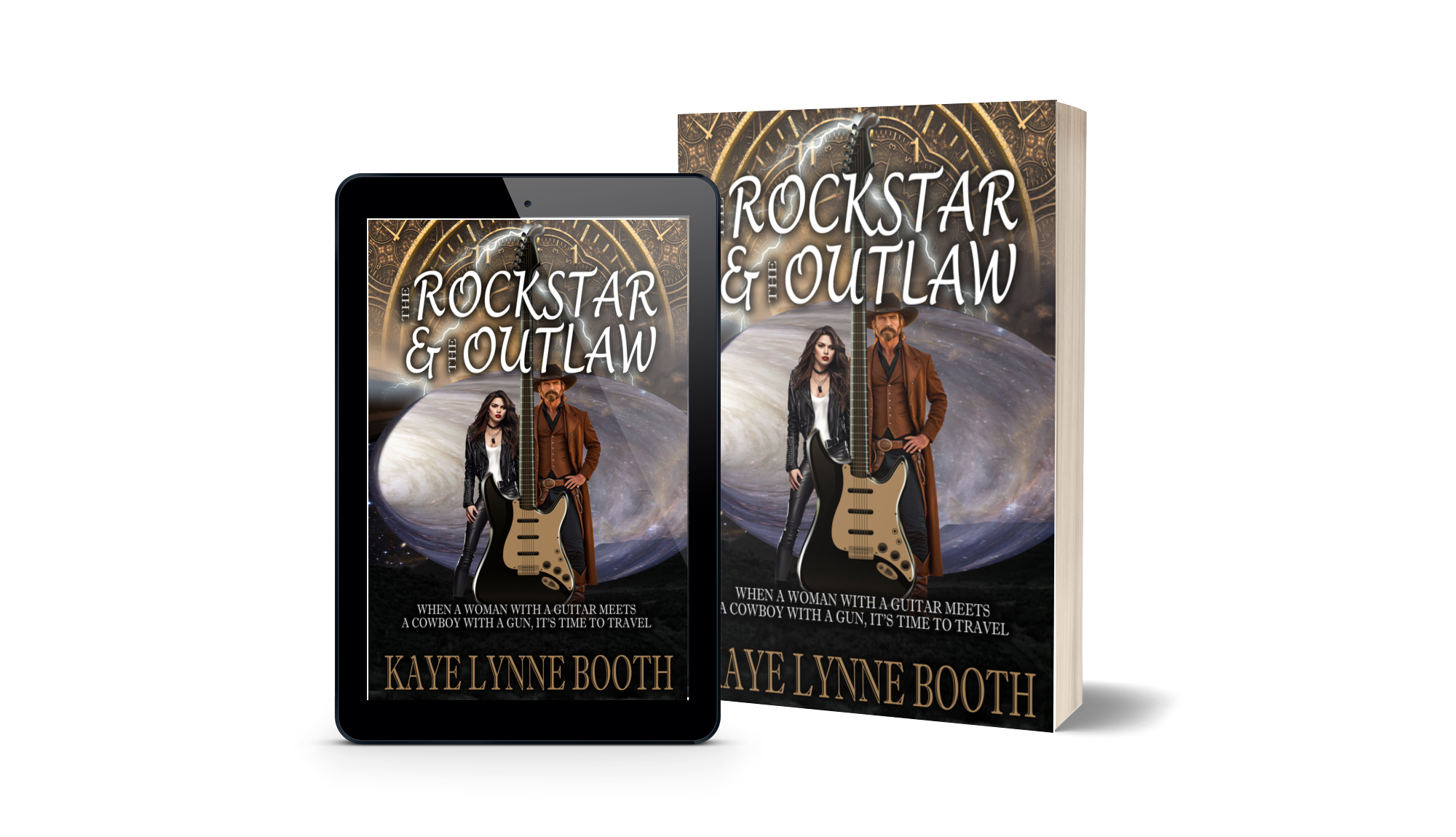
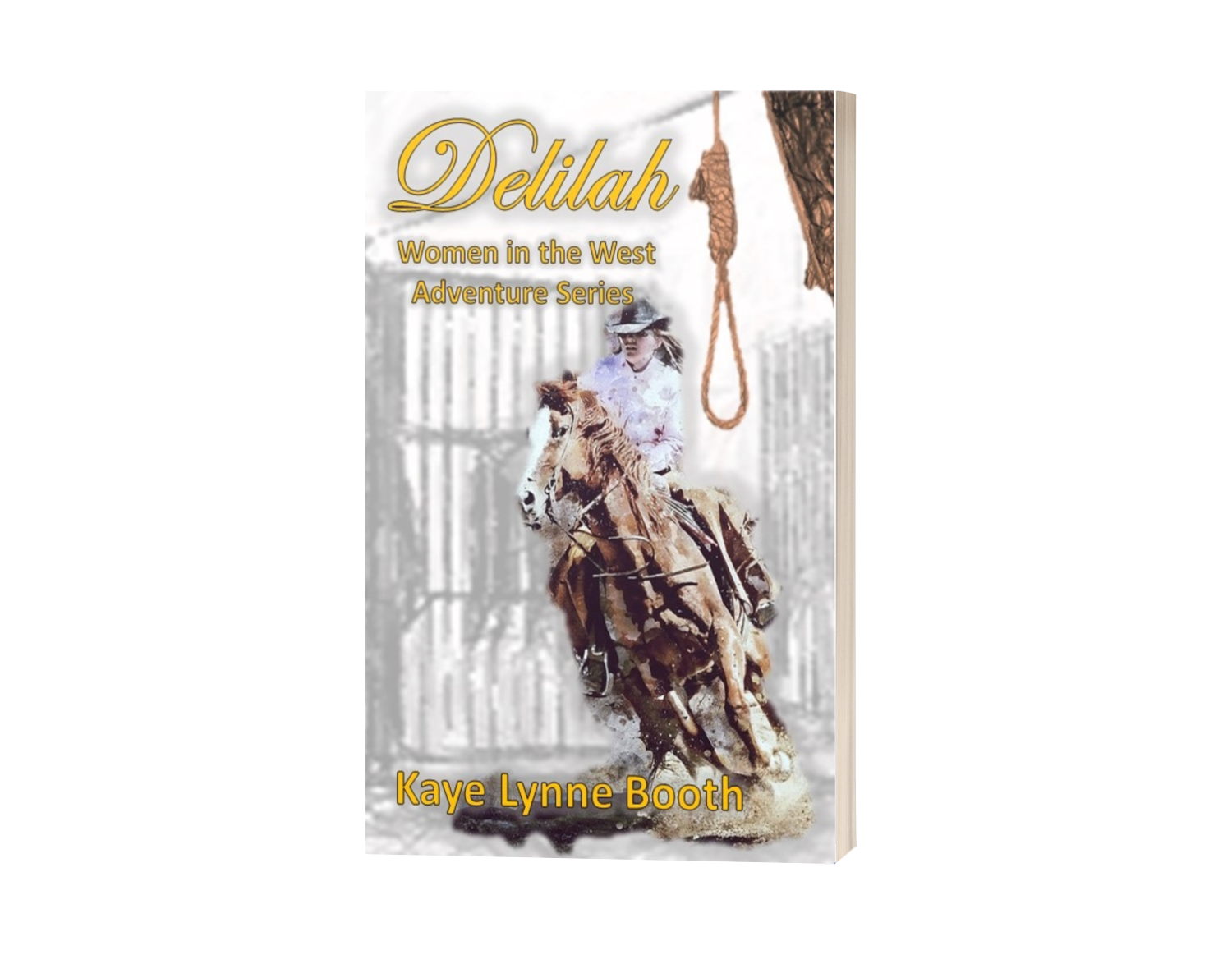
Posted: December 26, 2016 | Author: kayelynnebooth | Filed under: Articles, Book Review, Books, Children's Books, Commentary, Fiction, Film Review, Horror, Movies, Nonfiction, Poetry, Promotion, Publishing, Screenwriting, Self-Publishing, Steampunk, Stories, Weekly Writing Memo, Western, Writing, Writing Event, Writing Tips, Young Adult | Tags: 2016, Book Reviews, Books, Fiction, marketing, Movies, Novel, Novels, Poetry, Review, Reviews, Writing, Writing to be Read | 4 CommentsThis will be the last reflective post of the year. Next Monday’s post will find us in 2017. For my writing career it has been a slow take off, but I’ve seen progress. In July, I completed my Master of Fine Arts degree in creative writing. With emphasis in both genre fiction and screenwriting, and two completed novels, Delilah and Playground for the Gods Book 1: In the Beginning, two full feature film scripts and one comedy series pilot script in hand, I eagerly jumped right in to get my feet wet in either the publishing and/or screenwriting industry. I began submitting my work to agents, publishers, and competitions like crazy. I received mostly rejections, as expected, and although I still haven’t found a home for either novels or scripts, I did manage to find a home for two poems and two short stories. Not too bad. While the poems, Aspen Tree and Yucca! Yucca! Yucca!, appeared in print, (in Colorado Life (Sept.-Oct. 2016) and Manifest West Anthology #5 – Serenity and Severity, respectively), my short story, I Had to Do It was published on Zetetic: A Record of Unusual Inquiry, and my not so short, short story, Hidden Secrets was published on Across the Margin.
2016 has been a pretty good year for Writing to be Read. The revamping of the blog site was completed in March, I’ve managed post things on a fairly regular basis, we were honored with guest posts by my friend Robin Conley, and my visits and page views have risen, with almost 2000 visitors and over 2,500 page views. Looking at this, makes me feel pretty good about the blog, as a whole. Another good change is the addition of screenwriting content, which I believe has drawn a larger audience by widening the scope of the content.
Many of my posts were reflections of my own writing experience. These included: Why Writing is a Labor of Love; Fear is a Writer’s Best Friend; I’ve Come A Long Way, Baby; Writing the Way That Works For You; Creating Story Equals Problem Solving; What’s A Nice Girl Like Me Doing Writing in a Genre Like This?; Acceptance or Rejection – Which Do You Prefer?; A Writer’s Life is No Bowel of Cherries; Write What You Know; Discouragement or Motivation?; What Ever Happened to Heather Hummingbird?; How You Can Help Build a Writer’s Platform; and Why Fiction is Better Than Fact.
Screenwriting content included this past year seemed to be popular. In addition to my Making of a Screenplay series and Writing Horror is Scary Business, Writing to be Read also featured Writing Comedy for Screen is a Risky Proposition, and a book review for Hollywood Game Plan, by Carole Kirshner, which I can’t recommend highly enough for anyone desiring to break into the screenwriting trade. Robin’s Weekly Writing Memo also included several writing tips that could be applied equally to literature or screenwriting.
Another project I’m particularly proud of is my ten part series on publishing, Pros and Cons of Traditional vs. Independent vs. Self-Publishing, which I just finished up last week. In this series I interviewed nine professionals from within the industry to get the low down on the three different publishing models. My interviews included self-published authors Jeff Bowels, Tim Baker and Art Rosch, traditionally published authors Stacia Deutsch (children’s books) and Mark Shaw (nonfiction), and independently published YA author Jordan Elizabeth. To balance things out a bit, I also interviewed children’s author Nancy Oswald, who has published with all three models, Clare Dugmore of Curiosity Quills Press and Caleb Seeling, owner and publisher at Conundrum Press.
I feel very fortunate to have had Robin Conley join us with her Weekly Writing Memo and her guest movie reviews. The useful writing tips in her Weekly Writing Memos covered a wide range of topics including critiquing, using feedback, ways to increase tension, Relatability or Likeability?, 3 Types of Plot, story research, what to write, making your audience care, world building, handling feedback, writing relationships, establishing tone, editing, word choice, How to Start Writing, endings, queries, Parts of a Scene, making emotional connections, the influence of setting, Building a Story, Inciting Your Story, movement and dialog, Writing Truth, time, Overcoming the Blank Page, Networking, character names, theme, set up, cliches, parentheticals in screenwriting, horror inspiration, and Learning to Write. Robin’s guest post movie reviews included Pride and Prejudice and Zombies, Batman vs. Superman, Miss Perigrin’s Home for Peculiar Children, and The Neon Demon.
I am thankful for Robin’s valuable content and am glad that she will still be contributing Memos on a monthly, rather than a weekly basis. Although I was sad to lose her weekly content, I am happy for her as she moves forward in her own writing career and I wish her well in her writing endeavors. For those of you who looked forward to her weekly posts, you can catch more of her content on her own blog, Author the World.
2016 was a great year for Writing to be Read, even if it was kind of rough for the author behind the blog. You readers helped to make it a good year and I thank you. Now it’s time to look ahead and see what’s in store for 2017 Writing to be Read. I mentioned some of the things I hope to achieve above: more posts pertaining to the screenwriting industry, and coverage of more events throughout the year are two of the goals I have set for my blog. I also plan to add some author, and hopefully, screenwriter profiles into the mix. I had good luck with author profiles during my Examiner days, and I think they will be well received here, as well.
I also hope to bring in some guests posts by various authors or bloggers, or maybe screenwriters, just to give you all a break from listening to me all the time. I believe Robin plans to continue with Monthly Writing Memos, which will be great, too.
I look forward to all the great books that I know are coming my way in 2017, too. The first reviews you have to look forward to are a short memoir, Banker Without Portfolio by Phillip Gbormittah, a YA paranormal romance, Don’t Wake Me Up by M.E.Rhines, a Rock Star romance, Bullet by Jade C. Jamison and a short story, How Smoke Got out of the Chimneys by DeAnna Knippling.
I hope all of you will join me here in the coming year. Follow me on WordPress, or subscribe to e-mail for notifications of new posts delivered to your inbox. Have a great 2017 and HAPPY WRITING!
Share this: