Jeff’s God Complex
Posted: May 31, 2017 Filed under: Action/Adventure, Comic Hero, God Complex, Movies, Opinion | Tags: Comic Book Heroes, Feminism, God Complex, Movies, Super Heroes, Wonder Woman 1 Comment
Wonder Woman vs. The God Complex
by Jeff Bowles
Here in the United States, we’re just a couple of days away from the release of the first big-screen adaptation of Wonder Woman, the legendary DC Comics character who’s been trading punches with bad guys since 1941. Early reviews of the film have been overwhelmingly positive, and I couldn’t be more excited to see it for myself.
Wonder Woman is one of my favorite comic book characters of all time. She’s strong, noble, and much like Superman or Captain America, she always seems to do the right thing. Diana Prince, otherwise known as Diana of Themyscira, is a Greek goddess who abandons the only world she’s ever known in order to fight for meek, flawed human beings. The island of Themyscira is home to the proud Amazons, a group of startlingly gifted women who’ll stab your eyes out just for looking at them the wrong way.
Actually, that’s beside the point. They are warriors, fierce battle-hardened females who’ve rarely glimpsed men and the world they’ve brought to the brink of destruction. DC Comics has done an amazing job curating and expanding upon the adventures of Diana Prince and her supporting cast of characters in the last fifteen years or so. Issue after issue of the comic has dealt with divinity, family and politics, and of course, myriad hot-button topics that have in some small way pushed the boundaries of what typical comic fans expect to see.
The upcoming film looks to do the same, though to what degree remains to be seen. As a character, Wonder Woman was created by a male psychologist who was inspired by early feminists. The guy was way ahead of his time, and over the intervening decades, Diana of Themyscira has been portrayed all kinds of ways. For instance, in the 1970s she was both a television sensation and a hard-hitting exploitation-style street vigilante, minus the tiara and bracelets. Comic book characters rarely stray far from their roots long, however, and elements such as her Lasso of Truth, her invisible jet, and her long-time on-again, off-again love interest, Steve Trevor, have come and gone.
I find it difficult to speak about the impact Wonder Woman has had on young girls and women across the globe, not just because I’m a man, but because it seems like far too large a topic. I think she’s been good for people over the years, and I hope this film delivers the kind of role model kids need nowadays. She’s important to me because growing up on comics meant a steady diet of homogeneous male heroes, and though I don’t consider myself overly political, it always gave me a pleasant feeling digging into that latest issue of Wonder Woman and reading about a damsel who was not in distress, who could handle her own, and who could in fact put the likes of Batman to shame.
Some people out there, I take it, don’t feel the same way. In the news just this morning, some theaters across the country are choosing to run a small number of female-only screenings of the film the day it comes out, distributing advertisements that make clear boys are not allowed. I think this is kind of cool, but right-wing commenters have already made some hay.
Modern America is fraught anyway. If you’re not fuming about the man in the White House, you’re screaming at the other side for their assault on your guy. Very rarely anymore can we have civil conversations about simple things like movies and comic book characters, not without the whole thing devolving into an ideological ant-scatter.
It’s important to point out Wonder Woman is in the minority as far as these things go. Nobody was creating strong female characters back in the 1940s. It just wasn’t done. I read Wonder Woman comics as a kid not because I was interested in feminism but because she was so strong, so very essential to the DC Comics mythos. Every comic fan knows the holy trinity of DC characters: Superman, Wonder Woman, and Batman. Lose any of the three, and the books DC puts out every month just aren’t the same.
And of course, comic book movies in general are big business these days. Love them or hate them—and indeed, many people hate them—they’re a mainstay of cinemas and will be for some time to come. Though early word seems good, the naysayers will quickly poke holes in Wonder Woman’s cultural legend just because they can. Yeah, she’s a strong female character, but she still solves all her problems with her fists. And anyway, the male-driven conglomeration that is Warner Bros. will most likely try to pitch her in a way that doesn’t scare off men and young boys, the latter of which buy DC action figures and other tie-in merchandise by the bucket-full.
Such is the state of discourse in the modern world. Everything is an issue worthy of argument, even a symbol of strength and femininity who’s been around the better part of a century. I can’t say what Wonder Woman means to you. Maybe she means nothing at all, and when you go to the theater this weekend, you’ll be pleasantly surprised by her story. I hope that’s the case, because Wonder Woman has had a place in my heart for a very long time.
If, like me, you do have positive memories of her, perhaps it will be a treat to see Diana depicted in big-budget terms, regardless of whether the end product is actually any good or not. If Wonder Woman is more to you than some silly cultural icon, and if you feel like she’s never been more relevant than she is today, by all means go check the flick out for yourself.
I eschew politics when I can. I also have no children of my own. But if I had a daughter, and she was old enough to see an action film like this, I’d proudly take her down to the multiplex. Maybe afterward, I could turn the excursion into a conversation about standing up for what you believe in no matter what the cost. That’s who Wonder Woman is to me. She doesn’t know discrimination or inequality because she comes from a place where everyone is treated with respect and dignity. She stands up for the little guy, especially when that little guy is actually a girl.
I hate the need some people feel to turn her into a controversial figure. Is her story more than simple entertainment? Yes, I think it is. All the Wonder Woman comics I’ve read over the years are all the proof I need. Yes, she is a strong female who kicks butt and takes names, and yes, whether they want to admit it or not, this makes many people feel uncomfortable or even angry. But if you ask me, the politics is a cover. Wonder Woman is not and never will be just for girls. I love Wonder Woman, and I’m man enough to admit it.
There are so many ways to celebrate the world as men have made it. Is it too much to ask to celebrate the world of women? Even just for an afternoon?
Interested in my writing? Check out my latest short story collection, Fear and Loathing in Las Cruces — https://www.amazon.com/Fear-Loathing-Las-Cruces-Stories-ebook/dp/B06XH2774F
Twitter: @JeffBowlesLives
Facebook: http://www.facebook.com/jeffryanbowles
YouTube’s Jeff Bowles Central: https://www.youtube.com/channel/UC6uMxedp3VxxUCS4zn3ulgQ
Amazon Author Page: https://www.amazon.com/Jeff-Bowles/e/B01L7GXCU0/ref=sr_ntt_srch_lnk_1?qid=14794534940
Share this:

A Sense of Accomplishment
Posted: April 3, 2017 Filed under: Movies, Screenwriting, Screenwriting, Writing | Tags: Movies, Screenwriting, Script Leave a comment
This past week my thesis for my screenwriting emphasis arrived in the mail. I opened the box and there, carefully wrapped inside was my thesis project bound in a hardback cover. I opened it up, and inside I found my analysis of screenwriting and my walk through the process, as well as my screenplay for Bonnie in script form. I can’t tell you what a sense of accomplishment that made me feel.
If you’re interested in my analysis or the screenwriting process, you can see the blog adapted version of those portions of my thesis in my four part series, The Making of a Screenplay: The Creative Process: Part 1 covers story origins and the tools used to shape an idea into a movie plot, Part 2 discusses the tools used to sell a screenplay, Part 3 covers the research that goes into writing a screenplay, and Part 4 talks about rewriting.
I turned in my thesis back in August, and there was a sense of accomplishment in doing that, but to see my script in print just about made me burst with pride. Glancing through it reminded me of what a really good script Bonnie is. Now I just have to figure out a way to get it in front of someone who will read it and fall in love with it as much as I am, and want to make it into a movie.
That’s the hard part. There’s some tough competition out there and it’s hard to get a foot in the door. Bonnie has commercial value and I need to get someone in the business to recognize it,There are those who claim it can’t be done unless you move to L.A. (“Hollywood Game Plan” Prepares Upcoming Screenwriters to Hit the Ground Running) Although I really want to sell Bonnie, and many other screenplays, I don’t see such a drastic move happening in the near future.
Most of the screenplay competitions are a bit more expensive to enter than my pocketbook can afford, so I have to be careful to pick the contest that are the best for my screenplay. In the literary community, you face the same challenge. You must determine which publisher is best to submit to, matching your work to a publisher, agent or writing contest.
The only way I know to solve the puzzle and match story or script to contest, or find a publisher or a producer who might be interested in your work, is good old fashioned research. These days it’s easier. Because of the Internet, we have the information at our fingertips now, where we didn’t thirty years ago. To find the right contest, or publisher, or producer today, we can sit down at the computer or pick up our phones and find out what kinds of work they are interested in to see if ours is a good fit, or check out their track record to gauge how successful they are. All it takes is a little time.
I’ve entered a short screenplay in a screenplay contest, and submitted a couple of my scripts to production companies, and I’ve collected a few rejection slips from them. I was almost ready to give up on the screenwriting and concentrate exclusively on my fiction. Even though I know rejection is expected in this business, and a lot of it, it doesn’t make the sting any less when it happens. On Jeff’s God Complex Wednesday, he offers some really good ideas that make sticking with it in the face of adversity much easier. I took it and felt refreshed when I sat back down in front of my laptop again.
Receiving that bound copy and seeing my thesis script reminded me of why I went for the second emphasis in my degree. I am just as passionate about my screenwriting as I am about my fiction. I know my work is good and it’s only a matter of time before I sell a script or a book. I’m currently negotiating a contract for my western novel, Delilah, so I’m not just being optimistic here. It’s is easier to move forward in my career when I have a real sense of accomplishment, and my bound thesis reminded me of that.
Like this post? Subscribe to Writing to be Read for e-mail notifications whenever new content is posted.
Share this:

A Peculiar Experience: Miss Peregrine’s Home for Peculiar Children
Posted: November 5, 2016 Filed under: Commentary, Film Review, Screenwriting, Screenwriting, Uncategorized, Writing | Tags: Movies, Opinion, Review, Reviews 1 Comment
The first word that came to mind after seeing Miss Peregrine’s Home for Peculiar Children was peculiar. The movie is peculiar. I went into the film knowing next to nothing about it. I haven’t read the book, I think I may have seen a trailer at some point but don’t really remember it, and I hadn’t looked into the story at all. All I knew about the film was that it was directed by Tim Burton, it was based on a book, and it was about some kind of school for gifted kids.
I am a huge fan of fantasy films, and I love Tim Burton’s work, so I was super excited to see what this movie had in store for me. That being said, by the end of the film I couldn’t quite put my finger on how I felt about it, other than that one word I mentioned above—peculiar. The film is just peculiar. It’s beautifully shot, and the actors, especially Eva Green, do a wonderful job, but the film didn’t leave me feeling satisfied. It left me with a lot of questions, and a few complaints.
——————————SPOILERS BELOW—————————
Visuals and World
I like starting by talking about something I liked, and this film was visually beautiful. It had some great shots, and everything from the camera angles to the clothing was spot on for me. The style and artistic elements of Tim Burton’s films are always one of my favorite parts, and this film was no exception. The one thing that truly kept me hooked throughout was the visual element, and just the fact that I was enjoying looking at the film.
The other element I really liked was just the concept of the world. I loved the idea of Jake traveling through the time loops at the end, working his way back to the peculiars. I’m not sure I have a clear idea of how it would work, but I do think I got enough of a sense that it was believable. The details they gave at the end as well were just enough to create this sort of romanticized image of his journey back to the group without extending the final act unnecessarily, which was perfect.
The Conflict
I think the biggest downfall for me in the film was the fact that the real goal and conflict of the story took more than an hour to get to. I know because I looked at my watch when they finally started discussing Samuel L Jackson’s character and why they had to stop him. I don’t mind a long movie, and I don’t mind giving the plot time to build and unfold, but this film felt like it just took too long. Yes, the visual elements of the movie were stunning and wonderful, and it was a fascinating world to get lost in, but I wish we could have got lost in it while the plot was moving forward.
From the moment Jake first sees Samuel L Jackson’s character outside his grandfather’s house to the moment we finally learn he’s the antagonist almost an hour had passed. I usually have a good memory for details in a story, but by this point in the film I had almost forgotten that Jackson was in it and I was mostly just trying to figure out where the story was going. I feel like part of the problem that made the story seem like it was standing still was that Jake’s goal in the story initially was not to find out what happened to his grandfather, it was to see if his grandfather told the truth. The moment Jake arrives at Miss Peregrine’s we know that he was and then Jake has no real goal, no conflict. Yes, there’s still some information he can find, but he doesn’t actively seek it.
If there had been slight more focus on the thing that killed his grandfather, and more determination behind Jake’s search for answers, I think the time it took to get to the plot wouldn’t have been as bad, but it still went on too long. Getting lost in the world was great, but it felt like the plot paused for a short period of time while we got immersed in the world. Instead, entering the new world should have boosted the plot into action.
Plot Holes
The one thing that really surprised me about this film was that there were three big plot elements that I felt were too big to have been missed. The first is a simple one—Jake’s parents. I love Chris O’Dowd, but the parents disappear from the story when they’re there at all. I guess I could buy the whole impulsive trip across the world for the story, but once they get there the dad becomes almost a burden to the plot. Instead of being a smooth element in the story, a problem Jake has to work around to get where he wants to go, it feels like the dad is forced into the story in a clunky way that makes it completely obvious that he’s supposed to be in the way of Jake’s goal. It’s never more obvious that the dad doesn’t fit in the story then at the end—he doesn’t even get a proper wrap up of his plotline! While I think Chris O’Dowd played the role beautifully, and he always makes me laugh, his character never comes back into the story at all, making it feel like the whole plotline shouldn’t have been in the movie.
The second thing that surprised me is the reveal of the twin’s powers at the end. Throughout the film I wondered about the two of them as they were the only ones to not have their powers clearly shown or mentioned (unless I missed the first mention). At the end when their masks are lifted and the woman turns to stone, it immediately made me think two things. 1. Oh, that’s cool. 2. Wait, why didn’t they just do that to Samuel L Jackson in the house when he first came into the time loop? Their powers defeat the whole movie.
If we had learned about their powers earlier and there was some kind of explanation about why they couldn’t use them all the time—such as on Jackson’s character—it would have ruined the reveal, but it would have kept the sequence of events justifiable. By not having this, we got the cool reveal of their powers at the end, but it makes all the other characters look stupid. The twins could have dropped into the pit with all the evil people and turned them all to stone. They could have done it the first time they saw Jackson. They could have followed Jake downstairs when he goes to rescue the birds and done it then. Not justifying the lack of use of their powers creates a huge plot hole.
Final Notes
Overall, I did enjoy Miss Peregrine’s Home for Peculiar Children despite the flaws. As I said above, visually it’s just a fun movie to watch, and seeing Eva Green embody Miss Peregrine was fabulous. She really is wonderful in the role. The plot holes and issues mentioned above are just things that made the movie go from great to just okay for me. I’ll have to watch it again at some point to see if there’s something I missed regarding the twins or the father, but overall I think the first word that came to mind when watching the movie is the right one. It really is peculiar. It’s fascinating, and alluring, and I wanted to love it, but I just couldn’t get lost in it the way I wanted to no matter how hard I tried.
Share this:

Weekly Writing Memo: Horror Inspiration
Posted: November 3, 2016 Filed under: Fiction, Screenwriting, Screenwriting, Stories, Thriller, Uncategorized, Weekly Writing Memo, Writing, Writing Tips, Young Adult | Tags: Books, characters, Fiction, horror, How To, Movies, Novel, Stories, Writing Leave a comment One question I hear asked a lot to writers is, “where do you find your stories?” This question is sort of silly to me because stories are everywhere around you if you look. Every item you come across in your day has a story for how it became what it is, and got where it is. If you ask enough questions, eventually you’ll find some interesting element that you can turn into a compelling story if you try. I could go on for a long time about ways to find a story, so instead I decide, in honor of Halloween, to narrow the focus this week and discuss where to find inspiration for horror stories in particular.
For me, I really think horror stories have to either start with the protagonist or the “monster.” By monster, I mean whatever villain is in your story, be it a literal monster, a ghost, a serial killer, a psychological monster, a location, etc. I say this because the core of most horror stories is the conflict between these two entities — the protagonist and the monster — and I think starting with one of them can be the easiest way to start a horror story. If you start with the monster, you can ask yourself who would it go after and find your protagonist. If you start with the protagonist, you can ask yourself what type of monster would they encounter and go from there. Immediately either one can give you your story, but where do you find the protagonist or the monster?
Protagonists
If you want to start your horror story by coming up with your protagonist and you have no ideas in mind, you can go several directions:
- Pick someone you know and turn them into a character by changing some of their traits to make them slightly different.
- Pick a stranger on the street and create a character from them based on what you can infer from their appearance and behavior.
- Pick a stereotype character and then do a free write or character sheet to turn them into something more and give them depth.
- Pick an occupation and then create a character that fills that job role.
There are a ton of other ways to come up with a character, but these are a few of my favorite simple ones. Once you have a character in mind you can find your monster by asking yourself where would this character go to find trouble? Does it find them, or do they seek it out by going somewhere they shouldn’t? Do they have a friend that takes them to a haunted forest? Do they live near a mental asylum where a killer can escape? Do they work in a hospital where people die every day and ghosts may linger? Do they go swimming or camping in a secluded area where monsters could lurk in the shadows?
Think about all the places your character may go on a daily or weekly basis and think about what kinds of monsters they could encounter there. If none of these places is suitable, then think about what kind of friends your character has, and what kind of trouble those characters could get the protagonist into. Do they have a reckless friend who likes going into abandoned buildings? A crazy friend who sees things? A friend who picks up shady drifters and brings them home? Once you have the monster your character would most likely meet, you can start creating the plot between the monster and the protagonist and find your story.
Monsters
As I said earlier, when I use the term “monster” I don’t necessarily mean a literal monster, but rather I mean any type of antagonist your character will come up against in the story. Monsters can be anywhere, and if you’re prone to writing horror it’s a good idea to keep a list somewhere of various monster ideas whenever you come up with one. A few places that I generally find monster ideas include:
- Reading about urban legends and mythical creatures. Those cheap tabloid papers have some great ones of these, as do those random lists of legends, myths, and creatures that are all over the internet. Pick one and make it your own, give it a setting, and see where it takes you.
- Phobias. These are a great source for monster inspiration because once you pick a phobia you can use it to build your monster. Think of phobia that you like, or look up a list and pick one, and then ask yourself if your character has that fear what kind of monster would trigger it? Do they have a fear of being alone? Then how about you forget them in the middle of the ocean after a deep sea diving expedition (Open Water). Do they have a fear of the dark, well how about a monster that only appears in the darkness and can make the lights go out (Lights Out, Darkness Falls)? Whatever phobia you choose, ask yourself where or how your character can be forced to face it, and what kind of monster could cause them to. Sometimes it’s even the monster that has the fear (Lights Out) and it can be used as part of how the protagonist defeats them, so you can also try to create a monster from that angle as well.
- True unsolved mysteries or famous oddities. These are a great source for horror because they’re true, unexplained, and usually, have just the right amount of creepiness to them that they can be twisted even further for the perfect horror story.
Any of the options above can work for finding a monster to create your horror story around, but they aren’t the only way. At the heart, the monster comes from the twisting of something that is somewhat normal to something threatening. Think about it. Cujo was a dog, a ghost is just a (dead) person, water is just water, etc, but all can be turned and twisted to become a monster. So if you can’t find some kind of monster from the ideas above, then try taking something random and asking how could it be dangerous? How could it be scary?
Once you have the “monster,” then ask yourself what kind of character would they either go after or accidentally encounter? Is the monster in a lake at a teen summer camp? Are they in a house that a nice young family has just moved into? Are they in a school where kids just want to go to prom? Once you know who your monster’s victims are, and where the monster hunts, then you have your story.
Share this:

The Making of a Screenplay: The Creative Process (Part 3)
Posted: May 9, 2016 Filed under: Movies, Screenwriting, Writing | Tags: Movies, research, Screenplays, Screenwriting, Writing 3 Comments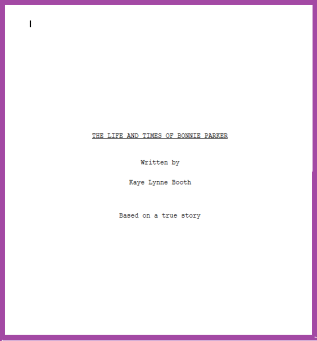
Many students of literary writing issue moans and groans when it comes time to do the research for their book. After all we’re writers, not researchers, right? But the fact is, that in order to write the story, even though it may be fictional, you half to know your stuff, and with literature, that could mean being familiar with the time period you’re writing about, or when certain items or words came into use, or being familiar with the place in which your book is set. If you’re writing a science fiction novel, you must at least be somewhat familiar with the science of the technologies you’re writing about, and even in fantasy works, you must be familiar with what the fantasy creatures you’re writing about are capable of.
It’s no different in screenwriting. You need to be familiar with the time period and location your screenplay takes place in, as well as being familiar with what the tropes are for your genre and what has been done that is similar to your story. But, I haven’t heard screenwriters complaining, maybe because the research is a little bit different than literary research. In fact, research in screenwritng can be fun.
In Parts 1, I talked about how the story goes from idea to beat sheet and/or outline. In Part 2, I described the tools used to sell a screenplay. Now, let’s look at the research that goes into a screenplay, and don’t shy away, because in screenwriting, the research is the fun part.
Research
Both literary writing and screenwriting require research. The type and extent of research required depends on what you’re writing. I watched every documentary on Bonnie and Clyde that I could find, as well as every DIY film on YouTube I could find, in order to get a feel for who these two people were. This helped a lot in determining what their bios would look like and how they would be portrayed in the film. I also visited websites with information on them and websites on the depression era, where I picked up slang from the 20s, which I salted my screenplay with to give it the proper feel.
But there’s a different kind of research you do in screenwriting, in addition to the research mentioned above. In screenwriting, you examine movies that are similar to yours in some way to learn what’s been done, and what worked and what didn’t. Sometimes you may chose a movie just because it has a scene similar to one you’re trying to do and you want to see how they went about it. This is one of the neatest things about screenwriting, you get to sit around and watch movies and call it work.
For my thesis, obviously any fictional portrayals of the outlaw couple needed to be on my list, but I also wanted to watch other gangster type movies to get a feel for the lifestyle, and the era. I watched biographical pictures to learn how they make real life events fit into the screenplay formula, and buddy love films to see how they allow one character to lead another into things, without portraying the leading character as a villain. It was amazing when I realized the different things I learned from each one.
Movie List
- Bonnie and Clyde, 1967, written by David Newman and Robert Benton – this was the original movie that we all think of when we think of the outlaw couple. It glamourizes Bonnie and Clyde, what they did and how they lived, and portrayed them as cold, blood-thirsty killers. This was not how I wanted to portray them, and I didn’t want to do what had already been done, so this film showed me what I didn’t want to do.
- Bonnie and Clyde 2013 miniseries on the History channel – this portrayal of the couple really played up the cold blooded killer image of all of them, Blanche and Buck, as well as Bonnie and Clyde, and it’s a ruthlessness that I don’t believe was truly there. Again, I learned what not to do. I wanted my screenplay to be very different from this.
- Donnie Brasco, 1997, adapted by Paul Attanatio from the book by Joseph D. Pistone and Richard Woodley– I found this to be one of the best mob movies I had ever seen. I was truly impressed with the craftsmanship seen in this film. I chose it because of the similar situation, getting caught up in circumstance and events beyond the character’s control.
- Black Mass, 2015, written by Mark Mallouk and Jez Butterworth – Not only is this film a crime drama, but it is a bio-pic, based on the true story of the criminal career of mobster Whitey Bulger. The similarity here was found in the way the character Whitey Bulger rationalized his actions, which I considered when having Bonnie rationalize her actions, and what she was willing to do in order to be with Clyde. I also looked at this film in regards to how they set the events to the beats in the film.
- Dillinger, 1973, written and directed by John Millius – Not only is this a bio-pic, but they make mention of Bonnie and Clyde in this movie, which gave me the idea to make mention of Dillinger and other well-known gangsters of the time in my own screenplay as a means of marking the time period.
- Scarface, 1983, written by Oliver Stone – This is an excellent movie, but I didn’t take a lot away from it which could be used in my screenplay. Bonnie and Clyde weren’t anywhere near the big time criminal that character Tony Montana a.k.a. Scarface, was in this bio-pic.
- The Untouchables, 1981, written by David Mamet – This movie gave me a feel for the times, and the public sentiment towards the criminal element which was prominent in the times.
- Public Enemies, 2009, written by Michael Mann, Ronan Bennett and Ann Biderman – This is a period film that was set in the same time period as my own screenplay. It deals with the gangster subculture of the times, of which Bonnie and Clyde ran on the fringes.
- Thelma & Louise, 1991, written by Callie Khouri – This buddy love is similar in circumstance to my screenplay in that the protagonist gets swept up in the circumstances, and that the circumstances were created by the choices the protagonist makes, and that they both die in the end.
- The Falcon and the Snowman, 1985, from the book, The Falcon and the Snowman: A Story of True Friends and Espionage, by Robert Lindsay and adapted by Steven Zaillian – I viewed this movie for some of the same reasons I viewed Thelma & Louise. The protagonists gets caught up in circumstances of their own creation, brought about by the choices that they made, which send them on a downward spiral. Plus it is a biographical film, based on a true story.
- Natural Born Killers, 1994, written by Quentin Tarantino and revised by David Veloz – Although this movie is very bizarre, the protagonists are lovers on a crime spree. Like previous portrayals of Bonnie & Clyde, these two are portrayed as cold-blooded killers, ruthless, killing for the fun of it. That is not the story I wanted to tell, therefore this movie showed me more of what I did not want to do in my own screenplay.
- Blow, 2001, adapted by David McKenna and Nick Cassavetes from the book by Bruce Porter, Blow: How a Small Town Boy Made $100 Million with the Medellín Cocaine Cartel and Lost It All – This is a biographical film of cocaine smuggler Gorge Jung, so I was looking at how the events were shaped to make up the beats of the movie, and it is another story where the protagonist gets caught up in the criminal elements due to the choices made, and their life spins out of control in a downward spiral.
- Coal Miner’s Daughter, 1980, written by George Vecsey as an adaption of the biography of country singer, Loretta Lynn – In this film I was looking for how the events were molded into the beat sheet formula of screenplay, as well as the romance elements.
- What’s Love Got to do with It?, 1993, adapted by Kate Lanier from the book I, Tina, by Tina Turner and Kurt Loder – This biographical film tells the story of how Tina Turner found the courage to break out of an abusive relationship. What I took away from this film was the way that Tina rationalized staying with her husband, Ike, how she kept telling herself that things would change, which is very similar to how my Bonnie rationalizes staying with Clyde, first believing he will change and go straight, and when it became obvious that wasn’t going to happen she allowed herself to believe they would go away to California.
Of course, this type of research, the fun stuff, has its equivalent in literary writing. It’s always good to read books in your genre to see what’s out there and know the tropes. The real difference is that in literature, the author is always trying to come up with a totally original idea, but in screenwriting, its acceptable, in fact encouraged, to use movies that have already been done successfully in describing what your movie is about in the logline or pitch, where you explain how your movie is the same as (a movie that’s already out there), but different. It is common practice in Hollywood, apparently, to describe your movie or television series as: (Title of existing movie) with a twist. For example, I described the pilot series that I wrote, titled Unhappily Ever After, as “A reverse Once Upon a Time combined with a humorous Into the Woods.” You can tell a lot about my pilot series from that, but I’ll have to save that for another post.
The point here is, in screenwriting it’s okay to do the same story someone else has done, as long as you give it some kind of twist to set it apart from the rest. For my thesis, I told the story from Bonnie’s perspective and that made it a very different movie from the other portrayals of the same story.
Next week we’ll take a look at the last step in creating the finished screenplay, rewriting. A screenwriter rewrites constantly, for as many drafts as it takes to get the desired results and make her screenplay tell the story she wants to tell, the way she wants to tell it.
Like this post? Subscribe to Writing to be Read for e-mail notifications whenever new content is posted.











Looking Back Over 2016
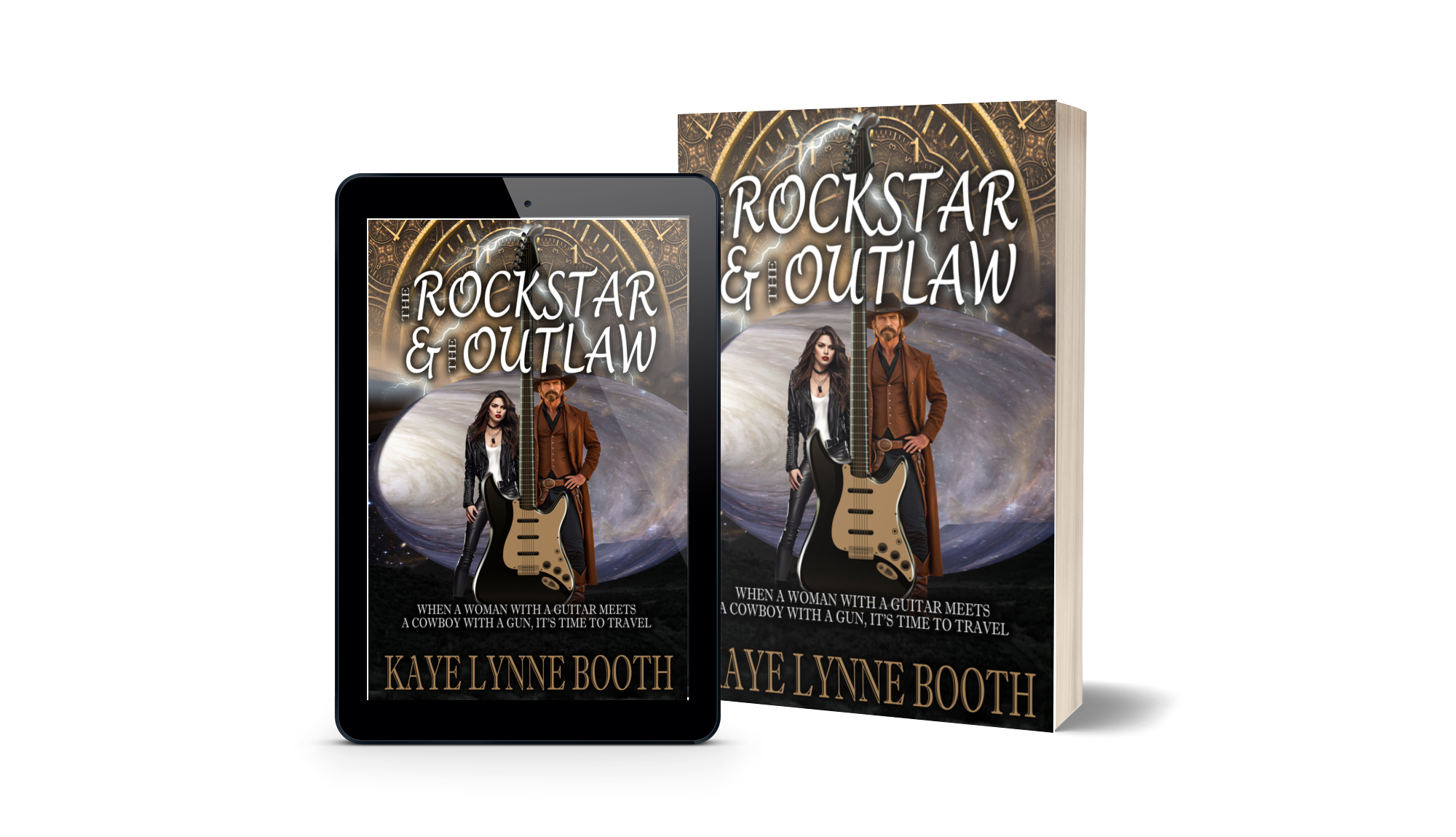
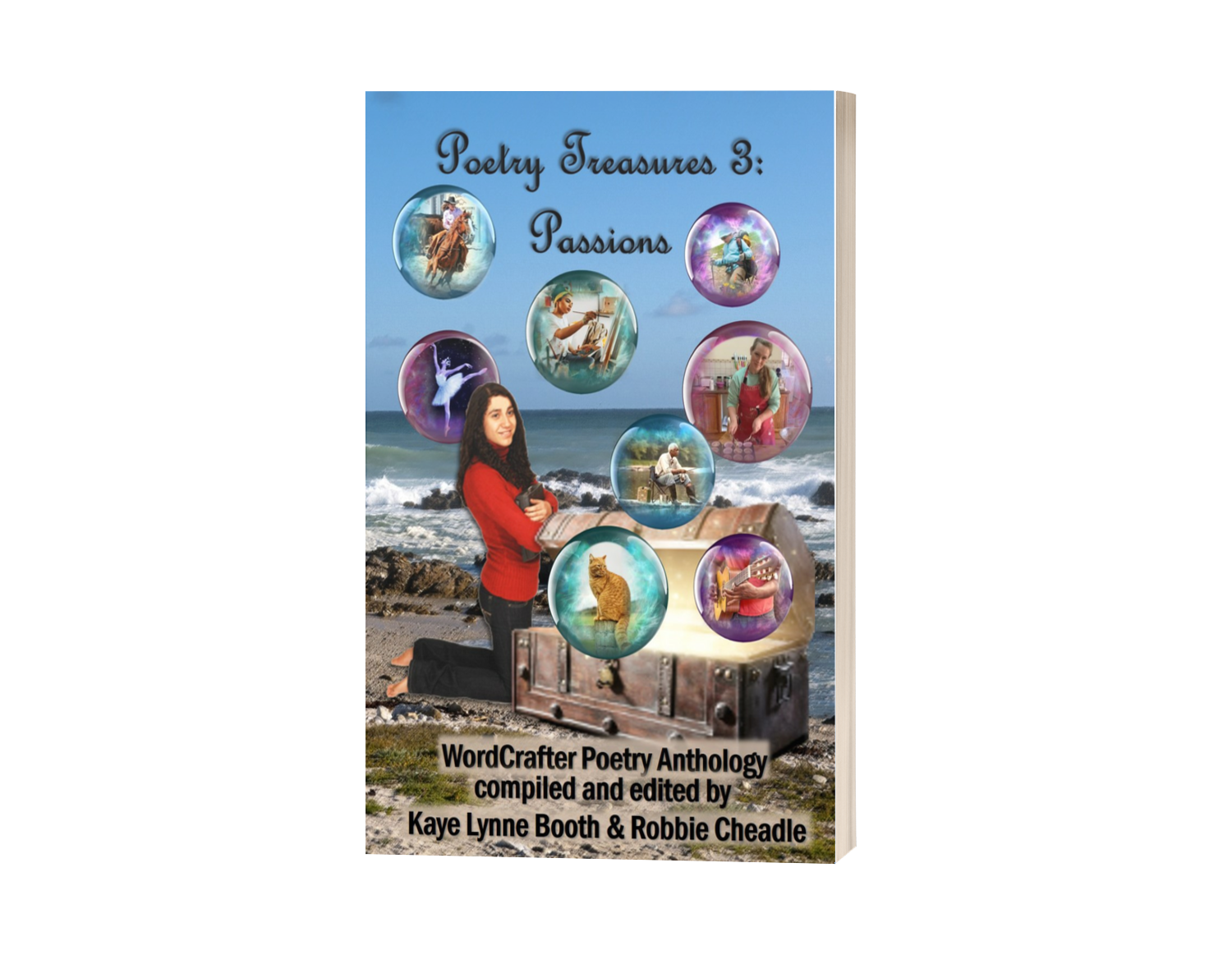
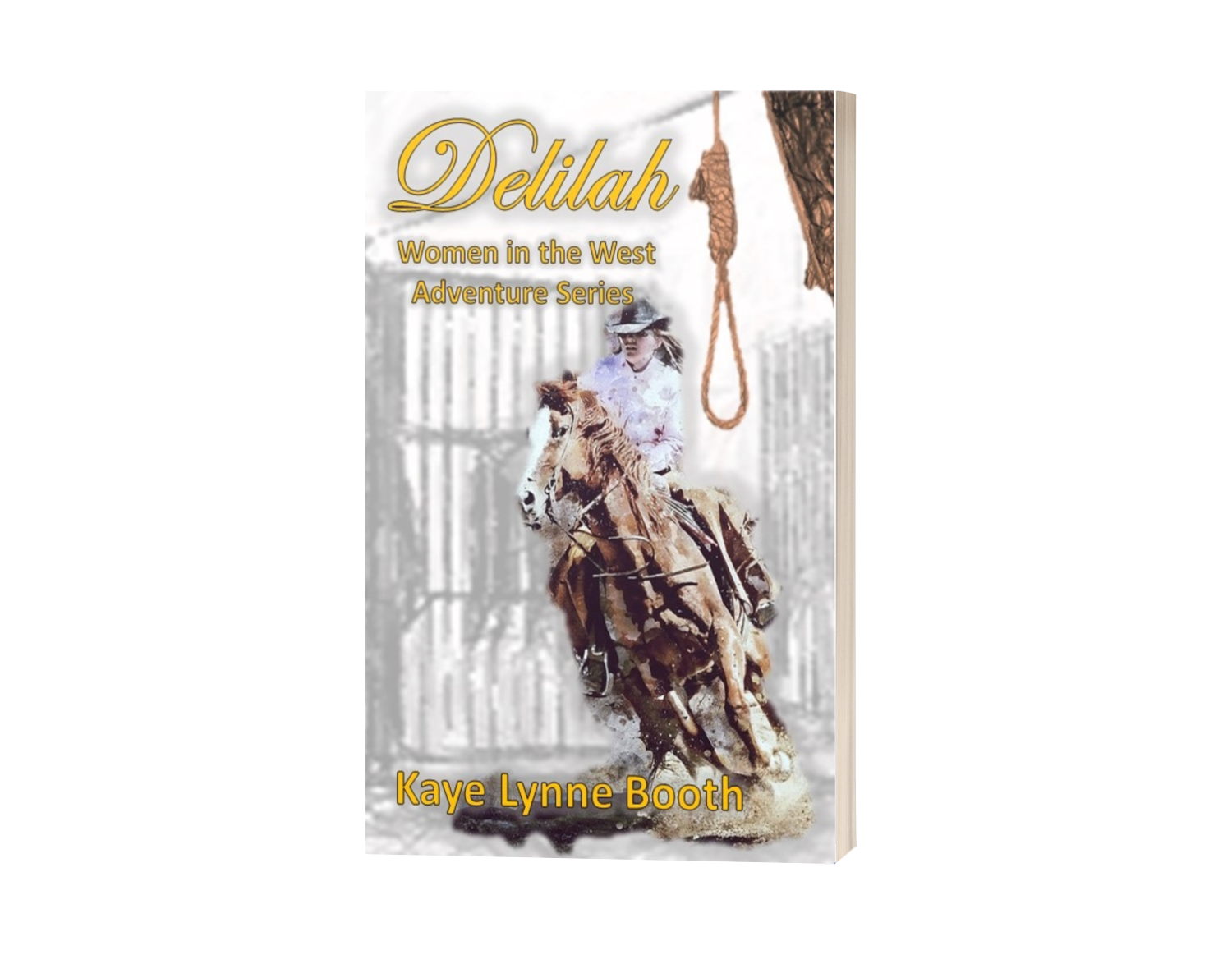
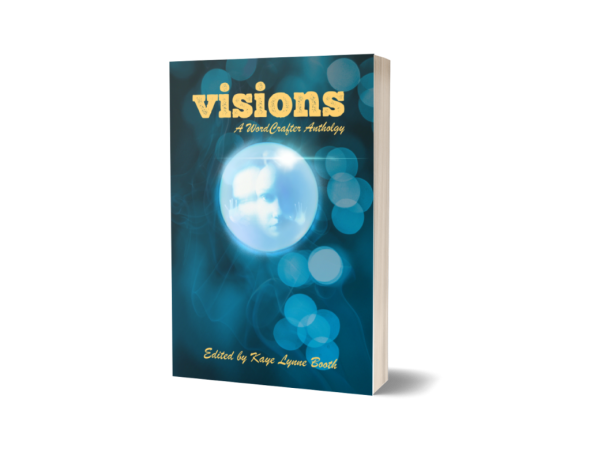
Posted: December 26, 2016 | Author: kayelynnebooth | Filed under: Articles, Book Review, Books, Children's Books, Commentary, Fiction, Film Review, Horror, Movies, Nonfiction, Poetry, Promotion, Publishing, Screenwriting, Self-Publishing, Steampunk, Stories, Weekly Writing Memo, Western, Writing, Writing Event, Writing Tips, Young Adult | Tags: 2016, Book Reviews, Books, Fiction, marketing, Movies, Novel, Novels, Poetry, Review, Reviews, Writing, Writing to be Read | 4 CommentsThis will be the last reflective post of the year. Next Monday’s post will find us in 2017. For my writing career it has been a slow take off, but I’ve seen progress. In July, I completed my Master of Fine Arts degree in creative writing. With emphasis in both genre fiction and screenwriting, and two completed novels, Delilah and Playground for the Gods Book 1: In the Beginning, two full feature film scripts and one comedy series pilot script in hand, I eagerly jumped right in to get my feet wet in either the publishing and/or screenwriting industry. I began submitting my work to agents, publishers, and competitions like crazy. I received mostly rejections, as expected, and although I still haven’t found a home for either novels or scripts, I did manage to find a home for two poems and two short stories. Not too bad. While the poems, Aspen Tree and Yucca! Yucca! Yucca!, appeared in print, (in Colorado Life (Sept.-Oct. 2016) and Manifest West Anthology #5 – Serenity and Severity, respectively), my short story, I Had to Do It was published on Zetetic: A Record of Unusual Inquiry, and my not so short, short story, Hidden Secrets was published on Across the Margin.
2016 has been a pretty good year for Writing to be Read. The revamping of the blog site was completed in March, I’ve managed post things on a fairly regular basis, we were honored with guest posts by my friend Robin Conley, and my visits and page views have risen, with almost 2000 visitors and over 2,500 page views. Looking at this, makes me feel pretty good about the blog, as a whole. Another good change is the addition of screenwriting content, which I believe has drawn a larger audience by widening the scope of the content.
Many of my posts were reflections of my own writing experience. These included: Why Writing is a Labor of Love; Fear is a Writer’s Best Friend; I’ve Come A Long Way, Baby; Writing the Way That Works For You; Creating Story Equals Problem Solving; What’s A Nice Girl Like Me Doing Writing in a Genre Like This?; Acceptance or Rejection – Which Do You Prefer?; A Writer’s Life is No Bowel of Cherries; Write What You Know; Discouragement or Motivation?; What Ever Happened to Heather Hummingbird?; How You Can Help Build a Writer’s Platform; and Why Fiction is Better Than Fact.
Screenwriting content included this past year seemed to be popular. In addition to my Making of a Screenplay series and Writing Horror is Scary Business, Writing to be Read also featured Writing Comedy for Screen is a Risky Proposition, and a book review for Hollywood Game Plan, by Carole Kirshner, which I can’t recommend highly enough for anyone desiring to break into the screenwriting trade. Robin’s Weekly Writing Memo also included several writing tips that could be applied equally to literature or screenwriting.
Another project I’m particularly proud of is my ten part series on publishing, Pros and Cons of Traditional vs. Independent vs. Self-Publishing, which I just finished up last week. In this series I interviewed nine professionals from within the industry to get the low down on the three different publishing models. My interviews included self-published authors Jeff Bowels, Tim Baker and Art Rosch, traditionally published authors Stacia Deutsch (children’s books) and Mark Shaw (nonfiction), and independently published YA author Jordan Elizabeth. To balance things out a bit, I also interviewed children’s author Nancy Oswald, who has published with all three models, Clare Dugmore of Curiosity Quills Press and Caleb Seeling, owner and publisher at Conundrum Press.
I feel very fortunate to have had Robin Conley join us with her Weekly Writing Memo and her guest movie reviews. The useful writing tips in her Weekly Writing Memos covered a wide range of topics including critiquing, using feedback, ways to increase tension, Relatability or Likeability?, 3 Types of Plot, story research, what to write, making your audience care, world building, handling feedback, writing relationships, establishing tone, editing, word choice, How to Start Writing, endings, queries, Parts of a Scene, making emotional connections, the influence of setting, Building a Story, Inciting Your Story, movement and dialog, Writing Truth, time, Overcoming the Blank Page, Networking, character names, theme, set up, cliches, parentheticals in screenwriting, horror inspiration, and Learning to Write. Robin’s guest post movie reviews included Pride and Prejudice and Zombies, Batman vs. Superman, Miss Perigrin’s Home for Peculiar Children, and The Neon Demon.
I am thankful for Robin’s valuable content and am glad that she will still be contributing Memos on a monthly, rather than a weekly basis. Although I was sad to lose her weekly content, I am happy for her as she moves forward in her own writing career and I wish her well in her writing endeavors. For those of you who looked forward to her weekly posts, you can catch more of her content on her own blog, Author the World.
2016 was a great year for Writing to be Read, even if it was kind of rough for the author behind the blog. You readers helped to make it a good year and I thank you. Now it’s time to look ahead and see what’s in store for 2017 Writing to be Read. I mentioned some of the things I hope to achieve above: more posts pertaining to the screenwriting industry, and coverage of more events throughout the year are two of the goals I have set for my blog. I also plan to add some author, and hopefully, screenwriter profiles into the mix. I had good luck with author profiles during my Examiner days, and I think they will be well received here, as well.
I also hope to bring in some guests posts by various authors or bloggers, or maybe screenwriters, just to give you all a break from listening to me all the time. I believe Robin plans to continue with Monthly Writing Memos, which will be great, too.
I look forward to all the great books that I know are coming my way in 2017, too. The first reviews you have to look forward to are a short memoir, Banker Without Portfolio by Phillip Gbormittah, a YA paranormal romance, Don’t Wake Me Up by M.E.Rhines, a Rock Star romance, Bullet by Jade C. Jamison and a short story, How Smoke Got out of the Chimneys by DeAnna Knippling.
I hope all of you will join me here in the coming year. Follow me on WordPress, or subscribe to e-mail for notifications of new posts delivered to your inbox. Have a great 2017 and HAPPY WRITING!
Share this: