Chronology is full of surprises
Posted: June 24, 2016 Filed under: Book Review, Books, Fantasy, Fiction, Horror, Science Fiction, Speculative Fiction, Steampunk, Stories | Tags: Anthology, Book Review, Books, Creative Fiction, Fantasy, Fiction, horror, Review, Speculative Fiction, Steampunk, Writing 3 Comments
I’ve just had the pleasure of reviewing a new anthology of short fiction put out by Curiosity Quills Press. When asked if I’d like to review Chronology, I had the impression that it was a steampunk anthology, which is a genre I’m newly discovering. Some of the stories in this collection do have steampunk elements, such as Wind Up Hearts, the steampunk-ish romance that is sure to break readers’ hearts, by Bram Stoker Award finalist, Stan Swanson, or Flight of the Pegasus by Dr. Darin Kennedy. There’s also That Which is Hidden, a haunted steampunk-ish werewolf romance, by Julie Frost. But, I was pleasantly surprised to find the stories in Chronology to be a diverse mixture of speculative fiction.
Some are futuristic, leaning more toward science fiction, such as the apocalyptic Afterparty by Mark Woodring, Limited Liability, a futuristic outer space story by Matthew Graybosch or Gookie Visits Her Moma by G. Miki Hayden, an alternate universe science fiction story about a space bounty hunter whose current bounty takes her back to her home planet. Many others are more in the fantasy realm, such as Draconic King, by award winning author, James Wymore, or Yours Until the Ink Dries, a true faerie tale, as a young outcast girl discovers her true identity in her drawings, by Y.A. author Jordan Elizabeth. And then there are those stories that fall into the mythical realm, such as Strange Flesh, a well-crafted story of mythical creatures by Katie Young, or Wampus Cat, a tale of Appalachian legends come true by international bestselling author Scott Nicholson.
Still, others have a horror element or two, such as The Lair, a story of a cursed treasure hunt in jungle swamps, by best-selling independent author, Tony Healey, or Lava, a spectral love story by New York Times bestselling author, Piers Anthony, or In the Clutches of the Mummy Prince, by B.C. Johnson, which was not very scary. Also I had trouble relating with the main character in Johnson’s story, who wasn’t very likeable. There is also The Comeback, the weirdest zombie romance I’ve ever heard of, told from the zombie’s POV, by techno-thriller and MG fantasy author, Tara Tyler, and Inmate #85298, a chilling death row tale, by author and screenwriter, Andy Rausch.
Of course, there are also those stories that weren’t so easy to classify, including White Chapel, which sheds new light on the story of Jack the Ripper, by author, editor and podcast co-host, Andrew Buckley, or Signs Unseen, the story of a small town race war, by J.P. Moyahan, or Bait and Witch, a troublesome witch story by speculative fiction author, J.P. Sloan. There is also The Bull, by novelist and short story writer, J.R. Rain, which turns a Minotaur into a superhero, and The Unattended Life, a reminder to stop and smell the roses by J.E. Anckorn, and an intriguing airship romance, Above the Clouds, by Richard Roberts.
Yes, it is a big book, about 530 pages, but it is definitely a good read. In addition to the stories mentioned above there are the three I enjoyed the most, which I saved to tell you about in more detail. The following stories stuck out in my mind the most, but not in any particular order.
The Room Below, by novelist Wilbert Stanton is a horror story worthy of Lovecraft, or King. This story about a stay in a mental institution that puts One Flew Over the Cuckoo’s Nest to shame. It held my attention and kept me on the edge of my seat, and had a surprising, yet satisfying ending.
The Colorado King, by Nathan Yocum is a story in which survival is the name of the game as a father and daughter travel over post-apocalyptic badlands in search of kin and refuge, bringing with it some very hard lessons. This well-crafted tale grabs readers’ attention and doesn’t let go, yet it leaves readers feeling like there should be more, probably due to the fact that it is an excerpt. I’m guessing that it is from Yocum’s novel, The Zona.
And finally, Innocent Deception, by Matthew Cox is a well-crafted story which has a surprising reveal in its final pages. The daughter of a pharmaceutical company’s CEO is kidnapped and held for ransom, but the plan falls apart when the mother doesn’t want the kid back.
Overall, I give Chronology 3 Quills. 
Kaye Lynne Booth does honest book reviews on Writing to be Read, and she never charges for them. Have a book you’d like reviewed? Contact Kaye at kayebooth(at)yahoo(dot)com.
Share this:

Weekly Writing Memo: Going Through the Motions
Posted: June 15, 2016 Filed under: Fiction, Screenwriting, Uncategorized, Weekly Writing Memo, Writing, Writing Tips | Tags: Creative Fiction, creative process, Writing, writing advice, Writing Process 1 Comment Lately I’ve been coming across a lot of writing where the emotional connection has been lacking. If your audience isn’t invested or connecting with your story somehow, they will not want to stick around to finish it. There are a lot of ways your writing could lack an emotional connection, but the main one I find is when your characters or your plot aren’t ringing true to the audience. When it feels like the characters are just going through the motions of the story, rather than really living and breathing the story, then it starts to feel false. So how do you keep it feeling realistic so your audience is emotionally invested?
Actions and Words
One of the most important elements in a story to help it feel realistic is that your characters dialogue and their actions match up. To do this, make sure your character is behaving in a way that goes with their attitude and dialogue. If your character is angry, and is yelling, don’t have their body language be weak and cowering. If your character is shy and afraid, don’t have them adopting a dominant posture. These things are minor touches in your writing, but if your characters’ words aren’t backed up by their actions and body language, then their words won’t ring true and will make the audience feel as if something is off, even if they can’t put into words what exactly it is.
The exception, of course, is if the character is someone who says one thing and does another, or if your character is purposely behaving in a contradictory way because of anxiety, fear, or ulterior motives. In those cases, you still have to be consistent with that character and continue that behavior throughout the story. If they act irrationally when they’re afraid, then show the audience that and make them behave that way every time. If they are a perpetual liar, or manipulator, then again show that and make sure the audience understands the contradictions.
Sincerity
The second element that helps make your audience emotionally connect is to feel like your characters are behaving sincerely. I don’t mean they have to be telling the truth all the time or behaving kindly, they just have to be behaving true to who they (the characters) are. If a character isn’t behaving the way they would in reality, then the audience will pick up on that and feel like they’re being lied to and not connect with the story.
This comes down to one thing – you want your characters to be people, not actors. If it feels like they’re actors pretending to be someone, then it will create an unnecessary barrier between the story and your audience. You want your characters to always be themselves, and to behave in accordance to how they would naturally behave unless there is a significant reason for them not to.
Others
A lot of people think that the only characters the above stuff matters for is for the main characters, and maybe the secondary or even tertiary characters, but it’s more than that. Every single character in your story matters, and every single character should have a motive for their behavior that they drives their behavior. Without this, minor characters in stories will feel like placeholders and even disrupt the story.
If you have a ton of minor characters who just pass through the story without distinguishing them by giving them their motivations, it’ll be like placing a color photo on all gray background. While that can be pretty and help make the main photo pop, it’ll make the background uninteresting.
In a story, this kind of thing makes the story as a whole suffer because your character is living in this world, and if the world is boring and uninteresting, or unrealistic, then it’ll start to affect the main character. If you give your minor characters one thing, give them a motivation for being in the scene and every action they take. As long as they are clearly motivated, and stick true to these motivations, they’ll help give the scene more purpose and make the story more dynamic, which means it’ll be easier for your audience to get invested.
Share this:

Weekly Writing Memo: Parts of a Scene
Posted: June 8, 2016 Filed under: Fiction, Screenwriting, Uncategorized, Weekly Writing Memo, Writing, Writing Tips | Tags: Creative Fiction, Fiction, Screenwriting, Writing, writing advice, Writing Process Leave a comment Whether you’re writing a novel or a screenplay, you are going to be writing scenes for your story. The breakdown of a scene for each is essentially the same, and requires that three things happen.
The Setting
The first thing that has to be established in almost any scene is where it is taking place. Sometimes this can be as simple as establishing that it’s a mysterious unknown place, that’s fine, but some form of setting has to be established. Showing the setting helps ground the audience and helps them visualize what is happening.
To do this in a screenplay, you use the scene heading and then give a brief description of the location in a line or two. Find a succinct way to set the tone and layout of the scene without giving long descriptions. Also, make sure to mention any elements of the setting that are vital to the action of the scene. Don’t wait to mention there is a newspaper on a chair if a few lines down that newspaper is going to be used to slap someone!
This is true for fiction as well. It’s best to set up details that will come into play early on so that way when they are used, the audience feels they have been established instead of feeling like they were just thrown in when the writer needed them. Unlike in screenplays, fiction can let the setting unfold a little more naturally as the character interacts with it. You’ll still want to mention key elements as soon as you can for the best effect, but you can let some details come out more fluidly as the scene develops.
The Character
The second thing to establish in any scene is who the scene is about, and who the protagonist and antagonist of the scene is. In every scene there is one of each, even if one is an inanimate object or something. Every scene is driven forward by a character wanting something, and whatever is getting in the character’s way at that moment is the antagonist for the scene. There can also be an antagonist that is not present in the scene as well, but do consider who the antagonist within the scene is.
You’ll also want to find a way to introduce other characters that are present for the scene as early as possible. If a character is in the room while something is happening, and the audience isn’t aware of it, it can be startling when that character finally “appears” to the audience. It can also change a scene completely. So make sure to find a way to introduce each character within a scene so the audience knows who the players are.
The Conflict
Every scene is about one thing – someone wants something, and something (or someone) is stopping them from getting it. If this isn’t happening in your scene, then your scene has no conflict or tension and really needs to be reconsidered unless you have strong motivations for it.
The other key thing to remember for every scene is that every single character in the scene has a want, and their behavior is going to be driven by whatever that want is. You want some of those character desires to conflict to create tension. If the conflicts are the same (like two characters want a sandwich) then find a way to make the wants conflicting. For example, maybe they both want a sandwich, but they want the other character to make it for them. Or they both want a sandwich, but there is only enough bread for one.
If you know what your characters want, then you know how they will behave in a scene. You also know what you need to keep them from getting it for as long as you naturally can within the scene. Don’t let them get what they want easily, unless what they want isn’t really what they need! If it isn’t what they need, then the moment they get what they want, it’ll create new conflict. The point of every scene is to create tension and conflict, and to drive the story forward.
Final Notes
The final thing to consider when writing a scene is that you don’t want to spend a lot of time in the beginning setting up what your character is doing or trying to achieve. If you find yourself doing this, try jumping forward in the scene and seeing how it reads without the introduction.
For example, if a neighbor wants to borrow a cup of sugar, but the other neighbor wants someone to talk to, try this: Instead of showing Person 1 knocking on the door, show them already in Person 2’s kitchen and show Person 2 blabbering on about some subject that Person 1 cares nothing about. Maybe show Person 1 with an empty measuring cup in their hand and have them eyeing the cupboard.
Doing that tells us everything we need to know without going through the motions of the knocking on the door and asking for the sugar. It jumps straight to the conflict. And you almost always want to cut to the conflict when you can do so without the story suffering.
Robin Conley offers great writing advice most Wednesdays on Writing to be Read. If you just can’t wait until next week to find out more, you can pop into her blog, Author the World, for more tips, or a weekly writing prompt.
Share this:

Write What You Know
Posted: May 23, 2016 Filed under: Commentary, Fiction, Nonfiction, Writing | Tags: Creative Fiction, Fiction, Nonfiction, Writing, writing advice, Writing Process 1 Comment
As an emerging writer, I hear that advice a lot. I think we all do. But what does it really mean? Before a writer can write about a subject or topic, she must experience it. Which is not to say that it isn’t possible to research a subject and then write about it as if you’re an expert, or at least know what you’re talking about, but it is saying that when you experience something, you must own the emotional aspects associated with it, and that will come through in your writing.
Now you know why I am not a travel writer. I wish I were, but I don’t travel often. Travel writers get paid big bucks. No, I’m a prime example of a starving artist. I work menial labor jobs to scratch out a living, and seek out cheap entertainment. But I do write what I know.
When I started out freelancing, I knew one thing. I loved to write, and I wanted to find a way to make a living at it. When I filled out the application for Examiner.com, I had to pick a category to write on. I chose writing, and as the Southern Colorado Literature Examiner, I covered writing events in southern Colorado and wrote author profiles and book reviews for Colorado authors. I served in this capacity for six years, not because I was getting rich off it, but because I loved what I was doing. I met many Colorado authors, most of whom I’m still in contact with, I got free ARC copies of books for review and I occasionally was able to attend some great writing events, such as the 2013 Pike’s Peak Writers’ Conference, 2012 Writing the Rockies Conference and Performance Poetry Readings, with wonderful poets such as word woman, Rosemerry Wahtola Trommer. The money was never an issue for me, (I maybe made a whole $20 during the whole six years I wrote for Examiner), but the perks were great. It may have actually played a role in my acceptance to Western State Colorado University as a graduate student in their low-residency Creative Writing program, since I had interviewed and written a three part profile on the then director of their poetry concentration, David J. Rothman. But I digress.
When I applied to write for Demand Media writing How-to articles, they didn’t have a lot of call for articles to do with writing, so I had to think. What else did I know? I started out with simple things like How to Put a Chain Back on a Huffy 10-speed Bicycle. I’ve always been an avid gardener, since I helped my grandfather plant petunias when I was a little girl, so I ended up writing a lot of gardening How-tos, like How to Grow Vegetables in a Bathtub. The topics I wasn’t as familiar with required a minimal amount of research, like The Best Potting Soils for a Vegetable Garden and I had references at hand to look up anything I needed. At $8 per article, the research had to be minimal. If I spent too much time researching, the time spent wouldn’t prove to be profitable.
As I mentioned, I don’t do a lot of traveling, and my entertainment is limited by my pocketbook, but I’ve learned to write about the things I do know. You won’t catch me writing about the Emmies, or the Oscars, or $100 a ticket charity fundraisers, because I’ll never be at one of those events and I know very little about them. What you will see me writing about are weird, off the wall things like, How Writing is Like Building a Storage Shed, or Getting in Shape for Writing, which combines my own experience, with building or exercise, with my knowledge of writing.
Of course, that doesn’t work with everything. My experiences on this day involved digging a ditch. Somehow, that just doesn’t seem as creative building a shed. But I could always write a fictional story in which the characters dig a ditch. You see, “write what you know” applies to fiction, too. My whole children’s series, My Backyard Friends, feature characters based on the birds and wildlife that frequently visit my mountain home. I wrote a short story one time that developed from a visit to Lake DeWeese, not far from my home. It was about a woman who walks naked into a waterfall and disappears. The funny thing about that story, titled, The Woman in the Water, was that my narrator turned out to be male, giving it a very interesting twist. But it was still based on the experience I had, hiking up to the top of the dam, and then sitting, gazing down into the waterfall.
It really is important to write what you know, for although some can “fake it” convincingly with just research, in most cases, the readers know. When the words on the page don’t feel genuine, like they’ve come from deep within the author, readers can’t quite buy in to what they’re being told, whether it is something being explained to them in an article, or a fictional story they’re being asked to believe. And if readers can’t buy in to the story, or feel the authority in the author’s voice, they are often left feeling unsatisfied, with the promise of the premise unfulfilled.
In short, what is really meant when someone says “write what you know”, is that you should draw from your own experiences, whether they be many or few, and inject a little bit of yourself with words that come from deep within into your writing. Let the readers feel the same emotions you feel when you write about your topic, or create your story. Write honestly, and the readers will feel that, too.
Like this post? Subscribe to Writing to be Read for e-mail notifications whenever new content is posted.
Share this:

Weekly Writing Memo: 4 Ways to Establish Tone
Posted: April 20, 2016 Filed under: Fiction, Uncategorized, Weekly Writing Memo, Writing, Writing Tips | Tags: Creative Fiction, Fiction, Writing 1 Comment Tone is one of the basic elements within a story. It sets the mood for the audience, and gives context and meaning to the story. Every element within a story works together to set the tone, so it’s important to stay conscious of your choices when writing. If you set the wrong tone for your story, it could turn a comedic story dark, or a serious story comedic. So how do you establish tone in a way that is consistent, and useful?
- Language in Narration
The language you use to tell the story plays a huge part in setting the tone. Every word you use has a connotation to is, and if you choose the wrong word you can create conflicting tones within your story. For example, if you describe a dead body in an insulting or amusing way, then it takes a serious element and makes light of it which sets either a comedic or flippant. If you’re trying to write a serious mystery, than setting this kind of tone could be damaging to the story.
The key to figuring out what sort of language to use is to figure out who your narrator is. Are they a comedic person? Sardonic? Serious? They’re the one telling the story, so things should be described in their words. They set the tone of the story. If you want a serious story, a hardened detective story or something, then you need to tell the story from a hardened detective’s point of view and have him describe things as a hardened detective would do.
Another element to keep in mind for narration is the choice of phrases used. Part of tone is setting the time period for the story, and if you use phrases that are common slang when writing something like a period story, then you run the risk of ruining the tone. So be aware of slang and usage of idioms and such as well.
- Character’s Speech
How your characters talk helps set the tone of the story. Are they all fast talkers and quick witted like in Gilmore Girls or The West Wing? Do they make dirty jokes like Ryan Reynolds in Deadpool? The way characters talk and interact with each other creates a tone for the story and tells the audience how they should be interpreting a scene. If none of them are taking the problems of the story seriously, then the audience will see no reason to take it seriously.
- Setting
Where your story takes place can change a story completely. If you look at the show Burn Notice, it has a light and humorous tone about it which is fitting for its location being Miami. If, however, Burn Notice was set in some place like Chicago, it would become a much darker and more serious series. Chicago and Miami have very different personalities, and such distinctions would change the behaviors of the characters living there.
For your story, always be conscious of the setting and what it says about the story and the characters. Do you want a setting that complements your story, or a something you can contrast your story against? How will your character be different because of their setting? How will the plot have to be different? The important thing is to consider the setting carefully, because it doesn’t just impact the tone, but the story and characters as well.
- Antagonists, Conflicts, and Solutions
The antagonist in a story, and the conflicts the protagonist have to go up against are something else that set the tone of the story. If the antagonist is someone the audience can’t take seriously, then it’s going to give the story a comedic tone. If the problems or conflicts the protagonist comes up against are simplistic or easy to solve, then they can give the story a young adult or children’s story tone.
Think about the villain and conflicts of the story and ask yourself what they say about your story. If you’re writing a serious story, then your characters need serious problems. If you’re writing a comedic story, you can have serious problems but how they are handles has to be comedic. The tone is established through how the conflicts are handled, and the types of conflicts or antagonists, as well as through how the protagonist interacts and handles them both.
Final Notes:
Every choice you make when writing contributes to the tone of the story. Without the proper tone, a story can fall flat and not work. If you don’t believe me, look at some of your favorite stories, be them movies or books, and see how they’d be different if their tones were shifted. Would that comedy still be funny? Would the action movie still be exciting? Figure out how the things listed above are portrayed in whatever story you chose, and see how they helped set the tone for the story. The more you analyze how it’s been done before, the easier it’ll be for you to do it yourself.
Share this:

Weekly Writing Memo: 3 Keys of Writing Relationships
Posted: April 13, 2016 Filed under: Fiction, Uncategorized, Weekly Writing Memo, Writing, Writing Tips | Tags: Creative Fiction, Fiction, Writing, Writing Process 2 Comments Whether you’re writing friendships, families, couples, or even enemies, the relationship between the characters has to be established very clearly in order for the audience to understand it.In general, any time two people are in a scene of a story together, there is some kind of relationship between them, even if it is something as simple as salesman to client.
Those passing relationships are easier to establish because there’s not any history between the two people so there’s less subtext going on. All you need to show for those relationships is to establish what each character wants, and keep their actions true to their goals.
The want of each character is of course something you establish for anyone in your story, but for core characters your protagonist interacts with there is a bit more that should be shown. The three key things that need to be portrayed to make the relationship work for an audience are listed below. These are things that are especially true for when you are portraying newly established relationships such as in romantic stories, or team-up or friendship stories.
What brings the pair together?
Sometimes this element is a given, such as when the characters are family, coworkers, classmates, etc. You have to show the audience why these two characters are together for the story. We don’t need to see their entire history of how they met or anything, but we need to understand what it was that brought these two characters into each other’s lives.
In romantic stories, often times two characters are brought together initially by physical attraction. In fantasy or action stories, often times characters are brought together because of a similar goal. The key is, the audience has to understand how these two particular characters, whatever their relationship is, came to occupy the same space and form a relationship.
For example, if you have two best friends, one who is a hobo and another a CEO, and you don’t give us some indication of how they came together, the audience will not buy the story. This doesn’t mean you need to spell it out, all it means is you need to find a way to imply. In the CEO/Hobo example, you could spell it out by having the pair meet because the hobo parks outside the CEO’s office building. OR, if you want to go for a subtler and a new type of connection, maybe the CEO already knows the hobo and comes to him for advice, and the hobo says something that implies he once was a big businessman himself. That would give the audience an idea of how they could have met—when the hobo wasn’t a hobo.
The point is, the audience needs to understand how the two characters you are showing us were brought together. Did they work together? Are they family? Do they go to school together? Are they invited by a wizard to a secret meeting in the Shire? Etc. What is it that makes their worlds collide?
What keeps them together?
This is something I see often gets forgotten in stories involving friendships between odd pairs. Writers like showing us really quirky friends, but they often forget to show us why these two people who are so different are friends in the first place. People come together for a variety of reason, but the reason they end up maintaining the relationship is not always the same as the thing that brought them together.
This is important to show because even if we believe that two people were brought together because of a specific thing (like high school or work), if they don’t seem like two people that would continue spending time together than we won’t believe the relationship has lasted. There has to be something shown that is strong enough to keep these two characters maintaining contact with each other despite their differences.
For example, the hobo and the CEO. Maybe they used to work together, and that is how they met. Their lives have taken very different paths, and for a lot of audiences it’d be hard to believe that the CEO would continue to hang out with the hobo, or that the hobo for that matter would continue spending time with a big CEO who might look down on him. IF, however, you establish that the CEO comes to the hobo for advice, and that the Hobo comes to the CEO for aid now and then, then you have shown the audience what keeps the pair coming back to each other.
Whatever this element is that keeps the pair interacting, it has to be mutually beneficial/appreciated by the pair. Otherwise, the audience will be asking themselves why the characters bother with each other since they are so different. This thing is often show in stories about couples who have been together for a long time. We often see them longing for whatever the initial thing was that brought them together, and through the story we see the characters discover that while they no longer have that initial thing, they have something stronger that is the thing that has kept them together for all the years of their relationship.
What pulls them apart?
Every pair of people, when thrown together, has something that they disagree on and differ on. This can be as simple as the fact that one person is messy and the other is organized. The reason this is important to show in stories is that how people deal with conflict between friends, lovers, family, etc, can tell the audience a huge amount about the characters themselves and the type of relationship the two people have.
For example, if you have two best friends disagree about something as simple as dinner, how they go about the disagreement can tell the audience a lot. Do they get into a vicious argument that ends abruptly and then revert back to friendly banter? Does one character give in to whatever the other wants? Do they both refuse to concede?
Arguments are great at showing the dynamics between two characters. If one always concedes, they might be the peacekeeper, or the other might be domineering. If the argument is written in a way that the audience can see this pair has had it before, it can show very quickly that the pair has a long history together. The point is, you can learn just as much, if not more, by showing what characters disagree on rather than what they agree on.
This also works well to establish relationships because showing that two people are still in a relationship of some sort despite what they disagree on, can show the audience how important that relationship is for the pair. If a character is willing to ignore huge flaws in another character, then there must be something of value there. Just remember to show us why the characters ignore the flaws if they’re ones that are big enough to be relationship ending.
Share this:

Weekly Writing Memo: It’s Your Story
Posted: April 6, 2016 Filed under: Fiction, Opinion, Uncategorized, Weekly Writing Memo, Writing, Writing Tips | Tags: Creative Fiction, Fiction, Writing, Writing Process 2 CommentsIf you spend enough time writing, and receiving feedback on that writing, eventually you will run into feedback on your work that you disagree with. As I said in my piece on receiving feedback, there’s nothing wrong with that and it’s to be ex pected. So how do you deal with feedback you don’t agree with, especially when it comes from someone you respect and admire, and someone you know knows their stuff?
Do you ignore it outright? Do you argue? Do you grit your teeth and make the change because they’re an expert? What do you do?
- Treat every piece of feedback as if it were true.
This is the hardest thing to do as a writer because it involves looking at your work as if it were someone else’s, and focusing on what might be bad about it. Writing is a personal thing. We get attached to our creations, and as friend recently put it, it’s like being in a relationship. You’re so close to it that it can be hard to step back and see all that’s really wrong within it until someone else points it out. Even then, our instinct can be to defend it to the very end because it’s personal, and we’re emotionally invested in it.
If you really want to improve, however, you have to consider everything as possible in your work, even being wrong. To do this, you have to force yourself to put aside any emotional reaction the feedback may cause and focus on the question the feedback is asking. Try to think of it as being honest with yourself. If the feedback is right, then being able to accept it will let you fix it and make your writing better. If you are stubborn and insist you’re right and nothing needs to be changed without thinking about it, then you’re risking having a story that will not be as good as it could be.
So the first step when getting feedback you don’t agree with, whatever it is, is to tell yourself it is right. Even if you later decide it’s wrong, tell yourself it is right and force yourself to look at your work as if it is.
- Try to prove the feedback right.
Once you’ve forced yourself to think that the feedback is right, the next step is to try and prove it right. Look at it like looking at a scavenger hunt within your own work. If you spend at least five minutes analyzing things and trying to find elements that prove the feedback right, you may surprise yourself with what you see. Even if it seems like a stretch, force yourself to consider it.
For example, if someone says your character is flat or boring, then look at that character critically. Find all the traits you’ve shown about that character. Have you shown them, or told them? Find all the dialogue for that character. Do they say everything plainly, or do they have personality? If you covered up the name, would you know who is speaking? Look at as much about the character as you can, and see if you’ve been too subtle with your efforts, or if you’ve missed a key character element.
If by the time you’re done analyzing, you’re convinced the feedback is wrong, then maybe it is. But only settle on that after you’ve given an honest effort to try to prove it right. Is there anything you can do better or add to the story, without adding needless things, to help anyone who thinks the character is boring change their mind? If you find anything while you’re analyzing that may be what made the critic feel the way they did, then try to fix it so other readers don’t get the same reaction.
The point is, if you treat the feedback like it is right, and then analyze your story trying to prove it is right, you’ll be more likely to maybe see what the person giving feedback is talking about. If after all the analyzing you still can’t prove the feedback right, then maybe the feedback is wrong or focused on the wrong thing.
- Trust yourself.
Ultimately, people are not perfect, and every writer and reader has a different idea of how things work, and what is good or bad. The most important thing to remember is that it is your story, and while I strongly, strongly encourage considering every piece of feedback and thinking critically about each piece of advice, sometimes you have to simply thank the feedback giver for their time and ignore part of their feedback.
Breaking down a story and being able to explain exactly how it works and why is not an easy thing, and sometimes as writers we do things instinctively based on years of reading and watching and taking in stories. Sometimes, you get a piece of feedback that you know is wrong but you don’t have the tools to prove it wrong.
At this point, if you’ve given the feedback an honest chance and just don’t agree, it’s time to trust yourself. It is your story, and unless the person telling you to change it is your boss who won’t pay the bill if you don’t change it, then listen to yourself. As one of my former professors used to say, “At the end of the day your name is what’s on the page, so you get the final say.”
If you’re really concerned because the person giving the feedback is more experienced, or more knowledgeable, and you aren’t confident in ignoring the note, then your alternative is to make the change and see what happens. Try it out. Does it improve the story? Or does it ruin something you were going for? Even if you do this, however, you still have to trust yourself enough to look at the change and decide if it is improving or hindering your story.
Whatever you decide, it’s your story, so trust yourself. You are the one telling it. No one knows it better than you, and no one can make a decision for you. So think critically, try to be honest, and trust yourself. And remember, even if you go through the process of trying to prove the feedback right, and end up deciding the feedback is wrong, it is never a waste of time. Just the act of forcing yourself to analyze and think critically about your writing will help you be a better writer overall. After a while, you’ll find it far easier to analyze each piece of feedback, you’ll get faster at doing it, and you’ll be better equipped to defend your work because you’ll be used to breaking it down in a critical way.
Share this:

“Whispering Death” is an Action Packed Thriller of fair quality
Posted: April 1, 2016 Filed under: Book Review, Fiction | Tags: Action/Adventure, Book Review, Chris Tucker, Creative Fiction, Fiction, Whispering Death Leave a comment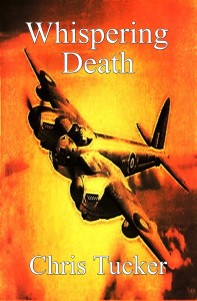
If you took the wild ride of Lost Voyage and loved it, then you’ll be happy to join in on the antics of NESA operatives, Sean Mercer and Pat Vigil, as they uncover a plot and race to stop an egotistical madman, who happens to be the kingpin of a huge pharmaceutical company, from unleashing a new drug resistant strain of TB on the world, for his own materialistic profit in Whispering Death, by California author, Chris Tucker.
While their boyish antics are entertaining, Sean Mercer and Pat Vigil are characters we’d like to know more about. For instance, how can they always be joking, even in the face of death? And how can they be so confident that they will always come out unscathed? It almost seems as if they are secret super heroes, carrying out almost super-human feats, and we just haven’t been let in on the secret.
This story has a good plot line, but execution of the story is lacking. It should be an action-packed thriller, which keeps readers on the edges of their seats and anxious to turn pages, but without continuous POV, we don’t stay with any one character long enough to feel the tension that we know should be there.
I give Whispering Death 2 Quills: 
Share this:

Weekly Writing Memo: Do’s and Don’ts of World Building
Posted: March 30, 2016 Filed under: Fiction, Uncategorized, Weekly Writing Memo, Writing, Writing Tips | Tags: Creative Fiction, Fiction, Writing, Writing Process 1 Comment World building is something I hear writers spend a lot of time anxiously freaking out about. All the tips on Where to Start a Story and How to Make Your Audience Care won’t help you get writing if you’re stuck in the preliminary stages of world building, so I thought I’d do a post on the basic do’s and don’ts of developing the world for your story.
When I talk about world building, I don’t just mean fantasy worlds or futuristic science fiction stuff. World building encompasses every story ever written, even ones based on true stories. Whenever you write you are building the world for your audience, so that those whose world view is different can “buy in” and believe the world is real. So every story involves showing the world it takes place in, the ones based on the real world just take a little less set-up because it’s easier for people to accept and figure out.
- DO establish “normal”
Every story has a baseline for what is normal in it. Establishing this just means you are saying to your audience that this is the world the story takes place in, and everything from this point forward will be based on that. To decide what needs to be established in this way, think of what is different in your world than the world we live in.
Do you have monsters that kill people? Do your characters have strong emotional/societal differences? Like in Invention of Lying where they can’t tell a lie, or in horror movies where the monster is supernatural, these things have to be established early on to orient the audience in the world of the story.
You don’t need to show us everything, but do show us what is important for understanding your plot, characters, and anything necessary for the story to work. It’s about small details, and consistency. So first decide what needs to be established, and then look for the easiest, and shortest, way to establish it, preferably in a way that helps move the story forward.
- DON’T over explain
It’s easy to get wrapped up in describing the details of a world because it can be fun to write. If you spend too much time laying out the world, however, it’ll start to feel like a history book of facts rather than a story. The key is to find a balance.
How much information does your audience need to know in order to understand the story? How much do they need in order to get a feel for the world? If you tell the audience just enough to get oriented in how the world works, without going too far past that, they will know what they need for the story and not feel like they’re bogged down by unnecessary details. Ask yourself with every detail, whether it is pertinent to the story, and how the story would be different without it.
- DO find one specific thing
The rule I use whenever I’m world building is to give one specific detail about anything that may be different from our modern world. So if I invent a new corporation, or a new style of car, I give one specific detail about it that tells the audience what this thing is, and how it fits in my world. This gives the audience something to latch onto for visualization, and something to define this “new” thing by.
As a side note, I also use this for minor characters and such in stories. I give them at least one specific detail about them that stands out, be it physical, personality, or history. It helps personalize each character, and make them their own.
- DON’T spend more time world building than writing
I’ve heard more than a few stories about writers who spend years building the world of their story. They think they need maps, and history, and every species planned out, and religions, and etc. While this kind of thing is a version of storytelling in itself, if you aren’t actually ever getting to write the story, you aren’t writing.
The key, as mentioned above, is to figure out what is important to the story and plan those things without going off on any side tangents. If you really feel you need to develop more of the world in order to deepen your story or to solidify the world for yourself, that’s fine, but set limits. Tell yourself you can plan out 3 or 4 main things that are the core of that subject (religion, politics, geography, etc), then force yourself to move on. If it’s not the core of your story, then you don’t really need more than that to get writing.
- DO remember to touch on the big things
Even though I say don’t get sidetracked by things that aren’t necessary to your story, there are several big things that should be touched upon if you are creating a new world. These things are things that are a part of every society, and even if your story works without them, it’ll be more realistic if you have some mention (even minor) of them.
The big 5, I think, are: politics, religion, culture (fashion, music, art, etc), transportation, and commerce (agriculture, industry, production, markets, etc). There are more, but these are the ones that no matter where your character is, there will always be touches of them present somewhere.
They don’t require an in depth expository segment on them, they just require the small details being integrated throughout your story wherever there is an easy opportunity for them. Your character passes people in a hall, we’ll see touches of their culture in clothes and appearance, and maybe even faith in jewelry or tattoos and such. The passing details can tell us a lot.
- DON’T compare
Don’t go the easy route and say anything that can be summed up as “unlike the world you know, this world works like this.” If you’re creating your world, our world probably doesn’t exist in it. Now, if you’re writing a character who is from “our” world and goes to another, then of course this doesn’t apply. If, however, you’re writing your completely original world, then it doesn’t make sense for your narrator to talk about a world they shouldn’t even know about.
You can use things from the known world in your world, that’s done all the time, just don’t point them out as being from our world. Your narrator is the one telling the story, so stay true to how they’d describe things. If their world doesn’t have bicycles, don’t describe something that looks like a spoked circle as being “like a bicycle wheel.” You have to stay true to the narrator.
Final Notes:
All of this kind of sums up to one major point. Do only as much planning as necessary to develop the basis of your world, and try to avoid overindulging in the development stage. A lot of the world building can happen as you work.
Personally, I develop what is necessary for the plot first, then start writing. While I write, I keep a Word document with new details I add. If I name a gadget or a city as I go, I write it on the Word document so I don’t forget what it’s named. It’s something I keep open as I write so I can reference and update it as needed. As with the post on researching, the thing to remember is that all roads should lead to writing and telling the story, so try to world build with that in mind.




















Acceptance or Rejection – Which do You Prefer?
Posted: June 27, 2016 | Author: kayelynnebooth | Filed under: Commentary, Fiction, Opinion, Promotion, Publishing, Western, Writing | Tags: Acceptance, Creative Fiction, Fiction, Flash Fiction, I Had to Do It, Kaye Lynne Booth, Rejection, Western, Writing | 1 CommentI could go into another post about rejections. Lord knows, I’ve gotten plenty. But I’ve always been one to see the glass half-full side, rather than half-empty, focusing on the positive side to everything, so I think I’d rather talk today about acceptances. I don’t think anyone will disagree when I say acceptances are much better than rejections. You don’t have to be a writer to figure that one out.
You don’t get them as often as rejections, but they’re a lot more satisfying. But there’s a reason I want to write a post on acceptances. If you follow me on Facebook, or Twitter, or Google+, you may have seen my very recent post announcing that my flash fiction western story, I Had to Do It, has been picked up by Zetetic: A Record of Unusual Inquiry.
It’s true this isn’t a big paying publication. I’m certainly not going to get rich from this one little 850 word story. Flash fiction never pays a lot. There’s simply not enough words to make the pennies add up to much, even with higher paying publications. But, I was still elated when I received the acceptance, because my story found a home and people will now read it, and because it is still one more publishing credit for me. I can’t explain the rushing feeling of excitement and pride that small note from the editors brought me. I think most of all, it was thrilling to know that someone else really liked my writing. It was a affirmation of my own belief that my writing really is pretty good.
That probably sounds silly to those who have not yet received an acceptance. (Never fear. It will come.) But we writers are an odd lot, and we are filled with fears and self-doubt. Filled with it. Most of the time we can keep these elements of our inner beings at bay by simply pecking away at the keyboard or filling up sheets of notebook paper, but every once in a while we let our guards down and that’s when they strike. The fear and self-doubt simmer in us, just down below the surface, until they see an opportunity, a weakness, and then they reach up and grab a handful of us and don’t let go.
I think just about every writer worries that the only person in the whole world that really thinks their writing is good is themselves. Friends and family don’t count because they may be saying they like it so as not to hurt your feelings. When you receive an acceptance, any acceptance, it tells you other people do like your writing, and motivates you to get busy writing more.
It’s a good feeling. One I think every writer needs to experience. It can’t happen unless you submit relentlessly and write, write, write. That’s my advice. Write your heart out and then submit like crazy, and never, ever give up. The notes that say, “yes”, make it worth surviving all the ones that said, “no”. So what are you waiting for? Get writing!
Like this post? Subscribe to Writing to be Read for e-mail notifications whenever new content is posted.
Share this: