Growing Bookworms – Reasons why reading is good for your child or teenager’s mental health
Posted: July 12, 2023 Filed under: Books, Children's Books, Growing Bookworms, Literacy, Reading, Reading Therapy, Teaching children | Tags: Children's Books, Growing Bookworms, Mental Health, Reading Therapy, Recomendations, Robbie Chedle, Writing to be Read 58 Comments
From March 2020 mental health increased world-wide and those affected include children and teenagers. Post-pandemic, mental health issues continue to be prevalent among children and teenagers. Although most children and teenagers who contracted Covid-19 did not experience severe symptoms, numerous mental health problems have emerged among children and teens exposed to the COVID-19 pandemic, including anxiety, stress, depression, panic, irritation, impulsivity, physical symptoms caused by mental or emotional factors, sleep problems, rapid and extreme changes in mood, post-traumatic stress disorder (PTSD), and suicidal behavior.
Reading to your child, or your older child or teenager reading to him or herself, has the following mental health benefits:
Reduces stress
Reading is a wonderful form of escapism for everyone, including children. Following the White Rabbit down a hole, going on an adventure with Will Solvit or Percy Jackson or travelling across America in a pioneer wagon with Laura Ingalls Wilder, all help children escape their problems for a few hours. Reading also aids concentration which reduces stress and tension. According to studies, 30 minutes of reading relieves the same amount of tension as doing 30 minutes of yoga.
Improves emotional development
Reading exposes children to characters in books who may be going through a vast spectrum of experiences and emotional responses. Reading about how characters in books react to situations and the emotions those characters have and express help children and teens to normalise their own emotional responses to situations. Children and teens can feel isolated if they think their reactions and emotions are unique and not experienced by others. Reading helps reassure children that the feelings they have are experienced by others in similar situations.
The Secret Garden by Frances Hodgson Burnett is a wonderful book to teach youngsters about inappropriate and spoiled behaviour and its consequences as well as demonstrating the worthiness of mature and considerate behaviour.
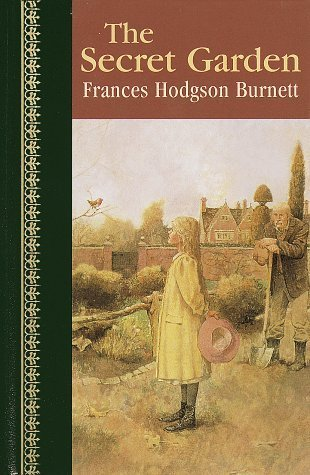
Blurb –
When orphaned Mary Lennox comes to live at her uncle’s great house on the Yorkshire Moors, she finds it full of secrets. The mansion has nearly one hundred rooms, and her uncle keeps himself locked up. And at night, she hears the sound of crying down one of the long corridors. The gardens surrounding the large property are Mary’s only escape. Then, Mary discovers a secret garden, surrounded by walls and locked with a missing key. One day, with the help of two unexpected companions, she discovers a way in. Is everything in the garden dead, or can Mary bring it back to life?
One of the most delightful and enduring classics of children’s literature, The Secret Garden has remained a firm favorite with children the world over ever since it made its first appearance. Initially published as a serial story in 1910 in The American Magazine, it was brought out in novel form in 1911.
Loneliness
This is particularly common in teenagers who feel isolated and lonely when they are caught up in a whirlwind of hormones that they don’t understand and can’t control. Teenagers want to be ‘part of the herd’ and the same as their friends and peer group. If they aren’t the same for various reasons including health issues, learning barriers or abilities, isolation can set in. Reading about other youngsters who are experiencing the same challenges or even unusual physical or intellectual achievements, helps promote self acceptance and reduce loneliness.
A good example of a book that involves peer pressure and the need to belong is Are You There God? It’s Me, Margaret.
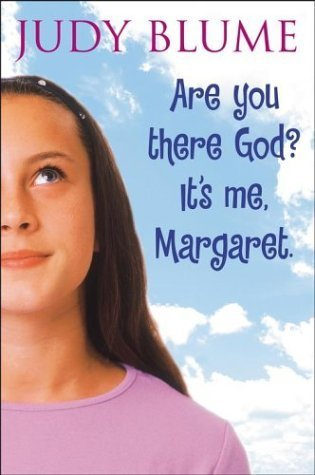
Blurb: Margaret Simon, almost twelve, likes long hair, tuna fish, the smell of rain, and things that are pink. She’s just moved from New York City to Farbook, New Jersey, and is anxious to fit in with her new friends—Nancy, Gretchen, and Janie. When they form a secret club to talk about private subjects like boys, bras, and getting their first periods, Margaret is happy to belong.
But none of them can believe Margaret doesn’t have religion, and that she isn’t going to the Y or the Jewish Community Center. What they don’t know is Margaret has her own very special relationship with God. She can talk to God about everything—family, friends, even Moose Freed, her secret crush.
Margaret is funny and real, and her thoughts and feelings are oh-so-relatable—you’ll feel like she’s talking right to you, sharing her secrets with a friend.
Reduces depression and anxiety
Reading a good book full of joy and happiness helps lift low spirits. For example, reading about the dwarves and Bilbo enjoying clotted cream and honey on freshly baked bread at the home of Beorn, is uplifting. Reading about Harry Potter and his friends defeating Voltemort and his Deatheaters is absorbing and fills the reader with courage and enthusiasm. Many books give the reader a wonderful sense of well being and satisfaction when the adversity comprising the plot is resolved.
Developing social skills
Reading helps youngsters learn how to negotiate and deal with different social situations. It teaches them about romance and the emotions of love, and also rejection and sadness when romance ends or goes wrong. Reading about other people experiencing traumatic and difficult situations helps develop empathy and facilitates the development of meaningful relationships with different people from different backgrounds, cultures and religions.
I am David by Anne Holm is a wonderful book to teach children about gaining social skills. David has to learn to socialise with Maria and her brothers after he saves her from the fire. It is difficult for David who grow up in a concentration camp and only socialised with adults held in captivity.

Blurb – David’s entire twelve-year life has been spent in a grisly prison camp in Eastern Europe. He knows nothing of the outside world. But when he is given the chance to escape, he seizes it. With his vengeful enemies hot on his heels, David struggles to cope in this strange new world, where his only resources are a compass, a few crusts of bread, his two aching feet, and some vague advice to seek refuge in Denmark. Is that enough to survive?
David’s extraordinary odyssey is dramatically chronicled in Anne Holm’s classic about the meaning of freedom and the power of hope.
Winding down
Reading is a wonderful way for children and teens to wind down before sleeping. Today’s children and teens are continuously busy and subject to an endless barrage of mental stimulation. This can make sleep elusive and lack of sleep is very bad for mental health. Reading before bed is the perfect way to wind down after a long day.
About Robbie Cheadle
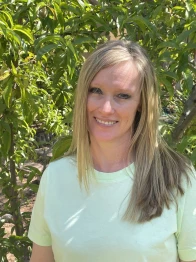
Award-winning, bestselling author, Robbie Cheadle, has published thirteen children’s book and three poetry books. Her work has also appeared in poetry and short story anthologies.
Robbie also has two novels published under the name of Roberta Eaton Cheadle and has horror, paranormal, and fantasy short stories featured in several anthologies under this name.
The ten Sir Chocolate children’s picture books, co-authored by Robbie and Michael Cheadle, are written in sweet, short rhymes which are easy for young children to follow and are illustrated with pictures of delicious cakes and cake decorations. Each book also includes simple recipes or biscuit art directions which children can make under adult supervision.
Robbie’s blog includes recipes, fondant and cake artwork, poetry, and book reviews. https://robbiesinspiration.wordpress.com/
Share this:

Growing Bookworms – Meet children’s fiction and adult fiction and non-fiction author, Toni Pike and a review #growingbookworms #childrensfiction #bookreview
Posted: June 14, 2023 Filed under: Book Promotion, Book Review, Books, Children's Books, Fiction, Mystery, Review, Thriller | Tags: Author Interview, Book Review, Children's Books, Cody Brody and the Step Mother From Outer Space, Growing Bookworms, Robbie Cheadle, The MAgus Covenant, Toni Pike, Writing to be Read 61 Comments
Today, I am delighted to introduce children’s and adult fiction author, Toni Pike. Toni is a prolific writer with at least two non-fiction books, six adult thrillers, one women’s fiction, and two children’s books, all available from Amazon. Today, we are focusing the discussion on Toni’s two children’s books in the Brody Cody series. I’ve read both and they are wonderful for middle school children.
I love your books about Brody Cody as they are filled with excellent, age-appropriate humour without resulting in facetious child characters which is a pitfall with many modern children’s books. Is there any particular children’s book author whom you admire and consider to be a role model for your writing?
Thank you so much for your lovely comments, Robbie – I’m delighted that you liked my characters. That means so much to me, coming from such a wonderful writer.
Roald Dahl is my favourite children’s author – his irreverent stories and characters are so wickedly delightful, and his plots are so beautifully constructed. I find children love this irreverence, and I was horrified to read recently that his stories were to be “sanitised” for the modern world. I think young readers could only benefit from enjoying his classic stories.
One of my other favourite role models is Judy Blume – I love the characters and familiar situations in “Tales of a Fourth Grade Nothing.”
Is Brody Cody entirely fictitious or are some of his characteristics based on real life models?
I always say that they are entirely a figment of my imagination – but quite a few aspects of Brody’s character are drawn from various real-life situations. In particular, I drew on memories of my own children and their friends, and also some snippets and ideas from children I taught at school. Having said that, nothing would be recognisable. I also drew on my own experience of childhood – even though that was a very long time ago! Two examples were Brody’s reluctance to get involved with extra-curricular activities, and also his insecurities, things Brody and I have in common.
How do you go about ensuring the language and flow of ideas in your children’s books are appropriate for the target age group?
Whether it’s for adults or children, I always try to write fast-moving stories that are plot-driven to keep the reader turning the page. That style seems suit me best, and it’s one of the reasons I like writing thrillers. To keep the language age-appropriate, I tried to think of how my children spoke when they were that age. I also made sure I used simple words and sentences, and always attempted to add humour. The setting was Australia, which of course is my home, so I knew the local idioms. I didn’t worry too much about the latest slang expressions – I tried to avoid that.
The theme of your first book, Brody Cody and the Stepmother from Outer Space, is very relevant in our modern age of frequent broken families and remarriages. Was there anything specific that compelled you to write this type of story? What were your aims with this book?
I wanted to write about a little boy who had lost his mother, because that immediately created sympathy for the character. I wanted it to be both scary and funny, but to have a very positive message about children and parents. I know there are a lot of blended families these days, so I hoped it would strike a chord but also be something all children could enjoy.
What are your goals for the Brody Cody series? Can we expect another book in this series soon?
I have a list of ideas for future Brody Cody stories, and want to add to the current two-book series. However, I also love writing books for adults, and I’m currently working on another thriller – which is still at a very early stage. I feel torn between the two, and don’t want to disappoint my grown-up readers who’ve followed me for a few years now. So, for the moment, I think my adult writing is winning.
Books for children are harder to market than books for adults. How do you go about marketing your books and what works best for you?
Attracting readers for the series has been far more difficult than I anticipated – much more so than for adult books. Of course, that’s only my experience and other writers may not find that. I was thrilled with the response from those who did read them, and many of the reviews were wonderful. But I would prefer to find a wider audience.
I use the same techniques for marketing that I used for my other books The first essential is to have some reviews – and I send out advance copies for that. I enrol my books in Kindle Unlimited, and have both the ebooks and paperbacks on Amazon. I find reads on Kindle Unlimited account for a fair proportion of my royalty income. Occasional free days, especially for the first book in the series, helps to boost subsequent sales of all books in the series and also helps to get some reviews. I also use Amazon sponsored ads, targeting similar books and authors. I do, however, keep a tight rein on my budget for that.
The best marketing tool of all, though, is a supportive writing community. I’ve become good friends over the last few years with other writers like yourself from all over the world, and supporting and sharing each other’s writing and blog posts is a great way to spread the word. Your Growing Bookworms series about children’s writing is a great inspiration for children’s writers, and a great learning tool for parents.
My review of Brody Cody and the Stepmother from outer space
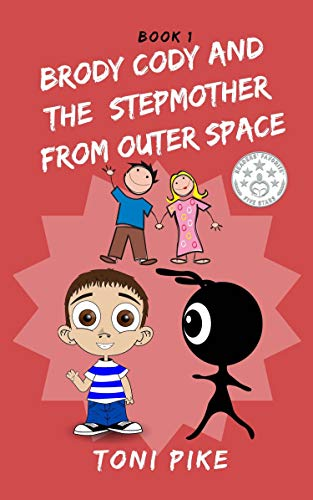
This book is a hilarious and fun read for young readers aged 7 to 13 years old. It is quite reminiscent, with its quirky and slightly dark humour, of Roald Dahl’s books, in particular, it reminded me a bit of James and the Giant Peach where James’ parents are eaten by a rampaging rhinoceros.
Cody, the young hero if this book, is raised by his relaxed and nonchalant father after his mother is mowed down unexpectedly by a runaway bus. Cody is spared because he flies out of his pram and across into the hands of the police constable who catches him like a baseball.
Cody is a happy boy who lives with no rules and little parental intervention. His father works from home in the afternoons, and is not given to checking on Cody’s homework or making sure it is done. They have an interesting diet too that comprises of sweet and sickly cereal in the morning and some fabulously unhealthy father created meals in the evenings.
Cody is happy and doesn’t believe he needs a mother like other children have. He has freedom and he is happy living with his father.
One day, Cody’s father needs to go away to an out-of-town conference. Cody cannot go with him and is sent to his friend’s home for this period. Cody’s friend has a mother and she sets about trying to mend Cody’s lackadaisical ways. Just before Cody is due to go home, he gets a quick call from his father telling him he has met and married a woman he met at the conference.
Cody is horrified and returns home quite determined to reject this new mother, but things don’t go quite according to plan. Cody discovers things about his new mother than lead him to believe she is an alien.
This really is a rollicking good story and young children will love it.
My review of The Magnus Covenant
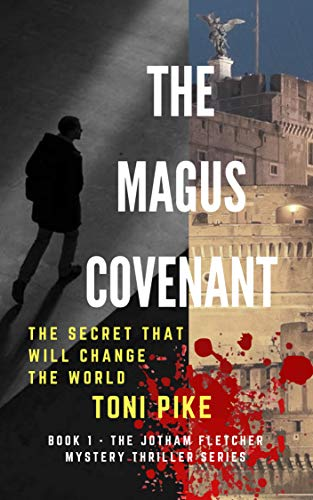
The Magnus Covenant is an exciting thriller that starts of with an unusual and strange murder. From there the excitement and pace just keep increasing, keeping you on the edge of your seat.
Jotham Fletcher and his girlfriend, Antonella Pavoni, a lecturer at the University of Rome, arrive at a famous Catholic Church where Jotham is expecting to deliver a lecture about Simon Magnus just in time to view the body of an elderly man in a black cape who may have committed suicide. As an expert on Simon Magnus, a cult leader from the time of Jesus, who thought he should be the head of the church and who was believed to have been a magician, Jotham mentions to the police the similarities between the deaths of Simon Magnus and this old man. Unfortunately, Jotham’s comments and interventions make him a prime suspect for murder.
Jotham does give his lecture and is the recipient of an extraordinary question from a journalist who subsequently disappears. He is also the recipient of antagonistic comments from a young Catholic brother who is also a member of the audience.
Shortly after the delivery of the lecture, Jotham is kidnapped and becomes embroiled in a complicated intrigue involving the members of the Simon Magnus cult, which has been in existence for 2,000 years, a brotherhood of extreme Catholics and a wealthy individual who may be the cause of all the agitation through the discovery and restoration of an ancient document. Jotham quickly realises that he can’t trust anyone he knows or meets and that his life is in danger.
Jotham is a great character. He has suffered personal loss through the deaths of his wife and child and is struggling with his faith. He’d thrown himself into researching Simon Magnus as a distraction from his loss and emotional turmoil. The deception of many people around him comes as a complete surprise to Jotham and he gets himself into a mess. He is able to pull himself together, discover his survival instincts and set about unravelling the intrigue all around him.
I thought the plot of this book was clever and interesting and the action kept me interested throughout.
About Toni Pike
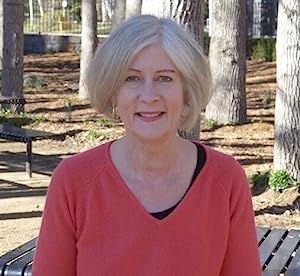
Toni Pike is a multi-genre author who enjoys writing page-turning fiction for adults, hilarious books for children, and non-fiction. She also loves travelling and being with family and friends. She lives in Australia and firmly believes that coffee and long walks are an essential part of any day.
Do you like books that you can’t stop reading? Pike is the author of LINDA’S MIDLIFE CRISIS, DESOLATION BLUFF, DEAD DRY HEART and The Jotham Fletcher Mystery Thriller Series: THE MAGUS COVENANT, THE ROCK OF MAGUS, THE MAGUS EPIPHANY and HOLY SPEAR OF MAGUS.
The Brody Cody Series is for children aged 6-9: BRODY CODY AND THE STEPMOTHER FROM OUTER SPACE and BRODY CODY AND THE HAUNTED VACATION HOUSE.
She’s also the author of two non-fiction books. THE ONE WAY DIET is a no-nonsense guide to losing weight. HAPPY TRAVELS 101 is a short book of travel tips with advice for anyone who wants to travel overseas.
To find out more, her website is tonipike.com.
About Robbie Cheadle
Award-winning, bestselling author, Robbie Cheadle, has published thirteen children’s book and three poetry books. Her work has also appeared in poetry and short story anthologies.
Robbie also has two novels published under the name of Roberta Eaton Cheadle and has horror, paranormal, and fantasy short stories featured in several anthologies under this name.
The ten Sir Chocolate children’s picture books, co-authored by Robbie and Michael Cheadle, are written in sweet, short rhymes which are easy for young children to follow and are illustrated with pictures of delicious cakes and cake decorations. Each book also includes simple recipes or biscuit art directions which children can make under adult supervision.
Robbie’s blog includes recipes, fondant and cake artwork, poetry, and book reviews. https://robbiesinspiration.wordpress.com/
Share this:

Dark Origins – The creepy true story behind Alice in Wonderland #DarkOrigins #AliceinWonderland
Posted: April 26, 2023 Filed under: Books, Children's Books, Classics, Dark Origins, Fantasy, Fiction | Tags: Alice in Wonderland, Children's Books, Classic Children's Literature, Dark Origins, Lewis Carroll, Robbie Cheadle, Writing to be Read 76 Comments
Alice in Wonderland is one of my favourite childhood books. I love it so much, I have seven different copies, one of which is vintage.
The book, Alice in Wonderland, starts with a young girl, Alice, sitting on a bank and watching her sister read a boring book with no pictures or conversations. Seeing a white rabbit passing by, she follows it down a rabbit hole. The rabbit walks and talks and has a pocket watch. Alice falls down and down the rabbit hole, all the while having an interesting conversation with herself, and ends up in a large entrance hall. There is a small door beyond which is a beautiful world, but Alice is to big to pass through it. She experiments with eating and drinking various items until she is finally small enough to gain entry to Wonderland.
Wonderland is a strange and mysterious world filled with unusual creatures and people. It is summed up by this quote: “If I had a world of my own, everything would be nonsense. Nothing would be what it is, because everything would be what it isn’t. And contrary wise, what is, it wouldn’t be. And what it wouldn’t be, it would.”
You can obtain a free copy of Alice in Wonderland from Gutenberg here: https://www.gutenberg.org/ebooks/11

About the author
Lewis Carroll was a pseudonym for Charles Lutwidge Dodgson, who was born in England in 1832. At the age of 18, Dodgson left home to attend Oxford University, where he studied and worked for the next 20 years. He was a student and then a professor and a mathematician.
Dodgson created the Lewis Carroll pseudonym while he was at Oxford, in order to write children’s books that would not be connected to his academic career. He was well known for developing close friendships with children but very few relationships with adults. He befriended the children of his colleagues and acquaintances and spent a lot of time with them, even writing them letters.
“Extra thanks and kisses for the lock of hair,” he wrote to a 10-year-old girl. “I have kissed it several times — for want of having you to kiss, you know, even hair is better than nothing.”
When Henry George Liddell became the Dean of Christ Church at Oxford, Dodgson became friends with his three young daughters: Lorina, Edith and Alice.
The story, Alice in Wonderland, came into existence in 1862 when Dodgson and a colleague took the three girls out on a picnic and rowing trip along the Thames. In order to keep the trio entertained, Dodgson started telling the story that would become Alice in Wonderland which was published in 1865.

Dodgson was also a keen photographer and it is known that he took photos of nude and semi-nude children – including a full-frontal nude shot of Alice’s sister Lorina.
Dodgson wrote:
“I confess I do not admire naked boys in pictures. They always seem to me to need clothes: whereas one hardly sees why the lovely forms of girls should ever be coverd [sic] up!”
In 1863, Dodgson’s friendship with the Liddell family came to a sudden end and he never again spent time alone with their daughters.
There’s no record of why Dodgson’s relationship with the family ended, but there is a theory that he proposed marriage to Alice. This wasn’t that unusual in the mid 1800s as the age of consent was 12 years old and some men did marry young girls.
Before even examining the deeper meaning and themes of Alice in Wonderland, its author and the creation of this story are cast in rather a creepy light.
Deeper meaning and themes of Alice in Wonderland
The Tragic and Inevitable Loss of Childhood Innocence
The theme of growing up is central to Alice in Wonderland. The author is credited with enjoying the innocence with which children approach the world. The multitude of physically changes Alice goes through in Wonderland are believed to be symbolic of puberty and the many changes that take place during that period of a person’s life.
Alice finds these changes disturbing and traumatic and she struggles to find a comfortable size, reverting eventually to her original size.
Relevant quotes:
“I wonder if I’ve been changed in the night. Let me think. Was I the same when I got up this morning? I almost think I can remember feeling a little different. But if I’m not the same, the next question is ‘Who in the world am I?’ Ah, that’s the great puzzle!”
“It was much pleasanter at home,” thought poor Alice, “when one wasn’t always growing larger and smaller, and being ordered about by mice and rabbits. I almost wish I hadn’t gone down the rabbit-hole–and yet–and yet–…”
“I knew who I was this morning, but I’ve changed a few times since then.”
Alice is also confused about who she is and her role in the world around her, namely, Wonderland.
“It’ll be no use their putting their heads down and saying “Come up again, dear!” I shall only look up and say “Who am I then? Tell me that first, and then, if I like being that person, I’ll come up: if not, I’ll stay down here till I’m somebody else”–but, oh dear!’ cried Alice, with a sudden burst of tears, ‘I do wish they WOULD put their heads down! I am so VERY tired of being all alone here!”
Life as a Meaningless Puzzle
As Alice travels through Wonderland, she encounters a series of situations and circumstances which she cannot make sense of and which have no clear solutions. This is symbolism for how life throws frustrating curveballs and problems that cannot be solved or unraveled in the expected way. Often, lateral thinking is required to circumvent issues and, sometimes, problems have no solution in life.
Relevant quotes:
“One day Alice came to a fork in the road and saw a Cheshire cat in a tree. ‘Which road do I take?’ she asked. ‘Where do you want to go?’ was his response. ‘I don’t know,’ Alice answered. ‘Then,’ said the cat, ‘it doesn’t matter.”
“Mad Hatter: Would you like a little more tea?
Alice: Well, I haven’t had any yet, so I can’t very well take more.
March Hare: Ah, you mean you can’t very well take less.
Mad Hatter: Yes. You can always take more than nothing.”
“The March Hare took the watch and looked at it gloomily: then he dipped it into his cup of tea, and looked at it again: but he could think of nothing better to say than his first remark, ‘It was the best butter, you know.’ Alice had been looking over his shoulder with some curiosity. ‘What a funny watch!’ she remarked. ‘It tells the day of the month, and doesn’t tell what o’clock it is!’ ‘Why should it?’ muttered the Hatter. ‘Does your watch tell you what year it is?’ ‘Of course not,’ Alice replied very readily: ‘but that’s because it stays the same year for such a long time together.’ ‘Which is just the case with mine,’ said the Hatter. Alice felt dreadfully puzzled. The Hatter’s remark seemed to have no sort of meaning in it, and yet it was certainly English. ‘I don’t quite understand you,’ she said, as politely as she could. ‘The Dormouse is asleep again,’ said the Hatter, and he poured a little hot tea upon its nose. The Dormouse shook its head impatiently, and said, without opening its eyes, ‘Of course, of course; just what I was going to remark myself.’ ‘Have you guessed the riddle yet?’ the Hatter said, turning to Alice again. ‘No, I give it up,’ Alice replied: ‘what’s the answer?’ ‘I haven’t the slightest idea,’ said the Hatter. ‘Nor I,’ said the March Hare. Alice sighed wearily. ‘I think you might do something better with the time,’ she said, ‘than waste it in asking riddles that have no answers.’ ‘If you knew Time as well as I do,’ said the Hatter, ‘you wouldn’t talk about wasting it.”

Death as a Constant and Underlying Menace
Over and over again, Alice finds herself in dangerous situations that suggest that death is lurking just around the corner. Although death never manifests in the book, the reader senses it and so does Alice. At the end of the book she comes to realise that despite the ridiculous circumstances in Wonderland, death could be a very real outcome and that is when she wakes up and the reader comes to understand the entire book is a dream.
Relevant quotes:
“Well!” thought Alice to herself. “After such a fall as this, I shall think nothing of tumbling down-stairs! How brave they’ll all think me at home! Why, I wouldn’t say anything about it, even if I fell off the top of the house!” (Which was very likely true.)”
“The executioner’s argument was that you couldn’t cut of something’s head unless there was a trunk to sever it from. He’d never done anything like that in his time of life, and wasn’t going to start now.
The King’s argument was that anything that had a head, could be beheaded, and you weren’t to talk nonsense.
The Queen’s argument was that if something wasn’t done about it in less than no time, she’d have everyone beheaded all round.
It was this last argument that had everyone looking so nervous and uncomfortable.”
Characterisation
Alice meets a plethora of characters that have become well known. It is believed that many of these characters, including Alice herself, suffer from mental health disorders. This is a list of some of the most famous characters with a description from Spark Notes (https://www.sparknotes.com/lit/alice/characters/)
The White Rabbit – “The frantic, harried Wonderland creature that originally leads Alice to Wonderland. The White Rabbit is figure of some importance, but he is manic, timid, and occasionally aggressive.” The White Rabbit suffers from an anxiety disorder and is in a constant state of panic.
The Queen of Hearts – “The ruler of Wonderland. The Queen is severe and domineering, continually screaming for her subjects to be beheaded.” The Queen of Hearts is completely self absorbed and has a narcissistic personality disorder.
The Cheshire Cat – “A perpetually grinning cat who appears and disappears at will. The Cheshire Cat displays a detached, clearheaded logic and explains Wonderland’s madness to Alice.” The Cheshire Cat is schizophrenic.
The Caterpillar – “A Wonderland creature. The Caterpillar sits on a mushroom, smokes a hookah, and treats Alice with contempt. He directs Alice to the magic mushroom that allows her to shrink and grow.” The Caterpillar is a drug addict who smokes a hookah and gives Alice a mushroom with mind and body-altering capabilities.

The Mad Hatter – “A small, impolite hatter who lives in perpetual tea-time. The Mad Hatter enjoys frustrating Alice.” The hatter is simply mad.
Have you read Alice in Wonderland? Did you spot these underlying themes and meanings?
Share this:

Growing Bookworms – Meet children’s author and blogger, Norah Colvin, creator of Readilearn #childrensfiction #childrenseducation #Growingbookworms
Posted: April 12, 2023 Filed under: Children's Books, Growing Bookworms, Interview | Tags: Children's Books, Growing Bookworms, Let's Move, Nora Colvin, Robbie Cheadle, Wombat Digs In, Writing, Writing to be Read 127 CommentsToday, I am delighted to introduce you to children’s author, Norah Colvin. Norah is a retired teacher and runs a marvelous educational site called Readilearn which is packed with wonderful teaching aids and ideas for promoting learning among children. Welcome Norah!
I have read and enjoyed a few of your children’s pictures books. They comprise of delightful age appropriate stories and lovely illustrations. Is there any particular children’s book author whom you admire and consider to be a role model for your writing?
Robbie, thank you so much for inviting me here to talk about my books and favourite authors. There are so many authors whose work I love, it’s hard to know where to start, but I guess if I had to pick just one, I’d have to say Mem Fox.
Mem has written so many wonderful picture books that touch my heart. Each one is a gem. She is enormously prolific and writes in many different styles. Possum Magic, her first picture book, was published in 1983, too late for my son and a few years before my daughter was born. I fell in love with this book and Mem as soon as I read it. But I love so many others of her books too, especially Koala Lou (I can’t read it aloud with tearing up), and Whoever You are (same thing). For others of her books that I love, it’s best to just go to her website and check out her full list. I love them all!
One book of Mem’s that I found especially inspiring was her memoir Mem’s the Word. I had always wanted to be a published writer but had never been successful in having any of my submissions accepted. In the memoir (great name for a book about Mem, eh?) Mem revealed that she’d had her first book published when she was forty or almost forty. That gave me hope. I was not yet 40 at the time, only almost. Not only that, Possum Magic had been rejected nine times and had gone through many changes and edits before it was published. Possum had even started life’s journey as a mouse. I thought maybe there was hope for me yet. It took decades after that for me to have these little picture books published with Library For All, but I have been a published educational writer since the early 1990s (last century!)
Mem has also written a brilliant book for parents called Reading Magic. It is all about the importance of reading aloud to children and I just love it. Whenever I know someone who is becoming a parent for the first time, I gift them this book and one of Mem’s picture books as well, usually Ten Little Fingers and Ten Little Toes if I can find it, or Possum Magic. While I can talk (and write, which I often do) about the importance of talking with, reading to and playing with children, a message from Mem gives extra authority to the message. While we’re talking about Mem – although she is an Australian and was born here, she grew up in Africa, Zimbabwe, I think.
You can read more about Mem Fox on Norah’s blog here: https://norahcolvin.com/2015/09/25/a-celebration-of-australian-picture-books-mem-fox/
Where do you find inspiration for your children’s picture books?
This is a tough one to answer, though it should be easy, as stories are everywhere. One of my favourite sayings to children I was teaching, my own children and now my grandchildren is “There’s a story in that”. A story can arise from almost any situation, and be triggered by a thought, a word, a scent on a breeze, a sound. A story is taking a moment, a thought, and turning it into something magical that resonates with others. Of course, if I’d had more success with that latter part, maybe I’d have more stories published and would be more confident in answering this question. But I guess, in fact, children are my inspiration. I love spending time with young children. They are just the most amazing, joyful, full of wonder wonderful little humans with huge hearts. When I’m writing stories for or about children, I try to capture what it means to be a young child and release the six-year-old that still resides within me.
How do you go about ensuring the language and flow of ideas in your children’s books are appropriate for the target age group?
I hope the language and flow of ideas in my stories is appropriate for the young children in my target audience. I have spent a lot of time with young children. I was one once myself and am still a six-year-old at heart (see above). I was a teacher of 5 – 7 year-olds for almost 30 years, had two children of my own, and two grandchildren. A day never went by in the classroom or at home when I didn’t read at least one (often many more) stories to my children. I think all these things – talking with children, spending time with children, and reading stories and books to them (and to myself) – have helped me write in language that is age appropriate.
Do you include specific messages for young children in your picture books? What are your aims with these books?
I try to not be didactic in my stories but to allow messages of empowerment come through the events and character development, encouraging children to love themselves, to be confident, to be friendly towards and respectful to others, to be courageous and curious and try new things, and … I often consider my stories to be ‘a slice of life’, an incident that could occur in any family, an incident that children may identify with. I avoid the darker emotions and try for something lighter. There’s too much darkness. Let there be light, I say. Learning and life are meant to be fun after all.
Your books are part of the Library for All initiative. Could you please share a bit about the objectives of Library for All and why you are a participant in this project.
I’m so pleased you have asked about Library For All (LFA). It is Library for All that has published these first picture books of mine that you have mentioned. I am absolutely delighted and feel extremely honoured to be able to contribute to the Library For All collection. It is such an amazing organisation with a mission that is close to my heart – to make knowledge and books accessible to all equally. Authors and illustrators donate their stories and illustrations to LFA. It’s a great way to be able to support their work. I have fifteen books published with LFA. The first one to be published Wombat Digs was written in a workshop run by LFA with the aim of expanding their titles. I was lucky to have this story written and accepted in that workshop. Most of my stories are nonsense phonics stories written at the request of LFA. Two of the stories have been translated, one for Timor-Leste and one for Kiribati. I was so surprised to receive the one for Kiribati this week. I didn’t know it was being translated. How exciting. You can see all the titles on my Amazon author page. While I receive no income from sales, I’m delighted that the funds contribute to the good work of LFA.
You have a website, Readilearn, Digital Resources for Teachers. Please tell us a bit about your objectives with this website and how teachers and other caregivers can benefit from your digital resources.
Readilearn has been a labour of love. When I was teaching, as most teachers do, I spent many hours away from the classroom preparing lessons to not only encourage learning but to make learning fun. I was/am never in favour of handing out worksheets just to keep children busy. I’ve never considered that respectful of their intellect or a good use of time. I believe that children learn through trying things for themselves and through discussions with the teacher and each other.
When I left the classroom, I wanted to support teachers by doing some of the preparation for them, preparing lessons that were ready for them to teach, lessons that gave the children opportunities to interact with and discuss what they were learning. I wanted to make the lessons a bit more fun and meaningful than just filling out numerous worksheets filled with repetitive exercises. I also wanted to make it affordable so that teachers didn’t have to spend a lot of their hard-earned money (as most of us, especially early childhood teachers, do) on quality resources.
As most of my teaching days were spent working with 5 – 7-year olds, that’s the age group I’ve targeted. Teachers of children in that age group don’t have to scroll through oodles of resources to find something age appropriate. However, as I said, they are lessons ready for teachers to teach (including home-schooling parents). They are not designed for children to use on their own. It is the interactions and the discussions that are important. This is especially so for the interactive lessons which are accessed online. While there are some downloadable worksheets (many of them free), they usually provide follow-up support for the online lessons or provide other teaching ideas. Teaching is an amazing job. It has enormous rewards, but it has its challenges too. If I can make a teacher’s day a little easier and learning a little more fun and meaningful for the children, I’m happy.
Thank you, Norah, for being a wonderful guest and sharing all this amazing information about your writing and Readilearn.
My review of Wombat Digs In by Norah Colvin
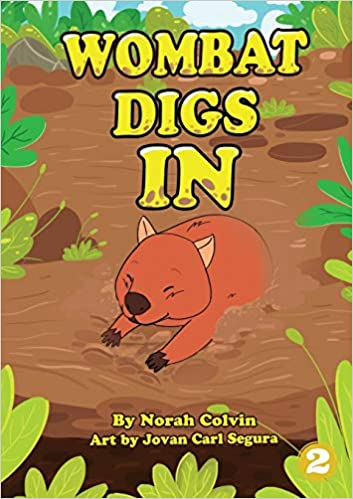
This is an adorable book for small children about a wombat who is struggling to keep up with some of the other animals including the kangaroos who can bounce, the possums who can climb, and the fruit bats who can fly. Wombat is feeling a little dejected, but when Baby Koala falls out of the tree, Wombat’s own special skill of digging comes to the forefront. This little book is illustrated with simple and bright pictures that small children will love.
Purchase link:
Amazon Au: https://www.amazon.com.au/gp/product/192596003X
Amazon US: https://www.amazon.com/Wombat-Digs-Norah-Colvin/dp/192596003X
My review of Let’s Move by Norah Colvin

This is a delightful little book for teaching very young children about animals and movement. The illustrations are adorable and I particularly liked the snails that slide and the snakes that slither.
Purchase link:
Amazon Au: https://www.amazon.com.au/gp/product/1925960064
Amazon US: https://www.amazon.com/Lets-Move-Norah-Colvin/dp/1925960064
About Norah Colvin

Norah Colvin is a passionate educator and writer.
She is a published educational writer and freelance author for publishers such as Jacaranda Wiley, Greygum Software, Blake Education, Pascal Press, MacMillan and ITC Publications.
She has two children’s books published with Library For All, a ballad included in the Share Your Story Tell ‘Em They’re Dreaming anthology and flash fiction in the Carrot Ranch Rough Writers Anthology Vol 1. She loves to write picture books manuscripts for the six-year-old in her own and others’ hearts.
She belongs to the following writers’ groups:
SCBWI
Queensland Writers Centre
Book Links
Write Links
Writing NSW
Creative Kids Tales
and other Facebook writing groups.
She blogs at www.NorahColvin.com and produces teaching resources for her educational website www.readilearn.com.au.
About Robbie Cheadle
Award-winning, bestselling author, Robbie Cheadle, has published thirteen children’s book and two poetry books. Her work has also appeared in poetry and short story anthologies.
Robbie also has two novels published under the name of Roberta Eaton Cheadle and has horror, paranormal, and fantasy short stories featured in several anthologies under this name.
The ten Sir Chocolate children’s picture books, co-authored by Robbie and Michael Cheadle, are written in sweet, short rhymes which are easy for young children to follow and are illustrated with pictures of delicious cakes and cake decorations. Each book also includes simple recipes or biscuit art directions which children can make under adult supervision.
Robbie’s blog includes recipes, fondant and cake artwork, poetry, and book reviews. https://robbiesinspiration.wordpress.com/
Share this:

Growing Bookworms – Some wonderful Christmas books for Children #readingcommunity #childrensfiction #growingbookworms
Posted: December 7, 2022 Filed under: Books, Children's Books, Growing Bookworms | Tags: Children's Books, Christmas, Growing Bookworms, Robbie Cheadle, Writing to be Read 31 Comments
Christmas is fast approaching and this year’s will be the first normal Christmas many of us will be experiencing since 2019.
Last year, South Africa had an outbreak of Covid-19 round about now and we all went back into hibernation. My cousin and his family were here from the UK and they got trapped for an extra 2 1/2 weeks because of the quarantine requirements in the UK.
We are looking forward to a lovely family Christmas this Saturday before my family and my mom leave for the UK for just over two weeks. We are looking forward to seeing our extended family for the first time in three years.
The run up to Christmas is a wonderful time to read books with your children. There are numerous books that celebrate the Christmas story and also a significant number of books that share the message of kindness and sharing without any specific religious affiliation.
These are a few of my favourite Christmas stories and I’ve slipped in my own two newly released Christmas books for children at the end. These books are my first attempts at publishing on Kindle Direct Publishing and I am pleased with how they’ve turned out.
How the Grinch Stole Christmas by Dr. Seuss

What Amazon says
The timeless Christmas classic from the iconic Dr. Seuss is now available in ebook. Read this favourite story of joy, love and acceptance anytime, anywhere!
(This ebook is optimised for Kindle tablets and the Kindle App. It is not suitable for e-Ink kindle devices, such as the PaperWhite. We recommend you download a sample to your device before purchase if in doubt.)
“The Grinch hated Christmas! The whole Christmas season!
Now, please don’t ask why. No one quite knows the reason…”
With a heart two sizes too small, the Grinch is the meanest creature you’ll ever meet. He hates Christmas and the whole festive season. But when he hatches a dastardly plot to steal Christmas, he’s in for a big surprise!
This classic seasonal story has become a favourite for good reason. Through hilarious rhymes and beautiful illustrations, Dr. Seuss teaches readers the true meaning of Christmas.
With his unique combination of hilarious stories, zany pictures and riotous rhymes, Dr. Seuss has been delighting young children and helping them learn to read for over fifty years. Creator of the wonderfully anarchic Cat in the Hat, and ranked among the UK’s top ten favourite children’s authors, Dr. Seuss is a global best-seller, with over half a billion books sold worldwide.
A few quotes
“Packed it up with their presents, their ribbons, their wrappings, Their snoof and their fuzzles, their tringlers and trappings! Ten thousand feet up, up the side of Mount Crumpet, He rode with his load to the tiptop to dump it!”
“And the Grinch, with his Grinch-feet ice cold in the snow, stood puzzling and puzzling, how could it be so? It came without ribbons. It came without tags. It came without packages, boxes or bags. And he puzzled and puzzled ’till his puzzler was sore. Then the Grinch thought of something he hadn’t before. What if Christmas, he thought, doesn’t come from a store. What if Christmas, perhaps, means a little bit more.”
Purchase How the Grinch Stole Christmas here: https://www.amazon.com/How-Grinch-Stole-Christmas-Seuss-ebook/dp/B077BM5NVM
The Polar Express by Chris Van Allsburg

What Amazon says
“Seeing is believing, but sometimes the most real things in the world are the things we can’t see.”
Late one Christmas Eve after the town has gone to sleep, the boy boards the mysterious train that waits for him: the Polar Express bound for the North Pole. When he arrives, Santa offers the boy any gift he desires. The boy modestly asks for one bell from the harness of the reindeer. The gift is granted. On the way home the bell is lost. On Christmas morning, the boy finds the bell under the tree. The mother of the boy admires the bell, but laments that it is broken—for you see, only believers can hear the sound of the bell.
Awarded the prestigious Caldecott Medal in 1986, ‘The Polar Express ‘has sold more than 7 million copies, become a classic holiday movie, and been translated into stage productions that take place across the United States during the holiday season.
Purchase The Polar Express here: https://www.amazon.com/gp/product/0395389496
Mr. Men and Little Miss Christmas Books by Roger Hargreaves
Roger Hargreaves has an array of different books in the Mr. Men and Little Miss series of illustrated books for children. Among his many amazing books, he has a few dedicated to Christmas.
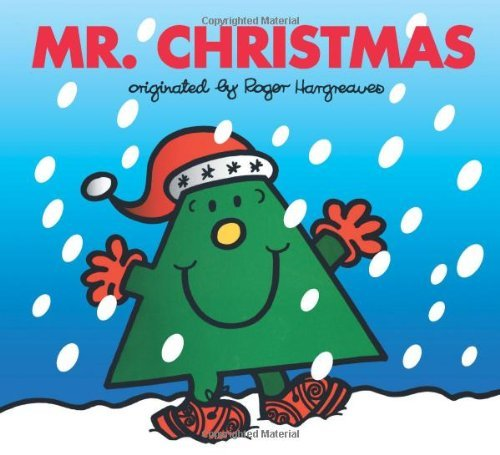
One day Mr. Christmas receives a call from his uncle, Santa Claus, asking for help. Can Mr. Christmas help Santa deliver presents to all of the Mr. Men?
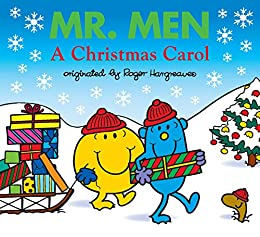
Mr. Stingy is a stingy old miser who hates Christmas. But one night he is visited by three ghosts who show him that heÕs been living his life badly and needs to mend his ways! In this lighthearted adaptation of DickensÕs A Christmas Carol, Mr. Happy plays Bob Cratchit and Mr. Nosey, Little Miss Wise, and Little Miss Bossy play the ghosts of Christmas Past, Present, and Future.
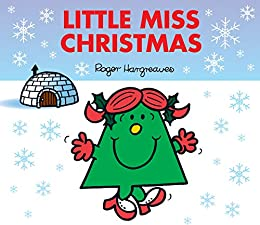
Little Miss Christmas spends all year wrapping presents for Santa Claus. But when the wrapping isn?t done in time, Little Miss Christmas has to call on her Mr. Men and Little Miss friends to help out!
The Christmas Bird by Robbie Cheadle

The Deanne family is having a difficult time financially. Mr. Deanne’s business has failed and there is no money for Christmas presents and other luxuries. The family’s undernourished dogs discover a bird’s nest on Christmas Day and attack and kill the chicks. All except one tiny ball of fluff with luminous bright eyes like drops of oil. The baby bird is in shock, but the four Deanne girls try to save it. Will the Christmas Bird survive?
Purchase The Christmas Bird here: https://www.amazon.com/Christmas-Bird-Robbie-Cheadle-ebook/dp/B0BMMB2H75
Sir Chocolate and the Missing Christmas Harp

The Christmas Fairy’s harp has gone missing. Without it, the parents and children won’t sleep on Christmas Eve and Santa can’t deliver Christmas presents. Can Sir Chocolate help Santa find the missing harp and save Christmas?
Includes five fun related limericks and five Christmas themed creative activities and recipes that caregivers can make with small children.
Purchase Sir Chocolate and the Missing Christmas Harp here: https://www.amazon.com/gp/product/B0BNHX8XGC
I made a video for this book and I would be delighted if you would view it and let me know what you think of it here:
About Robbie Cheadle

Robbie Cheadle is a South African children’s author and poet with eleven children’s books and two poetry books.
The eight Sir Chocolate children’s picture books, co-authored by Robbie and Michael Cheadle, are written in sweet, short rhymes which are easy for young children to follow and are illustrated with pictures of delicious cakes and cake decorations. Each book also includes simple recipes or biscuit art directions which children can make under adult supervision.
Robbie and Michael have also written Haunted Halloween Holiday, a delightful fantasy story for children aged 5 to 9 about Count Sugular and his family who hire a caravan to attend a Halloween party at the Haunted House in Ghost Valley. This story is beautifully illustrated with Robbie’s fondant and cake art creations.
Robbie has published two books for older children which incorporate recipes that are relevant to the storylines.
Robbie has two adult novels in the paranormal historical and supernatural fantasy genres published under the name Roberta Eaton Cheadle. She also has short stories, in the horror and paranormal genre, and poems included in several anthologies.
Robbie Cheadle contributes two monthly posts to https://writingtoberead.com, namely, Growing Bookworms, a series providing advice to caregivers on how to encourage children to read and write, and Treasuring Poetry, a series aimed at introducing poetry lovers to new poets and poetry books.
In addition, Roberta Eaton Cheadle contributes one monthly post to https://writingtoberead.com called Dark Origins: African Myths and Legends which shares information about the cultures, myths and legends of the indigenous people of southern Africa.
Robbie has a blog, https://robbiesinspiration.wordpress.com. where she shares book reviews, recipes, author interviews, and poetry.
Find Robbie Cheadle
Blog: https://www.robbiecheadle.co.za/
Blog: robbiesinspiration.wordpress.com
Twitter: BakeandWrite
YouTube: https://www.youtube.com/channel/UCVyFo_OJLPqFa9ZhHnCfHUA
Facebook: Sir Chocolate Books
______________________________________________________________________________________________
Want to be sure not to miss any of Robbie’s “Growing Bookworms” segments? Subscribe to Writing to be Read for e-mail notifications whenever new content is posted or follow WtbR on WordPress. If you found it interesting or entertaining, please share.
Share this:

Growing Bookworms – The importance of colour when illustrating children’s books #childrensfiction #readingcommunity #growingbookworms
Posted: November 9, 2022 Filed under: Books, Children's Books, Education, Illustrations, Literacy, Parenting, Reading | Tags: Children's Books, Color, Growing Bookworms, Illustrations, Parenting, Writing to be Read 43 Comments
Many children’s picture books make use of brightly coloured cartoon style illustrations. Children are attracted to bright colors such as red, yellow, green, blue, and pink. These colors create a sense of energy and playfulness and also emanate happiness. Colour impacts on children’s moods, behaviour, and educational performance.
Part of the reason children prefer bright colours is because saturated colours are easier for young, developing eyes to see. Bright colors and contrasting colors stand out more in a child’s field of vision than feinter shades.
Colour effects the way the brain functions and can be used by illustrators to encourage pattern recognition, memory, and the ability of young readers to absorb new information.
Here are a few examples of colours and how they can be used for learning:
RED – a powerful and attention-grabbing colour, red stimulates alertness and excitement. It encourages creativity and can also increase appetite.
BLUE – provides a sense of comfort by exuding calmness, loyalty, peace, serenity, and security.
YELLOW – encourages positive feelings and improves concentration by promoting creativity, clarity, and optimism.
GREEN – symbolises nature and the natural world. Green relieves stress and provides a sense of healing. It also represents balance, growth, tranquillity, cleanliness and calmness.
ORANGE – like red, orange is an energetic colour that promotes alertness. Orange creates a sense of passion, warmth, excitement and encourages communication.
PINK – symbolises love, romance, nurture, warmth, calmness, and imagination.
It is also important for illustrators, or writers engaging an illustrator, to note that colours can also overstimulate children, instead of inspiring them, so a balance of bright and neutral colours is required for illustrations.
I illustrate my own children’s books and I try to apply these principles in my own work. This is a collage of a selection of my fondant and cake art illustrations.

My illustrations have proved popular with children so I think I am getting the colour coding right.
These are some examples of famous children’s books and illustrators:


What do you think? Do you like bright colours? Have you written a children’s book and illustrated it yourself or engaged an illustrator? Let me know in the comments.
About Robbie Cheadle
Robbie Cheadle is a South African children’s author and poet with eleven children’s books and two poetry books.
The eight Sir Chocolate children’s picture books, co-authored by Robbie and Michael Cheadle, are written in sweet, short rhymes which are easy for young children to follow and are illustrated with pictures of delicious cakes and cake decorations. Each book also includes simple recipes or biscuit art directions which children can make under adult supervision.
Robbie and Michael have also written Haunted Halloween Holiday, a delightful fantasy story for children aged 5 to 9 about Count Sugular and his family who hire a caravan to attend a Halloween party at the Haunted House in Ghost Valley. This story is beautifully illustrated with Robbie’s fondant and cake art creations.
Robbie has published two books for older children which incorporate recipes that are relevant to the storylines.
Robbie has two adult novels in the paranormal historical and supernatural fantasy genres published under the name Roberta Eaton Cheadle. She also has short stories, in the horror and paranormal genre, and poems included in several anthologies.
Robbie Cheadle contributes two monthly posts to https://writingtoberead.com, namely, Growing Bookworms, a series providing advice to caregivers on how to encourage children to read and write, and Treasuring Poetry, a series aimed at introducing poetry lovers to new poets and poetry books.
In addition, Roberta Eaton Cheadle contributes one monthly post to https://writingtoberead.com called Dark Origins: African Myths and Legends which shares information about the cultures, myths and legends of the indigenous people of southern Africa.
Robbie has a blog, https://robbiesinspiration.wordpress.com. where she shares book reviews, recipes, author interviews, and poetry.
Find Robbie Cheadle
Blog: https://www.robbiecheadle.co.za/
Blog: robbiesinspiration.wordpress.com
Twitter: BakeandWrite
YouTube: https://www.youtube.com/channel/UCVyFo_OJLPqFa9ZhHnCfHUA
Facebook: Sir Chocolate Books
______________________________________________________________________________________________
Want to be sure not to miss any of Robbie’s “Growing Bookworms” segments? Subscribe to Writing to be Read for e-mail notifications whenever new content is posted or follow WtbR on WordPress. If you found it interesting or entertaining, please share.
Share this:

Day 5 of the WordCrafter “Haunted Halloween Holiday” Book Blog Tour
Posted: October 7, 2022 Filed under: Blog Tour, Book Release, Book Review, Books, Children's Books, Giveaways, Guest Post, WordCrafter Book Blog Tours | Tags: Children's Books, Haunted Halloween Holiday, Michael Cheadle, Robbie and Michael Cheadle, Robbie Cheadle, WordCrafter Book Blog Tours 1 Comment
For Day 5 of the WordCrafter “Haunted Haloween Holiday” Book Blog Tour, we’re over at “Zigler’s News” with a guest post from Robbie Cheadle and a review by Tori Zigler. Come join us and don’t forget to comment to enter in the giveaway!
https://ziglernews.blogspot.com/2022/10/wordcrafters-book-blogtour-for-haunted.html
Share this:

Welcome to the WordCrafter “Haunted Halloween Holiday” Book Blog Tour
Posted: October 3, 2022 Filed under: Blog Tour, Book Promotion, Book Release, Book Review, Books, Children's Books, Giveaways, Guest Post, Review, WordCrafter Book Blog Tours | Tags: Children's Books, Haunted Halloween Holiday, Michael Cheadle, Robbie Cheadle, WordCrafter Book Blog Tours 56 Comments
Welcome to the WordCrafter Haunted Halloween Holiday Book Blog Tour, in celebration of this delightful new children’s Halloween adventure by Robbie and Michael Cheadle. This is going to be a wonderful tour with a guest post from author Robbie Cheadle and a review at every stop. Today will be a real treat with not one, but two tour stops, but you may comment on either stop here. Instead of making Robbie sit through another tedious interview, we will have each tour stop host ask her two questions, so you can learn more about her at every stop if you follow the tour, and she also has a great giveaway.
Tour Schedule
(Links won’t work until the post goes live.)
Monday – October 3 – Double Stop Day! – Guest Post & Review – Writing to be Read
– Guest Post & Review – Undawnted
Tuesday – October 4 – The Showers of Blessings
Wednesday – October 5 – Patty’s World
Thursday – October 6 – Carla Loves to Read
Friday – October 7 – Zigler’s News
Saturday – October 8 – Annette Rochel Aben
Give Away
For a chance to win one of three US$10 Amazon vouchers or one of three paperback copies of Haunted Halloween Holiday just leave a comment to show you were here.
Follow the tour and comment at each stop for more chances to win.
The prizes will be given away in a random drawing.
About Haunted Halloween Holiday

Count Sugular is delighted when the Sugarpop Bats invite his family to a Halloween party at the Haunted House. He and his wife, Witch Honey, decide to hire a caravan and enjoy a weekend away with their family.
Includes some fun limericks to introduce the various characters.
You can find the book trailer here: https://www.youtube.com/watch?v=4fr5OxyUfd4
Purchase links:
TSL Publications: https://tslbooks.uk/product/haunted-halloween-holiday-robbie-and-michael-cheadle/
Robbie’s Questions
Question: You illustrate your children’s books with elaborate fondant scenes, with buildings and characters which are very detailed. How long does it take you to create a whole fondant scene for illustration in one of your stories?
Answer: The fondant and cake illustrations are time consuming. The amount of time required depends on the number of flowers and figurines I include and their complexity.
Each figurine takes, on average, between 4 and 5 hours to complete. I always start with the heads. Some of the figurines have detailed facial features including teeth, lip detail, and layered eyes and these take a lot of time and effort to make.
Hair is also time consuming, especially curly hair, as each strand is wound around a cocktail stick and allowed to partially dry before it can be attached to the head. Timing is important because if the fondant hair strand dries to much, it wont stick to the head.
My next step is usually the body and shoes, and that is followed by the arms and legs. Attaching arms and legs can be tricky as you have to keep them in the correct positions until they dry. Standing figurines are much more difficult to make than seated ones. The legs have to dry completely before you can attach the weight of the head and body to a standing figurine or the legs collapse.
Flowers are also made in layers. I start with the centres and leave them to firm up before adding the second layer of petals. Flowers are also tricky from a timing perspective as the petals must firm up enough to hold their shape but not dry so much they crack or break.
From a cake perspective, sponge cake assembly is not that difficult for me. The carving and assembly of shaped cakes isn’t that difficult if you have an eye for proportions which I do.
The gingerbread caravan that features in Haunted Halloween Holiday was difficult to make because I had to bend the gingerbread to make it harden in a curved shape. I did have to make adaptions to my initial plan and I created the sides and top of the caravan in two parts instead of one as I’d originally planned. I did have to redo that piece of gingerbread. You have to bend it while it is still hot but not so hot it collapses (or burns you) but before it starts to harden or it cracks. Another tricky timing situation.
The windmill was complex to make because of the blades which I made separately from fondant and attached to wooden kebab sticks. The entire bladed structure had to then be attached to the gingerbread windmill structure. It was a great challenge and I was delighted at how both of these structures came out.

Question: You have done many collaborations for anthologies, and you also co-wrote a book with your mother. Do you have more fun collaborating with your son Michael on the children’s books than you do with your adult collaborators on adult themed works? Why or why not?
Answer: The children’s books are fun to write and illustrate. The text for the Sir Chocolate and other children’s books is much less, 600 words or less for the Sir Chocolate picture books in line with the industry standard, than books for older children or adults.
My collaboration with Michael involves conversations and chats about characters and ideas for story lines as well as the illustrations. This makes the entire process fairly easy and companionable.
Writing While the Bombs Fell was a more difficult collaboration because I was writing my mother’s memories. I had to coax the memories from her, research the details and historical context of the time period and lay them over her personal timeline. It was an interesting and rewarding process and I learned a lot more about my mom’s early life and my own family.
There were some difficulties, especially around the structuring of the story and the fictionalised elements. My mom didn’t always agree when I filled gaps in her memory with information based on historical research to give the book a little more meat. In the end, we came to a meeting of minds and were both happy with the book. The difficulties with writing someone else’s memories is one of the reasons why the sequel, After the Bombs Fell, is not finished. My own writing process has changed and it’s more difficult for me to work with someone else now.
Thank you, Kaye, for these great questions and for hosting my post.

About the Authors
Michael Cheadle is a student at a high school in South Africa. His favourite subjects are IT, and History and he enjoys creative writing, especially writing poetry. In his spare time Michael enjoys computer games, boxing, tennis, and sleeping.

Robbie Cheadle is a South African children’s author and poet with eleven children’s books and two poetry books.
The eight Sir Chocolate children’s picture books, co-authored by Robbie and Michael Cheadle, are written in sweet, short rhymes which are easy for young children to follow and are illustrated with pictures of delicious cakes and cake decorations. Each book also includes simple recipes or biscuit art directions which children can make under adult supervision.
Robbie and Michael have also written Haunted Halloween Holiday, a delightful fantasy story for children aged 5 to 9. Count Sugular and his family hire a caravan to attend a Halloween party at the Haunted House in Ghost Valley. This story is beautifully illustrated with Robbie’s fondant and cake art creations.
Robbie and Michael have also written Haunted Halloween Holiday, a delightful fantasy story for children aged 5 to 9. Count Sugular and his family hire a caravan to attend a Halloween party at the Haunted House in Ghost Valley. This story is beautifully illustrated with Robbie’s fondant and cake art creations.
Robbie has also published two books for older children which incorporate recipes that are relevant to the storylines.
Robbie has two adult novels in the paranormal historical and supernatural fantasy genres published under the name Roberta Eaton Cheadle. She also has short stories, in the horror and paranormal genre, and poems included in several anthologies.
Robbie Cheadle contributes two monthly posts to https://writingtoberead.com, namely, Growing Bookworms, a series providing advice to caregivers on how to encourage children to read and write, and Treasuring Poetry, a series aimed at introducing poetry lovers to new poets and poetry books.
In addition, Roberta Eaton Cheadle contributes one monthly post to https://writingtoberead.com called Dark Origins: African Myths and Legends which shares information about the cultures, myths and legends of the indigenous people of southern Africa.
Find Robbie Cheadle
Robbie Cheadle Amazon Author Page: https://www.amazon.com/Robbie-Cheadle/e/B01N9J62GQ
Robbie Cheadle Goodreads Author Page: https://www.goodreads.com/author/show/15584446.Robbie_Cheadle
TSL Publications Robbie Cheadle Author Page: https://tslbooks.uk/product-tag/robbie-cheadle/
Twitter: https://twitter.com/bakeandwrite
Facebook: https://www.facebook.com/SirChocolateBooks
YouTube: https://www.youtube.com/channel/UCVyFo_OJLPqFa9ZhHnCfHUA
My Review
Haunted Halloween Holiday is a ‘just a little scary but lots and lots of fun’ kind of story. Fans of the Sir Chocolate books by Robbie and Michael Cheadle will not be disappointed as the mother and son duo write and bake their way into reader’s hearts with this delightfully delicious story. Stuffed full of delectable fondant illustrations, highlighted with lovely rhyming verse to tell the story of an unique holiday celebration.
This book is a bit longer than previous Sir Chocolate formats, and contains less verse, but it’s a delightfully fun adventure to please readers both young and old. Who could resist all the colorful characters who attend this festive holiday party? Count Sugular; Baby Howler; Skelly the Skeleton; Teddy the posessed teddy bear; the Trolls – Tar and Liquorice; Toot, the clown who smiles upside; Witch Goody; and Jack Frost all help to make this Halloween celebration one to be remebered, and enjoyed over and over, every time you pick up the book.
I give Haunted Halloween Holiday five quills.

__________________________________________________
That wraps up this stop on the WordCrafter Haunted Halloween Holiday Book Blog Tour, but be sure to drop in to Undawnted for another great review of the book. Join us tomorrow over at The Showers of Blessings, for another guest post by Robbie and a review by Miriam Hurdle.
Share this:

Day 4 of the WordCrafter “Chocolate Fudge saves the Sugar Dog” Book Blog Tour – Review by D.L. Mullen
Posted: March 3, 2022 Filed under: Blog Tour, Book Promotion, Book Release, Children's Books, Stories, WordCrafter Book Blog Tours | Tags: Children's Books, Chocolate Fudge saves the Sugar Dog, Michael Cheadle, Robbie Cheadle, Sir Chocolate book series, WordCrafter Book Blog Tours 37 Comments
Sir Chocolate and Lady Sweet,
Have a son, Chocolate Fudge,
A mild mannered and kindly lad,
He’d never bear a grudge.
From Book 8: Chocolate Fudge saves the Sugar Dog
We’ve had a great tour so far with a post from Robbie and a review by Miriam Hurdle on The Showers of Blessings blogsite on Day 1; an interview with Michael Cheadle and my review, here on Writing to be Read for Day 2; James Cudney interviews Robbie Cheadle on This is My Truth Now for Day 3.
For Day 4 of the WordCrafter Chocolate Fudge saves the Sugar Dog Book Blog Tour finds a guest post from Robbie on the villian of her story here, on Writing to be Read and D. L. Mullen’s review of her delightful children’s book over at the Undawnted blog site. Because Undawnted does not accept comments, you can comment, like or share here.
Robbie’s Post
In most good stories, there is a hero and a villain.
The villain of Chocolate Fudge save the Sugar Dog is …
… Lord Humbug

Lord Humbug was haughty and proud
His dogs: undisciplined, naughty, and loud
Yorkie could’ve drowned
While her brothers clowned
“I’ll train them,” Lord Humbug vowed
Lord Humbug is named for the expression “Bah Humbug”, a well-known catchphrase uttered by miserly old Ebenezer Scrooge, the main character in A Christmas Carol by Charles Dickens. Scrooge, who thinks Christmas is an enormous deception, retorts, “Bah! Humbug!” to anyone who dares to wish him a merry Christmas.
Lord Humbug’s black and whited stripped suit is based on Humbug sweets. These are traditional hard-boiled sweets available in the United Kingdom, Ireland, South Africa, Canada, Australia, and New Zealand. They are triangular shaped with rounded edges and are usually black and white stripped and peppermint flavoured.
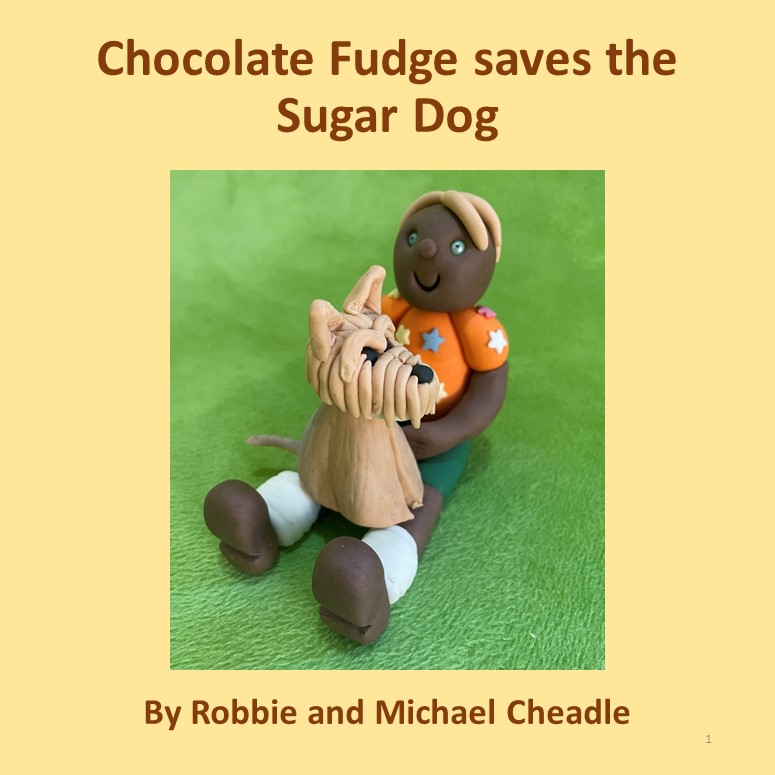
Blurb
Sir Chocolate and Lady Sweet’s son, Chocolate Fudge, sees one of Lord Humbug’s dogs struggling to stay afloat in the hot chocolate pond.
Can Chocolate Fudge save the sugar dog from drowning?
Includes lovely new recipes.
Purchase links
Paperback: https://tslbooks.uk/product/chocolate-fudge-saves-the-sugar-dog/
Paperback: https://www.amazon.com/Chocolate-Fudge-Saves-Sugar-Dog/dp/1914245547
_______________________________________________________
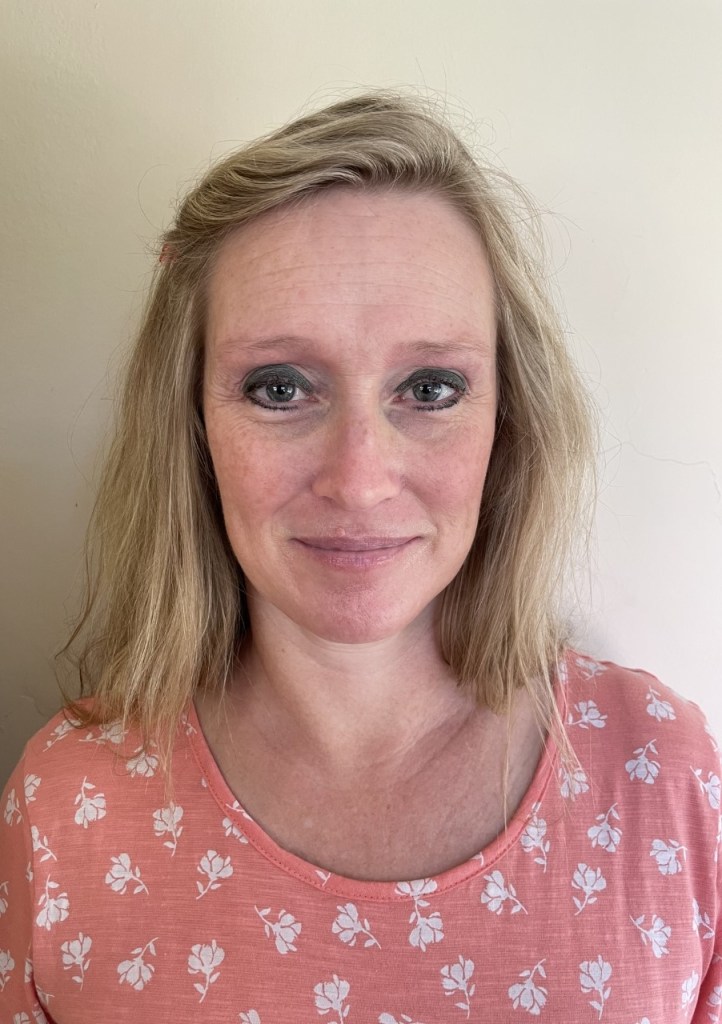
Robbie Cheadle is a South African children’s author and poet with ten children’s books and two poetry books.
The eight Sir Chocolate children’s picture books, co-authored by Robbie and Michael Cheadle, are written in sweet, short rhymes which are easy for young children to follow and are illustrated with pictures of delicious cakes and cake decorations. Each book also includes simple recipes or biscuit art directions which children can make under adult supervision.
Robbie has also published two books for older children which incorporate recipes that are relevant to the storylines.
Robbie has two adult novels in the paranormal historical and supernatural fantasy genres published under the name Roberta Eaton Cheadle. She also has short stories, in the horror and paranormal genre, and poems included in several anthologies.
Robbie writes two monthly posts for https://writingtoberead.com called Growing Bookworms and Treasuring Poetry and one monthly post, under the name of Roberta Eaton Cheadle, called Dark Origins: African Myths and Legends.
Robbie has a blog, https://robbiesinspiration.wordpress.com/ where she shares book reviews, recipes, author interviews, and poetry.
Robbie Cheadle’s books
Sir Chocolate books
Sir Chocolate and the strawberry cream berries story and cookbook
The adventures of Sir Chocolate and Lady Sweet in poetry form. Michael came up with the idea of Sir Chocolate and Lady Sweet and many of the characters contained in the books, when he was ten years old. His ideas were such fun that Robbie decided to turn them into little verse books for his entertainment. The book contains recipes for children to make with adult assistance.
Sir Chocolate and the baby cookie monster story and cookbook
Book 2 of the Sir Chocolate series: Sir Chocolate and Lady Sweet find a lost baby cookie monster. Join them on an adventure to return the baby to its mother and learn how to make some of their delicious recipes at the same time.
Sir Chocolate and the sugar dough bees story and cookbook
A greedy snail damages the flower fields and the fondant bees are in danger of starving. Join Sir Chocolate on an adventure to find the fruit drop fairies who have magic healing powers and discover how to make some of his favourite foods on the way.
Sir Chocolate and the Condensed Milk River story and cookbook
The Condensed Milk River where Sir Chocolate goes fishing has stopped flowing. The water creatures are losing their homes. Can Sir Chocolate and Lady Sweet solve this problem? Five lovely new recipes are also included.
Sir Chocolate and the Sugar Crystal Caves story and cookbook
The Condensed Milk River where Sir Chocolate goes fishing has stopped flowing. The water creatures are losing their homes. Can Sir Chocolate and Lady Sweet solve this problem? Five lovely new recipes are also included.
Sir Chocolate and the Fondant Five Story and Cookbook
Number 6 in the Sir Chocolate series: Five zoo animals go missing and Sir Chocolate needs to find them. Includes five lovely new recipes.
Sir Chocolate and the Ice cream Rainbow Fairies Story and Cookbook
Join Sir Chocolate and Lady Sweet on a fun adventure to discover why the milkshake rain is pale and white.
Silly Willy goes to Cape Town
When the George family go on holiday to Cape Town, Cautious Craig cannot believe what he has to endure at the hands of his naughty and wilful younger brother, Silly Willy. Willy throws tantrums at the most embarrassing and inappropriate times, causes a commotion on the aeroplane and tries to steal a chameleon from Butterfly World. What is a poor older brother expected to do in these situations?
While the Bombs Fell
What was it like for children growing up in rural Suffolk during World War 2?
Elsie and her family live in a small double-storey cottage in Bungay, Suffolk. Every night she lies awake listening anxiously for the sound of the German bomber planes. Often they come and the air raid siren sounds signalling that the family must leave their beds and venture out to the air raid shelter in the garden.
Despite the war raging across the English channel, daily life continues with its highlights, such as Christmas and the traditional Boxing Day fox hunt, and its wary moments when Elsie learns the stories of Jack Frost and the ghostly and terrifying Black Shuck that haunts the coastline and countryside of East Anglia.
Includes some authentic World War 2 recipes.
Open a new door
Open a New Door is a poetic peep into the lives of the poets, Kim Blades and Robbie Cheadle, both of whom live in South Africa.
The book is divided into four categories: God bless Africa, God bless my family and friends, God bless me and God bless corporates and work. Each part is sub-divided into the good, the bad and the ugly of the two poets’ experiences, presented in rhyming verse, free-style, haiku and tanka, in each of these categories and include colourful depictions of their thoughts and emotions.
The purpose of this book of poetry is encapsulated in the following tanka and haiku poems:
What drives me to write?
To share my innermost thoughts
The answer is clear
It’s my personal attempt
To make some sense of this world.
Inspiration blossoms
Like the unfurling petals
Of the Desert Rose
Behind Closed Doors
What goes on behind closed doors: in the boardroom, after death, in the home, during lockdown, and in nature? This collection of poems, ranging from rhyming verse to twisted nursery rhymes, captures the emotions and thoughts people hide behind the masks they present to the world.
What thoughts are hidden
Behind her immobile face
Quite expressionless
Eyes cold and indifferent
Scrutinising me – hawk like
This book includes some of Robbie Cheadle’s spectacular fondant art and cakes.
________________________________________________________________________________
Follow Robbie Cheadle at:
Website
https://www.robbiecheadle.co.za/
Blog
______________________________________________________________________
Thank you for stopping by to help us celebrate the new release of Robbie and Michael Cheadle’s Chocolate Fudge saves the Sugar Dog. Tomorrow’s blog stop will be over on Ziglar’s News, with one last post from Robbie and a review by Victoria Ziglar for a fitting wrap up of the tour. I do hope you will all join us there.
______________________________________________________________________
Book your WordCrafter Book Blog Tour today!
Share this:

Day 2 of the WordCrafter “Chocolate Fudge saves the Sugar Dog” Book Blog Tour – Author Interview & My Review
Posted: March 1, 2022 Filed under: Blog Tour, Books, Children's Books, Fiction, Poetry, Stories | Tags: Children's Books, Chocolate Fudge saves the Sugar Dog, Fondant Illustrations, Michael Cheadle, Robbie Cheadle, Sir Chocolate, Sir Chocolate book series, WordCrafter Book Blog Tours 74 CommentsIt’s day two of the WordCrafter Chocolate Fudge saves the Sugar Dog Book Blog Tour, and today I’m bringing you my review of this wonderful little book. Robbie and her son Michael co-write the Sir Chocolate books, illustrated with lovely fondant scenes and filled with delectable recipes which will make your tummy rumble. Many of us know Robbie and are familiar with her “Growing Bookworms” blog series and the Sir Chocolate books, so today I’d like to bring you and interview with her son and co-author, Michael Cheadle and share my review of Chocolate Fudge saves the Sugar Dog.

Author Interview
Kaye: How old are you, Michael?
Michael: I am 16 years old.
Kaye: How long have you been writing Sir Chocolate books with your mom?
Michael: Mom and I started writing the Sir Chocolate books when I was 7 years old and in Grade 1 at school.
Kaye: Being such a young author is quite an accomplishment. Does it make you a celebrity among your friends?
Michael: No, I have not told my high school friends about my books. It just hasn’t come up.
Kaye: Do you help your mom with the baking for the books, too?
Michael: I used to make a fondant creation for inclusion in the books although I haven’t done that for the most recent two books in the series. I don’t do fondant art anymore. I do enjoy baking with my mom and now I also cook with either mom or dad depending on who is doing the cooking that day.
Kaye: What do you like most about writing the Sir Chocolate books?
Michael: I enjoy thinking up a fun storyline with my mom and deciding on new and interesting characters for inclusion in the stories.
Kaye: What is the most difficult part of being a co-author with your mom for you?
Michael: My mom doesn’t always listen to my ideas and sometimes she changes them which can be annoying for me.
Kaye: Chocolate Fudge saves the Sugar Dog is the eighth book in the Sir Chocolate series. Which one is your favorite and why?
Michael: Sir Chocolate and the Sugar Crystal Cave story and cookbook is my favourite. I liked learning how to make sugar crystals. Mom and my first attempt to make the crystals was a failure because we didn’t let the water cool down enough before we inserted the sugar-coated sticks in the sugar mixture. The sugar on the sticks melted and no crystals formed. We redid the experiment and it worked very well.
Kaye: Do you think you might write books of your own when you are older?
Michael: Yes, I think I might write in the future. I have lots of ideas for stories.
Kaye: What are your aspirations for your future?
Michael: I want to go to university to study a Bachelor of Science: Computer Science like my brother, Gregory. I will write in my spare time like my mom does.
Kaye: What is the most important lesson gained from the collaborative writing experience?
Michael: I learned that if you put your mind to something, then you can achieve success in it. I wanted to write stories about a little man who lived in a world where you can eat everything. With my mom’s help, we have created Chocolate Land and all the creatures that live there and published 8 books in this series.
Kaye: Are you planning more Sir Chocolate books in the future?
Michael: Mom and I have a few books that are already written. My mom does most of the illustrations so it will depend on her and whether she wants to do more fondant and cake art. I think she will and the books will be published.
I want to thank Michael for agreeing to this interview. I think he provided some wonderful answers. It’s great to chat with an aspiring young author, and delightful to learn that Chocolate Fudge saves the Sugar Dog wont be the last in the Sir Chocolate book series.

My Review
I’m a huge fan of Dr. Suess, and the cadence and ryhming in the verse written by Robbie and Michael Cheadle is reminiscent of that found in the lovely books from Dr. Suess, so of course, I loved Chocolate Fudge saves the Sugar Dog. And then there is the beautiful illustrations created by the talented Robbie with fondant figurines making up the lovely scenes described in the verse, which let the story unfold before your eyes. (They may make you hungry too, because they look deliciously sweet.) One I found especially endearing is the scene for the actual rescue of the Sugar Dog, where Chocalate Fudge is emerged in the hot chocolate pond.
The extra added feature that the Cheadle books include which Dr. Suess never thought to include is the wonderful recipes, and the accompanying photo illustrations for each one are sure to make whet your appetite. Included in Chocolate Fudge saves the Sugar Dog, are recipes for scrumptious peanut butter cookies, delectable Oreo cupcakes, mouth-watering avacado and bacon scones, poured fondant icing, and chocolate chip shortbread dipped in chocolate. Yummy!
Chocolate Fudge saves the Sugar Dog is a delightful children’s book with delicious recipes sure to please both young and old. I give it five quills.

Purchase links
Paperback: https://tslbooks.uk/product/chocolate-fudge-saves-the-sugar-dog/
Paperback: https://www.amazon.com/Chocolate-Fudge-Saves-Sugar-Dog/dp/1914245547
________________________________________________________________
Thanks for dropping by and helping us celebrate the release of Robbie and Michael’s wonderful new book, Chocolate Fudge saves the Sugar Dog. In case you missed the opening day, yesterday on “The Showers of Blessings” with a post by Robbie and a review by blog host, Miriam Hurdle, you can still read it here.
I hope you all will continue to follow the tour, because we’ve got some great things planned for each blog stop. Tomorrow’s stop features an interview with Robbie and we have at least two more reviews coming, too, in addition to Robbie’s wonderful posts on Thursday and Friday. I hope to see you there.
________________________________________________________
Book your WordCrafter Book Blog Tour today!