Welcome back for segment 2 of the “Ask the Authors 2022” blog series, with an introduction to Bobby Nash, who shares how to manage the many tasks which being an author entails, to the Ask the Authors 2022 Writing Reference Anthology, and a Q & A on Pre-Writing Rituals.
Last week, we learned a little about myself and author Kevin Killiany, in addition to the Q & A session on Writing Life. If you missed it, you can find it here.
And now on to this week’s post.
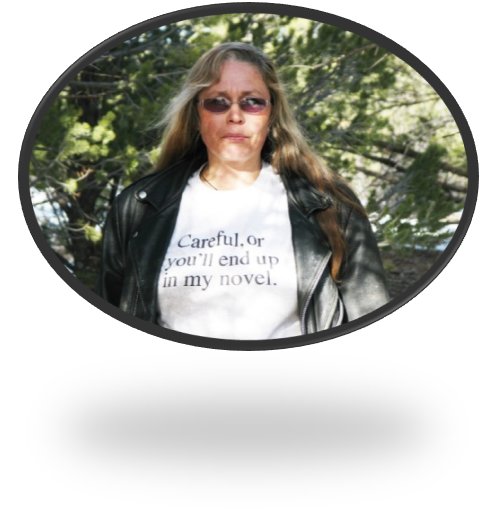
Meet Bobby Nash
Bobby Nash is not a man of action, a detective, or a hero, but he loves writing about characters who are all of those things and more. Bobby is an award-winning author of novels, comic books, short stories, screenplays, and more. He is a member of the International Association of Media Tie-in Writers and International Thriller Writers. On occasion, he acts, appearing in movies and TV shows, usually standing behind or beside your favorite actor. From time to time, he puts pen to paper and doodles. For more information on Bobby Nash and his work, please visit him at www.bobbynash.com, www.ben-books.com, and across social media.
Pre-Writing Rituals
Please tell us what genre(s) you write in and what type of research is required for your stories?
Mario Acevedo: I write commercial fiction—novels and short stories of supernatural fantasy, horror, and hard-boiled crime. My research is to make the story and setting sound as credible as possible.
Paul Kane: All kinds really. I’ve dabbled in a lot of genres and written in a lot of formats, from comics and audio scripting to TV and film. I started out doing journalism, so non-fiction, and had a couple of books out in that vein: The Hellraiser Films and Their Legacy is probably the most well-known. Then I returned to writing short stories, because I was always writing those growing up; especially for English classes where the teachers would get exasperated at the length of some of them. I started sending these off to small presses and was lucky enough to get some printed, which then led to a collection. At the same time I’d been trying to write a novel, The Gemini Factor. I’d had a stab at a few before, so technically this was about my third or fourth novel, but the first I wrote with any serious intention of getting it published – which it was eventually, and there was even an anniversary edition which came out in 2020 through Gestalt Media. That was a horror serial killer thriller, by the way – and indeed most of the stuff I was doing back then was horror, and I carried on in that vein for a little while. Then around 2007, I pitched a book to Abaddon/Rebellion for their post-apocalyptic Afterblight series, which was a reworking of Robin Hood. They accepted that and it was my first mass market novel, so I’d shifted into SF at that point and wrote three novels altogether – gathered together in the sellout Hooded Man – plus a novella for them. I also wrote my first YA novel, The Rainbow Man, as PB Kane. At the same time I was writing short films like The Opportunity and The Weeping Woman, and then some audios – I adapted The Hellbound Heart into a full cast audio drama for Bafflegab – as well as working on and running conventions. More recently I’ve moved into writing straight thrillers for HQ/HarperCollins under the name PL Kane and the first of those, Her Last Secret, Her Husband’s Grave and The Family Lie, have all done very well. In amongst all that, I’ve written a couple of short plays too, one of which – One for the Road – was performed at FantasyCon 2015. As for research, it very much depends on the kind of story you’re telling. Crime research is very different to SF, as you can probably imagine.
Chris Barili: I write in just about every genre, and I wouldn’t say one genre requires more research than the others. Rather, I’d say one series of stories requires it: Hell’s Marshal. Because it is set in the old west, I do extensive research to make sure it is accurate, or at least believable in light of the story itself.
Bobby Nash: I write in whatever genre the publisher wants. So far, I haven’t done a lot of fantasy, nor have I attempted romance or erotica. Most of my work has a thriller element to it. I also write a lot of action and crime fiction. Research varies from project to project.
Robbie Cheadle: My YA and adult books are all historical and most have a paranormal element. I do a lot of research for each book, plotting the historical events on a timeline and then overlying the events of my plot. A Ghost and His Gold had over thirty historical sources and my current work in progress, The Soldier and the Radium Girl, will end up have at least the same number of sources, possibly even more.
I also read a lot of books in the timeframe I am writing about, especially classic books that were written during the period. This helps me gain insight into the everyday lives of people living at the time and experiencing the historical events I’m writing about.
Nancy Oswald: I write mostly Colorado-set historical history for young readers. It’s not always in the same order, but I typically start by reading history of the area, but not always. I like to visit the sites and glean as much as I can about the area. For me, museums and history centers are a huge wealth of material.
Kevin Killiany: Young adult, because the stories are more direct and revelatory of character. “Hard” science fiction (which means the fictional science is compatible with and based on real world science) and historical. Both require serious research, because accuracy is essential to the authenticity of the story.
How do you prefer to conduct your research: Live? Online? First-hand accounts?
Mario Acevedo: While the Internet is the most used because it is right in my computer, I continue to surprise myself with what treasures you find in newspaper microfiche, libraries, and visiting a place.
Paul Kane: I mainly do my research through a mixture of online searches, books and documentaries. For example for Her Husband’s Grave I did a lot of digging into psychology and serial killers, because my main character Dr Robyn Adams helps the police with their serial cases. For The Family Lie, I watched documentaries about cults and stuff like Jonestown, which led to some sleepless nights I can tell you. The cult of personality and all that. You get first-hand accounts in documentaries about subjects like that, so I haven’t needed to go to the horse’s mouth yet. Apart from in one instance, where I had a weapons expert called Trev Preston who’d help me with some of the details in the Hooded Man series. I’d ask him bizarre things like, is possible to take down an Apache Helicopter with a bolas – and he’d say yes or no. The answer’s yes, by the way, and that scene is in Broken Arrow.
Chris Barili: I do almost all my research online. Just don’t have time or resources to go visit far away places. That said, I did do some of that during two recent road trips.
Bobby Nash: I enjoy meeting and talking to people who do the jobs. I’ve talked with FBI agents, police, doctors, etc. about their respective jobs to get a feel for what they do. That adds a personal touch to the characters I have in those roles. On-line research is an invaluable tool to have at your fingertips. I also like to travel and visit locations where I can set stories and scenes.
Robbie Cheadle: I do all my research on-line and I like to use diaries, letters, and journals from the time, if possible. Project Gutenberg is a wonderful resource for historical research.
Nancy Oswald: See above, but add first-hand accounts if they’re available. I usually save online for while I’m drafting, because inevitably I’ll need a piece of information that I couldn’t anticipate.
Kevin Killiany: I love a library—finding and searching through physical books—but these days the internet enables one to access more information quickly. Whenever possible, I visit locations used in my stories.
What are your best research sources?
Chris Barili: Town or county historians. As them the time and they will build you a clock.
Bobby Nash: Google is readily at my fingertips. Interviewing people is also a good source of information gathering and adds a personal touch.
Nancy Oswald: I like the online dictionary of etymology. Quick and accurate.
What do you look for in a source: Aim? Accuracy? Authority? Correlation?
Paul Kane: I think you’re always looking for accuracy, because it goes back to that thing of believability again. You need to be as accurate as you can with facts, just so the reader believes in what you’re doing. That said, it’s hard to research some of the things I write about, like monster cats coming back as ghosts and attacking people, but you just have to do your best. That’s where the imagination element comes into it. I recently wrote a story for a charity anthology that takes place in the universe of my novella The Rot, and I had to do tons of research into black mold to get that right – even just for short story. It’s that important.
Robbie Cheadle: I like my stories to be as historically accurate as possible, so I actively look for accuracy and correlate the information I find with as many other sources as possible.
Nancy Oswald: I usually check more than one source if I’m in doubt. For historical fiction I like to be accurate, but love, love, love historic photos for setting.
What pre-writing exercises do you employ: Outlining? Free writing? Brainstorming?
Paul Kane: I rarely need to brainstorm, because Ideas come to me all the time and I jot them down. This means I’ve got tons of notebooks to draw on if I ever go blank… And I do plans, outlines and chapter breakdowns for novels. I might not stick religiously to them, but I find it helps me focus and keep on the straight and narrow, to keep going whenever I lose where I might be in the story. Like a kind of roadmap. You wouldn’t set off for a destination without having one of those – or a Satnav, or your phone – so why set off on a journey of many hours of hard work and 80 or 90 thousand words without an idea of where you’re heading? Some people wing it, I know, but I suspect they’re just planning it all out in their heads or their subconscious.
Chris Barili: Yes. And more. Any tool I can get my hands on to make my writing better.
Bobby Nash: I rarely have time for pre-writing. Deadlines do not always allow for that. I spend my writing time writing. When I’m at the beginning of a project and creating characters, I will do free writing and just start jotting down notes as I get to know the characters. Sometimes, plot/story ideas will happen in this stage too.
Robbie Cheadle: I research each section before I start writing a new chapter. As mentioned previously, I have my ending plotted prior to commencing writing and that is the direction I write towards.
Nancy Oswald: Refer to answer about plotting or pantsing. Oh, it’s blank. None of the above. I think while I write most of the time, but I have used a time-line to plot on when I’m trying to track a fiction story-line and compare it to the actual historical events.
Do you try to write to market or write what you love?
Paul Kane: The quick answer is both. I’ve written stories just for the love it them, usually they’re new ones for collections – like ‘The Butterfly Man’, that was a story for a collection from PS of the same name. But I’ve also written for specific markets, like the Hooded Man stuff, or where an editor gives you a theme for an anthology. I wrote ‘The Shadow of Death’ for an anthology called Expiration Date, for instance, ‘Shells’ for an anthology called Terror Tales of the Seaside, and ‘Presence’ for Hauntings. So at that point you’re totally writing for a specific market or theme.
Chris Barili: Again, yes. I write to market within the boundaries of what I know and love. I won’t shoe-horn my writing into genres or labels, and while I write what I am passionate about, I don’t limit myself to things I know or share with the reader.
Bobby Nash: Write what you love. Writing to market can drive you crazy and often leave you unfulfilled. I speak from personal experience here.
Robbie Cheadle: I write what I enjoy and for my own pleasure. I would like others to enjoy my stories, but that is secondary to my primary aim of personal enjoyment. As a result, I have decided to continue to publish with smaller publishers rather than to try to get representation with a larger publishing house.
Jeff Bowles: I sort of try to do both at the same time, I suppose. I’ve always had this theory that solid, salable fiction can be fun and artistic, too. Crazy, I know, but that’s just how I feel! Anyway, I’ve sort of developed a unique style, and there’s certain subjects I seem to write about again and again, as it is with most authors, I think. When I try to write like other people, the results are mixed, so I learned a long time ago to try to hit the personal enjoyment metric and then sort out what I think is salable or not. It’s a fine line, one that’s almost always difficult to walk, but it’s almost always worth it in the end.
Nancy Oswald: I realized a long time ago I cannot write to a market. For one, living in rural Colorado, I can’t keep up with anything that resembles up-to-date or edgy. The last time I remember trying keep up with cool was when I was a teen (living in Denver) and I practiced doing “The Jerk” in front of a mirror.
Kevin Killiany: Obviously when writing tie-in fiction for a TV show or role-playing game, I have to write for the market. BUT I’m writing for that market because I love the game or show—you have to campaign constantly to get your foot in the door, and that requires a good deal of passion. With my own, original fiction, I write solely for me. If you guys like it, that’s fantastic.
________________________
That wraps up “Ask the Authors 2022” blog series for this week. Be sure to drop by next Saturday for an introduction to multi-genre author, Roberta Eaton Cheadle, and a Q & A on plot/storyline. (Okay, many of you already know Robbie, some of you quite well. Drop by anyway for the Q & A.)
Ask the Authors 2022
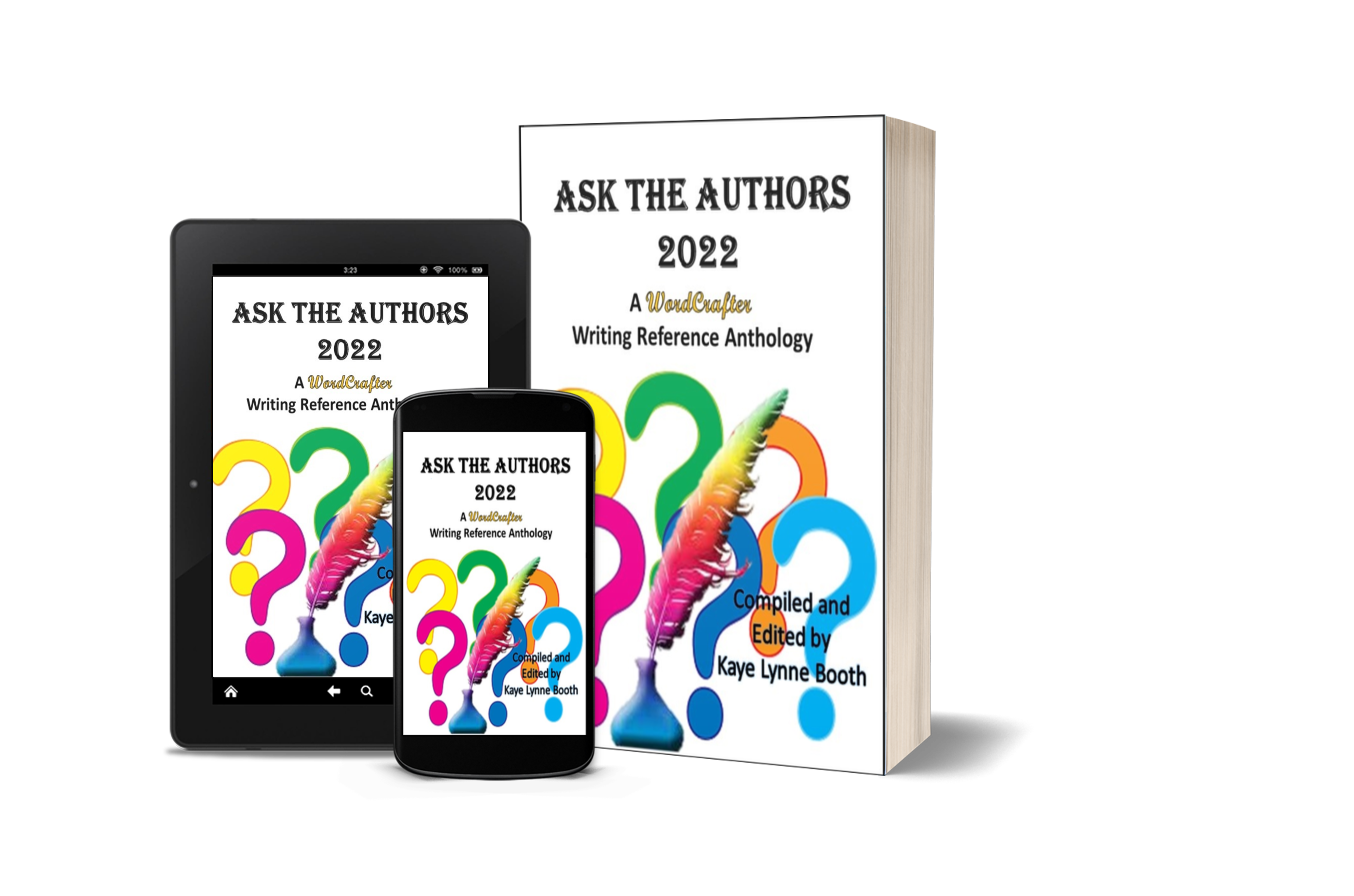
You can get your copy of Ask the Authors 2022 at your favorite book distributors at the special price of 3.99 for the duration of this blog series, through the Books2Read UBL: https://books2read.com/u/3LnK8e
Welcome to Writing to be Read, where we’re celebrating the release of Ask the Authors 2022, the writing reference anthology that features essays by ten wonderful authors who have agreed to share their writing wisdom with us, along with an extensive Q & A, divided by topics. Contributing authors are myself – Kaye Lynne Booth, Bobby Nash, Roberta Eaton Cheadle, Chris Barili, L. Jagi Lamplighter Wright, Nancy Oswald, Mario Acevedo, Jeff Bowles, Mark Leslie Lefebvre, Paul Kane, and Kevin Killiany.
“Ask the Authors is an up-to-date and broad-based compendium of advice from today’s working writers, to help you with understanding your own writing career. Great information!”
—Kevin J. Anderson, New York Times bestselling author of Spine of the Dragon
Every Saturday, this blog series will introduce you to one contributing author and share a portion of the Q & A session. Today you will meet myself and Kevin Killiany and the Q & A topic is “Writing Life”. To gain access to all of the writing wisdom contained within the book, you can get it at the special price of 3.99, (regularly 4.99) from your favorite book distributor through the Books2Read universal book link (UBL) for the duration of the blog series: https://books2read.com/u/3LnK8e
Here is the schedule for this Saturday series:
Segment 1: You are here. Introductions for me, multi-genre author, Kaye Lynne Booth & media tie-in and science fiction author Kevin Killiany/Q & A on Writing Life
Segment 2:An introduction to award winning author & media tie-in writer, Bobby Nash/Q & A on Pre-writing Rituals.
Segment 3: An introduction to multi-genre author & poet, Roberta Eaton Cheadle/Q & A on Plot/Storyline.
Segment 4: An introduction to best selling horror author, Paul Kane/Q & A on Character Development.
Segment 5: An introduction to multi-genre author, Mario Acevedo/Q & A on Action, Pacing & Dialog
Segment 6: An introduction to award winning middle grade author Nancy Oswald/Q & A on Tone: Voice, Person, Tense, & POV
Segment 7: An introduction to multi-genre author Chris Barili/Q & A on Setting & Worldbuilding
Segment 8: An introduction to speculative and horror author Jeff Bowles/Q & A on Editing & Revision
Segment 9: An introduction to award winning author and publishing industry expert Mark Leslie Lefebvre/Q & A on Publishing
Segment 10: An introduction to Y.A. & middle grade author L. Jagi Lamplighter/Q & A on Book Marketing
*Note: The Q & As include answers from several authors on each question and they may run rather long, but they are packed full of useful information, so I hope you will stick with us until the end of the series.
I’ll start things off today by introducing myself.
My name is Kaye Lynne Booth, and I live, work, and play in the mountains of Colorado. With a dual emphasis M.F.A. in Creative Writing, writing is more than a passion. It’s a way of life. I’m a multi-genre author, who finds inspiration from the nature around her, and her love of the old west, and other odd and quirky things which might surprise you. My first novel, Delilah, found a home with a small independent press, but I’ve published all of my other work independently.
For more than a decade, I’ve kept up my authors’ blog, Writing to be Read, where I post reflections on my own writing, author interviews and book reviews, along with writing tips and inspirational posts from fellow writers. In addition to creating my own imprint in WordCrafter Press, I offer quality author services, such as editing and social media book promotion, through WordCrafter Quality Writing & Author Services. When not writing or editing, I am bird watching, or hiking, or just soaking up some of that Colorado sunshine.
Oh yeah, and I am the editor and contributor to Ask the Authors 2022 and your blog series host, which means I’m the one asking the questions. And now that is out of the way, let’s move on to the Q & A and see what the contributing authors have to say about…
Writing Life
Please tell us your top 5 rules for writing success.
Mario Acevedo: I’ll give you one. From W Somerset Maugham: “There are three rules for writing a novel. Unfortunately, no one knows what they are.”
Paul Kane: I only really have three, and it boils down to the three P’s which I used to teach in my Creative Writing classes when I still did them. Patience, Persistence, Perspiration. Patience, because basically if you’re going to be a writer you need to be in it for the long haul. Some people are lucky, they get success really early on in their careers, but most have to work at it for a long time, winning little battles as they go.
This of course feeds into the second and third P’s, in that you’ll need to be prepared for knockbacks and rejections. You’re going to have to pick yourself up when you get a no, dust yourself off and get back on the horse. I’ve had countless rejections from publishers and editors in the past, but you just have to keep going, and remember that it’s all subjective. What one person hates another might love. Take on board any advice or feedback that makes sense to you, but don’t change anything you’ve written if it doesn’t because it’s your writing ultimately. Only you can write like you, with your background and experience and voice. If the advice you’re getting messes with that too much, then don’t do it.
And finally, Perspiration, because you’re not going to get anywhere unless you work for it. You should always strive to be better, even if you’ve been writing all your life. You’re never too long in the tooth to learn new things, to try new writing techniques or whatever, and the only way to be a good writer is to write, write and write. Oh, and to read a lot too.
Chris Barili:
Write.
Keep writing.
Write more.
Write daily.
And write whenever you can.
Bobby Nash: I wish I had a list of rules to share here. I have never thought of it in those kinds of terms. Certainly, treating it like a job has been invaluable in keeping on track. Writing daily is probably good advice. Learn to market your work is also a good one.
Robbie Cheadle:
Write as much as possible given your personal circumstances.
Seize opportunities to participate in writing and poetry challenges.
Seize opportunities to participate in writing competitions and anthologies.
Take advice that is given to you by more experienced writers, and I mean really embrace it and incorporate it into your writing going forward.
Enjoy your writing.
Nancy Oswald: Sit down, write, rinse, and repeat.
Kevin Killiany: I don’t have 5 writing rules, but I do have one reading rule: read as much as your write; some weeks read more. And I highly recommend these guidelines to your reading: A. Whenever possible read authors who will stretch your horizons. By that I mean authors who have histories, ethnicities, worldviews, cultures, gender identities, etc., different from your own. This is particularly important for white, cis-male, American writers such as myself, because we’ve been programmed from birth to see our culture as universal. [A codicil for writers who are of colors other than beige or whose identities otherwise differ from my own: read strong writers who share your identity or heritage in addition to (and maybe even before) seeking out others who could expand your perceptions.] B. Do NOT “read like a writer” as some guides suggest, with a highlighter and notebook at your elbow and underlining “important” passages. Read like a reader. Enjoy the story, lose yourself, don’t think about the writing. If, and only if, six months later you find yourself being haunted by a passage you can’t forget (scene, setting, dialog, etc.) go back and deconstruct how the writer pulled that off. Look for how the writer prepared the reader for the scene, the structure of the scene itself, etc.—learn how the writer did it so you can give your readers the same experience. C. Don’t read books you don’t like. If the story isn’t working for you—if the characters don’t work, the story doesn’t interest you, if the writing is dull—you are not going to learn anything. Time spent finishing a poorly written book is time wasted. [HOWEVER: If you hate the book because the writing is so powerful and evocative, it may well be worth reading. An example from my past: I hate The Bluest Eye. The hopelessness is so deep that every time I read it, I want to slit my wrists. But I’ve read it more than once because it is a master class in characterization and worldbuilding.]
Describe your personal writing space.
Mario Acevedo: Some writers claim their writing space as a sacred sanctuary that invites the Muse to drift in. My writing space is a sausage machine. I sit down on a schedule, flip a switch, and get to writing. The Muse is expected to clock in while wearing work clothes.
Paul Kane: We recently moved, so I have my pick of where to work at the moment. But I’m actually writing on my laptop on the couch, because it’s comfortable. I’ve done most of my work on there in the last few months and enjoyed it. For a while back there, whether it was to do with lockdown or whatever, I felt like I’d lost my writing mojo, but it’s slowly returning. Maybe I just got burned out as I did a lot of writing in the months after COVID hit big time – a crime novel and most of a collection called The Naked Eye for Encyclopocaplyse – and this change of scenery now has really boosted my fiction, as well as giving me the opportunity of working on a few new projects I hadn’t expected.
Chris Barili: Nothing special. Just a small home office on the first floor of my home. I also have a desk beside my bed (next to the fireplace) for those wake-up moments.
Bobby Nash: I have a very cluttered desk in an equally as cluttered office. I clean and straighten it on occasion, but the clutter always returns.
Nancy Oswald: Really? It’s my grown son’s old bedroom. No bed, but my mom’s sewing machine occupies one corner, my husband’s mom’s antique writing desk occupies another. There’s a dying plant, a small Navajo blanket, a horse painted on a plate, painted by my great grandmother is above the file cabinets, my son’s dusty karate belts on a hangar and several maps related to my research are on the wall next to that. The doors of the closet are also covered with maps—at the moment, these are insurance maps from 1896 Colorado Springs. There’s a chair with toppling books, book piles underneath the wrap around desk I purchased when I retired. You don’t even want to know what’s on top of the desk or what’s on the rest of the floor. Right now, it’s boxes and bags in various states of readiness for the marketing at crafts fairs I’m doing between now and Christmas. I’m looking forward to being able to walk in it again.
Kevin Killiany: Where I am now—wherever that is whenever ‘now’ happens.
Which of your books would you like to see turned into a movie? Who do you see playing the lead? Why?
Paul Kane: I’m lucky in that a few of my stories have been turned into TV episodes, short films and even a feature in 2021 called Sacrifice, starring Re-Animator’s Barbara Crampton. So that’s sort of happened for me anyway… There was talk a while back of turning my post-apocalyptic Robin Hood novels – gathered together in Hooded Man – into a movie, and we were hoping to interest someone like Michael Fassbender or Dominic West. But I’m not sure that’ll happen anyway now because the jumping off point is that 90% of the world’s population dies from a deadly disease. Of the books that haven’t been adapted yet, I’d love to see Before as an American Gods type TV streaming show for somewhere like Amazon, Netflix or Apple. I think the scope of that one, dealing as it does with past lives, is so massive it would be hard to fit it all into a movie. Arcana would make a great film, though, because of the mix of magic and crime; action and adventure. Leads for that one? I think someone like Charlie Hunnam and Emily Blunt as Callum and Ferne. The one people always ask me about is Sherlock Holmes and the Servants of Hell, which pitted Hellraiser’s Cenobites against the world’s greatest detective. That would be a rights nightmare film-wise, plus would take a budget in excess of most of the Marvel movies, so I wouldn’t hold your breath folks. That being said, never say never, and stranger things have happened.
Chris Barili:Guilty, with Frank Butcher played by either clint Eastwood or John Wayne (in their primes).
Bobby Nash: I think Evil Ways, Deadly Games!, or Suicide Bomb would make great movies. Snow and Sheriff Myers respective series would work better as a TV series, I think. As for who would play who, I don’t know. I try not to play that game because if it happens, I don’t want to be disappointed if the actor I had my heart set on is unavailable.
Robbie Cheadle: I think my Sir Chocolate stories would make a lovely TV series for small children. There could be a baking element to the show, where children learn how to make one of the recipes.
Nancy Oswald: I’d like to see the Ruby and Maude Adventures made into a movie. I’d like my donkey, Daisy, to play Maude.
Kevin Killiany: I have a young adult science fiction series, Dirt and Stars, that I would love to see become a TV series. The stories are set in an alternate history where most of the gee-whiz predictions Golden Age sci-fi of the 30s and 40s made about America in the year 2000 came true—fusion rockets, giant space stations, colonies on the moon, etc.—but the US is fiercely isolationist, cut off from the rest of the world. With the 21st century came the Civil Rights movement and the growing realization that America cannot sustain its monopoly on space. The Dirt and Stars series is set in the 2020s and follows several young people (15-18) coming of age even as the world around them is reinventing itself. Down to Dirt introduces Mara, a spacer—born and raised on Tombaugh Station—who’s been conditioned from birth to believe dirt (Earth) is little more than a prison for the diseased, criminal, unstable, or otherwise unfit for life in space; Beth, Mara’s Earth-born cousin, who believes in the fundamental goodness of everyone and is horrified by Mara’s racist elitism; and Jael, Beth’s best friend, grimly determined to be the first Black person to break the Space Service’s color barrier. Life on Dirt continues their stories and introduces Lije, first generation Ukrainian American whose father is spearheading a legal battle to break America’s control of access to space; and Fatima, a spacer of exceptional intelligence struggling to overcome a social communication disorder that makes interacting with others difficult, confusing, and sometimes painful. Rise from Dirt follows all five of them, but focuses on Jael’s fight to qualify for the Space Service training program. Book four (a work in progress that has gone through a few working titles) will introduce two new high school age spacers—one on Brahe Station, the other on Luna—as they deal with the unimaginable addition of “earthers” to their world.
Who do you see playing the lead? Why? Talented young actors that no one knows about. For every TV/movie star there are dozens of equally talented people who weren’t in the right place at the right time. I’d really like to play some small part in helping some of those young actors get their shot.
Is there anything unique or unusual about your writing process?
Paul Kane: Personally, I don’t think there is. I don’t have to sacrifice a chicken or something before I start or write upside down or anything; it’s all pretty normal stuff. I think that comes from my previous career as a journalist, just sitting at a desk getting the words down. I also had to do that for my BA and MA when I was writing essays, so all that was a good training ground for penning fiction too. It makes you disciplined about the craft. I am quite a superstitious person, so I suppose I do have little rituals I’ve developed over the years. I used to only be able to write novels on a laptop, and shorts on a desktop – when I still had one – but I’ve learned to adapt to circumstances. And I’m very reluctant to show my work to anyone too early, except perhaps my better half Marie (O’Regan), who’s also a writer and editor herself. Or to discuss my ideas with anyone other than her, unless it’s an editor or publisher I’m pitching to, so they’ll buy the work.
Chris Barili: I outline a bit differently than most people. I outline just a third of the story at a time, which allows me to make changes early in the story line much more easily.
Bobby Nash: I don’t think so. I sit down and write. Sure, I sometimes go over story points, scenes, etc. in my head before I start typing, but nothing out of the ordinary.
Robbie Cheadle: I think all writers have an individual writing process. I always write my endings first so that I know the direction my story must take and where I am heading. The endings never change. I also outline the bones of my stories before I start. I do this in my head and rarely write much down. People ask me if I don’t forget my outlines, but I don’t. I have a very good memory which is why I rarely re-read books; I can nearly always remember the characters and plot of books I’ve read, even when I read them many years ago.
Nancy Oswald: Unfortunately, when I was working full time, my motto was to find any scrap of spare time and move forward on whatever the project was. This led to some bad habits, because even though I’m retired, I have never let go of the idea that I have to fit writing in around other things. I’ve never been able to schedule writing time and stick to it. However, my husband did buy me a “ships” hour glass, and sometimes when I’m stuck or reluctant to write, I tell myself I can do one hour. Once I start, it usually goes beyond that, and once I’m into a project, I find I don’t need the hourglass at all.
Kevin Killiany: My first time through college (in the early 70s) I was a theatre major—an aspiring actor with the acting skills of a stage techie. I saw many, many plays in college, repertory, dinner, and community theaters from light booths, sound boards, and prop tables. As a result, I see stories as narratives built from discrete scenes, and frequently storyboard on graph paper: scenes are circles, boxes, or triangles linked by arrows denoting possible paths. When brainstorming a scene, I always start with dialog, spoken words without attributions, because a play begins as dialog, the script providing only broad suggestions for blocking and business, and comes alive as the directors and actors become familiar with the characters and the reasons for the words. Oh, and the scenes are never written in order. I write each part as it occurs to me.
What is the function of a story?
Mario Acevedo: To tell that story. Beyond that, to entertain, to educate, and if you’re like me, because you’re a constant day dreamer.
Paul Kane: I believe, first and foremost, that a story should entertain. You should get some enjoyment out of reading it, even if it’s a sad tale – in a sort of masochistic way, we think to ourselves at least that’s not happening to me.
It should be believable, and I don’t mean that it can’t be fantastical, just that the reader needs to believe in what you’re telling them. A lot of this comes from good description and characterization, because if you don’t believe in a sense of place or your characters then everything falls apart. If characters are just cardboard cutouts, you’re not going to care what happens to them or why.
So, the entertainment value first and foremost, because remember people are parting with their hard-earned cash to buy your story or book. If it can say something important as well, then all the better. I like to try and have a message or theme, like for example in my novel Before I was trying to say something I thought was important about the human condition. About what it means to be human, about life, love, the nature of good and evil, and everything in-between. Heady stuff. It doesn’t always have to, but if a story is educating and saying something you feel is worth saying, then all the better.
Bobby Nash: My first and foremost goal with my stories is to entertain. That’s what I’m here to do so that’s where I put my focus. I want the reader to enjoy the experience.
Robbie Cheadle: The function of my stories is to entertain while reminding readers of history and historical events. I believe strongly that we must remember our history and the terrible things that have affected humanity in the past so that we can make a good attempt to avoid reoccurrences.
Kevin Killiany: To entertain and through entertaining inspire thought.
What is your biggest writing challenge? Your biggest reward?
Paul Kane: The hardest thing I find, the hardest challenge, is to get started. Ideas come to me all the time, I write them down in little notebooks. In fact, I have different sized books for different things: small for just ideas, or snatches of dialogue; medium-sized for novellas and the like; and A4 ones for novels, because I work up chapter breakdowns and do research in those. For each novel I’ve written there’s an A4 notebook to go along with it. So, you have your idea and all your working out. No matter how prepared you are – and some people do more prep than others… I’m a big planner personally – just looking at that blank screen before you start is the most daunting thing in the world sometimes. It might not even be at the beginning of a project, either; just getting up every day and starting, even if you’re halfway through, can be hard. You have to force yourself to do it, push through those pain barriers – and if you look for distractions, you’ll find them, so try to keep focused on the task at hand. The flip side of that, of course, is when you’ve got your first draft done. You have a chunk of words you can play with, then refine and make better. That’s the most rewarding part for me, when you’ve done all that, or maybe even when the story’s finished – or as finished as it can be, because nothing’s ever truly done; you could fiddle with things forever. When you see it in print and people enjoy your work, that’s something truly special.
Chris Barili: Self-confidence followed closely by Parkinson’s Disease. One hits me psychologically, the other physically
Bobby Nash: My biggest writing challenge is me. Sad, but true. I am my own worst enemy. Once I get out of my own way, push distractions aside, and actually sit down and get started, I’m okay. Getting started is a big hurdle.
Robbie Cheadle: My biggest writing challenge is finding a stretch of about 2 ½ hours undisturbed time to write. I can write for a shorter time, but I usually find it takes me about 30 to 40 minutes to get back into the mindset of the story so shorter writing periods are not very efficient for me. I usually write on weekend days from 6 am to 8.30 am. Sometimes I write for an hour in the afternoon during the week but that depends on work. I am supposed to work from 9am until 3pm but that rarely happens and if I don’t start writing by 4pm, the day is lost to me from a writing perspective. I don’t write in the evening as I am tired. I do sometimes edit later in the day though.
Jeff Bowles: For me the challenge is always the sheer amount of time and work required to bring a new book to market. At the moment, I’m favoring indie publishing, which means everything from editing to production is riding on my shoulders. It takes a lot of effort to bang a fresh manuscript into shape. Luckily, I’ve got a lot of support from family, friends, and other professionals, so it’s always worth it in the end. The reward, as always, is seeing your book in the hands of others. It never really gets old.
Nancy Oswald: Getting started on a new project. Biggest reward, well, of course, finishing. Beyond that, I love holding the first printed copy of a new book.
Kevin Killiany: My biggest challenge is stopping. I write 500-word postcards, and I would have a wonderful time extending my narrative, exploring my characters, expanding my world. My biggest reward is having stopped. Because then I have a story to give people.
What is the single most important story element? Why?
Paul Kane: Probably characters, like I say. If you don’t believe in those then there’s no point to the story in the first place. I’m a big one for character studies – actually I have to rein it in sometimes because I get carried away. I’ll include various details about a person’s life when I’m only writing a prologue sometimes and people just want to cut to the chase and get to the meat of a story. I had to chop a lot of that at the start of my PL Kane crime novels Her Husband’s Grave and The Family Lie. All interesting stuff, but not the right time or the place. One of my Controllers stories ‘Eye of the Beholder’ was basically a character study of a woman called Lucy, taking you through her life, and at the end you realise these god-like creatures have been manipulating events for their own satisfaction. In a case like that, it’s actually working to help tell the story.
Chris Barili: Character. Without a dynamic, well-developed, and relatable character the story stops mattering.
Bobby Nash: I firmly believe that it all starts with characters, so that’s where I put my focus first. Telling a cohesive story is important.
Nancy Oswald: I think it’s character. As a reader, if I can’t latch onto or relate to a character, the reading is tedious.
Kevin Killiany: Character. People care about people.
Are you a plotter or a pantser (I believe ‘discovery writer’ is the trending term or as Dean Wesley Smith refers to it: “Writing into the Dark”)?
Mario Acevedo: I’m in between. I started as a panster and then after writing myself into a corner, I became a plotter. My plot outlines are brief chapter summaries—two-three sentences. I’ve learned however to keep the doors open for the Muse to suggest changes.
Chris Barili: Seriously addicted to outlining.
Bobby Nash: I’m somewhere in the middle. I have loose plots, but I leave open the possibility of the characters taking me to unexpected places, so sometimes the plot has to be adjusted. I’ve heard the term plantser used, but I don’t really like that term.
Robbie Cheadle: I am a plotter. I always have the ending of my stories in mind before I start, and I write towards that ending. As I write historical fiction, I usually follow the real path of the events that occurred heading in the direction of the ending. I often discover new and interesting information while I am researching for my stories, but that doesn’t ever knock me off my chosen storyline, it just adds to some of the ‘meat’ in the middle of the story.
Kevin Killiany: A bit of both. I work out what needs to happen when at the outset (storyboarding) but beyond that I usually don’t know how the narrative will get from point to point until I’m on the journey.
What is your best piece of advice for aspiring authors?
Mario Acevedo: Have faith in yourself. Keep learning and improving. Read a lot in every genre. You’ll be surprised how much blends from one category to another. And nothing happens until you sit down and write.
Paul Kane: Just to never give up. It always makes me sad when I see a talented writer walk away from the business or become so discouraged that they never send anything to editors, agents or publishers. It always makes me think ‘what great writing have we missed out on’? If Stephen King’s wife, Tabitha, hadn’t fished Carrie out of the bin, we’d have been missing out on all his excellent writing from that point onwards. No Shining, Salem’s Lot… No Stand. Heartbreaking. So keep going, keep fighting, because you never know where it might all lead.
Chris Barili: Don’t quit your day job until writing IS your day job. Then, really don’t quit your day job.
Bobby Nash: Determine where you want your writing to take you and set attainable goals to help get you there. Not every writer has the same goal, so you have to decide what success looks like for you, so you know what to aim toward. Then, once you do that, work to achieve those goals. Also, don’t forget to celebrate when you attain the goals. That’s important too.
Robbie Cheadle: Keep writing as much as possible. Practice makes perfect. I can’t believe how much I have learned between the launch of my first Sir Chocolate book in August 2016 and now. It’s been an amazing journey.
Kevin Killiany: I submitted my first short story in 1967. I sold my first story in 2000. I would have sold one sooner, but I kept giving up. Don’t keep giving up. Just as a musician perfects their craft through practice, we perfect our writing through writing. Approach everything you write as something you are creating for your own satisfaction, no one outside your head matters. Then do your best, because it is through doing your best every time that your best will steadily improve.
Before we end this first segment, I’d also like to introduce you to contributing author, Kevin Killiany. Unfortunately, due to the pandemic we’ve all been experiencing, he was unable to submit an essay to the work, but I want to introduce him here, so you’ll know who he is when you see his responses throughout this series in the Q & A portions. He’s a multi- genre and media tie-in writer and a generally all around good guy.
Meet Kevin Killiany
Growing up in Florida, Kevin was fascinated with space—he witnessed every manned launch from Cape Canaveral in the 60s, and never fully recovered from the discovery there were no rainforests on Venus for him to explore. Forced to stay on Earth, he eventually became a teacher, working with students at all grade levels before moving on to community support services, where he was a crisis intervention counselor and case manager for mental health and family preservation programs.
Kevin wrote his first story in 1967 and, after only thirty-three years of writing and submitting, became an immediate success with his first sale in 2000. In the years since he has written fiction for both Star Trek and Doctor Who and written web content, campaign books, stories, novels for various role playing games. Down to Dirt, book one of his original YA science-fiction series Dirt and Stars, was published in 2016.
The “Ask the Authors 2022” blog series is a 10 week Saturday series, so be sure to drop by next Saturday for an introduction to contributing author, Bobby Nash and a Q & A on Pre-Writing Rituals. If you grab a copy of Ask the Authors 2022 writing reference anthology while this blog series runs, from now until July 9th, you can get it at the special send-off price of 3.99, from your favorite book distributor through the Books2Read UBL here: https://books2read.com/u/3LnK8e
Sign up for the Kaye Lynne Booth & WordCrafter Press Newsletter for and book event news for WordCrafter Press books, including the awesome releases of author Kaye Lynne Booth. Get a free digital copy of Kaye Lynne Booth’s paranormal mystery novella, Hidden Secrets, just for subscribing.
That’s right. The writing reference you’ve all been waiting for has arrived. Ten talented authors and industry experts have gathered together with me to share their writing tips and advice in essay and Q&A, creating a writing reference anthology like no other.
Where can you find publishing industry experts willing to share their secrets?
Ask the Authors 2022is the ultimate writer’s reference, with tips and advice on craft, publishing and marketing. Eleven experienced and successful authors share what works for them and offer their keys to success in traditional publishing, hybrid, and indie. You’ll learn industry wisdom from Mark Leslie Lefebvre, Kevin Killiany, L. Jagi Lamplighter, Bobby Nash, Paul Kane, Nancy Oswald, Chris Barili, Jeff Bowles, Roberta Eaton Cheadle, Mario Acevedo and Kaye Lynne Booth.
This book offers up-to-date and tried-and-true ways to improve your craft, explores current publishing and book marketing worlds. Take a peek inside and find out what works for you.
Praise for Ask the Authors 2022
“Ask the Authors is an up-to-date and broad-based compendium of advice from today’s working writers, to help you with understanding your own writing career. Great information!” —Kevin J. Anderson, New York Times bestselling author of Spine of the Dragon
Ask the Authors 2022
Ask the Authors 2022 is available in both digital and print. You can get your copy from your favorite book retailer through the Books2Read universal book link (UBL) here: https://books2read.com/u/3LnK8e
Sign up for the Kaye Lynne Booth & WordCrafter Press Newsletter for and book event news for WordCrafter Press books, including the awesome releases of author Kaye Lynne Booth. Get a free digital copy of Kaye Lynne Booth’s paranormal mystery novella, Hidden Secrets, just for subscribing.
We’re all tired of staying at home during this recent crisis. It seems like everyone has been affected in different ways, but no one has gone unscathed. Our world has changed in recent times. We, as authors and lovers of the written word had many of our in-person writing events – conferences, conventions, and book fairs – cancelled due to the appearance of COVID 19. To to emulate all those events we look forward to each year and are missing out on now, and to chase away some of the boredom of social distancing and isolation, WordCrafter presents the 2020 Stay in Place Virtual Writing Conference on Tuesday, April 28 from 8 am to 8 pm.
This is a unique event, the first of its kind, and one you won’t want to miss. Free presentations and author takeovers will be occurring on the Facebook event page, and interactive workshops and panel discussions will be offered for a minimal fee on the Zoom platform. Interactive panel discussions and workshop session can be accessed individually for $5, or an all access pass to all interactive sessions can be purchased for $50. Tickets can be purchased on the Facebook event page. Watch for your Facebook event invite from me or one of the many wonderful authors involved with this conference. Send me a message through my WordCrafter page or through the event page if you have further questions, or if you would like a half an hour author takeover spot to promote your own work.
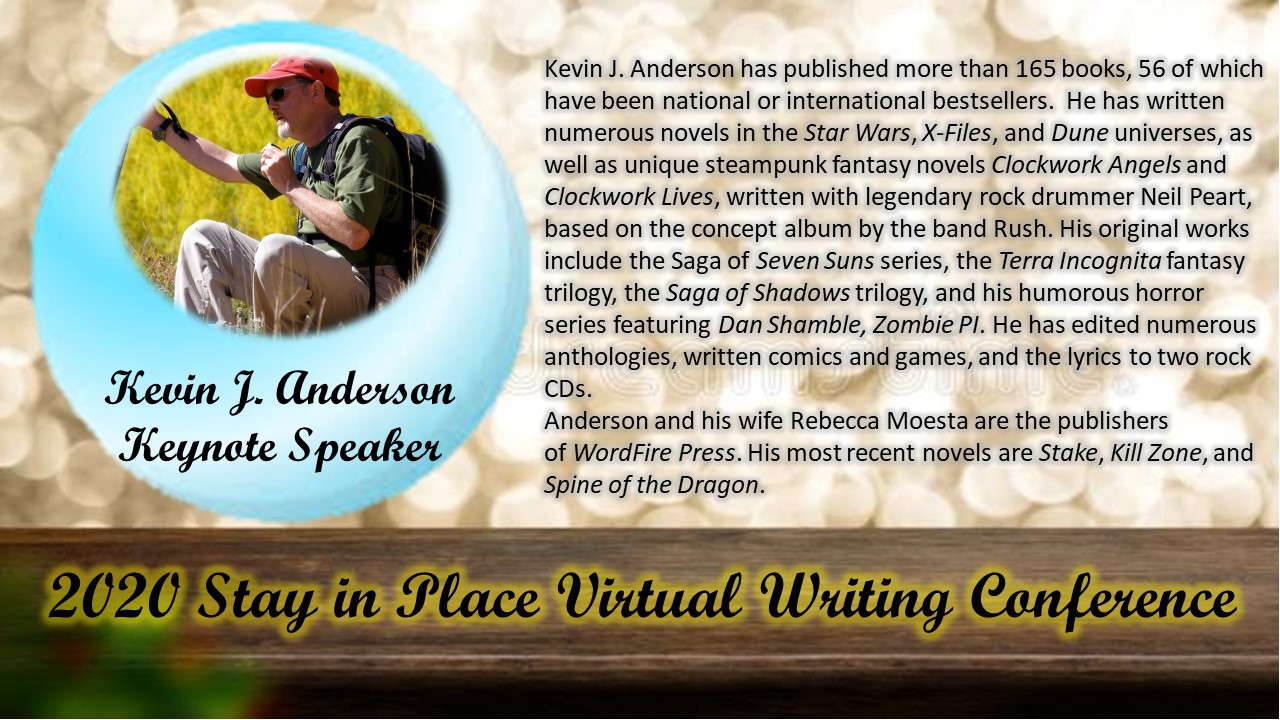
This has been a huge undertaking to organize and set up an event such as this one, but I haven’t done it alone. Without my 22 talented presenters, this event couldn’t happen. We have a great line-up, with international bestselling science fiction and fantasy author Kevin J. Anderson presenting the keynote on the interactive platform.
And that’s just the beginning. Take a look at the talent that has lined up for presentations, workshops and panel discussions.
Award winning and national bestselling speculative fiction author Mario Acevedo will be offering a presentation – “The Power of Motivation: What Your Characters Do and Why”
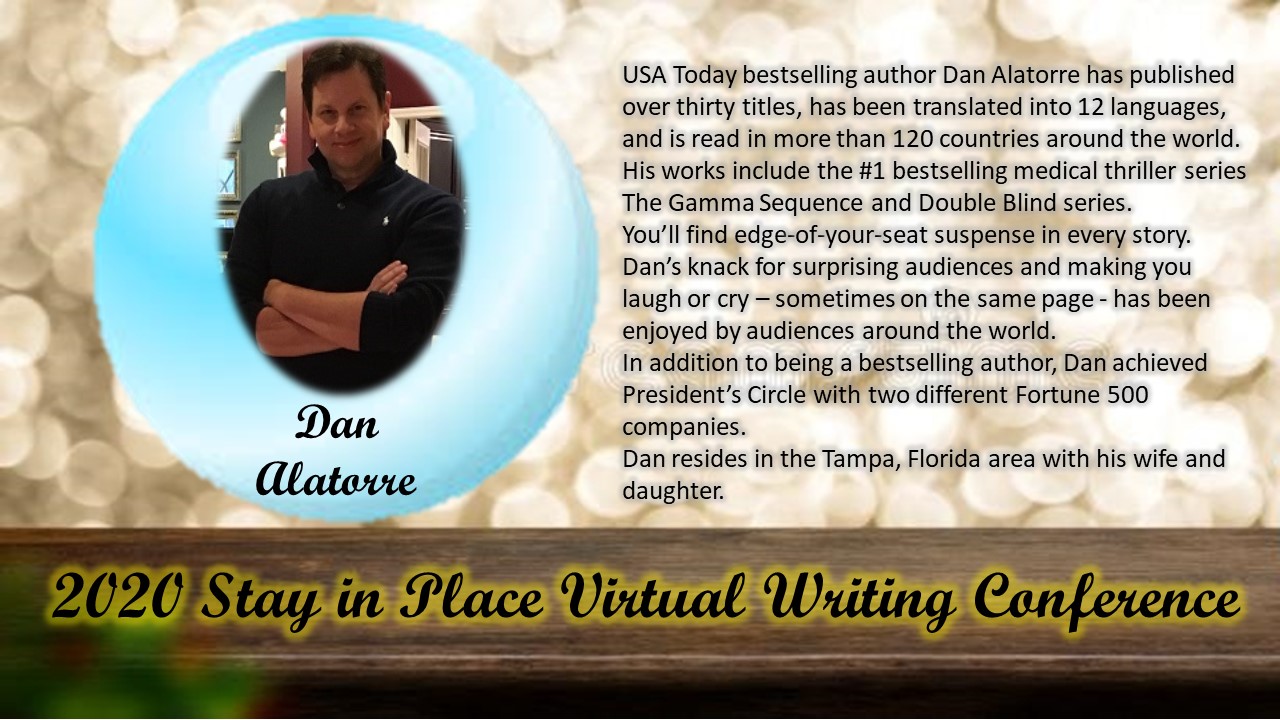
USA Today bestselling multi-genre author Dan Alatorre will be a member of the interactive book marketing panel discussion.
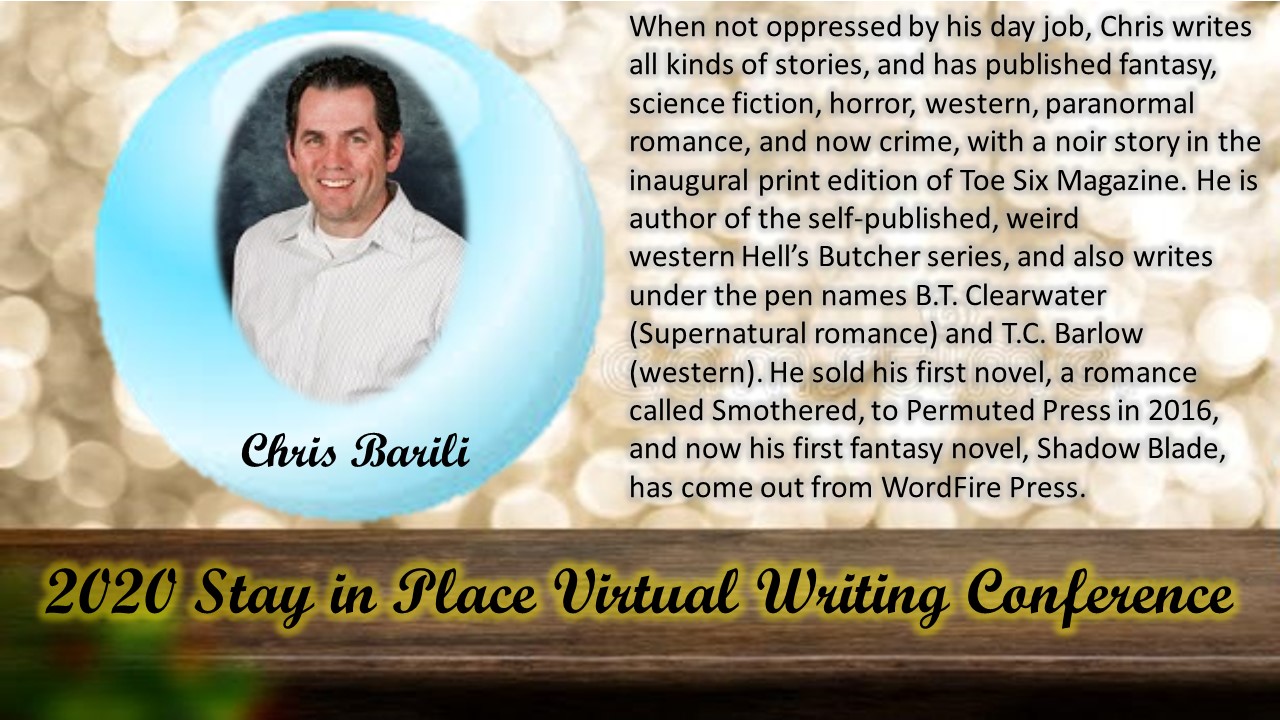
Multi-genre author Chris Barili will be presenting “Writing in the Face of Adversity” and giving an interactive workshop on “Writing Across Genres”.
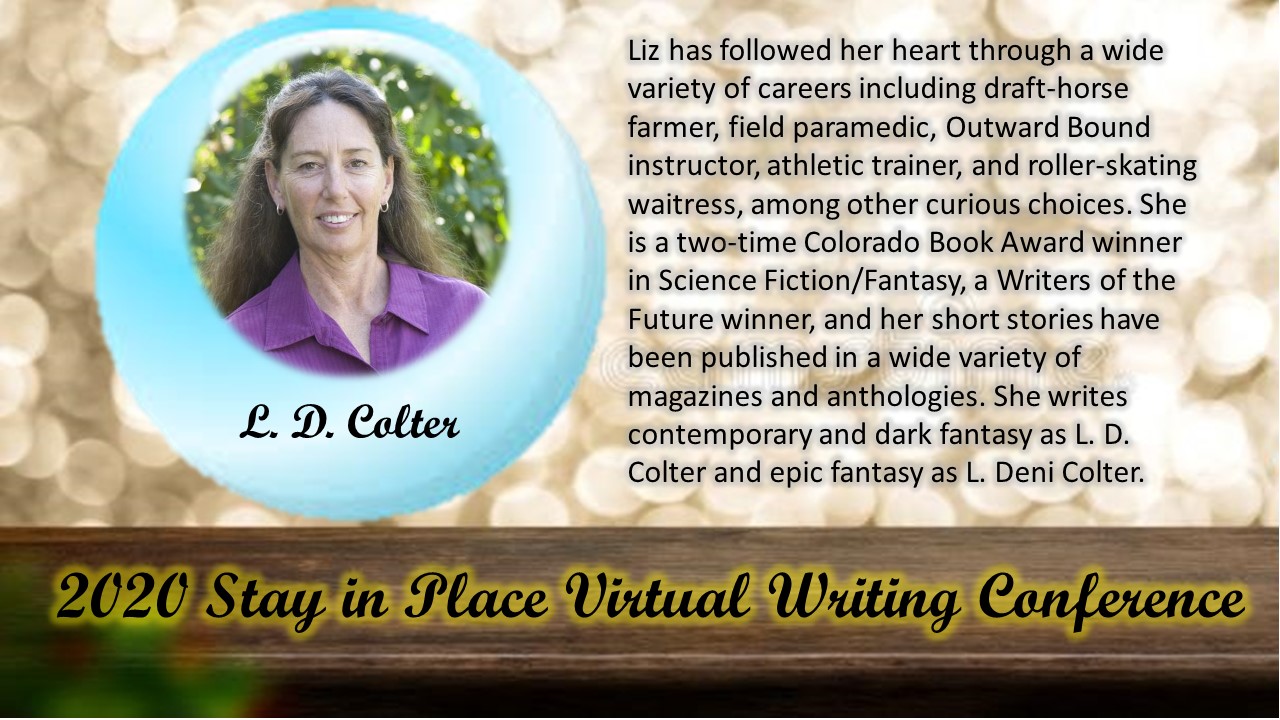
Award winning fantasy author L.D. Colter will be offering a presentation on “Short Fiction”.
World builder and speculative fiction author Kieth R.A. DeCandido will be offering an interactive workshop on “The Business of Writing” and he is the moderator for the media tie-in interactive panel discussion.
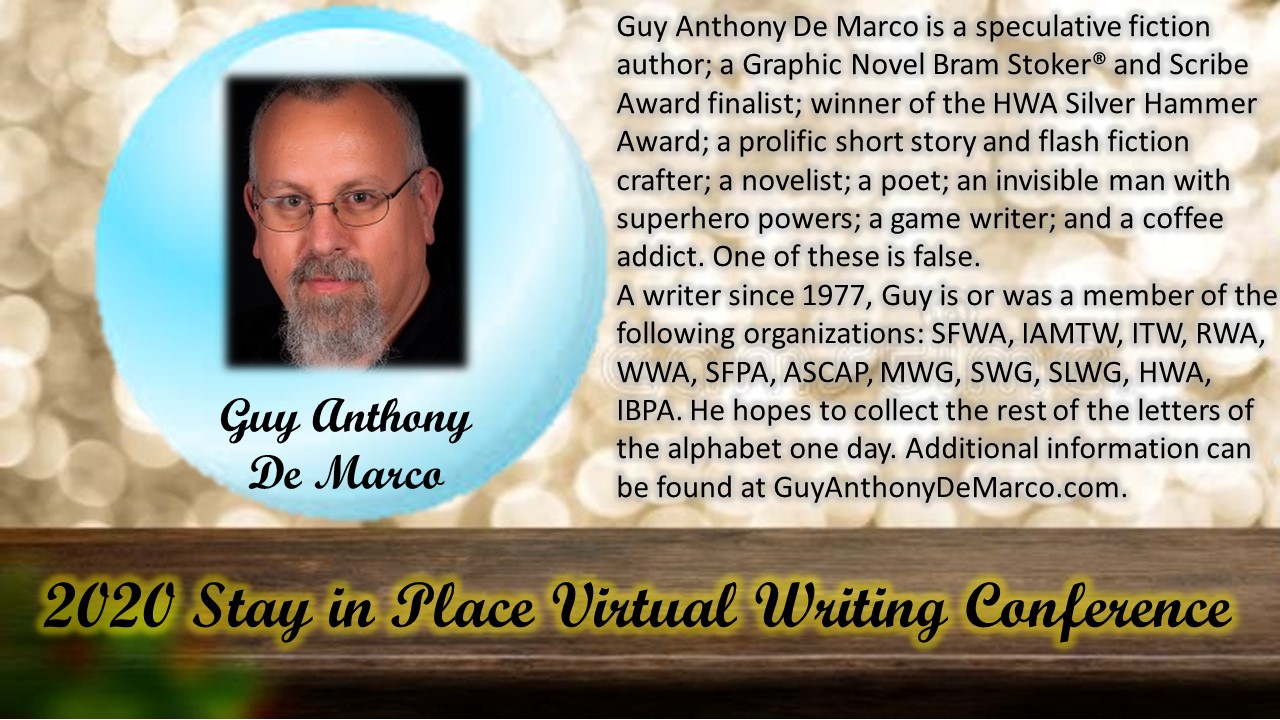
Award winning novelist Guy Anthony De Marco will be a member on both the short fiction and world building interactive panel discussions.
Fantasy and science fiction author Anthony Dobranski will offer two presentaions, “How to Swim Upstream: Not being in the mainstream of your market/genre” and “Working with Others: How to direct others in a project”. In addition, he will offer two interactive workshops. “Business Class Tarot” and “The Savage Horror of Writing Back Cover Copy”.
Author for young readers, Jason Henderson will be presenting “Story Ideas and the Choices You Make” and moderating the interactive book marketing panel discussion.
Media tie-in author Kevin Killiany will be a member on the interactive world building, media tie-in, and short fiction panel discussions.
Award winning young adult fantasy author L. Jagi Lamplighter will be on the interactive panel on world building, and moderate the interactive short fiction interactive panel discussion.
Award-winning science fiction author J.R.H. Lawless will be a member of the book marketing interactive panel discussion.
Award winning and New York Times bestselling multi-genre author Jonathan Maberry will be a member on three interactive panel discussions: short fiction, world building and media tie-ins.
Award winning multi-genre author Bobby Nash will deliver a presentation on “The Importance of Promotion”, as well as being a member of both the media tie-in and book promotion panel discussions.
Science fiction and fantasy author Jody Lynn Nye will offer a presentation on using humor in science fiction and fantasy writing, “Bringing the Funny: how to apply humor to your writing” and she will be a member of the world building interactive panel discussion.
Award winning fantasy author Ellie Raine will sit on both the short fiction and world building interactive panel discussions.
Award winning multi-genre author Art Rosch will offer a presentation on “Creating Villains We Love to Hate”.
Award winning multi-genre author Sean Taylor will offer a presentation on “Visceral Story Beginnings”.
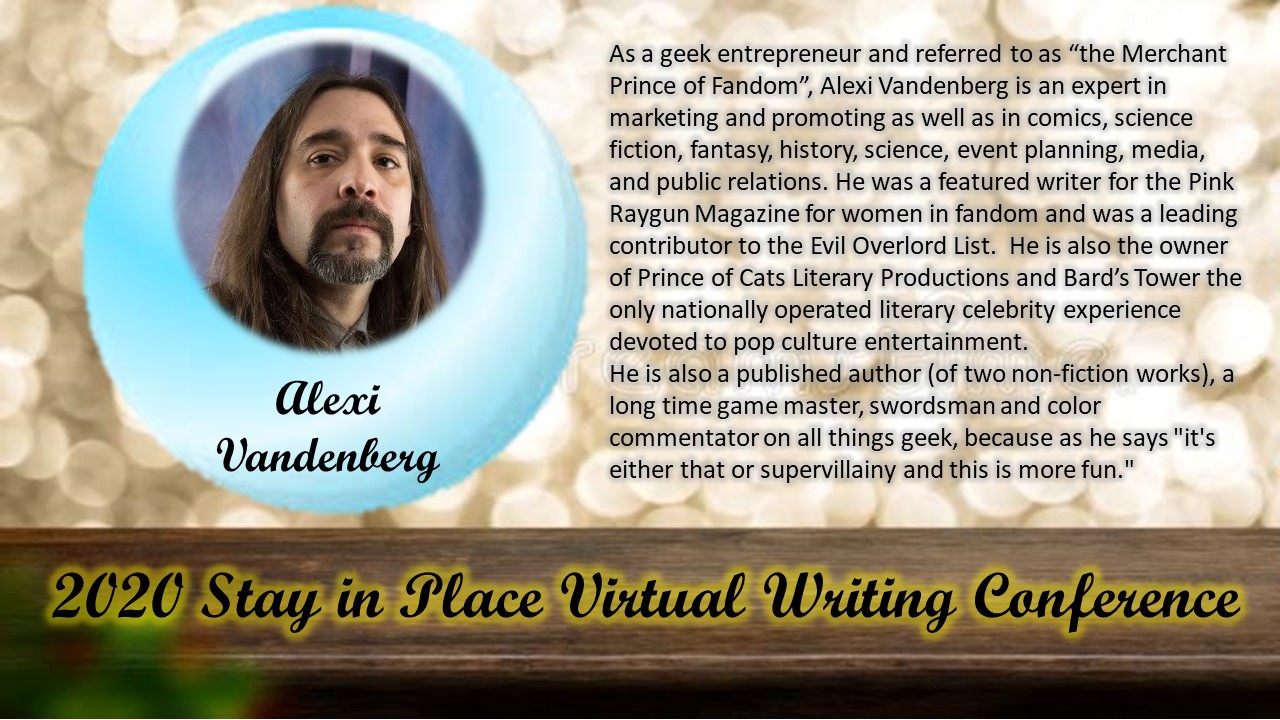
Science fiction author and marketing expert Alexi Vandenberg will be joining the book marketing panel.
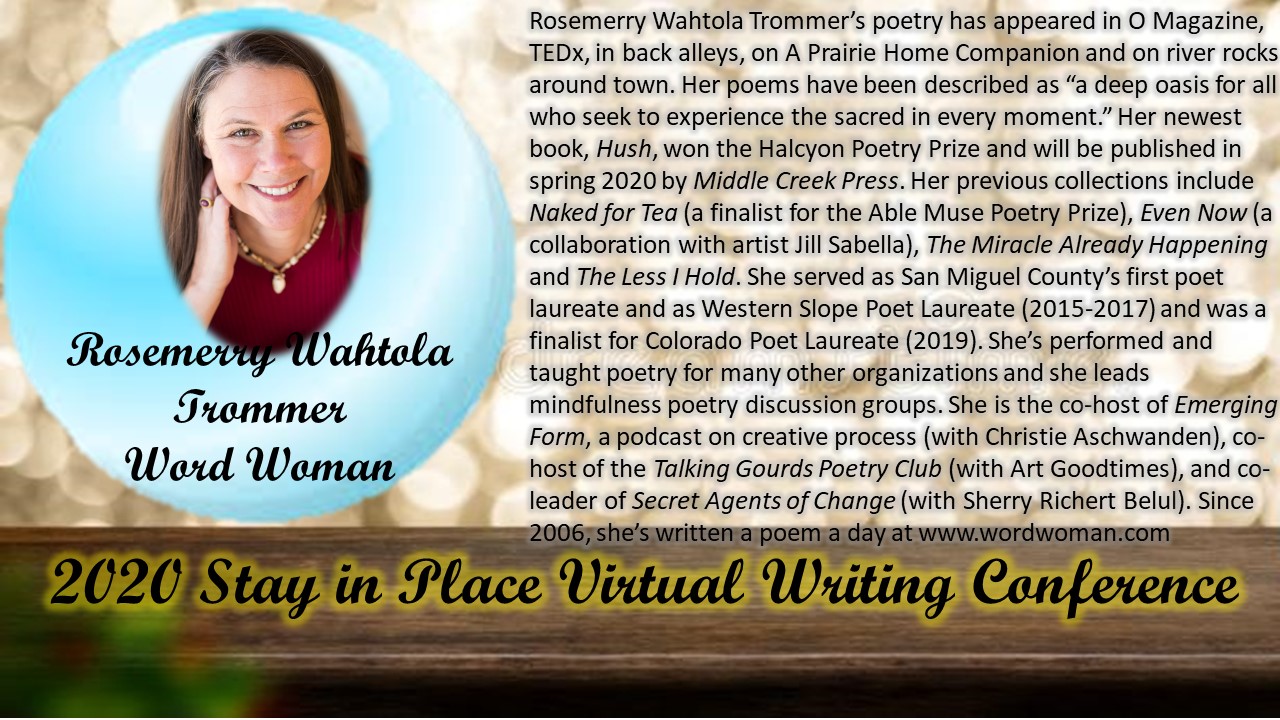
Award winning poet and author Rosemerry Wahtola Trommer offers a livestream presentation “The Gateway to the Unknown: A Poetry Thought Shop”.
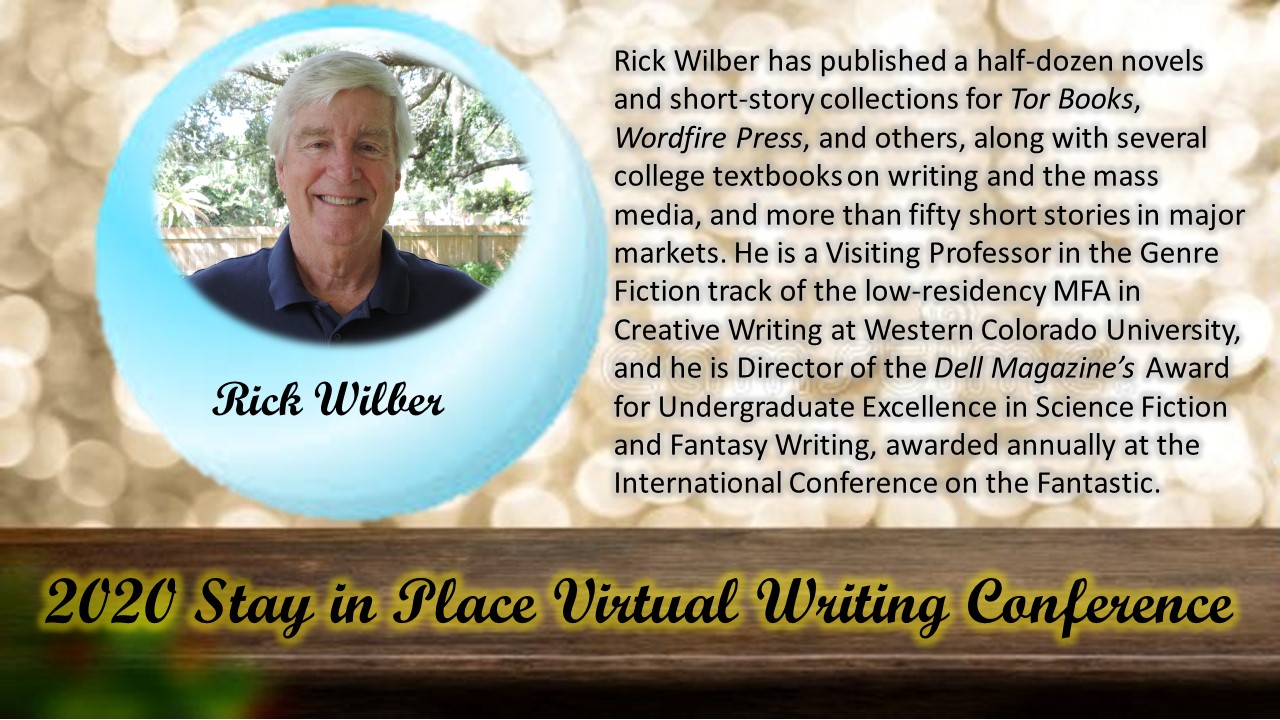
Author and educator Rick Wilber will be a member of the short fiction interactive panel discussion.
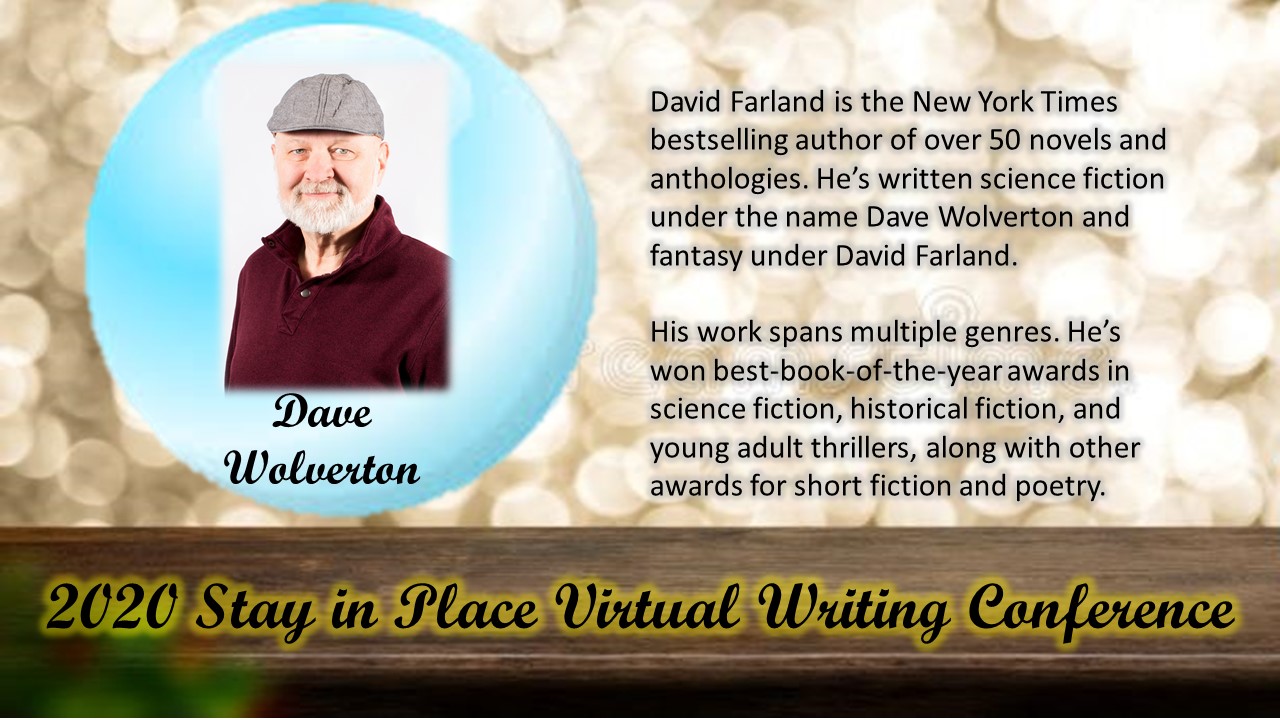
Award winning and New York Times bestselling science fiction and fantasy author Dave Wolverton/David Farland offers a”Promoting Your Book BIG” and he is a member of the interactive book marketing panel discussion.
You can find a full schedule here. I do hope all of you will join us for this unique writing event. It’s the first of its kind and we could be making history. You can be a part of it, too. Join us.
Like this post? Let me know in the comments. You can be sure not to miss any of Writing to be Read’s great content by subscribe to e-mail or following on WordPress. If you found this content helpful or entertaining, please share.