Chatting with the Pros: Interview with contemporary romance author Amy Cecil
Posted: February 17, 2020 Filed under: Adult, Books, Erotic Romance, Fiction, Interview, romance, Writing | Tags: Amy Cecil, Author Interview, Erotic Romance, Knights of Silence MC, Sainte, Writing to be Read 1 Comment
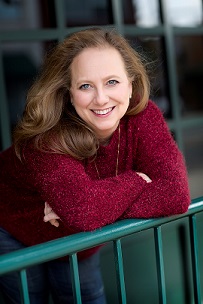
My author guest this month on “Chatting with the Pros” is a talented romance author of both historical and contemporary romance novels. Her Knights of Silence MC series tells the story of the sometimes violent and brutal world of motorcycle club life with characters who feel very human and vulnerable at times. The series is a tale of love and loyalty, and yes, there’s some tastefully written, but quite erotic sex scenes. (You can see my review of Sainte, the last book in the MC series.) I also had the pleasure of reviewing Ripper, which was one of the most cleverly crafted romances I’ve ever read. To turn a Jack the Ripper tale into an erotic romance takes some talent. Erotic romance author Amy Cecil did with a well crafted hand. I’m so pleased to be able to chat with her today. Please join me in welcoming her.
Kaye: Why do you write in the romance genre? Why not science fiction, or fantasy or mystery?
Amy: I initially chose romance because that is what I have always read. I do not read science fiction and doubt that I could even write in that genre. As I wrote more books, I have intertwined other genres into them such as fantasy, romantic suspense and ever mystery. So even though I started with romance, I’ve always been open to other genres that interest me.
Kaye: What is the most difficult part of writing romance for you? What is the most fun?
Amy: I would have to say the most difficult thing with romance for me is finding a relationship scenario that isn’t over saturated in the market. For all of us romance readers, we are always looking for something fresh. We want that happily ever after, but finding the angst to get to that point can be difficult.
And, the most fun part of romance for me is the banter between the couples. I love to bring snarky attitudes together and have a battle of the wits, so to speak.
Kaye: Your Knights of Silence MC series chronicles a motorcycle club over the course of several years. As you read the series you get better acquainted with each of the members, which have well developed backstories that make the whole of the story seem very real and believable. What drew you to these stories with these characters?
Amy: That’s a great question. And actually pretty funny how the series got to where it is now. When I started, my focus was on Ice and Emma, childhood sweethearts that great apart who found each other again. It was gonna be one book. When I got to about half way through the book, my PA at the time suggested that I release it, even though it has this huge cliffy. So I did, which then created book 2. That was supposed to be the end. But as I was writing these characters and their story lines grew, I realized I had more to say. Never in a million years at the beginning did I think that Honey would be such a pivotal character in the series to warrant he own book. So the draw was Ice and Emma and the continuing development came with each book released from my mind.
Kaye: You recently released the last book in the Knights of Silence MC series, Sainte. Can you talk a little about Sainte’s part of the Story? Why was he chosen for the central focus character in the final book?
Amy: When the series started to lean toward Honey, I realized that male character that I had intended for her was completely wrong for her. She needed a saint, literally to save her from herself. And while Hawk was the most beloved character in the series, he did not have the mental strength to get Honey through. And I just couldn’t let him sit around and watch her with another man. So, Hawk had to die and make room for Sainte. Sainte is a former mafia hit man who knew Ice when he was a kid. He is Emma’s cousin, which she didn’t know about. So he had a reason to stay with the MC from the beginning. When he met Honey, he realizes quickly, she is the woman for him and he decides to stay and leave the mafia world. (Not that it is all that different. LOL). Sainte brings the story full circle, bringing the club the peace it has been wanting for a long time.
Kaye: As I mention in my review of Sainte, your characters are well developed with rich, believable backstories. Where do you draw your characters? How do you create with their stories?
Amy: As noted in questions 3 and 4 above, their stories come to me as I write them. I keep referring back to Honey, but she is a perfect example. When the series started, she was nothing, but the jealous ex-girlfriend. By the time we get to the third book, her story line develops and the reader sees she is the most complex character in the whole series. She’s a recovering coke addict, struggling with her addiction every day. She wants love so bad she can taste it, but is terrified to grab the bull by the horns and take it when it’s offered to her. As the story grows, my characters grow and develop stories of their own.
Kaye: Although the series focuses on the male members, their “old ladies” play important roles as well, offering an abundance of strong, if flawed, female characters. Why do the ladies play such an important role within the framework of your stories?
Amy: Well, you know the old saying, “there is a strong woman behind every man.” I wanted my female characters to be as strong as their male counterparts. Because these women are connected to the MC, they are surrounded by violence. They have to be strong to survive. Emma comes to the MC in ICE a very naïve young woman. By the end, she gives new meaning to the term “old lady” and could definitely have a patch of her own.
Kaye: Who is your favorite MC Character and why?
Amy: At first, I would have to say Caden/ICE all the way. And don’t get me wrong, I love him because he is the heart of the MC. He’s strong and protective and the kind of guy that when he holds you in his arms you feel safe. But then, Sainte came along. Sainte is everything that Ice is, but Sainte has that snarky personality that I love. He’s not afraid to tell it like it is and if he’s hated for it, he will just smile and walk away. Yes, definitely Sainte.
Kaye: The MC world is often dangerous and violent. As a result, throughout the series several characters have had to die. Is it difficult for you to kill off your darlings? Who was the hardest for you?
Amy: Several minor or past characters have died and frankly, I didn’t even bat an eye. When the realization hit me that I had to kill Hawk, that one was difficult. He was a major player in the story line and very much loved character by my readers. And believe me, I thought of several ways to keep him, but I just couldn’t get it to work with how I wanted the story to go. So he died. It was hard, but it would have been so much harder to kill Ice or Sainte, or even one of the girls.
Kaye: You also write historical romance. Are those stories a bit tamer than you contemporary romances?
Amy: Yes, definitely. My historical romances are Jane Austen FanFic and I think the hard core Jane Austen fans would have heart attacks if I made them as steamy as my contemporary romances.
Kaye: Your erotic scenes are done tastefully and in context for the story, yet you turn up the heat just enough to make them sizzle. How do you know how far to take your sex scenes? How hot is too hot?
Amy: That’s an easy question. I think about what I like to read and go from there. I have read several books where every other page is a sex scene and that is just ridiculous. Many authors think sex is what sells your book, but I disagree. Readers want a story that they can sink their teeth into. They want to relate to their characters and that is really hard to do if they are screwing like bunnies the entire time.
I also believe that you want to leave the reader wanting for more in a particular scene. We all have an imagination and I believe that sometimes it is best to let the readers mind take over and make the sex in the book what they want.
Kaye: You are finished with the Knights of Silence. What is next for Amy Cecil? Is there a new series in the works?
Amy: Currently, I am working on a sequel to On Stranger Prides, which is a Pride and Prejudice variation titled On Familiar Prides. After that, I have a short story I wrote last year in an anthology about a WWI spy that I would like to develop into a full-length novel. As far as the Knights series goes, I definitely plan to expand on it. I currently have one spin-off series published, the Enemy Duet, but I also see others as well as a next generation series. I know for a fact, I can not stay away from my biker boys for very long, so definitely expect more in the future. I’m also working on making all my books available on audio, so that has kept me pretty busy as well.
Kaye: You are an award winning romance author. What do you feel is your biggest writing accomplishment to date?
Amy: Wow, you really save the toughest for last. I always thought that my writing was measured by the number of reviews, or the awards won, or even that pretty “bestseller” orange banner you get from Amazon. And yes, I have lots of reviews, awards and have had a couple orange banners and I am thankful for every one of them. But when I really think about accomplishments in my writing, none of these apply. Sure, they are great and all, but what I am most proud of is my readers. And it’s not just because they read my books, but because of the people and the friendships I have developed with them. I have met some amazing people through this journey and I can say, it’s not the awards, or the reviews or the “bestseller” banners that keep me writing, it’s the readers.
I want to thank Amy for taking the time to share today on Writing to be Read. Romance comes in many different shapes and sizes. In her Knights of Silence MC series, it comes in the form of big, tough bikers and their girls. Her characters are well developed and feel very realistic and relate-able so readers come to care about them, and her sex scenes have just the right amount of heat to make them erotic, but not feel over the top. It has been a pleasure chatting with her here and getting a glimpse into the workings of contemporary erotic romance series. Join us next month, when the theme will be the western genre and my “Chatting with the Pros” author guest will be Cherokee Parks.
Like this post? Let me know in the comments. You can be sure not to miss any of Writing to be Read’s great content by subscribe to e-mail or following on WordPress. If you found this content helpful or entertaining, please share.
Share this:

Interview with erotic romance author Nicky F. Grant
Posted: February 10, 2020 Filed under: Adult, Erotic Romance, Erotica, Fiction, Interview, Writing | Tags: Author Interview, BDSM, Beyond Surrender series, Erotic Romance, Erotica, Nicky F. Grant, Writing to be Read 2 Comments
My author guest today is a woman who knows who she is and what she wants out of life, and she goes after it with gusto. She writes sizzling hot erotic romance about love, sex, power and control. In 2019, she received a Stiletto Award in the erotic/BDSM category, from the Contemporary Romance Writers of America for her first novel, Beyond the Masks. She loves life and she loves what she does. It is my pleasure to have her with us today. Please join me in giving a warm welcome to Nicky F. Grant.
Kaye: Can you tell us briefly about your own author’s journey?
Nicky: It happened by accident, actually. I was (and still am) a huge reader of romance. I’d devour an erotic romance book every two days and it got to a point where they became the same. Different character names, but the similar formula. My husband and I were kicking back with a few drinks and came up with a plot idea for Beyond the Masks. One where it focused on a strong CEO heroine and her professional and personal challenges with two alpha men. An angsty, love triangle. It was supposed to be something to tinker with, but I soon found myself swept up in the story. Now, I can’t get enough.
Kaye: Why do you write in the romance genre? What draws you to the power world of your Beyond Surrender Romance series?
Nicky: Erotic romance seems to have a bad rap in the “real world”, unfortunately. And some books with BDSM can come off a little over the top, in my opinion. Fun to read, but unrealistic.
My passion for this genre comes from a deep understanding of the emotional connections to love, sex, and BDSM. My goal is show each reader that there’s a profound connection between these things well beyond floggers and obedience that’s usually present in these books. BDSM exists in my world of Beyond Surrender, but as a “third character” between the heroes and heroines. It’s catalyst to spark their inner desires and understand why it’s okay to feel what they do.
Also, I want my readers to relate to my powerful female characters. I try to lift up women in all capacities and having fun in the bedroom while owning one’s sexual prowess is one of them.
Kaye: What is the biggest challenge to writing romance for you? What is your favorite part?
Nicky: A huge challenge is starting a new book. It takes me time to let go of past characters after I’ve written their Happily Ever After. Also, my confidence wavers with the thought of a new story. What if I don’t do it justice? What if readers don’t understand my twisted brain? It’s nerve-wracking!
On the flip side, my favorite part comes about halfway through writing a new book. It’s the moment where I truly understand the characters, their bond, emotional limits, chemistry, pasts, and futures. This does cause a whole re-write of the first half of the book, but it’s my process and I’m learning to embrace that!
Kaye: Your romance novels are about power “in the boardroom and the bedroom” and they contain erotic sex scenes. How do you know how high to turn up the heat?
Nicky: I’m chuckling at this question, because I’m a touch embarrassed. Man, I love a good “peel the paint of the wall” sexy scene! My scenes are explicit, which I still can’t believe my mother has read. Anyway, I let the characters tell me how high the heat should be. Usually, it’s scorching, but sometimes I may “fade to black”.
As the author, I’m very aware that each love scene must serve a purpose. It must bring the Hero and Heroine closer together or cause a ripple in the love story. Trust me, I’ve had to cut out scenes that lacked in moving the plot forward. It hurts to cut those darlings… but my duty as an erotic romance author, is to help the story along. I hate to admit it, but I get exhausted with my characters falling all over each other. 😉
Kaye: How do you develop a female character who is strong and confident, but still make her feel human?
Nicky: Great question. I take from my own experiences and that of other strong women in my life. I feel fortunate to be a woman with strong views in business, life, and sex. But the true beauty reveals itself when I embrace my own vulnerability.
My heroines are a reflection of that. For example, Shane Vaughn in Beyond the Masks is a female CEO in the music industry. Even though she’s challenged by the men in the field, she’s still vulnerable. She’s open and honest with her past flame, current lover, friends, and family. Somehow, she’s not jaded by keeping up a tough exterior. She’s human with real emotions. I strive to be her in ways, maybe that’s why her story found me. Swoon….
Kaye: In 2019, Beyond The Masks was a finalist for the Contemporary Romance Writers of America‘s Stiletto award in the erotic/BDSM category. Tell us a little about book 1 in the Beyond Surrender series and what receiving such a prestigious award means to you?
Nicky: I was with an author friend when I got the email. There was a shriek, a smile, and tears. Later, I did accept the Stiletto for best erotic romance in New York City. Dreamy, right?
I was incredibly moved to have experienced this among my incredibly talented peers. Especially when I pretty much drop-kicked my entry on the last day to enter! I never thought I stood a chance. That evening put my dreams into reality.
Kaye: What techniques do you use to draw your readers into the story and immerse them in it?
Nicky: Not sure if I have any specific techniques…but I’m attracted to angst, secrets, suspense, and alpha men. So, my stories have elements of these throughout. The one thing I keep on top of mind is, if I’m not enthralled in the story then my readers won’t be.
Kaye: What is the best piece of advice you ever received?
Nicky: Wow, there has been so much! The romance community is incredible when it comes to helping others. If I were to pass along any wisdom to a new author, I would tell them to find their voice. Don’t compare yourself to every other author on the market and don’t get wrapped up in, “I should be doing what they’re doing!”
Writing is a personal journey. All the voices in our heads (yes, there are voices) are rare and unique. If you write without fear, the muse will find you. And your characters will tell you their story when we listen.
Kaye: What is your favorite part of the story, beginning, middle or end? Why?
Nicky: I love the middle! This is where all the “fun and games” happen! The sexy times are heating up, the characters are falling in lust, and a “romp in the sheets” make for a happy writer. But the middle is where things really start rolling. Secrets are revealed, the antagonist works their evil, and the characters doubt themselves. Also makes for a happy writer…I’m a bit of a sadist when it comes to causing them misery, just to fall in love. It’s a tough job. 😉
Kaye: What is your favorite time of day to write? Why?
Nicky: First thing in the morning. My brain is fresh. Also, anything I’d been working through (tough plot points, etc) have a way of working themselves out as I sleep. I can spring out of bed with a hot cup of joe and tap out some words for an hour or two. It’s a strange meditation for me.
Kaye: What is next for Nicky F. Grant? Are you working on anything now?
Nicky: I have two books lined up this year. Hers to Protect, a part of the Girl Power Romance Collection and Dirty Talker, a book for Vi Keeland and Penelope Ward’s Cocky Hero Club series!
Link to Hers to Protect: https://www.goodreads.com/book/show/50656136-hers-to-protect
Link for Dirty Talker: https://www.goodreads.com/book/show/51008222-dirty-talker
Also, Beyond the Masks is coming to audiobook late February/early March! More on that at www.nickyfgrant.com. Readers can also sign up for my VIP newsletter with all the upcoming news on my website.
I want to thank Nicky F. Grant for sharing with us here on Writing to be Read. I love how enthusiastic she is about what she writes. It’s been a fun interview, Nicky, and I really enjoyed having you as my guest. Readers can learn more about Nicky and her books on her Amazon Author page, or at her website, above.
Like this post? Let me know in the comments. You can be sure not to miss any of Writing to be Read’s great content by subscribe to e-mail or following on WordPress. If you found this content helpful or entertaining, please share.Like this post? Let me know in the comments. You can be sure not to miss any of Writing to be Read’s great content by subscribe to e-mail or following on WordPress. If you found this content helpful or entertaining, please share.
Share this:

Interview with authors Mark Todd & Kym O’Connell Todd
Posted: January 13, 2020 Filed under: Books, Interview, Nonfiction, Paranormal, Writing | Tags: Author Interview, Kym O'Connell Todd, Mark and Kym Todd, Mark Todd, Nonfiction, School, Wild West Ghosts, Writing to be Read 4 Comments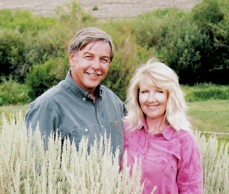
I am so excited to have these two authors, Mark Todd and Kym O’Connell Todd, as my guests today. They are both really great people and our conversations are always interesting, to say the least. Although I’ve never met Kym in person, Mark was my professor and mentor, and later my co-worker at Western State Colorado University. They also were a part of one of my 2018 “Ask the Authors” blog series and will be featured authors in the anthology of the same name, which is taken from that series and is planned for release in 2020.
You’ve heard of those couples who have been married so long and know each other so well that they can finish each other’s sentences? Well, these two really do that, both in speech and in writing, and they have co-authored several books together. We’re going to talk today about their nonfiction collaboration, Wild West Ghosts, which documents their paranormal research, (which was of course, carried out as a team). Let’s welcome them now and see what they have to share with us today.
Kaye: You’ve written both fiction and nonfiction. What are some of the major differences that you see between the two types of writing?
Kym-n-Mark: We both began as journalists, so we cut our eyeteeth writing nonfiction. Lots and lots of straight news stories.
Kym: For years my job as a newspaper features editor gave me plenty of practice at bringing out the lives of interviewees to readers by applying creative writing techniques such as scene dramatization, dialogue, setting, and “character” description.
Mark: This may sound flippant, but my favorite description of the difference is this: nonfiction is writing that pretends it’s true while fiction is writing that pretends it isn’t! Okay, that even sounds flippant to me. But I think there’s a kernel of truth in there.
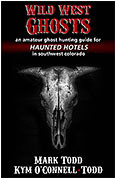 Kaye: In Wild West Ghosts, although the material is nonfiction, describing ghost hunts that you have been on, the historical characters which inhabited the locations in the past were very real and they had lives. How did you help those characters come to life for your readers?
Kym-n-Mark: We did a lot of research for each hotel and often found first-hand historical accounts either by the people we wrote about or about those folks by others from the time. During and after our paranormal investigations, we tried to be mindful the entitles we seemed to contact were once real people and respectful when we told the stories they had to share – or at least our encounters with them.
Kaye: What is the most unusual ghost hunt you’ve ever been on? Why?
Kym-n-Mark: We’d have to say the Norwood Hotel really stands out for all the things that happened. A cup flew off a table in front of us, we encountered a cold spot, and multiple pieces of equipment reported the same readings. In one room, there seemed to be a pathetic presence who identified herself as “Leah” who asked us to help her, and when we reviewed out digital recorder later asked us to remember her. In another room at the hotel, all our equipment red-lined and then shut down at the same time. We decided it was time to go.
Kaye: What time of day do you prefer to do your writing? Why?
Kym-n-Mark: Ha! As journalists we learned to write to deadline, so any time is good. But we also pick whatever time we’re both free to write together.
Kaye: You’ve been a college professor and Kym is a graphic designer, in addition to being authors. If writing suddenly made you rich and famous, what would you do?
Kym-n-Mark: Probably what we’re doing right now. We write because we enjoy it. Besides, we’ve turned a number of hobbies into businesses through the years, and it somehow kills the joy. We’d never want that to happen to our writing if that’s all we had to do.
Kaye: What is the biggest challenge when writing with a co-author?
Kym-n-Mark: For us it’s never been a challenge. But we’ve talked to other authors who found it hard. Most use “over the transom” writing, where each writes drafts and passes it to the other to revise back and forth. But all a matter of compatibility – in writing style, in work ethic, and in commitment.
Kym: Writing style and values are important. If either one of us had large egos, we’d either stop writing together or else we’d be divorced.
Mark: Yes, dear.
Kaye: What is the best part of writing with a co-author?
Kym-n-Mark: We’re sure there are others out there who do it like we do, but we can’t name anyone.
Kym: I start a sentence…
Mark: …and I finish it.
Kym: Or vice versa. Then before we finish a session, we reread and rewrite until –
Mark: — until we can’t tell who wrote what.
Kym: You’d think were married or something. Oh wait, we are!
Kaye: What is your favorite channel for book promotion?
Kym-n-Mark: That’s a toughie. We’ve tried most of them, and we ended up taking the sage advice to focus on just a handful that seemed to fit us best. Like you, Kaye, we like blogging, and have had a fair amount of success with that channel when cross-promoting with FB and Twitter.
Kaye: What’s the best piece of writing advice you were ever given?
Mark: I’ve always liked Natalie Goldberg’s advice from her book, “Writing Down the Bones: “Always give yourself permission to fail.”
Kym: I’ve always liked this: “Just start writing. If you don’t like it, that’s what the delete button is for.”
Kaye: What advice do you have for aspiring authors?
Kym: Don’t quit your day job. Until you make it, the electricity still needs to be paid.
Mark: I agree. I usually takes time to break in to publishing. Don’t put the pressure on yourself or your family. You’ll either find yourself blocked or you’ll crank out something that’s a waste of your time and your readers.
Kaye: Are there more books in the future for Mark and Kym Todd? What are you currently working on?
Mark: We’ve both really gotten into genealogy – we even have a blog dedicated to the more interesting skeletons we’ve each discovered in our closets. I’ve also always wanted to finish a memoir (one of those drafts-in-a drawer kinds of thing) about growing up in in a family mortuary business. A comedy, of course.
Kym: Our last book about ghosts happened because we were celebrating with our publisher the publication of our the third book in the Silverville trilogy. I never drink but had two Cape Cods that night. When our publisher asked us what was next, I blurted out a book about haunted hotels. Two days later, he called us and said he’d publish the ghost book. Maybe we’ll plan the next one when I get drunk again.
I want to thank Kym & Mark for joining us here and sharing today. As always when talking with them, the conversation was unique and entertaining, as well as being informative. I, for one, can’t wait to learn what that next book will be about, so I think Mark should take Kym out more often. You can learn more about Mark & Kym and their books on Mark’s Amazon Author page or on his Goodreads author page. To learn more about their paranormal investigations, visit their blog, Write in the Thick of Things.
Like this post? Let me know in the comments. You can be sure not to miss any of Writing to be Read’s great content by subscribe to e-mail or following on WordPress. If you found this content helpful or entertaining, please share.
Share this:

Interview with children’s author & illustrator Judy Mastrangelo
Posted: November 25, 2019 Filed under: Author Profile, Books, Children's Books, Cover Art, Fairy Tales, Fantasy, Fiction, Illustrations, Interview, Writing | Tags: Author Interview, Children's Books, Fantasy, Illustrations, Inspiration, Judy Mastrangelo, Portal to the Land of Fae, Writing to be Read 4 Comments
My guest today is an author and talented illustrator of children’s fantasy books. She seems a bit shy, but I was able to coax a few answers out of her, regarding writing for children and creating beautiful illustrations. Because, after all, at least half of writing for children is creating visual images, so an author who can do their own illustrations comes into the game a step ahead. Please help me welcome author and illustrator Judy Mastrangelo.
Kaye: When did you know you wanted to be an author?
Judy: I’ve always enjoyed writing, ever since I was very young.
Kaye: Would you share the story of your own publishing journey?
Judy: As a child I would write little stories from my imagination, or about my everyday experiences.
Coming from a fine art background, I’ve always loved the wonderful artists of the “Golden Age of Illustration”, who illustrated books from about 1850 to 1925. I like to think that I continue along this line in my own small way. I enjoy writing stories that I illustrate, and also love illustrating classical stories in the public domain.
Many of my paintings have been licensed for various markets, such as art prints, wall murals, greeting cards, jigsaw puzzles, oracle cards etc. I have written and illustrated several published books. And I have both illustrated and written the text to a new inspirational Oracle Card Deck which will be on the market next year, published by “RED FEATHER MIND BODY SPIRIT”, a division of Schiffer Publishing.
You can see and hear podcasts about my artwork on Youtube.
These include some radio interviews, plus several teaching podcasts about the steps I take in the creation of my Art. To learn more about my Art and products, you can visit: www.judymastrangelo.com
Kaye: What’s something most readers would never guess about you?
Judy: I am a “movie buff” and enjoy many genres of film.
Kaye: What is the biggest challenge of writing for children?
Judy: I try not to “talk down to children”. Just having fun at writing is what I enjoy doing, and making my stories come from my heart, expressing how I feel. My books are really intended to be appreciated by all ages ~ the young and the young at heart. I attempt to appeal to the “Child in all of us”, and to rekindle the wonderful feelings we have all experienced in our youth, of the awe and beauty of the world around us. As we grow older, life seems to become more mundane, with all the everyday things we have to do in order to survive. The realm of art certainly plays an extremely important part in everyone’s lives, so that we may feel uplifted and inspired to higher worlds.
Kaye: What is the one thing you hope to teach children?
Judy: I like to impart the wonder and beauty of the world around us; sensitivity to nature and to all living beings, including animals, plants, and trees, as well as humankind are excellent lessons to understand. I feel that developing creativity as an art form, and one’s imagination, are very important aspects of life. Many people seem to place imaginative painting and literature more in a children’s category, although I’m sure you’ll agree that the genre of fantasy art is appreciated by all ages.
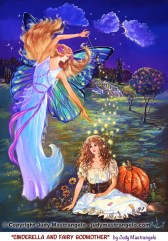 Many adults also enjoy themes, such as fairy tales, and other types of fantasy. I’m sure no one will dispute the fact that great authors such as William Shakespeare, Hans Christian Andersen, Robert Louis Stevenson, James Barry, etc. wrote memorable outstanding fantasy stories. And that’s why I feel that my writing and paintings can also appeal to any age person.
One just has to “let go” of their preconceived notions that fantasy, fairies, fairy tales, etc. are just for the young. It will keep us all “Young at Heart” if we believe in the magical power of art to unleash our imaginations.
Kaye: Your books are illustrated in bright, vibrant colors. What medium do you work with?
Judy: Acrylic paint on canvas is my medium of choice.


Kaye: What is the most challenging thing about illustrating your own books?
Judy: The art of illustration is very dear to my heart, something I have been developing my entire life. It is a labor of love for me, and I paint because I enjoy doing it so much. I usually paint slowly, because I am somewhat of a perfectionist, and as a result my paintings aren’t created very quickly. This can sometimes present a problem. But I do enjoy illustrating my own books that I also design. Many of my books I have written myself, and others have stories or poems that are in the public domain which I illustrate. It’s all great fun to illustrate, and I relish every moment I spend doing my paintings!
Kaye: What is the most important quality in a children’s story for you?
Judy: Delight, imagination, and fun.
Kaye: What’s the best piece of advice you were ever given?
Judy: Be true to my heart, be myself, and enjoy the process of creating.
Kaye: Flower Fairies is focused on the characters. What comes first in your mind, the character, or the story?
Judy: I’m a very visual person, and often I first get images in my mind of a painting that I would like to create. Often this “germ” of an idea or image leads to a story, or a series of paintings. So I would say that the story as a whole comes first.
Kaye: As a children’s writer, what kind of research do you find yourself doing for your stories?
Judy: I often research period costumes for my characters to wear, and I also consider other art forms which portray the ideas I wish to develop in my stories. I love all forms of great art, and often music, drama, dance and other literature is a great inspiration to me, as well as great painting of course. So I immerse myself in art that I love, as part of my research for a specific project. It brings me great joy to do this.
Kaye: Tell me a little about your Portal to the Land of Fae series?
Judy: The world of nature spirits has always been fascinating to me. I love the realm of fantasy. And the tiny folk, such as fairies and elves are of particular interest. For many years I’ve done paintings of these lovable spirits, and have enjoyed writing about each painting I create. I love writing poems to go with my artwork, and have enjoyed describing my feelings about the fairy world. The idea of making a series of books incorporating these works was an intriguing one for me, and four categories developed from them:
 FLOWER FAIRIES: This book tells about the precious Elves and Fairies who live amongst the Flowers, such as: the graceful ROSE FAIRY, and the comical little SWEET PEA ELVES. I often depict Flower Fairies to appear as graceful ballet dancers. In this genre of art, I have been inspired by the Flower Fairy paintings of British artists Cicely Mary Barker and Margaret Tarrant.
 In my SECRETS OF THE FAIRIES, I portray the secret life of elves and fairies that I imagine to exist in amazing places. There are many delightful things that i depict these creatures doing. They often enjoy frolicking and playing in a garden. These secrets tell of the hidden world of elves and fairies, little known to mortals. I’ve also written and illustrated depictions of the four seasons with the fairies, and their beautiful romantic lives.
FAIRY TALE FAIRIES, various forms of fantasy have always been the closest to my heart. They include fairy tales and myths.
The world of fairies has often inspired the arts of other great literature. Some excerpts from classical literature for this FAIRY TALE FAIRIES book are included in this volume. You will see some of my illustrations from Hans Christian Anderson’s Thumbelina, Cinderella by Charles Perrault, Peter Pan by James Barrie, and many others. Sometimes authors and painters depict elves and fairies in a darker way, but I prefer to focus on depicting the lighter, more cheerful and spiritual side of the fairy realm.
 MYSTICAL FAIRIES: In this volume, I want to share my feelings of Spirituality and Goodness, Love for Life and Nature, and the Healing power of Art. I feel that Elves and Fairies, are beautiful, Magical, and Spiritual Beings which can inspire and uplift one to higher realms. I often depict them as radiant beings, which glow with an inner light, with radiating and sparkling auras, glow like spiritual Angels.
Kaye: Your Come Play with Me series includes bonus features. Would you like to tell us about the series and bonus features?
Judy: My Come Play With Me book series is designed to give readers high quality illustrated storybooks in full color. They also include some delightful interactive bonus pages. These books include fun filled things, such as How to Draw pages, coloring pages and recipes, etc.
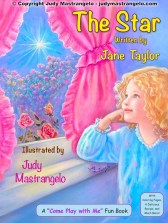 My first book in this series, THE STAR, illustrates the entire famous TWINKLE TWINKLE LITTLE STAR poem, written by Jane Taylor. I’ve interpreted this beloved poem, as a fanciful, Dream-like adventure. I’ve included a delicious bedtime snack recipe, some “how to draw” pages, a creative writing section, coloring pages, and some decorative gifts to cut out, etc. An Audiobook of my book THE STAR is also available, where people can listen to this song being beautifully sung. If the kindle ebook, or paperback versions of my book THE STAR are purchased also, along with the audio book, people can sing along with the audiobook as they read it interactively.
Two other books in this series have a Bunny theme: The first one, entitled WHAT DO BUNNIES DO ALL DAY? is my original story of a little Bunny’s first adventure. Some interactive pages include Mama Bunny’s recipe, coloring pages, creative writing and drama ideas, and decorations to cut out from the book. An audiobook of this story will be available soon, to be listened to interactively along with reading this book in kindle or paperback.


The second Bunny book in this series, LEARN TO DRAW BUNNY AND HIS FRIENDS, is a companion book to my book WHAT DO BUNNIES DO ALL DAY? In it I show easy to do, attractive, and fun ways to learn to draw little Bunny’s animal and flower friends that he meets in the book about his first adventure.


Some of the animals I show how to draw are rabbits, frogs, butterflies and turtles. Then daffodils, daisies, and buttercups are several of the flowers I describe drawing, all in three easy steps. It’s a delightful interactive book, which also includes special pages for people to draw their own pictures, with small border decorations for inspiration.
Kaye: Which character is your favorite? Why?
Judy: One of my favorite characters is Little Bunny in my book WHAT DO BUNNIES DO ALL DAY? He is a sweet innocent little rabbit who is delighted and excited at the opportunity of investigating the big world all by himself for the first time. I’ve modeled this little animal on our own dear little Netherlands Dwarf pet rabbit, who is very loved by my husband and me. He gives us both a lot of Love in return. Knowing this adorable Little Bunny intimately was a great inspiration to writing and illustrating my story.
Kaye: Where does your inspiration come from?
Judy: My inspiration comes from many things: my love for nature, for instance. When I am in a flower garden, I imagine delightful Flower Elves and Fairies living there. I visualize them wearing costumes made of leaves and flowers, acorn caps, etc. I collect things such as leaves, pine cones, berries, ribbons, and scarves, to give me ideas for their fanciful clothing.
I take photos of beautiful places that I visit, to give me ideas of backgrounds for my paintings. Great art of the past and present is always an inspiration to me, such as: wonderful films, great literature, beautiful music, ballet dancing, and beautiful paintings. They always kindle my enthusiasm.
Kaye: Is there anything unique or unusual about your creative process?
Judy: I have developed a method I call “Mind Painting”. This is my own personal way of capturing ideas and images for my paintings and writing, which develop in my mind. This is a procedure used by many creative authors, composers, painters, poets, choreographers, etc. throughout the ages. I just close my eyes and “visions” appear in my head. I do this during the day, or at night before going to sleep. These images often develop into stories which evolve into my books. It’s a delightful process.
Kaye: What is your greatest achievement to date in the literary world?
Judy: Reading and hearing the wonderful and appreciative compliments from people who have read my books, and who have seen my illustrative paintings, has always been very encouraging to me. I receive these compliments from all kinds of people, worldwide, and of all ages. I feel that these wonderful responses have been the greatest achievements in my literary and artistic world.
I want to thank Judy Mastrangelo for sharing with us here today, both her wisdom and her fabulous illustrations and book covers. You can learn more about Judy and her children’s books on her website or on her Goodreads Author or Amazon Author pages.
Like this post? Let me know in the comments. You can be sure not to miss any of Writing to be Read’s great content by subscribe to e-mail or following on WordPress. If you found it helpful, please share.
Share this:

Interview with horror author Roberta Eaton Cheadle
Posted: October 14, 2019 Filed under: Author Profile, Books, Dark Fantasy, Fiction, Horror, Interview, Stories, Writing | Tags: Author Interview, Author Profile, Nightmareland, Robbie Cheadle, Roberta Eaton Cheadle, Through the Nethergate, Whispers of the Past, Writing to be Read 62 Comments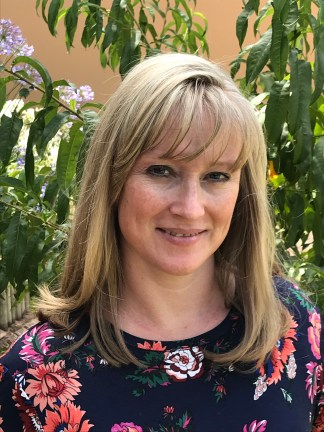
Today my guest is an author who I’ve gotten to know well, because she is a member of the Writing to be Read team, where she writes a monthly blog segment on children’s literature that’s proven to be very popular, “Growing Bookworms”. By day she walks in the world of fondant and children’s fiction, but when darkness falls she transforms into an emerging horror author. But this author doesn’t just emerge, she explodes onto the scene with this month’s release of her first novel length horror tale, Through the Nethergate. In addition, this month she also has a short story appearing in Dan Alatorre’s Nightmarland anthology, and another coming out in the WordCrafter paranormal anthology, Whispers of the Past. I’m really excited to be able to interview her about her experiences with horror, so please help me welcome author Roberta Eaton Cheadle.
Kaye: You started out writing children’s stories with your son, but you’ve recently leaped into the horror realm, which is kind of at the opposite extreme of the spectrum. Was that a hard transition for you?
Roberta: It wasn’t a hard transition for me at all. I have always loved supernatural, horror and dark psychological thrillers so I think this genre comes naturally to me. More recently I have been reading and re-reading a lot of dystopian fiction such as Fahrenheit 451 by Ray Bradbury and The Long Walk by Richard Bachman (aka Stephen King).
I can remember reading my Mom’s copy of Stephen King’s The Shining behind the couch in the lounge when I was ten years old. After that book, I worked my way through the rest of her Stephen King collection and several other adult horror books too.
Kaye: Can you name one thing you have to think about when writing horror that you might not ever think about when writing for children, (or any other genre, maybe)?
Roberta: When writing from the point of view of the victim, I need to imagine their fear and describe this in a way that brings out the same emotion in the reader. When writing from the point of view of the party who sees a ghost or discovers a body, I need to imagine their shock and horror at what they are seeing. To describe the tumultuous feelings that would bubble up inside them at seeing something truly frightening or gruesome.
I would never attempt to scare children or invoke feelings of fear and anxiety in them. My Sir Chocolate books series is my attempt to draw children into a happy and safe world of complete fantasy where good always wins and any less likable characters are drawn into the circle of friendship and become part of the team.
Kaye: When making the move into adult fiction, why did you choose to write horror? What draws you to the genre?
Roberta: As mentioned above, I have always liked supernatural horror. I was drawn to it from a young age even though it scared me half to death when I read both The Shining and Salem’s Lot by Stephen King.
I have also always gravitated towards psychologically disturbing books that make me think such as Roald Dahl’s short stories for adults. I have never forgotten Lamb to the Slaughter about a pregnant woman who kills her husband after discovering he is having an affair. She saved her own skin, and that of her unborn baby, by making the murder weapon disappear in the most innovative way imaginable.
The idea of writing about ghosts came to me while I was writing While the Bombs Fell, a fictional biography about my mom’s life, growing up in the small English town of Bungay, Suffok, during WWII. My extensive research while writing this book led me to discover the history of one of the oldest inns in the town which is purported to be haunted by over twenty ghosts. The little bit of information that is available about each of these ghosts intrigued me, and I decided to write a selection of short stories, each featuring the circumstances leading up to, and the death of, a specific ghost.
As I went along with Through the Nethergate, Margaret injected herself into this story and it took on a whole new direction with her having the power to reincarnate the ghosts.
Kaye: What is the biggest challenge for you in writing horror?
Roberta: I think like many other new writers, my biggest developmental area has been learning to show instead of tell in my stories. I believe I have improved a huge amount in this area. As I came from a non-fiction writing background, I have also had to learn to write more descriptively and really reach into myself and find the whirlpool of emotion my characters are feeling in any given circumstance. These emotions must be shown and not told which takes me back to my first point.
Kaye: Your latest release is a work of horror, Through the Nethergate. Where did your inspiration for this story come from?
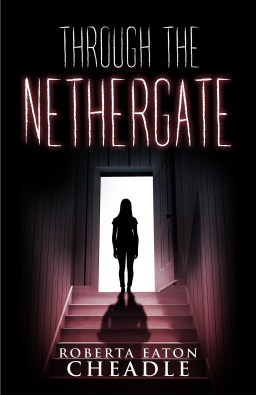 Roberta: As mentioned above, my original idea was to write a selection of short stories, each featuring the death of one ghost.
As I went along the idea for Margaret with her power to reincarnate ghosts and experience their deaths and pain came along. Margaret has recently lost her parents which gives her heightened sensitivity to the world around her.
At the same time, the idea of having one ghostly master to rule over the others popped into my head and this evolved into the ghostly black dog, or Black Shuck, which is an ancient myth in Suffolk and its surrounds. Legend in Bungay has it that Hugh Bigod, a most evil descendant of the original Normandy invaders and the man who erected Bungay Castle during the 12th century, still haunts the castle in the form of the black dog. The inn around which Through the Nethergate is centred, shares a wall in its cellar with Bungay Castle.
There are four other descendants of the Bigod family who are also alleged to haunt the town in their ghostly carriage drawn by fire breathing horses.
Initially, the reader will believe that Hugh Bigod is the villain of the book, but this is not the case. There is a far greater evil force at work who covets Margaret’s power and who makes Hugh Bigod look quite pathetic and ridiculous in his small attempts at evil.
Kaye: Can you tell me a little about Through the Nethergate?
Roberta: Through the Nethergate is intended to demonstrate to the reader how evil has always existed in our world and how evil forces manipulate human inventions and greed for power and wealth to their own ends. Evil has always existed, and it always will, but there is the counterbalancing force of goodness and the kindness and empathy that exists in an equal number of people. This is a book about faith and my belief that goodness and faith always prevail.
Kaye: If Through the Nethergate were made into a film, who do you see playing the lead as Margaret? Who do you see playing your villain, Hugh Bigod?
This is a tough question for me as I don’t watch movies or television. I will have to base it on my previous experience of movies.
I would choose Drew Barrymore to play Margaret in a similar manner to her portrayal of Charlie (Charlene) in the movie version of Firestarter by Stephen King. She would need to be a few years older, however, as Margaret is sixteen in my book. The mixture of innocence, toughness and a strong will to survive are the qualities in Charlie’s character portrayal that underpin my selection.
For Hugh Bigod I would choose Richard Chamberlain in a mixture of his portrayals of Father Ralph de Bricassart in The Thorn Birds and Captain John Blackthorne in Shogun. In both series he portrays someone who is able to separate himself from the anguish of the people around him and ruthlessly pursue his own ends and survival.
Kaye: The setting for Through the Nethergate is an ancient inn with quite the history. How much historical research went into it?
Roberta: I do a massive amount of research for my books with partial or total historical settings.
Each ghostly character in Through the Nethergate came from a different historical era and I had to do meticulous research into what people wore, drank and ate during those particular time periods, as well as how they traveled and the political agendas and attitudes towards servants, masters, females and religious figures that prevailed at the time of their stories and deaths.
For example, Katharine is a reluctant Benedictine nun who comes from a wealthy background and is forced into Bungay Priory during the 14th century. She is in love with William and conspires to escape her dreary life by running away with him. James Wilson was a Benedictine monk who was the cellarer at Glastonbury Abbey during the 15th century when Richard Whiting, the last Abbot of Glastonbury Abbey, presided. James originates from Bungay where his father was the local blacksmith. Peggy and her husband and child are survivors of the great fire that destroyed much of Bungay in the 17th century. The book also includes other historical figures such as John Collins, the famous Chartist from Birmingham, Countess Elizabeth Báthory de Ecsed, a Hungarian Countess and one of Europe’s most prolific serial killers, as well as Tom Hardy, a highwayman who rode with the infamous Dick Turpin and Amelia Dyer, Britain’s most famous female serial killer.
When featuring real people, I must research their stories in as much detail as possible to ensure I get the facts correct. I usually check between five and ten sources, depending on the amount of information available.
Kaye: You also do a lot of short dark fiction, and have stories included in several dark anthologies. In fact, you have two stories “Last of the Lavendar” and “Missed Signs” coming out this month in the WordCrafter paranormal anthology, Whispers of the Past, and “The Siren Witch”, “A Death Without Honour” and “The Path to Atonement” are featured in Dan Alatorre’s Nightmareland horror anthology, also released this month. Do you prefer writing short dark fiction or novel length horror? Why?


Roberta: I like writing both kinds of story.
Short stories are fun to write, but they are restrictive because of their length of 1 500 to 3 000 words. It can be tough to get all the necessary background and detail into a short story in a clear and concise way. I had to cut quite a lot out of “A Death Without Honour” to get the length and sharpness right. Dan Alatorre was great at helping me with that. Sometimes I struggle to get the ending wound up in a concise and exciting way with short stories, as I did with “Last of the Lavendar”, the ending of which you helped me improve greatly. I like writing for anthologies because I learn so much. I also get a lot of guidance from the experienced editors and also from reading the stories included in the anthologies by other authors. They really are a wonderful learning and growing experience for me.
I have written two novellas now, While the Bombs Fell, and my recently completed A Ghost and his Gold which is about the Second Anglo Boer War fought between the “Boers” [farmers] and the British Empire in the early 19th century. I love the length of novellas because it allows for more detail and depth than a short story, but is still fairly short and concise. I think that modern readers prefer shorter stories due to their busy lifestyles.
Through the Nethergate is my first full length novel and I enjoyed writing it and “seeing” how my imagination could take off and extend to a much longer story.
I am currently 40 000 words into a dystopian novel which will be part of a trilogy about a future world dealing with drastic climate change and the fourth industrial revolution. Trilogies are popular and this idea came along so I thought I would jump right in. I love to experiment and learn about new things.
Kaye: What is your biggest fear? What scares you?
Roberta: Real life scares me. The prospect of climate change wreaking devastation on our planet, overpopulation, poverty and criminality which are changing the way society operates as well as the Fourth Industrial Revolution which will forever change the nature of the working world, these things scare me far more than “monsters under my bed.”
Dystopian novels like 1984 by George Orwell and The Long Walk by Richard Bachman (aka Stephen King) really disturb me, but I can’t help reading them. It is better to be informed than not. Even H.G. Wells gives great insights into the nature of society and how it could evolve in his books The Time Machine and War of the Worlds, which are really frightening.
Kaye: What is the scariest story that you’ve ever read and why do you think it is the scariest?
Roberta: I think 1894 by George Orwell is the scariest dystopian novel I have read. Living in the world he describes is so awful I think people would be better off dead.
The Shining is the scariest supernatural horror book I have ever read. The ghosts in the Overlook Hotel that become visible and can harm Danny and his family are most frightening. The invasion of his father’s mind in order to bend him to the will of the evil in the hotel was terrifying. Stephen King has a way of describing things in such a visual way, you feel as if you are living them with the character in the book.
Kaye: What is the scariest story that you’ve ever written?
Roberta: My short story about Amelia Dyer called “Justice is Served” in the murder mystery anthology, Death Among Us, is quite scary as it is based on a real serial killer who murdered babies.
From a purely fiction point of view, I think “The Path to Atonement” in the forthcoming Nightmareland anthology is quite eerie and chilling. “Missed Signs” from the forthcoming Whispers of the Past is frightening because it is within the realms of probability.
Kaye: What methods do you use to create suspense and make a story scary?
Roberta: I use a slow build up to the deaths as a tool to create suspense as well as a lot of visual descriptions and emotional language. Dialogue and onomatopoeia are good ways of conveying literary “sound effects” and tension in a story.
Kaye: Who is your favorite villain or monster from a horror story or film? Why?
Roberta: My favourite villain is Dracula. I loved his sly intelligence and sneaky ways of manipulating his victims and also the heroes of the book.
Kaye: Is there more dark fiction in store for the future readers of Roberta Eaton Cheadle? What are you working on now?
Roberta: I have recently finished the first draft of A Ghost and his Gold and sent that off to my developmental editor. I am hoping to have it available on Amazon in March/April 2020.
I am also working on book 1 of my dystopian trilogy about a world where drastic measures are required to address climate change and the unemployment caused by the Fourth Industrial Revolution. The first book is called Russian Roulette Anyone? And will probably be available in October 2020. I also hope to participate in more anthologies next year as I really enjoy those.
I want to thank Roberta for sharing with us today. I too have been a fan of dark fiction since a young age, and at one time delved into all works Stephen King. I read The Shining while babysitting one night when I was 15. I was totally immersed in the story and couldn’t put the book down, but I had to call and wake up my mother to talk to me about three a.m. because the story scared me silly. I finished the book before the sun came up though. Although I grew up reading the masters like Stephen King, Dean Koontz, Anne Rice, John Saul, and Peter Straub, doing so set a high bar for the writing of horror.
Roberta gets cudos though for having the nerve to do what I’ve not found the courage to do, the nerve to immerse herself in a world of fear and terror in order to write a novel of dark fiction. You can learn more about Roberta and her books by visiting her on her Amazon Author page or on her Facebook page. You can also learn about her children’s books and her creativity with fondant at Robbie’s Inspirations. And don’t forget to catch her “Growing Bookworms” blog segment on the second Wednesday of every month right here on Writing to be Read.
Kaye Lynne Booth does honest book reviews on Writing to be Read in exchange for ARCs. Have a book you’d like reviewed? Contact Kaye at kayebooth(at)yahoo(dot)com.
Share this:

“Chatting with the Pros”: Interview with award winning horror author Paul Kane
Posted: October 7, 2019 Filed under: Books, Chatting with the Pros, Dark Fantasy, Fiction, Horror, Interview, Writing | Tags: Arcana, Author Interview, Chatting with the Pros, Dark fiction, horror, Paul Kane, Writing to be Read 5 Comments
This month as we explore the darkness of horror and dark fiction, we have a special treat. This month I have for you, not one, but two “Chatting with the Pros” author guests, which is why this segment is posting on the first Monday rather than the usual third Monday spot.
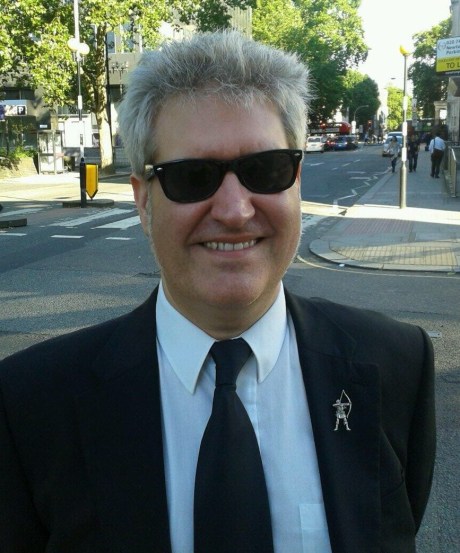
For today, I have the pleasure of interviewing an award winning, bestselling author of over ninety books, who is also the expert on Clive Barker’s Hellraiser films and his own work has been optioned and adapted for the big and small screen, including for US network prime time television. A former British Fantasy Society Special Publications Editor, he is currently serving as co-chair for the UK chapter of The Horror Writers Association. I’m really excited to present all he has to share. Please help me welcome him now.
Kaye: You began writing comics as a boy. Are there aspects of those comic book characters that can still be seen in your writing today?
Paul: I just drew them first, copying the kinds of comics my dad used to buy me – but it was definitely a way of sorting out in my head how story worked. Later on, I’d write dialogue and action for them as well, so that they looked more like proper comic books, and I’d show them to friends and family. It wasn’t until years later that I learned how to write actual comic scripts, but even then I sketched out the panels beforehand so I could work out what needed to go on the page and where. As for characters, I think that was certainly where I started to create and build characters – as well as making up stories for my toys and acting them out like little films. By my teens, though, I was writing prose and emulating the kinds of books I’d read as well, so I think that was when I learned how to flesh out and develop characters. I still love writing in a comic book style, yes, which is something I did for a story of mine called ‘The Return of Mortis-Man’ in the collection Death. I had such fun writing that, creating my very own horror superhero, and I’m planning on doing a couple more featuring that character.
Kaye: What do you think is the single most important element in a horror story?
Paul: That’s a tough one. I think the single most important element in any story, for any genre, is to tell the best tale you can. That’s your responsibility as a writer – and I take it very seriously. Make sure the characters are there first and people will care about them, because if you don’t do that nobody will bat an eyelid if something horrible happens to them. Make sure the journey they’re on is credible, even if things are happening to those people that are totally out there. For example, in the latest short horror novel I wrote for PS Publishing – The Storm, out in 2020 – I had to make sure the bunch of characters were living and breathing, had their own problems and histories, so that when monsters attack you’re right there with them in the thick of it. You care if someone gets injured or loses a loved one. You have to totally understand their motivations for doing what they do and acting the way they act. If you don’t have that then bad things are simply happening to cardboard cut-outs you couldn’t care less about.
Kaye: What was the most fun interview you’ve ever done? Why?
Paul: You mean an interview I’ve conducted with someone myself? We once interviewed George A. Romero for a magazine and went back to his hotel room, where he regaled us with stories about making the Living Dead movies and his career in general, whilst drinking copious amounts of rum. That was a surreal afternoon, a kind of ‘pinch me’ moment. In terms of live interviews, probably Clive Barker on stage at FantasyCon 2006 – which I did in front of an audience of about 600. That was nerve-wracking, but Clive – lovely as he always is – really put me at my ease and we had a whale of a time. I did a smaller, more intimate interview with he and Simon Bamford – Butterball from the Hellraiser movies and Ohnaka from Nightbreed – later on that day and that was such fun! There were about 30 or 40 people in the room for that and we were able to chat a bit more freely about their careers. In terms of myself being interviewed, then probably my times on Nicholas Vince’s Chattering show. We did one at Christmas once and the guests were me, the Soska sisters, Barbie Wilde, Ashley Thorpe, and Tim Dry. That was a terrific experience, very funny. It’s still online somewhere if you want to track it down.
Kaye: What is your biggest challenge in writing dark works of horror?
Paul: Biggest challenge? Probably nothing to do with the actual writing of dark fiction, but rather getting published in the first place and building a good reputation over the years. It takes a lot of time and effort, but is totally worth it. I was lucky enough to discover the small presses back in the ’90s, who were willing to take chances with who and what they published, and that got me a foot in the door. Organisations like The British Fantasy Society and the Horror Writers Association were also vital in terms of meeting creative people who are into the same things, are on the same page, so to speak. I’ve made so many good friends going to events organised by places like that, and been given so much good advice. I even met my wife, Marie O’Regan – a very talented writer and editor herself – at an FCon in 2003! And now we’re paying it forward, of course, by organising a StokerCon for next year with Guests such as Grady Hendrix, Gillian Redfearn, Kim Newman and Mick Garris – so people can do the same. You can find out all about that one at https://stokercon-uk.com
Kaye: Is there anything unique or unusual about your writing process?
Paul: I’m not really sure, because it’s not something I tend to talk about that much with other writers. I try to work office hours, which comes from my background in journalism I think, but that’s not always possible if I’m on multiple deadlines. Summer 2018, for instance, I was writing a novel in the daytime and then editing an anthology in the evenings, which got pretty gruelling. It’s a weird kind of process, because I go into this fugue state and then come out of it having written 1000 words or whatever, not really quite understanding how I did it. When I’m writing prose I try to do 1000 words before lunch, then a couple more afterwards, to make about 3000 in total. Over this last summer, though, I was managing 4000 words a day, which was taking its toll a bit, but I got my novel done in time.
Kaye: What’s your favorite time of day to write? Why?
Paul: Probably in the afternoon, because I’ll know I’ve got some words under my belt – hopefully – in the morning, so I have that fallback. And by then I’ll have built up a head of steam and it should just be a matter of continuing on in that vein. Sometimes things crop up, like I might have to write a review or something, and that throws you out of what you were doing for a little while – but at the same time is nice and stops you getting into a rut.
Kaye: How do you get into your villain’s head deep enough to transform the words on the page into a visual image for the reader?
 Paul: I love writing villains personally, because it gives you a chance to do and say things you wouldn’t ordinarily be able to in life – unless you were an actual villain, of course! A lot of villains I’ve written don’t care what people think, so they can be brutally honest, which is somewhat liberating. The flip side of that is, if they’re doing really terrible things to folks you have to distance yourself for the sake of your sanity. My character Lucas Peck in Before was a nasty piece of work and I found myself wincing at some of the stuff he did, but it was also for the good of the story and you found out why he was the way he was by the end of the novel – rightly or wrongly. The Infinity was the opposite: he was all about the language and just whispering in people’s ears. Messing with them essentially, and that was fun to write.
Kaye: What are your secrets for creating intricate, detailed story lines?
 Paul: I plan. A lot. Always have done, I’ve always kept notes on stories and novels, done my research and outlines. Now, that doesn’t mean you have to stick rigidly to those plans and if something comes up that sends the story in a different direction which makes it better, you go with it. But it does means you have a kind of safety net, a rough map to follow. I don’t think I’d be able to even start writing without that, it would send me loopy. I’m plotting and researching quite a bit at the moment for the crime novels I’m writing as PL Kane for HQ Digital/HarperCollins. They’re not something you can just wing, so I do months of prep before even writing one word. You’ll see what I mean when you read the first one, Her Last Secret, which comes out in January 2020 and has just gone up for pre-order (po.st/herlastsecret)
Kaye: What techniques do you use to build or maintain suspense?
Paul: I’m never really sure whether a suspense scene has worked or not until I read it back, and even then I’m not 100% certain. I try to work through a scene like that as if I was in there with the characters, like a chase scene I just wrote in which my main protagonist was trying to hide from the bad guy. Will they catch them? If they hide, will it be a good hiding place? That kind of thing. But you also can’t lose sight of the fact you’re in charge of what these people are doing and can direct matters for maximum suspense. There was something Hitchcock once said I think, and I’m paraphrasing here and might get it wrong… But he said if you show a character finding a ticking bomb under the table they’re sitting at, there’s not as much suspense as showing the audience there’s a bomb and the main character has no idea. So, you might show the stalker getting closer and the victim not knowing a thing about it – or they might even know the person, but not be aware of their tendencies. If the reader or audience know they’re evil but the victim doesn’t, that makes for some great suspense.
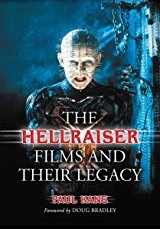 Kaye: You are an expert on the Hellraiser films, by Clive Barker, and their themes, and in fact you wrote a book on them, The Hellraiser Films and Their Legacy. Can you tell me something about Pinhead that the average fan may not know?
Paul: I’m not sure there’s much left that fans don’t know. Clive told me once on the phone that Pinhead came to him in a dream, I’m not sure how widely known that is. I mean, there were lots of different factors that went into the making of that character… Pinhead in the original novella The Hellbound Heart is described as being quite effeminate, which was something we brought back when I adapted it into an audio drama for Bafflegab (https://shop.bafflegab.co.uk/album/the-hellbound-heart). Then when the film was made you had people like effects genius Bob Keen coming up with a certain look, and Doug Bradley’s performance. But, yes, he came to Clive to begin with in a dream. It’s like Clive’s been telling me for years, “Write your dreams, Paul. Write your dreams.”
Kaye: Which of your books would you most like to see become a film? Why?
 Paul: Well, one of my stories – a novelette called ‘Men of the Cloth’ – has actually just been turned into a movie called The Colour of Madness by Loose Canon/Hydra Films, directed by Andy Collier and Toor Mian, and starring Barbara Crampton from Re-Animator – so all that’s rather exciting! It’s a Lovecraftian, folk horror deal and should appeal hugely to horror fans.

My Hooded Man post-apocalyptic novels for Rebellion/Abaddon were almost filmed a couple of times, and I would still love to see those made because they’re quite close to my heart – I only live about twenty minutes away from Sherwood Forest, and was taken there every bank holiday when I was a kid. I also think Before would make a cracking TV show along the lines of American Gods, because its scope is so massive. It’s part road movie adventure, part historical drama, part horror, all about past lives. People often tell me they’d like to see my Hellraiser novel Sherlock Holmes and the Servants of Hell turned into a movie, but the rights for that would be a nightmare. Plus the budget would be astronomical!
Kaye: You’re a pretty prolific writer. In the first half of 2019, you published The Controllers, The Dead, Exit Wounds and White Shadows, as well as a Robin of Sherwood novel, The Red Lord. Can you tell me about these latest releases?
 Paul: Absolutely! The Controllers was published by Luna Press, and gathers together all of my stories featuring those characters from the whole of my career, and includes a couple of new ones – not to mention scans of handwritten tales, a gallery where artists offer their interpretations of The Controllers and an introduction by Richard Christian Matheson.
 The Dead is my third mini-collection for the Black Shuck Shadows series, and gathers together three interlinking zombie stories, the first of which was adapted for TV back in 2008 as New Year’s Day by Lionsgate and shown on primetime US TV as an episode of the show Fear Itself.
 Exit Wounds is a mass market crime anthology from Titan edited by myself and Marie and features the cream of the crop: names such as Dean Koontz, Val McDermid, Dennis Lehane, Mark Billingham, John Connolly, Alex Gray… the list goes on. It was recently given a starred review in Publishers Weekly and even favourably reviewed in The Times, so we were incredibly happy about that.
 White Shadows is a collection of my dark YA fiction as PB Kane, including the short novel The Rainbow Man and the prequel to that, ‘The Rainbow Coat’. Published by Things in the Well, this was designed to be read by the young and the young at heart alike. The Red Lord is a prose adaptation of my own audio drama for Spiteful Puppet/ITV, which allowed me to expand on a few ideas I had to leave out of the original. I’ve been a fan of the RoS series since it aired, and indeed it inspired so much of my own Hooded Man saga, so it’s a bit of a dream come true this one. That sold out of its print run incredibly quickly, but is still available as an ebook.
Kaye: You also released Arcana through Wordfire Press this year. It has an interesting alternative world where magic is real, but forbidden. Can you talk a little about that book?
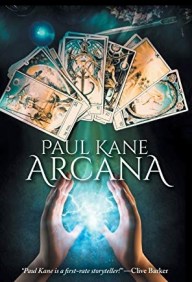 Paul: I loved writing Arcana, which one reviewer quite aptly described as ‘Harry Potter vs The Sweeney’. It’s set in an alternate universe where the witch hunts of old never died out and real magic exists. The people who practise this are hunted and imprisoned, tortured, then, more often than not, horribly executed. The division of the police that do this are called Magick Enforcement Officers, or M-Forcers, and we follow one young recruit Callum McGuire as he begins to realise something is terribly wrong with this regime; that the people who are being hunted aren’t what the government say they are. It’s all tied in with a prophecy one magic group – Arcana – have about a hero who will save them all. I was delighted with the way this one was received, and the audio of it has actually just been released on Audible so go and check that out.
Kaye: Describe yourself in three words.
Paul: Hard-working. Loyal. Curious.
Kaye: What’s next for Paul Kane? What do your readers have to look forward to in the future?
Paul: As I say, I’ve signed with HQ/Harper who are bringing out three thrillers under the PL Kane name, starting in January 2020. I’ve just finished the first draft of the second one which will be out a bit later that same year. Marie and I are running StokerCon UK as mentioned, so that’s taking up a lot of time as well at the moment.
There are a few collections coming out in the near future: a Body Horror one from Black Shuck called Traumas; a collection of my ‘Order of the Shadows’ tales called Darkness and Shadows from Shadowridge, introduced by MR ‘The Girl With All The Gifts’ Carey; and a more general one that gathers together my fiction from the last few years called Tempting Fate. Then there’s The Storm from PS, introduced by Rio Youers – a proper ‘creature feature’ of a novel – and I’ve just signed on the dotted line for a post-apocalyptic novella from Silver Shamrock Press.
The Colour of Madness should also be out next year, plus The Torturer – a short horror film I wrote, directed by Joe Manco, starring Paul T. Taylor who was Pinhead in Hellraiser Judgment and Lawrence Varnado from Sin City 2 – and a supernatural drama called Presence, directed by Dave Morgan of DLM Media. Then there’s more comics work, hopefully a theatre production… Plenty to keep me busy and hopefully readers and audiences entertained.
I want to thank Paul for sharing with us today. It has been a pleasure to get a glimpse into Kane and his books on his Shadow Writer website, or visit his Amazon Author page.
As I mentioned at the start of this post, this was a bonus “Chatting with the Pros”, because we have a second author guest who I will interview in the regular “Chatting with the Pros” spot on the third Monday, October 21st. My second CwtP author guest will be bestselling horror and dark fiction author Jeffrey J. Mariotte. You will also find a double review featuring Paul Kane’s Arcana and Jeffrey. J. Mariotte’s Cold Black Hearts. I do hope you all will join me as we explore the darkness together.
Like this post? Let me know in the comments. You can be sure not to miss any of Writing to be Read’s great content by subscribe to e-mail or following on WordPress.
Share this:

“Chatting with the Pros”: Interview with bestselling Christian fiction author Angela Hunt
Posted: September 16, 2019 Filed under: Author Profile, Books, Chatting with the Pros, Christian fiction, Fiction, Interview, Writing | Tags: Angela Hunt, Author Interview, Chatting with the Pros, Christian fiction, Writing to be Read 5 Comments
My “Chatting with the Pros” author guest today is both versatile and prolific in her writing endeavors, writing in contemporary and historical fiction sub-genres, as well as young adult and children’s fiction and non-fiction. Though fiction, her historical novels tell the tales that could have been, revealing the women from the shadows of history. But no matter the sub-genre they all have the elements of Christian fiction. She is the bestselling author of over 180 books and winner of the 2000 Christy Award for futuristic fiction. Please help me welcome Christian fiction author Angela Hunt.

 Kaye:
Kaye:  Kaye:
Kaye: 

 Kaye:
Kaye: Share this:

Interview with Christian Romance author Caryl McAdoo
Posted: September 9, 2019 Filed under: Books, Christian fiction, Fiction, Interview, romance, Western, Writing | Tags: Author Interview, Author Profile, Christian fiction, Texas Tears, Thanksgiving Books and Blessings, western romance, Writing to be Read 6 Comments
As we seek out Christian fiction, I’m reviewing two books from the recently released Thanksgiving Books & Blessings collection – a gathering of Christian western romance, authored by six Christian fiction authors. I have the privilege of reviewing two books from this collection; book two: Mail-Order Misfire, by Davalynn Spencer, last Friday, and book three: Texas Tears, by Caryl McAdoo. In addition to reviewing these Christian western romances, I’m pleased to be interviewing both authors. Last Monday, Davalynn was my guest, and today I have the pleasure today of chatting with the author of Texas Tears and founder of the Thanksgiving Books & Blessings collections, Caryl McAdoo. Please give her a big welcome.

Caryl: Hey, Kaye! It’s great being here with you, and I want to thank you again for this opportunity. I love meeting new bloggers who enjoy reading!
Kaye: It’s great to have you here. To start, can you share a little about your author’s journey? How did you come to be a Christian fiction author?
Caryl: My husband Ron and I wrote a three hundred eighty-five page novel by HAND back in the late 1980s. We paid to have it transcribed and sent it to New York! Again and again and again . . . rejections were aplenty! So in 1993, the Lord led us to a writers’ workshop where we were mentored and learned the craft of writing creative fiction.
 That took six years before the first book was published in 1999. For the next nine years, we contracted an average book a year, all with smaller publishers. Then we met a New York agent at an East Texas Writers’ Conference. She said to write her a “Christian historical romance” set in the 1800s and she’d sell it. We did, and she did! To Simon and Schuster’s Howard Books Imprint! We thought we had arrived. That was our tenth title to be published, VOW UNBROKEN, and also where my dearly beloved’s name was removed from the front cover. First the agent then the editor at S&S said one author’s name was best, and female’s preferred for the genre.
So though we were Christians most our lives and our first ten titles were “clean” for the most part. It was our agent who caused us to write our first ‘Christian’ book. And we still write them all together—that’s why I have such strong heroes. We love discussing the story’s plot and about the characters. I adopted the tagline “Praying my story gives God glory!” and that’s exactly what I do! It’s a joy writing clean novels with no cursing and no on-scene intimacies!
Plus, I love the “community of Christian authors and readers. It is such a blessing and honor to serve God’s Kingdom on earth by writing.
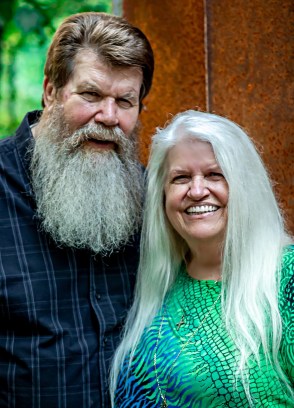
Kaye: When did you know that you wanted to become an author?
Caryl: Well now, that goes WAY back to 1962 when I was in the 7th grade and wrote a homework essay on what I’d be doing in the year 2000. I was twelve then and would be fifty in 2000. I wrote about being an “intergallactically” famous author rocketing from planet to planet autographing books! But what can I say? The space program let me down!
Kaye: What do you like to do when you’re not writing?
(image of HEARTS book cover)(image TEARS book cover)
 Caryl: Most of the time, I’m marketing! After Simon and Schuster, I learned about “Indie publishing” or putting my own stories out, so that same year in the fall of 2014, I became a hybrid author—published traditionally and independently with HEARTS STOLEN. I LOVE releasing my own books!Simon and Schuster took almost two years to get VOW UNBROKEN to market. Since I went Indie, I’ve released THIRTY-SIX titles! That’s in five years!
I guess after marketing, I mostly play games! Ron and I play a game called Quirkle almost every day at breakfast, lunch, and dinner.We’re very competitive and keep all the scores and stats and know who won the most games for the month and had the most points accumulated.We also play bridge Thursday nights and once a month on Tuesday at our bridge clubs, and there’s a couple who comes to our house every Friday night to play,too. We take turns fixin’ dinner. One night a week is planned or dinner and games at my son’s, usually Farkle.
Kaye: What is the biggest challenge of writing Christian fiction?
Caryl: Hmm . . . I guess I’d have to say getting the stories out there to the readers. To me, there’s no challenge in the actual writing. In the beginning there was — understanding point of view! POV was not easy to grasp, but once you’ve got it, you’ve got it! An author’s good understanding of POV is why readers feel like they are right there IN the story WITH the characters; why they love the characters so much.There was a LOT of other stuff to learn, but it was easy to get. After writing as many books as I have now, the writing isn’t really a challenge. I’d say it’s fun and rewarding, exhilarating!
Kaye: What is the biggest joy of writing Christian fiction?
Caryl: Working with so many awesome people! Readers and authors and promotion folks, the whole nine yards! I get to write awesome stories that help people learn to forgive, stop worrying, not be fearful, watch the words they say . . . doing all these things cause one’s life to be more peaceful. If they get the principles down,they will find they have more joy, too. What a blessing to affect lives in such a positive way!
Kaye: You write in several sub-genres of Christian fiction: both historical and contemporary romance, Biblical fiction, and mid-grade/young adults. Which is your favorite to write in? Why?
Caryl: Without a doubt, my favorite is the historical romance genre. I love the stories of falling in love and the gentler times of bygone days. Folks worked hard, and families stuck together back then. Women were more modest, and children had plenty of time to be kids. Most of the time, Father went to work and earned the income that housed and fed the family while Mother stayed home to keep the house, cook, and care everyone. Children helped out, too. They felt no entitlement and didn’t resent their chores. It was what was expected. They didn’t have air conditioning back then or so many of our modern-day conveniences, but they had each other and shared so much that the younger generations today have no concept of. Those adventurous souls who left hearth and home to settle the new lands in the West were a rare breed indeed.
 Kaye: Texas Tears is your most recent novel, featured in the Thanksgiving Books & Blessings Collection. What can you tell me about that story?
Caryl: It’s a continuation of my Cross Timbers Romance Family Saga, book three, and there’s a big Thanksgiving dinner surprise at the end. Set in 1845, the Texas Congress is deciding whether to join the Union or remain a Republic, thus the“Texas tears.” Plus there’s this one handsome Prince Charming kind of fellow and two best friends both think they love him . . . more tears. It’s a romance and there’s a happily ever after for at least one of the young women.
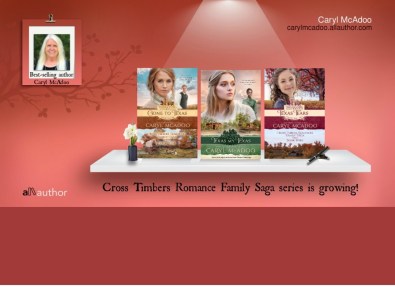
Kaye: What is the Thanksgiving Books & Blessings Collection and how did you get involved in the project?
Caryl: Back in 2013, I planned a multi-author Facebook party I called the Thanksgiving Books & Blessings Bash, inviting some of my author friends to participate. That’s my favorite holiday of the year. I did that every November following until last year in 2018.
Since it was the event’s fifth anniversary, I wanted it to be special, so I came up with the collection idea and asked the authors that year to write a Thanksgiving story. I had nine that first year, and so this will be the second year for the collection. I’m so excited about having Mary Connealy, Samantha Bayarr, Allison Pittman, Davalynn Spencer, and Liz Tolsma joining me this year! It’s going to be so special! We’re all writing stand-alone novels or novellas with Thanksgiving playing a big part in the story. Readers loved the idea last year, and this year is already surpassing all my expectations. I suspect it will grow every year as I plan on keeping it going!

Kaye:What do you think is the most important element that makes a Christian story?
Caryl: To my way of thinking, all Christian stories will be free from on-scene intimacies and cursing. But what makes it ‘Christian’ is at least one character, maybe several, who live their lives seeking God, His Word and wisdom. I try to include themes such as dealing with fear or worry, the value of forgiveness, responding in love when hurt or disappointed instead of anger or bitterness.
This all makes for some great conflict. In TEXAS TEARS, one of the young heroines has a wonderful character arc, from being self-centered and prideful to caring for others as much as herself. So without being preachy, Godly principles are lived out through my folks.
Kaye: In addition to being an author, you also teach creative fiction. Tell me a little about that. How did you get into it? Why do you find it fulfilling?
 Caryl: Well, that aspect of my daily activities came from receiving so much help and mentoring as a new writer. I want to give back, help others on their writing journey to be successful by sharing what I’ve been so privileged to learn. We all pretty much make the same mistakes when we first start.
I determined that from editing professionally for eleven years. I put out a great help a few years back in STORY & STYLE, The Craft of Writing Creative Fiction, told in an easy to understand conversational format with tons of examples. It helped me to not repeat the same things over and over.
Writing creative fiction is different from every other kind, and it can be learned. The same tools—Point of View (POV), scene and sequel, active versus passive, where to open a story to hook your reader, and a satisfying third act, bring the story to an end readers will love and remember.
But the writer must be a storyteller first, and that, I believe, is a gift. And every writer must be willing to rewrite. One of my favorite sayings is ‘Only God writes in stone, the rest of us rewrite!” I googled that one day to quote its originator, and dear Google gave me the credit. I think it might actually have been my husband.

Kaye: How many different series do you have published? Tell me a little about them.
Caryl: I have the two historical romance family saga series, Texas Romance and the Cross Timbers Romance, plus the historical collections I’m in: Lockets and Lace, Prairie Roses (covered wagon stories), Gold Diggers, and Thanksgiving Books & Blessings we’ve already discussed.
As a reader I always loved family sagas and I find I enjoy writing those just as much. I come to love the folks in them. It’s so hard to leave them behind. When my patriarch of Texas Romances passed in book eight, COVERING LOVE, I wept through the writing and the reading at my writers’ workshop!
That series has ten titles, but then there are six extras (so far) I call “Companion Books” with more tales of either ancestors or descendants. And I’ve started the new Cross Timbers that TEXAS TEARS is book three. I have a Red River Romance series of contemporary stories.
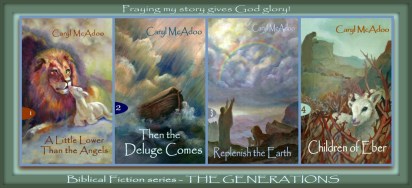
The Generations is my Biblical fiction series that so far covers from Adam to Abraham in the generations of God’s book. I love reading Biblical fiction that bring those old familiar characters to life, but am adamant that the fictional story does not deviate from the Bible’s. I mean how dare anyone think they can improve on God’s stories!
Kaye: You are pretty prolific in your writing. How many books have you released in 2019?

Caryl: Seven, and it was almost overwhelming! I believe all of them were over fifty-thousand words, but four of them are full length novels (around ninety to a hundred twenty-five thousand words). If it was just the actual writing, no problem, but being an Indie, I deal with editors and proofreaders — making their corrections and considering their suggestions, getting graphic artists to get the covers done, the formatting of the book’s interior, uploading to publish at Amazon, then the marketing with ‘Cover Reveal’ and ‘Launch’ events, and always on-going promotion.
Kaye: How big a part does networking play in the success of Christian writers?
Caryl: Huge. Christian authors for the most part all help one another. It’s beautiful how there’s so little jealousy and infighting in the community. The large majority want to see the others succeed as much as we want to be successful ourselves, so it just makes everything run so smoothly. And in God’s economy, everyone involved in any project or endeavor walks away blessed.
Kaye: What is your greatest writing accomplishment to date?

Caryl: There is one novel, my first ‘Companion Book’ that went back to the ancestors of the family first met in book nine MIGHTY TO SAVE, the Harrises, who I love. Its title is THE BED WARMER’S SON. One reader says it is her favorite all-time book of all the ones she’s read. Many called it the best of the best or my Magnum opus or my piece de resistance. I love the story, too, and have been thrilled at its reception!
Kaye: What’s next for Caryl McAdoo? What can your readers look forward to seeing from you in the future?
Caryl: Well, I’m planning five new titles in 2020. One for each of my collections — Prairie Roses, Gold Diggers, and Thanksgiving Books & Blessings, a special year as the authors will all set their stories in the Civil War era—and the Sweet Americana Sweethearts’ collection lockets and Lace, plus an extra story LEAVIN’ TEXAS for the Cross Timbers Romance Family Saga series. That one is coming in January. I’ve just passed the sixty thousand word mark writing that one.

Caryl: Thank you so much again, Kaye for inviting me to share with your readers! I so appreciate the opportunity and would like to offer a GIVEAWAY for them! For one of those commenting, I’ll send a print copy of either family saga’s book one—VOW UNBROKEN or GONE TO TEXAS, winner’s choice—AND—an eBook of the same to a second winner, so readers in other countries can win, too! (Print books to U.S. only please)
Please answer this question to enter: How many books do you prefer in a series like mine and how many is too many? (if there is such a thing)
Thank you so much Caryl for joining me here and sharing with my readers. This has truly been a fun interview. I hope everyone will be sure to take part in the giveaway by responding to her question. You can learn more about Caryl McAdoo and her many books on her website or on her Amazon Author page. And don’t forget to pick up your copy of Texas Tears today, too.
Like this post? Let me know in the comments. You can be sure not to miss any of Writing to be Read’s great content by subscribe to e-mail or following on WordPress.
Share this:

Interview with Christian Romance author Davalynn Spencer
Posted: September 2, 2019 Filed under: Author Profile, Books, Christian fiction, Fiction, Historical Fiction, Interview, romance, Western | Tags: Author Interview, Christian fiction, Davalynn Spencer, Mail Order Misfire, romance, Thanksgiving Books and Blessings, Western, western romance, Writing to be Read 5 Comments
September’s theme on Writing to be Read is Christian fiction. To start things off today, it’s my pleasure to interview western Christian romance author Davalynn Spencer. Her writing career came as a journalist covering the rodeo circuit, after marrying a man who made a living as a rodeo bullfighter and following the rodeo circuit became a way of life for her. Her son has followed in his father’s foot steps, so she has two guys out in the arena facing off with the bulls, and she has become an award winning author with seventeen published books. She is also one of the authors with a book in the newly released Thanksgiving Books and Blessings collection. Be sure to catch my review of her contribution, Mail Order Misfire on Friday. But for now, let’s welcome her and find out what the writing world is like from her unique point of view.
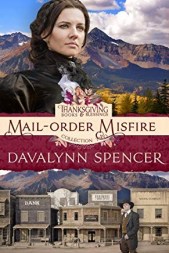 Kaye: Your book Mail-Order Misfire is a part of the Thanksgiving Books & Blessings collection. What can you tell me about that book?
Davalynn’s son in the arena
Blog: https://davalynnspencer.com/subscribe/
Website: https://www.davalynnspencer.com
Facebook: https://www.facebook.com/AuthorDavalynnSpencer
BookBub https://www.bookbub.com/profile/davalynn-spencer
Twitter: https://twitter.com/davalynnspencer
Goodreads: https://www.goodreads.com/author/show/5051432.Davalynn_Spencer
Pinterest: https://pinterest.com/davalynnspencer/boards/
Amazon Author: https://amazon.com/author/davalynnspencer
CAN: http://christianauthorsnetwork.com/davalynn-spencer/
Instagram: https://www.instagram.com/davalynnspencer/
Like this post? Let me know in the comments. You can be sure not to miss any of Writing to be Read’s great content by subscribe to e-mail or following on WordPress.
Share this:

Chatting with the Pros: Interview with bestselling mystery author Gilly Macmillon
Posted: August 19, 2019 Filed under: Author Profile, Books, Chatting with the Pros, Fiction, Interview, Mystery, Suspense, Writing | Tags: Author Interview, Chatting with the Pros, Gilly Macmillan, mystery, Suspense, Writing to be Read 2 Comments
My “Chatting with the Pros” author guest this month is a New York Times bestselling mystery author with books translated in over twenty languages. Her success as a writer may have come as a surprise, but I’ll let her tell you about that. She currently has five published mystery/suspense novels, and is working on the sixth, I believe. Let’s see what she has to say on the writing of mysteries. Please help me welcome UK author Gilly Macmillan.

© Céline Nieszawer/Leextra
Kaye: Can you tell me about your author’s journey? How did you get to where you are today?
Gilly: I started to write when I was over 40 and I challenged myself to do 1000 words a day until I had finished an entire book. I faithfully recorded my word count each day until it was done. I polished the first three chapters and send them to a few agents. Two rejections followed swiftly, one agent didn’t reply but the fourth one I sent it to was interested enough to offer me representation. She and I worked on the book together for a year before she submitted it to publishers, and we were lucky enough to sell it very rapidly and in over 20 territories! The rest has followed from there. I write a book a year and try to keep things fresh, compelling and thrilling for myself and my readers.
Kaye: When did you know that you wanted to be an author?
Gilly: For many years I didn’t have a burning desire to write, I think because I was busy doing other things and life got in the way, but once my youngest son started school full time I wanted to see if I could challenge myself to write a novel. The idea sort of came out of the blue but perhaps it wasn’t that surprising because at that point I had been an obsessive reader for 35 years. I had a small window of opportunity before having to get a proper job, so I took it.
Kaye: Why do you write mystery? Why not romance, or western, or horror?
Gilly: I read very widely, but mystery books have always been a favorite, so I write what I would like to read.
Kaye: What element do you think is the most important in a mystery story? Why?
Gilly: That it creates an impulse in the reader to turn pages. This can come from great characters, a thrilling set up, tons of action or an intriguing plot, but it must be there.
Kaye: What is one thing your readers would never guess about you?
Gilly: I have no idea! I’m a fairly straightforward person so there’s probably not much they couldn’t guess.
Kaye: (So, there’s no mystery to the mystery author? Hmmm.) What is the biggest challenge in writing mystery for you? Why?
Gilly: Plot. I don’t plan ahead when I write and creating a well-paced, complex and intriguing plot is always my biggest challenge, especially as I like to keep things within the realms of believability.
Kaye: What is the most fun part of writing mystery? Why?
Gilly: I love creating new characters and devising a challenging scenario for them. It intrigues me to explore how ‘regular’ people might behave if placed in extreme situations and pushed to their limits.
Kaye: Your most recent release is The Nanny. What can you tell me about it?
 Gilly: When her beloved nanny, Hannah, left without a trace in the summer of 1988, seven-year-old Jocelyn Holt was devastated. Haunted by the loss, Jo grew up bitter and distant, and eventually left her parents and Lake Hall, their faded aristocratic home, behind.
Thirty years later, Jo returns to the house and is forced to confront her troubled relationship with her mother. But when human remains are accidentally uncovered in a lake on the estate, Jo begins to question everything she thought she knew.
Then an unexpected visitor knocks on the door and Jo’s world is destroyed again. Desperate to piece together the gaping holes in her memory, Jo must uncover who her nanny really was, why she left, and if she can trust her own mother…
Kaye: What is your biggest accomplishment to date in your writing career?
Gilly: Making bestsellers lists! It’s a dream come true!!
Kaye: Of all of your books, which one is your favorite? Why?
 Gilly: I love them all for different reasons, but I think my favorite is my debut, What She Knew, because that was the book that launched my career and I put a lot of heart into it.
Kaye: How do you keep tension and suspense in your stories, so that readers will keep the pages turning?
Gilly: I work hard to come up with characters that I hope will be relatable and intriguing and then place them in a compelling situation, which subsequently evolves in a threatening, challenging or terrifying way. At the end of every day of work, I ask myself: will this turn pages? If the answer is ‘no’, I start over and do it again until I’m happy that both tension and suspense are maximised.
Kaye: Is there a common theme running through your books?
Gilly: I like to take a person or people who are in a relatable situation and make something very dramatic or difficult happen to them. A mother with a missing child, for example, or a teenager who has made a fatal mistake in her past which threatens to derail the new life her mother has carefully reconstructed for her, or perhaps a little girl whose nanny disappeared overnight without trace or explanation and reappears thirty years later in very mysterious circumstances. I love to explore dynamics within families, especially the parent child bond.
Kaye: What are you working on now? What is next for Gilly Macmillan?
Gilly: I’m working on a novel that feels like a journey into psychological horror. The main character is a female crime writer. That’s about all I can say for now!
I want to thank Gilly for sharing her craft today. I think it is fascinating that she can plot as she writes. When I try and do that, I find myself exploring avenues that lead to dead ends and have to backtrack a lot. You can learn more about Gilly Macmillan and her books on her website and Amazon Author page.
You can catch the monthly segment “Chatting with the Pros” on the third Monday of every month in 2019, or you can be sure not to any of the great content on Writing to be Read by signing up by email or following on WordPress.




















