Once Upon an Ever After available for Digital Pre-Order Now
Posted: June 24, 2022 Filed under: Anthology, Books, Dark Fantasy, Fairy Tales, Fantasy, Fiction, Mythology and Legend, Stories, WordCrafter Press | Tags: Anthology, Fairy Tales, Fairytales, Once Upon an Ever After, Short Fiction, Short Stories, WordCrafter Press 8 Comments
I am pleased to announce that the first WordCrafter fantasy anthology, Once Upon an Ever After: Modern Fairy Tales & Folklore is scheduled for release on August 23, and is now available for digital pre-order through this Books2Read UBL: https://books2read.com/u/mKdWGV
Once Upon an Ever After: Modern Fairy Tales & Folklore
This unique and imaginative collection of eleven thought provoking fantasy stories will delight readers who enjoy stories of wishes gone awry.
What happens when…
A woman desires to carry on her family’s legacy, uncovering a long-buried curse?
A not so perfect witch casts a spell to defy age and preserve her relationship with her handsome shapeshifting familiar?
A time traveler longs to be the savior of knowledge lost?
An incompetent delivery boy becomes an unlikely savior of forgotten artifacts?
A magic mirror yearns for a different question?
A tiny story witch desires to share her stories with the world?
Spells are cast, unlikely alliances made, and wishes granted, sometimes with surprising outcomes. You’ll love this anthology of modern myths, lore, and fairy tales. Once you read these twisted tales, you’ll be sure to be careful what you wish for….
If you liked Gilded Glass, you’ll enjoy Once Upon an Ever After: Modern Myths & Fairy Tales, short stories with thought provoking themes, captivating characters and diverse cultures, from humorous to horrifying, from the legendary past to possible futures and back to the here and now.
Reserve your copy today! : https://books2read.com/u/mKdWGV
Share this:

Ask the Authors 2022 Book & Blog Series: Tone – Voice, Person, Tense & POV
Posted: June 11, 2022 Filed under: Anthology, Ask the Authors, Book Release, Books, Fiction, Interview, Point of View, Tense, Tone, Voice, WordCrafter Press, Writing, Writing Reference, Writing Tips | Tags: Anthology, Ask the Authors 2022, Bobby Nash, Chris Barili, Jeff Bowles, Kaye Lynne Booth, Kevin Killiany, L. Jagi LAmplighter, Mario Acevedo, Mark Leslie Lebefvre, Nancy Oswald, Paul Kane, Roberta Eaton Cheadle, WordCrafter Press, writing advice, Writing Reference, Writing Tips 6 Comments
Welcome back to the “Ask the Authors 2022” blog series, where we celebrate the release of this unique writing reference anthology and share some of the wonderful content featured. In each segment of this Saturday series, you’ll meet one of the contributing authors, and share in a section of the Q & A from the book. This week’s contributing author is Nancy Oswald, who shares a delightful accounting of her own publishing journey in the book, “From Slush Pile to Slushy”, and the Q & A topic is setting the tone for your story.
If you missed any of the previous segments, you can catch them here:
Segment 1: Introductions for Kaye Lynne Booth & Kevin Killiany/Writing Life Q & A session
Segment 2: Introduction for Bobby Nash/Pre-writing Rituals Q & A session
Segment 3: Introduction for Roberta Eaton Cheadle/Plot & Storyline Q & A session
Segment 4: Introduction for Paul Kane/Character Development Q & A session.
Segment 5: Mario Acevedo & Action, Pacing, and Dialog
And for today’s post:
Meet Nancy Oswald

Nancy Oswald loves researching and writing historical fiction books for young readers. She has, however, written in a variety of genres including personal interest pieces, children’s plays, poetry, educational research, biography, and nonfiction articles. Oswald spent her growing up years in Denver but has lived as an adult in rural Colorado and the outback of British Columbia where she taught in a one and a two-room school. She taught for 20 years in rural Colorado and is now retired. Nancy’s books have won the Spur Award, CIPA Evvy Award, Willa Literary Award, Will Rogers Award, Colorado Author’s League Writing Award, and have had multiple finalist recognitions. Nancy currently lives with her husband and their dogs, cats, cows, chickens, and one nearly human donkey who makes mischief at home and on the pages of the Ruby and Maude Adventures.
And now for the Q & A
Tone: Voice, Person, Tense & POV
Which POV do you prefer: First, second, third limited or third omniscient? Why?
Mario Acevedo: Most of my stories are first POV because I tend to write using the structure of a mystery, meaning the protagonist has to sleuth out the truth at the same pace as the reader.
Paul Kane: I tend to write a lot of my fiction in the third person, simply because you can move between places or characters and tell a more well-rounded story that way. You might be with one character in one chapter, then across town with a completely different character in the next. It allows for a certain amount of flexibility. But I also do like first person POV for certain stories. It works well for psychological tales, for example, or if you’re telling a story through letters or diary extracts. I’ve just written a story that way, actually, but it was because I wanted it to be solely through the eyes of my main character who’s being help captive. It creates a more claustrophobic feel. I also write about my PI Jackie Trent – from the novelette The Scarred – in the first person, because it fits in with that tradition of the noir-ish detective investigating a crime. As with a lot of this advice, which way you choose depends on the kind of story you’re telling and what you want to gain from it.
Chris Barili: I enjoy both first- and third-person. First person is more intimate and allows the reader access to more of the character’s inner self, but third person is safer, easier to write, and more accepted. My story “Outcast” has both.
Bobby Nash: Third omniscient. I like to bounce between characters and scenes, have different POVs in different chapters. It works for me.
Robbie Cheadle: My two current work-in-progress novels are written in a mixture of the third limited and first, depending on the style of the chapter. Both novels make use of journals, letters, and other methods of correspondence and these parts lend themselves to first. The rest of the story is told in third limited because it is my preferred point of view. It’s similar to first, but more interesting.
Jeff Bowles: When I was first learning to write and tell stories, I’d often experiment and try all sorts of things, including creative POV choices. Sometimes they worked, sometimes not. Now that I’ve been doing this a while, I tend to stick with a pretty standard third-person past perspective, mostly because all that trickery can be an impediment for readers. The project I’m working on currently has three first-person narrators, so I guess I’m still playing around with form here and there. If it serves the story, I’ll do it. To be perfectly truthful, however, my favorite POV type will always be first person. I like the idea that a character can narrate a story in their own voice, with all those idiosyncrasies I love to toss in. I like it when characters speak to me. It may be the single most enjoyable thing about writing fiction.
Nancy Oswald: Have used both first and third- and first-person present tense for one of my books. Third is my preference for the age group I write for. As a reader I prefer third, also. I think “I” books can sometimes have a tendency to go overboard and sound too much like me, me, me….
Kevin Killiany: First is often my first choice, but I’m equally comfortable with close or limited third. First is good for getting inside the person’s head to explore motivation and perception. First is almost always an unreliable narrator, and their misinterpretations, omissions, and projections can reveal volumes. Limited third can be almost as revealing as first—sometimes more so because it provides opportunity to reveal a character as others see them. Omniscient is too far removed for my liking—it’s a landscape when a portrait would better serve. I have never been comfortable writing in the second person, the only practical application I can imagine for it would be a “choose your own adventure” puzzle story that presents the reader with choices.
Have you ever done a rewrite of a story using a different POV? Did it improve your story? Why or why not?
Paul Kane: Once or twice, but usually I’ve worked all that out before I even start writing as mentioned in the previous answer. What I have done quite a few times is write something in the past tense which needs to be in the present, to give it more immediacy. The killings in The Gemini Factor – which are being seen by Jack as they happen – had to be told in the present tense for instance. He’s being ‘shown’ the murders, so it made sense for them to be depicted that way, slipping from past to present tense to give that effect.
Chris Barili: Yes, and fortunately my very good editor caught all the areas I screwed it up.
Bobby Nash: Sometimes I will go back and try a different POV. Sometimes, a different POV helps.
Nancy Oswald: Yes, I started one book in third and it wasn’t working. As soon as I switched to first person, it clicked. (First example above is the one where I switched.) This is all it took for the book to become more immediate for me.
How do you determine what POV to use?
Paul Kane: Whether it’s first person or third, it’s usually the person who’s central to that story or chapter whose POV we’re in. So, you work out who that is before starting… No point telling a chapter from the point of view of a waiter in a restaurant who might be leaving the scene before everything kicks off, or you’ll miss the action.
Chris Barili: I take an initial stab at a certain POV based on how close I think the reader should be to the main character and change it if it doesn’t sound right.
Bobby Nash: As with so much of what I do, it’s a gut feeling.
Robbie Cheadle: A Ghost and His Gold was written from the point of view of three of the main characters: Michelle, a modern young woman; Pieter, the spirit of a Boer; and Robert, the spirit of a British soldier. Each of these three characters told sections of the story from their points of view. Each section was presented as a chapter or series of chapters. I have learned not to ‘head hop’ and to keep different points of view together in this manner.
Do you prefer to use single or multiple POVs in a story? Why?
Paul Kane: Again, it depends on what you want to show. In The Family Lie, the most recent PL Kane thriller, I was only really going to tell the story through the eyes of Mitch Prescott, but my editor suggested I tell a parallel tale of what was happening to his sister, Bella, at the same time. Then you could dovetail the two together for the finale… And she was absolutely right. Not only did it stop the story from getting dull, it allowed me to write from a male and female POV, alternating between them as I went. I found the whole thing really satisfying and from the feedback I’ve got readers really enjoyed reading about what Bella was going through; a few even preferred her to Mitch, so I might make her the focus of a story of her own at some point down the line.
Chris Barili: Depends on the story. More complex books with more complicated plots and large worlds usually require multiple POV characters.
Bobby Nash: Multiple all the way. I want to follow more than one character. Multiple POVs allow me to do that and get insight into more than one character.
Robbie Cheadle: I prefer to use more than one point of view as I think it makes the story more varied and interesting. I like each main character to have their own chapters which progress parts of the story.
Nancy Oswald: For my age group, always single. As an adult reader, it has to be done well, or you risk losing the reader with too much switching or poor transitions.
Kevin Killiany: It depends on the needs of the story. Certainly if there are major subplots each would require its own POV.
When employing multiple POVs does each character get equal page time?
Paul Kane: Bella and Mitch more or less did in The Family Lie, though perhaps Mitch got slightly more as he was closer to the mystery than she was. But again, it depends. You might want to just drop in on a character to shake things up, if you’ve been with another one for a while and things are getting stale. Every now and again in Her Last Secret I’d have a chapter from the wife Julie’s perspective, or the policeman Mathew Newcomb, although for the majority of that novel we’re in the head of Jake: the bereaved father. It was just to make sure things weren’t getting too same-y, but also give us a taster of what some of the other characters were going through during the course of the tale.
Chris Barili: Nope. Only as much as they need to tell their story.
Bobby Nash: I play it by ear. I mean, obviously, the main character is the main character so that character can’t be sidelined too long. I just play it by ear to best serve the story.
Robbie Cheadle: The different characters don’t necessarily get the same page time. It depends on how the story goes, how long each character lives, and whether that character becomes a ghost.
Kevin Killiany: No. Each character gets the time and space they need to tell their story—so far that has never resulted in every story being the same size.
Do you switch POVs within a chapter or do you wait for the chapter break? How do you indicate to readers that a POV switch has occurred?
Paul Kane: I tend to do it chapter by chapter, unless I’m trying to make a point. In Her Husband’s Grave I have a chapter that’s mainly told from psychologist Robyn Adams’ perspective where she’s interviewing someone and isn’t quite sure whether they’re good or bad. Then, right at the very end, we switch to that person’s POV and are left with absolutely no doubt about their intentions. I did this on purpose to give the reader a bit more information than Robyn has, which creates suspense and tension. But, mostly, I do it chapter by chapter because there’s no confusion that way.
Chris Barili: If I switch at a point other than a chapter break, I show that break with asterisks.
Bobby Nash: I use a chapter break.
Robbie Cheadle: Initially, I used section breaks within a chapter for different points of view. Now I use chapters for different points of view and section breaks for changes in setting or time.
Kevin Killiany: The Dirt and Stars novels are epistolary; each chapter is an entry from a different character’s personal account—they almost always see the same events differently or focus on different details. Mara has been instructed to keep a journal of her time on Earth; Beth keeps a diary; Jael is making a meticulous record of her efforts to break the Space Service color barrier; Fatima, who has a social communication disorder, records personal interactions to review with her therapist; Lije, confident he will accomplish much in business or politics, is keeping cross-referenced notes to facilitate writing his memoirs; and Thom, a denizen of Brahe Station who will be introduced in volume 4, is another diarist.
When I shift POV in a short story, I simply insert a blank line and make sure the first sentence after tells the reader exactly where we are. (Some publishers insert centered asterisks or plus signs in the blank line.
Do you prefer to write in past or present tense? Why?
Mario Acevedo: I prefer to write in the past tense since that is more familiar to the reader.
Chris Barili: Past. Present tense is difficult to maintain for longer works, and hard to read no matter what.
Bobby Nash: Past tense. Every publisher I’ve worked for has requested it so it’s just what I’ve always done.
Robbie Cheadle: I like to write in present tense, but usually write in past tense because readers favour it. Some readers won’t read books written in present tense.
Kevin Killiany: Past. That’s how we tell stories—have told them since stories were first recorded. Present tense story telling is a recent affectation that makes structural sense only in second person stories, wherein the character is speaking directly to the reader or to a second, unvoiced character.
___________________
That’s all for this week. Be sure to drop in next Saturday, when we’ll have an introduction for contributing author Chris Barili, who contributed an essay on character development, “Character Blueprint”, & a Q & A on setting & world building.

“Ask the Authors is an up-to-date and broad-based compendium of advice from today’s working writers, to help you with understanding your own writing career. Great information!”
—Kevin J. Anderson, New York Times bestselling author of Spine of the Dragon
You can delve into the wisdom of all ten contributing authors in Ask the Authors 2022. It’s the writing reference no author should be without. Get your copy at your favorite book distributor at our special send-off price, for the duration of the blog series, through the Books2Read UBL: https://books2read.com/u/3LnK8e
_____________________
Join Kaye Lynne Booth & WordCrafter Press Readers’ Group for WordCrafter Press book & event news, including the awesome releases of author Kaye Lynne Booth. Get a free digital copy of her short story collection, Last Call and Other Short Fiction, as a sampling of her works just for joining.
Share this:

Ask the Authors 2022 Book & Blog Series: Action, Pacing & Dialog
Posted: June 4, 2022 Filed under: Action Scenes, Anthology, Articles, Ask the Authors, Book Event, Book Promotion, Book Release, Books, Dialogue, Fiction, Interview, Pacing, Teaching Writing, WordCrafter Press, Writing, Writing Tips | Tags: Anthology, Ask the Authors 2022, Bobby Nash, Chris Barili, Interview, Jeff Bowles, Kaye Lynne Booth, Kevin Killiany, L. Jagi LAmplighter, Mario Acevedo, Mark Leslie, Nancy Oswald, Paul Kane, Roberta Eaton Cheadle, WordCrafter Press, Writing Reference 7 CommentsHello again, and welcome to segment 5 of the “Ask the Authors” blog series. This Saturday series features introductions to each contributing author and excerpts from the Q & As featured in the newly released Ask the Authors 2022 writing reference anthology.
If you missed any of the earlier segments, you can find them here:
Segment 1: Introductions for Kaye Lynne Booth & Kevin Killiany/Writing Life Q & A session
Segment 2: Introduction for Bobby Nash/Pre-Writing Rituals Q & A session
Segment 3: Introduction for Roberta Eaton Cheadle/Plot & Storyline Q & A session
Segment 4: Introduction for Paul Kane/Character Development Q & A session
This week’s segment features an introduction to contributing author Mario Acevedo and a Q & A on action, pacing, and dialog.
Meet Mario Acevedo

Mario Acevedo is a national bestselling author of speculative fiction and has won an International Latino Book Award and a Colorado Book Award. His work has appeared in numerous anthologies to include A Fistful of Dinosaurs, Straight Outta Deadwood, and Blood Business. For 2020, he has short fiction in the forthcoming anthologies, Psi-Wars and It Came From The Multiplex, and a Western novel, Luther, Wyoming. Mario serves on the faculty of the Regis University Mile-High MFA program and Lighthouse Writers Workshops. Mario has also been a presenter and panel member for both the 2020 Stay in Place Virtual Writing Conference, and the 2021 New Beginnings Virtual Writing Conference.
And now, on to the Q & A.
Action, Pacing & Dialog
Do you have any tips for writing action scenes/fight scenes/car chases, where blow by blow descriptions could get tedious?
Mario Acevedo: Summarize. Only share the high points and include internalizations. Also add details that are often overlooked like nausea, panic, pain, exhaustion.
Paul Kane: I grew up watching a lot of action movies and TV shows, the ’70s and ’80s were a golden age for action as far as I’m concerned. So, a lot of that went in without me having to do much. I used to recreate certain action scenes with my toys, or I might race off up the garden with mates to pretend fight. When I wrote the Hooded Man books, I had to have a lot of action in there, so I got very good at not making things boring – there are only so many ways to describe a punch, for example. But the key I found was to visualize the scenes, even play them out – just like I did when I was a kid – so that they become, again, more believable. I was delighted when one of my battle scenes for Broken Arrow was compared favourably to those in The Lord of the Rings movies, especially Helm’s Deep; that’s one of my all-time favourite battles on film, so I did a little happy dance that day. The way to tackle any fight or action scene, whether it’s huge like the ones I’m talking about here, or just one-on-one, is to break it down into its component parts. Ask yourself what you need or want to show. Then do your research, watch a lot of fight sequences, or action scenes, mix and match the moves that are being made. If your character is a master of martial arts, study it. I had a character called Tanek, for example, who was skilled in the Israeli hand-to-hand combat of Krav Maga, so I went out and researched that. Jennifer Garner actually studied that for Alias, so I watched some fight sequences from the show. They used a very particular form of combat for the Batman fight scenes in the Nolan movies called the Keysi Fighting Method, which favours forearms and elbows, so it’s worth trying to find something that’s not been done before perhaps. Or not done very much. Finally, give your fight and action scenes a sense of character, make them like a dance or a ballet. They need to have rhythm, flow, so your reader can easily picture what’s happening. Too much going on at once is a big no-no, because you’ll lose them. Same goes for very dry descriptions of a fight: now this happens, now this, then this… Try and find a way to make your descriptions interesting, maybe comparing them to something, like two animals barging into each other or what have you.
Chris Barili: Know what you’re talking about. It seems obvious, but may writers take it for granted, and end up writing nonsense that loses the reader. For example, I have studied the martial arts most of my life, and I hold a second-degree blackbelt in Karate. Thus, I know that someone trained primarily in Judo or Jiujitsu will be a grappler by preference, while a Karate stylist will be a stand-up striker who looks to avoid going to the ground.
Bobby Nash: It can be difficult to keep fight scenes fresh. I learn the choreography, walk out the fights, play around with different ways to describe the action. How is the character feeling/responding to the action? I wrote a car chase once and showed it from the POV of a passenger in the car instead of the driver. As he’s holding on for his life, we get a sense of the danger that way as opposed to only descriptions of what the car is doing.
Robbie Cheadle: I am writing my second novel involving war which includes fighting scenes. I intersperse the fighting with dialogue, humorous comments, scenes of eating, drinking, and entertainment, and the receipt of letters from family and friends.
You cannot maintain tension at high levels for too long or it becomes monotonous and over-done. In real life, people relieve tension by singing, and making jokes, and talking and I follow this practice in my writing.
Nancy Oswald: Elmore Leonard: “I try to leave out the scenes readers skip.” Ralph Fletcher: “Write small and use slo mo. The more tension you want to create, the more important the details. In general focus on one detail well rather than all the details which can wash out a scene.”
How do you handle scenes where there is a lot going on, like battlefields or fights in busy settings?
Paul Kane: As I say, break it down into smaller chunks. Show the scale of what’s happening by all means, like an establishing shot in a movie, then focus in on certain specific fights and details. These will usually be with your main characters if it’s a big battle – so I would zoom in on a fight Robert, my Robin Hood, might be having with someone. Then cut to maybe Jack, who is my Little John, and see how he’s getting on. You have to give everyone who’s a main character a turn in the sun, plus give the reader memorable moments – like Robert taking down the Apache attack helicopter with a bolas.
Chris Barili: This is a tough one. I have found that choreographing the whole thing on a sketched-out map of the physical surroundings can help, and if that’s not enough, having some friends act out the scene can help you identify errors, misjudgments, and so on.
Bobby Nash: I try to make sure all of the necessary information is relayed. If you have a lot of characters, you have to try and balance who has dialogue or stuff to do so that they don’t disappear from the scene. POV helps here too.
Robbie Cheadle: I keep my sentences fairly short during battle scenes, and I use a lot of dialogue to break up the action.
How do you keep action flowing smoothly within a scene?
Mario Acevedo: Keep the scene and story question in mind so that the action strengthens the plot.
Paul Kane: Just keep it tight, moving from one bit of action to the next. Even in a small fight, if you have a character get punched or kicked, it’s enough to say it just winds them or takes them down – you don’t have to go into lots of detail about how it feels, whether they’re recovering, what’s going through their minds as they’re fighting. Keep it rattling along at a good pace. Sounds stupid, because it’s a fight, but make it punchy.
The use of weaponry is a good way of handing readers little details that help them visualize what’s going on. Everyone knows what a knife or rifle or handgun looks like. Of course, it depends very much on what kind of fiction you’re writing. A lot of my Hooded Man stuff was military based, because of the nature of armies fighting each other, so readers who enjoy that kind of thing like you to include the names of weapons, specifics relating to what they can do. Does a certain gun jam more often than others? Which are best for close combat as opposed to distance? I once wrote a story about an assassin called Mr D, who had to tear through lots of guards to get to his target. That started off with long-range sniper rifles, and ended up with hand-to-hand fighting as he got closer to the building his mark was in.
It’s also fun to write about weaponry that’s totally out of context, for example plates and pans in a kitchen that can be used to fight with. In my novel Lunar, Nick Skinner raids old castles and museums to get swords, shields and axes to fight the monstrous Loons. Similarly, The Storm was set in an old castle so weapons like that were no-brainers, but I do have my main character – who’s there as a workman – fight off a huge crustacean with a mini-digger. It was just what was around and big enough to tackle the oversized beast, but it worked a treat.
Chris Barili: Keep it short. A ten-page car chase will lose a reader like a prologue.
Bobby Nash: When writing action, I use shorter sentences, short, choppy dialogue, sometimes interrupted dialogue. That reads faster so the reader reads the action scenes faster, highlighting the fast-paced nature of the scene. During an action scene is no time for deep thoughts or anything extraneous. Keep it simple and keep it moving.
Do you consult experts to ensure your action is true to life? How do stories benefit from getting those little details right?
Paul Kane: If you know someone who’s been in the military, or police, or someone who teaches self-defense then definitely use them. Use any friends for anything which requires specialist knowledge. This might be something as everyday as fingerprinting or gathering DNA at a crime scene, say, or if you know a scientist it could be as big as how the universe works. But you don’t necessarily have to go to experts like that these days if you don’t know any, because information is freely available on the net and in books – especially writers’ handbooks. At the same time, talking to experts sometimes throws up interesting scenarios and might take a story in a direction it wouldn’t otherwise have gone.
Bobby Nash: Research can help, sure. Whatever you writer, whether it’s a real-world fight or two super-powered characters battling, you have to write it as though it’s real. If you believe it, the reader will believe it.
Robbie Cheadle: I read a lot of non-fiction to gain knowledge about the subjects of my historical novels. To get a good feel for the era, I read works of fiction set during that time. Fiction reading gives me insight into how people lived, socialized, travelled, and dressed during the period in which my novel is set.
Nancy Oswald: I’m a nut for accurate historical detail, even if it plays a minute part in the story.
Pacing
How can dialog help pace your story?
Mario Acevedo: Dialog is a great way to advance the plot by having the characters reveal crucial information or to help build a character. Dialog is more active and interesting then authorial narration.
Paul Kane: I think that’s where the planning comes into it, once more. If you have a chapter breakdown you can see where the novel needs tightening up. Is there too much exposition in a certain chapter, not enough? Too much action all in one go, or not enough for long periods? Are you hooking your reader at the end of your chapters, making them want to go on and read more in the next chapter? Even if you’re only writing a short story, if you jot down the structure of it in a few sentences you can usually work out where you’re going in terms of pace. Compare whatever you’re doing to other novels or short stories, see how they’re paced. If you want to write, then you have to read as well – like Stephen King says in On Writing. There really is no other way to learn how to do this. Similarly, if you’re scripting TV or film, then go away and watch how they’re paced. Or a comic or audio: read comics, listen to audio dramas and make notes. It really is the only way to learn your craft, whether it be characters, setting/description or pacing.
Robbie Cheadle: Dialogue speeds the pace of a story up, so I use more dialogue for tense, fast paced scenes.
What methods do you employ to control and maintain the pacing in your story?
Mario Acevedo: Know when to show and tell. Show is “reveal,” during which you draw out the narrative in a way that pulls the reader into the story. Tell is “exposition,” which you need to keep the reader oriented in between reveals.
Paul Kane: Try and stick to the plotting and planning you’ve done, even if it’s in broad strokes. That doesn’t mean your story can’t go off on a tangent if something occurs to you, but go back to the outlines that you’ve done at that point and rewrite those, see where the new development might take you. Predict and project, then go back to the writing of the tale. In my opinion that’s really the only way to keep a rein on the thing and make it go where you want it to go.
Robbie Cheadle: I break my story down into manageable pieces for each character. In my current work-in-progress, I am alternating chapters between Jake at the Western Front during WW1, and Kate in Orange, New Jersey.
In slower sections I use longer sentences and more detail and description to slow the pace down.
I also use introspection to develop my characters and control pace.
How do you find the right balance between action and dialog?
Paul Kane: For me personally, that’s something which just comes with practice. The more you write, the better at judging this you’ll be, until you’ll be doing it by instinct almost without thinking. If you drive, remember what it was like when you first started, trying to keep it all in your head? And once you’ve been on the road a while, a lot of that becomes like second nature to you, doesn’t it? Or it should do at any rate. It’s the same thing with writing really, you develop these skills over time – so that you can tell when something needs balancing out with a bit of dialogue, or a bit of action. It’s all just about putting in the work, honing your skills.
Nancy Oswald: Try to do them both at the same time by using appropriate action-filled tags.
Dialog
How do you write dialog that sounds natural and realistic?
Mario Acevedo: Listen to the way people speak, then write a tightened version. People tend to repeat themselves. Catalog unique ways in how people express themselves. Also, keep in mind the character’s agenda when using dialog.
Paul Kane: The trick is to get the balance right between it sounding naturalistic and conveying information. Most dialogue should be moving the story along or serving the story, otherwise what’s it doing in the piece at all? In real life we all have conversations that are just random or serve no purpose, or we get distracted and break off from a conversation to talk about something else. You can’t do that in your fiction, because people will get bored. Or they’ll think you’re not in control of your own writing, which would be true at that point. I get criticized a lot for not finishing sentences in dialogue, but what I’m trying to do is leave readers in a bit of suspense, whilst at the same time making it a bit more realistic. Human beings very often leave sentences unfinished, if they’re interrupted or just shocked. I don’t do it all the time, and like I say some people find it jarring, but it is one way of creating naturalistic dialogue if you have a reason for it. Another way is to just let the dialogue flow, batting it backwards and forwards, but don’t forget to keep reminding the reader who’s speaking with a ‘Mike said’ or whatever, every now and again. Or have a bit of action, like Mike scratching his head or getting up and walking across the room to break things up if you’ve had several lines of dialogue. I always find arguments quite easy to write, because the flow of them comes across as very believable, and you can include lots of relevant information. For me, it’s quite easy to imagine a couple of people having an argument, because it happens a lot in our everyday lives; lots of people have opposing viewpoints, so it’s fun to try and get both sides of that across.
Chris Barili: Listen to people talk and write dialogue that way as much as possible. Do NOT write dialogue in grammatically correct sentences…we don’t speak in MLA format, either.
Bobby Nash: A trick I learned is to read the dialogue out loud. That will tell you if it works or not.
Robbie Cheadle: I read all my stories aloud to myself, and to anyone else who’ll listen. Reading my writing aloud helps me to spot errors and clumsy unnatural dialogue.
Kevin Killiany: I read it aloud. (Yes, I do character voices.)
Do you use dialog tags? Basic or varied?
Mario Acevedo: I vary them and use action tags as often as possible. Remember that in interpersonal communication, half of what we communicate is non-verbal so include those clues: tone, pauses, eye movement, facial expressions, gestures, changes in posture to emphasize what is being said.
Paul Kane: I tend to stick with the basics, unless you’re trying to say something specific. For example, ‘he spat’ shows how shocked or mad that person is by something that’s been said. I tend to steer clear of things like ‘he pontificated’ or anything complicated like that, as it throws you right out of the story. But good old-fashioned ‘he said’ ‘she said’ works just fine. It’s amazing how your eye glosses over this when you read. Try it for yourself, read a page from a book, then go back and re-read it looking for those tags – and I guarantee you won’t have spotted half of them.
Bobby Nash: Yes. I used ‘said’ most of the time, but if I need to add a punch to a line, I may use a different tag.
Robbie Cheadle: When I use dialogue tags, I generally stick to ‘said’. I don’t always use a dialogue tag, sometimes I prefer to use an action by the speaker to indicate who is talking.
Nancy Oswald: Both or not at all. Let the actions act as your dialogue tags.
Kevin Killiany: I stick to basics, with some variations. Many times I leave them out. Example:
Pilar realized her watch had stopped.
“Jerry? What time is it?”
“Four. Uh, four oh eight.”
“Which?”
“Four oh eight. Nine, now.”
You know who’s saying what and you get an idea of Jerry’s personality with no tags.
Any pet peeves with dialog?
Mario Acevedo: Info dumps and a character not saying the obvious in response to what’s going on.
Paul Kane: Not really, just if the conversation isn’t going anywhere or serving any kind of purpose. Having two characters discuss what they’ve had for lunch, for example. Unless that lunch caused food poisoning that results in something significant happening in the plot, then what’s the reason for including it?
Chris Barili: No robot-speak unless the character is actually a robot, and usually not even then.
Bobby Nash: Noting specific. I try not to be cliché.
Kevin Killiany: People speaking grammatically correct written English with every pronoun unnecessarily identified. Normal conversation—even in formal situations—is usually made up of sentence fragments because spoken English assumes all members of the conversation understand what’s being discussed.
Would you share a brief excerpt from one of your best dialog scenes?
I asked this question and got some wonderful responses, but most of them are too lengthy to include here, so I guess if you want to view them, you’ll have to buy the book.
_____________________
That wraps up this week’s segment of the “Ask the Authors 2022” blog series. Be sure to drop by next Saturday, when we’ll introduce Nancy Oswald and bring you a Q & A on tone and all that entails.
And don’t forget to grab your copy of the Ask the Authors writing reference anthology, at the special 3.99 price for the duration of this blog series, from your favorite book distributor through the Books2Read UBL: https://books2read.com/u/3LnK8e
________________________
Join Kaye Lynne Booth & WordCrafter Press Readers’ Group for WordCrafter Press book & event news, including the awesome releases of author Kaye Lynne Booth. Get a free digital copy of her short story collection, Last Call and Other Short Fiction, as a sampling of her works just for joining.
Share this:

Treasuring Poetry – An introduction to Word Weaving #1: A Word Craft Journal of Syllabic Verse edited and compiled by Colleen Chesebro and Jules Paige
Posted: December 18, 2021 Filed under: Anthology, Book Review, Books, Interview, Poetry, Treasuring Poetry, Writing | Tags: Anthology, Colleen Chesebro, Interview, Poetry, Robbie Cheadle, Treasuring Poetry, Word Weaving#1: A Word Craft Journal of Syllabic Verse, Writing to be Read 78 Comments
Today, I am delighted to introduce you to Word Weaving #1: A Word Craft Journal of Syllabic Verse, The Moons of Autumn, a delightful collaboration of syllabic poems by a variety of poets, edited and compiled by Colleen Chesebro and Jules Paige.
By way of background, Colleen Chesebro has run a weekly syllabic poetry challenge on her blog, Word Craft: Poetry and Prose for years. She has been a guiding light to the poetry community, sharing her knowledge about the many different forms of syllabic poetry and encouraging poets to experiment and all learn together.

What inspired you to put together a poetry anthology, is it a once off or will there be others?
My inspiration for the syllabic poetry journal came about when I realized that many of the poets who joined in my weekly challenge did not have the ways or means to publish their own books of poetry. I envisioned a yearly journal filled with creative syllabic forms. I’m not aware of another journal that presents both Japanese and American versions of syllabic poetry. This is a different concept and I think it has paid off.
Also, to note, the poet’s retained ownership of the poems submitted to the journal. All rights reverted to the respective author/artist upon publication. All we asked, was if their work was republished, we appreciated a mention that the Word Weaving Poetry Journal was the first place of publication.
While I planned this journal, I realized I wanted to host a poetry contest on wordcraftpoetry.com with paid prizes. It was logical to use the royalties from the sale of the Word Weaving Journal to pay for the prizes. As for another journal… I’ll let you know after the poetry contest in 2022. I’m aiming for the month of June for the contest on wordcraftpoetry.com. I’ll reevaluate at that time.
Which poem in the anthology touched you the most? Please provide the test of the poem and the author
This is a hard question to answer. My co-editor, Jules Paige and I first selected our favorites. We deliberated for some time over the poems… they were all so good! In the end we selected Ken Gierke’s gogyohka poem:
warmth of a pale light
found as clouds part
rewarded
while seeking the moon
on a cool autumn night
© Ken Gierke
We both felt this gogyohka best illustrated the concept of the “Moons of Autumn.” At the end of the Journal, Jules and I shared our three favorite poems by D. L. Finn, Merril D. Smith, and Ken Gierke.
If I had to go in deeper, my next favorite would be D. Wallace Peach’s tanka prose Idyll. The imagery in this poem is one of my favorites.
“Moon-spun”
November’s moon spins upon the tip of a white fir. Her fairy light whispers across the glades where alders part their leafless fingers into spindly shadows. The night glow sends the trolls trudging into the deep forest, brittle twigs crunching beneath their knobby feet. With nothing to fear, the deer lie down in a silver meadow. Old owl watches the coyotes croon to autumn’s stark beauty as they whiff the delicate scent of the coming snow.
a moon’s enchantment
befalls the northern forest
her magical light
banishes luring prowlers
inviting the night to sing
© D. Wallace Peach
What attracts you to syllabic poetry as opposed to other forms like freestyle and rhyming verse?
Syllabic poetry, especially the Japanese forms with their brevity of words, fills a special place in my heart. Not only do I like writing these forms, but I also enjoy reading what others have written. There is a simple beauty in haiku that I don’t find in other forms. Written mindfully, haiku are small poems with large meaning. It’s those a-ha moments of connection, I find the most pleasing.
For example:
summer clouds—
kayakers floating
the river
© Colleen M. Chesebro
In this haiku, I worked on imagery. The idea was to connect emotions by associating two or more images together in strange and unusual ways. It’s not as easy as it sounds. I find it is always best to look for alike or contrasting images to feature in my poem.
I targeted the “summer (my kigo) clouds” and the “kayakers floating the river,” as a summer activity. Clouds float – kayakers float, which are alike images.
A haiku should present an event in an image. It should SHOW us what happened without telling us about it or what emotion to feel. In the haiku above, what emotions do you feel?
Haiku poems share a specific event or observation. Haiku are not generalities, and we never use a simile or metaphor. Most haiku are written in seventeen onji (Japanese sounds) which equates to around twelve syllables (3, 5, 3). Most rhyming poetry doesn’t give me the same emotional impact as the simple haiku does. Although, I do enjoy creating some of the syllabic forms that use rhyme and meter.
What advice can you give people setting out on the path of writing poetry?
Poetry is about expression and creativity. Poets should write poetry daily. If you don’t practice, how can you perfect your craft? I write my poetry on my author blog at colleenchesebro.com and in a handwritten journal.
It’s best to get involved in a poetry community with poetry challenges where you can stretch your wings and try new things like we do on wordcraftpoetry.com. If you can’t find a challenge you like, start your own! Learning how to comment, critique, and write about the work of another poet is crucial to your own poetic journey.
Write more poetry! Find what forms bring you the most joy to write. Write them! Then, learn everything you can about that type of poetry.
Submit your poetry to literary journals and contests. I’ve had more poetry rejected than accepted, but that hasn’t stopped me yet.
What are your plans for Word Craft: Prose & Poetry going forward?
Wordcraftpoetry.com will continue to be a safe place to write syllabic poetry. We’re in our fifth year of the #TankaTuesday Poetry Challenge. Each week, I strive to make the challenges interesting. In 2022, we will have a few new prompts to freshen up our creativity. I will continue to feature a poet and their poem almost every week. Depending on the challenge week, the poet will choose the prompt for the next month’s challenge. It’s important to me to involve the poets in the challenges. That is what community is all about. Stay tuned. Who knows what I’ll think of next!
Thanks so much, Robbie for featuring me and the Word Weaving Journal on Treasuring Poetry.

Author biography
Colleen M. Chesebro is a Michigan Poet who loves crafting syllabic poetry, flash fiction, and creative fiction and nonfiction. She sponsors a weekly poetry challenge, called #TankaTuesday, on wordcraftpoetry.com where participants learn how to write traditional and current forms of syllabic poetry.
Along with JulesPaige, Colleen is also a co-editor of “Word Weaving, a Word Craft Journal of Syllabic Verse,” at wordweavingpoetryjournal.com. The debut issue of the journal published October 2021, with a kindle and print version of the journal.
Colleen’s syllabic poetry has appeared in various other online publications. Recently, she created the Double Ennead, a 99-syllable poetry form for the Carrot Ranch literary community at carrotranch.com. She hosts a challenge as a guest of the Saloon, every third Monday of the month.
Colleen’s poetry has poetry in various anthologies and journals including “Hedgerow-a journal of small poems,” and “Poetry Treasures,” a collection of poetry from the poet/author guests of Robbie Cheadle on the “Treasuring Poetry” blog series on “Writing to be Read” in 2020.
Colleen published “Word Craft: Prose & Poetry, The Art of Crafting Syllabic Poetry,” which illustrates how to write various syllabic poetry forms used in her Tanka Tuesday challenges; and a collection of poetry, flash fiction, and short stories called, “Fairies, Myths & Magic: A Summer Celebration,” dedicated to the Summer Solstice. She contributed a short story called “The Changeling,” in the “Ghostly Rites Anthology 2020,” published by Plaisted Publishing House.
Find Colleen Chesebro
Find Colleen at Word Craft: Prose & Poetry at wordcraftpoetry.com.
Find Colleen’s author blog at colleenchesebro.com.
Find Colleen’s pagan blog at awitchsbrew.wordpress.com
My review of Word Weaving #1: A Word Craft Journal of Syllabic Verse
This book, edited and collated by talented poets Colleen Chesebro and Jules Paige, is a delightful collection of meaningful poems by a variety of different contributors. The theme of the book is Harvest Moon and each poem gives insight into the meaning of this expression to the particular poet. Some poems are practical and some are ethereal, yet others are colourful and then there are the silvery ones, but they all share the common feature of being beautiful.
The poems in the book demonstrate as wide a variety of styles as there are contributors, with a common thread of all being syllabic. I came across a number of forms that were new to me, including senryu, haiga, and gogyohka among otehrs. There are also the more familiar syllabic forms such as haiku, tanka, haibun, tanka prose, etheree, nonet, shadorma, and cinquain.
My favourite poem in this collection is written by Kerfe Roig. I like it because it is filled with mystery and delight:
“who is this Other
come to greet me
glittering shadowed
behind and before
a changeling of light”
All the poems are gorgeous and this collection is a most worthwhile read for poetry lovers.
What Amazon says
Word Weaving is a yearly poetry journal, and for our first issue, we bring you poetry crafted from a broad mix of new and established voices across the spectrum of Japanese and American syllabic poetry forms. Enjoy this collection of poems that celebrate the Moons of Autumn.Contributing Poets:
Annette Rochelle Aben, Mona Bedi, Nancy Brady, Colleen M. Chesebro, Goutam Dutta, Bill Engleson, Elizabeth F., Andreea Finichiu, D.L. Finn, Jeff Flesch, Ken Gierke, Franci Hoffman, Thom Kerr, Sujata Khanna, Ruth Klein, Jules Paige, D. Wallace Peach, Gwen M. Plano, M. J. Mallon, R.V. Mitchell, Elaine Patricia Morris, Lisa Smith Nelson, Pat Raffington, Susmita Ramani, Kerfe Roig, Aishwarya Saby, Akhila Siva, Merril D. Smith, Willow Willers, and Cheryl Wood.
About Robbie Cheadle

Robbie Cheadle is a South African children’s author and poet with 9 children’s books and 2 poetry books.
The 7 Sir Chocolate children’s picture books, co-authored by Robbie and Michael Cheadle, are written in sweet, short rhymes which are easy for young children to follow and are illustrated with pictures of delicious cakes and cake decorations. Each book also includes simple recipes or biscuit art directions which children can make under adult supervision.
Robbie has also published 2 books for older children which incorporate recipes that are relevant to the storylines.
Robbie has 2 adult novels in the paranormal historical and supernatural fantasy genres published under the name Roberta Eaton Cheadle. She also has short stories in the horror and paranormal genre and poems included in several anthologies.
Robbie writes a monthly series for https://writingtoberead.com called Growing Bookworms. This series discusses different topics relating to the benefits of reading to children.
Robbie has a blog, https://robbiesinspiration.wordpress.com/ where she shares book reviews, recipes, author interviews, and poetry.
Find Robbie Cheadle
Blog: https://www.robbiecheadle.co.za/
Blog: robbiesinspiration.wordpress.com
Twitter: BakeandWrite
Instagram: Robbie Cheadle – Instagram
Facebook: Sir Chocolate Books
______________________________________________________________________________________________
Want to be sure not to miss any of Robbie’s “Treasuring Poetry” segments? Subscribe to Writing to be Read for e-mail notifications whenever new content is posted or follow WtbR on WordPress. If you found it interesting or entertaining, please share.
Share this:

Halloween Special: 3 Days Only
Posted: October 29, 2021 Filed under: book marketing, Book Promotion, Books, Fiction, Ghost Stories, Paranormal, Stories | Tags: Anthology, Halloween, Paranormal, Short Fiction, Short Stories, Where Spirits Linger, WordCrafter Press 6 Comments
Covid 19 brought changes to the way we do many things, including how we celebrate Halloween. Many folks may not be comfortable being exposed to children in costume coming to their door. Many parents may not be comfortable letting their children go door-to-door this year. I know of neighborhood residents who have gotten together to allow trick-or-treating only within a close-knit group, where everyone knows everyone else and they are all vacinated, and I’ve seen more haunted houses this year than ever before.
One thing that hasn’t changed though, is the love of a good ghost story or two on Halloween night. That’s why this weekend only, you can get a digital copy of Where Spirits Linger, this year’s WordCrafter paranormal anthology, to draw your ghost stories from. You’ll be captivated with the lingering spirits in these short stories, including the winning story from the 2021 WordCrafter Paranormal Short Fiction Contest, “Olde-Tyme Village”, by Christa Planko. Work from other authors which is also included in this short fiction collection: Roberta Eaton Cheadle’s ghost with an agenda in “Listen to Instructions”, my own ghosts who want to care and be cared for in “The People Upstairs”, S.L. Kretsmer’s ghost who wants to be remembered in a positive light in “The Final Portrait”, Stevie Turner’s ghost who wants revenge in “David’s Revenge”, and you’re sure to get a chuckle from Enid Holden’s ghosts in “The Chosen Few”.
Don’t miss out on these great ghost stories this Halloween. Only .99 cents starting today through Halloween. Celebrate your Halloween Where Spirits Linger. Click the link below to have your digital copy delivered right to your reading device of choice.

https://books2read.com/u/mYGyNG
___________________________________________________________________________________________________
Like this post? Let me know in the comments. You can be sure not to miss any of Writing to be Read’s great content by subscribing to e-mail or following on WordPress. If you found this content helpful or entertaining, please share.
Share this:

Review in Practice – Slushpile Memories: How Not to Get Rejected
Posted: October 4, 2021 Filed under: Anthology, Book Review, Books, Fiction, Review, Review in Practice, Stories, Writing | Tags: Anthology, Kaye Lynne Booth, Kevin J. Anderson, Mirror Mirror, Review in Practice, Slush Pile Memories, Writing to be Read 6 Comments
Introducing a new blog series
For those of you that don’t know, I am currently embarked on a journey to earn my masters degree in publishing at Western State Colorado University. Some of you may know this because I mentioned it when I posted the submission guidelines for the Mirror, Mirror anthology that we are putting together for our class thesis project. I was really excited about sharing this paid writing opportunity with all of you and I hope many of you will craft out a story that fits the guidelines and submit it. I was recently reminded that the submission deadline is just two weeks away, so get those stories in.
With work and school and trying to write, I’ve been struggling just to get my Monday blog post out. I’ve been blogging here on Writing to be Read since 2010 and it is important to me and hopefully to my readers, so I can justify feeling a need not to drop the ball here even though I’m extremely busy. My solution, which I thought was rather smart, was to create a new blog series, “Review in Practice”, where you can join me through book reviews that reflect lessons taken from books I read as I work to improve my craft and learn the publishing industry. In this way, the books I need to read in order to learn and improve will do double duty as I share them with you here. These reviews will offer my opinion of the book, and also tell you about my experience with it and share what I have learned. I do hope you will join me.
My Review
Reading Slush Pile Memories: How Not to Get Rejected, by New York Times Bestselling author, Kevin J. Anderson helped to prepare me for the onslaught that is already flooding the submissions box, because it offered me a better idea of what lay ahead. But, this book was written for authors, to give them an idea of what editors are looking for and improve the chances that your submission will read and accepted. It is a brief book, which doesn’t take long to read and the lessons contained within could prove invaluable. As I have begun working my own way through this year’s slush pile, I’ve already learned that the experiences contained within Slush Pile Memories: How Not to Get Rejected is spot on.
Of course there’s never any guarantees of acceptance, but there are ways to increase the odds. Kevin J. Anderson relates his own experiences from the last two anthologies the graduate publishing program at Western put together. (Yes, he is really my professor. How cool is that?) If you are thinking of submitting a story to Mirror, Mirror or any other anthology, Slush Pile Memories: How Not to Get Rejected is a must read. I give it five quills.

Like this post? Let me know in the comments. You can be sure not to miss any of Writing to be Read’s great content by subscribing to e-mail or following on WordPress. If you found this content helpful or entertaining, please share.
Share this:

Anthology Release, Winner Announcement and Pre-Call for Short Fiction Submissions
Posted: September 27, 2021 Filed under: Anthology, Book Promotion, Books, Fiction, Ghost Stories, Paranormal, Speculative Fiction, Writing Contest | Tags: Anthology, Christa Planko, Enid Holden, Fantasy, Ghost Stories, horror, Kaye Lynne Booth, Roberta Eaton Cheadle, S.L. Kretschmer, Science Fiction, Stevie Turner, Visions, Where Spirits Linger, WordCrafter Press, Writing Contest 5 Comments
Last week saw the release of the 2021 WordCrafter paranormal anthology, Where Spirits Linger. I was pleased with he stories that are featured in this anthology. I had worked with three of the contributing authors in past anthologies, but two were new to me, including the winner of the 2021 Short Fiction Contest, Christa Planko, who sent in a wonderfully eerie piece of flash fiction, “Olde-Tyme Village”, which gives me goosebumps.
For the release, we ran a book blog tour and giveaway, which I feel was a success, resulting in a few more book sales. The winner of the WordCrafter “Where Spirits Linger” Book Blog Tour giveaway was Cindy Georgakas, who commented on Miriam Hurdle’s blog stop The Many Showers of Blessings. Cindy, if you will contact me at KLBWordCrafter@gmail.com to let me know your format preference, (epub, mobi, or pdf), I’ll be pleased to send you your free digital copy of Where Spirits Linger. Congratulations!
If you didn’t win this time, I hope you’ll drop in on our next WordCrafter Book Blog Tour. For now, you can purchase your copy of this original anthology here:
https://www.amazon.com/Where-Spirits-Linger-Lynne-Booth-ebook/dp/B09GNZJVJ5
I want your Visions
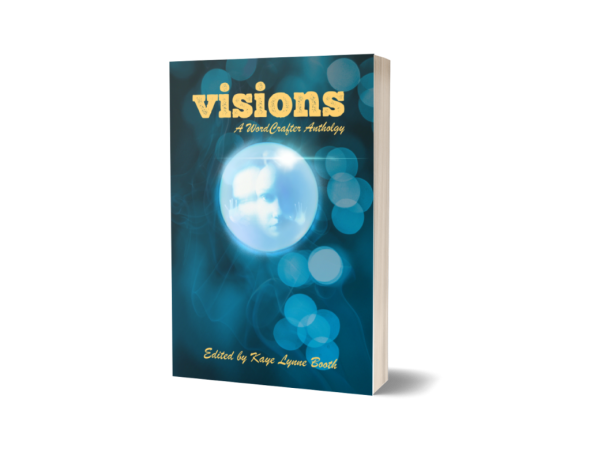
Now that Where Spirits Linger has been released, it’s time to gear up for next year’s contest. There were only six contributing authors in this year’s anthology, but next year I’m hoping to be able to include more, so I am planning to broaden the scope of the theme for 2022. In the past, WordCrafter anthologies have had paranormal themes because I’m a sucker for a good ghost story, but for 2022, I plan to broaden that out to include the fantasy, science fiction and horror genres. For Visions, your story can still have a ghost if you like, but it won’t be required. I’m announcing this ahead of time because I want you to have time to limber up your fingers and your minds, and send me your very best stories. What I’m looking for in the 2022 WordCrafter anthology are thought provoking stories that will stay with readers long after they close the book.
WordCrafter will be open for submissions beginning on January 1 through the submission deadline of May 31, 2022. The winner will receive a $25.00 Amazon gift card and their story will be featured in Visions. All finalists will also receive an invitation to be included in the anthology, which offers a small royalty share for your story contribution. My submission guidelines are pretty simple, but they are different from last year, so be sure to read and follow them carefully. Submit your story with a cover letter to KLBWordCrafter@gmail.com with “Submission: [Your Title] in the subject line and pay the $5 entry fee in the PayPal box on the submissions page, which will go up January 1st, 2022, when submissions open.

Visions: Submission Guidelines
Submission Dates: January 1st, 2022 to May 31st, 2022
Genres: Paranormal, Fantasy, Science Fiction, Horror
Word Count: up to 10,000 words
Rights: First Anthology Rights and audio rights as part of the anthology; rights revert to author one month after publication; publisher retains non-exclusive right to include in the anthology as a whole.
Multiple Submissions: Yes
Simultaneous Submissions: No
Submit: MS Word doc or RTF file
If you don’t know what standard manuscript format is, review, for example, https://www.shunn.net/format/classic/
__________________________________________________________________________________________
Like this post? Let me know in the comments. You can be sure not to miss any of Writing to be Read’s great content by subscribing to e-mail or following on WordPress. If you found this content helpful or entertaining, please share.
Share this:

Paid Writing Opportunity – Call for Short Fiction Submissions
Posted: July 30, 2021 Filed under: Anthology, Books, Dark Fantasy, Fairy Tales, Fantasy, Fiction, Humor, Science Fantasy, Science Fiction, Speculative Fiction, Stories, Writing | Tags: Anthology, Call for submissions, Fairytales, Mirror Mirror, Myths, Short Fiction, Short Stories, Writing to be Read 8 Comments
I recently embarked on the journey toward yet another degree – an M.A. in Publishing at Western State Colorado University – and I am studying under the prolific bestselling author and founder of WordFire Press, (and inductee into the Colorado Authors Hall of Fame), Kevin J. Anderson. For one of the publishing projects that must be completed for graduation is a cohort produced anthology. This will be the third year that the publishing cohort at Western has been headed by Kevin, and the third anthology that they have published.
Each of the previous year’s cohorts have produced an outstanding anthologies featuring stories by reputable author names, as well as new discoveries. You can see my review of Unmasked, last year’s anthology, here. The first year, Monsters, Movies & Mayhem received the Colorado Book Award. Both of these exceptional anthologies are available from amazon, your favorite bookstore, or buy direct at wordfirepress.com/gpcw.


This year’s cohort worked hard to develop the theme and guidelines over the past two weeks, and I’m really excited about this anthology. One of the cool things about this opportunity for writers is that it pays per word, if your story is chosen. Since I am a part of the publishing team, I’m not eligible to submit, but all of my readers are. I strongly encourage you to check out the guidelines below, get the gears turning and crank out an original story to submit for this year’s anthology. Feel free to share with anyone who might be interested.
Tips for getting your story accepted: Read the submission guidelines and follow them.
___________________________________________________________________________________________________________________________
MIRROR, MIRROR:
Modern Myths
Executive Editor: Kevin J. Anderson
When you’re alone with your reflection, are you prepared for what you see?
A prince in disguise? A monster revealed? An alien race?
Mirrors can be truth-tellers, wish-granters, face-concealers, illusion-makers, even monster-summoners. Maybe the mirror shows an evil twin, or an echo of the life that should have been. Or a portal to another world.
What happens when it shatters?
Once upon a time, no one knew the phrase “Once upon a time.” You’ve read the classic stories. Now write the lore you’ve always wanted to read. Explore this creative challenge from your own unique perspective informed by your roots, culture, and background. We want original fables, folklore, and fairy tales for an eclectic anthology showcasing a new dawn of an old artform.
Imagine a canon of diverse characters for today’s readers to love and loathe. Gaze into the mirror, whether literally or figuratively—classic or genre-bending, grim or whimsical, as long as it is new and fresh.
We are looking for original short stories (prose poems will also be considered) to include a mix of fantasy, science fiction, horror, magical, and romance elements. Must be appropriate for a “PG-13” audience. Please, no copyrighted characters. Previously unpublished stories only. Women, BIPOCs, LGBTQIA+, neurodiverse individuals, and other minorities are strongly encouraged to submit.
Length: up to 5000 words (firm limit)
Rate: 6¢/word on acceptance.
Rights: First Anthology Rights and audio rights as part of the anthology; rights revert to author one month after publication; publisher retains non-exclusive right to include in the anthology as a whole.
Due: We are open to submissions from August 30 through October 15, 2021.
Submit: A Microsoft Word or RTF file in standard manuscript format to
https://wordfirewestern.moksha.io/publication/2/3/submit
If you don’t know what standard manuscript format is, review, for example, https://www.shunn.net/format/classic/
One submission per person, please. NO SIMULTANEOUS SUBMISSIONS.
Edited by Kevin J. Anderson with an editorial team provided by Western Colorado University Graduate Program in Creative Writing, Publishing MA students. Anthology made possible by a generous contribution from Draft2Digital.
_____________________________________________________________________________________________________
Like this post? Let me know in the comments. You can be sure not to miss any of Writing to be Read’s great content by subscribing to e-mail or following on WordPress. If you found this content helpful or entertaining, please share.
Share this:

Announcing the 2021 WordCrafter Paranormal Short Fiction Contest
Posted: December 7, 2020 Filed under: Anthology, Books, Fiction, Paranormal, Setting, Stories, WordCrafter, WordCrafter Press, Writing, Writing Contest | Tags: Anthology, Where Spirits Linger, WordCrafter Paranormal Short Fiction Contest, WordCrafter Press, Writing Contest, Writing to be Read 13 Comments
I’m a sucker for a good ghost story. I think most people are. That is why Where Spirits Linger will be the theme for the 2021 WordCrafter Short Fiction Contest. WordCrafter Press is looking for quality paranormal stories in which setting plays a key role, for publication of its 2021 paranormal anthology. Haunted houses, hotels, cemeteries, and other places ‘where spirits linger’ are all fair game.
Guidelines
- Submit a paranormal story in which the setting plays a key role. I want to read your ghost story!
- Stories should be less than 10,000 words and have paranormal elements.
- Flash fiction is accepted as long as it is a complete story, with beginning, middle and end.
- Submit only works that are unpublished and for which you hold copyright.
- Submit stories in a word doc, double spaced with legible 12 pt font, in standard manuscript format.
- Submit stories to kayebooth@yahoo.com with Submission: [Your Title] in the subject line. Submit your $5 entry fee using the ‘Pay with PayPal’ button below.
- Submission Deadline: April 30th, 2021
- If you receive an invitation for the anthology, you will also be asked to submit a short author bio and photo.
- No simultaneous submissions. You should receive a reply 30 – 45 days after submission deadline.
- Multiple submissions are accepted with appropriate entry fee for each individual story.
All entries are eligible for publication in the Where Spirits Linger anthology, to be released in October 2021. The winning submission is guaranteed publication, and the author will receive a $25 Amazon gift card.
Contest Submission Fee
All contest entries are eligible for publication in the 2021 WordCrafter paranormal anthology, “Where Spirits Linger”.
$5.00
Previous WordCrafter Anthologies
Now Available in Print


_________________________________________________________________________________________________________
Like this post? Let me know in the comments. You can be sure not to miss any of Writing to be Read’s great content by subscribe to e-mail or following on WordPress. If you found this content helpful or entertaining, please share.
Share this:

“Hold Your Fire”: An anthology of creative sparks
Posted: December 4, 2020 Filed under: Book Review, Books, Fairy Tales, Fantasy, Fiction, Mystery, Review, Science Fiction, Stories | Tags: Anthology, Book Review, Hold Your Fire, Lisa Mangum, Short Fiction, Short Stories, Writing to be Read 3 Comments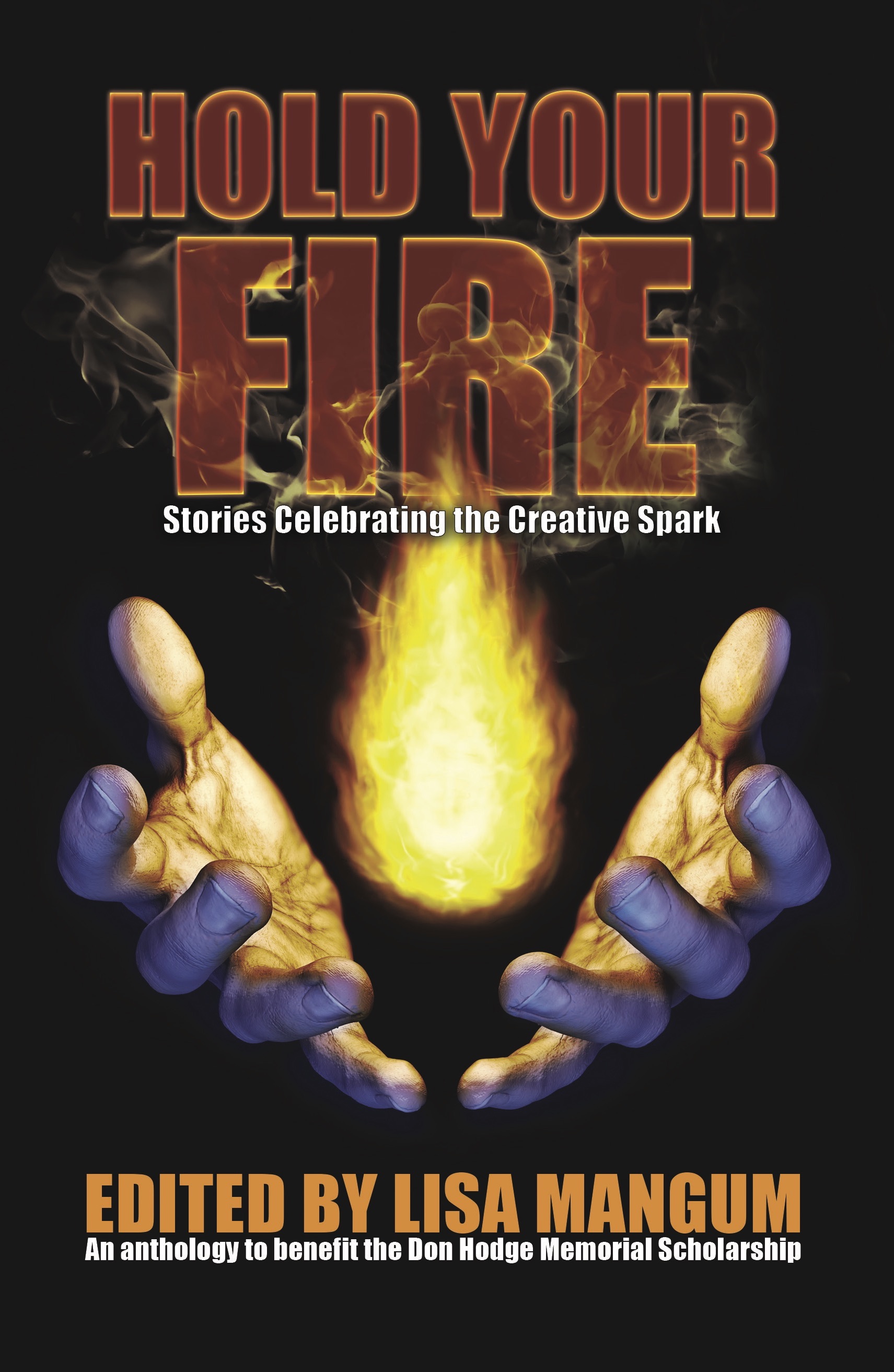
As with other WordFire Press anthologies I’ve read which were edited by Lisa Mangum, Hold Your Fire is an exceptional collection of stories, written by an all star cast of authors, that kept this reader turning pages in anticipation from one story to the next. Each of these stories were so enjoyable that it is difficult to pick favorites to be included in this review. They are all unique and delightful sparks of the creative imagination.
Hold Your Fire includes unique, thought provoking stories which you will find nowhere else. “Splendid Mirage: The Seeker’s Tale”, by Kevin J. Anderson and Neil Peart tells a tale of a never ending quest and the one who carries it’s great burden. “The Fire Sermon”, by Mary Pletsch had me pondering the fine line between a blessing and a curse, when the characters that inhabit this story show their true inner sparks. In “The White Feather”, by Shannon Fox, it takes a touch from beyond the veil to pull Jae from her grief over the death of her friend and re-spark her creativity. Venture into the fairytale land of Kat Kellermeyer “The Last Waking Princess” or endulge in a tale of mentorship and friendship gone awry, with “Bow Drill”, by Jace Killan. Other contributing authors include: Brian Corley, Kristen Bickerstaff, C.J. Erick, Wayland Smith, Alicia Kay, October K. Santerelli, Tanya Hales, Raphyel M. Jordan, Mike Jack Stoumbos, Kitty Sarkozy, Melissa Koons, and M. Elizabeth Ticknor and Rebecca E. Treasure.
Hold Your Fire has stories in a wide variety of themes and genres, so your sure to find something that will spark your fancy. All are well crafted and quite entertaining. I give it five quills.
Kaye Lynne Booth does honest book reviews on Writing to be Read in exchange for ARCs. Have a book you’d like reviewed? Contact Kaye at kayebooth(at)yahoo(dot)com.