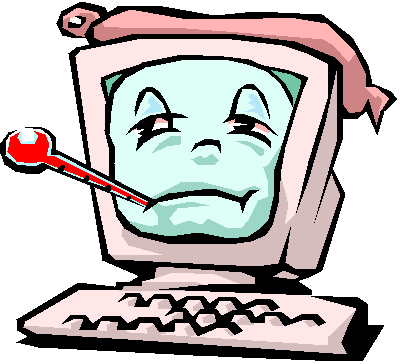
Robbie Cheadle was kind enough to throw up a post letting you know why you weren’t seeing any regular content from me recently. Thank you Robbie.
Anyone who knows me, knows that I carry my life around in my laptop. It goes everywhere with me and all the stories and ideas that make it out of my head and onto the virtual page are contained within it. The files for each book I’ve published and some which I haven’t yet and and marketing images I’ve created can only be accessed through its keyboard.
But it’s true. My laptop malfunctioned and will no longer charge, so when the battery ran down, it went into hibernation and it won’t talk to me or respond to my loving touch anymore. So, much of my life has been put on hold while I wait for a new laptop and try to do my online functioning on my phone. Fortunately, I was forced to get a smart phone two months ago, something I had stubbornly been avoiding, when my good old flip-phone died. Without that, I wouldn’t even be able to keep up with my course work, which I have been able to do to an extent. Thank goodness. But I have not had access to any of my own sites or social media sites, so I wasn’t able to post here or interact for more than a week.
I’m typing this on a brand new laptop with Windows 11, so that is good news. However, I’m going to be without access once again while my son retrieves my files from the old laptop and transfers them over to this one for me. If I had taken time to back everything up, I could have saved the necessity of retrieval, I know. A lesson learned first hand. But I didn’t and it is what it is.
I’m making preparations for this and scheduling some posts ahead of time, so hopefully the content will keep rolling smoothly here and you won’t even notice my absence. But if you do, you will now know why.
I thank all of you for bearing with me through the rough patches. Hang in there with me and I plan good things for Writing to be Read in the coming year. More on that later in the holiday season. So don’t go away.
Writing to be Read’s wonderful host, Kaye Lynne Booth, is experiencing some technical issues. Please be patient, she will be back on-line soon. In the meantime, posts by guest bloggers will continue as normal.
Today, I am delighted to introduce poet and blogger, Lauren Scott. I met Lauren recently through another blogging friend and I am delighted by her beautiful poetry and posts about hiking adventures with her husband.
Take it away, Lauren.
Which of your own poems is your favorite?
I narrowed it down to two favorites: “Simple Existence” and “To My Babies.”
Simple Existence
I stare at this page, milk white as the
blanketed ground in winter’s staging.
Where are the syllables?
***
I fear they have flown to faraway places,
across desert dunes and boundless oceans
and might not return so that I may tell him
(again) how irreplaceable he is.
***
Instead, I’ll touch his lips with mine
and steady myself in the arms of a man
who is satisfied with my simple existence.
To My Babies
You are a new bloom in our family garden,
too little to understand the deepest emotions.
Cradled in my warmth, I watch your tiny lips
form a smile, so unaware of reality’s sharp edges.
Your laugh, my melody. Your cries, my lament.
I am your buffer, guarding you from shadows.
I delight in each change as you evolve into your true self.
For all tomorrows, you will be in my heart
as time prepares you to fly, to realize your own life
What inspired you to write these particular poems?
My husband and I have been married for almost 33 years. He is literally my best friend, so our relationship has provided an abundance of writing inspiration. “Simple Existence” is a favorite because it exemplifies my absolute love for him, as well as his unconditional love for me that harbors no expectations to change me in any way. I can’t ask for anything more. After two years of marriage, we began to grow our family.
Our daughter was born first, and our son was born three years later. Becoming a mother was another euphoric experience. I wrote “To My Babies” when our children were infants, and even though they’re now adults, they are my life as much as my husband is. My words in this poem aren’t meant to be complex, but it is their depth and my emotions that I strive to underscore, sentiments only a parent will understand. Family is beyond precious to me, and therefore, the words flow effortlessly.
Which genre of poetry do you enjoy writing the most and why?
I enjoy writing Free Verse the most because there are no restrictions or rules. I simply let the words fall and arrange to my liking.
Which genre of poetry do you enjoy reading the most?
Free Verse is also my favorite genre of poetry to read, but I aspire to learn from reading other forms, as well.
What is your favorite poem?
Mary Oliver is one of my favorite poets, and “Storage” is a poem that stands out no matter how often I flip through the pages of her book, Felicity. This poem continuously delivers the same effect, resonating with me as I grow older. “Things” just don’t matter. Family matters. Friends matter. The relationships in my life are what I hold close to my heart. And making room in our hearts for more Love and reveling in Nature’s gifts, well, what could be worth more?
Storage
When I moved from one house to another
there were many things I had no room
for. What does one do? I rented a storage
space. And filled it. Years passed.
Occasionally I went there and looked in,
but nothing happened, not a single
twinge of the heart.
As I grew older the things I cared
about grew fewer, but were more
important. So one day I undid the lock
and called the trash man. He took
everything.
I felt like the little donkey when
his burden is finally lifted. Things!
Burn them, burn them! Make a beautiful
fire! More room in your heart for love,
for the trees! For the birds who own
nothing – the reason they can fly.
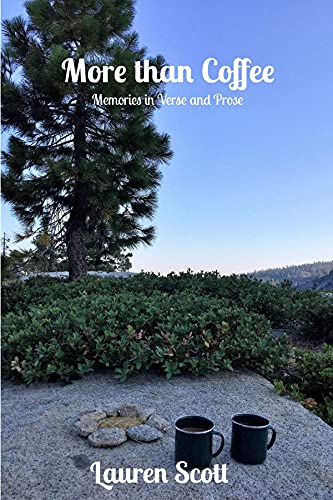
More than coffee: Memories in verse and prose by Lauren Scott
My review
This lovely book is a mix of a memoir about the author/poet’s life with some beautiful freestyle poems included after each prose section to enhance the emotion and moments shared. The memoirs are relatable and cover delightful memories of family brought back through inherited items and stories shared by family members as well as the author’s own life experiences including achievements, romance, parental love, and overcoming fears. The author’s personality and humour comes through strongly in her writing and poetry, as well as her joy and pleasure in the simple things in life.
My favourite poem in this collection and the one that summarised for me the spirit and essence of this book is Fulfilled.
Fulfilled
Let me drink from the gaze in your eyes Eyes that have me wildly mesmerized Mesmerized under their vivid piercing spell Spell which only you many cast over me Me, with a heart madly in love Love, a whirlwind of euphoric emotions so true True in not only our hearts, but in our minds Minds, fully aware of their endless thoughts Thoughts so amorous of us entwined Entwined in each other’s arms eternally, Eternally, still to few seconds for our time together.
I recommend this book to people who enjoy basking in the bright rays of happiness in life.
Purchase More than Coffee: Memories in verse and prose
Lauren is a writer of poetry and short memoirs who lives in Northern California with her husband of almost thirty-three years, Matthew, and their energetic canine, Copper; they have two grown children. She has authored two collections of poetry: New Day, New Dreams and Finding a Balance. Her recent book, More than Coffee, a memoir in verse and prose, was published in September of this year. This collection of poems and stories paints a picture of young dreams and fears from the early woes of childhood and teen years into adulthood where these dreams and fears transform.
Her writing projects are sometimes serious – drawn from painful subjects and raw emotions – or they spotlight her silly side – pulled from humorous moments captured in photographs. Lauren is inspired to write from her love of nature and the marvelous wild world that surrounds her: the smell of the woods, the sound of a babbling brook, and the chorus of birds singing. Recent backpacking trips with her husband along the California coast and Sierra Nevada mountains have stirred up thoughts to pen about love, lost friendship, family, and the possibility that anything can happen. Hikes along the Paper Mill Creek remind her that life is fragile. From trout hatchlings to swallowtail butterflies, Lauren marvels at how the world is interconnected and every living thing matters. She hopes her readers will find a little nugget of delight, comfort, or understanding in her poetry and stories – some detail that resonates with them beyond her words.
Robbie Cheadle is a South African children’s author and poet with 9 children’s books and 2 poetry books.
The 7 Sir Chocolate children’s picture books, co-authored by Robbie and Michael Cheadle, are written in sweet, short rhymes which are easy for young children to follow and are illustrated with pictures of delicious cakes and cake decorations. Each book also includes simple recipes or biscuit art directions which children can make under adult supervision.
Robbie has also published 2 books for older children which incorporate recipes that are relevant to the storylines.
Robbie has 2 adult novels in the paranormal historical and supernatural fantasy genres published under the name Roberta Eaton Cheadle. She also has short stories in the horror and paranormal genre and poems included in several anthologies.
Robbie writes a monthly series for https://writingtoberead.com called Growing Bookworms. This series discusses different topics relating to the benefits of reading to children.
Want to be sure not to miss any of Robbie’s “Treasuring Poetry” segments? Subscribe to Writing to be Read for e-mail notifications whenever new content is posted or follow WtbR on WordPress. If you found it interesting or entertaining, please share.
When I was a little girl, I loved to day dream. I was one of those kids the teacher is always calling back from dream world. The recall to reality was always a little negative in my recollection. “Stop daydreaming, and concentrate on your maths/history/geography – fill in the blank.”
As I’ve grown older, I’ve realised the benefits of day dreaming and mental downtime. When my children were younger, I used to use the driving time into the office every day to day dream. It was a time for me to let my mind wander and relax. I discovered that poems would often pop into my head, more or less fully formed during this time. The inspiration would be something I saw on the way to work. For example, my poem “The Beggar’s Child” was inspired by a mother and baby I used to see standing on the curb everyday. I looked at that little boy, strapped to his mother’s back in the traditional African way, and wondered what he thought of the cars driving past and the indifference of the drivers to his plight.
About a year before the first lockdown, I started listening to audiobooks in the car, instead of day dreaming. I quickly discovered that my poetic output dropped dramatically with my new routine. That led to my having to make a choice between using my time in the car to listen to classic books or to day dream and produce poetry. I chose audio books.
The idea that the lack of day dreaming time was limiting my creativity stayed with me and I was most interested to learn that that day dreaming is considered to be good for children. Yes, you read correctly, day dreaming is beneficial for children and for adults.
Day dreams teach children to be calm and peaceful and to develop empathy and better emotional learning for consolidation of their learning experiences.
According to many psychologists, zoning out in your own internal world is good and helps you to plan for the future, generate ideas, regulate emotion, and spur creativity.
I have always felt that day dreaming, which I’ve always termed watching the clouds, is an essential part of the inventive process. The mind must wander and explore in order to be able to make the great leaps of logic and imagination required to invent something completely new. It pleases me greatly that recent research supports my view that day dreaming is an essential part of mental processing, reasoning, and learning.
These are some of the identified benefits of day dreaming:
Enhanced critical thinking and intelligence – One of the main regions of the brain utilised when we day dream is the region associated with complex problem solving. Critical thinking capabilities are essential for successful learning;
Motivation or achievement of ‘dreams’ – Living our dreams through day dreaming is an enabler of achieving our personal goals and objectives.
Increased confidence – Imagining ourselves playing different roles in life and achieving certain objectives, like passing examinations, gives us more confidence when the real situation presents itself.
Increased insight – The light bulb moments we have are often a result of our processing and organising information differently during day dreaming sessions.
Increased ability to cope – Imagining ourselves in a different situation when our real one is emotionally draining or difficult, gives us an increased mental ability to cope with our reality.
Better mental agility – Day dreaming enables us to smoothly shift mental gears in the face of unexpected situations or unanticipated events.
Increased creativity – Day dreaming provides for increased creativity as our mind finds ways of entertaining us free from outside stimulation.
Increased concentration – Mental downtime gives our brains time to process information and enables it to develop and concentrate better during periods of focus.
I must admit, that I have always innately know the above and I encouraged my children to day dream. Sadly, most kids fill all their free time with visual media like television and computers and I wonder what that will mean for innovation and progression in the future.
Robbie Cheadle is a South African children’s author and poet with 9 children’s books and 2 poetry books.
The 7 Sir Chocolate children’s picture books, co-authored by Robbie and Michael Cheadle, are written in sweet, short rhymes which are easy for young children to follow and are illustrated with pictures of delicious cakes and cake decorations. Each book also includes simple recipes or biscuit art directions which children can make under adult supervision.
Robbie has also published 2 books for older children which incorporate recipes that are relevant to the storylines.
Robbie has 2 adult novels in the paranormal historical and supernatural fantasy genres published under the name Roberta Eaton Cheadle. She also has short stories in the horror and paranormal genre and poems included in several anthologies.
Robbie writes a monthly series for https://writingtoberead.com called Growing Bookworms. This series discusses different topics relating to the benefits of reading to children.
Want to be sure not to miss any of Robbie’s “Growing Bookworms” segments? Subscribe to Writing to be Read for e-mail notifications whenever new content is posted or follow WtbR on WordPress. If you found it interesting or entertaining, please share.
Are we living in a creative golden age? Is there an explosion of artistic expression happening, or are there simply more people around who have better tools? I think the answer lies in both directions. I can spend entire days online investigating any subject imaginable. I can revisit my childhood, walk the same streets. I can go to the same school again, throw baseballs from the outfield. I explore my memory without needing to go to those places that are thousands of miles away.
It’s a truism that the Arts thrive during troubled times. Of course they do! Nothing drives us to greater self inquiry than social turbulence. Art is built out of the bricks of self-inquiry. There is nothing more comforting than making beauty when there is wreckage all around. Human beings are talented at making messes, at leaving and repairing wreckage.
During my lifetime the world’s population has doubled. Now there are seven billion people to make messes and I can feel it in my guts that things are getting more and more strange. There’s an antic quality to the upheavals of our time. The world is populated by failed standup comics, obscure book writers, cowboys, aging ballerinas and kids. Lots of kids.
When I was young there was more room. Today there is a squeezing quality, as if the entire world is a photo of that numbing rocket block of apartments in Hong Kong, with their laundry drying on thousands of railings and TV discs perched like gargoyles at every angle and corner. I’m tempted to call them Living Legos containing numberless thousands of other humans. But I won’t call them that: Living Legos. I’ll call them miserable sub-par toxic environment overpriced low cost housing. This stuff wouldn’t exist so massively in a world with half the current population.
What are we going to do? I think “we” won’t do anything at all. I think the spirit called Gaia, in which I believe, will take care of this problem by killing off a few billion people before the end of the 21st Century. This is going to be a lethal century. It will recall The Black Death of the 14th Century.
Gaia has a contingency plan. You may ask “What if I don’t believe in a thing called Gaia? What if there is no Gaia?
It doesn’t matter what you believe. We will lose three or four billion people regardless. Earthquakes, volcanos, floods, hurricanes, plagues: no fun at all. If I were twenty and not seventy I would be pissing my pants.
Arthur Rosch is a novelist, musician, photographer and poet. His works are funny, memorable and often compelling. One reviewer said “He’s wicked and feisty, but when he gets you by the guts, he never lets go.” Listeners to his music have compared him to Frank Zappa, Tom Waits, Randy Newman or Mose Allison. These comparisons are flattering but deceptive. Rosch is a stylist, a complete original. His material ranges from sly wit to gripping political commentary.
Arthur was born in the heart of Illinois and grew up in the western suburbs of St. Louis. In his teens he discovered his creative potential while hoping to please a girl. Though she left the scene, Arthur’s creativity stayed behind. In his early twenties he moved to San Francisco and took part in the thriving arts scene. His first literary sale was to Playboy Magazine. The piece went on to receive Playboy’s “Best Story of the Year” award. Arthur also has writing credits in Exquisite Corpse, Shutterbug, eDigital, and Cat Fancy Magazine. He has written five novels, a memoir and a large collection of poetry. His autobiographical novel, Confessions Of An Honest Man won the Honorable Mention award from Writer’s Digest in 2016.
Want to be sure not to miss any of Arthur’s “Mind Fields” segments? Subscribe to Writing to be Read for e-mail notifications whenever new content is posted or follow WtbR on WordPress. If you find it interesting or just entertaining, please share.
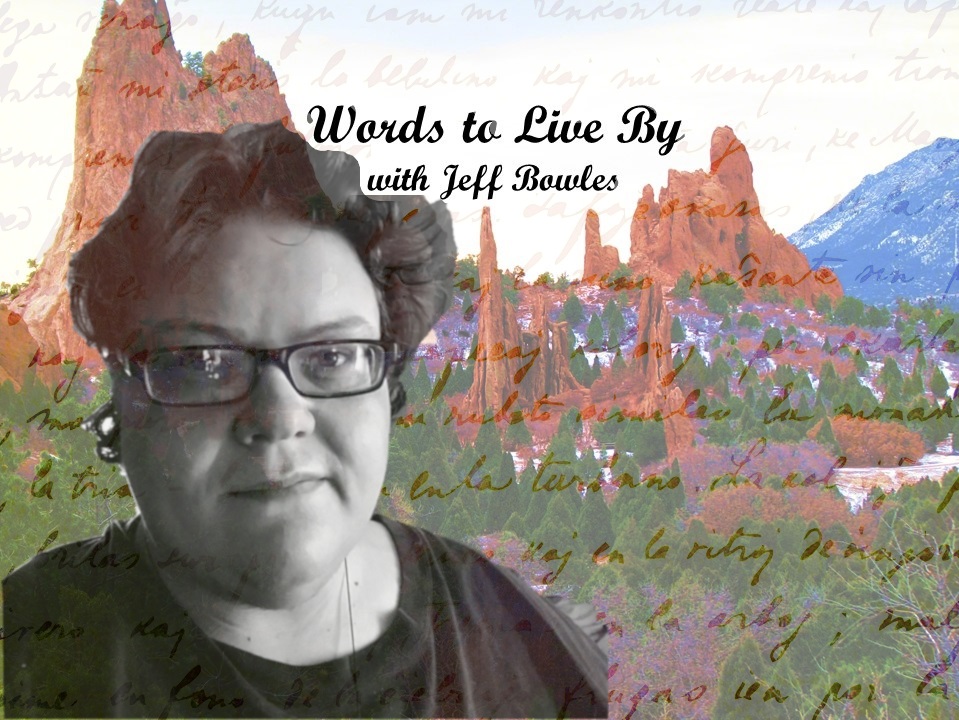
The first Wednesday of the month, writer Jeff Bowles muses on life, creativity, and our collective destinies as makers of cool stuff. You’re a writer, but have you ever thought about how or why? Here are some words to live by.
Green with Envy?
How jealous can you get? It’s an important question, one which may very well help define your ultimate level of happiness. I don’t mean the kind of jealousy that can emerge between romantic partners, or even jealousy that exists in people who constantly feel the need to keep up with the Joneses, though that in part has something to do with it.
I’m talking about professional jealousy, specifically as it occurs in the publishing world (or in any other creative field, really). It’s that sting you feel when a rival snags a big book contract, seemingly leaving you in the dust. It’s also the feeling you get when a good friend becomes successful, and you can’t seem to get anywhere close. This is not a rare experience, nor is it down to animosity or contention alone. It’s everywhere. Don’t try to deny what the world already knows. Human beings get jealous, maddeningly so, and there’s not much any of us can do about it, right?
Wrong. I’m going to go out on a limb here and suggest that some who stumble across this post will have no idea what I’m talking about. Jealousy isn’t much of an issue for them, at least not in this sense. They may be beginners, or in some cases, they might be individuals who are much smarter than the average bear. You see, it takes a certain amount of practiced intelligence to avoid the crushing impact of full-on, green-to-the-gills jealousy.
When I was starting out with short stories, I noticed my own capacity for envy when it came to other writers in my sphere. Some of them were better than me. Much, much better. Some were bypassing shorts altogether and were producing novel-length manuscripts, which made me even more irascible. At that time, I wasn’t too terribly smart about these things. I didn’t realize what this life would come to represent to me, a brilliant and complex tapestry in which no single thread is out of place. We can’t all be huge successes. I’m sure you know that by now. Jealousy is a wholly destructive emotion. A person can use it to jumpstart their inner drive, but mostly it’s just corrosive.
Those who earn the spotlight deserve the spotlight. End of story. And it doesn’t mean you aren’t deserving too. It’s just that either by randomness or divine intervention, you’re in your own little universe with your own feathers for your own cap, and really, that rival or that friend has very little to do with any of it. Don’t let it become a mile marker for all your anxieties and worries. Their successes doesn’t make you inadequate or unskilled. It’s just that you haven’t gotten there yet, may never get there, may decide someday you didn’t really want it as bad as you thought you did.
The only real losers in this game, and I’ve long believed this about creative folks, are the ones who don’t even try, who settle for less than full creative disclosure, who don’t take at least one or two risks in their limited time here on this planet. Don’t get me wrong, I’m not saying it’s everyone’s solemn duty to reach for the stars and try to become something they aren’t likely to become, but look, if you’ve got the drive and ambition, it’d be a real shame to leave all your talents undeveloped and hidden from the rest of the world. Share these things, put them out there, even if you fail. Especially if you fail. Because I guarantee you’ll rarely meet (or perhaps, meet less often) that other beast of an emotion, regret.
And I would suggest you do so for reasons that live up to your lofty station as a maker of cool stuff. Don’t go after your dreams if you think they’ll add something to you that isn’t already there. Similarly, don’t do it if your goal is to crush and outperform all other applicants. Create because you love to create, publish because you’ve got something to say, stories to tell. Do these things for joyous reasons, not simply because you want to teach that vindictive high school English teacher a lesson or prove once and for all to everyone you know that you are worth a damn. Trust me, you are. Don’t even question that. Take it as a given.
Remaining anonymous is not failure. I had to learn this the hard way. Our culture can be shockingly backwards and out of sync with the realities of, well, reality. You have your own path to walk; your work and your passion is a matter of personal pride. Nobody can do things the way you can. Nobody. We are simultaneously small in the grand scheme of things and as massive as the universe itself. You are and always have been precisely all you are and always have been. I do believe that. You’re perfect enough already. Keep that notion close by at all times.
Do your work, create what can create. Do it like no one’s watching, regardless of whether or not anyone is. It’s a wide and generous world if you know what to look out for, and allowing poison into your heart won’t solve anything for anyone. Do I still get jealous of other writers? You bet I do, but if I can, where I’m able, I decline to attach to that particular emotion and just let the old familiar sting pass on by.
Until next time.
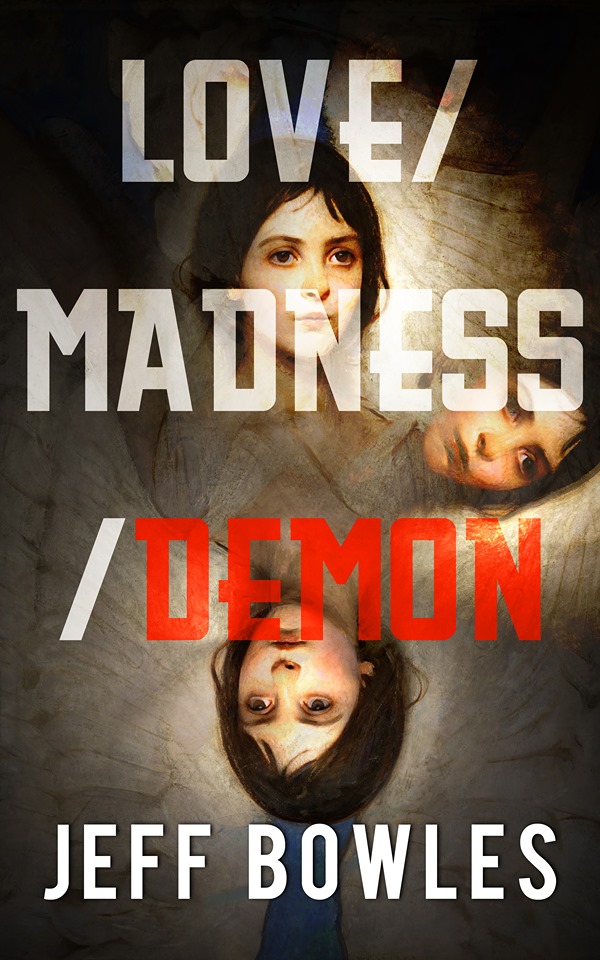
Jeff Bowles is a science fiction and horror writer from the mountains of Colorado. The best of his outrageous and imaginative work can be found in God’s Body: Book One – The Fall, Godling and Other Paint Stories, Fear and Loathing in Las Cruces, and Brave New Multiverse. He has published work in magazines and anthologies like PodCastle, Tales from the Canyons of the Damned, the Threepenny Review, and Dark Moon Digest. Jeff earned his Master of Fine Arts degree in creative writing at Western State Colorado University. He currently lives in the high-altitude Pikes Peak region, where he dreams strange dreams and spends far too much time under the stars. Jeff’s new novel, Love/Madness/Demon, is available on Amazon now!
Check out Jeff Bowles Central on YouTube – Movies – Video Games – Music – So Much More!
Want to be sure not to miss any of “Words To Live By” segments? Subscribe to Writing to be Read for e-mail notifications whenever new content is posted or follow WtbR on WordPress. If you found it useful or entertaining, please share.
Some beginning writers may have delusions of overnight success, but any seasoned writer will tell you that it usually doesn’t happen that way. There are instances where it has, of course, but in most cases, launching a career in writing requires time, money and a lot of hard work to be successful. Writers who have realistic expectations may start out writing part time and get a solid book marketing plan under them, through trial and error and lots of A/B testing to figure out what works and what doesn’t, before trying to take their writing career to a full-time level.
I’ve been working to get my writing career off the ground for over a decade, but I’m a D.I.Y. girl and most things that I try to do, I started out doing things backward. I started my writing career right here, on Writing to be Read in 2009. At the time, I had no idea what I wanted to write, but write I did. In 2012, when I didn’t have the huge following I had hoped for and undertaking a book length work seemed an insermountable hurdle, I decided I needed some help, so I enrolled in the graduate program at Western State Colorado University and by 2016, I had my M.F.A. in Creative Writing with a dual emphasis in genre fiction and screenwriting.
The Six Figure Authors Podcastoffers the general advice for aspiring writers to pick a genre you’ve had some success with and stick with it until you are firmly established. Then if you feel the need to cross genres, you can probably venture into a new territory without risking everything. Because that’s what you’re doing when you cross over to a genre other than the one in which you already have established a fan base.
But here I am. To date, I have published a Western, Delilah; a collection of short stories, Last Call and Other Short Fiction, which is a mish-mash of genres: time-travel, vampire, origins, satire, etc…; and a paranormal mystery novella, Hidden Secrets. I also have published a number of short stories. My flash fiction horror story, “The Haunting of Carol’s Woods”, is featured in Dan Alatorre’s Nightmareland, and my futuristic science fiction story, “If You’re Happy and You Know It”, and my crime fiction love story, “The Devil Made Her Do It”, are each featured in The Collapsar Directive and Relationship Add Vice anthologies respectively, both published by Zombie Pirate Publishing, as well as a paranormal story in each of the three WordCrafter paranormal anthologies, Whispers of the Past, Spirits of the West, and our newest release, Where Spirits Linger. I even have published a nonfiction author’s reference, Ask the Authors, which arose from a blog series I ran right here on Writing to be Read.
I am ecclectic in my tastes, including music and reading, and thus the stories that percolate in my brain are also rather ecclectic. I don’t listen or read in any one genre. Why would I think up stories in only one? I don’t think I could write to market and be successful. And I’ve tried the writer for hire thing, too, but didn’t care for it. No one is saying you can’t be successful as a multi-genre author, but what all of this means is that my books are more difficult to market, because my target audience are splintered into multiple reader groups, so I have to be more creative in reaching an audience who will actually read what I write. And I have to research and know what I’m doing, because book marketing and advertising can get expensive, especially if you do all the A/B testing and stuff that you they say we need to do. Since it’s not feasible for me to stick with only one genre, I think figuring out how to attract readers for each of the genres that I write from a wider audience will be my biggest challenge.
I’m an author who listens to my characters and let’s the story unfold naturally. (I’m not really a pantser, although at one time I thought that I was. Now I find that I need to have a general idea of where my story is going and how it gets there, and a basic outline does that for me.) But the stories don’t all unfold in a single genre, and so I’ve become a multi-genre author, although that probably isn’t the fastest way to build a full-time writing career.
Readers here, followers of this blog, are the fan base that I have built over twelve years of blogging and I appreciate your support, in whatever fashion you choose to demonstrate it. I’m not sure what genre any of you read, or if any of you actually read my books, but you pop over and read my posts, regardless of the subject matter, and occasionally, some of you even comment. I really do appreciate that.
As you can see, I’m the kind of gal who decides what I want to do and plunges ahead, learning as I go. I’ve reached a point in my life where I not only want to write full-time, but I need to be a full-time writer. My love for the written word can be seen in everything I do. In addition to this blog, I’ve reported on local writing communities, attended and participated in writing fairs and conferences, hosted online writing events, created my own small press, and gone into student debt in order to become an expert on my craft. For me, writing truly is a passion and I need to do this as a career for my own mental health and well-being. In order to do that, I need to make some changes.
But, I write for the love of writing. It’s the reason that I put so much energy into this blog. I write to be read, and I’ve not monetized my blog, although I have recently had inquiries for advertising. I’ll need to research more before I make a decision on that front, but I don’t really want to monetize Writing to be Read. I like what I’ve built this site into, with the help of my wonderful Writing to be Read team members: Robbie Cheadle, Art Rosch and Jeff Bowles. I’m afraid if I monetize it, it will become something different, and perhaps unintended. I don’t want that.
That’s why I’m only making one small addition on this site and leaving the rest as is, to develop naturally into what it will become. I’m developing a plan that I can follow to transition into a full-time writer and continue this very slow launch of a writing career. I’ll keep you apprised of other upcoming changes, but for now, the only change here is a new “Buy me a tasty beverage” button in the sites top right-hand corner, where you can make a donation if you should choose to show your support for Writing to be Read in this manner.
If you do make a donation, know that it will be greatly appreciated. I’m glad that you enjoy the content here or find it helpful. Thank you all for being my readers.
Kaye Lynne Booth lives, works, and plays in the mountains of Colorado. With a dual emphasis M.F.A. in Creative Writing, writing is more than a passion. It’s a way of life. She’s a multi-genre author, who finds inspiration from the nature around her, and her love of the old west, and other odd and quirky things which might surprise you. She has short stories featured in the following anthologies: The Collapsar Directive (“If You’re Happy and You Know It”); Relationship Add Vice (“The Devil Made Her Do It”); Nightmareland (“The Haunting in Carol’s Woods”); Whispers of the Past (“The Woman in the Water”); and Spirits of the West (“Don’t Eat the Pickled Eggs”). Her western, Delilah, her paranormal mystery novella and her short story collection, Last Call, are all available in both digital and print editions.
On her authors’ blog, Writing to be Read, she posts reflections on her own writing, author interviews and book reviews, along with writing tips and inspirational posts from fellow writers. She’s also the founder of WordCrafter. In addition to creating her own imprint in WordCrafter Press, she offers quality author services, such as editing, social media & book promotion, and online writing courses through WordCrafter Quality Writing & Author Services. When not writing or editing, she is bird watching, or hiking, or just soaking up some of that Colorado sunshine.
Like this post? Let me know in the comments. You can be sure not to miss any of Writing to be Read’s great content by subscribing to e-mail or following on WordPress. If you found this content helpful or entertaining, please share.
Covid 19 brought changes to the way we do many things, including how we celebrate Halloween. Many folks may not be comfortable being exposed to children in costume coming to their door. Many parents may not be comfortable letting their children go door-to-door this year. I know of neighborhood residents who have gotten together to allow trick-or-treating only within a close-knit group, where everyone knows everyone else and they are all vacinated, and I’ve seen more haunted houses this year than ever before.
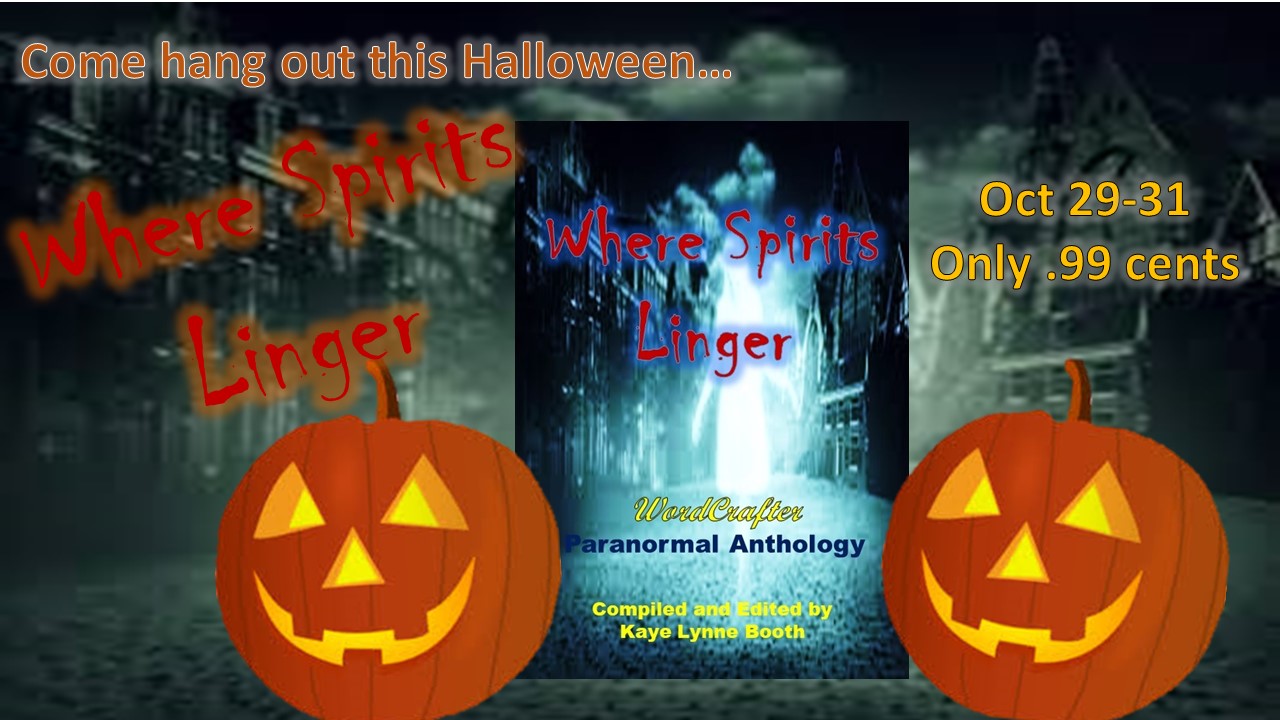
One thing that hasn’t changed though, is the love of a good ghost story or two on Halloween night. That’s why this weekend only, you can get a digital copy of Where Spirits Linger, this year’s WordCrafter paranormal anthology, to draw your ghost stories from. You’ll be captivated with the lingering spirits in these short stories, including the winning story from the 2021 WordCrafter Paranormal Short Fiction Contest, “Olde-Tyme Village”, by Christa Planko. Work from other authors which is also included in this short fiction collection: Roberta Eaton Cheadle’s ghost with an agenda in “Listen to Instructions”, my own ghosts who want to care and be cared for in “The People Upstairs”, S.L. Kretsmer’s ghost who wants to be remembered in a positive light in “The Final Portrait”, Stevie Turner’s ghost who wants revenge in “David’s Revenge”, and you’re sure to get a chuckle from Enid Holden’s ghosts in “The Chosen Few”.
Don’t miss out on these great ghost stories this Halloween. Only .99 cents starting today through Halloween. Celebrate your Halloween Where Spirits Linger. Click the link below to have your digital copy delivered right to your reading device of choice.
Like this post? Let me know in the comments. You can be sure not to miss any of Writing to be Read’s great content by subscribing to e-mail or following on WordPress. If you found this content helpful or entertaining, please share.
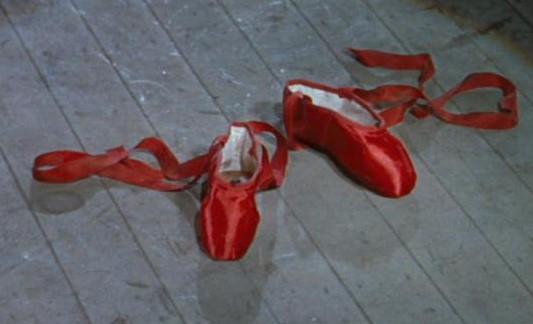
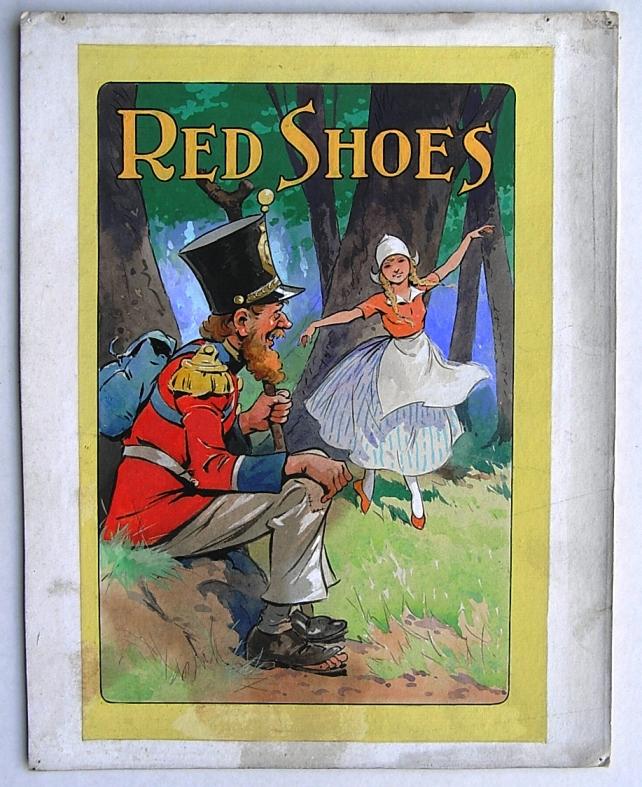
Have you read the story of the red shoes? This is the one fairy tale by Hans Christian Anderson’s that I had a lot of trouble understanding as a young girl.
Karen is a little girl whose family is so poor, she has to wear thick wooden shoes during the winter that chaff her feet and make them red and raw. During the summer months, she goes barefooted. A kindly shoemaker makes Karen a pair of shoes from old scraps of red cloth. The first time Karen wears these shoes is on the day of her mother’s burial. An elderly woman driving past sees the little girl walking after the coffin and takes pity on her. She offers to take Karen into her own home and raise her.
Karen believes her good luck is attributable to the red shoes and develops a passion for shoes in this colour. The elderly lady, whose eyesight is failing, takes Karen to buy a new pair of shoes to wear for her confirmation. The shoemaker and Karen collude so that she can acquire a lovely pair of red dancing shoes. The shoes take over Karen’s thoughts and she wears them to her confirmation, dwelling on her beautiful shoes the entire time. When she comes out of the church, still wearing the red shoes that are the talk of the congregation, an old soldier puts a curse on her shoes.
The elderly lady starts to ail and is dying and relies on Karen for her care. One evening Karen abandons her and goes to a ball wearing the red shoes. Once she starts to dance, she cannot stop and on and on she dances for days and days. Eventually, in desperation, she begs the village executioner to cut off her feet. He obliges and makes a pair of wooden feet for her and a pair of crutches. Karen returns to the church but the red shoes appear and bar her from entry.
In the end, Karen dies and goes to Heaven where no-one cares about her red shoes.
My thoughts
This is a strange and scary story. When I was a girl I attended a convent and went to mass every Sunday. This story often used to plague my mind when it came to confession and I confessed all sorts of strange ‘sins’ to the Father because I was so worried that I’d been vain and made to much of my dresses. I was very fond of pretty dresses.
As I grew older, I wondered why Hans Christian Anderson wrote such a condemning story about a young girl who liked pretty shoes. Research has subsequently led me to understand that the author grew up in a stern and conservative society which condemned dancing, drinking, playing cards, and the wearing of bright colours that drew attention to the wearer. Karen’s sin is not just her vanity about the red shoes, it is also her succumbing to the sin and allowing it to undermine her ethics and morality. Karen choses to dance and ignore her responsibilities towards her benefactor thereby overruling her understanding of what is right and wrong. Having given in to sin, there is no turning back and returning to the way things were before, and her only redemption is in death.
Quite a heavy topic for a fairy story, but then most of the fairy stories are based on dark realities.
Origin
The origin of this story is not as dark as the theme of the story itself. Anderson named the little girl after his own half-sister, Karen Marie Anderson, who he despised. His half-sister was the illegitimated daughter of his mother. She was not raised with Hans but boarded out. It is believed that at one point Karen became a prostitute and Anderson feared throughout his life that she would re-appear and embarrass him in his new wealthier position in life.
The story was based on an incident the author witnessed as a young lad. His father, a shoemaker, was sent a piece of red silk by a wealthy woman to make a pair of dancing slippers for her daughter. His father used some of his own valuable red leather along with the red silk to make a lovely pair of shoes. The woman rejected them, saying they were awful and he’d spoiled her silk. Anderson’s father replied “In that case, I may as well spoil my leather too,” and he cut up the shoes in front of her.
Roberta Eaton Cheadle is a South African writer and poet specialising in historical, paranormal, and horror novels and short stories. She is an avid reader in these genres and her writing has been influenced by famous authors including Bram Stoker, Edgar Allan Poe, Amor Towles, Stephen Crane, Enrich Maria Remarque, George Orwell, Stephen King, and Colleen McCullough.
Roberta has short stories and poems in several anthologies and has 2 published novels, Through the Nethergate, a historical supernatural fantasy, and A Ghost and His Gold, a historical paranormal novel set in South Africa.
Roberta has 9 children’s books published under the name Robbie Cheadle.
Roberta was educated at the University of South Africa where she achieved a Bachelor of Accounting Science in 1996 and a Honours Bachelor of Accounting Science in 1997. She was admitted as a member of The South African Institute of Chartered Accountants in 2000.
Roberta has worked in corporate finance from 2001 until the present date and has written 7 publications relating to investing in Africa. She has won several awards over her 20-year career in the category of Transactional Support Services.
Want to be sure not to miss any of Robbie’s “Dark Origins” segments? Subscribe to Writing to be Read for e-mail notifications whenever new content is posted or follow WtbR on WordPress. If you found it interesting or entertaining, please share.
Arthur Rosch is a novelist, musician, photographer and poet. His works are funny, memorable and often compelling. One reviewer said “He’s wicked and feisty, but when he gets you by the guts, he never lets go.” Listeners to his music have compared him to Frank Zappa, Tom Waits, Randy Newman or Mose Allison. These comparisons are flattering but deceptive. Rosch is a stylist, a complete original. His material ranges from sly wit to gripping political commentary.
Arthur was born in the heart of Illinois and grew up in the western suburbs of St. Louis. In his teens he discovered his creative potential while hoping to please a girl. Though she left the scene, Arthur’s creativity stayed behind. In his early twenties he moved to San Francisco and took part in the thriving arts scene. His first literary sale was to Playboy Magazine. The piece went on to receive Playboy’s “Best Story of the Year” award. Arthur also has writing credits in Exquisite Corpse, Shutterbug, eDigital, and Cat Fancy Magazine. He has written five novels, a memoir and a large collection of poetry. His autobiographical novel, Confessions Of An Honest Man won the Honorable Mention award from Writer’s Digest in 2016.
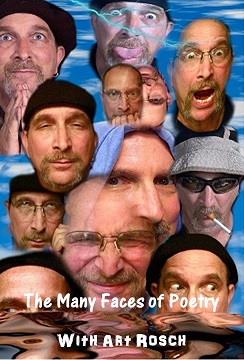
Want to be sure not to miss any of Arthur’s “The Many Faces of Poetry” segments? Subscribe to Writing to be Read for e-mail notifications whenever new content is posted or follow WtbR on WordPress. If you find it interesting or just entertaining, please share.

































Mind Fields: Human Times
Posted: November 5, 2021 | Author: artrosch | Filed under: Commentary, Mind Fields, Opinion | Tags: Arthur Rosch, Mind Fields, Population growth, Social Commentary, Writing to be Read | 1 CommentAre we living in a creative golden age? Is there an explosion of artistic expression happening, or are there simply more people around who have better tools? I think the answer lies in both directions. I can spend entire days online investigating any subject imaginable. I can revisit my childhood, walk the same streets. I can go to the same school again, throw baseballs from the outfield. I explore my memory without needing to go to those places that are thousands of miles away.
It’s a truism that the Arts thrive during troubled times. Of course they do! Nothing drives us to greater self inquiry than social turbulence. Art is built out of the bricks of self-inquiry. There is nothing more comforting than making beauty when there is wreckage all around. Human beings are talented at making messes, at leaving and repairing wreckage.
During my lifetime the world’s population has doubled. Now there are seven billion people to make messes and I can feel it in my guts that things are getting more and more strange. There’s an antic quality to the upheavals of our time. The world is populated by failed standup comics, obscure book writers, cowboys, aging ballerinas and kids. Lots of kids.
When I was young there was more room. Today there is a squeezing quality, as if the entire world is a photo of that numbing rocket block of apartments in Hong Kong, with their laundry drying on thousands of railings and TV discs perched like gargoyles at every angle and corner. I’m tempted to call them Living Legos containing numberless thousands of other humans. But I won’t call them that: Living Legos. I’ll call them miserable sub-par toxic environment overpriced low cost housing. This stuff wouldn’t exist so massively in a world with half the current population.
What are we going to do? I think “we” won’t do anything at all. I think the spirit called Gaia, in which I believe, will take care of this problem by killing off a few billion people before the end of the 21st Century. This is going to be a lethal century. It will recall The Black Death of the 14th Century.
Gaia has a contingency plan. You may ask “What if I don’t believe in a thing called Gaia? What if there is no Gaia?
It doesn’t matter what you believe. We will lose three or four billion people regardless. Earthquakes, volcanos, floods, hurricanes, plagues: no fun at all. If I were twenty and not seventy I would be pissing my pants.
___________________________________________________________________________________________________
Arthur Rosch is a novelist, musician, photographer and poet. His works are funny, memorable and often compelling. One reviewer said “He’s wicked and feisty, but when he gets you by the guts, he never lets go.” Listeners to his music have compared him to Frank Zappa, Tom Waits, Randy Newman or Mose Allison. These comparisons are flattering but deceptive. Rosch is a stylist, a complete original. His material ranges from sly wit to gripping political commentary.
Arthur was born in the heart of Illinois and grew up in the western suburbs of St. Louis. In his teens he discovered his creative potential while hoping to please a girl. Though she left the scene, Arthur’s creativity stayed behind. In his early twenties he moved to San Francisco and took part in the thriving arts scene. His first literary sale was to Playboy Magazine. The piece went on to receive Playboy’s “Best Story of the Year” award. Arthur also has writing credits in Exquisite Corpse, Shutterbug, eDigital, and Cat Fancy Magazine. He has written five novels, a memoir and a large collection of poetry. His autobiographical novel, Confessions Of An Honest Man won the Honorable Mention award from Writer’s Digest in 2016.
More of his work can be found at www.artrosch.com
Photos at https://500px.com/p/artsdigiphoto?view=photos
_____________________________________________________________________________________________________
Want to be sure not to miss any of Arthur’s “Mind Fields” segments? Subscribe to Writing to be Read for e-mail notifications whenever new content is posted or follow WtbR on WordPress. If you find it interesting or just entertaining, please share.
Share this: