Weekly Writing Memo: 5 Ways to Increase Tension in Story
Posted: February 17, 2016 Filed under: Fiction, Stories, Uncategorized, Weekly Writing Memo, Writing, Writing Tips | Tags: Creative Fiction, Fiction, Writing 4 CommentsIn last week’s WWM we talked about how to use feedback to fix your story and the ways you can get the most from a critique. This week we’re focusing in on how to fix a lack of tension in a story, as it is one of the most common issues I come across when beta reading. Tension, by definition, involves two opposing forces holding something taut between them, such as two hands pulling ends of a rubber band in opposite directions.
In fiction, tension can be seen when the protagonist is facing an opposing force that is preventing him/her from getting what he/she wants. Essentially, tension in stories comes down to conflict. That conflict can come from three main places: the protagonist vs their own mental issues (self), the protagonist vs other characters (including animals), or the protagonist vs the setting. The conflict comes when the protagonist wants something, and the opposing force prevents them from getting it.
For example, when the opposing force is the protagonist’s self, then it could be something like anxiety or disease that prevents the protagonist from getting what they want such as in Girl, Interrupted. All of the characters in the institute want to be free and maybe even normal, but their individual mental issues prevent them from successfully reintegrating into society.
When there is a problem in tension a story can feel slow, boring, too easy, or even unbelievable. The method to fix it can vary depending on the story you’re writing, but there are several almost universal ways to fix tension in a story.
- Cut scenes with no conflict.
Anytime you have a scene where your protagonist gets everything they want, or is just going through the motions, then you have a scene where there is no conflict or tension. This may work out for the ending of a story, or even the beginning if the point is to show your protagonist before their world is upturned, but it doesn’t generally work in the middle. So if you don’t have an unfulfilled want, if there is no conflict, you could probably cut the scene out altogether.
- Figure out what your protagonist wants, and then refuse to give it to them.
What drives stories forward is a protagonist who is seeking something, and figuring out how to get it. Even in dialogue scenes your protagonist should have to work for what they want. Sometimes, even when your character gets what they want, it doesn’t solve their problem so it creates new wants and conflicts. This idea of what your protagonist wants should drive every scene of the story, and your protagonist struggling to get it should continue until the very end.
- Whenever possible, up the stakes for your protagonist.
A very common phrase you’ll her in writing is “what are the stakes?” The stakes are what your character is risking to get what they want, and a surefire way to increase tension in the story is to up the risk involved in your protagonist’s pursuits. Say he wants to buy a casino, but he has to put his life savings on the line in order to afford it. That’s a big thing, but it could be bigger if he was a family man with six kids to feed and care for. The more that is at risk for the protagonist, the more risk the pursuit of their want has, the more tension in the story.
- Add different layers of conflict.
You don’t have to use only one type of conflict at a time. By using variety you can add to the tension within the story without making your plot get unbelievable. For example, if you give your character an internal conflict – such as a fear of growing old – as well as an external conflict – his wife is leaving him – it creates two possible sources of tension. The internal one that affects everything the character does, and the external one that he has to solve. You don’t want to go crazy adding layers upon layers upon layers of conflict and drama, but you can use several layers to create more tension.
- Cue in the audience.
If you don’t want to add more conflict directly to your character’s story, you can add conflict by cuing in the audience to a conflict that is unknown to the protagonist. For example, if your character is afraid he’s going to lose his job you have a basic conflict. It works, and it is tense because something is at stake for the character.
However, if you wanted more conflict to the story you could show the audience that the company has already planned to fire everyone, including the protagonist. That could create more tension for the audience because they are waiting to see the protagonist’s reaction, as well as what he/she will do when faced with the news.
This method of tension is also often used in horror movies when the audience can see what the bad guy is doing while the protagonist cannot. It creates a sense of impending doom.
Final Notes:
They key to understanding tension is to remember that it doesn’t come from dangerous situations, though it can, but instead it comes from the audience seeing the protagonist not getting what they want and wondering how, or if, the protagonist will succeed in the end. So whenever you feel that your story may be going slow, or lacking tension, ask yourself what your protagonist wants, and find a way to refuse letting them have it.
Share this:

“Wild West Ghosts” may turn readers into believers
Posted: February 13, 2016 Filed under: Book Review, Opinion, Western | Tags: Book Review, Books 2 Comments
Wild West Ghosts, by Mark Todd and Kym O’Connell Todd may turn some readers into believers. The cover describes the book as “an amateur ghost hunting guide for HAUNTED HOTELS in southwest Colorado”, but it is so much more. Wild West Ghosts might be more accurately described as a travel guide for ghost hunters, outdoors enthusiasts, tourists and history buffs alike.
In addition to the detailed instructions provided for amateur ghost hunters, which lay out the methodology and equipment which the Todds used to achieve their results, and accounts of the local ghost lore of each area, they’ve included vivid site descriptions and colorful area histories which add an old west flavor. In addition, an outline of contemporary area attractions for each site is provided for visitors looking for more than ghosts on their vacation, including highlights of the area, Annual Festivals and events, and cultural and recreational opportunities.
By design, the locations chosen are a bit off the beaten path. The southwestern Colorado locations visited include Creede, Crested Butte, Cripple Creek, Del Norte, Delta, Fairplay, Gunnison, Norwood, Ouray, Paonia, South Fork, and Twin Lakes. For each location is provided with an account of the Todds visit, including details of any strange or ghostly phenomena they encountered either on their spirit box or EMF meter. Many accounts include ethereal conversations they were unaware of at the sites, which were discovered only after they were able to play back audio-only recordings. Their experiences are related in conversational tone, with professional manner and a dash of humor.
For those on a spirit quest, ghost hunting instructions are given in simple, easy to understand terms, ideal for first time ghost hunters. The authors thoughtfully included an account of their test run, made to familiarize themselves with the equipment, along with the lessons that they learned, so those thinking of trying their hand at the ghost hunting thing need not make the same mistakes. Related photos and maps locating each site have also been included to enhance both reading and ghost hunting experiences.
Mark Todd and Kym O’Connell Todd are partners in life, as well as in writing. They reside in the Gunnison area, where Mark teaches creative writing at Western State Colorado University. Their previous works as a team include the humorous, quirky Silverville Saga: Little Greed Men, All Plucked Up and the Majick Outhouse, which all revolve around a fictional Colorado mountain town and keeps readers chuckling to the last pages. To learn more about the Todds and their writing, visit their website, Write in the Thick of Things.
I give Wild West Ghosts five quills. 
Share this:

Weekly Writing Memo: Using Feedback to Improve Your Story
Posted: February 11, 2016 Filed under: Fiction, Stories, Uncategorized, Weekly Writing Memo, Writing, Writing Tips | Tags: Creative Fiction, Feedback, Fiction, Tips, Writing 3 Comments
In last week’s Weekly Writing Memo I discussed my method for giving feedback. This week, Kaye and I are teaming up to discuss what to do with feedback when you’re on the receiving end. We thought it’d be a great idea to do this one together so we could show two opinions for dealing with critiques.
As writers we tend to be very close to our writing and have trouble seeing it objectively; it’s important to get an outsider’s perspective to see how your writing is being read. That being said, hearing criticism of work you’ve put your heart into can be incredibly hard, but there are methods to dealing with it in a useful way.
What is your method for using a critique?
Robin: When I get a critique I basically have a four step process I go through.
- I read it start to finish. No stopping to vent or obsess, no tears, no anger. I just read. It’s important to take all the info in without letting yourself get too emotional about it. If you do get emotional, it’ll be harder to process whether the info is helpful.
- I walk away and let it sit. The initial response to feedback, especially bad feedback, can be overwhelming. Whatever emotions it brought up, I let them out for a bit and then give myself time to let them fade until I feel I can rationally return to the feedback and really look for the truth in it.
- Read it again, item by item, and consider, try, and analyze. Once I’ve cooled my heels some, I return to the notes and reread them, slowly this time going item-by-item. As I look at each comment, I HAVE to consider each item as being true. Then I look at my work and try to prove the feedback right or wrong. If I can’t prove it wrong in at least several ways, then there may be some partial truth, if not complete truth, to the critique. I do this extra for things I think are 100% wrong to make sure that I’m not just too close to the work.
- Use, refuse, revise, and ask questions. Finally, once I’ve considered everything, I go through and revise with what I want to use, and ignore what I’m “refusing”. I also will go back and ask the critic questions on any feedback I need clarity on once I’ve carefully considered it, that way I know what specifically I need to ask.
Kaye: I’m not nearly as methodical as Robin is. But then again, I’m kind of weird about my writing process. For starters, I ask for and await eagerly any feedback I can get. I look at any negative feedback as a window into things that can be improved, and there’s always room for improvement. Always.
So, my process goes more like this – I read through the whole thing, but I pull it up side-by-side with my manuscript, making changes to the original document as I go. If I come to a comment I don’t understand, don’t think I agree with, or I’m not quite sure what to do to fix it, I highlight the comment in the feedback, so I’ll know to go back to it later.
And I do go back to them, once I’ve done all the quick fixes I can. That’s when I take the time to ponder those I don’t understand or disagree with, and decide what I want to do about them. Some I work out clever ways to fix the problem, and some, I may not do anything about.
What do you do if you disagree with the feedback?
Robin: This one can be hard. If the feedback is something I think is completely wrong and I can’t understand it, then I ask questions. The important thing is to ask those questions in the least defensive, and least confrontational way possible. The person did you a favor giving you feedback, so don’t attack, ask for clarity.
For example, I’d ask: “Can you explain more about this specific comment and give me some examples of where you see that?” That way I can maybe get a better idea of what the critic is thinking, and where I need to be looking.
If the feedback is something I think will never be right, and I’m positive that I’ve considered it as many ways I can, then I ignore it. There really isn’t much else you can do. If you disagree, and you can’t see things from their perspective, then ultimately it’s your writing and you get to decide what feedback you use or don’t.
Kaye: I welcome feedback, but that doesn’t mean I agree with every comment I get. As writers, we often become attached to our creations, and sometimes it’s difficult to believe that others find flaw with our masterpieces. I’m no different. I pour my heart and soul into my writing. It’s not easy to separate myself from my work, but I think that’s what we have to do. Always remember that all criticism is about the writing and not the writer. We can’t take it personal, even though it may feel like our creations are a part of ourselves.
What do you use from the feedback?
Robin: I use feedback as a sounding board. I’m not looking for critiques to tell me HOW to fix it, I’m just looking for them to point me at what may or may not be wrong. In general, everyone who reads your work will probably have a different idea of how to fix something anyway, and many of the suggestions won’t be right for YOUR story because they’re suggestion how THEY would fix it. So I focus in on where the critique is pointing, or how they are interpreting things, and then I figure out how I would fix it in my own way.
For example, if someone says “This passage feels slow. I think it’s because this character is boring. I’d cut them.”
I would interpret that advice as meaning “something is wrong with this scene, it feels uninteresting.” Then I’d look at the scene and try to figure out where it goes wrong. Is the character really boring, or just inactive? Is the scene even necessary to the plot, or just filler? I look at the larger idea of the feedback, rather than the specifics. Sometimes I come to the same conclusion as the critique, and sometimes not.
Kaye: I believe there’s a grain of truth to everything. The trick is to pick it out. I always try to find those little granules when I disagree, because I’ve learned that most of the time, it’s there, and if I can find it and make appropriate changes, my story will be better for it. I choose my alpha readers carefully, and I’ve learned that their comments are usually pretty spot on.
Like Robin, I don’t always use their suggested fixes, but their comments let me know where I should be looking for something that’s off and then, I can determine for myself what it is that’s wrong and how I want to fix it. But again, my alpha readers often come up with some really good suggestions, and I use them whenever I can. Seldom do I totally discard a suggestion unless it’s obviously something the reader just doesn’t get. But if my reader isn’t getting it, then that tells me I’m doing something wrong or they would get it. Chances are, if my alpha reader doesn’t get it, my target audience won’t get it either.
What if you don’t know how to fix it?
Robin: A lot of times if someone gives me feedback that I don’t know how to fix, it’s because I don’t know what the real problem is. So, of course, I ask questions until I have a better understanding. Then I try to come up with a few possible solutions.
I will also sometimes talk with the critic about the changes I’m debating to get their perspective on whether it’ll fix things, or I’ll try the fix and then give it to someone else and see if I get the same critique. It’s really just a matter of trial and error if you can’t figure out a specific solution. After that, all you can do is take some time away from it and revise other things and hope when you come back with fresh eyes you’ll figure it out.
Kaye: It’s kind of funny, but I’ve learned a lot about fixing my fiction from my screenwriting classes. One thing I’ve learned is that if you can’t find a way to fix a problem, sometimes you have to look to see a change somewhere else in the writing that will fix the problem scene and make it all work. I guess you have to think outside the box, or beyond the page.
After looking at a problem from every angle, if I still can’t find a way to fix it, then I consult with the reader that pointed out the issue to see if they also have suggestions on how it might be fixed. If that doesn’t work, I can always throw it out to the members of my writers group and we can brainstorm it. Helpful suggestions seldom fail to materialize from these sessions.
Final Thoughts:
Kaye: To me, critiques are a writing tool, enlisting another set of eyes to see what I can’t because I’m too close to the work. When utilizing this tool, I try and take advantage of each and every comment that I can. After all, if I didn’t think they were intelligent and talented, I wouldn’t ask them to be my alpha readers. But the important thing to remember is not to take negative feedback personal, its about the writing, and being open to feedback is what makes your writing better.
Robin: Overall, the important thing for me when looking at critiques is to consider each element carefully and thoroughly. The whole point is to get an outsider’s perspective, so if I don’t consider it seriously, it’s a waste of everyone’s time. If I can fix what they see, I do, and if I can’t or think they’re wrong, I don’t. That being said, if multiple people say the same thing is wrong, then it’s most likely wrong and you need to do something about it, whether you like it or not.
Ultimately, remember the point of a critique is to tell you how your writing is being read, and whether the critic is wrong or right, someone somewhere will probably agree with them. So fix what you can, let go what you can’t, and do your best to be critical of your work no matter how much you love it.
Share this:

Past and Present come together to tell the story of “Escape from Witchwood Hollow”
Posted: February 5, 2016 Filed under: Book Review, Fiction, Uncategorized, Young Adult | Tags: Book Review, Books, Young Adult 3 Comments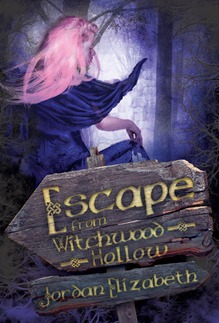
I can’t be sure of the accuracy of some of the historical details and there were a number of typos which were slightly distracting from the story. Other than that, I found Escape from Witchwood Hollow, by Jordan Elizabeth, to be a carefully crafted tale, which braids together multiple time periods with skill and talent. Escape from Witchwood Hollow is a highly entertaining YA novel, that will charm and captivate readers, both young and old.
The legend of Witchwood Hollow begins in the 1600’s, when an English noblewoman is run out of town, accused of being a witch, and she hides in the surrounding woods. To avoid detection, she places a spell on the hollow where she chooses to make her home. Those who enter the hollow, never return and the legend grows.
Jordan Elizabeth inter-weaves the story of the noblewoman with the stories of two other young women, Abertine from the 1800’s and Honoria, a young woman of modern times, into an intricate pattern that fits into the bigger legend in a way that makes her tale easy to follow and fascinating to unfold. Each young woman is connected with the legend, each in her own way, but it seems that Honoria holds the key. But, Honoria has her own ghosts to deal with, when she is left an orphan following the attacks on the World Trade Centers.
I give Escape from Witchwood Hollow four quills.

Share this:

Weekly Writing Memo: Robin’s Guide to Critiquing
Posted: February 3, 2016 Filed under: Fiction, Stories, Weekly Writing Memo, Writing, Writing Tips | Tags: Critiques, Critiquing, Feedback, Fiction, Screenwriting, Weekly Writing Memo, Writing 3 Comments As Kaye mentioned in her blogpost “The 2016 Writing to Be Read,” I am Robin, I’m a writer, and I run the Author the World blog. I will be doing a “Weekly Writing Memo” on Wednesdays each week on Writing to Be Read that will consist of writing tips, tricks, and Q&As. So feel free to post questions in the comment section, tweet me, or e-mail me at: AuthorTheWorld (at) Gmail (dot) Com.
This week’s memo will deal with one of my specialties, critiquing. I spend a lot of time working as either a Beta or Alpha reader for people’s fiction and screenwriting, and honestly if I’m not writing myself it’s my next favorite thing to do.
Over the years between working with other writers and being in workshop settings, I’ve found that many people really struggle with giving critiques. When looking at a manuscript of any kind, it can be overwhelming to figure out where to start with feedback, to decide what is and isn’t important, and what is and isn’t helpful. So here is the way I approach feedback that seems to have the most success in helping other writers improve their work.
What Makes a Good Critique?
Before you can write a good critique, you have to know what one is. A good critique usually involves these five things:
- It’s detailed and says more than just “I liked it” or “I didn’t.”
- It’s objective, and minimizes the criticisms based on personal preference. (i.e., “I hate horror, so I don’t like this story.”)
- It doesn’t try to write the story for the author.
- It’s honest, but not mean.
- It’s about the writing, not the writer.
These are my goals I keep in mind when I do a critique. As long as every comment I make about the story connects to all of these things it’s a good note to make. With that in mind, here is how I go about giving a critique from first being asked, to the sending it back to the writer.
Ask What the Writer Expects.
In my experience, every writer has different expectations when they ask for a critique. Some really just want line edits. Others want you to tear their story apart. So the first thing I do whenever I offer to read for someone, is to ask how detailed they want me to be and what they are looking for.
Ask What Stage the Project is in.
I also ask what draft the project is in so I can get a feel for what stage the writing is at. A project in the first few drafts usually doesn’t need line edits yet because a lot will change along the way, so I focus on larger story issues (plot, character, tone, setting, etc). If it’s toward the final stage, then I will do line edits as well as larger issues.
This saves myself the trouble of marking things that may not be in the story later on, but also helps prevent shocking the writer. Early drafts will most likely have a lot of larger notes, as well as line notes if you do both at once, which can dismay a writer and overwhelm them.
Read Like it’s a Whodunit.
When reading for critiquing, you have to read like it’s a puzzle, not like it is entertainment. If you let yourself get sucked into the story, you stop paying attention to the faults. When I was little I used read those 2-minute Mystery books. The key to them is that you have to pay attention to every little detail and not get distracted.
I find that when I approach someone’s writing the same way, it helps me catch the little things—character mannerisms, minor plot details, foreshadowing, etc. Being able to catch these things early, lets me know what to expect in the story to come so I can make notes as to whether the story is meeting the expectations it is setting up or not.
The hardest part of critiquing, in my opinion, is staying in the critical mindset. It’s easy to get sucked into the characters, and the story, and to stop analyzing what is and isn’t working. By approaching the writing with the mindset that there is a puzzle to solve within it, it helps me keep analyzing it. At worst, if you feel yourself reading a lot and not analyzing, take a short break.
What to Mark?
The goal of an Alpha or Beta reader is to help the author see how an audience is reading the story, and to find issues the writer might be blind to. But how do you show this in comments? If you’re commenting on the line level, then of course you’re pointing out typos, grammar issues, and the like. If you’re commenting on content, then you have to put more thought into it.
Generally, I leave a comment when:
- I am confused by something in the text.
I write HOW I’m confused. Is it because the character said one thing but did another? Is it because there was no foreshadowing? Is it because the language is confusing? Etc. The key is to EXPLAIN what it is that leads to the confusion and not to simply write that you’re confused.
- I don’t believe something in the text.
I will write it’s unbelievable, but I will also write a line or two about WHY I don’t feel it is believable. Then I go an extra step and I tell the author HOW I think they could make me believe it. That way, if they want to stick with the idea, they know what it would take for me as a reader to believe. If I just think it isn’t ever believable, then I will offer 1 or 2 suggestions of similar things that I think would be believable not for the author to necessarily use, but to point them in the right direction.
- I have a question.
Whenever a question pops into my head, I will usually make a comment to let the author know that, as a reader, this is what I’m wondering at this moment. That way if the text is leading me in a direction the author may not want, they are aware of it. For example, if the text mentions a brother and builds up suspense around him, I may mention this, that way if the brother is not a character that comes back the author can minimize the attention on him so I, as a reader, don’t have that question pop up.
- I pause or feel bored.
Whenever you feel like stopping reading, ask yourself WHY. Are you bored? Is the passage slow? Is the character uninteresting? Has the plot not started? Etc. Then put a comment marking the passage and explaining WHY you are feeling that way. I also usually try to go back and pinpoint the moment the story stopped being interesting so I can mark it as well, and then I try to figure out which thread line (character, plot, setting, etc) it is that dropped out of the text so the writer knows what it is specifically that is missing. At the very least, though, always mark WHERE you feel bored and try to explain WHY.
- Something is missing.
A character is forgotten, a plotline is not finished, a setting is not described, etc. Whenever I feel like something is missing, I explain WHAT, I explain WHY it matters, and I pinpoint WHERE it first begins to be missing.
Ask Questions.
The other big thing to consider when commenting is how you are interpreting things vs. how the writer intended them. Whenever I think something I am commenting on could be something that is not what the writer intended, I make a note about that says something along the lines of:
“I’m interpreting this part this way, but I think you mean it this way. Here’s why I interpreted it the way I did and here’s what you should change if you mean it the other way.”
That way the author can see what and where there is a mix up.
Final Notes.
The key to all of the above is basically SPECIFICITY. Feedback is only helpful if you can be specific about what it is that you think is wrong. Ask yourself WHY do I feel this is wrong, HOW it is wrong, and WHERE it is wrong. Now sometimes you don’t know what is wrong or just can’t figure it out, but you do know something is wrong.
It’s perfectly valid to just leave that as a comment, but still try to give some specifics about what FEELS wrong. Tell them it feels slow, or boring (in kinder words if possible), but describe something so the author has an idea of where to look for the problem. At the very least, it’ll give them a specific passage to get a second opinion on.
The important thing to remember is that all feedback is opinion. Everyone can read the same story and come up with a different idea of what is wrong and how to fix it. So when you’re giving notes, try to keep things as objective as you can. If you know something you’re commenting on is just your preference, I always explicitly say that in the feedback and then explain WHY I prefer it that way. Then the author can decide if your preference is one they want to use or not.
Lastly, when you give feedback always expect that the writer may not use any of it. It seems like a defeatist thing to say, but writers (myself included) have their own idea of what works and what doesn’t and what they want in their story. Just know that in going through the process of analyzing the work and forcing yourself to think critically to explain how you feel about it, you are helping your own writing. Every time I give feedback, I feel like I can approach my own work more analytically, and like I am more prone to finding my own errors.
You won’t catch everything, no one can, but be honest, be specific, and remember it’s not about the writer it’s about the writing. Everything you comment should be about making the story better and helping the writer tell the story THEY want to tell, not what YOU think the story should be about. If you can keep that in mind your feedback will be helpful, it’s just up to the writer on whether they want to use it or not.
Share this:

Author Tim Baker entertains readers with “Eyewitness Blues”
Posted: August 8, 2014 Filed under: Book Review, Fiction, Writing | Tags: Action, Creative Fiction, Eyewitness Blues, Thriller, Tim Baker 2 Comments What happens when an ordinary guy gets caught up in the extraordinary circumstances of a Rhode Island crime syndicate? When an opportunity that seems too good to be true falls into his lap, Martin discovers that it really is. Not being killed by a Rhode Island crime boss seems like a stroke of good fortune, until he realizes he’s being sucked into the illegal activities of his apparent savior. Martin thinks he’s found a way out, only to discover that he’s buried himself deeper and ticked off the big guy to boot.
Running from a Rhode Island crime boss beats being hung by your ankles from an eight-story balcony, but not by much. Martin is an ordinary guy who is down on his luck. Martin thinks he’s found a way out, only to discover that he’s buried himself deeper and ticked off the big guy to boot. On the run, he ends up in Flagler Beach, where Ike and the other unique residents of Flagler take matters into their own hands.
Martin just wants to get by and earn a living, but he falls in with the wrong guys and finds himself unwittingly embedded into the Rhode Island crime syndicate and the only obvious way out is a body bag. He believes he’s found another way out when he discovers evidence of a murder involving his boss. Martin thinks the witness protection program can save him, until he learns that the cops are in his boss’ pocket, requiring him to make a quick exit and landing him in Flagler Beach under the protection of Ike, a loveable ex-SEAL, whose heart is always in the right place. In Eyewitness Blues, that involves setting up the bad guys and blowing things up, two of Ike’s favorite pastimes.
The works of Florida author and talented story-teller, Tim Baker, is guaranteed to entertain, and Eyewitness Blues is no exception. This skilfully threaded plot keeps the action rolling with uniquely crafted characters that will keep the pages turning. This and other works by Tim Baker may be purchased at www.blindoggbooks.com.
Share this:

“Lucky Sevens” offers a rare look at Las Vegas life
Posted: August 7, 2014 Filed under: Book Review, Mystery, Writing | Tags: Cynthia Vespia, Las Vegas, Lucky Sevens, Murder Mystery 1 Comment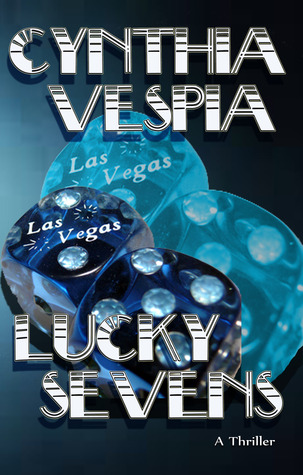
“Lucky Sevens” by Cynthia Vespia
As head of security for the recreated Saints and Sinners, it’s Luca “Lucky” Luchazi’s job to keep the brass and the clients alive when a series of mysterious accidents befall the casino, starting with the death of his friend and mentor, Charles Vega, the previous owner of Lucky Sevens. But Luca isn’t feeling so lucky anymore. The casino has changed hands, changed its name and changed everything, the woman he loves won’t speak to him, and if things don’t change, he’ll be out of a job, or maybe out of his life.
Many of us have visited Vegas and seen Sin City with the cast of neon to dazzle our view. Lucky Sevens, by Cynthia Vespia, tells the story from the inside view, the angle few of us ever see. It’s the story of those that make keep the cogs moving any way they can and try not to get caught up in the machinery. When it was Lucky Sevens, run by his friend and mentor, Charles Vega, it seemed like a pretty good place to be. Now, he’s not so sure. The new boss is connected and has big corporate money behind him, the mysterious deaths that have occurred in the hotel lately all seem to be connected and black magic seems to be in the air. It’s up to Lucky to uncover what is really going on, but the question is whether he can do it before his luck runs out.
Lucky Sevens is an entertaining read that offers a different perspective on the Vegas scene, showing that it isn’t all bright lights and cash flow. Everyone wants to come out with the winning hand, even behind the scenes where the stakes may be higher than anyone realizes. Take a walk through the Vegas underworld with Lucky Luchazi, but tread carefully. You never know who’s lurking around the next corner, who can be trusted or who’s going to come out on top.
Share this:

Time Flies
Posted: January 12, 2014 Filed under: Fantasy, Fiction, Mystery, Western, Writing | Tags: Books, Fantasy, Fiction, mystery, New Year, Western, Writing Leave a comment Wow! It’s 2014 and I just realized how long it’s been since I published here, I’ve been busy earning my degree, along with the many other demands that life places on all of us. But hard work and dedication pays off. In fact, since I began the MFA program at Western State Colorado University, I’ve produced rough drafts for two novels, which I’m now working on revising. The first is a western, Delilah, and the second is a middle grade mystery, The Adventures of Ann and Kinzi. I’m currently working on a mythological fiction/fantasy/science fiction novel, with the working title, A Playground for the Gods, which I’m considering using as my thesis.
Delilah is a tough young woman who grew up on the Colorado frontier. On her way home to the San Luis Valley, she’s brutally raped and left for dead, sending her on a quest for vengeance. Her hunt for her tormentors leads her to the Colorado mining town of Leadville, where the colorful inhabitants work their way into Delilah’s heart and give her hope for a future she’d thought lost along with her innocence. Now she must stay alive and protect her new-found friends as she faces the many dangers of the western wilderness and the outlaw elements of the growing new Colorado territory.
The Adventures of Ann and Kinzi is the story of two young girls growing up during the depression. Their shared love of animals and the fact that they’ve both lost their mothers are the common ground on which cements their friendship. When strange things start happening at the McViddie farm, where they care for the horses, and one of their classmates disappears, Ann and Kinzi set out to solve the mystery and save their friend, but they must do it without being caught by the kidnapper themselves.
In A Playground for the Gods, Inanna is the goddess of love and war on a quest to save humanity. The foolish judgement of men and their misuse of the technology the gods have provided have brought them to the brink of self-destruction and convinced the gods that humanity is not ready to receive the secrets of long life and powers that would make them godlike. They’re preparing to find a new planet on which they hope to find a new species to bestow their gifts upon. Inanna must prove that humans are worthy of their godly gifts, and convince them not to leave humanity in such a mess.
That’s it. That’s my excuse for neglecting this Writing to be Read blog. Now all I can do is ask forgiveness from my readers and offer the promise that if they stick with me, I promise to blog on a regular basis in the coming year. I don’t foresee that I will abandon novel-writing, but I do plan to try to organize my time better, so I’ll be able to commit to at least two or three posts a month. I hope you will all join me for the journey.
I’d also welcome any feedback on which of the above stories capture your interest and why. Comments are always appreciated.
Share this:

“Unfinished Business” by Tim Baker an entertaining read
Posted: September 25, 2013 Filed under: Book Review, Fiction, Uncategorized | Tags: Books, Fiction, Tim Baker, Unfinished Business 2 Comments
“Unfinished Business” by Tim Baker
No one is ever ready to die because we never know when our time is up. Some, who die of a terminal illness, may know that death is approaching and have time to put their affairs in order, but death strikes most unprepared and they leave this life with unfinished business hanging… well, unfinished. Unfinished Business by Tim Baker is a creative and original story that explores the possibilities how the universe may balance the scales and take care of those things that have been left unfinished by departed souls. This delightfully entertaining story will tickle your funny bone and keep you guessing.
When Meg Seabury loses her friend and mentor, Lita, she inherits an unexpected gift, although at times she wonders if it isn’t a curse. Suddenly, Meg is able to see the final thoughts of those who cross the threshold of the funeral home where she works, and she soon learns that it is up to her to finish what they didn’t have the chance to take care of. Her new abilities lead her on a strange roller-coaster ride to places she would never go and compels her to do things she would never do in her old “normal” life. Not all that’s left undone are positive events. Meg finds she doesn’t have a choice but to carry through, restoring the balance of the universe, even if it leads her into dangerous situations or could land her in jail.
Unfinished Business is now added to the list of novels by Tim Baker recommended by this reviewer, which also includes Water Hazard, No Good Deed, Pump It Up, Backseat to Justice and Living the Dream. All Tim’s books are available at www.blindoggbooks.com.




















Catching Up
Posted: May 10, 2014 | Author: kayelynnebooth | Filed under: Commentary, Uncategorized, Writing | Leave a commentAgain, it’s been awhile since I posted here, but when I catch you up on all that’s been keeping me away, hopefully I’ll be forgiven, or at least excused.
In February, I quit my day job to venture out into the world as a full-time freelance writer/editor. So far, it’s slow going, but it’s been keeping me busy.
Of course, I’m also still seeking my M.F.A,. in Creative Writing. Spring class just ended and now I’m preparing for my summer residency in Gunnison. I’ve got the tuition covered and the new laptop that I’ll need to take with me, but I still have to get there. So, I’m trying to raise money for travel expenses, (gas, food and lodging) through a fund-raising campaign. And you, my faithful readers can help, by making a small donation if you like. I get to keep the money raised, even if I don’t raise the entire amount of my goal, so even small donations are appreciated. If you’d like to help, the site is here: https://fundly.com/kaye-booth-a-writer-s-dream
I promise I’ll try to post here more often. I miss Writing to be Read. I think some of you might, too.
Share this: