Full Circle Comes Half-Way
Posted: March 19, 2016 Filed under: Book Review, Fiction | Tags: Action, Book, Book Review, Fiction, Flagler Beach, Full Circle, Tim Baker 2 Comments Tim Baker’s latest novel, Full Circle, is a story about how our choices affect others, sometimes others we don’t even know, in unexpected ways. What does one do when your boss thinks you owe him a favor and asks you to commit murder? Mark Sullivan is faced with the choice and what he does sets in motion surprising events, while his boss, Joe Moretti’s choices set other events in motion, involving other people, and all these paths cross in some very entertaining ways.
As in all of Baker’s books several seemingly unrelated characters weave their way through the intricate details of plot with delightfully entertaining antics. A recovering alcoholic, a single mother trying to make ends meet, a self-centered contractor, an over-protective father, and a homeless woman, who seem to have little in common, find their karmic paths crossing in unexpected ways, but it all comes together when they come Full Circle.
In Living the Dream, a plumber’s apprentice with a moral code ends up crossing paths with a crooked contractor who’s unfaithful to his wife, and the endearing residents of Flagler Beach. In No Good Deed, a homeless guy and a gangster’s girlfriend cross paths with the plumber’s apprentice, who has straightened out his life and is now a groundskeeper trying to live the straight and narrow, some big time mobsters and a two-bit con-man, along with our old friends from Flagler Beach and surrounding areas. It’s one of the things I admire about Baker’s works.
I think the difference with Full Circle may be that the karmic element is the theme of the story, and it feels like the characters are forced to fit the mold on this one. I must admit, I was a little disappointed by it. Tim Baker is a talented author, with the ability to bust out this kind of story with skill and finesse, but it feels off in this book. It’s nothing I can put my finger on, but it didn’t grab my attention from the starting line, like Baker’s other books have. As a result, I found it harder to invest myself in the story and care about the characters.
Don’t get me wrong. Full Circle is a good story, a delightful tale, actually. It will make you smile, and make you sit on the edge of your seat at times. It will draw chuckles in all the right places. Although the execution is a little off, it’s not enough to make me put the book down. I still wanted to keep reading to see what happens next. I give Full Circle three quills.

You can find Full Circle and other books by Tim Baker on his website, Blindogg Books.
Share this:

Weekly Writing Memo: What Do I Write?
Posted: March 16, 2016 Filed under: Fiction, Uncategorized, Weekly Writing Memo, Writing, Writing Tips | Tags: Books, Creative Fiction, Fiction, Writing, Writing Process 3 Comments I think the writing questions I hear the most are questions about where to get ideas, and what ideas are good ones. People constantly want the secret formula for the next bestseller, or confirmation before they start writing that the idea they’re working on is great. The problem is, there is no magical way to tell before something is written.
Of course, there are ways you can help improve an idea before writing, but there isn’t a secret guide to a guaranteed selling idea. That being said, there are some tips to help you decide whether the idea you have is one you want to pursue.
What do I write?
Ideas are everywhere. Look at friends and family, look at the news or celebrity magazines, and find what interests you. I always advise writing something that truly gets you involved and not just something that you think will sell. The more you love the story, the better the writing will be, and the audience will be able to feel your enthusiasm for it. So find a story involving something you love, or something that fascinates you.
Once you have a topic, the next step is to figure out your character and your plot. Those things are blog posts of their own, so I’ve posted a few links to previous ones I’ve written on the subjects below for more in-depth information. In general, though, you need to understand who your character is and how they would behave, and you need to know what kind of trouble they are going to get into that will disrupt their world.
Beginning a Story: What’s in a Beginning?; Tips for Finding Your Story’s Beginning
Plot: 3 Types of Plot; 5 Ways to Increase Tension in Story
Character: 5 Tips for Establishing Character; Relatability or Likability
Is my idea good enough? Interesting enough? Sellable? The next big hit?
Maybe you already have an idea, but you’re not sure it’s interesting or sellable. You can always ask a few people and get a second opinion, but in general until the story is written there is no way to say one way or another. A great idea can be presented in a poor way and make people think it won’t work, but then you write it and it does. A bad idea can be made to sound wonderful, but then it can fall apart in the writing.
The only way to find out if your idea works, is to write and see how it turns out. That being said, you can help increase the chances that your idea works by doing your homework up front. Outline, develop your characters, develop your setting, and learn as much as you can about writing as possible. No matter how good of a writer you are, there is always more to learn.
Has it been done before?
Beyond the concern of whether a story idea is interesting, the other concern I often hear is whether the idea has been done before. It’s easy to look at your story concept and think of everything similar that has been done. You’ll start to feel inadequate, or like a mimic, or that your story doesn’t measure up. This is a valid concern because you don’t want a story that is too similar to an existing one, but all stories have elements that overlap with other stories. There is nothing wrong with being inspired by another story, or having something similar with another story, but the key is to have something to distinguish your story from the existing one.
For example, an easy reference of distinguishing traits is to look at the movies White House Down and Olympus Has Fallen. The two movies came out around the same time and had incredibly similar plots, but what distinguishes them from each other, besides actors, is tone. White House Down isn’t a comedy, but it does come off as a bit more lighthearted and comedic at times. Olympus Has Fallen, on the other hand, is more of a serious action movie in the vein of the original Die Hard. Now if the movies had been written one after the other, whichever was written second would have had to do even more to distinguish itself from the original, but because they came out at the same time they get away with being so similar.
The important thing is to remember that as long as you’ve taken steps to separate your idea from whatever existing idea you’re looking at, then you should be fine. Focus on making it your own, on writing it the best you can, and embrace your story, and always have something that makes your story your own unique, be it style, viewpoint, character, or plot.
Final Notes:
The easiest way to truly learn to understand stories, and to know what is and isn’t sellable, is to consumer stories that are selling. Read, watch movies, listen to podcasts, check magazines, and take in stories in all of their forms. One of the easiest ways to learn about writing and telling a story is to see how it’s been done for centuries and think critically about them.
You need to take in stories wherever you can, and always take note of what you like, what you didn’t, and WHY. The more you study existing works and learn how the storytelling is executed, the more techniques and tools, so to speak, you’ll have at your disposal for your own writing. So study, explore, and embrace your idea. In the end, once you get it out you can always verify with someone else whether the idea is too similar to something that exists or if it’s any good, then tweak as needed, but until it’s on paper, no one will ever be able to say for sure. So go write, stop procrastinating with worry and self-doubt, and maybe you’ll surprise yourself.
Share this:

Weekly Writing Memo: Researching for Story
Posted: March 9, 2016 Filed under: Fiction, Uncategorized, Weekly Writing Memo, Writing, Writing Tips | Tags: Books, Creative Fiction, Fiction, Writing 3 CommentsIn last week’s memo we talked about the 3 Types  of Plot, and this week we’re going to discuss researching. When is the perfect time to research for your story? How much research do you do? When do you start writing? The answers won’t be the same for everyone or every story, but there is some general advice you can use as a guide.
Before You Write:
The kind of research you need to do before you write is anything that connects to the core of your story, and the kind of stuff you can’t write the story without knowing. For example, if you’re story is going to be about a detective solving a crime, then you need to understand the basics of how a detective would go about doing that. The key part of that statement is that you only need to know the BASICS so you can get started writing.
I’m not advocating writing about things you don’t understand or winging it. All I’m saying is to get started writing, you just need a general understanding of how the process works. The finer details won’t really affect the writing of the overall first story draft, so they’re they kind of thing you can come back and add later.
It’s better to get the writing done, and then see what you need to add and research more after, rather than become so absorbed in the researching that you waste time studying things you don’t need to know for the story. You can go back and do more later and will if you want your story to be accurate, but the pre-writing research is about getting a general sense of things, and finding out any vital details for your story so you can write. The rest can come later once you’ve written.
During the Writing:
When I’m in the process of writing, I try to keep the researching to a minimum. It’s easy to let yourself get sidetracked with little pockets of research, and one quick detail can rapidly turn into exploring new information for hours.
My general rule is if I can find it with a 5 minute or less Google search, I will look it up and immediately go back to writing. For example, if I need to know what a specific tool a character is using to do a job, I will do a quick search. If it is not important, is going to take longer than 5 minutes, or is just something I think I may want to research to add later, then I make a note and don’t stop.
I keep a word document for every project I’m working on that is basically a list of things to fix, research, revise, or keep track of. If I come up with something I want to add to the story later that I need to research, I add it to the list. That way I don’t forget it, know where I want to add it, and can come back to it later. Some things end up not being important to the story once I finish, so it works out nicely to have them on the list instead of stopping every time a topic comes up.
The only other research I do when I’m writing is if I discover there is something vital to the story that I didn’t realize I needed, and I can’t go on without it. Then I stop, research for a few hours if needed, and try to get back to writing. The key is, you want to minimize disruptions while writing, and only break away to research when you HAVE to, or when it’s minimal and won’t stop your progress. The point of writing, is to write.
After the Writing:
After a story is finished you should have a better idea of what you need to research further, and that is when it’s time to delve back into research for a short period. Go back and do all the research on the list you made while writing, and then go back and do some more in depth research of the topic. I usually will read a book, or several, by an expert, I’ll browse resources online or in the library, and even read a few books or watch a few movies in similar genres or on similar subjects depending on what I’m writing.
After the writing works as a convenient time to do this because you should generally take a break before revising, so if you use that break to research, when you go back to revise you can add what you learned in the revision process and save yourself time. A lot of the “after writing” research is about learning the nuances and small details that make the writing more realistic, and make it “pop” as some like to say.
For example, when I initially researched for my mystery novel, I studied the process of investigating a missing person, I learned what the laws were for reporting an adult missing, what the general process a detective would go through to investigate, and what the family’s process would be emotionally and legally. That was all I needed to do the first draft of my novel because those were the things that affected the overall plot of the story, and behavior of the characters.
After that first draft, I did some further research on forensics of investigating a crime, as well as police lingo, further missing person research, and read a few accounts of personal experiences with missing persons. All of this helped me tweak the more specific details of my writing to make it more accurate and realistic, but none of it really affected the overall plot.
Final Notes:
The thing to remember is that pre-writing research is about learning enough to get started, not developing the entire world or learning all you can about a subject. It’s about giving yourself a solid basic understanding of the subject so you can write, like taking a 101 class in college.
The during-writing research is about finding out only what you absolutely need to know to get back to writing, and not interrupting the process. It should really be minimal, non-existent if possible. The post-writing research is about specificity and going in-depth.
When you find yourself focusing more on the research than the writing you need to ask yourself how much you really need to know to get started. Are you just researching because you enjoy it or because the story needs it before you can write? Are you lacking confidence in the story and wasting time researching to delay the writing?
While research is fun and engaging, the important thing is to remember that the more time you spend researching, the less time you’re spending writing. If you’re going to be a writer, you have to let yourself write.
Share this:

Weekly Writing Memo: 3 Types of Plot
Posted: March 2, 2016 Filed under: Fiction, Stories, Uncategorized, Weekly Writing Memo, Writing, Writing Tips | Tags: Books, Creative Fiction, Fiction, Writing 4 CommentsIn previous posts we’ve talked about minor issues such as 5 ways to Increase Tension, as well as whether your characters need to be Likable or Relatable. In this post we’r e going to focus on a larger concept of story—the three types of plot. Every story should really have multiple levels of plot going on, and in general there are three types of plot that should be in most stories for them to have depth, and enough content to be fulfilling.
- The Grand Plot
The Grand Plot is the larger plot that is the overarching conflict of the story. This can be anything, really, as long as it is grand enough to run the length of the story. In a series, it can be the larger plot that spans the series, or in a single movie or novel, it’s the larger plot that is the focus of that one story.
For example, if you look at The Hunger Games, the Grand Plot in the first book is whether Katniss Everdeen will survive the games. As a series, however, the Grand Plot is about the fall of the Capital and President Snow.
Essentially the Grand Plot has to be something that has enough conflict to sustain the entire film or novel. It can be made up of a bunch of smaller conflicts, such as Katniss having smaller battles to face during the games (other players, poison berries, beasts, etc), but it essentially boils down to one thing (in The Hunger Games, it is survival).
When choosing a Grand Plot for your story, ask yourself what kinds of problems your protagonist could run into while pursuing a solution to that plot. If you can only think of one or two, then it is probably not a good Grand Plot. Returning to The Hunger Games example, Katniss has to face Capital politics, she has to face her urge to sacrifice herself for Peeta, she faces other tributes, and dangerous wildlife, and more. Those are all minor conflicts that arise during her pursuit of the Grand Plot, so there is plenty of conflict. If, however, The Hunger Games was just about Katniss being locked in a room and having to survive with no external factors, there probably wouldn’t be enough conflict to sustain a story and there would need to be a different Grand Plot. The Grand Plot has to be a big enough goal for there to be an entire story (novel or film) written about it.
- The Personal Plot
While the Grand Plot is something that is the overarching plot for a larger story, the personal plot is a plotline that may or may not last the entire main story. It is something that has meaning for the protagonist in some way, and is often the motivator for the protagonist to pursue the Grand Plot.
For example, if you look at the first Die Hard movie. The Grand Plot is that Bruce Willis has to stop the terrorists who are holding his wife’s office building hostage. The Personal Plot, however is what motivates Bruce Willis to take action beyond his sense of justice—his desire to protect his wife. The movie Taken with Liam Neeson has a similar plot makeup. The Grand Plot of the movie is really taking down this trafficking ring, however the Personal Plot is Liam saving his daughter.
The Personal Plot usually links up with the Grand Plot in some way, and in general, once the protagonist pursues the Personal Plot, they end up going a step further and achieving the Grand Plot. For example, as a series, the Grand Plot in The Hunger Games is the destruction of President Snow and the Capital. The Personal Plot for the series is Katniss surviving and protecting those she cares about. On a smaller scale, in the first book the Grand Plot is Katniss surviving the games, while her Personal Plot is still protecting those she loves (Peeta and Prim).
The key to writing the Personal Plot is that it has to be the thing that makes your protagonist want to act. It is what makes the goal personal for your protagonist, and it is the thing that keeps them from giving up because they have a personal investment in succeeding. If Katniss didn’t want to protect those she loved, she could have just given up and died in the games, instead she HAD to survive in order to make sure Peeta made it.
The Grand Plot and the Personal Plot will most likely overlap, but the Grand Plot is always at least one step bigger than the Personal Plot. Like in Die Hard, saving his wife is the first step for Bruce, while saving everyone else is the next. In The Hunger Games, saving herself and those she loves is the first step for Katniss, and taking down the Capital and President Snow in order to save their society as whole is the next. By doing one thing (saving the one they love), the protagonist is spiraled into doing the bigger thing (saving everyone) because they realize that only saving the one they love is not enough.
- Secondary Plot
Secondary Plot are the little plot arcs that pop up while the protagonist is pursuing the Grand Plot. For example, in John Wick when the assassin chick is hired to kill him, she is a secondary plot—a small problem along the way to him achieving his goal. Often times these Secondary Plots involve a problem of a secondary character. In The Hunger Games, the Secondary Plot often comes from Peeta. When he is injured and ill during the games, Katniss having to figure out a way to help him is a Secondary Plot.
There can be many, many layers of Secondary Plot within a story, and it all depends on how many characters there are and how long it takes the protagonist to complete the Grand Plot. The simpler your Grand Plot is, the more Secondary Plot you will probably need. For example, The Lord of the Rings has a pretty simple Grand Plot—deliver the ring to Mordor and destroy it. Much of the rest of the story is all Secondary Plot that arises through the secondary characters.
For example, conflicts with people trying to steal the ring from Frodo, such as Boromir or Gollum, are all Secondary Plot. These Secondary Plots often are roadblocks for the protagonist on the way to solving the Grand Plot, because they force the protagonist to stop and solve another problem before they can continue on their journey to solving the big problem. Often times these Secondary Plots serve as learning moments for the protagonist so that they can learn what they need in order to succeed at the Grand Plot. When Boromir tries to steal the ring, Frodo learns that he has to go out on his own and cannot rely on the safety of the group to help him achieve his mission.
These kinds of moments are minor, but they are the things that continue to propel the protagonist into action and renew their vigor to achieve the Grand Plot. They can be anything from minor stepping stones on the road to the Grand Plot, to major side arcs for the story—such as Aragorn becoming King in Lord of the Rings.
When figuring out the Grand Plot for a story, always ask yourself: What kind of problems your protagonist will run into along the way? How will secondary and tertiary characters be effected? What will they need from the protagonist? What does your protagonist need to learn in order to succeed at the Grand Plot? Once you know these answers, you know what kinds of Secondary Plots to add to your story that will seem natural, as well as have purpose.
Final Notes:
The different layers of plot have different purpose, but they are all important in story. The Grand Plot is the big problem to be solved, so to speak. The Personal Plot is what motivates your protagonist to solve the big problem, and the Secondary Plot is the little conflicts that your protagonist has to overcome along the way and learn from. Without all three elements, your story can feel like it is light on depth and conflict.
The important thing is that all of the plot elements should tie together in some way and influence each other. Don’t have a random side plot where your character stops their big goal and goes to save a cat or something. Everything should be connected and serve a purpose, so whenever you have your character do something, make sure you have the larger plot in mind and can answer the question “what is the purpose of this?”
Later this week I’ll be doing a post on my blog (Author the World) about plotting specifically in Horror stories, so if you’re interested make sure to stop by and check it out.
Share this:

Pride and Prejudice and Zombies: Classic Meets Monsters
Posted: February 26, 2016 Filed under: Book Review, Commentary, Opinion, Uncategorized | Tags: Books, Movie Review, Writing 1 Comment
Pride and Prejudice and Zombies (PPZ) takes a classic piece of literature and gives it a modern horror twist by adding zombies to the story. While the 2016 movie is based on the 2009 book written by Jane Austen and Seth Grahame-Smith, the result is an entirely different thing.
The book plot is essentially the same as the original Pride and Prejudice. The Bennett sisters are single women in want of husbands, and their mother is determined to find them each one. When the eldest sister, Jane, meets the well-to-do Mr. Bingley, she’s immediately smitten and so is he. The sparks between Jane’s sister, Elizabeth, and Bingley’s friend, Mr. Darcy, however, are not of the same sort. Elizabeth and Darcy go through a series of verbal sparring matches, letting their pride and prejudice get in the way of their chance at love.
Seth Grahame-Smith’s book edition adds zombies in the mix, and turns the Bennett sisters into skilled fighters. There are other minor changes, like at one point a verbal sparring match between Darcy and Elizabeth is turned into a physical fighting match, but overall the story of the PPZ book is much the same as the original novel there are just zombies in the world.
The PPZ movie, however, did what I wish the book had. The zombies become a crucial part of the story rather than just a world detail and minor complication. The premise for the PPZ movie is that zombies have taken over much of England except for a barricaded safe zone. Darcy is a Colonel in the war against the zombies, and a skilled fighter. The Bennett sisters have all been trained in Chinese martial arts and sword fighting, and are skilled fighters themselves. The fight against the zombies, and their growing numbers, is much more central to the plot of the movie and I think it works better than the zombie element in the book. The romantic plot of the movie follows much the same plot as the original book, with the exception of Wickham and Lydia.
I think the book PPZ is enjoyable because it’s essentially Pride and Prejudice just with the added elements of zombies. That being said, I found it annoying that the zombie element was not integrated into the plot more and that it seemed frivolous. I dislike things that aren’t essential to the story being thrown in. The PPZ movie, however, fixed that for me and did it in a way I enjoyed. The zombies aren’t just your typical walking dead, they’re an actively malevolent threat that leaves potential for a sequel. However, the movie did have issues of its own. If you can make it past the first thirty minutes (more details of issues below the spoiler tag), things do settle out and end up in a fun story, but there are some things to overlook to get there.
Overall, it’s worth the watch if you enjoy both zombie movies and Pride and Prejudice. Just be prepared for a mix of genres, and don’t hang your expectations too strongly on this being your typical Pride and Prejudice remake. By the end, I was ready to watch the second one (if it ever gets made), even though the beginning falters.
**** MOVIE SPOILERS BELOW ****
The biggest issue in the movie is the first thirty minutes. It’s clear the writers struggled with how to start this version of the story because it’s kind of all over the place tonally.
Tonally, there are some awkward moments that just don’t quite sit right. For example, early on there is a strange sexualized moment with Darcy and a doctor who is checking him over. Which I understand is supposed to foreshadow the doctor is not good at his job and has let an infected person into the house, but it isn’t blended well into the story. Plus, later on there are several moments where the Bennett sisters are getting ready for the party at Mr. Bingley’s when they are arming themselves that are also sexualized in the same odd way. While I didn’t mind that it was equal opportunity sexualization, it created a strange pause in the story and just didn’t blend smoothly. Then the sexual element would disappear and it’d feel like the storytelling shifted.
The tone problem continued early on when it came to humor as well. There were some great humorous moments – Matt Smith as Mr. Collins was wonderful – but they also weren’t blended in with the story well. They stuck out here and there like they were saying “this is supposed to be funny.” And while a lot of the moments were funny, they were also awkward at times and interrupted the story flow.
One moment specifically where I think it was meant to be humor but it just struck out for me, was when Darcy sees Elizabeth and the Bennett sisters fight the zombies at Mr. Bingley’s party. It goes from this big fight sequence to focusing on Darcy, and everything stops while he spouts this speech about Elizabeth and how he sees her differently now. Then it goes back to the action. I interpreted it as intending to be funny, but it felt instead like they paused the action movie to have an “Austen moment” and then hit play again. Which, could have been funny, but it almost didn’t feel deliberate which turned it into an awkward moment.
Once the story got going, however, things definitely balanced out and I felt like I could orient myself better in the story. The first thirty minutes just had me confused as I tried to figure out what type of story I was watching. That being said, I feel safe in saying that this is not an easy to classify movie. It’s not quite horror, not quite romance, not quite comedy… It definitely has some fun action moments, but it also doesn’t follow the typical action lines. It’s truly a crossover movie, and once you accept that while watching it becomes easier to stay with it. You just have to make it through the beginning and let yourself accept it as something new.
Honestly, I think this is the sort of movie that would really benefit from a dual viewing. The first to get oriented in the method of storytelling and cross-genre elements, and the second so you can just sit back an enjoy.
If the beginning was fixed, this would easily be a 4-4.5 Star movie for me, but as it stands, I can only give it:
3.5 Stars
Share this:

Weekly Writing Memo: Relatability or Likability?
Posted: February 24, 2016 Filed under: Fiction, Uncategorized, Weekly Writing Memo, Writing, Writing Tips | Tags: Creative Fiction, Fiction, Writing 3 Comments Everyone has a different idea of what is crucial for a story to succeed. Some people declare that the protagonist has to be likable, while others say that the protagonist just has to be relatable. Many people think a protagonist has to be likable because why else would an audience care about the story, but there are a lot of unlikable protagonist out there who have successful stories (American History X, The Social Network, Wolf of Wall Street). Because of this, many people believe that a protagonist doesn’t have to be likable, they just have to have something about them that an audience can relate to. Even that seems like a stretch, however, because there isn’t any way to guarantee that you will give your protagonist a relatable trait.
Personally, I think there is a third option, and that is to simply focus on making your protagonist understandable. If your audience can understand where you protagonist is coming from, and why they do what they will do, then whether they like the protagonist or not, and whether they relate or not, they will be able to follow the story and understand it.
If the audience can understand your character and their decisions, then they can connect with the story and enjoy it as if they are going on a journey with the character. Yes, likability and relatability help the audience connect more, but when you have a character that doesn’t allow for those things your story can still work as long as the character is understandable.
So how do you do these things? How do you make a character understandable, likable, and relatable? All audiences aren’t the same, but there are several general ways to accomplish these three things.
Understandable Characters:
- Define the character.
I don’t mean write a definition of them, but I do mean show the audience who they are. Give the character a defining moment where their true personality comes out. Are they the person who runs when they see trouble, or do they jump to help without a thought for their own safety? The first step to making a character understandable is to show the audience who they are.
- Explain why.
Why is your character the way they are? If that isn’t pertinent to the story, or maybe you can’t find an interesting way to show it, then tell us why the character does what they do. Find a way to show these things and it is another step in making the character believable, and understandable for the audience. At the very least, you as the writer should always know why the character does what they do so you can use it as motivation for your character’s behavior.
- Justify.
Whenever your character is doing something that is abnormal, justify it. Don’t just write it and pretend the audience won’t notice. Instead, find a way to explain why they are doing it. In screenwriting there is a term called “Hang a Lantern on it” which means to call attention to the thing that is not normal or when something is cliché. If the audience is going to stop and question it, then have the character stop and question it and justify why it is happening that way. This is a method for cutting off the doubt before the audience can experience it, and it helps with making the plot and character understandable.
Likable Characters:
This is a more generic category, but there are several different characters traits that consistently make for likable and interesting protagonists.
- A good person, or trying to be.
A character who is a good person is generally likable. They’re kind, do nice things, and aren’t selfish. That being said, they can’t be self-righteous about it. If the character isn’t necessarily a good person, but is trying to be, that also makes them likable.
- Extremely talented or gifted people.
People in general like talented people. Even if they’re jerks, people respect talent and are drawn to it. So a talented character can be very likable. If they’re too much a jerk it can eventually override the likability factor, but for the most part, characters with extreme skills are likable.
- Funny characters.
People like funny people. It’s as simple as that. Of course there are humorous people that aren’t likable, but as protagonists they make for characters you want to follow to see what funny thing they’ll do next. It also helps that the audience doesn’t have to interact with the character directly, so any mean humor is not directed at the audience and is simply something the audience can enjoy from the outside. A lot of times these funny characters that are jerks are likable because they are saying the mean things a lot of people think, but never say out loud.
Relatable Characters:
- Make them do something mundane.
There are all sorts of mundane things that everyone does – brush their teeth, drive a car, go to work, watch TV, eat, etc. They’re the kinds of things that are just a fact of life, and making your character have to do them is a simple way to give the audience something to connect to. The only problem is, it isn’t generally interesting unless it is an extraordinary character who is forced to do the ordinary thing – such as a superhero doing laundry.
- Give them a bad habit.
Everyone has bad habits, and there are some habits that are more popular than others that are an easy way to give a character something relatable (nail biting). If you give your character a bad habit, it’s a flaw that the audience can connect to, and it is something that humanizes them.
- Give them family.
Everyone has some form of family, and almost everyone can relate to an embarrassing family moment. A mother who is over affectionate, a father who yells at the TV, a brother who tells his friends embarrassing things about you, etc. If you give your protagonist a family that they have to interact with, it not only creates a deeper character, but it also creates something that an audience can maybe relate to.
Final Notes:
Whether you decide likability, relatability, or being understandable is the most important thing, there are a lot of ways to achieve your goal. Decide what you think is important to a story, and what you find most appealing about the stories you read or watch, and go with that. Whichever you decide, the key is paying attention to the little details. Remember the how, and the why, and the everyday things that your character does, and make sure they are given careful attention when being written so that they are used to make your character better.
For more information on creating better characters, check out my blog on Author the World titled “5 Tips for Establishing Character”.
You can also check out last week’s Memo where we discussed “5 Ways to Increase Tension in Story“, as this connects to the discussion of what makes a story interesting.
Share this:

Weekly Writing Memo: 5 Ways to Increase Tension in Story
Posted: February 17, 2016 Filed under: Fiction, Stories, Uncategorized, Weekly Writing Memo, Writing, Writing Tips | Tags: Creative Fiction, Fiction, Writing 4 CommentsIn last week’s WWM we talked about how to use feedback to fix your story and the ways you can get the most from a critique. This week we’re focusing in on how to fix a lack of tension in a story, as it is one of the most common issues I come across when beta reading. Tension, by definition, involves two opposing forces holding something taut between them, such as two hands pulling ends of a rubber band in opposite directions.
In fiction, tension can be seen when the protagonist is facing an opposing force that is preventing him/her from getting what he/she wants. Essentially, tension in stories comes down to conflict. That conflict can come from three main places: the protagonist vs their own mental issues (self), the protagonist vs other characters (including animals), or the protagonist vs the setting. The conflict comes when the protagonist wants something, and the opposing force prevents them from getting it.
For example, when the opposing force is the protagonist’s self, then it could be something like anxiety or disease that prevents the protagonist from getting what they want such as in Girl, Interrupted. All of the characters in the institute want to be free and maybe even normal, but their individual mental issues prevent them from successfully reintegrating into society.
When there is a problem in tension a story can feel slow, boring, too easy, or even unbelievable. The method to fix it can vary depending on the story you’re writing, but there are several almost universal ways to fix tension in a story.
- Cut scenes with no conflict.
Anytime you have a scene where your protagonist gets everything they want, or is just going through the motions, then you have a scene where there is no conflict or tension. This may work out for the ending of a story, or even the beginning if the point is to show your protagonist before their world is upturned, but it doesn’t generally work in the middle. So if you don’t have an unfulfilled want, if there is no conflict, you could probably cut the scene out altogether.
- Figure out what your protagonist wants, and then refuse to give it to them.
What drives stories forward is a protagonist who is seeking something, and figuring out how to get it. Even in dialogue scenes your protagonist should have to work for what they want. Sometimes, even when your character gets what they want, it doesn’t solve their problem so it creates new wants and conflicts. This idea of what your protagonist wants should drive every scene of the story, and your protagonist struggling to get it should continue until the very end.
- Whenever possible, up the stakes for your protagonist.
A very common phrase you’ll her in writing is “what are the stakes?” The stakes are what your character is risking to get what they want, and a surefire way to increase tension in the story is to up the risk involved in your protagonist’s pursuits. Say he wants to buy a casino, but he has to put his life savings on the line in order to afford it. That’s a big thing, but it could be bigger if he was a family man with six kids to feed and care for. The more that is at risk for the protagonist, the more risk the pursuit of their want has, the more tension in the story.
- Add different layers of conflict.
You don’t have to use only one type of conflict at a time. By using variety you can add to the tension within the story without making your plot get unbelievable. For example, if you give your character an internal conflict – such as a fear of growing old – as well as an external conflict – his wife is leaving him – it creates two possible sources of tension. The internal one that affects everything the character does, and the external one that he has to solve. You don’t want to go crazy adding layers upon layers upon layers of conflict and drama, but you can use several layers to create more tension.
- Cue in the audience.
If you don’t want to add more conflict directly to your character’s story, you can add conflict by cuing in the audience to a conflict that is unknown to the protagonist. For example, if your character is afraid he’s going to lose his job you have a basic conflict. It works, and it is tense because something is at stake for the character.
However, if you wanted more conflict to the story you could show the audience that the company has already planned to fire everyone, including the protagonist. That could create more tension for the audience because they are waiting to see the protagonist’s reaction, as well as what he/she will do when faced with the news.
This method of tension is also often used in horror movies when the audience can see what the bad guy is doing while the protagonist cannot. It creates a sense of impending doom.
Final Notes:
They key to understanding tension is to remember that it doesn’t come from dangerous situations, though it can, but instead it comes from the audience seeing the protagonist not getting what they want and wondering how, or if, the protagonist will succeed in the end. So whenever you feel that your story may be going slow, or lacking tension, ask yourself what your protagonist wants, and find a way to refuse letting them have it.
Share this:

“Wild West Ghosts” may turn readers into believers
Posted: February 13, 2016 Filed under: Book Review, Opinion, Western | Tags: Book Review, Books 2 Comments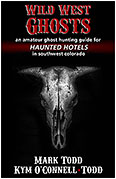
Wild West Ghosts, by Mark Todd and Kym O’Connell Todd may turn some readers into believers. The cover describes the book as “an amateur ghost hunting guide for HAUNTED HOTELS in southwest Colorado”, but it is so much more. Wild West Ghosts might be more accurately described as a travel guide for ghost hunters, outdoors enthusiasts, tourists and history buffs alike.
In addition to the detailed instructions provided for amateur ghost hunters, which lay out the methodology and equipment which the Todds used to achieve their results, and accounts of the local ghost lore of each area, they’ve included vivid site descriptions and colorful area histories which add an old west flavor. In addition, an outline of contemporary area attractions for each site is provided for visitors looking for more than ghosts on their vacation, including highlights of the area, Annual Festivals and events, and cultural and recreational opportunities.
By design, the locations chosen are a bit off the beaten path. The southwestern Colorado locations visited include Creede, Crested Butte, Cripple Creek, Del Norte, Delta, Fairplay, Gunnison, Norwood, Ouray, Paonia, South Fork, and Twin Lakes. For each location is provided with an account of the Todds visit, including details of any strange or ghostly phenomena they encountered either on their spirit box or EMF meter. Many accounts include ethereal conversations they were unaware of at the sites, which were discovered only after they were able to play back audio-only recordings. Their experiences are related in conversational tone, with professional manner and a dash of humor.
For those on a spirit quest, ghost hunting instructions are given in simple, easy to understand terms, ideal for first time ghost hunters. The authors thoughtfully included an account of their test run, made to familiarize themselves with the equipment, along with the lessons that they learned, so those thinking of trying their hand at the ghost hunting thing need not make the same mistakes. Related photos and maps locating each site have also been included to enhance both reading and ghost hunting experiences.
Mark Todd and Kym O’Connell Todd are partners in life, as well as in writing. They reside in the Gunnison area, where Mark teaches creative writing at Western State Colorado University. Their previous works as a team include the humorous, quirky Silverville Saga: Little Greed Men, All Plucked Up and the Majick Outhouse, which all revolve around a fictional Colorado mountain town and keeps readers chuckling to the last pages. To learn more about the Todds and their writing, visit their website, Write in the Thick of Things.
I give Wild West Ghosts five quills. 
Share this:

Weekly Writing Memo: Using Feedback to Improve Your Story
Posted: February 11, 2016 Filed under: Fiction, Stories, Uncategorized, Weekly Writing Memo, Writing, Writing Tips | Tags: Creative Fiction, Feedback, Fiction, Tips, Writing 3 Comments
In last week’s Weekly Writing Memo I discussed my method for giving feedback. This week, Kaye and I are teaming up to discuss what to do with feedback when you’re on the receiving end. We thought it’d be a great idea to do this one together so we could show two opinions for dealing with critiques.
As writers we tend to be very close to our writing and have trouble seeing it objectively; it’s important to get an outsider’s perspective to see how your writing is being read. That being said, hearing criticism of work you’ve put your heart into can be incredibly hard, but there are methods to dealing with it in a useful way.
What is your method for using a critique?
Robin: When I get a critique I basically have a four step process I go through.
- I read it start to finish. No stopping to vent or obsess, no tears, no anger. I just read. It’s important to take all the info in without letting yourself get too emotional about it. If you do get emotional, it’ll be harder to process whether the info is helpful.
- I walk away and let it sit. The initial response to feedback, especially bad feedback, can be overwhelming. Whatever emotions it brought up, I let them out for a bit and then give myself time to let them fade until I feel I can rationally return to the feedback and really look for the truth in it.
- Read it again, item by item, and consider, try, and analyze. Once I’ve cooled my heels some, I return to the notes and reread them, slowly this time going item-by-item. As I look at each comment, I HAVE to consider each item as being true. Then I look at my work and try to prove the feedback right or wrong. If I can’t prove it wrong in at least several ways, then there may be some partial truth, if not complete truth, to the critique. I do this extra for things I think are 100% wrong to make sure that I’m not just too close to the work.
- Use, refuse, revise, and ask questions. Finally, once I’ve considered everything, I go through and revise with what I want to use, and ignore what I’m “refusing”. I also will go back and ask the critic questions on any feedback I need clarity on once I’ve carefully considered it, that way I know what specifically I need to ask.
Kaye: I’m not nearly as methodical as Robin is. But then again, I’m kind of weird about my writing process. For starters, I ask for and await eagerly any feedback I can get. I look at any negative feedback as a window into things that can be improved, and there’s always room for improvement. Always.
So, my process goes more like this – I read through the whole thing, but I pull it up side-by-side with my manuscript, making changes to the original document as I go. If I come to a comment I don’t understand, don’t think I agree with, or I’m not quite sure what to do to fix it, I highlight the comment in the feedback, so I’ll know to go back to it later.
And I do go back to them, once I’ve done all the quick fixes I can. That’s when I take the time to ponder those I don’t understand or disagree with, and decide what I want to do about them. Some I work out clever ways to fix the problem, and some, I may not do anything about.
What do you do if you disagree with the feedback?
Robin: This one can be hard. If the feedback is something I think is completely wrong and I can’t understand it, then I ask questions. The important thing is to ask those questions in the least defensive, and least confrontational way possible. The person did you a favor giving you feedback, so don’t attack, ask for clarity.
For example, I’d ask: “Can you explain more about this specific comment and give me some examples of where you see that?” That way I can maybe get a better idea of what the critic is thinking, and where I need to be looking.
If the feedback is something I think will never be right, and I’m positive that I’ve considered it as many ways I can, then I ignore it. There really isn’t much else you can do. If you disagree, and you can’t see things from their perspective, then ultimately it’s your writing and you get to decide what feedback you use or don’t.
Kaye: I welcome feedback, but that doesn’t mean I agree with every comment I get. As writers, we often become attached to our creations, and sometimes it’s difficult to believe that others find flaw with our masterpieces. I’m no different. I pour my heart and soul into my writing. It’s not easy to separate myself from my work, but I think that’s what we have to do. Always remember that all criticism is about the writing and not the writer. We can’t take it personal, even though it may feel like our creations are a part of ourselves.
What do you use from the feedback?
Robin: I use feedback as a sounding board. I’m not looking for critiques to tell me HOW to fix it, I’m just looking for them to point me at what may or may not be wrong. In general, everyone who reads your work will probably have a different idea of how to fix something anyway, and many of the suggestions won’t be right for YOUR story because they’re suggestion how THEY would fix it. So I focus in on where the critique is pointing, or how they are interpreting things, and then I figure out how I would fix it in my own way.
For example, if someone says “This passage feels slow. I think it’s because this character is boring. I’d cut them.”
I would interpret that advice as meaning “something is wrong with this scene, it feels uninteresting.” Then I’d look at the scene and try to figure out where it goes wrong. Is the character really boring, or just inactive? Is the scene even necessary to the plot, or just filler? I look at the larger idea of the feedback, rather than the specifics. Sometimes I come to the same conclusion as the critique, and sometimes not.
Kaye: I believe there’s a grain of truth to everything. The trick is to pick it out. I always try to find those little granules when I disagree, because I’ve learned that most of the time, it’s there, and if I can find it and make appropriate changes, my story will be better for it. I choose my alpha readers carefully, and I’ve learned that their comments are usually pretty spot on.
Like Robin, I don’t always use their suggested fixes, but their comments let me know where I should be looking for something that’s off and then, I can determine for myself what it is that’s wrong and how I want to fix it. But again, my alpha readers often come up with some really good suggestions, and I use them whenever I can. Seldom do I totally discard a suggestion unless it’s obviously something the reader just doesn’t get. But if my reader isn’t getting it, then that tells me I’m doing something wrong or they would get it. Chances are, if my alpha reader doesn’t get it, my target audience won’t get it either.
What if you don’t know how to fix it?
Robin: A lot of times if someone gives me feedback that I don’t know how to fix, it’s because I don’t know what the real problem is. So, of course, I ask questions until I have a better understanding. Then I try to come up with a few possible solutions.
I will also sometimes talk with the critic about the changes I’m debating to get their perspective on whether it’ll fix things, or I’ll try the fix and then give it to someone else and see if I get the same critique. It’s really just a matter of trial and error if you can’t figure out a specific solution. After that, all you can do is take some time away from it and revise other things and hope when you come back with fresh eyes you’ll figure it out.
Kaye: It’s kind of funny, but I’ve learned a lot about fixing my fiction from my screenwriting classes. One thing I’ve learned is that if you can’t find a way to fix a problem, sometimes you have to look to see a change somewhere else in the writing that will fix the problem scene and make it all work. I guess you have to think outside the box, or beyond the page.
After looking at a problem from every angle, if I still can’t find a way to fix it, then I consult with the reader that pointed out the issue to see if they also have suggestions on how it might be fixed. If that doesn’t work, I can always throw it out to the members of my writers group and we can brainstorm it. Helpful suggestions seldom fail to materialize from these sessions.
Final Thoughts:
Kaye: To me, critiques are a writing tool, enlisting another set of eyes to see what I can’t because I’m too close to the work. When utilizing this tool, I try and take advantage of each and every comment that I can. After all, if I didn’t think they were intelligent and talented, I wouldn’t ask them to be my alpha readers. But the important thing to remember is not to take negative feedback personal, its about the writing, and being open to feedback is what makes your writing better.
Robin: Overall, the important thing for me when looking at critiques is to consider each element carefully and thoroughly. The whole point is to get an outsider’s perspective, so if I don’t consider it seriously, it’s a waste of everyone’s time. If I can fix what they see, I do, and if I can’t or think they’re wrong, I don’t. That being said, if multiple people say the same thing is wrong, then it’s most likely wrong and you need to do something about it, whether you like it or not.
Ultimately, remember the point of a critique is to tell you how your writing is being read, and whether the critic is wrong or right, someone somewhere will probably agree with them. So fix what you can, let go what you can’t, and do your best to be critical of your work no matter how much you love it.




















How You Can Help to Build a Writer’s Platform
Posted: March 3, 2016 | Author: kayelynnebooth | Filed under: Commentary, Promotion | Tags: Book Review, Children's Books, Creative Fiction, F, Fiction, promotion, Southern Colorado Literature Examiner, Western State College, Writing, Writing Process | 1 CommentPainting by Mitch Barrett, Poetry by Kaye Lynne Booth
Everything I’ve ever done in life, I’ve done my own way, usually depending on myself and no one else. One thing anyone who knows me can tell you is I’m persistent. When I set out to achieve something, I don’t stop until I do. It has been no different with writing. But I’m discovering that I need a little help with this endeavor.
I had an unpleasant experience with a student teacher in the English department as an undergrad, so just when I was beginning to learn that I liked writing and maybe English should be my major, I was soured on the whole idea by the feeling that the field was too subjective for me, and I chose to major in psychology instead.
But after I’d been out of college for a few years, I discovered not only that I had a love for the written word, but also that I had some talent for it. I started out writing poetry, which I’ve since learned, is not my strong suit, but even there, I don’t do too bad. I sold my first poem to Dusk & Dawn Magazine in 1996 for $5. Problem was, that didn’t even cover all the postage I had spent submitting, and I couldn’t afford to play the starving artist. I had a family to help support. There were others to consider. So, writing went onto a back burner, just simmering for about twelve years.
Then, I discovered the Internet and rediscovered my abilities for writing as new opportunities presented themselves. The rise of the Web actually changed the entire publishing industry over time, opening up all kinds of new opportunities for writers, including, but not limited to, self-publishing, marketing via social media, vanity presses, and content mills. As blogs and websites grew in number, more content was needed than ever before. Problem was, I’m technologically challenged. Slowly, over time, I have learned to use social media to my advantage a little, and I’ve learned to use many of the writing sites and content mills to make minimal amounts of money.
One of the coolest things happened in my writing endeavors didn’t involve any money at all. I had one of my poems featured in a painting by artist Mitch Barrett and displayed and sold at the Kaleidoscope Gallery in Battlesea Park, London. (There’s a lengthy story behind how this came about, which I may relate in a future blog post. Anyone who knows me is surely tired of hearing it.
As a freelancer, I became the Southern Colorado Literature Examiner for Examiner.com, which didn’t really pay, but offered opportunity to meet other writers, get free books for review and obtain credits for my portfolio. I also cranked out articles for other content mills which did pay, at least a little, which added to my skill set, diversifying my writing talents, and I was published in Freeman, which was a bit more profitable.
I thought I was quite fortunate when I was able to obtain a publisher for one of my children’s stories. After seven wasted years, it turned out I was not so fortunate, since my book still wasn’t published. But we learn from experience.
Still struggling to launch my writing career, I discovered the low residency MFA program for Creative Writing offered by Western State and I applied. Maybe I couldn’t do it on my own, but I would learn what I needed to know, one way or another. And I have learned a lot. I’ve learned about my own writing process. When I started at Western, I’d never even thought about it. I’m not even sure I was aware I had a process, but I did and still do. Now I’m just more aware of it. I learned how to craft my words to be pleasing to the ear. I learned how to read aloud in front of an audience, and I’ve learned that I do it well.
Last summer, I completed my emphasis in genre fiction and read from my thesis novel, Playground for the Gods: Book 1: The Great Primordial Battle. I’ve learned how to treat my writing as a business, at least in theory, although I’m still trying to get it off the ground. And I’ve learned how advances and royalties work, and that you have to sell a lot of books before you will ever receive royalties.
And I learned that screenwriting is where the big money is. When I took genre screenwriting for my out of concentration class, I also learned that it was fun, it came pretty easy to me and I was fairly good at it. So, instead of graduating, I stayed in school for another year to get a second emphasis in screenwriting. What I’m learning this year, is that there’s a lot of competition on screenwriting and it’s tough to get a break. You practically have to live in L.A. to get anywhere. Yet, I am determined to make all the money I now owe for my schooling pay off. I haven’t given up yet, and I don’t intend to now.
I’m currently shopping my thesis novel and two of my children’s stories, five short stories, and various poems. I’m also very close to finishing my western novel, Delilah. At Western, thanks to my instructor, Russell Davis drawing us out of our comfort zones, (and maintaining as much discomfort for us as possible), I discovered that I enjoy writing in the western genre, and although it is not one of the bestselling markets, I do it well. And I’m working hard, through this blog and social media, to build a writer’s platform and gain a following to make myself look more appealing to agents and publishers.
Here’s where you, my readers come in, because you can help. Without my readers, my writing just sits there on the page, not doing much of anything. You are my writer’s platform. You are my following.
Many people don’t realize that liking a link on Facebook, while cool, doesn’t really help the author grow their platform unless they actually read the post and subscribe by email. What does help, is if you’ll take the time to read the post here, on my Writing to be Read site, and subscribe to the blog. That’s what shows how large my reader following is, and it does my heart good to watch as it grows.
You can also like the post below it, with all the “share” buttons, but you must have a WordPress account. If you don’t have one, you can sign up for one, but then, of course, you will have a blog to maintain, so be sure you know what you’re getting into. I’m guessing that many people just like the link on Facebook to show their support, but they don’t actually click on the link and read the post. But, if you leave a comment, I’ll be able to tell that you read it, and if you subscribe, it will show you liked what you read. You’ll make my day.
If you’d like to show even more support, you can buy my short science fiction story, Last Call. If you like it, write a review on Amazon. And, you can follow me on Facebook, Twitter, LinkedIn, or Pintrest. Help an old writer get a break.
Your support is always appreciated. Thank you for being a reader of my work. After all, for me, it’s not really about money. It’s about Writing to be Read.
Share this: