Growing Bookworms – Meet prolific children’s book author, Janice Spina, and a review #GrowingBookworms #readingcommunity #childrensfiction
Posted: February 14, 2024 Filed under: Book Review, Books, Children's Books, Growing Bookworms, Interview, Review | Tags: Children's Books, Growing Bookworms, Janice Spina, Robbie Cheadle, The Case of the Sad Mischievous Ghost, Writing to be Read 50 Comments
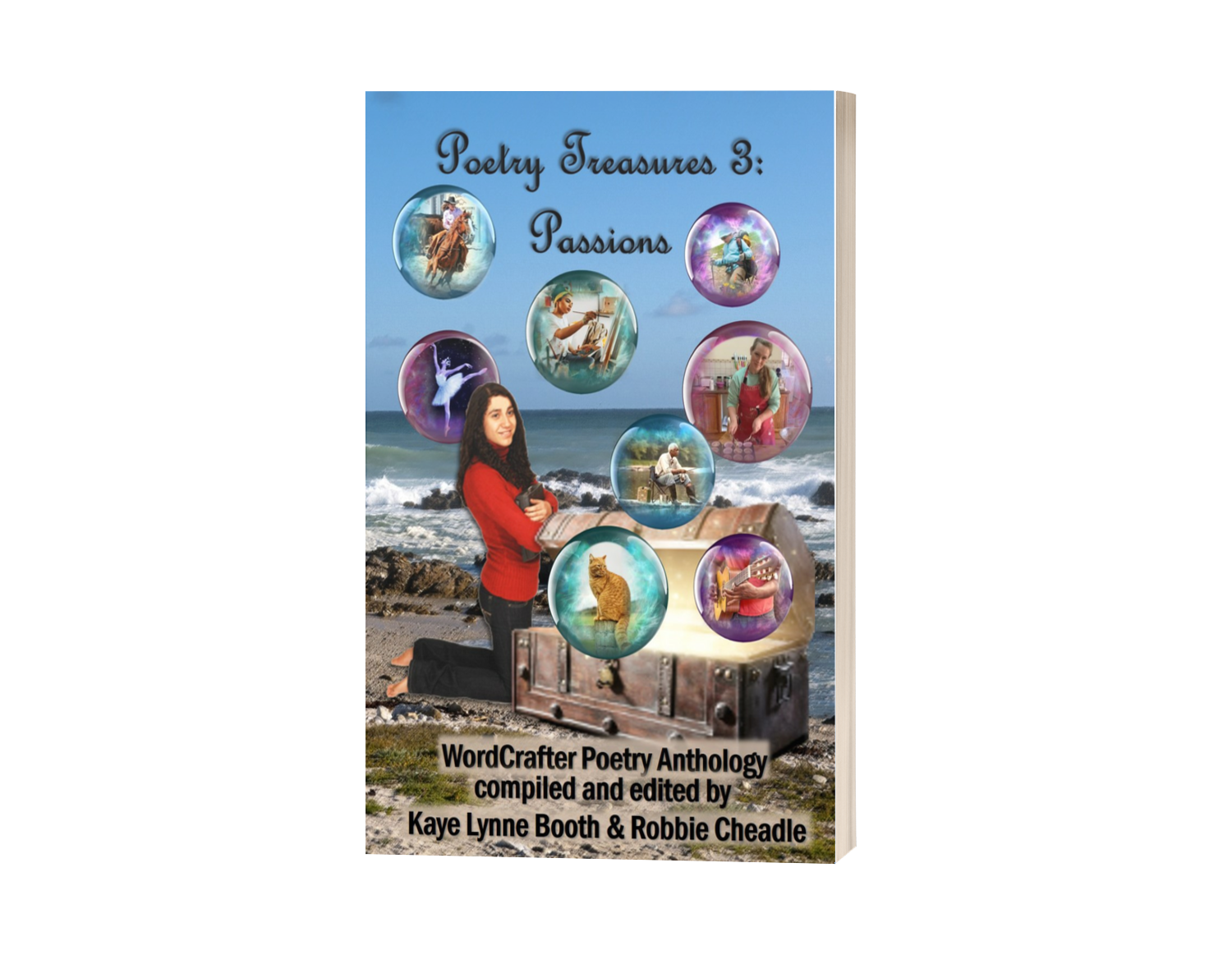
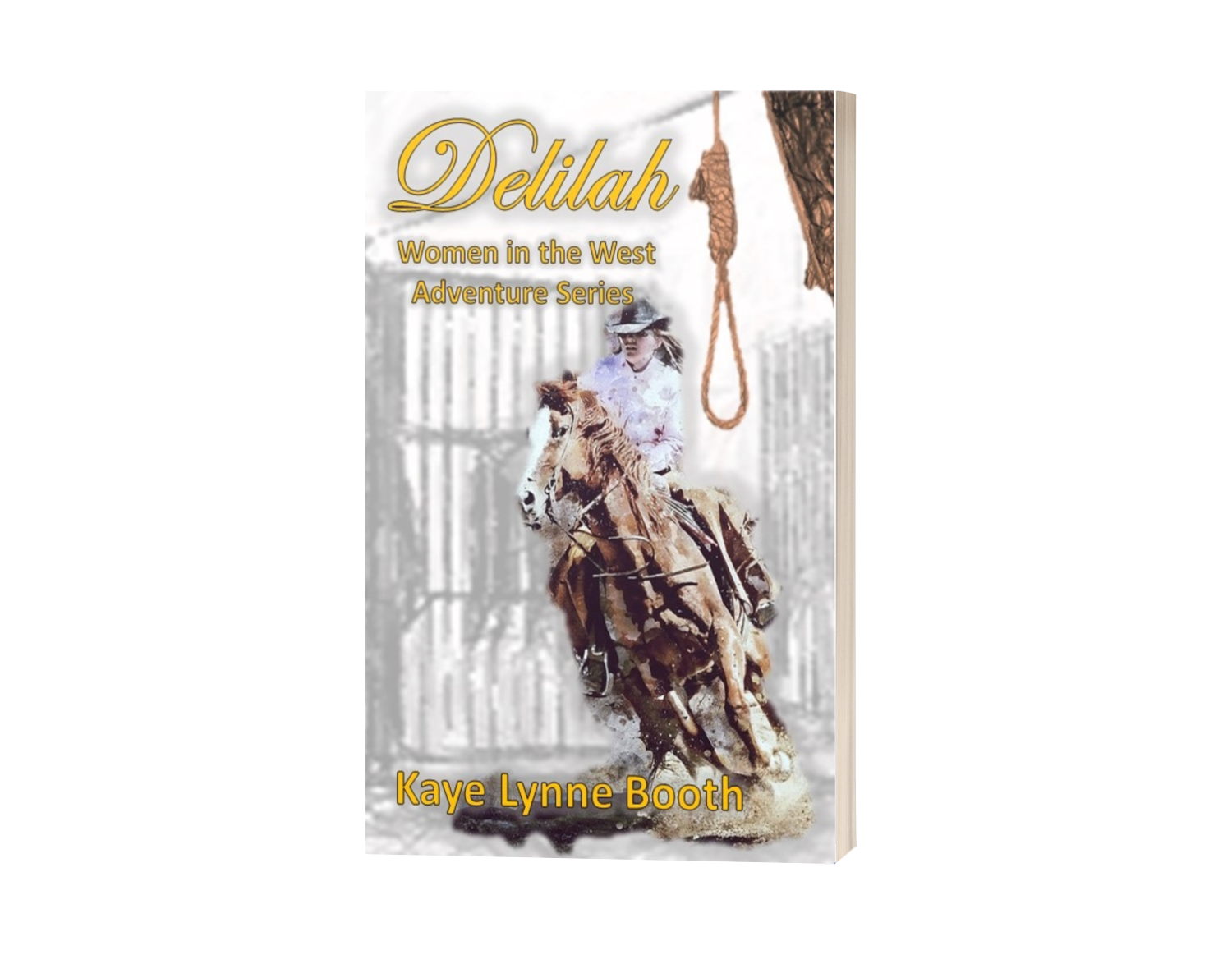
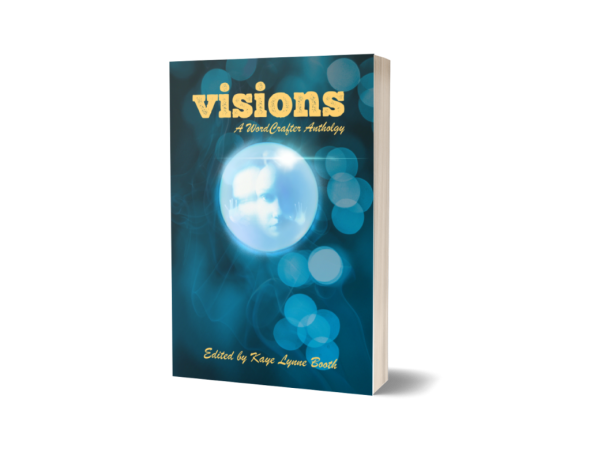
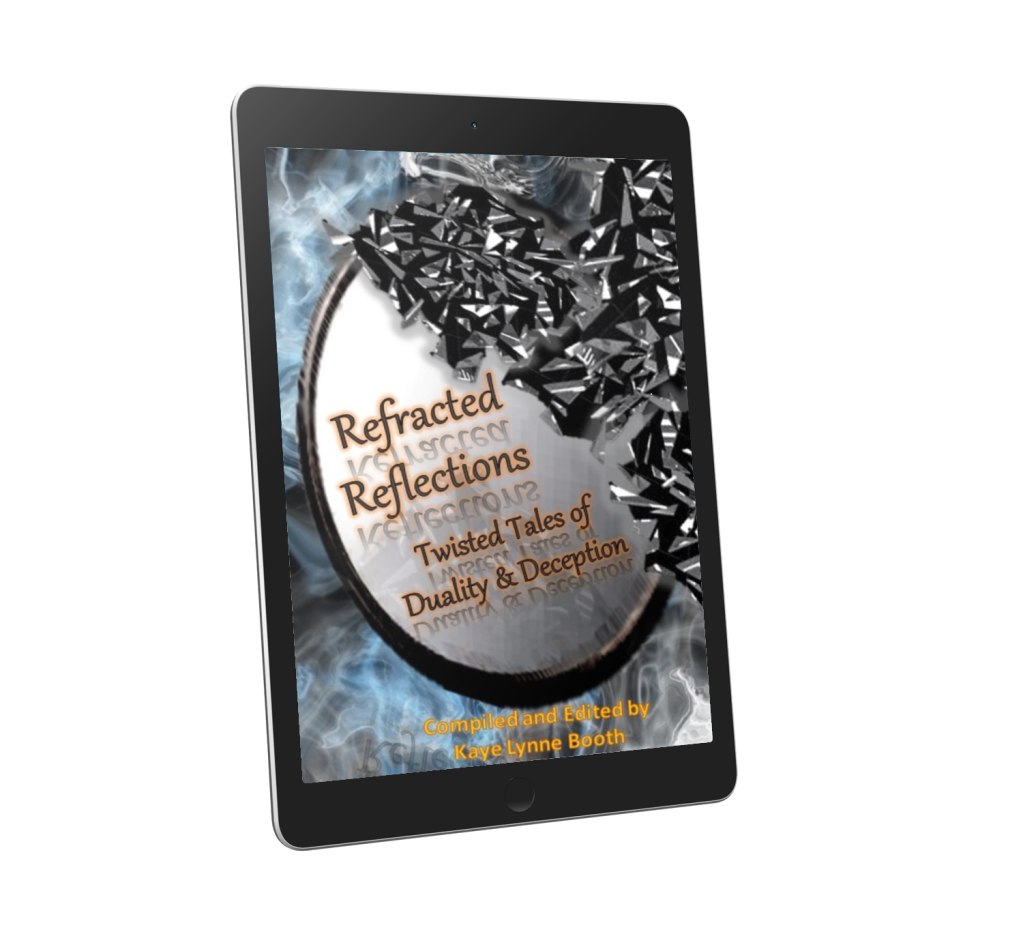
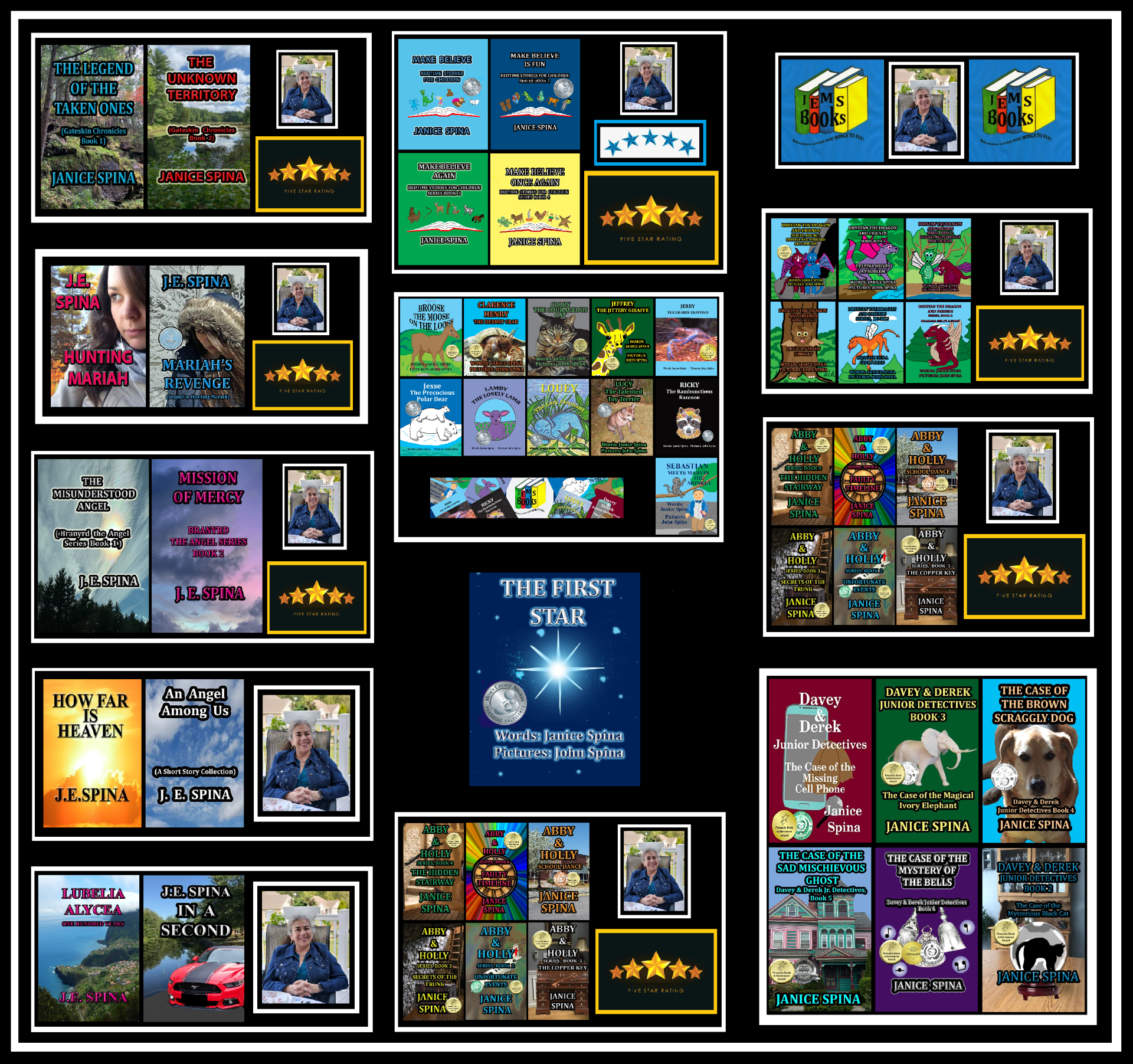
My featured guest for this month’s Growing Bookworms post is prolific children’s book author, Janice Spina. Janice also writes for adults as J.E. Spina. This is an overview of Janice’s books:
Welcome Janice!
Tell us a bit about your books and your history of writing for children
I have always love writing poetry since a young child. When I wrote my first book, Louey the Lazy Elephant,I had to put it into rhyme. I find that children love rhyming; it keeps them interested if there is a cadence to the story.
I have 22 children’s books at present. Most of them are in rhyme and all of them carry important life lessons and family values. I first began writing for children but branched out later on into MG/PT/YA and novels for 18+. I have books about animals, dragons, and even short stories in a series of six stories per book for children ages 5-8 called Bedtime Stories for Children Series. Some of my stories in this series are based on experiences while others are purely from my overwrought imagination.
A number of your children’s books feature animals and creatures. Are these stories based on personal experience with these creatures?
Many of my children’s books are dedicated to individuals or based on imaginary animals or real-life pets that I have had in the past such as: Jerry the Crabby Crayfish – a pet blue crayfish, Lamby the Lonely Lamb – dedicated to my granddaughter and her stuffed lamby, Jesse the Precocious Polar Bear – dedicated to a little boy I met while vacationing in Aruba, Sebastian Meets Marvin the Monkey – dedicated to my youngest grandson and his stuffed monkey, Colby the Courageous Cat – dedicated to my daughter’s cat, Jeffrey the Jittery Giraffe – dedicated to a little boy who was nervous about loud noises, Clarence Henry the Hermit Crab – a pet hermit crab we once had, Lucy the Talented Toy Terrier – my first dog, The First Star – dedicated to my two children when they were young. I hope to continue to create stories to delight and entertain children for uyears to come along with my husband’s help creating the beautiful illustrations and covers.
The illustrations in your picture books are lovely. Your husband helps you with your illustrations. How much input do you put into the illustration process?
My husband, John, does do the illustrations and covers for all of my children’s books. He also creates the covers for all the other books I publish. Thank God for him! I would be lost without him.
I had to convince him to do this many years ago beginning in 2013. He told me that he wasn’t an illustrator but would give it a try after I told him how much it would cost to hire someone who was an illustrator. John has a quirky sense of humor. I do give him plenty of input about each illustration and cover, much to his chagrin. We don’t always agree on each one and therefore there are many revisions. But I am always pleased with what he creates as the finished product and give him an ample number of kudos online when I present his work.
What do you like best about writing for children?
I love writing for children. What I like best is to see children reading and enjoying my books or anyone’s books. The joy in their faces when they read or are read to is priceless. Reading is so important at an early age and not only for children but also for adults.
I love to hear from parents that their children loved one of my books and look forward to reading more. That is why I write. Receiving positive feedback in reviews is another way to make authors happy and give them an early Christmas gift.
Children – preschool to grade 3 are like sponges soaking up all kinds of things. My goal is to create entertaining and good, clean stories that are educational and full of important life lessons and family values that will stay with them for a lifetime. I hope my stories will enhance their reading experience, increase their reading levels, help to encourage them to become lovers of reading, and create readers and thinkers of tomorrow.
I also write for middle-graders, preteens, and young adults. This age group is a difficult group to entice into reading. They are always absorbed into the newest technology such as X-Box and video games, etc. I create stories in series for this age-group that have plenty of magic, mystery, suspense, wizards, ghosts, and time travel. It is a tough job but I will continue to do all I can to encourage this age-group to read.
What is your favourite children’s book or series for children?
Of all my 22 young children’s books my favorite is still, Louey the Lazy Elephant. This was the first book John illustrated. I love the crayon drawings that he created and how sweet and innocent he made Louey look. It is one of my most popular books alongside Jerry the Crabby Crayfish.
My favorite MG/PT book is Davey & Derek Junior Detectives Series Books 1-6. I had such fun creating the twins and their twin-telepathy, adventures, magic, mystery, ghosts and even time travel. Kids enjoy this series but so do adults.
I was requested by a few readers to offer a series for girls after Davey and Derek were so popular. That is why I wrote Abby & Holly Series Books 1-6. These books are enjoyed by both girls and boys.
There are more stories in my head waiting to be written down, so stay tune for many more to come for all ages.
Thank you so much, Robbie, for inviting me as a guest. I thoroughly enjoyed answering your questions and sharing a little bit about myself and my books with you and your readers.
Thank you, Janice, for being a delightful guest.

My review of The Case of the Sad Mischievous Ghost (Davey & Derrick Jr. Detectives Book 5) by Janice Spina

This is the fifth book in the Davey and Derek Junior Detective Series. Davey and Derek, who are warlocks under the tutelage of their aunt, a witch, have already solved four mysterious cases and they have gained a reputation as detectives. Abby and her cousin, Holly, seek them out at school. The two girls believe the house they have recently moved into, called the Sheridan House after its previous owner, is haunted by a ghost. They have experienced some strange happenings. Davey and Derek agree to investigate and see if they can discover the source of the strange happenings and visitations.
With some advice from their Aunt Gigi, the pair set out to determine the cause of the girls’ anxiety. They embark on an intriguing adventure including cold spots, ghostly forms, and secret tunnels.
This book was reminiscent for me of the Secret Seven adventures series by Enid Blyton which I read as a young girl. It is full of the same energy and excitement as Enid Blyton’s books, but the Davey and Derek Junior Detective Series incorporates a taste of magic and the supernatural which appeals to modern children. This series also tackles topical issues faced by 21st century youngsters. The language is appropriate for the target audience and will keep young readers engaged and interested.
I enjoyed the subtle demonstrations of respect and family values incorporated throughout this book, which send an excellent message to young readers. An enjoyable book with an interesting storyline.
You can purchase The Case of the Sad Mischievous Ghost (Davey & Derrick Jr. Detectives Book 5) from Amazon US here: https://www.amazon.com/Mischievous-Ghost-Davey-Junior-Detectives-ebook/product-reviews/B072QBJ7LC
About Janice Spina

Janice Spina is a multi-award-winning author with 45 books of which there are 22 children’s books,12 MG/PT books and two books in a YA series with four more coming over the next few years, seven novels and a short story collection for 18+ written under J.E. Spina. She is also a copy editor, blogger, book reviewer and supporter of fellow authors. Her husband, John, is her illustrator and cover creator. Watch for more books to come over the next few years.
Jance has received the following awards for her books:
10 Mom’s Choice Awards – Silver Medals, 5 Readers’ Favorite Book Awards – Silver Medal, Bronze Medal, Honorable Mention and Finalist, 21 Pinnacle Book Achievement Awards, 1 AUTHORSDB – Cover Contest, 2 Book Excellence Award Finalists, 2 Top Shelf Awards – First Place & Runner up, one Maincrest Media Award
Her logo is Jemsbooks – books for all ages! Her motto is – Reading Gives You Wings to Fly! Come soar with Jemsbooks! Happy reading!
Janice loves to hear from readers and appreciates and happily welcomes reviews.
Find Janice Spina
About Robbie Cheadle
Award-winning, bestselling author, Robbie Cheadle, has published fifteen children’s book and two poetry books. Her work has also appeared in poetry and short story anthologies.
Robbie also has two novels published under the name of Roberta Eaton Cheadle and has horror, paranormal, and fantasy short stories featured in several anthologies under this name.
The eleven Sir Chocolate children’s picture books, co-authored by Robbie and Michael Cheadle, are written in sweet, short rhymes which are easy for young children to follow and are illustrated with pictures of delicious cakes and cake decorations. Each book also includes simple recipes or biscuit art directions which children can make under adult supervision.
Robbie and Michael’s new Southern African Safari Adventures series is aimed at teaching young children about Southern African wildlife in a fun and entertaining way. Each book contains a rhyming verse story about a particular animal, as well as illustrations by Robbie Cheadle, photographs and links to video footage about that animal.
Robbie’s blog includes recipes, fondant and cake artwork, poetry, and book reviews. https://robbiesinspiration.wordpress.com/
Share this:

Book Review: Neema the Misfit Giraffe
Posted: January 26, 2024 Filed under: Animals, Book Review, Books, Children's Books, Fiction, Review, Wildlife | Tags: Animals, Book Review, Girraffes, Neema the Misfit Giraffe, Robbie and Michael Cheadle, Southern African Safari Adventures, Wildlife, Writing to be Read 24 Comments
About the Book

Neema is different from her fellow giraffes. Their lack of understanding make her feel unwelcome. Neema sets off on a journey to find a new friends.
Includes illustrations, photographs, and links to video footage of giraffes, as well as fun giraffe facts.
Purchase Link: https://www.amazon.com/Misfit-Giraffe-Southern-African-Adventures-ebook/dp/B0CMCZ7G93
My Review
I requested an ARC of the latest children’s book by Robbie and Michael Cheadle. I’ve followed this mother son writing team for several years, and truly enjoyed many of thier Sir Chocolate book series for young children. (I’ve reviewed many of those and will direct you to them at the end, if you’re interested.)
Neema the Misfit Giraffe is the first book in their new Southern African Safari Adventure series, and I wanted to see how their talents have developed as they’ve grown together as authors. As in the Sir Chocolate series, Robbie has designed the cover and illustrations herself, but this series features, not fondant art, but a cover done in gorgeous water colors and breathtaking photographs of live animals in the South African bush illustrate the pages. Also like the Sir Chocolate series, the book’s message is delivered in delightful verse.
Neema the Misfit Giraffe features an eye-catching cover that is bright and colorful, beautiful illustrations and even links to video of the animals their characters are based on, and fun facts about giraffes. This series is going to be a lot of fun, but it is also very educational, and I just love it.
I give Neema the Misfit Giraffe five quills.

____________________________________
Kaye Lynne Booth does honest book reviews on Writing to be Read in exchange for ARCs. Have a book you’d like reviewed? You can request a review on the Book Review tab above.
Share this:

Growing Bookworms – The importance of character names in children’s fiction #GrowingBookworms #childrensfiction
Posted: January 10, 2024 Filed under: Children's Books, Fiction, Growing Bookworms | Tags: Character Names, characters, Enid Blyton, Growing Bookworms, Names, Robbie Cheadle, The Land of Far Beyond, Writing to be Read 57 CommentsThe name of a child is important to him/her as well as to their community.
From an individual point of view, a child’s name plays an important role in the advertisement and maintenance his/her self identity. The first word most children learn to write is their name. Some children and adults chose to be known by a nickname and others prefer to use their full name.
From a parental perspective, the name they chose is often symbolic of their hopes and dreams for that child. Some families practice namesaking or the naming of a child after the father or grandfather. The practice of namesaking is much more common in male children than in female children. Namesaking can be positive for a child, but it can also result in high expectations being placed on the child if the person after whom they are named is a high performer. Namesaking often happens in wealthy families and royalty and comes with an expectation for the child to live up to the accomplishments of the previous generation/s. John Jacob Astor IV and his son, John Jacob Astor VI, come to mind when I think of failures to live up to an inherited moniker.
From a community point of view, names often have religious or cultural significance. In these circumstances, the name of a child can impact the way in which they are accepted by, and integrate into, a community. Names also have meanings which can be important. I remember smiling when meeting a heavily pregnant lady with the name of Chastity.
Based on the above, it is obvious that the name of a character / characters in a children’s book are important. The names will immediately tell the child a lot about the character and the child will also make assumptions based on the names, as follows:
- the religion of the character/s – does the character have a Biblical name or a Hebrew name or a Muslim name?
- the ethnic background of the character – does the character have an Irish, Spanish, English, American, or Japanese name? In South Africa, there are 11 official languages and each group of language speakers has its own traditional names. For example, popular Afrikaans names are Pieter, Willem, Hans, and Mariska and popular Zulu names are Amahle, Bongani, Lindiwe, and Dumisani.
- does the character use a nickname or their full name? I have always been called Robbie although my full name is Roberta. Both my sons chose to use their full names of Gregory and Michael.
- a name can also tell you about a character’s employment or social position. For example, a lot of native African people who work in service industries chose to either use European names instead of their traditional names or they use a short form that is easier for customers to say and remember.
English author, Enid Blyton, made great use of names in her children’s books. You can always tell what type of character you are dealing with from their names. You can also usually get a good idea about the genre and type of story from her naming conventions, as follows:
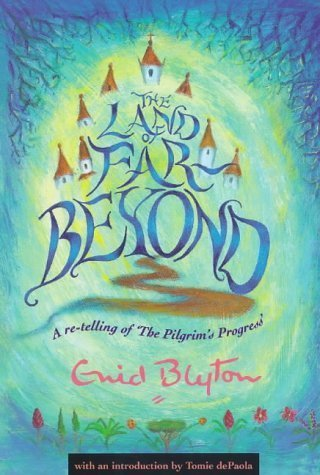
The Land of Far-Beyond is a Christian allegory and tells the story of a boy named Peter and his two sisters, Anna and Patience, who travel from the City of Turmoil to the City of Happiness in the Land of Far-Beyond. The three children carry the heavy burdens of their bad deeds on their backs. With them are two other children, Lily and John, and five adults—Mr Scornful, Mr Fearful, Dick Cowardly, Gracie Grumble and Sarah Simple.
The Enchanted Wood series of three books tells of the adventures of three children who live near the Enchanted Wood. One day they discover a great tree that reaches right up into the clouds called the Faraway Tree. The children climb the Faraway Tree and discover that it is inhabited by magical people, including Moon-Face, Silky, The Saucepan Man, Dame Washalot, Mr. Watzisname, and the Angry Pixie, whose houses are built in holes in the great trunk.
I have tried to make good use of names in my children’s book series. Sir Chocolate and Lady Sweet were intended to clearly indicate that the books are fantasy and are about sweet treats. All the illustrations are made from cake and fondant art and the books all include recipes.
Neema the Misfit Giraffe was intended to make it obvious that the book has an African setting. The name, Neema, means grace in Swahili. Neema’s companion, Amhale, has a Zulu name which means the beautiful one.

What are your thoughts on names in children’s fiction? Do you think they are important? Let me know in the comments.
About Robbie Cheadle
Award-winning, bestselling author, Robbie Cheadle, has published fifteen children’s book and two poetry books. Her work has also appeared in poetry and short story anthologies.
Robbie also has two novels published under the name of Roberta Eaton Cheadle and has horror, paranormal, and fantasy short stories featured in several anthologies under this name.
The eleven Sir Chocolate children’s picture books, co-authored by Robbie and Michael Cheadle, are written in sweet, short rhymes which are easy for young children to follow and are illustrated with pictures of delicious cakes and cake decorations. Each book also includes simple recipes or biscuit art directions which children can make under adult supervision.
Robbie and Michael’s new Southern African Safari Adventures series is aimed at teaching young children about Southern African wildlife in a fun and entertaining way. Each book contains a rhyming verse story about a particular animal, as well as illustrations by Robbie Cheadle, photographs and links to video footage about that animal.
Robbie’s blog includes recipes, fondant and cake artwork, poetry, and book reviews. https://robbiesinspiration.wordpress.com/
Share this:

WordCrafter News: Special Christmas Edition – Looking Forward to 2024 & Early Call For Submissions
Posted: December 25, 2023 Filed under: Anthology, Books, Call for submissions, Children's Books, Dark Fantasy, Dark fiction, Dark Humor, Fiction, Historical Fiction, Holidays, Horror, Kickstarter, Paranormal, Science Fiction, Short Fiction, Speculative Fiction, Stories, Uncategorized, Western, Women's Fiction, WordCrafter, WordCrafter News, WordCrafter Press, Writing, Writing to be Read | Tags: 2024, Anthology, Call for submissions, Charlie Chickadee Finds a NEw Home, D.I.Y. Author, Dark fiction, Heather Hummingbird Makes a NEw Friend, My Backyard Friends series, Poetry Treassures 4: Natural World, Sarah, Tales from the Hanging Tree, Timothy Turtle Discovers JEllybeans, Women in the West adventure series, WordCrafter Press, WordCrafter Quality Writing & Author Services, Write it Right Quality Editing Services, Writing Reference, Writing to be Read 16 Comments
Looking Forward to 2024

WordCrafter Press
2024 promises to be exciting at WordCrafter Press and I am thrilled to tell you about it.
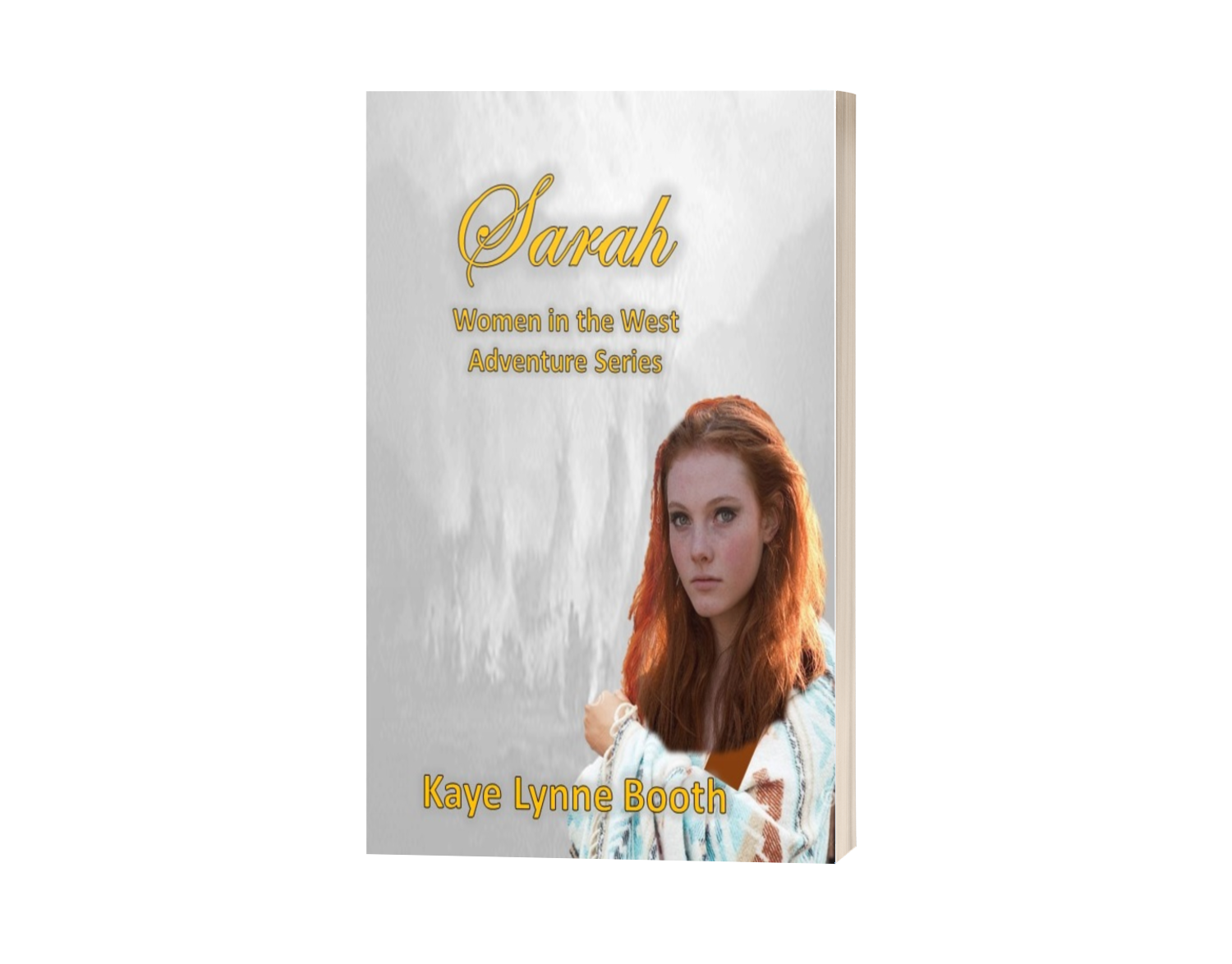
In January, book 2 of the Women in the West series, Sarah launches on Kickstarter and its going to be a good one. Rewards will include not only early digital and signed print copies of Sarah, but Special Edition Illustrated copies of both Sarah and Delilah, never before offered.
In March, Sarah will be released through distributors, and will be available at your favorite online retailers. I’ll be launching with a book blog tour and giveaway, so be sure and watch for that.
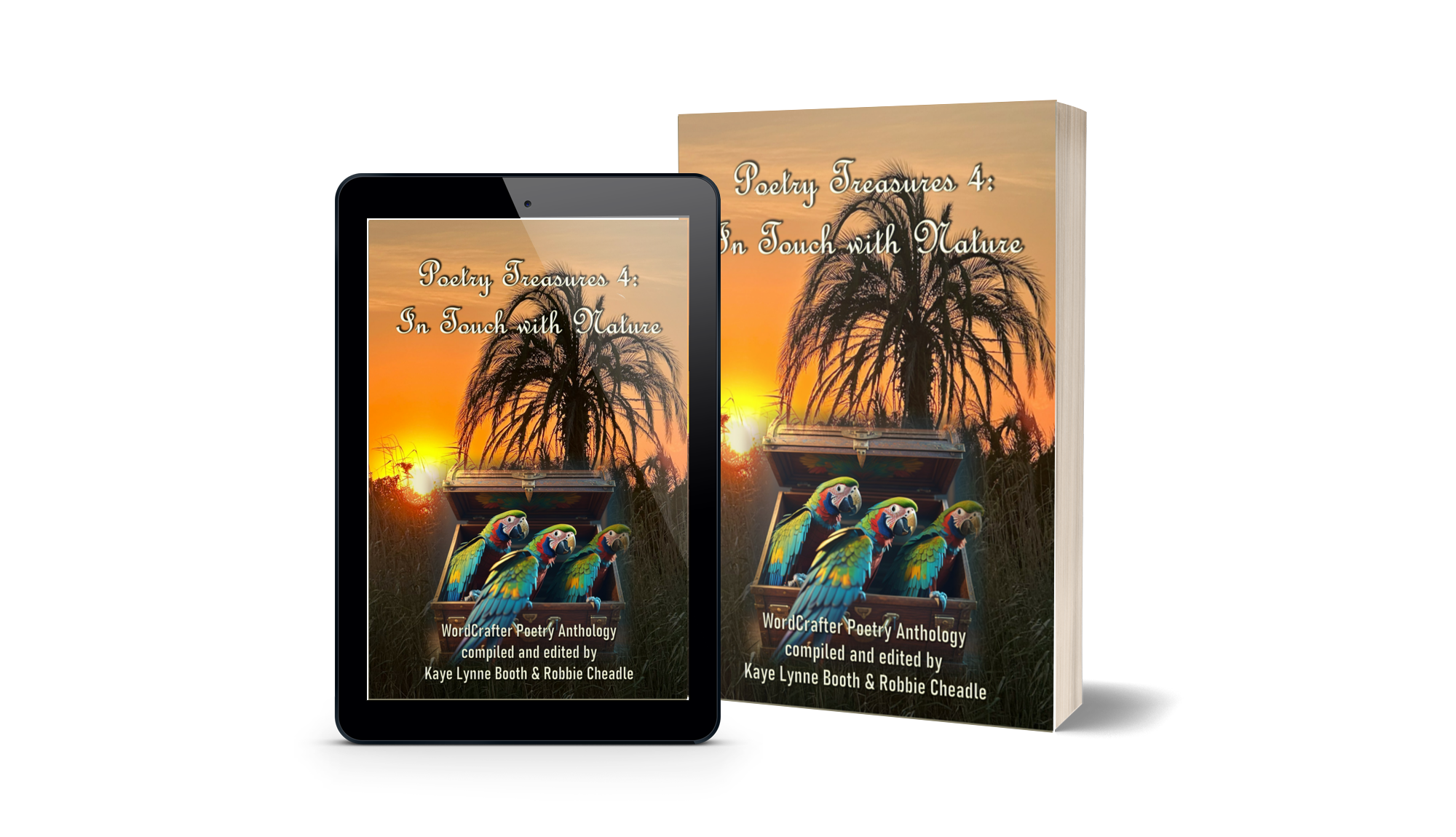
In April, Poetry Treasures 4: Natural World will be released through distributors. (The cover pictured above is just a fill in.) Featuring poetry written by guests of the 2023 “Treasuring Poetry” blog series with Robbie Cheadle. There will be a book blog tour for this book, with audio/video readings by the poets.
In May, my nonfiction writing reference book, D.I.Y. Author will be released through distributors, and will be available at your favorite online retailers. If you’re an author on a shoestring budget determined to find ways to write and sell books, this book is for you. Naturally, a book blog tour and giveaway will accompany this release.
In July, we have a Kickstarter campaign planned for my children’s book series. I’ll be releasing the first three books in the My Backyard Friends series, Heather Hummingbird Makes a New Friend, Timothy Turtle Discovers Jellybeans, and Charlie Chickadee Finds a New Home. After a first illustrator experience which turned sour, these books have been awaiting an illustrator for eight years. But I finally found one, whose illustrations I am proud to have featured in my books, Robbie Cheadle. If you know her, you might be familiar with the wonderful illustrations she’s begun to do recently, and you’ll understand why I am so thrilled to have her as an illustrator. These stories feature animal and bird characters in tales that each teach a social lesson. With Robbie’s beautiful illustrations, they are not to be missed.
In August, the first three books in the My Backyard Friends series will be released through distributors, and will be available at all your favorite distributors. I’ll be launching with a book blog tour and giveaway.
In September, a by invitation only themed anthology, Tales From The Hanging Tree, will be released through distributors and launched with a book blog tour and giveaway, with audio/video readings by the authors.
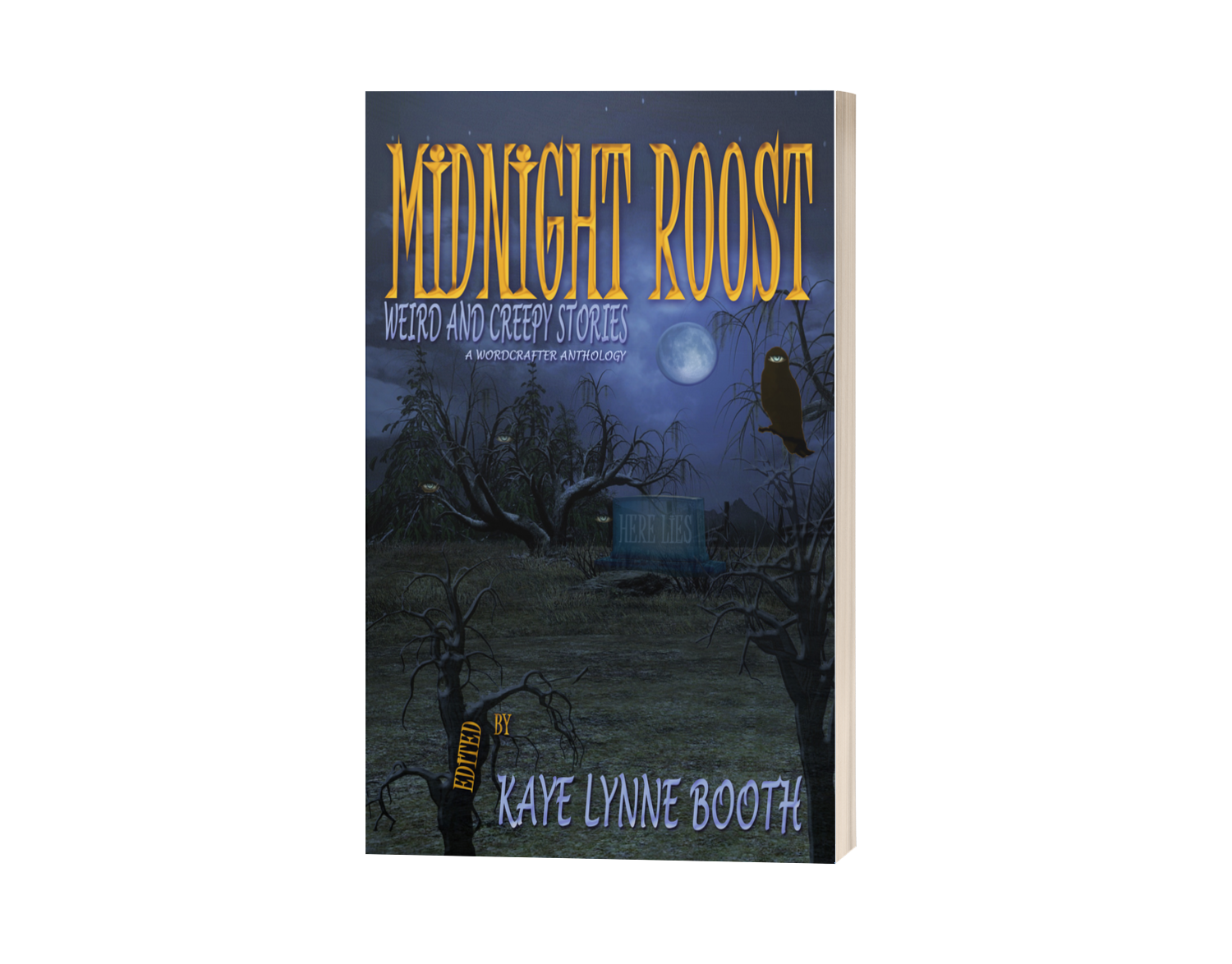
In October, the 2024 WordCrafter anthology will be released. Each year I release the annual anthology in October, which is just a scary month. Halloween is my favorite holiday, and I love scary stories, and other scary stuff, so releasing in October is condusive to dark fiction. In 2023, we had a great line-up of dark and scary stories in Midnight Roost, so we’re going with a dark fiction theme again this year. It will include both by invitation submissions and contest submissions that are worthy, and feature the winning story from the contest. (See Call for Submissions below.)
WordCrafter Quality Writing & Author Services
I’m happy to announce that in 2024, WordCrafter will be adding Book Trailers to our list of quality author services. We will have three different trailer designers available to choose from: myself, Robbie Cheadle and DL Mullan, and they will be offered at affordable prices.
Other services offered include editing and publishing services and WordCrafter Book Blog Tours. I still have time slots available for editing services into 2024. Learn more at Write it Right Quality Editing Services.
Writing to be Read

On Writing to be Read, 2024 promises more of the new monthly blog series, “POP with Jeff Bowles”, which has been well recepted. A blog series about all things POP, the first Wednesday of every month.

We also have a new addition to the WtbR team. Starting in January, DL Mullan will be bringing us another new blog series the first Friday of each month, “Undawntech: Technology and the Creative Arts”. Be sure to check it out and give Dawn a big welcome.
Call for Submissions – 2024 WordCrafter Anthology
It’s time for the Call for Submissions for the 2024 WordCrafter Anthology, which we’re calling “Dark Fiction” for now. Dark fiction is the theme: horror, paranormal, dark fantasy, science fiction, speculative fiction. Any genre as long as it is dark or scary will do. I’m leaving it wide in the hopes of bringing in a diverse selection of stories that will keep readers awake at night.
Submission Guidelines
Genres: Paranormal, Dark Fantasy, Horror, Science Fiction, Dark Humor, Speculative Fiction any combination there of.
Length: up to 5000 words
Submission Deadline: April 30, 2023
Submissions open January 1 and close on April 30. Watch for the January 1 post for full submission guidelines and contest entry.
Merry Christmas and Happy Holidays to All!

____________________________________________________
Join Kaye Lynne Booth & WordCrafter Press Readers’ Group for WordCrafter Press book & event news, including the awesome releases of author Kaye Lynne Booth. Get a free digital copy of her short story collection, Last Call and Other Short Fiction, as a sampling of her works just for joining
Share this:

Growing Bookworms – War in Children’s Literature: yes or no? #GrowingBookworms #childrensliterature #warbooks
Posted: November 8, 2023 Filed under: Books, Children's Books, Classics, Fiction, Growing Bookworms, Historical Fiction | Tags: Children's Books, Growing Bookworms, Historical Fiction, Robbie Cheadle, War and children, Writing to be Read 68 Comments
The world is full of conflict currently, and this has been the case throughout the reign of ‘civilized man’ on this beautiful planet of ours.
According to save the children US, a total of 93,236 children have been killed or maimed in conflicts in the last ten years (this figure is from November 19, 2020 before the two recent conflicts centering around Ukraine and Israel), which equates to 25 children (an averaged size school classroom) of children every day.
These children were mainly victims of airstrikes, shelling, landmines, and other explosive weapons used in populated areas.
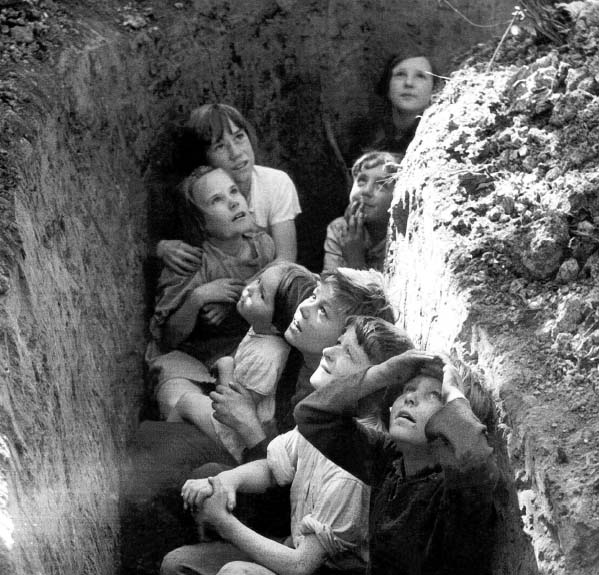
War and conflict is a very real factor of human society. Wars displace people and create refugees; people who are unable to continue living in their homes and carrying on with their daily lives because of violence. Refugees are a huge concern and area of focus in Western society.

With these thoughts and figures in mind, I ask, should children read books about war?
My answer is yes. Books and stories are a way of teaching empathy, understanding, and raising awareness.
Jennifer Armstrong is quoted as saying: “if we don’t encounter war in the safe way, by experiencing it through literature and art, how will we be moved to avoid the real thing? Reading about was doesn’t imply an endorsement of it: it’s a way of acknowledging part of the human experience that has been with us since the days of the Trojan War and long before. If you really want to teach young readers about peace, give them books about war.”
Jennifer Armstrong is the author of over 50 books for children from kindergarten through to high school. She is best known for writing historical fiction. You can read more about Jennifer Armstrong here: https://en.wikipedia.org/wiki/Jennifer_Armstrong
To:You
Mon 2023/11/06 09:29
Isaac Bashevis Singer wrote: “Children think about and ponder such matters as justice, the purpose of life, the why of suffering. They often find it difficult to make peace with the idea that animals are slaughtered so that man can eat them. They are bewildered and frightened by death. They cannot accept the fact that the strong should rule the weak.” You can read more about Isaac Bashevis Singer here: https://www.encyclopedia.com/people/literature-and-arts/hebrew-literature-biographies/isaac-bashevis-singer
I’ve always been fascinated by war and have been reading about children and adults in war situations since I was a young girl. These are a few of the books about war and conflict situations I was given by Sister Agatha when I was a young student (10, 11 and 12 years old) at Holy Cross Convent in George in the Western Cape of South Africa:
The Diary of a Young Girl by Anne Frank
Discovered in the attic where she spnt the last years of her life, Anne Frank’s remarkable diary has become a world classic—a powerful reminder of the horrors of war and an eloquent testament to the human spirit.
In 1942, as Nazis occupied Holland, a thirteen-year-old Jewish girl and her family fled their home in Amsterdam and went into hiding. For the next two years, until their whereabouts were betrayed to the Gestapo, they and another family lived cloistered in the secret upstairs rooms of an old office building. Cut off from the outside world, they faced hunger, boredom, the constant cruelties of living in confined quarters, and the ever-present threat of discovery and death.
In her diary Anne Frank recorded vivid impressions of her experiences during this period. By turns thoughtful, moving, and amusing, Anne’s account offers a fascinating commentary on human courage and frailty and a compelling self-portrait of a sensitive and spirited young woman whose promise was tragically cut short.
I am David by Anne Holm
David escapes from the concentration camp where he has spent his entire life and flees across Europe. He is utterly alone – who can he trust? What will await him? And all the while, how can he be sure that they won’t catch up with him…David learns that his polite manner, his haunted eyes and his thin features are strange to other people. He must learn to fend for himself in this strange new world.
When Hitler Stole Pink Rabbit by Judith Kerr
This semi-autobiographical classic, written by the beloved Judith Kerr, tells the story of a Jewish family escaping Germany in the days before the Second World War.
This beautiful new edition celebrates the fifty year anniversary of an adventure that Michael Morpurgo called “The most life-enhancing book you could ever wish to read.”
Suppose your country began to change. Suppose that without your noticing, it became dangerous for some people to live in it any longer, and you found, to your surprise, that your own father was one of those people. This is what happened to Anna in 1933.
Anna is too busy with her schoolwork and tobogganing to listen to the talk of Hitler. But one day she and her brother Max are rushed out of Germany in alarming secrecy, away from everything they know. Their father is wanted by the Nazis. This is the start of a huge adventure, sometimes frightening, very often funny and always exciting.
Judith Kerr wrote When Hitler Stole Pink Rabbit fifty years ago, based on her own journey, so that her own children would know where she came from and the lengths to which her parents went to keep her and her brother safe. It has gone on to become a beloved classic that is required reading for many children all over the world and is an unforgettable introduction to the real-life impact of the Second World War.
Number the Stars by Lois Lowry
A powerful story set in Nazi occupied Denmark in 1943. Ten-year-old Annemarie Johansen is called upon for a selfless act of bravery to help save her best-friend, Ellen – a Jew.
It is 1943 and for ten-year-old Annemarie Johansen life is still fun – school, family, sharing fairy stories with her little sister. But there are dangers and worries too – the Nazis have occupied Copenhagen and there are food shortages, curfews and the constant threat of being stopped by soldiers. And for Annemarie the dangers become even greater… her best-friend Ellen is a Jew. When Ellen’s parents are taken away to be ‘relocated’ by the Nazis, Ellen is taken in by Annemarie’s parents and suddenly Annemarie’s family are under threat too.
Annemarie has to call upon all her resources for courage and bravery as she helps her friend make a daring escape.
A Newbery Medal winner by an acclaimed author *For readers from 8 to 12 *
I still enjoy reading children’s books about war, and have written one, While the Bombs Fell, myself. These are few I’ve enjoyed.
War Horse by Michael Morpurgo
Michael Morpurgo has a number of children’s books that centre around war and conflict situations. This blurb is for War Horse.
An unforgettable tale of war, redemption, and a hero’s journey. It is 1914, and Joey, a farm horse, is sold to the army and thrust into the midst of World War I on the Western Front. When Joey is dragged away, his heart aches for Albert, the farmer’s son he is forced to leave behind. In the army the beautiful red-bay horse is trained to charge the enemy, drag heavy artillery, and carry wounded soldiers not much older than Albert off the battlefields. Amongst the clamoring of guns, and while plodding through the cold mud, Joey wonders if the war will ever end. And if it does, will he ever find Albert again? War Horse joins the Scholastic Gold line, which features award-winning and beloved novels. Includes exclusive bonus content!
Elizabeth’s War by DL Finn
It’s April of 1917, and World War I has reached Elizabeth’s family on their wheat farm in North Dakota. Although the battles are being fought overseas, the war has affected her in ways she couldn’t have imagined. Elizabeth is thrust into a new role after her brother and father leave the farm to do their part in the war. And she’s only eleven years old! Having almost died as a toddler, Elizabeth has been babied most of her life. Now she must learn to help out around the farm; cooking, cleaning, and tending to the garden and livestock. No longer can she run from her responsibilities, as she did when her horse Rosie was giving birth. There were complications during the delivery, and Elizabeth panicked and froze. The foal didn’t make it. Elizabeth faces her biggest challenge yet as a huge Christmas Eve snowstorm rages outside, cutting her family off from any help; and her mother is about to have a baby! Her brother and sister are laid up with chicken pox. Does Elizabeth face her fears or run from them? Can she help her family, who need her more now than ever? Or will she retreat like she did when Rosie needed her?
You can find out more about DL Finn’s latest book here: https://dlfinnauthor.com/2023/10/30/new-release-the-destination-harbor-pointe-series-book-3-dlfinnauthor-harborpointeseries-storyempire-writingcommunity-whattoread/
My Gentle War: Memoir of an Essex Girl by Joy Lennick
The affection Joy Lennick nee Mansfield felt and feels for Wales is immediately evident in this charming memoir.
Separated in World War 11 from her parents – with her father serving in the Royal Air Force abroad and her mother working in munitions – she finds herself living on a mountain with her two brothers. It is a world away from the cosy environment of her home in Dagenham, Essex.
You can read one of Joy Lennick’s blog posts here: https://joylennick.wordpress.com/2017/12/21/a-labyrinth-of-meanings/
While the Bombs Fell by Robbie Cheadle and Elsie Hancy Eaton
What was it like for children growing up in rural Suffolk during World War 2? Elsie and her family live in a small double-storey cottage in Bungay, Suffolk. Every night she lies awake listening anxiously for the sound of the German bomber planes. Often they come and the air raid siren sounds signalling that the family must leave their beds and venture out to the air raid shelter in the garden. Despite the war raging across the English channel, daily life continues with its highlights, such as Christmas and the traditional Boxing Day fox hunt, and its wary moments when Elsie learns the stories of Jack Frost and the ghostly and terrifying Black Shuck that haunts the coastline and countryside of East Anglia. Includes some authentic World War 2 recipes.
The ebook of While the Bombs Fell is available from Lulu.com here: https://www.lulu.com/shop/robbie-cheadle-and-elsie-hancy-eaton/while-the-bombs-fell/ebook/product-23768958.html?page=1&pageSize=4

You can find out more about the South African concentration camps in my book, A Ghost and His Gold. IT IS NOT FOR CHILDREN. https://tslbooks.uk/product/a-ghost-and-his-gold-roberta-eaton-cheadle/
About Robbie Cheadle
Award-winning, bestselling author, Robbie Cheadle, has published fifteen children’s book and two poetry books. Her work has also appeared in poetry and short story anthologies.
Robbie also has two novels published under the name of Roberta Eaton Cheadle and has horror, paranormal, and fantasy short stories featured in several anthologies under this name.
The eleven Sir Chocolate children’s picture books, co-authored by Robbie and Michael Cheadle, are written in sweet, short rhymes which are easy for young children to follow and are illustrated with pictures of delicious cakes and cake decorations. Each book also includes simple recipes or biscuit art directions which children can make under adult supervision.
Robbie and Michael’s new Southern African Safari Adventures series is aimed at teaching young children about Southern African wildlife in a fun and entertaining way. Each book contains a rhyming verse story about a particular animal, as well as illustrations by Robbie Cheadle, photographs and links to video footage about that animal.
Robbie’s blog includes recipes, fondant and cake artwork, poetry, and book reviews. https://robbiesinspiration.wordpress.com/
Share this:

Growing Bookworms – Great Halloween reads for children #Halloween #GrowingBookworms
Posted: October 11, 2023 Filed under: Children's Books, Growing Bookworms, Reading, Teaching children | Tags: Children's Books, Children's Stories, Growing Bookworms, Halloween, Writing to be Read 67 Comments
I didn’t grow up with Halloween. In fact, I learned about the Halloween festival much later in my life through social media and books.
Looking back on my childhood reading though, I always had a fascination with all things creepy and chilling. Below I’ve discussed two of my favourite childhood books about witches, monsters, and other fantasy and mythological creatures, as well as Michael and my latest Sir Chocolate book: Sir Chocolate and the Chinese Candy Dragon.
The Witches by Roald Dahl
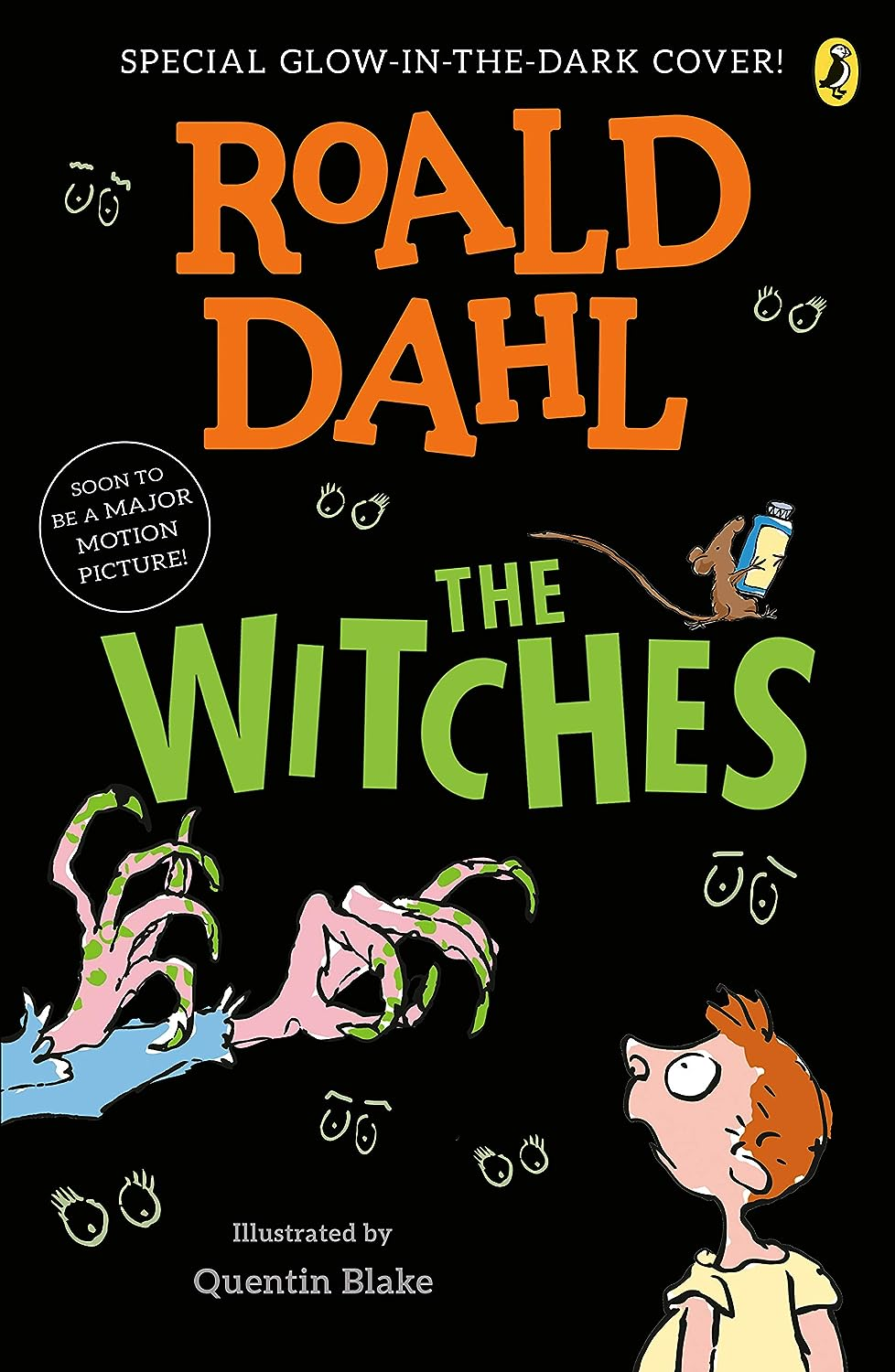
Blurb
This is not a fairy-tale. This is about real witches. Real witches don’t ride around on broomsticks. They don’t even wear black cloaks and hats. They are vile, cunning, detestable creatures who disguise themselves as nice, ordinary ladies. So how can you tell when you’re face to face with one? Well, if you don’t know yet you’d better find out quickly-because there’s nothing a witch loathes quite as much as children and she’ll wield all kinds of terrifying powers to get rid of them.
My thoughts
I loved The Witches. The main characters of the book are a grandmother and her young grandson. Grandma comes from Norway and has had several experiences with real witches disguised as lovely and kind ladies. There are lots of way of identifying ‘real’ witches and Grandma passes this wisdom on to her young grandson. The story is told from the perspective of the unnamed grandson.
Following an illness, Grandma and her grandson book a holiday in a hotel near the sea. Grandma needs fresh ocean air to convalesce. When the pair arrive, a conference of the “Royal Society for the Prevention of Cruelty to Children” is in progress. The grandson manages to get himself trapped behind a screen in the ball room where the conference is being held. It doesn’t take long before the lovely attendees of the conference are revealed to be witches. The Grand High Witch has come up with a plan to rid the world of its children and she is sharing this plan with all the witches of England.
It is up to Grandma and her grandson to stop the witches and save the children of England from a ghastly fate.
Grandma was such a wonderful character, full of creepy stories and antsy comments. I really enjoyed her, and this is one of my favourite Roald Dahl books.
You can purchase The Witches by Roald Dahl here: https://www.amazon.com/Witches-Roald-Dahl-ebook/dp/B00INIYHJQ
Which Witch by Iva Ibbotson

Blurb
Arriman the Awful, feared Wizard of the North, has decided to marry. But his wife must be a witch of the darkest powers…
A sorcery competition is held to discover which witch is the most potent and fiendish, and glamorous Madame Olympia conjures up a thousand plague-bearing rats! Belladonna, the white witch, desperately wants to be a wicked enchantress, but her magic produces flowers instead of snakes. How can she become more devilish than all the other witches?
My thoughts
Iva Ibbotson has many entertaining children’s books that feature witches, monsters, and other fantasy creatures. This one was the first of her books I read, and I never forgot it. When I had my own children, I searched for this book and purchased it to read to them.
Arriman the Awful, a dark and powerful wizard, lives in Darkington Hall. Arriman has become bored with his dark magic and decides to choose a wife from his hometown of Todcaster. He is aware of a prophecy that he will be replaced by a wizard with much greater powers than his own and believes this great dark wizard must be his son. Arriman doesn’t have any children and isn’t married so he decides to remediate this situation as quickly as possible.
Arriman decides to choose his wife through the holding of a contest between the seven witches of Todcaster: (Mabel Wrack, Ethel Feedbag, Mother Bloodworth, Nancy Shouter, Nora Shouter, Madame Olympia, and Belladonna). The witch who performs the darkest magical act will become his wife.
All the witches are black witches except for one: Belladonna. She is a white witch and is not able to perform acts of dark magic. Belladonna is, however, in love with Arriman the Awful and wants to win the contest.
Shortly before the contest, Belladonna meets an orphan boy named Terence Mugg. Belladonna is able to perform a really dark act of magic to rescue Terence from the dreadful and unking matron of the orphanage. The pair believe that Terence’s pet worm, Rover, is a powerful familiar and has enabled Belladonna to perform this black magic.
Belladonna and Terence, with the help of Rover, come up with a plan to ensure Belladonna wins the contest.
However, the best laid plans often go astray and this one is no exception.
You can purchase Which Witch by Eva Ibbotson here: https://www.amazon.com/Which-Witch-Eva-Ibbotson-ebook/dp/B003GGST7Q
Sir Chocolate and the Chinese Candy Dragon
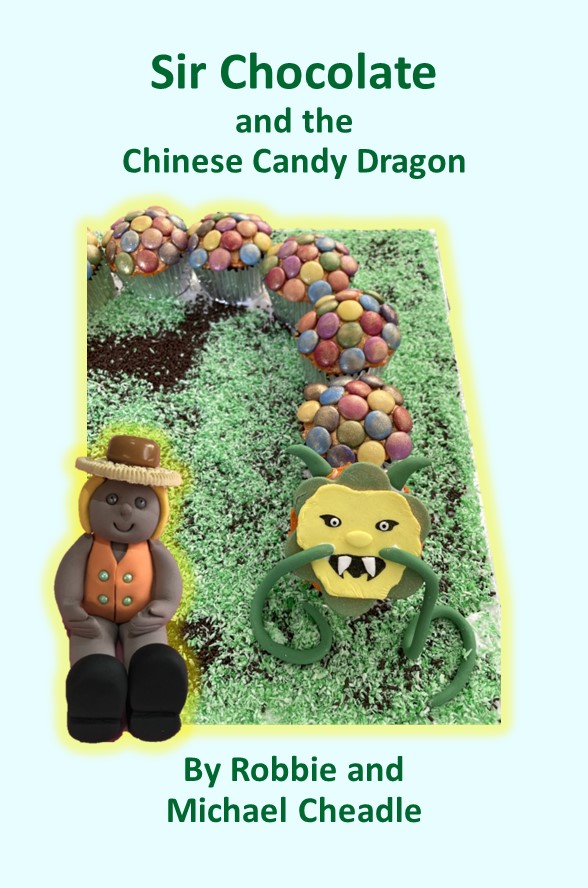
How this book came to be published
Sir Chocolate and the Chinese Candy Dragon is the third book in Michael and my new “Sir Chocolate High days and Holidays” book series.
We decided to self-publish this new series which celebrates various Christian holidays and other international celebration days like Valentine and Halloween.
The source of these stories is mainly promotions for the Sir Chocolate book series that we have written over the last seven years since the first Sir Chocolate book, Sir Chocolate and the strawberry cream berries story and cookbook was published.
Our intention with this series is to share a fun, rhyming verse themed story and to include some fun activities (mainly baking and food art but there are some other activities included) that parents or caregivers can make with their children in line with the holiday or theme that is the focus of the book.
Sir Chocolate and the Chinese Candy Dragon is a Halloween themed book and includes three fabulous themed baking activities that children can make under parental guidance.
This book includes five fun limericks for children. This is one example:

Blurb
The Chinese Candy Dragon has taken all of Sir Chocolate and Lady Sweet’s Halloween treats. Will he return the stolen goodies and mend his relationship with the villagers?
Includes three fun Halloween activities for children.
Book trailer
About Robbie Cheadle
Award-winning, bestselling author, Robbie Cheadle, has published fourteen children’s book and two poetry books. Her work has also appeared in poetry and short story anthologies.
Robbie also has two novels published under the name of Roberta Eaton Cheadle and has horror, paranormal, and fantasy short stories featured in several anthologies under this name.
The eleven Sir Chocolate children’s picture books, co-authored by Robbie and Michael Cheadle, are written in sweet, short rhymes which are easy for young children to follow and are illustrated with pictures of delicious cakes and cake decorations. Each book also includes simple recipes or biscuit art directions which children can make under adult supervision.
Robbie’s blog includes recipes, fondant and cake artwork, poetry, and book reviews. https://robbiesinspiration.wordpress.com/
Share this:

Growing Bookworms – Tongue Twisters and a review of A Wrinkle in Time by Madeleine L’Engle
Posted: September 13, 2023 Filed under: Book Review, Books, Children's Books, Classics, Fiction, Growing Bookworms, Literacy, Nursery Rhymes, Reading, Review | Tags: A Wrinkle in Time, Growing Bookworms, Madeleine L'Engle, Robbie Cheadle, Tongue Twisters, Writing to be Read 57 CommentsThe benefits of Tongue Twisters for children (and adults too)
What is a tongue twister?
A tongue twister is a sequence of words or sounds, usually of an alliterative kind, that are difficult to pronounce quickly and accurately.
An example of a tongue twister
One of the tongue twisters I grew up with is Peter Piper Picked a Peck of Pickled Pepper.
This is a video of the tongue twister:
Benefits of tongue twisters
Tongue twisters are fun and often results in lots of laughter, but they also have benefits for children.
Tongue twisters are a great way of introducing different consonant sounds to small children. They help pronunciation by teaching the brain how to form the necessary signals and organs of speech to make the required movements.
Regular recitation stimulates control of the muscles used for speech, ensuring clearer pronunciation of words with difficult syllables. Tongue twisters help children to decease instances of pauses in speech and reduce hesitation over pronunciation.
Listening to a parent or caregiver reciting tongue twisters helps to improve a child’s listening skills and comprehension of spoken English. Learning a tongue twister, promotes memorization which improves memory and cognitive skills.
Disadvantages of tongue twisters
The disadvantage of tongue twisters is that they take children a long time to master and thus a lot of patience from the teacher.
Did you learn tongue twisters as a child?
Did you teach tongue twisters to your children?
Let me know if the comments
My review of A Wrinkle in Time By Madeleine L’Engle

I was recommended this book by a friend of mine as I am unfamiliar with American children’s books and wanted to try a few.
I enjoyed this extraordinary science fantasy which involves three children with unique characteristics, a missing father, three fascinating good witches, time travel, different planets with unusual inhabitants and culminates in a battle for the preservation of creativity and difference against robotic sameness and loss of individuality represented by a disembodied brain called IT. I thought the author used an intriguing storyline and set of characters to support her central themes of rejection of difference and pressure to conform, the importance of love, not judging based on appearances, and that total understanding of everything in life is not possible.
Ultimately, I saw this as a book that celebrated individuality and uniqueness in people and reminded the reader about the importance of art, music, prose and poetry to society. The world of Camazotz, a world controlled by IT where sameness is glorified and exceptions to the accepted normal destroyed, is not portrayed in an appealing light. It is the main character, Meg Murray’s, individuality and difference that help save her father and brother and the greater world of humans from IT.
I liked the message of acceptance of difference in this book and think it will be a great read for all children. Reading about difference goes a long way towards acceptance.
About Robbie Cheadle
Award-winning, bestselling author, Robbie Cheadle, has published thirteen children’s book and three poetry books. Her work has also appeared in poetry and short story anthologies.
Robbie also has two novels published under the name of Roberta Eaton Cheadle and has horror, paranormal, and fantasy short stories featured in several anthologies under this name.
The ten Sir Chocolate children’s picture books, co-authored by Robbie and Michael Cheadle, are written in sweet, short rhymes which are easy for young children to follow and are illustrated with pictures of delicious cakes and cake decorations. Each book also includes simple recipes or biscuit art directions which children can make under adult supervision.
Robbie’s blog includes recipes, fondant and cake artwork, poetry, and book reviews. https://robbiesinspiration.wordpress.com/
Share this:

Growing Bookworms – Reasons why reading is good for your child or teenager’s mental health
Posted: July 12, 2023 Filed under: Books, Children's Books, Growing Bookworms, Literacy, Reading, Reading Therapy, Teaching children | Tags: Children's Books, Growing Bookworms, Mental Health, Reading Therapy, Recomendations, Robbie Chedle, Writing to be Read 58 CommentsFrom March 2020 mental health increased world-wide and those affected include children and teenagers. Post-pandemic, mental health issues continue to be prevalent among children and teenagers. Although most children and teenagers who contracted Covid-19 did not experience severe symptoms, numerous mental health problems have emerged among children and teens exposed to the COVID-19 pandemic, including anxiety, stress, depression, panic, irritation, impulsivity, physical symptoms caused by mental or emotional factors, sleep problems, rapid and extreme changes in mood, post-traumatic stress disorder (PTSD), and suicidal behavior.
Reading to your child, or your older child or teenager reading to him or herself, has the following mental health benefits:
Reduces stress
Reading is a wonderful form of escapism for everyone, including children. Following the White Rabbit down a hole, going on an adventure with Will Solvit or Percy Jackson or travelling across America in a pioneer wagon with Laura Ingalls Wilder, all help children escape their problems for a few hours. Reading also aids concentration which reduces stress and tension. According to studies, 30 minutes of reading relieves the same amount of tension as doing 30 minutes of yoga.
Improves emotional development
Reading exposes children to characters in books who may be going through a vast spectrum of experiences and emotional responses. Reading about how characters in books react to situations and the emotions those characters have and express help children and teens to normalise their own emotional responses to situations. Children and teens can feel isolated if they think their reactions and emotions are unique and not experienced by others. Reading helps reassure children that the feelings they have are experienced by others in similar situations.
The Secret Garden by Frances Hodgson Burnett is a wonderful book to teach youngsters about inappropriate and spoiled behaviour and its consequences as well as demonstrating the worthiness of mature and considerate behaviour.
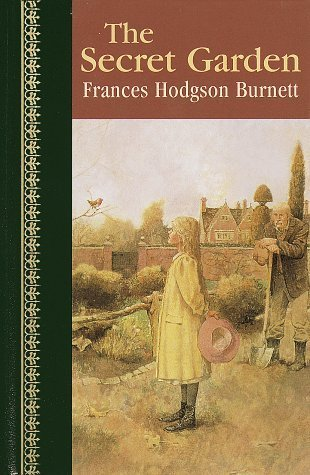
Blurb –
When orphaned Mary Lennox comes to live at her uncle’s great house on the Yorkshire Moors, she finds it full of secrets. The mansion has nearly one hundred rooms, and her uncle keeps himself locked up. And at night, she hears the sound of crying down one of the long corridors. The gardens surrounding the large property are Mary’s only escape. Then, Mary discovers a secret garden, surrounded by walls and locked with a missing key. One day, with the help of two unexpected companions, she discovers a way in. Is everything in the garden dead, or can Mary bring it back to life?
One of the most delightful and enduring classics of children’s literature, The Secret Garden has remained a firm favorite with children the world over ever since it made its first appearance. Initially published as a serial story in 1910 in The American Magazine, it was brought out in novel form in 1911.
Loneliness
This is particularly common in teenagers who feel isolated and lonely when they are caught up in a whirlwind of hormones that they don’t understand and can’t control. Teenagers want to be ‘part of the herd’ and the same as their friends and peer group. If they aren’t the same for various reasons including health issues, learning barriers or abilities, isolation can set in. Reading about other youngsters who are experiencing the same challenges or even unusual physical or intellectual achievements, helps promote self acceptance and reduce loneliness.
A good example of a book that involves peer pressure and the need to belong is Are You There God? It’s Me, Margaret.
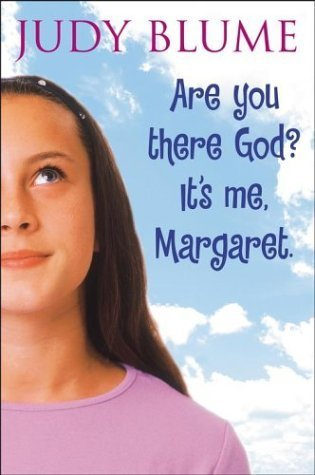
Blurb: Margaret Simon, almost twelve, likes long hair, tuna fish, the smell of rain, and things that are pink. She’s just moved from New York City to Farbook, New Jersey, and is anxious to fit in with her new friends—Nancy, Gretchen, and Janie. When they form a secret club to talk about private subjects like boys, bras, and getting their first periods, Margaret is happy to belong.
But none of them can believe Margaret doesn’t have religion, and that she isn’t going to the Y or the Jewish Community Center. What they don’t know is Margaret has her own very special relationship with God. She can talk to God about everything—family, friends, even Moose Freed, her secret crush.
Margaret is funny and real, and her thoughts and feelings are oh-so-relatable—you’ll feel like she’s talking right to you, sharing her secrets with a friend.
Reduces depression and anxiety
Reading a good book full of joy and happiness helps lift low spirits. For example, reading about the dwarves and Bilbo enjoying clotted cream and honey on freshly baked bread at the home of Beorn, is uplifting. Reading about Harry Potter and his friends defeating Voltemort and his Deatheaters is absorbing and fills the reader with courage and enthusiasm. Many books give the reader a wonderful sense of well being and satisfaction when the adversity comprising the plot is resolved.
Developing social skills
Reading helps youngsters learn how to negotiate and deal with different social situations. It teaches them about romance and the emotions of love, and also rejection and sadness when romance ends or goes wrong. Reading about other people experiencing traumatic and difficult situations helps develop empathy and facilitates the development of meaningful relationships with different people from different backgrounds, cultures and religions.
I am David by Anne Holm is a wonderful book to teach children about gaining social skills. David has to learn to socialise with Maria and her brothers after he saves her from the fire. It is difficult for David who grow up in a concentration camp and only socialised with adults held in captivity.

Blurb – David’s entire twelve-year life has been spent in a grisly prison camp in Eastern Europe. He knows nothing of the outside world. But when he is given the chance to escape, he seizes it. With his vengeful enemies hot on his heels, David struggles to cope in this strange new world, where his only resources are a compass, a few crusts of bread, his two aching feet, and some vague advice to seek refuge in Denmark. Is that enough to survive?
David’s extraordinary odyssey is dramatically chronicled in Anne Holm’s classic about the meaning of freedom and the power of hope.
Winding down
Reading is a wonderful way for children and teens to wind down before sleeping. Today’s children and teens are continuously busy and subject to an endless barrage of mental stimulation. This can make sleep elusive and lack of sleep is very bad for mental health. Reading before bed is the perfect way to wind down after a long day.
About Robbie Cheadle
Award-winning, bestselling author, Robbie Cheadle, has published thirteen children’s book and three poetry books. Her work has also appeared in poetry and short story anthologies.
Robbie also has two novels published under the name of Roberta Eaton Cheadle and has horror, paranormal, and fantasy short stories featured in several anthologies under this name.
The ten Sir Chocolate children’s picture books, co-authored by Robbie and Michael Cheadle, are written in sweet, short rhymes which are easy for young children to follow and are illustrated with pictures of delicious cakes and cake decorations. Each book also includes simple recipes or biscuit art directions which children can make under adult supervision.
Robbie’s blog includes recipes, fondant and cake artwork, poetry, and book reviews. https://robbiesinspiration.wordpress.com/
Share this:

Growing Bookworms – Meet children’s fiction and adult fiction and non-fiction author, Toni Pike and a review #growingbookworms #childrensfiction #bookreview
Posted: June 14, 2023 Filed under: Book Promotion, Book Review, Books, Children's Books, Fiction, Mystery, Review, Thriller | Tags: Author Interview, Book Review, Children's Books, Cody Brody and the Step Mother From Outer Space, Growing Bookworms, Robbie Cheadle, The MAgus Covenant, Toni Pike, Writing to be Read 61 Comments
Today, I am delighted to introduce children’s and adult fiction author, Toni Pike. Toni is a prolific writer with at least two non-fiction books, six adult thrillers, one women’s fiction, and two children’s books, all available from Amazon. Today, we are focusing the discussion on Toni’s two children’s books in the Brody Cody series. I’ve read both and they are wonderful for middle school children.
I love your books about Brody Cody as they are filled with excellent, age-appropriate humour without resulting in facetious child characters which is a pitfall with many modern children’s books. Is there any particular children’s book author whom you admire and consider to be a role model for your writing?
Thank you so much for your lovely comments, Robbie – I’m delighted that you liked my characters. That means so much to me, coming from such a wonderful writer.
Roald Dahl is my favourite children’s author – his irreverent stories and characters are so wickedly delightful, and his plots are so beautifully constructed. I find children love this irreverence, and I was horrified to read recently that his stories were to be “sanitised” for the modern world. I think young readers could only benefit from enjoying his classic stories.
One of my other favourite role models is Judy Blume – I love the characters and familiar situations in “Tales of a Fourth Grade Nothing.”
Is Brody Cody entirely fictitious or are some of his characteristics based on real life models?
I always say that they are entirely a figment of my imagination – but quite a few aspects of Brody’s character are drawn from various real-life situations. In particular, I drew on memories of my own children and their friends, and also some snippets and ideas from children I taught at school. Having said that, nothing would be recognisable. I also drew on my own experience of childhood – even though that was a very long time ago! Two examples were Brody’s reluctance to get involved with extra-curricular activities, and also his insecurities, things Brody and I have in common.
How do you go about ensuring the language and flow of ideas in your children’s books are appropriate for the target age group?
Whether it’s for adults or children, I always try to write fast-moving stories that are plot-driven to keep the reader turning the page. That style seems suit me best, and it’s one of the reasons I like writing thrillers. To keep the language age-appropriate, I tried to think of how my children spoke when they were that age. I also made sure I used simple words and sentences, and always attempted to add humour. The setting was Australia, which of course is my home, so I knew the local idioms. I didn’t worry too much about the latest slang expressions – I tried to avoid that.
The theme of your first book, Brody Cody and the Stepmother from Outer Space, is very relevant in our modern age of frequent broken families and remarriages. Was there anything specific that compelled you to write this type of story? What were your aims with this book?
I wanted to write about a little boy who had lost his mother, because that immediately created sympathy for the character. I wanted it to be both scary and funny, but to have a very positive message about children and parents. I know there are a lot of blended families these days, so I hoped it would strike a chord but also be something all children could enjoy.
What are your goals for the Brody Cody series? Can we expect another book in this series soon?
I have a list of ideas for future Brody Cody stories, and want to add to the current two-book series. However, I also love writing books for adults, and I’m currently working on another thriller – which is still at a very early stage. I feel torn between the two, and don’t want to disappoint my grown-up readers who’ve followed me for a few years now. So, for the moment, I think my adult writing is winning.
Books for children are harder to market than books for adults. How do you go about marketing your books and what works best for you?
Attracting readers for the series has been far more difficult than I anticipated – much more so than for adult books. Of course, that’s only my experience and other writers may not find that. I was thrilled with the response from those who did read them, and many of the reviews were wonderful. But I would prefer to find a wider audience.
I use the same techniques for marketing that I used for my other books The first essential is to have some reviews – and I send out advance copies for that. I enrol my books in Kindle Unlimited, and have both the ebooks and paperbacks on Amazon. I find reads on Kindle Unlimited account for a fair proportion of my royalty income. Occasional free days, especially for the first book in the series, helps to boost subsequent sales of all books in the series and also helps to get some reviews. I also use Amazon sponsored ads, targeting similar books and authors. I do, however, keep a tight rein on my budget for that.
The best marketing tool of all, though, is a supportive writing community. I’ve become good friends over the last few years with other writers like yourself from all over the world, and supporting and sharing each other’s writing and blog posts is a great way to spread the word. Your Growing Bookworms series about children’s writing is a great inspiration for children’s writers, and a great learning tool for parents.
My review of Brody Cody and the Stepmother from outer space
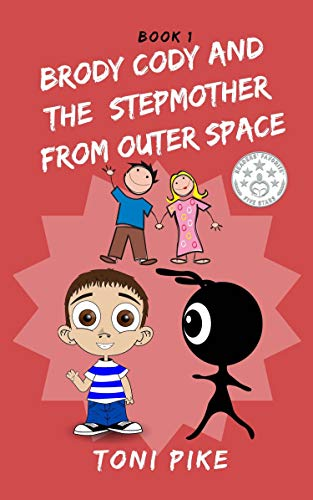
This book is a hilarious and fun read for young readers aged 7 to 13 years old. It is quite reminiscent, with its quirky and slightly dark humour, of Roald Dahl’s books, in particular, it reminded me a bit of James and the Giant Peach where James’ parents are eaten by a rampaging rhinoceros.
Cody, the young hero if this book, is raised by his relaxed and nonchalant father after his mother is mowed down unexpectedly by a runaway bus. Cody is spared because he flies out of his pram and across into the hands of the police constable who catches him like a baseball.
Cody is a happy boy who lives with no rules and little parental intervention. His father works from home in the afternoons, and is not given to checking on Cody’s homework or making sure it is done. They have an interesting diet too that comprises of sweet and sickly cereal in the morning and some fabulously unhealthy father created meals in the evenings.
Cody is happy and doesn’t believe he needs a mother like other children have. He has freedom and he is happy living with his father.
One day, Cody’s father needs to go away to an out-of-town conference. Cody cannot go with him and is sent to his friend’s home for this period. Cody’s friend has a mother and she sets about trying to mend Cody’s lackadaisical ways. Just before Cody is due to go home, he gets a quick call from his father telling him he has met and married a woman he met at the conference.
Cody is horrified and returns home quite determined to reject this new mother, but things don’t go quite according to plan. Cody discovers things about his new mother than lead him to believe she is an alien.
This really is a rollicking good story and young children will love it.
My review of The Magnus Covenant
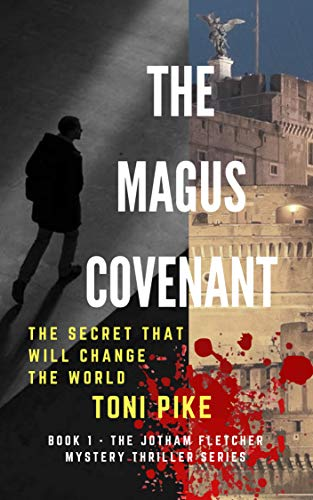
The Magnus Covenant is an exciting thriller that starts of with an unusual and strange murder. From there the excitement and pace just keep increasing, keeping you on the edge of your seat.
Jotham Fletcher and his girlfriend, Antonella Pavoni, a lecturer at the University of Rome, arrive at a famous Catholic Church where Jotham is expecting to deliver a lecture about Simon Magnus just in time to view the body of an elderly man in a black cape who may have committed suicide. As an expert on Simon Magnus, a cult leader from the time of Jesus, who thought he should be the head of the church and who was believed to have been a magician, Jotham mentions to the police the similarities between the deaths of Simon Magnus and this old man. Unfortunately, Jotham’s comments and interventions make him a prime suspect for murder.
Jotham does give his lecture and is the recipient of an extraordinary question from a journalist who subsequently disappears. He is also the recipient of antagonistic comments from a young Catholic brother who is also a member of the audience.
Shortly after the delivery of the lecture, Jotham is kidnapped and becomes embroiled in a complicated intrigue involving the members of the Simon Magnus cult, which has been in existence for 2,000 years, a brotherhood of extreme Catholics and a wealthy individual who may be the cause of all the agitation through the discovery and restoration of an ancient document. Jotham quickly realises that he can’t trust anyone he knows or meets and that his life is in danger.
Jotham is a great character. He has suffered personal loss through the deaths of his wife and child and is struggling with his faith. He’d thrown himself into researching Simon Magnus as a distraction from his loss and emotional turmoil. The deception of many people around him comes as a complete surprise to Jotham and he gets himself into a mess. He is able to pull himself together, discover his survival instincts and set about unravelling the intrigue all around him.
I thought the plot of this book was clever and interesting and the action kept me interested throughout.
About Toni Pike
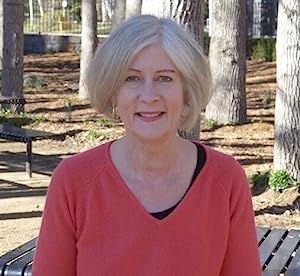
Toni Pike is a multi-genre author who enjoys writing page-turning fiction for adults, hilarious books for children, and non-fiction. She also loves travelling and being with family and friends. She lives in Australia and firmly believes that coffee and long walks are an essential part of any day.
Do you like books that you can’t stop reading? Pike is the author of LINDA’S MIDLIFE CRISIS, DESOLATION BLUFF, DEAD DRY HEART and The Jotham Fletcher Mystery Thriller Series: THE MAGUS COVENANT, THE ROCK OF MAGUS, THE MAGUS EPIPHANY and HOLY SPEAR OF MAGUS.
The Brody Cody Series is for children aged 6-9: BRODY CODY AND THE STEPMOTHER FROM OUTER SPACE and BRODY CODY AND THE HAUNTED VACATION HOUSE.
She’s also the author of two non-fiction books. THE ONE WAY DIET is a no-nonsense guide to losing weight. HAPPY TRAVELS 101 is a short book of travel tips with advice for anyone who wants to travel overseas.
To find out more, her website is tonipike.com.
About Robbie Cheadle
Award-winning, bestselling author, Robbie Cheadle, has published thirteen children’s book and three poetry books. Her work has also appeared in poetry and short story anthologies.
Robbie also has two novels published under the name of Roberta Eaton Cheadle and has horror, paranormal, and fantasy short stories featured in several anthologies under this name.
The ten Sir Chocolate children’s picture books, co-authored by Robbie and Michael Cheadle, are written in sweet, short rhymes which are easy for young children to follow and are illustrated with pictures of delicious cakes and cake decorations. Each book also includes simple recipes or biscuit art directions which children can make under adult supervision.
Robbie’s blog includes recipes, fondant and cake artwork, poetry, and book reviews. https://robbiesinspiration.wordpress.com/
Share this:

Dark Origins – The shockingly dark original story of Pinocchio
Posted: May 24, 2023 Filed under: Children's Books, Classics, Dark Fantasy, Dark Origins, Fairy Tales, Fiction | Tags: "Writing to be Read, 2018 Writing the Rockies Conference, Dark Origins, Pinochio, Robbie Cheadle 62 Comments
The Adventures of Pinocchio is a children’s fantasy novel by Italian author, Carlo Collodi.
The story was originally published as a serial called The Story of a Puppet in the Giornale per I bambini, one of the earliest Italian weekly magazines for children starting from 7 July 1881. Originally, the story stopped after 8 episodes (published over 4 months) at Chapter 15. Due to popular demand, the episodes were resumed on 16 February 1882 and the following year, the story was published as a single book.
The storyline
In Tuscany, Italy, a carpenter named Master Antonio finds a block of wood which he immediately plans to carve into a table leg. The log cries out when he cuts it. Master Antonio falls to the floor as a result of shock and just at that moment his extremely poor neighbour, Geppetto, knocks on the door. The piece of wood instigates an altercation between the pair, but after a minor fisticuff, Geppetto receives the log as a gift. Geppetto is delighted and carves it into a marionette with the plan of making a living as a travelling puppeteer.
Quote: “On hearing himself called Polendina for the third time, Geppetto lost his head with rage and threw himself upon the carpenter. Then and there they gave each other a sound thrashing.
After this fight, Mastro Antonio had two more scratches on his nose, and Geppetto had two buttons missing from his coat. Thus having settled their accounts, they shook hands and swore to be good friends for the rest of their lives.
Then Geppetto took the fine piece of wood, thanked Mastro Antonio, and limped away toward home.”
As soon as Geppetto sets about carving the wood it becomes obvious that the puppet, called Pinocchio, will not be of good character.
Quote: “As he was about to put the last touches on the finger tips, Geppetto felt his wig being pulled off. He glanced up and what did he see? His yellow wig was in the Marionette’s hand. “Pinocchio, give me my wig!”
But instead of giving it back, Pinocchio put it on his own head, which was half swallowed up in it.
At that unexpected trick, Geppetto became very sad and downcast, more so than he had ever been before.
“Pinocchio, you wicked boy!” he cried out. “You are not yet finished, and you start out by being impudent to your poor old father. Very bad, my son, very bad!”
And he wiped away a tear.
The legs and feet still had to be made. As soon as they were done, Geppetto felt a sharp kick on the tip of his nose.
“I deserve it!” he said to himself. “I should have thought of this before I made him. Now it’s too late!””
Geppetto teaches Pinocchio to walk and he immediately runs away. The ungrateful puppet is caught by a law enforcement officer who, acting on the erroneous belief that Geppetto has mistreated the puppet, arrests Geppetto and puts him in prison.
Pinocchio returns to the empty house and meets the talking cricket which warns him of the perils of disobedience. In retaliation, Pinocchio throws a hammer at the cricket and accidentally kills it.

Having tried unsuccessfully to obtain some food, the puppet settles down to sleep on a stove. When he wakes up, his feet have been burned off. Luckily for Pinocchio, Geppetto is released from prison and returns home. He makes Pinocchio new feet. Caught up in short lived gratitude, Pinocchio agrees to attend school and Geppetto sells his only coat to buy him a schoolbook.
Pinocchio never makes it to school on that first day and his disobedience gets him into significant trouble. He narrowly escapes being used as firewood to cook a hungry puppeteer’s dinner. A fisherman coats him in flour and tries to fry him. As punishment for refusing to study, he is transformed into a donkey and thrown into the sea.
The worse of all his violent adventures is when Pinocchio is lynched from a tree by his recurring enemies, the Fox and the Cat. This is the point when Collodi ended his original Pinocchio magazine series. It was only popular demand by his readers that resulted in the Collodi reviving his puppet hero and finding a way out of this scrape for him.

Quote: “Happily for him, Pinocchio was made of very hard wood and the knives broke into a thousand pieces. The Assassins looked at each other in dismay, holding the handles of the knives in their hands.
“I understand,” said one of them to the other, “there is nothing left to do now but to hang him.”
“To hang him,” repeated the other.
They tied Pinocchio’s hands behind his shoulders and slipped the noose around his neck. Throwing the rope over the high limb of a giant oak tree, they pulled till the poor Marionette hung far up in space.
Satisfied with their work, they sat on the grass waiting for Pinocchio to give his last gasp. But after three hours the Marionette’s eyes were still open, his mouth still shut and his legs kicked harder than ever.
Tired of waiting, the Assassins called to him mockingly: “Good-by till tomorrow. When we return in the morning, we hope you’ll be polite enough to let us find you dead and gone and with your mouth wide open.” With these words they went.
A few minutes went by and then a wild wind started to blow. As it shrieked and moaned, the poor little sufferer was blown to and fro like the hammer of a bell. The rocking made him seasick and the noose, becoming tighter and tighter, choked him. Little by little a film covered his eyes.
Death was creeping nearer and nearer, and the Marionette still hoped for some good soul to come to his rescue, but no one appeared. As he was about to die, he thought of his poor old father, and hardly conscious of what he was saying, murmured to himself:
“Oh, Father, dear Father! If you were only here!”
These were his last words. He closed his eyes, opened his mouth, stretched out his legs, and hung there, as if he were dead.”
After this, Pinocchio’s story then continues its series of bleak set-pieces until finally our hero learns not to run away from his responsibilities. He begins to study hard and becomes a ‘good little kid’ and, at last, a real boy.
The dark origin of Pinocchio
It is clear from the narrative above the Pinocchio is a very dark story filled with violence, hunger, and illness. To understand how this story came about, the childhood of the author needs to be considered. According to https://metro.co.uk/, the house where Carlo Collodi was born in Florence in 1826, was on a long, narrow residential street which did not allow for any natural sunlight. He was the oldest of ten children and, to ease the burden on his parents, was sent away to live in a village with his mother’s family for much of his childhood.
While he was away, his family suffered a series of tragedies. Six of his nine siblings died before reaching adulthood. Some passed away as babies, while others lived long enough to become established parts of the family only to die later into childhood. The bleaker aspects of ‘The Adventures of Pinocchio’ are informed by the lasting impact of this pain on the author.
Themes
The themes of hunger, illness, and death are prevalent throughout the story.
Quotes:
“Are you not afraid of death?’
I am not in the least afraid!… I would rather die than drink that bitter medicine.’
At that moment the door of the room flew open, and four rabbits as black as ink entered carrying on their shoulders a little bier.
What do you want with me?’ cried Pinocchio, sitting up in bed in a great fright.
We are come to take you,’ said the biggest rabbit.
To take me?… But I am not yet dead!…’
No, not yet: but you have only a few minutes to live, as you have refused the medicine that would have cured you of the fever.’
Oh, Fairy, Fairy!’ the puppet then began to scream, ‘give me the tumbler at once… be quick, for pity’s sake, for I will not die–no… I will not die….”
***
“That puppet there,’ continued the Talking-cricket, ‘is a confirmed rogue. …’ Pinocchio opened his eyes, but shut them again immediately. ‘He is a ragamuffin, a do-nothing, a vagabond. …. Pinocchio hid his face beneath the clothes. ‘That puppet there is a disobedient son who will make his poor father die of a broken heart! …’ At that instant a suffocated sound of sobs and crying was heard in the room. Imagine everybody’s astonishment when, having raised the sheets a little, it was discovered that the sounds came from Pinocchio. ‘When the dead person cries, it is a sign that he is on the road to get well,’ said the Crow solemnly. ‘I grieve to contradict my illustrious friend and colleague,’ added the Owl, ‘but for me, when the dead person cries, it is a sign that he is sorry to die.”
***
“A boy’s appetite grows very fast, and in a few moments the queer, empty feeling had become hunger, and the hunger grew bigger and bigger, until soon he was as ravenous as a bear.
Poor Pinocchio ran to the fireplace where the pot was boiling and stretched out his hand to take the cover off, but to his amazement the pot was only painted! Think how he felt! His long nose became at least two inches longer.
He ran about the room, dug in all the boxes and drawers, and even looked under the bed in search of a piece of bread, hard though it might be, or a cookie, or perhaps a bit of fish. A bone left by a dog would have tasted good to him! But he found nothing.
And meanwhile his hunger grew and grew.”
Moral of the story
The moral of the story is that hard work, being good, and studying hard are the keys to success and it is only when Pinocchio devotes himself to the achievement of these three things that he transforms from a wooden puppet to a real boy with modern comforts. However, the author never lets the reader forget that disaster is always waiting to happen.
Quotes:
“I was just saying,” whined the Marionette in a whisper, “that it seems too late for me to go to school now.”
“No, indeed. Remember it is never too late to learn.”
“But I don’t want either trade or profession.”
“Why?”
“Because work wearies me!”
“My dear boy,” said the Fairy, “people who speak as you do usually end their days either in a prison or in a hospital. A man, remember, whether rich or poor, should do something in this world. No one can find happiness without work. Woe betide the lazy fellow! Laziness is a serious illness and one must cure it immediately; yes, even from early childhood. If not, it will kill you in the end.”
These words touched Pinocchio’s heart. He lifted his eyes to his Fairy and said seriously: “I’ll work; I’ll study; I’ll do all you tell me. After all, the life of a Marionette has grown very tiresome to me and I want to become a boy, no matter how hard it is. You promise that, do you not?”
“Yes, I promise, and now it is up to you.”
***
“Poor Pinocchio huddled close to the doghouse more dead than alive from cold, hunger, and fright. Now and again he pulled and tugged at the collar which nearly choked him and cried out in a weak voice:
“I deserve it! Yes, I deserve it! I have been nothing but a truant and a vagabond. I have never obeyed anyone and I have always done as I pleased. If I were only like so many others and had studied and worked and stayed with my poor old father, I should not find myself here now, in this field and in the darkness, taking the place of a farmer’s watchdog. Oh, if I could start all over again! But what is done can’t be undone, and I must be patient!””
If you would like to read the original The Adventures of Pinocchio, you can find it for free on Gutenberg here: https://www.gutenberg.org/files/500/500-h/500-h.htm
About Roberta Eaton Cheadle

Award-winning, bestselling author, Roberta Eaton Cheadle, is a South African writer and poet specialising in historical, paranormal, and horror novels and short stories. She is an avid reader in these genres and her writing has been influenced by famous authors including Bram Stoker, Edgar Allan Poe, Amor Towles, Stephen Crane, Enrich Maria Remarque, George Orwell, Stephen King, and Colleen McCullough.
Roberta has two published novels and has horror, paranormal, and fantasy short stories included in several anthologies. She is also a contributor to the Ask the Authors 2022 (WordCrafter Writing Reference series).
Roberta also has thirteen children’s books and two poetry books published under the name of Robbie Cheadle, and has poems and short stories featured in several anthologies under this name.
Roberta’s blog features discussions about classic books, book reviews, poetry, and photography. https://roberta-writes.com/.
Find Roberta Eaton Cheadle
Blog: https://wordpress.com/view/robertawrites235681907.wordpress.com
Twitter: https://twitter.com/RobertaEaton17
Facebook: https://www.facebook.com/robertawrites
Amazon: https://www.amazon.com/Roberta-Eaton-Cheadle/e/B08RSNJQZ5
_____________________________________________________________________________________________
Want to be sure not to miss any of Robbie’s “Dark Origins” segments? Subscribe to Writing to be Read for e-mail notifications whenever new content is posted or follow WtbR on WordPress. If you found it interesting or entertaining, please share.