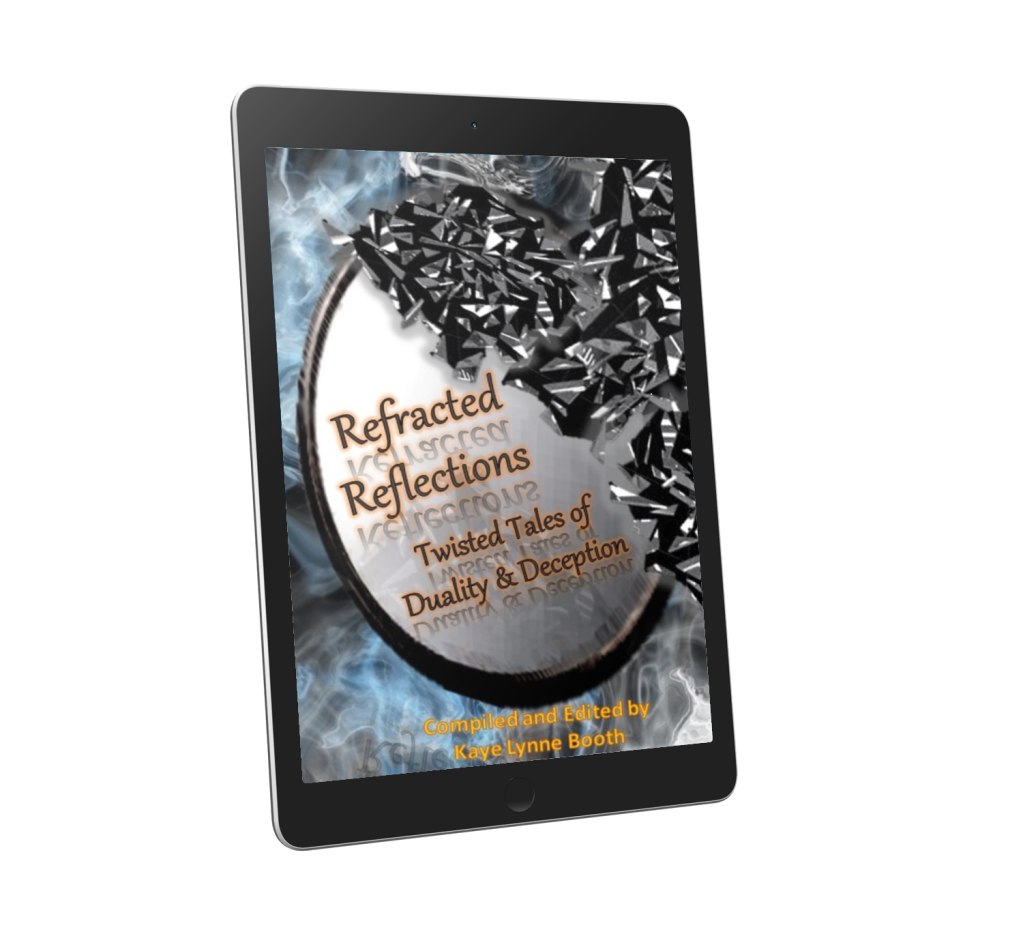
Welcome to the WordCrafter “Once Upon an Ever After” Book Blog Tour
Posted: August 22, 2022 Filed under: Anthology, Blog Tour, Book Release, Books, Collaboration, Fairy Tales, Fantasy, Guest Post, Magical Realism, Mythology and Legend, Short Fiction, Stories, WordCrafter Book Blog Tours, WordCrafter Press | Tags: Anthology, Fairy Tales, Fantasy, Guest Post, Old Roots New Soil, Once Upon an Ever After, Sarah Lyn Eaton, WordCrafter Book Blog Tours 14 Comments
Welcome to the WordCrafter Once Upon an Ever After Book Blog Tour, where we’re launching Once Upon an Ever After: Modern Myths & Folklore with guest posts from contributing authors about their story inspirations, reviews and an interview the anthology and WordCrafter Press with me, Kaye Lynne Booth. So, stick with us by following the schedule below, to learn more about this mystical new anthology and its authors. Check back daily, as I’ll be adding the links as they go live.
Tour Schedule
Monday – August 22 – Opening Day Post – Writing to be Read – Intro. & Guest Post – Sarah Lyn Eaton
Tuesday – August 23 – Patty’s World – Review & Guest Post – Robbie Cheadle
Wednesday – August 24 – The Showers of Blessings – Guest Post – Olivia Merchiston
Thursday – August 25 –Roberta Writes – Interview w/ Kaye Lynne Booth
Friday – August 26 – Zigler’s News – Review & Guest Post – Lyndsay Elizabeth Gilbert
Saturday – August 27 – Closing Post – Writing to be Read – Guest Post – A.E. Lanier
Digital Giveaway
For a chance to win a free digital copy of Once Upon an Ever After, just leave a comment to show you were here. Follow the tour and comment at each stop for more chances to win. Three copies will be given away in a random drawing. (Yep. I literally draw the names out of a hat.)
This anthology was by invitation only, which means I invited the authors because of specific stories, which caught my imagination. The result is a unique collaboration with a wonderful group of authors who have been an absolute pleasure to work with.
Today’s guest post is from contributing author Sarah Lyn Eaton, who wrote the story “Old Roots, New Soil”. Her story grabbed ahold of me and stuck in my head because of the imagery of the spooky old apple orchard her words created for me and because it involves a mysterious curse which is pretty cool. What more could you ask for in a modern day fairy tale?

Finding Roots
I originally wrote the story that appears in this anthology for another submission call, looking for folk tales and modern fairy tales based on some kind of mirror imagery. My brain tends to jump outside of, but stay near to, the box and I began to consider what kind of folk magics my ancestors might have practiced, may have believed. The inspiration for this story was rather close to home.
I grew up in between Lake Ontario and Lake Erie. Generations of my family lived in the area and that’s where my roots are. Our family genealogy is a project my dad worked on when I was a kid, and now we do it together. Over the years I have sought out information on the history of the places our ancestors lived, how they developed and evolved. What were their industries? Their environmental impact?
This is similar to the way I layer a character and where they came from and what circumstances they find themselves in when the story opens, and where they need to get to.
On my father’s side of the family, we have mostly been on this soil since the Mayflower, if not those first 50 years of migration to the new world. And my mother’s side of the family has lines that go back that far. But she also has more recent migrations from Germany and Ireland. And one of the German names caught my eye, that of my great-great-great-great maternal grandmother Wilheminia Wernersbach.
In 1836, George Arth, 35, and Wilheminia Wernersbach, 37, emigrated from Germany with sons Adam, 7, Jacob, 3, and George, 3 months. The emigration card did not list a destination. I believe they were in Antwerp for some time before coming to America. When Wilhemenia brought her sons to America, George Arth was not with them. In 1850, when they are first on record in Pendleton, NY her son Adam, my great-great-great grandfather had his own family plot, right next to her own. In fact, she saved up money to buy a third plot on the other side, so that each son would have his own land, but they would still be together.
I thought about their story and let my brain wander. I wondered what it was like for this woman to bring her children to a new world, and then all the way to the other side of New York that was still being developed. What of this land did she find strange? What of her land might she have brought with her? What customs would have been a comfort to her? What guardians might she have called on to protect her family? How might they have made their living in a new place?
When you do a lot of genealogy and you can get beyond the lists of names and dates and you start to retain details, you start to notice family patterns emerging. Generational patterns that the people toiling every day, trying to get to the next one can’t see. And sometimes you can see how trauma gets passed down, and sometimes even transposed, like in the telephone game of passing messages down a line of people, to see what it becomes at the end.
How can you undo something you can’t understand? How do you combat a family legacy that was kept hidden from you? And what if you found yourself crossing an apple orchard, about to open the door to a dark part of your family’s past?
And that was the seed that formed the first breath of my story.
Sarah Lyn Eaton

Sarah Lyn Eaton is a queer pagan writer and burn survivor. She is a life-long Star Wars geek who spends her free time rock hunting, or venturing into the woods with her camera. Her stories have been published in the anthologies Brave New Worlds, Upon a Twice Time, Unburied: A Collection of Queer Dark Fiction, Of Fae and Fate: Lesser Known Fairy Tales Retold, On Fire, and Dystopia Utopia. In 2021, Sarah Lyn was awarded The Speculative Literature Foundation’s Working Class Writer Grant.
About Once Upon an Ever After
This unique and imaginative collection of eleven thought provoking fantasy stories will delight readers who enjoy stories of wishes gone awry.
What happens when…
A woman desires to carry on her family’s legacy, uncovering a long-buried curse?
A not so perfect witch casts a spell to defy age and preserve her relationship with her handsome shapeshifting familiar?
A time traveler longs to be the savior of knowledge lost?
An incompetent delivery boy becomes an unlikely savior of forgotten artifacts?
A magic mirror yearns for a different question?
A tiny story witch desires to share her stories with the world?
Spells are cast, unlikely alliances made, and wishes granted, sometimes with surprising outcomes. You’ll love this anthology of modern myths, lore, and fairy tales. Once you read these twisted tales, you’ll be sure to be careful what you wish for….
If you liked Gilded Glass, you’ll enjoy Once Upon an Ever After: Modern Myths & Fairy Tales, short stories with thought provoking themes, captivating characters and diverse cultures, from humorous to horrifying, from the legendary past to possible futures and back to the here and now.

Today is the last day of pre-order for this wonderful new anthology. Once Upon an Ever After goes live tomorrow. You can get your copy through your favorite book distributor with the Books2Read UBL here: https://books2read.com/u/mKdWGV
_______________________________________________________________________
Book your WordCrafter Book Blog Tour today!
Share this:

Bowlesian! – Itsies
Posted: August 3, 2022 Filed under: Bowlesian!, Fiction, Humor, Short Fiction, Speculative Fiction, Stories | Tags: Bowlesian!, Jeff Bowles, Short Fiction, Short Stories, Writing to be Read 6 Comments
Itsies
by Jeff Bowles
*This story and others like it can be found in my collection Brave New Multiverse, available on Amazon now.
I introduced Pamela to my itsy on our first date. Oh I know, most people wait until their second or third, but I really liked Pamela. Straight away I could tell we were going to hit it off.
“I’m glad we decided to do this,” I told her.
She narrowed her eyes, “Why is your itsy dressed like a teddy bear?”
My itsy was dressed like a teddy bear. Head to toe, fluffy ears, fluffy tail, round little tummy. It was his favorite outfit. I wasn’t going to tell him he couldn’t wear it.
Itsies aren’t really people. They look and act like people, and they definitely do have minds of their own, but they’re more like little mini extensions of ourselves, you know what I mean? Like my itsy, I call him Tug. He looks exactly like me. That’s pretty common. Itsies live on the tops of people’s heads and sleep in their hair. They spend most of the day under their hats.
My hat was off just then, sitting there on our table. I supposed Pamela wasn’t quite ready to take her own hat off.
I smiled at her, beamed at her, actually. I said to Tug, “Don’t be rude, Tug. Say hello to Pamela.”
Tug said, “Fuck yourself!”
I sighed. “Now Tug, you know I don’t like that language.”
“Fuck it! You introduce me!” His voice was high, squeaky, a shrill, keening falsetto. “You promised me cookies! Give me my cookies or I’ll eat Pamela alive!”
I sighed again, reached into my pocket to retrieve a miniature box of animal crackers. I set the crackers atop my head. Tug started noshing and gobbling. I felt a sense of calm wash over me as he did.
“Are you sure you want to keep him out like that?” said Pamela.
I glanced around the restaurant. My favorite Vietnamese place. Really good phở and bánh mì sandwiches. Rich, mouthwatering smell of seared beef and pork. Portraits on the walls of Ha Noi and Ho Chi Minh City. The only other customers, an old white man and an old white woman, struggled with chop sticks and rice noodles in a corner booth.
“Do you think anybody minds?” I said.
Pamela shrugged. “I don’t. Only, you know, if he eats too much his stomach is liable to explode. That sort of thing can happen, you know. He might get the wrong idea, surrounded by all this food.”
“More cookies!” said Tug.
I gave him another box of animal crackers.
“So um, Tom,” said Pamela, “how do you like working for my father?”
I met Pamela at her father’s office. High-powered advertising, ads for humans and itsies alike. I was low man on the totem pole. I’d stared at Pamela’s picture on his desk for months before I actually saw her in person. Those deep brown eyes, those full, pouty lips.
I sat there studying her face and caught myself imagining waterfalls, thunderstorms, exploding geysers. Things wet. Things loud and gushing.
“Tom wants to fuck you,” said Tug.
“Tug!”
“It’s true, Tom. You’re not fooling anyone. Hey lady, how many cookies you think I can fit in my mouth?”
“I … I don’t know,” said Pamela.
“A fistful. That’s how many. Watch.”
Then Tug made more noshing, gobbling sounds. I felt another wave of calm wash over me, even though I knew my face must’ve been five shades redder.
“Pamela, listen …”
“It’s okay, Tom,” she said. “If human beings were any good at saying what they really want, God never would have given us itsies to begin with.”
“I guess so.”
“And I’m flattered.”
“You are?”
Pamela sighed. “Well you know, my father being who he is. Most guys just pine for me and never bother to ask me out. Oh, I hope I didn’t sound full of myself just then. They pine. They just do, you know?”
“I do know,” I said.
She shook her head. “So either I don’t get dates at all, or I get to date the really crazy ones who think their tiny little men are God’s gift.”
“I don’t think my tiny little man is God’s gift. I’m nothing special. He isn’t anything special, either. My tiny little man’s only a few inches tall. He’s so tiny–“
“We are still talking about your itsy, right?” said Pamela.
“The point, Pam, is that even though I’ve got a few shortcomings, whatever the cost, whatever it takes, I made the decision to always be brave and to be the kind of man I am meant to be.”
“Hmm. I like that. When did you make that decision?”
“Honestly?”
“Yeah.”
“I decided it the moment I laid eyes on you.”
Pamela smiled. “That’s sweet.”
* * * * *
I didn’t know it at the time, but Pamela was a very unhappy woman. She hadn’t always been. She was sunny when she was younger, the most positive person in the room. Just lately, as the years had begun to mount up, and forty was suddenly closer than thirty, failed relationship after failed relationship had left her feeling damaged, marooned, poisonous and poisoned
She’d gotten into feeding her itsy late night snacks. Our little men and our little women don’t come with instruction manuals. God gave them to us. Or evolution or whatever. We come screaming from the womb. Our itsies come screaming after. If God did it, it was because he understood men and women are masters of self-deception. If it was evolution, then nature randomly selected humans to have a miniature rude version of themselves camped out on the tops of their heads.
Anyway, bad things happen when you feed itsies late night snacks. Pamela knew this. Even so, cold fried chicken, piece for her, piece for her itsy. Double pepperoni, double cheese pizza. Everything double. She was ordering for two, after all.
Thing about feeding an itsy is, it makes you feel better. Makes you calmer, tames the beast. They are the id. The inner child which dwells deep inside, that which is never at peace, always lusting, always wanting more and more and more.
* * * * *
We ate our meals. We talked and joked. At some point Tug said, “It’s half past a baboon’s bright red ass.” And we both knew it was time to go home.
On the sidewalk, we hugged.
“I had a nice time,” I said.
“Yeah, me too,” Pamela replied.
“You mean it?”
She laughed. “I do mean it.”
“Walk you to your car?”
“Sure.”
Brown and yellow leaves crunched beneath our feet as we huddled together and crossed to the sidewalk. A harvest moon shone high above the tops of buildings. It was autumn in the city. A cold breeze blew and Pamela scrunched herself down into her Barbour jacket.
“I’m glad you asked me out, Tom,” she said.
“Yeah, me too. Would you like to do it again?”
“I would.”
“I know this great Greek place over on–Oh my god, that woman is crushing that car!”
“What?”
“Over there! The parking lot! That woman is–“
“Oh, shit.”
“–crushing that car and she’s–“
“That’s no woman, Tom,” said Pamela
“It isn’t?!” I exclaimed.
Tug rustled around under my ball cap. “Let me see!”
“Petunia!” Pamela shrieked. “I told you to stay at home!”
Petunia? Dear Lord. She was eight feet tall and had more muscles than human beings are supposed to have. Only she wasn’t a human being. Thigh muscles, neck muscles, rippling biceps, triceps, sheening and glossy, bare breasts of muscle, even her head seemed like it was one big, veiny, throbbing muscle.
“Oh Tom, what you must think of me.” Pamela said.
“She’s crushing that car.”
“That’s my car.”
“And she is way too big for that pair of underwear.”
“That’s my underwear, too. Oh Tom, I am so embarrassed.”
Petunia looked like Pamela coated in liquid Schwarzenegger. She was lying on her side on top of the car, eating a chicken. Not a piece of chicken. Not a cooked chicken, either. Petunia was stuffing a whole live chicken into her face. It clucked and screamed and fought like a little chicken champ.
Petunia bellowed, “Down the hatch!” And then, the chicken disappeared.
Pamela ran to her.
“Bad girl, Petunia!” she said. “That’s a bad, bad girl!”
Petunia belched and grew a whole foot taller. Pamela’s car crunched and all four tires popped.
Pop! Pop, pop, pop!
Big Petunia made a queasy face. “Was that me? I think that was me.”
“No it wasn’t you!” said Pamela. “If it was you, the shockwave would’ve killed us all!”
My mouth hung open. My eyes were wide like Vietnamese noodle bowls.
I heard Tug say, “Damnit, man, let me see her!”
The ball cap popped off my head. Tug gasped.
“That’s a whole lotta woman!” His tiny hands and feet dug into my scalp.
I stooped, grabbed my hat, and made my way to Pamela and nudged her with an arm.
“I don’t get it,” I said. “Why are you wearing your hat if you left your itsy at home?”
Pamela shook her head. Her eyes glistened in the harsh orange neon light. “Oh Tom, I am just so ashamed. I fed her and fed her, and she just ate and ate, and she hasn’t stopped eating, not in weeks. I just wanted to feel good for a damn change.”
“Weeks?” I said. “You’ve been feeding her for weeks?”
Pamela wiped her eyes. “I know you think I’m this awesome person. I know everybody thinks that. I’m just not.”
“Pamela …” I said. I wrapped her in a hug.
Petunia rose onto her knees, car metal creaking and glass shattering to sparkling pellets. She grimaced at me, pointed one long veiny finger. “Hey you! Lover boy! Hands off the merchandise!”
“Me?” I said.
“Did I fucking stutter? You! You wormy little bedsheet stain! You and your miniscule, worthless, man-doll of an itsy!”
Tug shrieked. “She means me! She knows I exist! How do I look? Is my teddy bear costume on straight?”
“Petunia, stop,” said Pamela. “I’m sorry, Tom. She’s a bit roided-out at the moment.”
“Roided-out!” said Petunia. “You ain’t seen me roided-out. Not yet, sister.”
She hopped to her feet and stepped off Pamela’s car. Thud. She dwarfed us. My eyes were level with her enormous, erect, inch-long nipples. Big Petunia took her head in her hands. She cracked her neck left, cracked it right. She slammed her fist into her palm. Again. Again. It made a loud, solid thocking sound. Thock. Thock. Thock.
I stared at that fist. I was dumbstruck. Couldn’t think of a word to say. Pamela pulled away from me. Her eyes darted from me to Petunia. Nobody said a thing. Just that heavy thock, thock, thock.
“Gah!” said Tug. “I can’t take it anymore! Do it! I need to see you in action!”
“Tug,” I said, “you’re not helping.”
“Not trying to help, you human gutter ball! God, I need to see you in action. Oh, it’s killing me!”
“Killing you?” said Petunia. “Little man, down the hatch you go.”
She plucked Tug off my head, clutched his body between a massive finger and a mighty thumb.
“No, don’t!” screamed Pamela.
But it was too late. Petunia ate Tug. Swallowed him whole. Gulp and then, he was gone.
“Now it’s your turn, lover boy!” she said.
She took hold of my arm and lifted me up by it until we were mouth to mouth and eyelash to eyelash.
I’m not going to lie. Fear took hold and I thought I might cry or scream or piss my pants. But instead, I took a moment and told myself a few choice words. You decided to always be brave. The moment you laid eyes on Pamela, you decided to be the man you were meant to be.
I hocked a wad of phlegm and spat in Petunia’s eye. She wiped it away, glared at me, then grinned.
“Mistake number two, lover boy,” she said.
Pamela beat against her, slamming impotent fists at her itsy’s taut, flexing abdominal muscles. She kept screaming, “You monster! You monster!” But Petunia paid her no attention. Her eyes cooked me like sliced beef in scalding-hot Vietnamese broth. Breath stinking like rotten chicken corpses and little itsy men.
“You listen here,” she said. “No man is good enough for my Pam. No man, not nowhere, not no-how. You don’t think I know what you are, lover boy? You don’t think I know you’ll hurt her like all the rest?”
Pamela was shrieking now. “Stop! I said stop it!”
“She feeds me so she’ll be happy,” said Petunia, cheeks red and quivering with barely suppressed rage. “She feeds me so pukes like you can’t touch her no more. I am going to eat you now. And you are going to let me do it. I like my meat raw. I like it tenderized.”
“Stop making threats,” I said. “If you’re going to eat me, go on and–“
She wrapped her arm around my waist. She wound me up, and then she threw me clear across the parking lot.
I was airborne. A million thoughts occurred at once.
No more id.
No more inner child.
God, he was a rotten little itsy.
God, he was just awful, wasn’t he?
Yeah, but he was my rotten little–
I crashed through the plate glass window of the ticket booth at the end of the parking lot.
I went through up to my waist. My legs caught on the glass. I felt a knifing kind of pain. Lacerations. The feeling of being cut to pieces. I screamed.
Petunia stomped over to the booth. She stuck her head through the window. “Oh, you big baby! It’s just a scratch.”
But I could see blood, and I could feel that knifing, that gouging, those lacerations.
“Big baby! Big baby!” she said. “You want to cry? I’ll give you something to cry about.”
She reached through and clamped a hand down over my head. Bam! She slammed my head against the concrete floor. Blam! She did it again. Boom! One more time.
I saw stars and moons and clucking chickens taking flight, flying like real birds, all around my head. And I saw my itsy, poor little Tug. I saw chicken beaks biting into him. Saw chicken teeth chomping on his little brains.
I mumbled, “Chicken teeth.”
Petunia leaned further into the booth. “Huh?”
“Do … chickens … have teeth?”
“Don’t think so, champ.” And then Petunia broke my arm.
Snap!
I howled and spat and spoke in tongues.
Pamela crept up behind Petunia. She jabbed at her with a tire iron.
“You leave my man alone!” she said.
She used the prying crowbar end like a mafia hitman might use an icepick, sliding it into Petunia’s ear. Seemed like Pamela was trying to scramble her itsy’s brains. Then again, it also seemed like the world was falling away from me and growing browner and browner and more and more like nap time yes into the sticky syrup, captain I soiled myself I apologize most sincerely must be dying, please sew my coffin from clean undies.
The brain scrambling thing didn’t work. Petunia wrenched the tire iron from her ear. It was coated in blood, but the big girl was still on her feet.
“Pamela!” she said. “Oh, so we’re calling him your man now?”
Petunia backhanded her. Pamela flew from view.
“I have had it with you, Pam,” Petunia bellowed. “I have absolutely had it! Shit! Fuck it! Let’s eat!”
She tore off my shoe, my sock, and then she stuck my whole foot in her mouth. She bit down. Took a few toes.
It didn’t hurt like I expected. In fact, I felt kind of good. Yes, suddenly, inexplicably, very comfortable and very calm. The face she made was indecipherable. Maybe it was all the glistening muscles. It was the kind of expression a person wears when they’re concentrating really hard. Or maybe the kind of expression a person wears when they drink too much soda and have surgery, bubbly-pain like diving ocean deep and emerging with the bends. She made that face, then she spat the rest of my foot out.
“Oh,” she said, and then again, “Oh.”
Blood dripped from the corner of her mouth.
She said, “Oh.”
And then her stomach exploded. Blood, guts, muscles, chickens, it all burst out like a cheap New Year’s popper loaded with Halloween gore.
Pop!
And it splattered me like sopping red confetti.
A tiny voice said, “See? You see that? Ate too much. You gotta watch that, sister.”
Petunia slumped against the ticket booth. A little man, my little man, emerged from the carnage-crater that was her stomach.
“Tug?” I said.
Petunia’s dead, twitching eyes stared right at me.
“Yeah, boss?” Tug ate a chunk of something small and pink. He was covered in blood, a few inches taller than when Petunia had swallowed him. His teddy bear suit had ripped and popped its seams.
“Stop eating,” I mumbled.
“Yeesh, boss, you look rough.”
“Stop eating. For God’s sake, stop eating.”
“Huh? Why the hell should I stop? It’s delicious. That girl was well fed, man.”
Every time he took a bite, I felt it, that calmness and warmth. It was nice. Felt better than the pain. Even so, I mumbled, “Tug, you have got to stop eating.”
I was powerless to stop him. Couldn’t move. I was bleeding to death and I knew it.
“Well maybe I don’t want to stop,” said Tug. “Maybe I’m sick to death of taking orders from you. Yeah, you know what? I think we need a regime change. I think I ought to be the one calling the–“
Pamela snatched the chunk of Petunia from his hands and smacked him upside the head.
“Don’t be stupid,” she said.
“Hey, I was eating that!”
She smacked him again.
“And don’t talk back. I’ve had enough of disobedient itsies to last a lifetime.”
Tug shouted, “Who the hell do you think you–“
She smacked him.
“Goddamnit, quit smacking me!”
She raised her hand for another.
“All right! All right!” he said. “Nasty woman! Nasty!”
“Go get in my car. The crushed one. Bring me my cell phone. We need to call an ambulance. Treat you like I should’ve treated her.”
Tug grumbled and swore, but he obeyed nonetheless. Once he was gone, Pamela carefully picked her way over the broken glass, past the ruined, bloody form of her former itsy, and through the window until she was crouching beside me.
“Oh Tom,” she said. “I am so sorry.”
“S’okay,” I said.
“No, it’s not okay. I created a monster. Oh what a mess. Tom, I am so, so sorry.”
“Yer’kay?” I said.
“What? I didn’t hear you.”
“Asked r’you okay?”
“I’m fine.”
“Itser’s dead.”
Pamela sighed. “I know. I feel kind of empty now. No, that’s not right. I feel full. Way, way too full. Like I’ve got all this emotion now and I don’t know where to put it, how to choke it down. You know what I mean?”
“No,” I said.
“Tom? Stay with me, now. Keep your eyes open. Tom, you’ve earned your second date.”
Eyelids were heavy. I tried to smile at her, but it was so hard, so hard.
“S’cond date?”
“That’s right, Tom. Second date. Just survive for me, okay?”
“‘Kay.”
“Okay?”
“‘Kay.”
I survived. Of course I did. How else would I be telling you this story? I underwent months of hospitalization and rehab and all that stuff. Learning to cope with fewer toes and all. All that horrible hospital food really made me slim down. Tug slimmed down, too. He got regular-sized again. We had a nice long talk about why it’s okay to eat animal crackers but not okay to, for instance, eat whole live chickens or people’s internal organs.
I had my second date with Pamela. And my third and fourth. She’s not the same since her itsy died. She’s tense, a bundle of nerves. She goes to this support group now for people whose itsies have died prematurely. Sometimes it seems like it helps. Sometimes not. There’s a whole population of people in this world who no longer have the means to quell and suppress the pain in their lives. You know what she said while we were snuggling on the couch the other night?
“I feel so horrible all the time now. How do I cope without her?”
“How any of us copes,” I said. “You’ve got me now. I’ll be your itsy if you need me to be.”
She smiled at me. “My Dad was right about you. He said that Tom guy, he’s a good one, Pam. You should hang on to that guy.”
“Smart man. Brilliant, actually.”
We leaned in for a deep kiss.
Tug hopped off my head and started kicking at Pamela’s scalp.
“No kissing! Last time you kissed him, you didn’t put out! I will eat you. Do you hear me? I will eat you alive!”
Pamela flicked him across the room. I didn’t do anything about it. Kissing Pam was so much better than feeding the id.
END
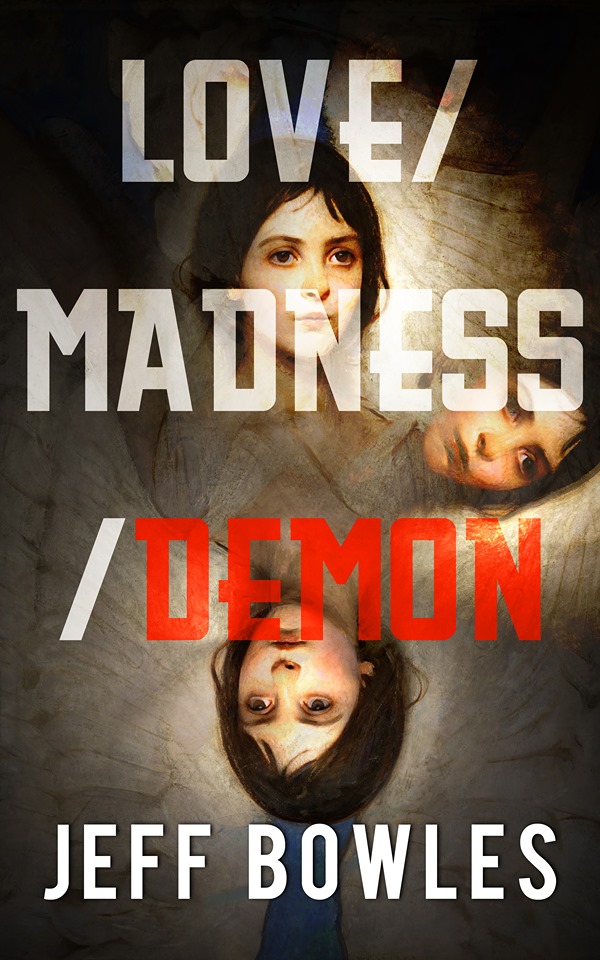
Jeff Bowles is a science fiction and horror writer from the mountains of Colorado. The best of his outrageous and imaginative work can be found in God’s Body: Book One – The Fall, Godling and Other Paint Stories, Fear and Loathing in Las Cruces, and Brave New Multiverse. He has published work in magazines and anthologies like PodCastle, Tales from the Canyons of the Damned, the Threepenny Review, and Dark Moon Digest. Jeff earned his Master of Fine Arts degree in creative writing at Western State Colorado University. He currently lives in the high-altitude Pikes Peak region, where he dreams strange dreams and spends far too much time under the stars. Jeff’s new novel, Love/Madness/Demon, is available on Amazon now!
Check out Jeff Bowles Central on YouTube – Movies – Video Games – Music – So Much More!
Share this:

Refracted Reflections Now Available for Pre-Order
Posted: July 23, 2022 Filed under: Anthology, Book Promotion, Book Release, Dark Fantasy, Fairy Tales, Fantasy, Short Fiction, Stories, WordCrafter Press 3 Comments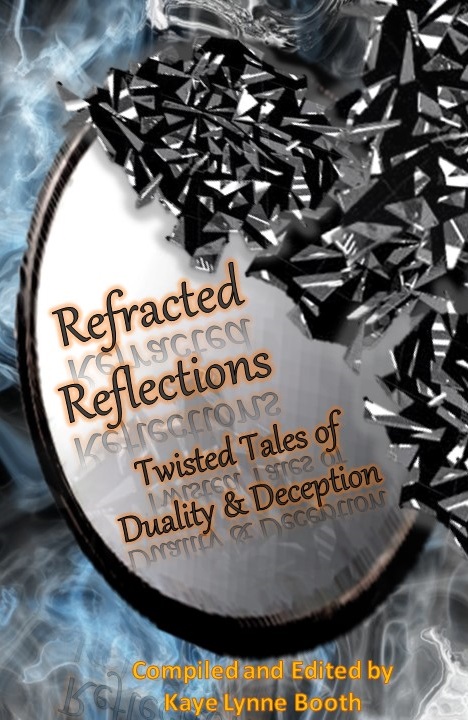
I am pleased to announce that Refracted Reflections: Twisted Tales of Duality & Deception is scheduled for release on September 20, 2022 and is now available for pre-order from your favorite book distributor through the Books2Read link here: https://books2read.com/u/3kPyxn
This is one by invitation only anthology you won’t want to miss. Filled with stories by ten talented authors, including Valerie B. Williams, Shelley Jasperson, Roberta Eaton Cheadle, Avily Jerome, Ligia Medina deWit, Keith J Hoskins, and Kaye Lynne Booth.
_______________________________________________________________________________________
Reflections and Refractions…
One reveals truths, while the other bends light into varying shapes of deception.
Does a small camp mirror reveal hope… or death?
Is the warrior in the mirror a monster… or a protector?
Does a glimpse in the mirror reveal a young woman’s true self… or what someone else has shaped her into?
Does the mysterious portal to the future reflect what could be… or what must be left behind?
Are the dancers reflected in the water’s depth things of beauty… or evil?
This unique and imaginative collection of nine mind tantalizing fantasy and science fiction stories will appeal to readers who enjoy thought provoking tales with hidden meanings resting deep below the surface. These stories will keep you pondering long into the night.
If you liked Gilded Glass or Once Upon an Ever After, you’ll love Refracted Reflections.
___________________________________________________________________________________________________
Pre-order your copy today!
https://books2read.com/u/3kPyxn
Share this:

Bowlesian! – Godling: Part II
Posted: July 6, 2022 Filed under: Bowlesian!, Fiction, Short Fiction, Stories | Tags: Bowlesian!, Godling, Jeff Bowles, Short Fiction, Short Stories, Writing to be Read Leave a commentGodling: Part II
by Jeff Bowles
*This story and others like it can be found in my collection Godling and Other Paint Stories, available on Amazon now. We published Part I of Godling last month on Writing to be Read. You can find it here.
A part of Godling was aware the two black lumps lying in the darkness had been silent and still precisely 2.234 minutes. If they were sleeping, they most certainly were not dreaming. Which was just as well. Godling was doing enough dreaming for the both of them.
His memory banks refreshed again. She was there as if Godling could touch her. Jossinda, queen of his universe. Her smooth, lithesome sway; the sensual intelligence lurking behind her hazel eyes; and of course, the final words they’d spoken to each other.
“I want this, Godling. I want it more than anything. Can’t you see? Think of all the good we could do.”
“Jossinda …”
“My love, I’m not asking.”
“Quickly, my friends,” Renaldo said. “Awake, awake.”
Godling became aware Renaldo hovered over him in the darkness of the Black Room. The abbot warden jabbed the raw, sparking end of a hazer-stunner into Brennan’s back. Godling felt the hot lancing voltage. Brennan screamed. He leapt to his feet.
“Faith preserve us!” he moaned.
The prison’s hazy green lights flickered, warmed, and then settled into a steady glow. As Renaldo woke Ressia in a similarly excruciating manner, Godling realized the abbot warden may not have been as stupid as he’d always seemed. He’d not painted Ressia and Brennan so Godling could control them. He’d painted them so they could control Godling.
His heart had always been a kind of magnetic base for his consciousness. The paint was entirely repurposed now. Perception dispatching elements nullified due to the layering effect, perception receiving elements perfectly stratified and even slightly enhanced. The details only served to infuriate Godling. The simple truth of it was he had long ago closed the Black Room precisely because he’d feared something like this could happen. His mind, his body, his paint, his black liquid heart. Godling had been tricked into believing both Ressia and Brennan were his rightful bodies.
Now the two young lovers were naked and jet black head to toe, and when they moved, Godling moved with them. When they leaned against one another in sheer exhaustion, he felt the sensations of their heaving chests and the sweat collecting on their arms and necks as if with his own organic skin.
“Utterly perverse,” he muttered. His voice made the circuit matter vibrate over every square inch of them.
“Oof!” Ressia chirped, and even Godling was surprised by how it felt.
“Human vibrathreads,” said Renaldo. “I anticipated it might be a result.”
“Result? That’s the word you’re choosing?” Godling fumed. “How about abomination? Or disgrace? Did you really think it sensible to interface with the truest king of all in such a reckless manner?”
“Godling, please, you’re still my prisoner. I’ve simply exchanged one set of holding cells for another. You should thank me. You haven’t asked why we’ve done this.”
“That’s because I don’t care.”
“We know the truth about you, god machine,” Brennan said. “The wars, the massacres. We know it’s nothing you intended.”
“Is that so?” said Godling. “And I suppose you’d have me believe you’ve risked your lives for nothing at all but a fantasy? I was responsible for those wars. I murdered millions. See here the fruits of my labor? A prison built on foundations of millennia, ransacked now by two fool children and a bald-headed fop.”
Renaldo laughed. “You can stop pretending, Godling. We do in fact know everything. I found it, and I asked it myself. You know very well what it is.”
Sudden harsh voices filled the access tunnel outside the Black Room, gruff and full of violence.
“Step lightly men! We got ‘em trapped like rats!”
“Kill the monster where he sleeps!”
Another voice rose above these. Godling recognized it in an instant.
“They’re cornered, men. Take your time. Line up your shots. We want nice clean bodies to show the whore’s father.”
General Praebus, the man who’d hijacked his vibrathreads. Godling expected the lovers to panic, but they didn’t. Pupil dilation well within ranges concurrent to moderate stress. Heart rates elevated, but not in the extreme.
“We prepared for this, my young friends,” said the Timekeeper.
With that, they stepped in front of Renaldo, and these two helpless, hapless children dropped into surprisingly sophisticated hand-to-hand combat stances. General Praebus and his men appeared up the corridor, their machine rifles and mortar shot locked and leveled. Praebus spotted the children and bellowed, “Open fire!”
Brennan and Ressia launched themselves from the Black Room, bounding off the balls of their feet, touching off against the walls. They crisscrossed past each other. A hail of bullets ripped and zipped past them, but they closed the distance with stunning speed. Brennan landed with his palm to the neck of a gunner sergeant, but Ressia careened right past her target and skidded down the corridor. Three footmen leveled their rifles at her back and fired. Without thinking, Godling forced the black circuit matter to stiffen. Bounce, bounce, ricochet, bounce. All three footmen fell to the floor dead.
Ressia got to her feet and drew her hands to her back. She was unwounded.
“Godling, did you just…?”
“Yes, I believe I did.”
“Thank you.”
Godling took a punch, a solid right jab to the ribs. No, it wasn’t Godling who took the jab. It was Brennan. Both he and Godling grunted, but Godling was quicker to react. Another jab came for Brennan’s face, but Godling pulled the same trick, surrounded and concentrated the circuit matter. When the blow landed, he heard the distinct cracking of finger bones.
The owner of the hand shrieked. It was General Praebus himself, a sweaty, red-faced mountain of a man. He balled the hand in agony, made the other into a fist and swung.
“Boy, solar plexus!” Godling said.
Brennan hit the General the instant Godling focused the circuit matter into a ridge of raised knuckles. Praebus flew back, landing like a ragdoll on a pile of men. He huffed and snorted and passed out cold. The third mounted army paused for one panicked instant, and then they scrambled to heft and pull him back. They pitched a half-hearted assault after that, but the sight of their fallen commander seemed to dull any notion they’d had of victory. The three of them—Brennan, Ressia, and Godling—jabbed and kicked and hammered until what was left of King Marshal’s raid party cried for retreat and scrambled back the way they’d come.
*****
“Did you see what happened?” said Ressia. “That soldier kept firing into my chest and Godling absorbed—”
“And the one with the mortar shot,” said Brennan. “I was on fire a full twenty seconds and I never felt—”
“Children, please,” Godling interrupted. “I believe the abbot warden was explaining why I deserve my newfound freedom.”
Isolation, of course, was the root of the planet’s moniker, Isolinius. According to Renaldo, there were reasons the word Ancient was always applied to Spacefarers, reasons wars over petty things like failed betrothals happened at least once a decade, if not twice.
“It’s no large mystery, is it?” the abbot warden said. “Humanity is lost without your steady hand, Godling, and not a soul on this planet is better off with you locked away.”
Godling couldn’t help but laugh.
“Once again, a complete misrepresentation of the facts,” he said. “Now that I’m out and about, I can confidently say humanity has never looked better.”
They rode the vast open grasslands of the Isolinium plains. Great red tracts of Crimson Blade swayed in the breeze. The binary stars shone in orange and white-tinted splendor, but even they did nothing to distract from the true beauty of Isolinius, its seventeen moons, three of which were visible now. The preferred mode of travel on the planet, of course, was the ever-reliable Flitglider. But Renaldo had quite correctly surmised they’d be too easy to track darting around the sky, spewing long greasy trails of green and black smoke. So they instead chose for themselves the domestic breed of the artificial industrial Tri-Roller animal, otherwise known as a Beastwheeler.
“For instance,” Godling mused, “I find transportation in the modern era rather charming. I think I’ll call this one Nancy.”
“Can we please get on to the matter at hand?” Renaldo snapped. He whipped his reins, and after a deep, throbbing groan, the hairy industrial creature’s three large fur-and-callus covered wheels picked up speed.
“I think, humbly speaking, hallowed one,” Ressia said, “that you should stop picking on Renaldo and listen to what he has to say.”
The lovers sat in the low hairy hauling bed, the overriding musky scent of which was rather … florid. Godling had had more than enough time to observe the pecking order of the three humans, and understood, most unambiguously, that the two children would only come to the abbot warden’s defense if and when it suited them.
“It’s a very simple scenario,” Renaldo said. “The Gods created man, man created Godling, Godling ruled over man—”
“Until man decided genocide was in fact the worst case ever made for machines ruling anything,” said Golding. “Yes, I remember quite well.”
“All your bloody campaigns, Godling, tragic though they were, had nothing of the import of what came before and after.”
“And what came before?” said Godling.
Renaldo sat up straighter in his driver box. “An explosion in human development. The expansion of our minds, the impetus and growth of a wise and compassionate galactic society, due in full to your guardianship and wisdom. God machine, human beings traveled the stars! We grew peaceful and curious. We at last became aware of ourselves, and we strived to leave behind something better for our children.”
“And what came after, abbot warden?” Godling asked.
“The exact opposite. As soon as you were imprisoned, space travel ceased. Humans isolated themselves on small, insignificant worlds. We forgot the virtues we’d fought so hard to earn. People like Praebus, King Marshal, their brutality and eagerness for violence, it’s mankind’s rule now, Godling, and not its exception.”
“And so you chose to forsake your wardenship, to free the monster king from his eternal prison?” said Godling.
“In a word, yes. What sane man could blame me? Brennan and Ressia are of like minds. The three of us have been planning this for months, but it is you, god machine, who must restore yourself to your rightful place.”
Godling pondered the sentiment. It wasn’t that Renaldo was necessarily wrong on all points. He simply had left out a rather significant detail.
“And this matter of genocide, Timekeeper?” said Godling. “Perhaps it’s been too long since I’ve cracked a history vid, but they do still teach who was responsible, do they not?”
“They do,” said Renaldo.
“But it’s not the whole truth,” Brennan said. “Like we told you, god king, we know everything.”
“There you go again, using the word know as if it pertains to your rather diminutive primate brains. You, like all stupid children, know absolutely nothing. Now leave me alone so I can fantasize about ever more elaborate ways of ripping out your kidneys.”
“He won’t listen to reason, Renaldo,” said Ressia. “I think it’s time we show him.”
The abbot warden turned around. He glared at Ressia, his brow furrowed. “Are you certain?”
She nodded and looked to Brennan, who gave a deep frown and nodded in kind.
The abbot warden jerked his reins. There was another low, throbbing groan, and then the Beastwheeler pulled to a stop. Renaldo stood from the driver box and stepped into the bed. Gazing into Ressia and Brennan’s eyes, the abbot warden raised a finger and pointed off the way they’d come. There, Claustrum Mons towered over the landscape.
“You’ve been having errant memory recalls recently, haven’t you, Godling?” Renaldo said. “Sudden onset, coming out of nowhere, at the least opportune of times. Memory recalls specifically concerning … her.”
“How did you—”
“I gave them to you. I have access to your memory banks,” Renaldo said. “Every abbot warden of Claustrum Mons has had such access.”
He slid the administrator glove off his right hand. His fingers were painted a stark, brilliant white.
Hold on a moment … White paint? How in the hells had Renaldo gotten his hands on white—
The abbot warden snapped his fingers. Ressia and Brennan jumped to their feet. He snapped his fingers again.
Godling fell back 5,000 years.
He found himself in two places at once, staring into the eyes of two different people. The one person, in the one place, was Ressia, daughter of King Stevrik III, standing in the bed of the Beastwheeler on the Isolinium plains. The second person and place … much harder to interpret. It was Jossinda, the queen of his universe. She lay with him on the marble floor of their royal palace, sprawled out in the throne room, panting, dripping with sweat after a long, passionate tryst. He, so large and cold; she, so small, warm, nubile….
They had only been married a year, but what a glorious year it had been. He’d felt vacant before her, even to himself, nothing more than an intelligent but ultimately soulless automaton. They’d always said the truest king of all could never fall in love, but Jossinda had proved, beyond any doubt, the god machine had a humanity all his own.
“My love,” she said to him, “I think there is a truer way, a better way.”
“A better way?” Godling said. “We’ve found the best way of all. Our subjects are happy and industrious, growing wiser all the time. There has never been a people so content.”
She grinned at him. “I think we have more to offer than mere contentment, don’t you?”
But no, this wasn’t Jossinda speaking to him of contentment. It was Ressia speaking to Brennan, and Brennan responding in haste. In the memory, Godling told her he didn’t understand, and Jossinda climbed to her feet and strode across the massive room to their large glossy golden thrones. She soon returned, carrying with her a small silver pot and a brush.
She said to Godling, “Here, my love, see what I’ve made for you?”
Godling took the pot from her and peered inside. “I doubt you’ve made this. Our engineers have been working on it for years.”
“And yet I found a way to finish it. Paint me, Godling, here and now, before I change my mind.”
His special white paint, the very first of its kind. Not sensory, and not for touch or locomotion. The idea behind the paint—Godling’s idea—was that its application to other less advanced machines would allow him to duplicate and transmit an autonomous part of his consciousness. Conceivably, there could one day be two god kings, or three, or twenty. But the paint itself had been an utter failure. Every machine to receive a coat of it had fried its circuit matter in less than a minute of functionality.
“I’ve discovered the secret, the one variable your engineers never thought of,” Jossinda said. “You’ve all been focused on creating additional Godling machines. But I have a better idea, merging the mind of Godling with the soul of a human being.”
He couldn’t believe what he was hearing. He eyed his queen, deciding not to interrupt her.
“Think about it,” she said, “how perfect such a being would be. The sublime union of you and me. Why, the two of us together, we could make ourselves gods. True gods, not merely gods among men.”
“Are you referring to the concept of the New God?” he asked. “This is an impossible request, though I’m flattered you think me capable of such boldness. This notion we’ve had, that a significant eruptive force could merge—”
“I’m referring to perfection in the here and now. No ambiguity, nothing theoretical about it. And I’ve already proved it can be done.”
She turned and lifted her shimmering auburn hair away from her neck. There, over her vertebrae, she had painted a small white dot.
“Jossinda, you didn’t.”
She turned back. “And I’ve already received a partial transfer. Your plans for Rieleth’s third mountain harvest this cycle, they include an extra allocation of spider croppers, do they not?”
“How…?”
“While we were making love. Your mind, it tends to wander. I want this, Godling. I want it more than anything. Can’t you see? Think of all the good we could do.”
“Jossinda …”
“My love, I’m not asking.”
And then she dipped the brush into the pot and guided a long streak of white down between her breasts. He hesitated, but not for very long. Godling painted her. He loved her and trusted her. He had a single moment of frailty in all his long years. Now and then, he stopped to kiss her neck and giggle with her. Jossinda stood before him in the end, her entire naked body a stark, bright white.
“Do it, my love,” she said. “Change this universe forever.”
Godling began the transfer.
At ten percent, Jossinda’s eyes rolled up into her head. At fifteen, her body went limp, and Godling had to catch her falling. Twenty percent, Jossinda lay sprawled out on the floor, her limbs twitching, her mouth opening and closing in silent agony. Thirty percent, and Godling began to feel strange. He was not cloning himself or making a copy. He’d decided his queen would receive a piece of him that was unique and all its own.
At fifty percent, Jossinda began screaming. At fifty-five, Godling screamed with her. Fire, lighting, Godling felt his chest might explode. Sixty percent, sixty-five, seventy. He couldn’t stop it, couldn’t cut the transfer now. Godling went inside himself. A part of him was aware of the torment, but mostly he was aware of change. His notions darkened. A singular thought for blood wormed it’s way into his thoughts.
One-hundred percent. Transfer complete. Jossinda, his queen, his love, lay lifeless and cold on the pale marble floor.
Godling wasn’t there when his honor guard buried her. He’d already begun planning his brutal, murderous campaigns. The part of him he’d given to her, he never got it back. They called him monster king, and he deserved the name. His madness would cease after a few thousand years. The bloodlust would diminish and become little more than idle threats. But nothing could diminish the memory.
“God machine,” said Renaldo. “Godling, snap out of it.”
The screams, the screams. How could he ever stop the screams?
“Cycles of Perdition, Godling, come to your senses.”
Godling regained his mind. He was there in the Beastwheeler on the plains of Isolinius. Ressia and Brennan lay atop each other, unconscious but safe. The day was bright and clear. A stiff breeze blew and rustled a sea of wild crimson grass.
“Apologies, abbot warden,” Godling said. “I don’t know what came over me.”
“I do. It’s a nasty trick we played on you, but believe me, it had to be done.”
“The white paint, how did you…?”
“The ancient abbot wardens reverse engineered it,” said Renaldo. “They added a control and command function to the standard transfer elements your engineers concocted. No one’s been stupid or brave enough to use it until I came along.”
“And the children, are they…?”
“They’re fine,” the abbot warden said. “Give them a few hours. They’ll be bounding off walls in no time. You see, Godling? History doesn’t tell the full story. When you lost that spark, you never were the same again.”
“But the things I did,” Godling said. “Just because I lost this piece of myself … I’m not suddenly forgiven, am I?”
Renaldo sighed. “Forgive yourself first and foremost, Godling. The rest will come later. What if I told you your wildest dreams are about to come true?”
“Timekeeper, I very much doubt you grasp the dreams of one such as I.”
Renaldo grinned. “This may come as a shock, but you’re wrong. Your queen, Godling, she is still alive. And I am in a position to give her to you.”
*****
Little was known of the old hag of the Prairie Sea. It was said she’d sought her fortune long ago, but that madness had driven her to give it away for a small, homely plot of land. Depending on whom you asked—and Renaldo said he’d asked everyone—she was either blind, disfigured, the house guest of 39 wraith-cats, or most popularly of all, no longer a crazy old woman but by means of an unlawful tech infusion, a crazy old woman trapped inside the body of a little girl.
Godling didn’t believe any of this, of course. Nor did he believe reuniting with Jossinda would restore him to the machine he’d been.
“They built me a prison for a reason, abbot warden.” Godling said. “They locked me away for a good damn reason. Of course I never wanted to escape that place! Oh yes, very astute, Renaldo. Very well done, indeed. I may be mad, but I’m not stupid! You wouldn’t let a razor beast off its leash simply because it’s gotten long in the razor, would you?”
“God machine, you’re panicking,” Renaldo said.
“You’re damned right I’m panicking! An ex-wife who’s still alive? Isn’t that sort of like … a defective socket wrench you’ve tried to throw away?”
The humans had taken turns driving the Beastwheeler for an entire pseudo-day. Through the long, bright true-day and the long, dark first-night. The blue-tinted false-day had been more than welcome, its light blooming by the sheen of the gas giant, Cerullia. Second-night had followed, the hours in which the prairie creatures played and hunted, and then at last, the slow, majestic rise of the bright binary stars. Not long after, the weary travelers finally arrived.
Jossinda, it appeared, had made her home in three large statues carved of pure marble and obsidian. Two black and one white, each the height of perhaps ten humans. The carvings themselves were crude, composed of indistinct shapes. The black statues seemed a pair, a man and woman reaching for one another but not touching. The white statue, the one carved of marble, Godling had a difficult time interpreting it.
It was wider, lumpier. It could’ve been a comment on the amorphous nature of godhood, but of course, it could just as easily have been a herniated land whale.
“No one could possibly know about this place,” he said.
“That’s how she’s had to conduct herself,” said Ressia. “Her unnatural longevity frightened many. She found it best to hide. But the abbot warden thinks it might finally be time for her to reveal herself.”
“Of course it’s time.” A lively voice vibrated across the lovers’ inky black circuit matter. “Do you think I’d have invited you here if events hadn’t occurred exactly as I anticipated?”
Godling identified Jossinda immediately. She’d hijacked his vibrathreads exactly as had Praebus. How infuriating. The voice didn’t sound old. In fact, she sounded just as he remembered her. For what purpose had the past occurred? Such a spiteful existence. She’d been alive and in hiding for 5,000 years, even as the machine who loved her agonized her death.
“God machine, it’s been far too long,” Jossinda said. “You have many questions for me, I’m sure. Come inside and know the truth at last.”
*****
His queen stood before them in the roughhewn marble entryway of her home. She appeared exactly as he remembered her in his fragmented dreams, and the fact he could not physically touch her maddened him to the point of desperation. She wore a plaid shawl and her hair was tied back in a fashion reminiscent of their early days of courtship. Cooking smells filled the space, meat and butter and root vegetables. Jossinda smiled at Brennan and Ressia. She took hold of the frills of her dress and curtseyed, saying, “I am very much obliged, my friends. The paint had an unusual effect on my physiology, my love. In order to combat such an extreme invasion, my body permanently inhibited some of its autonomic processes.”
“Such as the process of aging,” Godling said.
“Amongst other things.”
He didn’t know what to say to this, if the right words existed or if he might only manage crude working models. In the end, for want of proper expression, only two words vibrated across Ressia and Brennan’s bodies.
“I killed….”
Jossinda looked like she might cry.
“I know, my love,” she said. “But you remember what you gave me, don’t you? Your faith and ability to dream. The traits of an innocent being.”
“You didn’t lose your mind, Godling,” Renaldo said. “You traded your humanity. It has been a long road for you, and you have done much to gain back your noble spirit. But you will never be whole until you rejoin with this woman.”
Intolerable. Disastrous even. All those years lost to ruin of an inner corrupted self.
“Why’d you do it?” Godling asked. “Why’d you pretend to die?”
Tears welled in Jossinda’s eyes. “I had my reasons. I won’t tell you they were good, but they did bring me a measure of comfort all these long years. In simple truth, I did die, Godling. And by the time my body and mind revived themselves, I found myself awake in my tomb, and you were changed … killing so many. I knew if I reunited with you, all might be well, but before I was strong enough to intervene, they imprisoned you. So I waited. I knew we’d come to a time in which the human race no longer spat upon the name of Godling.”
“And you may wait still,” Godling said. “Nothing’s changed, my queen. They still hate me. As well they should.”
“No,” said Jossinda. She crossed the floor to Ressia and Brennan. Lovingly, she placed a supple, soothing hand on the girl’s cheek. “You’re wrong about them. You gave me your sense of hope, remember? Just as you gave this young woman your heart. Please, my love. Let me prove to you the world needs its truest king of all. Let me give you back the hope you so desperately desire.”
“Give it back?” a voice declared from the entryway behind them. Brennan and Ressia turned. King Stevrik III, Lord of Quaratania, sometime seeker of wisdom from the god machine himself, stood in the portal, the bright binary stars outside highlighting his blonde hair and royal yellow jacket.
Ressia gasped. “Father.”
Stevrik was tall and thin, with youthful features and a closely cropped beard. He entered Jossinda’s home as if it belonged to him. “Daughter, I shall only say this once. Step away from that contemptible writer and cover your shame.”
Ressia did nothing about his first request, moved not an inch from Brennan, and as for his second, she self-consciously folded her arms over her breasts.
“How did you find us?” she asked.
Stevrik sneered. “You didn’t really think a being such as the god machine could escape without anyone noticing, did you? I had my best men track you. And once I was able to determine the general path you’d struck …”
“My good Stevrik,” Godling said. “You have always accepted my council. Please, listen to me now.”
“The days of your council are over, monster king. As are the days of this romance. I’m at war, no thanks to you, with an enemy against which I don’t think I stand a chance. This young man shall be put to death, and my daughter shall marry her betrothed.”
Ressia shouted, “Father, you wouldn’t!”
“Oh no? I love you, Ressia. But believe me when I tell you this is for the good of our homeland.”
Stevrik pulled a crude compact pistol from his jacket and aimed it squarely at Brennan’s chest.
“Now please, everyone step outside.” he said.
One by one, with Stevrik bringing up the rear, Ressia, Brennan, Renaldo, and Jossinda left the safety of the statue house and walked down the steps into the yard. Hundreds, perhaps even a thousand, soldiers, guardsmen, and guns for hire, all bearing the yellow seal of Quaratania, stood nearby, ready to act at a moment’s notice.
“Now,” Stevrik said, “I want the writer out front. We’re going to end this here and now.”
“Father!” Ressia screamed. She launched herself at him, angled a fist for his head. One of his soldiers stepped in. He slammed the butt of his rifle into her stomach, pulled her back by her hair, and shoved her to the ground.
“I don’t expect you to understand, daughter,” Stevrik said. “But I do expect you to obey. I love you, dear girl, but this is reality. I’m afraid love doesn’t count for much here.”
Godling took in the faces of the humans who had so thoroughly upended his life cycle. Firstly, his wife, Jossinda. The same as she’d always been; better even, alive and breathtaking. And foolish old Renaldo, the abbot warden had shown true dedication to an ideal. When was the last time Godling had shown half as much dedication to anything apart from making idle threats?
And the children, Brennan and Ressia, heart rates elevated, skin beneath his flowing circuit matter flush with anxiety. He recognized the astonishing lengths to which they were prepared to go for each other, and it humbled him. The young lovers were doing their best to remain courageous and strong in a desperate situation.
“Forward quickly, writer,” said Stevrik. “I take no pleasure in this.”
Brennan regarded Ressia with a feral look in his eyes. She struggled and fought, still pinned to the ground beneath Stevrik’s foot soldier.
“Don’t, my love,” Brennan said. “You can’t give him a reason to hurt you, too.”
Stevrik snorted loudly. “As if I’m capable of harming my own daughter.”
“I have no concept of your capabilities, my king. Just as a zoo keeper cannot conceive why his apes throw their own shit.”
Brave response. Fighting words. And under such duress. Astonishing. And look at Ressia, why did she struggle so? It was over, wasn’t it? Why hold on to hope?
“On your knees,” Stevrik growled.
Brennan didn’t hesitate. He got down, gave Ressia a brave smile.
“Live long, my love,” he said.
And then he himself gripped Stevrik’s pistol and set the barrel to his head. Stevrik’s grip tightened, his finger locked in place over the trigger. Ressia screamed. His finger tensed.
A white-hot explosion erupted in the yard. Mortar shot, and it was followed by another. The extreme heat buffeted Godling and the lovers. Suddenly, the crimson grassland filled with balls of fire and loose-cutting shrapnel. Stevrik’s men scattered and fell to the ground all around them.
Flitgliders—several formations of them—buzzed overhead, dropping mortar rounds onto the King’s men. One Flitglider in particular, a grey one, bulkier and heavier and spewing tarry smoke, separated itself from the pack and came in low, maneuvering itself into position above Brennan and Stevrik. It hovered there, training all its forward munitions on Ressia’s father.
“Stevrik of Quaratania,” said a tight, rasping voice, “for violation of the sacred Spacefarer decrees and the laws of Isolinius, his majesty, Marshal of Sevrum, has sentenced you to death.”
“Godling,” Brennan said, kneeling where Stevrik had put him, “is that who I think it is?”
“General Praebus,” said Godling, “my deduction exactly. Brennan, child, we have never known the good General to back down from a fight.”
The guns of the Flitglider spun up. Stevrik froze in place.
“Contrary to popular wisdom, large-caliber exploding bullets are actually rather painful,” Godling said.
“Godling, cover my back!” said Brennan.
The Flitglider opened fire. With the speed of a prowler beast, Brennan leapt and dropped Stevrik to the ground. He covered him, and just as the fire struck, Godling put everything he had into commanding the circuit matter to form a flat protective shield.
It stood out from Brennan, shrouded him and Stevrik, and it absorbed the bullets and micro munition-eruptions. Godling took all that shrapnel and explosive force, and then he flung it back out and up at the General’s Flitglider.
The flitglider lurched to the side, narrowly escaping the barrage. It listed and dropped several meters, but finally corrected itself and zipped back into position.
“Ah,” Praebus wheezed, “the god machine has come as well. Yes, and a great many thanks for the lesson you taught me, monster king. I shan’t repeat that mistake again. Gunner Sergeant! Big Beth!”
“Big Beth?” Godling said. “Who in all the unrighteous hells is Big—”
“Never mind that, Godling,” said Brennan. “What you just did, the way you shielded us. Could you do it again?”
“Brennan!” Ressia rushed over to them and dropped to the grass, her hair whipping around her head in the downdraft of the Flitglider’s oscillators. She marked Brennan with a deluge of kisses. Stevrik groaned. He slowly got onto his hands and knees, but the lovers paid him no attention as he crawled away, their entire worlds composed of passion for each other.
Godling called out, “Renaldo Timekeeper, you are summoned!”
The abbot warden and Jossinda emerged from behind the marble home. Renaldo tested himself against the blistering mortar winds, and then they both rushed from hiding and picked their way through the chaos.
“You don’t summon me, prisoner. I am an abbot of the Divine Order of Battles Won, and none may summon me but the gods themselves,” Renaldo said when they finally drew near. Godling noted Jossinda seemed to be holding something behind her back.
“Ah, but I am the god machine,” said Godling, “and as such, I may rule over any man alive.”
“Not yet, my love,” said Jossinda. “One thing remains. Our reunion. We must become one.”
From behind her back, she produced a brush and a broad metal canister full of white paint.
“You are a machine first and foremost, Godling,” she said. “See all this destruction? This death? Calculate for me, tell me truly, is this the way human beings were meant to live?”
General Praebus opened the starboard drop compartment hatch of his Flitglider. In an oxygen mask and breathing harness, strapped into a large shoulder-mounted tri-grenade launcher, he stepped onto the glider’s chrome railing.
He chortled, saying, “You haven’t forgotten me, have you? I certainly have not forgotten you, Godling.”
Cackling, enraged, he fired a violent barrage from the tri-grenade launcher. A hail of blitz-fire rained down on them. The sound was deafening. Godling threw up shields, two of them, enormous and black, one from Ressia and the other from Brennan. He screamed from the strain of it, could barely contain the eruptive force. The harder he tried, the more he hoped, and catching such hope, it all seemed so startlingly possible.
His human friends cried out. It was chaos, madness. In the middle of it all….
Someone spilled the canister of white paint.
Another explosion rang through the grasslands. Not one of gunpowder, and certainly not of deadly force. It was an explosion of pure, radiant energy. It echoed and boomed. It ripped all the war machines from the sky. The explosion flattened down the high crimson grass and every man afield. Radiating outward, it traveled far and filtered high up through the clouds.
And then it simply washed away, like a gentle, cleansing wave.
All was silent and still for the longest time. One point of light remained, not far from Ressia’s father, lord and ruler of Quaratania, King Stevrik III.
Stunned, confused, Stevrik stumbled to his feet.
“Daughter?” he said. “Ressia, are you all right, dear girl?”
Silence greeted him, and a harsh blinding light the like of which he’d never seen.
“Ressia? Please answer me, daughter.”
“Ressia is well,” said a voice so unearthly, so heavenly, it halted Stevrik’s breath and stopped him in his tracks. “In fact, they’re all well. Your daughter, her lover, the abbot warden, the queen of the universe, and the god machine himself. Much better now, if you really wish to know.”
Stevrik raised a hand to block the raging light. “W-who are you…? Monster king? I-is that you?”
“I am not the monster king. I am his fusion into a more perfect being. Do you understand the apex of the man/machine interface? The divine meeting of touch, movement, sense, heart, intelligence, and of course, belief?”
“I don’t …”
The light flickered and strobed. It set his world into a freeze-frame progression of knotted, tangled images, and then it blinked out entirely. Stevrik saw, as if in a dream, an unearthly being floating toward him. It wasn’t a man, nor was it a woman. It was completely white, with a flowing mane of hair colored green, purple, orange, and most strangely of all, black.
Stevrik’s mouth hung open. He moaned, “God.”
“God, yes,” said the being of white. “Not machine, and not human, but a sublime union of the two. No more need for forgiveness or the sins of the past. They didn’t understand what union meant. They had no idea imperfect beings could never achieve the oneness and peace your kind so vainly long for in secret. Perfection means creation, and I understand this with a clarity no murderer of millions could hope to achieve. You, Stevrik of Quaratania, and every man afield, have just witnessed the birth of something long thought theoretical. I am the New God, and I alone may be king.”
Stevrik couldn’t comprehend. His mind wasn’t capable. Was Ressia inside this thing? At the apex of all their trials, could such a creation be birthed by violence and fire?
“Kneel for me, Stevrik,” the New God said. “Just as you made that poor boy kneel. And let’s begin the work of rebuilding your race.” Stevrik didn’t second-guess or attempt to defy the New God. He knelt there in the Crimson Blade of Jossinda’s yard. And then he broke into uncontrollable, sobbing tears.
THE END
Jeff Bowles is a science fiction and horror writer from the mountains of Colorado. The best of his outrageous and imaginative work can be found in God’s Body: Book One – The Fall, Godling and Other Paint Stories, Fear and Loathing in Las Cruces, and Brave New Multiverse. He has published work in magazines and anthologies like PodCastle, Tales from the Canyons of the Damned, the Threepenny Review, and Dark Moon Digest. Jeff earned his Master of Fine Arts degree in creative writing at Western State Colorado University. He currently lives in the high-altitude Pikes Peak region, where he dreams strange dreams and spends far too much time under the stars. Jeff’s new novel, Love/Madness/Demon, is available on Amazon now!
Check out Jeff Bowles Central on YouTube – Movies – Video Games – Music – So Much More!
Share this:

Day 5 of the WordCrafter “Will Write for Wine” & “Stories I Stole From Lord Byron’s Bastard” Book Blog Tour
Posted: July 1, 2022 Filed under: Beach Reads, Blog Tour, Book Promotion, Book Review, Giveaways, Guest Post, Romantic Comedy, Short Fiction, Stories, WordCrafter Book Blog Tours | Tags: Book Review, Sara W. McBride, Stories I Stole From Lord Byron's Bastard, Will Write for Wine, WordCrafter Book Blog Tours Leave a comment
Day 5 of the WordCrafter Will Write for Wine & Stories I Stole From Lord Byron’s Bastard Book Blog Tour finds us over at Zigler’s News with another wonderful guest post from author Sara W. McBride and a review of her short story collection by Victoria Zigler. Join us to learn more about this author and her delightful books.
https://ziglernews.blogspot.com/2022/07/wordcrafters-book-blog-tour-for-will.html
Share this:

WordCrafter “Will Write For Wine” & “Stories I Stole From Lord Byron’s Bastard” Book Blog Tour Day 4
Posted: June 30, 2022 Filed under: Author Interview, Author Profile, Beach Reads, Blog Tour, Book Promotion, Books, Fiction, Giveaways, Guest Post, Humor, Interview, Romantic Comedy, Short Fiction, Stories, Women's Fiction and Poetry, WordCrafter Book Blog Tours | Tags: Author Interview, Author Profile, Beach Reads, Romantic Comedy, Sara W. McBride, Short Fiction, Short Story Collection, Stories I Stole From Lord Byron's Bastard, Will Write for Wine, WordCrafter Book Blog Tours 23 Comments
Stories I Stole from Lord Byron’s Bastard is a collection inspired by Venetian history. The fictional character, Alexis Lynn, wrote these stories in the novel Will Write for Wine by Sara W. McBride, but they are fun stand-alone adventures to be enjoyed with an excellent glass of Italian wine.
https://www.puckpublishing.com
Today’s tour stop comes with a fun interview with author Sara W. McBride in addition to her guest post. So kick back a while and enjoy the tidbits offered here as you learn more about Sara and her wonderful books.
Introduction

Sara W. McBride, like many modern-day biological researchers, invents new swear words to sling at million-dollar machines while locked in a dark hole of a decaying academic hall. This has caused her to witness ghosts and create a romantic fantasy life within her head, which she now puts down on very non-technological paper with her favorite Jane Austen style quill pen.
Her first novel in the Alexis Lynn series, Will Write for Wine, and the companion short story collection, Stories I Stole from Lord Byron’s Bastard, both set in Venice, Italy, were recently released by Puck Publishing. She’s hard at work on the second Alexis Lynn novel, a Regency mystery series, and a haunted play. She strongly feels the world needs more haunted plays.
Give-Away!
Don’t forget the awesome giveaway Sara is running on this tour, with a digital copy of each book up for grabs. You can enter the give-away for a chance to win at the link below:
http://www.rafflecopter.com/rafl/display/d9280cae1/?

Credit: Wikipedia, Lazzaretto Vecchio Island, Plague Hospital
Interview with author Sara W. McBride
Why do you write?
Sara: To be immortal! Just kidding. It’s my fabulous mental escape into worlds and lives that I wish I could live.
Please tell us a bit about your publishing journey?
Sara: In 2014, I organized, edited, and published the first two NaNoWriMo Los Angeles anthologies. Then I helped with the next three. The group is still producing an annual anthology. It was a great way to learn the logistics of self-publishing and how to shape short stories. This year, my husband and I launched Puck Publishing, and we’re hoping to publish something every month.
Over the past twenty years, I’ve written fourteen bad novels that I’m glad I never published. LOL!
What made you decide to self-publish?
Sara: In the late 1990s, I was an assistant to a Hollywood book agent and I learned the ins and outs of traditional publishing and movie book deals. The agents and publishers were so parasitic on the author, it gave me the willies. In those days, traditional publishing paid high advances, but the treatment of the authors still put a bad taste in my mouth.
Today, they rarely pay above a $10,000 advance to a new author, they expect the author to do all the marketing, and then the publisher keeps the copyright and sells it off whenever they like, to whomever they like, and the book goes out of print.
I’ve seen too many friends get screwed by traditional publishing.
Will Write for Wine takes place in the artistic and romantic setting of Venice. Have you explored the physical locations for your books in the flesh, in order to get the details right when writing about these locations? Have you been there? Have you lived there? Why did you choose this setting?
Sara: I’ve had five research trips to Venice, totaling about five weeks. I’ve been in almost every church and museum of Venice, and a few places I probably wasn’t supposed to enter. I apparently don’t understand the meaning of yellow caution tape or closed doors.
Most of the Venice locations in the book are real places, but Manu’s osteria is fictional. However, I stole menu items from many of my favorite osterias in Venice.
I think Venice is one of the most magical and haunted cities in the world. Many people describe it as a floating museum; the entire city is trapped in the Renaissance. But if you simply sit still, sip a glass of wine in a campo or piazza, listen to the opera singers, and watch the people and pigeons, there’s a vibe that sinks into you. Every part of the city is simultaneously dead and alive. It is that barrier, that thin line between life and death that pervades every stone, stench, and serenade of Venice. Delicious!
Stories I Stole From Lord Byron’s Bastard involves Venetian history. What is the fasciation of this area for you?
Sara: I’m a history nerd! Venice is one of those cities that drips with history, but not just through architecture and museums, through the people, the food, the many generations that still live in the same house, the ghosts that are accepted as common place, and the street signs. Ponte del Diavolo, the Devil’s Bridge is bound to inspire a story in anyone. Gheto Novo, or the New Ghetto, caused me to question the history of the Jewish community within Venice.
It’s difficult for me to walk from one piazza to another in Venice without my mind percolating a story based purely on the sights, sounds, and smells. And I love the smells of Venice. Both the good and the bad. Only Venice can induce an entire story purely through its smells. I’ve learned to navigate the labyrinth of Venice by sniffing the air. How is that not a story!
Is there anything unique or unusual about your writing process?
Sara: I don’t know the end until I get there. I just write into a dark void and somehow it all works out. It keeps the process magical and fun. I used to outline, but I always got bored with the book before I finished it. Outlining turned writing into work. Ick! Writing needs to be fun for both the writer and the reader.
Is your writing process plot driven or character driven?
Sara: Character driven! Definitely.
Do you write with music, or do you prefer quiet?
Sara: Quiet! Or the hubbub of a coffee house crowd, hotel lobby, airplane terminal.
Atmosphere is important. What do you do to get into the writing zone?
Sara: There’s a zone? How do I find that? I want a writing zone. I just go about my day and jot down paragraphs, dialogue, and then type them in when I’m next at my computer.
How much of the story do you know before the actual writing begins?
Sara: NONE! Okay, maybe the opening scene. But usually not even that. Just a character in a place, who is feeling something.
Wine plays a big role in your character, Alexis Lynn’s life. What is the attraction?
Sara: I love wine! I also love beer, whisky (Scottish spelling), Compari cocktails, and most dishes cooked with truffles. However, to preserve my liver, I typically only drink once-a-week, so it’s a big event for me. I cherish my weekly glass of wine and how it complements my meal. Alexis drinks way more than I do. Fictional wine can’t damage a fictional liver.
Are you a wine connoisseur? What is your favorite wine?
Sara: I love wine! I once dreamed of becoming a wine sommelier. Isn’t my favorite wine obvious? Soave! Like Alexis Lynn, I also discovered Soave on my first trip to Venice. It’s been a favorite ever since, but difficult to find in America. Hence, more motivation to travel!
What’s something most readers would never guess about you?
Sara: My husband and I got engaged four days after we met. Unlike Alexis Lynn and her marital troubles, my husband and I have had a relatively easy, adventurous, crazy, happy and supportive marriage. This summer, we’re celebrating out twenty-five year anniversary. But I don’t know how we’re celebrating. Any suggestions?
You’ve got a scientific background, like your character. How much of Alexis Lynn is you?
Sara: Um … She’s totally me! Are authors allowed to confess that?
What time of day do you prefer to do your writing? Why?
Sara: Morning, if given a choice. But it happens all day.
What’s the hardest part of the story for you to write: beginning, middle or end?
Sara: I write chapters as if they are short stories, and then I arrange them into a book when I think I’ve developed something that has a beginning, middle or end. Is that weird? I don’t write chronologically. And I have chapters/stories that didn’t make it into this book that will be in the next one.
Alexis Lynn has a conversation and wine tasting with Casanova. Would you like to talk a bit about the inspiration for that scene?
Sara: I was enjoying my weekly glass of wine while reading the memoirs of Casanova and thought, “Man, this guy would give horrible marriage advice!” Then I grabbed my computer.
Besides Casanova, which author, poet or artist, dead or alive, would you love to have lunch with?
Sara: Lord Byron, or course! He’s bloomin’ brilliant, but people only remember him as a seducer. Sure, he seduced a few women, usually married ones, and has some famous bastards; the famous mathematician, Lady Lovelace, is one of his illegitimate children. But he also wrote the first English-Armenian dictionary, and was a very, charming, intelligent debater. His letters are filled with wisdom and humor. In an incredibly elegant manner, almost complimentary, he was able to inform someone of their idiocy. I would love to have lunch with Lord Byron, even if he spent an hour politely insulting me.
Besides writing, what are your favorite things to do?
Sara: Travel! I also love hiking, playing board games, reading every genre, watching cheesy Hallmark Christmas movies in the middle of summer, and learning Italian so I can one day move to Venice.
What is the biggest challenge of being a writer?
Sara: Pulling together a bunch of short stories into a cohesive novel and then figuring out what scenes are missing.
It was funny with Will Write for Wine, my husband included a little gondola and gondolier on the cover, and I suddenly realized that I didn’t have any gondola scenes in the book. Both the gondola scenes were the last scenes I wrote.
If writing suddenly made you rich and famous, what would you do?
Sara: Move to Venice and write more!
What’s the most fun part of writing a novel or short story/screenplay? What’s the least fun part?
Sara: Most fun? Dialogue! I’m originally a playwright, so I love dialogue.
Least fun? Killing a character I like. Killing a nasty character is delightful, but killing a kind character, or a character I’ve spent years with, is heart-wrenching.
How much non-writing work, (research, marketing & promotion, illustrations & book covers, etc…), do you do yourself for your books?
Sara: I do everything myself, but my husband does the cover art and most of the website maintenance. We have fun working together.
If your book was made into a film, who would you like to play Alexis Lynn?
Sara: Oh! Juicy question. Reese Witherspoon. Yep, definitely Reese Witherspoon. Mid-40s, cute, and like Alexis, she exudes positivity even when her world is falling apart.
What goals do you set for yourself in your writing?
Sara: Don’t plan ahead. If I don’t know what’s going to happen, neither does the reader. This is really funny because I’m writing a murder-mystery right now and halfway through the book, my murderer, who I didn’t know was the murderer, just totally confessed to the murder. So, um, geez, I guess that book is going to be a different style of murder mystery. LOL! So, I guess my goal in writing is to always be surprised.

Buy Link: https://www.amazon.com/Stories-Stole-Lord-Byrons-Bastard-ebook/dp/B0B27TS5GL
As you can see, Sara is an author who loves what she does ad is pretty comfortable in her own skin. Now, let’s hear about her inspiration for the fourth story in Stories I Stole From Lord Byron’s Bastard, “Lazzaretto Vecchio: A Dowry for Saffron”.
Guest Post by Author Sara W. McBride
Inspiration for “A Dowry for Saffron”
What inspired the story, “Lazzaretto Veccchio: A Dowry for Saffron?”
“Sia laudato il signor Iddio non ci sono stati morti.”
Bless the Lord, there have been no deaths [today].
December 24, 1630, in Sant’Eufemia, Venice.
* * *
This quote is from the opening of a Nature paper, “A digital reconstruction of the 1630-1631 large plague outbreak in Venice,” by Gianrocco Lazzari, et al. Published Oct. 20, 2020.
* * *
I’ve always been fascinated by the European plagues, but when I read the above Nature paper, the effects of the 1630-31 plague on Venice consumed my mornings for several weeks. This especially seemed relevant while living through a new global pandemic, thankfully with much lower mortality rates.
In 1348-49, bubonic plague killed one-third of the European population, up to 25 million people, and Venice, as a crossroads for international trade, lost half its residents. Imagine living in a bustling city of 100,000 people, and half of them die within 18 months. It would be horrifying and haunting.
In response to the devastating plague of 1348-49, Lazzaretto Vecchio was established in 1423 as the first quarantine island in the Mediterranean region, and was used to separate the healthy from the sick during Venetian plagues. Lazzaretto Nuovo was established shortly afterward as a place where ships suspected to carry sickness among their passengers or crew were anchored for 40 days. English acquired the word “quarantine” from the Italian term for 40 days, quaranta giorni. The lagoon island of Poveglia also became a quarantine outpost sometime in the 15th century. It’s rumored that half the soil of Poveglia is human ash from burned plague corpses. Then it became a mental hospital from 1922-1968. No wonder the place is one of the most haunted locations in Europe.
Considering the 15th century world had no idea how disease was spread, the idea of quarantining the sick or foreigners arriving from plague stricken areas was very innovative.
The story, “Lazzeretto Vecchio: A Dowry for Saffron,” takes place during Venice’s plague of 1630-31, which killed a third of the city’s population. Both plague islands were used to isolate and treat the sick, however, caregivers were needed to work at the island hospitals, mostly because, I assume, workers kept dying of plague.
The Italian city of Ferrara had a long history of successfully avoiding plagues that ravaged other parts of Italy. They closed their city gates and screened all arrivals for any signs of disease. They insisted that Fedi, proofs, identification papers from a plague-free zone must be presented. Ferrara, starting as early as medieval times, engaged in public sanitation campaigns, sweeping away garbage and liberally spreading lime powder on any surface that had come into contact with an infected person.
When an Italian physician, Girolamo Fracastoro, published a text in 1546 describing the “seeds of disease” as something that could stick to clothes and objects, Ferrara increased their sanitation practices during plagues and burned the clothes of any infected people. Removing garbage, spreading lime powder and burning infected clothing probably reduced the flea pestilence that actually carried Yersinia pestis, the bacterium that causes plague.
Many natural remedies were prescribed for protection against the plague, but a medicinal oil designed by a Spanish physician, Pedro Castagno, was written into Ferrara’s, “Reggimento contra la peste,” regimen against the plague. The oil, called Composito, was recommended to be applied to the body.
“Before getting up in the morning, after lighting a fire of scented woods (juniper, laurel and vine shoots), warm the clothes and above all the shirt, rub first the heart region, near the fire to ease balm absorption, then the throat. [Afterwards], wash hands and face with acqua chiara (clean water) mixed with wine or vinegar of roses, with which sometimes all the body should be cleaned, using a sponge.”
Ferrara city’s regimen against the plague
The contents of Composito was never fully disclosed, but researchers examined the records of materials ordered by Castagno and determined that the oil contained venom from scorpions and vipers, and myrrh and Crocus sativus, which is a saffron flower from which the filaments produce the golden spice saffron. Both myrrh and saffron are known to have antibacterial properties, as does scorpion venom with the bonus that it’s also a pain reliever. So basically, Composito was an early antibiotic and pain reliever combo. Pretty nifty!
According to census records, Venice’s population was around 140,000 in 1624. By 1633, that number had fallen to 102,000. More than 43,000 deaths were recorded over just three years, with nearly half of them taking place between September and December 1630. The city of Venice began several public works projects, like the grand Baroque church, Santa Maria della Salute, greeting guests at the entrance to the Grand Canal. The church’s construction began in November 1630 with the goal of keeping citizens employed and maintaining art and labor skills.
The city of Venice also purchased food for the quarantined, both in the city and on the plague islands. It is logical to speculate that in the early months of 1631, Venice might have asked Ferrara, a city with success at conquering the plague, if their convents could be paid in order to encourage volunteers to work at the plague islands. My story is fictitious, but the stage was set for the events I describe in the story. I also talked about pirates in the story. Yes, there were pirates at this time: mercenary pirates and government deployed pirates (particularly from England).
My story focuses on a group of nuns who have been “volunteered” by their convents, and how they sacrifice one nun into a marriage in order to secure their much needed ingredient of saffron for Composito, their only hope for survival on the plague islands. The politics and finances of Venice in 1631 created a world where this story could have happened. There’s a lot of history not recorded in text books, and this is a story that no one would want recorded.
Something fun for readers:
In my research of the plague islands, I was surprised by the lack of ghost ship stories haunting the Venetian lagoon. If you know of any, please write me at sara@puckpublishing.com. If you’ve ever visited the eerie lagoon island, Poveglia, the plague island, turned insane asylum, turned old-folks home, which now stands empty—less the chilling screams on foggy nights—I want to hear about it.

Buy Link: https://www.amazon.com/Will-Write-Wine-Alexis-Novel-ebook/dp/B09XVM6Y38
____________________________________________________________________________________
_________________________________________________________________
Book your WordCrafter Book Blog Tour today!
Share this:

Welcome to the WordCrafter “Will Write for Wine” & “Stories I Stole From Lord Byron’s Bastard” Book Blog Tour
Posted: June 27, 2022 Filed under: Beach Reads, Blog Tour, Book Promotion, Book Review, Books, Fiction, Giveaways, Guest Post, Historical Fiction, Historical Inspiration, Humor, Review, Romantic Comedy, Stories, WordCrafter Book Blog Tours, Writing Inspiration | Tags: Historical Fiction, Historical Romance, Humor, Novel, Sara W. McBride, Short Fiction, Stores I Stole From Lord Byron's Bastard, Will Write for Wine, WordCrafter Book Blog Tours 15 CommentsStories I Stole from Lord Byron’s Bastard is a collection inspired by Venetian history. The fictional character, Alexis Lynn, wrote these stories in the novel Will Write for Wine by Sara W. McBride, but they are fun stand-alone adventures to be enjoyed with an excellent glass of Italian wine.
______________________________________________________________________
Welcome to the WordCrafter Will Write for Wine & Stories I Stole From Lord Byron’s Bastard Book Blog Tour. This is going to be a fun tour because we have two fabulous books to celebrate by a wonderful new author Sara W. McBride. Will Write for Wine is her debut novel about a writer, Alexis Lynn, and her funny and romantic escapades when she moves to Venice to start a new life. Stories I Stole From Lord Byron’s Bastard is the recently released short story collection and companion to the novel. Her fiction is well researched and presented with a witty flare which I find refreshing and I think you will too. I hope you’ll follow the tour and join us at each blog stop. You’ll find the schedule and links below.
Blog Tour Schedule
Monday, June 27 – Opening Day Post – Writing to be Read – Guest Post: Inspiration for the Devil’s Bridge” & Review of Stories I Stole From Lord Byron’s Bastard
Tuesday, June 28 – Showers of Blessings – Guest Post: Inspiration for “Stealing Georgione’s Mistress”
Wednesday June 29 – Carla Loves to Read – Guest Post: Inspiration for “The Masked Kiss”
Thursday, June 30 – Writing to be Read – Guest Post: Inspiration for “A Dowry for Safron” & Interview with Sara W. McBride
Friday, July 1 – Zigler’s News – Guest Post: Inspiration for “The Pregnant Man” & Review of Stories I Stole From Lord Byron’s Bastard
Saturday, July 2 – Annette Rochelle Aben– – Guest Post: Inspiration for “The Haunted Palazzo”
Sunday, July 3 – Roberta Writes – Guest Post: Inspiration for “The Secret Vault”
Monday, July 4 – Wrap-Up Post – Writing to be Read – Guest Post: Inspiration for Will Write for Wine & Review of Will Write for Wine
Give-Away
In addidtion, to the awesome guests posts, interview, and reviews at each tour stop, Sara is offerin a chance to win a digital copy of each book, Will Write For Wine & Stories I Stole From Lord Byron’s Bastard. Leave a comment and click on the link below to enter for a chance to win:
http://www.rafflecopter.com/rafl/display/d9280cae1/?
Introduction
I must begin by giving kudos to Sara W. McBride for the clever way that she has braided these seven short stories in this collection in with her debut novel, (and I’m told that she is currently working on a companion wine tasting journal). While both of these books stand alone easily, they really should be consumed together. In the novel, Will Write for Wine, we see the story of how Alexis Lynn comes to write these stories, but we don’t get to actually see the stories. For that, you must read Stories I Stole From Lord Byron’s Bastard, which offers not only the stories, but the true inspiration behind them. After reading her delightful novel, and seeing Alexis’ digging up the background for the stories and seeing Manu’s reaction to reading them, one can’t help but be curious about the actual stories and want to read the collection. It’s brilliant!
Now let me turn things over to the author, Sara W. McBride, so she can share her inspiration for the story.

https://www.puckpublishing.com
Inspiration for “Devil’s Bridge”
Guest Post by author Sara W. McBride
What inspired the story, “The Devil’s Bridge?”
The moment I saw the sign “Ponte del Diavolo,” I knew I had to write a story. At the edge of the bridge sits Palazzo Priuli, home to several Doge Priulis and is now an elegant hotel (www.hotelpriuli.com) in the Castello area of Venice. I had already been researching the tragic death of Antonio Foscarini, and then I discovered that the doge—Basically the president of Venice—who had him executed lived in the palazzo at the edge of Devil’s Bridge. It’s not often that history simply hands me a story, but there it was, burning bright in the Lancet windows of a 14th century palazzo. Here’s the real history behind the Devil-possessed Doge Priuli and his most famous victim:
Antonio Foscarini, executed on April 22, 1622, was a Venetian ambassador to London (1611-1615) and is rumored to have had an affair with King James’ Queen, Anne of Denmark. He returned to Venice during a “Spy War” with Spain and was suspected of betraying Venetian secrets to Spanish officials. Someone who knew about his affair with the Queen of England might have seeded this rumor. Upon his arrival in Venice in December 1615, he was arrested and held prisoner for three years under Doge Bembo, who uncovered the Bedmar plot which would have permitted Spanish mercenaries to march on Venice. In the midst of the crisis, Bembo died—or was possibly assassinated by the Spanish—and Doge Nicolo Donato reigned for a mere 35 days before he died. I believe he was assassinated by the Spanish, but have found no clear evidence for such a claim.
I’m considering writing a novel on the Venice/Spain Spy War of 1615-1622 because it’s super fascinating and an interesting statement on what fear does to a governing body.
Antonio Priuli (1548-1623) was elected doge in 1618 and released Foscarini in order to monitor him and his activities. Priuli was a brutal doge who arrested hundreds of innocent Venetians suspected of plotting against Venice. Was he possessed by the devil? Probably not, but how Devil’s Bridge earned its name is a mystery, so I took license and speculated that the devil enjoyed his residence at the bridge’s end.
On April 8, 1622, Foscarini, then a Senator of Venice, was arrested and accused by the Council of Ten—basically the governing body of Venice, particularly over state security matters—of meeting with ministers of foreign powers and communicating the most intimate secrets of the Venetian Republic. The evidence was weak and Foscarini denied all charges, yet he was still condemned to a public execution for high treason. Why? The answer will never be known, so I had fun speculating that perhaps a guest of his, under her own volition or persuaded by a demonically possessed doge, provided false evidence to seal his fate.
By the end of 1622, Doge Priuli showed signs of illness. In January, 1623, the same Council of Ten revoked Foscarini’s guilty verdict—Whoops, they were wrong—and reinstated the family’s honor with a posthumous exoneration. His bust and tomb can be found in the Church of San Stae in Venice. There’s more on Foscarini’s final resting place in “The Masked Kiss,” another story in this collection.
Doge Antonio Priuli died on August 12, 1623, but oddly, I am unable to locate his tomb. It’s usually pretty easy to find a doge’s tomb. I would have thought him to be buried in Santi Giovanni e Paolo (aka San Zanipolo), which houses tombs of 25 doges, but I haven’t found him there. The art and sculpture in this basilica-sized ediface is amazing! This behemoth church manages to hide on the North side of the Castello and is off the beaten tourist path, but you should definitely seek it out.
Two other Priuli doges, brothers Girolamo Priuli, 1486-1567, and Lorenzo Priuli, 1489-1559, are buried in San Salvador, but apparently there was no space remaining for their Priuli descendent, or perhaps the family just didn’t like Antonio.
Another source claims that the spy-hunting doge is buried alongside Marco Polo in the Church of San Lorenzo in the Castello district, but San Lorenzo has been closed for over a hundred years, only recently reopened, and I have not seen or read any evidence of the doge’s tomb being contained within. They couldn’t find Marco Polo either.
If you find the tomb of Venice’s 94th Doge, Antonio Priuli, please write to me at sara@puckpublishing.com. Otherwise, I’ll just have to assume he’s buried in the depths of the canal under Ponte del Diavolo.
Buy Link: https://www.amazon.com/Stories-Stole-Lord-Byrons-Bastard-ebook/dp/B0B27TS5GL
My Review
Stories I Stole From Lord Byron’s Bastard
Stories I Stole From Lord Byron’s Bastard is a short story collection by Sara W. McBride which will tickle your sense of adventure and discovery, and perhaps, your funny bone. A companion to her debut novel, Will Write for Wine, these stories bring Venetian history to life with a personal touch of humor, adding in the missing details which historical archives and family histories only elude to. Each story is accompanied with the history and inspiration behind it, and it’s fun to see how McBride crafted in characters to transform legend to story.
Included are tales of an unsuspecting hero who gets the girl, in “The Masked Kiss”; an apprentice who betrays his master in the name of love in “Stealing Giorgione’s Mistress”; a bridge occupied by a demon, in “The Devil’s Bridge”; a nun who chooses life on a plague island over marriage in “Lazzaretto Vecchio: A Dowry for Saffron”; a smuggling operation gone awry in “The Secret Vault”; and a delightful tale of a young artist forced to masquerade as a male in order to ply her trade in “A Gentleman’s Portrait by a Pregnant Man”. But, I’d have to say my favorite story in this collection is “The Haunted Palazzo”, because I’ve always been a sucker for a good ghost story, and the mysterious specter and wet windowsill are certainly prime food for ghostly fodder.
Stories I Stole From Lord Byron’s Bastard is a collection of short historically inspired stories which are light and entertaining reads. Fun and enjoyable. I give it five quills.

_____________________________________________________________________________________
Book your WordCrafter Book Blog Tour today!
Share this:

Once Upon an Ever After available for Digital Pre-Order Now
Posted: June 24, 2022 Filed under: Anthology, Books, Dark Fantasy, Fairy Tales, Fantasy, Fiction, Mythology and Legend, Stories, WordCrafter Press | Tags: Anthology, Fairy Tales, Fairytales, Once Upon an Ever After, Short Fiction, Short Stories, WordCrafter Press 8 Comments
I am pleased to announce that the first WordCrafter fantasy anthology, Once Upon an Ever After: Modern Fairy Tales & Folklore is scheduled for release on August 23, and is now available for digital pre-order through this Books2Read UBL: https://books2read.com/u/mKdWGV
Once Upon an Ever After: Modern Fairy Tales & Folklore
This unique and imaginative collection of eleven thought provoking fantasy stories will delight readers who enjoy stories of wishes gone awry.
What happens when…
A woman desires to carry on her family’s legacy, uncovering a long-buried curse?
A not so perfect witch casts a spell to defy age and preserve her relationship with her handsome shapeshifting familiar?
A time traveler longs to be the savior of knowledge lost?
An incompetent delivery boy becomes an unlikely savior of forgotten artifacts?
A magic mirror yearns for a different question?
A tiny story witch desires to share her stories with the world?
Spells are cast, unlikely alliances made, and wishes granted, sometimes with surprising outcomes. You’ll love this anthology of modern myths, lore, and fairy tales. Once you read these twisted tales, you’ll be sure to be careful what you wish for….
If you liked Gilded Glass, you’ll enjoy Once Upon an Ever After: Modern Myths & Fairy Tales, short stories with thought provoking themes, captivating characters and diverse cultures, from humorous to horrifying, from the legendary past to possible futures and back to the here and now.
Reserve your copy today! : https://books2read.com/u/mKdWGV
Share this:

And the winner is …!
Posted: June 10, 2022 Filed under: Anthology, Book Promotion, Dark Fantasy, Fiction, Horror, Paranormal, Science Fantasy, Science Fiction, Stories, WordCrafter Press, Writing Contest 26 Comments
Announcing the winner of the 2022 WordCrafter Short Fiction Contest.
Every year, WordCrafter Press runs an annual short fiction contest and publishes the resulting anthology. The first contest was in 2019, with the Whispers of the Past paranormal anthology, followed by Spirits of the West paranormal western anthology in 2020, and Where Spirits Linger paranormal anthology in 2021.
Today it pleases me to announce that Roberta Eaton Cheadle is the winner of the 2022 WordCrafter Short Fiction Contest. Robbie has entered the WordCrafter Short Fiction Contest every year since 2019 and this year her story “The Bite” stood out and shined, although with so many good stories submitted, it was still quite difficult to choose. I am proud to include her story in Visions.
The Visions anthology will be different from years past in that I have included stories by invitation only, which were not a part of the contest, so it will be a bit larger than previous anthologies, with a total of nineteen terrific stories for your reading enjoyment. In addition to Robbie, contributing authors include previous contest winners, Jeff Bowles and Christa Planko; invited authors Sara McBride, W.T. Patterson, Julie Jones, Zack Ellafy, Leah Cutter, Joseph Carribis, D.L.Mullen and Stephanie Kraner; and contest entrants, Patty L. Fletcher, Billie Holladay Skelley, C.J. Serajeddini, C.R. Johansson, Keith J. Hoskins, and Janet Garber.
I look forward to putting this anthology together and sharing it with all of you.
____________________________________________________________________________________________
Join Kaye Lynne Booth & WordCrafter Press Readers’ Group for WordCrafter Press book & event news, including the awesome releases of author Kaye Lynne Booth. Get a free digital copy of her short story collection, Last Call and Other Short Fiction, as a sampling of her works just for joining.
Share this:

Bowlesian! – Godling: Part I
Posted: June 1, 2022 Filed under: Bowlesian!, Fiction, Mythology and Legend, Short Fiction, Stories | Tags: Bowlesian!, Godling, Jeff Bowles, Short Fiction, Short Stories, Writing to be Read 1 CommentGodling: Part I
by Jeff Bowles
*This story and others like it can be found in my collection Godling and Other Paint Stories, available on Amazon now.
According to the oral tradition, the Gods created man, man created Godling, Godling ruled over man until man decided genocide was in fact the worst case ever made for machines ruling anything. Godling’s own subjects–the Ancient Spacefarers–overthrew and imprisoned him on the remote grasslands planet of Isolinius, there to dwell in perpetual confinement under the watchful eye of the monastic Divine Order of Battles Won.
Eons came and went. Human beings lost their drive for exploration and personal cosmic growth. They segregated themselves onto small worlds. After a sum of almost 5,000 years, the prison complex’s abbot warden, Renaldo Timekeeper, 126th in the Order’s line of such individuals, approached the god machine with a demand.
“I have two young friends, prisoner. They need help, and no one else on this planet will provide it. They will have an audience with you. In truth they’re already here, and their cause is as just as any.”
Godling studied Renaldo closely. Though he was intelligent and often keen in his worldly perceptions, the abbot warden was short, bald and foppish, preferring colorful robes and jeweled affectations, an annoying resplendent tone in his conversations and meandering arguments.
“I should very much like to kill you, abbot warden,” Godling said. “Have I told you this lately?”
“You have,” said Renaldo. “Repeatedly.”
“Then we understand each other. They bribed you, didn’t they? These friends of yours?”
Renaldo hesitated. He ran a gloved hand over his huge bald spot, saying, “If indeed it matters in any way, prisoner, the girl’s father–”
“Yes, the girl. Flush with love. That’s trouble to begin with. Their cause is romance, isn’t it? You clearly deserve to die, abbot warden. You don’t mind doing it yourself, do you? I seem to have lost the use of my hands, oh, 5,000 years ago.”
Godling’s enormous body had been constructed of an ultra-resilient Darkwork alloy. His brain contained a multitude of mechanisms and tissue chips, and his heart was made entirely of inky liquid circuit matter. The Ancient Spacefarers had neatly severed him into six parts in their rush to dethrone him: head, arms, torso, legs. They’d entombed and imprisoned these parts deep within Claustrum Mons, the highest mountain on Isolinius.
Godling’s head now rested in what was known as the Orange Room, there upon a pedestal, with his eyes pointed at the orange ceiling. From the base of his head–the severed end of his alloy neck–ran a thick, fibrous red line like rope. The line stretched, straight and taut, to the far wall of the room, disappearing there and linking with his other body parts in the other rooms of the prison.
“Prisoner,” Renaldo said, “you have neither the authority to command my death nor the time to see it through. As long as the rulers of this world regard you as an inexhaustible adviser–”
“Ah! Aha! Now we’ve struck it!” Godling bellowed. “Inexhaustible advisor. Your words, abbot warden, not mine. They come and go all day long. But this girl, and this boy. Hmm, trouble.”
Through a healthy slathering of a special and vibrant orange sensory-paint, the like of which Golding had invented himself, he observed the two young people as they made their way farther and farther down the long tunnel that burrowed deep into the side of the monstrous alpine slope of Claustrom Mons. They were barely more than teenagers, perhaps nineteen or twenty. Through the orange paint, Godling took the full measure of them. He lived in paint now. A special kind composed of a fine poly-organic blend of neural wireless transmitters and perception receptors/dispatchers. Orange for sensory, purple for locomotion, green for touch. He could inhabit anything and everything coated in the stuff, and so, he made the entire prison his body.
“They’re nearly at the blast doors, Renaldo,” Godling fumed. “Who opened the doors for them?”
“I did.”
“Just like that? Because you can? How I shall begin, abbot warden?”
Renaldo cleared his throat. “Perhaps, god machine, you should begin by introducing yourself.”
Yes, perhaps. Then again, perhaps Renaldo’s brain might be better employed as a protein-rich piston lubricant. Love and lovers. Hmph. Godling withdrew all perception from the Orange Room. In a flash, he nestled himself within a long patch of orange sensory-paint in the blast door safety chamber, the size and span of which fairly dwarfed the boy and girl. He spoke a dozen decibels louder than he intended, his voice harsh from the buzz of his concealed, quivering vibrathreads.
“Children, I can see you.”
The girl shrieked and the boy jumped back.
“I don’t mean to startle you.” Godling said, “Only to announce my presence. Hello. This is an announcement. Here I am.”
The girl’s eyes darted around the chamber.
“Here?” she said. “Where’s here?”
“And who’s I?” said the boy. “I mean, who are you?”
Godling watched them closely. He studied the manner in which they held each other, clutched, clung, fresh excitement and fright brightening their cheeks and warming their skin. Godling sniffed them, tasted their scents. Pheromone levels high, anxiety toxicity enough to choke a rabid pneumatic horse. Taste of fear, smell of sex. Oh but they were so deep in it.
The boy looked the brazen, heroic sort. The kind Godling had long ago loved to crush beneath his massive clawed feet. Dark hair, dusky complexion, full, expressive lips. Crush, crush, crush, crush. And the girl …
The girl was a beastly thing. A creature any smart machine knew well enough to leave alone. Beautiful; gorgeous, even. Biologically … rather perfect. And did she look like…?
No, of course not. No woman alive looked like her. Nobody could ever come close.
“Who are you? Where are you?” the boy said.
“Ah, a man of action,” Godling said. “I do not like that. I should very much like to kill you. Universe takes all kinds, I suppose. I am Godling. Also known as the god machine. Also known as the god king. Also knows as the truest king of all. Also known as–”
“The monster king,” said the boy.
The girl’s face lit up. “The machine who ruled humanity for five centuries, ushered in an unprecedented era of peace and prosperity, permitted humans to travel the stars, and who took for himself the name Godling, because he truly was a god among men.”
“This is all true,” said Godling.
The boy cocked his head. “The same machine who debased himself for the love of a woman, lost his mind to rage, and who, without any warning at all, slaughtered millions of his own subjects.”
“This is true as well,” said Godling. “I also like to sing. Did you know that? Come along, now.”
He left the patch of orange in the safety chamber and flashed to the receiving room beyond.
“Well come on,” he called to the lovers when they moved not an inch. “Wouldn’t you like to see what your bribe has bought you?”
The boy and girl exchanged a nervous glance, and then as one, they stepped through. Godling made certain to close the doors behind them with two deafening clangs.
“Wouldn’t want any monster kings making a run for it,” he said pleasantly. “Off we go, then.”
*****
“Ressia,” said the girl. “My name’s Ressia.”
“Brennan,” said the boy.
Godling smiled inwardly. “There, isn’t that better? Good to be on a first-name basis, hmm? Now about your bribe …”
“Please, hallowed one,” said Ressia, “I don’t want you to get the wrong idea about us.”
The lovers followed Godling from one patch of sensory-paint to the next. The reception wing, the common, foot tunnel row, all the while, disturbing and unnerving monks wherever they went.
“Don’t mind them,” Godling said. “Not used to such lowly figures roaming their hallowed halls. Now child, about this wrong idea business. Surely you must know I am incapable of getting wrong ideas. Why, the rulers of this world–”
“Seek your counsel every week,” said Ressia. “Yes, we know.”
“That’s why we’re here,” said Brennan. “You see, her father–”
“Fathers,” Godling said. He moved further up the foot tunnel. “I am not concerned with fathers, nor am I interested in progenitors of any kind. The emperor of the entire Northern Continents seeks my counsel every third pseudo-day of each second cycle. And Delinius, the neo-liege, personally visits my Orange Room every time he has a crisis of faith. Do you have any idea how often a neo-liege has crises of faith?”
“No,” said Brennan, “but you see, her father–”
“And then there’s the trouble between King Marshal of Sevrum and Stevrik III of Quaratania.” Godling flashed into the security firezone antechamber, the room that stood directly outside the prison proper. “Don’t get me started on them. Some silly thing concerning Stevrik’s daughter. She desires, I’ve been told, to forsake her betrothed and marry her lover who … ah … ah, I see. You are Stevrik’s daughter, aren’t you?”
“I am,” Ressia admitted.
“But this is wonderful.”
“It is?”
“Yes. Don’t you see? You have come here for no good reason. You will leave my prison desperately disappointed, and I shall not be bothered with your nonsense a moment longer.”
Brennan scowled. “If you have no intention of hearing what we have to–”
“No intention? Never said that. Who said that? Never said it.”
Godling, in fact, had every intention of hearing what the lovers had to say. For if they hoped to gain a thing from him, he now hoped to gain something back. A plan began to form in the outer-regional processes of Godling’s mind. Oh, but he was a devious, calculating, beast of a machine. And if he had his way, young Ressia and Brennan would soon come to know it.
“Please,” Godling said, “step into my prison.”
With the merest of thoughts, he deactivated and slid back the eighteen locking pins of the prison’s purple security door. It swung open slowly, groaning on its massive hinges.
“The first things you shall see, children,” Godling began, “are the razor-sharp claws of a genocidal mad-machine who feels no remorse at all.”
“My god,” Brennan gasped. “That … leg. It’s so large. And the room’s so….”
“Purple,” said Godling. “Yes, I know.”
The purple room, or more accurately, Purple Room One. Orange for sensory, purple for locomotion. Godling had the power to move anything coated in it. He had, at different points throughout the centuries, experimented with moving these very walls and this ceiling as a means of escape. In fact, of the 927 escape plans Godling had initiated in the past five millennia, Purple Rooms One and Two had been directly involved in 156.
Too bad those 156 plans had all proven failures. Along with the other 771.
“What is that there?” Brennan asked. “That red rope coming from the wall?”
“Ah, you’ve notice the bloodwire. Contains no blood at all, of course. Yet it does keep my body powered down at all times.”
“And just how tall are you, hallowed one?” said Ressia.
“Oh, I am a sight. The height of three men. Four if I care to feel insulted. Of course, if I were to feel insulted, I’d probably use those claws there to shred your skin and internal organs to long, sopping strips. Shall we?”
He quickly ushered them into Purple Room Two, and then, into Green Rooms One and Two. There, his arms rested upon their pedestals. Thick as ancient tree trunks, fingers spread wide like the wings of carrion gorgers. Green was for touch-paint, used throughout the prison precisely so Godling could feel, as if with his own Darkwork alloy fingers, a soft pillow or a damp cloth or the warm touch of a–
Godling’s memory banks refreshed. He saw her with the precision and exactitude of second sight. Auburn hair, like the sunset, wisest brown eyes. And the twisting, fiery agony they’d endured together….
“Hallowed one?”
Her image had a death grip on Godling’s primary visual tasking matrix. 5,000 years and he still couldn’t comprehend everything he’d lost.
“Hallowed one? Godling?”
Godling’s focus returned to his Green Room, to the boy, Brennan, and to the girl. No, she couldn’t compare at all. Blonde, not auburn. Beautiful, yes, but not nearly so exotic.
“The Orange Room,” Godling said, doing his utmost to quarantine the affected memory pathways. “To the room and to my counsel.”
Brennan shook his head. “But that’s only five rooms. The history vids say there’re–”
“Six. Yes. The black room is off limits, child. I will surely kill you for just the thought of it.”
*****
“You see, my father is King Stevrik III.”
“Yes….”
“And I do not wish to marry that horrible, despicable, lazy-”
“Please, child, before I corrode.”
A chance to escape. That’s what Godling hoped to gain from the boy and girl. To finally break free of this infernal prison once and for all. The fact the girl was Stevrik’s daughter simply added defensive sheen-varnish to the protractile warblade cake. Oh but Godling was a sly, cunning, fiend of a machine.
Escape plan number 928 initiated. Proceed with escape plan 928.
He’d gathered the humans together, the young lovers and the oafish abbot warden, Renaldo Timekeeper. Renaldo sequestered himself in the corner of the room, content to fiddle with his white administrator gloves. No other personalities to contend with or further agendas to factor. No more perfect tools to employ than this young man and this young woman. Simple, effortless. Easy as ripping arms from sockets.
“Stevrik’s sworn enemy is King Marshal,” said Brennan. “The betrothal was meant to unite their thrones. But she loves me. We are meant to be together.”
“Yet it would seem Ressia’s betrothed swears otherwise,” Godling said, his large alloy head upon its pedestal glinting hazy green in the solvent battery lighting. “He is a prince, child, someday to be a king. What have you to offer this woman?”
“My mind, of course,” said Brennan. “My life, if necessary.”
“Money?”
“Some.”
“Job?”
“I’m a writer.”
“Oh dear, it’s worse than I thought.”
Keep them talking. That was the key. That was step one of escape plan 928. Yes, and what was step two? Renaldo most certainly had to be dealt with in step two.
“Well, Renaldo?” Godling said. “You’ve been rather quiet. Wasn’t it you who sold my time to these wretched romantics?”
“I didn’t sell them a thing. They simply required your help and I was willing to offer it. Use your influence to sway their fathers. Their cause is just. The war, you see …”
“The war?”
“The war,” said Ressia. “Because I have chosen not to marry the prince, Marshal has declared war on Quaratania, our city, our people.”
“Is that so?” Godling said.
Hmm. Quaratania to the East, at war with Sevrum to the West. And Claustrum Mons in the middle. Yes, perhaps the best time to escape. And Renaldo was in deeper than Godling had surmised. Deep enough he should champion their cause. He had to be dealt with, and of course, over the years Godling had considered many options for such an eventuality.
“Renaldo, if you wouldn’t mind terribly joining me in my black–”
A violent quake impacted the mountain and dropped Renaldo, Ressia, and Brennan to the floor. Claustrum Mons, and the prison within it, grumbled and groaned. Godling’s vibrathreads hummed in response.
Renaldo shouted, “Faith preserve us! What was that?”
Godling spread himself outward. He flashed to every patch of orange, everything green, every purple surface he could manipulate and move. He had the answer in less time than it took the rumbling aftershocks to wave and ripple their way through the complex.
“Detonation,” Godling said, returning full consciousness to the Orange Room. “A precise, constrained explosion equivalent to fifteen megatons.”
“Detonation?!” said Renaldo. “Where?”
“Outside the monastery. The blast doors have been blown apart. They’re coming for you, children.”
Another voice sounded from his vibrathreads. Quite unlike the voices of the three humans, and very much distinct from Godling’s. The god machine was in complete control of all his many faculties, and yet this voice, singular and crystal-clear, had the utter nerve to announce itself over his own synthetic vocal chords.
“I am General Praebus of his majesty King Marshal of Sevrum’s third mounted army. This is a raid designated lawful under the decrees of engagement set down by the Ancient Spacefarers. Give us what we want, monks, and no harm will come to you.”
The vibrathreads crackled a few times, and then went silent.
“Oh but this is terrible, Brennan!” said Ressia. “What are we going to do?” She pressed herself against her love and began sobbing.
“Now’s not the time to panic, my love,” said Brennan. “The god machine will help us.”
He would? Really? Godling hadn’t said he would. Perhaps he might have lied about helping them, but the boy and girl were sure to be killed. In needing to escape, they needed Godling, and in needing Godling, the monster king might finally leave this place. Of course, he told himself, that’s what he’d wanted all along. But now that it actually came to it …
“I can’t,” said Godling. “I’m sorry. I don’t feel like it.”
Brennan frowned. “You what?”
“I don’t feel like it. My body, it would take too long to free, you understand. We’d have to fight them off by ourselves and … Oh, hold on a moment, are you aware the monks have a private arsenal? De-atomizing submachine guns and other various nasty anti-doomsday deterrents, and if they see you trying to set me free–”
“They’ll do nothing, Godling,” Renaldo said. “They’ll stand down and impede neither General Praebus’ men nor the four of us.”
Ressia let out a moan. “Oh, he won’t help us, my love! He won’t help!”
“Ressia,” said Renaldo, “don’t you think it’s time we dispense with the pretenses? The wolves are nipping at our heels, my dear.”
Ressia silenced herself. She scowled at Renaldo, pulled away from Brennan, and then she straightened her dress and uttered, “It’s called commitment to an objective.”
“Objective?” said Godling. “Why are you talking about objectives? You don’t actually intend to release me, do you?”
“Most humbly, hallowed one, it was the only way to get inside,” Ressia said. “Rest assured, I am Stevrik’s daughter, and Brennan and I are in love, and Marshal’s men really are here–”
A second explosion shook the Orange Room. The overhead lighting flickered a few moments, then the low groan of the backup power sources steadily thrummed to life.
“They’ve hit the solvent batteries,” said Renaldo. “They must have engaged my brethren, despite assurances otherwise. Stay on guard, my young friends. We made plans for this.”
Godling shouted, “What are you talking about! What plans? Just what in the hells is going on here?!”
“A prison break,” said Renaldo. “One now rather short on time.”
He dug into his robe and removed a small metal canister with a thin, needling projection brush.
“Brennan, Ressia, your clothes, if you please,” he said.
The two lovers began dropping every last stitch of clothing. After squirming from their undergarments and shoes, they stood there naked. The abbot warden approached and used the projection brush to block them out into even sections. He projected three solid colors–green, purple, and orange–until overlapping layers covered every square inch of them. In less than half a minute, Brenan and Ressia looked like sad glistening mud people.
“Nicely done, abbot warden,” Godling said, bothering in no way to clear the condescension from his tone. “I fail to see the purpose, however. Am I now meant to inhabit this paint? I couldn’t possibly. Not without seeing what I touch and moving what I hear. The thought is rather mind-numbing.”
Renaldo shrugged. “Would it matter if I told you?”
“It would not. They shall all get shot to tiny, mud-colored pieces, and I shall have to spend weeks reconstituting my personality inside this big dumb head of mine.”
“You won’t leave?” Renaldo asked. “You’ve made up your mind?”
“I will leave. On my own terms. When the time is right.”
Renaldo smirked. “You’re a terrible liar, Godling. If you’d wanted to escape, you would’ve done so millennia ago.”
“That’s a complete misrepresentation of the facts,” Godling said. “I’ll have you know, I had a very, very, reasonably well-thought-out plan this time. Step one, keep them talking. Step two, deal with the oafish abbot warden. Step three–”
“Plan? What are you up to now? Nine hundred twenty-eight? Godling, people who escape prison only ever need the one plan. Has it ever occurred to you that you don’t actually want to leave?”
Godling had no response for this. None at all.
“Come with us, god king,” Renaldo pleaded. “Don’t waste away in here another five thousand years. Take back what once was yours, if not for yourself, then for all humanity. Resume your role as truest king of all.”
“It’s rude to nag, abbot warden,” Godling said, and then he sent the precise amount of noise through his vibrathreads to simulate a definitive conversation-ending crackle.
Renaldo frowned, as did Brennan and Ressia. Another explosion rocked the complex. The lights dimmed again, and this time, set themselves into a troublesome flicker.
“My friends, I give you the stubbornness of a machine,” the Timekeeper said. “The door is open. I have overridden his commands. I say again, the door is open.”
Brennan and Ressia shared a glance. The boy gave her a curt nod, and then both of them spun on their heels and rushed out the door.
“Where are you going?” Godling said.
“Wolves at our heels, god machine,” said the Timekeeper
“What door did you open, Renaldo?”
But the abbot warden wouldn’t say. Godling spread himself outward, finding them instantly. There, they headed for the Black Room. Oh no. Godling flashed across the prison to the large black door and tried to force it shut. He set all his processing power to the task. Another quake hit the complex. The lights cut out completely. He pushed, pulled, threw every iota and byte at it. Renaldo’s overrides were crude but effective.
In the darkness, Ressia and Brennan bashed into each other and fell into the room. It felt to Godling like a violation of the highest order. He hadn’t permitted anyone inside in over six hundred years.
“Is that it?” panted Ressia. “Is that all we have to do?”
Yes, that was all they had to do. And no, that wasn’t it, there was more. Unlike the other five rooms, the Black Room wasn’t named for the color of a paint. The black was something else, something deeper, so personal and interior to Godling it may as well have been his soul.
A loud crack split the silence. The giant chest piece of an ultra-resilient Darkwork alloy body broke in two. A deep, ruddy light shone from the chest and illuminated the room and Godling’s torso upon its pedestal. The black spilled over. It gurgled up through the alloy and blubbered and splashed onto the floor. Lunging for Ressia and Brennan, the black attached itself to them, covered all the muddied color of their bodies.
They screamed, writhing on the floor in abject agony. Godling felt the pull. It was inescapable, magnetic. He vanished from his sensory-paint at the door, flashed to the black, felt himself split in two. Green, purple, and orange, the three colors represented essential facets of a functional, conscious being. But every being needed a heart, or if one was a machine, a liquid circuit matter core. Godling felt the connection to the inky stuff, the attraction and resonance he had for the children and their paint. In engineering terms, his mental architecture had always been slaved to hardware. After the wars and terror and the annihilation of millions, it was said of Godling his heart was black as night. Here, in truth, was incontrovertible proof.
Continued Next Month!
Jeff Bowles is a science fiction and horror writer from the mountains of Colorado. The best of his outrageous and imaginative work can be found in God’s Body: Book One – The Fall, Godling and Other Paint Stories, Fear and Loathing in Las Cruces, and Brave New Multiverse. He has published work in magazines and anthologies like PodCastle, Tales from the Canyons of the Damned, the Threepenny Review, and Dark Moon Digest. Jeff earned his Master of Fine Arts degree in creative writing at Western State Colorado University. He currently lives in the high-altitude Pikes Peak region, where he dreams strange dreams and spends far too much time under the stars. Jeff’s new novel, Love/Madness/Demon, is available on Amazon now!
Check out Jeff Bowles Central on YouTube – Movies – Video Games – Music – So Much More!