“Death Wind”: The ghosts of the West do not rest easy
Posted: March 20, 2020 Filed under: Book Review, Books, Fiction, Paranormal, weird western, Western | Tags: Book Review, Death Wind, Inspiration, Jim Pinto, Paranormal western, Travis Heerman, weird western, Western, Writing to be Read 2 Comments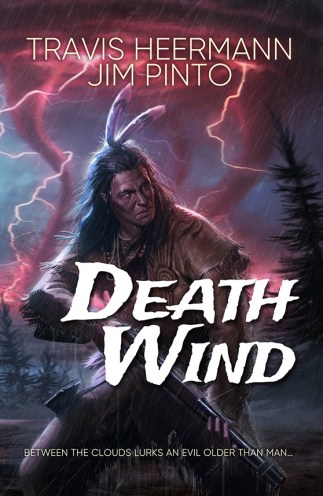
Death Wind, by Travis Heerman and Jim Pinto is a paranormal western, also known as weird western, that makes the reader believe in legends, if only for a short time. In a time of war between the white man and the Indians, there comes a foe of unspeakable power and cruelty only known through the stories of the native American people.
There is a great evil on the horizon, bearing down upon White Pine and the Lakota Souix reservation following the Wounded Knee Creek Massacre in 1891. The evil is hungry and it feasts on anyone in its path, threatening to consume them all, no matter the color of their skin. The only hope of survival lies in the ancient legends of the native peoples of the land and will unite white and Indian in a common goal.
Carefully crafted to produce graphic imagery and a captivating story line, Death Wind kept me reading until the last page. I give it five quills.

Amazon Buy Link: https://www.amazon.com/Death-Wind-Travis-Heermann-ebook/dp/B01L2EYKK8/ref=sr_1_1?keywords=Death+Wind+Pinto&qid=1583962493&s=books&sr=1-1
Kaye Lynne Booth does honest book reviews on Writing to be Read in exchange for ARCs. Have a book you’d like reviewed? Contact Kaye at kayebooth(at)yahoo(dot)com.
Share this:

“Old One Eye Pete”: A western short fiction collection
Posted: March 6, 2020 Filed under: Book Review, Books, Fiction, Historical Fiction, Western | Tags: Book Review, Loretta Miles Tollefson, Old One Eye Pete, Western, Writing to be Read 3 Comments
Old One Eye Pete, by Loretta Miles Tollefson is a western short story collection, with individual stories that fit together loosely to form a part of a bigger story that takes place within the Old New Mexico territory. As always, Tollefson’s tales are based on historical events, people and places and are historically accurate, featuring interesting and memorable characters.
Most of these stories feature Old One Eye Pete, an old trapper who wanders the New Mexico mountains with his horse and pack mule, and knows more about the people, the area and the goings on there than near anyone in the territory. These stories are brief, and great reads when you just have a short wait or a few minutes to kill.
A light, easy read that made me chuckle from time to time. True western short fiction. I give Old One Eye Pete four quills.

Amazon Buy Link: https://www.amazon.com/Old-One-Eye-Pete-Stories-ebook/dp/B07H1R1L5B/ref=sr_1_1?keywords=Old+one+eye+Pete&qid=1583605164&s=books&sr=1-1
Kaye Lynne Booth does honest book reviews on Writing to be Read in exchange for ARCs. Have a book you’d like reviewed? Contact Kaye at kayebooth(at)yahoo(dot)com.
Share this:

Riding the Landscape of Westerns in March
Posted: March 2, 2020 Filed under: Books, Fiction, Historical Fiction, weird western, Western, western romance, Writing to be Read | Tags: classic western, weird western, Western, western romance, Writing to be Read Leave a comment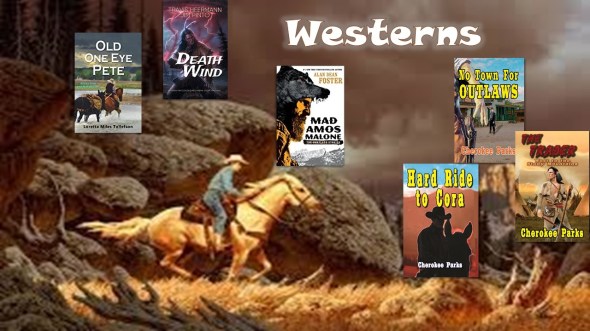
The western genre has always been about man against the elements, man against man, and man against nature. Western heroes are tough and rugged, and ready to face outlaws, Indians, wild animals, and any inclement of bad weather to uphold right and see justice done. In the western genre that I grew up with the good guys wore white hats and the bad guys wore black, and there was no question as to who was who. Cowboys were rough and rowdy, but they were gentleman when a lady was present, tipping their hats and addressing her as Ma’am. There was a clear sense of right and wrong in westerns written by Louis L’Amore and Zane Grey, and right always won out in the end.
Today’s westerns are different. Although you can still find the classic western with authors such as my “Chatting with the Pros” author guest, Cherokee Parks, or the guest for my supporting interview, Alan Dean Foster. But, the western of today isn’t as clear cut. Today’s westerns look past lawmen and outlaws to the less known factions of western society, with protagonists such as soiled doves, Indians, Negroes, and immigrants from many different countries, who may be looked down upon by some as less desirable, so they must work harder to convince the reader that they are the good guy. They portray segments of the western populations which have been previously overlooked or devalued. Although members of near invisible populations, they were a part of the western culture and western fiction is now giving them voice. The tales may be fiction, but the portrayal of life in the western landscape is not romanticized as much as it once may have been. It may be more stark and brutal in many ways, but they are true to the places and times of their settings.
In the western genre market, there are more female authors than ever before, and that means more female protagonists. A woman as main character can’t be a delicate flower who cowers behind her man as in westerns of old. The women of the west were tough, because they had to be. It was often a matter of survival. Even in western romance, the women are strong willed and determined, and they play many different roles on the western frontier. We all know that many women made a living in the parlor houses, bordellos, and saloons, but women played many other roles on the western frontier, and today’s western authors are capitalizing on that.
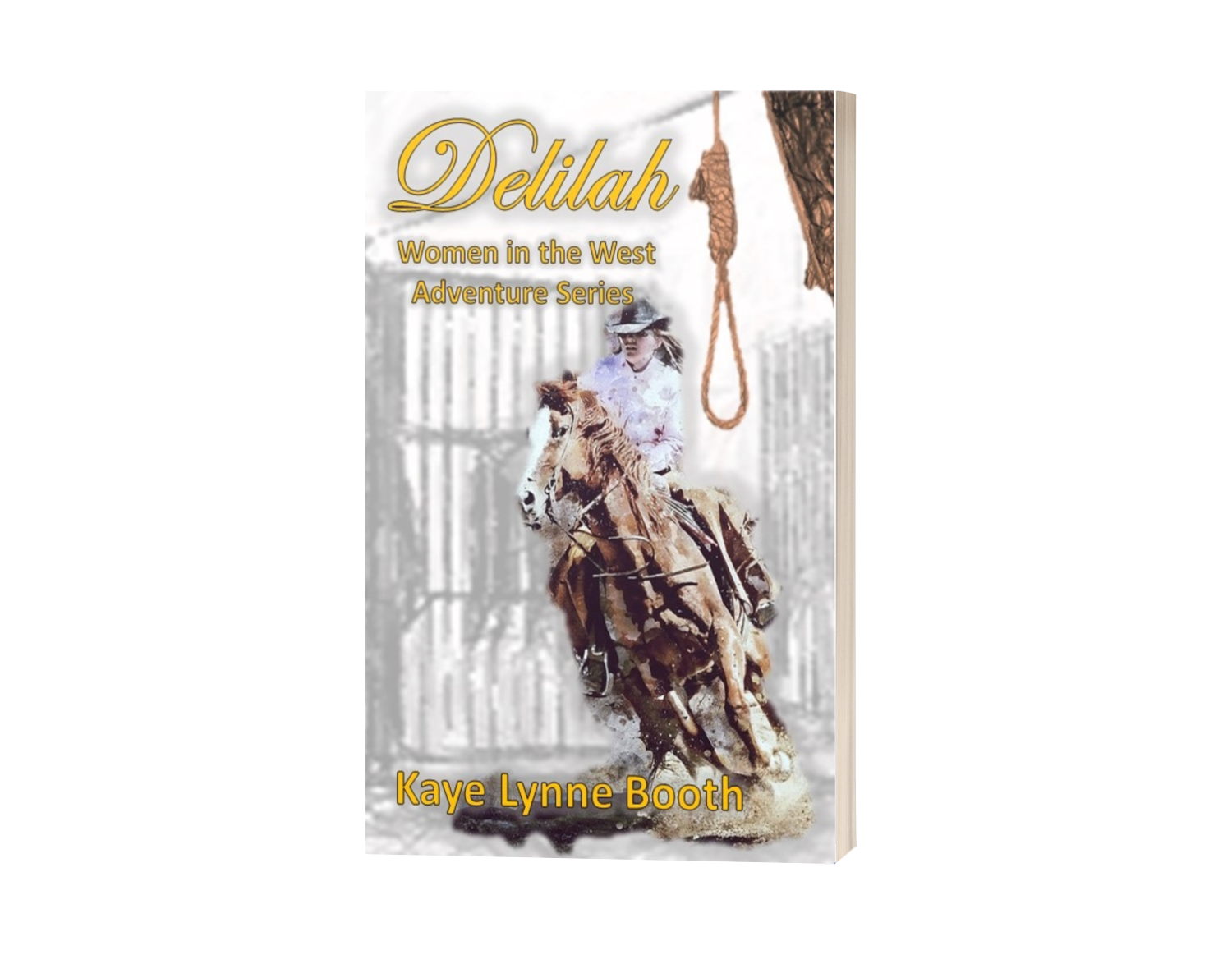
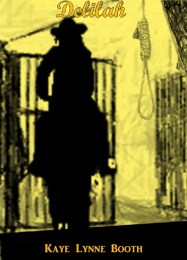 My own western, Delilah, features a tough and gritty female protagonist who, at the age of nineteen, is already hardened against life’s trials. Although not actually a romance, it does have that romance element, but she must learn to love again before that story line can come to completion. Delilah is being re-released this month with a great new cover, (designed by WordCrafter), and new front materials, including forewords by western authors Robert Hanlon and C. Emerson Law. I’m looking for feedback, so please let me know what you think of the new cover in the comments.
The historical westerns of Loretta Miles Tollefson, such as her short fiction collection, Old One Eye Pete, which I’ll be reviewing, are embedded in New Mexico territory in the 1800s. Many of Tollefson’s books feature tough female protagonists who do what they must to survive the harsh landscape and harsher men of the times, who rise above the traditional female role through strength and courage. I think an author must work harder to sell to women characters in non-traditional roles to the reader, but if written well, they make interesting and, often colorful characters that enhance their stories. readers don’t want to put down. Western romance is in abundance. At the end of March, Writing to be Read will feature a special post about my experience as a judge of the western romance category, including reviews of some of my favorite entries.
But in contemporary times, space westerns venture into the science fiction genre, and there are even western fantasy stories, such as the steampunk western romance series of Jordan Elizabeth. Westerns have branched out to combine with the paranormal, creating the weird western sub-genre, such as Death Wind, by Travis Heerman and Jim Pinto, which I will be reviewing this month. This sub-genre is growing in popularity as authors realize the potential for supernatural tales from the old west. The western frontier leaves behind many ghosts and contemporary authors are realizing their story potential.
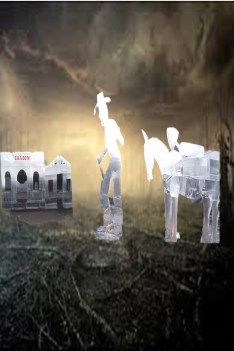 Paranormal western is the genre for the 2020 WordCrafter Short Fiction Contest, but there have only been a few entries. I think maybe authors shy away from the western genre, especially those outside the U.S. that are not so familiar with the history of the American frontier. But the American frontier is not the only possible setting for a western story. Think Quiggly Down Under, for a western story set in the Australian Outback. Every country has western style stories in their history. As long as there is a western element and a paranormal element of some type in your story, it qualifies as an entry. It can be about zombies rambling over the western prairie, on vampires nesting in the Rockies. It can be a haunted hotel or saloon in a frontier town, or a restless spirit that refuses to pass on until the hombre that pulled the trigger on them pays for what he done. If you are a creative writer, then step up and take the challenge to write a paranormal western and send it to me. The deadline is April 30th, so there’s still plenty of time. Don’t forget, the author of the winning story will receive a $25 Amazon gift card. You can find the complete submission guidelines here.
Join us on Writing to be Read as we ride the landscape of the western genre and explore the possibilities. The western genre is alive and well today, although it may look different than expected. I love to hear from readers, so be sure to leave a comment to let me know you’ve visited. Also feel free to like and share.
Reviews of westerns by Loretta Miles Tollefson:
Reviews of steampunk western romances by Jordan Elizabeth:
Reviews of weird westerns:
Hell’s Butcher series, by Chris Barili
Chance Damnation, by DeAnna Knippling
2019 interviews with western authors:
Scott Harris – classic western
Juliette Douglas – western romance
Patricia PacJac Carroll – Christian western romance
Loretta Miles Tollefson – historical western
Like this post? Let me know in the comments. You can be sure not to miss any of Writing to be Read’s great content by subscribe to e-mail or following on WordPress. If you found this content helpful or entertaining, please share.
Share this:

Interview with erotic romance author Jade C. Jamison
Posted: February 24, 2020 Filed under: Adult, Author Profile, Books, Erotic Romance, Erotica, Fiction, Interview, romance, Writing, Writing Tips | Tags: Author Interview, Bullet, Erotic Romance, Erotica, Heat, Jade C. Jamison, Tangled Web, Writing to be Read 4 Comments
My author guest today makes her living writing erotic romance under a pen name, and prefers to display the cover of her bestselling novel, Bullet, the first book in her Rock Star Romance series, (see my review of Bullet), rather than an author photo in order to conceal her real identity. (When you like at it that way, authors can be kind of like superheroes, taking assumed identities. You’ve gotta admit that’s pretty cool.) We may not know who she is behind the book cover, but we do know that she’s written over fifty books to date, and when perusing them, one is sure to find one that’s just the preferred temperature, because she writes in them all, from sweet romance to sizzling hot erotica. Please welcome erotic romance author Jade C. Jamison.
Kaye: Why do you write erotic contemporary romance? Would you ever consider writing any other genre? If so, which one?
Jade: It took me forever to puzzle out exactly what genre I wrote.Back in 2013, the term “erotic romance” seemed to most capture what I wrote, but the “E” word is now becoming taboo.(I’m smiling as I write this.)Nowadays, the genre is being called “steamy contemporary romance,” although that may change yet again. But, anyway, I digress. Not only would I consider writing in other genres, I have. Within romance, I’ve written everything from romantic comedy to romantic suspense. Outside romance, I’ve written horror and nonfiction, but under another name, I’ve penned mystery, news writing, instructional pieces, academic literature, and even poetry.
Kaye: Does erotic romance come naturally to you? Why does it appeal to you to write in this genre?
Jade: I don’t know that writing romance comes naturally to me. Ten-plus years ago, I found that, no matter what I wrote, some aspect of romance became part of the story. So even though I have a tale to tell and even though the relationship is the key element in the story, making sure I have all the facets that make a romance satisfying to avid readers of the genre is not always easy, and it’s definitely not organic.
Why it appeals to me? I haven’t a clue. I’m sure a psychologist would have a heyday with me.
Kaye: What is the most difficult part of writing erotic romance for you? What part is the most fun?
Jade: Sex scenes are, by far, the hardest. They easily become the most tedious part as a reader as well. From some of my conversations with other authors, I don’t believe I’m alone. You want to keep things fresh, so to speak, and non-repetitive while at the same time you want to keep readers emotionally engaged. It’s easy to mess that up in those sorts of scenes—so I put a lot of pressure on myself to write scenes that are emotional and engaging.
The most fun part is when a character surprises me. I think I know where the story is going and then BAM! She does something completely unexpected, but I know it’s working and there’s no way I’ll change it.
Kaye: Which of your stories is your favorite? Why?
Jade: Sorry if you’ve heard this from me before, but asking me to choose a favorite story is like asking me to choose a favorite child.That said, I do have some stories that I don’t like as well as others, but my lips are sealed. Some of the stories I like the least are reader favorites.
Kaye: Your sex scenes range in temperature from steamy, to sizzling, to blazing hot. What determines how hot the scenes get in each story?


Jade: Part of it depends on the story itself. In my bestselling book Bullet the sex scenes got hotter as the story moved on. That was one of the ways I let the reader know the main character was maturing. It mostly depends on what I think readers will expect. Am I billing the book as super steamy (like Finger Bang), or am I emphasizing the story itself (like Savage)? But, honestly, I always thought they were all pretty close in steaminess. I guess I’m too close to the forest!
Kaye: Do you prefer to write during the day, or are your stories so hot they can only be written at night?
Jade: I actually do almost all of my writing in the early morning, from about 5:30-6:30 am. It’s the only quiet time I have and I find I’m far more creative when my brain is fresh.
Kaye: You’ve written over fifty books. What is the writing achievement are you most proud of?
Jade: I don’t know that I’ve “achieved” anything as an author, other than sharing my stories with the world.I guess, though, that I’m currently proud of my growth as an author. I’ve really taken a step back in an effort to realize that being prolific isn’t nearly as important as transporting a reader to a different world—so I’m proud of not letting my pride stop me from learning!
Kaye: What is one thing your readers would never guess about you?
Jade: I enjoy playing Pokemon Go.I used to play Pokemon games with my kids when they were little, and now they have me playing this silly game on my phone!!!
Kaye: In 2019, you released books 3 and 4 from your Matchmaker collection. They are described as Reverse Harem Romances on their covers. I can see lots of potential for steamy action there. Would you like to talk a little about this story collection?

Jade: I’d taken a couple of marketing courses the year before, compelling me to “write to market”. So, I looked through Amazon’s top 100 contemporary romance books and found that Reverse Harem Romances were dominating at the time. At first, I thought that meant a literal harem, but with a woman surrounded by men. I discovered through my research that that’s not quite what Reverse Harem is all about. I like a challenge, so I decided to go for it. One of the courses I took is by one of the bestselling indie romance authors in the history of Amazon, and she advised writing a series with cliffhanger endings at the end of each book. That was another challenge. So, that’s the nuts and bolts of the series.
The story itself is about Claire, an actress struggling to make it in Hollywood. She tries out for a reality TV show called Matchmaker, hoping that if the right people see her, they might give her a chance as an actress. If nothing else, she’s bound to meet the love of her life. Her suitors are five gorgeous men who’ve been “guaranteed” to be a perfect match, but the audience gets to determine who stays and who goes. And, yes, there’s quite a bit of steam between the covers.
Kaye: I reviewed Heat: Book 1, which was really a short prelude to a larger story that will change the way you think about getting a message forever. But there is more to the story. Would you talk about Heat: The Complete Series?

Jade: Heat was another challenge I couldn’t say no to. Several years ago, I was approached by a publishing company in Australia about republishing one of my older series, and I did that with them. While it never neared the level of success they’d promised, a year later they approached me about something new they were doing, inspired by stories James Patterson had been writing. The basic premise for the romance stories was that you write a short but intense “intro,” followed by three more books, all following a particular formula—but very hot with cliffhangers at the end of each short book. I really liked the idea, so I pitched what became Heat. Unfortunately, it didn’t perform as well as I had hoped, so I took back my rights to it after a year and republished it.
So what you read in the free first part, Heat: Book One, is the beginnings of a steamy romance between Sergio and Rachel. Rachel is actually a character from Finger Bang, and I’d been inspired to write a story about her for a long time. When I was approached by this publishing company, I thought her story might be perfect for the format they’d talked about. Because it’s shorter and steamier, there’s not as much depth to the characters, but that wasn’t the idea behind the series. It’s meant to be intense, somewhat shocking, and super steamy. Fun. No ugly crying, no heart-wrenching moments. Just pure, unadulterated fun. What you read in Heat: Book One is a prelude to the rest of the story. If you enjoyed the first part, you’ll love the complete story.
Kaye: What is next for Jade C. Jamison? What can your readers look forward to?
Jade: The biggest problem for me is I have so many things I want and need to write, and so little time. I literally have over fifty book ideas outlined, but I’m currently working on a project. It’s a series called Small Town Secrets. I’ve taken about thirteen of my books off the shelves, and I’m re-purposing them. In an effort to be an even better writer, I’m rewriting eight of those books, but they are now all interconnected in this series. My review team has read the first one (Love and Lies) and loved it. I’m hoping to release six of those books in 2020.
I also have one book left in the Nicki Sosebee series. Book 12, Wake Up, ended on a cliffhanger, and so I can’t keep my readers waiting for too long. That book is fully plotted and I promise it will be satisfying! I just need to write it. But, I also have several other series I need to finish (Feverish, Codie Snow, Tangled Web), so we’ll see what I can tackle. I would love to write a lot more this year (like I said, fifty ideas and counting!) but I have a lot on my personal plate, so it all depends on how much I can get done in the time I have. I’d cross my fingers, but I can’t type while I do that!
Kaye: (See my review of Tangled Web)
I want to thank Jade for joining me here and sharing today. It has been a real pleasure. I learned a few things about writing erotic romance and hopefully my readers did, too. This interview is the perfect way to finish up February’s erotic romance. And thank all of my readers for reading and commenting on Writing to be Read. I hope you will all saddle up and join me again next month, when we plan to wrangle up the western genre. See you here.
Like this post? Let me know in the comments. You can be sure not to miss any of Writing to be Read’s great content by subscribe to e-mail or following on WordPress. If you found this content helpful or entertaining, please share.
Share this:

“Heat: book one”: You’ll never think of message the same way again
Posted: February 21, 2020 Filed under: Adult, Book Review, Books, Erotic Romance, Erotica, Fiction, romance | Tags: Book Review, Erotic Romance, Erotica, Heat: book one, Jade C. Jamison, romance, Writing to be Read Leave a comment
Heat: book one, by Jade C. Jamison is a prequel to her Heat: The Complete Series, which can be read in a single sitting. Jamison has a talent for drawing readers in and immersing them in the character, making them almost active participants in the story, and Heat is no exception. This brief tale is an introduction, featuring one of the most sensual messages ever imagined for the reader to relax and enjoy.
In Heat, we meet Rachel Donahue, a busy investment broker who needs to unwind at least once a week. And we meet Spike, a sexy and talented male masseuse who really knows how to make a girl feel really, really good. Maybe too good. What happens when Rachel meets her new client and realizes that Sergio and Spike are one and the same, and she is going t be working very closely with him, leaves the reader wanting more. You won’t be able to resist buying Heat: The Complete Series to find out the rest of the story.
Sizzling hot erotic romance that leaves readers longing for more, I give Heat: book one five quills.

Amazon Buy Link: https://www.amazon.com/Heat-Book-Jade-C-Jamison-ebook/dp/B07JRC8TP6/ref=sr_1_1?keywords=Heat+Jamison&qid=1583605811&s=books&sr=1-1
Kaye Lynne Booth does honest book reviews on Writing to be Read in exchange for ARCs. Have a book you’d like reviewed? Contact Kaye at kayebooth(at)yahoo(dot)com.
Share this:

Chatting with the Pros: Interview with contemporary romance author Amy Cecil
Posted: February 17, 2020 Filed under: Adult, Books, Erotic Romance, Fiction, Interview, romance, Writing | Tags: Amy Cecil, Author Interview, Erotic Romance, Knights of Silence MC, Sainte, Writing to be Read 1 Comment
My author guest this month on “Chatting with the Pros” is a talented romance author of both historical and contemporary romance novels. Her Knights of Silence MC series tells the story of the sometimes violent and brutal world of motorcycle club life with characters who feel very human and vulnerable at times. The series is a tale of love and loyalty, and yes, there’s some tastefully written, but quite erotic sex scenes. (You can see my review of Sainte, the last book in the MC series.) I also had the pleasure of reviewing Ripper, which was one of the most cleverly crafted romances I’ve ever read. To turn a Jack the Ripper tale into an erotic romance takes some talent. Erotic romance author Amy Cecil did with a well crafted hand. I’m so pleased to be able to chat with her today. Please join me in welcoming her.

Kaye: Why do you write in the romance genre? Why not science fiction, or fantasy or mystery?
Amy: I initially chose romance because that is what I have always read. I do not read science fiction and doubt that I could even write in that genre. As I wrote more books, I have intertwined other genres into them such as fantasy, romantic suspense and ever mystery. So even though I started with romance, I’ve always been open to other genres that interest me.
Kaye: What is the most difficult part of writing romance for you? What is the most fun?
Amy: I would have to say the most difficult thing with romance for me is finding a relationship scenario that isn’t over saturated in the market. For all of us romance readers, we are always looking for something fresh. We want that happily ever after, but finding the angst to get to that point can be difficult.
And, the most fun part of romance for me is the banter between the couples. I love to bring snarky attitudes together and have a battle of the wits, so to speak.
Kaye: Your Knights of Silence MC series chronicles a motorcycle club over the course of several years. As you read the series you get better acquainted with each of the members, which have well developed backstories that make the whole of the story seem very real and believable. What drew you to these stories with these characters?
Amy: That’s a great question. And actually pretty funny how the series got to where it is now. When I started, my focus was on Ice and Emma, childhood sweethearts that great apart who found each other again. It was gonna be one book. When I got to about half way through the book, my PA at the time suggested that I release it, even though it has this huge cliffy. So I did, which then created book 2. That was supposed to be the end. But as I was writing these characters and their story lines grew, I realized I had more to say. Never in a million years at the beginning did I think that Honey would be such a pivotal character in the series to warrant he own book. So the draw was Ice and Emma and the continuing development came with each book released from my mind.
Kaye: You recently released the last book in the Knights of Silence MC series, Sainte. Can you talk a little about Sainte’s part of the Story? Why was he chosen for the central focus character in the final book?
Amy: When the series started to lean toward Honey, I realized that male character that I had intended for her was completely wrong for her. She needed a saint, literally to save her from herself. And while Hawk was the most beloved character in the series, he did not have the mental strength to get Honey through. And I just couldn’t let him sit around and watch her with another man. So, Hawk had to die and make room for Sainte. Sainte is a former mafia hit man who knew Ice when he was a kid. He is Emma’s cousin, which she didn’t know about. So he had a reason to stay with the MC from the beginning. When he met Honey, he realizes quickly, she is the woman for him and he decides to stay and leave the mafia world. (Not that it is all that different. LOL). Sainte brings the story full circle, bringing the club the peace it has been wanting for a long time.
Kaye: As I mention in my review of Sainte, your characters are well developed with rich, believable backstories. Where do you draw your characters? How do you create with their stories?
Amy: As noted in questions 3 and 4 above, their stories come to me as I write them. I keep referring back to Honey, but she is a perfect example. When the series started, she was nothing, but the jealous ex-girlfriend. By the time we get to the third book, her story line develops and the reader sees she is the most complex character in the whole series. She’s a recovering coke addict, struggling with her addiction every day. She wants love so bad she can taste it, but is terrified to grab the bull by the horns and take it when it’s offered to her. As the story grows, my characters grow and develop stories of their own.
Kaye: Although the series focuses on the male members, their “old ladies” play important roles as well, offering an abundance of strong, if flawed, female characters. Why do the ladies play such an important role within the framework of your stories?
Amy: Well, you know the old saying, “there is a strong woman behind every man.” I wanted my female characters to be as strong as their male counterparts. Because these women are connected to the MC, they are surrounded by violence. They have to be strong to survive. Emma comes to the MC in ICE a very naïve young woman. By the end, she gives new meaning to the term “old lady” and could definitely have a patch of her own.
Kaye: Who is your favorite MC Character and why?
Amy: At first, I would have to say Caden/ICE all the way. And don’t get me wrong, I love him because he is the heart of the MC. He’s strong and protective and the kind of guy that when he holds you in his arms you feel safe. But then, Sainte came along. Sainte is everything that Ice is, but Sainte has that snarky personality that I love. He’s not afraid to tell it like it is and if he’s hated for it, he will just smile and walk away. Yes, definitely Sainte.
Kaye: The MC world is often dangerous and violent. As a result, throughout the series several characters have had to die. Is it difficult for you to kill off your darlings? Who was the hardest for you?
Amy: Several minor or past characters have died and frankly, I didn’t even bat an eye. When the realization hit me that I had to kill Hawk, that one was difficult. He was a major player in the story line and very much loved character by my readers. And believe me, I thought of several ways to keep him, but I just couldn’t get it to work with how I wanted the story to go. So he died. It was hard, but it would have been so much harder to kill Ice or Sainte, or even one of the girls.
Kaye: You also write historical romance. Are those stories a bit tamer than you contemporary romances?
Amy: Yes, definitely. My historical romances are Jane Austen FanFic and I think the hard core Jane Austen fans would have heart attacks if I made them as steamy as my contemporary romances.
Kaye: Your erotic scenes are done tastefully and in context for the story, yet you turn up the heat just enough to make them sizzle. How do you know how far to take your sex scenes? How hot is too hot?
Amy: That’s an easy question. I think about what I like to read and go from there. I have read several books where every other page is a sex scene and that is just ridiculous. Many authors think sex is what sells your book, but I disagree. Readers want a story that they can sink their teeth into. They want to relate to their characters and that is really hard to do if they are screwing like bunnies the entire time.
I also believe that you want to leave the reader wanting for more in a particular scene. We all have an imagination and I believe that sometimes it is best to let the readers mind take over and make the sex in the book what they want.
Kaye: You are finished with the Knights of Silence. What is next for Amy Cecil? Is there a new series in the works?
Amy: Currently, I am working on a sequel to On Stranger Prides, which is a Pride and Prejudice variation titled On Familiar Prides. After that, I have a short story I wrote last year in an anthology about a WWI spy that I would like to develop into a full-length novel. As far as the Knights series goes, I definitely plan to expand on it. I currently have one spin-off series published, the Enemy Duet, but I also see others as well as a next generation series. I know for a fact, I can not stay away from my biker boys for very long, so definitely expect more in the future. I’m also working on making all my books available on audio, so that has kept me pretty busy as well.
Kaye: You are an award winning romance author. What do you feel is your biggest writing accomplishment to date?
Amy: Wow, you really save the toughest for last. I always thought that my writing was measured by the number of reviews, or the awards won, or even that pretty “bestseller” orange banner you get from Amazon. And yes, I have lots of reviews, awards and have had a couple orange banners and I am thankful for every one of them. But when I really think about accomplishments in my writing, none of these apply. Sure, they are great and all, but what I am most proud of is my readers. And it’s not just because they read my books, but because of the people and the friendships I have developed with them. I have met some amazing people through this journey and I can say, it’s not the awards, or the reviews or the “bestseller” banners that keep me writing, it’s the readers.
I want to thank Amy for taking the time to share today on Writing to be Read. Romance comes in many different shapes and sizes. In her Knights of Silence MC series, it comes in the form of big, tough bikers and their girls. Her characters are well developed and feel very realistic and relate-able so readers come to care about them, and her sex scenes have just the right amount of heat to make them erotic, but not feel over the top. It has been a pleasure chatting with her here and getting a glimpse into the workings of contemporary erotic romance series. Join us next month, when the theme will be the western genre and my “Chatting with the Pros” author guest will be Cherokee Parks.
Like this post? Let me know in the comments. You can be sure not to miss any of Writing to be Read’s great content by subscribe to e-mail or following on WordPress. If you found this content helpful or entertaining, please share.
Share this:

“Sainte”: End of a series or stand alone novel?
Posted: February 7, 2020 Filed under: Adult, Book Review, Books, Erotica, Fiction, romance | Tags: Amy Cecil, Book Review, Erotica, Knights of Silence, MC Romance, romance, Sainte, Writing to be Read Leave a comment
When I requested to review this latest book in Amy Cecil’s Knights of Silence MC series, she was concerned that readers who hadn’t read the previous books wouldn’t know what was happening, since Sainte is the completion of the series. When I read the second book in the series, Ice on Fire, for review back in 2017, I had no problem following what was happening in the still new series, so she agreed to let me give it a go now, with the last book.
She needn’t have worried. With Sainte, I was immediately pulled into the story. Enough was revealed through dialog and character thoughts and memories to clue me in to many of the events referred to from the previous books and follow along with the action. Cecil’s superbly crafted use of first person, present tense, (not a small feat), allows the reader to have insight into character motivations, as well as providing needed information that helps the reader to keep pace with the story.
Cecil’s characters have depth and back story enough to carry the story. This book centers around two characters and one romance, but references to what has come before in the series involving the other members of the MC to get them to this point are skillfully woven into the story. After reading Sainte, I want to go back and read the rest to get better acquainted with members of the club who were not the main focus of this story.
Even though I’m wasn’t familiar with events referenced from earlier in the series, a little patience usually reveals more detail, and I was easily able to follow along. Do I know everything that happened in this series from this one book? No. Am I intrigued enough to read the rest of the series to find out? Yes, but I really feel it does fine as a stand alone novel, as well.
I’m getting older and it’s been a long time since I stayed up until 2 a.m. to finish a book, but Amy Cecil managed to get me to do just that. Sainte is an excellent romance story. Or maybe I’m just a sucker for Happily Ever Afters. I give it five quills.

Note: There is some erotica in this story, as there seems to be with all of Cecil’s works, but she handles the love scenes with tact and only puts them where they serve a purpose to move the story forward. Cecil’s romances are all class.
You can purchase Sainte here: https://www.amazon.com/Sainte-Knights-Silence-Amy-Cecil-ebook/dp/B0836P299N/ref=sr_1_1?keywords=Sainte&qid=1579729548&s=books&sr=1-1
Kaye Lynne Booth does honest book reviews on Writing to be Read in exchange for ARCs. Have a book you’d like reviewed? Contact Kaye at kayebooth(at)yahoo(dot)com.
Share this:

February: Turning Up the Heat with Erotic Romance
Posted: February 3, 2020 Filed under: Books, Erotic Romance, Erotica, Fiction, romance, Writing | Tags: Erotic Romance, Erotica, romance, Writing to be Read 2 Comments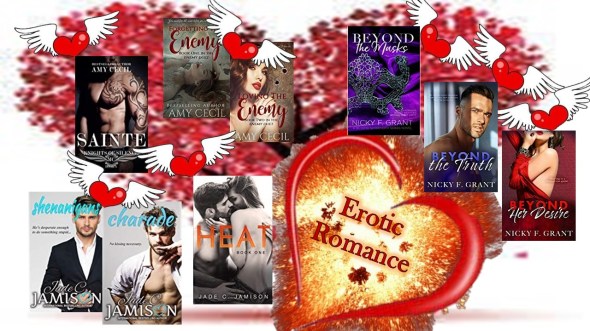
Why is Saint Valentine’s Day in February? Where I live, February is a cold month, not associated with love and warmth. So, Writing to be Read is turning up the heat this month by taking a look at erotic romance. Now, I’m not talking about erotica, which in my opinion is just sex for the sake of sex with no real story line and love has nothing to do with it, nor do plots. These stories can be rank and raunchy and downright smutty, but they are not erotic romance. (For more about the differences between romance, erotic romance and erotica see this article on The Productive Indie Fiction Writer.) I enjoy sex scenes like the best of them, but I’m also a sucker for the happily ever after.
Erotic romance features both romance and sex, and ranges in temperature from steamy to hot to sizzling. The romance story line usually carries the story, but the sexual elements keep the pages turning. This month we’re going to meet some erotic romance authors and take a look at some of their works. My “Chatting with the Pros” author guest will be romance author Amy Cecil, whose contemporary romance stories get pretty steamy, and guests for the supporting interviews are erotic romance authors Nicky F. Grant and Jade C. Jamison. I’ll also be reviewing Sainte, the last book in Amy Cecil’s Knights of Silence MC series, and Heat book 1, a prequel short to Heat: The Complete Series, by Jade C. Jamison.
Just as authors each have their different heat levels in which they like to write, as readers we all have our own temperature preferences, too. Let me know how hot you like it, to read or to write, in the comments. Then, join me as we turn up the heat and start warming things up with a look at erotic romance in February on Writing to be Read!
Like this post? Let me know in the comments. You can be sure not to miss any of Writing to be Read’s great content by subscribe to e-mail or following on WordPress. If you found this content helpful or entertaining, please share.
Share this:

Meet poet and writer, Sally Cronin, and a review of her latest book
Posted: January 25, 2020 Filed under: Book Review, Books, Inspirational, Interview, Poetry, Treasuring Poetry | Tags: Book Review, Interview, Life's Rich Tapestry, Poetry, Poets, Robbie Cheadle, Sally Cronin, Treasuring Poetry, Writing to be Read 119 Comments
Today is the start of a new poetry appreciation series here on Writing to be Read where I will be introducing you to a number of wonderful poets in our blogging community, discussing well known poets and their poetry and reviewing poetry books. I hope you will participate in the discussions and enjoy meeting and greeting the poets, both new and known to you, and discovering new books of poetry.
My first guest is accomplished poet and writer, Sally Cronin, of Smorgasbord Blog Magazine blog. Sally has recently published a new book of poetry, 99-word flash fiction and short stories called, Life’s Rich Tapestry: Woven in words which I have reviewed below. Before we get there, however, Sally is going to share her thoughts about her favourite poem, The Law of the Jungle by Rudyard Kipling.
Over to Sally
What is your favourite poem?
That is an extremely tough question and had me stumped for a couple of days as I wanted to revisit the poems that I have loved since childhood to make sure that this really would qualify as my favourite poem.
The Law of the Jungle by Rudyard Kipling
(From The Jungle Book)
Now this is the Law of the Jungle — as old and as true as the sky;
And the Wolf that shall keep it may prosper, but the Wolf that shall break it must die.
As the creeper that girdles the tree-trunk the Law runneth forward and back —
For the strength of the Pack is the Wolf, and the strength of the Wolf is the Pack.
Wash daily from nose-tip to tail-tip; drink deeply, but never too deep;
And remember the night is for hunting, and forget not the day is for sleep.
The Jackal may follow the Tiger, but, Cub, when thy whiskers are grown,
Remember the Wolf is a Hunter — go forth and get food of thine own.
Keep peace with Lords of the Jungle — the Tiger, the Panther, and Bear.
And trouble not Hathi the Silent, and mock not the Boar in his lair.
When Pack meets with Pack in the Jungle, and neither will go from the trail,
Lie down till the leaders have spoken — it may be fair words shall prevail.
When ye fight with a Wolf of the Pack, ye must fight him alone and afar,
Lest others take part in the quarrel, and the Pack be diminished by war.
The Lair of the Wolf is his refuge, and where he has made him his home,
Not even the Head Wolf may enter, not even the Council may come.
The Lair of the Wolf is his refuge, but where he has digged it too plain,
The Council shall send him a message, and so he shall change it again.
If ye kill before midnight, be silent, and wake not the woods with your bay,
Lest ye frighten the deer from the crop, and your brothers go empty away.
Ye may kill for yourselves, and your mates, and your cubs as they need, and ye can;
But kill not for pleasure of killing, and seven times never kill Man!
If ye plunder his Kill from a weaker, devour not all in thy pride;
Pack-Right is the right of the meanest; so leave him the head and the hide.
The Kill of the Pack is the meat of the Pack. Ye must eat where it lies;
And no one may carry away of that meat to his lair, or he dies.
The Kill of the Wolf is the meat of the Wolf. He may do what he will;
But, till he has given permission, the Pack may not eat of that Kill.
Cub-Right is the right of the Yearling. From all of his Pack he may claim
Full-gorge when the killer has eaten; and none may refuse him the same.
Lair-Right is the right of the Mother. From all of her year she may claim
One haunch of each kill for her litter, and none may deny her the same.
Cave-Right is the right of the Father — to hunt by himself for his own:
He is freed of all calls to the Pack; he is judged by the Council alone.
Because of his age and his cunning, because of his gripe and his paw,
In all that the Law leaveth open, the word of your Head Wolf is Law.
Now these are the Laws of the Jungle, and many and mighty are they;
But the head and the hoof of the Law and the haunch and the hump is — Obey!
Robbie: This is a wonderful choice of poem, Sally. I also love it. Interestingly enough my favourite poem is also by Rudyard Kipling and I will share it later in this series.
What is your interpretation of this poem?
This is about living in harmony within a society whether it is a wolf pack or amongst a human pack. Having social etiquette and respect for others is essential if all are to avoid conflicts, get enough to eat, be accepted and to thrive. There is a natural order to things and if you learn that when you are young, when you leave your pack you are well equipped to survive on your own with the skills to begin your own pack. And whilst is sounds draconian, those rules are there to protect the young as well as teach them manners. It applies to both wolf cubs and man cubs….
Robbie: A wonderful interpretation of this poem and of life in general. I have similar thoughts on how societies can best achieve success and one of my favourite key words in this regard is the need for discipline.
What emotions does the poem invoke in you?
When I first read the Jungle Book I was too young to really appreciate the undertones in the story about life, survival and the human and animal parallels. But I loved the book and this poem was rich in both words and intent, and when I was ten or eleven and read for the second time, I could see how this philosophy of life in the pack, related to life in a family. It made me feel secure to think of my father as the Head Wolf, and it also made me very protective of my other family members including my younger brother, who probably did not appreciate all the attention I lavished on him as I would like to believe! It also brings back memories of our time with Sam [Robbie: Sam is a lovely dog who was part of Sally and David’s family for many years before he passed. He has his own book called Sam, A Shaggy Dog Story] as our own small pack and how interestingly he adopted his own social rules of etiquette that run parallel to those in the poem. For example he considered us his alpha male and female and he would not start his own dinner until we were eating our own. He was very protective of any young family members who visited and also the elderly, sticking close to them. If he spotted something that he considered might be dangerous to us, he would always put himself between us and the threat. Whenever I saw him exhibiting these kinds of behaviour it always bought this poem back to me and made me so proud.
Robbie: Isn’t it wonderful the powerful emotions and associations a poem can invoke in a reader. Sam was a wonderful dog. You can read my review of Sam, A Shaggy Dog Story here: Goodreads review
If you could choose to write like any well-known poet, who would it be?
That is another tough question Robbie as there are many poets who have stirred my emotions and also my imagination. And whilst I would love to be able to write like Rudyard Kipling both in prose and verse, I am always drawn to the young and sometimes short lived war poets. They conveyed the reality of war, stripping it bare of glory but telling a story in a few short lines. Their legacy is that we never forget those who died, even if we might not always learn the lessons we need to from their passing.
Rupert Brooke for me is one of the finest examples of these poets, and if I could convey the depth of emotion, intent and storytelling in my poetry, I would be very happy indeed. Whilst The Soldier is the most often quoted poem, certainly at military funerals, it is one of his peacetime poems that always resonates with me especially as I get older and celebrate married life.
Kindliness by Rupert Brooke
When love has changed to kindliness —
Oh, love, our hungry lips, that press
So tight that Time’s an old god’s dream
Nodding in heaven, and whisper stuff
Seven million years were not enough
To think on after, make it seem
Less than the breath of children playing,
A blasphemy scarce worth the saying,
A sorry jest, “When love has grown
To kindliness — to kindliness!” . . .
And yet — the best that either’s known
Will change, and wither, and be less,
At last, than comfort, or its own
Remembrance. And when some caress
Tendered in habit (once a flame
All heaven sang out to) wakes the shame
Unworded, in the steady eyes
We’ll have, — THAT day, what shall we do?
Being so noble, kill the two
Who’ve reached their second-best? Being wise,
Break cleanly off, and get away.
Follow down other windier skies
New lures, alone? Or shall we stay,
Since this is all we’ve known, content
In the lean twilight of such day,
And not remember, not lament?
That time when all is over, and
Hand never flinches, brushing hand;
And blood lies quiet, for all you’re near;
And it’s but spoken words we hear,
Where trumpets sang; when the mere skies
Are stranger and nobler than your eyes;
And flesh is flesh, was flame before;
And infinite hungers leap no more
In the chance swaying of your dress;
And love has changed to kindliness.
Robbie: An amazing poem, Sally, thank you for sharing it with us. The war poets certainly know how to highlight the best and worst life has to offer.
Thank you so much for inviting me over today to share my love of poetry and thank you for your wonderful reviews for my work which keep me motivated.
Robbie: Thank you for your contribution to Treasuring Poetry, Sally. Your thoughts and input are greatly appreciated.
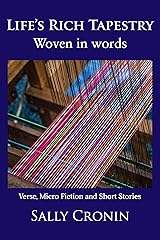
Life’s Rich Tapestry: Woven in words by Sally Cronin
What Amazon says
Life’s Rich Tapestry is a collection of verse, microfiction and short stories that explore many aspects of our human nature and the wonders of the natural world. Reflections on our earliest beginnings and what is yet to come, with characters as diverse as a French speaking elephant and a cyborg warrior.
Finding the right number of syllables for a Haiku, Tanka, Etheree or Cinquain focuses the mind; as does 99 word microfiction, bringing a different level of intensity to storytelling. You will find stories about the past, the present and the future told in 17 syllables to 2,000 words, all celebrating life.
This book is also recognition of the value to a writer, of being part of a generous and inspiring blogging community, where writing challenges encourage us to explore new styles and genres.
My review
This new book sees author, Sally Cronin, delving into new genres in the form of a variety of styles of poetry and 99-word flash fiction pieces. It also includes a number of her delightful short stories, although those differ from others that I have read by this author as many of them feature an animal as the main character.
The poetry is beautiful and is split into sections, namely, Seasons of the year; All things human; Fairies and other folk; The natural world; Remembrance, Celebrating pets and Random thoughts. The poems included in the sections entitled Season of the year and The natural world largely feature the natural environment, including the various seasons and the different creatures that inhabit it, and makes use of all the senses to wrap the reader in the specific joys and pleasures of the flowers, the light, celebrations, birds and and other natural phenomena including drought, snow and frost.
The poetry sections entitled All things human, Remembrance and Random thoughts as well as some of the flash fiction and short stories utilize the writer’s amazing ability to invoke great emotion from her readers towards her characters and their circumstances and situations, while being easy to relate to and highly believable.
The poems and stories that feature pets and animals showcase the authors love of the animal world and convey the special relationships that frequently develop between people and their pets.
I appreciate the undertone of happiness that is generally present in this authors books and stories. It is a wonderful thing to be able to read a book that makes you feel great emotion and still come out on the other end with the impression that life is a wonderful and great journey. This is definitely a skill that Ms Cronin has and uses to its best advantage in all her books, poems and stories.
Purchase Life’s Rich Tapestry: Woven in words
About Sally Cronin
I have been a storyteller most of my life (my mother called them fibs!). Poetry, song lyrics and short stories were left behind when work and life intruded, but that all changed in 1996. My first book Size Matters was a health and weight loss book based on my own experiences of losing 70kilo. I have written another twelve books since then on health and also fiction, including four collections of short stories. My latest book is a collection of verse, micro fiction and speculative short stories titled Life’s Rich Tapestry: Woven in Words
I am an indie author and proud to be one. My greatest pleasure comes from those readers who enjoy my take on health, characters and twisted endings… and of course come back for more.
As a writer I know how important it is to have help in marketing books.. as important as my own promotion is, I believe it is important to support others. I offer a number of FREE promotional opportunities on my blog and linked to my social media. If you are an author who would like to be promoted to a new audience of dedicated readers, please contact me via my blog. All it will cost you is a few minutes of your time. Look forward to hearing from you.
My blog is https://smorgasbordinvitation.wordpress.com
And for more information on my books listed here at Amazon please visit
https://smorgasbordinvitation.wordpress.com/my-books/
You can connect with Sally Cronin on the following sites.
Twitter: https://twitter.com/sgc58
Facebook: https://www.facebook.com/sally.cronin
LinkedIn: http://uk.linkedin.com/in/sallycronin1
Pinterest: https://www.pinterest.ie/cronin1423/
Want to be sure not to miss any of Robbie’s “Treasuring Poetry” segments? Subscribe to Writing to be Read for e-mail notifications whenever new content is posted or follow WtbR on WordPress. If you found it interesting or entertaining, please share.
Share this:

“On Being a Dictator”: Writing help for busy authors
Posted: January 24, 2020 Filed under: Book Review, Books, Nonfiction, Opinion, Teaching Writing, Writing | Tags: Book Review, Kevin J. Anderson, Martin L. Shoemaker, On Being a Dictator, Writing, Writing by dictation, Writing to be Read 1 Comment
Writing Resource
Most writers are busy people. I know I am. Most of my 2019 writing goals are still sitting on a back burner, simmering, because I was way to busy with work, school and this blog, as well as launching WordCrafter Quality Writing & Author Services and WordCrafter Press, to stir up my own stories and bring them to a boil. So, I’ve been looking into different ways to manage my time better. As I get older, skipping sleep in order to write seems to be getting less and less feasible.
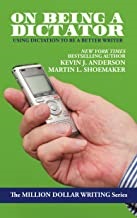
On Being a Dictator, by Kevin J. Anderson and Martin L. Shoemaker is a author’s resource about how writers can use idle times in your day to spark creativity and increase productivity through dictation. It is a part of the Million Dollar Writing series, designed to help aspiring authors along the way.
I was blessed, back in 2012, to hear Kevin J. Anderson speak during the Writing the Rockies Conference at Western State Colorado University, (then, just plain old Western State College), where he talked about using dictation in his writing. While the rest of us had all been indulging in Western’s wonderful cuisine, Kevin had written roughly two chapters of his latest novel while hiking a pristine trail in the beautiful Gunnison Valley, in beautiful Colorado.
I was impressed with the idea at the time, and soon went out and bought myself a digital recorder, much like the one featured on the book cover. Although, it did help me to preserve my writing ideas on the spot, it required me to be embarked in activities where I could stop frequently to turn on and off the recorder. Then when I went back to access these ideas and get them down in print, I had to skip around to find the ideas or perfect sentences I was looking for and then type them out myself, which took up just as much time, if not more, so it didn’t take me long to give up this idea and go back to pecking out my story, one word at a time, as I had always done.
Upon reading On Being a Dictator, my thoughts on the matter have changed a bit. Anderson and Shoemaker begin by emphasizing the point that, like everything else in life, dictation takes time and practice, making me realize how foolish it was for me to expect to go buy a digital recorder and immediately start cranking out novels.
This resource is also valuable because the two co-authors each have different approaches to dictation which fit best into their individual lifestyles, proving that there is no one ‘right way’ to use this method and technology. This made me realize that I really didn’t give dictation a chance. I didn’t play with it enough to discover the different ways it might be useful to me with practice.
The book also includes descriptive lists of the different types of equipment and transcription software available and the advantages and disadvantages of each, as well as transcription services. Since technology is changing very rapidly, there are devices and software available now, which were not even thought of back in 2012, and likely next year, there will be even better technology available that wasn’t mentioned here. But their efforts gave me a good idea of what is available now, and got me thinking about how it might be of use to me.
Once again, I am impressed with this idea of turning otherwise idle activities, creativity-wise into productive writing time. On Being a Dictator has convinced me I should give writing by dictation another go. Maybe you should, too. I give it four quills.

Kaye Lynne Booth does honest book reviews on Writing to be Read in exchange for ARCs. Have a book you’d like reviewed? Contact Kaye at kayebooth(at)yahoo(dot)com.